Denovali presents the new album of the prestigious Swedish pianist and composer Matti Bye. Matti is well-known for his regular performances at various silent film festivals and screenings worldwide, where you can see him perform solo and with artists such as Lau Nau. Bye has been involved in several collaborations, including Hydras Dream, where he recorded and released an album with Anna von Hausswolff. Additionally, Matti is recognized for his scores in projects like ”Young Royals," ”Tove," „The Hundred-Year-Old Man Who Climbed Out of the Window and Disappeared,“ and "A Traves de tu Mirada” among many others.
Matti Bye's third album, "Capri Clouds", moves through the element of the air and further into space. A lone piano sounds, echoes - sometimes like a waltz. We have the sound of the wind with us and the sound of the sea below us as we fly, and above we hear the stars and planets spinning. A piano from the past, as if Satie met space - as if Spiritualized and Satie talked to each other across timeand space.These songs go straight to the heart and to the senses, and create images in your head. Stories from your own memory bank, as well as new visions – music to lean into, meditatively and hopefully longing. But there is also an undertone of something dark and desolate. Musically, Matti Bye moves within the realm of neo-classicism, but he is also approaching romanticism. References to composers suchas Schubert and Beethoven are to be found here, as well as to post-romantic bands such as Kraftwerk and The Cure. In this third album of a trilogy – the first was "Bethanien", the second "The Forgotten Land" – Bye continues his musical journey. Here we encounter a brighter and lighter production. Anders af Klintberg has brought "Capri Clouds" up from the underworld and the dreamscape, towards clouds and skies.
quête:man da
- I See Through You
- Waiting For Blood
- Deaths Door
- Shockwave City
- 13: Candles
- Dead Eyes Of London
- Pusher Man
- Ritual Knife
- Slow Death
- Crystal Spiders
- Blood Runner
- Desert Ceremony
- I'll Cut You Down
- No Return
14 songs deep and proudly devoid of gimmicks or distractions, Slaughter On First Avenue is a riveting and raw account of Uncle Acid in full flight. From early classics like I'll Cut You Down and Death's Door (both from Blood Lust), to more recent works of lysergic aggro like Shockwave City (from Wasteland) and sinister epic Slow Death (from The Night Creeper), this amalgamation of two fiery and unforgettable live shows has a mesmerising momentum all of its own. A throwback to the days when live albums were magical things, rather than cynical stopgaps, Slaughter On First Avenue is a jolting dose of dark electricity and psychedelic terror. Swollen with the greatest of riffs and performed with grit, power and haughty disdain, it loudly confirms that Uncle Acid & The Deadbeats have the raw, fuzzed-out power to drag everybody into their bewildering, bewitched vortex of doom. A dazzling, devilish squall to mark the beginning of a new chapter, Slaughter On First Avenue also clears the decks for this band's next malevolent move. Don't say we didn't warn you. "Yes, There will be another record which will hopefully appear at some point without warning or explanation," Kevin Starrs avows. "It will be completely different to anything else we've done. You can think of it as a late-night detour. Its appeal will be extremely limited but that's OK... 'When you're slapped, you'll take it and like it!'".
A killer fusion of bass, poetry and social consciousness from the King Midas Sound vocalist.
Roger Robinson is one of the most versatile voices in the dub poetry scene today, seamlessly blending the power of the written word with the raw energy of the soundsystem.
Teaming up once again with Dub wizard Disrupt to conclude an album trilogy that began with “Dis Side Ah Town” and “Dog Heart City“, Robinson pulls a wide range of riddims straight from the Jahtari vaults to create “Heavy Vibes“, a killer fusion of bass, poetry, and social consciousness.
With a voice oscillating between soulful falsetto and deep poetry thunder Robinson’s verses hit as hard as the bass, challenging the listener to confront uncomfortable truths, while Disrupt’s richly textured, dub-heavy production ensures the music moves both body and mind. You’ll find yourself dancing, but more importantly, you’ll find yourself thinking.
Coming with stunning cover art by Kiki Hitomi and featuring deadly riddims by Tapes, Naram, Jura Soundsystem, Maffi and Bo Marley, “Heavy Vibes” balances the weight of oppression with a glimmer of hope – the belief that change is possible, that the beat goes on, and that through solidarity and art, new futures can be forged.
- A1: Concerning The Ufo Sighting Near Highland, Illinois
- A2: The Black Hawk War, Or, How To Demolish An Entire Civilization And Still Feel
- A3: Come On! Feel The Illinoise! Part I: The World's Columbian Exposition Part Ii
- A4: John Wayne Gacy, Jr
- A5: Jacksonville
- A6: A Short Reprise For Mary Todd, Who Went Insane, But For Very Good Reasons
- B1: Decatur, Or, Round Of Applause For Your Step Mother!
- B2: One Last Whoo-Hoo! For The Pullman!!
- B3: Go! Chicago! Go! Yeah!
- B4: Casimir Pulaski Day
- B5: To The Workers Of The Rock River Valley Region, I Have An Idea Concerning Your
- C1: The Man Of Metropolis Steals Our Hearts
- C2: Prairie Fire That Wanders About
- C3: A Conjunction Of Drones Simulating The Way In Which Sufjan Stevens Has An
- C4: The Predatory Wasp Of The Palisades Is Out To Get Us!
- C5: They Are Night Zombies!! They Are Neighbors!! They Have Come Back From The
- C6: Let's Hear That String Part Again, Because I Don't Think They Heard It All The
- C7: In This Temple As In The Hearts Of Man For Whom He Saved The Earth
- D1: The Seer's Tower
- D2: The Tallest Man, The Broadest Shoulders Part 1: The Great Frontier Part 2: Come
- D3: Riffs & Variations On A Single Note For Jelly Roll, Earl Hines, Louis
- D4: Out Of Egypt, Into The Great Laugh Of Mankind, & I Shake The Dirt From My
- D5: The Ava Lanche
- A1: Once Upon A Past
- A2: The Way We Lived (Feat Sharon Jones)
- A3: The Games You Play (Feat Voice)
- B1: The Tune
- B2: The Man With No Soul (Feat Charlotte Savary)
- B3: Radio Broadcast
- B4: Positively Inclined (Feat Marina Quaisse & A.s.m)
- C1: Sometimes
- C2: House Of Wax (Feat The Others)
- C3: Beyond Words
- C4: To Dry Up (Feat Charlotte Savary)
- D1: We Be (Feat Ursula Rucker)
- D2: That Case
- D3: There Is Danger
- D4: Alien In My Belly (Feat Charlotte Savary)
Hope and Sorrow is the 2nd album by French artist Wax Tailor. With this album he established himself on the international scene with a world tour, an Indie Music Award in the United States and a nomination at the Victoires de la musique 2008 as "best electronic artist”
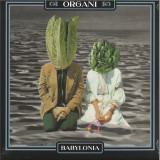
Well-versed in vintage vernaculars, Oakland-based producer/musician Mike Walti is about to return with his sophomore offering under the Organi moniker – as new album “Babylonia” follows 2020’s “Parlez-vous Français?,” a landmark in vibe acquisition ever since.
Wyldwood Studios is a portal. It’s a secret gateway to analog spheres. Cross the threshold and you’ll feel the difference: you can pick any ol’ time, any place, any tongue or vibe, in fact. Hit the dancefloor in 1967, feel that plushy loveseat in the early 70s. It’s a welcoming place where better, saner vibes are still within reach. Fueled, at least in part, by those long-classic 12”s on the walls – just imagine the sepia-tinted countenance of Melody Nelson alongside actual Birkin sans wig, right next to Shadow’s immortal crate diggers, forever blurred –, and channeled through ancient time travel devices such as the MCI 416B only to arrive on classic 2-inch tape (MM1000 aka Ol’ Bessy), it’s a haven for all things organic, for all things imbued with that warm élan. Built and run by Oakland’s own Mike Walti, countless artists from many different genres have felt that flair, creating sonic spheres and moving back and forth along the malleable axis that is space-time. Capturing magic.
Emerging from this unique portal back in 2020, Walti’s aka Organi’s first studio album was a stunning answer to its titular question – “Parlez-vous Français?” It was a soothing, somewhat psychedelic trip so magnétique and alluring that it immediately brought back those bits of Franglais you never knew you remembered. Whereas the debut LP indeed felt like a spontané voyage to the French Riviera ca. 1968, its follow-up “Babylonia” is so much more than linguistic confusion and ancient Akkadian Rhythms. Using that hidden portal near Alameda’s finest port to access all kinds of remote regions and sonic spheres, it’s super tight and feels, well, decent, even though, just like the ol’ Babylon, it’s full of surprising tongues and dreams, schemes and melodies.
“Where do we go from here?,” someone asks in opening “Organii-“ – all majestically cinematic boom bap, buoyant bass, sick strings. A fittingly massive opener that feels like cracking open a cold one after long weeks at work (that ecstatic “ahhhh”), it perfectly sets the tone for another half hour of pure time traveling, globe-spanning bliss. Whereas that certain prédilection pour all things French makes “La Rockette” so tempting and tantalizing (think MalMalNonBien), the sophomore album’s Berlin-based guest singer Nana Lacrima soon takes us elsewhere: title track “Babylonia” spins ever so softly, like a magic lantern, with images of dreamier Stones Throw funksters or Savath y Savalas looming over the steady flow of an arrangement that washes you clean like an ancient, unpolluted River Euphrates or Brazil’s actual Amazon. A sexy Portuguese-flavored anthem, occasional guest singer Alix Koliha also enters the scene to add yet another layer of French chic to this Brazilian landscape. Next, we’re back at the Riviera, but the “Italiano” version of it, splendido sunsets and bell towers in the distance, the ragazze laughing and shaking it up, perhaps even some Portofino Gin so you can really feel that “me ne batto il belin,” as your fingers align form some half-serious “ma che vuoi?”
Tim Maia-penned “Padre Cicero” (1970) deals with the stunning transformation of the titular hero – “De reverendo a lutador,” and what a soaring, sensual hook –, and Organi’s take on Elephant Memory’s “Old Man Willow” (now an “Old Man Waltz”) perfectly underlines what Walti’s Wyldwood endeavor is all about: Easy-Going Experimental Dream Pop, fueled by Gainsbourg, Broadcast, Stereolab, etc.
Later on, even though something seems to be tres complique in “Remembering Anna,” it all sounds carefree like a spontaneous Friday afternoon with a bottle of fine wine. Right before the outro, key album guest Yea-Ming Chen (of Yea-Ming & The Rumors) returns to the mic, adding her dark and dusky trademark timbre to melancholy anthem “Pictures Of Your Face”. Reminiscent of Nico and Trish (rip & rip), it’s a track that’s both dark and strangely propelling, hypnotic and hip-shaking.
A third generation Bay Area native, Mike Walti aka Organi has been running Wyldwood Studios in Oakland CA for some 15+ years (recording artists like Tommy Guerrero, Spelling, Why?, Latyrx, Del, Dan The Automator, and Big Freedia, to name but a few). A multi-instrumentalist who’s obviously in love with the 60s/70s, he loves to work with analog equipment (“We just love us some analog!” “Just listen to those relays purr…”). Recorded and mixed by Mike Walti at Wyldwood, “Babylonia” will be released on vinyl/digital by Alien Transistor.
- A1: I Will Be Your Only One (Monika Werkstatt Version)
- A2: Paradise (Monika Werkstatt Version)
- A3: Radiator (Monika Werkstatt Version)
- A4: Komm Darling Lass Uns Tanzen Gehen (Monika Werkstatt Version)
- A5: You You (Monika Werkstatt Version)
- A6: Schreiender Tag (Monika Werkstatt Version)
- B1: Geld (Monika Werkstatt Version)
- B2: Mother (Monika Werkstatt Version)
- B3: White Sky White Sea (Monika Werkstatt Version)
- B4: Herzschlag (Monika Werkstatt Version)
- B5: Zukunft (Monika Werkstatt Version)
- B6: Nite Time (Monika Werkstatt Version)
M_Sessions - Reworks is offering a contemporary version of Mania D., Malaria and Matador’s music for the 40th anniversary. Bringing the past into the now and into the future.
Monika Werkstatt seemed the perfect choice for new interpretations. Founded in 2015, comprising female electronic musicians and producers from the entourage of Monika Enterprise and Moabit Musik. The loose collective played dozens of improvised concerts around Europe and released a studio album and live recordings in everchanging artist constellations. The M_Sessions involved Pilocka Krach, Beate Bartel, Midori Hirano, Mommo G, Lucrecia Dalt, Antye Greie-Ripatti, Natalie Beridze, Annika Henderson and myself. Here the form of interpretation is focussing on keeping the freedom of their improvised work and adapting it to the collective appropriation of songs. I cannot imagine a better reinterpretation of the material with its real life ups and downs and with its enthusiasm. (G.Gut)
"The three, reunited: Malaria, Matador and Mania D, unter einem Dach, but gutted, replaced with electronic hearts, new beats, new beasts, the time has changed, yet the politics, the problems, the heartache remains the same. 2021 sees the anniversary of the 3 M’s and therewith the production of an album of songs, covering a selection of the bands’ finest output, this time assembled by a new set of feminist misfits; producers, fangirls, instrumentalists, under the strict guidance of original members Gudrun Gut and Beate Bartel. M-Sessions features: AGF, Lucrecia Dalt, Sonae, Midori Hirano, Islaja, Natalie Beridze, Pilocka Krach, Annika Henderson (Anika), Lupe, Gudrun Gut and Beate Bartel. Beginning in West Berlin, in 1979, with the inception of Mania D, spawning Malaria! and later Matador; in a time when music was essential to movement, to escape, to space, to the scene and to the rebellion of the people; three bands stood for trial and error, trial and terror, anti- conformity, and anti-consumerism, for girl power and sticking it to the man, and for just doing whatever the hell they wanted. The three, their existence slightly staggered, with different members, different grudges, different heartbreaks, different instrumental expressions, were joined by a string of barbed wire, piecing pigeon hearts, within the playground that was the desolate ex-capital, now again capital, Berlin; a place where artists and freaks could run free amongst the wrinklies and army dodgers; no microscopes, no rules, no property developers." (ANNIKA HENDERSON)
Mads Lindgren aka Monolog, a traveler in sound across the European continent. Danish, but resident in Berlin, and working intensely in the studio and on stage alongside taking care of jobs in the audio industry for Native Instruments and Ableton. Previously Monolog had releases on Ant-Zen, Ad Noiseam, Hymen, and Ohm Resistance, as well as the Subtrakt label, which he is managing.
Music is written & produced by Monolog
Field recordings in track Forgotten Circle 10 by Andrii Nidzelskyi
Mastering and lacquer cut by Noel Summerville
Artwork & release production by Dmytro Fedorenko
Design by Zavoloka
In addition to the unique musical proposals and the large body of work that they have developed separately, Amelia Cuni and Werner Durand have been performing together as a duo as well as in collaborations (Tonaliens, Born of Six) for more than 20 years. Fusing her Indian Raga singing in the Dhrupad style with his minimalist and experimental approach, they have expanded the reach of their soundworlds as well as proposed new paths for contemporary music.In this occasion, Uli Hohmann joins them in a range of hand drums from the Middle East and North Africa, plus a dulcimer-sounding hammered guitar. Durand's various self-made wind instruments, soprano sax, and blown kalimba shine along with Cuni's astounding vocals, which are sometimes sung through a mirliton (a medieval type of kazoo). Clearing is the trio's first published recording.
Seconds of Thirst, recorded in one session at Uli´s studio in Bavaria in early 2014, is truly a conjuring where distinctive balances come to gather. A deep drone unfolds patiently in a hypnotic manner, comprised by Werner's characteristic PVC clarinets, a hammered guitar played by Hohmann, and subtle electronic tones. Above all, Amelia's singing voice, filtered through the mirliton, drifts buzzing along the gradually shifting harmonic waves, meandering through serpentine melodic lines and microtonality.
In the middle pieces, vocals turn into an ethereal multi-layered chorus, an exotic and astonishing instrument pulsing delicate and vaporously, like a gliding silk sail without a mast to bind it. Misty ambiances linger on as the soft atmosphere disperses the weight of undelivered syllables. Just intonation aligns the pan-ney's winds with vocal navigation. Foe to scattering, hurry, and affectation, Clearing's pace has lifted a fog translucent enough to reveal treetops calmly appearing, efficiently condensing damp into definite drops that fall drumming, forecasting what's yonder.
With a condensing sound going from Buddhist morning chants down to Indian festive traditional music, the title track, which closes the album, is the most vibrant of all, permeating a bit of commotion through buzzing drones and galloping percussion. Without disorder, yet without measure. Clearing is therefore this shuttle into the distance, this space that weaves, unites, and tenses the different cords that we are made up of.
When the clouds advance silently, gray, until they become dark in a few minutes, it means that the monsoon is coming. It reaches us without apparent noise, but then resounds in its images, leaving behind lightness, freshness, clarity, and a tremendous luminosity that comes from so far away: from the Himalayas, from so ancient, from Sanskrit, from a sound where the darkness and the divine, where the concrete and the landscape, where the rock and the humidity leave a mark that brings together and ties a sky loaded with new clouds.
30 years of Fuse. That’s 1,560 weekends of love, techno, I LOVE TECHNO, Motion Room, party flyers, La Demence, renovations, label nights, sound isolations, Jeu de Balle, long shifts, noise complaints, stylus replacements, after-hours, legendary b2bs, compilations, resident DJs, On The Beach, emergency loops, and an unfathomable amount of tickets boisson.
2024 marked the nightclub Fuse’s 30th year of continuous operation on Rue Blaes in Brussels. Belgium is home to cultural visionaries, break-the-mould characters, and prolific producers who helped shape the foundations of the electronic music scene we enjoy today. As a result, Fuse’s story traces the outlines of the house and techno history at large. Through striking visuals, quotes, research, and storytelling, this book connects the dots between the rise of renowned artists and uniquely Belgian characters that crystallised Fuse as a temple of underground dance music.
From Detroit to the Marolles, Ricardo Villalobos to DJ Pierre, Carl Craig to Trish Van Eynde, Daft Punk to Deg, Laurent Garnier to Charlotte de Witte, Warp to Music Man Records, even Depeche Mode to Björk, this book documents not only the iconic performances and moments over the years but also the stories of those who took the risk of running a nightclub and the tens of thousands of dancers who poured their love, sweat, and tears into the labyrinthine walls of Fuse.
An essential for any raver or lover of electronic music history, this book is an archival work dedicated to the music heads who have kept their minds and ears open since 1994.
Philipp Greter is a genius. He is not only the keyboardist of the acclaimed swiss Dub band Dub Spencer & Trance Hill he is also the producer and mastermind behind the band and responsible for the crisp project "William S. Burroughs In Dub". Philipp has worked with and for The Young Gods, Yello mastermind Dieter Meier, Lee Scratch Perry, amongst many others. "Greter Than Dub" is being released on Liquid Sound Design, the psychedelic dub label of Grammy Award winning producer Martin "Youth" Glover: highly respected songwriter/producer, sonic pioneer, and founder and bassist of Killing Joke. Almost everything on this album is grooving, swinging, vibrating and echoing in delay. It is not only an album for the dancefloor it is also a soundscape travel for the comfortable sofa trip.
“Shadow of Love“ transports echoes of your favorite 80s New Wave anthem into the here and now and refines it with a strobe light makeover. The result is a synth-heavy, digitized banger reaching out for unified dancefloor euphoria while still managing to expand the sonic spectrum of everyone involved. It’s a surprisingly joyous, ecstatic, and breezy slice of, well, state-of-the art pop that probably offers the most radio-friendly piece of music both parties ever laid their hands on.
- A1: Mckennai Beat
- A2: What Wood Feat. Brother Portrait
- A3: Ladybug
- A4: Modern Ifa
- A5: Fm Feat. Max Mckenzie
- A6: Austral Mood
- A7: Slave Cemetery
- A8: Cari And Whales
- B1: Meditation & Heartbreak
- B2: For Nahel Feat. Selina Jones
- B3: Cosmic Psylo
- B4: Norwood Junction
- B5: Ears
- B6: Unrooted Maskossa
- B7: Last Bantu (Outro)
Releasing now for well over a decade - Neue Grafik: known to friends as Fred, has successfully transplanted from Parisian rookie to one- man London Institution. Beginning as a solo producer and DJ,Fred spread his wings upon relocating to South London - at first with his Neue Grafik Ensemble and later with his now iconic twice-weekly Orii Jam - the latter of which has given agency to an entire new generation of musicians; spawning an aesthetic, nurturing a unique sound and becoming a launchpad for countless artists.
Dalston Tape Volume 1 is Fred’s attempt to fall back in love with beatmaking - taking it back to the roots of
where the project began. I say “attempt” because he’s simply learnt too much and made too many friends
along the way to make a mere DIY beat tape. Since his early MPC-led productions on Parisian label, Beat
X Changers, Fred has learnt to play the keys to a concert hall standard, he has become proficient in double bass and built up a dense network of collaborators who he has composed, recorded, engineered and produced for both at home in SE London and in the iconic Total Refreshment Centre Studios in Dalston.
This experience adds unavoidable dimensions to his toolbox - resulting in something more akin to a miniature-magnum-opus than a simple beat-tape.
Yes, we hear the influences of Pete Rock, Mad Lib, J Dilla and Al Dobson Jr but we also hear the musicality of D’Aneglo, James Blake and live contributions from an ever growing army of young graduates of the Orii School.
- A1: Blondie - Call Me – (Theme From "American Gigolo") (Original 12” Version)
- A2: Grace Jones - Love Is The Drug (Long Version)
- A3: Loleatta Holloway – Love Sensation (A Tom Moulton Mix)
- A4: Stephanie Mills - Never Knew Love Like This Before (12” Mix)
- B1: Lipps Inc - Funkytown (12" Version)
- B2: Liquid Gold – Dance Yourself Dizzy (12” Mix)
- B3: The Spinners - Working My Way Back To You / Forgive Me Girl (12” Version)
- B4: Change – The Glow Of Love (Long Version)
- C1: Visage - Fade To Grey (12" Version)
- C2: Sheila & B Devotion – Spacer (Full Length Version)
- C3: Earth, Wind & Fire - Let's Groove (Holiday Version Remix)
- C4: Odyssey - Going Back To My Roots (12" Version)
- C5: Dollar - Hand Held In Black And White (Extended Version)
- D1: Olivia Newton-John - Physical (Long Version)
- D2: Haircut 100 - Favourite Shirts (Boy Meets Girl) (12" Version)
- D3: Spandau Ballet - Glow (12" Version)
- D4: The Specials – Ghost Town (Extended Version)
- E1: The Human League - The Sound Of The Crowd (12'' Version)
- E2: Duran Duran - Planet Earth (Night Version)
- E3: Talk Talk - Talk Talk (Extended Mix)
- F1: Soft Cell - Torch (Extended Version)
- F2: Japan - Life In Tokyo (1982 12" Extended Version)
- F3: Gary Numan – Music For Chameleons (Extended Version)
- F4: Simple Minds - New Gold Dream (81/82/83/84) (German 12'' Remix)
- H1: Carly Simon – Why (Full Length Version)
- H2: Rockers Revenge - Walking On Sunshine
- H3: Shalamar – A Night To Remember (12” Mix)
- H4: Kool & The Gang - Get Down On It (Original 12" Extended Version)
- I1: Abc - The Look Of Love, Pt 1 (Special Remix)
- I2: Bananarama - Shy Boy (Extended Version)
- I3: Heaven 17 - Let Me Go (12'' Extended Version)
- I4: Bow Wow Wow - Go Wild In The Country (12" Version)
- I5: Altered Images - See Those Eyes (12" Version)
- I6: Bucks Fizz - My Camera Never Lies (Extended 12” Version)
- J1: Tears For Fears - Pale Shelter (Long Version)
- J2: Blancmange - Living On The Ceiling (Extended Version)
- J3: Associates – Love Hangover (Extended Version)
- J4: Visage - The Anvil (Dance Mix)
- J5: Ultravox – Reap The Wild Wind (Extended Version)
- J6: Orchestral Manoeuvres In The Dark - Extended Souvenir
- G1: The Boys Town Gang – Can’t Take My Eyes Off You (Extended Version)
- G2: Patrick Cowley Feat Sylvester – Do You Wanna Funk (Remix)
- G3: Donna Summer – Love Is In Control (Finger On The Trigger) (Dance Remix)
- G4: Evelyn "Champagne" King - Love Come Down (12" Version)
xd H2 Rockers Revenge - Walking On Sunshine feat. Donnie Calvin (12" Version)
Indian born, UK artist Michael Diamond, co-founder of Vasuki Sound label and club night, announces new EP Placid Wakefulness, featuring single ‘Reverse Entropy’. available on all platforms 5th December via Vasuki Sound.
A uniquely multifaceted talent, Michael Diamond’s unforgettable ‘jazzed electronic’ sound is informed by a spectrum of influences, not least by intersection of the scientific and practical worlds of electronic music. From the music scholarship he won to read Medicine at Oxford where he quickly discovered new ways in which the two worlds can co-exist, his days were spent immersed in academic studies of music perception and cognition, while his nights were spent alongside the likes of Ben UFO, Batu & Ross From Friends, playing at one of UK’s most long-established nights ‘Simple’. A chance encounter there also led him to connect with musical collaborator Alex Wilson – the BBC Young Jazz Musician of the Year semi-finalist and then musical director of Oxford’s Jazz Orchestra – who appears frequently across Diamond’s compositions and on Placid Wakefulness.
No stranger to a concept piece, Diamond’s previous project, the highly personal and critically acclaimed exploration of culture and identity, Third Culture (album of the month/year acknowledgments from Stamp The Wax, Juno and Phonica Records, also earning him a DJ Mag ‘One To Watch’, a Youth Music Awards ‘Rising Star’ nomination and a Gilles Peterson’s ‘Future Bubbler’ accolade) explored the experience of being a ‘third culture kid’ born in Kerala, India and growing up in the UK with a sense of fractured identity.
On Placid Wakefulness, Diamond honours his academic research working alongside world-renowned musicologist Professor Eric Clarke. Specifically how music may affect our sleepfulness and wakefulness, how instinctively we are soothed by some sounds and energised by others - ‘what it is about dance music that makes people go hard all night long?’ and ‘what is it about ambient music that makes people feel the opposite way - to lull them into this sense of calmness or rest?’, mindful of the unconscious ways his findings were already manifesting in his work as an artist. And while his research provides a framework for some of the ideas within the piece, Placid Wakefulness can be viewed as more of an unintentional byproduct, or case-in-point of his findings, rather than a piece consciously constructed in their image.
Across Placid Wakefulness’s four tracks we find the artist unpacking a range of sonic ideas on this theme, from ambient calm to club-adjacent rhythms. The EP opens with hypnotic lullaby of ‘A Way of Listening’ complete with transcendent flutes provided by Alex Wilson, cello by George Lloyd-Own and a mellow groove. On the more energised ‘Reverse Entropy’, rhythmic ambiguity moves to rhythmic disambiguation with a four-to-the-floor beat as the track progresses, releasing tension and inviting an urge to dance as a jazz sax moment transmutes into glorious techno percussiveness.
On ‘Turning and Turning’ the bpm shifts down a gear, a sonic dreamstate where tough textural rhythms create a kind of liminal state tension. Closing out the EP we return to a sense of restfulness with the EP’s title track, where a gorgeous picked guitar loop interplays with vibrating ambient pads and a slow and steady beat. The Placid Wakefulness EP is a captivating testament to Diamond’s singular artistic talent and the fascinating interplay of neuroscience and how we experience and enjoy music.
- A1: 胎児* - Radioactive Ash
- A2: Non Band - Duncan Dancin
- A3: Mannequin Neurose - #¼&¢
- A4: Antena - Drug Patient
- A5: Unknown Artist - Unknown Song
- A6: Coma - Coda
- A7: Sadie Sads - Pair Dog
- A8: G-Schmitt - Future Daze
- A9: C·c·mekka = 爬虫類の脳* - アルゴソの空
- B1: Asylum - 自虐者
- B2: Bardo Thödol - Silver Stug
- B3: Unknown Artist - Unknown Song
- B4: いんど猫* - 水の中
- B5: Mensu - Lura
- B6: Phaidia - 戦略
- B7: The Lautrec - Dark Crystal
- B8: Unknown Artist - Unknown Song
PT I[16,77 €]
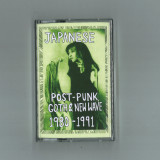
DINTE presents a cassette-only two-part Japanese post-punk, goth & new wave mixtape, the first in a tranche of regionally-focused mixes produced in partnership with Philadelphia's punk archivists World Gone Mad.
- Just A Dream
- Horizon
- Very Complex Ft. Piya
- Malik
- Candles Ft. Say She She
- Family Affair
- Generator
- Video Games
- Don’t You Know
- Fly
- The Visit
- Little Wing
Campus Christy is a collaboration between Stones Throw Records’ founder Chris Manak aka Peanut Butter Wolf (vocals) and Brian Ellis (instruments).
Nearly 25 years after his 1999 release of ‘My Vinyl Weighs a Ton’, Manak has formed a brand new musical project, reinterpreting lesser-known tracks from the late 1960s to early 1980s. Campus Christy revives Manak’s high school garage band moniker, a niche ode to the past. Campus Christy marks a new direction for Manak, who for decades has been closely associated with underground hip-hop. ‘Very Complex’ features Piya Malik of Say She She, and ‘Candles’ also features Say She She.
LP with gold foiled jacket and embossing.
For fans of Say She She, Vulfpeck, Daniel Johnston.
- A1: Mystic Man
- A2: Recruiting Soldiers
- A3: Can't You See
- A4: Jah Seh No
- A5: Fight On
- B1: Buk-In-Hamm Palace
- B2: The Day The Dollar Die
- B3: Crystal Ball
- B4: Rumours Of War
"Mystic Man," released in 1979 is now available on 1LP Green Recycled, is an introspective and spiritually charged album by Peter Tosh. The album reflects his deep Rastafarian beliefs and features a mix of soulful and political tracks. Songs like "Mystic Man" and "Jah Seh No" highlight Tosh's commitment to his faith and his disdain for societal corruption. The album's production is marked by a refined sound that balances roots reggae with subtle experimentation.
- Allein
- Everywhere
- Marinoskit1
- Angerufen
- Frösche Im Pool
- Graureiher
- Taube
- Herbsttagsstimmungslieder (Skit)
- Polo
- ???
- An Der Strandpromenade
- Wir Fahren In Die Berge
- Marinoskit2
"Am 6..12. veröffentlicht das Duo ZWEILASTER ihr nunmehr drittes Album "Wieherd", das zweite davon beim Berliner Geschmacksgaranten Tomatenplatten. Auch diesmal zusammen mit Hunderttausendsassa Julian Knoth(Die Nerven). Was man auf dem Erstling noch mit (be-)rauschend geringer Klangtreue über den Äther jagte, wird auf "Wieherd" druckvoller denn je dargeboten. Unweigerlich fragt man sich einmal mehr, was zur Hölle nur die da unten in Stuttgart dem Wasser beimischen... Es ist für mich jedes Mal schwer beeindruckend, wenn Musik auch ohne üppige Instrumentierung intrinsische Größe hat. ZweiLaster spielen minimalistischen (Pop- & Post-)Punk bar jeder Effekthascherei, nähern sich hie und da gar dem No Wave. Lieder wie der Auftakt "Allein" oder das gellende "Everywhere" sind eingängig, ohne stumpf zu werden, "Berge", "Angerufen" und "Graureiher" schürfen tief, ohne sich großem Gestus bedienen zu müssen. Ehe man sich allzu wohlig wähnt, wechselt sowieso schon das Tempo und ZweiLaster ver- und zerfällt in dissonant charmantes Chaos. "Wieherd" wirkt nie gekünstelt, nie schablonenhaft, immer wie eine Momentaufnahme. Mut braucht es, so ein schonungslos ungeschöntes Abbild in die Welt zu entlassen. Oder vielleicht muss es dann einfach nur gut sein und das hier, das ist gut. Sind Taylor Swift Fans Swifties, dann bin ich Lasti." - Drangsal
"This is the time that we, who have benefitted from the Last Poets shouldbe able to say, 'it's the Last Poets. It's them we should be honouring, because we did not honour them for so many years_"
KRS One wasn't just addressing the hip hop fraternity when he uttered
those words by way of introducing the video for Invocation - a poem
written thirty years ago, around the time of the Last Poets' last significant comeback. He was speaking to everyone who's been affected by the word, sound and power issuing from the most revolutionary poetry ever witnessed, and that the Last Poets had introduced to the world outside of Harlem at the dawn of the seventies.
In 2018 the two remaining Last Poets, Abiodun Oyewole and Umar Bin
Hassan, embarked on another memorable return with an album -
Understand What Black Is - that earned favourable comparison with theirseminal works of the past, whilst showcasing their undimmed passion andlyrical brilliance in an entirely new setting - that of reggae music. Trackslike Rain Of Terror ("America is a terrorist") and How Many Bullets demonstrated that they'd lost none of their fire or anger, and their essential raison d'etre remained the same.
"The Last Poets' mission was to pull the people out of the rubble o f their lives," wrote their biographer Kim Green. "They knew, deep down that poetry could save the people - that if black people could see and hear themselves and their struggles through the spoken word, they would be moved to change."
Several years later and the follow-up is now with us. The project started when Tony Allen, the Nigerian master drummer whose unique polyrhythms had driven much of Fela Kuti's best work, dropped by Prince Fatty's Brighton studio and laid down a selection of drum patterns to die for. That was back in 2019, but then the pandemic struck. Once it had passed, the label booked a studio in Brooklyn, where the two Poets voiced four tracks apiece and breathed fresh energy, fire and outrage into some of the most enduring landmarks of their career. Abiodun, who was one of the original Last Poets who'd gathered in East Harlem's Mount Morris Park to celebrate Malcolm X's birthday in May 1968, chose four poems that first appeared on the group's 1970 debut album, called simply The Last Poets. He'd written When The Revolution Comes aged twenty, whilst living in Jamaica, Queens. "We were getting ready for a revolution," he told Green. "There wasn't any question about whether there was going to be one or not. The truth was many of us still saw ourselves as "niggers" and slaves. This was a mindset that had to change if there was ever to be Black Power." He and writer Amiri Baraka were deep in conversation one day when Baraka became distracted by a pretty girl walking by. "You're a gash man," Abiodun told him. The poem inspired by that incident, Gash Man, is revisited on the new album, and exposes the heartless nature of sexual acts shorn of intimacy or affection. "Instead of the vagina being the entrance to heaven," he says, "it too often becomes a gash, an injury, a wound_" Two Little Boys meanwhile, was inspired after seeing two young boys aged around 11 or 12 "stuffing chicken and cornbread down their tasteless mouths, trying to revive shrinking lungs and a wasted mind." They'd walked into Sylvia's soul food restaurant in Harlem, ordered big meals, then bolted them down and run out the door. No one chased after them, knowing that they probably hadn't eaten in days. Fifty years later and children are still going hungry in major cities across America and elsewhere. Abiodun's poem hasn't lost any relevance at all, and neither has New York, New York, The Big Apple. "Although this was written in 1968, New York hasn't changed a bit," he admits, except "today, people just mistake her sickness for fashion." Umar is originally from Akron, Ohio, but had arrived in Harlem in early 1969 after seeing Abiodun and the other Last Poets at a Black Arts Festival in Cleveland. That's where he first witnessed what Amiri Baraka once called "the rhythmic animation of word, poem, image as word- music" - a creative force that redefined the concept of performance poetry and stripped it bare until it became a howl of rage, hurt and anger, saved from destruction by mockery and love for humanity. When Umar's father, who was a musician, was jailed for armed robbery he took to the streets from an early age where he shined shoes and raised whatever money he could to help feed his eight brothers and sisters. By the time he saw the Last Poets he'd joined the Black United Front and was ready to join the struggle. Once in Harlem, Abiodun asked him what he'd learnt in the few weeks since he'd got there. "Niggers are scared of revolution," Umar replied. "Write it down" urged Abiodun. That poem still gives off searing heat more than fifty years later. In Umar's own words, "it became a prayer, a call to arms, a spiritual pond to bathe and cleanse in because niggers are not just vile and disgusting and shiftless. Niggers are human beings lost in someone else's system of values and morals." And there you have it. It's not just race or religion that hold us back, but an economic system that keeps millions in poverty and living in fear - a system born from political choice and that's now become so entrenched, so bloated on its own success that it's put mankind in mortal danger. It was many black people's acceptance of the status quo that inspired Just Because, which like Niggers Are Scared Of Revolution, was included on that seminal first album. Along with their revolutionary rhetoric, it was the Last Poets' use of the "n word" that proved so shocking, but it would be wrong to suggest that they reclaimed it, since it never belonged to black people in the first place. There's never any hiding place when it comes to the Last Poets. They use words like weapons, and that force all who listen to decide who they are and where they stand. Umar's two remaining tracks find him revisiting poems first unleashed on the Poets' second album This Is Madness! Abiodun had left for North Carolina by then where he became more deeply enmeshed in revolutionary activities and spent almost four years in jail for armed robbery after attempting to seize funds related to the Klu Klux Klan. Meanwhile, the 21 year old Umar was squatting in Brooklyn and had developed close ties with the Dar-ul Islam Movement. A longing for purity and time-honoured spiritual values underpins Related to What, whilst This Is Madness is a call for freedom "by any means necessary," and that paints a feverish landscape peopled by prominent black leaders but that quickly descends into chaos. "All my dreams have been turned into psychedelic nightmares," he wails, over a groove now powered by Tony Allen's ferocious drumming. Those sessions lasted just two days, and we can only imagine the atmosphere in that room as the hip hop godfathers exchanged the conga drums of Harlem for the explosive sounds of authentic Afrobeat. Once they'd finished, the recordings and momentum returned to Prince Fatty's studio, since relocated from Brighton to SE London. This was stage three of the project, and who better to fill out the rhythm tracks than two key musicians from Seun Anikulapo Kuti's band Egypt 80? Enter guitarist Akinola Adio Oyebola and bassist Kunle Justice, who upon hearing Allen's trademark grooves exclaimed, "oh, the Father_ we are home!" Such joy and enthusiasm resulted in the perfect fusion of Nigerian Afrobeat and revolutionary poetry, but the vision for the album wasn't yet complete. He wanted to create a new kind of soundscape - one that reunited the Poets with the progressive jazz movement they'd once shared with musicians like Sun Ra and Pharoah Sanders. It was at that point they recruited exciting jazz talents based in the UK like Joe Armon Jones from Mercury Prize winners Ezra Collective, also widely acclaimed producer/remixer and keyboard player Kaidi Tatham, who's been likened to Herbie Hancock, and British jazz legend Courtney Pine, whose genius on the saxophone and influence on the UK's now vibrant jazz scene is beyond question. The instrumental tracks on Africanism are in many ways as revelatory and exciting as the Last Poets' own. It's important to remember that the kaleidoscope of styles and influences we're presented with here aren't the result of sampling but were played "live" by musicians responding to sounds made by other musicians. That's where the magic comes from, aided by Prince Fatty's peerless mixing which allows us to hear everything with such clarity. Music fans today have grown accustomed to listening to all kinds of different genres. Their tastes have never been so broad or all- encompassing, and so the music on this new Last Poets' album is as groundbreaking as their lyrics, and perfectly suited to the era that we're now living in. John Masouri