"This is the time that we, who have benefitted from the Last Poets shouldbe able to say, 'it's the Last Poets. It's them we should be honouring, because we did not honour them for so many years_"
KRS One wasn't just addressing the hip hop fraternity when he uttered
those words by way of introducing the video for Invocation - a poem
written thirty years ago, around the time of the Last Poets' last significant comeback. He was speaking to everyone who's been affected by the word, sound and power issuing from the most revolutionary poetry ever witnessed, and that the Last Poets had introduced to the world outside of Harlem at the dawn of the seventies.
In 2018 the two remaining Last Poets, Abiodun Oyewole and Umar Bin
Hassan, embarked on another memorable return with an album -
Understand What Black Is - that earned favourable comparison with theirseminal works of the past, whilst showcasing their undimmed passion andlyrical brilliance in an entirely new setting - that of reggae music. Trackslike Rain Of Terror ("America is a terrorist") and How Many Bullets demonstrated that they'd lost none of their fire or anger, and their essential raison d'etre remained the same.
"The Last Poets' mission was to pull the people out of the rubble o f their lives," wrote their biographer Kim Green. "They knew, deep down that poetry could save the people - that if black people could see and hear themselves and their struggles through the spoken word, they would be moved to change."
Several years later and the follow-up is now with us. The project started when Tony Allen, the Nigerian master drummer whose unique polyrhythms had driven much of Fela Kuti's best work, dropped by Prince Fatty's Brighton studio and laid down a selection of drum patterns to die for. That was back in 2019, but then the pandemic struck. Once it had passed, the label booked a studio in Brooklyn, where the two Poets voiced four tracks apiece and breathed fresh energy, fire and outrage into some of the most enduring landmarks of their career. Abiodun, who was one of the original Last Poets who'd gathered in East Harlem's Mount Morris Park to celebrate Malcolm X's birthday in May 1968, chose four poems that first appeared on the group's 1970 debut album, called simply The Last Poets. He'd written When The Revolution Comes aged twenty, whilst living in Jamaica, Queens. "We were getting ready for a revolution," he told Green. "There wasn't any question about whether there was going to be one or not. The truth was many of us still saw ourselves as "niggers" and slaves. This was a mindset that had to change if there was ever to be Black Power." He and writer Amiri Baraka were deep in conversation one day when Baraka became distracted by a pretty girl walking by. "You're a gash man," Abiodun told him. The poem inspired by that incident, Gash Man, is revisited on the new album, and exposes the heartless nature of sexual acts shorn of intimacy or affection. "Instead of the vagina being the entrance to heaven," he says, "it too often becomes a gash, an injury, a wound_" Two Little Boys meanwhile, was inspired after seeing two young boys aged around 11 or 12 "stuffing chicken and cornbread down their tasteless mouths, trying to revive shrinking lungs and a wasted mind." They'd walked into Sylvia's soul food restaurant in Harlem, ordered big meals, then bolted them down and run out the door. No one chased after them, knowing that they probably hadn't eaten in days. Fifty years later and children are still going hungry in major cities across America and elsewhere. Abiodun's poem hasn't lost any relevance at all, and neither has New York, New York, The Big Apple. "Although this was written in 1968, New York hasn't changed a bit," he admits, except "today, people just mistake her sickness for fashion." Umar is originally from Akron, Ohio, but had arrived in Harlem in early 1969 after seeing Abiodun and the other Last Poets at a Black Arts Festival in Cleveland. That's where he first witnessed what Amiri Baraka once called "the rhythmic animation of word, poem, image as word- music" - a creative force that redefined the concept of performance poetry and stripped it bare until it became a howl of rage, hurt and anger, saved from destruction by mockery and love for humanity. When Umar's father, who was a musician, was jailed for armed robbery he took to the streets from an early age where he shined shoes and raised whatever money he could to help feed his eight brothers and sisters. By the time he saw the Last Poets he'd joined the Black United Front and was ready to join the struggle. Once in Harlem, Abiodun asked him what he'd learnt in the few weeks since he'd got there. "Niggers are scared of revolution," Umar replied. "Write it down" urged Abiodun. That poem still gives off searing heat more than fifty years later. In Umar's own words, "it became a prayer, a call to arms, a spiritual pond to bathe and cleanse in because niggers are not just vile and disgusting and shiftless. Niggers are human beings lost in someone else's system of values and morals." And there you have it. It's not just race or religion that hold us back, but an economic system that keeps millions in poverty and living in fear - a system born from political choice and that's now become so entrenched, so bloated on its own success that it's put mankind in mortal danger. It was many black people's acceptance of the status quo that inspired Just Because, which like Niggers Are Scared Of Revolution, was included on that seminal first album. Along with their revolutionary rhetoric, it was the Last Poets' use of the "n word" that proved so shocking, but it would be wrong to suggest that they reclaimed it, since it never belonged to black people in the first place. There's never any hiding place when it comes to the Last Poets. They use words like weapons, and that force all who listen to decide who they are and where they stand. Umar's two remaining tracks find him revisiting poems first unleashed on the Poets' second album This Is Madness! Abiodun had left for North Carolina by then where he became more deeply enmeshed in revolutionary activities and spent almost four years in jail for armed robbery after attempting to seize funds related to the Klu Klux Klan. Meanwhile, the 21 year old Umar was squatting in Brooklyn and had developed close ties with the Dar-ul Islam Movement. A longing for purity and time-honoured spiritual values underpins Related to What, whilst This Is Madness is a call for freedom "by any means necessary," and that paints a feverish landscape peopled by prominent black leaders but that quickly descends into chaos. "All my dreams have been turned into psychedelic nightmares," he wails, over a groove now powered by Tony Allen's ferocious drumming. Those sessions lasted just two days, and we can only imagine the atmosphere in that room as the hip hop godfathers exchanged the conga drums of Harlem for the explosive sounds of authentic Afrobeat. Once they'd finished, the recordings and momentum returned to Prince Fatty's studio, since relocated from Brighton to SE London. This was stage three of the project, and who better to fill out the rhythm tracks than two key musicians from Seun Anikulapo Kuti's band Egypt 80? Enter guitarist Akinola Adio Oyebola and bassist Kunle Justice, who upon hearing Allen's trademark grooves exclaimed, "oh, the Father_ we are home!" Such joy and enthusiasm resulted in the perfect fusion of Nigerian Afrobeat and revolutionary poetry, but the vision for the album wasn't yet complete. He wanted to create a new kind of soundscape - one that reunited the Poets with the progressive jazz movement they'd once shared with musicians like Sun Ra and Pharoah Sanders. It was at that point they recruited exciting jazz talents based in the UK like Joe Armon Jones from Mercury Prize winners Ezra Collective, also widely acclaimed producer/remixer and keyboard player Kaidi Tatham, who's been likened to Herbie Hancock, and British jazz legend Courtney Pine, whose genius on the saxophone and influence on the UK's now vibrant jazz scene is beyond question. The instrumental tracks on Africanism are in many ways as revelatory and exciting as the Last Poets' own. It's important to remember that the kaleidoscope of styles and influences we're presented with here aren't the result of sampling but were played "live" by musicians responding to sounds made by other musicians. That's where the magic comes from, aided by Prince Fatty's peerless mixing which allows us to hear everything with such clarity. Music fans today have grown accustomed to listening to all kinds of different genres. Their tastes have never been so broad or all- encompassing, and so the music on this new Last Poets' album is as groundbreaking as their lyrics, and perfectly suited to the era that we're now living in. John Masouri
Поиск:man with guitar
Все
- You
- Goin' Away
- Saccharine Rejection
- Mouse Trap
- Turn Away
- Static Cling
- Preacher Man Blues
- My Future
- Madhouse
- 13: Th Nite
- Graveyard Tramps
The Fluid are arguably the great unsung band from the fertile underground rock scene of the late '80s and early '90s. The Denver five-piece - John Robinson (vocals), James Clower (guitar), Matt Bischoff (bass), Garrett Shavlik (drums), and the dear departed Ricky Kulwicki (guitar) - fused the fire of '80s hardcore with crunching Detroit protopunk, '60s garage rock, and '70s rock swagger. Think MC5, Faces, '70s Stones, all cranked up and really high on Sex Pistols and Black Flag singles. Rising from the ashes of early-'80s Denver bands Frantix (whose "My Dad's a Fuckin' Alcoholic" is a true gem of American punk) and White Trash, The Fluid were the first non-Seattle band to sign to Sub Pop, and Clear Black Paper was the second full-length album the label ever released. The label honchos were fans of Frantix, and happily got involved with The Fluid when the opportunity arose via the label's European licensing partner, Glitterhouse. Witnessing The Fluid's dominant live presence helped - a particularly fiery early show at Seattle's Central Tavern featured The Fluid, Mudhoney, Mother Love Bone, and Soundgarden all trying to outdo one another on stage. The band fit right in on Sub Pop's nascent roster of acts who, wherever they stood on the spectrum of punk/rock/metal, shared a commitment to thunderous riffs and explosive live shows. Legendary for their ferocious stage presence, The Fluid toured all over the US and Europe, holding their own and then some on bills with Mudhoney, Nirvana, Soundgarden, Dinosaur Jr., and other powerhouses of the era. From 1986 to 1993, The Fluid put out four albums and a number of EPs and singles, including a split 7" with Nirvana in 1991, before doing one album for a major label and promptly disbanding. Yet, while their partners-in-crime bulldozed into the mainstream, The Fluid remained something of a cult band, their audience confined to those who got hip during the band's existence, and crate diggers who nabbed original vinyl or CDs, which had quickly become rarities after selling through their original runs. Why? Record industry machinations? The fickle finger of pop culture? Being from Denver, not Seattle? Who the hell knows_ and who cares! The point is the band ripped, and the world deserves to hear them again. The Fluid took influences they shared with their contemporaries and ran in their own direction, focused on ass-shaking grooves more than misanthropic sludge. Rock anthems like "Cold Outside" sit alongside Stooge-oid rhythmic poundings ("Black Glove"), bluesy romps ("Leave It"), the occasional grungy dirge ("Wasted Time"), and raw punk bangers ("Is It Day I'm Seeing?" from the seminal 1988 Sub Pop 200 compilation). The band wasn't shy about their inspiration, either: scattered through their catalog are covers of The Troggs, The Rolling Stones, MC5, Iggy Pop and James Williamson, and Rare Earth. The Fluid stand out as champions of a feral, urgent, exuberant approach to rock 'n roll. As it turns out, that wasn't a recipe for stardom in the era of hyper-slick pop, boomer dinosaurs crying tears in heaven, and hair-metal power-ballads. But someone had to do it. To set things right, Sub Pop, The Fluid, and producer Jack Endino (Nirvana, Soundgarden, High on Fire, Mudhoney) teamed up to refresh and reissue The Fluid's entire indie-label catalog: their 1986 debut, Punch N Judy; 1988's Clear Black Paper; 1989's Roadmouth; the 1990 Glue EP (produced by Butch Vig, of Nevermind fame); and a treasure trove of rarities and previously unreleased material. All the music has been remastered from original tapes by Endino and JJ Golden, and the bulk of it has been meticulously remixed by Endino and the band, righting some sonic quirks that diminished the impact of the original records. Now, with their definitive material sounding better than ever, it's high time The Fluid get their due.
Ever wish you could travel back in time and be in the thick of the 1960s rock explosion? Well, until an actual TARDIS is perfected, this album is the next best thing. Recorded in the wee hours of May 26, 1966, A Session with the Remains is a no-holds barred romp through their club set, captured live-to-tape in Capitol Records' studios. Recorded as an audition for the label, the albums seethes and snarls, twists and shouts, rocks and rolls and generally embodies the force of nature that was the Remains. Performing a mix of originals and current hits, the band is in command at every step, rocking one minute and pausing to kibitz between songs the next.
In attempting to describe this album, reviewers have used words like "blazing," "explosive," "delirious" -- but honestly, none of these descriptions comes close to what is contained in the grooves. It's like trying to tell a stranger 'bout rock & roll, ya know? All you really need to do is listen. After all, one guitar lick is worth a thousand words.
This BLAZING, EXPLOSIVE, DELIRIOUS album was painstakingly sourced from the one-and-only original two-track analog mono master tape and wrestled onto high-quality vinyl and compact disc for your review. I'd like to thank you on behalf of the group and Sundazed for listening and I hope they pass YOUR audition!
"A religious totem of all that was manic and marvelous about mid-'60s pop." - Rolling Stone
"Blazing through a mix of originals and covers, the Remains explode in a torrent melody, searing guitar leads and furious drumming. This quartet's ability to play with such delirious abandon yet still nail the tunes' sharp hooks and abundant vocal harmonies marks it as one of rock's more talented and incendiary units. - Chicago Tribune -
- Baby B.a.b.y. (Carla Thomas)
- Erotica
- Alguien Para Amar Somebody To Love (Jefferson Airplane)
- Ah Ah Ah Ay
- Rollin' And Tumblin' (Muddy Waters)
- Uno De Estos Dias Some Of These Days (Brenda Lee)
- Carmesi Y Trebol Crimson And Clover (Tommy James & The Shondells)
- Eres Tu Baby It's You (The Beatles)
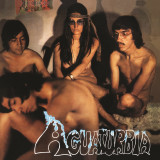
"Aguaturbia" (1970) is an essential album to understand the construction of what we know today as Chilean rock. This very influential album is raw and dynamic, featuring heavy rhythms, distortion, and exceptional phased female vocals reminiscent of Jefferson Airplane. It comprises original compositions and electrifying renditions of songs brought to fame by the likes of Tommy James & The Shondells, The Beatles and, of course, Jefferson Airplane elevating these classics to new heights of intensity and rhythmic allure. We are thrilled to make this outstanding LP available again after many years out of stock. Aguaturbia's debut album was originally released in 1970 and showcases one of South America's most significant psychedelic bands from the late 60s and early 70s. Their influence in their native Chile -and beyond- was groundbreaking. It was played live in 1969 on 3 tracks, and it became an icon of transgression due to its unbridled musical aesthetics and cover art that - for the time of its irruption - meant a clear defiance of the conservative logics lived in Chile, which saw in the nudity of the cover a challenge to morality and good manners. The album is raw and dynamic, featuring heavy rhythms, distortion, and exceptional phased female vocals reminiscent of Jefferson Airplane. Guitarist Carlos Corales shines and when he played solos at the gigs, the effect on the audience was silence and euphoria at the same time, they couldn't believe what they heard. Everything was done with a professional attitude. In fact, Carlos Corales (guitar) and Willy Cavada (drums) were both professional musicians who had made a previous career in rock and roll bands. The LP showcases breathtaking moments, like Willy Cavada's masterful drum solo in 'Ah Ah Ah Ay' captured flawlessly in a single take. Dive into the sensual psychedelic journey of 'Erotica,' where Denise's alluring vocals dance harmoniously with Carlos' electrifying guitar. Plus, don't miss their thrilling renditions of 'Somebody to Love' and 'Crimson and Clover'-each track elevating classics to new heights of intensity and rhythmic allure. This album is more than music; it's an invitation to experience sheer auditory bliss! "Aguaturbia" is an essential album to understand the construction of what we know today as Chilean rock.
- 1: Kitaro Rides A Boat
- 2: Daily Hotel
- 3: Slowly Walking
- 4: Piggyback
- 5: Castle Ruins
- 6: In The Can
- 7: Came To Sell Water Meter By Measure
- 8: Eiji Mitooka’s Arrangements
- 9: Cheap Flat
- 10: Year One And Public
Kumio Kurachi is a Japanese singer-songwriter who has been active since the 1980's.
This is his 11th solo album and only the second to be released outside of Japan following ‘Sound of Turning Earth’ (2018) on bison. Though his songs are written and performed primarily on guitar, “Open Today” is a return to Kurachi’s full, multi-instrumental recording style - featuring drums, bass, strings, keys and Kurachi’s rich, distinctive vocals in multiple voicings. Incredibly, all instrumental performances and arrangements were performed and recorded by Kurachi himself - marking a brilliant return to the fully fleshed out visionary world we fell in love with on Supermarket Chitose (Enban, 2006). The super fine detail and dense landscapes of ‘Open Today’ should come as no surprise really - Kurachi is an illustrator by trade and it bleeds right through to his music. Even to the non-native speaker Kurachi’s vocals hold centre stage - at times enormous and thundering over urgent guitar and toms, then switching to softly spoken words amongst keys. Frequently Kurachi multiplies, whether multitracking himself or summoning voices for the characters he writes from sightings on train platforms or supermarkets. His lyrics - translated to English for both formats - are more like poetry, and though written about the mundane they quickly become surreal, bringing the quality of dreams into the everyday. The hours spent on buses, trains or walking home towards a cheap flat - familiar to us all - are catalysts for microcosms of detail.
Again, we shouldn’t be surprised - Kurachi is well known in Japan for winning the national championship of NHK's "Poetry Boxing" in 2002, which also might explain his amazing Discogs photo. Poet, illustrator, multi-instrumentalist - Kurachi is thought of by many as a genius. He’s worked with Jim O’Rourke, Tori Kudo, Eiko Ishibashi and Taku Unami (who did the mastering on this LP). There are lines to be drawn between Kurachi and Kazuki Tomokawa or Kan Mikami, but also Francis Plagne and Fairport Convention.
Ultimately though there is nothing else like it - it’s a brand of strange songcraft that’s totally captivating.
Texas born Freddie King was one of the all time great Blues guitarists. He is considered one of the "Three Kings of the Blues Guitar" (along with Albert King and B. B. King, none of whom are related). Mostly known for his soulful and powerful voice and distinctive guitar playing, King had a major influence on electric blues music and on many later blues guitarists including the likes of Eric Clapton, Jeff Beck, Peter Green, and Mick Taylor.
This selection showcases live recordings from his classic repertoire over a period from 1969 to 1975. His signature tune “Hideaway” was named after a nightclub on Chicago’s Westside; “Mel’s Hideaway lounge”.
- 1: New Snow
- 2: Crash Course Christmas
- 3: Magnetic Field
- 4: I Do
- 5: First Winter
- 6: Back In Town
- 7: Turtle Neck
- 8: Colibri Heart
- 9: The Day Before The Day
- 10: This Christmas / Next Christmas
The Norwegian indie-pop super-group with members from Making Marks, The Little Hands of Asphalt, Mildfire, Flight Mode and Elva return with a third album of original Christmas songs.
Get into that alternative, Nordic Christmas spirit! Christmas III at its heart is an alt-Christmas album: the songs are firmly rooted in December’s festivities, albeit not usually relying on the season’s traditional reference points. The songs hone in on the more ambivalent sides of Christmas - family, customs and the passing of time - with a keen eye towards the holidays’ most obvious function in countries close to the Artic circle: getting through the cold and dark times to celebrate the winter solstice and the turning of the sun. Drawing from Sufjan Stevens’ epic indie Christmas compendium and Phil Spector’s wall of sound classic A Christmas Gift From You, Christmas III is built on shimmering guitars, snow filled piano lines, gentle strings, springy vocals and dynamic drums - all steadily conducted by Sunturns’ own Sjur Lyseid (Flight Mode, The Little Hands of Asphalt) in the producer’s seat at his Globus studio in Oslo. With 3 songwriters (Ola Innset, Einar Stray & Sjur Lyseid) contributing to Christmas III, there’s an ever shifting sense of reflections. Parenthood and the struggles of the dark Norwegian winter is behind Ola’s track First Winter. “Sometimes I feel bad about bringing children into such a difficult world. Not so much with respect to daylight and the seasons, they’re just going to have to learn how to live with it, but with many other things – like war, poverty, climate change and even just death.” Back In Town might have been inspired by a discussion over whether Thin Lizzy’s “The Boys Are Back In Town” is a Christmas song or not, but it’s written about his youngest daughter Klara, to his elder daughter, about taking holidays with your family in a town you once lived. Einar pulls in Phoenix and Mew by the way of Jesus and Mary Chain on Crash Course Christmas, resulting in a seasick wave of a pop tune. “It’s a song about the guilt of not prioritizing your relationships. It’s been year of rainchecks and Christmas finally gives you some time to reflect. You’ve experienced so much and changed so much as a person that you almost forget your origins. Coming home for Christmas can then be a ritual of finding your way back to what you left behind." Drawing on the knitwear from the film Love, Actually, Turtle Neck, taps into the Backstreet Boys by way of Mac Demarco, with a sneaky reference to the legendary Norwegian Christmas hit En Stjerne Skinner I Natt. Album closer This Christmas / Next Christmas leans in on the hook for the Norwegian Christmas TV show Jul i Blåfjell, a multi-generational seasonal staple (essentially a daily children’s advent calendar kids show). “The song is about your parents ageing and needing your help – possibly really far away - while at the same time having your own children to take care of”. The cover artwork is a homage to Christmas dress codes for Norwegian men. Suits and shirts are a rarity in day to day life, but there are a handful of occasions that require some form of formal attempt at a suit: New Year’s Eve, National Day, weddings & funerals, and Christmas Eve: resulting in various degrees of sartorial elegance on the day (and on this instance, a hot summer’s day stifling the Christmas vibes, with ambiguous apparel instructions ahead of the photoshoot!).
Merry Christmas! Sunturns are Ola Innset – vocals, guitars, banjo. Sjur Lyseid – vocals, guitars. Einar Stray – vocals, keyboards, guitars. Eivind Almhjell – guitars, bass. Simen Herning – guitar. Jørgen Nordby – drums.
Released in October 1974, Fear is an incredibly important in the 50+ year career of John Cale - This re-issue faithfully replicates the original 1974 Island Records UK release and is pressed onto high quality 180g vinyl.Fear marked Cale's return to recording in London after the best part of a decade in America. Signing to Island, he made fast friends with two key admirers, Phil Manzanera and Brian Eno, who assisted him in returning his music to the rawer sound of his earlier work, as opposed to the lush textures of his previous studio album, Paris 1919. The tense, clipped "Fear Is A Man's Best Friend" harks back to the work of the Velvet Underground, as does the standout, "Gun", eight minutes of overdriven bleakness with Eno duelling with Cale's guitar solo on synthesisers. Much is rightly made of these tracks, but there is also the sweetness of the gospel of "Buffalo Ballet" and the Beach Boys homage "The Man Who Couldn't Afford To Orgy". The pretty, semi-autobiographical "Ship Of Fools" offers listeners an opportunity to hear Cale reference the South Wales city of Swansea, its seaside suburb, Mumbles and his home village of Garnant. In its often-skeletal simplicity, the often triumphant Fear is an album that brought an angular aggression with it.
Debut collaborative album from Troth, the Nipaluna-based duo of Amelia Besseny and Cooper Bowman, and kindred spirit and legendary Mancunian free-form guitarist Jon Collin. A lavish dreamscape conjuring the dramatic beauty of uncharted mountains and streams, it documents both the crystilisation of ideas first shared during an Australian encounter in early 2023 and years of mutual appreciation.
Troth’s sonic universe, a constellation of drifting atmospherics, bedroom pop impulse and modern classical motifs, is deeply intimate and never rushed. Recent sides Forget The Curse and Idle Easel and live performances supporting the likes of Maxine Funke and Treasury of Puppies have seen Besseny’s soaring, celestial voice take centre stage, delicately adorned with Bowman’s synthesiser flourishes and homespun instrumentation. At their heart lies Bowman’s tireless collaborative instinct: his decade-long involvement in the Australian underground and his countless musical outfits (including contemporary trio Th Blisks, with Besseny and Yuta Matsumura).
Summer 2023 saw the duo host two shows for Collin in their former home of Mulubinba, regional New South Wales. Collin is perhaps best known for his playing, deconstructing and reconfiguring of the guitar and other stringed instruments, realised in solo works on his own Early Music and Winebox Press imprints, and collaborations on a trio of albums with Demdike Stare and live sessions with Sarah Hughes and Bill Nace. His unique style of playing, sometimes delicate, at other times frictional, refutes expectations of traditional instruments and fits perfectly within both Troth’s ethos and their lush sonic mise-en-scène.
The objects of devotion perhaps symbolise the group’s devotion towards each other during their music-making process, and the fruits from which they are borne. “I think, any music I have a hand in, is a dialogue with by the people I'm making it with. It's an ongoing conversation between people and sound”, reflects Bowman. The sacredness and ominousness of remote Tasmania is just as affecting, the interplay of Besseny’s haunting vocal washes, Bowman’s sparse instrumentation and Collin’s ritualistic strum evoking the eeriness that lurks beneath the seemingly limitless Australian landscape. “When I think about it, it sounds like being together at the bottom of the Earth. Watching, listening and playing together with no-one else in sight."
The Kings of Northern Hyperblast wear the crown once more with pride: “In The Arms Of Devastation” is a monster of an album that strongly reaffirms KATAKLYSM´s pole position in the world of extreme Metal. Produced by the man himself, KATAKLYSM guitarist J-F Dagenais, “In The Arms Of Devastation” received its accolade through the mixing of mastermind Tue Madsen at the Danish Antfarm Studios. Their 8th album shows the band at its best after a long journey of evolution through the folds of all things brutal, technical, extreme and, most of all, heavy! All the trademarks we love so much about KATAKLYSM bare their teeth in the indeed devastating nine tracks of “In The Arms Of Devastation”. “Like Angels Weeping The Dark” is a killer of an opener and guaranteed to tear the whole place to pieces, whilst the slow, grinding and almost doomy “Crippled And Broken” is the tank that will flatten the remains of the wreckage. “It Turns To Rust” is a first in the band’s history: the first time vocalist Maurizio Iacono has ever recorded a duet for KATAKLYSM. Together with KITTIE singer Morgan Lander he turns the track into a fierce duel loaded with screams and growls from hell. A lesson in violence – just like the whole album, so prepare for total devastation, prepare for the return of the mighty KATAKLYSM!
- 1: Don't Let Me Down
- 2: I'm Looking Through You
- 3: Can't Buy Me Love
- 4: Rain
- 5: While My Guitar Gently Weeps
- 6: Let It Be
- 7: Yer Blues
- 8: I've Got A Feeling
- 9: I'm So Tired
- 10: Something
- 11: With A Little Help From My Friends
- 12: The Long And Winding Road
'Lucinda Williams Sings The Beatles From Abbey Road' features 12 Beatles songs that include classic hits such as “Can’t Buy Me Love”, “With A Little Help From My Friends” and “Something”. Williams and her band also take on beloved deeper tracks such as “I’m So Tired”, “I’ve Got A Feeling," and “Yer Blues”. Being raised on the blues in the South, the latter is a song Williams was clearly meant to sing. Recorded at The Beatles' legendary studio in London, the new collection serves as Vol. 7 of her celebrated 'Lu’s Jukebox' series and is the first new volume in almost four years. While many great artists have recorded in the hallowed Abbey Road Studios, as it turns out, Williams is the first major artist to actually record Beatles’ songs there aside from the Fab Four themselves. As an acclaimed, award-winning singer/songwriter for more than four decades, Williams’ music has been highly influential and covered by a multitude of artists. Williams is also an extraordinary interpreter who, like all great interpreters, has the ability to inhabit a song and make it her own. She does just that throughout this selection of Beatles tracks, as she has done on each 'Lu’s Jukebox' volume.
Recorded quickly between John Cale producing Patti Smith's Horses and his going out on an Italian tour, Helen of Troy became Cale's third and final studio album for Island Records - This re-issue faithfully replicates the original 1975 Island Records UK release and is pressed onto high quality 180g vinyl. Helen Of Troy is a raw, fascinating listen. The title track with its horns and spoken word is one of Cale's best: after the sweet bubblegum of "China Sea", the album gets increasingly stripped down the acoustic guitar and piano of "Cable Hogue" and the punkish cover of The Modern Lovers' "Pablo Picasso" have long been favourites on the album. "Leaving It All Up To You" in which Cale becomes increasingly disturbed garnered controversy at the time and was actually removed from later pressings of the album because of its references to the Manson murders. Cale never lost his ability to shock. Taking its title from the opening line of Johnny Cash's "I Walk The Line", "I Keep A Close Watch", a track Cale would record again several years later, with its Robert Kirby-arranged strings and horns, is the closest Cale has veered toward a power ballad. It is a work of great beauty among all the jagged edges of Helen Of Troy.
When Sonny Rollins arrived to Los Angeles in early 1957, he discovered that Ray Brown was also in town with Oscar Peterson's trio and that Shelly Manne was on hand leading a band of his own. The result was a March 7, 1957 recording session, Way Out West, which marked Rollins' very first date in a trio setting and his first recording without the accompaniment of a piano or guitar. The saxophonist was at the height of his career during this period and in 1957 he was named the "New Star" tenor saxophonist in the Down Beat critics' poll. THE COMPLETE ALBUM + 1 BONUS TRACK - Contains new specially prepared liner notes by Penguin Guide to Jazz's writer BRIAN MORTON and by Paris' prestigious JAZZ MAGAZINE.
In what many consider to be the birth of jazz fusion, Emergency!, led by Tony Williams (drums) with bandmates John Mclaughlin (guitar) and Larry Young (organ), is a true adventure in the beginning of the jazz-rock blend that would take shape in late 1960s and beyond. From the opening title track, the direction is decisive and commands attention as Williams leads his crew through a mixture of swing, rock and free jazz that cements its place as one of the most influential albums of the time. This Verve By Request title is pressed on 180-gram vinyl at Third Man in Detroit.
Jabu return with ‘A Soft and Gatherable Star’, an LP that sees the Bristol-based trio evolve from a uniquely spectral take on trip hop to proffer a singular vision between cloudy, downered dream-pop, off-kilter ambient, and the warm, low-end throb of sound system culture. This development is aligned with contemporaries like HTRK, Dean Blunt, Tarquin Manek, YL Hooi and Rat Heart Ensemble, whilst also harkening back to the likes of AR Kane (with whom they are set to play shows and release a collaborative single), the languorous drift of 'Victorialand' era Cocteau Twins or The Cure circa ‘Disintegration’. Comprising Jasmine Butt (vocals, guitar), Alex Rendall (vocals, keys) and Amos Childs (production, bass guitar), the trio’s method may have shifted but the feel remains consistent - slow, spatial, sensuous and gently melancholic. With a career arc unlike almost any other current guitar outfit, Jabu sit within a strong lineage of off-centre Bristolian music, and a very British strain of home-spun DIY bands. Self-recorded between Jas and Amos’ home in South Bristol and Amos’ mum’s house in rural North Somerset, the album came together via a process of trial and error - learning to play on borrowed instruments, using the equipment “wrong”, staying up late recording and slipping into strange, semi-conscious sleep deprived/inebriated headspaces. Having captured over 50 tracks, they honed in on those they liked most, shaping them further, whilst carving out space to allow input from people they love and admire - Daniela Dyson’s voice and Will Memotone's clarinet on ‘Ashes Over Shute Shelve’, Birthmark's synth on ‘Gently Fade’ and ‘Sea Mills’, Rakhi Singh (Manchester Collective) and Sebastian Gainsborough (Vessel)’s strings and arrangements on ‘All Night’, Josh Horsley’s cello on ‘If I Asked You, You'd Tell Me’, and Lorenzo Prati’s sax, again on ‘Sea Mills’. The album was mastered by Amir Shoat (HTRK, ML Buch, Dean Blunt, Carla Dal Forno). Influence-wise, the guitar-based material recalls the bands Amos listened to when younger, and Jas’ more folk-leaning inspirations. Deep-lying dub, hip hop and soul influences are also evident in both the way the LP was mixed, and the space ingrained in their subconscious. Tinged with melancholy, the songs cohere as a set of soliloquies and ruminations on love and tenderness. The album’s title comes from a poem by Amos’ late father which hangs on his wall and seeped into the record. ‘Ashes Over Shute Shelve’ is formed of lines from another poem of his. Recited by longtime collaborator Daniela Dyson and with Will Yates (Memotone) playing his mother’s clarinet, the track was imagined as a conversation between his parents. Geography and location also play a big part in the record, with several significant places name-checked in songs. Shute Shelve itself is a hill near Amos’ mum’s house, who explains “There’s a tree at the top with a 360° view of the Mendips, where my dad’s ashes were scattered. We used to go up there when we could first buy booze from the petrol station down the road, get drunk, light a fire, listen to music from my little battery powered CD player and sleep out without tents.” Titled after a Bristol suburb near where Amos’ grandparents lived and where Jas would spend time as a teenager, ‘Sea Mills’ references her being abandoned by friends on the Downs while high on mushrooms, stranded and missing the bus back. ‘Kosiše Flower’ references the city in Slovakia where Amos and Jas holidayed shortly after getting together and a flower he gave her, which she pressed in a book after an argument. ‘Oceanside Spider House’ is a location in Nintendo 64 game The Legend of Zelda: Majora’s Mask, where someone seeks shelter from the falling moon. Genre: Electronic / Ambient / Dream-pop
- A1: Heaven, Or Paradise; And Hell (Ft Adrien Soleiman)
- A2: Our Dead Can’t Rest (Old Jugha Flute Dance)
- A3: Miracle
- A4: The Crane Has Lost Its Way Across The Heaven
- A5: Unraveling (Interlude)
- B1: Zephyr
- B2: Far From The Eye, Far From The Heart
- B3: What Solace Can I Give (Ft Adrien Soleiman)
- B4: …Nothing Matters More Than Touching You Although I Haven’t Touched You Yet
Lara Sarkissian’s long-awaited debut full-length, ‘Remnants’ is an ornate patchwork of ancient and modern sonic shapes that uses the vernacular of electronic music to reformulate Armenian traditions and memories. Taking digitally modeled instruments (such as the kanun, a large zither, and the duduk, an ancient double reed woodwind instrument), vocals, davul and dhol drums, tenor saxophone (from acclaimed Paris-based player Adrien Soleiman) and myriad electronic elements and techniques, Sarkissian tangles the old and the new, creating an immersive, narrative-driven experience that’s powered by history, mythology and her own familial connection to the West Asian landscape. It’s an album that’s best absorbed like a film; only multiple encounters can reveal its layered themes and references to industrial music, noise, various club styles, ambient and traditional folk.
Born and raised in San Francisco and currently based in Los Angeles, Sarkissian has developed her unique approach to composition over years of relentless experimentation across various disciplines. Her interest in music production initially stemmed from her filmmaking and video editing work, when she began to sculpt her own sound collages and scores to accompany the visuals. Since then, she’s constantly blurred the boundary between dance and experimental music, DJing around the world, producing AV installations and scoring film and video projects that have been exhibited in Berlin’s Gropius Bau, Montréal’s Musée d’art contemporain, the Music Center Los Angeles and other prestigious institutions, and releasing music with labels such as Tresor, Knekelhuis, All Centre, Silva Electronics and CLUB CHAI, the label and event series she co-founded. In recent years, she’s also been able to advance the theory behind her art, publishing a conversation with ethnomusicologist Sylvia Alajaji in the Journal of the Society of Armenian Studies in 2021, and unveiling her methodology in Norient’s ‘This Track Contains Politics – The Culture of Sampling in Experimental Electronica’ a year later.
‘Remnants’ is a new stage in Sarkissian’s evolution as an artist; not only is it her first proper album, but it’s the inaugural release on her new platform btwn Earth+Sky. She sees the label as a place to encourage collaborations between musicians and producers and prioritize sound in visual arts realms, and ‘Remnants’ is the ideal proof of concept. It opens with ‘Heaven, or Paradise; and Hell’, a track that’s inspired by the layout of the Armenian sharakan (or hymn) ‘Aravot Luso’. Sarkissian imagines the original piece’s harmonies and melodies as parts of a dreamy electronic opera, using digital kanun sounds to punctuate her woozy, evocative synths. Soleimen joins on tenor sax in the third act, while Sarkissian repeats the chant and Jace Akira adds ghostly traces of electric guitar and bass. And on the rousing ‘Our Dead Can’t Rest (Old Jugha Flute Dance)’, Sarkissian chops urgent davul and dhol drum rhythms with spine-chilling shvi woodwind sounds lifted from a documentary about Old Jugha. The title is a reference to the moving of graves by Armenian families; the area initially housed over 10,000 elaborately carved khachkars (cross stones), one of which is pictured on the album’s cover, provided by historian Argam Aivazian’s archive.
On ‘Miracle’, Sarkissian samples atmospheres from the post-Soviet Armenian comedy film ‘Կիսանդրի’ (Kisandri). She takes this opportunity to lighten the mood a little, powdering her smudged samples with tightly edited breaks and bass thumps. It’s not until the album’s middle section that the duduk, perhaps Armenia’s best-known instrument, makes its appearance. Its familiar reedy tones, popularized by Djivan Gasparyan on his many Hollywood soundtrack appearances, emerge on ‘Unraveling (Interlude)’, weaving through the acidic ‘Zephyr’ and ‘Far from the eye far from the Heart’, a post-punk inspired stomper. Sarkissian mutates the instrument almost beyond recognition, pitching and layering it into a voice-like wail that creeps between her woody, dancefloor-primed percussion on the former, and turning it into a gentle, ghostly moan on the latter. And she brings ‘Remnants’ to a close with two of her most cryptic tracks, marrying digital kanun strings with Soleiman’s resonant tenor hums on ‘What Solace Can I Give’, and looping the same saxophone sounds until they dissolve into the air on the beatless closer ‘…nothing matters more than touching you although i haven’t touched you yet’.
It’s an album that ties up Sarkissian’s various interests and experiences, finding a romantic, poetic glimmer of light in history’s darkness. But most of all, ‘Remnants’ is about the optimism of starting anew, and rebuilding a life from the pieces of everything that’s been left behind.
Naoki Zushi. Perhaps best known for his stellar guitar contributions to psych folk group, Nagisa Ni Te, Zushi has had a parallel career, for several decades, slowly releasing solo albums that spotlight his exultant guitar playing. Originally released to CD only by Shinji Shibayama of Nagisa Ni Te’s Org imprint in 2018, IV has Zushi playing and writing at a peak, its six songs slowly unfurling with a kind of paradoxical understated grandeur. This is psychedelic guitar music at its most paced and considered, yet given to flights of inspiration, and in this respect, Zushi sits within a lineage of guitarists who’ve used their instrument both as textural anchor and improvisatory tool – think of figures like Phil Manzanera and Robert Fripp, but also Roy Montgomery, Liz Harris of Grouper, even Tom Verlaine on his instrumental solo albums. Like those artists, Zushi locates moments of deep emotional resonance amidst luxuriant textural and melodic exploration. Zushi’s history stretches back to the mid 1970s. While for many, he first appeared on the scene as a founding member of noise legends Hijokaidan, alongside Jojo Hiroshige, his musical contributions predate that encounter. He started out playing progressive rock and improvised music, making home recordings of when he was in high school. He was a member of Rasenkaidan (Spiral Staircase) alongside Hiroshige and Idiot (Kenichi Takayama), the group that soon mutated into Hijokaidan (Emergency Staircase). Zushi and Takayama would soon form Idiot O’Clock, in 1982; Zushi also led his own Naoki Zushi Unit, starting in 1983. But for many, Zushi’s first significant appearance on record was as a member of Shinji Shibayama’s mid-eighties psych-pop group, Hallelujahs, whose sole album was recently reissued on vinyl. That group mutated into Nagisa Ni Te, and Zushi has played a significant role as their lead guitarist for several decades. His own solo music has appeared sporadically – Paradise (1987), Phenomenal Luciferin (1998), III (2005) and IV, with a few recent, meditative offerings, For My Friends’ Sleep (2021) and Nocturnes (2022). With IV, though, Zushi achieved something remarkable, a kind of extended exploration of the time-altering properties of echoplexed, hypnotically spiralling guitar interplay. The opening ‘Mirror’, “a song about the mirror inside me,” Zushi explains, starts out as a lush psych-folk song, slow and gentle, but soon takes to the skies with a cat’s cradle of Fripp-esque guitars, before thick, droning chords sweep the song to a drowsy coda. ‘Nocturne’ weaves silver skeins of guitar melody around a cyclical chord pattern; it gathers energy and quiet intensity through insistent repetition. The rest of the album explores the nuance Zushi can draw out of simple elements, building on what ‘Mirror’ and ‘Nocturne’ offer – the profundity of a chord change; the melancholy of a few quietly sighed words; the exhilaration of a guitar solo bursting out of the speakers; the subtle shifts in emotional register offered by tone and touch. Throughout, there’s something quiet, yet ineffable, shading the contours of the songs, such that it makes perfect sense when Zushi says, “What I want to express through music may be ‘sense of mystery’.” A few of the songs had their basic parts recorded at LM Studio and Studio Nemu with Shibayama and Masako Takeda joining on bass and drums, respectively; much of the album, however, was tracked at Zushi’s home studio. That seems appropriate for a collection of songs that are expansive in their intimacy. Asked what drove the sessions, Zushi answers, “I thought I’d make IV an album that particularly focuses on the guitar play.” And focus it does, as Zushi’s sky-scraping, soaring, elemental tone is front and centre throughout. But these are no guitar heroics; rather, Zushi uses the guitar as conduit and diviner, a tool for spirit location, and IV is his most eloquent expression yet of such singular magic.
Continuing our quest to get all of the classic early AMT albums released on vinyl, we turn to 2006’s ‘Starless And Bible Black Sabbath’, and with the help of Makoto Kawabata’s studio wizardry, we’ve made it possible.
This latest instalment in the ‘Acid Mothers Temple Vinyl Archives - First Time On Vinyl’ series (as with the three previous SOLD OUT releases in the series) have all been meticulously put together with the help of Makoto Kawabata with the original CD artwork recreated for these vinyl editions from archive photos stored in the vaults at the Acid Mothers Temple in Osaka, Japan and the original audio remastered by James Plotkin.
Here’s what "Brainwashed" had to say upon it’s original CD only release back in 2006 …
“The title track is the meat of the beast, beginning with a minute of booms and gongs reminiscent of a thunderstorm before launching into some slow, heavy Sabbath-esque riffs. Squealing guitar and synth effects accompany the vocals of bassist Tabata Mitsuru, whose voice captures some of the sound and feeling of Ozzy's more than it does the melody. The pace is slower than most AMT fare, but things speed up considerably around the eight and a half minute mark. The group convincingly imitates the Sabbath guitar sound here and the rhythm section is particularly tight, giving listeners something on which to hang their ears or even providing them with a chance to gasp for air during Makoto's guitar explorations. Around the sixteen minute mark, everything comes to a wailing halt before the band returns to the dirge-like tempo that started the song. This pattern continues for the duration of the piece, until a couple of minutes before the ending, when the group makes a smooth transition to acoustic guitar and processed vocals to cool down.
Clocking in at nearly thirty-five minutes, the length alone may tax some listeners. However, the second track, "Woman From A Hell, "provides relief, which with a running time of six minutes is uncommon in the Acid Mothers canon for its brevity. This one condenses many of the ideas of the title track, and accomplishes much of the same evocation of Sabbath, but with the vocals in a more prominent role. The disc comes full circle, ending with thunderstorm sounds much like theones which started the album. Though the title track could have been shortened and perhaps an additional track included, this album remain some of the group's more accessible releases in some time and should please fans old and new alike.
According to the group's website, Makoto is reviving the Melting Paraiso U.F.O. line-up after a year of recording and touring with the Cosmic Inferno. This is a shame of sorts, since the Cosmic Inferno infused a much-needed vitality to the group that it had lacked since the departure of vocalist Cotton Casino. Yet the reformed Melting Paraiso U.F.O. has the potential to be even better since, if anything, Makoto seems to be the Mother of Reinvention.”
Acid Mothers Temple & The Cosmic Inferno are: Tabata Mitsuru - Bass, Vocal, Maratab - Hiroshi Higashi - Synthesizer, Dancin' King - Shimura Koji - Drums, Latino Cool - Okano Futoshi - Drums, God Speed - Makoto Kawabata - Guitars, Speed Guru
The last couple of years have seen a renaissance for West Coast singer-songwriters. LA-based youngsters such as Drugdealer and Sylvie have attracted considerable attention releasing warm and mellow records tonally reminiscent of the early 70s. Most fans of this new/old sound are unaware of Bart Davenport's early explorations in the same sonic territory. His now 20-year-old "Game Preserve"album should gain an appreciative new audience with its first ever vinyl release.
In the year 2000, Bay Area troubadour Bart Davenport and several other musicians were recruited by a major tech corporation in Seattle to work on an algorithm-based music matching/search engine. It was what looked like the beginning of a promising career. After a year, however, the project was shelved. Bart and his colleagues were laid off with a healthy severance package... on the 12th of September, 2001. Not only had the musician's life changed, so had the world. Rather than blow the money on a holiday or new car, Bart knew he had to make a record. A proper album that meant something.
Back in Oakland, he entered Wally Sound Studios with former Kinetics bandmate Jon Erickson at the controls, and a swathe of talented local musicians. "With Game Preserve," Bart explains, "Jon and I really wanted to knock it out of the park. I wanted to utilize people from my old bands like Loved Ones drummer John Kent. I also invited my newer indie-pop friends from Call & Response, and a young Nedelle Torrisi. Harmony singing by The Moore Brothers was an essential ingredient on Game Preserve as well."
Both Erickson and Davenport fondly recall growing up in households where the music of The Carpenters, Joni Mitchell and The Eagles soundtracked their young lives. By the early 00s they were ready to reconnect with what is often referred to as the "Laurel Canyon" sound. "I'd buy used tapes at garage sales and play them in the car. "Ladies Of The Canyon" by Joni and Jackson Browne's first album were both in heavy rotation. Jon Erickson was getting deeper into the Steely-Mac-Doobie yacht-rock sound in earnest. A certain amount of childhood nostalgia led a lot of us back to that part of the 70s. I'd flirted with classic soft-rock on my first album, but that record was pretty scattered esthetically. I wanted my next one to be more focused. Jon and I made some ground rules: no electric guitars (except on 'Bar-Code Trees'). No synths. Most importantly, all the songs have an air-tight, super dead, close mic'd drum sound. Putting these sorts of limitations on the sessions will give your record a specific quality. In the case of "Game Preserve"it's mostly about tight drums, acoustic instruments and analog production. We used a 24-track, two-inch tape machine for tracking, then ran the mixes through an analog board straight to a 1/4 inch master tape."
While the album's sonic palette may be firmly planted in 1970, Davenport's songwriting covers a sizable landscape of moods and reflections. From the quasi-flamenco intro of 'Sweetest Game' to the somber Wurlitzer of 'Nowhere Left To Go', to the 12-string shimmer of 'Intertwine', "Game Preserve" tells a story of young love, lost innocence and redemption, crossing borders and oceans along the way.
Released in 2003 on family-run Oakland label Antenna Farm, the ultra-analog sounding "Game Preserve" was only made available on digital formats, including CD. Copies were later pressed by labels in Germany and Spain; the latter being one country the album actually did well in, establishing Bart Davenport with a small but loyal fanbase he still enjoys today. Two European tours as support for Kings of Convenience also helped gain a foothold on the continent. Back in the US, however, Davenport and his sophomore album remained quite obscure.
Limited promotion meant it did little, but for the music lovers that heard it, the album undoubtedly remains a classic of the era, deserving far more. Twenty years on, it now finally receives its vinyl debut. "I personally think it holds up well," says Bart of the album two decades later. "The idea was to make something that could be an homage to late 60s/early 70s West Coast pop but hopefully timeless as well. Years on, I hear it as just that. It was a colorful and brief period of my life that felt at times like it could last forever. I discovered the joy of working in a proper studio with a perfect cast of characters. I'm still very close with all these people and still play music with many of them."