Repress
R&S proudly presents brand new signing Felix Manuel AKA Djrum.
Djrum is a perennially acclaimed underground artist, since his first release in 2010 who's quietly built a list of fans that reads like a who's who of contemporary dance music.
As an artist, Djrum has formed a reputation for his unique fusion of a range of genres ranging from jazz, hip hop and dubstep to ambient and techno. His music swells with oceanic bass laded beats, cavernous atmospherics and deeply emotive melodies. An accomplished DJ his compositional approach feels like a natural collage of his influences which has seen him release for the likes of the Zenker Brothers Ilian Tape imprint as well as the influential 2nd Drop label, plus remixes for Ninja Tune and Domino.
Felix now steps up to the plate at R&S with one of his most visionary releases to date. Deeply meditative melodies twist and turn through stuttering rhythms and pulsing low bass, hypnotic pads and woozy atmospherics. Manuel's music somehow manages to retains the urgency and dynamic pressure of the dance floor with the intimacy and elegant detailing of the best headphone music.
A natural fit for R&S, there is a full length Djrum album in the pipeline in 2018 - looks like it's going to be an exciting year ahead.
Search:manu p
Disco Mind Records impressed everyone with its first EP and now it deals with the pressure of coming back with a second in fine fashion. This one is perfect for warm days and summer nights as it offers four high-impact and gloriously feel-good Brazilian and disco edits all pulled off to perfection. New young talent Brother Julian kicks off with a peak time and groovy burner, then disco don Romand Truth goes a little more deep and smooth with his seductive sound. Delfonic offers the percussive Latin grooves of 'Nada is Going to Change' and 'Grito de Guerra' is another upbeat open-air rhythm.
- 1: Siphium
- 2: Moly
- 3: Psalacantha
- 4: Styrax
- 5: Argos
- 6: Murena
- 7: Snake Of Arabia
- 8: Gold Eating Ants
Crypt of the Wizard is proud to present Ginger Wizard - The Curious Flora and Fauna of the Ancient World on vinyl and digital formats.
About ten years ago in a record store in Prague, the Ginger Wizard discovered a copy of Bo Hansson’s Lord of the Rings LP. Although initially unfamiliar with the record, the reference to Tolkien’s masterwork and the incredible cover art drew him in and, rather fittingly, sent him off on a journey of discovery that would reshape his creative trajectory.
Years later while working in cassette tape manufacturing, Ginger Wizard noticed that most fantasy-inspired music fell into two camps: metal and dungeon synth. With little interest in the former, but intrigued by the latter, he began writing a few songs imagining a beautifully packaged and tactile cassette tape. However, dungeon synth he soon realized was “the most boring music to make”.
So began the Ginger Wizard’s own mythological discography. In 2022 came The Feast for the Dead King and Other Musical Themes recorded at home in a cold kitchen, is conversely an album full of warmth drawn from sheer exploration. A year later Can I Choose My Own Psychopompos? was recorded for the legendary Stoned to Death label - a 7” séance of semi-improvised noise and melody featuring allies from the Ginger Wizard’s live backing band The Peter Jacksons. The following year with Bathysburg Tales, a new approach was needed in order to keep the project interesting. Drawing inspiration from Popol Vuh and the inclusion of vocals lent by Protomartyr’s Joe Casey and Jakob Battick, a new more cinematic sound began to emerge.
Now, we present The Curious Flora and Fauna of the Ancient World marking a step into something stranger while still channeling the spirit of Bo Hansson. The new album rejects swords and sorcery for the mythology of the natural world “the ancient stuff,” he explains in the record’s insert, “has a similar taste for me as fantasy.” These songs bloom, creep, and shimmer like forgotten plants under distant suns while rooted in something real and organic. Inspired by the myths of nature rather than heroic quests, it’s an album that feels alive, equal parts archaeological dig and psychedelic garden.
Currently at work on a soundtrack for an imagined 1970s fantasy film in collaboration with The Peter Jacksons, the Ginger Wizard continues to expand his strange universe while The Curious Flora and Fauna of the Ancient World serves as a new map to somewhere ancient, beautiful, and unknown.
Swan Song
The vinyl LP at the heart of this éthiopiques 31 tracks 2 to 11 was one of the very last vinyl records ever released in Ethiopia. But above all it represents, we felt, the absolute masterpiece of the Ethiopian Groove – the Swan Song of Swinging Addis. The album leaves a clear idea for posterity of the level of sophistication and mastery that modern Ethiopian music had achieved, before being crushed under the Stalino-military heel of the Derg – as the bloody revolution that was unfolding came to be called.
Ethiopia1976.
The Revolution that broke out in February 1974 rolled on in a ruthless march. The whole of Ethiopian society was utterly stunned. The bouquets of flowers handed joyfully to the first tanks of the coup d'état were to wilt very rapidly. From September 1976 to February 1978, 18 months of Red Terror (the name given by the junta itself) spilled blood throughout the country. This fratricidal conflict took its heaviest toll among students and youth. The shift from feudalism to a cruel and primitive Stalinism left the country's citizens deeply traumatised, and snuffed out any pretence of activism, whatever the sector of society. This ice age was to last for seventeen long years.
ሙሉቀን፡መለሰ Mulukèn Mellèssè Muluqän Mälläsä
It was three tracks by Muluken that served as the opener for éthiopiques-1 more than 25 years ago. Seven more tracks appeared on éthiopiques-3 and 13, all accompanied by The Equators, which was soon to become the Dahlak Band.
The first track, Hédètch alu, also the very first piece that Muluken ever recorded, left audiences both unsettled and amazed. Reflecting the singer's extremely young age (he was just 17 at the time), this angelic voice mystified many, who thought they were in fact listening to a feminine voice. He was not yet 22 when he released his last vinyl record in 1976 with Kaifa Records (KF 39LP), one of the very last to be issued in Ethiopia, before the cassette tape became the dominant medium for music distribution – and before the new revolutionary regime put a stop to all independent musical life, via an unspeakable barrage of prohibitions and other persecutions.
Mulu qèn, literally, “A well filled day”. This tender maternal intention wasn't enough to ward off the cruelty of fate. His mother's premature death drove Muluken to leave his native Godjam, in northeast Ethiopia, to live with an uncle in Addis Ababa. Born Muluken Tamer, he took his uncle's last name – Mèllèssè.
The spelling Muluken appeared in his administrative records. Transcription of Amharic to the Latin alphabet, both in Ethiopia and for scholars, gives rise to controversies and quibbles that can never be neatly settled. French allows for a closer approximation of the original pronunciation, thanks to its battery of accent marks, confusing as they may be to anglophones.
Between rather accommodating administrative record-keepers and the various versions that pop up in interviews given by the artist, Muluken's year of birth oscillates between 1953 and 1955…
1954? One thing is certain: the artist's talent made itself known very early indeed, because he got his start in 1966-67, at the age of 13 or 14. Photos from the period attest to his extreme youth. It's a strange sort of initiation for a very young teenager to become a sensation in the heart of Addis's nightlife at the time, Woubé Bèrèha – the Wilds of Woubé. And what's more, in the club of the Queen of the Night, the Godjamé Assègèdètch Alamrèw herself, the very same that was portrayed by Sebhat Guèbrè-Egziabhér in his novel-memoir Les Nuits d’Addis Abeba2… The legendary female club owner who is remembered to this day by the capital's ageing boomers.
Muluken first tried his hand at the drums, before he grabbed the microphone. He emigrated briefly to the Zula Club, across the street from the old Addis Post Office, one of the ground-breaking bars of the burgeoning musical scene, before joining the Second Police Band in 1968, for around three years. He spent a few months with the short-lived Blue Nile Band founded by saxophonist Besrat Tammènè. As the musical scene grew increasingly successful, and pulled slowly but decisively away from its institutional ties, Muluken released his first 45rpm single in February 1972 (Amha Records AE 440). It was included in two LP Ethiopian Hit Parade compilation albums in September of the same year. All in all, Muluken released eight two-track 45s and the same number of original cassette tapes between February 1972 and 1984, the year that he departed for permanent exile in the USA. After converting to Pentecostalism in 1980, Muluken gradually abandoned all secular musical activity. In 1985, at the end of a concert in Philadelphia, he decided to quit concerts and recording for good. Mèlakè Gèbré, the historic bass player from the Walias band who was playing with him that night, recalls that everything appeared so irredeemably diabolical in Muluken's eyes, that it was to be the end of his contribution to Ethiopian Groove.
The end of the story, the beginning of a legend.
Dahlak Band, forgotten by History
Aside from his personal history and vocal talents, it must be remembered that Muluken Mèllèssè was one of the biggest names in the musical innovations that marked the end of the imperial period. These éthiopiques aim to convince those who are just discovering this hidden gem... As for Ethiopians themselves, they are to this day captivated by this singular and atypical figure in the Abyssinian pop landscape – even though he withdrew from public life some 40 years ago. Incorrigible devotees of poetic twists, of more or less hidden meanings, Ethiopians appreciate above all the care Muluken took in choosing his lyrics and the writers who penned them, such as Feqerte Haylou, Alemtsehay Wodajo and, here, Shewalul Mengistu (1944-1977). Love songs, written by women, a far cry from the conventional drivel that pleases sappy sentimentalists.
Muluken is equally acclaimed for his perfectionism when it came to music, the opposite of the overly casual approach that is all too common. He remained a faithful partner of musicians who came from a lineage that borrowed from several inventive and pioneering bands (Venus, Equators, Dahlak). Amongst them were certain artists who began their musical lives with Nersès Nalbandian at the Haile Sellassie Theatre and who come of age in around 1973 – at just the wrong time, you might say. Among them were the pillars Shimèlis Bèyènè (trumpet), Dawit Yifru (keyboards) and Tilayé Gèbrè (sax & flute). Most notably Tilayé Gèbrè, certainly one of the most important musicians, composers and arrangers of his generation, of the end of the imperial era, and of the early years of the Derg.
It was only in 1981 that a miraculous opportunity arose for Tilayé to escape the Stalinist paradise of the dictator Menguistou Haylè-Maryam. Once again it was Amha Eshèté (1946-2021) who provided a solution. The spirited and courageous producer, who had been in exile in Washington since 1975, succeeded, thanks to his incredible perseverence, in bringing the Walias Band to the USA. It was, in fact an extended Walias Band comprising ten musicians3, six of whom chose to slip away after a few concerts and the recording of an LP (The Best of Walias, WRS 100). Tilayé Gèbrè was one of these. He has been living in the USA ever since. There he joined the then-nascent Ethiopian diaspora, which lived largely unto itself, and was making only very modest headway in the American musical market. It seems unfair that Tilayé Gèbrè and the Dahlak Band were not able to benefit earlier from the public recognition that they do deserve.
A similar draining away of the top-rate talents would lead to the reorganization of the major groups of the “Derg Time”. The remaining artists spread themselves around between Ibex Band (renamed Roha Band), Ethio Star Band and a remodeled Walias Band. That spelled the end of the Dahlak Band.
With this record, produced by the essential Ali Abdella Kaifa a.k.a. Ali Tango, we can appreciate everything that the Derg not only destroyed, but also prevented from flourishing. This gem of Ethiopian-style afrobeat came out in 1976 (and, by way of a parenthesis, before the FESTAC 1977 in Lagos, which was attended by an impressive delegation of Ethiopian musicians — although Fela was already personna non grata in his own country). Despite everything that might distinguish this ethio-groove from Fela’s music – no colonial axe to grind, no question of political confrontation with the authorities, no claims to negritude or Africanism for the Ethiopian musicians, and less extrovertion! –, this LP fits beautifully into the saga of intense and electrified soul of the new “African” groove that Fela and Manu Dibango embodied so well from that point onwards.
In restoring this record to its place in the afrobeat epic, it can be seen that, if nothing else, the timeline bestows a legitimate pedigree and a historical primacy to works that had no international impact when they were originally released.
Warning! Masterpiece!
A rhythmic minimal ambient piece played with organic electronic sounds. Elements of electronic, psychedelic, and ethnic music are interwoven. The vinyl debut of Japanese composer / electronic musician NAT000. Mastered by ISAO KUMANO of Phonon, a Japanese audio equipment manufacturer. NAT000 : After performing live as a one-man drone under the name sonic mainly at 20000v in Koenji Tokyo and DOM in Nishi-Shinjuku (now EARTHDOM in Shin-Okubo), he became a band member of the hardcore bands BUTTHEAD SUNGLASS and ABRAHAM CROSS, which gained popularity in the underground scene in Tokyo in the 2000s.The Band has been performing in parks, abandoned buildings, and campgrounds. Since turning solo again, he has been producing electronic music and performing live using analog synths, samplers, drum machines, software, and effectors, and has privately released a CD of self-produced recordings. This album is a compilation of past works from those CDs and newly produced works for the album.
Manuel Di Martino carves fresh scars into the floor with Cicatrici EP on Parallel 41 – tense, driving techno and wired electro dreaming of Detroit and forged between Naples grit and Berlin basements. Futuristic, emotional and built for sweatbox systems, this one goes deep and hits hard.
- A1: Rone - The Dolphin Ambassador
- A2: Mézigue & Swooh - Broken Roll To Venice
- A3: Kink - Give Me
- B1: Belaria & Madben - Into The Void
- B2: Oniris & Benjamin Rippert - Sonate
- C1: Legowelt & Cuften - Liar
- C2: Zaatar & Trunkline - Come Into The Light
- C3: Scan X & Electric Rescue - Lost In Time
- D1: Manu Le Malin & Kmyle - Little Big Man
- D2: Célélé & Théo Muller - Drum And Drift
Astropolis Records — the label born from the legendary electronic French festival — celebrates a decade of electronic devotion with a generous and deeply emotional anniversary compilation - a bit late, but never short on flair.
This double vinyl gathers the many faces of the Astropolis galaxy: in-house artists, long-time companions of the festival, and rising voices from a perpetually vibrant French scene. Across 18 artists, listeners are invited on a sonic journey where rave legacy, electronic dreamscapes, and collective fervor intertwine — true to the DNA of a festival that’s never known boundaries.
The record opens with grace and wonder courtesy of Rone, whose electronic touch channels both the intimate and the infinite. Between electronica and downtempo, The Dolphin Ambassador bathes in luminous melancholy, offering a moment of calm before the storm. In the same contemplative vein, we’re proud to unveil one of the first productions from Célélé alongside Théo Muller: Drum and Drift, a subtle blend of dubby vibrations and sunlit textures.
Astropolis has always thrived on happy collisions — and this compilation is proof of it. The unlikely meeting between Mézigue and Swooh sends house spiraling into a g-tech vortex on Broken Roll To Venice, a playful burst of groove, hybrid energy, and cheeky mischief. The same spirit of alchemy fuels Belaria & Madben, whose Into The Void burns bright as a 90s rave-meets-EBM anthem wrapped in hypnotic trance. Zaatar & Trunkline bring raw intensity to Come Into The Light, a sweaty, visceral banger at the crossroads of techno, dark disco, and EBM.
French techno pillars Scan X & Electric Rescue deliver a masterclass in elegant machine soul on Lost In Time. When Manu Le Malin teams up with Kmyle, the result is as sharp as it is cinematic: Little Big Man pulses with dramatic tension, balancing raw emotion and restrained fury. Elsewhere, Oniris & Benjamin Rippert reconnect with the melodic techno spirit of the label’s early days on Sonate, guided by a craftsman’s sense of harmony.
For the machine lovers, Legowelt & Cuften resurrect the spirit of early electroclash on Liar, a carnal fusion of analog synths and DIY attitude. And for the diehard dancefloor devotees, KiNK finally releases a cult track from his live sets: Give Me, a breakbeat-meets-vintage-house stormer tailor-made for those late-night sweats.
This anniversary compilation reaffirms the label’s openness to new generations and hybrid sounds, while paying tribute to the techno roots that shaped its foundation. Like the festival itself, it embodies sincerity and collective energy — a small manifesto linking generations, aesthetics, and territories, celebrating roots without nostalgia and the future without bending to trends.
Knowone! Fully recycled vinyl, recycled cover. 180g. Analog mastering, vinyl only. Manufactured by Matter Of Fact Vinyl - Andre Kronerts own pressing plant.
Bring the beat to life with the ultimate techno-duo — Thomas Bangalter and Guy Manuel de Homem-Christo, reimagined as action figures straight out of Daft Punk’s 'Technologic' universe. This articulated, 3.75" scale ReAction Figure 2-pack captures the two legends in extraordinary detail. Both figures come with guitar accessories and the Guy-Manuel de Homem-Christo figure has a removable helmet. Packaged on a full-colour blister cardback is inspired by the Technologic music video and is perfect for display. Collect it. Pose it. Play it. Repeat.
- Ku Kisantu Kikuenda Ku
- Lolango
- Agardja-Dja
- Na Bolingo Conseil Ezali Te
- Congo Mibale
- Minoko
- Edo Aboya Ngai
- Lolo Soufire
- Kamalandua
- Mobali Na Ngai Azali Etudiant Na Mpoto
- Tembe Na Tembe
- Lola
- Mosaka Ya Kilo
- Nzela Claude
- Mokili Macaramba
- Sukola Motema Olinga
- Moi, C'est L'originalité
Sixteen wonders from the first three years of Franco’s own imprint Les Editions Populaires, founded in 1968. Mostly OK Jazz, performing ravishing rumbas and bolero ballads in Lingala, traditional songs in Kikongo, Kimongo, and even Yoruba, collaborations with Ngoma artists Camille Feruzi and Manuel d’Oliveira, and their own tough take on US funk.
Glorious music. Bim.
- A1: Sofheso - Mnl
- A2: Shimetta-Inu - Bird Peck At Dead Dog
- A3: New Manuke - Fastest Motor
- A4: Ypy - Bfmix B-3
- A5: Jmt Synth Pinosaku - Tansun
- B1: Shimettainu - Dog Is Surrounded By Birds
- B2: Unbe - Vector Milk
- B3: Ypy - The Damo Ufo
- B4: Micro Futoshi - Reforest 1
- B5: Inoue Shirabe - Sleep Talk
- C1: Futoshi Moriyama - Time Limit
- C2: Opq - Ent
- C3: Futoshi Moriyama - Nico Electro
- C4: H Takahashi - 4
- C5: Micro Futoshi - Reforest 2
- C6: Unbe - 5 Cubic Meters
- D1: Bonnounomukuro - Enter The Exit
- D2: Futoshi Moriyama - Piano & Sampler
Enter a world unknown! Birdfriend is a cassette label run by Japanese musician/composer Koshiro Hino, aka YPY, who is also a founding member of the Osaka band goat. This compilation, available on CD and double vinyl, features 18 tracks by Japanese artists, from 2013-2017, previously available only on hard-to-find cassettes on the Birdfriend label, now available to you, the curious and courageous listener, worldwide on EM Records. Rejoice and enjoy the fractured rhythms and future-now timbres, questing intelligences and D.I.Y. energy, conveyed to you through hand-made synths, custom electronics, synths and samplers. Compiled by Hino, who also provides liner notes and cover art, these Japanese artists share a love of texture, semi-skewed rhythm, simple-yet-evolving structure, and a sense of humour; yet despite these similarities, there is a great variety across this release, making for an exciting and cohesive musical experience.
Dieses spezielle Vinyl-Boxset enthält den kompletten Original-Soundtrack des Spiels sowie die DLC-Musik für Stir of Dawn und Wounds of Eventide. Der 4LP-Schuber in limitierter Auflage ist mit einem maßgeschneiderten Coverartwork von Diego Minguez sowie bedruckten Innenhüllen mit Artwork von Jesús Campos „Nerkin“ verziert.
Blasphemous präsentiert eine alptraumhafte Variante des mystischen Katholizismus und der gotischen Architektur der Heimatstadt von The Game Kitchen, Sevilla. Das angesehene Metroidvania-Spiel ist voll von verdrehter religiöser Ikonografie und esoterischer Symbolik. Die eindringliche Musik des Komponisten Carlos Viola ist untrennbar mit der einzigartigen Atmosphäre des Spiels verbunden. Er übersetzt Themen wie Leid, Schuld und Einsamkeit in eine tief emotionale Musik, die von der Tragödie zur Transzendenz drängt.
Der Soundtrack beschwört ein spezifisches Gefühl von Ort und Zeit herauf und schöpft aus den Traditionen der spanischen Folkgitarre, mittelalterlichen Chorälen und orchestralen Verzierungen, um eine Art okkulte Kammermusik zu schaffen. Geschmeidige Streicher und schwebender Gesang kreuzen Wellen kolossaler Drones, bevor sie wieder im Morast versinken. Hypnagogische Passagen pulsieren mit übernatürlicher Kraft, während klagende, beunruhigende Klavierstücke für Momente des Alleinseins inmitten des Gemetzels sorgen. Violas prächtige Kompositionen werden durch Beiträge der Instrumentalisten Sergio Carmona (Bass) und Manuel Soto "Noly" (Gitarre) sowie durch die mitreißenden Gesangseinlagen von Nadia Torres und Dolores Berg unterstützt.
Wie das Spiel selbst ist auch die Musik von Blasphemous beunruhigend und von Leid durchdrungen, aber dennoch seltsam schön und fesselnd. Schnappen Sie sich Ihr Schwert und Ihren Rosenkranz, bevor Sie eintauchen - Sie werden beides gebrauchen können.
- A1: Fake Love Ft. Julia St. Louis
- A2: Tonight I’m Ready For Love Ft. Stefano Grassi
- A3: Keep Your Head Up Ft. Julia St. Louis
- A4: Guajira Ft. Manuela Ravaglioli & German Leguizamon
- A5: Candlelight Ft. Laura Fedele
- B1: Pressure (Disco Experience Club Remix) Ft. Julia St. Louis
- B2: Longe De Voce Ft. Toco
- B3: Todo Mundo Vai Ft. Toco
- B4: Step Into My Life Ft. Laura Fedele
- B5: Vento Doce (Sunrise Remix) Ft. Toco
Schema Records proudly presents PRELUDE, Stefano “S-Tone Inc.” Tirone’s tenth album in his 30-year career. It is available from October 10th, 2025, in the usual digital/streaming formats, as well as LP (10 tracks) and CD (15 tracks); the latter contains, in addition to the tracks on the vinyl, the singles already released on 7” (“In the Sand”, “Tudo Pra Ela”) and remixes of “Pressure”, “Vento Doce” and “Longe De Voce”.
Various different styles harmoniously coexist in “Prelude”: the soul, funk, disco and house tracks embellished by Julia St. Louis’s black voice and Laura Fedele’s jazz-blues timbre alternate with Latin and Brazilian atmospheres in the tracks that host the precious collaboration with Toco, up to a stunning reinterpretation of Santana’s “Guajira” performed by Manuela Ravaglioli, a long-time S-Tone Inc.’s guest vocalist, and German Leguizamon, an Argentine artist with a brilliant career in the 90s dance music.
The title “Prelude” is a double homage: to the legendary homonymous American record label that defined the New York disco sound between 70s and 80s, and to Eumir Deodato’s masterpiece released on CTI in 1973, a sublime example of cross-genre fusion that has always been a source of inspiration for the refined and cosmopolitan blend of music styles that has made S-Tone Inc.’s sound unique and that is firmly reaffirmed in this new record.
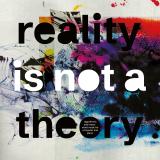
Recorded in concert at the University of Sheffield in March 2025, Reality Is Not A Theory is the first collaboration between Mark Fell and Pat Thomas. Major figures in British experimental music since the 1990s, Fell and Thomas have developed their rigorous practices from radically different backgrounds and perspectives: where Fell’s singular take on synthetic abstraction emerged from Sheffield’s electronic underground, Thomas is a virtuoso improvising pianist steeped in jazz and modernist art music who has simultaneously worked with sampler-based electronics for decades. As the record’s wonderfully academic subtitle explains, we are presented here with two sides of ‘algorithmic and improvised music for computer and piano’, exemplifying both players’ insatiable search for new (and sometimes uncomfortable) playing situations.
The performance begins with Fell’s electronics close to the timbres of acoustic percussion, attacks that suggest wood, metal or glass threaded along a rapid pulse while Thomas focuses on the lowest registers of the piano, deadening the strings. As Fell’s electronics start to ring out and occupy more harmonic space, Thomas turns to wide, repeated clusters, which slowly expand into patterns of chords. Like in his recent solo recordings and his trio work with Joel Grip and Anton Gerbal, Thomas’ playing combines extreme dissonance with a deep lyrical sense. Fell’s work gradually shifts its focus toward drum sounds, drawing on the microtemporal processes that have characterized his practice in recent decades. Heard together with Thomas’ probing piano, the computer sounds call up unexpected associations with the klangfarben antics of improv drummers like Paul Lovens or Tony Oxley. Throughout its second half, the music grows increasingly frenetic, as Thomas sounds out rapid, irregularly repeated figures and beautifully sour chords in the upper register, while Fell’s percussion develops into angular pan-pipe-like feedback and waves of glissandi.
With great confidence and patience, Fell and Thomas often let their individual contributions remain rhythmically distinct and unsynchronised, allowing unexpected correspondence and coincidence to guide the music’s development. Recorded in a hall named after Sheffield steel manufacturer and Master Cutler Mark Firth, the location might suggest a model for understanding how Fell and Thomas interact here: two workers in the same workshop, each immersed in their own part of the production process. Arriving in a striking sleeve designed by Mark Fell, with liner notes by Francis Plagne, Reality Is Not A Theory is an invigorating document of the meeting of two mavericks of contemporary music.
Second limited edition vinyl EP in the 12" maxi series celebrating 20 years of Chinese Man and Chinese Man Records. This special new EP revolves around the track "Trouble", taken from Chinese Man's latest album and featuring Stylo G. Side A features two remixes by Manu Digital and GrEG, Side B includes the original version and its instrumental. Artwork by Sylvain Repos & Layout by 4lodyss.
- Tiburon Blanco
- Pantera Del Amor
- Gusano
- Semisweet
- Cara De Gato
- Fantasma De Vivo (Interlude)
- Volcan
- Warmi Pachakuti
- Palo De Mango
- La Selva Es Su Llama
- Bats
- Tú Y Yo
LIMITED PINK VINYL[22,27 €]
Mit Fieras präsentiert das kolumbianisch-deutsche Duo Cosmica Bandida - bestehend aus Manuela Illera und David Blitz - sein erstes vollständiges Album. Nach der EP Lágrimas Saladas entfaltet sich hier ein musikalisches Universum voller Mythen, Rituale und sinnlicher Visionen. Jeder Track öffnet eine neue Tür: vom surrealen Tiburón Blanco über das feurige Volcán bis zum hypnotischen Pantera del amor, das den Dembow neu denkt. Die Musik von Cosmica Bandida verbindet psychedelische Cumbia-Grooves mit elektronischen Texturen, durchzogen von Einflüssen aus Italo Disco, Trap und Latin Alternative. Fieras ist mehr als ein Album - es ist ein klangliches Ritual, das Körper, Schatten und Stimmen auf einer tropisch-kosmischen Tanzfläche vereint.
"Released in 1994, “Dellamorte Dellamore” (known internationally as Cemetery Man) is one of the most fascinating and unconventional films of 1990s Italian cinema. Directed by Michele Soavi and based on the novel by Tiziano Sclavi (the creator of Dylan Dog), the film blends horror, dark comedy, and surreal poetry into a story suspended between life and death, love and madness.
The protagonist is Rupert Everett, as Francesco Dellamorte, the caretaker of a cemetery where the dead return to life. Beside him, a mysterious woman (played by Anna Falchi) embodies the obsessive nature of love and the cyclical pattern of desire and loss. Soavi crafts a visionary, melancholic, and ironic film in which death becomes a metaphor for existence itself.
Giving voice to this suspended universe is Manuel De Sica, who composed one of his most evocative and underrated scores. The soundtrack for Dellamorte Dellamore is an alluring blend of gothic romanticism, mystery, and lyrical melancholy, perfectly attuned to the film’s tone."