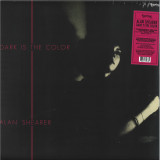
Favorite Recordings presents Dark Is The Color, the first LP by Alan Shearer reissued on vinyl for the first time. Despite being initially composed and produced for the French library label PSI, this rare
and obscure in-demand gem from 1985 sounds retrospectively like a proper album with great coherence and sophistication all along. Indeed, these 11 tracks will delight synthesizers addicts. Expect deeply emotive instrumental compositions, with ingenious analogue sequencing on stimulating chord progressions. The result is a highly retrofuturistic album, sometimes almost anticipating 90's videogames
scores. Just imagine Wally Badarou in a bunker with Talking Heads watching New York 1997 from John Carpenter.
Composed mostly step by step on a Sequential Pro-One synthesizer, Dark Is The Color is the product of the exciting state of mind from the 80's era with new sounds, new tools and new trends on the music spectrum. Influenced by bands like Talking Head or Japan, the sirens of the new wave scene strongly resonate here with Alan Shearer's familiarity and craftmanship with synthesizers.
Back in the days, Alan Shearer aka Frédéric Viger was working for his father’s music label, “Musique Pour L'image”, and their sublabel “PSI”. He started with Marathon Life under his real name before taking the Alan Shearer monitor. These records were produced for radio, TV and cinema industries but as well for companies’ internal communication. They represented a real investment from the label and these catalogues are usually full of amazing music from great artists such as Martial Solal, Vladimir Cosma, Joël Fajerman, Harlem Pop Trotters and even Manu Dibango.
About his musical illustration process, Alan Shearer tells: "Soundtracks are indeed my biggest influences and I'm a real fan of American composers as Jerry Goldsmith or Elmer Bernstein. I've always considered soundtracks as the new classical music or classical music of our century. There is a real state of mind producing music for illustration: you have to stick to the video. You should not tell what the image is saying but accompany what it is saying. You have to find a unique link, people always told me music should not be noticed for itself in a movie, that's what makes it good.”
Поиск:manu p
Все
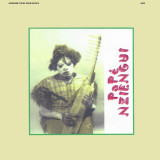
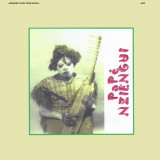
Kadi Yombo, published in 1989, is the most successful album in the quest for a fusion between tradition and modernity in Bwiti harp music of the Tsogho people of Gabon. Combining beating rattles with a layer of synthesizers, Papé Nziengui blends in a contrapuntal dialogue characteristic of harp playing: male song in appeal and female choir in response, male voice of the musical arc and rhythms of female worship. But above all it’s Tsogho ritual music and modern studio orchestration. The result is an initiatory itinerary of 10 musical pieces which are all milestones likely to be simultaneously listened to, danced, meditated on, and soon acclaimed. In the years since, Nziengui has traveled he world from Lagos to Paris, from Tokyo to Cordoba, from Brussels to Mexico City to become a true icon, the emblem of Gabonese music.
Like Bob Dylan, "electrifying" folk and Bob Marley mixing rock with reggae, some purists have criticized Nziengui for having distorted the music of harp by imposing a cross with modern instruments. They even went so far as to claim that Nziengui was just an average harpist covering his shortcomings with stunts that were only good for impressing neophytes; like playing a harp placed upside down behind his back or playing two or three harps simultaneously. Sincere convictions or venomous defamations, in any case, Nziengui never gave in to such attacks, imposing himself on the contrary to pay homage to the elders (Yves Mouenga, Jean Honoré Miabé, Vickoss Ekondo) while instructing the maximum of young people. He is thus the promoter of many young talents, the most prominent of which is certainly his nephew Jean Pierre Mingongué. In a conservative society where the sacred is confused with secrecy, exposing the mysteries of Bwiti in broad daylight can be punished by exclusion or even execution.
Papé Nziengui has always claimed that he faces such risks because he never felt enslaved to a community that governs his life, that regulates his conduct, that has a right of censorship over his activities. Like Ravi Shankar, the famous sitarist, Papé Nziengui is a man of rupture but also of openness, a transmitter of culture. As proof, he has established himself in Libreville, Gabo’s capital, as the main harpist for sessions and concerts, accompanying the greatest national artists (Akendengué, Rompavè, Annie-Flore Batchiellilys, Les Champs sur la Lowé, etc.) as well as foreign artists (Papa Wemba, Manu Dibango, Kassav', Toups Bebey, etc.). In 1988, he was the first harpist to release an album in the form of a cassette produced by the French Cultural Center (Papé Nziengui, Chants et Musiques Tsogho). At the same time, he created his own group (Bovenga), combining traditional music instruments (musical bow, drums, various percussion instruments, etc.) in the framework of a true national orchestra, which gave the first concert and the first tours of a traditional music that was both modern and dynamic, thus "democratizing" the harp, to the dismay of certain purists.
On the other hand, in modern music, dominated by the logic of profit or even commercialism, artistic creation must often be adjusted for a specific audience based on reason rather than heart. But instead of allowing himself to be distorted, Papé Nziengui has always tried to produce music that is not a caricature, worthy in its expression as in its content, of the sacredness and transcendence of the music of the Origins. This is what makes Nziengui not only the musician, but the man someone whose age hasn’t altered any of his freshness or authenticity
Kadi Yombo, published in 1989, is the most successful album in the quest for a fusion between tradition and modernity in Bwiti harp music of the Tsogho people of Gabon. Combining beating rattles with a layer of synthesizers, Papé Nziengui blends in a contrapuntal dialogue characteristic of harp playing: male song in appeal and female choir in response, male voice of the musical arc and rhythms of female worship. But above all it’s Tsogho ritual music and modern studio orchestration. The result is an initiatory itinerary of 10 musical pieces which are all milestones likely to be simultaneously listened to, danced, meditated on, and soon acclaimed. In the years since, Nziengui has traveled he world from Lagos to Paris, from Tokyo to Cordoba, from Brussels to Mexico City to become a true icon, the emblem of Gabonese music.
Like Bob Dylan, "electrifying" folk and Bob Marley mixing rock with reggae, some purists have criticized Nziengui for having distorted the music of harp by imposing a cross with modern instruments. They even went so far as to claim that Nziengui was just an average harpist covering his shortcomings with stunts that were only good for impressing neophytes; like playing a harp placed upside down behind his back or playing two or three harps simultaneously. Sincere convictions or venomous defamations, in any case, Nziengui never gave in to such attacks, imposing himself on the contrary to pay homage to the elders (Yves Mouenga, Jean Honoré Miabé, Vickoss Ekondo) while instructing the maximum of young people. He is thus the promoter of many young talents, the most prominent of which is certainly his nephew Jean Pierre Mingongué. In a conservative society where the sacred is confused with secrecy, exposing the mysteries of Bwiti in broad daylight can be punished by exclusion or even execution.
Papé Nziengui has always claimed that he faces such risks because he never felt enslaved to a community that governs his life, that regulates his conduct, that has a right of censorship over his activities. Like Ravi Shankar, the famous sitarist, Papé Nziengui is a man of rupture but also of openness, a transmitter of culture. As proof, he has established himself in Libreville, Gabo’s capital, as the main harpist for sessions and concerts, accompanying the greatest national artists (Akendengué, Rompavè, Annie-Flore Batchiellilys, Les Champs sur la Lowé, etc.) as well as foreign artists (Papa Wemba, Manu Dibango, Kassav', Toups Bebey, etc.). In 1988, he was the first harpist to release an album in the form of a cassette produced by the French Cultural Center (Papé Nziengui, Chants et Musiques Tsogho). At the same time, he created his own group (Bovenga), combining traditional music instruments (musical bow, drums, various percussion instruments, etc.) in the framework of a true national orchestra, which gave the first concert and the first tours of a traditional music that was both modern and dynamic, thus "democratizing" the harp, to the dismay of certain purists.
On the other hand, in modern music, dominated by the logic of profit or even commercialism, artistic creation must often be adjusted for a specific audience based on reason rather than heart. But instead of allowing himself to be distorted, Papé Nziengui has always tried to produce music that is not a caricature, worthy in its expression as in its content, of the sacredness and transcendence of the music of the Origins. This is what makes Nziengui not only the musician, but the man someone whose age hasn’t altered any of his freshness or authenticity
- A1: Tie Me Up
- A2: The Craft
- A3: Sirène
- A4: All Nerve
- A5: Plastic Drama
- B1: Marinela2017
- B2: Aklr
- B3: Profile Anxiety
- B4: Truth
- B5: Truce
- C1: Sirène (Cut_ Remix)
- C2: The Craft (Old Joel Dilla (Wolf Alice) Remix)
- C3: Profile Anxiety (Crystal Fighters Remix) – Watch Here
- C4: Marinela2017 (Delaporte Remix)
- C5: Tie Me Up (Hinds Remix)
- C6: All Nerve (Las Tea Party Djs Remix)
- D1: Aklr (Bonnz Remix)
- D2: Plastic Drama (Yoann Intonti (The Vaccines) Remix)
- D3: Marinela2017 (Asier Bilbao Remix)
- D4: Profile Anxiety (Dream Wife Remix)
- D5: Sirène (Guarda Remix)
- D6: Aklr (Josu Ximun Remix)
Spain’s fastest-rising band, Belako are announcing a very specialedition of their 2020 album ‘Plastic Drama’. The new, deluxe double LP will be released on 8th April via BMG and includes exclusive remixes by the likes of Wolf Alice, The Vaccines, Hinds and Crystal Fighters.
Hailing from the small town of Mungia near Bilbao, Belako have been playing non-stop in Spain and beyond these past few years, building a dedicated fanbase in their native country, which has quickly been spilling out into other parts of Europe and the US.
2020’s ‘Plastic Drama’ was the band’s fourth record, but the first since signing a major international record deal, and certainly their most ambitious to date. Self-produced by the band, ‘Plastic Drama' searches for “the real meaning of things in a world that translates everything into assembly lines, manufacturing and the exploitation of living beings,” say the band. “It’s about the harsh reality our generation is facing and the only good use of new technology, which is the ability to spread the word and call for action. The title of the album has another message, as it also reminds us the first world issues we’ve come so keen to complain about. We can only hope for a more responsible human legacy”.
They were named best new band by Rolling Stone Magazine (ES) and ‘Plastic Drama’ picked up top UK support from the likes of 6 Music, Clash, DIY, Dork, The Line Of Best and NME who hailed the record as ‘a bold next step from a band who have never been afraid of the weird or the wonderful. Belako step up and earn their place among the major players of the scene’.
Relentless in their craft and a ferocious live act at their core, Belako were the first band to tour Europe in the summer of 2020, breathing new life into old forgotten Spanish cinema drive-ins across the country for their live shows. The ‘Belako Pandemic Tour’ documentary was premiered at the San Sebastian International Film Festival and will soon arrive on digital platforms.
Having supported the likes of DMA’s, QOTSA and Liam Gallagher at Finsbury Park, and played major international festivals such as Primavera, SXSW, Rock En Seine & Benicassim, Belako’s explosive live performances have excited crowds from small dive bars in their early days to huge international festivals. Their anything-can-happen stage attitude showcases the power, electricity and punk ethos of this exciting young band, which also lead to them being the first ever Spanish act to be booked for the main stage at Reading & Leeds Festival.
Fast forward to 2022, Belako reinvigorate ‘Plastic Drama’ with a 50-date world tour to be announced shortly, kickstarted with the release of their new deluxe edition album in April, featuring remixes by some of alternative music’s biggest names. The band will also celebrate the release with an album launch party on the rooftop of Madrid’s prestigious Riu Plaza on April 6th. Details for all UK dates this summer will be revealed in the coming weeks.
Kadi Yombo, published in 1989, is the most successful album in the quest for a fusion between tradition and modernity in Bwiti harp music of the Tsogho people of Gabon. Combining beating rattles with a layer of synthesizers, Papé Nziengui blends in a contrapuntal dialogue characteristic of harp playing: male song in appeal and female choir in response, male voice of the musical arc and rhythms of female worship. But above all it’s Tsogho ritual music and modern studio orchestration. The result is an initiatory itinerary of 10 musical pieces which are all milestones likely to be simultaneously listened to, danced, meditated on, and soon acclaimed. In the years since, Nziengui has traveled he world from Lagos to Paris, from Tokyo to Cordoba, from Brussels to Mexico City to become a true icon, the emblem of Gabonese music.
Like Bob Dylan, "electrifying" folk and Bob Marley mixing rock with reggae, some purists have criticized Nziengui for having distorted the music of harp by imposing a cross with modern instruments. They even went so far as to claim that Nziengui was just an average harpist covering his shortcomings with stunts that were only good for impressing neophytes; like playing a harp placed upside down behind his back or playing two or three harps simultaneously. Sincere convictions or venomous defamations, in any case, Nziengui never gave in to such attacks, imposing himself on the contrary to pay homage to the elders (Yves Mouenga, Jean Honoré Miabé, Vickoss Ekondo) while instructing the maximum of young people. He is thus the promoter of many young talents, the most prominent of which is certainly his nephew Jean Pierre Mingongué. In a conservative society where the sacred is confused with secrecy, exposing the mysteries of Bwiti in broad daylight can be punished by exclusion or even execution.
Papé Nziengui has always claimed that he faces such risks because he never felt enslaved to a community that governs his life, that regulates his conduct, that has a right of censorship over his activities. Like Ravi Shankar, the famous sitarist, Papé Nziengui is a man of rupture but also of openness, a transmitter of culture. As proof, he has established himself in Libreville, Gabo’s capital, as the main harpist for sessions and concerts, accompanying the greatest national artists (Akendengué, Rompavè, Annie-Flore Batchiellilys, Les Champs sur la Lowé, etc.) as well as foreign artists (Papa Wemba, Manu Dibango, Kassav', Toups Bebey, etc.). In 1988, he was the first harpist to release an album in the form of a cassette produced by the French Cultural Center (Papé Nziengui, Chants et Musiques Tsogho). At the same time, he created his own group (Bovenga), combining traditional music instruments (musical bow, drums, various percussion instruments, etc.) in the framework of a true national orchestra, which gave the first concert and the first tours of a traditional music that was both modern and dynamic, thus "democratizing" the harp, to the dismay of certain purists.
On the other hand, in modern music, dominated by the logic of profit or even commercialism, artistic creation must often be adjusted for a specific audience based on reason rather than heart. But instead of allowing himself to be distorted, Papé Nziengui has always tried to produce music that is not a caricature, worthy in its expression as in its content, of the sacredness and transcendence of the music of the Origins. This is what makes Nziengui not only the musician, but the man someone whose age hasn’t altered any of his freshness or authenticity
Catalina Matorral is a duo; Marion Cousin and Borja Flames make up its double head and four hands. At the beginning of the 2010s, they were called June et Jim -- they released some disturbing EPs before joining the label Le Saule (a small, chivalrous table whose holy grail is everything unheard, where folk- singing is avant-garde and avant-garde is synonymous with enchantment). Their first LP, Les Forts (2012), evoked the songwriting of indie-hobos inspired by Latin America, contributing to the rejuvenation of French music. Noche Primera (2013) went even further by vibrating in various reveries, from African songs to Spanish medieval music, from Purcell to Bach. It blew hot and cold under a psychedelic candlelight. The record in question has been maturing for seven years in eccentric barrels, marinating in the shadow of Marion and Borja's respective evolutions, nourished by their individual obsessions. Marion fixated on songs and dances from the Iberian Peninsula. This gave birth to a minimalistic, organic record featuring the cellist Gaspar Claus, where humming trembles among frowning pizzicatos, thin drones and throbbing arpeggios. She went on to release another album with the electronic duo Kaumwald, an oeuvre at the crossroads of vernacular narratives and experimental music, simmering everyday songs in an insolently modern production. Meanwhile, Borja leaned towards an intellectual, synthetic and furious pop; made two albums to awaken the dead, somewhere between Moondog and Battiato. They are two conceptual, electrifying and dance-inducing recordings for the phosphorescent masses. ...chimeric narration, heady verses, pop fragments, horizontal synths, distorted technologies. One would think they're listening to an opera composed by Robert Ashley or Laurie Anderson, based on an improbable libretto written by anthropologist Jeanne Favret-Saada, and performed by holograms of Brigitte Fontaine and Areski -- who unexpectedly regurgitate bits of blunt folk, binary jazz, baroque songs and ghostly madrigals. Micro-events, great enchantments. This record was written and recorded by two people, tinkering feverishly for seven years. It was blessed with the furtive appearances of faithful friends: Gaspar Claus played the cello; Igor Estrabol the clarinet, trumpet and flugelhorn; Renaud Cousin the drums; Ernest Bergez played the violin and whimsically mixed the tracks like a bonesetter-scientist. At the crossroads of worlds, eras and moods, Catalina Matorral invents a curiously rural science fiction that confounds poetry with white magic and puts French music in a permanent tension between the cosmos and manure...
Multi-talented musician and Moons' singer-songwriter Jennifer Souza presents her second solo album, produced and recorded by Leonardo Marques at his Ilha Do Corvo studio in Belo Horizonte. With a sound palette that moves from Brazilian song to jazz, from melancholic folk to indie rock with multiple and unexpected instrumentation, "Pacífica Pedra Branca" reveals a musical geography that is highly unique to the artist, one of the most exciting names on the Brazilian music scene today. Welcome to a unique and magical world of soft pop, indie rock and folk from beautiful Brazil!
Recorded between February 2020 and June 2021 in Brazil.
Produced, engineered and mixed by Leonardo Marques at Ilha do Corvo Studio in Belo Horizonte, MG.
Artistic directed, executive produced and co-produced by Jennifer Souza.
LP executive produced by Greg Gouty.
Mastered by Anderson Guerra at Analog Bunker Studio in Belo Horizonte, MG.
Front and back cover photographs by Luiza Ananias.
Designed by Yannick Falisse.
LP additional design by Nicolas Kerembellec (nker.fr).
180GDULP08 - Manufactured and distributed by 180g in collaboration with Disk Union Japan.
Kavinsky is a zombie who came back from the dead after his Testarossa crashed in 1986.
His first song, "Testarossa Autodrive", was an instant success, and was followed by two singles. In 2007, he was chosen by Daft Punk to open their now legendary "Alive" tour.
In 2011, his track "Nightcall", produced with Guy-Manuel de Homem-Christo, became the theme song for the film "Drive", and consequently a worldwide success.
Kavinsky's first album, "Outrun", was released in 2013, followed by a collaboration with The Weeknd on the song "Odd Look".
In 2022, Kavinsky is back with "Reborn", his second album recorded at the famous Motorbass studio in Paris. The first single "Renegade" has an impactful sound and a powerful chorus, whilst the second single "Zenith” has a more muted and futuristic feel. On "Reborn", Kavinsky amplifies these sounds without deviating from his relentless trajectory.
Repress due in March. Includes Previously Unreleased Instrumentals! Air Vinyl is proud to be reissuing Benny The Butcher and 38 Spesh's seminal joint album, Stabbed & Shot. These underground kingpins were both at their hungriest at the top of 2018 and this LP is the proof. Air Vinyl will also be releasing Stabbed & Shot II later in 2020, so this re-release should get fans ready. Benny the Butcher is as hot as any artist on the planet right now, fresh off of an incredible 2019 with his The Plugs I Met project, the collaborative effort Statue of Limitations (with Smoke DZA), and his Shady Records debut alongside his Griselda brethren Westside Gunn and Conway the Machine, entitled WWCD. 38 Spesh is heading up the Trust movement, and also had a stellar few years, including his Son of G Rap album (alongside Kool G Rap) and songs with Styles P, Jadakiss, Uncle Murda, AZ, N.O.R.E., Kool G Rap, and French Montana. He has worked with several high-profile producers as well, including the likes of DJ Premier, Pete Rock and Alchemist. Album art by Manuel "Cep" Concepcion.
4 years after the acclaimed EP ‘Misericordia’, which signed the enigmatic, dark and heady soundtrack of the documentary « Sous le Donjon de Manu Le Malin » in 2017, two French veterans of the electronic and rave scene Electric Rescue and The Driver (aka Manu Le Malin) present their 3rd EP with their duo W.LV.S on Astropolis Records.
"Guilty EP" includes four carnivorous tracks (five on the digital):
"Guilty", a power build-up hammered with metallic and industrial echoes with a dark vocal that plunges us into a post-apocalyptic universe.
“The Pit” invites the charismatic and ghostly voice of Paris-based new-worker Louisahhh. A frenetic and powerful techno track haunted by Louisahhh’s hypnotic and icy vocals, chanting a poem she wrote. A unique fusion of techno and spoken word. Originating as a ferocious techno poem, this collaboration between legendary French duo W.LV.S and techno’s favorite punk, Louisahhh acts as a galvanizing prayer, a dancefloor beacon, a scream into the abyss, a shard of hope. “The Pit” is where we start after two years of being confined, silent, separate. The pit is where the growth happens.
The intensity accelerates with the track "Orca", a powerful and sharp anthem between galloping techno and stripped down hardcore.
Last track is a remix by major reference of the international techno scene, German producer Tommy Four Seven, for an incisive remix of "Guilty".
- A1: Ebo Taylor - Amponsah
- A2: Moussa Doumbia - Keleya
- A3: Amadou Balake - Super Bar Konon Mousso
- A4: Mangue Konde & Les 5 Consuls - Pop Konde
- A5: Manu Dibango - The Panther
- B1: Peter King - Ajo
- B2: Itadi - Ayala
- B3: Marumo - Khomo Tsaka Deile Kae
- B4: Apples - Mind Twister
- B5: The Wings - Gone With The Sun
- C1: Kelenkye Band - Jungle Music
- C2: Super Elcados - Get Up & Do It Good
- C3: The Apagya Showband - Kwaku Ananse
- C4: Orlando Julius - Get The Funk (Feat Ashiko)
- C5: Alemayehu Eshete - Temeles (Feat Hirut Beqele)
- D1: Livy Ekemezie - Friday Night
- D2: Willy Nfor - Boogie Down In Africa
- D3: Shina Williams & His African Percussionists - Agboju Logun (Mr Bongo 7" Edit)
- D4: Soul Brothers - Bayeza
- D5: Teaspoon & The Waves - Oh Yeh Soweto
- A1: Straighten Up Baby
- A2: Everything Gonna Be Alright
- A3: Black Nights
- A4: Blow Wind Blow
- A5: Sugar Sweet
- A6: Moanin' At Midnight
- A7: Baby Please
- A8: Hold Me In Your Arms
- B1: Stormy Monday
- B2: Three Hunderd Pounds Of Joy
- B3: Northside Cadillac
- B4: Mighty Long Time
- B5: Every Night & Every Day
- B6: Cotton Crop Blues
- B7: Got My Nose Open
- B8: Too Many Drivers
New West Records is proud to present the reissue of two classic Antone's Records blues titles.
These two titles have been remastered for vinyl. Each LP is displayed in a beautiful, one of a kind package (leather texture, die- cut, embossed logo) and pressed onto 180- gram vinyl that is manufactured in the USA. These limited edition pressings are now available on color vinyl for the first time. Pressed on Limited Edition 180 gram Purple Color Vinyl.
- A1: Kidney Stew Blues
- A2: You Don't Have To Go
- A3: Ida B
- A4: Pinetop's Boogie Woogie
- A5: Look On Yonder Wall
- A6: Caldonia (What Makes Your Big Head So Hard?) (What Makes Your Big Head So Hard?)
- B1: High Heek Sneakers
- B2: Sunny Road Blues
- B3: That Ain't The Way To Do It
- B4: How Long Blues
- B5: Just A Little Bit
- B6: Going Down Slow
New West Records is proud to present the reissue of two classic Antone's Records blues titles.
These two titles have been remastered for vinyl. Each LP is displayed in a beautiful, one of a kind package (leather texture, die- cut, embossed logo) and pressed onto 180- gram vinyl that is manufactured in the USA. These limited edition pressings are now available on color vinyl for the first time. Pressed on 180 gram Cherry Red Color Vinyl.
New pressing on Orange Vinyl
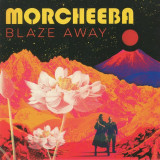
Morcheeba have released 8 albums that have sold in excess of 10 million records in their career. 'Blaze Away', their positivity- packed ninth album, marks both a fresh start in its organic approach and a return to the joyous genre-mashing of their early days, with featured guests Roots Manuva and Benjamin Biolay. There was no template for its ten, extraordinary, future-facing songs, no self-imposed limits on style, no themes to be adhered to or rules in place to break.
UK trip-hop pioneers who have sold in excess of 10 million albums worldwide. First new album in over fve years with fantastic features and collaborations including Roots Manuva, Benjamin Biolay & Kurt Wagner.Global touring in 2022.
Spaced Repetitions is the brand-new label by veteran producer Manuel Tur. Following his most recent releases on Running Back and Lossless, the German digs deeper on the “Alphalpha EP”, fusing hints of sampled house grooves and bleepy techno synth work. With the lead track reminiscent of classic Parisian dark chemistry à la Motorbass, things get more driving on the B-side: the percussive “La Terre” leads us to the magnetic acid groove of “Immune Response”, rounding off this hypnotic three-track EP.
- A1: Orchestre Poly-Rythmo De Cotonou Dahomey - Minsato Le, Mi Dayihome
- A2: Super Eagles - Love's A Real Thing
- A3: Moussa Doumbia - Keleya
- B1: Manu Dibango - Ceddo End Title
- B2: Sorry Bamba - Porry
- B3: Orchestra Number One De Dakar - Guajira Ven
- C1: William Onyeabor - Better Change Your Mind
- C2: Ofo & The Black Company - Allah Wakbarr
- C3: Gasper Lawal - Awon-Oise-Oluwa
- D1: Bunzu Sounds - Zinabu
- D2: Tunji Oyelana & The Benders - Ifa
- D3: Orchestre Regional De Kayes - Sanjina
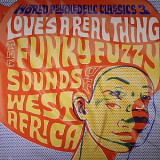
Back in 2005, the Luaka Bop and Stones Throw labels jointly issued World Psychedelic Classics 3: Love's A Real Thing - The Funky Fuzzy Sounds Of West Africa with the former releasing the CD edition and the latter a double LP version. As the elongated title suggests, the third edition of Luaka Bop's World Psychedelic Classic series swung the focus to West African music from the seventies and really opened people up to the psychedelic sounds of Manu Dibango, William Onyeabor, Gasper Lawal and a whole other host of artists from West Africa. Luaka Bop have evidently secured the rights for a vinyl reissue of the compilation, and anyone who indulged in their popular fifth volume focused on William Onyeabor will relish the opportunity to pick this up again.
- A1: Amazonas / Ivre De La Jungle
- A2: L'été Indien (Feat Omar)
- A3: Les Pyramides Cosmiques (Feat Youka Manuka)
- A4: Le Pain De Sucre (Feat Youka Manuka)
- B1: Le Pain De Sucre (Paul Cut Remix)
- B2: Amazonas / Ivre De La Jungle (Max Graef Remix)
- B3: Amazonas / Ivre De La Jungle (Fouk's Black River Odyssey)
- B4: L'été Indien (Souleance "Braziu-Funk" Remix)
For the second chapter of his odyssey, we find again Le Commandant Couche Tôt in the middle of the Amazon River, escaping from drones and wildfires in a hovercraft.
Une Histoire d’Amour Brésilienne (A brazilian love story) shares a dystopian vision widely inspired by the environmental issues of 2020 and 2021, which illustrates a form of anxiety toward the future.
Its soundtrack however is purposely the antithesis of the story: a very optimistic tribute to space-disco and brazilian funk. A “good vibe” pill to give hope for a new beginning.
In February of 1976 Eddie Carmichael left the group “The Voshays” after catching the bandleader/manager stealing from the band. Derry Shepherd and Duncan Bethel left at that time also. About a week later I asked Derry if he would be interested in starting another band and he said sure. At that point Duncan Bethel agreed to participate and he recruited his friend Flynn Emanuel to play trombone. Derry was the manager of the cafeteria at Sears Department Stores in The Pompano Fashion Square Mall and he met Sandy Ficca who was the manager at Chess King Men’s Clothing Store in the same mall. Sandy also agreed to join the group and we auditioned bass players and chose Dave Segal and only one keyboard player auditioned and that was Bob Groszer. We now had all of the personnel for the group and we commenced rehearsing in the recreation center in Pompano Beach, FL at Westside Park. We did a few “Chitlin’ Circuit“ gigs to fine tune the band and music and then moved over to the beach circuit. While there we would perform spring and summer months at “The Ocean Mist” on the Strip in Fort Lauderdale, FL and for the fall and winter months the Big Daddy’s 8600 Club on Miami Beach. After 18 months of constant gigging I suggested that the band go into the studio and record some original music. Now all we needed was some serious financial support and songs. I met a man by the name of Jerry Bullard and convinced him to back the project. We formed our own independent label “Get Off Records” and publishing company “Situated Music”. At that point Dave Segal and Sandy Ficca left the group and Bruce Saddler who was the drummer for The Voshays joined us on the drums for the first two recordings. Sandy Ficca returned as drummer and brought in his old friend and bandmate Daryl Walker to play Bass on five of the six remaining songs. We recorded the entire album in five days at SRS Studios and Triad Studios both in Fort Lauderdale, FL in August of 1977. The first single “Give It Up (Let Yo Funk Fly Free) was a winner released only in the New York tri state area where in two weeks it reached number 16 in the top 100 and was poised to go number one nationwide on the R&B charts in the next two weeks. Henry Stone, owner of TK Records in Hialeah, FL wanted to sign the group as did many other major record labels including Maurice White of Earth, Wind & Fire. But the usual problems of the music business reared its ugly head and the record was pulled from all radio airplay and the group who became disenfranchised with the business of the industry decided to call it quits. Derry Shephard went into Gospel Music production, Sandy Ficca went on to become the drummer for the Pop/Rock recording artists “Firefall”. Daryl Walker is a session player and music teacher, I did studio sessions and played in several cover bands and toured internationally. Bob Groszer toured with Sly Stone and other legendary recording artists. Dave Segal went on to start New York Bass Works in New York. Flynn Manuel became a music teacher in The Broward County School District and Bruce Saddler and Duncan Bethel left the Music industry completely. We were young and not good business people at that time and did not understand the rules of do’s and don’ts of the music industry. But we had three talented songwriters, a great arranger, a killer band and all the financial support that we needed. Looking back if we only had an experienced manager I truly believe Mirror would have gone on to create some great music over the years that followed.
Peace and love all the time,
- 01: Entre Vareta Y Canasta (Tangos)
- 02: Sin Prisa (BulerÍA)
- 03: Ya No Hay Olas En La Arena (Taranta)
- 04: Lirios Y Rosas (Fantangos De Huelva)
- 05: A Mi Manuela (BulerÍA)
- 06: SabÚ (Martinete)
- 07: Brota De Mi CorazÓN (GranaÍNa)
- 08: Te La Regalo (BulerÍA)
- 09: Palabras Que Escribe El Aire (Tientos)
- 10: No Tiene DueÑO (SoleÁ)
- 11: Vidalita (Popular)
Diego el Cigala is, with any doubt, one of the greatest flamenco geniuses of our times. Not only because of his voice and charisma, but also for recording such vast and wide discography singing with majesty and no complex any style he could be challenged to perform. At Flamencoenvinilo we wanted to re-catch one of his early works back to his flamenco roots: "Entre Vareta y Canasta" (18 Chulos) was originally published in the year 2000 and, as many of his works, this album has proved the test of time and it has become a true classic. This will be the first time this album comes out on 12". Limited to 500 copies. Accompanied by Niño Josele (guitar) and a large group of percussionists, "Entre Vareta y Canasta" the second album by Diego El Cigala made him known among many people outside the traditional nucleus of flamenco for his simplicity, purity and mastery. The unique voice of this artist moves with naturalness and feeling in styles as different as martinete, bulería or fandangos.