Ogu welcomes on board dj producer Kabaret Maker, who gives us an exotic and introspective release. Kabaret Maker performances have always been a classy blend of genres, infected by acid sounds, breakbeats, electronica and world music, and all these influences can be heard in the EP that mark his debut on OGU.
“Bellissima in Dakar”, title track release, is a fantastic journey in a winter ocean where future and past meet as to evoke a new world. Hinted rhythms, ancestral choirs and deep bass lines, to lead us to the track “Il Re della Persia”, modern house vibes with a poetic vocal in Italian describing an ancient route, to be sheltered to get a tea in the desert.
The mix pack is rounded off and enhanced by the remixes of the masters Bushwacka! and Thomas Brinkmann, and the single becomes a jewel for our boutique label.
Search:mark bell
Named "best kept secret of Canadian funk" by the Quebecois newspaper La Presse, The Brooks are a band of accomplished musicians, well-known in the soul/funk scene across the Atlantic. Expert instrumentalists led by Alexandre Lapointe create a dazzling combo with frontman Alan Prater— an incredibly energetic showman who has worked alongside some of the biggest names in the music industry. This passionate and experienced band fan the sacred fire every time they perform! Thanks to a solid realization, their musical message comes across beautifully. The Brooks go beyond mere interpretation and style exercises: they are a powerful groove machine and a driving force in their sector. 50 years of African American music are condensed in the band's aesthetic. In their live shows and in their records, you can hear James Brown's meticulousness, D'Angelo's delightfulness, Fela Kuti's radiance, Herbie Hancock's intergenerational openness, and J. Dilla's innovative spirit. These heroes of music didn't let rules and trends dictate their messages, and neither do The Brooks. Just like these history makers, they built their reputation with sweat and rigor, outside of conventional channels. The Brooks are incredibly hard workers united in a project where pleasure and complete artistic freedom are the only key words. After 8 years of existence, with an EP and two albums, they have already won many awards and nominations (GAMIQ, Independent Music Awards, ADISQ...) and built a solid reputation in the Quebec indie world.
Who are The Brooks? First, there's the icon, Alan Prater! This Florida-born musician can boast that he shared the stage with the Jacksons! Thanks to his many trips and experiences, he became a key member of Montreal jazz. He is the band's biggest asset: if The Brooks were a sports team, Alan Prater would be captain. Then, at the drums: Maxime Bellavance, one half of the Beat Market duo, whose "dancy and retro futurist" groove can be heard in several major and underground projects in Canada. Philippe Look aces guitar and vocals. His experience as a session musician working with famous bands for 20 years allowed him to take part in different projects: rock, downtempo, trip hop, electro… As one of the founding members of The Brooks, he also wrote many of the band's songs. Keyboardist Daniel Thouin is an integral part of the Montreal jazz scene. He is both an accomplished acoustic piano player and synthesizer player, well versed in writing as well as in improvising, in organic sounds as well as in the latest technologies. Thouin possesses a double vision, which allows him to both exalt and lead productions. Composer Sébastien Grenier wows us with his saxophone. Thanks to his theoretical knowledge and his 20 years of experience, acquired through continuous training all around the world, he is a true guiding force. French trumpetist Hichem Khalfa begun learning the instrument at 7 years old. He attended a musical conservatory before going to the Haute École de Musique and finally pursuing his studies at McGill University. He won prizes at Rimouski International Jazz Festival and received the François Marcaurelle prize at Montreal Off Festival. His successful jazz projects allowed him to work with famous musicians like Blitz the Ambassador, Nomadic Massive, Rhonda Ross and Kalmunity. Philippe Beaudin can be considered an apostle of Afro-Latin percussions, which he teaches and practices with great passion. Thanks to his participation in several projects, you can discover his talent both on stage and onscreen. The Brooks' philosophy is based on art in its rawest form, on perfectionism in musical practice. The choices they make and the directions they take are motivated mostly by instinctive feelings. This is how The Brooks recently crossed the path of Underdog Records during a trip in France. It was love at first sight for the two groups who share a passion for soul. Their chemistry allows them to be completely free in their creative process and natural as ever in their conception-creation-communication approach.
Adriano Canzian has by now developed a trademark sound unlike any other, a genre-twisting hybrid of EBM, techno, industrial and acid beats that has acquired nuance and influences throughout the years, aiming at that uniqueness he's always been reaching for. Confessions Of A Dangerous Mind is a breathless, unrelenting march of a record, a whirlwind of classic industrial sounds driven by a hammering pulse and a shimmer of melting matter. David Carretta's remix smoothens out some edges into a mix of techno and new beats, then Canzian charges on again with Sick Goates , skillfully adding noise frequencies to a goth background, before letting Spain s The Plumbers close with their rendition of Sleeplessness , marked by a dub-sprinkled techno no less belligerent than most of Canzian s catalogue.
- A1: Full Blood Count Analyzer
- A2: Automated Instrument Rinse System
- A3: Mri Scanner
- A4: Anaesthetic Machine
- A5: Meti Human Patient Simulator - Mannequin Breathing
- A6: Simman Essential Mannequin
- A7: Cardiac Monitor
- A8: Lee Silverman Voice Treatment
- A9: Haemoglobin A1C Analyzer
- A10: Anaesthetic Machine 2
- A11: Infusion Pump (Alaris Plus)
- A12: Heater Fan
- A13: Phacoemulsifier – Suction And Ultrasound During Cataract Surgery (Two Perspectives)
- A14: Robotic Pharmacy - Manually Restocking Supplies
- A15: Ct Scanner
- A16: Pharmacy Label Printer
- A17: Dialysis Machine
- A18: Draeger Oxylog 3000 Plus
- B1: Meti Human Patient Simulator – Powering Up Of Bellows That Control Mannequin&Apos;S Artificial Lungs
- B2: Orthopantomograph Op 2000
- B3: Helium Cooler For Mri Scanner
- B4: Coagulation Analyzer
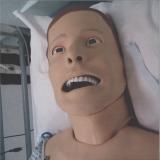
- B5: Meti Hps Mannequin
- B6: Ophthalmology
- B7: Sysmex Sp1000I Automated Slide-Maker
- B8: Agv (Automatic Guided Vehicle)
- B9: Ultrasound Scanner
- B10: Operating Theatre
- B11: Beckman Coulter Access 2 Analyzer
- B12: Geiger Counter (Berthold L4)
- B13: Automated Mailroom (Opex Mail Matrix)
- B14: Wall Mounted Suction Unit
- B15: Dialysis Machine 2
Tape[13,66 €]
Death Is Not The End reissue Mark Vernon's sought-after 2013 collection Sounds of a Modern Hospital on vinyl & cassette formats.
Whilst every effort has been made to record the subject in as great a degree of isolation as possible, the sound recordings you will hear on this record were made in a real working hospital and not under controlled conditions. Therefore, on occasion, you may hear some unavoidable background noise, conversations and other extraneous sounds.
All recordings were made by Mark Vernon at Forth Valley Royal Hospital, Larbert, Stirling Community Hospital and Falkirk Community Hospital between 2011 and 2013.
- 1: Thank God It’s Mum’s (Live At Mum’s)
- 2: Freckles
- 3: The Rabbit Hole
- 4: Switch It Off
- 5: I Hope You Notice Me
- 6: Belly Laugh
- 7: Touchy Subject
- 8: Sobering
- 9: Love Will Kill Me
Rising singer-songwriter Hetta Falzon announces her debut EP ‘Henrietta’, due for release on March 13th. Marking a new chapter for the Manchester-based artist, the EP captures Hetta at her most self-aware and emotionally articulate yet - balancing tenderness, humour and quiet self-reckoning across a collection of deeply personal songs. Following recent releases ‘Thank God It’s Mum’s (Live at Mum’s)’, ‘The Rabbit Hole’ and ‘I Hope You Notice Me’, Henrietta expands Hetta’s soft, soulful world while keeping its emotional core intact. Where earlier releases leaned into stillness and vulnerability, the EP introduces moments of lightness and observational wit - songs that don’t shy away from heartbreak, but aren’t afraid to smile at it either.
Those not familiar with Jones' style will listen slack-jawed at the sheer anticipatory nature of his sound collage. The five extended tracks are based on hypnotic and somewhat menacing grooves: a repetitive dub bass beat, waves of Middle Eastern strings and voices, layers of building hand percussion. The washes of sound and percussion come and go, often creating a sense of motion and change. All of the tracks are similar and even share elements. Mid-East tension is so accurately captured through the use of the region's instrumentation (especially percussion), sinister electronics, samples of men chanting, women crying, sounds culled from the horrors of war, and occasional angry distortion that the listener will be transported to the belly of the beast.
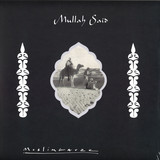
»Mullah Said« displays two aspects of the work of Muslimgauze. Firstly, musically, it is in the delightful drifting ambient vein. The percussion is mainly acoustic hand drums - providing a rhythm of aural features - the trademark shimmering string sound heard on a number of releases is much in evidence, rhythms are generally slower, there are lots of samples of people speaking in conversation, markets wherever. 'Mullah said' opens the disc with the lovely mix of these sounds. »Every Grain of Palestine Sand« continues the mood, with a slightly faster tempo, and more emphasis on the beat. But it soon locks into a mesmeric lassitude as various effects echo or smear the sounds, drums come in for short moments, different string sounds enjoin the play. »Muslims Die India« follows the mood though the voices seem darker, sadder, and then comes »Every Grain of Palestinian Sand« followed by »Muslims Die India«. Yes - not a typo, these tracks are repeated. Muslimgauze trend – to remix himself. Prime Muslimgauze middle eastern ambience - if you like that side you will love this album. The final track is short and different, a crackling ground over which a singer chants a song interrupted by machine-gun percussive bursts - »An End«.
Dutch symphonic metal band Delain released their third studio album We Are the Others in 2012 to positive reviews from music critics. The album title was inspired by the murder of 20-year-old Sophie Lancaster, whose death was likely a hate crime due to her being part of the goth subculture.
Two singles were released: “Get The Devil Out of Me” and the title track "We Are The Others", for which the band shot a music video that included many well-known people from the metal scene, including George Oosthoek, Sharon den Adel, Robert Westerholt and Rob van der Loo. The album features guest contributions by the likes of Burton C. Bell (ex-Fear Factory) and Marko Hietala (ex-Nightwish) and was produced by Jacob Hellner (aka Tripod), who is best known for producing most of Rammstein’s albums.
This release of We Are the Others contains an insert and is limited to only 750 individually numbered copies on orange & black marble vinyl.
- Side A. Gypsy Song
- Side B. Never Land
After traveling through Mexico, Miami, the Bahamas, and New Orleans, Nishioka recorded his fourth album South American Journey in Los Angeles,
released in 1979. From this album, two of his most celebrated tracks—“GYPSY SONG”, a fan favorite with numerous cover versions, and “NEVER LAND”,
featuring the distinctive sound of steel pans and a Japanese reggae vibe are now being pressed on 7-inch vinyl for the first time in a limited edition!
The recording features members of the So What Review band, including Junshi Yamagishi (guitar) and Osamu Ishida (guitar), along with renowned steel pan
player Robert Greenidge, known for collaborations with Van Dyke Parks and Taj Mahal.
(FLATT THE LAIDBACK)
Kyozo Nishioka Profile
(Born May 7, 1948 – Died April 3, 1999)
Singer songwriter from the Shima Peninsula in Mie Prefecture, affectionately nicknamed “Zo-san”.
After enrolling at Kinki University and moving to Osaka, Nishioka became a regular at the folk cafe Dylan in Namba, opened in August 1969 by Masaji Otsuka
and Yoko Ishimura. Dylan was a gathering spot for folk music enthusiasts from all over Japan.
Nishioka formed the folk group The Dylan with Masaji Otsuka and You Nagai, performing at folk camps and the Nakatsugawa Folk Jamboree. In 1971, Nishioka
left the group, and Otsuka and Nagai continued as The Dylan II. Nishioka wrote and composed the song “Puka Puka” under the pen name Zokyozo, which became
one of his signature works. The song was first released in July 1971 as the B-side of The Dylan II’s single “Otoko rashii tte Wakarukai” on URC Records.
Nishioka began his solo career, releasing his debut album “Dylan nite” in July 1972, produced by Kinji Yoshino on Bellwood Records, which included his own
version of “Puka Puka”. In September 1973, he appeared at the farewell concert of Happy End titled CITY – LAST TIME AROUND at Bunkyo Public Hall in Tokyo.
His 1974 album “Machiyuki Murayuki” was produced by Haruomi Hosono, and his 1975 album “Rokka My Baby” featured support from Shigeru Suzuki’s band
HUCKLE BACK. Nishioka recorded three albums under Hosono’s production, deepening their friendship.
Together with his wife and lyricist KURO, Nishioka wrote songs for artists such as Eikichi Yazawa. The couple traveled the world, recording overseas albums such
as “Nanbei Ryoko” (1977), “Yoh-Sollo” (1979), and “New York to Jamaica” (1981), incorporating reggae, calypso, and other global sounds. In the 1980s, he released
works under the duo name KYOZO & BUN with Yoshifumi Okajima, and in the 1990s returned to solo projects with albums like “START” (1993) and “Farewell
Song” (1997).
After KURO’s passing in 1997, Nishioka continued his musical activities until his own death in 1999 at the age of 50. His music transcended the boundaries of folk,
blending jazz and tropical elements to create a unique world view, leaving an indelible mark on Japanese music history.
- 01: Full Blood Count Analyzer
- 02: Automated Instrument Rinse System
- 03: Mri Scanner
- 04: Anaesthetic Machine
- 05: Meti Human Patient Simulator - Mannequin Breathing
- 06: Simman Essential Mannequin
- 07: Cardiac Monitor
- 08: Lee Silverman Voice Treatment
- 09: Haemoglobin A1C Analyzer
- 10: Anaesthetic Machine 2
- 11: Infusion Pump (Alaris Plus)
- 12: Heater Fan
- 13: Phacoemulsifier – Suction And Ultrasound During Cataract Surgery (Two Perspectives)
- 14: Robotic Pharmacy - Manually Restocking Supplies
- 15: Ct Scanner
- 16: Pharmacy Label Printer
- 17: Dialysis Machine
- 18: Draeger Oxylog 3000 Plus
- 19: Meti Human Patient Simulator – Powering Up Of Bellows That Control Mannequin&Apos;S Artificial Lungs
- 20: Orthopantomograph Op 00
- 21: Helium Cooler For Mri Scanner
- 22: Coagulation Analyzer
- 23: Meti Hps Mannequin
- 24: Ophthalmology
- 27: Ultrasound Scanner
- 28: Operating Theatre
- 29: Beckman Coulter Access 2 Analyzer
- 30: Geiger Counter (Berthold Lb124)
- 31: Automated Mailroom (Opex Mail Matrix)
- 32: Wall Mounted Suction Unit
- 33: Dialysis Machine 2
- 25: Sysmex Sp1000I Automated Slide-Maker
- 26: Agv (Automatic Guided Vehicle)
Vinyl[22,48 €]
Death Is Not The End reissue Mark Vernon's sought-after 2013 collection Sounds of a Modern Hospital on vinyl & cassette formats.
Whilst every effort has been made to record the subject in as great a degree of isolation as possible, the sound recordings you will hear on this record were made in a real working hospital and not under controlled conditions. Therefore, on occasion, you may hear some unavoidable background noise, conversations and other extraneous sounds.
All recordings were made by Mark Vernon at Forth Valley Royal Hospital, Larbert, Stirling Community Hospital and Falkirk Community Hospital between 2011 and 2013.
- A1: Another Thought (02:16)
- A2: A Little Lost (03:18)
- A3: Home Away From Home (05:12)
- A4: Lucky Cloud (02:16)
- B1: This Is How We Walk On The Moon (04:42)
- B2: Hollow Tree (02:30)
- B3: See Through Love (04:46)
- C1: Keeping Up (06:20)
- C2: In The Light Of The Miracle (06:05)
- C3: Lucky Cloud (Return) (03:00)
- C4: Just A Blip (03:42)
- D1: Me For Real (04:55)
- D2: Losing My Taste For The Night Life (04:34)
- D3: My Tiger, My Timing (05:41)
- D4: A Sudden Chill (02:45)
2026 Repress
Another Thought was the first collection of Arthur Russell’s music to be released after his death in 1992. Released in 1993 on Point Music it marked the beginning of nearly 30 years of work to let the world hear the enormous archive of unreleased recordings Arthur left behind. Be With revisits this first compilation for a new gatefold double vinyl version and a triple-fold digipak CD reissue.
Both versions of Be With’s 2021 reissue of Another Thought have been mastered by Simon Francis and the vinyl cut by Pete Norman. The original artwork has been restored and tweaked at Be With HQ for the gatefold sleeve and the triple-fold digipak, with the essential help of Janette Beckman. Each version comes with an insert reproducing the liner notes and lyrics from the original CD release.
Together with Calling Out Of Context, Soul Jazz’s World of Arthur Russell, and much of the ongoing work of Audika, Another Thought is absolutely essential for even the most casual Arthur Russell collection. In fact we’d argue it’s essential for any fan of non-obvious pop music. This is the only place where you can hear some of Arthur’s most recognisable tunes and it’s an album that absolutely deserves to be kept in press.
We’ll assume that by now you’re all at least a little familiar with the story of Arthur Russell, the farm boy from Iowa who moved to 1970s New York. Arthur Russell the genuine musical genius who died just 40 years old, leaving behind a wealth of music that dwarfed the few 12"s and LPs that were released during his short life.
Although Arthur had been working on an album for Rough Trade during his last years, with the label no-longer operating it was Point Music (Philip Glass and Michael Riesman’s label set up together with Philips) who stepped in to help Arthur’s partner Tom Lee start working out exactly what Arthur had left behind.
Tom suggested that Arthur’s friend Mikel Rouse was the right person to make the first catalogue. Working in Tom and Arthur’s apartment he had only two weeks to go through what turned out to be around 800 tapes.
As Tom explained “at the end of each day he would generally wait for me to come home and I would, to the best of my knowledge, name and identify pieces in question from that day’s work. As he worked Mikel compiled about a dozen cassettes that he thought would present the most finished sounding songs for Don/Point to use. As Don listened he would then suggest and ask me and thus we collaborated on the choices.”
Don is Don Christensen, Another Thought’s producer. With a final selection of songs from recordings made between 1982 and 1990, including sessions with some of Arthur’s regular collaborators Peter Zummo, Steven Hall, Mustafa Ahmed, Elodie Lauten, Julius Eastman, Jennifer Warnes and Joyce Bowden, it was then Don’s job to turn these into a finished album.
Another Thought is a little different from the compilations of Arthur’s music that came out since. In our conversations with Steve Knutson (who founded Audika Records and who manages Arthur’s estate together with Tom), he explained that “more than any project released by Arthur during his lifetime or posthumously by Audika, ‘Another Thought’ is the most worked over. The material was significantly edited and rearranged from the original source tapes”.
If the aim was to release a comprehensive exploration of every facet of Arthur’s music, from the most avant-garde of his avant-garde compositions through to the most disco-not-disco of his disco-not-disco tunes then the project was a spectacular failure. But as a coherent album of non-obvious pop music Another Thought is wonderful.
Starting with the sparse voice-and-cello of the title track, A Little Lost adds some guitar along with the sneaking suspicion that we’re listening to something nowhere near as simple as it first sounds. By the time we get to This Is How We Walk On The Moon - it could be the moment you notice the congas, or the percussion that’s been building behind them, or maybe it’s that blast of trumpet and trombone - we realise we’ve gone from splashing around to being completely submerged in the musical world of Arthur Russell.
From here the album heads off on its journey around the sounds of the left-field contemporary classical music of the time, re-directed towards pop ears, with minor detours through the swirling woozy disco of the half-remembered night before on In The Light Of The Miracle and My Tiger, My Timing. Whether it’s just Arthur, his cello and some bleeps on Just A Blip, or whether he has some vocal help as he does on the bounding Keeping Up, this is difficult music made so, so easy. And through it all is Arthur’s voice and cello. Sometimes drowned in distortion and sometimes clear as a bell, but always there somewhere.
A Sudden Chill finally returns us to the calmer waters we started in and this last track closes the album with a melancholy that’s not surprising given how soon after Arthur’s death the album was put together.
Whilst Another Thought holds together with the consistency of a proper album, there’s still no getting away from the fact that this was put together from audio recorded in different ways, in different places, with different people at different times. Those with keen ears will hear traces of tape hiss, the occasional blown-out note and some digital fuzz, all fingerprints of those original recordings as well as of the 1990s digital equipment that was used to piece Another Thought together.
Add to this Arthur’s obvious pleasure in making music from the sort of sounds that can make microphones, speakers and ears uncomfortable, it’s no surprise that Another Thought isn’t glossy and pristine. Don Christensen’s productions have been careful to not scrub up those original recordings so much that they lose their original vibe, understandable given that Arthur wasn’t around as a guide. We’ve applied a similarly light touch with the mastering for these Be With versions, just working to make sure they sound like they should on both the vinyl and the CD.
Despite the Discogs rumours, Another Thought was never originally released as an LP. So when it came to the sleeve for this Be With vinyl version we took the original CD artwork as a starting point to come up with something that looks like it could have been in the record racks back in 1993.
We have to thank Janette Beckman for helping us reproduce her iconic photograph of Arthur in his newspaper boat hat. One of many photographs she took of Arthur, Janette shot this in her New York studio back in 1986 for a short article in the January ’87 issue of The Face Magazine. Those with eagle-eyes will notice we’ve used an ever-so-slightly different shot from the one that appeared in The Face and then again on the original cover of Another Thought. The original has long since been lost so we’ve worked with what is left in Janette’s archives. And we also have to thank Tom Lee for giving us permission to reproduce his liner notes from the original CD booklet, together with Arthur’s lyrics.
- A1: A. Parker / W. Parrish The Hawk 2:56
- A2: S. Haseley The Happening 2:14
- A3: A. Parker / W. Parrish Main Chance 3:04
- A4: S. Haseley Hogan Baby 3:39
- A5: G. Grant Dirty John Crown 2:54
- A6: A. Parker / W. Parrish Swarf 2:27
- A7: R. Tilsley Turnover 2:29
- A8: A. Parker / W. Parrish Tarantula 2:31
- B1: S. Haseley Precinct 3:32
- B2: S. Haseley Sidewinder Version 1 2:08
- B3: A. Parker / W. Parrish Pressure 2:45
- B4: A. Parker / W. Parrish Call Me 2:56
- B5: G. Grant Scorch 2:10
- B6: A. Parker / W. Parrish Digger 2:10
- B7: R. Tilsley Marianne 4:08
- B8: S. Haseley Sidewinder Version 2 1:55
This is that absolute stank-face filth: hard, espionage drama-soul and tough, jazzy street-funk. Hogan, The Hawk & Dirty John Crown sounds like the soundtrack of a blaxploitation movie from the early 70s and, packed with funky fusion and smoother orchestral numbers, it is basically that.
Featuring a veritable who's who of killer library break snakes - Alan Parker, Alan Hawkshaw (under sneaky alias William Parrish), Simon Haseley, Reg Tilsley and Gordon Grant - it's not hard to see how this commands over £350 on secondary markets.
This beautifully presented reissue, part of Be With's fresh campaign with the legendary library label Music De Wolfe, is well overdue.
Recorded for De Wolfe in 1972, Hogan, The Hawk, Dirty John Crown is a fantastic start-to-finish listen. The flute-funk of Hawkshaw and Parker's opener "The Hawk" comprises driving, fuzzy, wah-wah-drizzled bell-laced breaks with synths and basslines to murder for. Up next, Haseley's "The Happening" is a carefree, rhythmic builder with strings and horns. Let's face it, it doesn't prepare us for the monster that follows...
Hawkshaw and Parker's amazing "Main Chance" is likely the reason you're here; it's a moody, beaty proto-hip-hop banger; all rolling drums and flute-laced, organ-drenched, synth-funk breaks. Just sensational - you'll want to play it again and again and again.
The cool AF "Hogan Baby" has a soft, rounded, bluesy feel - it's a lighter number and Haseley's work here sounds more than a little indebted to Burt Bacharach. It's melancholic, reflective and contains ace breaks with beautiful flutes and wistful horns. It's just gorgeous. Grant's pounding "Dirty John Crown" brilliantly conjures swirling string-swept serenity atop driving, incisive drama-funk breaks. Sublime. Hawkshaw and Parker come roaring back with the murky, creeping crime-funk of "Swarf" with killer basslines underpinning slow-mo high-class flute-funk.
Reg Tilsley enters the fray with the bright, snappy, carefree "Turnover". It's lightweight but still retains some nice orchestral movements. The brief “Tarantula” gets us back on track - from the pen and chops of Hawkshaw and Parker, are we surprised? - with the driving crime funk breaks, super clean yet brooding. Synths, sax and 'nuff guitars. YES.
Side 2 opens with the car chase swag of Haseley's dramatic, driving "Precinct". Jazzy, instrumental flute funk over great percussive breaks. We love this. Haseley's rolling "Sidewinder Version 1" is robust and exuberant with bouncy horns before a cracking Parker-Hawkshaw one-two featuring the tense "Pressure" and the deeply soulful "Call Me", a relaxed, medium-tempo organ feature. With building piano and strings Gordon Grant's excellently titled "Scorch" is as aggressive and dramatic as you'd hope. Hawkshaw and Parker's furtive flute-funk of "Digger" precede the light, melodic and romantic themes of Tilsley's "Marianne" whilst "Sidewinder Version 2", a faster iteration of Track B2 sees Haseley close out this remarkable set in bouncy, bright fashion.
The audio for Hogan, The Hawk, Dirty John Crown has been meticulously remastered by Be With regular Simon Francis, ensuring this release sounds better than ever. Cicely Balston's expert skills have made sure nothing is lost in the cut whilst the records have been pressed to the highest possible standard at Record Industry in Holland. The original, iconic sleeve has been restored here at Be With HQ as the finishing touch to this long overdue re-issue.
"deathcrash’s third album, Somersaults, glimmers with an everyday euphoria. The London-based slowcore/ post-rock quartet has always had an affinity for building worlds only to crush them. From their breakout EP, People thought my windows were stars (2021), through two critically acclaimed studio albums, Return (2022) and Less (2023), they have been both the architects and the destroyers, the creationists and the ones manning the flood barrier. But, recorded between Black Box Studio in the Loire Valley and Haggerston’s Holy Mountain, Somersaults is almost joyful.
Its ten tracks are more vocal heavy than any of the band’s catalogue – think Mark Linkous via The Kinks – but lyrically, Somersaults resists revelation. For all its abrasion, phrases appear half-swallowed, broken off at the edge of meaning, consumed by the smaller textures of living. “Thirty, no career, it fucking worries me / And doing the band doesn’t help,” Banks sings in ‘NYC’. But, “This life is the best life,” he finishes in ‘CMC’ on top of the ambient white noise of an office printer, thankful that the band is still there, “still making noise in the doorway.”
Their role as caretakers of Duster, Low and Codeine’s slowcore lineage is all across Somersaults – songs scud to a narcotic crawl, sound monolithic and inwards before spotlighting a crystalline nothing. Cathartic builds are muddied with tenderness, the bass a heavy grounding, the drums an exhausted heartbeat grasping for air. But more so than ever, even the silence feels collaborative – a gesture of communal trust – friends celebrating the room they’ve made for each other’s ghosts, and some of the biggest, brightest songs they’ve made to date."
- 1: After The Rain
- 2: I Did It For Love
- 3: You Were Leaving
- 4: Common Folk
- 5: No Getting Over You
- 6: Say
- 7: Staring At The Sun
- 8: Night Goes Black
- 9: Honeysuckle
- 10: Islands In The Stream
- 11: I'm Here For You
- 12: What A Time To Be Alive
With their upcoming sixth studio album, “What A Time To Be Alive” , The Lone Bellow embarks on a bold new chapter while honoring the deep bonds that have defined their journey. Written collaboratively for the first time with their full touring band—founding members Zach Williams, Brian Elmquist, and Kanene Pipkin joined by drummer Julian Dorio and multi-instrumentalist Tyler Geertsma—the album channels the raw, ecstatic energy of the band’s live show into a dynamic collection of songs that pulse with warmth, honesty, and human connection. Recorded live in Muscle Shoals, AL, after a writing retreat in a converted Kentucky firehouse, the album is both a celebration and a reckoning: of friendship, loss, love, and resilience. From the gritty, Stones-tinged opener “After The Rain” to the soul-stirring closer “What A Time To Be Alive,” the record captures the joy and vulnerability that have long defined The Lone Bellow’s sound—lush harmonies, heartfelt lyrics, and genre-blurring arrangements steeped in folk, rock, and gospel. The album’s creation was marked by setbacks, including the theft of early recordings, but the outpouring of support from their fanbase reaffirmed what the band has always known: their music is a shared experience. That spirit echoes throughout the album, whether in anthems like “Common Folk” and “I’m Here For You,” or in intimate reflections like “You Were Leaving” and “Night Goes Black.” Since their acclaimed 2013 debut, The Lone Bellow has appeared on The Tonight Show, Austin City Limits, and The Late Show, topped Americana charts, and headlined storied venues from Carnegie Hall to the Ryman Auditorium. But with their next album, they reaffirm their commitment not just to making music, but to building community—on stage, in song, and around the table.
- Elegia
- Voce In Xy
- Canti Delle Sfere
- Frammenti Di Sonno
- Movimenti E Silenzi Per Spazi Bianchi
- Antico Adagio
- Ondulazione Melodica
- Motus
- Frammenti Di Suono
- Vocis
- E Echi Armonici Part 1
- F Echi Armonici Part 2
For the first time, all the 1978 recording sessions of Lino Capra Vaccina's legendary Antico Adagio - including Frammenti da Antico Adagio and Echi Armonici da Antico Adagio - collected in one definitive deluxe edition. Minimalism, and so much more. Sheets of resonance, stunning harmonic interplay, intricate rhythms rising as one. Sidelong works of pulsing, hypnotic, ritualistic drone built from vibraphones, marimbas, gongs, bells, and cymbals, threaded by the sustained vocal tones of Juri Camisasca and Dana Matus. A trance-inducing, meditative, cosmic world of sonic interplay - the world beyond, joined with that which lays within.
Before an aberrant idea of progress ludicrously sped up our daily lives, even in hectic Milan it was possible to "play slowly" - with no pressure, simply following the path your art was showing you. This music moves between modal fascinations, ritual evocations, and states of hypnotic trance, evoking the acoustic environment of Tibetan and Zen Buddhist ceremonies and the temporal structures of Noh theatre, from which Vaccina took the name of his original label, Nō. Now, fittingly, this complete collection appears on Ubi Kū, the label of the Italian Buddhist Union.
Lino Vaccina (1953) first gained note as a member of Aktuala, creating a hybrid of rock, avant-garde, and ancient musics while incorporating sonic traditions from across the globe. After leaving in 1974, he studied at Milano's Civica Scuola di Musica, collaborating with Franco Battiato and Juri Camisasca, and forming Telaio Magnetico in 1975. In 1978 he self-released Antico Adagio in a tiny edition and wouldn't be heard from again until 1992. From 1979 to 1985 he was percussionist with the Orchestra of Teatro alla Scala under maestros such as Abbado and Ozawa. His career has been marked by an incredibly high bar of quality and a tragically slim recorded output - a rigorous and sensual language fusing Oriental, Mediterranean, and African influences with ritual elements and a cosmic sense of time.
As Massimo Torrigiani writes: "Lino Vaccina's music captivates through its internal coherence and its ability to generate states of suspension and deep listening - through undulations, small melodic fragments, dialogues between acoustic instruments and resonances that seem to evoke a phantom orchestra. An example of personal exploration, discipline and openness that speaks across time to anyone willing to be drawn into its sound."
Frammenti da Antico Adagio and Echi Armonici da Antico Adagio contain material from the original sessions, restored and issued by Die Schachtel in 2014 and 2017. The new masters, prepared by Giuseppe Ielasi, are based on those restorations and the original material. The package includes previously unpublished photographs from the May 1978 sessions and liner notes by Mauro Radice in Italian, English, and French. Cover art by Dana Matus. Printed by Legno, Milano & Mother Tongue, Verona.
Personnel: Lino Capra Vaccina (vibraphone, marimba, tablas, wooden drums, darbuka, cymbals, gong, metal sheets, bells, bass drum, tom, snare drum, piano, voice), Dana Matus (voice, percussion, cetra), Juri Camisasca (voice), Mario Garuti (violin), Roberto Mazza (oboe). Original production by Massimo Villa & Lino Vaccina with Piero Cannizzaro. Recorded May 1978 at Circle Studios, Milano.
The heights of the Italian avant-garde, at their very best.
- A1: State Of The Nation Featuring – Damon Albarn
- A2: 3030
- A3: The Fantabulous Rap Extravaganza Featuring – Prince Paul
- A4: Things You Can Do
- B1: Positive Contact
- B2: St. Catherine St. Featuring – Beans, Mr. Lif, P. Wingerter, Peanut Butter Wolf, Verna Brown
- B3: Virus
- B4: Upgrade (A Brymar College Course)
- B5: New Coke Featuring – Mark Ramos-Nishita
- C1: Mastermind
- C2: National Movie Review Featuring – Brad Roberts
- C3: Madness
- C4: Meet Cleofis Randolph The Patriarch Featuring – Mc Paul Barman
- C5: Time Keeps On Slipping Featuring – Damon Albarn
- C6: The News (A Wholly Owned Subsidiary Of Microsoft Inc.) Featuring – Hafdis Huld
- D1: Turbulence (Remix) Remix – Mark Bell
- D2: The Fantabulous Rap Extravaganza Part 2 Featuring – Prince Paul
- D3: Battlesong
- D4: Love Story
- D5: Memory Loss Featuring – Sean Lennon
- D6: The Assman 640 Speaks
Following the release of Deltron 3030, all three members participated in the Gorillaz' self-titled debut album. With Del aka Deltron Zero on vocals, Dan the Automator aka The Cantankerous Captain Aptos on production, and Kid Koala aka Skiznoid the Boy Wonder on turntables, this album takes the listener on a paranoid journey set in a dystopian year 3030 dealing with viruses, the apocalypse, an oppressive government, and a war waged against a huge company called the Corporate Bank of Time that rules the universe, all to the well-crafted and consistent musical backing of the Automator. Appearances by Damon Albarn (The Gorillaz, Blur), Prince Paul, Peanut Butter Wolf, DJ Money Mark, Paul Barman, Mark Bell (Bjork, production), Sean Lennon, and Mr. Lif compliment Del's vocal style and add the right amount of flavor to this classic period piece.
- Firefly Pharology
- Murmuration
- Soft Animal
- Blowing On Embers
- Eternity Perspective
- Phthalo Green
- The Call
- Mourning Dove
Bellbird hat seinen Namen und seine musikalische Inspiration von dem Vogel, der für einen der lautesten und markantesten Rufe im Tierreich bekannt ist. Die Band beschäftigt sich mit Themen wie der Verbundenheit zwischen Musikern, Genres und der Natur. Ihr zweites Album und erstes für Constellation, The Call, ist direkt vom Weißglockenvogel inspiriert, dessen extremer, unverwechselbarer Ruf analysiert und direkt in den explosiv schönen Titeltrack des Albums eingewoben wurde. Das in Montréal ansässige Quartett bestehend aus Claire Devlin (Tenorsaxophon), Allison Burik (Altsaxophon, Bassklarinette), Eli Davidovici (Bass) und Mili Hong (Schlagzeug) begann während der Pandemie bei Park-Jams zusammen zu spielen, inspiriert von der Jazz- und Free-Improvisationsszene, die sich um das Café Résonance gebildet hatte. Aber die vier Montrealer Neuzuzügler fanden erst nach einer Einladung zum Ottawa Jazz Festival 2021 als Bellbird zusammen und haben seitdem ihre Harmonie und ihren gemeinsamen Sound durch jahrelanges Touren und Zusammenspiel verfeinert. Das Quartett geht über sein gefeiertes, 2023 selbst veröffentlichtes Debütalbum ,Root in Tandem" hinaus und setzt auf einen stark kollaborativen Kompositionsprozess. Nachdem sie zuvor die Kompositionsaufgaben aufgeteilt hatten, entstanden die acht Songs auf The Call aus musikalischen Workshops und Improvisationsspielen, wobei sie sich auf Gedichte und Gespräche stützten, die sie während ihrer Aufenthalte außerhalb der Stadt ausgetauscht hatten. Das Ergebnis ist ein kraftvolles, stimmiges Statement, das ihre jazzzentrierte Instrumentierung mit Einflüssen aus Rock, Fusion und Folk verbindet, von Mingus und Eric Dolphy bis hin zu Ornette Colemans Prime Time und Indie-Rock. Ein wesentliches Merkmal ihres Sounds ist, wie sie die üblichen Rollen ihrer Instrumente umkehren, wobei die Blasinstrumente rhythmische Muster und unterstützende Texturen einsetzen, während Akustikbass und Schlagzeug die Form bestimmen. Dieser Ansatz ist ein Mikrokosmos der egalitären Ethik der Band: Sie agieren als echtes Kollektiv, ohne ihre individuellen Stimmen zu opfern. Das Album schafft einen Ausgleich zwischen kraftvollen Kompositionen wie dem Titelsong ,The Call" und Momenten, in denen die Band das Tempo drosselt, um sich der thematischen Einfachheit hinzugeben, wie in ,Soft Animal" und ,Phthalo Green". Im Gegensatz zu ihrem Debütalbum, das in der Stadt erarbeitet, aber auf dem Land aufgenommen wurde, wurde ,The Call" im legendären Hotel2Tango in Montréal von der Toningenieurin Sylvaine Arnaud aufgenommen, die die rohe Energie der Live-Auftritte der Band einfängt. Die Produktion verzichtet weitgehend auf eine traditionelle Ästhetik und setzt stattdessen auf kraftvolle Drums und einfallsreiche analoge Bearbeitung, die die viszerale Wirkung der Musik unterstreichen. Obwohl die Musik oft melodisch reichhaltig und zugänglich ist, scheut sich die Band auch nicht vor ,hässlichen" Klängen und nutzt Multiphonics, gestrichenen Bass und metallische Texturen, um eine Klangpalette zu schaffen, die ebenso eindringlich und naturalistisch wie explosiv ist. Das Album ist sozial und politisch engagiert und ein Beweis für die tiefgründige Musik, die nicht von einem einzelnen Leader, sondern von einem zutiefst einfühlsamen Quartett geschaffen wurde, das als Einheit zuhört, reagiert und kreiert. The Call vermittelt die Gefühle der Band zur Klimakrise und zur globalen Solidarität, wobei einer der zentralen Titel des Albums, ,Blowing on Embers", ausdrücklich einem freien Palästina gewidmet ist. The Call ist ein entscheidender Schritt nach vorne, ein einheitlicher Aufschrei einer Band, die ihre kraftvolle kollektive Stimme voll und ganz gefunden hat.
- Leave You Alone
- Thom's Heartbreak
FUCHSIA VINYL[10,29 €]
Last Summer, Kelly Finnigan made you a mixtape. It was an eclectic mix of ideas. Now, Colemine Records is excited to share two of those tracks on vinyl for the first time. The A-side 'Leave You Alone,' is a stone-cold classic R&B soul cut, and a certified ear worm. It tells a love story from the female perspective, inspired by the soulful sounds of Bettye Swann. This track features the Ramey Brothers (of Monophonics, The Ironsides) and highlights Kelly on all other instruments. TheB-side, 'Thom's Hartbreak' is at hank you letter to Thom Bell & William Hart, two names that are synonymous with the 60s/70s "Philly Sound". This instrumental tune is an homage to a sound thats haped American music and left an indelible mark on the future of soul.
With her new album, Spira (Sprout), Olof Arnalds has found her joy in writing songs rekindled. In many ways it harkens back to her debut: it is exclusively in Icelandic, the arrangements are markedly stripped back compared to her last two records, and it is mostly recorded in single takes in the control room of Sundlaugin, much like Vio og vio. Although a classically trained singer and violinist, Olof has been an active practitioner of popular music for thirty years, the watershed moment was the 2007 release of her debut solo album Vio og vio (Now and Again, wider international release in 2009), produced by Sigur Ros' Kjartan Sveinsson in the band's converted swimming-pool studio Sundlaugin. It seemed to appear fully formed out of the ether, and became a local classic almost overnight, winning accolades such as 'Best Alternative Album' at the Iceland Music Awards, named 'Record of the Year' by Iceland's principal daily newspaper and recognised as one of the decade's 100 best albums by eMusic. Spira is produced by Skuli Sverrisson, who also contributes bass and guitar. His mind-melting resume includes musical direction for Laurie Anderson, recordings with Blonde Redhead and work with artists such as David Sylvian, Jon Hassell, Ryuichi Sakamoto, Bill Frisell and Arto Lindsay. Davio por Jonsson contributes piano and guitar to the record-much as he did during Olof's busiest touring schedule nearly fifteen years ago when the two of them toured the world for months on end. There is hardly a jazz musician in Iceland he hasn't played with but lately he is perhaps best known for his close collaboration with Ragnar Kjartansson, one of this century's most celebrated visual artists.
For over six decades, Charlemagne Palestine (b. 1947, New York) has been a pioneering composer, performer, and multimedia artist, celebrated for his ecstatic sonic explorations and ritualistic, metaphysical performances. Emerging from the cross-disciplinary New York art scene of the 1960s and ’70s, he helped shape a heretical edge of minimalism alongside figures like Conrad, Riley, Niblock, and Glass. Trained as a Jewish cantor and later as the carillonneur at St. Thomas Church, Palestine cultivated a deep fascination with resonance and overtone—an obsession that evolved through his use of percussion, early synthesizers, and monumental piano works, influencing artists from John Cale to Nick Cave.
Animated by a spirit of ecstatic play and what he calls his »meschugge« (Yiddish for »crazy«) sensibility, Palestine’s universe blends the sacred and the absurd, filled with soft toys, ritual gestures, and immersive sound environments. Rejecting the »minimalist« label in favor of a maximalist, »spontanimalist« approach, he creates long-form, resonant performances that transform spaces into vibrating, living organisms—opening portals into the nature of time, sound, and devotion.
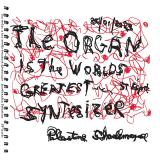
In the same vein, the aptly titled live record »The Organ is the World’s Greatest Synthesizer« – performed during the Sonic Acts Festival at Amsterdam’s Oude Kerk in 2025, and taking its title and cover art from a drawing realized by Palestine himself during the concert – adds to his opaque yet vibrant personal mythology and intimate transcendence, marking a return to the Staalplaat catalog after »Fffroggssichorddd« (2020) and »Music for Big Ears« (2001).
Beginning with a resonating bell and his falsetto overtone singing, then surrendering to the endless, wild soundscapes of tone-feeling and beat frequencies generated by the church’s organ, across 40+ minutes, single sound sources evolve into clusters, entangle fully with one another, and establish their own spatial existence and aural architectures. We witness the traces of something that can be described as a perpetual performance, a test for the ever-changing interaction between artist, instrument, space and, ultimately, us.
Since Palestine has always defined his execution as a form of anti-composition - of simply »being in the music« as if inhabiting a space - the true power of »The Organ is the World’s Greatest Synthesizer« lies in encapsulating a moment of Palestine’s practice in its most authentic, live dimension. Sound becomes at once subtle substance and strange telluric force, animating physical forms from some unknown channel beyond and within, accessible only through our sensorium. The point in this liminal temple of tone, timbre and frequency is not to learn anything but to simply enter. Palestine earns once again his self-given title of contemporary shaman by keeping this sonic portal open, allowing us to witness and make it last.
»I have always felt and heard and mixed the sounds in my world as liquids not as solids. Sonic liquids are material that is endlessly transformable. But I’m not crazy about people who go around defining stuff.«
- A1: Tonic
- A2: Murmuration
- A3: Orange
- B1: Cascade
- B2: Sun
- B3: Tapestry
- B4: Ensō
‘No Fixed Point In Space’, the third full-length album by Jack Cooper’s Modern Nature, takes the palette of sound and themes that were honed on 2021’s ‘Island Of Noise’ and launches them into an expansive world of openness and vivid technicolour.
It’s a music that hasn’t been heard before; as melodic as anything Cooper has produced but framed by rhythms and instrumentation that reflect the chaos, unpredictability and colour of the natural world.
Certain moorings - woodwind, percussion, strings and Cooper’s lambent voice - are still present and recognisable from No Fixed Point In Space’s predecessor, ‘Island Of Noise’, but the new record marks a shift to utilising musical notation as a point of departure, from which the group explore the space around suggested notes and rhythms to create a semiimprovised, semi-composed ensemble performance.
These explorations of partly organised chance were recorded live and directly to tape.
This approach gives the music a remarkably fresh feel; songs pulse and evolve. The changes between movements, verse and choruses are almost all ambiguous. During the album’s opener, ‘Tonic’, a verse of hushed brevity washes away into a passage of overwhelmingly vibrant orchestration.
CD in four-panel digisleeve with 10-panel booklet with lyrics. LP pressed on 140g black vinyl with printed inner
sleeve and stamped postcard.
- Weera
- Share Your Care
- Mekong
- Interlude 1 - Sam Law
- Fortune
- Horizon
- Morlam Plearn (Luk Khrueng Surprise)
- Interlude 2 - Look That Way!
- Barn Nork
- Hell Money
- Chaiyo!
- Interlude 3 - Conversations At The Catfish Lake
- Myna
In the summer of 2021, Brighton-based, Scottish-Thai songwriter Helen Ganya's grandmother passed away
The grief hit the artist hard, not only because it marked the loss of her last remaining grandparent, but also because it felt like her links to being half- Thai were disintegrating, roots quaking and shifting in uncharted territories. Ganya grew up in Singapore, but spent her summers in the northeast of Thailand where her mum's side of the family is from, visiting her grandmother. Where would all those memories go now that the person at the centre of them was gone? What was her relationship to this place without that glue? And so, in an attempt to process it all, Ganya began to write. "I got my diary and wrote every single memory of my time as a child in Thailand, spending time with her, my grandad, my aunts and cousins and everything," she explains, "I had these snapshots of memories that I just wrote down because I just suddenly panicked: it was like, who am I, then?" It was for this reason that, while Helen Ganya was waiting for her acclaimed 2022 album, polish the machine, to come out, she was already working on what would become her arresting new record, Share Your Care. Ganya has been releasing music since 2015 (formerly under the moniker Dog in the Snow). In the records she's put out over the years, she's shown a proclivity towards dark and artful rock and off- kilter sounds, garnering praise from the likes of the Sunday Times, Uncut, Clash, Loud & Quiet and more. But Share Your Caremarks a new era, building on Ganya's past sonic worlds and interspersing them with traditional Thai instrumentation, resulting in a plush, luminous, psych-tinged affair that is full of feeling. The result is a triumphant, abundant record, teeming with heart and cinematic warmth.
- A1: Get Up I Feel Like Being A Sex Machine
- A2: Brother Rapp (Part I & Part Ii)
- A3: Bewildered
- A4: I Got The Feeling
- B1: Give It Up Or Turnit A Loose
- B2: I Don’t Want Nobody To Give Me Nothing
- B3: Licking Stick
- C1: Lowdown Popcorn 9.Spinning Wheel
- C2: If I Ruled The World
- C3: There Was A Time
- C4: It’s A Man’s Man’s Man’s World
- D1: Please, Please, Please
- D2: I Can’t Stand Myself (When You Touch Me)
- D3: Mother Popcorn
James Brown wants to know one thing before he and his band begin Sex Machine. “Can I get into the thing, really?,” he asks. His cohorts enthusiastically respond in the affirmative. And for the next hour and change, Mr. Dynamite gets into it and more, turning in a sweat-soaked, feet-moving, hip-swiveling, emotion-purging, in-the-red, drop-everything-you’re-doing-and-dance performance for the ages. Ranked by Rolling Stone among the 500 Greatest Albums of All Time, the sweeping 1970 effort towers as a testament to Brown’s inimitable legacy as well as the peak powers of his voice, vibrancy, and bands.
Sourced from the original master tapes, pressed at Fidelity Record Pressing, and housed in a Stoughton gatefold jacket, Mobile Fidelity’s numbered-edition 180g 33RPM 2LP set presents Sex Machine in audiophile sound for the first time. It explodes with the energy the lightning-strike music demands. Dynamic, immediate, present, airy: Everything from the brassiness and fluidity of the horns to the snap and decay of the snare to the swell and carry of the organ comes across in full-range perspective.
Then there’s Brown’s superhuman singing, which here emerges with a purity, naturalism, and transparency that ensure you feel everything. Screeching, shouting, pleading, moaning, preaching, stinging, commanding, testifying, crooning, humming: The Godfather of Soul contributes one of the finest vocal performances known to man. This definitive 55th anniversary reissue of Brown’s monster funk statement further exhibits a combination of clarity, solidity, separation, and imaging that helps bring to light what he and his crack ensembles committed to tape. Both in the studio and on the stage.
Just how lifelike does this reissue sound? Senior Mobile Fidelity Sound Lab engineer Krieg Wunderlich, who handled the remaster, notes: “There were some artifacts that sounded a bit like mistracking. But they turned out to be breath blasts on the vocal microphone. That is part of history. JB was workin' hard, and breathin' hard. And there was an edit the timing of that was truly strange. Again, a part of history.”
Originally marketed as a live album, Sex Machine contains six songs recorded in the studio and later overdubbed with canned crowd noise and reverberation. Save for “Low Down Popcorn,” the tracks on the latter half stem from a phenomenal performance captured in October 1969 at Bell Auditorium in Brown’s adopted hometown of Augusta, GA. The special relationship between the singer, the audience, and the location is palpable.
As the 1960s gave way to a new decade, Brown experienced immense success and dealt with unexpected change. Soul Brother Number One soon expanded his idea for an official live album captured in Augusta when the ensemble that backed him on that date morphed into the original version of the world-famous J.B.’s just months after the show. The virtuosic abilities, sticky chemistry, and rhythm-forward nature of the J.B.’s prompted him to book a one-off session in Cincinnati, OH, on a late July night.
Anchored by brothers William “Bootsy” Collins and Phelps “Catfish” Collins, the group — as well as two different drummers — laid down a nearly 11-minute rendition of “Get Up I Feel Like Being Like a Sex Machine” and a thrilling medley of “Bewildered,” “I Got the Feeling,” and “Give It Up or Turnit a Loose.” A pair of then-recent studio singles cut in separate locations in 1969, “Brother Rapp” and “Low Down Popcorn,” each featuring his prior group, took care of the second LP worth of material that complements the originally planned live set.
Complicated? Somewhat. Unusual? Definitely. But just as he elevated the expectations for all present and future R&B artists, Brown not only makes it all work. He makes it positively electrifying.
“Get Up I Feel Like Being Like a Sex Machine” is alone deserving of a dissertation on the art of funk music, seeing it moves up and down akin to an oil derrick, witnesses Brown unleashing a trademark series of grunts, squeaks, and “good god” asides, and glides to a hypnotic groove that won’t quit. Or look to the syncopated rhythms of “Brother Rapp (Part I and Part II),” one of multiple pieces here that signify the point where Brown began viewing every instrument as a percussive tool. Brown closes the three-song medley with his new band with a skedaddling “Give It Up or Turnit a Loose,” which provides jolts on the order of sticking your finger into a socket.
Not that the actual live material falls short in any way. Setting an insistent tempo for the vitality that follows, “I Don’t Want Nobody to Give Me Nothing” positions Brown as a role model, leader, and self-sufficient entrepreneur. All simmer and boil, the short and sweet “Licking Stick” dares you to keep pace. The floating, almost comforting “Spinning Wheel” spotlights the instrumental prowess of Maceo Parker and company, and functions as a seamless segue into the tender, horn-saluted “If I Ruled the World.”
And Brown and his mates still aren’t done. Just try to resist the one-two closing punch of “I Can’t Stand Myself (When You Touch Me)” and “Mother Popcorn.” Mercy.
Ain’t it funky? Sure ‘nuff.
- Spanish Guitars And Night Plazas
- A Hundred Wishes
- Ages Past, Ages Hence
- The Ballad Of The Fox Hunter
- Manx Ayre
- La Belle Dame Sans Merci
- Sun, Moon And Stars
- Breaking Of The Sword
- Lost Souls
- Incantation
- The Gates Of Istanbul
- Caravanserai
- The English Ladye And The Knight
- Kecharitomene
- Penelope's Song
- Sacred Shabbat
- Beneath A Phrygian Sky
- Never-Ending Road (Amhrán Duit)
- The Mystic's Dream
- The Bonny Swans
- The Dark Night Of The Soul
- Marrakesh Night Market
- Full Circle
- Santiago
- Cé Hé Mise Le Ulainght? The Two Trees
- Prospero's Speech
- All Souls Night
- Bonny Portmore
- Between The Shadows
- The Lady Of Shalott
- Greensleeves
- Tango To Evora
- Courtyard Lullaby
- The Old Ways
- Cymbeline
- Royalties
- Mom's Night Out
- Miss America
- Soft As A Rock
- Death Bed
Talk Show is a new duo collaboration featuring Steph Richards on trumpets and resonating surfaces and Qasim Naqvi on drums, almglocken bells and modular synthesizer. Having worked together on other projects for almost two decades, Miss America, released by We Jazz Records, marks their first, pure duo collaboration - a space to engage with a sonic language they"ve been cultivating together for years. The album was recorded live, with Qasim crafting real-time electronics and drum set work, and Steph using trumpets and resonating percussion to summon sympathetic vibrations and otherworldly sounds through timpani, snare and water. The trumpet sounds electronically processed, though every sound is acoustic. Both artists wanted to retain the live nature of their process, so what you hear is virtually untouched.
Repress!
200 COPIES ONLY
Nils Frahm has unexpectedly confirmed details of a new collection of solo piano music, his first album since 2022’s three-hour Music For Animals. Day will be released by LEITER on March 1st, 2024, and it will be available on limited edition vinyl as well as via all digital platforms. Recorded in the summer of 2022 in complete solitude and away from his studio at Berlin’s famed Funkhaus complex, it is preceded by a single, ‘Butter Notes’, out on January 19. Day may come as a surprise to those who, over the last decade, have watched Frahm shift slowly away from the piano compositions with which he first made his name in favour of a nonetheless still-distinctive approach that’s considerably more instrumentally complex and intricately arranged. In addition, in 2021, having spent the early part of the pandemic arranging his archives, he released the 80 minute, 23-track Old Friends New Friends, a compilation of previously unreleased piano music intended to enable him to ”start over” with a clean slate. Judging from the extended, ambient nature of Music For Animals, it proved a successful gambit, but Frahm has never been able to resist returning to his first love, and those who enjoyed earlier acclaimed albums like The Bells, Felt and Screws will once again revel in Day’s familiar, personal style. Day, which contains six tracks, three over the six-minute mark, is the first in a pair of albums Frahm has lined up for 2024. In keeping with their nature, however, he won’t be making a song and dance about the release. Instead, he’ll resume his ongoing world tour, which has already included fifteen sold-out dates at Berlin’s Funkhaus as well as a show at Athen’s Acropolis. It will continue with shows all over the world, among them several sold-out dates at London’s Barbican in July 2024, where he previously curated a weekend of music, film and art, Possibly Colliding, in 2016. The album is best enjoyed in the manner in which it was recorded, in the intimacy of a peaceful, cosy room. There are muffled pedal creaks on the cyclical, quietly jazzy ‘You Name It’ and, during the palliative ripples of ‘Butter Notes’’ arpeggios, the sound of dogs barking in the streets outside. The compassionate, hesitant ‘Tuesdays’ and emotionally ambiguous ‘Towards Zero’ linger with the poignant persistence of Harold Budd’s earliest work, while ‘Hands On’ is a sometimes brighter, airier tune that sets its own, deliberate pace, and, as he has on occasions before, ‘Changes’ sees Frahm employing elements of his instrument’s construction in a ‘prepared piano’ fashion. Characterised by its confidential mood, Day confirms that, while Frahm is arguably now best known for elaborate, celebratory concerts calling upon an arsenal of pianos, organs, keyboards, synths, even a glass harmonica, he’s still a prolific master of affecting simplicity, tenderness and romance.
- Puberty
- Seal My Fate
- Red
- Silverfish
- Super-Connected
- The Bees
- King
- Now They'll Sleep
- Untitled And Unsung
- L'il Ennio
- Judas My Heart
Nach dem gefeierten Debüt Star (1993), das Belly zwei GRAMMY-Nominierungen einbrachte, stand die Band an einem Wendepunkt. Mit Bassistin Gail Greenwood stiegen Tanya Donelly und die Brüder Chris und Tom Gorman in ein gemietetes Haus in Rhode Island, um gemeinsam Songs zu schreiben. Anschließend zog es sie ins legendäre Compass Point Studio auf den Bahamas, wo bereits AC/DC, Grace Jones oder Tom Tom Club aufgenommen hatten. Unter Produzenten-Ikone Glyn Johns (Led Zeppelin, Rolling Stones, The Who) nutzten Belly die entspannte Umgebung, spielten viel live ein und reduzierten Overdubs - um ihre Chemie unverfälscht einzufangen. Das Ergebnis war King: ein komplexeres, schwereres Werk mit den Singles Now They"ll Sleep, Seal My Fate und Super-Connected. Mit politischeren und persönlicheren Texten sowie Gail Greenwoods kraftvollem Bass markierte das Album künstlerisches Wachstum statt Kommerzialität. Das SPIN Magazine sah darin den Schritt von "Indie-Lieblingen zu Rock-Kandidaten". Erstmals seit 30 Jahren wieder erhältlich, erscheint King nun als lange erwartetes Repress auf schwarzem Vinyl, inklusive Original-Artwork und Fotografien von Christopher Gorman und Stephen DiRado.
Returning with its final instalments, Die Schachtel's Decay Music series extends its explorations of inspired contemporary experimental efforts of the ambient, ethereal, and emotively abstract with Luigi Turra and Elio Martusciello’s “Liminale” and Sergio Armaroli and David Toop’s “And I Entered Into Sleep”, two astounding electroacoustic gestures of blurred space and time, plumbing complexity of meaning bound to sonority. Creatively groundbreaking and inspired, radically rethinking the terms of what ambient music can be perceived to be, they stand among the most striking efforts to appear within the series to date.
Reconfiguring the notion of bridge building on a multitude of terms, it feels fitting that the tenth and final installment of Die Schachtel’s Decay Music series, Sergio Armaroli and David Toop’s “And I Entered Into Sleep”, was co-created by an artist whose work featured in the first suite of LPs issued by Brian Eno’s Obscure Records in 1975, the groundwork toward which Decay Music’s own efforts nod. Since that auspicious debut, “New and Rediscovered Musical Instruments” — his split with Max Eastley — David Toop has been regarded as a pioneer in British experimental and improvised music: a sonic voyager who has continuously challenged the sources and materiality of sound through rigorously thoughtful performances, a vast catalog of recordings, and a steady flow of highly influential texts. Be it as a member of Alterations, his group breaking group with Peter Cusack, Terry Day, and Steve Beresford that ran between 1977 to 1986, or through is noteworthy work with artists like Rie Nakajima, Thurston Moore, Paul Burwell, Rhodri Davies, Lee Patterson, Ryuichi Sakamoto, Akio Suzuki, Elaine Mitchener, and numerous others, collaboration has always played a central role within Toop’s singular practice, but few can claim the sprawling sense of beauty and intimacy that’s achieved by “And I Entered Into Sleep”, his first recorded outing with Sergio Armaroli.
A composer, percussionist, vibraphonist, and multidisciplinary artist, Armaroli has been issuing radical and forward-thinking musical gestures for decades, working as one of Italy’s most noteworthy interpreters of composer’s like Giacinto Scelsi, John Cage, Franco Evangelisti, Giancarlo Schiaffini, and Walter Branchi, as both a solo performer and member of the highly regarded Rib Trio, as well as forging a singular practice as a composer, intertwining his efforts as a painter, concrete percussionist, fragmentary poet and sound artist, within a total art, rooted “within the language of jazz and improvisation” as an “extension of the concept of art”. Like Toop, Armaroli’s career has been populated by many collaborators, notably with Riccardo Sinigaglia, Alvin Curran, and Walter Prati, among others, setting the stage for a remarkable meeting between the pair.
Featuring Armaroli on vibraphone and prepared vibraphone and Toop on electronics, “And I Entered Into Sleep” is “a sonic journey, a Proustian suggestion à la Recherche, into the unconscious between electronic and acoustic sounds”. Using a bell that sounds at the beginning of Proust’s “À la Recherché du Temps Perdu”, which reappears more than 3,000 pages later — signaling a transition of phases, as well an auditory trigger of memory — as a departure point, as an association to the percussive vibraphone pulses that thread the album’s two sides, the pair weave a striking interior world of immersive psychological depth. Feeling almost subaquatic at times, like captured glimpses of rumbling, shadowy ecosystems lost within murky ambiences, before washing ashore in a series of pointillistic, highly detailed alien landscapes of the mind, each artist’s markedly different sound-sources, and treatment of the subsequent material elements, dance in abstract grace, incorporating subtle nods to minimalism, free jazz, and musique concrète within its seamless total form of sparse texture and tone.
Easily one of the most striking and memorable releases by either artist to appear in recent years, Sergio Armaroli and David Toop’s “And I Entered Into Sleep” traverses uncharted realms at the borders of literary reference, sound art, ambience and abstraction through delicately musical sounds, revealing new depths at every turn. Issued as the tenth and final album in Die Schachtel’s Decay Music series, highlighting inspired contemporary experimental efforts of the ambient, ethereal, and emotively abstract.
Im Jahr 2025 veröffentlicht Richard Galliano sein legendäres Album „Viaggio“ bei BMG neu, das ursprünglich 1993 bei Dreyfus Jazz erschien. Eine zeitlose musikalische Reise voller Poesie und Emotionen,
die einen Wendepunkt in der Karriere dieses international bekannten Künstlers markierte.
BMG freut sich, dieses remasterte Juwel präsentieren zu dürfen, angereichert mit bisher unveröffentlichten
Bonusmaterial, das Fans und Neueinsteiger gleichermaßen begeistern wird. „Neues Viaggio“ oder „neue
Reise“: Diese Worte klingen wie ein fernes Echo, eine Einladung, in die Vergangenheit zu reisen und erneut
in die einzigartige Atmosphäre dieses mythischen Albums einzutauchen. Wer hat nicht schon einmal von
Zeitreisen geträumt, davon, kostbare Momente noch einmal zu erleben? Mit der Neuauflage von „Viaggio“
wird dieser Traum Wirklichkeit.
„Als ich die Aufnahmen der Studiosessions wiederentdeckte, empfand ich eine tiefe Emotion, eine Mischung
aus Freude und Nostalgie. Die Präsenz von Pierre Michelot und Charles Bellonzi, diesen außergewöhnlichen Musikern, die uns verlassen haben, ist spürbar. Pierre, Miles Davis’ Kontrabassist (Ascenseur pour
l’échafaud), und Charles, „Lolo“, Nougaros Schlagzeuger (Tu verras), bildeten mit ihrer umwerfenden Sensibilität eine Rhythmusgruppe von seltener Eleganz. Und last but not least war Biréli Lagrène, virtuoser
Gitarrist und langjähriger Freund, immer bei uns und verlieh dem Ensemble eine atemberaubende Magie.
Ich freue mich sehr, diese neue Version von
Essential Liverpool psychedelic folk collective mapping their territory with a record rooted in place and memory.
For fans of: CSNY, Tim Buckley, Talk Talk, The Byrds, Sufjan Stevens and Love.
Like Tame Impala doing Nick Drake covers.
Professor Yaffle have created their most focused and expansive work yet. Following acclaimed previous releases, ‘Everyone Wants to Dream’ finds the band at their creative peak.
The album turns on Everton Brow - an unremarkable Liverpool hill offering the city's finest view. Rogers returns to this vantage point throughout eight tracks, using it as both setting and metaphor for looking back on life without nostalgia. From here, you can see the Mersey stretch toward Snowdonia, the city spread below like a living map.
'Lost in a Dream (On Everton Brow)' weaves Lee Roger’s lyrics as an eighteen-year-old lyrics with newly composed music. 'Everyone Wants to Dream' confronts the disorientation when your children grow and your role shifts. 'On Top of the World' becomes what Rogers calls 'a stoned love letter to Liverpool'.
This is Professor Yaffle's first release with Violette Records, marking the beginning of a partnership between two Liverpool entities who've circled each other for years before finding their moment.
Featuring a 1979 Karl Hughes photograph of a policeman surveying Liverpool from Everton Brow, capturing something essential about the record: that those who maintain order might dream the biggest dreams of all.
"Songs that speak clearly about things that are difficult to articulate - the changing nature of purpose, the ways we dream our fears away, the view from unremarkable hills."
Because sometimes you need to be above it all to see what's been right in front of you.
- Watch The Water
- The Way Of The World
- Coombe House
- Wash What You Eat
- Like When
- Basic Everyday Life
- Hold Onto I.d
Recorded from late 1996 through early 1997, Hold Onto I.D., The Shadow Ring's fourth album, marks the apogee of the trio's experimental rock epoch - their last record clinging to their factitious bandness before they let all song and structure go awash in sonic malaise for their final run of releases on Swill Radio. The surrealist dreams of City Lights and Put the Music in Its Coffin give way to pseudo-expressionistic lyrics mired in the banality and bleakness of the everyday, set against the backdrop of the Coombe House (as pictured on the album's cover). While Hold Onto I.D. is the group's most overtly autobiographical release to date, Lambkin's lyrics obfuscate his expressionist tendencies filtering them through the codes and languages of officialdom, linking the "inner self" with documents of the state_identification cards, National Insurance numbers, and British passport numbers. Having moved out of their parents' homes and into the top floor of the famed Coombe House, Graham Lambkin and Darren Harris set out to rework material drafted over the previous year, aided by Tim Goss, still safely in residence at the "Valebrook Inn." While the familiar sounds of Harris's deadpan recitation and Lambkin's electric guitar, amateurishly strummed, dominate the album, the emotive interludes of Goss's keyboards populate the record along with of home-cooked tape experiments and dime-store concrète. Originally released on CD and supported by a US tour with friends Scott Foust and Karla Borecky's Idea Fire Company, Hold Onto I.D. is perhaps the band's best-known and most accessible album. (The Shadow Ring's sole representative on a streaming platform, it was once acknowledged by the Guardian as one of "the 101 strangest records on Spotify.") Offered here for the first time on vinyl, Hold Onto I.D. is an essential album for both completists and the uninitiated alike. Throughout their legendary, decade-long run, the Shadow Ring were an enigmatic force on the international musical sub-underground. Before their disbandment in 2002, this shambolic rock outfit, formed by a group of rowdy teenagers in southeast England, left behind a mighty run of eight LPs, a handful of 7"s, and a spate of raucous live shows and cryptic zine appearances on both sides of the Atlantic, all which have bolstered their enduring word-of-mouth mystique. Beginning in 2023 with the first-ever vinyl pressing of the self-released pre-Shadow Ring tape The Cat & Bells Club (1992), Blank Forms Editions has been conducting a systematic retrospective of the storied group. Wax-Work Echoes and Hold Onto I.D. are the latest releases in a multiyear reissue effort that includes several LPs, a comprehensive CD box set, and a nearly five-hundred-page book.
- Personality Crisis
- Looking For A Kiss
- Vietnamese Baby
- Lonely Planet Boy
- Frankenstein (Orig.)
- Trash
- Bad Girl
- Subway Train
- Pills
- Private World
- Jet Boy
The extroverted blend of attitude, energy, and ostentatiousness that spills from the New York Dolls’ self-titled debut can be seen in full view on the album cover. Depicting the quintet in its hallmark flash-and-trash apparel and in drag appearance, the 1973 album scared away a considerable amount of potential listeners while capturing the attention of a sizable audience that recognized the band for what it was: zeitgeist pioneers who helped develop the punk and glam rock movements.
Named by Rolling Stone the 301st Greatest Album of All Time and by Mojo the 49th greatest album of all time, New York Dolls receives long-overdue audiophile treatment on Mobile Fidelity’s numbered-edition 180g 45RPM 2LP set. Sourced from the original master tapes, pressed at Fidelity Record Pressing in California, and housed in a Stoughton gatefold jacket, this collectible version marks the first time the group’s career-making statement is available to be experienced in audiophile quality.
Far from harboring the crude elements that became associated with the punk scene, New York Dolls benefits from keen production overseen by none other than Todd Rundgren. Though more accustomed to working far higher-caliber musicians, Rundgren — taken by the New York Dolls’ charisma and cool, if not their instrumental approach — fully understood the ensemble’s aesthetic. He captured what went down at New York City’s Record Plant with an astute blend of live-on-the-floor feel, raw authenticity, and professional acumen.
On Mobile Fidelity’s definitive-sounding reissue, you can hear those facets as well as key details, dynamics, and textures with previously unimaginable insight. Rundgren preserved generous degrees of grit, grime, and grease while bestowing the raucous music with elevated levels of separation, solidity, and impact every landmark recording deserves. His vision extends to introducing choice accents — barroom piano notes, Moog synthesizer passages, Buddy Bowser’s honking saxophones — that add to the songs’ appeal without interfering with the primary architecture.
Afforded extra groove space on this pressing, the tenor, presentation, and attack of both vocalist David Johansen and now-iconic guitarists Johnny Thunders and Sylvain Sylvain come across with stunning vibrancy and vitality. The New York Dolls often seem headed off the rails and into the red, but somehow, the strut, swagger, and sloppiness — and the associated sleaze and scruff, scrape and snarl, frenzy and feverishness those characteristics entail — remain together as a whole that shakes its collective fist at the frustrations, isolation, disarray, and disillusionment of youth chaos and urban decay.
Kicking off its debut with “Personality Crisis,” cited by Rolling Stone as one of the 500 Greatest Songs of All Time, the band makes obvious its grasp of alienation, deviance, displacement, and suburban disaffection — as well as its capacity to play hanging-by-a-thread boogie, noisy rock ‘n’ roll, and Brill Building-inspired pop. The lipstick-kissed New York Dolls possesses traits many of its harsher predecessors would overlook: joyfulness and melody, topped with a knack for knowing how and where to take a song inside of three-and-a-half minutes.
Dive and dash with the belligerent “Looking for a Kiss”; stomp your feet and clap your hands to the big choruses of “Jet Boy”; surrender to the demands and provocations of the coded “Vietnamese Baby”; decide whether “Bad Girl” yearns to explode or implode. It’s one of several tunes here that allude to the world coming to end. Of course, that doesn’t mean there isn’t time for a fling before everything burns. “There’s no place I gotta go,” yowls Johansen. And he means it.
Adorned with tonal crunch, glitter, and gristle, New York Dolls takes pride in its brashness and brattiness. The rambunctious effort, which earned the band the distinction of being voted both “Best New Group of the Year” and “Worst New Group of the Year” in the pages of Creem, displays knowing reverence for the blues without calling attention to the style. The folk-laden “Lonely Planet Boy” is nothing if not a collision of heart-on-the-sleeve emotions and the desire in the face of challenges to maintain a tough-skinned exterior. An interpretation of Bo Diddley’s “Pills,” complete with shivering harmonica and clattering rhythms, announces there’s no cure for what infects this band. It’s that contagious. And how.
His deliveries gushing with campy fun, playful irreverence, and sheer decadence, Johansen doubles as the equivalent of an open fire hydrant that spouts at will. He’s at once tender and vicious, serious and tongue-in-cheek. On arguably his finest hour on the album, Johansen’s phrasing, passion, and lyrical ambiguity alone turn “Trash” into an insistent glam-rock gem whose echoing harmonies and girl-group references stamp it a pop classic.
Too much, too soon? Only for those averse to some of the finest rock ‘n’ roll ever put on tape.
Repress!
In the mid-1970s, a force of nature swept across the continental United States, cutting across all strata of race and class, rooting in our minds, our homes, our culture. It wasn’t The Exorcist, Goodbye Yellow Brick Road, or even bell-bottoms, but instead a book called The Secret Life of Plants. The work of occultist/former OSS agent Peter Tompkins and former CIA agent/dowsing enthusiast Christopher Bird, the books shot up the bestseller charts and spread like kudzu across the landscape, becoming a phenomenon. Seemingly overnight, the indoor plant business was in full bloom and photosynthetic eukaryotes of every genus were hanging off walls, lording over bookshelves, and basking on sunny window ledges. The science behind Secret Life was specious: plants can hear our prayers, they’re lie detectors, they’re telepathic, able to predict natural disasters and receive signals from distant galaxies. But that didn’t stop millions from buying and nurturing their new plants.
Perhaps the craziest claim of the book was that plants also dug music. And whether you purchased a snake plant, asparagus fern, peace lily, or what have you from Mother Earth on Melrose Avenue in Los Angeles (or bought a Simmons mattress from Sears), you also took home Plantasia, an album recorded especially for them. Subtitled “warm earth music for plants…and the people that love them,” it was full of bucolic, charming, stoner-friendly, decidedly unscientific tunes enacted on the new-fangled device called the Moog. Plants date back from the dawn of time, but apparently they loved the Moog, never mind that the synthesizer had been on the market for just a few years. Most of all, the plants loved the ditties made by composer Mort Garson.
Few characters in early electronic music can be both fearless pioneers and cheesy trend-chasers, but Garson embraced both extremes, and has been unheralded as a result. When one writer rhetorically asked: “How was Garson’s music so ubiquitous while the man remained so under the radar?” the answer was simple. Well before Brian Eno did it, Garson was making discreet music, both the man and his music as inconspicuous as a Chlorophytumcomosum. Julliard-educated and active as a session player in the post-war era, Garson wrote lounge hits, scored plush arrangements for Doris Day, and garlanded weeping countrypolitan strings around Glen Campbell’s “By the Time I Get to Phoenix.” He could render the Beatles and Simon & Garfunkel alike into easy listening and also dreamed up his own ditties. “An idear” as Garson himself would drawl it out. “I live with it, I walk it, I sing it.”
But as his daughter Day Darmet recalls: “When my dad found the synthesizer, he realized he didn’t want to do pop music anymore.” Garson encountered Robert Moog and his new device at the Audio Engineering Society’s West Coast convention in 1967 and immediately began tinkering with the device. With the Moog, those idears could be transformed. “He constantly had a song he was humming,” Darmet says. “At the table he was constantly tapping.” Which is to say that Mort pulled his melodies out of thin air, just like any household plant would.
The Plantae kingdom grew to its height by 1976, from DC Comics’ mossy superhero Swamp Thing to Stevie Wonder’s own herbal meditation, Journey Through the Secret Life of Plants. Nefarious manifestations of human-plant interaction also abounded, be it the grotesque pods in Invasion of the Body Snatchers or the pothead paranoia of the US Government spraying Mexican marijuana fields with the herbicide paraquat (which led to the rise in homegrown pot by the 1980s). And then there’s the warm, leafy embrace of Plantasia itself.
“My mom had a lot of plants,” Darmet says. “She didn’t believe in organized religion, she believed the earth was the best thing in the whole world. Whatever created us was incredible.” And she also knew when her husband had a good song, shouting from another room when she heard him humming a good idear. Novel as it might seem, Plantasia is simply full of good tunes.
Garson may have given the album away to new plant and bed owners, but a decade later a new generation could hear his music in another surreptitious way. Millions of kids bought The Legend of Zelda for their Nintendo Entertainment System back in 1986 and one distinct 8-bit tune bears more than a passing resemblance to album highlight “Concerto for Philodendron and Pothos.” Garson was never properly credited for it, but he nevertheless subliminally slipped into a new generations’ head, helping kids and plants alike grow.
Hearing Plantasia in the 21st century, it seems less an ode to our photosynthesizing friends by Garson and more an homage to his wife, the one with the green thumb that made everything flower around him. “My dad would be totally pleased to know that people are really interested in this music that had no popularity at the time,” Darmet says of Plantasia’snew renaissance. “He would be fascinated by the fact that people are finally understanding and appreciating this part of his musical career that he got no admiration for back then.” Garson seems to be everywhere again, even if he’s not really noticed, just like a houseplant.
- A1: Stardust
- A2: Unidentified
- B1: Round About Midnight
- B2: Walkin
- B3: If I Were A Bell
- C1: Fran Dance (Put Your Little Foot Right Out)
- C2: Two Bass Hit
- D1: So What
- D2: All Of You
- D3: The Theme
In December 2024, The Lost Recordings released the first volume of this legendary concert, recorded on October 11, 1960, at the Olympia by Miles Davis and his quartet, joined by saxophonist Sonny Stitt. Alongside pianist Wynton Kelly, bassist Paul Chambers, and drummer Jimmy Cobb, they formed an ensemble of exceptional musicality.
Now comes the second part of this remarkable concert.
In 1960, Miles returned to Paris for the fourth time in 12 years. Just months earlier, he had performed there with John Coltrane in a turbulent concert, marking the end of their collaboration. In October, at the Olympia, he rediscovered a stage he loved in a city he had fallen for back in 1949. "I loved being in Paris, I loved the way I was treated there," he would later say.
Since 1949, his music had evolved. From his immersion in Parkerian bebop to his collaboration with Gil Evans, he refined his style, developing a more spacious jazz inspired by Ahmad Jamal and enriched by his classical training. The soundtrack of Elevator to the Gallows in 1957 was a turning point, foreshadowing the pinnacle of Kind of Blue in 1959.
From the opening notes of Stardust, a previously unreleased piece, Miles sets the tone—seduction and lyricism. With a track attributed to Sonny Stitt, the swing settles in. The atmosphere intensifies with ‘Round Midnight, followed by Walking, where Stitt and Davis engage in a masterful exchange. If I Were a Bell and Fran Dance offer a more introspective moment before Two Bass Hit reignites the energy. The concert reaches its peak with So What and All of You, as Miles captivates the audience until the final notes of The Theme.
Our quest to recover the full concert began in 2022 when a friend sent us a photo of magnetic tapes in Brittany. A label reading "Miles Davis – Olympia 1960" caught our attention. After two years of research spanning France, the United States, and Stockholm, we are proud to present, for the first time, the complete version of this legendary concert.
- A1: Santa Claus Is Back In Town, Written-By – Jerry Leiber, Mike Stoller*
- A2: White Christmas, Written-By – Irving Berlin
- A3: Jingle Bell Rock, Written-By – James Ross Boothe*, Joseph Carleton Beal*
- A4: Blue Christmas, Written-By – Billy Hayes, Jay W. Johnson*
- B1: Rudolph The Red Nosed Reindeer, Written-By – Johnny Marks
- B2: Christmas Blues, Written-By – David Holt*, Sammy Cahn
- B3: Holly Jolly Christmas, Written-By – Johnny Marks
- B4: Soulful Christmas, Written-By – Charles Bobbit, Hank Ballard, Alfred Ellis*
- A. The Surfer
- B. The Surfer
mpressed präsentiert in Zusammenarbeit mit Rubber Records den Soundtrack zum Psychothriller "The Surfer" (2024) in der Regie von Lorcan Finnegan mit Nicolas Cage in der Hauptrolle, der bei den 77. Filmfestspielen von Cannes Premiere feierte. Den Score schrieb der australische Filmkomponist François Tétaz, bekannt für seine Arbeiten für "Elvis" (2022), "Wolf Creek" (2005) und "Judy & Punch" (2019). Er fängt die Nostalgie des Protagonisten für den Strand seiner Kindheit, seine unterschwellige Melancholie und die einzigartige Atmosphäre des Ortes ein. Ein wunderschön gestalteter Soundtrack, der unabhängig vom Film genossen werden kann. 180g blau-weisses WAVE/WHITE WASH-Vinyl im Gatefold mit 12-seitigem Booklet und einzeln nummeriertem Obi-Streifen.
- "François Tétaz’ grandiose Filmmusik trägt in ihrem mythischen Antrieb Anklänge an Morricone." - Paste Magazine
- "Die Vertonung von "The Surfer" war ein Geschenk und eine Herausforderung zugleich. Nicolas Cage lieferte eine so großartige Performance ab, dass die Instrumentierung immer umfangreicher und ungewöhnlicher wurde – die Klangfarben erweiterten sich ständig. Irgendwie fügte ich schließlich eine absurde Menge an Windspielen, Mark Tree und Bell Tree hinzu. Normalerweise eine klischeehafte Instrumentenwahl für Wunder und Magie, sollen sie hier so eindringlich wirken, dass sie höhnisch und verrückt machen." – François Tétaz, Filmkomponist
- Factory Street Bells
- People We Used To Be
- Stuck In Reverse
- I Leave Everything To You
- A Little Sugar
- Pretty Stories
- Great Weight
- Hundred Words
Ivory Vinyl. The Swell Season ist zurück. Nach einer begrenzten Anzahl von ausverkauften Shows, unter anderem in der Radio City Music Hall in New York, kehrt das Duo mit neuer Musik zurück. Aus einer Studio-Session, die als Versuch begann, ein paar neue Songs für die Tournee zu schreiben, wurde ein komplettes Album, das passenderweise den Titel ,Forward" trägt - ihr erstes komplettes Album seit 16 Jahren nach dem großen weltweiten Erfolg ihrer Oscar-prämierten Rolle im Film ,Once". Die Geschichte und der dazugehörige Soundtrack wurden weltweit zu einem preisgekrönten Musical. Das Album besteht aus 8 Titeln, die von Glen Hansard und Markeeta Irglovae geschrieben wurden, die abwechselnd den Leadgesang übernehmen. Aufbauend auf dem Fundament und mit Respekt vor ihrer gemeinsamen Geschichte gehen sie als zwei Gleichberechtigte voran, die sich gegenseitig unterstützen und aufrichten. Begleitet von alten Bandmitgliedern und produziert von Sturla Mio Thorisson, schaffen sie für The Swell Season einen Sound, der sowohl alt als auch neu ist. In diesem Jahr tourt die Band erneut durch Großbritannien/Europa und die USA, wobei alle Shows entweder ausverkauft oder fast ausverkauft sind, einschließlich der prestigeträchtigen Royal Festival Hall in London.
Strut proudly reintroduces a sought after independent disco gem from the Topomic catalogue: Beckie Bell"s "In Need Of...", reissued in full for the first time. Originally released in 1980, In Need Of... quickly became a cult classic of the French disco scene. After relocating from New York to Paris in the late 1970s, Bell carved out a unique space for her sound, blending the soulfulness of New York disco with the high energy sophistication of the European market. The full debut album features some of Bell"s earliest recordings, including the full length version of "Super Queen" (1979) and "In The Right Place" (1980), showcasing her commanding vocal delivery and distinct musical style. Standout track "Music Madness" has since become a much-loved disco anthem, revered by collectors and DJs alike.
- A1: Debris
- A2: Hotel Room
- A3: Whilst My Heart Breaks
- A4: Gone Is The Grace
- A5: For Montealegre
- A6: Tangent Mind
- A7: In My Wildest Dreams
- B1: Dying As A Note
- B2: Shame
- B3: In The Absence Of You
- B4: Tapestry
- B5: Long Term Parking
- B6: Decatur Bells
Der in Süd-London geborene und mittlerweile in Atlanta lebende Puma Blue - das Pseudonym von Jacob Allen - veröffentlicht sein Überraschungsalbum 'antichamber'. Es markiert eine klangliche Wende für Puma Blue, da er sich von der vollen Band abwendet und ganz auf obskure elektronische Texturen und akustische Instrumente setzt. Während sein bisheriges Material irgendwo zwischen Trip-Hop, Jazz und Electronica schwebte, hat 'antichamber' einen rohen und direkteren Ansatz beim Songwriting. Hauptsächlich getragen von der sanften Stimme Allens und akustischen Gitarren zeigt sich 'antichamber' verletzlich und von überwältigender Schönheit.
- Frozen Sea
- Plaza De Toros
- Super Bloom
- Disneyland Jail
- How Does Your Sister Roller Skate
- Mom I'm Living The Life
- I Wrote A Song Called Take The Skinheads Bowling
- Mexican Chickens
- Europass
- We Hate You
- Everybody Get A Fucking Day Job
- Battle Of Leros
- Leaving Key Member Clause
- Piney Woods
- Let It Roll Down That Hill
- Pretty Girl From Oregon Hill
- It Don't Last Long
- Fat Little Babies
- Mark Loved Dogs And Babies
- Unrise In The Land Of Milk And Honey
- Vending Machine
- Fathers Sons And Brothers- Featuring The Bellrays
- Yonder Distant Shore
- Darken Your Door (Richmond Version)
- Every Time I Try To Get Out
- Beautiful (Georgia Version) David Low
- Giving Tree Father
- Art Basel
David Lowery (Cracker, Camper Van Beethoven) to release his new 28-track solo album. "Fathers, Sons and Brothers" is David"s musical autobiography, celebrating his youth, family, friends and the highs and lows of his lengthy 40-year career in the music business. The album combines three of David"s previously online-only released autobiographical solo albums "In The Shadow of the Bull", "Leaving Key Member Clause", and "Vending Machine", and also includes four new previously unreleased songs, as well as four newly re-recorded tracks: He"s been writing songs about people on the fringe for damn near a lifetime. 40+ years of detailing the idiosyncrasies of outcasts, losers, freaks and outliers in society in his two acclaimed, if not totally different, bands - Cracker and Camper Van Beethoven.
La Pambelé Unveils Nací Mestizo, A Bold New Album Reviving Salsa with a Contemporary Twist Bogotá’s heavy guaguancó orchestra, La Pambelé, proudly presents their highlyanticipated second studio album, Nací Mestizo, now available on all major digital platforms as of November 27th. This album pays tribute to the golden era of salsa, particularly the 1970s, while breathing new life into the genre with modern lyrics and stories that resonate deeply with Latin communities.
All while maintaining a distinct Bogotan essence that highlights the city’s unique cultural flavor. Nací Mestizo seamlessly blends the timeless salsa brava sound with contemporary themes, reflecting the everyday lives of people across Latin neighborhoods. The album’s songs capture the struggles, passions, and joys of ordinary people, presented through the vibrant rhythms of salsa, creating a musical experience that connects the past with the present. Building on Their Rising Popularity Prior to the album’s release, La Pambelé debuted the singles “Amargura” and “Perdí mi Corazón”, which quickly captivated audiences and set the stage for the full album's success. The band’s electric performance of these tracks at the MedPlus Coliseum in Bogotá, before an audience of 22,000 attendees awaiting Marc Anthony, was met with enthusiasm as fans danced and applauded.
This moment marked a significant milestone for the orchestra, cementing their place as a rising force in the global salsa scene. Additionally, La Pambelé’s growing visibility has been marked by their appearances at major festivals such as Salsa al Parque and features on prominent radio stations, including Radio Nacional de Colombia and Latina Stereo. These platforms have helped introduce La Pambelé’s signature sound to a wider audience, building anticipation for the release of Nací Mestizo and reaffirming their influence in Colombia’s tropical and alternative music scenes. A Contemporary Salsa Sound with Classic Roots La Pambelé’s unique blend of traditional salsa brava and contemporary Latin storytelling is showcased through their distinctive nine-piece orchestra, which includes piano, conga, flute, trumpet, trombone, timbales, bongos, and baby bass. The dynamic vocals of Miguel RoRebolledo and Lorena Contento elevate the album’s themes, creating a sound that invites listeners to their feet and onto the dance floor. Under the direction of Camilo Toro Morato, the orchestra has honed its signature style, pushing the boundaries of salsa while staying true to its roots. As a proud defiance of stereotypes about Bogotá’s musical abilities, La Pambelé’s name pays homage to legendary Colombian boxer Kid Pambelé, symbolizing resilience and strength.
The name also draws from the Bantú language, meaning "defender of one's own," reinforcing the band’s connection to their Colombian heritage and pride in their distinctive sound. Global Recognition and Continuing Influence Since the release of their self-titled debut album in 2022, La Pambelé has gained international recognition, especially within the vinyl collector community. Theirdebut album was released in both 45” and LP vinyl editions, further solidifying their unique position in the contemporary salsa movement. Influenced by salsa greats such as Markolino Dimond, Eddie Palmieri, Edy Martínez, and Ismael Miranda, La Pambelé has carried forward the torch of salsa brava with passion and innovation. Nací Mestizo marks a significant evolution in the orchestra’s journey, melding the old and the new, and cementing La Pambelé as a driving force in the future of salsa music. A Collector’s Dream With their 2022 debut album garnering international recognition, La Pambelé’s vinyl releases—including 45” and LP editions—have become coveted items for salsa collectors worldwide. Their music is a bridge between classic salsa traditions and a modern vision, appealing to seasoned fans and new listeners alike. About La Pambelé La Pambelé is a heavy guaguancó orchestra from Bogotá, Colombia, known for their vibrant, rhythm-driven sound that blends 1970s salsa brava with modern Latin influences. With a unique nine-piece lineup and powerful vocals, the band continues to break boundaries, defying expectations and inspiring audiences around the world