The Fall's fourth studio album Perverted by Language was released in 1983. The album was produced by the band's vocalist and songwriter Mark E. Smith and recorded at various studios in Manchester.
Perverted by Language features some of The Fall's most renowned tracks, including "Garden". The album's sound is characterized by its sharp and angular post-punk guitar riffs, driven by a heavy bass and drums rhythm section, all layered with Mark E. Smith's distinctive vocals.
Lyrically, Perverted by Language deals with themes of alienation, disorder, and the unpredictability of modern life. Smith's idiosyncratic and cryptic wordplay, including his penchant for inventing new words and phrases, adds to the album's overall sense of unease and dislocation.
Despite its challenging sound and lyrics, Perverted by Language is considered by many critics and fans to be one of The Fall's finest albums, showcasing the band at their creative and innovative peak. The album is available as a limited edition of 1500 individually numbered copies on pink coloured vinyl and includes an insert.
Suche:mark smith
An autumnal treasure, East Village’s Drop Out has spent the past thirty years finding new ears to bewitch and new hearts to melt. The only album from this British four-piece, recorded and released in the early nineties, it’s long been considered one of the hidden jewels of its time, and is talked of with hushed reverence by people who know. Bob Stanley of Saint Etienne once called it “an elegy for a particular brand of eighties guitar music, sweet minor chords and Dylanesque lyrics”, which captures what makes it so special; in summarising its era, though, it also effortlessly transcends it.
Like all great guitar gangs, East Village fell together as a four-piece; having relocated from High Wycombe to London in mid ‘80s, brothers Martin and Paul Kelly on bass and guitar, set on forming a group together, were joined by John Wood (guitar) and Spencer Smith (drums). Wood and the Kellys shared writing and vocal duties; it was an ideal combination, and one of the many charms of East Village is their various song writing voices, a tip of the hat, seemingly, to the 60s folk-rock groups who influenced them.
Originally influenced by garage-rock and freakbeat, the band eventually came through via the same scene as groups like Felt, The Go-Betweens, The Weather Prophets, and Primal Scream. They’d formed as Episode Four, releasing an EP, Strike Up Matches, in 1986, which has gone on to become one of most sought after releases of the C86 era. Their first two singles as East Village, ‘Cubans In The Bluefields’ (1987) and ‘Back Between Places’ (1988), were released on Jeff Barrett’s Sub Aqua label.
When it came time to record Drop Out, East Village found a supporter in Bob Stanley, who bankrolled the album sessions until Barrett re-signed the band to his new imprint Heavenly Recordings in 1990. The album that took shape is dusky, heartfelt, lamplit, full of chiming minor chords, close harmonies, rattling organs, all buoyed by a rhythm section that moves as one, steady and elegant. There’s melancholy here, certainly, on songs like ‘What Kind Of Friend Is This’, but also pleasure and freedom, on ‘When I Wake Tomorrow’ and ‘Silver Train’. The group were obsessed with Dylan’s Eat The Document at the time, and the album’s rich with references to the film; Drop Out’s character is also somehow close to the thin wild mercury sound of Blonde On Blonde, and the lambent light of the Byrds’ Notorious Byrd Brothers.
In one of life’s gentler surprises, ‘Silver Train’ became an unexpected radio hit in Australia when released there as a single in 1993. The story of East Village seems marked by such unexpected turns and surprising events. None was more surprising for their fans at the time, though, than their onstage split in 1991, leaving an unreleased album in the can. Encouraged by Jeff Barrett the band revisited the tapes two years on and while mixing the album for its posthumous release in 1993 invited Debsey Wykes (Dolly Mixture, Coming Up Roses, Saint Etienne, Birdie) to sing the quietly devastating album closer, “Everybody Knows”, a perfect, sad-eyed sign-off.
Listening now to Drop Out, its timelessness is clear. It could have been recorded by young folk-pop hopefuls in the late sixties, taking their shot at the big time; but it could just as easily have been recorded yesterday, by a group that’s both reverent to music’s past, but forward looking in spirit and temperament. It’s that kind of album. Drop Out’s pop poetry is fully formed, with a singular charm that takes in wistfulness, romance, and good times, and a clutch of deeply moving songs that are overflowing with melody and gracefulness. It’s pretty much everything you’d want from a guitar pop record.
It's also an album that’s slowly accrued its own legend. From its stunning cover art, photographed by Juergen Teller originally for a Katherine Hammett campaign, to the ten perfectly formed songs within, Drop Out’s significance in the scheme of things is such that, a decade ago, it was given a rare 10/10 rating in Uncut magazine, who called the album “the lost classic of its era”. Drop Out comes round every decade or so, each edition introducing new fans to its understated beauty, and this latest reissue is its most elegant and deluxe yet.
The 30th anniversary edition of Drop Out lands in two formats: an LP with tip-on style jacket and four-page insert, designed to partner with the 2019 vinyl reissue of their singles and rarities compilation, Hot Rod Hotel; and a double CD, featuring an extra disc compiling the group’s early singles and alternative versions. This CD edition previously has only been available in Japan, though it now features a new, superior mix of their second single, ‘Back Between Places’. Both feature new, typically eloquent liner notes from writer Jon Savage.
The members of East Village have all gone on to do inspired things: Martin Kelly joined Jeff Barrett at Heavenly and has managed label mainstays Saint Etienne since 1993; Paul Kelly formed Birdie with Debsey Wykes, and is now a renowned film director and graphic designer; both Paul and Spencer Smith played in Saint Etienne’s live band; John Wood moved to China to teach, and released a lovely, understated folk album, Quiet Storm, in Japan in 2006. But with the hazy perfection of Drop Out, they’ve all already etched their names in the firmament.
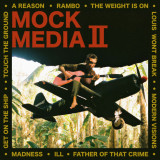
Mock Media, the new Canadian supergroup comprised of Garnet Aronyk (of Crack Cloud), Bennett Smith (of N0V3L), Austin Boylan (of Pottery) and Evan Aesen (of Painted Fruits), share their captivating debut album 'via Meat Machine Records (Crack Cloud, N0V3L, CLAMM)
Mock Media’s debut LP Mock Media II – out on Tin Angel records captures this firebrand four piece’s head-on plunge into enthralling existential contradictions: songs that explore the darkest corners of humanity, yet come out at the other end with the unwavering joy that marked their genesis. It’s an album of sneaky eclecticism: the high-wired punk rock stylings serve as Mock Media’s framework to clad their agog explorations into pop, electronic and world folk music.
Champaign, Illinois band Hum is re-issuing its four-album catalog on vinyl with exclusive distribution by Polyvinyl Records. The band members oversaw every step of the re-mastering, lacquer cutting, and manufacturing stages while working with original designer Andy Mueller/Ohio Girl in updating the artwork. Each album is offered in a double-LP 180g set in black.
Recorded by Mark Rubel at Pogo Studio, Champaign, IL. Mixed by Brian Malouf at Pacifique, LA.
Licensed from Sony Music and re-mastered by Ryan Smith at Sterling Sound, New York.
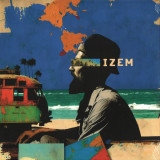
Following his first LP "Hafa" released by Soundway Records and a 12inch where he remixed Guts & Les Frères Smith (Pura Vida / Heavenly Sweetness), the nomadic producer iZem continues to blaze his own trail, offering a hybrid of Afro-Brazilian influences and electronic funk. After the release in 2022 of the EP "Yemamaya" composed with the Brazilian LuizGa, which was unanimously acclaimed by the public, he is releasing his second album "in Ze early morning", surrounded by artists and friends who have marked out his journey between South America, Portugal and France.
"in The early morning" is a fusion of musical aesthetics, the fruit of the artist's passionate quest to reveal links between cultures. iZem is constantly on the move, creating songs from loops and ideas initiated on the road, with his laptop as his companion. These first seeds are then developed with musicians from all over the world, to create innovative tracks that blend tropical trip-hop, Afro-Latin music and avant-garde electro beats.
Traversing the everyday in 2023, the need for ritual catharsis only grows stronger. The need to lose oneself in a force bigger than ourselves, and to venture into inner space the better to sculpt armour for the battles outside. Luckily this is the job of Bonnacons of Doom, aural soothsayers and progenitors of Trans Pennine hypnotic music. ‘Signs’ - their second album for Rocket Recordings - marks both a portent of things to come, and a roadmap of the psychic pathways to survival. This masked troupe, subsumed to mystery and amassed from across the North of England, have stepped up their mission accordingly. Building on the intimidating intensity of their self-titled 2018 debut, this series of fiercely charged mantras and premonitory transmissions is possessed of a new level of communal intensity. The band’s choice of weapons- the monomaniacal intensity of the riff, the liberating binary spirit of electronics and the incantatory vocals of ceremonial leader Kate Smith - here coalesce into a metaphysical force which stands defiant of easy categorisation. Within these otherworldly manifestations lurks solace in a place where the transcendent power of heavy amplification, cosmically aligned sonic explorations and strange forces darker and more unknowable can coalesce to cathartic and redeeming effect. ‘Signs’ marks out a supernatural landscape where ancient and modern, earthly and alien congregate in the eternal now, whilst Bonnacons Of Doom transcend era to light a path for the future
Wer kennt sie nicht, die Berliner Ska-Matadoren? Denn für viele gelten BLECHREIZ immer noch als die beste Live-Band Berlins! Sind sie nicht "ein Gemisch wie Nitro & Glycerin, das jeden Saal zum Kochen bringt"? - diese geballte Power macht jedenfalls das neue Album deutlich, dass jetzt von Smith & Miller Records auf Vinyl veröffentlicht wird. Gleich nach erstem Reinhören in den Tonträger wird klar, hier ist ein Ska-Dauerfeuer-Dampfhammer aufgelegt, bei dem man Gefahr läuft, sich die DocMartens-Sohlen durchzutanzen. Die ersten sechs Titel sind ein furioser Ritt auf dem Offbeat, bei dem die enorme Energie der Band deutlich wird. Neben ganz neu aufgenommenen Krachern, wie beispielsweise ihrem Ska-Hit "Bumble Bee" oder der legendären Arbeiter-Hymne "Which Side Are You On?" sind auch viele markante Blechreiz-Songs der Bandgeschichte auf dem neuen Album versammelt. Bei den ersten drei Titeln wurden BLECHREIZ von der Brass-Section der befreundeten Ska-Band "Memoria Insuficiente Ska" aus Bogotá in Kolumbien unterstützt. Ansonsten sind noch einige weitere Gäste bei den Aufnahmen mit dabei. Den Abschluss des Albums bildet mit dem Live-Song "Gewalt regiert" ein deutliches Statement gegen Nazi-Glatzen.
In the 1950s and 60s, the blues was the dominant form of Black vernacular music throughout Texas and the surrounding areas In segregated neighborhoods, community members gathered in saloons, dancehalls, and each other's homes to hear their neighbors sing their stories of sorrow, heartbreak, jubilation, and triumph. Robert "Mack" McCormick, an academically untrained but fanatical devotee of the blues, stepped into this world and became one of its most devout advocates and documentarians. By photographing Black and Latino Texans and their neighborhoods, as well as recording and interviewing musicians, many of whom never stepped foot into a proper recording studio, McCormick endeared and eventually embedded himself into these communities. By the time he died in 2015, McCormick had amassed a collection of 590 reels of sound recordings and 165 boxes of manuscripts, original interviews and research notes, thousands of photographs and negatives, playbills, and posters. Because McCormick never published or released most of these materials, his collection became a thing of legend and intense speculation among scholars, blues aficionados, and musicians alike. 'Playing for the Man at the Door..' is the first compilation of music drawn from this fabled collection, which indelibly documents a pivotal moment in African American history. It features never- before- heard performances not only from musicians who became icons in their own right, including Lightnin' Hopkins and Mance Lipscomb, but also, crucially, performers whose names may be unfamiliar to even the most devoted blues fans and scholars. Newly mastered recordings and accompanying photographs bring to life many of these forgotten figures: offering insight into their lives and illuminating in new, enlightening ways their joys and anguish, deep social connections, distinctive voices, and cultural networks. The collection spans gospel, ragtime, country blues dirges, the unclassifiable music of George "Bongo Joe" Coleman, and more, showing that no community, no matter how tight knit, is monolithic. Accompanying the music is a 128- page book, which contains breathtaking photographs by McCormick and his associates, as well as contextual essays by producers Jeff Place and John Troutman on McCormick's life, and by musicians Mark Puryear and Dom Flemons on some of the marginalized communities throughout "Greater Texas" to which McCormick devoted his life's work.
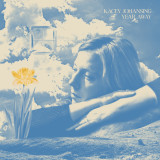
In March of 2020, after learning that a dear friend’s life was coming to an end, Johansing sat down and in one sitting wrote the song “Daffodils”. An elegiac tribute to someone facing death with grace and curiosity, the lyrics confront Johansing’s own mortality by observing the brief lifespan of a Hlower. Only a week later when the world came to an abrupt standstill, she soon found herself processing this recent loss while trying to make sense of a new global reality. Across the ensuing months, Johansing found herself increasingly untethered by a world of isolation and political upheaval.
Having been a frequent touring member of bands like Hand Habits and Fruit Bats, and often being called into the studio to lend her harmonies and multi-instrumental talents to records, Johansing’s phone no longer rang. Living in Los Angeles she feared her musical community was vanishing, as friends and collaborators continually announced they were leaving the city. It was in returning to her piano nightly that she found the greatest solace, feverishly writing the songs that would be collected on her next album. Resulting from this new sense of time and focus was a deepening of her songwriting. As Johansing recalls, “I felt like a metamorphosis happened during that time. There was a lot of personal growth and healing.”
Throughout Year Away Johansing traverses uncharted emotional landscapes brought upon by the changes occurring all around her. The forced self-reflection of the moment is aptly captured by “Old Friend”, featuring an aching melody and swooning production that recalls the best of Harry Nilsson. The epic piano and saxophone-driven “Smile with My Eyes” addresses the loss of community as friends became distant and political divides between family grew. On “Smile” Johansing pushes her vocals further than ever, expanding her range and using her peerless voice as the singular instrument it is. Facing the loss of a family home due to environmental destruction, “Shifting Sands” is marked by soaring Hlutes, Hield recordings and glassy synthesizers that nod to Japanese New Age.
“Daffodils”, the stunning album centerpiece, is built from a pastiche of looping samples, swirling Mellotron and dazzling vibraphone. “Keep your heart open wide, you never know your time / Keep your heart wild, true Hlower child”, Johansing sings as she says goodbye to an elder, while the band reaches a grief-stricken crescendo of woodwinds and chiming bells. On the title track, Johansing takes listeners on an eerily meditative journey of collective experiences. “I wanted to keep the progression simple and repetitive so that musically we could add new elements little by little, while the emotional tone of the lyrics becomes increasingly more strained and expressive”. The song grows to a fever pitch as Johansing sings higher than she thought possible; the tension of the repeating chords Hinally resolving into a hopeful coda as multiple soloists weave around each other.
Amidst heavier themes, Johansing still leaves room for her love of irresistible pop melodies and lush production. The driving “Last Drop” and mid-tempo “Valley Green” are two of her catchiest songs to date. On the former Johansing sings the anthemic chorus, “As if it were the last drop, and nothing ever lasts forever / As if it were the last stop, too far out to come back ever”, longing for a love that she’ll never take for granted, while also admitting that she doesn’t always know how good she has it. “Valley Green” features shimmering layers of 12- string guitars, stacked horns and an impeccable solo by co-producer and multi- instrumentalist Tim Ramsey (Vetiver, Fruit Bats), hinting at a love for bands like NRBQ.
Having been eager to capture the initial spark of songwriting, Johansing booked time at Highland Park’s 64 Sound Studio the week that it reopened. Over the course of three days, she and her band gathered basic tracks for 10 songs, before returning home to Hinish the record with Ramsey. Setting forth to make an album that paid homage to the music that kept them company during the months spent alone together, the duo pulled inspiration from a wide net including Burt Bacharach, John Carroll Kirby & Haruomi Hosono. Ramsey’s newfound love of early digital synthesizers dovetailed effortlessly with Johansing’s fondness for classic 70’s horn and string arrangements, creating a sound that is distinctly modern yet warm and familiar.
Once again Johansing called upon some of the Hinest players of Northeast Los Angeles’ vibrant music community to lend a hand with the record. The 70s R&B-folk of “Watch It Like a Show” features an electric guitar solo from Hand Habits’ Meg Duffy, while album closer “Endless Sound” boasts backing vocals from electronic musician Kaitlyn Aurelia Smith and swooping Indian-inspired violins from Amir Yaghmai (HAIM, The Voidz). The record shines brightly thanks to an ace mix from veteran producer Rob Schnapf (Beck, Elliott Smith, Cat Power), woodwinds from Logan Hone (John Carroll Kirby, Eddie Chacon), and a featured rhythm section of drummer Josh Adams (Jenny Lewis, Bedouine) and bassist Todd Dahlhoff (Feist, Devendra Banhart). Recorded across multiple studios including LA’s famed Sunset Sound, the album remains steadfastly buoyed by the adept engineering of Tyler Karmen (MGMT, Alvvays).
Though born of turbulent times, Year Away is ultimately interested in moving forward. The album ends with “Endless Sound,” where Johansing laments seismic global changes, (“The water is hotter, the mighty thaw / The current’s reversing, the last are lost”) but vows to keep going (“No storm can take me down / Endless light, endless sound”). It’s Year Away’s resilience that shines through despite the darkness. It’s a sound all her own and Johansing’s most cohesive set of songs yet.
Last of the RSD stock now reduced to £9.99. Limited double coloured neon vinyl limited to 500 copies for RSD. Side A&B on magenta vinyl and Side C&D on orange vinyl. This is an album of melodic beat driven songs recorded in Chris Olley's home studio just before lockdown. The sonic driven guitars of six by seven now meet the neo-kraut grooves much more than ever before, to create an intense collection of songs which remind you of both of Can and The Cure and have a distinct heartfelt lo-fi Mark E Smith vocal. It's a big, expansive sound wrapped around Olley's trademark melancholic songwriting
Throughout their legendary, decade-long run, the Shadow Ring were an enigmatic force on the international musical sub-underground. Before their disbandment in 2002, this shambolic rock outfit, formed by a group of rowdy teenagers in southeast England, left behind a mighty run of eight LPs, a handful of 7"s, and a spate of raucous live shows and cryptic zine appearances on both sides of the Atlantic, all which have bolstered their enduring word-of-mouth mystique. Beginning this year with the first-ever vinyl pressing of the self-released pre-Shadow Ring tape The Cat & Bells Club (1992), Blank Forms Editions is conducting a systematic retrospective of the storied group, including a multi-year LP reissue effort and a forthcoming comprehensive CD box set and an over five hundred page book. Recorded and self-released by the group's own Dry Leaf Discs in 1993, City Lights is the debut record of the then duo Graham Lambkin and Darren Harris_an assured arrival statement teeming with stripling angst and ambition. Lifelong chums Lambkin and Harris were barely nineteen and living at home in the seaside town of Folkestone, Kent, with few overhead expenses. The two were freshly employed as a forklift operator at a hardware store and an aide at a home for children with disabilities, respectively, affording them the time and funds to commit to a proper full-length release. Frontman Lambkin describes the album as a "microscopic examination of leisure activities, this time centered around a nightclub," a conceit surging through its lyrics, song titles, cover art (depicting an audience of cats and mice at the Leas Club, a Folkestone fixture), and flip side (replete with fictional bandmates and pseudonymous liner notes). On a recently-acquired secondhand guitar, Lambkin plays repetitive, brooding licks that form the record's backbone, weaving in and out of sync with Harris's free-form percussion and the pair's sing-song poetry. Tracks range from unraveling nursery-rhyme ditties to extended jams awash with Casiotone and toy piano noodling. The duo's musical hobby-horses work themselves in: the influence of Mark E. Smith's breathless deadpan, the headless outer-edges of ESP-Disk's back catalog, the eerie atmospherics of Hirsche Nicht Aufs Sofa, and the deconstructed rock tunes of the Dunedin scene are all detectable, although there is a sui generis quality to the Shadow Ring's artless temerity. "I've got to see and taste those city lights," intones Lambkin on the album's title track_indeed, this is a record of naked drive and pent-up desperation, and a shimmering glimpse of what's to come. For Fans of The Fall, Royal Trux, The Dead C, Shirley Collins, '70s British progressive rock, Dean Blunt.
Forever is a 1993 album by the British shoegaze band Cranes. Forever continues the trend of the band's previous albums, revolving largely around Alison Shaw's distinctive vocals. The album contains elements of shoegaze, dream pop and gothic rock, and features the singles "Adrift" and "Jewel".
The album starts with hypnotizing acoustic guitar chords on the first track "Everywhere". Songs like "Cloudless", "And Ever" and "Far Away" show the band taking an extremely minimalist approach to their songwriting with sometimes nothing more than a piano accompanying Alison's voice. The songs "Adrift" and "Clear" are heavy post-punk rockers and "Jewel" is one of the brightest and most colorful songs that Cranes have ever produced.
"Jewel" ended up being an underground hit in the U.K. and U.S., though thanks to a somewhat transformed remix courtesy of longtime Cranes fan Robert Smith (Forever takes its name from a The Cure rarity of the same title).
Forever turned out to be a favorite amongst fans and critics, it's a lost treasure of early 90s dream pop, delivering unique and mesmerizingly beautiful music. The hidden track "Shine Like Stars" is included on the LP.
2023 marks the 30th anniversary of Forever. Therefore, the album is available as a 30th anniversary edition of 1000 individually numbered copies on crystal clear vinyl and includes an insert. Also, the band will perform the complete album at EartH in London on October 14.
The ninth issue of We Jazz Magazine, "Oisters" for Petter Eldh. 128 pages, 170 x 240 mm in size and printed on 140g Edixion paper with laminated 300g Invercote covers.
All articles presented IN ENGLISH.
Petter Eldh by Peter Margasak, Oren Ambarchi by Daryl Worthington, Sven Wunder by Markus Karlqvist, Robyn Steward by Dave Waller, Jason Moran by Rui Miguel Abreu, Darius Jones by Stewart Smith, Carlos Garnett by Andy Thomas, Discaholic column by Mats Gustafsson, Black Fire by Danny Veekens, reviews, plus more.
Country of printing: Finland
Play Loud wird die gesamten Aufnahmen (siehe Liste unten) der Manchester-Post-Punk-Band GODS GIFT (1979-1985) veröffentlichen, einige davon zum ersten Mal überhaupt. Mark E. Smith von The Fall war Fan. Gods Gift-Gitarrist Steve Murphy hat 11 Songs für ihre allererste LP zusammengestellt.
Gods Gift gab es, als viele Manchester-Gruppen Ruhm und Reichtum erlangten. Manchester brachte einen düsteren Soundtrack für die musikbegeisterte Jugend dieser Zeit hervor. Die gotischen Katakomben waren der Nährboden für viel Zorn. Gods Gift wollte seine Wut und seinen Hass gegen eine Welt zum Ausdruck bringen, die auf nichts so Belangloses wie die Menschen hört. Wenn die Leute beim Konzert plapperten, wurde die Lautstärke auf ohrenbetäubende Lautstärken eingestellt, wodurch eine Wand aus dissonantem Lärm entstand, unterbrochen von den hymnischen Schreien eines weiteren wütenden Refrains
Dunkelgrünes Vinyl. Vor einigen Jahren, irgendwo in einem Tour Van in Idaho, wurde den Chastity Belt Mitgliedern Julia Shapiro, Gretchen Grimm, Lydia Lund und Annie Truscott zu langweilig und sie fanden eine recht ungewöhnliche Beschäftigung: Sie fingen an einander Komplimente zu machen, sehr detailliert und umfangreich. Das mögen wir an dir am Liebsten; Deshalb lieben wir dich. An dieses Bild denke ich die ganze Zeit, die Vier, wie sie sich den anderen gegenüber auf diese Weise offenbaren, freiwillig. Es fällt schwer sich vorzustellen, dass das andere Bands tun würden. Jenseits ihrer doch recht omnipräsenten Social Media Seiten mit tonnen von Duck Face Schnuten, der ,I don't care" Attitüde, liegt ganz am Grund eine Ehrlichkeit und Intimität als auch eine emotionale Brillanz, die alles was Chastity Belt kreieren, verschmelzen lässt. Simple ausgedrückt: Sie sind witzig aber auch in der Lage sehr verletzlich zu sein. Giant Vagina und Pussy Weed Beer, zwei Highlights ihres 2013er Debüts No Regerts, wurden prompt gefolgt von dem großartigen aber leicht zu übersehenden Happiness. Bei dem 2015er Time to Go Home habe ich ständig meine jüngere, unstetere Version vor Augen gehabt. Der kommende Juni markiert die Veröffentlichung von I Used to Spend So Much Time Alone, ihr drittes und bisher bestes Album. Mit dem Produzenten Matthew Simms (Wire) live im Juli 2016 in Portland / Oregon (Geburtsstätte einiger ihrer favorisierten Elliot Smith Alben) aufgenommen, ist es ein dunkles und ungewöhnlich schönes Set aus Moody Post Punk, dass die Gefühlsbreite der Band aus Seattle in vollem Ausmaß und nicht durch Humor gefiltert zeigt. Da ist keine Ironie im Titel: Bevor sie Chastity Belt gründete, sah sich Shapiro klar als einsamen Wolf. Das ist keine kleine Geste. Ich kann dieses Album so sehr nachempfinden wie in meinen 20ern: Das ist ein mutiges und oft berauschendes Gewirr aus gemischten Gefühlen und quälenden Melodien, die atemberaubende Angst (This Time of Night) mit schimmernder Erkenntnis (Different Now) und hauchdünner Ungewissheit (Stuck - geschrieben und gesungen von Grimm) verbindet. Es ist eine ernste Platte. Shapiro definiert es wahrscheinlich am besten selbst: ,I wanna be sincere." Als ich die Band frage, wie dieser Text hier werden soll, war ihr einziger Anspruch, dass er kurz, ehrlich und ohne Übertreibung sein soll, Als ich mehr erfahren will sagt Truscott: "Just say that we love each other. Because we do." So sind sie, deshalb liebe ich sie. - David Bevan (Pitchfork), Februar 2017
- A1: Mondial Scoop (Number Iii) 2 04
- A2: Phasing Percussions A 2 23
- A3: Phasing Percussions B 1 41
- A4: Phasing Percussions C 1 27
- A5: Phasing Percussions D 1 59
- A6: Phasing Leitmotive A 2 40
- A7: Phasing Leitmotive B 1 10
- A8: Phasing March 2 07
- B1: Devil Dance A 2 31
- B2: Devil Dance B 2 30
- B3: Flower Dance A 2 42
- B4: Flower Dance B 1 08
- B5: Happy Smith (Number Ii) 1 14
- B6: Phasing Cymbals 1 56
- B7: Phasing Winds 0 51
- B8: Phasing Suspense A 1 46
- B9: Phasing Suspense B 1 23
Volume 1[23,49 €]
Every once in a while, a library record's absurd level of perfection will be enough to throw up your hands and pack it all in. "How will I ever find this record in the wild?!", you may despair. And, yes, up until now, Michel Gonet's Phasing News Volume 2 was such a work of this ridiculous standard. Not just hyper-rare, but hyper-brilliant. Its high points transcend the "library" genre. This is a record that has always been so so hot on secondary markets. And it's easy to hear why! It's a big big French library classic with mad crazy demand.
Opening with "Mondial Scoop (Number III)", it continues on from where the dramatic tracks of Phasing News Volume 1 left off. The group of "Phasing Percussions" get under your skin, sample material for days here. "Phasing Leitmotive A" and "Phasing Leitmotive B" hypnotise with their analogue synth loops. Yet it's "Phasing March", closing out the side, that is absolutely sensational. Timpani drums merge with open breaks making for an irresistible neck-snapping tour de force.
Side B starts with "Devil Dance A", an unbelievably infectious bass instrumental whilst "Devil Dance B" adds more percussion and bass flourishes and is all the more funky for it.
And now for the main event. "Flower Dance A". What can we even say? An instantly captivating, sparkling keys loop and glittering percussion neatly arranged atop a very strong bassline and drums, all lean and potent. The melody was lifted wholesale by The Soulsavers for "Rumblefish" back in 2002 and you can't really blame them. "Flower Dance B" removes the bassline for a lighter feel but that loop still burrows inside your brain. It's perfect.
"Happy Smith (Number II)" was used by Madlib for Erykah's "My People" (!!!) whilst the set closes out with a group of tense, phased workouts.
The audio for Phasing News Volume 2 has been remastered by Be With regular Simon Francis, ensuring this release sounds better than ever. Cicely Balston's expert skills have made sure nothing is lost in the cut whilst the original, iconic Tele Music house sleeve has been restored here at Be With HQ as the finishing touch to this long overdue re-issue.
Purple[23,11 €]
DJ Robert Smith presents his first ever scratch 12” - ‘Double Jabbed’!!
Previously lacing the portablist and 45 spinning community with 2 instant 7” classics,
‘The Kure’ and ‘The Booster’, ‘Double Jabbed’ is ALL that and then some!
Remixed and remastered, Side A contains all 12 of the skip-proof phrases from ‘The Kure’
plus an additional section with these arranged in ultra-pitch. It concludes with a full
phrase containing all of the samples from sides A and B in regular speed, then in
ultra-pitch. Side B contains all 13 of the skip-proof phrases from ‘The Booster’ then again
a section with these as skip-proof ultra-pitch phrases.
Pressed on premium black vinyl, the full colour picture sleeve is again illustrated by skate
industry legend Mark ‘Fos’ Foster (Heroin, Baker, Toy Machine, Santa Cruz, Element and
more).
"Marathon was formed in 2019 by Mark Kelly, the keyboard player with Marillion.
Together with Guy Vickers, Oliver M. Smith (vocalist), Pete “Woody” Wood (guitar,) John Cordy (guitar), Henry Rogers (drums) and his nephew Conal Kelly (bass), Mark Kelly turned his vision into reality. Marillion bandmate Steve Rothery also joined the band and contributed the lead guitar to the song “Puppets”.
The band recorded their debut album in separate locations between March and July 2020 during lockdown. The members of the band came together (some meeting for the first time) at Peter Gabriel's Real World Studios on the 28th & 29th of July to record and film a live version of the album, which will be available as a Bonus DVD together with the album."
Limited to 300 copies. The Groove Connection formed in Medway, Kent during the early '90's, amongst the Acid Jazz heyday, playing clubs, pubs and festivals up and down the land with their urban jazz-funk grooves. The band comprised of usually six to eight members over the years, including Mark 'Bertie' Gilbert, the former (initial) bass player from The Milkshakes, and was originally an instrumental project, with vocals added later giving the band further appeal. Recording/releasing their first CD EP in 1996 (In Full Pursuit), described by Blues & Soul as 'an impressive debut set', The Groove Connection also released a 7" vinyl single in 1998 (What It Is), which was produced by respected DJ and percussionist Snowboy. A year later, their first album 'Infiltration' was released. All releases were via their own NeuJaz label. As well as working with Snowboy, the band also supported Jamiroquai twice in 1997 (at Finsbury's Jam in the Park and the Phoenix Festival), as well as playing to a full house at the Jazz Cafe, Camden on many occasions, and the band toured the UK as part of the Messin' Around Jazz Cotech collaboration. In 1999, the band found themselves on the Verve Records' released compilation 'Messin' Around Presents Root Down', alongside Lalo Schifrin, Jimmy Smith, The JBs, and Roy Ayers to name just a few. In 2001 the band recorded, and released their second album 'Back To Brooklyn', introducing vocalist Laura Knight and guest hammond virtuoso Gary Baldwin, a ten-track full-length, CD-only release. Other tracks were recorded in the same session… Two tracks that didn't make the last album were 'Can You Hear Me' and 'When I'm With You', both vocal filled, and we've decided to capture them onto two continuous 'grooves'.
The Fall's fourth studio album Perverted by Language was released in 1983. The album was produced by the band's vocalist and songwriter Mark E. Smith and recorded at various studios in Manchester.
Perverted by Language features some of The Fall's most renowned tracks, including "Garden". The album's sound is characterized by its sharp and angular post-punk guitar riffs, driven by a heavy bass and drums rhythm section, all layered with Mark E. Smith's distinctive vocals.
Lyrically, Perverted by Language deals with themes of alienation, disorder, and the unpredictability of modern life. Smith's idiosyncratic and cryptic wordplay, including his penchant for inventing new words and phrases, adds to the album's overall sense of unease and dislocation.
Despite its challenging sound and lyrics, Perverted by Language is considered by many critics and fans to be one of The Fall's finest albums, showcasing the band at their creative and innovative peak. The album is available as a limited edition of 1500 individually numbered copies on pink coloured vinyl and includes an insert.