Syncrophone proudly presents 'Proceed with Caution' by Detroit's Filthiest. This 4-track catalog masterpiece is a rhythmic exploration, featuring infectious funk-infused beats and a distinctive style that pays homage to the city's illustrious musical heritage. Detroit's Filthiest seamlessly blends tradition with innovation, creating an electrifying experience that echoes the Motor City's iconic sound.
Feedbacks :
Luke Slater : dope
Serge (Clone) : Sick release! Another banger from Dj Nasty!
Elena Colombi (NTS) : Check Out the Technique is great!
Lukas Wigflex (Wigflex) : wonk
Tijana T : huge fan!
Hodge (Livity Sound) : lovely
Eclair Fifi (Lucky Me / NTS) : fk yeah 5/5
Monty Luke (Rekids / Black Catalogue) : fear in your eyes is a banger
Dave Clarke (white noise radio) : Will support ! Love the first track
Marcel Dettmann : thx
Machine Woman (Take Away Jazz Records) : cool
Ben Sims : Technique is my pick, thx!
Will Hofbauer (Third Place, Wisdom Teeth, Rinse) : very slick
Blasha & Allatt (Meat Free) : Fire! Up In Smoke + Nuttin But Chedda are the ones for me :) Thanks, Steffi x
Lena Willikens (Cómeme) : Fear In Your Eyes for me!
Lauren Flax (The Lot Radio/ Young Turks / K7) : incredible EP, thanks!
David Martin (Dimensions Soundsystem) : his is superb. Love it! Thanks DM
Amy Dabbs (Shall Not Fade, Distant Horizons, SlothBoogie, ) : Beautifully sleazy - love it
Bloody Mary (Dame-Music) : track 2 :))) thanks
DMX Krew (Breakin Records / Fresh Up) : Nice trax :) Will try to fit in my December show for Rinse FM.
mi-el (NTS show) : heavy
quête:mary black
- The Black Angels' classic sophomore album - Special color edition pressed on Metallic Silver Wax. - Triple LP housed in a Stoughton tri-fold gatefold jacket // "The Black Angels bring the aura of mid-1966 the drilling guitars of early Velvet Underground shows, the raga inflections of late-show Fillmore jams, the acid-prayer stomp of Austin avatars the 13th Floor Elevators everywhere they go, including the levitations on their second album, Directions to See a Ghost. Mid-Eighties echoes of Spacemen 3 and the Jesus and Mary Chain also roll through the scoured-guitar sustain and Alex Maas' rocker-monk incantations. But he knows what time it is. 'You say the Beatles stopped the war," Maas sings in `Never/Ever.' `They might've helped to find a cure/But it's still not over.' Even so, this medicine works wonders." - David Fricke, Rolling Stone Last time we met The Black Angels, they were staring into the desert sun somewhere outside of Austin, Texas. Two years later, night has fallen and the spirits have come out. It's time for The Black Angels to provide Directions On How To See A Ghost. If you're familiar with Passover, the band's 2006 debut, you'll know that The Black Angels's music alone is enough to invoke spirits. There's a name for the band's sound; they call it `hypno-drone 'n roll'. It's the sound of long nights on peyote, of dreams of a new world order, and of half-invented memories of the seamy side of '60s psychedelia. While the Iraq war is still a major influence on the band's lyrics, there are new forces at work here, including Eugene Zamyatin's dystopian novel We and in Christian Bland's words "psychic information from the past and future." See, The Black Angels really are in contact with ghosts. "Civil War battlefields are prime spots for seeing ghosts," says Bland. "One time at Kennesaw mountain in Georgia, I was climbing the mountain in the middle of June and it must have been close to 100 degrees, but in this one particular spot it was very cold. The hairs on my neck stood up and I knew something strange was happening. Then the wind whispered something like `retreat,' and I did. I later learned that the spot where I was on the battlefield was known as `the dead angle', the place where the fiercest fighting took place. The confederates ended up retreating from the mountain towards Peachtree Creek." The Black Angels formed in Austin, Texas, in 2004, comprising from six people (now five) from very different backgrounds. Singer/vocalist Christian Bland is the son of a Presbyterian Pastor and was raised in a devoutly religious household. Bassist / guitarist Nate Ryan was born on a cult compound and drummer Stephanie Bailey claims she's a descendent of Davy Crocket. She and Alex Maas (vocals/guitar) believe a little girl in a red linen dress haunts the group's home. The band released Passover in 2006 to critical acclaim for both the album and the song "The First Vietnamese War". Most of all, Passover established The Black Angels as a band with brains, balls and a strong message. And this time around, the message is there to read in a 16-page booklet that comes with the album. "Our central theme is that people need to open up their minds and let everything come through, and to learn from past mistakes," says Christian. "Only then will we understand the reality of this world and progress beyond where we are now as humans. We've built upon that theme with Directions to See a Ghost. We want people to study the booklet we are providing with the album in hopes that they will be able to relate each song to something in their life." _"War is Peace. Freedom is Slavery. Ignorance is Strength. Keep Music Evil."_
London soul star Jordan Mackampa returns with a new album titled Welcome Home, Kid! out 16 February 2024 via AWAL. This new music sees Jordan come back to his love of R&B, soul, funk and gospel with references to Dru Hill and Blackstreet, producing a new sound that nods to his earlier soundcloud works and the nostalgia of his childhood. It's brazen and bold and presents an incredibly assured artist that is no longer afraid to show off their Blackness, queerness, or sexual expression in all their forms. Getting to this place has taken Jordan decades of growth, patience & gruelling lessons to reach this state and now he can stand in his Blackness proudly. This album tells the story of how he got to this place of self-worth and the stories of the varying complex but beautiful perspectives about the Black experience. He is open and honest about sex, intimacy, imposter syndrome and how he navigates healthy love, toxic heartbreak, friendships and forgiveness. The core theme of this record is introspection with Jordan explaining, “This was a big theme for me in writing a lot of these songs because no one else has lived life in my shoes, I really had to take other peoples’ opinions & stories out of the writing and put myself at the forefront of everything. Which in turn, made me put the guitar down more and stand centre stage naked in a way. This new album for me feels even more personal now - I use more self language of “I” over “we” because all of these stories are about me and my life in even more depth than the first record touched upon, whilst covering more bases either through my own first person story telling of something current I’m dealing with or a past situation I’m using music to heal through. The debut was me figuring out shit, this album is me putting the last puzzle piece on the board.”
FOLLOWING THEIR RECENT REUNION, THE DELGADOS REISSUE THEIR FOURTH STUDIO ALBUM HATE ON COLOURED VINYL AND CD TO MARK ITS 21st ANNIVERSARY
Ushering in a new era of emotionally vulnerable and cinematic songwriting for celebrated Glasgow group The Delgados, 2002’s Hate is the group’s most ambitious recorded statement to date. Recorded amidst a backdrop of personal change and international crisis, Hate’s internal alchemy transmogrifies darkness into light. It’s an enclosed universe full of tragedy and magic, a swirling galaxy of lush orchestration, misanthropy dealt with kindness and black humour. Above all it showed a band coming to terms with their fragility with a new power and grace.
In Hate, the band’s ambition saw them striving to reflect the breadth of human experience, both the joy and tragedy of living in tumultuous times. Initially commissioned by The Barbican in London to compose music for a film about artist Joe Coleman, the instrumental music that instigated Hate was laden with darkness from the outset. The Delgados’ worldview has always been informed by nuance, an oblique but incisive lyrical perspective but on Hate a new rawness is woven throughout the songs. Coleman’s original subject matter - portraits of troubled historical figures like Ed Gein, Mary Bell and Jayne Mansfield - influenced the tonality of the music but the songs were written against a backdrop of international tumult and personal life changes for the band members. Beginning writing sessions following a family bereavement in drummer Paul Savage’s family, Hate was then recorded while both Alun Woodward and co-singer/guitarist Emma Pollock were expecting new additions to their young families, the latter with drummer Paul Savage. In the background to the recording process were the attacks on the World Trade Center of September 2001 and their aftermath. In this context, it’s remarkable that an album was made at all, let alone one so grand and compassionate. It’s a masterclass in restraint and imagination.
Hate sounds like the world in all its ugly glory. Recorded in Glasgow and New York with Tony Doogan, Dave Fridmann and the band as producers and using over 20 additional musicians, Hate grabs the baton from the group’s breakthrough critical and commercial success The Great Eastern. Bolder, broader and more all-encompassing than anything the band had previously attempted, the album’s palette is furnished by a string section, brass and reed instrumentation, a choir and electronic elements augmenting the core group of Emma Pollock, Alun Woodward, Paul Savage and Stewart Henderson. Far from being over the top, the group’s skill is in attention to detail, in honing and refining each arrangement, allowing each element its space.
It’s a fine balancing act that pays massive dividends. Woodward’s new lyrical vulnerability is spotlighted on tracks like The Drowning Years, which throws elegiac string arrangements against the narrative of characters living in darkness, punctuated by couplets that bring a real-life documentary feel to the narrative. All Rise brings a black comedy to the idea of a confessional before a transcendent, choir-led refrain brings ecstatic resolution to Woodward’s vocal in its highest register. On the single All You Need Is Hate, Woodward’s trick of subverting the Beatles standard showcases the dark humour at the centre of Hate. Here The Delgados’ perversity is in full flow, nurturing a glowing light from darkness, the resolving melody and Fridmann production recalling contemporaries The Flaming Lips (whose Michael Ivins assisted in mixing) or Mercury Rev. The perversity is the surging serotonin induced by the group while singing the lines “Hate is everywhere, inside your mother’s heart and you will find it there. You ask me what you need? Hate is all you need.”
It’s a dark magic that pervades Hate, indeed it’s almost the driving force throughout the album. Flipping minor to major and back again, Favours is fuelled by fear and violence before blasting into the heavens with the gauche line “and you’re feeling fine,” operating in stark contrast to the verses’ tone. Album opener The Light Before We Land finds Emma Pollock in the aftermath of recent family trauma. Her vocal is effortless; a study in steady restraint against the massive, Fridmann-patented drum sound powering Savage’s playing and Henderson’s instantly recognisable melodic basslines. Coming In from the Cold is Pollock in full flight, lifted to the heavens by wide-screen, instrumental texture. Her presence on Hate highlights her knack for lyrical impressionism, the timbre of her voice lending itself to drama while always retaining a mystique. Never Look At The Sun, inspired by the Coleman painting The Big Bang Theory (itself an explosives-themed study), revels in paranoia, her performance ringing out in the eye of the storm conjured by the swirling arrangements. It reaches the peak of a redemptive arc while seemingly parodying the very idea of redemption.
Hate was the sound of The Delgados completely fulfilling their potential, a fully realised vision buoyed by the weight of coming through a darkness into light. For its 21st anniversary, the album is being reissued on the band’s own Chemikal Underground on coloured vinyl and CD. Hate is all you need
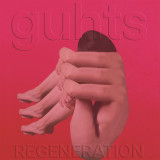
Very limited vinyl pressing, 500 copies, housed in a full colour sleeve & printed inner sleeve & download. CD in a 4 panel digipack with a 4 page lyric booklet. New Heavy Sounds are always on the lookout for new bands that are looking to push the boundaries of what is considered as inhabiting the ‘heavy’ or ‘metal’ spectrum’. Stuff that pricks up the ears, a bold new voice within a maelstrom of genres and sub-genres. We believe we have found such a band. New York-based GUHTS (pronounced ‘guts’) declare themselves to be an ‘avant-garde post-metal project, delivering larger than life sounds through, deeply emotional music’. We are thrilled to be able to deliver that statement in the form of their debut album ‘Regeneration’. By their own admission, GUHTS' musical style is influenced not only by iconic metal bands like Gojira, Cult of Luna, YOB and Deftones, but more unconventional acts like Bjork, Subrosa, Isis, Julie Christmas, and even PJ Harvey. It’s undoubtedly heavy, with a strong feminist streak, it’s cathartic and weighty, a formidable debut for such a new band. Founded in 2020 as a passion project by Scott Prater (Witchkiss), and Amber Burns (Witchkiss) and then Dan Shaneyfelt (Black Mountain Hunger), GUHTS became its members’ main focus following the release of their first EP 'Blood Feather' which itself received rave reviews from the likes of Decibel Magazine, Invisible Oranges, The Obelisk, Cvlt Nation, and more. Brian Clemens Sleaping Dreaming) & Daniel Martinez (Nefariant) joined GUHTS in 2022 and the band swiftly started booking tours and making plans to record 'Regeneration'. Since then GUHTS have been steadily making a name for themselves with their powerful live performances., sharing stages with the likes of Yob, Cave in, Marissa Nadler, plus appearances at the Maryland Doom Fest, Crucial Fest and Ohio Doomed and Stoned Fest. ‘Regeneration’ is set to cement their status as one of the coolest and most interesting bands on the scene. Of the album, vocalist Amber says. "Regeneration" symbolizes the power of self-renewal, often overlooked. Embracing it means shedding old layers and welcoming new beginnings. Without this, life stagnates and is “sustaining”. Through regeneration, change becomes empowering, allowing new facets to emerge. It's a courageous, transformative process, inspiring others to overcome fear and embrace change. The album embodies the human spirit's resilience and capacity for growth. Musically ‘Regeneration’ is a powerful and intense series of songs, topped off by some seriously powerhouse and expressive vocal performances. It’s slow-moving chords, moving like sheets through sludge. High guitar lines above, ranging from piercing and shimmering to nasty. Drums pound but not without groove. There are strings, pianos and synths widening the palette. Atmospheric sludge, Metalgaze, maybe, but there’s also that link to the New York Noise lineage from The Velvets and Sonic Youth, becoming a type of post-hardcore in the process, while gaining a connection to metal partly due to the sheer heaviness. A raft of creative experimentation that pushes beyond the realm of post-metal. And then of course, the very first thing that hits you is Amber Gardner's unbelievable, hypnotising vocals - as scary as a banshee while also intimate and persuasive. Amber means it for sure and almost dominates the proceedings. Her lyrics are eclectic, thoughtful. Immersed in women's narratives frombooks like "Women Who Run With the Wolves" or works like "On Our Best Behavior" by Elise Loehnen. Amber advocates stepping beyond comfort zones, believing it's transformative for individuals and vital for Earth's future. Hokey occult rock it is not. In short ‘Regeneration’ is a bold and startling debut, that will reward and enthral listeners the deeper they delve into its many layers.
+ CD and booklet[25,00 €]
Die New Yorker GUHTS (ausgesprochen 'guts') bezeichnen sich selbst als 'Avantgarde-Post-Metal-Projekt, das überlebensgroße Klänge und tief emotionale Musik liefert'. Nach eigener Aussage ist der Musikstil von GUHTS nicht nur von kultigen Metal-Bands wie Gojira, Cult of Luna, YOB und Deftones beeinflusst, sondern auch von unkonventionelleren Acts wie Bjork, Subrosa, Isis, Julie Christmas und sogar PJ Harvey. Es ist zweifelsohne schwer, mit einer starken feministischen Ader, es ist kathartisch und gewichtig, ein formidables Debüt für eine so neue Band. GUHTS wurde 2020 von Scott Prater (Witchkiss), Amber Burns (Witchkiss) und Dan Shaneyfelt (Black Mountain Hunger) als Passionsprojekt gegründet. Nach der Veröffentlichung ihrer ersten EP "Blood Feather", die begeisterte Kritiken vom Decibel Magazine, Invisible Oranges, The Obelisk, Cvlt Nation und anderen erhielt, konzentrierten sich die Mitglieder auf neue Ideen. Brian Clemens (Sleaping Dreaming) & Daniel Martinez (Nefariant) stießen 2022 zu GUHTS und die Band begann schnell, Pläne für die Aufnahme von "Regeneration" zu schmieden. Seitdem haben sich GUHTS mit ihren kraftvollen Live-Auftritten einen Namen gemacht: Sie teilten sich die Bühne mit Bands wie Yob, Cave in und Marissa Nadler und traten auf dem Maryland Doom Fest, Crucial Fest und Ohio Doomed and Stoned Fest auf. Musikalisch ist "Regeneration" eine kraftvolle und intensive Reihe von Songs, die durch einige sehr kraftvolle und ausdrucksstarke Gesangsdarbietungen gekrönt werden. Langsame Akkorde, darüber liegende hohe Gitarrenlinien, die durchdringen und schimmern. Das Schlagzeug hämmert, Streicher, Pianos und Synthies erweitern die Palette. Atmosphärischer Sludge, Metalgaze, mit Verbindungen zur New Yorker Noise-Linie von The Velvets und Sonic Youth. Streng limitierte Vinyl-Pressung in einer farbigen Hülle, bedruckter Innenhülle und Download. CD in einem 4-seitigen Digipack mit 4-seitigem Textheft.
- A1: Snooper - Running
- A2: Big Special - This Here Ain’t Water
- A3: Moin - No Neck
- A4: Avalon Emerson - Sandrail Silhouette
- A5: The Lost Days - For Today
- A6: Cindy - Why Not Now
- A7: Tapir - Untitled
- B1: Sofie Royer - Mio
- B2: Jellyskin - Bringer Of Brine
- B3: Red Axes - Hey
- B4: Lynks - Small Talk
- B5: Joshua Idehen - Don’t You Give Up On Me
- B6: Kara Jackson - Why Does The Earth Give Us People To Love?
Während die Lichter für 2023 ausgehen und wir ins Jahr 2024 vordringen, melden sich die Rough Trade-Shops mit ihrer jährlichen Counter Culture-Auswahl zurück. Die LP enthält 13, die Doppel-CD ganze 35 Tracks. Alles ist abgedeckt, von der chaotischen Partywut von Snooper über den aus den Fugen geratenen Metal von Pest Control bis zum biertrinkenden Spaßfest der Mary Wallopers. Du bekommst Lip Critic im Death-Grips-Style, ein elfminütiges Sludge-Workout von Slift, den Badu-Future-Soul von Liv.e und die 'new kids on the black' Lifeguard mit ihrer einzigartigen Interpretation von Post-Punk. Wie immer leben und atmen die Rough Trade-Shops neue Musik und diese Serie steht dafür.
Parisian quintet En Attendant Ana's third album "Principia" is without a doubt their best yet. Bandleader Margaux Bouchaudon's voice anchors many of the songs on "Principia". The songs were composed from a place of confusion about the state of the world and their place in it, looking outward and inward for answers. Guitarist Max Tomasso - newly joined just before the recording of "Juillet" - feels more "moved-in", his guitar-work gliding effortlessly through. New member Vincent Hivert's bass-work is rubbery & flexible, urging on drummer Adrien Pollin's metronomic swing. The band's secret weapon, multi-instrumentalist Camille Frechou's trumpet & saxophone add a new layer of sophistication to the group's debonair indie pop. Bouchaudon says "One of the most important points we tried to focus on was the place given to each instrument. For the first time, we withdrew parts, we were careful not to play everyone at once and I think that the result is a much lighter album in which every musician has a specific place and moment". "Principia" is a great step forward without sacrificing the things that make the band unique, and absolutely feel like the next great phase of an already great band.
- Moods - Love Is Real
- Emancipator - Black Lake
- Dj Cam Quartet - Cantaloop Island
- Waldeck - Jerry Weintraub
- Apes - Sunset Blvd
- Guts Feat. Beat Assailant & Mary May - Ain't Perfect
- Gotan Project - Last Tango In Paris
- Dlj - Grounds
- Mr. Scruff - Bernard's Shuffle
- Kazam - Waterlily
- Quantic Feat. Western Transient - Latitude
- Philippe Cohen Solal Feat. Chassol - Mind Food Variatio
Channelling the rhythm of the poetry of Desnos and also the dinstinctive paintings of Francis Bacon, the band Venera 4 is an original presence in France.
Venera 4 impacted with their first Ep, 'Deaf Hearts', which laid the foundations of their expansive yet intimate sound that evokes the DIY spirit of the post-punk scene.
The intricate vocals are delicately layered over the uncompromising guitars. Eidôlon is a powerful yet introspective album with the icy elegance of Broadcast, melodies worthy of the best of Ride, and a white wall of noise like that of The Jesus & Mary Chain.
Abrasive, violent, delicate and sexual, Eidôlon is a reflection of it's own time: a protean art form.
Following on from the psychoacoustic concrète of Outside Ludlow / Desert Disco LP (BT075), Sam Dunscombe returns to Black Truffle with Two Forests / Oceanic. Dunscombe has been active in recent years on multiple fronts, including as a key member of the Berlin community of Just Intonation researchers and practitioners; working with composers like Taku Sugimoto, Mary Jane Leach, and Anthony Pateras; and the release of Horatiu Radulescu - Plasmatic Music vol. 1 (the result of many years performance research into the thought and music of this seminal Romanian spectralist). In parallel with these activities, Dunscombe has been deeply involved in research on the role of music in psychedelic-assisted psychotherapy, prompting these two side long pieces, composed using field recordings and digital synthesis. As Dunscombe explains in the accompanying liner notes, music plays a key role in psychedelic-assisted therapy, yet it is often restricted to stock forms of New Age, ambient and electronica. Taking seriously the potential for spatio-environmental sonic experiences to add to the therapeutic process, these two pieces are intended to suggest how ‘a music-as-environment approach may help to add options to the therapist’s toolbox’. ‘Two Forests’ begins in a central Californian sequoia grove. Bird songs and buzzing insect life are treated with a variety of time-based processing methods (slicing and recombination, primitive granular synthesis, delay, and so on), which strip the field recordings of their linear, documentary character, reframing them in an enchanted web of traces and echoes. Analysing the pitches found in the original recordings, Dunscombe used them to generate a large Just Intonation pitch set. These tones are woven slowly into the field recordings, gradually building in density and complexity until the forest has been transformed into an unreal space of infinite proportions. Emerging from this cosmic expanse in the final minutes of the piece, we find ourselves in the Amazon rainforest outside Manaus, Brazil. As Dunscombe writes, the piece creates ‘a sense of place-gone-strange, of space and time simultaneously expanding and contracting across octaves, miles, and minutes’. On ‘Oceanic’, several recordings of different beaches fade in and out to create a texture both homogenous and constantly shifting in both the rhythm of the waves and each recording's sense of depth and distance. Tones relating in simple ratios to the average rhythm of each beach float over each other, colouring the white noise texture of the field recordings with shifting hues. In both pieces, Dunscombe forgoes the easy consonance that bogs down much contemporary ambient music for a richer harmonic array informed by extended tuning practices and spectralism. The end results suggest a hitherto undreamt-of meeting of Radulescu’s undulating sonic masses and the discreetly processed location recordings of Irv Teibel’s ‘psychologically ultimate’ Environments. Looking beyond the insularity that can afflict experimental music culture, Dunscombe’s work is a moving argument for the healing power of expanded approaches to sound and music. Even outside of a psychedelics-assisted therapy, frequent immersion in Two Forests / Oceanic is almost guaranteed to produce beneficial psychological results.
English indie rock group Black Box Recorder formed in London in 1997 and featured Sarah Nixey, Luke Haines (of The Auteurs), and John Moore (of The Jesus and Mary Chain). Their debut album, England Made Me, was released on Chrysalis Records in 1998. The album was named after the eponymous Graham Greene novel and fuses indie rock and easy-listening pop stylings with lyrics that explore life and the experience of growing up in England. Pitchfork's Michael Sandlin described the sound of the album as \"mildly morose but slightly tongue-in-cheek Sylvia Plath-meets-Paul McCartney pop sensibility\". England Made Me remains a high point in the band's catalogue with standout tracks including 'Kidnapping An Heiress', 'Girl Singing In The Wreckage', and the single 'Child Psychology' which was recently back in the spotlight with a viral moment on social media after being championed by Billie Eilish. This new anniversary edition has been curated with the assistance of the band and features a newly remaster version of the album, along with a bonus 10\" vinyl that includes six b-sides, 4 of which are first time on vinyl. All audio has been remastered from the original production tapes by Phil Kinrade at AIR Mastering and and cut by Alex Wharton at Abbey Road Studios.
- Mercedes Benz
- Ball And Chain
- Rap On "Try
- Try (Just A Little Bit Harder)
- Summertime
- Albert Hall Interview (1969)
- Cry Baby
- Move Over
- Dick Cavett T.v. Interview (1970)
- Piece Of My Heart
- Port Arthur High School Reunion
- Maybe
- Me And Bobby Mcgee
- Trouble In Mind
- What Good Can Drinkin' Do
- Silver Threads And Golden Needles
- Mississippi River
- Stealin
- No Reason For Livin
- Black Mountain Blues
- Walk Right In
- River Jordan
- Mary Jane
- Kansas City Blues
- San Francisco Bay Blues
- Winin' Boy
- Careless Love
- I'll Drown In My Own Tears
- Daddy, Daddy, Daddy
- See See Rider
- A1: String Quartet No. 5 I
- A2: String Quartet No. 5 Ii
- A3: String Quartet No. 5 Iii
- A4: String Quartet No. 5 Iv
- A5: String Quartet No. 5 V
- B1: String Quartet No. 4 (Buczak) I
- B2: String Quartet No. 4 (Buczak) Ii
- B3: String Quartet No. 4 (Buczak) Iii
- C1: String Quartet No. 2 (Company) I
- C2: String Quartet No. 2 (Company) Ii
- C3: String Quartet No. 2 (Company) Iii
- C4: String Quartet No. 2 (Company) Iv
- D1: String Quartet No. 3 (Mishima) 1957 – Award Montage
- D2: String Quartet No. 3 (Mishima) November 25 – Ichigaya
- D3: String Quartet No. 3 (Mishima) 1934 – Grandmother And Kimitake
- D4: String Quartet No. 3 (Mishima) 1962 – Body Building
- D5: String Quartet No. 3 (Mishima) Blood Oath
- D6: String Quartet No. 3 (Mishima) Mishima/Closing
When Kronos plays a piece, they become fellow composers, true collaborators. Without them, we wouldn’t have the kind of string quartet playing that we find around us today. There are two kinds of string quartet playing: the ‘Before Kronos’ and the ‘After Kronos’.” – Philip Glass
‘Kronos Quartet has broken the boundaries of what string quartets can do.’ – New York Times
Nonesuch releases Kronos Quartet’s acclaimed album Kronos Quartet Performs Philip Glass on vinyl for the first time to coincide with Kronos Quartet: Five Decades, a year-long celebration marking the quartet’s 50th anniversary. Originally released in 1995, the album features David Harrington (violin), John Sherba, (violin), Hank Dutt (viola) and Joan Jeanrenaud (cello) performing Quartet No. 2 (Company) (1983), No. 3 (Mishima) (1985), No. 4 (Buczak) (1990), and No. 5 (1991), the first piece Glass wrote especially for Kronos. Recorded at Skywalker Sound in California, the album was produced by Judith Sherman, Kurt Munkacsi and Philip Glass. The cover art features Francesco Clemente’s painting The Four Corners (1985). At the time of the album’s release, the New York Times said, ‘It contains some of Glass's best music since Koyaanisqatsi. His ear for sumptuous string sonorities is undeniable,’ while the Washington Post called it ‘An ideal combination of composer and performers.’ It was a top 10 hit on Billboard’s Top Classical Albums, and spent 12 weeks on Billboard’s Classical chart.
In his original liner note, critic Mark Swed wrote, ‘Glass’ string quartets may contain his most intimate music. They are works through which a very public composer, perhaps the most important opera reformer of our age and a longstanding collaborator in large-scale music theater, holds up a mirror to himself and his way of composing. “In an odd way,” Glass explains, “string quartets have always functioned like that for composers. I don’t really know why, but it’s almost impossible to get away from it. It’s the way composers of the past have thought and that’s no less true for me. It’s almost as if we say we’re going to write a string quartet, we take a deep breath, and we wade in to try to write the most serious, significant piece that we can.” Glass says that as he sat down to write String Quartet No. 5, he had discovered that perhaps not taking a serious tone might be the most serious way to deal with it. “I was thinking that I had really gone beyond the need to write a serious string quartet and that I could write a quartet that is about musicality, which in a certain way is the most serious subject.”’
Glass’ first numbered quartet was written in 1966; however, he did not return to the string quartet medium until 1983, when he provided incidental music for a dramatization of Samuel Beckett’s prose poem, Company. During those 17 years, Glass had formed an ensemble and developed his style in a series of increasingly elaborate pieces for it. String Quartet No. 3 is also adapted to dramatic music, this time from his score to the 1985 Paul Schrader film, Mishima. It was with the music of Mishima that Kronos became associated with Glass, recording the string quartet sections of the soundtrack and subsequently working extensively with the composer on all five of his numbered quartets. Kronos also gave the first concert performances of Company and Mishima. String Quartet No. 4 was composed in remembrance of the artist Brian Buczak, who died of AIDS in 1988.
As Kronos’ anniversary season continues with further concerts around the world, Nonesuch will reissue Black Angels on vinyl on February 16. First released in 1990, the award-winning album includes George Crumb’s title piece, which inspired David Harrington to found the quartet. Called ‘an unusually elevated and searing Vietnam War protest’ by the New York Times, it sets a dark, powerful tone for this collection, which addresses the political/physical/spiritual consequences of war. Also featured are works by Charles Ives, István Márta, Thomas Tallis, and Dmitri Shostakovich. ‘Stylishly packaged, intelligently programmed, superbly recorded and brilliantly performed,’ proclaimed Gramophone. ‘In short, very much the sort of disc we’ve come to expect from the talented and imaginative Kronos Quartet.’ The Evening Standard included it among its ‘100 Definitive Classical Albums of the 20th Century’.
Born in Baltimore, Maryland, in 1937, Philip Glass is a graduate of the University of Chicago and the Juilliard School. By 1974, he had created a large collection of music for The Philip Glass Ensemble. The period culminated in the landmark opera, Einstein on the Beach. Since Einstein, Glass’s repertoire has grown to include music for opera, dance, theatre, orchestra, and film. His scores have received Academy Award nominations (including Kundun and The Hours, as well as Notes on a Scandal) and a Golden Globe (The Truman Show). Recent works include his memoir, Words Without Music, his first Piano Sonata, opera Circus Days and Nights, and Symphony No. 14. Glass received the Praemium Imperiale in 2012, the US National Medal of the Arts from President Barack Obama in 2016, and 41st Kennedy Center Honors in 2018.
Nonesuch’s relationship with Glass began in 1985, with the release of the score for Paul Schrader’s Mishima featuring Kronos Quartet. Over the years other Glass works on Nonesuch have included Einstein on the Beach (1993), Kronos Quartet Performs Philip Glass (1995), Music in Twelve Parts (1996), Glass Box (2008), as well as the soundtracks for Powaqqatsi (1988), Kundun (1997), Koyaanisqatsi (1998), and The Hours (2002), amongst others.
For 50 years, San Francisco’s Kronos Quartet – David Harrington (violin), John Sherba (violin), Hank Dutt (viola), and Paul Wiancko (cello) – has challenged and reimagined what a string quartet can be. Founded at a time when the form was largely centred on long-established, Western European traditions, Kronos has been at the forefront of revolutionizing the string quartet into a living art form that responds to the people and issues of our time. In the process, Kronos has become one of the most celebrated and influential groups of our era, performing thousands of concerts worldwide, releasing more than 70 recordings of extraordinary breadth and creativity, and collaborating with many of the world’s most accomplished composers and performers. Through its nonprofit organization, Kronos Performing Arts Association, Kronos has commissioned more than 1,000 works and arrangements for string quartet – including the Kronos Fifty for the Future library of free, educational repertoire. Kronos has received more than 40 awards, including three Grammy Awards and the Polar Music, Avery Fisher, and Edison Klassiek Oeuvre Prizes.
Kronos is prolific and wide-ranging on recordings. The ensemble’s expansive discography on Nonesuch includes three Grammy-winning albums: Terry Riley’s Sun Rings (2019), Landfall with Laurie Anderson (2018), and Alban Berg’s Lyric Suite featuring soprano Dawn Upshaw (2003); the 40th-anniversary boxed set Kronos Explorer Series; Nuevo (2002), a Grammy- and Latin Grammy–nominated celebration of Mexican culture; Pieces of Africa (1992), a showcase of African-born composers that simultaneously topped Billboard’s Classical and World Music charts; and Folk Songs (2017), Nonesuch’s 50th album with Kronos, which featured Sam Amidon, Olivia Chaney, Rhiannon Giddens, and Natalie Merchant singing traditional folk songs.
Worthy re-issue of Robert Cotter's second late 70's soul album! Comprising five songs, with four of them being quite lengthy and well-structured for the dance floor, was entirely recorded in the United States by top-notch American musicians. "Timeless", a fresh and lively expression of late 70s soul music, was recorded at the Sundragon Studio in New York. This studio was home to legendary bands such as Talking Heads and Ramones, as well as a few 'disco studio groups' like Andrea True Connection, Tony Valor Sound Orchestra, and Camouflage, who recorded songs that later became considerable hits. For this reason, it's believed that the positive outcome of the album can be partially attributed to Ned Liben, an eclectic New York musician and co-founder of the studio in the Flatiron district of Manhattan, served as an exhaustive interlocutor for any artistic and technical needs. He was also the arranger of "Rock Me With Your Love", the most significant song on the album. Ned's successful mission was to capture the maximum timbral fidelity of Robert Cotter's voice using appropriate recording techniques, assisted by Michael George Ewing, a talented engineer who had previously worked on similar projects with well-known artists like Carol Williams, Maryann Farra & Satin Soul, Touch and Tony Valor. In fact, the piece features original and melodious lines, coupled with an excellent steady rhythm, spanning approximately 8 minutes and 30 seconds - in short, "a delightful sound for every beat." This ensured that the performance of the young singer-songwriter from New Jersey was faithfully reproduced without neglecting the overall musical landscape. The other four songs, arranged by Ben Lazzaroni with the same musicians as the first piece, are no exception. Best Record also delivered on the promise to Robert's older brother, Karl Potter, a powerful percussionist transplanted to Rome, for whom the roman label produced "Sweet & Salty Cha-Cha-Cha" (12", 1986). Robert Cotter, an artist about whom almost nothing has been written, is poised to gain recognition once word spreads about his album, which has been entirely remastered by Dom Scuteri and features a more congenial tracklist. This album is destined to be truly 'timeless', ready to captivate audiences around the world. Even the new cover artwork, created by Nerina Fernandez, pays homage to an artist who, despite expressing himself with elegance and simplicity, radiates energy and exudes love. "Timeless" is an inevitable revelation for anyone who missed it at the time, and for the next 40-plus years, it will remain an absolute must-listen for Robert Cotter's many fans, leaving them all in awe. In addition to the reissue on the classic glossy black vinyl, a strictly limited edition on red vinyl will be released exclusively by Clone Distribution.
To celebrate the album"s 25-year anniversary, The Jesus And Mary Chain are reissuing their long-sold-out sixth studio album "Munki". Out on Fuzz Club, the reissue arrives on CD and gatefold double LP. The vinyl has been remastered by Pete Maher (The Rolling Stones, Jack White, Liam Gallagher). Originally released June 2nd 1998 on Sub Pop / Creation Records, "Munki" was - up until the Mary Chain"s reformation in 2007 - an experimental rock"n"roll masterclass turned swan song for the Reid brothers, whose fractious in-fighting culminated in the band"s break-up less than a year after its release. It was perhaps fitting, then, that "Munki" is argued by some as the definitive Mary Chain record in the way it seemed to chart the full array of musical directions the band had ploughed over the five records that came before.
- 1: The Tickle – Subway (Smokey Pokey World)
- 2: The Move – Mist On A Monday Morning
- 3: Tyrannosaurus Rex – Debora
- 4: Junior's Eyes – Black Snake
- 5: Procol Harum – Magdalene (My Regal Zonophone)
- 6: The Iveys – Maybe Tomorrow
- 7: Tucker Zimmerman – Bird Lives
- 8: Gentle Giant – Pantagruel's Nativity
- Side B
- 1: Strawbs – Witchwood
- 2: Mary Hopkin – Streets Of London
- 3: T. Rex – Children Of The Revolution
- 4: Sparks – Under The Table With Her
- 5: Thin Lizzy – Dancing In The Moonlight (It's Caught Me In Its Spotlight)
- 6: Hazel O'connor – Will You?
- 7: The Boomtown Rats – Fall Down
- 8: Dexys Midnight Runners & Kevin Rowland – Show Me
- LP 2:
- Side A
- 1: Modern Romance – Best Years Of Our Lives
- 2: Altered Images – Bring Me Closer
- 3: Difford & Tilbrook – The Apple Tree
- 4: Adam Ant – Apollo 9
- 5: U2 – A Sort Of Homecoming
- Side B
- 1: Luscious Jackson – Fantastic Fabulous
- 2: The Dandy Warhols – Hit Rock Bottom
- 3: Manic Street Preachers – Cardiff Afterlife
- 4: Kashmir – Kalifornia
- 5: Kristeen Young – Pearl Of A Girl
- 6: Stephen Emmer – Untouchable (Feat. Glenn Gregory)
- 7: The Good, The Bad & The Queen – Lady Boston
- 6: The Moody Blues – Your Wildest Dreams
- 7: The Seahorses – Blinded By The Sun
Demon Records is proud to present ‘Produced by Tony Visconti’, a new definitive retrospective compilation assembled with the assistance of legendary record producer Tony Visconti.
“This boxset covers five and a half decades of my efforts in the art of making iconic recordings. Some of it is familiar and some will have a eureka moment, ‘I didn’t know Visconti produced that one!’
I am honoured that Demon Records took on this enormous task.”
– Tony Visconti
Often described as one of the most important
producers in rock, Tony Visconti has helped create
countless classic musical moments. His work can be
heard on celebrated albums by artists such as T. Rex,
Procol Harum, The Moody Blues and Thin Lizzy to
name but a few.
• This new collection features 30 tracks personally
curated by Visconti, gathering together some of his
favourite production work from across his career.
• Includes tracks by T. Rex, Sparks, Thin Lizzy, U2,
Dexys Midnight Runners, Gentle Giant, The
Boomtown Rats, Manic Street Preachers, The Good,
The Bad & The Queen, and many more.
• Pressed on 2 x 140g LPs, mastered by Phil Kinrade at
AIR Mastering, approved by Tony Visconti. Artwork
designed by Grammy-winning creative studio
Barnbrook.
• Includes a 12-page booklet with previously unseen
photographs, and extensive track-by-track liner
notes by Mojo writer Mark Paytress based on new
interviews with Tony Visconti.
x 5. U2 – A Sort Of Homecoming Live
Second Second Coming', Mary Vision’s sophomore LP, is a pastiche of many of Alex Fippinger’s influences, from Lou Reed to Spacemen 3. It is an effort to maximalize the minimal, and to create sound that is at once layered and clear. With that, the lyrics also touch on many subjects with an overarching general thesis: the exploration of self and culture under duress. The album allows you to tune into these explorations via different sonic sounds. You’ll find the pop sound in the first single, 'Fantasy (Ba Ba Ba)', for instance, right before you find yourself indulged in the psychedelic swirl of 'Love Drone'.
The writing experience was one initially based in home recordings. Alex Fippinger would manifest these recordings in his Brooklyn apartment and show them to the 7-piece band who always added a flavor not imagined by Alex himself. Yukary Morishima, who played bass on the record, is very prominent throughout. Aaron Peart found himself to be an integral piece to the writing as well, providing a specific flavor to the songs via lead guitar. Jack Dawson played keys for the first time on a Mary Vision record, adding a playful vibe that Mary Vision fans haven’t heard before. Guido Colzani added drums that are full, yet simple, giving the simple song structures a meaningful foundation. Max Braun held it down on the rhythm guitar, the crux of the songs. Mark Perro was a utility man, adding major guitar licks throughout as well as playing harmonium and providing next level backup vocals. Paul Blackwell engineered and produced this record to where it is now. From the opening chords of 'Window Pane' all the way to the come down of 'Riding Into the Sun', the album is a novel, an unforgettable night out on the town that you won’t forget. If a record could have a character-arc, 'Second Second Coming' would be the textbook example.
- A1: Andraé Crouch & The Disciples - Satisfied
- A2: Shirley Caesar - Jesus Children Of America
- A3: The Meditation Singers - Trouble's Brewin
- B1: The Clark Sisters - You Brought The Sunshine
- B2: Dorothy Norwood - Let Your Feet Down Easy
- B3: Shirley Caesar - Jesus Is Coming
- B4: Swan Silvertones - If You Believe Your God Is Dead
- C1: The Alvin Darling Ensemble - Is There Anybody Here?
- C2: Roscoe Robinson - There's A Creator
- C3: Destiny - Nothing Can Stop Me Now
- C4: The Meditation Singers - Good Old Gospel Music
- C5: Keith Barrow - Everything Is Gonna Be Alright
- D1: Roscoe Robinson - Elijah
- D2: Dyson's Faces - Till I've Got This Feelin' Of Love
- D3: The Violinaires - The Upper Way
- D4: Leomia Boyd And The Gospel Music Makers - Higher In Jesus' Love
- D6: Keith Barrow - The Right Road Now
red vinyl[31,89 €]
Soul Jazz Records’ Holy Church of the Ecstatic Soul: Gospel, Funk and Soul at the Crossroads 1971-83 draws upon the extensive links between black American gospel music and soul music, showing how the sensibilities of gospel artists such as Shirley Caeser, Dorothy Norwood, Andrae Crouch and others crossed over into secular soul music during this period.
The album was first available as a (sold out) ltd.edn. coloured vinyl for RSD23 and is now available as a black double vinyl + download edition and also for the first time on CD.
Many of the most successful soul artists - from Aretha Franklin to Al Green, The Staple Singers to Sam Cooke - all drew upon their upbringing in the church for their musical inspiration. This album discusses how important the links between the black church and soul music were in creating soul music and spotlights some of the many important (and also little-known) gospel artists who walked this line between sacred music and soul, funk and disco in the 1970s and early 1980s.
Holy Church of the Ecstatic Soul shows how sacred gospel music was at home with Stevie Wonder, Blaxploitation-style funk and produced music celebrated both in New York’s underground discos (The Paradise Garage, Studio 54, etc) and later sampled by the likes of Jay-Z, Snoop Dogg and Mary J Bilge.
Get On Down proudly present the debut solo album from Wu-Tang Clan’s Ghostface Killah. Released in 1996 on Epic Records, Ironman earned immediate success, debuting at number two on the Billboard 200 chart, and number one on the Top R&B/Hip-Hop Albums chart. Produced by RZA, Ironman found inspiration in sources ranging from blaxploitation films to classic soul and charted a whole new direction for hip-hop in the process. The album features classic bangers like “Daytona 500” featuring Raekwon and Cappadonna to soulful emotionally moving cuts like “All That I Got Is You” with Mary J Blige. The album earned gold status a year after its release and platinum by 2004, a true testament to the staying power or this classic piece of Wu-Tang artistry.