Das nigerianische Establishment bezeichnete die Einwohner der Republik Kalakuta als "Hooligans", "Hanfraucher" usw. Noise For Vendor Mouth demonstriert Felas Gleichgültigkeit gegenüber diesen Beschimpfungen, denn für ihn sind die Menschen in Kalakuta in Wirklichkeit ein Haufen hart arbeitender Bürger, die versuchen, in einer von Korruption und Misswirtschaft geprägten Gesellschaft zu überleben. Er fügt hinzu, dass die wahren Hooligans die Machthaber sind, die auf politisches Gangstertum und manchmal auf Militärputsche zurückgreifen, um verfassungsrechtliche Probleme zu lösen. Er hält ihre Kritik für nichts anderes als den Lärm, den Straßenverkäufer machen, um ihre Waren zu verkaufen.
Mattress: Fela wurde von Kritikern vorgeworfen, dass er sich nicht um die Frage des Feminismus und der Ungleichheit der Geschlechter kümmere und sich damit im Einklang mit verschiedenen Traditionen befinde, die er aus ihrer Sicht willkürlich aufrechterhalte. Mehrere Themen stehen aus afrikanischer Sicht im Gegensatz zum modernen westlichen Blick. Nehmen wir die Polygamie: Fela wurde kritisiert, weil er die Polygamie offen befürwortet. Wie kann ein Mann, der sich gegen die ungleiche Stellung der Geschlechter und gegen Rassismus einsetzt, eine männliche Vorherrschaft gutheißen? Fela rechtfertigt die Polygamie, abgesehen von der traditionellen Wiederbevölkerung der afrikanischen Gesellschaft nach der Sklaverei, mit der polygamen Natur des Menschen. Der Mensch sei - so seine Überzeugung - von Natur aus polygam. In christlichen Gesellschaften, in denen Polygamie nicht geduldet wird, heirateten Männer offiziell eine Frau, hatten aber Mätressen. Afrikanische Männer sind seiner Meinung nach da ehrlicher - sie gehen damit offen um leben mit ihren Frauen unter einem Dach. Lieder wie Mattress tragen vielleicht nicht dazu bei, das Macho-Image von Fela zu ändern, doch zieht er ja lediglich Vergleiche.

Search:mat s
The new album Northwind was recorded with Adrija Tokic in Nashville with some of the most well-known session musicians in town. Spencer has been a featured ROOTS artist, a Pendleton artist, has toured US and Canada with City and Colour, Daniel Romano, Jenn Grant, and more. He has had press coverage fromAmerican Songwriter, Exclaim!, and Pop Matters Support tours with City and Colour, Old Man Luedecke, Dan Romano, and more
"the north wind really saved me over the past couple of years. It brought to me a new sense of life and a new urgency for it. I had thought my songwriting days were over, but with the help of this little guitar and a strong want for expressing my gratitude towards the north, I found myself writing again. Almost every song on this coming album was written on this guitar and in the north itself. A beautiful breeze it breathes and with every breath a song. I’m thankful for these wild places. I hope they never leave us. I’ll be here until the end of my days"
With her captivating voice and richly detailed songwriting, Sarah Jarosz has emerged as one of the most compelling musicians of her generation. A four-time Grammy Award-winner and ten-time nominee at the age of 30, the Texas native started singing as a young girl and became an accomplished multi-instrumentalist by her early teens. After releasing her full-length debut Song Up in Her Headat 18-years-old, she went on to deliver such critically lauded albums as Follow Me Down, Build Me Up From Bones, and Undercurrent, in addition to joining forces with Sara Watkins and Aoife O’Donovan to form the acclaimed folk trio I’m With Her. Her fifth studio album, World On The Ground, produced by John Leventhal, went on to win the Grammy award for Best Americana Album. In 2021 Jarosz released the Grammy-nominated Blue Heron Suite, a much-anticipated song cycle which she composed after being the recipient of the FreshGrass Composition Commission.
The seventh album from Sarah Jarosz finds the highly decorated songwriter at the apex of change. A Texas native, she’s spent most of her adult life living in New York City, but shortly before writing the album Jarosz left her adopted home to join her soon-to-be husband in Nashville, TN. The geographic shake-up led to a sonic one as well for Polaroid Lovers. For the first time in her career she opened herself up to collaborators, leading to writing sessions with Daniel Tashian, Ruston Kelly and Natalie Hemby. The creative reorganization of her writing process evolved to include a much richer and more electric sound in the studio and being in Nashville meant access to a world of hot shot players. She tapped guitarist Rob McNelley (Miranda Lambert, Carrie Underwood), Tom Bukovac (Tom Petty, Vince Gill) on guitar and organ, her husband- bassist Jeff Picker (Nickel Creek), and drummer Fred Eltringham (Sheryl Crow, Lucinda Williams) for the album recording. Tashian took the helm as producer and the whole album was laid down at the legendary Sound Emporium.
As it goes with all change, Jarosz’s major life events had her feeling contemplative. While sitting on the precipice of adulthood, Polaroid Lovers finds her reflecting on past loves, childhood dreams, the places she lived in and all the versions of herself that she’s been. Although the listener experiences the sonic shift forward, the album’s subject matter is a photo album of the past. Jarosz has never sounded more assured. Polaroid Lovers is filled with the kind of confidence that comes from hard won life experiences and the conviction of someone who truly knows herself.
"Cross My Heart" is a tribute to the harmonica player and singer James Cotton, one of Boney Fields" heroes and companions on the road, is certainly the most representative track of this thrilling groove mood that authentic blues musicians know how to infuse. Boney Fields possesses that almost funk tone matured enough to tickle our ears and make us tap our feet. By revitalizing, for example, "The Thrill Is Gone" in the spirit of its original author (Roy Hawkins), Boney Fields perpetuates the tradition of spirited orchestras of yesteryears without compromising the modernity of its irresistible tempo. Much more personal than all his previous albums, "Just Give Me Some Mo" is also the expression of introspection, that of a man who remembers without drowning in dark nostalgia. He thinks of the courage of his mother bravely facing obstacles in an unequal America. "Back in the Day" is not a sad song. It makes one stronger and nurtures faith in the future. This melody is certainly the most touching of the six compositions written by Boney Fields. From "Control of you" to "Something" holding me" or "I know yes I Know" he invites us into his intimate biography, the story of a large family shaken by inevitable upheavals that must be faced, the destiny of a combative musician who resists adversity. Boney Fields chose to let his soul speak. This effort of truth had to be supported by the artistic direction of a master. By enlisting Sebastian Danchin for the production of this album, Boney Fields turns to a historian of African-American culture whose keen ear has already won over Little Milton, Mighty Mo Rodgers, Toni Green, and Jean-Jacques Milteau, among others... Their exchanges uncovered a perfect understanding of "Chicago Blues" the brassy vigor of which they experienced firsthand 40 years ago. Surrounding oneself with the right people is quite a challenge. Fortunately, Boney Fields knows how to spot true talents. He was convinced that the Senegalese guitarist Hervé Samb would also be a good musical director. Hadn"t he been the first to highlight the expressive power of this luminous composer and arranger? The enduring vitality of the blues, when narrated with precision and insight, always manages to find its legitimacy. The months of reflection, of questioning, will not have been in vain. They have given substance and depth to this thrilling record which, we wager, will be a milestone. Boney Fields has waited long enough. Does he want more? We will give him more! "Just Give Me Some Mo" will now be a shared leitmotif, that of an insatiable conductor and that of enlightened admirers.
Zander Raymond is an interdisciplinary artist and musician working in Chicago, IL. In his visual work, he improvises with found materials, tools, and images to make drawings, prints, and sculptures that question the idea of productivity in a studio environment and serve as an autobiographical record of experience. His music is similarly rooted in improvisation, utilizing modular synthesizers and open-source sound computers to sample, warp, and build sonic images that embrace non-linear approaches to composition. Since 2018, he has participated in numerous exhibitions as well as performances across Chicago.
- People In The Street
- Crazy Town
- My Place
- Day And Night
- Shameful Lady
- Janie's Tomb
- It's Raining
- Don't Try To Call Me
- The Other Sidewalk
- What's The Hurry
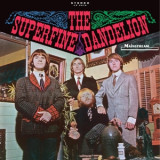
"Flower power psych pop that’ll blow you away! Exploring the jangly folk and garage sounds of the late ‘60s, the Superfine Dandelion picks a wide variety of colorful folk, country and jug band influences and puts a psychedelic tint on their all-original compositions. Our favored stereo mix, pressed on blue vinyl!
Formed in 1967, this Phoenix, AZ band would only last for a year before parting ways, leaving behind just one album – a fate many Mainstream artists ultimately faced, no matter how quality their style and sound was. The Superfine Dandelion features Mike McFadden (formerly of the garage rockin’ Mile Ends) and Rick Anderson (founding member of the Tubes) showcasing the sound of the Summer of Love – kaleidoscopic, sunny & groovy!
“While the cheeriest cuts have the sunny folk-pop/rock feel of, say, some of the L.A. folk-rock issued by the Dunhill label (‘Don't Try to Call Me’ recalls P.F. Sloan) or the Monkees, their self-titled LP had a good deal of sub-Jefferson Airplane folk-psych-rock, with plenty of minor chords, harmonies, and wistful lyrics. Then ‘Janie's Tomb’ and ‘It's Raining’ have a jokey jug band vibe, like a cross between the Charlatans and the Lovin' Spoonful.” – Richie Unterberger (AllMusic)"
.
Finnogun’s Wake is the delightful portmanteau of a band fronted by Shogun (vocalist of Royal Headache, and later Shogun and the Sheets) and newcomer Finn Berzin. Decades apart in age but united in tutelage and outlook, they have mitigated the Joycean tome of What To Do Now, and crafted the four debut songs of the Stay Young EP from the inside out, sharing the spotlight for a riveting, deafening smear of melodic pop and buzzsaw guitars.
Mourning the departure of his best mate to a life overseas, Shogun started hanging out with his friend’s younger brother, Finn. The two of them started spending their free time together, one having seen a fair chunk of the world through music, the other just starting to figure it all out. They went through the essential lessons that could be gleaned from Definitely Maybe and Hüsker Dü, Finn got himself a guitar, and the songs simply fell out of both of them, with this initial batch as the result. Shogun sings on “Blue Skies” and “Strawberry Avalanche,” and Finn takes the lead on “So Nice” and “Lovers All,” and while there’s no mistaking Shogun’s striking delivery and fatalistic lyrics, Finn proves himself as a carousing foil, holding his ground like the natural he’s become.
Taking into account the fevered, quick-burning success of Royal Headache, this group is the most likely candidate to do it all again, giving the sense that some people can write bounding guitar leads that stick to you like burrs from the brush, and sing so effortlessly you’re embarrassed and a little mad about how great it all sounds. Backed on these recordings by keyboardist Gabrielle De Giorgio (a longtime collaborator of Shogun’s from back in the Sheets era), bassist Campbell Troy (who was in Shogun’s first hardcore band Nintendo Police back in the mid ‘90s), and DMA’s drummer Liam Hoskins (on some COVID-enforced boredom with no tour-dom), Finn and Shogun stare down a changed world from two very distinct poles, and aim to fill it with glorious songs just like these.
In 1948, Moses Asch founded Folkways Records with a self-proclaimed mandate to record the sounds of the entire world. From the Sounds of North American Frogs to Speech After the Removal of the Larynx, Folkways documented the audible nooks and crannies of existence on hundreds of LPs produced by field recordists, scientists, and experimentalists probing the margins of the human soundscape. Seventy-five years later, electronic music duo Matmos have diced, looped, stretched, and recontextualized these recordings on their new album Return to Archive, which was assembled entirely from the so-called non-musical sounds released on Folkways. On just the album’s first track, dolphins, beetles, telephones, humans stretching the limits of their vocal cords, a shortwave radio, and metal balers co-mingle in a fantasia of sound both everyday and extraordinary. Each track on Return to Archive morphs its source material into something completely unexpected, honoring and expanding on Folkways’ legacy of sonic exploration. Featuring Evicshen and Aaron Dilloway.
The vinyl edition of Klein's 2022 album: »STAR IN THE HOOD« plays like a cracked, tarnished mirror of contemporary numbing music, replacing long-form expression with tighter, more explosive and sometimes completely freeform transmissions that will wake you up from your overly comfortable environmental music slumber. Opening with cycling ghost drones, dialog and piano motifs that blur into heartfelt noise, »black star« is all loping, looping piano and chthonic vocals spiked with cheese-grater noise and chipmunked chirps. It’s Klein’s delirious vocal runs that push the album to the next level though; like her style-defining »Lagata« and the Hyperdub-released »Tommy,« she subverts the raw material that makes up R&B, turning memorable hooks into blurry impressions that will glue to your mind like a diva moment on a Suburban Bass cut.
She keels into longform on »schooled,« fogging organ drones into hazed clouds that gust into imposing shapes over a 10-minute duration, rekindling the dialog between contemporary noise and gospel music. Grandiose classical sounds receive a similar treatment on ‘Friend in the Mirror’, pulled into disorienting shapes that dispel any notions of class gatekeeping; in the final third, Klein’s voice interrupts the mood, before machine-gun percussion reminds us not to get too comfortable. If yr in search of beauty, »postcode wars« finds Klein fuzzing euphoric chords into an afterparty woosh of half-heard voices and dribbling synths. She simultaneously channels rapture and wrath, poignantly torching the contemporary societal skeleton without losing her near-at-hand community in the process.
Midway through the album there’s a thematic pivot signalled by the brief »shorty alert,« a trilling mass of carnivalesque vocal quirks that sound like spiders spitting DMT into yr eardrums. From here, things get darker and more unsettling: there’s doomed subterranean ambience on »signed and delivered«, Disney-esque piano motifs, blown-out lo-fi outsider rawk on »Swerve,« and speaker garbling free eccentric soul on »brand new day,« each struck through with that unmistakable high-vs-low culture posturing. It all brings us to the album’s unsettling one-two punch of ‘haha hehe business’, maybe the foamiest track we’ve heard from her this year, and the zonked »winter« - a piece that’s as crystal clear as Klein gets, an unprocessed heartstring-tugging vocal performance over acoustic guitar twangs.
Here it finally is, the first ever official reissue of all recorded material by Zyklome A, and as a bonus one unreleased track plus unreleased live recordings! One of Belgium’s earliest and most primitive hardcore punk bands’ legendary ‘Made In Belgium’ LP has been one of the rarest artifacts in the genre, and although it was bootlegged many times, the reason why an official reissue on vinyl has never been published is complicated. Zyklome A’s story starts in the middle of nowhere: in Bonheiden in early 1980, above a bank office. Brothers Bie and Toon Puttemans started shredding and terrorizing ears and minds with Markus Verbeeck, without any knowledge of anything close to a scene or other people doing what they were doing. Completely isolated, they were struck by lightning with the genius idea of speeding up punk, playing Ramones chords backwards and letting the bank office’s fire alarm go off with their wall of noise. When drummer Bie got to hear other hardcore records through a school mate, he was baffled to hear there were other folks out there doing what they were doing as well. After a fire alarm and family drama too many, the trio moved to a tiny shed in the garden of the Verbeeck family to refine their special blend of primal hardcore. The rest is history! For just 5 years they became one of Belgium’s most active HC bands, befriending many other classic main stays such as The Dirty Scums, Moral Demolition, Vortex, Wulpse Varkens etc., creating pits everywhere, and turning many a nazi skin’s skulls into pulp! When guitarist Toon “forgot” to fulfil his army service, he had to flee Belgium, and as the police harassed the other band members constantly about this, it became next to impossible to maintain Zyklome A. Zyklome A morphed into Ear Damage, with different members. In a later, army free future, a reunion of Zyklome A was not possible due to Toon’s heroin problem. It is strange, and sad to say, that the cards played differently when Toon passed away. Zyklome A played 2 reunion gigs in 2016 with guitarist Pieter Coolen (of Toxic Shock fame) before Markus’ severe back pain sadly also led to his passing. This record is dedicated to Toon and Markus, whose spirits live on through their incredible music. You will find the entire first album plus an extra LP with their part of the split single Moral Demolition, their tracks of the ‘Alle 24 Goed’ compilation LP, their tracks of the ’Second Time Around’ compilation cassette, an unreleased track and a live recording at the height of their game from 1984 in Deventer (which includes covers such as ’These Boots Are Made For Walking’ and ‘Rock ’n Roll Rebel’) and a 76 page book filled with tons of archive material such as flyers, lyrics, drawings, pictures and a lengthy interview with Bie Puttemans on this most possibly last Ultra Eczema release, Zyklome A’s ‘Uitgesproken (1980-1985)’.
Crypt of the Wizard is proud to present Peace Vaults - I & II on vinyl and digital formats. New blood from the Viennese gutters. Amidst the vile and hostile ravines of sooted stone and waste filled waters is a glade to be found. Peace Vaults erect four pillars of crude and stoic Black Metal, guided by luring vocals and synth melodies, which shimmer like ominously kaleidoscopic light through cracks in the walls of rat filled sewers. Hissing through cracked and blackened feedback Peace Vaults produce jangly off-kilter rhythms, awash with raw metal energy and diffuse post punk lethargy. Frantically pulling chaotic drum patterns and howling guitar leads into rhythmic structure until, wild, they pull themselves apart again. This compilation of the band's two demo tapes rightly now presented on vinyl marks the beginning of an ongoing union between Peace Vaults and Crypt of the Wizard with new material due in the not so distant future
- Reaktor (1983)
- Unser Abv (1983)
- Stehen Bleiben Ist Verrat (1983)
- Warum (1983)
- Can't You See (1983)
- Die Angst Der Allgemeinheit (1983)
- Rosa Beton (1983)
- Wir Glauben (1983)
- Maschinengewehr (1983)
- Scheiss Stadt Berlin (1983)
- 16: Jahre Im Exil (1983)
- Müde (1983)
- Reaktor (2022)
- Unser Abv (2022)
- Stehen Bleiben Ist Verrat (2022)
- Warum (2022)
- Die Angst Der Allgemeinheit (2022)
- Rosa Beton (2022)
- Wir Glauben (2022)
- Maschinengewehr (2022)
- Scheissstadt Berlin (2022)
- 16: Jahre Exil (2022)
- Müde (2022)
A tape with the rather factual title “Rosa Beton – Demo 83” gained currency in 1983, albeit among an inner circle, or as it says in a lexical note on the band: Rosa Beton “achieved beyond-regional fame in and around Berlin”. Unlike some other bands that were merely rumoured to exist, this name was widely recognized in the East Berlin punk scene and the demo tape was received with some delight. It had been made in the suburb of Hönow, or more precisely in music enthusiast Thomas Wagner’s childhood bedroom. The band was less a classic combo than a short-lived pro- ject run, for a brief underground season, by 16-yearold Wagner and Ronald Mausolf, who was known as “Mausi” and had just come of age. An old clunker of a four-track machine served as an impor- tant nutritional supplement for the duo, allowing bass and vocals to be overdubbed separately. For a project without a professional background, especially for an illegal punk band in the East, this conventional procedure was clearly exceptional. Punk bands would usually record vocals and instruments simultaneously and on a cassette recorder. Recording gear was not readily available in the GDR, and it was disproportionately or prohibitively expensive. The adversities that had to be overcome in starting up a punk band were certainly challenging for teenagers. Rooms for rehearsals were few and far between despite wide- spread vacancies, and public space was taboo thanks to the state. Concerts, whether in flats and studios or under the protection of the Protestant church, remained rare events and, moreover, risky; starting with the party-loyal neighbour alerting the People’s Police as if there were a war on, to the ever-present “digging activity” of the Stasi. The only planned appearance by Rosa Beton never materi- alised. Whether it was the goddesses of fate who averted a show or the Stasi who prevented it can no longer be reconstructed. In any case, Rosa Beton never played live and thus joined a long list of GDR punk bands that, in the early 1980s, did not make it out of illegality into a public sphere, not even into a conspiratorial one. ausi compensated for the band’s lack of live performances by at least distributing a few copies of the demo tape. Among others, at the Kult, the Kulturpark Plänterwald, which provided an initiation field for the Berlin punk scene and a hotspot with a pull beyond it. The punks adapted the Kulturpark to their understanding of an amusement park.
They would thrash about to Schlager music and pogo to third-rate Ostrock bands, make fun of overwhelmed provincials, hang out and exchange half-baked ideas as superior knowledge. In between, the punks liked to ride the chain carousel, there was a certain liking for chains. The Kulturpark management made quite a fuss about the riot the punks put on. Initially they were banned from the chain carousel, then, when the punks switched to bumper cars, they were banned from the bumper cars, then from the roller coaster, and finally from the ghost
tapetopia 010 FO 32 extra hart arbeitendes rastermaterial für kontakt did not emerge from the usual underground milieu – their setting was the base of the 4th Flotilla of the GDR People’s Navy! The propaganda unit PrK 18 had among its recruits some who turned the logistics for agitation against the intentions of the system. Inside a barracks, but under the state radar, the paramilitary music corps FO 32 boarded an NVA studio and recorded industrial tracks and dark ambient. The experimental military band gave an illegal concert; they had previously been heard on the radio programme “Parocktikum”, a pirate gig from the ranks of the People’s Navy on GDR radio. In 1989, a first FO-32 tape was shared among just a few friends. Shortly after, an abridged mix of material was released on the illegal Trash Tape label in an edition of no more than one hundred copies. The vinyl version on tapetopia is based on the original tape. The tapetopia series, using the original layouts and track lists, publishes cassette editions from the GDR underground of the 1980s, especially from the “walled-in” scene in East Berlin. More than three decades after their initial “release”, these tapes have yet to be heard on either vinyl or CD, even though they made an audible mark in the canon of GDR subculture. Despite the tiny original editions of the time, many of the bands were considered cult in countercultural circles, which made them highly suspect in informed circles.
tapetopia 008 Der Expander des Fortschritts was founded in 1986. The “risk group” described itself as “pop musique concrète” or “abstract pop”. Der Expander des Fortschritts relied on disharmony and ruptures, which resulted in radio plays in a song format; the GDR as a realsocialist satire provided its material. Even the band’s name was a cultural appropriation of the superstructure by the substructure: “progress” was a fetishized word in the GDR, factory sports clubs would add it to their name, solidarity concerts would use it as a motto. The title “Urknall · Horde · Mensch” resulted from an Expander-typical translation of “Weltall, Erde, Mensch”, a compendium ceremoniously presented to each initiator on the occasion of their socialist youth initiation. In 1988, the band released the tape album on their own label Irrmenschkassette, a big bang in a tiny edition. The tapetopia series, using the original layouts and track lists, publishes cassette editions from the GDR underground of the 1980s, especially from the “walledin” scene in East Berlin. More than three decades after their initial “release”, most of these tapes have yet to be heard on either vinyl or CD, even though they made an audible mark in the canon of GDR subculture. Despite the tiny original editions of the time, many of the bands were considered cult in countercultural circles, which made them highly suspect in informed circles.
tapetopia 004 The Leipzig band Neu Rot represented a singular phenomenon within the alternative music reservoir of the GDR. As with so many bands that cultivated a more sophisticated sound in the late 80s, Neu Rot’s beginnings had been in punk rock. But, with a remarkable rigour against itself, the band steadily worked its way towards post-rock. This thorough process came to fruition in 1988 with the production of the tape “Halt An”. It had been preceded by the band’s struggle for its very own means and their technical feasibility. Neu Rot’s pilgrimage to its own centre was not unimpeded. The band’s name was perceived by the GDR’s cultural watchdogs as an erratic chain of associations between the suspicious word “Neu” and the ideological signal colour red. The band was legal, but its lyrics were deemed illegal. The edition of “Halt An” was somewhere between over fifty and under one hundred copies. Jörg Stein (voc, g, casio sk-1, yamaha ps-2) Karsten Maaß (bg, voc) Anke Mehlhorn (vl, casio sk-1) Henrik Eiler (dr, voc, casio sk-1) Produced by Mike Stolle & Jörg Stein Lyrics by Jörg Stein, except „Sometimes“ and for „Die Schlange“ by Christoph Wielepp Tape artwork by Daniel Schörnig Tape cover photos by Daniel Schörnig Published by Henryk Gericke Liner notes by Henryk Gericke Remastered by Black Flag Mastering/ Friedemann Kootz © Music by Neu Rot except „Sometimes“ (traditional) recorded Oktober 1988, Leipzig Thanks to: Mike Stolle, Adrian Neumann, Nikolaus Michael, Horst Pfaff, Andreas Berger, Christoph Wielepp, Daniel Schörnig and to the unknown roommate Lachmund Christian Andersen, Michael Barthel, Sarah Baumann, Ralph Gabriel, Ronald Galenza, Jakob Geisler, Ulrike Geisler, Gerd Gericke, Elke Grabinski, Gabriele Herzog, Egmont Hesse, Sabine Jansen, Siegfried Männer, Bettina Matten-Gericke, Christian Morin, Frank Siewert, Philipp Strobel, Christoph Tannert, Stefan Widdess, Margarete Wohlan In memory of Michael Pfaff.
Two Berlin techno icons merge their art for a first collaborative EP on Amsterdam's Delsin Records. The two prolific producers have been playing a series of back to back DJ sets in the past months before they joined forces in the studio. The result is a flawless combination of their own unique styles, atmospheric break-beats from Answer Code Request matching the impeccable grooves and deep subs of Amotik.
Kepler is free” represent the brand new Athenian Urban Jazz scene in full. You may say that they actually started the whole scene with their debut album "Teegarden" by Veego Records, an instant sold out! Voted by local music portals as one of the best albums of 2020 and probably one of the best debuts ever when it comes to the Greek jazz game. “Kepler Is Free” jazz rock ensemble makes expansive music that straddles the line between '70s soul-jazz, alternative hip-hop, and experimental electronica.
The name of the band is inspired by a retired space telescope launched by NASA to discover Earth-size planets orbiting other stars. Named after astronomer Johannes Kepler. Founded in November of 2018 by Sokratis Tsentoglou (drums) who gathered George Migdanis (electric guitar), Nikiforos Nugent (keys), Spyros Zardas (trumpet) and Vasilis Alexopoulos (bass guitar), they all came together from different musical backgrounds in order to create original and groundbreaking material.
Commuting over their shared love of jazz and hip-hop, they composed their debut album, “Kepler”, with five tracks that highlighted their love for the music of GoGo Penguin, Badbadnotgood and Alfa Mist.
The fact that all the members were young and had not played in other Jazz bands before was something that shook the Greek Jazz community. ''Second Light'' was recorded in difficult conditions and was delayed quite a while until it was finished due to the pandemic.
The band played a handful of sold out shows in Athens over the last few months proving with their performance and the attendance that the band created a crossover from Jazz to pop audience. "Juno" track was a smash hit on legendary "En Lefko'' Radio station over the last two years. Worth to mention that just a month before the release of their second album Kepler is Free collaborated with LEX, one of the most famous rappers in Greece with the "Spike Lee" track.
- A1: Cómo Así?
- A2: Me Pongo Loca
- A3: Igual Que Un Ángel Feat Peso Pluma
- A4: Pensamientos Intrusivos
- A5: Diosa
- A6: Te Mata
- A7: Perdiste
- B1: Young Rich & In Love
- B2: Tu Corazón Es Mío…
- B3: Muñekita (With El Alfa & Jt)
- B4: Labios Mordidos Feat Karol G
- B5: No Hay Ley, Parte 2 Feat Rauw Alejandro
- B6: Heladito
- B7: Dame Besó/Muévete
Das Release für das vierte Studioalbum der Grammy Gewinnerin Kali Uchis „ORQUÍDEAS“ ist angekündigt. Das Album ist eine Hommage an ihre kolumbianischen Wurzeln – rein spanische Songs und eine Reise durch die lateinamerikanische Musikkultur.
Inspiriert von der sinnlichen Anziehungskraft der kolumbianischen Nationalblume, der Orchidee, durchquert ORQUÍDEAS mehrere lateinamerikanische Genres, darunter Reggaeton, Dembow, Bolero und Salsa. Nun bringt sie ihr neues Werk auch auf LP raus
Amazing floaty modern soul / disco goodness out of late 70s Queens, NY. 'Love Is The Same' two brilliant and different versions, both dancefloor fire…
Mark Beiner met Ben Iverson in 1976 when I was 17 years old, at the time he was a junior at Newtown High School in Elmhurst, Queens. Mark had taken a part time job as a Produce Clerk at Walbaum's Supermarket on Northern Boulevard in Jackson Heights, Queens, where I met Ben Iverson, the "Frozen Food Manager."
Back then Mark remembers, 'I was going to work early just to talk to him about his musical background and his time spent in the 50's and 60's with the Ohio Doo Wop Group, "The Hornets", or better known as, "Ben Iverson and The Hornets."'
In 1978 after Ben and I discussed getting together and composing music, I started writing poetry and expressing in writing my break-up with my college girlfriend, Paula. Ben and Mark went on to writing two albums worth of material, which in turn gave us a lot of time and presence on stage at our live gigs.
The regular Coast to Coast Band members consisted of Ben Iverson on Lead Vocals, Rhythm Guitarist and Co-Executive Producer, Joe Crowley, who is known today as "New York Congressman Joe Crowley." Carl (Woody Wood) Morton on Bass Guitar, Jimmy Johnson on Keyboards. Lead Guitarist, Lou Jimenez, currently owns his own recording studio, Music Labs in Elmont, Long Island. On Drums, Eddie Byam, on Alto Sax, Jay Cohen, who in the 70's used to record for "Gary U.S. Bonds." Gary Pevols on Trumpet. On Bone, Scott Burrows, Trumpet player, Steve Becker, along side Neil Levine, Stan Stockley, Tom Russo.