
pre-ordina ora01.10.2025
dovrebbe essere pubblicato su 01.10.2025
17,44 €
dovrebbe essere pubblicato su 01.10.2025

Born from a chance encounter in a Villejuif squat over a decade ago, Ciccio & 2mo have cultivated a singular musical language through spontaneous and genre-defying collaborations — notably around cult French band Cheveu.
The duo brings together two key figures from the fringes of the European underground: Olivier Demeaux (aka 2mo), a pioneer of France’s electronic avant-garde, leading projects like Heimat and Accident du Travail (Teenage Menopause, Bruit Direct), known for his explorations across lo-fi synthwave, spectral post-punk, and drone-infused textures; and Francesco Pastacaldi (Ciccio), a jazz-punk drummer and member of the explosive trio Jean-Louis and the angular groove unit Abacaxi (Carton Records), also a longtime collaborator of the maverick performer Fantazio.
Their debut album 24 96 (The Trilogy Tapes, 2021), born from a series of abrasive studio improvisations, was followed by a sold-out show at London’s Café OTO. That performance, released as Maremoto, captured the duo’s raw, physical energy in its purest form.
Since then, Ciccio & 2mo have brought their visceral live act to stages across Europe — from Sonic Protest in France to the Meakusma Festival in Belgium, where their live set was released as Live at Meakusma Festival 2024.
Now, the duo returns with Bouc & Rouages, a bold and hallucinatory second album commissioned by Hublotone. This new opus introduces three singular voices into the mix: operatic singers Léa Trommenschlager and Bianca Iannuzzi, and genre- blurring rapper Pauline Sampler (aka Frizzy P, known for her work with M. Cole). The result is a soundscape in constant tension — pulsing drum machines, organic percussion, saturated synth layers, and hypnotic, looping riffs.
Equal parts physical and disenchanted, the music of Ciccio & 2mo traces a thrilling, unstable path through noise psychedelia, industrial memory, and experimental pop.
Imagine Cosey Fanni Tutti rubbing up against pop, with Charles Hayward (This Heat) on drums — and you’re getting close.
dovrebbe essere pubblicato su 26.09.2025
dovrebbe essere pubblicato su 19.09.2025

In Guadeloupe, many people think that jazz and ka music are like a ring and a finger. To some extent, the same could be said about so called Latin music and the music played in the French West Indies.
Both aesthetics were born in the Caribbean and bear so many connections that they can easily be considered cousins. In constant dialogue, there are lots of examples of their fruitful alliance and have been for a while. The English country dance that used to be practiced in European lounges came to be called kadrille in Martinique and contradanza in Cuba. They both featured additional percussion instruments inherited from the transatlantic deportation. Drawing from shared feelings about the same traumatized identity – later to be creolized – it would be hard not to assume that they were meant to inspire each other. The golden age of the orchestras that graced the Pigalle nights during the interwar period further proves the point. As soon as the 1930s, Havana-born Don Barreto naturally mixed danzón and biguine music in a combo based at Melody's Bar. In the following decade, Félix Valvert, a conductor who was born and raised in Basse-Terre in Guadelupe, also worked wonders in Montparnasse with La Coupole, which was an orchestra made up of eclectic musicians. Afro- Caribbean performers of various origins were often hired on rhythm and brass sections in jazz bands, which used to enliven the typical French balls of the capital. In the 1930s and onwards, Rico’s Creole Band was one of them.
Martinican violinist-clarinettist Ernest Léardée, who would become the king of biguine music as well as the main figure of French Uncle Ben's TV commercials (a dark stigma of post-colonial stereotypes), had musicians from the whole Caribbean sphere play at his Bal Blomet – and they all enchanted "ces Zazous-là" (according the words of Léardée's biguine-calypso piece). In les Antilles (French for French West Indies), music history started to speed up in the 1950s, when trade expanded and radio stations grew bigger. The Guadelupean and Martiniquais youth tuned in their old galena radio sets to South American and Caribbean music. As for the women traders, les pacotilleuses, they bought and sold goods across different islands (the "passing of items through various hands" was thought to be most pleasurable) and brought back countless sounds in their luggage. Such was the case of Madame Balthazar, who once returned from Puerto Rico with the first 45rpm and 33rpm to ever enter Martinique.
Out of this adventure was created the famous Martinican label La Maison des Merengues, a music business she opened and undertook with her husband and which proved to be a major landmark. At the end of the 1950s, in Puerto Rico, Marius Cultier competed in the Piano International Contest playing a version of Monk's Round 'Midnight. He won the first prize and this distinction foreshadowed everything that was to come. Cultier, the heretic Monk of jazz, was quickly praised for writing superb melodies, always tinged with a twist that conferred a unique sound to his music. It didn't take long for the gifted self-taught musician to get to play with Los Cubanos, making a name for himself thanks to his impressive maestria on merengues.
The rest is history. Besides, in the late 1950s, Frantz Charles-Denis, born into the upper middle class in Saint-Pierre and better known by his first name Francisco, went back home after working at La Cabane Cubaine – a club located rue Fontaine where he had caught the Latin fever. Francisco's music was therefore heavily marked by his Cuban cousins' influence, which gave the combos he led a specific style and also led to renewal. Things were swinging hard in La Savane, located in the main square in Fort-de-France. He set up the Shango club close by and tested out the biguine lélé there, a new music formula spiced up with Latin rhythms. Soon afterwards, fate had him fly to Puerto Rico and Venezuela.
As for percussionist Henri Guédon (percussions were only a part of his many talents), he was born in Fort-de-France in May 22nd 1944, the day marking the celebration of the abolition of slavery. As an old man, he could remember that in " his father's Teppaz, a lot of hectic 6/8 music was constantly playing...". In the opening lines of his Lettre à Dizzy, a small illustrated collection of writings published by Del Arco, he highlighted the huge impact that cubop had on him as a teenage boy, around 1960. He eventually turned out to be the lider maximo in La Contesta, a big band steeped in Latin jazz. He was also the one who originated the word zouk to describe music which brought the sound of the New York barrio to Paris. It was the culmination of a journey that started in Sainte-Marie: "a mythical place for bélé, the equivalent of Cuban guaguancó". In the early 1960s, the tertiary economy developed to the detriment of agriculture. Yet rural life was where roots music emerged in Martinique and in Guadeloupe.
Record companies played a major part in the process of Latin versions sweeping across the islands – before reaching everywhere else. Producer Célini, boss of the great Aux Ondes label, and Marcel Mavounzy, both the head of Émeraude records - a firm which was founded in 1953 - as well as the brother of famous saxophonist Robert Mavounzy, were big names to bear in mind. Although there were many of them - all of whom are featured on this record - Henri Debs was definitely the major figure in the recording adventure. He proved to be so influential that he even got compared to Berry Gordy. In the mid 1950s, when he acquired his first Teppaz, he worked on his first compositions: a bolero and a chachacha. Then, he became the one man who made people discover Caribbean music, from calypso to merengue. He was among the first ones to rush out to San Juan, Puerto Rico, to buy records and distribute them through a store run by one of his brothers in Fort-de-France. He had members of the Fania All Star come and perform there, which he was madly proud about. He was also the first one to pay attention to Haitian music, such as compas direct and various other rhythms which would soon flood the market. As a result, many of the combos hitting his legendary studio would end up boosted by widespread "Afro-Latin" rhythms. However, he never denied his identity: gwo ka drums were given a major role, although they were instruments which had long been banned from the "official" music spheres. The present selection bears witness to such a creative swarming. Here are fourteen tracks of untimely yet unprecedented cross-fertilization: all types of music rooted in the Creole archipelago have found their way, whatsoever, to the tracklisting. Whether originating from the city or being more rural, they all go back to what Edouard Glissant, in an interview about the place of West Indian music in the Afro-American scope, called "the trace of singing, the one which got erased by slavery." "It is so in jazz, but also in reggae, calypso, biguine, salsa... This trace also manifests through the drums, whether Guadelupean, Dominican, Jamaican or Cuban... None of them being quite the same. They all point to the idea of a trace, seeking it out and connecting to each other through it. This is the hallmark of the African diaspora: its ability to create something new, in relation to itself, out of a trace. It may be the memory of a rhythm, the crafting of a drum, a means of expression which doesn't resort to an old language but to the modalities of it." The opening track features one of the emblematic orchestras of this aesthetic identity, criscrossing many music types from the archipelago. The 1974 Ray Barretto guajira – Ray Barretto was a major New York drummer influenced by Charlie Parker and Chano Pozzo – is magnificently performed by Malavoi, a legendary Fayolais group (i.e from Fort-de-France). Additionally, the compilation ends on a piece by Los Martiniqueños de Francisco. It symbolically closes the circle as it is a genuine potomitan of Martinique culture which also functions as a tireless campaigner for Afro-Caribbean music. Practicing the danmyé rounds (a kind of capoeiria) to the rhythm of the bèlè drum, it delivers a terrific Caterete, a kind of champeta of Afro- Colombian obedience which was originally composed by Colombian Fabián Ramón Veloz Fernández for the group Wgenda Kenya. The icing on the cake is Brazilian Marku Ribas, who found refuge in Martinique in the early 1970s, bringing his singing to the last trance-inducing track. These two "versions" convey the whole tone of a selection composed of rarities and classics of the tropicalized genre, swarming with tonic accents and convoluted rhythms. It is the sort of cocktail that the West Indians never failed to spice up with their own ingredients. For instance, the Los Caraïbes cover of Dónde, a famous Cuban theme composed by producer Ernesto Duarte Brito, has a typical violin and features renowned Martinique singer Joby Valente and his piquant voice.
The track used to be – or so we think – their only existing 45rpm. The meaningful Amor en chachachá by L'Ensemble Tropicana, a band which included Haitian musicians among whom was composer and leader Michel Desgrotte, also recalls how Latin music was pervasive in the tropics in the mid-1960s. They were the ones keeping people dancing at Le Cocoteraie in Guadelupe and La Bananeraie in Martinique. Around the same time, another "foreign" band, Congolese Freddy Mars N'Kounkou's Ryco Jazz, achieved some success on both islands by covering Latin jazz classics – such as their adaptation of Wachi Wara, a "soul sauce" by Dizzy Gillespie and Chano Pozo whose interweaving of strings and percussions can have anyone hit the dancefloor. How can you resist Dap Pinian indeed, a powerful guaguancó by Eugene Balthazar, performed by the Tropicana Orchestra and published by the Martinique-founded La Maison des Merengues? It also acts as a symbol of the maelstrom at work. Going by the name Paco et L'orchestre Cachunga, Roger Jaffory used to play guaguancó too: his Fania-inspired Oye mi consejo is one example of his style. Baila!!!!! Dancing was also one of the Kings' focus points. Oriza is a Puerto Rican bomba and a "classic" originally composed by Nuevayorquino trumpeter Ernie Agosto, which reserves major space for brasses, giving it a special sheen.
Emerging from the New York barrios crucible was also La Perfecta, a Martinique group originating from Trinidad, whose name directly references the totemic Eddie Palmieri figure as well as his own band, also called La Perfecta. Here they borrow Toumbadora from Colombian producer and composer Efraín Lancheros and interpret it by emphasizing percussions, which set fire to the track even more than the wind instruments. The same goes for Martinique's Super Jaguars, who use Tatalibaba – a composition by Cuban guitarist Florencio "Picolo" Santana which was made famous by Celia Cruz & La Sonora Matencera – as a pretext for sending their cadences into a frenzy. In a more typically salsa vein, the Super Combo, a famous Guadelupean orchestra from Pointe-Noire that was formed around the Desplan family and had Roger Plonquitte and Elie Bianay on board, adapt Serana, a theme by Roberto Angleró Pepín, a Puerto Rican composer, singer and musician also known for his song Soy Boricua. Here again, their vision comes close to surpassing the original. In the 1970s, L'Ensemble Abricot provided a handful of tracks of different syles, hence reaching the pinnacle of the art of achieving variety and giving pleasure. They played boleros, biguines, compas direct, guaguancó and even a good old boogaloo - the type they wanted to keep close to their hearts for ever, "pour toujours", as they sang along together in one of their songs. Léon Bertide's Martinican ensemble excelled at the boogaloo which had been composed by Puerto Rican saxophonist Hector Santos for the legendary El Gran Combo.
Three years later, in 1972, Henri Guédon, with the help of Paul Rosine on the vibraphone, tackled the Bilongo made famous by Eddie Palmieri. Such a classic!!!!! And so were the Aiglons, the band from Guadelupe: choosing to execute Pensando en tí, a composition by Dominican Aniceto Batista, on a cooler tempo than the original, they noticeably used a wonderfully (un)tuned keyboard in place of the accordion. On the high-value collectible single – the first one released by Les Aiglons under the Duli Disc label – there is a sticker classifying the track under the generic name "Afro". Now that is what we call a symbol. Jacques Denis
Ordina ora e ordineremo l'articolo per te presso il nostro fornitore.

Der mehrfach ausgezeichnete Produzent und Black-Pumas-Mitgründer Adrian Quesada schlägt ein neues Kapitel auf: Mit 'Boleros Psicodélicos II' interpretiert er die sinnliche Balada-Tradition Lateinamerikas neu - detailverliebt, psychedelisch und mit starkem modernen Twist. Unterstützt von Künstler:innen wie Angelica Garcia oder Hermanos Gutiérrez entstehen Klangbilder zwischen Nostalgie und Gegenwart. Ein Album für Liebhaber:innen romantischer Grooves und audiophiler Entdeckungen.
- Ltd. Col. LP: (Sunny Orange Vinyl)
Ordina ora e ordineremo l'articolo per te presso il nostro fornitore.

Brainfeeder stellt Tres Leches vor - ein Trio herzzerreißender Troubadoure, bestehend aus Paul Bender und Simon Mavin von Hiatus Kaiyote, ergänzt durch das tourende Bandmitglied und dem langjährigen Kollaborateur, Alejandro „Silentjay“ Abapo - und ihr kommendes Album, „The Smooth Sounds of Tres Leches, LHCC Mart Vol. 1“, das Mitte August 2025 auf dem Label erscheint.
Liebevoll aufgenommen und abgemischt in verschiedenen Hotelzimmern an den freien Tagen einer Nordamerika-Tournee, drehen Tres Leches die Lichter herunter und interpretieren Hiatus Kaiyote-Evergreens wie „Get Sun“, „Red Room“, „Make Friends“, „Nakamarra“ und mehr neu, um Leidenschaften zu wecken, die Sinne zu entzünden und die wilde Bestie in sich zu beruhigen. Ursprünglich als Soundtrack zu einem imaginären Supermarkt für „Love Heart Cheat Code“ gedacht, nahmen diese schwülen und sinnlichen Interpretationen der Hiatus Kaiyote-Tracks bald ein Eigenleben an. Hiatus Kaiyote - das Quartett bestehend aus Naomi „Nai Palm“ Saalfield (Gitarre, Gesang), Paul Bender (Bass), Simon Mavin (Keyboards) und Perrin Moss (Schlagzeug) - wurde von vielen bekannten Namen gesampelt, darunter The Carters (Beyoncé & Jay-Z), Kendrick Lamar, Anderson .Paak und Chance The Rapper. Außerdem wurden sie von gefeierten Künstler:innen wie SZA, Kehlani, Willow Smith und Virgil Abloh unter Vertrag genommen. Letzten Herbst coverte Doja Cat die „Mood Valiant“-Single, „Red Room“, in der Live Lounge in Los Angeles und spielte den Song auch mehrfach auf ihrer damaligen Tour.
dovrebbe essere pubblicato su 15.08.2025
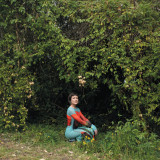
Sydney artist Natalie Slade's debut album Control, co-written with Hiatus Kaiyote's Simon Mavin, is now followed-up with a second instalment of Australian future soul in Molasses, an album featuring a range of UK and Antipodean artists. Joined by The Dieyoungs on keys and Laneous on guitar, Natalie's songwriting and vocals are brought to the fore with excellent production by key Melbourne scene driver, Brisbane's Sampology and additional production from guest Dan Kye. Staying true to the debut album's style of Australian future soul Molasses has an emphasis on poetic storytelling, Natalie's lyrics and melodies that are heard against a lush bed of string arrangements and the influence of Sampology’s soulful but gritty sensibility. As well as her amazing eponymous releases Natalie has also featured on tracks from artists as important and diverse as Posy, Plutonic Lab, Parker and Rhodes and Dojo Cuts among others. Sampology is an innovative producer who, for the past 15 years or so, has been a driving force behind Australia's Hip-Hop, Neo-Soul and Broken Beat/Jazz explosion and has worked with the likes of Ron Trent, Tiana Khasi and Charlie Hill as well as releasing his own tracks. This collaboration between Natalie and Sampology on Molasses is a real high-water mark of music, song-writing and production. Releasing on digital and double vinyl LP, Molasses further chronicles the rising stars of Australia's burgeoning and increasingly important neo-soul and future soul scenes.
dovrebbe essere pubblicato su 08.08.2025

Alanis Morissette Delivers the Equivalent of a Spiritual Awakening on Supposed Former Infatuation Junkie:
Introspective Themes and Compassionate Emotions on Eastern-Tinged Album Have Grown More Relevant
1998 Smash Plays with Enhanced Detail, Rich Textures, and Sharp Focus on Mobile Fidelity’s 180g 33RPM 2LP Set:
First-Ever Audiophile Edition Strictly Limited to 3,000 Numbered Copies
1/2" / 30 IPS analogue master to DSD 256 to analogue console to lathe
Alanis Morissette refuses to adhere to convention on Supposed Former Infatuation Junkie. While most artists follow-up their breakthrough with an album that closely parallels the approaches that helped make them famous, the maverick singer-songwriter stayed true to herself and drew inspiration from travel to India before she began the recording sessions. As much as the preceding Jagged Little Pill put her on the global radar, Supposed Former Infatuation Junkie confirmed her role as a vital generational voice — and proved her blockbuster success was no fluke. Having set a mark for most sales of an LP in its debut week by a female artist, the 1998 smash remains a pop-rock staple.
Sourced from the original master tapes, strictly limited to 3,000 numbered copies, housed in a Stoughton jacket, and pressed at Fidelity Record Pressing, Mobile Fidelity’s 180g 33RPM 2LP set of Supposed Former Infatuation Junkie presents the triple-platinum LP in audiophile sound for the first time. Benefitting from defined grooves that befit the album’s nearly 72-minute length, this pressing plays with enhanced detail, refined clarity, sharper focus, and broader dynamics than prior versions.
Those traits are key given Morissette’s use of more textured and atmospheric soundscapes, not to mention her evolution into a more nuanced and controlled singer. Similarly, the scale and reach of David Campbell’s string arrangements come across as orchestrations should. Ditto the synth-based architecture shaped by producer and principal Morissette collaborator Glen Ballard. All in all, Mobile Fidelity’s collectible edition simply delivers more information via transparent means.
Notable for its balance, sophistication, and richness, Supposed Former Infatuation Junkie at heart finds Morissette pausing, taking a breath, and learning how to navigate life in a healthy manner after enduring one of the most exhausting and rocket-to-fame stretches any musician ever experienced. It’s the sonic equivalent of a spiritual awakening, a call to betterment, a brave assessment of the self and humanity as a whole. As such, the tunes on her second international (and fourth Canadian) release teem with gratitude, compassion, love, empathy — emotions that lend themselves to the largely mellow, contoured scope and Eastern-tinged melodies of the songs themselves.
“How ‘bout how good it feels to finally forgive you,” Morissette sings on the lead single “Thank U.” “How ‘bout grieving it all one at a time.” Those sentiments, and the vocalist’s embrace of concepts such as divinity and acceptance, not only provide a foundation on which Supposed Former Infatuation Junkie rests. They also reflect the personal maturation she gained from her embrace of Buddhist culture in India and a mindset bent toward notions of reconciliation, peace, and sensuality that were nearly absent in popular music in the late ‘90s.
Those themes continue on “That I Would Be Good,” a confident reflection that takes stock of one’s mental, physical, and emotional state in the face of both changing and unpleasant circumstances — and concludes with Morissette performing a flute solo, further exposing the raw intimacy of the introspective tune. She channels relatable simplicity and joy on “So Pure,” with her invocations of “dance” and “freestyle” speaking to the freedom of expression that courses throughout Supposed Former Infatuation Junkie. And perhaps no song finds Morissette showcasing her refreshed attitude toward life and opening up more than the relationship-themed “Unsent,” whose unconventional structures and lack of a chorus only add to its directness.
Akin to many albums that were ahead of their time, and despite the critical and commercial accolades afforded it upon release, Supposed Former Infatuation Junkie attracted new appreciation and perspective as it got older. Issued during an era where its ideas of serenity, absolution, tranquility, and contentment seemed largely alien, the record — akin to the ways its predecessor foreshadowed a movement — now functions as a visionary beacon that foretells of way to maintain sanity, dignity, and goodness amid a contemporary landscape filled with constant distractions, polarizing views, and incessant calls to purchase, promote, and produce without questioning the what-for purpose.
Supposed Former Infatuation Junkie dares to ask the questions and, at its best, supplies meaningful answers and alternatives that lead to longed-for enlightenment, healing, and laughter. For these reasons alone, it’s a record that never goes out of style.
dovrebbe essere pubblicato su 31.07.2025

Enjoy The Ride Records in conjunction with Paramount Pictures proudly presents the score to Top Gun (Music From The Motion Picture), Composed by Harold Faltermeyer. After decades of being locked in the vault, the iconic full score wa finally released to the public last year on a limited edition CD by La-La Land Records, and we are excited to bring it to our favorite format for the first time! This 2xLP 140g vinyl set has the full score, along with 4 bonus tracks including the original May 1985 demo of the Top Gun Theme, two unused tracks, plus an extended album mix of the iconic Top Gun Theme. Top Gun (Music From The Motion Picture) is housed in a gatefold jacket featuring the iconic film poster, as well as stills from the film.
dovrebbe essere pubblicato su 25.07.2025

In the world of Pharaoh Overlord, little is ever as it seems. This band is less comprised of tricksters or mischief makers than fearless obsessives whose musical instincts take twisted and wild pathways. Now, fresh from forays into Italo-disco and synth-pop, they have thrown another still more mighty statement of intent into the universe. Louhi is a thunderous and majestic epic of joyful repetition and earth shaking power. A two-track minimalist-rock monolith forged from guitars, synths and hurdy-gurdy, inspired by the band’s eternal touchstone influence Outside The Dream Syndicate by Tony Conrad and Faust, and constructed around a single riff and melodic idea, it builds and evolves to fearsome pinnacles of elemental intensity.Luminaries and constant compatriots in the Pharaoh Overlord
headspace were recruited for this voyage into the ether. Vocalist and longtime collaborator Aaron Turner (SUMAC, Isis, Old Man Gloom)and Tyneside maverick Richard Dawson were equally keen to get on board, the former taking a spontaneous and improvisatory approach to his vocal parts, and the latter largely playing a part consisting of one guitar chord. Yet whatever routes Pharaoh Overlord take to their destination, a common theme is the consciousness-warping singularity of the riff and the mantra, and the temporal disorientation this can provoke mirrors the broader designs of this record, which takes traditional folk elements and transports them in the band’s singular time machine. “It’s our 25th Anniversary this year, and from time to time we hear wishes that if just we could play more of the stuff that we did twenty or more years ago” relate Jussi and Tomi. “We totally understand this. You could say we used Louhi to reset ourselves to the past, to be able to continue again to the future.” Aaron puts it another way, evoking simplicity in the chaos – “The world of Pharaoh Overlord is a magical one - every album is an invitation to enter that place and rejoice in doing so…”
dovrebbe essere pubblicato su 25.07.2025

Underground flower punks deliver to the world an infectious grouping on 7 Inches. "Musical Attack: Anarchist + Communist Friendship" was recorded by Joe Nelson at D4MT Labs, and has art by DIY maven of the midwest Diyana Shipp, depicting a possible near-future community center that already exists.
dovrebbe essere pubblicato su 11.07.2025

LA-based producer Real Bad Man and Detroit artist ZelooperZ release their joint album Dear Psilocybin via the pro-ducer’s own Real Bad Man Records. The album marks the duo’s first collaboration, culminating in a full-length project that also features guest appearances from Boldy James, MAVI and a verse from The Alchemist. On Dear Psilocybin, ZelooperZ invokes unconventional production out of Real Bad Man to match his own unpredictable and outlandish delivery, working outside of traditional song structures and existing in a lane of his own. The Detroit multihyphenate, who is an integral part of Danny Brown’s Bruiser Brigadecollective and also an accomplished visual artist, painted the album’s corresponding cover artwork as well.
“I definitely haven’t made anything like this before, it’s a very subtle version of my music as far as tone, ” ZelooperZ explained in a conversation with Real Bad Man for his RBM Radio show. He elaborates on the off-kilter approach to the way he recorded to say, “the album feels like a movie soundtrack for a film about a man losing his mind and getting spurts of memories along the way. ”
Speaking about how the project differs from the rest of his collaborative catalog, RBM says, “It’s trippy and it’s a little different – but the main goal was for it to be authentic to Z and his process. ” That dedication to authenticity rings true across his catalog, drawing back to the foundations of his beginnings as a producer, learning the fundamentals of sampling, experimenting with chords and learning to piece songs together by ear. RBM builds a cohesive production arc around each artist he works with, catered to their strengths as artists, working with a variety of lyrical stylists includ-ing Memphis rapper Lukah, Pink Siifu, Blu, Kool Keith, Elcamino & more.
Real Bad Man is the production moniker of visual artist and designer Adam Jay Weissman. A designer and visual artist first, he made his foray into music through his On High Alert series of imaginative, multi-generational compilations, which have featured the likes of Roc Marciano, ROME STREETZ, Pink Siifu, Maxo and more. In the years since, he’s partnered with some of hip-hop’s most talented and adventurous artists on full-length projects, refining and shaping the trajectory of some of rap’s most exciting independent artists.
dovrebbe essere pubblicato su 04.07.2025

Moments of Solace is the introspective new EP from London-based artist, musical director, and producer Amane, released via Música Macondo.
Across six beautifully crafted tracks, Amane distills elements of ambient electronica, IDM, and jazz, creating music that evokes a deeply emotional journey through sound.
From the outset, Moments of Solace is contemplative and hypnotic, weaving together the pulse of electronic percussion, the glow of nocturnal pads, and the calming resonance of synths. Echoes fade and return like tides — forming ecstatic waves of sound that invite the listener into a space of reflection and emotional release.
For Amane, this collection serves as a creative response to a world that feels increasingly chaotic and dark — offering listeners a sonic refuge. The EP channels the ambient excursions of Boards of Canada, the rhythmic urgency of a Floating Points club set, and the cinematic sweep of night drives along the Pacific Coast Highway or meditative rides on Japan’s Shinkansen.
Despite an intense touring schedule, Amane found the time to craft this personal and globally resonant work. Moments of Solace mirrors his life experience as a nonstop traveling artist — soundtracking late nights, contemplative moments, and euphoric dance floors alike.
- Amane combines ambient textures, IDM structures, jazz influences, and club sonics into a cohesive sound.
- Inspired by artists like Boards of Canada and Floating Points.
- Reflects a global journey: from London nightlife to Pacific coastlines to Tokyo train rides.
- Released via Música Macondo, a label known for global, genre-blending innovation.
Amane is an East London-based musician, producer, and musical director whose career spans an eclectic range of genres and high-profile collaborations.
He has served as Musical Director for Little Simz, Jorja Smith, Amaarae, Ego Ella May, and Maverick Sabre; performed alongside global stars such as Ed Sheeran, Elton John, Anne-Marie, Sigrid, Dermot Kennedy, King Krule, and Ata Kak; and was a key member of the acclaimed London ensemble Maisha, whose debut was released via Gilles Peterson’s Brownswood label as part of the landmark We Out Here compilation.
In his solo work, Amane channels his deep musicality into soundscapes that reflect on the state of the world, offering listeners spaces for reflection, calmness, and emotional connection.
dovrebbe essere pubblicato su 20.06.2025

Simon Hafner AKA Sun People is an adventurous maverick in quick rhythms. His productions are well known for being fascinatingly hybridised. Footwork meets jungle meets techno meets electro meets dub! After his smashing debut LP on dBridge's Exit Records he is releasing his new EP on Candy Mountain. 'Emotional Distortions' is a unique EP centered around his deft beat programming and takes us on a contemporary dance floor journey of uncompromised fearless groove. This is next level production! Not to be missed for the serious d&b, dubstep, broken beat and electro freaks out there!!!
Ordina ora e ordineremo l'articolo per te presso il nostro fornitore.

Die Doobie Brothers kehren mit ihrem neuen Studioalbum „Walk This Road“ zurück. Auf diesem 10-Track-Album vereinen sich Michael McDonald, Patrick Simmons, Tom Johnston und John McFee und bringen ihren einzigartigen Sound zurück. Alle drei Songwriter arbeiteten eng mit Produzent John Shanks zusammen, um ein Werk zu schaffen, das den typischen Doobie-Brothers-Sound perfekt einfängt.
a a1. WALK THIS ROAD – featuring Mavis Staples 3:37
b a2. ANGELS AND MERCY 3:48
c a3. CALL ME [3:38]
[d] a4. LEARN TO LET GO [4:18]
[e] a5. STATE OF GRACE [4:01]
[f] b1. HERE TO STAY [3:56]
[g] b2. IT AIN’T THE KIND THAT LASTS [3:47]
[h] b3. NEW ORLEANS [3:50]
[i] b4. SPEED OF PAIN [3:34]
[4:17]
dovrebbe essere pubblicato su 06.06.2025

It's 2022. The world lockdown is finally over. Imagine a picturesque lake in Tuscany. Now imagine a floating state of the art studio on that lake with two maverick rock icons creating a wild, alchemical concept album: Hugo Race, frontman of Australian post-punk legends The Wreckery and guitarist for the Bad Seeds and leader of True Spirit and Fatalists, and Gianni 'Marok' Maroccolo, producer of Italian alternative music and film soundtracks since the 1980s Florence darkwave scene with Litfiba, CSI & CCCP. Together, they fuse an existential narrative made up of individual stories in the style of Boccaccio's Decameron with psychedelic soundscapes framed by experimental electronica, rock instrumentation and decades of experience as cutting edge musicians and studio producers to bring you an album that defies categorization - The Vigil… "We all knew the situation was inauspicious, the planets lined up overhead like a firing squad and this empty silence roaming around our town, cut off from the other mountain towns by an electrical blackout. Without power, there was no way of knowing what was happening anywhere else. Left alone with our thoughts until help came from outside, a group of us gathered around a blazing fire in the abandoned city hall, feeding it with documents and broken furniture. Scientific progress had long told us we were parcels of dumb atoms and that consciousness and the soul were merely human projections. Now science had failed itself..."
Ordina ora e ordineremo l'articolo per te presso il nostro fornitore.

Hackney singer-songwriter Mychelle debut album Good Day is set for release on April 30 via FAMM (Maverick Sabre/Jorja Smith). In her own words "This album is inspired by the music I love to listen to, with lyrics that helped me release what wasn’t serving me.‘Good Day’ is my way of saying goodbye to the chapters in my life that created bad days.I’m incredibly grateful for every single person who played a part in bringing ‘Good Day’ to life, and for those who continue to help push it further. I’ve really enjoyed the entire process.Thank you, and have a ‘Good Day’. Raised in Stoke Newington, Mychelle grew up surrounded by music and first picked up a guitar at 10. Years later, she overcame her shyness through busking—spending over four years performing on London’s streets, where her raw and soulful delivery caught the attention of FAMM, leading to her signing.
Since her debut The Way (2021), Mychelle has released standout EPs, including Closure (2021), Someone Who Knows (2022), It’s Not You, It’s Me (2023), and Me & Gaz (2024). Her collaboration with ENNY on Forbidden Fruit has nearly 2.5 million plays, proving her ability to connect deeply with audiences. Having performed at Montreux Jazz Festival, Boardmasters, Deershed, and Michael Kiwanuka’s tour, Mychelle will soon join Jorja Smith on her UK & ERIE tour and take the stage at Across The Tracks and Mad Cool Festival in Madrid, promising an exciting summer of live performances. Beyond music, she thrives in movement—whether on the basketball court, football field, or running track—infusing energy and passion into everything she does. Good Day marks a bold new chapter, showcasing her evolution as an artist and her unwavering trust in her craft.
dovrebbe essere pubblicato su 02.05.2025

DESCRIPTION
Looming above Hastings on the South Coast of the UK, carved into East Hill, three black shapes are visible from a distance. Mysterious and ominous, they assume the aspect of the entrance to a church or a portal to dimensions unknown. Closer inspection however reveals them to be no more than mere follies carved and painted into the rock, as hoaxster John Coussens sought to convince visitors that an elaborate subterranean kingdom lurked within. Centuries later, this coastal town remains a place that serves as a magnet to the wyrd and the mischievous. And it’s here that the meeting of minds took place that led to 'Folly' - the second release for Rocket’s Black Hole series - an imprint focused on the unorthodox, otherworldly and esoteric. The journey that led to ‘Folly’ began in the dingy cellar of a wine bar in the town. Black Arches formed around a regular local experimental night in such environs aptly named Weird Shit, initially as a freeform musical outlet for author and musician Gareth E. Rees’ later incorporating Matt Frost from his garage rock troupe The Dirty Contacts, and frequent collaborator James Weaver, to form a vehicle for wild experimentation and psychic abandon. Given he was also a regular attendee, it was no surprise when Sexton Ming, arch maverick outsider artist and uncompromising iconoclast of over four decades standing, entered the picture. Soon after a perplexing but serendipitous chain of events took place, with demons conjured up via improvised sessions, poetic licence taken, dystopias chronicled, audio files gone awry, vocals overdubbed and laptops lost, Somehow amidst the sturm-und-drang ‘Folly’ was summoned in all its murky glory. As we embark on the second quarter of an uncertain century, just maybe this psychic travelogue is a dark prism to make sense of the chaos we confront. Whichever, it remains a spectacle as compelling as that by which Black Arches were named
dovrebbe essere pubblicato su 02.05.2025

Listen to This.” As the original working title for Bitches Brew, the instruction and invitation remains to this day as the best way to approach a record that shattered conventions, altered music history, and, 55 years later, still sounds far ahead of its time. The template for jazz fusion, Bitches Brew is rightly ranked by virtually every significant outlet among the 100 greatest albums ever made. Sewn together with vibrant colors, voodoo textures, and ethereal moods, the 1970 landmark emerges with supreme detail and nonpareil feeling on Mobile Fidelity’s UltraDisc One-Step 180g 33RPM 2LP vinyl set.
Sourced from the original master tapes, strictly limited to 5,000 numbered copies, and pressed at Fidelity Record Pressing in California, this definitive-sounding 55th anniversary reissue enhances every element of a double album that established new possibilities for studio recording techniques. You’ll hear wide and deep soundstages, separation between instruments, and an extremely broad dynamic range. If ever a jazz album can be said to have gone to outer space and back, this is it.
Sourced from the original master tapes, strictly limited to 5,000 numbered copies, and pressed at Fidelity Record Pressing in California, this definitive-sounding 55th anniversary reissue enhances every element of a double album that established new possibilities for studio recording techniques. You’ll hear wide and deep soundstages, separation between instruments, and an extremely broad dynamic range. If ever a jazz album can be said to have gone to outer space and back, this is it.
Davis conceived Bitches Brew by having the musicians stand in a semi-circle. There, he pointed at them with vague directions for tempo, solos, and cues. The collective improvisation and interplay spawned a galaxy of melodies and grooves that were later spliced together by producer Ted Macero. Benefitting from the ultra-low noise floor and superb groove definition of this pressing, these distinct creations take shape with utmost realism. Compositions stretch across jet-black backgrounds and paint canvases laden with millions of colors and shades. Juxtaposed percussion, loose jams, and melodic segues explode with impressionistic verve.
Bitches Brew also boasts visionary artwork. By design, the lavish packaging and gorgeous presentation of the UD1S Bitches Brew set call attention to such matters. Housed in a deluxe slipcase, it features special foil-stamped jackets and faithful-to-the-original graphics that illuminate the splendor of the recording. It is made for discerning listeners who desire to fully immerse themselves in everything surrounding the album, from the images to the tones. And this is one effort where every last detail matters.
Gathering a Hall of Fame-worthy lineup of musicians and tweaking it according to his desires, Davis follows through on his idea to “put together the greatest rock and roll band you ever heard.” Central to his proposition is the presence of two (and sometimes three) drummers and two bassists, a tactical move that makes rhythms a central focus. Akin to the futuristic album cover art, the drum-driven suites head toward distant universes and uncharted territories. At once hypnotizing and grooving, they chart maverick adventures via quixotic rock, funk, and R&B elements.
A without-a-net experiment involving interchangeable double-quintet lineups, Bitches Brew explores the previously unimaginable with electrified instruments — Fender Rhodes piano, processed trumpet, dissonant guitars, and bass among them — and an emphasis on feeling over composition. Mesmerizing and soothing, jarring and smooth, overt and subtle: The music seemingly covers an entire map of emotions and sensations, and like no record before, ties together the groundbreaking creativity of the multiple disciplines that were changing popular culture at the end of the 1960s and dawn of a new decade.
Conceptually, Davis described Bitches Brew as “a novel without words” and “an incredible journey of pain, joy, sorrow, hate, passion, and love.” The vast psychedelic expanses of warped echoes, liquid reverb, and tape loops confirm such ambitious contrasts of light and dark, fear and hope. Yet the most absolute characteristic of the watershed effort lies in how it resists definitive interpretation and encourages free thought — the very principles Davis used to conceive Bitches Brew.
More About Mobile Fidelity UltraDisc One-Step and Why It Is Superior
Mobile Fidelity Sound Lab’s UltraDisc One-Step (UD1S) technique bypasses generational losses inherent to the traditional three-step plating process by removing two steps: the production of father and mother plates, which are created to yield numerous stampers from each lacquer that is cut. For UD1S plating, stampers (also called “converts”) are made directly from the lacquers. Since each lacquer yields only one stamper, multiple lacquers need to be cut. Mobile Fidelity's UD1S process produces a final LP with the lowest-possible noise floor. The removal of two steps of the plating process also reveals musical details and dynamics that would otherwise be lost due to the standard multi-step process. With UD1S, every aspect of vinyl production is optimized to produce the best-sounding vinyl album available today.
dovrebbe essere pubblicato su 30.04.2025
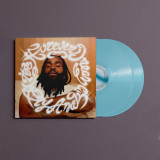
Fly Anakin is a rapper and producer who approaches his craft in a way few contemporaries can. Vigilant yet unorthodox, DIY-minded yet prolific, the Richmond, Virginia multihyphenate’s razor-sharp lyrics, ear for soulful production, and collaborative synergy are the result of over a decade of fundamental mastery. Described by Madlib as “one of the illest MCs,” the Mutant Academy cofounder was in his pocket well ahead of his acclaimed solo debut, Frank (2022). After years of consistent releases with his collective, Anakin broke major ground in 2020 with his and Pink Siifu’s joint project FlySiifu’s, followed by their $mokebreak EP in 2021. A student of the East Coast’s golden age, Anakin transmutes its spirit into music that’s both classicist and pioneering, having worked with the likes of Freddie Gibbs, redveil, BbyMutha, and MAVI. With the release of a Mutant Academy debut album completed, and his solo album (The) Forever Dream imminent, Anakin has cemented his place as a leader in rap’s underground Renaissance.(The) Forever Dream commemorates a new era of freedom for Anakin, who rarely approaches bodies of work without a preconceived concept. Executive produced by Quelle Chris, the project, which features the likes of Denmark Vessey, The Alchemist, BbyMutha, and Pink Siifu, includes songs that Anakin believes are some of his most experimental and ambitious. “The album is me and Quelle kicking it, smoking, learning each other, and playing video games,” he says of the project’s inspiration and recording process. “It was time to make some mindless music, to tackle production I would’ve otherwise picked up.” The long anticipated project comes after years of Anakin and Quelle developing a strong rapport, stemming back to 2019. “Quelle is one of the best collaborators ever—he’s not biased but he knows what he likes, open minded but stubborn at the right times,” Anakin says of his collaborative relationship with the Grammy nominated producer. “On the low we just alike but polar opposites, we can do no wrong together.”
dovrebbe essere pubblicato su 25.04.2025
