From the moment she began writing her new album, Japanese
Breakfast’s Michelle Zauner knew that she wanted to call it
‘Jubilee’. After all, a jubilee is a celebration of the passage of time
- a festival to usher in the hope of a new era in brilliant technicolor.
Zauner’s first two albums garnered acclaim for the way they
grappled with anguish; ‘Psychopomp’ was written as her mother
underwent cancer treatment, while ‘Soft Sounds From Another
Planet’ took the grief she held from her mother’s death and used it
as a conduit to explore the cosmos.
Now, at the start of a new decade, Japanese Breakfast is ready to
fight for happiness, an all-too-scarce resource in our seemingly
crumbling world.
‘Jubilee’ finds Michelle Zauner embracing ambition and, with it, her
boldest ideas and songs yet. Inspired by records like Bjork’s
‘Homogenic’, Zauner delivers bigness throughout - big ideas, big
textures, colours, sounds and feelings. At a time when virtually
everything feels extreme, ‘Jubilee’ sets its sights on maximal joy,
imagination and exhilaration. It is, in Michelle Zauner’s words, “a
record about fighting to feel. I wanted to re-experience the pure,
unadulterated joy of creation… The songs are about recalling the
optimism of youth and applying it to adulthood. They’re about
making difficult choices, fighting ignominious impulses and
honoring commitments, confronting the constant struggle we have
with ourselves to be better people.”
Throughout ‘Jubilee’, Zauner pours her own life into the universe
of each song to tell real stories and allowing those universes, in
turn, to fill in the details. Joy, change, evolution - these things take
real time and real effort. And Japanese Breakfast is here for it.
Available on clear with yellow swirl coloured vinyl.
Поиск:max m
Все
Recently signed to FatCat’s 130701 imprint, Dutch
composer Rutger Hoedemaekers makes his debut
solo release with a stunning album that marks the
culmination of a decade spent in the hypercreative studio environment he co-founded in
Berlin, including four years working closely
alongside Jóhann Jóhannsson.
Sonically rich, emotionally deep, and immaculately
handled, ‘The Age Of Oddities’ showcases a
brilliant new talent, its cinematic eloquence bearing
witness to Rutger’s experiences composing for film
alongside Oscar-winner Hildur Guðnadóttir and
Jóhannsson, for whom the album is partly a
eulogy.
‘The Age Of Oddities’ is a bold and forwardthinking record, with a rich, hybrid sound seeing
vocals processed and blurred alongside brass
parts and a wall of strings shadowed by Rutger’s
understated, textural electronics.
The album features the Budapest Art Orchestra’s
23-piece string ensemble alongside vocals (Kira
Kira, Else Torp and Laura Jansen), horn (Morris
Kliphuis), trombone (Hilary Jeffery) and violin (Una
Sveinbjarnardóttir, Viktor Orri Árnason), with
Hoedemaekers contributing trumpet, piano,
keyboard and electronics.
For fans of Jóhann Jóhannsson, Hildur
Guðnadóttir, Mica Levi, Max Richter, Olafur
Arnalds.
Recital exhibits the new album by Swedish composer Kajsa Lindgren (b.1990). Typically working with field recordings and electroacoustic sounds, Momentary Harmony expresses her more emotive and lucent instrumental compositions. The music has taken a step away from her previous works, using only flickers of field recordings, instead tracing back to Kajsa’s childhood classical music roots: voice, violin, and piano.
A warm tide grows and recedes through her album. Breathing in miniature lute ornaments and exhaling large choral plateaus. This polarity rests in narcotic limbo. The delicate arrangements remind one of Vikki Jackman or blurred Björk b-sides. Mixing instrument stems like clusters of field recordings, Lindgren laces harmonic timbres and gradients across the plain of this LP. Choirs clasp with cello overtones and piano washes.
Alongside Kajsa Lindgren, the album has recurring topiary appearances by Vilhelm Bromander (bass), Maxwell August Croy (koto, voice, guitar), Åsa Forsberg (cello), Pär Lindgren (lute), Sean McCann (piano and voice), and Jörgen Pettersson (saxophone).
If you mention the name of Metamorfosi in front of any fan of Italian progressive rock, you get a unique effect: awe, wonder, united to the memory of the masterpiece that firmly established them as fundamental exponents of the genre. We are obviously talking of "Inferno", published in January 1973 and inspired by the eponymous first poem of the Divine Comedy by Dante Alighieri.
But the musical maturity of "Inferno" had not come immediately, at least not in discographic terms, as it happened for example in the case of Alphataurus, Biglietto per l’Inferno and Campo di Marte, typical meteors of Italian prog that made their debut with a bang and then dissolved into thin air for decades. In fact, Metamorfosi debuted with a work that was indeed less complete, but not negligible.
“...e fu il sesto giorno” is born after two years of gestation, since the singer Jimmy Spitaleri joined the band I Frammenti in 1970. It is the period of maximum splendour for the music which at the time was called ‘avant-garde pop’ and that only later would be labeled as ‘progressive rock’, a music scene in which the Metamorfosi of the beginning just partially fit in as they were partly still anchored to old beat styles, and as they engaged in the exaltation of the Catholic faith at the textual level. The religious content of the album is substantially unequivocal from the cover, in which Jimmy Spitaleri is portrayed in a symbolic laying on of hands to the rest of the band, his disciples and fellow adventurers.
If it is true that the weakness of the Italian prog scene has always been found in the singing, Spitaleri is a notable exception, who does not show any shortcoming throughout the disc. In addition, some elements - the guitar solos, the interventions of flute and keyboards, a solid rhythmic base, a sometimes unpredictable song structure - anticipate what will come from there after a few months. "...e fu il sesto giorno" is, therefore, contrary to what is often said, a major premise, a flower waiting to bloom and show everyone its own beauty.
Matière Mémoire presents the MMXX Series: In anticipation of the year 2020, Matière Mémoire asked 20 experimental/electronic artists to create an original 20 minutes piece and an artwork. Throughout the year batches of 5 new vinyls will be released.
Each record is limited to 500 copies and comes as a crystal clear vinyl featuring an original track of 20 minutes on one side, and a laser engraved artwork on the other. Each 12" is housed in a transparent sleeve printed with the MMXX logo, coming with a print of the artist artwork.
Participate in this series: Franck Vigroux, John Duncan, Phill Niblock, Jim O’Rourke, Reinier Van Houdt, Stephen O’Malley, CM Von Hausswolff, Hampus Lindwall, Oren Ambarchi, Shiva Feshareki, Bérangère Maximin, Kassel Jaeger, Daniel Menche, Charlemagne Palestine, Giueseppe Ielasi, Carlos Casas, Susanna Santos Silva, Joachim Nordwall, Karbé Dinel, Mauro Lanza
Billy Harper is one of the great tenor saxophonists in the post-Coltrane mold. Originally from Houston, TX and with a degree from the venerable University of North Texas College of Music, Harper emerged on the New York City jazz scene in the late 1960s performing with Art Blakey, Max Roach, Lee Morgan and others. Known for his soulful and propulsive tone, Harper was already a highly regarded and prolific session man before the release of his debut album as a leader on the cult favorite Strata-East label in 1973.
Recorded in 1975, Black Saint was the second album for Billy Harper as bandleader and is the most acclaimed and fully realized of his long career. The inaugural release of the Italian label Black Saint – to which the album lent its name – is comprised entirely of Harper compositions; the peaceful and subdued opener “Dance, Eternal Spirits, Dance!,” the swinging and fiery “Croquet Ballet” and the side-long epic “Call Of The Wild And Peaceful Heart.” Harper’s group features trumpeter Virgil Jones - a graduate of Roland Kirk’s mid-60s groups and session player for McCoy Tyner, Charles Tolliver and others - along with Joe Bonner on piano, David Friesen on bass and Malcom Pinson on drums.
Black Saint is too melodic and swinging to be free jazz but too forward-thinking to be described as modal post-bop; Harper’s advanced compositional sense and galvanic tenor work make this an album of pure fire music. This is a beautiful album back into print on its original format for the first time in over 40 years.
‘Bad Time’ is the new EP from Peeping Drexels. The London based 5-piece, who have been together since they were sixteen, have to date released a series of singles on the Permanent Creeps and Fierce Panda labels. This is their first release on BY Records. They've previously received support from the likes of Steve Lamacq, DIY, So Young among others. They've also performed live with artists such as Shame, Goat Girl and Public Practice.
First single, High Heels, sees Peeping Drexels eulogise about white pills and night thrills - anxious overtones abound until the crescendo of guttural angst takes over. "High Heels is a dimly lit journey through the narrow corridors and backrooms of a twisted underground club, all whilst under the influence of an unknown substance. The song is the first taste of Peeping Drexels rebirth; experimental new sounds, broader instrumentation, yet pop music to the bone. A never ending loop of bad-trip fuelled excess, and there is no way to escape."
Prior to lockdown, Peeping Drexels played a Sold Out Parallel Lines headline show at London’s Bermondsey Social Club and ended it with a sold out main support slot for Fat White Family at EartH (Evolutionary Arts Hackney).
The project takes influences from a broad musical spectrum, from the dance vibes of Gary Numan and Mr. Fingers to the intensity of Tyler The Creators' synth-heavy Cherry Bomb and the maximalist work of Kanye West.
Matière Mémoire presents the MMXX Series: In anticipation of the year 2020, Matière Mémoire asked 20 experimental/electronic artists to create an original 20 minutes piece and an artwork. Throughout the year batches of 5 new vinyls will be released.
Each record is limited to 500 copies and comes as a crystal clear vinyl featuring an original track of 20 minutes on one side, and a laser engraved artwork on the other. Each 12" is housed in a transparent sleeve printed with the MMXX logo, coming with a print of the artist artwork.
Participate in this series: Franck Vigroux, John Duncan, Phill Niblock, Jim O’Rourke, Reinier Van Houdt, Stephen O’Malley, CM Von Hausswolff, Hampus Lindwall, Oren Ambarchi, Shiva Feshareki, Bérangère Maximin, Kassel Jaeger, Daniel Menche, Charlemagne Palestine, Giueseppe Ielasi, Carlos Casas, Susanna Santos Silva, Joachim Nordwall, Karbé Dinel, Mauro Lanza
Matière Mémoire presents the MMXX Series: In anticipation of the year 2020, Matière Mémoire asked 20 experimental/electronic artists to create an original 20 minutes piece and an artwork. Throughout the year batches of 5 new vinyls will be released.
Each record is limited to 500 copies and comes as a crystal clear vinyl featuring an original track of 20 minutes on one side, and a laser engraved artwork on the other. Each 12" is housed in a transparent sleeve printed with the MMXX logo, coming with a print of the artist artwork.
Participate in this series: Franck Vigroux, John Duncan, Phill Niblock, Jim O’Rourke, Reinier Van Houdt, Stephen O’Malley, CM Von Hausswolff, Hampus Lindwall, Oren Ambarchi, Shiva Feshareki, Bérangère Maximin, Kassel Jaeger, Daniel Menche, Charlemagne Palestine, Giueseppe Ielasi, Carlos Casas, Susanna Santos Silva, Joachim Nordwall, Karbé Dinel, Mauro Lanza
Matière Mémoire presents the MMXX Series: In anticipation of the year 2020, Matière Mémoire asked 20 experimental/electronic artists to create an original 20 minutes piece and an artwork. Throughout the year batches of 5 new vinyls will be released.
Each record is limited to 500 copies and comes as a crystal clear vinyl featuring an original track of 20 minutes on one side, and a laser engraved artwork on the other. Each 12" is housed in a transparent sleeve printed with the MMXX logo, coming with a print of the artist artwork.
Participate in this series: Franck Vigroux, John Duncan, Phill Niblock, Jim O’Rourke, Reinier Van Houdt, Stephen O’Malley, CM Von Hausswolff, Hampus Lindwall, Oren Ambarchi, Shiva Feshareki, Bérangère Maximin, Kassel Jaeger, Daniel Menche, Charlemagne Palestine, Giueseppe Ielasi, Carlos Casas, Susanna Santos Silva, Joachim Nordwall, Karbé Dinel, Mauro Lanza
With a fundamental emphasis on the encouragement of genre hybridization, Evar Records, the Los Angeles-based imprint co-founded by Trickfinger (John Frusciante) and Aura T-09 (Marcia Pinna), continues its momentum with an expansive 9-track collection from Netherlands-based luminary, Limewax.
After making a strong first impression with its 2020 debut offerings, Evar Records has recruited Limewax to carry forward its mission of blurring boundaries and challenging conventions in electronic music. The Ukranian hard drum and bass hero happily obliged, referring to signing with Evar as a breaking point which allowed him, finally, to take full stock of his background in classical and electronic music simultaneously. Although Maxim Anokhin is widely known for his hard-edged breakbeats, releasing on labels such as Tech Itch Recordings, Position Chrome, Freak Recordings, and PRSPCT, the full scope of his artistry shines through on Untitled.
The opening cut, "Porcelaineworm," is a futuristic electro cut recalling IDM classics like AFX's "XMD5A." Of course, the virtuosic drum programming and hectic D&B sound which Limewax has built his reputation upon is here in spades on tracks like "Stay Lackey. Cuts like "Ushio" and "Whay1" are fascinating studies in contrasts—the former balances bludgeoning techno of the Ansome and Perc variety with a resolve that recalls Fennesz's pastoral glitch abstractions. "Whay1," meanwhile, is sub-rattling drum and bass nuanced by cinematic string themes. "Getupa" is an experimental beat track that truly bangs, its layers of texture and field recordings placing Limewax in the company of bleeding-edge acts like SVBKVLT's breakout star Hyph11E. The very next track, "19NB," is a subtle update to the original minimal technical template established by Detroit icons Robert Hood & Jeff Mills.
While most of the album hurtles forward at hard techno and D&B tempos, "Maleisae" is a sensual 70 BPM track mixing ghostly R&B and acid. That spectacular cut heralds Untitled's intricate denouement. The brief "Wernmqbram" effortlessly reconciles a baroque minor-key piano theme with the renegade snares of classic jungle. "Hasan" is a true "closing credits" master stroke, half-time acid giving way to gorgeous IDM-meets-Blade Runner synth leads.
Far from a genre-jumping hodgepodge, Untitled is a remarkably coherent full-length by a virtuosic artist free to explore the entirety of their creative influences. The Tilburg-based artist cites the poets Marina Tsvetaeva and David Whyte as influential on Untitled and also listened to works by 1771-1862 works by organ builders when crafting the album. The end result reveals Limewax as a masterful, diverse artist, capable of any style he pursues. It's a clear indicator of the boundless promise of Evar's core principle—a staunch refusal to put artists in boxes.
Songs zu schreiben ist für Toby Whyle eine Selbstverständlichkeit, im Musikkosmos ist er seit langer Zeit ein bekanntes Gesicht. Neu ist die Erkenntnis, dass Songwriting für ihn einer der wenigen Wege ist, die grelle, schnelllebige Außenwelt auszublenden. "A Mood Of Its Own" ist der Anfang eines neuen Abenteuers, auf das sich Toby erstmals alleine begibt. Vorbehaltlos setzt er sich den Anziehungskräften von elektronischer Musik und Gitarrenpop aus, umkreist beide immer wieder knapp, lässt sich aber nie ganz fangen. Jeder Song folgt dabei einer eigenen Umlaufbahn, gewährt neue Einblicke in Tobys Gedankenwelten.
Der Titel "A Mood Of Its Own" entstammt einer Textzeile der ersten Single "No One Moves", mit der Toby gleich mal auf dem ersten Platz der Radio FM4 Charts landete. Der Song beschreibt eine Schreibblockade, die zweite Single "Quiet The Silence" begleitet das Auseinanderdriften zweier Menschen, "Pity" erzählt von Stolpersteinen und einem Neubeginn und "How It Feels" von der Suche nach Konstanten in einer schnelllebigen Welt. Auf seiner ersten Solo-EP zeigt Toby Whyle die volle Bandbreite seines Songwritings, lässt einen oft energiegeladen aber nachdenklich zurück. Gemeinsam mit Produzent Maximilian Walch hat Toby unterschiedliche Stimmungen eingefangen, auf das Wesentliche reduziert und eine verbindende Ästhetik geschaffen.
Wipers were a punk rock group formed in Portland, Oregon in 1977 formed by guitarist/songwriter Greg Sage. The group’s tight song structure and use of heavy distortion were hailed as very influential by many critics and musicians alike.
Land of the Lost is the band’s fourth studio album. It was very well received, with Maximum Rocknroll praising the title track for being “heavier and riffier” than the band had ever sounded before. Spin Alternative Record Guide called the album “the most definitive Wipers record for sound and songwriting”.
Land of the Lost remains a highly sought-after album, but now there’s a chance to get a hold of it again. It’s a limited edition of 1000 numbered copies on yellow coloured vinyl.
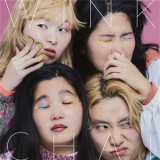
Erstpressung auf "Red, White & Blue hi-melt on clear" Vinyl! Das japanische Quartett CHAI veröffentlicht mit "Wink" ihr drittes Album und ihr erstes für Sub Pop. Es enthält CHAIs sanfteste und minimalistischste Musik, aber auch ihr mit Abstand bewegendstes und aufregendstes Songwriting. "Wink" ist zudem ein extrem passender Titel: eine subtile, aber kühne Geste. Ein Zwinkern ist ein unbefangener Akt der Überzeugung. CHAI besteht aus den eineiigen Zwillingen Mana (Gesang und Keyboard) und Kana (Gitarre), Schlagzeugerin Yuna und Yuuki. Nach der Veröffentlichung von "Punk" im Jahr 2019 führten CHAIs Abenteuer sie rund um die Welt, sie spielten ihre hochenergetischen und beschwingten Shows auf Musikfestivals wie Primavera Sound und Pitchfork Music Festival und tourten mit Indie-Rock-Größen wie Whitney und Mac Demarco. Wie alle Musiker waren CHAI im Jahr 2020 gezwungen, die Struktur ihrer Arbeit und ihres Lebens zu überdenken. CHAI nahmen dies als Gelegenheit, ihren Arbeits-Prozess durchzuschütteln und ihre Musik an einen aufregend neuen Ort zu bringen. Hatten CHAI zuvor ihre maximalistischen Aufnahmen genutzt, um die Ausgelassenheit ihrer Liveshows einzufangen und die Reaktionen des Publikums im Auge zu behalten, konzentrierten sie sich nun darauf, die etwas subtileren und introspektiveren Arten von Songs zu entwickeln, die sie gerne zu Hause hören - wo sie zum ersten Mal die gesamte Musik aufgenommen haben. Inmitten des globalen Shutdowns arbeiteten CHAI quasi als Garage-Band und tauschten ihre Songideen - für die sie mehr Zeit als je zuvor hatten - über Zoom und Telefonanrufe aus, wobei sie ihre Einschränkungen in eine Stärke verwandelten. Während sich die Band an einen persönlicheren Sound anlehnte, ist "Wink" auch das erste CHAI-Album mit Beiträgen von externen Produzenten (Mndsgn, YMCK) sowie einem Feature des Chicagoer Rappers und Sängers Ric Wilson. CHAI ziehen R&B und HipHop in ihre Mischung aus Dance-Punk und Pop-Rock, während sie unbestreitbar CHAI bleiben. Ob in Bezug auf diesen neu entdeckten Sinn für Offenheit oder ihre Art, zu Hause zu komponieren, das Thema von "Wink" ist, sich selbst herauszufordern.
Originally released in 2008 on Mr C’s and going for over £80 a throw, the band’s excellent funky debut 45, remastered for maximum dancefloor appeal. The stellar stand-out cut from the band’s 2010 album ‘The Outsiders Are Back’ was released on Luaka Bop. Think Curtis Mayfield with Fela’s horns and a percussion backing set to self-destruct; a spine tingling anthem, no less.
Cut with Willie Tee’s Gatur Records’ flipside that goes for £250 minimum. An organ-led, brass-powered groove from the New Orleans’ soul legend, originally released in 1972 A deep, soulful croon with an enveloping rhythm and a euphoric lift, remastered from the original sound files for added soul.
- A1: The John Coltrane Quartet — Africa 16:27
- B1: Max Roach — Garvey's Ghost 7:52
- B2: Quincy Jones And His Orchestra — Hard Sock Dance 3:20
- B3: John Coltrane — Up 'Gainst The Wall 3:14
- B4: Elvin Jones/Jimmy Garrison Sextet — Just Us Blues 5:55
- C1: John Coltrane — Alabama 5:09
- C2: Charles Mingus — Better Get Hit In Yo' Soul 6:31
- C3: Shirley Scott Trio — Freedom Dance 4:50
- C4: Yusef Lateef — Sister Mamie 5:27
- D1: Archie Shepp — Malcolm, Malcolm—Semper Malcolm 4:48
- D2: Stanley Turrentine — Good Lookin' Out 5:21
- D3: Earl Hines — Black And Tan Fantasy 5:11
- D4: Oliver Nelson — The Rights Of All 3:58
- E1: Pharoah Sanders — The Creator Has A Master Plan (Edit) 9:08
- E2: John Coltrane & Alice Coltrane — Reverend King 11:03
- F1: The Ahmad Jamal Trio — The Awakening 6:22
- F2: Albert Ayler — Music Is The Healing Force Of The Universe 8:41
- F3: Charlie Haden — We Shall Overcome 1:19
- G1: Alice Coltrane — Blue Nile 7:02
- G2: Pharoah Sanders — Astral Traveling 5:50
- G3: Archie Shepp — Blues For Brother George Jackson 3:52
- G4: Michael White — Lament (Mankind) 2:28
- H1: Dewey Redman — Imani 7:09
- H2: Marion Brown — Bismillahi 'Rrahmani 'Rrahim 6:02
- H3: John Handy — Hard Work 6:58
Orange and black. Fire and ebony. Fury and pride. Wearing its signature colors proudly and raising its exclamation point high, Impulse! Records was the go-to label for music that harnessed the searching and political stand-taking of the Sixties. Launched in 1961, Impulse grew to become an inherent part of the era’s velocity as well as its volume, pulling jazz into the age of Black Power, Afrocentricity, and Spiritual Expansion. In its balance of tradition and transition, it bridged the golden age of jazz, that brief window from the late Fifties to the Seventies when players representing every jazz era were alive and active—from Louis Armstrong to Albert Ayler, from the legends of lore to a new generation of energy players. Impulse treated all its musicians as innovators, revolutionaries even—from swing and bebop, to free and Afrofuturist. The performances on Impulse Records: Music, Message and the Moment draw their staying power from a wide embrace of styles and sounds, as well as a tight focus on a historic moment when the promise of change was in the air and the message of racial harmony was in the music. Today that music has lost none of its relevance: the promise still deferred, the message still on time.
Glasgow post-punk six-piece Kaputt aren’t strangers to directing their explosive energy and maximalist vibrancy in the name of allegory and critique. Their 2019 debut album on Upset the Rhythm ‘Carnage Hall’ confidently deconstructed themes of surveillance, paranoia, and cultural identity through a sonic lens of high-tempo, bright, danceable pop hooks and technical, polyphonic rhythms which border on the bombast of Zeuhl.
New EP ‘Movement Now/Another War Talk’ continues the synthesis of animation and discontent with an ethos that exemplifies post-punk’s most original and guiding purpose: casting aside the rigid, signifying fashions of modern performative genre tropes and instead combining a vast fluidity of influence, tone and style to create something as unique and personal as it is counter-cultural. The result is a release that responds to the apathy of our current situation with a positive thesis, breathing life into the lived-in, bursting through every vessel, leaving nothing unturned.
‘Movement Now’ enters with the distinct high-low drive of guitar whines and racing low toms, emblematic of the presence one feels when pushing past bodies in a heaving DIY venue, but it is not afraid to play with expectations. When the song thematically opens out, disrupts convention and progressively rebuilds upon itself, the track, a comment on the ever-lagging pace that jaded, old values take to transform, transitions from a goth aesthetic to the optimism characteristic of any indie heavyweight.
‘Another War Talk’ shines in production and composition as arguably one of the best examples of distilling the band’s manic live energy into a studio recording. The divergent vocal duality of Cal D. and Chrissy B. accompanied by competing percussionists and dynamic saxophone lines encapsulates the performative strengths that has allowed the band to become a constant highlight in Glasgow’s ever exciting DIY scene. It is, in essence, the naturalness by which six passionate voices can combine into one vision so seamlessly, which one who has not experienced the band live should take away from the track for now in anticipation of the future.
AL presents the first musical collaboration between Hamburg based Asmus Tietchens and Japanese artist Miki Yui, operating out of Düsseldorf for almost 20 years now. Highly respected and hugely influential artist Asmus Tietchens first made his mark on the electronic music scene in the late 1970s, whereas Miki Yui debuted her sonic settings in1999.
Their first joint album NEUES BOOT envelops the listener with a poetic sound sensibility and a conceptual clarity which was processed and passed back and forth between their individual studios in Hamburg and Düsseldorf.
Asmus Tietchens: After Stefan Schneider suggested to release a Yui-Tietchens album on his TAL imprint Miki and I quickly developed some ideas towards our eventual collaboration. We agreed upon an ongoing mutual exchange of material. We have both been very familiar with each other's music for a long time and we found our individual approach towards sound design to be uniquely compatible. We do not use our electronic tools in order to merely achieve the maximum of technical possibilities, but to illustrate aesthetic necessities. This entails a deliberate reduction and refined perception of the sonic characteristics of the material. Only this approach enabled us to fully realise the complete spectrum of the sounds and noises we were working with in order to construct this New Boat. Each and everyone of my treatments is e x c l u s i v e l y based on a track supplied by Miki. I added no new sound sources. Naturally the spatial and temporal dimensions of the source material were thus altered. These transformations are exactly what makes our collaboration special and unique. Very early on we had agreed on New Boat as a working title and a guiding light . Of course in the beginning we had no idea where this New Boat might take us. Now we do know. After several months of ship-building the boat has now set sails for new sonic horizons. Ahoi!
Miki Yui: The title of the album as well as the individual tracks have been inspired by conversations with Asmus. When we had a chat after one of his concerts, he told me about Kōdō, the Art or the Way of the Scent. It is a 8th century Japanese incense ceremony. Very frequently the names of Japanese incense sticks are derived from natural themes, e.g. Bairin is the plum grove, the scent of the first blossom heralding the end of winter. This poetry, the ephemeral nature of the world reminded me of Kigo, words from a Haiku (a form of Japanese poetry), which reference a particular season or a natural phenomenon. So I chose the names of the individual pieces from Kigo as if The Boat was exploring nature whilst sailing through the seasons. Only in retrospect I realised that the titles combined create this poem:
Early spring a hazy view in the night (Oboro)
Plum groves (Bairin)
Over a Dayfly (Kagerou)
A Milkyway (Amanogawa)
Dawn (Akatsuki)
Art of fragrance (Kōdō)
On fragile thin ice (Usurai)