Civilistjävel! returns with »Brödföda«, the successor to 2022’s »Järnnätter« and his fourth release for FELT. The record features collaborations with Laila Sakini, Mayssa Jallad, Thommy Wahlström, ELDON, and Withdrawn.
Tomas Bodén is a revered figure of the aural murk, known primarily for his work as Civilistjävel. It’s an alias that has spawned a catalogue of self-released peculiarities, featuring music that scorns traditional form, instead opting for unfussed symphonies of ice-hued minimalism; soft murmurs that emanate from his studio in the High Coast of Sweden.
On »Brödföda«, his latest album for Fergus Jones’s FELT imprint, subtle new developments in mood prevail. Across its 75 minutes, Civilistjävel! unveils a breadth of emotions that on previous releases seemed distant. He also invites collaborators on record for the first time: Beirut-based singer Mayssa Jallad mournfully croons on »IV«, »VIII« hosts Coldlight’s ELDON & Withdrawn for an abstracted session of dub-hop murk, Laila Sakini offers a hallucinogenic monologue amidst melodica, sticks & bells playing on »IX« and Thommy Wahlström floats scant acid dub stylings on »VI«. These additions and developments bring a forlorn intimacy to the music, and suggest an ambition that few artists of his ilk strive for.
FELT’s (un)reliable cast of audio ghouls routinely summon the odd, with Civilistjävel! often its primary culprit; »Brödföda« gently modifies this path to pursue some of his and the label’s most quaintly beautiful music yet.
quête:may b
The common thread throughout the album is the sitar. With this album Nicolas Mortelmans (Condor Gruppe, Leki, Merdan Taplak) builds a bridge between his love for Indian music and his roots in Western genres such as electronic, jazz and rock music.
On April 12, 2024, Nicolas Mortelmans (Condor Gruppe, Leki, Merdan Taplak) will release his long-awaited debut album MÁYÀ on WERF Records!
The common thread throughout the album is the sitar, an instrument that he learned in the traditional way from various sitar masters in India. Since 2017 he has been trained by the world-famous Anoushka Shankar. In every song he tries to approach this unique instrument in a different way.
With this album he builds a bridge between his love for Indian music and his roots in Western genres such as electronic, jazz and rock music. On the album guest musicians from all over the world are playing, such as Ravichandra Kulur from India (Anoushka/Ravi Shankar, John McLaughlin, Aka Moon,..), Benny Bettane (Australia/handpan) & Belgian friends like Roland van Campenhout, Tim Vanhamel and Stef Kamil Carlens.
Längst überfällige LP-Neuauflage (Silver Vinyl) von Mortal Sins klassischem Debüt 'Mayhemic Destruction', ursprünglich 1987 veröffentlicht. Mortal Sin, die 1985 aus dem australischen Metal-Underground hervorgingen, erlangten schnell globalen Ruhm als ihre Debüt-LP vom Major-Label Vertigo 1987 weltweit aufgelegt wurde, nachdem sie erst im Eigenvertrieb lief. Mit frühen Klassikern wie 'Lebanon' und 'Blood, Death, Hatred' erwies sich das Album als eine Schlüsselveröffentlichung in der damals aufkeimenden Thrash-Metal-Szene.
Tip!
Polido has been fantasizing with the idea of free music throughout his artistic career. Free from restraints, logos, musical genres, but also from this modern obsession with narratives, plans, business plans, algorithms and bubble wrapped ideas for comfort of those of you that can’t breathe without everything making sense.
“Hearing Smoke” has nothing of that. It has been four years since Holuzam released the double album “A Casa e os Cães / Sabor a Terra” and for four years I have been daydreaming about what would come next. This is it, eleven new pieces about the future of the future of music. It is the result of years of study, research and sound consolidation. Sound as matter, mutating, transforming, absorbing all around, a shapeshifting entity connecting with the principles of freedom.
"Polido has been researching Portuguese contemporary composition, its very own sounds and ideas. Its origins, the web of repression, tension and censorship before the April 25th revolution in 1974; secondly, as an afterthought, freedom, equality and a unique sense of community and belonging screaming through the music. He absorbed those states of mind and made an album that listens to the current world and presents globalization as a mental trap.
If the music that inspired him somehow comes from a post-colonial world, “Hearing Smoke” questions how we can create something new in this permanent state of cultural colonization, where new trends or forms of music only thrive if they are accepted by the dominant cultures. The physical world has been transformed, but ideas like “world music” or “ghetto music” still show that dominance, the Strange can only be accepted if it incorporates the rules and codes of that dominant force. What I am saying is that it is hard for Portuguese musicians to present themselves as original. They will never have that credit unless the music relates to something that exists in another
realm. Never for their benefit, but for the power of association. I may sound arrogant here, but Polido is unique, original, one of a kind (all those words, all those redundant synonyms). I knew it four years ago when I got lost in the way “A Casa e os Cães” is assembled and how he makes something memorable out of the most commonplace conversations. “Hearing Smoke” continues the flow and puts us in the centre of these ever evolving masses of sound.
Somehow his music finds you, it starts speaking with you until it asks you to be a part of it. Polido’s beats and harmonics are combined in such a tender way that you mellow out while listening to these beats - thinking of the brilliant “Saque”. Even when he exposes you to something more harsh - “Canto D’Amorte” or the closing moments of the last track “Custa A Crer” - there’s still a cradle effect.
But what keeps me returning to this album is how it seems to transform in my ears. Not every time I listen to it, but while I am listening to it. The sound seems to move, embracing me and controlling my inner thoughts. These start to move along at the same pace, with the same feeling of cloudiness. Nothing new here, the thing is how it feels different from time to time, how the music, because of something that changes or moves, comes as a catharsis/revelation. It drives me nuts how the beats come and go in tracks like “Fogo Firme (Encomendação)” or “The More I Think, The Less I Can Speak“, leaving everything suspended and, simultaneously, relieved. When dramatic - ”Prova De Existência“ - it is sad af and gorgeously epic.
Trap, bass music, dubstep, ambient, hauntology and contemporary music flow side by side here, no pushing around, free of interpretation, and you are free to feel or listen to whatever you want in “Hearing Smoke”. That’s free music for you. Not a hard concept, something for you to enjoy, feel, reflect about. This is what the future will sound like."
André Santos // Holuzam
- 1: The Three ‘O’ Clock - Jet Fighter
- 2: The Rain Parade - Don’t Feel Bad
- 3: True West - Lucifer Sam
- 4: Bangles - Going Down To Liverpool
- 5: Thin White Rope - Down In The Desert
- 6: Game Theory - 24
- 7: The Dream Syndicate - Definitely Clean
- 8: The Long Ryders - Too Close To The Light
- 9: Green On Red - Illustrated Crawling
- 10: 28Th Day - Pages Turn
- 11: The Dream Syndicate - That’s What You Always Say
- 12: The Pandoras - In And Out Of My Life (In A Day)
- 13: The Long Ryders - Ivory Tower
- 14: The Three ‘O’ Clock - With A Cantaloupe Girlfriend
- 15: Bangles - All About You
- 16: The Rain Parade - Talking In My Sleep
- 17: The Three ‘O’ Clock - Her Heads Revolving
- 18: True West - Shot You Down
- 19: Wednesday Week - If Only
- 20: Thin White Rope - Exploring The Axis
- 21: The Rain Parade - Mystic Green
- 22: Green On Red - Lost World
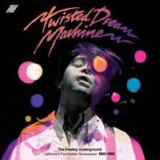
Futurismo proudly present a celebration of the Paisley Underground scene with TWISTED DREAM MACHINE The Paisley Underground / California’s Psychedelic Renaissance: 1982-1986, the next volume in their Altered Vision compilation series.
This collection draws from the neo psychedelic movement that took hold in California during the early to mid 80’s, one that melded the psychedelia, country, garage rock, avant-garde and pop of the 60’s with the DIY ethos of the then burgeoning punk scene, a hypnotic amalgamation of sound that came in staunch contrast to the blown out sonic excesses of the time.
Twisted Dream Machine takes you on a trip from the city to the desert, as the kaleidoscope of noise drifts from the The Dream Syndicate’s Velvet Underground inspired take on Crazy Horse and The Three O’Clock’s chiming baroque powerpop, to Rain Parade’s dreamy Beatlesesque melodies and the Bangles hook-laden Love inspired pop. Also featured are the wondrous sounds of Green On Red, The Long Ryder’s, Game Theory, True West, Thin White Rope and others highly worth your attention. If you are not familiar with some of the bands here, you will surely question how that is possible. The Paisley Underground, if anything, encapsulated a certain musical mindset, an outlook where the past and the future would collide in the moment. This thread would bond the bands, yet each honed it’s own sound in a twisted incarnation of the seeds planted two decades earlier. Whilst the ‘scene’ did remain contained, its influence did in fact spread throughout mainstream culture as the Bangles stuck a chord into the heart of MTV, whilst Prince took inspiration from the movement in his own songwriting and the naming of Paisley Park, as well as signing The Three O’Clock to his label and writing one of the Bangles biggest hits.
As you listen to the tracks on Twisted Dream Machine you will be reminded that there is still music left to discover and inspire, this compilation is aimed to hopefully delight longtime fans, as well as ignite a passion for those new to the bands. The Paisley Underground was the sound of neo psychedelic rock, it was subterranean pop...in
the classic sense, it was alternative rock before the term existed, a distillation of the fundamentals present at the dawn of rock ‘n’ roll, with a twist. The bands of the Paisley Underground may have been writing out of their own time, but as you listen to them in today’s context these songs should be heard as landmarks, rather than throwbacks. After all, nothing this good should stay underground. This 2xLP comes on limited edition coloured vinyl, it is housed in a gloss laminated outer sleeve with colour inner sleeves and contains a large fold-out poster with unseen photos and liner notes by Lisa Fancher of Frontier. Also available on CD with Gloss laminated Sleeve and Fold Out Poster.
WE ARE WINTER'S BLUE AND RADIANT CHILDREN (WAWBARC) is the new quartet of Mat Ball (BIG|BRAVE), Efrim Manuel Menuck (Godspeed You! Black Emperor, Thee Silver Mt. Zion), and Jonathan Downs and Patch (both Ada). On "NO MORE APOCALYPSE FATHER" they present six modal lullabies drenched in seared distortion, slathered across striding electronic pulses. Ball and Menuck began creating music in and for the bleakest moments of Montréal winters: "We're honoring that idea of winter, when you come inside and your house is warm, a place that only exists because of how cold it is outside," says Menuck. They later recruited Downs and Patch to flesh out their initial ideas. Menuck met them in 2015 when recording Ada's final album at Montréal's Hotel2Tango _ where they reconvened to make this record. "NO MORE APOCALYPSE FATHER" is an album about witnessing bleakness from a place of safety. Carrying newfound descriptive depth, thanks to the quartet's open-ended songs freeing him from writing in meter, Menuck likens his lyrics to photorealism. On opener `Rats and Roses' he sings of an unnamed city struck by an unknown cataclysm, but the details are local: specifically, his neighbors inadvertently poisoning birds when tackling a rat infestation. It's backed by blown out synths and guitars reaching a soaring crescendo. "Seeing things from a distance and not being able to intervene happens a lot on the record," Menuck explains. "If you're a feeling and thinking person, that's just part of the human condition. We watch horror unfolding from afar, unable to do anything concrete to change it." A powerless witness, able to describe but not intervene. `Dangling Blanket From A Balcony (White Phosphorous)' references Michael Jackson holding his child over a hotel balcony in 2002_the bizarre media spectacle still lodged in Menuck's psyche. This and the album's closing track also elegize white phosphorous, a technology of war designed to light up battlefields but capable of inflicting horrific burns on those it touches. Illumination and horror in one, here underpinning scenes picturesque and terrifying. "The last song `(Goodnight) White Phosphorous' is deliberately like a lullaby," says Menuck. "Written from the viewpoint of watching white phosphorous falling outside your window." Scorched and tarnished and laden with harrowing imagery, "NO MORE APOCALYPSE FATHER" is also a record bathed in light: the bewilderment of hopeful spirits witnessing despair, watching a blizzard of distress unfold outside from a place of relative shelter and comfort. You could call that emotional ambivalence, maybe numbness. But those words are too passive for the weight of conflicted feeling resonating through the album. "I never know how I feel on an overcast day when the sun is still bright despite the grayness and the light is very flat. The colours become more saturated, and you see a single flower, say a morning glory, whose colour is so vibrant beneath the gray, I don't know if that's a lovely sensation or a terrible sensation. It's both," says Menuck.
Ltd Edition!
The Mystery Lights return with their most ambitious offering to date. With Wayne Gordon back in the producer's chair, the group delivers an eclectic mix of real-deal psychedelia, punk, art rock, and even a splash of country via the Kinks(y) pop earworm "I'm Sorry I Forgot Your Name". The psychedelic highlights of the album, "Purgatory", "Cerebral Crack" and "Can't Sleep Through the Silence", are dark and trippy, landing somewhere between the guitar-driven, lysergic mayhem of the 13th Floor Elevators and the punked-up, tongue-in-cheek insanity of The Monks. But throughout there's a cohesiveness threaded by the elevated musicianship, earnest lyrics and attention to detail that make for a fiercely raw, yet unabashedly catchy album-dripping with all of the sing along hooks that have made Mystery Lights one of the most exciting live bands on the scene.
Ltd Edition!
The Mystery Lights return with their most ambitious offering to date. With Wayne Gordon back in the producer's chair, the group delivers an eclectic mix of real-deal psychedelia, punk, art rock, and even a splash of country via the Kinks(y) pop earworm "I'm Sorry I Forgot Your Name". The psychedelic highlights of the album, "Purgatory", "Cerebral Crack" and "Can't Sleep Through the Silence", are dark and trippy, landing somewhere between the guitar-driven, lysergic mayhem of the 13th Floor Elevators and the punked-up, tongue-in-cheek insanity of The Monks. But throughout there's a cohesiveness threaded by the elevated musicianship, earnest lyrics and attention to detail that make for a fiercely raw, yet unabashedly catchy album-dripping with all of the sing along hooks that have made Mystery Lights one of the most exciting live bands on the scene.
- Grow Wild
- Eskimo Song
- Fancy
- Harpers
- Scream Tall
- Country
- Eureka
- Second Skin
- My Favorite People
- Turtle Song
- Hot Day
- Martha
- Halfway Knowing
- 4: Brothers
- Ohio
- Jungle Jim
- Nevermind
- Blue Blanket
- Biding Your Time
- Shaking Your Head
- Simple Song
- Tell The Truth
- Fancy
- Gloria/Angels We Have Heard On High
- The Bathtub Song
- No Goodbyes
- Arms Akimbo
- May This Be Love
- Lie And Forget
To celebrate the 40th anniversary of their formation, Hugo Largo will release Huge, Large and Electric, a three LP set featuring all of the band’s studio output (1988’s Drum and 1989’s Mettle) including a full album of previously unreleased and live recordings (Hugo Largo Unreleased and Live 1984-1991). These albums are long out of print, and will be released on streaming services for the very first time. The set includes essays from Michael Stipe, who produced the band’s debut release Drum, along with Brian Eno and Hugo Largo member Tim Sommer.
Even though it came out on a major label, this record sells for hundreds of dollars if you can find it at all (we know…we paid for a copy), and it’s no wonder… it’s the perfect blend of raw R&B passion and smooth, sophisticated soul production. First, the passion part… Willie Tee was a New Orleans pianist and singer best known for recording a series of burnin’ 45s (some cut for Harold Battiste’s short-lived AFO label) during the ‘60s. I’m Only a Man was Willie’s album debut, cut for Capitol in 1970, and he brought the same deep-seated intensity to the record that he did his singles. The difference was, for I’m Only a Man, Willie’s warm, raspy voice was lovingly bathed in spectacular arrangements by H. B. Barnum and produced by the great David Axelrod. Strings, brass, xylophone, bluesy guitar licks, and a funky rhythm section are all percolating inside this record’s grooves, with a daring choice of material that ranges from Cannonball Adderley’s “Walk Tall” to the Bacharach-David nugget “Reach Out for Me” to the self-penned highlights “Mirror” and “Bring On the Heartaches” to the album closer “People” from Funny Girl. Capitol wasn’t known for breaking soul acts at the time, which may explain why this record remains a cult classic; we’re happy to give it the exposure it deserves, with a purple vinyl pressing limited to 1000 copies.
Satan’s history is storied, their albums and incendiary live shows, iconic. The Newcastle, England-bred lineup may quip that their career has been “44 years of prolonged mayhem with a 20-year lunch break”—forming in 1980, eventually pausing before reuniting in 2011—but circa 2024 finds the band thriving, writing, recording, and touring at the top of their game. Proof positive is their seventh studio album, and third for Metal Blade, Songs in Crimson. If 2022’s Earth Infernal album was brutal, up-tempo and with loud guitars, guitarist Russ Tippins calls Songs in Crimson “concise. It’s more to the point and gets there quicker. One of the reasons behind the title Songs in Crimson is that this record is very ‘song’ focused. There’s more punch this time around. Each chorus speaks for itself.” An eminently relatable song is “Era (The Day Will Come).” “There is nobody on this planet who is not familiar with the feeling of loss. When you get to the age we are at in this band, it becomes a weekly occurrence. If there is a message in the lyrics, it is pretty much ‘do not take anything for granted.’ Especially people. You just don’t know what is around the corner that you can’t see coming.” Satan’s chemistry, honed by years of collaboration, brotherhood and love, is unbreakable. “We played at a metal festival where the headlining band had zero original members,” Tippins says. “I cannot get my head around that, though I admire their bravery. We are the genuine article.” To be clear: “We did not reunite just to trade on past glory,” he concludes. “If you want nostalgia, this is not the band for you. We look only ahead and always will.”
Formed in 1995 in the small Swedish city of Mariestad by key players from Sweden's legendary hardcore scene, Wolfbrigade (known as Wolfpack until 1999) remain among Scandinavia's most respected, influential and reliable purveyors of real-world brute-force hullabaloo. On this eleventh album, the niftiest skills honed to a fine edge over 30 years are dispatched with greater style and intensity than ever.
Smutty Edits is the brainchild of Jeroen Van der Smut, a music aficionado who after indulging himself in kilos of Gouda Cheese, Fritjes with Mayo and Ban-cakes, left Amsterdam over 30 years ago for Anjuna Beach in India. Jeroen quickly got into Raving in the world of Goa Trance and electronic music. However, his love for Disco, Synth-Pop, and New Wave, where his musical journey began, brought him back to his roots. This passion led to the creation of Smutty Edits, as he decided to release carefully chosen edits from some of the most talented artists in the industry.
This first 12” features contributions from renowned artists who have left an indelible mark on the music scene. These collaborations ensure that each edit is of the highest quality, maintaining the integrity and spirit of the original tracks while adding a fresh perspective.
With occasional trips to Europe to reconnect with family and old friends, Jeroen remains deeply rooted in his heritage while continually seeking out new musical inspirations. Smutty Edits is set to release a series of records, each showcasing the label’s dedication to quality and innovation in Italo, Proto-House, Synth-Pop etc
Through X Scroll Era, Gabo Barranco, aka AAAA, conducts a rigorous overhaul of the aesthetics and statements of low-profile IDM, trance, and progressive-acid music typical of the early 2000’s. In addition to this inherent and undeniable veneration for the era, the pieces on this album — which originated from recordings and experimental exercises with gear and accidentally became an album — serve also as a kind of retrospective inspection of Mexico City's suburbs (Lomas de Sotelo), with landscapes full of indiscriminate concrete, highways of two and three levels, factories, and parking lots that have supplanted nature with their own detached beauty. It is a sound memory, a specific melancholy that praises skate squads of the area, friends from the past, parties, and substances. It reviews the decline of rave culture but also its resilience and capacity for transformation. What AAAA offers us with X Scroll Era is an almost multigenerational soundtrack, a memory that feels collective and recollects euphoria, ecstasy, and nostalgia.
After several LPs and EPs (Acid Test, Omnidisc, Janushoved) and several years active in the dance and contemplative electronic music circuit (MUTEK, BERGHAIN, iii Points, RBMA), X Scroll Era is the first album by Gabo Barranco, aka AAAA, published on the Mexican label Umor Rex.
"With their third full-length, Washington, D.C.’s Bad Moves have expanded their founding artistic identity — a candy-coated guitar-pop shell surrounding a bitter lyrical core — by refracting their ideas through a new set of musical forms that weaponize repetition. On the new Wearing Out the Refrain, recorded once again with producer Joe Reinhart (Hop Along, Algernon Cadwallader), Bad Moves propose that the flip side of the delirious harmony of the basement show singalong is the volatile, accusatory antiphony of a community divided by strain, shouting the same desperate hook back and forth at one another.
Bad Moves’ tag-team vocals, which forgo centering anyone one member, also let the traditionally confessional “I” become the “we” of a community, or generation. Witness the ambitious climate change metaphor of “Eviction Party,” which understands the union of sugary pop and genuine angst embodied by 1960s girl-group songcraft, and uses it to expand a personal story to planetary scale. “It’s my eviction, I’ll cry if I want to” Bad Moves shouts, channeling the dawning millennial midlife crisis. The personal may be political, but what if both feel weighed down and trapped in circular, inescapable ruts?"
"Kal Marks have never made a record as personal as Wasteland Baby. Though Carl Shane, the band’s vocalist-guitarist, has made a career off of exploring blunt, uncomfortable truths through song, with Wasteland Baby, he steered Kal Marks toward something utterly new. Shane looked inward to stare down a fear that had long plagued him: What would it look like to have a child in a world that looks like this? “The album was driven by the fears I’m having about being a father,” says Shane. “The initial spark was this fear, and I thought that maybe if I could express it, I could overcome it.”
What started out with this simple premise slowly grew into a sprawling, borderline-concept record. It’s no surprise, then, that Kal Marks went deeper and darker than ever before when writing Wasteland Baby. Though, in order to reach that final product, it required the band—bassist-vocalist John Russell, drummer Adam Berkowitz, and guitarist-vocalist Christina Puerto, who is also Shane’s partner—to interrogate every decision they made with exacting detail. ”We were really all on the same page in that we wanted to make something really, really special and that was going to require us putting a lot of ego aside and just trying to serve the songs as best as possible.”
“In an ideal world, Kal Marks will go on forever. But it may be the end of a chapter for a while. I don’t want it to be the end, but there was an element running through the album that maybe could be the end,” says Shane. No matter what the future holds, Wasteland Baby is an emphatic reminder to brush off the things that keep you from truly living and venture into the unknown."
LA-based singer-songwriter Lily Kershaw returns with Pain & More, her new concept album that is a collection of exquisitely heartbreaking, proof-of-life ruminations about existing behind a pall of melancholia. Collectively, they feel like a lifetime of repression, suddenly liberated. Central to Lily’s narratives is the idea that others will probably relate to, or benefit from, her pain. Humbled yet highly melodic, the facetiously named Pain & More is an emotionally tactile album that confronts the many incarnations of the prolonged, persistent depression that has shrouded Lily’s life for decades. It may be her third full-length, but it’s her defining moment -- a vivid, if sometimes uncomfortable, whirl of the angst and hope.Lily released her debut album Midnight In The Garden in 2013, featuring break-out single “As It Seems.” The album scored millions of streams and critical acclaim, and in the following years she landed multiple syncs on shows like Criminal Minds, Grey’s Anatomy, Finding Carter, Ted Lasso and more. She followed it up her 2018 EP Lost Angeles and her 2021 sophomore album Arcadia, which received acclaim from Nylon, American Songwriter, Vulture, Earmilk, Refinery29, CNN and more. Along the way, Lily cut her teeth on tours alongside Radical Face, Mason Jennings, The Weepies, and Joshua Radin, to name a few, and today has amassed more than 80 million streams.
- In A Deserted Landscape (Read By Richard Hamilton)
- In A Little Hotel By The Deserted Sea (Read By Dieter Roth)
- In A Little Hotel By The Deserted Sea - A Landscape (Read By Duncan Smith)
- In A Little Hotel By The Deserted Sea - A Landscape Excerpt (Read By Richard Hamilton & Dieter Roth)
- Die Grosse Bockwurst (Read By Richard Hamilton, Dieter Roth & Friends)
Recital presents an artists’ record from the two giants Richard Hamilton and Dieter Roth. Hamilton (1922-2011) is revered as the father of British Pop Art as both theorist and practitioner, in addition to famously designing the artwork for The Beatles’ White Album. Dieter Roth (1930-1998) was a Swiss German artist who blithely ignored all artistic boundaries and aesthetic dictums. His oeuvre includes hundreds of artist books, almost half a thousand prints, sculptures, multiples and records, all balanced between magnetic playfulness and self-deprecating paranoia. Roth also ran his own record/book press Dieter Roth's Verlag and was a major force in the reckless improvisational music group Selten Gehörte Musik (1973-1979).
The two artists most significant collaborations happened between 1976 and 1978, beginning with a series of 74 paintings in which they reworked each other’s art. The paintings were made for an exhibition for dogs (as suggested by the late Marcel Broodthaers, to whom the works were dedicated) in Cadaqués, Spain. Hamilton and Roth then produced the catalogue Collaborations of Ch. Rotham with reproductions of all the paintings alongside four brilliant new collaborative texts. The narrative of the texts sprung from the “fairy story” (Hamilton) quality that emerged from these dog paintings – a hallucinatory tapestry of sausages, gestating giants, Sancho Panza, Don Quixote, and a donkey. Together they gallop, humorous and beautifully absurd, across the wild field of an imaginary seaside backdrop with endless garbled iterations of ever-mutating names riddled with mad typos.
For these recordings the individual texts were read by Roth and Hamilton, actor friend Duncan Smith, and a huge cast of British artists for the final play Die Grosse Bockwurst, performed at the Whitechapel Gallery in London in 1977. The recordings were first released on cassette on the Audio Arts label in 1978, and have now been remastered from the original ¼″ tapes for this double vinyl edition.
Also included are two booklets: one is a new essay written for this edition by artist and co-producer Malcolm Green (Red Sphinx, Atlas Press), alongside full reproductions of the Roth / Hamilton collaborative Ch. Rotham texts. Thanks to Björn Roth, Rita Donagh, Hansjörg Mayer, William Furlong, Tate Modern, and Hauser & Wirth.
Limited edition double-vinyl record of 300 copies in full color gatefold sleeve with over 70 minutes of audio recordings. Including two booklets: a 16-page new essay on Roth & Hamilton by Malcolm Green that includes new Roth translations, and a 20-page complete reproduction of the collaborative Ch. Rotham texts.
Clear Vinyl[30,67 €]
Spectres have been stirring in the shadows for years now. Dark eyes watching from pallid faces. Siren songs calling to lost souls. In the blackest corners of the UK underground, a name whispered relentlessly amongst the faithful, first with curiosity, then soul-shuddering awe: Zetra.
Zetra is also the title of their striking debut LP. Ten tracks whose indefinable blend of shimmering shoegaze and pulsating goth-metal work deep beneath the skin, it is a masterclass in intimate dark romanticism and sweeping elemental beauty. It could be seen as a reaction to the geography of a strange new world, but also to the jagged topography of the human psyche itself. Is it a manifesto? A roadmap? A riddle waiting to be solved? Profound pleasure lies in peeling back its many layers.
Travelling alone, armed only with synths, guitar and drum-machine to compose, The Wanderers’ music could sound skeletal. Instead its early metallic bones have been fleshed-out with the electronic new-wave of Gary Numan and Pet Shop Boys and dreamy, droning guitars that hark to heroes like Slowdive and Sonic Youth as well as dark contemporaries Deafheaven and Alcest. As harsh as the truths with which they deal may be, these songs deliver beguiling brilliance.
Acolytes to spread the word of Zetra aren’t hard to find. British ‘contemporaries’ like Burner and Wallowing, Celestial Sanctuary and Employed To Serve have been dementedly singing their praises as far back as they can remember. Tours with the heavyweight likes of Creeper and Godflesh, VV and SKYND have taken their once-subterranean sounds into the spotlight. Unto Others’ Gabriel Franco (‘Moonfall’), Svalbard’s Serena Cherry (‘Starfall’) and Sólveig Matthildur Kristjánsdóttir from Iceland’s Kælan Mikla (‘Shatter The Mountain’) even crop up amongst these recordings, dissolving into the cult of Zetra themselves. But none are as important as the legions of fans Zetra are yet to reach with a dark gospel still unpicking all manner of psychological knots and existential truths.