- A1: Bill Haley And His Comets - See You Later Alligator
- A2: Elvis Presley - That's All Right
- A3: Buddy Holly And The Crickets (2) - That'll Be The Day
- A4: Fats Domino - Ain't That A Shame
- A5: Chuck Berry - Roll Over Beethoven
- A6: Everly Brothers - Wake Up Little Susie
- A7: Little Richard - Long Tall Sally
- A8: Jerry Lee Lewis - Whole Lotta Shakin' Goin' On
- A9: Chuck Berry - Maybellene
- A10: Elvis Presley - Hound Dog
- B1: Bill Haley And His Comets - Rock Around The Clock
- B2: Chubby Checker - The Twist
- B3: Elvis Presley - Jailhouse Rock
- B4: Jerry Lee Lewis - Great Balls Of Fire
- B5: The Shirelles - Will You Love Me Tomorrow
- B6: Bobby Vee - Rubber Ball
- B7: Neil Sedaka - Calender Girl
- B8: Roy Orbison - Only The Lonely
- B9: Elvis Presley - All Shook Up
- B10: Frankie Lymon & The Teenagers - Why Do Fools Fall In Love
Cerca:may b
For years, Rhythm Buro and Zadig have maintained a special relationship. The French DJ and producer (real name Sylvain Peltier,) became involved with the Ukrainian institution when he headlined their first party in Kyiv back in 2014. In the few years since, both Sylvain and Rhythm Buro have developed into strong international brands that have become well-known and trusted. They are thus ready to present another form of collaboration: Zadig's debut record on the Kyiv-based label. "Takara-machi" EP is the sixth release in Rhythm Buro's catalogue, following previous releases by Haze, Na Nich, Cyspe and a few VAs on the imprint.
RB006 is particularly notable for its sonic diversity. Zadig, often known for his uncompromising and hard-hitting techno ventures, explores a deeper musical side here, and delves into his wide range of influences and inspirations. A good example of this is found in the manga series "Amer Beton", with the excellent soundtrack by Plaid, hence the Japanese name for the record's title track. At least three of the six tracks on the record follow this influence precisely and are rather cinematic: these are A and B sides' closing tracks; "Shores of Sorrow" and "Kuro & Shiro". Both of which play to a certain dreamy ambient field. The title track on B2 exemplifies Zadig's passion towards an old-school 100 bpm-ish tempo.
And then there's the more dancey side of the record. The EP's opener, "No-face" on A1, and its following tune on A2, "What We Become" are both a clear take, albeit more modern, to classic Detroit techno. Rich with melodies and 909 patterns, both A1 and A2 are conscious in their reference to Detroit, and pay homage to the master minds that spawned the genre in their studios 30 years ago and started it all. The B-side's opening track is another dance floor friendly stomper, although in a different way: "A World of Children" may be best labelled as "slower-electro". Its synth-heavy, almost naive essence, describe its name perfectly.
Despite its aforementioned diversity of sound and tempos, Zadig's "Takara-machi" EP still possesses and maintains a unique commonality and voice across the spectrum. It is dreamy, it is soulful, it puts substance over form. In other words, it has something the vast majority of today's techno palette is missing. Rhythm Buro doesn't miss the mark in unearthing and releasing pure quality for those who know and care.
The blending of Don and Phil Everly’s voices is truly one of the great sounds of post-war American popular music. Derived from Folk and traditional styles brought to the USA via immigrant communities, their seamless vocal harmonies had its precursors in mid-twentieth century duo / family Country music acts such as the Louvin Brothers, Delmore Brothers and many others. The Everlys, however, were able to bring the fraternal harmony approach into the mainstream pop market of the late 1950s by dint of their youth, good looks, and that other, far more elusive quality – timing. Recorded for the Cadence label in Nashville in 1957, their first album “The Everly Brothers” features the singles “Bye Bye Love” (US # 2, UK # 6) and “Wake Up Little Susie” (US # 1, UK # 2). Issued in a faithful reproduction of the original LP sleeve, the inner sleeve features annotation by Alan Robinson. The record is pressed on 180 gram white viny
Delroy Edwards keeps the old school fire burning, returning to L.I.E.S. with a new 8 track lp titled "Slap Happy". Once again this is back to basics, no punches pulled Chicago House worship, hitting all ends of the dance specturm. Sparse beat tracks, 80s synth stabs, 727 latin percussion...the elements are all there and put together in perfect form...many try but few can execute the vintage sound like this. What may even be Edward's most mature release, it comes in a time when the roots of dance music have been forgotten to the grotesque trends of the day. This is a reminder of why we were drawn to this music in the first place and what it can sound like.
Container is the project of American noise veteran Ren Schofield, originally from Providence, Rhode Island, and now based in London. Container first appeared at the turn of the decade with a slew of freakish tapes for various small labels. In wake of thesereleases, Editions Mego offshoot Spectrum Spools –run by old friend John Elliott of the band Emeralds –took the punt to release his debut LP, a collection of mutated Techno tracks simply titled ‘LP’.
The record gained attention quickly in the Electronicmusic scene largely thanks to Schofield’s unique production style that separates him from forms of conventional dance music. Whilst the music of Container sits perfectly fine within the genre and is functional enough to blow apart the walls of any club, years on the US noise circuit have given Schofield’s brand of techno a rawness and direct intensity that stands out in the club and crosses over into other sub-sections of the underground.
His modest set up of Roland MC-909, a four-track porta studio and anarray of pedals allowed him to hone his scuzzy and bewildering beat music over the years, leading to three more well received, and literally titled, LP’s. Over this time period Container also released some EPs on Morphine, Liberation Technologies and Diagonal, did a variety of remixes for acts likeFour Tet, The Body, Panda Bear and Fucked Up plus maintained a healthy touring schedule that reached over every continent.
His exhilarating live show has hit pretty much every major electronic music festival andclub in Europe, as well as tours and gigs with a diverse range of acts such as Wolf Eyes, Zola Jesus, Daughters, Pharmakon and Ryley Walker.Almost a decade since his debut, Container arrives on ALTER with his first non-”LP” titled album called ‘Scramblers’. The title taken from both a Baltimore street drug and a Rhode Island Diner he used to eat at with his father.
Schofield elaborates: “The juxtaposition between these two Scramblers is a great one. I wanted to pay homage to a nice name that lends itself to both depraved and wholesome contexts and do my part to carry on the tradition.” The eight tracks have their origins in live performance and a more high-octane delivery is noticeable when compared with previous Container albums.
‘Mottle’ sits in a mysterious zone between the productions of EVOL and early Ruff Sqwad. Fierce electro cuts like ‘Trench’ and ‘Nozzle’ work alongside the nauseous slink of ‘Duster’, which in typical Container fashion morphs into a frenzy in no time.
A frenzy which may be linkedcosmically to the fact that ‘Scramblers’ was recorded, mixed and mastered in one day, reinforcing further his unorthodox and fun approach to club music.
The long standing and hugely respected label and events company Astropolis welcome Blutch for a new single that comes ahead of his debut album on this same label later in 2020, and includes a remix from Michael Mayer.
Blutch has had numerous releases on the likes Nowadays, Dance Around 88 and Délicieuse Musique, has collaborated with heavyweights like Terrence Parker and Red Rack’em and has received support from NTS and Radio 1. He is a respected talent in France and deals in classy electronica that blurs the lines between dream states and reality, and the forthcoming album will be presented as a gripping audiovisual tale with the help of video maker Romain Navier.
First up here is expressive techno masterpiece ‘Beau Rivage’ which soars on supple synth lines and elastic drum programming. It’s elegant stuff awash with melodic beauty and emotion. Single, ‘Compétition’ which gets an early release on December 18th is another excellently mature and musical track with symphonic synths reaching to the heavens and colourful arps lighting up the uplifting grooves. ‘2014’ is driven by vast, pounding and cavernous drums, with distant vocal harmonies bring an angelic feel to the celestial synths and chords. The final vinyl-only original is the brilliant ‘La Cité Des Etoiles’, which is layered up with pixelated leads, soft chords and found sound percussion samples that fire your every synapse.
Remixing is Kompakt label boss and one of the most revered names in electronic music, Michael Mayer. He flips ‘La Cité Des Etoiles’ into deeply rooted techno that is riddled with claps and synth lines that bright real light. Buy the digital version and we’ll also get the added bonus of ‘Vorlen’, which again brims with fantastic synths, chords and sorting grooves.
This is a fantastic package that more that whets the appetite for the forthcoming album.
- A1: La Comtesse Noire (Thème)
- A2: La Mort À La Bouche
- A3: Vox Intima
- A4: Eromantic Jazz
- A5: La Comtesse Noire (Reprise)
- A6: Eromantic Lounge
- A7: La Comtesse Noire (Reprise #2)
- A8: Piano Romantique
- B1: Des Frissons Sur La Peau (Thème)
- B2: Des Frissons Sur La Peau (Instrumental)
- B3: Des Frissons Sur La Peau (Instrumental #2)
- B4: Des Frissons Sur La Peau (Piano)
- B5: Virée Nocturne
- B6: Des Frissons Sur La Peau (Suite Pianistique)
- B7: Ça Tourne!" (Chutes De Sessions)
The Omega Productions Records is proud to present you the Female Vampire (La Comtesse noire • 1975) and Tender and Perverse Emmanuelle (Des frisson sur la peau • 1973) original motion picture soundtracks, composed by Daniel J. White.
Released in Paris on May 7th, 1975, Female Vampire is one of the most iconic films of director Jess Franco. stakhanovist Daniel J. White, who became popular in 1965 with the score of the Belle and Sébastien series, composed the soundtrack of this Eurociné production at the age of 59.
At a time when sound experimentation is in the spotlight among many musicians for the pictures, Daniel J. White takes the opposite to offer two scores mixing a classic compositional obsolete with, however, many atonal and jazzy influences. He composed for Female Vampire one of his most famous themes and repeated many times in innumerable productions stamped Eurociné (Zombie Lake, Oasis of the Living Dead).
With strong Italian influences (like Bruno Nicolai, also a favorite composer of Jess Franco), the Tender and Perverse Emmanuelle soundtrack is the straightforward stylistic continuity of Female Vampire, offering unparalleled melancholy lyricism.
From the great Daniel J. White: an inevitable classic Italian thriller lovers. - We offer you in conclusion, an unpublished suite formed of the musician’s session falls during the recording of these two
original tapes.
- A1: Big Michael
- A2: Audacity (Feat Headie One)
- A3: Crown
- A4: Rainfall (Feat Tiana Major9)
- A5: Rachael's Little Brother
- A6: Handsome
- A7: Do Better
- A8: Don't Forget To Breathe (Feat Yebba - Interlude)
- A9: One Second (Feat Her)
- A10: Pop Boy (Feat Aitch)
- A11: Own It (Feat Ed Sheeran & Burna Boy)
- A12: Wiley Flow
- A13: Bronze
- A14: Superheroes
- A15: Lessons
- A16: Vossi Bop
The hugely anticipated second full length album from the incredible Stormzy.
Following the release of Gang Signs and Prayer, his award-winning, platinum-selling debut album, Stormzy may no longer be stepping between the street and the sermon, but he’s still walking between two worlds: that of the celebrity and of the Everyman. His desire to stay grounded is evident; as his career continues to soar, he seems more and more determined to help others reach new heights of their own.
Das Dessauer Harzfein-Kollektiv meldet sich mit der ElectroEP "Phasen und Frequenzen" zurück. Die 6 Songs zwischen
klassischem Electrofunk, Breaks, 808-Trap-Beats, VocoderVocals und Scratches sind in Zusammenarbeit von DJ Magic
Mayer mit Magnetic Bass Force, Chris Bert und Selecta Ras
entstanden. Seit 1992 ist Harzfein ein Netzwerk kreativer
Akteure aus verschiedenen musikalischen Genres des HipHop.
Ein Großteil dieses Netzwerks zählt bereits seit Beginn der
1980er Jahre zu den Pionieren der HipHop-Kultur in der
ehemaligen DDR. Seit 1994 veröffentlicht Harzfein in immer
wieder unterschiedlichen Konstellationen Schallplatten als
Beleg einer stets lebendigen Idee: sich gemeinschaftlich
musikalisch frei ausleben und ausdrücken zu wollen.
First Word Records is incredibly proud to present 'Starts Again', the debut album from Tawiah.
The latest signing to the Worldwide Award-winning indie label, Tawiah is somewhat of a trailblazer in the world of alt-soul. Despite this being her debut album, she's long-established in the UK music scene, having previously self-released two EPs and a mixtape, as well as high-profile collaborations with Cinematic Orchestra, Blood Orange, Mark Ronson, Kindness, Cee-Lo, Wiley, Zed Bias and Eric Lau. Additionally being championed by the likes of Zane Lowe, Gilles Peterson and The Guardian, and supporting Moses Sumney on his recent EU tour, it's finally time to unleash a full solo project into the world.
'Starts Again' is an exploration of her identity as a queer woman of colour, raised in a pentecostal family, and a determination to express her musicianship in all its raw glory, free of the constraints of major label wrangles from before.
Co-produced with Sam Beste (Hejira), the album also features vocals from Sharlene Hector, Vula Malinga, Ladonna Young, Ade Omotayo and Rahel Debebe-Dessalegne, as well as glorious string arrangements composed by Miguel Atwood-Ferguson, with a series of field recordings from Ghana, amongst the varied components.
In Tawiah's words; "the process of creating this record independently has taken years!! From self-produced demos to live recording sessions with my good friends; Blue May, Sam Beste, Alex Reeve, Alex Bonfanti, Nathan Allen and Lewis Wright. Sam and I then had two years of long joyful studio sessions working on the post production. With no external deadlines or briefs we had the freedom to create whatever came. It was a privilege to collaborate in this way".
A triumphant 10-piece opus, the music seamlessly blends avant-garde sensibilities with low-slung beats and layered harmonies. The vestiges of Tawiah's early church vocal training contrast subtly against a distinctive South London accent, which has helped place her firmly at the vanguard of the British alternative soul movement, and establish a rep as one of the country's most exciting live performers. Time Out even saying "she slays so hard, you better hope there's a doctor in the house".
With a series of immersive live shows being planned in collaboration with spatial artist, Studio Myrrh, the latter half of 2019 headed into 2020 is looking to be a busy time for Tawiah. A decade on from her debut EP, 'Starts Again' is a creative reset of-sorts, though she is already highly revered within the music industry. A unique talent, this debut album should rightly cement her status as one of the UK's finest recording artists and songwriters.
Canyons are places of mystery and beauty. The interesting thing is, while they are one of the great wonders in the history of planet earth and attract scientists of all kinds of disciplines, they have also been a popular retreat for artists and musicians. You will have heard of Topanga Canyon, Rickie Lee Jones and Chicago recorded here. Laurel Canyon is even more well known, a mythical place where Crosby, Stills & Nash developed their unique vocal sound while hanging around Mama Cass' place. Or was it in Joni Mitchell's house on Lookout Mountain? Ok, you get the picture. There is something unexplainable, almost magical going on in canyons.
Maybe that's why Andy Platts and Shawn Lee were thinking of "Canyons" when they wrote and recorded their third album as Young Gun Silver Fox. With "West End Coast" and "AM Waves" these two very talented musicians, singers, songwriters, arrangers and producers already explored all things Westcoast, AOR, Softrock and Boogie. But - especially if you are a into the golden age of this sound running from circa 1976 to 1984 - you will be aware that there is no return once you started digging these unconditional musical delights with their timeless compositions, untouchable musicianship and refined arrangements. The great albums from that era appeared when punk broke and the musical establishment was shaken to the ground. Today they sound more up to date than ever. Who would have thought back then?
On "Canyons" Young Gun Silver Fox turned it up to eleven. They are nothing but "Kids" cruising in the fast lane, totally over the top searching for the "Dream Woman", touching down in Tokyo caught in a "Long Distance Love Affair", imagining the theme for a lost 70s TV series starring "Danny Jamaica", being on the winning side in a "Private Paradise", getting deep and soulful in "Things We Left Unsaid" and wondering how to spread "All This Love". Their bass lines, sound layers, brass arrangements and harmony vocals are immaculate. Everything fits perfectly. Just like this. "Who Needs Words" when everything is crystal clear? Exactly!
"Canyons", after all, are magical places of rare beauty. (Mr. Mellow - Porcaroc Club/Mr. Mellow's Sunday Scene/Soho Radio).
Eastwood Rides Again follows the theme of Lee ‘Scratch’ Perry & The Upsetters previous classic, Return Of Django - and like that one, the groove isn’t just the rocksteady rhythms you’d expect – but also maybe this more spacious version of the style. They got their funk on with the inspiration of Spaghetti Westerns and soul music. The record is largely instrumental and it's a representation of Perry’s significant production skills. Lee ‘Scratch’ Perry was a pioneer in the 1970's development of dub music and worked together with artists such as Bob Marley and the Wailers, The Clash and The Beastie Boys. Nowadays he’s still performing and recording music.
A member of popular techno trio Agents of Time, Italian artist Fedele goes solo AF on his Turbo debut, No Mercy for Beginners. Against the backdrop of a nightmare international tour experience, Fedele channeled his negative feelings away from people and into creating darkly euromotional dancefloor catharsis. Try it sometime.
Sharp-eared lovers of listening may notice that lead track “Riot Revolte” purloins the loin jewels (the street-tough vocals) from Tiga’s 2004 classic, “Pleasure from the Bass.” DJ Hell noticed the shit out of this, introducing a mutant variation on the PFTB baseline into his lurid after-hours remix. Moreover, the entire EP recalls the legendary run of killer electro records that kicked off what many, many people refer to as Turbo’s Silver Age in the early-mid 2000s. This may be utterly meaningless, or it may herald the coming era of compressed cyclical time that will dictate dance music taste in the 2020s with the sort of mathematical precision rarely found outside pie chart software. Either way, you heard it here first.
Underrated drummer’s 1965 album. His debut solo album and one of only two Blue Note albums as leader (the second emerged in 1997).
Recorded at the Van Gelder Studio on 19th May 1965 Featuring Blue Note legend Joe Henderson on tenor, Steve Kuhn on piano and Steve Swallow on bass.
Showcasing three fine La Roca originals (the title track, ‘Candu’, ‘Tears Come From Heaven’), Steve Swallow’s ‘Eiderdown’ and interesting takes on the standards ‘Malaguena’ and ‘Lazy Afternoon’. Produced by Alfred Lion Includes a famous Reid Miles cover, plus photography by Francis Wolff and liner notes by Ira Gitler
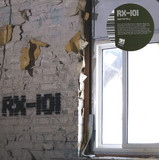
RX-101 has quietly been making waves in the IDM/electronic music underground for the past few years, through a series of archival releases — material recorded in the late-90s, but previously unreleased until Suction Records began compiling and releasing these records in 2016. What’s truly mind-boggling about RX-101’s output is the sheer quantity of stunning, top-drawer material that Dutch producer Erik Jong recorded over the period of just 3 years, 1997-1999. Many have suggested that the whole thing is a publicity stunt — some insisting that this is all new material masquerading as vintage, while others have proposed that the material may in fact be a secret alias for Aphex Twin to release gems from his own legendary ’90s audio archive. RX-101 has absolutely nailed the sound, and quality, of early-90s AFX/Rephlex, that much is true. “Serenity,” this latest full-length RX-101 release, is no exception.
Just as RX-101’s last album, 2019’s Dopamine, concentrated on one hallmark of Aphex Twin’s sound — the smooth melodic techno of his Selected Ambient Works 1985-1992 LP — so too does Serenity reference another classic early-Aphex era, but this time it’s a completely different beast. Don't let the title fool you - Suction Records' latest dive into RX-101's 1997-1999 tape archives is not all lush, serene melodies. On Serenity, scorched, crunchy jackhammer beats combine with emotional, plaintive pads, delivering a classic set of vintage-Rephlex-style bliss, à la AFX, Caustic Window, and Cylob. It was Cylob who coined the term Industrial Folk Songs for his classic 1995 LP, and that release is clearly a blueprint for RX-101’s latest collection.
Standout cut Hearts Utd., featuring a stunning music video by Aidan Fantinatto and I Dream Of Wires’ director Robert Fantinatto, not only nails the magic of AFX’s trademark, irresistible jackhammer-beats-meets-plaintive-melody device, it arguably rivals the master at his own sound. As a whole, what could be a harsh and monotonous collection is lifted by RX-101’s subtle diversity and skill, particularly in his ability to create eerie, evocative moods, with gorgeous melodies that speak volumes of emotion.
At home, in the islands of Cabo Verde, there was grog, or grogu, a strong sugarcane moonshine not dissimilar to Colombian aguardiente, copiously consumed at Funaná parties. In the diaspora, in Europe, there was leite quente (hot milk). "I can still remember the taste of the first leite quente I drank in Lisbon," says Antonino Furtado Gomes, Pilon's drummer and current band leader.
Synthesize the Soul, Ostinato Records' second compilation, revealed chapter one of the Cabo Verde cultural story in Europe, zooming in on visionaries like Paulino Vieira who made Lisbon the headquarters spearheading the musical revolution taking place within Cape Verdean emigre communities across Europe in the 1980's. Musicians from across the diaspora would eagerly travel to the Portuguese capital to record.
Grupo Pilon represents the second chapter of the Krioulu diaspora story. In smaller pockets, second generation musicians were independently contributing to one of the most lush periods of cultural innovation by immigrants in Europe. In Luxembourg, in 1986, a group of teenagers formed the largely unknown (outside of Cape Verdean circles) but consistently brilliant band named after the blunt instrument used in the islands to pound corn for Cabo Verde's national dish, cachupa.
With only five members, Pilon combined searing estilo Krioulu drumming and the hybrid ColaZouk style with blissful synth work and rugged guitar licks, creating a stripped-down, addictive sound that masterfully straddled two worlds, a seductive electro-Funaná carnival born from the first few sips of hot milk.
The band drew from the inspiring political changes of the day: the release of Nelson Mandela in South Africa and the fall of the Berlin Wall. The right to democracy became a constant theme in Pilon's songs.
With access to better opportunities than their parents' generation, Pilon's roster were part time musicians. Music was not part of their academic upbringing nor a full-time gig. Their rhythm and style were wonderfully imperfect, made out of rawer skills and inexperience. Pilon did not follow the templates established by revered Cabo Verde bands. Keyboard player Emilio Borges played off beat and the band preferred arranging their songs to start from the beat normally heard in the middle of a composition rather than the beginning.
These two elements made Pilon's music simple, unique, and inimitable. From 1997-2015, a lack of concerts and professional musicians proved near fatal. Today, Antonino and what remain of the original quintet are slowly piecing back together the puzzle of their once mighty outfit from an unlikely pocket of Europe. In it's heyday in the 90's, Pilon serenaded audiences in Paris, Lyon, Marseille, Lisbon, Rotterdam and Frankfurt, securing their reputation as a respected and unifying cultural force.
This LP, drawing from the six most powerful songs from Pilon's three-album catalog, is the serving of still fresh leite quente to spice the summer and maybe even fuel the next generation of musicians in the Krioulu corners of Europe.
HRDvsion – Stroke implies different things. Different strokes for different folks. Not to spoil, but there is a Luke vs. Darth dynamic here. So let’s just keep it at that. Bring it on Death Star!
Joannes – Ow_kay, Joannes got that Wagwan thang going on. Rolling thunder under the hood, sprinkled with some breaks and reverbed. Yeah, it’s that hands in the air moment. Package includes a big phat breakdown.
Orson Wells – If War of the Worlds had a contemporaneous soundtrack, this would be on it. Electro-breaks, tunnel vision, planets colliding. Do not fear us, we come in peace.
Rydim (Part of ItaloJohnson Trio) – This got that nasty boompty. Think of Derrick Carter remixing Gemini remixing Derrick May. Can I have a bump, to straighten things out? Mit ein kleines bisschen acid?
- 1: The Faltering Sky
- 2: Intrinsic
- 3: Room
- 4: Exit Ghost
- 5: Valse I
- 6: August 2-22
- 7: Shuiyeh
- 8: Berlin 6-11
- 9: White Sun
- 10: Undertow
- 11: Mayerling
- 12: Ferndell
- 13: Alcina
Part II[16,18 €]
Die Cut Sleeve with download. It’s a strange betweenworld, bookended by sleep and the jolt of being wide awake in a place where you wonder how you got there. You know the feeling… It seems familiar but the colours are, well, unreal. In a high-ceilinged room, a grand piano plays lush melodies as, meanwhile, somewhere, an Alice In Wonderland clock ticks, cellos are bowed, a swarm of something vibrates and the hallucinatory crowd around Rosemary’s Baby babble. An echoey electronic hum builds and falls like a 50s refrigerator passed through and effects board, things run backwards, staccato strings are plucked… and that’s not the half of it. “I’ve never been happy staying in one particular school of musical thought. The fun has been turning things on their heads, to try something you were not supposed to do.” We’re on an immersive and adventurous travelogue with the former member of the legendary Tangerine Dream, Paul Haslinger - this is a man who knows how to build tension, hold moods, illustrate contempt, lies, passion and pleasure; He can create fear, loathing and love - he’s been unlocking the nuances of such emotions in a hugely successful career as a TV and film soundtrack composer (Halt And Catch Fire, Underworld and the Golden Globe-nominated Sleeper Cell). ‘Exit Ghost’ is his long thought out opus, a moment caught in time, flicking through reference points, taking an ethereal excursion that permeates musical genres as it becomes awash with intricate sounds and cross-pollinating rhythms. Built originally from the warmth of his grand piano ‘Exit Ghost’ resonates with purity and power, from an eerie and evocative betweenworld, that’s at once expansive and rolling, then intoxicating and suffocating in equal measures; modern composition at its most uplifting; cerebral, celebratory, intense and beautiful. “The soul searching in connection with this record was extensive. Finding places of resonance, giving a colour to your memories. It was more challenging because it’s not somebody else’s narrative. Finding the core of your own story can be the most difficult task of all.” Created over the span of eight years and filled with literal and personal references, the album itself is a testament to the search - a quest filled with hints, particles and suggestions.
Samuel Rohrer CONTINUAL DECENTERING With his Arjunamusic label and a growing catalog of categorydefying releases, Samuel Rohrer continues to quietly, yet confidently, make a name for himself as a genuinely unique Gigure within the European electronic music realm. In the current era, talk of blurring boundaries between musical genres and attitudes is more the rule than the exception, but not always something done with any degree of success. Rohrer is one of those rare alchemical explorers to have truly created a hybrid which is all his own, one that does not just exist to melt distinctions for its own sake, but is a natural result of years of experimentation with both the determination of electronic music and the ludic spirit of ‘free improvisation.’ On his newest offering, Continual Decentering, this vision is applied to a set of mostly in real time (live) performed explorations. In keeping with his many years’ worth of fruitful collaborations, the tonal palette on this new record is one that is expectedly rich for those familiar with his work, yet still surprising in terms of how exactly the differing tonal colors come together. Representative tracks like Spondee and The Fringe are brimming with dub pulses, noir shivers and blooming timbral variations that are in many places carefully isolated / focused and in other places blended together in vivid fusions. In terms of the emotional atmosphere created here, the pensive and questioning tone hearkens back to the ‘wide open’ state of electronic music in the mid-late 1990s, yet with a greater clarity and maturity of vision that makes this music feel like a possible answer to aesthetic questions being raised at that time. As with Rohrer’s most recent solo work, like the Range of Regularity LP, Continual Decentering showcases the artist’s skill in turning the drum kit into a lead instrument. While the term “lead instrument” denotes a kind of exuberant “Glash,” or a clear separation from the rest of the voices in an ensemble, we can take the term to mean something different throughout this listening program of 13 short vignettes: that is to say, everything else within the audible environment exists to complement the character of the percussive playing rather than to stand apart from it. It helps that Rohrer has, in fact, developed a unique and complex hybrid system in which drum hits trigger modular synthesizer processes, the use of which makes for an incredibly fluid response time between distinct sonic events. In contrast to the previous Range... LP, this new offering is propelled less by interlacing threads of intensity and more by a shared sense of deep listening. As displayed on pieces like All Too Human, there is a profound sense of attention to silences or thoughtful pauses that maybe hints at another crucial aspect of Rohrer’s style: over the course of this program, we tend to hear the player not only playing but listening, an activity which makes perfect sense given the sense of instrumental dialogue already mentioned. All of the above come together to give Continual Decentering a “live”-ness that will easily translate from recorded document to dynamic performance.
"Mr Bongo" is proud to present three unique reworks of Kit Sebastian.
Each of the producers featured in this package created their own
interpretation of the 'lo-fi-hi-fi’ originals and have taken the duo’s
sound into bold new directions. When it came to choosing who should remix Kit Sebastian, Natureboy Flako (Flako/Dario Rojo Guerra) was a producer at the top of our list.
Keeping true to the original, whilst leaving his own stamp on the
track, his mix adds break-beat drums and middle-Eastern guitar riffs
that transform the track into a more cinematic piece. It sounds to us
like the music from an exotica dive-bar scene in a David Lynch film -
which of course, is a very good thing.
Producer and DJ Baris K, who was behind the awesome 'İstanbul 70'
series (re-edits of classic Turkish gems), takes ‘Durma’ in a very
different direction. Totally reconstructing the track, his remix has
flipped the original and totally run wild.
The results are an epic left-field electronic workout. By bringing the spoken-word vocals to the forefront and giving the track a darker industrial vibe, it wouldn't sound out of place bouncing around the walls of a Berlin basement club at 5am on a Sunday morning.
The paring of Kit Sebastian and Halal Cool J grew after DJing together
at the alternative Great Escape party at the Mr Bongo HQ in May 2019.
They share a love for dusty old psychedelic Turkish records. Halal Cool J (aka Aly Jamal/Don Leisure) has released records on First World and is a co-member of Darkhouse Family with Earl Jeffers.
For his interpretation he has delivered a mix-tape-collage with a hip-hop aesthetic, and rather than focusing on remixing a specific song, he has cut and paste his favourite elements of tracks taken off the band’s 'Mantra Moderne’ album. Available in 2 limited-edition, hand-numbered sleeve designs.