Following up his recent record on NAFF, Cousin returns to the Moonshoe home front for his latest offering. Introspective and unbound sounds etched into the latest mini disc - delicately staunch cuts that may both pluck at your heart strings and rattle your bones. Recommended connection to the call as it phones home.
Suche:may
This release heralds the launch of a new 7” series from Mr Bongo. In partnership with London-based DJ and digger, Miche, the series will feature his latest discoveries, as well as choice cuts, taken from his 'With Love' compilations. For the inaugural offering, we take a trip to hazy San Francisco, California, in 1977. Smoke, Inc. were an emerging band in the Greater San Francisco Bay area and a regular fixture in the buzzing live music scene. They had a strong following and were in rotation in most of the Bay area clubs, as well as opening for numerous prestigious acts such as Sly & The Family Stone, Taj Mahal, The Pointer Sisters and Toots and The Maytals. Members of the group worked with Jimi Hendrix, Stevie Wonder, Frank Zappa, Martha Reeves & The Vandellas, and many others considered the cream of the crop of the music world.
Smoke, Inc. featured Roy Schmall on keyboards and vocals, Stan Terry on lead vocals and harmonica, Michael 'Ollie' Schotka, on bass and vocals, Keith Stafford on drums and vocals, and Archie Williams Jr on guitar. They went on to release one 12" EP and two 7" singles. One of those 7’s included 'Waitin' For Love’. It was first released in 1977 and came out on the band's own self-titled imprint. It has gone on to become their rarest and most sought-after recording, now fetching up to an astonishing £2,500 on Discogs. It is a breezy, feel-good, modern/crossover soul beauty, with an infectious sing-along chorus, floaty flute solo, and packed with pure, uplifting dancefloor energy. The B-side features a cover version of the Holland Dozier & Holland-penned classic 'It's the Same Old Song’, made famous by the Four Tops.
Miche enthuses, “I included this gem on my first ‘With Love’ compilation and knew that it deserved its own dedicated reissue complete with original artwork. I’m delighted to get the chance to make that happen for this incredible, soulful AOR glide from a band that is well due another round of appreciation. It’s very rare, and consequently very expensive, so here it is for you all to spin and add to your record collections.”
46 years since its original release, it is our privilege to help Roy and the gang’s light shine once again and let a whole new audience relish the beautiful sounds of 'Waitin' For Love'.
Boy Harsher, Portishead, Thom Yorke, Radiohead, Beak>, ERAAS, SUUNS. Over the past seven years, Public Memory's distinctive use of analog synthesizers, electronic beats mixed with organic percussion, lo-fi sound design, and gritty ambience has created a singularly eerie and shadowy world. The first seconds of Public Memory's new record, Elegiac Beat, thrust us immediately into that world. We are in media res, with a feeling of sudden movement from a sensible point A to B. Given some time however, we realize that there is something askew–a bit of brightness here, some shadows pushed aside, some jazz and funk amongst the dub and Krautrock. This is an unfamiliar, ambiguous mood that pushes Public Memory towards new ground. We still drift past the clouded lights and hollowed out buildings of previous albums, but with an occasional bounce in our step now, a bit of golden haze around the edges. First single "Savage Grin" cements this clearly. The track has a jazzy, trip-hop flavor, albeit filtered through Public Memory's narcotic, hazy lens. We could be in a hotel lounge in the alps somewhere on holiday, or out of time in a majestic, sparkling ballroom. But we still have the feeling of being haunted, or perhaps even hunted in some way. This feeling intensifies and comes to a head towards the ever-darkening end of the track, leading directly into "Afterimage", in which someone almost imperceptibly sings "I hear them coming" in a twisted, auto-tuned flail. Second single "7 Floor" begins with flanged drums and damaged synthesizer stabs, evoking a kind of apparition floating towards us in the mist. As the track moves on there is, similarly to "Savage Grin", a contrast in feeling between a cold exterior roaming and an interior, warmer, human place. This time however, we move from the colder to the warmer as the synths from the track's beginning make way for a Rhodes-style organ and backing string synth, infusing an unexpected sense of peace. But like "Savage Grin", the track moves to its end through an in-between place beyond the haze. Faded and distant synthesizers meld with voices–human, or perhaps otherwise–that beckon us, or perhaps warn us. We can't be sure which. Third single "Far End Of The Courtyard" brings us closest to classic Public Memory territory with hip-hop beats, chopped and screwed samples, lo-fi ambience, and ghostly electric pianos complementing the vocals. There is darkness, perhaps more here than in the previous two singles, but with a crucial moment of uplifting lightness so subtle it may be missed upon first listen. As an inverse to both "Savage Grin" and "7 Floor" we end with brightness, the jazzier side of the record pushed to the forefront as the track fades away on that golden haze. In the end though, the haze may be just that: a vapor, a mist, a slight dusting of some other world on top of the degraded one Public Memory so effectively portrays. Elegiac Beat is between two places, and as it straddles the line between the two, we are uncertain if the light it brings shines directly from the sun, or if it is dimly reflected through that majestic ballroom world. For fans of 1990s Bristol trip hop, coldwave, and Thom Yorke's The Eraser
- A1: Michael Mayer - Talmi - 00 05:33
- A2: Jürgen Paape - Iwanger - 00 05:43
- B1: Jörg Burger - Newtro Cinematic Dance - 00:06:16
- B2: C A.r. / Patrice Bäumel - Four Down (Club Mix) - 00 06:39
- C1: Perel - Matrix (Sofia Kourtesis Remix) - 00 06:45
- C2: M A.p.e - Ice Cream Cake - 00 06:48
- D1: Argia - No Concept - 00 05:10
- D2: Gui Boratto - Drink In Paris Feat Lhana Marlet - 00 03:43
- D3: Reinhard Voigt Feat Eduard Weber - Endlich Xxl - 00 04:19
NOTE. WITH THE PURCHASE OF THE VINYL YOU WILL ALSO RECEIVE THE TRACKS OF THE TOTAL 23 DIGITAL VERSION AS A DIGITAL DOWNLOAD. THE DOWNLOAD CODE CARD CONTAINS ALSO ALL TRACKS OF THE CD.
Okay, you’re listening to the 23rd edition of Kompakt’s annual compilation series TOTAL… hold on… 23??? It’s impossible to look at this number without thinking of William S. Burrough’s Captain Clark anecdote, the Illuminatus trilogy and the Justified Ancients of Mu Mu. But don’t you worry, we’re not giving in to eikositriophobia. We’re enlighted folks, after all.
Total 23 kicks off in a disco mood with a well tempered double punch from label co-founders Michael Mayer and Jürgen Paape. Jörg Burger calls out a trippy new genre named Cinematic Dance before C.A.R. and Patrice Bäumel resurface with a club mix of their early 2023 single ‘Four Down’. Sofia Kourtesis’ sultry remix of Perel ‘Matrix’ finally gets a well deserved vinyl release. ‘Ice Cream Cake’ by Cologne’s newcomer M.A.P.E. helps cooling things down a bit before another debutante, Argia from Madrid makes her first entry to the Kompakt catalogue. Gui Boratto’s recent single ‘Drink In Paris’ raises the energy levels just in time for Reinhard Voigt’s ruthless closing track ‘Endlich XXL’, an ode to some of the best things in this world: Beer and techno.
Okay, du hörst die 23. Ausgabe der jährlichen Kompilationsreihe TOTAL von Kompakt. Moment mal… 23??? Man kann diese Zahl unmöglich betrachten, ohne an William S. Burroughs’ Anekdote über Captain Clark, die Illuminatus-Trilogie und die Justified Ancients of Mu Mu zu denken. Aber keine Sorge, wir erliegen nicht der Eikositriophobie. Immerhin sind wir aufgeklärte Leute.
Total 23 beginnt in Discostimmung und einem wohltemperierten Doppelschlag von den Mitbegründern des Labels, Michael Mayer und Jürgen Paape. Jörg Burger ruft ein psychedelisches neues Genre namens Cinematic Dance aus, bevor C.A.R. und Patrice Bäumel mit einem Club-Mix ihrer Single ‘Four Down’ aus dem Frühjahr 2023 wieder auftauchen. Der tropisch-schwüle Sofia Kourtesis Remix von Perels ‘Matrix’ erhält endlich eine verdiente Vinyl-Veröffentlichung. ‘Ice Cream Cake’ von M.A.P.E., einem Newcomer aus Köln, sorgt für etwas Abkühlung, bevor mit Argia aus Madrid eine weitere Debütantin ihre ersten Spuren im Kompakt Katalog hinterlässt. Gui Borattos aktuelle Single ‘Drink In Paris’ steigert rechtzeitig das Energielevel für Reinhard Voigts gnadenlosen Schlusstrack ‘Endlich XXL’, eine feierliche Ode an einige der besten Dinge dieser Welt: Bier und Techno.
- A1: Intro
- A2: Conant Garden
- A3: I Don't Know Feat Jazzy Jeff
- A4: Jealousy
- A5: Climax (Girl Shit)
- A6: Hold Tight Feat Q-Tip
- B1: Tell Me Feat D'angelo
- B2: What's All About Feat Busta Rhymes
- B3: Fourth And Back Feat Kurupt
- B4: Untitled (Fantastic)
- B5: Fall In Love
- C1: Get Dis Money
- C2: Raise It Up
- C3: Once Upon A Time Feat Pete Rock
- C4: Players
- C5: Eyes Up
- D1: 2U 4U
- D2: Cb4
- D3: Go Ladies
- D4: Thelonious (Bonus Cut)
- D5: Fall In Love (Remix-Bonus Cut)
The contributions of the late Detroit producer James DeWitt Yancey -better known to the world as J Dilla- to the world of hip-hop can't be overstated, and nowhere is his legacy more apparent than his work as a member of Slum Village. A founding member of the trio, (Alongside rappers T3 and Baatin) Dilla provided the group's distinctly esoteric, free-wheeling sound, built around winding basslines, quirky drumbeats, subtle low-end frequencies, and classic jazz & soul samples. Against the backdrop of Dilla's rich production, T3 and Baatin's free-flowing style of rhyming would also earn wide critical praise, leading to comparisons as the successors to A Tribe Called Quest. (A label they themselves have rejected.) After the success of Slum's 1997 studio debut, Fan-Tas-Tic Vol. 1, the group went to work on their follow up. Though the project was completed in '98, label turmoil kept the project on ice until 2000. By the time Fantastic Volume II hit Dilla was well on his way to his status as a hip hop legend having produced cuts for Common, Busta Rhymes, Erykah Badu, A Tribe Called Quest and many more. Later works from Slum Village may have had more of an impact sales-wise (in the immediate) but Fantastic Vol. 2 had fans and many critics saying that Slum Village, and Dilla in particular, may single-handedly save rap music.' Perhaps that statement is hyperbole but many consider Fantastic Volume II to be Slum Village's finest work ever to this day. Ne'Astra Media Group now presents the album reissued on vinyl, for the first time in several years. Every wobbling bass note of J Dilla's production has been preserved to maintain the legacy of this hip hop rap classic and maintain the legend of one of hip-hop's greatest beatsmiths.
- 1: Hörprobe Track : Kuroi Inori
- Kuroi Inori
- 2: Hörprobe Track : Kuroi Kage
- Kuroi Kage
- 3: Hörprobe Track : Shoujahitsumetsu
- Shoujahitsumetsu
- 4: Hörprobe Track : Shikabane
- Shikabane
- 5: Hörprobe Track : Satsui - Geshi No Ato
- Satsui - Geshi No Ato
- 6: Hörprobe Track : Fuyu Ga Kuru
- Fuyu Ga Kuru
- 7: Hörprobe Track : Shouku
- Shouku
- 8: Hörprobe Track : Kuroi Kagami
- Kuroi Kagami
- 9: Hörprobe Track : Mayonaka No Kaii
- Mayonaka No Kaii
- 10: Hörprobe Track : Touji No Asa
- Touji No Asa
Mit ihrem 1993er Debütalbum »Scorn Defeat« machte die Band um Sänger/Bassist Mirai Kawashimi erstmals international auf sich aufmerksam, um sich mittlerweile als eine der erfolgreichsten Metalbands Japans zu etablieren. Einstmals Vorbild für Bands wie Emperor oder Cradle Of Filth, legt Sigh jetzt 10 neue Tracks hin, die Metal-Fans mit ihrer Kreativität, Power und Bandbreite positiv überraschen werden. Psychedelic- und Prog-Elemente werden gekonnt mit den Black Metal-Wurzeln der Band vermählt.
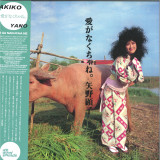
Wewantsounds continues its Akiko Yano series with the reissue of her cult classic 'Ai Ga Nakucha Ne' recorded in 1982 and co-produced by Ryuichi Sakamoto. Featuring Japan, the album includes additional recording in Tokyo with YMO and is mixed by Steve Nye and Shinichi Tanaka. It is the first time the album is released outside of Japan and the deluxe LP features the original artwork with gatefold sleeve and a lavish 24-page colour booklet with sessions photos by Pennie Smith (famous for The Clash's London Calling photo). The reissue also includes a new introduction by Mac DeMarco and a dual interview with Akiko Yano and Steve Jansen by journalist Paul Bowler. The audio remastered from the Original tapes by Mitsuo Koike.
'Ai Ga Nakucha Ne' ('there must be love' in Japanese) is Akiko Yano’s 6th studio album and follows 'Tadaima' in 1981. It continues exploring the electro-pop sound of its predecessor, hot on the heels of her touring with Yellow Magic Orchestra between 1979 and 1980. For this album, Akiko decided to try something new; she enrolled English fellow musicians Mick Karn, Steve Jansen and David Sylvian from Japan and booked the Air Studios in London under the supervision of engineer Steve Nye. Over a couple of weeks, the musicians created a fascinating soundscape full of catchy pop tunes, sung in both Japanese and English. Reminiscing about the studio sessions, Steve Jansen notes "Our music’s different but we maybe had a similar process of working. It was a great environment because the studio was a great place to work. It was very insular. There were four studios and there were always groups working in there 24/7."
The eleven tracks featured on "Ai Ga Nakucha Ne," mostly composed by Akiko - are a great collection of catchy tunes featuring her distinctive vocals and accompanied by the Japan musicians. As Akiko explains about the creative process, "I didn’t think to imitate or to make another Tin Drum. But I had Steve Jansen and Mick Karn, these excellent musicians. They were eager to understand the songs, then they put in everything they had. I knew the material was different from what they usually played in Japan. But it was a great experience working with them.
There are many highlights on the album, from the pop edge of "Aisuru Hito Yo" to the avant groove of "Another Wedding Song", each song is memorable and the album ends with the superb “Good Night” sung by Akiko and David Sylvian.
The original 1982 LP release included a 24 page booklet featuring many photos by Pennie Smith and Japanese photographer Bishin Jumonji. The booklet is reproduced in its entirety here and the album on top of contributions by Mac DeMarco, a longtime fan of the album, Akiko and Steve Jansen making this release of 'Ai Ga Nakucha Ne' a unique testament to Akiko Yano's greatness.
Repressed and note new dealer price. The members of Explosions in the Sky may just be four soft-spoken guys from Texas, but on Those Who Tell the Truth Shall Die, Those Who Tell the Truth Shall Live Forever they simply tear everything apart. Combining influences from classic rock to metal to goth, the band creates instrumental soundscapes that can turn from all-out destruction to heartfelt, dreamy melodies in the blink of an eye. The result is similar to Mogwai and Godspeed a musical journey that leads listeners through the entire range of emotion without even needing words. "Greet Death" matches a crunchy Dinosaur Jr hook with warm Cure-esque bass grooves. "Moon Down" chimes and twists through ten minutes of calm night, leaving the listener with the feeling that something awesome is sure to happen. On "Have You Passed Through This Night?" one of the members of Explosions in the Sky ponders in a near-whispering Texas drawl the meaning of the world. What follows is like the climax of a tense, mind-blowing movie, driven by relentless guitars and a thundering Master of puppets Metallica drum march. "Poor Man's Memory" follows, offering some consolation in a sentimental melody. The album ends with the grand, 12-minute-long "With Tired Eyes, Tired Minds, Tired Souls, We Slept," a song that moves from Sonic Youth to Joy Division to Explosions in the Sky. Those Who Tell the Truth Shall Die, Those Who Tell the Truth Shall Live Forever is nothing short of awe-inspiring and was one of the best records of 2001. A1 Greet Death A2 Yasmin The Light A3 The Moon Is Down B1 Have You Passed Through This Night? B2 A Poor Man's Memory B3 With Tired Eyes, Tired Minds, Tired Souls, We Slept
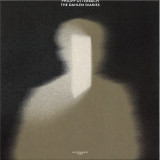
The new LP by Krefeld-born, Berlin-based artist Philipp Otterbach entitled 'The Dahlem Diaries'.
Recorded in a little-visited corner of the German capital, 'The Dahlem Diaries' is a convergence of ideas, sketches and tracks, both old and new, most of which were produced between 2020-2022. Whilst eerie atmospheres, electronics and drums have played a pivotal role in Philipp’s earlier releases, his latest is a rather more introspective affair, in which the guitar takes a leading role. A role Otterbach uses to quietly bring light and hope to his music.
Speaking about his writing process, Philipp explains that, based around his original compositions, “Friends were nice enough to contribute additional parts on their instruments which I then reworked, put together and re-contextualized. The recordings encapsulate a very specific moment in time, one that would have sounded perhaps very different the day before or after.”
Combined with a strong use of effects and field recordings, 'The Dahlem Diaries' feels somewhat like a scene or fragment from a story, in which the narrative remains undefined. It is a playful album that is something of a blurred underwater adventure, sounding as bright as it is hazy, even psychedelic at times, yet with an almost melancholic positivity. In Philipp’s own words: “It could be an album about friendship and being at one with myself, whilst at the same time bringing a certain seriousness to my music, but not necessarily to myself; there is also a playful humour hidden in there. ”
- Half As Good A Girl
- Silver Threads And Golden Needles
- Let Me Explain
- Did You Miss Me?
- No Wedding Bells For Joe
- Honey Bop
- Mean Mean Man
- Rock Your Baby
- Sinful Heart
- Let's Have A Party
- Riot In Cell Block Number Nine
- Little Charm Bracelet
- Funnel Of Love
- The Greatest Actor
- You Bug Me Bad
- Sympathy
- But I Was Lying
- We Haven't A Moment To Lose
- This Should Go On Forever
Wanda Jackson is a true pioneer of American popular music. One of the first women in history to record country and western music, as well as rock ‘n’ roll, and a brief romantic liaison with Elvis.This collection reminds of the greatness of her peak years at Capitol Records. From the mournful twists of “Sinful Heart,” to the hard-rocking thrills of “Let’s Have A Party” and “Riot In Cell Block Number Nine,” Wanda Jackson attacks the material in her distinctive way, with a wry glance at innocence left somewhere behind. All hail the Queen, and long may she reign!
Whispers is the first proper P.G. Six album since 2011"s Starry Mind. Time passes slowly, as they"ve been known to say out in the country, and before you know it, there"s a bunch of it behind you. After five releases in the first decade of P.G. Six, it may seem a bit of a surprise to have not heard something new in the past twelve years - but a cursory listen to Murmurs & Whispers will answer why, as the deep acoustic focus of the tracks imply an investment of the type of compassion and understanding that takes time and concentrated effort to conjure. Additionally, Pat Gubler"s always got a few pots going at once in his ever-expanding musical universe. He"s been active since the mid-90s, first with Memphis Luxure and Tower Recordings, then as P.G. Six, and as a member of Metal Mountains, Wet Tuna, Garcia Peoples and Weeping Bong Band. Additionally, some time was spent making collaborative records with Dan Melchior (in 2019) and Louise Bock (in 2021). Pat"s been playing the harp for more years than he"s been in bands, but when he realized that he was writing a set of songs centered around harp compositions, he spent some time in the woodshed with his instrument, a late 80s model Triplett Celtic 34 String Harp (which replaced a lovely Paraguayan harp he"d played for years previously). After the previous P.G. albums of electric band arrangements, he was in a place of writing songs with more silence in them. He ended up playing a lot of the parts himself on Murmurs & Whispers, adding guitar, bass, keyboards, recorder and hurdy gurdy, in addition to his harp and vocals. Clark Griffin and Wednesday Knudson, who Pat plays with in Weeping Bong Band, played and sang a bit themselves, and the record was recorded piece by piece in houses around upstate New York by Mike Fellows. Returning to the quiet acoustic sound of the first couple of P.G. Six albums, Parlor Tricks and Porch Favorites (which has seen a much-needed reissue in the past year after too many years OOP) and The Well of Memory, Murmurs & Whispers is more straightforward in expressing its vision of rural celestial wonder. Bucolic and comfortably lived in, Murmurs & Whispers nonetheless projects the transcendent heart of P.G. Six once again, and as ever, it is magnificent to hear it passing through us.
In 1972, a foursome of design students set out to make a record. This was, in many ways, a strictly creative endeavor. The quartet — composed of Dave Pescod, Alan Lewis, Phil Rawle, and Ted Rockley — were all trained, not as musicians, but as creatives. Art school heavyweights, the four were well-versed in the methodology of intentional experimentation, in the delicate balance of pushing the limits without completely unmooring oneself from a guiding creative intention. Emboldened by a high-brow familiarity with thoughtful experimentation and all the non-conviction of non-musicians, Bowes Road Band’s stint in the world of popular music yielded a record that is as much mind-melting as it is a direct product of its time. Their sprawling LP “Back in the HCA” embodies the exigence “art for art’s sake,” but it is for art’s sake that this record, however off the deep end it seems to travel (hear: “Doctor, Doctor”), remains a unified, and stunning, body of work. The LP’s do-ityourself garage rock noisemaking meets highfalutin creative processes. “Back in the HCA” is warbling psychedelic freakout (“Two Fingers,” “Doctor, Doctor”), Donovan-esque English countryside folk stylings (“Inside My Head,” “Goodbye to Rosie”), and avant-garde jazz improvisions (“Grass is Grass,” “Tomorrow’s Truth”) in one luminous release.
Originally an 9-track LP, Jakarta, Uno Loop, and Bowes Road Band decided to mine the six most cohesive tracks for the reissue, though the extras may be released somewhere down the line. Cohesion efforts aside, “Back in the HCA” stands alone in its singular conception of a genre-bending continuum — it evades definition. That said, the LP can easily be situated in the sonic environment in which it was conceived. By the end of the 60s, England was crawling with blues-based rock outfits that were starting to venture into prog rock territory. You can hear this popular dint cast over the folkier side of the LP. But Bowes Road Band was armed with their non-musicianship: they existed completely liberated from the motivating yet ultimately paralyzing lust for stardom. Enjoying this liberation, Bowes Road Band was utterly free to make noise. This freedom meant drawn out sax interludes amidst sweetly folk stylings (“Grass is Grass”) and Shaggs-like fuzzed-out freakouts that spiral into a void (Doctor, Doctor). This freedom also meant straight-forward tuneful cuts like “Goodbye Rosie” that conspicuously introduce heavily distorted auto-organ accompaniment mid-track amidst poignant lyricism. Bowes Road Band crafts a unified sound and then cracks it open.
With a completely off-the-radar status, Bowes Road Band could only press 50 copies of the record — 10 for each of them and 10 for the school. The band’s lifespan was to end there, or so they thought. “Back in the HCA” was the accidental fruit of a Berlin flea market treasure hunt by Jannis Stürtz, DJ and co-founder of Habibi Funk and Jakarta Records. After finding and sharing the LP with a few colleagues, Stürtz managed to get in touch with the band, get ahold of the master tapes collecting dust in Ted Rockley’s attic, and start the reissuing process. The record is still adorned with its original cover art designed by Alan Pescod, both reminiscent of bygone school days and the Zoom calls of yesterday — in short, reunion. Its re-discovery was happenstance and ought to be listened to as such. That is, “Back in the HCA” was not made to be listened to on a broad scale, or, at least, was not made with this goal in mind; it is neither in its time nor of its time. Of course, the group explicitly cites the folk tunes of the English countryside, the distorted rock groups that reigned during the record’s conception, and the fringes of psychedelic music that only the uber-underground might recognize (e.g., “Dreaming of Alice”). Yet still with these obvious influences, “Back in the HCA” always existed beyond the domain of both traditional musicianship and conventional commodification. Bowes Road Band’s DIY musicality beams through in technicolor across “Back in the HCA.” The vinyl includes an 8-page booklet detailing the albums creation and interviews with the band.
Lead single “Grass is Grass,” out July 14 along with album pre-order, encapsulates the record’s range: the track unfurls into a sprawling sax-driven trip following a sundrenched, Donovan-esque intro w/ lyrics “naively about parks and gardens, not marijuana!” The keyed-down folk cut “Goodbye to Rosie” is single 2 and elevates stripped-down acoustics with golden tinges, out August 4th. Focus track “Tomorrow’s Truth” constructs the fuzzed-out underbelly of acid folk. Listen for echoes of late Beatles, Mark Fry, and Donovan (if they were armed by an unshakabele willful naiveté). Like Sgt. Pepper’s on a shoestring budget—take a trip to the underground with LP “Back in the HCA,” available everywhere physically and digitally on September 1st via Jakarta Records and Uno Loop.
Besides online promotion from label profiles, the album will be further promoted by external agencies within the UK and US.
Whispers is the first proper P.G. Six album since 2011"s Starry Mind. Time passes slowly, as they"ve been known to say out in the country, and before you know it, there"s a bunch of it behind you. After five releases in the first decade of P.G. Six, it may seem a bit of a surprise to have not heard something new in the past twelve years - but a cursory listen to Murmurs & Whispers will answer why, as the deep acoustic focus of the tracks imply an investment of the type of compassion and understanding that takes time and concentrated effort to conjure. Additionally, Pat Gubler"s always got a few pots going at once in his ever-expanding musical universe. He"s been active since the mid-90s, first with Memphis Luxure and Tower Recordings, then as P.G. Six, and as a member of Metal Mountains, Wet Tuna, Garcia Peoples and Weeping Bong Band. Additionally, some time was spent making collaborative records with Dan Melchior (in 2019) and Louise Bock (in 2021). Pat"s been playing the harp for more years than he"s been in bands, but when he realized that he was writing a set of songs centered around harp compositions, he spent some time in the woodshed with his instrument, a late 80s model Triplett Celtic 34 String Harp (which replaced a lovely Paraguayan harp he"d played for years previously). After the previous P.G. albums of electric band arrangements, he was in a place of writing songs with more silence in them. He ended up playing a lot of the parts himself on Murmurs & Whispers, adding guitar, bass, keyboards, recorder and hurdy gurdy, in addition to his harp and vocals. Clark Griffin and Wednesday Knudson, who Pat plays with in Weeping Bong Band, played and sang a bit themselves, and the record was recorded piece by piece in houses around upstate New York by Mike Fellows. Returning to the quiet acoustic sound of the first couple of P.G. Six albums, Parlor Tricks and Porch Favorites (which has seen a much-needed reissue in the past year after too many years OOP) and The Well of Memory, Murmurs & Whispers is more straightforward in expressing its vision of rural celestial wonder. Bucolic and comfortably lived in, Murmurs & Whispers nonetheless projects the transcendent heart of P.G. Six once again, and as ever, it is magnificent to hear it passing through us.
Black cloud is descending – Black Magic Six set to release their fifth album in September, new single Blood of Babylon out now The title of Black Magic Six’s upcoming album Black Cloud Descending really sums up the mood and thoughts of its creators during the album making process. It tells stories of constant escaping, accepting defeat, destinies of outcasts, failures, and drunks. Tales of the wiser, exaggerated lies, vague rumours, fuzzy states of mind and suspicious circumstances – even the thought in the back of your head about the possibility of redemption while standing on the edge of the cliff right before falling in; it’s all there. The album’s first single Blood of Babylon is a garage rocking song about Sam Berkowitz’s relationship with Sam Carr’s speaking dog. Lyrical themes of the upcoming album are moving between reality and the imaginary world; remembering the moments at Belo Horizonte, how to use the powder that protects you from the evil eye, how it felt to wonder in the same alleyways with the werewolf of Istanbul or diving to safety to the bottom of a pond in Northern Savo. Listen Blood of Babylon here: https://youtu.be/S7mEujUIlrw Musically the album is on a narrow path. All the sounds heard on Black Cloud Descending are produced by Taskinen and Motherfuckin’ Japa. Sure, there are two exceptions; the gong heard in the end of Werewolf of Istanbul was recorded by Sakke Koivula at his home and the church bells in the outro of Full House Blues are ringed by unknown. Previous albums of BM6 had lots of guests playing guitar, percussions, harmonica, and visiting singers. People that one could call actual musicians. These past albums have had a softer, more versatile, and maybe even a livelier touch to them. This time around there’s only the core; the percussionist and the singing guitar player. The result is more raw, rugged, and rougher than before. Black Cloud Descending is out on September 1st on vinyl, CD, and digital platforms. The album was produced, recorded, and mixed by Mitro Kylliäinen at Kung Fu Audio along with BM6 during 2022-2023. Original art used for the album cover was made by Greger Grönholm. The band will play selected live shows to celebrate the new album in Finland, Germany, Denmark, and Spain. Dates of these gigs will be announced closer to the release date of the album.
Originally released on may 29, 1969, Crosby, Stills and Nash remains one of rock 'n' roll's most impressive debuts. It was big news in 1969 when former key members of the Byrds, Buffalo Springfield, and the Hollies - three of the finest bands of the '60s - splintered off to form their own trio. Despite their already-proven talents, few could have imagined the gossamer vocal blend that would become the trademark of supergroup Crosby, Stills and Nash. The band's debut effectively provided the soundtrack to the summer of '69. For his part, Steve Stills keeps exploring the progressive folk-rock sound that he'd pioneered with Buffalo Springfield; signature tune Suite: Judy Blue Eyes is an expansive, multi-section affair that makes full use of the group's vocal skills. Fresh from the Hollies, Graham Nash adds an accessible pop sensibility, epitomized by the effervescent ditty Marrakesh Express. David Crosby, always the wild card in the Byrds, here adds rough edges and flashes of mystery with his cutting protest rocker Long Time Gone and the exquisite art-folk of Guinnevere. With this kind of firepower under its belt, it's no wonder csn quickly became one of the biggest groups of their era.
- 1: Gee Whiz, Look At His Eyes
- 2: Dance With Me
- 3: A Lovely Way To Spend An Evening
- 4: Your Love
- 5: Fools Fall In Love
- 6: To The Aisle
- 1: The Masquerade Is Over
- 2: A Love Of My Own
- 3: Promises
- 4: It Ain’t Me
- 5: For You
- 6: The Love We Shared
- 1: ‘Cause I Love You – Carla & Rufus
- 2: Deep Down Inside – Carla & Rufus
- 3: (Mama, Mama, Wish Me Good Luck
- 4: In Your Spare Times (Please Think Of Me)
- 5: The Masquerade Is Over
- 1: Kinda Think He Does
- 2: I Can’t Take It
- 3: I’ll Bring It Hone To You
- 4: I Didn’t Believe – Rufus & Friend
- 5: Yeah, Yeah-Ah – Rufus & Friend
This collection gathers together the entire album that made up
Gee Whiz in 1961 and the various singles Carla (and her
father Rufus, in some instances) recorded either side of that
release. As will be quite plainly heard, while Gee Whiz pursued
several other musical paths, the singles were almost entirely
R&B-based. And while Carla may have had to abdicate her
throne of Queen of Soul to Aretha Franklin, she is more than
worthy of her other moniker, the Queen of Memphis Soul.
33 rpm version[57,94 €]
100% Analogue 33RPM 180g 1LP
Remastered from the Original Analogue Stereo Masters for the First Time!
Hear this album as it was meant to be heard! Absolutely Stunning!
The greatest assembly of musical talent ever on one album! Features Performances by John Coltrane, Miles Davis, Bill Evans, Ben Webster & 27 More Jazz Greats!
In 1958, a young, successful French composer-arranger with a major infatuation on American jazz, worked his way to New York and convinced the very best players of the time to record an album of largely jazz standards. Michel Legrand would go on to win numerous prizes and accolades (3 Oscars, 5 Grammies, 2 Palmes D'or, etc.), but little of what followed matched the sheer brilliance of Legrand Jazz.
Miles Davis, John Coltrane, Bill Evans, Ben Webster, Phil Woods and practically every other session man in town signed up for sessions with Legrand to record his idiosyncratic arrangements of standards ("Django", "Don’t Get Around Much Anymore", "Night in Tunisia", etc.). Instead of regurgitating then current bop styles, he reinvented the very nature of orchestral jazz band repertoire to make a unique and forward-looking statement on the genre.
The sound of Impex's all-analogue LP preserves the wide soundstage of late 50’s Columbia recordings while creating intimate spaces between players on the stage for maximum definition. This rare, highly-praised recording has never sounded as good as it does now. Go big with Legrand Jazz.
Legrand Jazz was greeted by an enthusiastic review in the magazine Down Beat. Dom Cerulli awarded it five stars out of a possible five.
The meticulously recreated outer jacket is packaged in a gatefold with an original photo montage inside honoring Michel Legrand's masterpiece of reinvention and sublime fan-boy enthusiasm.
"The music is luscious and this just may be one of the best-sounding records you'll ever hear." - Ken Kessler, Hi Fi News, Rated 95/100 Sound Quality!
- A1: Anna Gréta - Home (From The Album: Nightjar In The Northern Sky)
- A2: Cécile Verny Quartet - As Soon As They Have All Aligned (From The Album: Fear & Faith)
- A3: Dominique Fils-Aimé - Birds (From The Album: Fear & Faith)
- A4: Jamie Woon - Sharpness (From The Album: Making Time)
- B1: Friends'n Fellow - Time (From The Album: Lady)
- B2: Imaginary Future - Hey Jude (From The Album: Yesterday)
- B3: Josefine Cronholm - Blackbird (From The Album: Ember)
- C1: Martin Lechner - The Masquerade Is Over (From The Album: Somethin' Old & Somethin' New - Somethin' Else)
- C2: Thorsten Goods - Work Song (From The Album: Thank You Baby!)
- C3: Wolfgang Bernreuther - Can't Get Rid Of (From The Album: Still A Fool)
- D1: Vanessa Fernandez - Here But I'm Gone (From The Album: Use Me)
- D2: Julia Werup - The Thrill Is Gone (From The Album: The Thrill Of Loving You)
- D3: Mike Andersen - Over You (From The Album: Echoes)
There are different ways to celebrate an anniversary. We can look back and reflect on where we've been and how far we've come. Or we can look forward towards future possibilities. Alternatively, we can simply pause for a moment and be present - right here, right now. Rather like we are aware and mindful of what is happening at this very moment when we're enjoying superb music, excellently recorded and played.
That's how Clearaudio is celebrating its 45th anniversary. To mark the occasion, Clearaudio are delighted to present an album of music that embodies their passion for perfection, for nuanced and detailed sound, and for an intimate marriage of creativity and technical finesse. In other words, an album that reflects the key principles by Clearaudio.
"Take the best, make it better - only then it is just good enough." This well-known quote is as valid today as it was 45 years ago, and has inspired a host of colleagues and collaborators along the way. Ever since the release of Delta and Sigma speakers in 1978 and the development of the first moving coil cartridges, not a day has passed when Clearaudio didn't strive to set new standards for higher fidelity. This mindset continues to underpin their work to this day.
No matter where you've come from or where you are going, if your heart beats to the drum of truly authentic sound, then you'll find Clearaudio spirit, will and drive in every single one of their products - from the most towering turntable to the smallest cable.
While some creators may be content with merely looking closely, Clearaudio has always looked and listened closely. Very closely - and at both ends of the spectrum, from top-quality record engineering to excellent playback. So the early stages of every Clearaudio musical recording begin with questions like: "Does it sound exactly like in a concert hall?" and "Does the music feel as was intended when it was written and composed?"
In addition to their own recordings, a number of their favourite legendary productions from Deutsche Grammophon have also found their way onto this album. So why not take a pause, "take five," and enjoy these moments of exceptional music, lovingly produced? And join Clearaudio in celebrating 45 years of loving music!
A bit of blues here, a bit of rock there, and maybe even a little jazzy improvisation, with numerous inspirations from the folk music of various cultures, and the never absent, albeit not always conscious Turkish modes and vaguely reminisced melodies.
A songwriter accompanied by a team of marvellous musicians who left an important imprint on the Turkish music scene since the 80s. Bülent Somay, an academic, writer, translator, political activist, educator and musician, is a former member of the Turkish Jazz-rock-fusion group Mozaik. He rolls up his sleeves and dusts off some old songs that were never published before with 'a little help from his friends'.
- A1: We Crossed The Atlantic
- A2: The Love You Bring
- A3: When I Was Howard Hughes
- A4: Failed Adventure
- B1: Stars (Twilight Mix)
- B2: Grand Central
- B3: International Exiles
- B4: Merry-Go-Round
- B5: Radios Appear
- C1: City Terminus
- C2: Min Min Light
- C3: Oregon Snow
- C4: Cherry Lake
- C5: Blackout
- D1: Please Don’t Say Goodbye
- D2: Museum Station
- D3: Blue Train
- D4: You Were There
- D5: Something Better Beginning
Selected Songs 1997-2003 compiles some of the finest moments in the recording history of Hydroplane, the Melbourne-based indie-pop three-piece that operated alongside The Cat’s Miaow through the second half of the nineties. It’s the third release in what feels, now, like a loosely planned series by World Of Echo, documenting the music made by this group of friends in Melbourne sharehouses (The Cat’s Miaow’s Songs ’94-’98, 2022), or in the case of The Shapiros (Gone By Fall, 2023), while traversing the International Pop Underground.
Hydroplane would be familiar to anyone already following these breadcrumb trails – Andrew Withycombe, Bart Cummings and Kerrie Bolton were the group’s core, all members of The Cat’s Miaow. With Cat’s Miaow drummer Cameron Smith itinerant, having moved to London, the trio used this opportunity to expand their music. It’s a subtle, but important shift. If The Cat’s Miaow was about the perfect, minimalist, two-minute pop song, Hydroplane’s music was far more open-ended, embracing the loops and drones, sampled house-y shuffle beats, the burbling of a Roland Jupiter-4 synth, all of which the trio joined, effortlessly, to their endless capacity for moving, elegant melodicism.
They may have only planned to release one seven-inch single, but the sound Hydroplane created was so bewitching, so compelling, that the project’s lifespan ran for around half a decade, and they ended up releasing three albums, including a self-titled debut recently reissued by Efficient Space, and seven singles. There are all kinds of compelling things happening in the music compiled here – the hazy repetition of the gentler side of Krautrock is in here, somewhere, which also suggests Stereolab at their most intimate and disarmed; the gently drifting guitars, gauzy and oneiric, set the songs adrift and floating, each one lost in its own imagined, distracted world. Songs like “The Love You Bring” set indistinct tonal floats across dance rhythms, in a way not quite heard since My Bloody Valentine’s “Instrumental” – but with the added gift of Bolton’s gorgeous voice.
This loose coalition with dance music, and the quiet experimentalism at the heart of Hydroplane, also gestures towards peers like Hood, Acetate Zero and Other People’s Children, and releases on renegade labels like Wurlitzer Jukebox and Enraptured. Like those groups and labels, The Cat’s Miaow were reconciling independent pop music’s past – sweet melody and melancholy, chiming and droning guitars – with the futures promised by DIY electronics and nascent digitalia, the interface of indie and IDM that led to some of the underground’s most blissful, texturally swoonsome music. All that is here, but also, the poise of the melodies is pure Cat’s Miaow, though, with Bolton’s voice sailing, pacifically, over some of the most pared-down, gorgeous music made during their decade.
It was a time, too, when such music could make waves – “We Crossed The Atlantic”, one of their early singles, was picked up by John Peel, who played it repeatedly on his legendary radio show, the song reaching #13 on his 1997 Festive 50. That the song itself was a cover of a tune by 1960s Australian beatnik-pop-poet Pip Proud felt even more perfect – a group of outsiders paying tribute to another outsider, played on the radio one of the few broadcasters brave and human enough to take a chance on this music. But it was a time where everything was up for grabs, and genres were flowing into each other: folk songs went drone; indie re-discovered noise; ambient pop floated, again, out onto the dancefloor. And while they may have been sequestered away in Melbourne, Australia, Hydroplane felt core to that scene, a quietly driving force.
Compiling material from across their brief but mercurial career, this double album perfectly captures the magic and mystery of Hydroplane’s dreamlike, perfect pop songs.