I’ve known Alex Bleeker my entire life. Well, okay, maybe not since I was born, but there’s no doubt that I’ve shared a fair bit of memories with him over the years. We’ve acted in high school productions of Shakespeare together, gone on late-night diner runs, argued about which Weezer album is the band’s best, and swapped mutual appreciation for the music of Yo La Tengo on car rides careening around the snaky suburbia of our hometown. Just like his Real Estate bandmates Martin Courtney and Julian Lynch, we attended high school in the New Jersey enclave of Ridgewood, a place where sticky summer days yielded cool nights with a glow so nocturnal that you can practically hear the fireflies buzzing off of this sentence alone.
Indie rock—a type of music that can easily be made or listened to in someone’s garage—often dominates teenage suburban preoccupations, and both Alex and I were no exception. You can hear this legacy of listening on his new album Heaven on the Faultline, which departs from his last full-band outing as Alex Bleeker and the Freaks, 2015’s Country Agenda. Whereas that album had a more full-bodied explicitly folk-y feel, Heaven on the Faultline finds Bleeker getting back to his homespun roots over the course of its 13 songs, from the jangly guitar pop of New Jersey heroes the Feelies and YLT’s hushed, acoustic reveries to the open-hearted folk rock that marks so much of the Grateful Dead’s early catalog.
Written and recorded over the last several years, Heaven on the Faultline’s songs were initially recorded straight to GarageBand in Bleeker’s bedroom before receiving further studio refinement in co-producer Phil Hartunian’s Tropico Beauty space in Los Angeles. With contributions from Confusing Mix of Nations’ Josh Da Costa, Cameron Stallones of Sun Araw, singer-songwriter Kacey Johansing, and Parting Lines’ Tim Ramsey, Heaven on the Faultline achieves a warm and intimate feel that defines Bleeker’s mission for the album: “I wanted to capture the moment in which I fell in love with making music to begin with. This is music for myself—me getting back to music for music’s sake.”
The unsteady times we live in certainly creep into view on Heaven on the Faultline. The deceptively easygoing “D Plus” was written on the day of President Donald Trump’s inauguration with the cursed event in mind, while the anxiety of climate change hovers just above the lovely guitar loops of “Felty Feel.” “The album is very much about dealing with the anxiety of a sense of impending doom,” Bleeker states while discussing the album’s portentous vibes. “When is the hammer going to fall? How do we go forward in the face of such anxiety and experience the complexity of life?”
Tough questions with few answers, but try not to stress too much. It’s possible to experience such existential doubt while also enjoying the simple pleasures that life has to offer, and that ethos is square at the heart of Heaven on the Faultline. It defines who Alex Bleeker is, too, and is one of many reasons why I’m proud to have known this special person and artist for so long.
Larry Fitzmaurice
quête:may
Though it’s hard to pick a winner among the estimable Black Jazz catalog, this 1972 release from bassist Henry “The Skipper” Franklin would have to be near the top of the list. Franklin got his start woodshedding with Latin maverick Willie Bobo in the mid-‘60s and went on to play with The Three Sounds, but probably his most notable gig prior to this debut album was his stint in Hugh Masekela’s band (that’s Franklin playing bass with Masekela at the 1967 Monterey Pop Festival). For The Skipper, Franklin assembled a crack outfit that included a horn section of trumpeter/flugelhornist Oscar Brashear (Bobby Hutcherson, Ry Cooder, Donny Hathaway) and tenor & soprano sax man Charles Owens (Buddy Rich, Horace Tapscott, John Mayall) along with a Masekela bandmate in electric pianist Bill Henderson and ace drummer Michael Carvin (Pharoah Sanders, Lonnie Liston Smith, Freddie Hubbard). This is such a unique, organic recording that it’s hard to make comparisons; definitely a little fusion, a little ‘60s Blue Note feel, and the usual Black Jazz journey to the more lyrical, pop-inspired (“Little Miss Laurie”) and funk-infused (“Plastic Creek Stomp”) sides of jazz, but perhaps the best comparison is late-‘60s Miles before he went electric. In any case, The Skipper is just a joy to listen to from start to finish, beautifully recorded by Black Jazz producer Gene Russell and blessed with some really fine writing, most of it by Franklin himself. First-time LP reissue and a must-have!
File Under: Jazz / Contemporary Jazz - For fans of Ryuichi Sakamoto, Boards of Canada, Linda May Han Oh, Supersilent, Nels Cline, Makaya McCraven, and Haruka Nakamura! Born in Pinsk, Belarus in 1984 and immigrating to Canada in 1992 with the collapse of the USSR; Alexei Orechin has been actively shaping musical environments with his current projects No Seas, a solo project for guitar and tape, and leading his own ensemble incorporating jazz, chamber, and experimental elements into his compositional work. A diverse talent that is reflected in the company he has shared the stage with: Nas, Akae Beka, Rana Mansour, Shad, Yaadcore, and Sina Bathaie. He has played in USA, Mexico, Europe, and Russia. Performances include the TD and Montreal Jazz Festivals, Caribana, Irie Music Festival, Tirgan Festival, and Pride Toronto. His music for film has been featured at TIFF, CFC, NFB and the Warsaw Jewish Film Festival. He has been featured on CBC, Noisey, Global News, The Star, Dub Rockers, Huffpost, Afropunk, and Relix magazine. 2020 saw the premier of '1992 Ambient', a 45-minute long composition that is a 'therapeutic experiment in slowly melting sound and colour; representing the acculturation and restructuring oneself through emigrating from Russia to Canada in 1992'. 2021 will also see the release of his debut full length album Mirages; an album that showcases his diverse and ever evolving style of composition, ranging from moments of melodic solitude to fractal experimentalism.
- A1: Rockin’ In Rhythm
- A2: Drop Me Off In Harlem
- A3: Day Dream
- A4: Caravan
- A5: Take The ‘A’ Train
- B1: I Ain’t Got Nothing But The Blues
- B2: Clementine
- B3: I Didn’t Know About You
- B4: I’m Beginning To See The Light
- B5: Lost In Meditation
- B6: Perdido
- C1: Cotton Tail
- C2: Do Nothin’ Till You Hear From Me
- C3: Just A Sittin’ And A Rockin’
- C4: Solitude
- C5: Rocks In My Bed
- D1: Satin Doll
- D2: Sophisticated Lady
- D3: Just Squeeze Me (But Don’t Tease Me)
- D4: It Don’t Mean A Thing (If It Ain’t Got That Swing)
- D5: Azure
Ella Fitzgerald was, by any yardstick, a remarkable singer. She
had achieved much by the time she signed to the newly created
Verve Records in 1956, but it was the genius of Norman Granz,
her personal manager and Verve founder, in suggesting she
tackle the material of great contemporary composers in themed
albums that sent her career into orbit. As the New York Times
wrote on her passing in 1996, "These albums were among the
first pop records to devote such serious attention to individual
songwriters, and they were instrumental in establishing the pop
album as a vehicle for serious musical exploration." The song
selections ranged from standards to rarities, and the eight-title
series represented an attempt by Fitzgerald to cross over to a
non-jazz audience that may have been unaware of the talents
she first committed to vinyl in 1935.
The Pet Parade,” the title track to Fruit Bats’ newest album, might be a surprising opening track for longtime fans of Eric D. Johnson’s beloved indie folk-rock project. The six-and-a-half-minute tone poem smolders and drones over just two chords, inspired by the strange and silly community events that he saw growing up outside of Chicago, in La Grange, Illinois, in which people dressed up and showed off their pets. Decades later, The Pet Parade emerges in troubled times, living within what Johnson refers to as the beauty and absurdity of existence. While many of the songs on The Pet Parade were actually written before the pandemic, it’s impossible to disassociate the record from the times. As an example, producer Josh Kaufman (Bob Weir, The National, and Bonny Light Horseman, in which he plays with Johnson and Anaïs Mitchell) was brought in for his deep emotional touch and bandleading abilities. However, Johnson, Kaufman, and the other musicians on The Pet Parade drummers Joe Russo and Matt Barrick (The Walkmen, Fleet Foxes), singer-songwriter Johanna Samuels, pianist Thomas Bartlett (Nico Muhly, Sufjan Stevens), and fiddler Jim Becker (Califone, Iron & Wine) were forced to self-record their parts in bedrooms and home studios across America. Still, says Johnson, “The songs have enough intimacy that it doesn’t sound like it was made a million miles away.” Such tension and turmoil also impacted the lyrics of The Pet Parade. While “Cub Pilot” and “Here For Now, For You” began as more traditional love songs from a personal “I” to a specific “you” Johnson quickly realized that these songs needed to comfort broader audiences, changing the words to a more inclusive “we” and “us.” So too in “The Balcony,” a song ostensibly about a particular space in his grandmother’s apartment, but one that evolved into a metaphor on patience. At times upbeat and reassuring (“Eagles Below Us”) and at times quietly contemplative (“On the Avalon Stairs”), The Pet Parade marks a milestone for Johnson, who celebrates 20 years of Fruit Bats in 2021. In some ways still a cult band, in other ways a time-tested act, Fruit Bats has consistently earned enough small victories to carve out a career in a notoriously fickle scene. And Johnson himself who has played in The Shins, composed film scores, gone solo and returned back to the moniker that started it all, and most recently, earned two GRAMMY® nominations with Bonny Light Horseman doesn’t take this long route of life’s pet parade for granted. “I’m still really excited to make records,” he says. “Lucky and happy and maybe happier that things went slower for me. I’m savoring it a lot more.
“The rumors are true; Providence, Rhode Island is permeated with a mysterious energy”. So says Dave Litifreri, guitarist and vocalist of
Urdog. “Some of us focused this energy, learned to live with the ghosts and tell their story.” It’s a story chronicled on Long Shadows, the new Urdog retrospective on Rocket Recordings - the work of a mercurial band whose music may have been summoned from fog and ghosts, yet possesses considerable staying power beyond their brief time on the planet. “We were influenced by the horror of late-capitalism in general every day” says drummer and vocalist Erin Rosenthal, “This glued and glues us together, also love of bicycles, french fries and faerie folk. Big influences for me were Robert Wyatt, Incredible String Band, Dagmar Krause, but especially This Heat, Riot Grrrl and 90’s hardcore.” From such disparate inspiration came psychically heavy jams and wild improvisational voyages from this triumvirate which chart an instinctive and wild journey, drawing the interplanetary dots between early ‘70s freak-flag-waving transgressions and the folk-tinged frontiers of the early 21st century US underground. Mantric repetition, ceremonial ambience
and fuzz/wah tinged blowouts take equal prominence in this dreamlike realm. Drawing the interplanetary dots between the drone ’n’ klang of Amon Düül II and the cultish hallucinations of Sunburned Hand Of The Man, and replete with both an earthiness of approach and a powerful celestial intensity. “We used our intuitive connection to let three distinct voices be heard” reflects Dave. “There was no foundation; they supported each other. Once that is achieved, a vibe develops. Getting into the space of a song is something you can’t notate. We had the keys, but getting to the door was the trick. Some nights we got all the way through the roof to the stars.”
Bobby Would LP#2. Wistful waltztime psychobeat for warding off / wallowing in the 2020-21 Weltschmerz. Swelling and smearing the vision of 2018’s skeletal rock’n’roll heartbreaker Baby, most of the songs here are ballads – minimalist, ultra-hypnotic but lavishly melodic space-punk lullabies and bright, bruised expressions of jingle-jangle mourning. Highs, lows and heavenly blows. BW’s guitar is, more than ever, a thing of fearsome and filigree beauty, moving effortlessly from misty, mellifluous DIY pop-dreams to wailing vertiginous whiplash leads and dazed, epiphanic, angels-wept metha-drone, ringing in infinity - and tethered to this earth only by his beloved monotone, numbed-out, serial-killer croon. Spinning in its own orbit, but with recognisable dabs - perhaps - of Phantom Payn / JG39, Les Rallizes Denudes, Gary War, Peter Gutteridge’s Pure...and of course Bobby’s own work in Heavy Metal and Itchy Bugger.
In the American midwest, the two weeks or so in mid-Spring that brings the year's most vibrant crop of edible mushrooms coincides with the busiest season for a few of it's most deceptively poisonous fungi: the false morels. Bearing a pale stalk and a halo of cerebral folds, they look like a lot of similar mushrooms, but if you can't identify them for what they are, and treat them the right way, consuming even small quantities can cause vertigo, vomiting, and organ failure.
Lemon Quartet probably weren't thinking about mushrooms when they made their debut album Crestless, but the false morels still provide a window into understanding their music. When you catch their intricately arranged instrumentals at a glance, you can see flashes of other airy artists — they trade in compositional ruffles that may feel familiar to followers of Gigi Masin or any number of releases on Valley of the Sun — but there's this deep, dark something hiding in the record's shadowy corners.
It's not poison though, just a mycelial complexity that begs that you take each piece and study its contours as you take and eat. The work that you put in makes it feel all the more nourishing.
Clive Phillips, Dominic Goodman, Peter Blundell are Mosquitoes, a somewhat inscrutable London-based outfit in operation for something close to seven years now, and have released music across a host of celebrated and broad-minded underground labels. Give or take the occasional interview in the less-straight parts of the music press, this is as much formal biography as their music has thus far allowed, for there's something essentially unknowable at the centre of what makes Mosquitoes what they are. So murky is their early history in fact, the first two self-released Mosquitoes records seemed to disappear from sight before really becoming visible. As more records have emerged, those first communications accumulate new meanings, acting as vital documents in tracking the evolution of a band who stand at the vanguard of contemporary British music.
The second of these records, recorded to tape in summer 2016 and first released as a single-sided 12" under the name MOS-002, is arguably the first true iteration of Mosquitoes. Now fittingly renamed Mosquitoes for its reissue as a dubplate-style 10" on World of Echo on 5th March, these five cryptically titled, shape-shifting tracks, see the trio embrace a near-genre-less fluidity, and in doing so express a unique combination of both freedom and intent. By design or instinct, Mosquitoes stand at their own inverted rock nexus, presenting a music that's turned inside out, and in doing so, music that twists the listener the same way.
In that sense, Mosquitoes plug into a long lineage of DIY savant iconoclasts, those outliers who would deny orthodoxy in order to excavate new languages and ideas - The Dead C, This Heat, the anti-formalism of No Wave, David Toop's General Strike. As such, Mosquitoes rely on a musical pluralism in order to take it apart - you must know how something is made before you reassemble it anew. Labelling this an EP may possibly underplay the breadth and ambition of what's on show. Later records would arguably be more cohesive, but what stands as particularly startling with this early work is their fearless and all-encompassing dive into the avant garde. Consider the anti-rockism of the scorched earth 90s re-imagined through a distinctly avant filter of free jazz and dub aesthetics. And it's the latter which perhaps shapes Mosquitoes most, dub the perfect vehicle for the articulation of such wilful anti-formalism. Make no mistake, this is music that's unafraid to be tough, to demand something of the listener and to not ask permission. And to bear witness to a rejection of formalism so aggressively pursued is to be reconciled.
No other pairing in the history of Darkwave ever matched the unfettered creativity, resolve, and DIY attitude from the collaboration between the two creative minds that compromise Lebanon Hanover.
The meeting of the Swiss musician Larissa Georgiou, aka Larissa Iceglass and British artist William Maybelline a decade ago in the latter’s hometown of Sunderland in the UK, was a monumental occasion, reverberating throughout the European music scene and even across the Atlantic.
Lebanon Hanover would emerge from the peak of the world-wide minimal wave revival, with their 2011 split 7-inch record with La Fete Triste issued as the catalog debut of Europe’s most ubiquitous Techno-Industrial EBM labels, Aufnahme + Wiedergabe
With Berlin as their new physical home, William and Larissa would soon, however, join the Fabrika Records family. From here, they would go on to release two full-length albums through the Athens based label, starting in early 2012 with their winter debut LP The World Is Getting Colder, and it’s All Hallows Eve follow up Why Not Just Be Solo.
It was Lebanon Hanover’s 2013 third studio outing Tomb for Two that would go on to cement the duo’s legacy, with the album’s single “Gallow Dance” becoming a post-punk anthem for the times, with artwork became the band’s defacto logo. Not only that, the song “Sadness is Rebellion”, also featured on the album, became the band’s official Mantra.
Two years would pass before the release of 2015’s critically acclaimed fourth record, “Besides the Abyss”. In the intervening years, William and Larissa, initially a couple, would find other partners, and relocate to Athens.
Meanwhile, Lebanon Hanover as a live act would expand rapidly in popularity, exceeding capacity during their performances at Wave Gotik Treffen in Leipzig, and performing sold-out shows across Europe and the UK.
With the playful Babes of the 80s maxi-single released in the interim, three years would pass before the next record from Lebanon Hanover, with 2018’s Let Them Be Alien, the band’s fifth studio album.
At the dawn of the global pandemic, where dystopian nightmares that were only ever seen before within the pages of books and flashes of silver screen celluloid, has become a daily reality, a new kind of darkness envelops the world. It was at this Lebanon Hanover returned, sharing a glimmer of hope with the single “The Last Thing,” the duo’s first song from their forthcoming sixth studio album Sci-Fi Sky.
Spanning an epic journey across ten tracks that wander through industrial landscapes, and ascend beyond the atmospheric aether, Sci Fi Sky is Lebanon Hanover’s most cohesive artistic statement to date. With their icy hearts on their sleeves, this is the culmination of a decade’s worth of musical creativity radiating from the minds of both Iceglass and Maybelline, and altogether an otherworldly beacon of hope in a time of sheer darkness.
- Intro Feat. Bobby Rox
- Relax Playa
- You Sure Love It Feat Kenny Keys
- It's Gonna Be Trouble Find Myself Interlude
- There's No Wasting Time
- Feel Involved In Love Feat. Mr. Tanqueray
- Comfortable Place
- The Next Level Feat Keya Maeesha
- Live At The Beeiscuit Lounge
- Feeling Good Off That Life
- Let Love Be Your Magic Carpet Feat Kyotey Grey
- Speak Low
Generally speaking, albums are created over the course of a few weeks, months, or years. However when it comes to Airplane Mode, not only has it spanned the latter, but its DNA was formed across two continents, a multitude of significant life changes, and an overall renaming of the projects title.
What started as a collaboration effort morphed in to a sonic space that Tall Black Guy used to highlight questions many of us frequently ask, but struggle to answer; Why am I here? Am I enough? What makes me happy? How do I move forward? What does real love feel like? Although the answers may be different for us all, Airplane Mode sets the path that the listeners use to reach their own conclusion.
In closing, rarely does 40 minutes capture the essence of so many different facades of an artist’s process, and personal transition. As intimate as the album may be, Tall Black Guy leaves room for people to shape their own interpretation by what they bring to the listening experience. Airplane Mode demands your complete consideration, and is intended to be consumed without skips, or interruptions. In other words, sit back, relax, and put your mind in….Airplane Mode!
- 1: Won't Be Long
- 2: Maybe I'm A Fool
- 3: Don't Cry Baby
- 4: Blue Holiday
- 5: Lover Come Back To Me
- 6: I Told You So
- 7: Exactly Like You
- 8: Nobody Like You
- 9: Rough Lover
- 10: It Ain't Necessarily So
- 11: Today I Sing The Blues
- 12: Sweet Lover
- 13: God Bless The Child
- 14: Trouble In Mind
- 15: All Night Long
- 16: Right Now
- Halcyon - Lost Horizons Feat. Jack
- Wolter
- I Woke Up With An Open Heart
- Lost Horizons Feat. The Hempolics
- Grey Tower - Lost Horizons Feat
- Tim Smith
- Linger - Lost Horizons Feat
- Gemma Dunleavy
- One For Regret - Lost Horizons
- Feat. Porridge Radio
- Every Beat That Passed - Lost
- Horizons Feat. Kavi Kwai
- Nobody Knows My Name - Lost
- Horizons Feat. Cameron Neal
- Cordelia - Lost Horizons Feat
- John Grant
- In Quiet Moments - Lost Horizons
- Feat. Ural Thomas
- Circle - Lost Horizons Feat. C
- Duncan
- Unravelling In Slow Motion - Lost
- Horizons Feat. Ren Harvieu
- Blue Soul - Lost Horizons Feat
- Laura Groves
- Flutter - Lost Horizons Feat. Rosie
- Blair
- Marie - Lost Horizons Feat
- Marissa Nadler
- Heart Of A Hummingbird - Lost
- Horizons Feat. Lily Wolter
- This Is The Weather - Lost
- Horizons Feat. Karen Peris
Lost Horizons release their new album ‘In Quiet Moments’ via Bella Union. The album features a stellar array of musical guests including John Grant, C Duncan, Marissa Nadler, Porridge Radio, Penelope Isles, Karen Peris (the innocence mission), Tim Smith (Midlake), Ren Harvieu and many more.
In 2017, Simon Raymonde and Richie Thomas had both abstained from making music for 20 years until they united as Lost Horizons and released a stunning debut album, ‘Ojalá’ - the Spanish word for ‘hopefully’ or ‘God willing.’
“These days, we need hope more than ever, for a better world.” Thomas said at the time. “And this album has given me a lot of hope. To reconnect with music.... And the hope for another Lost Horizons record!” Thomas’ hopes had a mixed response.
On the plus side, the new Lost Horizons album ‘In Quiet Moments’ is an even stronger successor to ‘Ojalá’ with another distinguished cast of guest singers and a handful of supporting instrumentalists embellishing the core duo’s gorgeously freeflowing and loose-limbed blueprint that one writer astutely labelled, “melancholydelia.”
On the minus side, any hope for a better world, as Earth continues to freefall toward political and social meltdown. Then, to make matters worse, as Raymonde and Thomas buckled down to create the improvised bedrock that Lost Horizons is built on, the former’s mother died. At least Raymonde had a way to channel his grief.
“The way improvisation works,” he says, “it’s just what’s going on with your body at the time, to let it out.”
Raymonde (bass, guitar, keyboards, production) and Thomas (drums, occasional keys and guitar) forged ahead, creating 16 instrumental tracks to send to prospective guests. When he did, Raymonde suggested a guiding theme for their lyrics: “death and rebirth. Of loved ones, of ideals, at an age when many artists that have inspired us are also dead, and the planet isn’t far behind. But I also said, ‘The most important part is to just do your own thing, and have fun.’”
Lost Horizons’ melancholy-delia also feels buoyed aloft by airy currents, informed in part by Raymonde and Thomas’ former respective bands: the legendary Cocteau Twins and Dif Juz. Their former bands were labelmates on 4AD in the mid-80s, which is how they first met.
“I think ‘In Quiet Moments’ is more in the direction of where we’re going,” Thomas concludes. “People have retreated into their lives and, in those quiet moments, reflected on the world, how we fit in and who we and trust. Maybe the next album will be about rebellion! But the road is long and winding. We just need to express ourselves in how we feel at the time.”
Coloured vinyl 2LP (disc one green, disc two blue) in PVC outer sleeve with printed text, 350gsm wide spined sleeve on uncoated/reverse board, 16pg booklet on standard paper with contributions from all featured artists and digital download code.
- A1: Wouldn't It Be Nice
- A2: You Still Believe In Me
- A3: That's Not Me
- A4: Don't Talk (Put Your Head On My Shoulder)
- A5: I'm Waiting For The Day
- A6: Let's Go Away For Awhile
- A7: Sloop John B
- B1: God Only Knows
- B2: I Know There's An Answer
- B3: Here Today
- B4: I Just Wasn't Made For These Times
- B5: Pet Sounds
- B6: Caroline No
The ultimate pressings of the Beach Boys discography from Analogue Productions!
Original mono mix produced by Brian Wilson
One of 10 titles featuring 33 1/3 mono and stereo remastered editions: Surfin' USA, Surfer Girl, Little Deuce Coupe, Shut Down Vol. 2, All Summer Long, Today!, Summer Days (And Summer Nights!!), Beach Boys Party!, Pet Sounds and Smiley Smile
Mastered by Kevin Gray at Cohearent Audio, most from the original master tapes or best sources available
Lacquer plating by Gary Salstrom and 180-gram vinyl pressing by Quality Record Pressings!
"It was Pet Sounds that blew me out of the water…I love the album so much. I've just bought my kids each a copy of it for their education in life. I figure no one is educated musically 'til they've heard that album." – Paul McCartney
"All of us, Ginger (Baker), Jack (Bruce), and I consider Pet Sounds to be one of the greatest pop LPs to ever be released. It encompasses everything that's ever knocked me out and rolled it all into one." – Eric Clapton
"For those in search of an original mono in pursuit of sonic quality, search no more. This Analogue Productions pressing is now the definitive pressing and the one we chose to feature at our Classic Album Sundays events to honour the 50th anniversary of Pet Sounds, an album that helped change the course of pop music." — Colleen ‘Cosmo' Murphy, Classic Album Sundays
"Overall though, this new reissue is the best sounding of all. The bottom end has more weight and solidity and the instrumental separation and front to back layering is nothing short of astonishing compared to the pleasing mush offered up by other editions. ... Pet Sounds belongs in every serious rock record collection and if you're going to have but one version this one from Analogue Productions is the one to have." — Music = 11/11; Sound = 11/11 - Michael Fremer, AnalogPlanet Read the whole review here.
"What I can say is that Kevin Gray has been able to extract every last bit of information from whatever tape is in the box, and present it in a way that is pleasing and natural to the ear. ... in my opinion, the Analogue Productions pressings are now THE definitive issue of each Beach Boys album, and will be my reference copies until if and when something better comes along — which may be never." — Lee Dempsey, Endless Summer Quarterly, Summer 2015 Edition
To meet the standards of Analogue Productions, our Beach Boys album reissues had a mission to achieve: Present the band's music the way that Brian Wilson — famed co-founder, songwriter and arranger — intended. Mono mixes created under Wilson’s supervision were how the surf rockin’ California crew rose to fame! And we’ve got ‘em!
For the early part of the Beach Boys' career, all of their singles were mixed and mastered and released only in the mono format — they didn't release a single in stereo until 1968. In those days, hits were made on AM radio in mono. And the mono of those times worked well for Wilson, who suffers from partial deafness. In fact, for their first 13 albums, Wilson originally turned in all the final mixed Beach Boy albums to Capitol Records only in mono. The mono mixes were where Wilson paid intense attention, and the dedication paid off!
We’ve taken 10 of the most classic, best-sounding Beach Boy titles ever and restored them to their mono glory!
But there’s no disputing that the close harmonies and one-of-a-kind rhythms of hits like “Surfer Girl,” “In My Room,” “Little Deuce Coupe” and more lend themselves naturally to stereo. So we’ve got your 2-channel needs covered with prime stereo mix versions as well.
Mastered by Kevin Gray, most from the original master tapes, and plated and pressed by Quality Record Pressings, the finest LP pressing facility in the world, these are awesome recordings to experience. And the look of each album befits its sonic superiority! Presented in "old school" Stoughton tip-on jackets, these time honoured favourites shine brighter than the originals!
Pet Sounds is famous for its use of multiple layers of unorthodox instrumentation as well as other cutting edge audio techniques for its time. It's considered the best Beach Boys album, and one of the best of the 1960s. The group here reached a whole new level in terms of both composition and production, layering tracks upon tracks of vocals and instruments to create a richly symphonic sound.
Conventional keyboards and guitars were combined with exotic touches of orchestrated strings, bicycle bells, buzzing organs, harpsichords, flutes, Theremin, Hawaiian-sounding string instruments, Coca-Cola cans, barking dogs, and more. It wouldn't have been a classic without great songs, and this has some of the group's most stunning melodies, as well as lyrical themes which evoke both the intensity of newly born love affairs and the disappointment of failed romance (add in some general statements about loss of innocence and modern-day confusion as well). The spiritual quality of the material is enhanced by some of the most gorgeous upper-register male vocals (especially by Brian and Carl Wilson) ever heard on a rock record. "Wouldn't It Be Nice," "God Only Knows," "Caroline No," and "Sloop John B" (the last of which wasn't originally intended to go on the album) are the well-known hits, but equally worthy are such cuts as "You Still Believe in Me," "Don't Talk," "I Know There's an Answer," and "I Just Wasn't Made for These Times." It's often said that this is more of a Brian Wilson album than a Beach Boys recording (session musicians played most of the parts), but it should be noted that the harmonies are pure Beach Boys (and some of their best).
VH-1 named Pet Sounds as the No. 3 album in the Top 100 Albums in Rock 'n' Roll History, as judged in a poll of musicians, executives and journalists. It's been ranked No. 1 in several music magazines' lists of the greatest albums of all time, including NME, The Times and Mojo Magazine. It was ranked No. 2 in Rolling Stone's 500 Greatest Albums of All Time list.
It has been twelve months since singer-songwriter Lucy Spraggan chose to go sober, and life has changed a lot. In fact, the present day Lucy Spraggan is, in a multitude of ways, unrecognisable from the person of yesteryear. Control - both relinquishing it and taking it back - plus rediscovering oneself, is a recurring theme of the past year and Spraggan’s forthcoming album Choices. Aptly named, the songs that comprise the collection offer insight and introspection that saw her let go of alcohol, embrace exercise and a healthier lifestyle, move onwards through a divorce and find solace in its wake. Needless to say, it may have been necessary, but it was by no means easy. In conclusion, “it’s really just been an enlightening thing.”
The Martha’s Vineyard Ferries - ‘Suns Out Guns Out’ Over the course of two prior releases — 2010’s ‘In The Pond’ (Sickroom) and 2013’s ‘Mass Grave’ (Kiam) — The Martha’s Vineyard Ferries quietly carved out a high-IQ corner of the U.S. rock underground reserved for taut, deathly catchy songs that showcased deft (if get-to-the-point) instrumentation. That the band have been kinda/sorta under the collective radar has more to do with their being otherwise occupied (more on that in a minute) than a lack of artistic ambition; they’ve slayed before and after a long break, they’re back to slay again. So you’re wondering, what could possibly take precedence in real life terms over playing in a band this awesome? Much as I hate to compare and contrast, part of the dilemma is that the principals of The Martha’s Vineyard Ferries — commonly referred to by their fans as “the Fuckin’ Ferries”, “The Martha’s Vineyard Ferries” by everyone else --- are in too many awesome bands already. Guitarist/vocalist Elisha Wiesner has previously set the world on fire with the Massachusetts sextet Kahoots and earlier this year released a 63 song (!) digital masterclass in songwriting under the John Pancake nom de plume. Drummer/vocalist Chris Brokaw has previously pounded on things for heavyweights including but not limited to Codeine, The New Year and Obnox, though there’s a fair chance you’ve also heard his guitar/vocal performances, both solo and with Come (as well as an impossibly long list of contributions to the likes of The Lemonheads, Dirtmusic, Thurston Moore, Consonant and more). Bassist/vocalist Bob Weston is internationally renowned for his sternum-crushing work on behalf of Shellac, Volcano Suns and sound manipulation tactics for Mission Of Burma (I’ve not heard any of the above, but I’m told they’re all “ok, if you’re into that sort of thing”) Add to this workload the tiny matter of the 3 players having spent most of the last 7 years living in 3 different time zones, it’s nothing short of a miracle the 3rd and finest Martha’s Vineyard Ferries album could pass for the sustained effort of 3 men who’ve been locked up together all this time, writing and recording a powerful statement to rival anything in their collective catalogs (I’m thinking of a scenario kind of like “The Lighthouse”, except there’s 3 men instead of two and there’s more guitars than birds, but maybe the occasional bird, as you tend to get a few of them near the water).
- 01: Jasmine Guffond - Surrogate Calculus
- 02: John Bischoff - Circuit
- 03: Ragnhild May - Slow Waves Oresund
- 04: Svarte Greiner - Existential Rat
- 05: Claus Van Bebber - Himmlisches Gelachter
- 06: Krachkisten Orchester - 2 1-2 Kisten Bier
- 07: Tina Tonagel - Yelente
- 08: Achim Zepezauer - Ploppy Phone
- 09: Seiji Morimoto - Music For Glasses
- 10: David Toop - Animals And I We Had Dealings Together
mex is a non-profit-organization for intermedia and experimental music projects, located in Dortmund, Germany. Since 1992 more than 650 musicians and media artists from around the world presented their subtle, noisy, improvised or conceptual works. mex’s traditional venue for those projects of concerts in combination with performance, video and intermedia, is the mexKeller at the Künstlerhaus with it’s special acoustic and atmosphere. Jens Brand began inviting artists and later Maija Julius went on until Achim Zepezauer took over in 2015. mex is a member of Medienwerk NRW. Kindly supported by: Department of cultural affairs of the City of Dortmund, Pro Jazz e.V. and Künstlerhaus Dortmund.
The artists featured on this sampler were guests within the curation of Achim Zepezauer and performed live for the mex audience between 2013 & 2019. Due to global pandemic conditions mex was unable to host any concerts in 2020 and therefore decided to release this special compilation in cooperation with the label Ana Ott.
- 1: Bad Man Feat. Million Teeth (Rob Smith Aka Rsd Version)
- 2: Cuss Cuss (Subatomic Sound System Version)
- 3: Wicked Babylon Must Go Down (Dub Spencer & Trance Hill
- 4: Skylarking (Oliver Frost - Eva Be's Dub Version)
- 5: Do You Love My Music (Black Star Liner "Special" Versio
- 6: Money Money (Dreadzone Version)
- 7: Skylarking (Noiseshaper Version)
- 8: Money Money (Dubblestandart Version)
Horace Andy's voice is an instrument that once heard is never forgotten, regardless of whether you first hear it on one of the numerous Jamaican reggae singles that he recorded during the 70s or - like most people - on one of the Massive Attack albums he collaborated on as a vocalist. His falsetto and his characteristic slow-motion vibrato breathed life into tracks like "Spying Glass", "Cuss Cuss", "In The Light", "Skylarking" or "(You are My) Angel", ensuring that they still continue to resonate deeply with listeners. His vocal style influenced countless root singers and the combination of his timbre with Massive Attack's spartan hip hop beats still inspires legions of fans and copyists all over the world. Echo Beach has now picked up on this tradition - and the much older tradition of versioning - by asking friends of the label to rework Horace Andy's classic tracks in their own sound outfit. But this time the label hasn't trawled old Studio One tapes for historic vocal snippets - that would sooo nineties; no, Horace Andy personally put in an appearance to sing new versions of his classic tracks on top of timeless and contemporary riddims. Age may have deepened his voice, but it is by no means weaker, as can be heard on this album, on which Echo Beach welcomes old friends and new faces: there's Rob Smith, who as part of More Rockers and Smith & Mighty was just as crucial for Bristol's musical reputation as Massive Attack or DJ Krust & Roni Size. Today, he ensures continuity by working under the label and producer name.
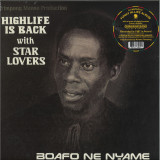
A spectacular Hi-Life album with funky digital touches from the great Ghanaian producer Frimpong Manso.
Recorded in 1987 at Ghana Films Studio in Accra, the album Boafo Ne Nyame, that we can translate as “Helper is god”, is led by the great and sweet voice of K. Adusei.
Five long tracks filled with hypnotic hi-life grooves and many funk inflexions that go way beyond lots of standard riffing of modern Afro Funk. The track “Asem De Ye So” (There's a problem on us) is a dancefloor-friendly song, already known from connoisseurs and maybe a future anthem when the clubs will reopen!
Manso Frimpong was born Feb 21st at Nkawkaw and sadly died Nov 23rd 2016 in Kumasi.
Altın Gün return with a masterful album that widens their critically acclaimed exploration of Anatolian rock and Turkish psychedelic stylings to include dreamy 80’s synth-pop and dancefloor excursions. Yol (Road) brings together all vectors of the AltınGün experience and delivers their most compelling and individual album to date.
Amsterdam’s Altın Gün have built a strong reputation for melding past and present to make brilliantly catchy, psychedelic pop music, as seen with their Grammy-nominated second album, Gece. They are also a renowned live band with strings of sold-out shows on three continents, who have consistently brought a muscular groove to their recordings. Yol, their third album in as many years, excitedly continues these trends; while also digging in deep to unveil a new palette of sonic surprises.
Though it draws from the rich and incredibly diverse traditions of Anatolian and Turkish folk music, Yol is not just a record that reframes traditional sounds for a contemporary audience. The album often presents a textured, avant-pop sound as evidenced by the debut single "Ordunun Dereleri.” Mysterious and atmospheric, the track is a thrilling evolution for the band. It patiently coaxes the listener into a resonant soundworld of down-tempo electro beats, majestic synths and Erdinç Ecevit's yearning vocal of unrequited love.
The album also signals a very different approach in making and recording for the band. Singer Merve Dasdemir takes up the story: “We were basically stuck at home for three months making home demos, with everybody adding their parts. The transnational feeling maybe comes from that process of swapping demos over the internet, some of the music we did in the studio, but lockdown meant we had to follow a different approach.”
Yol displays a noticeable dreaminess, maybe born from this enforced time to reflect. And select elements of late 1970s or early 1980s “Euro” synth pop also shines through. This new musical landscape was nurtured by certain instrument choices; namely the Omnichord, heard on ‘Arda Boylari’, ‘Kara Toprak’ and ‘Sevda Olmasaydi’, and the drum-machine, an instrument that is key to the gorgeous closing number, ‘Esmerim Güzelim’. Dasdemir once more: “bass player Jasper Verhulst loved the song. He said, ‘it doesn’t sound like Altın Gün, this sounds like a Turkish kindergarten music teacher from the 1980s using an 808!”
As ever, the tracks are the result of a true group effort, with ideas on Omnichord, 808 and other elements - such as field recordings and new age-esque ideas - continually kicked about between the six band members. At a safe distance of course. The record also owes something special to its production team, the band working this time with Asa Moto (the Ghent-based producer-crew, Oliver Geerts and Gilles Noë) who mixed the record. Before this Altın Gün always recorded on tape with their own sound engineer.
It would be wrong to say that what made Altın Gün such a loved and successful band has been left to one side. The pressure-cookers ‘Sevda Olmasaydı’ and ‘Maçka Yolları’ are classic cuts from the band. And their signature employment of a dizzying array of ideas and approaches can be heard with the marked Brazilian feel of ‘Kara Toprak’ and ‘Yekte’. Cosmic reggae filters through the grooves of ‘Yüce Dağ Başında’, and there is a steaming version of ‘Hey Nari’ which gives the traditional composition by Ali Ekber Çiçek a kick onto the dancefloor.
But with Yol, Altın Gün have maybe patented their own magical process of reimagining and sonic path-finding, one probably not heard since the late 1960s and early 1970s British folkrock boom. Less of a reworking than a seduction, their recordings transport the listener to a world where the original songs never previously inhabited. Merve Dasdemir again: “After we worked on them, they got a whole new life of their own. Maybe we went a little bit too far (laughs).”