
Buscar:mc det

- A1: Jimmy Carter & Dallas County Green - Travellin
- A2: Mistress Mary - And I Didn't Want You
- A3: Plain Jane - You Can't Make It Alone
- A4: Dan Pavlides - Lily Of The Valley
- A5: Angel Oak - I Saw Her Cry
- B1: Kathy Heidiman - Sleep A Million Years
- B2: Deerfield - Me Lovin' You
- B3: Arrogance - To See Her Smile
- B4: Jeff Cowell - Not Down This Low
- B5: Kenny Knight - Baby's Back
- C1: The Black Canyon Gang - Lonesome City
- C2: Allan Wachs - Mountain Roads
- C3: Mike & Pam Martin - Lonely Entertainer
- C4: Bill Madison - Buffalo Skinners
- D1: White Cloud - All Cried Out
- D2: Ethel Ann Powell - Gentle One
- D3: Sandy Harless - I Knew Her Well
- D4: Fj Mcmahon - The Spirit Of The Golden Juice
- D5: Doug Firebaugh - Alabama Railroad Town
19
Over 19 tracks, Wayfaring Strangers: Cosmic American Music mines gold from dollar bin country-rock detritus to reconstruct events as seen from the genre's wild west - Americana's vast private press substructure. As progenitor and contemptuous poster boy for the music that came to be Cosmic American, Gram Parsons found himself mired in a recording career spent mostly in scouting the perimeters of chart success. "He hated country-rock," Parsons collaborator Emmylou Harris would later reflect. "He thought that bands like the Eagles were pretty much missing the point." Parsons had been orbiting the idea of Cosmic American Music for some time. In 1968 he'd parted ways with the Byrds and was looking to take air with a new project. "It's basically a Southern soul group playing country and gospel-oriented music with a steel guitar" he told Melody Maker, on the subject of The Flying Burrito Brothers. So it was that when A&M's Burrito Brothers debut The Gilded Palace of Sin made it to shelves in February of 1969, early adherents to the Cosmic American gospel were already echoing its message from areas flanking Gram Parsons' Southern California hills and canyons. There was F.J. McMahon in coastal Santa Barbara, Mistress Mary further inland in Hacienda Heights, and Plain Jane of Albuquerque, New Mexico, each responding by committing their own private readings to tape before day one of the 1970s. Parsons himself might've disdained them, had he even been aware of such minor ripples, shimmering at the edges of his desert oasis. But these were true believers all the same, given over fully to his roots music concept, each filling vinyl grooves with non-rock instrumentation like fiddle, banjo, and pedal steel guitar, the last undoubtedly Cosmic American Music's most distinguishing stringed signifier. Only too predictably, big labels did the grunt work of confining and defining the movement, as ABC, United Artists, RCA, and more played catch-up with Asylum's raptor rock juggernaut, via backwoods crossover also-rans with names like Gladstone, American Flyer, and Silverado. Twang reigned, the shitkickers kicked shit, and the vaguely western-sounding guitar records piled up. Country-rock became "the dominant American rock style of the 1970s," as Peter Doggett's comprehensive Are You Ready for the Country put it much later. Wayfaring Strangers: Cosmic American Music picks up and dusts off golden ingots from the dollar-bin detritus of that domination, to reconstruct events as seen from the genre's real Wild West-America's one-off private press label substructure.

- The Same
- Chip On My Shoulder
- Beyond My Hands
- Chokito Bar
- Derelict Eyes
- No Turning Back
- Rock'n'roll Marie
- Feel Strung Out
- Drives Me Wild
- Help Yourself
- We're Not Like You
- Rock Action
For the first time on vinyl, a great Australian High Energy classic from Brother Brick, led by Stew Cunningham, one of the best guitarists to emerge from the antipodes. On the same level as other classics such as Bored!, Asteroid B612, New Christs... A gem of OZ rock. Attention all rock enthusiasts and vinyl collectors! The wait is finally over. For the first time ever, Brother Brick's legendary 1997 album A Portable Altamont is being released on vinyl, fully remastered to capture the raw power and energy that defined their high-octane sound. This release showcases the band's gritty fusion of blistering guitar riffs, pounding rhythms, and unforgettable melodies--reminiscent of Detroit's finest like The Stooges and MC5, but with that unmistakable Aussie edge. Led by the iconic Stewart Cunningham, known for his work with other influential projects like Proton Energy Pills, Leadfinger, Asteroid B612, and The Yes-Men, Brother Brick carved out their own space in the '90s Australian rock scene. A Portable Altamont is a testament to their uncompromising spirit, packed with all the attitude and authenticity that made them a standout in the Sydney underground. Originally only available on CD, A Portable Altamont is a high-energy masterpiece of Australian rock, packed with blistering guitars and melodies that have been screaming to be heard on the rich, warm tones of vinyl. This remastered edition brings new life to tracks that defined a generation of raw, unapologetic rock. If you're a fan of loud guitars, powerful melodies, and pure rock 'n' roll attitude, this is the vinyl you've been waiting for. Don't miss your chance to own a piece of rock history--A Portable Altamont is now available in a limited edition vinyl pressing! TRACKLIST SIDE A A1 The Same A2 Chip On My Shoulder A3 Beyond My Hands A4 Chokito Bar A5 Derelict Eyes A6 No Turning Back SIDE B B1 Rock'n'Roll Marie B2 Feel Strung Out B3 Drives Me wild B4 Help Yourself B5 We're Not Like You B6 Rock Action

First detected in the 1950s, Quasars remained a mystery for years with the massive amount of energy seeming to come from a very small area of space. Over time, astrophysicists theorised and proved that these celestial objects are black holes forming the centres of galaxies. For the latest Micron Audio release, 6SISS creates a sonic exploration of the many aspects of these gigantic cosmological bodies resulting in a collection of tracks that reflect their density, power, and luminosity. Each of the four tracks, QUASAR I-IV, represents a different phase of interaction with a quasar's energy, from initial observation to a final, euphoric absorption into the quasar's core: fizzing and enigmatic synths suggest the radio waves that travelled for thousands of years before being detected, while other bassier sounds bring to mind the vast gravitational pull of galactic centres, slowly attracting stars and planets alike towards them. As with all Micron Audio releases, QUASAR reveals a deep appreciation of scientific discovery and knowledge. Whilst avoiding retro-futuristic clich?, the imaginative abstract storytelling genre of electro is perfectly represented in this collection, in which 6SISS yet again emits his own densely packed work to emanate across the universe with a bold radiant energy.

- Cold Outside
- Nick Of Time
- Lonely One
- It's My Time
- Left Unsaid
- Try Try Try
- Hall Of Mirrors
- Much Too Much
- Your Kinda Thing
- New Questions
- Kill City
- I'm Not Gonna Do It
- Don't Wanna Play
- Nashville Nights
- Today I Shot The Devil
- Tell Me Things
- Live With Me
- Just Another Day
The Fluid are arguably the great unsung band from the fertile underground rock scene of the late '80s and early '90s. The Denver five-piece - John Robinson (vocals), James Clower (guitar), Matt Bischoff (bass), Garrett Shavlik (drums), and the dear departed Ricky Kulwicki (guitar) - fused the fire of '80s hardcore with crunching Detroit protopunk, '60s garage rock, and '70s rock swagger. Think MC5, Faces, '70s Stones, all cranked up and really high on Sex Pistols and Black Flag singles. Rising from the ashes of early-'80s Denver bands Frantix (whose "My Dad's a Fuckin' Alcoholic" is a true gem of American punk) and White Trash, The Fluid were the first non-Seattle band to sign to Sub Pop, and Clear Black Paper was the second full-length album the label ever released. The label honchos were fans of Frantix, and happily got involved with The Fluid when the opportunity arose via the label's European licensing partner, Glitterhouse. Witnessing The Fluid's dominant live presence helped - a particularly fiery early show at Seattle's Central Tavern featured The Fluid, Mudhoney, Mother Love Bone, and Soundgarden all trying to outdo one another on stage. The band fit right in on Sub Pop's nascent roster of acts who, wherever they stood on the spectrum of punk/rock/metal, shared a commitment to thunderous riffs and explosive live shows. Legendary for their ferocious stage presence, The Fluid toured all over the US and Europe, holding their own and then some on bills with Mudhoney, Nirvana, Soundgarden, Dinosaur Jr., and other powerhouses of the era. From 1986 to 1993, The Fluid put out four albums and a number of EPs and singles, including a split 7" with Nirvana in 1991, before doing one album for a major label and promptly disbanding. Yet, while their partners-in-crime bulldozed into the mainstream, The Fluid remained something of a cult band, their audience confined to those who got hip during the band's existence, and crate diggers who nabbed original vinyl or CDs, which had quickly become rarities after selling through their original runs. Why? Record industry machinations? The fickle finger of pop culture? Being from Denver, not Seattle? Who the hell knows_ and who cares! The point is the band ripped, and the world deserves to hear them again. The Fluid took influences they shared with their contemporaries and ran in their own direction, focused on ass-shaking grooves more than misanthropic sludge. Rock anthems like "Cold Outside" sit alongside Stooge-oid rhythmic poundings ("Black Glove"), bluesy romps ("Leave It"), the occasional grungy dirge ("Wasted Time"), and raw punk bangers ("Is It Day I'm Seeing?" from the seminal 1988 Sub Pop 200 compilation). The band wasn't shy about their inspiration, either: scattered through their catalog are covers of The Troggs, The Rolling Stones, MC5, Iggy Pop and James Williamson, and Rare Earth. The Fluid stand out as champions of a feral, urgent, exuberant approach to rock 'n roll. As it turns out, that wasn't a recipe for stardom in the era of hyper-slick pop, boomer dinosaurs crying tears in heaven, and hair-metal power-ballads. But someone had to do it. To set things right, Sub Pop, The Fluid, and producer Jack Endino (Nirvana, Soundgarden, High on Fire, Mudhoney) teamed up to refresh and reissue The Fluid's entire indie-label catalog: their 1986 debut, Punch N Judy; 1988's Clear Black Paper; 1989's Roadmouth; the 1990 Glue EP (produced by Butch Vig, of Nevermind fame); and a treasure trove of rarities and previously unreleased material. All the music has been remastered from original tapes by Endino and JJ Golden, and the bulk of it has been meticulously remixed by Endino and the band, righting some sonic quirks that diminished the impact of the original records. Now, with their definitive material sounding better than ever, it's high time The Fluid get their due.

8
The Fluid are arguably the great unsung band from the fertile underground rock scene of the late '80s and early '90s. The Denver five-piece - John Robinson (vocals), James Clower (guitar), Matt Bischoff (bass), Garrett Shavlik (drums), and the dear departed Ricky Kulwicki (guitar) - fused the fire of '80s hardcore with crunching Detroit protopunk, '60s garage rock, and '70s rock swagger. Think MC5, Faces, '70s Stones, all cranked up and really high on Sex Pistols and Black Flag singles. Rising from the ashes of early-'80s Denver bands Frantix (whose "My Dad's a Fuckin' Alcoholic" is a true gem of American punk) and White Trash, The Fluid were the first non-Seattle band to sign to Sub Pop, and Clear Black Paper was the second full-length album the label ever released. The label honchos were fans of Frantix, and happily got involved with The Fluid when the opportunity arose via the label's European licensing partner, Glitterhouse. Witnessing The Fluid's dominant live presence helped - a particularly fiery early show at Seattle's Central Tavern featured The Fluid, Mudhoney, Mother Love Bone, and Soundgarden all trying to outdo one another on stage. The band fit right in on Sub Pop's nascent roster of acts who, wherever they stood on the spectrum of punk/rock/metal, shared a commitment to thunderous riffs and explosive live shows. Legendary for their ferocious stage presence, The Fluid toured all over the US and Europe, holding their own and then some on bills with Mudhoney, Nirvana, Soundgarden, Dinosaur Jr., and other powerhouses of the era. From 1986 to 1993, The Fluid put out four albums and a number of EPs and singles, including a split 7" with Nirvana in 1991, before doing one album for a major label and promptly disbanding. Yet, while their partners-in-crime bulldozed into the mainstream, The Fluid remained something of a cult band, their audience confined to those who got hip during the band's existence, and crate diggers who nabbed original vinyl or CDs, which had quickly become rarities after selling through their original runs. Why? Record industry machinations? The fickle finger of pop culture? Being from Denver, not Seattle? Who the hell knows_ and who cares! The point is the band ripped, and the world deserves to hear them again. The Fluid took influences they shared with their contemporaries and ran in their own direction, focused on ass-shaking grooves more than misanthropic sludge. Rock anthems like "Cold Outside" sit alongside Stooge-oid rhythmic poundings ("Black Glove"), bluesy romps ("Leave It"), the occasional grungy dirge ("Wasted Time"), and raw punk bangers ("Is It Day I'm Seeing?" from the seminal 1988 Sub Pop 200 compilation). The band wasn't shy about their inspiration, either: scattered through their catalog are covers of The Troggs, The Rolling Stones, MC5, Iggy Pop and James Williamson, and Rare Earth. The Fluid stand out as champions of a feral, urgent, exuberant approach to rock 'n roll. As it turns out, that wasn't a recipe for stardom in the era of hyper-slick pop, boomer dinosaurs crying tears in heaven, and hair-metal power-ballads. But someone had to do it. To set things right, Sub Pop, The Fluid, and producer Jack Endino (Nirvana, Soundgarden, High on Fire, Mudhoney) teamed up to refresh and reissue The Fluid's entire indie-label catalog: their 1986 debut, Punch N Judy; 1988's Clear Black Paper; 1989's Roadmouth; the 1990 Glue EP (produced by Butch Vig, of Nevermind fame); and a treasure trove of rarities and previously unreleased material. All the music has been remastered from original tapes by Endino and JJ Golden, and the bulk of it has been meticulously remixed by Endino and the band, righting some sonic quirks that diminished the impact of the original records. Now, with their definitive material sounding better than ever, it's high time The Fluid get their due.

- You
- Goin' Away
- Saccharine Rejection
- Mouse Trap
- Turn Away
- Static Cling
- Preacher Man Blues
- My Future
- Madhouse
- 13: Th Nite
- Graveyard Tramps
8
The Fluid are arguably the great unsung band from the fertile underground rock scene of the late '80s and early '90s. The Denver five-piece - John Robinson (vocals), James Clower (guitar), Matt Bischoff (bass), Garrett Shavlik (drums), and the dear departed Ricky Kulwicki (guitar) - fused the fire of '80s hardcore with crunching Detroit protopunk, '60s garage rock, and '70s rock swagger. Think MC5, Faces, '70s Stones, all cranked up and really high on Sex Pistols and Black Flag singles. Rising from the ashes of early-'80s Denver bands Frantix (whose "My Dad's a Fuckin' Alcoholic" is a true gem of American punk) and White Trash, The Fluid were the first non-Seattle band to sign to Sub Pop, and Clear Black Paper was the second full-length album the label ever released. The label honchos were fans of Frantix, and happily got involved with The Fluid when the opportunity arose via the label's European licensing partner, Glitterhouse. Witnessing The Fluid's dominant live presence helped - a particularly fiery early show at Seattle's Central Tavern featured The Fluid, Mudhoney, Mother Love Bone, and Soundgarden all trying to outdo one another on stage. The band fit right in on Sub Pop's nascent roster of acts who, wherever they stood on the spectrum of punk/rock/metal, shared a commitment to thunderous riffs and explosive live shows. Legendary for their ferocious stage presence, The Fluid toured all over the US and Europe, holding their own and then some on bills with Mudhoney, Nirvana, Soundgarden, Dinosaur Jr., and other powerhouses of the era. From 1986 to 1993, The Fluid put out four albums and a number of EPs and singles, including a split 7" with Nirvana in 1991, before doing one album for a major label and promptly disbanding. Yet, while their partners-in-crime bulldozed into the mainstream, The Fluid remained something of a cult band, their audience confined to those who got hip during the band's existence, and crate diggers who nabbed original vinyl or CDs, which had quickly become rarities after selling through their original runs. Why? Record industry machinations? The fickle finger of pop culture? Being from Denver, not Seattle? Who the hell knows_ and who cares! The point is the band ripped, and the world deserves to hear them again. The Fluid took influences they shared with their contemporaries and ran in their own direction, focused on ass-shaking grooves more than misanthropic sludge. Rock anthems like "Cold Outside" sit alongside Stooge-oid rhythmic poundings ("Black Glove"), bluesy romps ("Leave It"), the occasional grungy dirge ("Wasted Time"), and raw punk bangers ("Is It Day I'm Seeing?" from the seminal 1988 Sub Pop 200 compilation). The band wasn't shy about their inspiration, either: scattered through their catalog are covers of The Troggs, The Rolling Stones, MC5, Iggy Pop and James Williamson, and Rare Earth. The Fluid stand out as champions of a feral, urgent, exuberant approach to rock 'n roll. As it turns out, that wasn't a recipe for stardom in the era of hyper-slick pop, boomer dinosaurs crying tears in heaven, and hair-metal power-ballads. But someone had to do it. To set things right, Sub Pop, The Fluid, and producer Jack Endino (Nirvana, Soundgarden, High on Fire, Mudhoney) teamed up to refresh and reissue The Fluid's entire indie-label catalog: their 1986 debut, Punch N Judy; 1988's Clear Black Paper; 1989's Roadmouth; the 1990 Glue EP (produced by Butch Vig, of Nevermind fame); and a treasure trove of rarities and previously unreleased material. All the music has been remastered from original tapes by Endino and JJ Golden, and the bulk of it has been meticulously remixed by Endino and the band, righting some sonic quirks that diminished the impact of the original records. Now, with their definitive material sounding better than ever, it's high time The Fluid get their due.

11
The Fluid are arguably the great unsung band from the fertile underground rock scene of the late '80s and early '90s. The Denver five-piece - John Robinson (vocals), James Clower (guitar), Matt Bischoff (bass), Garrett Shavlik (drums), and the dear departed Ricky Kulwicki (guitar) - fused the fire of '80s hardcore with crunching Detroit protopunk, '60s garage rock, and '70s rock swagger. Think MC5, Faces, '70s Stones, all cranked up and really high on Sex Pistols and Black Flag singles. Rising from the ashes of early-'80s Denver bands Frantix (whose "My Dad's a Fuckin' Alcoholic" is a true gem of American punk) and White Trash, The Fluid were the first non-Seattle band to sign to Sub Pop, and Clear Black Paper was the second full-length album the label ever released. The label honchos were fans of Frantix, and happily got involved with The Fluid when the opportunity arose via the label's European licensing partner, Glitterhouse. Witnessing The Fluid's dominant live presence helped - a particularly fiery early show at Seattle's Central Tavern featured The Fluid, Mudhoney, Mother Love Bone, and Soundgarden all trying to outdo one another on stage. The band fit right in on Sub Pop's nascent roster of acts who, wherever they stood on the spectrum of punk/rock/metal, shared a commitment to thunderous riffs and explosive live shows. Legendary for their ferocious stage presence, The Fluid toured all over the US and Europe, holding their own and then some on bills with Mudhoney, Nirvana, Soundgarden, Dinosaur Jr., and other powerhouses of the era. From 1986 to 1993, The Fluid put out four albums and a number of EPs and singles, including a split 7" with Nirvana in 1991, before doing one album for a major label and promptly disbanding. Yet, while their partners-in-crime bulldozed into the mainstream, The Fluid remained something of a cult band, their audience confined to those who got hip during the band's existence, and crate diggers who nabbed original vinyl or CDs, which had quickly become rarities after selling through their original runs. Why? Record industry machinations? The fickle finger of pop culture? Being from Denver, not Seattle? Who the hell knows_ and who cares! The point is the band ripped, and the world deserves to hear them again. The Fluid took influences they shared with their contemporaries and ran in their own direction, focused on ass-shaking grooves more than misanthropic sludge. Rock anthems like "Cold Outside" sit alongside Stooge-oid rhythmic poundings ("Black Glove"), bluesy romps ("Leave It"), the occasional grungy dirge ("Wasted Time"), and raw punk bangers ("Is It Day I'm Seeing?" from the seminal 1988 Sub Pop 200 compilation). The band wasn't shy about their inspiration, either: scattered through their catalog are covers of The Troggs, The Rolling Stones, MC5, Iggy Pop and James Williamson, and Rare Earth. The Fluid stand out as champions of a feral, urgent, exuberant approach to rock 'n roll. As it turns out, that wasn't a recipe for stardom in the era of hyper-slick pop, boomer dinosaurs crying tears in heaven, and hair-metal power-ballads. But someone had to do it. To set things right, Sub Pop, The Fluid, and producer Jack Endino (Nirvana, Soundgarden, High on Fire, Mudhoney) teamed up to refresh and reissue The Fluid's entire indie-label catalog: their 1986 debut, Punch N Judy; 1988's Clear Black Paper; 1989's Roadmouth; the 1990 Glue EP (produced by Butch Vig, of Nevermind fame); and a treasure trove of rarities and previously unreleased material. All the music has been remastered from original tapes by Endino and JJ Golden, and the bulk of it has been meticulously remixed by Endino and the band, righting some sonic quirks that diminished the impact of the original records. Now, with their definitive material sounding better than ever, it's high time The Fluid get their due.

In what many consider to be the birth of jazz fusion, Emergency!, led by Tony Williams (drums) with bandmates John Mclaughlin (guitar) and Larry Young (organ), is a true adventure in the beginning of the jazz-rock blend that would take shape in late 1960s and beyond. From the opening title track, the direction is decisive and commands attention as Williams leads his crew through a mixture of swing, rock and free jazz that cements its place as one of the most influential albums of the time. This Verve By Request title is pressed on 180-gram vinyl at Third Man in Detroit.

Declassified Records is back with its 6th release - 2 more tracks crafted by the label owner himself SP:MC. Staying true to the original ideology of his imprint, SP:MC once again aims to fuse & contort his influences from the Drum & Bass & Dubstep scenes into the 2-step / UKG framework. The A side ‘XL Bully’ is definitely the more up front & hard hitting of the two tracks - drawing inspiration from the palette of Digital & Spirit, Total Science & Rufige Kru’s previous works. The flipside ‘Core Memories’ is a deeper cut leaning towards a more Detroit feel - you can undoubtably hear a nod to the late great Marcus Intalex & ST Files here. Declassified continues the forge its own path forwards, already becoming recognised as a ‘buy on sight’ label for UK bass music fans.

4
2024 Repress
Micron Audio embodies a hub for a modern and futuristic electro sound, led by its master DJ Stingray 313. The imprint beckons intense electronic sounds, roughened textures and geometries that speak to a guiding principle of making technological advancement accessible to the people. These technoid adventures of sci-fi sound design and arrays of unabating rhythm, draw its listeners through warped microworlds and wicked contortions. Behind the sounds, it exists as a display of artistic responsibility, making statements and providing solutions from socio-political commentaries.? The first Micron Audio physical release emerged in 2011, with DJ Stingray 313's Electronic Countermeasures EP, following a digital-only compilation that is no longer available. Tracks from the Micron Audio hemisphere have featured in several compilation records released by the likes of Rush Hour and Creme Organization, including Stringray's Urban Tribe project. It represents a crisply defiant and firmly electronic approach, drawing in the infective indicators of video games. Relaunching afresh in 2021, Micron Audio is working with new artists and is stepping not only further into the future but into the foreground, where its clear scientific intention and political attitude is entrenched through top-shelf sound design and pumping rhythms.

- Fugitive Song
- If This Is Love (I'd Rather Be Lonely)
- Chips Chicken Banana Split
- Grand Funk
- Together
- I Wish It Would Rain
- African Wake
- Love Is The Answer
- I Believe In Music
- Eternal Love
- Fire (She Need Water)
- Right On
- You're So Good To Me Baby
- Mr. Fortune
- Memories
- Here We Go Again
In den späten 1960er Jahren erlebte Kanadas größte Stadt einen musikalischen Aufschwung, als karibische Einwanderer Toronto zu ihrer neuen Heimat machten. Die besten Ska-, Rocksteady- und Reggae-Aufnahmekünstler jener Zeit - die Gründer von Studio One, Treasure Isle und Trojan Records - taten einfach das, was ihnen in den Sinn kam. Einer nach dem anderen gingen sie ins Studio und nahmen einige der härtesten Songs diesseits von Kingston auf. Gemeinsam überwanden sie die rassischen und kulturellen Barrieren und bildeten eine beispiellose und wenig bekannte kanadische Soul & Reggae-Community. "Jamaika to Toronto: Soul, Funk & Reggae 1967-1974" beschreibt diese entscheidende klangliche Migration im Detail. // Mit Jackie Mittoo, Johnnie Osbourne, Wayne McGhie, Lloyd Delpratt, The Mighty Pope, Jo-Jo Bennett, Eddie Spencer, Noel Ellis und mehr_ // 2024 erweiterte Ausgabe mit 20-seitigem Deluxe-Booklet mit Archivbildern, Künstlerbiografien und Essays // 2xLP-Set, läuft mit 45 rpm, in einem luxuriösen Klappcover // Zusammengestellt, und kommentiert von dem GRAMMY-nominierten Produzenten, DJ und Journalisten Kevin Howes (alias Sipreano, Voluntary In Nature) in Zusammenarbeit mit Light in the Attic // Yellow & Green ReVinyl, eine nachhaltige Alternative aus 100% recycelten Materialien //

- 1: Embrace The Lie
- 2: We Are Perdition
- 3: Full Moon Fever
- 4: At Dawn
- 5: The Fog
- 6: The Plague
También disponible
Black[28,15 €]
The Gates of Slumber return with a new album out in November on Svart Records “I never intended to pick up with The Gates of Slumber ever again in 2014. While I did start the band and wrote most of the first album it was never intended to be a one man show.” -Karl Simon, 2024 Indiana’s True Doom Metal legends The Gates of Slumber return with their sixth album out in November via Svart Records. The self-titled album is the band’s first full length offering since The Wretch from 2011. The Gates of Slumber was formed by Karl Simon in 1998. Various people were in and out of the group between 1998 and 2001, when the Blood Encrusted Deth Axe demo was recorded with Jamie Walters aka Dr. Phibes/Athenar (Boulder, Midnight) on drums and bass. In 2003 Jason McCash took over the bass duties and was a long-time member of the band until his untimely demise in 2014, after which Simon decided it was time to call it quits. That was until 2019 when the renowned metal festival Hell Over Hammaburg wanted to bring the band back on stage to perform at the festival’s 2020 edition. Simon reformed the band with its original member Chuck Brown on drums and Steve Janiak on bass and got back to work. “We’d been asked several times to play Hell Over Hammaburg. But there was no “we” to play. The germ of the idea started. We started re-learning songs from the first LP. It wasn’t too long into the rehearsals that we started coming up with new songs.”, states Simon. After a reunion tour was finished, Covid kicked in to slow down the process. Half of the album was already written but the remaining half took its time, and the songs were left to stew in their juices. With bastard heavy songs honoring the Doom Metal greats Saint Vitus and Penance, straight forward bangers, lyrics inspired by the Black Death and John Carpenter’s The Fog, The Gates of Slumber is a truly crushing album and a must listen to any Doom Metal fanatic. Having toured with Pentagram, Reverend Bizarre, Cathedral, Slough Feg, Earthride, and Weedeater in addition to getting praised by Decibel Magazine such as “The Gates of Slumber have quietly gone about the business of becoming one of the best heavy metal bands in the world.”, it’s safe to say The Gates of Slumber play some of the heaviest metal on this planet. The Gates of Slumber is available on vinyl, CD, and digital platforms on November 29th, 2024.

6
También disponible
Black[26,01 €]
The Gates of Slumber return with a new album out in November on Svart Records “I never intended to pick up with The Gates of Slumber ever again in 2014. While I did start the band and wrote most of the first album it was never intended to be a one man show.” -Karl Simon, 2024 Indiana’s True Doom Metal legends The Gates of Slumber return with their sixth album out in November via Svart Records. The self-titled album is the band’s first full length offering since The Wretch from 2011. The Gates of Slumber was formed by Karl Simon in 1998. Various people were in and out of the group between 1998 and 2001, when the Blood Encrusted Deth Axe demo was recorded with Jamie Walters aka Dr. Phibes/Athenar (Boulder, Midnight) on drums and bass. In 2003 Jason McCash took over the bass duties and was a long-time member of the band until his untimely demise in 2014, after which Simon decided it was time to call it quits. That was until 2019 when the renowned metal festival Hell Over Hammaburg wanted to bring the band back on stage to perform at the festival’s 2020 edition. Simon reformed the band with its original member Chuck Brown on drums and Steve Janiak on bass and got back to work. “We’d been asked several times to play Hell Over Hammaburg. But there was no “we” to play. The germ of the idea started. We started re-learning songs from the first LP. It wasn’t too long into the rehearsals that we started coming up with new songs.”, states Simon. After a reunion tour was finished, Covid kicked in to slow down the process. Half of the album was already written but the remaining half took its time, and the songs were left to stew in their juices. With bastard heavy songs honoring the Doom Metal greats Saint Vitus and Penance, straight forward bangers, lyrics inspired by the Black Death and John Carpenter’s The Fog, The Gates of Slumber is a truly crushing album and a must listen to any Doom Metal fanatic. Having toured with Pentagram, Reverend Bizarre, Cathedral, Slough Feg, Earthride, and Weedeater in addition to getting praised by Decibel Magazine such as “The Gates of Slumber have quietly gone about the business of becoming one of the best heavy metal bands in the world.”, it’s safe to say The Gates of Slumber play some of the heaviest metal on this planet. The Gates of Slumber is available on vinyl, CD, and digital platforms on November 29th, 2024.

Rome’s very own Electro-Psych outfit, Big Mountain County, is set to release their third LP ‘Deep Drives’ on November 29th via Sister 9 Recordings. After unveiling their latest EP, ‘Klaus’, at the New Colossus Festival in New York and SXSW in Austin, the band took a year-long studio break, honing and redefining a distinctive sound that bridges primitive Garage Rock and Neopsychedelia with Electroclash, Kraut and Disco. Stay tuned for updates as we’ll reveal more details and the release date in the coming weeks. Big Mountain County was formed in Rome in 2013 after four southern boys, two from the slopes of Mount Etna and two from the Adriatic Coast, came together. They instantly bonded over their mutual love for The Stooges, MC5, The Velvet Underground, and Joe Spencer, leading to the release of a 7-inch record brimming with raw Garage Rock & Roll. This debut propelled them into an exciting tour across Eastern Europe, hitting countries such as Hungary, Serbia, Croatia, and Bosnia-Herzegovina. They soon moved beyond Garage Rock to immerse themselves in the European Neopsychedelic resurgence and spent the following years carving out a reputation in the vibrant continental live scene. They dropped two LPs—Breaking Sound (Gas Vintage Records, 2015) and Somewhere Else (Porto Records, 2020)—along with two live albums. After relentlessly touring across Europe and the UK and opening the Italian tour for the U.S. band Cloud Nothings in 2019, they finally hit the US in 2023, gracing six different venues at SXSW and sharing stages with Osees and Os Mutantes. By the time they returned to Italy, they had secured summer opening slots for the likes of Brian Jonestown Massacre and La Femme. That year’s EP ‘Klaus’ marked a bold new chapter, showcasing a thrilling shift, diving into a more dance-driven and electronic sound. Featuring collaborations with electronic psych producer and LEVITATION DJ in residence Al Lover, along with the distinguished Roman producer Hugo Sanchez, the making of ‘Klaus’ provided the band with a revitalizing spark, steering them into a new musical direction

- Kick Out The Jams
- Empty Heart
- Ramblin' Rose
- Thunder Express
- Rama Lama Fa Fa Fa
- Motor City Is Burning
- I Can Only Give You Everything (Bonus Early Single)
- I Just Don't Know (Bonus Early Single)
- Looking At You (Bonus Early Single)
- Borderline (Bonus Early Single)
MC5 (Motor City Five), the legendary Detroit band. Their first single (included here) was released in 1967. In 1968 they played the infamous Democratic Convention that turned into a police riot, and they went on to be the "Official White Panther Party Band". Their manager John Sinclair became a hippie martyr, after being jailed for 10 years for 2 joints, inspiring John Lennon"s "10 For 2" song. Thrown off their first label Electra, they signed to Atlantic for 2 more albums but only achieved underground success. Now greatly revered as one of the seminal rock"n"roll bands and a huge inspiration for punk. Thunder Express documents their last and first studio works: - six tracks recorded in France at Studio Castle Herouville for a TV show in 1972; plus four tracks from their debut singles from "67 & "68. The title track is not available elsewhere. In 2024 MC5"s guitarist Wayne Kramer, drummer Dennis Thompson and manager John Sinclair all passed away, marking the end of the MC5 era.

10
Ghostly 25 Year Anniversary Edition. Thus far, Zach Saginaw's releases as Shigeto have been fragments, albeit singularly satisfying fragments -- EP-length glimpses into the Detroit producer's creative psyche. After filling two EPs on Ghostly International, Shigeto's lush, sumptuous take on instrumental hip-hop has fully materialized. Full Circle, the artist's first full-length album, completes the journey begun with Shigeto's Semi-Circle EP, synthesizing the drummer/producer's signature themes of family, continuity, and musical boundary-pushing into a vibrant, fully unified artistic statement.The sounds on Full Circle come from four years of obsessive field recording and collaboration. Saginaw brought his Tascam mini-recorder with him everywhere, capturing the "glasses, chains, breathing, children, family meals, monks singing in cathedrals, walks in the south of France, and good friends offering their musical skill" that would all find homes in the record's compositional nooks and crannies. As a result of Saginaw's constant documentation, the songs on Full Circle play like chapters in an ongoing story--as in "Escape from the Incubator", whose initial rhythmic claustrophobia opens up into a boom-clap nocturnal chase, or "French Kiss Power Up", whose romantic digital strut gives way to discord and fragmentation as the waves of synthesizer give way to a shaky, neurotic coda. Full Circle is framed by the "Ann Arbor" diptych, a pair of beat suites named after Saginaw's hometown (one featuring a sample of Detroit MC SelfSays), all double-thick synths and triple-strength kick drums. Saginaw plays the majority of his rhythms by hand, and Full Circle's consistently deep pocket is the record's secret weapon, thumping and breathing like a living being.Having set the stage with Semi-Circle and What We Held On To EPs--twin treatises on Saginaw's Japanese grandmother's escape from a US internment camp--Shigeto is clearly ready to draw the tale to a close and take center stage. "This release represents the end of the beginning--or perhaps that there is no end and no beginning at all," says Saginaw. Regardless, Full Circle is the start of something great.
Mint Condition - A record label focused on excavating the outer fringes of classic House and Techno. Unreleased mixes, classics, overlooked gems and never heard before material, mined from the last 30+ years of contemporary dance music are the order of the day. From Chicago, Detroit and New York to London, Nottingham and beyond. Mint Condition have got their digging hats on to bring you exclusive heat and those rarer than rare jams that have been in your wants list for years. Dig in!
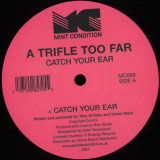
Forged in the fertile acid house scene of the late 80s, A Trifle Too Far comprises childhood friends Simon Ward and Tony Grimley from Hornchurch, on London's outer fringes in Essex. Their insatiable thirst for seeking out new sounds led them to countless shindigs, parties and raves, eventually inspiring them to craft their own music based on their adventures on the dancefloor.
Their studio collaboration culminated in the creation of the remarkable record you currently hold in your hands: 'Catch Your Ear / Meringueatang'. This two-track release, recorded in 1992, offers forward-thinking and fresh prog-house cuts, as rare as hen's teeth and as exhilarating as they were upon their original release over three decades ago. Catch Your Ear was expertly engineered by Evren Omer, boss of Essex-based techno bunker Strategy Records, while Meringueatang was helmed by Matt Clayden, one half of M&M and Acorn Arts and the proprietor of X-Gate Records, another stalwart in Essex's underground dance scene.
'Catch Your Ear / Meringueatang' remains the only musical collaboration between the duo. When Mint Condition approached them to reissue this highly sought-after EP, both Simon and Tony were surprised and delighted in equal measure by the proposition. Now, a few months down the line, we find ourselves with yet another top-tier addition to the MC reissue catalogue, fully licensed from the artists, mastered and cut by Keith Tenniswood at Curve Pusher, and available once again for purchase. Do not resist the beat!

- Big Love
- Seven Wonders
- Everywhere
- Caroline
- Tango In The Night
- Mystified
- Little Lies
- Family Man
- Welcome To The Room…Sara
- Isn’t It Midnight
- When I See You Again
- You And I, Part Ii
A Universe of Pop: Fleetwood Mac’s Tango in the Night Features Meticulous Production, Includes the Hits “Big Love,” “Everywhere,” “Seven Wonders,” and “Little Lies”
Experience the 1987 Album in Audiophile Sound for the First Time:
Mobile Fidelity’s Numbered-Edition 180g 45RPM 2LP Set Captures the Perfectionist Details
1/2" / 30 IPS analogue master to DSD 256 to analogue console to lathe
The perfectionism involved in crafting Fleetwood Mac’s Tango in the Night reached a level of intensity experienced by few artists before or since. Commercially and creatively, the painstaking efforts paid off. Recorded over the span of 18 months, the triple-platinum album spawned four hit singles and put Fleetwood Mac back at the center of mainstream conversation. Its demands also ultimately forced its primary architect, guitarist-singer Lindsey Buckingham, to leave the group shortly after its completion. Was it all worth it? A thousand times “yes.”
Sourced from the original master tapes, pressed at Fidelity Record Pressing, and housed in a Stoughton jacket, Mobile Fidelity’s numbered-edition 180g 45RPM 2LP set of Tango in the Night presents the 1987 record in audiophile sound for the first time. Everything co-producers Buckingham and Richard Dashut sought to instill in the music — the exacting tones, gauzy textures, plush atmospherics, shifted harmonics, unique pitches, pristine acoustics, biting rhythms — can now be heard with elevated accuracy, range, depth, and detail.
Made under challenging circumstances, Tango in the Night is as much a universe of sound as it is an album. This reissue conveys that sonic spectrum in exhaustive manners that go beyond prior editions by playing with a combination of transparency, imaging, openness, and dynamics that provides uncanny insight into the meticulously layered vocal and instrumental tracks. Equally important, it also amplifies your connection to the elaborate melodies, contagious hooks, and airy highs that account for the album’s ageless pop brilliance.
As for the wondrous array of percussive accents, synthesizer elements, interlaced guitars, and lush choruses — all seemingly occupying the exact right place amid the soundstages and taking on shapes and forms that lend them a living, breathing quality? If your audio system is up to the task, the realism, presence, and warmth of Mobile Fidelity’s collectible edition will have you considering Tango in the Night from a new perspective — one that puts its lavish, gorgeous creations on a par with those from Rumours and Tusk.
Unlike those records, Tango in the Night began from a more individualistic perspective in that it sprang from what originally was intended to become a Buckingham solo effort. Instead, it remains the final album credited to the peak Fleetwood Mac lineup involving Buckingham, Stevie Nicks, Christine McVie, Mick Fleetwood, and John McVie. Though the participation of all the members varies from track to track, the cohesive arrangements and alchemic production on Tango in the Night suggest a unity that remains on a par with the band’s other landmark works.
Largely constructed from laborious methods that involved recording at half speed to achieve the desired sonics and tonal nuances, piecing together verses and choruses to attain seamless synchronicity, and Buckingham using a Fairlight CMI synthesizer/workstation in visionary ways, the songs pair electronic and acoustic elements to radiant effect. Tango in the Night also possesses light dance structures that resulted in several tunes being recast as dance mixes on extended-play singles. Above all, however, this is music that appears to float and cast dreamy spells.
Surrender to the frisky interplay of the opening “Big Love,” big pop punctuated with Buckingham’s back-and-forth “oh-ah” sighs that ping the Top 5 smash with innocuous sensuality and toe-tapping momentum. Delight amid the shimmering lights of “Seven Wonders,” whose shades and shadows shift amid Nicks’ raspy vocals and a large group chorus. Wrap yourself in the warmth of the weightless “Everywhere,” a flawless slice of hummable pop that topped with Adult Contemporary charts for three weeks and towers as an ode to the love everyone desires. Stare into the mysterious landscape of the title track (and dig the synthesized harp) just before it explodes, briefly ceding to a terse riff and locked-in grooves.
Tango in the Night teems with delightful surprises and well-honed specifics, especially when Buckingham and Christine McVie team together. In addition to the aforementioned “Everywhere,” the singer born Christine Anne Perfect plays a major role on four more cuts — all highlights — from the breathy, head-over-heels emotionalism of “Mystified” to the sweet, sweeping escapism of “Little Lies,” a cover-up of romantic despair aided by Nicks’ irreplaceable background vocals.
“If I see you again/Will it be the same,” asks Buckingham on “When I See You Again,” finishing up a song a longing-sounding Nicks had started while voicing words that many likely knew would resonate far beyond the confines of the heartfelt song — a goodbye wearing a faint disguise. Though Fleetwood Mac would never again reach the heights maintained throughout Tango in the Night, and members would go their own way, the album towers as a paean to what’s possible in the fields of pop, rock, and studio wizardry.

. For Fans Of: The Weather Station, Weyes Blood, Adrianne Lenker, Phoebe Bridgers, Joan Shelley, Lana Del Rey, Cass McCombs, Angel Olsen & Neil Young. Camelot, the legendary seat of King Arthur’s court in Early Middle Ages Britain, was probably not a real place. A corruption of the name of a real Romano-Briton city, the word “Camelot” accumulated symbolic, mythic resonances over centuries, until achieving its present usage as a near-synonym of “utopia.” In the mid-20th century alone, Camelot inspired an explosion of representations and appropriations, among them the violent, affectless Arthurian court of Robert Bresson’s 1974 film Lancelot du Lac and the absurdist iteration of Monty Python’s 1975 Holy Grail, both of which feature armoured knights erupting into fountains of blood; the mystical Welsh world of novelist John Cowper Powys’s profoundly weird 1951 novel Porius, with its Roman cults, wizards and witches, and wanton giants; and the nationalist nostalgia of President John F. Kennedy’s White House. Unsurprisingly there are fewer Camelots in more recent memory. Camelot, Canadian songwriter Jennifer Castle’s extraordinary, moving 2024 chronicle of the artist in early middle age, charts a realer, more rooted, and more metaphorical place than the fabled Camelot of the Early Middle Ages (or its myriad depictions), but it too is a space more psychic than physical. In Castle’s Camelot, the fantastic interpenetrates the mundane, and the Grail, if there is one, distills everyday experience into art and art into faith, subliming terrestrial concerns into sublime celestial prayers to Mother Nature, and to the unfolding process of perfecting imperfection in one’s own nature. Co-produced by Jennifer and longtime collaborator Jeff McMurrich, her seventh record is at once her most monumental and unguarded to date, demonstrating a mastery of rendering her verse and melodies alike with crisply poignant economy. For all their pointedly plainspoken lyrical detail and exhilarating full-band musical flourishes, these songs sound inevitable, eternal as morning devotions. “Back in Camelot,” she sings on the lilting, vulnerable title track, “I really learned a lot / circles in the crops and / sky-high geometry.” The album opens with a candid admission of sleeping “in the unfinished basement,” an embarrassing joke that comes true. But the dreamer is redeemed by dreaming, setting sail in her airborne bed above “sirens and desert deities.” If she questions her own agency whether she is “wishing stones were standing” or just “pissing in the wind” it does not diminish the ineffable existential jolt of such signs and wonders. This abiding tension between belief and doubt, magic and pragmatism, self and other, sacred and profane, and even, arguably, paganism and monotheism, suffuses these ten songs, which limn an interior landscape shot through with sunstriped shadows of “multi-felt dimensions” both mystical and quotidian. The epic scale and transport of “Camelot,” with its swooning strings, gives way dramatically to “Some Friends,” an acoustic-guitar-and-vocals meditation in miniature on Janus-faced friends and the lunar and solar temperatures of their promises—“bright and beaming verses” versus hot curses which recalls her minimalist last album, 2020’s achingly intimate Monarch Season. (In a symmetrical sequencing gesture, the penultimate track, the incantatory “Earthsong,” bookends the central six with a similarly spare solo performance and coiled chord progression, this time an ambiguous appeal to … a wounded lover? a wounded saint? our wounded planet?). Those whom “Trust” accuses of treacherous oaths spit through “gilded and golden tooth” cynics, critics, hypocrites, gurus, scientists, doctors, lovers, government, the so-called entertainment industry sow uncertainty that can infect the artist, as in “Louis”: “What’s that dance / and can it be done? What’s that song / and can it be sung?” Answering affirmatively are “Lucky #8,” an irrepressible ode to dancing as a bulwark against the “tidal pools of pain” and the “theory of collapse,” and “Full Moon in Leo,” which finds the narrator dancing around the house with a broom, wearing nothing but her underwear and “big hair.” But the central question remains: who can we trust, and at what cost faith, in art or angels or otherwise? Castle’s confidence in her collaborators is the cornerstone of Camelot. Carl Didur (piano and keys), Evan Cartwright (drums and percussion), and steadfast sideman Mike Smith (bass) comprise a rhythm section of exquisite delicacy and depth. This fundamental trio anchors the airiness of regular backing vocalists Victoria Cheong and Isla Craig and frames the guitars of Castle, McMurrich, and Paul Mortimer (and on “Lucky #8,” special guest Cass McCombs). Reprising his decennial role on Castle’s beloved 2014 Pink City, Owen Pallett arranged the strings for Estonia’s FAMES Skopje Studio Orchestra. On the ravishing country-soul ballad “Blowing Kisses” Pallett’s crowning achievement here, which can be heard in its entirety in the penultimate episode of the third season of FX’s The Bear Jennifer contemplates time and presence, love and prayer and how songwriting and poetry both manifest and limit all four dimensions: “No words to fumble with / I’m not a beggar to language any longer.” Such rare moments of speechlessness “I’m so fucking honoured,” she bluntly proclaims suggest a state “only a god could come up with.” (If Camelot affirms Castle as one of the great song-poets of her generation, she is not immune to the despairing linguistic beggary that plagues all writers.) Camelot evinces a thoroughgoing faith not only in the natural world including human bodies, which can, miraculously, dance and swim and bleed and embrace and birth but also in our interpretations of and interventions in it: the “charts and diagrams” of “Lucky #8,” a daydreamt billboard on Fairfax Ave. in LA in “Full Moon in Leo,” the bloody invocations of the organ-stained “Mary Miracle,” and all manner of water worship, rivers in particular. (Notably, Jennifer has worked as a farmer and a doula.) The album ends with “Fractal Canyon”s repeated, exalted insistence that she’s “not alone here.” But where is here? The word “utopia” itself constitutes a pun, indicating in its ambiguous first syllable both the Greek “eutopia,” or “good-place” the facet most remembered today and “outopia,” or “no-place,” a negative, impossible geography of the mind. Utopia, like its metonym Camelot, is imaginary
