Search:mc nat

Styles
All
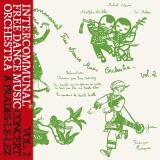
Intercommunal Free Dance Music Orchestra - Vol. 2 Concert A Prades Le Lez

Concert at Prades-le-Lez marks the origins of the Intercommunal Free Dance Music Orchestra. In 1974, François Tusques and his companions (Michel Marre, Jo Maka, Adolf Winkler and Guem), in the spirit of Don Cherry or Chris McGregor, playfully dismantle all borders and all styles of creative music.

On this second volume, the Intercommunal builds unprecedented soundscapes around a song of revolt, a dance tune, or a burst of dissonance. The journey is unforgettable, no question about it. On repeat listening, it even becomes… lunar!

“The music that we make is primarily meant to be listened to live,” warned a leaflet from the Intercommunal Free Dance Music Orchestra. This is precisely why the (restored!) reissue of the two volumes of Concert at Prades-le-Lez, recorded on January 25 and 26, 1974 by François Tusques and his comrades, is such an important event.

In 1971, after recording a series of albums that would leave a lasting mark on French jazz (Free Jazz, of course, with Michel Portal, François Jeanneau, Bernard Vitet, Beb Guérin and Charles Saudrais, but also Le Nouveau Jazz with Barney Wilen, or the solo Piano Dazibao), François Tusques founded the Intercommunal—a grouping whose very name called for the fraternization of the various communities making up the country: Our music will help, we hope, to resolve the contradictions that exist between workers be longing to different communities, by breaking down various forms of national chauvinism, and more particularly the chauvinism of certain French people toward the cultures of Third World countries… Long live the friendship between the peoples of the whole world!

Among the great records made by the Intercommunal Free Dance Music Orchestra, the two volumes of Concert at Prades-le-Lez come first, before L’Inter Communal, Vol. 4, Le Musichien, and Après la marée noire (four titles already reissued by Souffle Continu). François Tusques and his companions (Michel Marre and Jo Maka on saxophones, Adolf Winkler on trombone, and Guem on percussion) performed on January 25 and 26, 1974 at the Moulin de Prades-le-Lez, a few kilometers from Montpellier. It was thus in the southern region of Occitanie that the first echoes of this musical vision of a borderless brotherhood were recorded.

“We’re not among the Colonels,” the Intercommunal reassures us right away, performing a stride piano tune carried by African winds that the audience cannot resist for long. The energy is already striking and it never lets up throughout these two recordings, from start to finish: jazz, blues, traditional music, minimalism, even funk… The musicians of the Intercommunal have heard a lot of great music and now delight in reinventing it by mixing it all together.

“We want the song form to take its place as a weapon in the struggle against capitalist exploitation and all those who oppress us morally and materially,” declared an Intercommunal leaflet, quoting Jean-Baptiste Clément, author of the lyrics to “Le Temps des cerises.” The struggle was therefore serious—but it did not prevent François Tusques and his group from waging it in a festive spirit: each piece on Concert at Prades-le- Lez sends out a call for love and fraternity. Fifty years later, the message remains as relevant as ever—and once again, it is François Tusques who makes it heard.

pre-order now17.04.2026

expected to be published on 17.04.2026

23,95
Intercommunal Free Dance Music Orchestra - Vol. 1 Concert A Prades Le Lez
  • On N'est Pas Chez Les Colonels
  • Intercommunal Blues
  • Mazir
  • Kan-Ha-Diskan - We Shall Over Come
  • African Rythm-N-Logy
also available

2[23,95 €]


Concert at Prades-le-Lez marks the origins of the Intercommunal Free Dance Music Orchestra. In 1974, François Tusques and his companions (Michel Marre, Jo Maka, Adolf Winkler and Guem), in the spirit of Don Cherry or Chris McGregor, playfully dismantle all borders and all styles of creative music.

On this first volume, the Intercommunal takes its audience from New Orleans to Brittany and on to North Africa. The journey was bold, without a doubt—and its memory remains unforgettable.

“The music that we make is primarily meant to be listened to live,” warned a leaflet from the Intercommunal Free Dance Music Orchestra. This is precisely why the (restored!) reissue of the two volumes of Concert at Prades-le-Lez, recorded on January 25 and 26, 1974 by François Tusques and his comrades, is such an important event.

In 1971, after recording a series of albums that would leave a lasting mark on French jazz (Free Jazz, of course, with Michel Portal, François Jeanneau, Bernard Vitet, Beb Guérin and Charles Saudrais, but also Le Nouveau Jazz with Barney Wilen, or the solo Piano Dazibao), François Tusques founded the Intercommunal—a grouping whose very name called for the fraternization of the various communities making up the country: Our music will help, we hope, to resolve the contradictions that exist between workers be longing to different communities, by breaking down various forms of national chauvinism, and more particularly the chauvinism of certain French people toward the cultures of Third World countries… Long live the friendship between the peoples of the whole world!

Among the great records made by the Intercommunal Free Dance Music Orchestra, the two volumes of Concert at Prades-le-Lez come first, before L’Inter Communal, Vol. 4, Le Musichien, and Après la marée noire (four titles already reissued by Souffle Continu). François Tusques and his companions (Michel Marre and Jo Maka on saxophones, Adolf Winkler on trombone, and Guem on percussion) performed on January 25 and 26, 1974 at the Moulin de Prades-le-Lez, a few kilometers from Montpellier. It was thus in the southern region of Occitanie that the first echoes of this musical vision of a borderless brotherhood were recorded.

“We’re not among the Colonels,” the Intercommunal reassures us right away, performing a stride piano tune carried by African winds that the audience cannot resist for long. The energy is already striking and it never lets up throughout these two recordings, from start to finish: jazz, blues, traditional music, minimalism, even funk… The musicians of the Intercommunal have heard a lot of great music and now delight in reinventing it by mixing it all together.

“We want the song form to take its place as a weapon in the struggle against capitalist exploitation and all those who oppress us morally and materially,” declared an Intercommunal leaflet, quoting Jean-Baptiste Clément, author of the lyrics to “Le Temps des cerises.” The struggle was therefore serious—but it did not prevent François Tusques and his group from waging it in a festive spirit: each piece on Concert at Prades-le- Lez sends out a call for love and fraternity. Fifty years later, the message remains as relevant as ever—and once again, it is François Tusques who makes it heard.

pre-order now17.04.2026

expected to be published on 17.04.2026

23,95
Peter Andre - Legacy LP

Peter Andre

Legacy LP

12inchPE02V
Peter Andre
10.04.2026
  • 1: Behind Closed Doors 2.0
  • 2: Mysterious Girl .0 (Feat. Bubbler Ranx & Gjb100)
  • 3: All About Us 2.0 (Feat. Montell Jordan)
  • 4: Rest Of My Life 2.0 (Feat. Brian Mcknight)
  • 5: Rock U Right (Single Version)
  • 6: Flava 2.0
  • 7: Natural 2.0
  • 8: Insania 2.0
  • 9: Close To You (Feat. Oritse Williams)
  • 10: I Feel You 2.0
  • 11: Island Girl (Feat. Lady Leshurr)
  • 12: All Night All Right 2.0
pre-order now10.04.2026

expected to be published on 10.04.2026

25,63
Guilty Razors - Complete Recordings 1977 - 1978

UILTY RAZORS, BONA FIDE PUNKS.


Writings on the topic that go off in all directions, mind-numbing lectures given by academics, and testimonies, most of them heavily doctored, from those who “lived through that era”: so many people today fantasize about the early days of punk in our country… This blessed moment when no one had yet thought of flaunting a ridiculous green mohawk, taking Sid Vicious as a hero, or – even worse – making the so-called alternative scene both festive and boorish. There was no such thing in 1976 or 1977, when it wasn’t easy to get hold of the first 45s by the Pistols or the Clash. Few people were aware of what was happening on the fringes of the fringes at the time. Malcolm McLaren was virtually unknown, and having short hair made you seem strange. Who knew then that rock music, which had taken a very bad turn since the early 1970s, would once again become an essential element of liberation? That, thanks to short and fast songs, it would once again rediscover that primitive, social side that was so hated by older generations? Who knew that, besides a few loners who read the music press (it was even better if they read it in English) and frequented the right record stores? Many of these formed bands, because it was impossible to do otherwise. We quickly went from listening to the Velvet Underground to trying to play the Stooges’ intros. It’s a somewhat collective story, even though there weren’t many people to start it.
The Guilty Razors were among those who took part in this initial upheaval in Paris. They were far from being the worst. They had something special and even released a single that was well above the national average. They also had enough songs to fill an album, the one you’re holding. In everyone’s opinion, they were definitely not among the punk impostors that followed in their wake. They were, at least, genuine and credible.

Guilty Razors, Parisian punk band (1975-1978). To understand something about their somewhat linear but very energetic sound, we might need to talk about the context in which it was born and, more broadly, recall the boredom (a theme that would become capital in punk songs) coupled with the desire to blow everything off, which were the basis for the formation of bands playing a rejuvenated rock music ; about the passion for a few records by the Kinks or the early Who, by the Stooges, by the Velvet mostly, which set you apart from the crowd.
And of course, we should remember this new wave, which was promoted by a few articles in the specialized press and some cutting-edge record stores, coming from New York or London, whose small but powerful influence could be felt in Paris and in a handful of isolated places in the provinces, lulled to sleep by so many appalling things, from Tangerine Dream to President Giscard d’Estaing...
In 1975-76, French music was, as almost always, in a sorry state ; it was still dominated by Johnny Hallyday and Sylvie Vartan. Local rock music was also rather bleak, apart from Bijou and Little Bob who tried to revive this small scene with poorly sound-engineered gigs played to almost no one.
In the working class suburbs at the time, it was mainly hard rock music played to 11 that helped people forget about their gruelling shifts at the factory. Here and there, on the outskirts of major cities, you still could find a few rockers with sideburns wearing black armbands since the death of Gene Vincent, but it wasn’t a proper mass movement, just a source of real danger to anyone they came across who wasn't like them. In August 1976, a festival unlike any other took place in Mont-de-Marsan – the First European Punk Festival as the poster said – with almost as many people on stage as in the audience. Yet, on that day, a quasi historical event happened, when, under the blazing afternoon sun, a band of unknowns called The Damned made an unprecedented noise in the arena, reminiscent of the chaotic Stooges in their early adolescence. They were the first genuine punk band to perform in our country: from then on, anything was possible, almost anything seemed permissible.

It makes sense that the four+1 members of Guilty Razors, who initially amplified acoustic guitars with crappy tape recorder microphones, would adopt punk music (pronounced paink in French) naturally and instinctively, since it combines liberating noise with speed of execution and – crucially – a very healthy sense of rebellion (the protesters of May 1968 proclaimed, and it was even a slogan, that they weren’t against old people, but against what had made them grow old. In the mid-1970s, it seemed normal and obvious that old people should now ALSO be targeted!!!).
At the time, the desire to fight back, and break down authority and apathy, was either red or black, often taking the form of leafleting, tumultuous general assemblies in the schoolyard, and massive or shabby demonstrations, most of the time overflowing with an exciting vitality that sometimes turned into fights with the riot police. Indeed, soon after the end of the Vietnam War and following Pinochet’s coup in Chile, all over France, Trotskyist and anarcho-libertarian fervour was firmly entrenched among parts of the educated youth population, who were equally rebellious and troublemakers whenever they had the chance. It should also be noted that when the single "Anarchy in the UK" was first heard, even though not many of us had access to it, both the title and its explosive sound immediately resonated with some of those troublemakers crying out for ANARCHY!!! Meanwhile, the left-wing majority still equated punks with reckless young neo-Nazis. Of course, the widely circulated photos in the mainstream press of Siouxsie Sioux with her swastikas didn’t necessarily help to win over the theorists of the Great Revolution. It took Joe Strummer to introduce The Clash as an anti-racist, anti-fascist and anti-ignorance band for the rejection of old-school revolutionaries to fade a little.

The Lycée Jean-Baptiste Say at Porte d’Auteuil, despite being located in the very posh and very exclusive 16th arrondissement of Paris, didn’t escape these "committed" upheavals, which doubled as the perfect outlet for the less timid members of this generation.
“Back then, politics were fun,” says Tristam Nada, who studied there and went on to become Guilty Razors’ frontman. “Jean-Baptiste was the leftist high-school in the neighbourhood. When the far right guys from the GUD came down there, the Communist League guys from elsewhere helped us fight them off.”
Anything that could challenge authority was fair game and of course, strikes for just about any reason would lead to increasingly frequent truancy (with a definitive farewell to education that would soon follow). Tristam Nada spent his 10th and 11th unfinished grades with José Perez, who had come from Spain, where his father, a janitor, had been sentenced to death by Franco. “José steered my tastes towards solid acts such as The Who. Like most teenagers, I had previously absorbed just about everything that came my way, from Yes to Led Zeppelin to Genesis. I was exploring… And then one day, he told me that he and his brother Carlos wanted to start a rock band.” The Perez brothers already played guitar. “Of course, they were Spanish!”, jokes their singer. “Then, somewhat reluctantly, José took up the bass and we were soon joined by Jano – who called himself Jano Homicid – who took up the rhythm guitar.” Several drummers would later join this core of not easily intimidated young guys who didn’t let adversity get the better of them.

The first rehearsals of the newly named Guilty Razors took place in the bedroom of a Perez aunt. There, the three rookies tried to cover a few standards, songs that often were an integral part of their lives. During a first, short gig, in front of a bewildered audience of tough old-school rockers, they launched into a clunky version of the Velvet Underground's “Heroin”. Challenge or recklessness? A bit of both, probably… And then, step by step, their limited repertoire expanded as they decided to write their own songs, sung in a not always very accurate or academic English, but who cared about proper grammar or the right vocabulary, since what truly mattered was to make the words sound as good as possible while playing very, very fast music? And spitting out those words in a language that left no doubt as to what it conveyed mattered as well.
Trying their hand a the kind of rock music disliked by most of the neighbourhood, making noise, being fiercely provocative: they still belonged to a tiny clique who, at this very moment, had chosen to impose this difference. And there were very few places in France or elsewhere, where one could witness the first stirrings of something that wasn’t a trend yet, let alone a movement.

In the provinces, in late 1976 or early 1977, there couldn’t be more than thirty record stores that were a bit more discerning than average, where you could hear this new kind of short-haired rock music called “punk”. The old clientele, who previously had no problem coming in to buy the latest McCartney or Aerosmith LP, now felt a little less comfortable there…
In Paris, these enlightened places were quite rare and often located nex to what would become the Forum des Halles, a big shopping mall. Between three aging sex workers, a couple of second-hand clothes shops, sellers of hippie paraphernalia and small fashion designers, the good word was loudly spread in two pioneering places – propagators of what was still only a new underground movement. Historically, the first one was the Open Market, a kind of poorly, but tastefully stocked cave. Speakers blasted out the sound of sixties garage bands from the Nuggets compilation (a crucial reference for José Perez) or the badly dressed English kids of Eddie and the Hot Rods. This black-painted den was opened a few years earlier by Marc Zermati, a character who wasn’t always in a sunny disposition, but always quite radical in his (good) choices and his opinions. He founded the independent label Skydog and was one of the promoters of the Mont-de-Marsan punk festivals. Not far from there was Harry Cover, another store more in tune with the new New York scene, which was amply covered in the house fanzine, Rock News (even though it was in it that the photos of the Sex Pistols were first published in France).
It was a favorite hang-out of the Perez brothers and Tristam Nada, as the latter explained. “It’s at Harry Cover’s that we first heard the Pistols and Clash’s 45s, and after that, we decided to start writing our first songs. If they could do it, so could we!”
The sonic shocks that were “Anarchy in the UK”, “White Riot” or the Buzzcocks’s EP, “Spiral Scratch” – which Guilty Razors' sound is reminiscent of – were soon to be amplified by an unparalleled visual shock. In April 1977, right after the release of their first LP, The Clash performed at the Palais des Glaces in Paris, during a punk night organised by Marc Zermati. For many who were there, it was the gig of a lifetime…
Of course, Guilty Razors and Tristam were in the audience: “That concert was fabulous… We Parisian punks were almost all dressed in black and white, with white shirts, skinny leather ties, bikers jackets or light jackets, etc. The Clash, on the other hand, wore colourful clothes. Well, the next day, at the Gibus, you’d spot everyone who had been at this concert, but they weren’t wearing anything black, they were all wearing colours.”

It makes sense to mention the Gibus club, as Guilty Razors often played there (sometimes in front of a hostile audience). It was also the only place in Paris that regularly scheduled new Parisian or Anglo-Saxon acts, such as Generation X, Siouxsie and the Banshees, the Slits, and Johnny Thunders who would become a kind of messed-up mascot for the venue. A little later, in 1978, the Rose Bonbon – formerly the Nashville – also attracted nightly owls in search of electric thrills… In 1977, the iconic but not necessarily excellent Asphalt Jungle often played at the Gibus, sometimes sharing the bill with Metal Urbain, the only band whose aura would later transcend the French borders (“I saw them as the French Sex Pistols,” said Geoff Travis, head of their British label Rough Trade). Already established in this small scene, Metal Urbain helped the young and restless Guilty Razors who had just arrived. Guitarist for Metal Urbain Hermann Schwartz remembers it: “They were younger than us, we were a bit like their mentors even if it’s too strong a word… At least they were credible. We thought they were good, and they had good songs which reminded of the Buzzcocks that I liked a lot. But at some point, they started hanging out with the Hells Angels. That’s when we stopped following them.”

The break-up was mutual, since, Guilty Razors, for their part, were shocked when they saw a fringe element of the audience at Metal Urbain concerts who repeatedly shouted “Sieg Heil” and gave Nazi salutes. These provocations, even still minor (the bulk of the skinhead crowd would later make their presence felt during concerts), weren’t really to the liking of the Perez brothers, whose anti-fascist convictions were firmly rooted. Some things are non-negotiable.
A few months earlier (in July 1978), Guilty Razors had nevertheless opened very successfully for Metal Urbain at the Bus Palladium, a more traditonally old-school rock night-club. But, as was sometimes the case back then, the night turned into a mass brawl when suburban rockers came to “beat up punks”.

Back then, Parisian nights weren’t always sweet and serene.

So, after opening as best as they could for The Jam (their sound having been ruined by the PA system), our local heroes were – once again – met outside by a horde of greasers out to get them. “Thankfully,” says Tristam, “we were with our roadies, motorless bikers who acted as a protective barrier. We were chased in the neighbouring streets and the whole thing ended in front of a bar, with the owner coming out with a rifle…”
Although Tristam and the Perez brothers narrowly escaped various, potentially bloody, incidents, they weren’t completely innocent of wrongdoing either. They still find amusing their mugging of two strangers in the street for example (“We were broke and we simply wanted to buy tickets for the Heartbreakers concert that night,” says Tristam). It so happened that their victims were two key figures in the rock business at the time: radio presenter Alain Manneval and music publisher Philippe Constantin. They filed a complaint and sought monetary compensation, but somehow the band’s manager, the skilful but very controversial Alexis, managed to get the complaint withdrawn and Guilty Razors ended up signing with Constantin with a substantial advance.

They also signed with Polydor and the label released in 1978 their only three-track 45, featuring “I Don't Wanna be A Rich”, “Hurts and Noises” and “Provocate” (songs that exuded perpetual rebellion and an unquenchable desire for “class” confrontation). It was a very good record, but due to a lack of promotion (radio stations didn’t play French artists singing in English), it didn’t sell very well. Only 800 copies were allegedly sold and the rest of the stock was pulped… Initially, the three tracks were to be included on a LP that never came to be, since they were dropped by Polydor (“Let’s say we sometimes caused a ruckus in their offices!” laughs Tristam.) In order to perfect the long-awaited LP, the band recorded demos of other tracks. There was a cover of Pink Floyd's “Lucifer Sam” from the Syd Barrett era – proof of an enduring love for the sixties’ greats –, “Wake Up” a hangover tale and “Bad Heart” about the Baader-Meinhof gang, whose actions had a profound impact on the era and on a generation seeking extreme dissent... On the album you’re now discovering, you can also hear five previously unreleased tracks recorded a bit later during an extended and freezing stay in Madrid, in a makeshift studio with the invaluable help of a drummer also acting as sound engineer. He was both an enthusiastic old hippie and a proper whizz at sound engineering. Here too, certain influences from the fifties and sixties (Link Wray, the Troggs) are more than obvious in the band’s music.

Shortly after a final stormy and rather barbaric (on the audience’s side) “Punk night” at the Olympia in June 1978, Tristam left the band ; his bandmates continued without him for a short while.

But like most pioneering punk bands of the era, Guilty Razors eventually split up for good after three years (besides once in Spain, they’d only played in Paris). The reason for ceasing business activities were more or less the same for everyone: there were no venues outside one’s small circuit to play this kind of rock music, which was still frightening, unknown, or of little interest to most people. The chances of recording an LP were virtually null, since major labels were only signing unoriginal but reassuring sub-Téléphone clones, and the smaller ones were only interested in progressive rock or French chanson for youth clubs. And what about self-production? No one in our small safety-pinned world had thought about it yet. There wasn’t enough money to embark on that sort of venture anyway.

So yes, the early days of punk in France were truly No Future!
out of Stock

Order now and we will order the item for you at our supplier.

21,43

Last In: 33 days ago
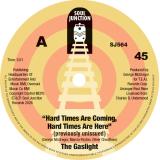
The Gaslight - Hard Times Are Coming, Hard Times Are Her (7")

The earliest foundations of the Detroit Harmony group ‘The Gaslight’ came when future lead singer Oliver “Butch” Cheatham via an introduction by his sister Jackie joined a group known as ‘The Young Sirs’ who recorded, “There’s Something The Matter (With Your Heart/African Love” for Magic City during 1969. The group included Oliver’s future brother -in-law Allen Cocker (Jackie’s future husband).

Oliver and Allen went on to form a new vocal quartet with Curtis “Kippy” Anderson and Michael Eatmon. Under the group name of ‘The Gaslight’ they signed to Uptight Productions Incorporated, a local production company founded by local businessmen Marvin Figgins and Arnold Wright. The Gaslight were the only vocal harmony group signed to Uptight Productions and as such, it was they who made the most recordings across two label imprints Grand Junction and Black Rock. The Gaslight’s first single “I Can’t Tell A Lie/Here’s Missing You” was released on Grand Junction (GJ1001) in 1970, For the groups second single Figgin’s placed them under the guidance of legendary producer/songwriter, the late George McGregor under whom they recording “Drifting Away/If You See Her” Grand Junction (GJ1002) released in 1971 For their next release Figgin’s switched the group to his Black Rock label to record “Out Of My Hand/I’m Only A Man” Black Rock (2002) under the pseudonym of Butch & The Newport’s With “Butch” being Oliver’s nickname. A later, second release of “I’m Only A Man” but with a different flip side “I’m Gonna Get You” came out on Grand Junction (GJ1100) in 1973 with the performing artist credits reverting back to ‘The Gaslight’.

Upon leaving Uptight Production’s the group found a new home when George McCregor took them to a new fledgling label T.E.A.I (an abbreviation for “Tellin’ Everybody About It”) owned by ‘The Dramatics’ Road Manager Charles Underwood. ‘The Gaslight’s’ first and only release for T.E.A.I, was the mellifluous 1975 double sider “Just Because Of You/It’s Just Like Magic”. Underwood had precured a working relationship with Polydor Records who picked the release up for national distribution three months later. As good as the record was due to poor promotion it failed to make any notable noise and eventually sank with the group soon after breaking up.

During Soul Junction’s later dealings with the late Oliver Cheatham, respected UK Collector Andy Rix mentioned he owned a three track acetate containing the two mentioned T.E.A.I/Polydor tracks plus a third unissued dance track “Hard Times” which through a licensing deal with Charles Underwood Soul Junction now present to you on a three track 45, released under its full title “Hard Times Are Coming, Hard Times Are Here” backed with a previously unissued mix of “Just Because Of You” alongside the issued 45 version of “It’s Just Like Magic”.

out of Stock

Order now and we will order the item for you at our supplier.

18,07

Last In: 33 days ago
1 Umbrella - 1 Umbrella MC

1 Umbrella

1 Umbrella MC

CassetteERE1235
EMPIRE
03.04.2026
  • A1: 1 Umbrella
  • A2: One Of Those
  • A3: Code
  • A4: Baller Blockin
  • A5: The Blueprint
  • A6: Off Top (Feat. Larry June)
  • A7: No Gimmicks (Feat. Daboii)
  • B1: Pretty
  • B2: Type Of Time
  • B3: N.e.w.s. (Feat. Lingo & Dooder)

1 Umbrella represents a watershed moment for modern Bay Area hip-hop, effectively serving as the region’s "Avengers" assembly designed to consolidate the Northern California sound. For years, the local scene has been bisected by the distinct "mob music" bounce of Oakland and the melodic, trauma-drenched "pain music" of San Francisco; this collective is the first major commercial force to deliberately fuse these competing energies into a single, dominant infrastructure. The roster is a calculated cross-Bay alliance that balances opposing sonic weights: Lil Bean and Lil Yee anchor the group with the emotive, auto-tune-heavy melodies that define the current SF landscape, while Zaybang cuts through that introspection with his signature high-octane aggression.

Balancing the scales are ALLBLACK and 22nd Jim, who inject the classic East Bay attitude—ALLBLACK delivering the motivational, sports-heavy "player" lineage of the region, contrasted against Jim’s nonchalant, rhythmic flow. Backed by the powerhouse infrastructure of EMPIRE and united under tracks like "Baller Blockin" and the unification anthem "The Blueprint," the group is attempting to solve the fragmentation that has historically plagued the Bay’s independent market. By synchronizing their movement with the arrival of Super Bowl LX, 1 Umbrella is positioning itself not merely as a rap group, but as the official cultural ambassadors for the region, betting that a unified front can finally command the national spotlight that often eludes the West Coast’s independent giants.

pre-order now03.04.2026

expected to be published on 03.04.2026

10,88
BIG GIGANTIC - BRIGHTER FUTURE LP 2x12"
  • 1: Odyssey Pt
  • 2: The Little Things Ft. Angela Mccluskey
  • 3: Miss Primetime Ft. Pell
  • 4: C Mon Ft. Griz
  • 5: All Of Me Ft. Logic & Rozes
  • 6: Got The Love Ft. Jennifer Hartswick
  • 7: Highly Possible Ft. Waka Flocka Flame
  • 8: I've Gotta Know Ft. Jennifer Hartswick
  • 9: No Apologies Ft. Natalie Cressman
  • 10: Bring The Funk Back
  • 11: Wide Open Ft. Cherub
  • 12: Brighter Future Ft. Naaz
  • 13: Long Time Coming

In 2016, Big Gigantic released their album Brighter Future, featuring tracks with hip hop artists such as Waka Flocka Flame and Logic, singers Jennifer Hartswick, Rozes, Angela McCluskey, and Natalie Cressman, as well as collaborations with GRiZ and Cherub. The album debuted at number two on the Billboard Dance/Electronic Albums chart. Their fifth studio album, Brighter Future, reflects Big Gigantic's vision for uniting the world through music and community. Saxophonist/producer, Dominic Lalli wrote, "Now more than ever, we need to come together and work towards a brighter future for us, our children and for the human race as a whole." The album was released on August 26, 2016 and features special guests Waka Flocka Flame, Logic, Cherub, Griz, Pell, and many more. The singles "The Little Things" feat. Angela McCluskey and "All Of Me" feat. renowned rapper Logic have received national acclaim, with over 3 million downloads and 100 million streams.

pre-order now20.03.2026

expected to be published on 20.03.2026

34,87
The Leaf Library - After The Rain, Strange Seeds LP
  • A1: ) Colour Chant
  • A2: ) Still & Moving
  • A3: ) The Reader’s Lamp
  • A4: ) Sun In My Room
  • A5: ) Carry A River In Your Mouth
  • B1: ) Catch Up, Isobel
  • B2: ) A Ship In The Sky
  • B3: ) Some Circling
  • B4: ) There Was Always A Golden Age

London quartet The Leaf Library return with their bold new album After The Rain, Strange Seeds. A luminous collection of pastoral indiepop, drawing inspiration from suburban isolation, unreliable memories and the surreality of the weather. Their most immediate and melodic work to date, the richly evocative songs brim with chiming guitars, buzzing organs and warm, dulcet strings, evoking Yo La Tengo’s more contemplative moments, The Clientele’s autumnal jangle pop and early Stereolab’s motorik melodicism. The sound of the album is defined by mixer John McEntire, whose work with Stereolab and Yo La Tengo (as well as a member of Tortoise/The Sea And Cake) have been major inspirations to the band.
The album explores themes of memory and place, albeit through an abstract haze – returning again and again to specific moments frozen in time: midsummer bright hot days in the Chilterns (“Sun In My Room”), meteorology and the strange movement of the weather (“Colour Chant”), red kites circling over suburban motorways (“Some Circling”), and the uncanny feeling of dusk and nighttime creatures on “The Reader’s Lamp” (titled by celebrated film director Peter Strickland). The lyrics are vivid yet elliptical, strung with abstract ideas and imagery, conjuring a gently unsettling, though never unwelcoming atmosphere. Not quite trusting your own recollection of things, while marvelling at the oddness of the natural world, the album’s title a good summation of the mix of strangeness and hope contained within.

As on past albums the band - founded by singer Kate Gibson and ex-Saloon guitarist Matt Ashton in the mid 2000s, and now completed by drummer Lewis Young and bassist Gareth Jones - have involved their extended musical family, including guitarist Mike Cranny (of fellow drone pop travellers Firestations) and keyboardist Irina Shtreis, both members of the Leaf Library live band. The album also sees the return of James Underwood’s Iskra Strings, a quartet that features on 4 tracks, with sumptuous arrangements by Daniel Fordham, as well as regular contributor Melinda Bronstein on vocals and Will Twynham (Dimorphodons) on harpsichord. They also welcomed Paddy Milner (on Hammond organ) and Scott McKeon (guitar) – both current members of Tom Jones’ band – for a startlingly delicate rolling crescendo to closing track “There Was Always A Golden Age”.
After The Rain, Strange Seeds is their 4th studio album. The result is The Leaf Library’s most accomplished and affecting work, John McEntire’s mix bringing a bold clarity to the band’s meticulous arrangements – closer to how they sound live than anything they’ve done before.

pre-order now20.03.2026

expected to be published on 20.03.2026

22,90
Various - Great Lakes Gospel: Detroit LP
  • A1: Voices Of Conquest - O Yes My Lord
  • A2: Ada Richards - I’m Drunk & I’m Real High (In The Spirit Of God)
  • A3: The Gospel Supremes - Sinnerman
  • A4: Mighty Voices Of Wonder - I Thank The Lord
  • A5: The Mighty Walker Brothers - God’s Been Good To Me
  • A6: The Apostles Of Music - Wade In The Water
  • A7: Lavice & Company - Thoughs Were The Days
  • B1: Calvin Cooke - Walk With Me
  • B2: Deliverance Echoes - Heaven
  • B3: Liz Davis - Motherless Child
  • B4: The Soul Superiors - Faith
  • B5: Otis G. Johnson - Time To Go Home
  • B6: Wayne & Thelma And The Mcallister Singers - Peace When He Comes

Over the decades, Numero has excavated a metric ton of recordings from the depths of Detroit. From all manner of mini Motowns we’ve uncovered soul, R&B, funk, disco, boogie, and by nature of proximity—gospel. Previous examinations of the Revival and Big Mack la- bels turned up more than a few new apocryphal hymns, and Great Lakes Gospel Vol. 2 compiles a dozen curious church groups devotionally reaching towards the genre’s frayed edge. Get lost in ecstatic choir funk, pulpit rappin’, direct-injection guitar solos, and the holy spirit, should it move you. Look around the room. You could start a church with this thing.

pre-order now13.03.2026

expected to be published on 13.03.2026

29,83
TWAIN - RARE FEELING

TWAIN

RARE FEELING

12inchKSLPC127
Keeled Scales
27.02.2026
  • Solar Pilgrim
  • The Sorcerer
  • Little Dog Mind
  • Hank & Georgia
  • Freed From Doubt
  • Rare Feeling V.2
  • Black Chair
  • Dear Mexico (Thank You For Joyce)
  • Good Old Friend

Hier ist "Eine Stimme für das Unsagbare, das gehört werden sollte", ein "Künstler von größter Bedeutung". So beschreibt die Band Big Thief, Freunde und Fans, Twain in einer Ankündigung seines Albums "Rare Feeling". Aufgenommen und co-produziert wurde "Rare Feeling" von Adrian Olsen (Natalie Prass, Foxygen) und Scott McMicken von Dr. Dog. Twain ist das Soloprojekt von Mt. (Mat) Davidson, ein Singer-Songwriter und Multi-Instrumentalist mit einer markanten, einnehmend klaren Stimme. Den größten Teil des letzten Jahrzehnts hat er in Bands wie The Low Anthem und Spirit Family Reunion verbracht Nun aber konzentriert er sich mehr und mehr auf sein Solo-Projekt TWAIN, eines, das seine Wurzeln zwar auch in Indie Folk und Americana hat, aber beherzt, und mit Elementen von Psychedelic Rock, seine ganz eigene Stimme bildet. "Twains unermessliche, suchende Musik beschwört den Cosmic Folk eines Tim Buckley herauf", meinte kürzlich NPR. ,Hier ist die Art von Musik" - urteilt NPR weiter - ,die, wäre sie vor 50 Jahren entstanden, heute ein geschätztes Kultalbum wäre." Es ist ein wirklich besonderes Album, etwas, das man zu finden hofft. Es ist gleichzeitig vertraut, zeitlos und zugänglich, aber es überrollt auch mit seiner eigenen Schönheit und Besinnlichkeit. Und der Albumtitel passt perfekt.

pre-order now27.02.2026

expected to be published on 27.02.2026

23,49
Christopher Bear - Roofman (Original Motion Picture Soundtrack) LP
  • A1: Disc 1
  • A2: Opening Title
  • A3: A Nice Guy Like Me
  • A4: Mcdonald's Idea (Lightbulb)
  • A5: Sentencing
  • A6: Photograph
  • A7: Plan Of Escape
  • A8: Danger (Becky)
  • A9: Toys 'R' Us
  • A10: Out Of Hiding
  • A11: Setting Up
  • A12: Baby Monitor
  • A13: They Forgot About You
  • A14: Marking Calendar
  • A15: Bag Of Toys
  • A16: Meeting Leigh
  • A17: I Like Being John
  • A18: Disc 2
  • A19: It's A Date
  • A20: Becky On Bike
  • A21: There Is A Storm Coming
  • A22: Naked Man
  • A23: We Got A Beater
  • A24: Pawn Shop
  • A25 50: K
  • A26: Danger
  • A27: Leigh Questioned
  • A28: Burning Dental Office
  • A29: I Am Where I'm Supposed To Be
  • A30: End Credits
  • A31: Testimonials

Based on an unbelievable true story, Roofman follows Jeffrey Manchester (Tatum), an Army veteran and struggling father who turns to robbing McDonald's restaurants by cutting holes in their roofs, earning him the nickname: Roofman. The film's score was composed by Grizzly Bear multi-instrumentalist Christopher Bear, with contributions from The War on Drugs' Jon Natchez. Christopher Bear is a drummer and multi- instrumentalist member of the Brooklynbased indie-rock group Grizzly Bear. He continues developing his independent career, most recently working on arranging soundtracks for the HBO series High Maintenance, and scoring the 2023 film Past Lives alongside his bandmate Daniel Rossen.

pre-order now20.02.2026

expected to be published on 20.02.2026

26,68
King Tubby - The Roots Of Dub

“Tubby did three original dub albums, ‘Dub From The Roots’. ‘The Roots of Dub’ and the third is ‘Brass Rockers’ with Tommy McCook ‘pon the flying cymbals. Where he mixed it with the horn going in and out in a dub way and one named ‘Shalom Dub’ you can call Tubby’s too because he mixed the versions as they were off forty fives’’

Bunny ‘Striker’ Lee

King Tubby and Producer Bunny ‘Striker’ Lee are intertwined in the birth of Dub Music. After discovering a mistake that made a ‘serious joke’ (more of which later...) they went on to release the first pressings of this new musical genre namely ‘Dub Music’. Tubby’s vast knowledge of electronics and Bunny’s vast catalogue of rhythms would lay the foundations of what today is taken as a standard... the Remix / Version cuts to an existing vocal tune.

Osbourne ‘King Tubby’ Ruddock was born in Kingston, Jamaica on 28th January 1941 and grew up in the High Holborn Street area of downtown Kingston. He studied electronics at Kingston’s National Technical College and also on two correspondence courses from the U.S.A... When he had qualified Tubby began repairing radios and other electrical appliances in a shack in the back yard of his mother’s home. His work in the early days included winding transformers and building amplifiers for Kingston’s Sound Systems. Tubby built his first Sound System in 1957 playing jazz and Rhythm & Blues at local weddings and birthday parties. His reputation as a man who knew and understood both electronics and music grew steadily and as the sixties drew to a close. Tubby
purchased his own basic two track equipment. He installed this alongside his dub cutting machine, a home-made mixing console, and his impressive collection of jazz albums in the back bedroom of his home at 18 Dromilly Avenue which he christened his music room.

Tubby and Striker were at Treasure Isle Studio’s one day while Ruddy from Spanish Town was working with the engineer Byron Smith....

“Tubby and myself was talking when Ruddy was cutting some dub but Smithy (engineer) made a mistake through we were talking and forgot to put in the voice. It was two track recording in those days. Ruddy said ‘No Man! Make it stay! and so they cut the rhythm. When I went over to Ruddy’s that Saturday night a dance was in progress and when they played the vocal to the tune... then he said we’re going to play ‘Part Two’. They never called it ‘Version’..and then he played the rhythm track. The song was a catchy song and everybody started to sing along and the deejay started to toast so everything went down well. On Monday morning I went up and I said ‘Tubbs the mistake we made was a serious joke.It mash up Spanish Town! The people went wild. So you have to start to do that now ‘cause when the man put on the ‘Part Two’ everyone start singing this song. It played about twenty times. I said you try Tubbs!’...Well the next Saturday night now when Tubby strung up down the farm U Roy said he’s going to play ‘Part Two’ but Tubby did it different now. He started with the voice then dropped it out and let the rhythm run and then he brought in the voice in the middle and from there Tubby started to get really popular.’’
Bunny ‘Striker’ Lee

Dynamic Sounds upgraded to sixteen track recording in 1972 and Tubby purchased, again with the help of a deal brokered by Bunny Lee. The old four track equipment and the MCI console from their Studio B. The four tracks now gave him far wider scope to work with and he began to create a new musical form where the bass and drum parts were brought up while the faders allowed Tubby to ease the vocal and rhythm in and out of the mix. It was only a matter of time before Tubby’s dub plate experiments began to make it on to vinyl and the first ever long-playing King Tubby releases would feature a collection of his mixes to a selection of Strikers rhythms. So please sit back and enjoy this historic set of sounds. Lovingly restored and with a few extra gems added to the CD Editions. These releases were the first to carry the name of King Tubby and the first to credit the great musicians that contributed so much to the rhythms that made these albums possible.

out of Stock

Order now and we will order the item for you at our supplier.

13,24

Last In: 83 days ago
SABINE MCCALLA - Don't Call Me Baby
  • 1: Sunshine Kisses
  • 2: Louisiana Hound Dog
  • 3: Two Of Hearts
  • 4: Anything Without You
  • 5: Baby, Please Don't Go
  • 6: I Went To The Levee
  • 7: Deep River
  • 8: Tall Lonesome Cowboy
  • 9: Lovely Lonely

Sabine McCalla creates her own version of multi-cultural American roots music. It's a sound that crosses borderlines, pulling everything from Brazilian samba to southern soul to British rock & roll into its orbit. On Don't Call Me Baby, Sabine filters those influences through the lens of her Haitian heritage and her music community of New Orleans, creating a debut album that's every bit as multi-faceted as the woman who wrote its songs.

The daughter of first-generation Haitian immigrants, Sabine was raised in the suburbs of New York City, where she grew up alongside her sister Leyla McCalla (Sons of Our Native Daughters, Carolina Chocolate Drops). Introduced to chamber music at an early age, Sabine began playing classical violin in orchestras, music camps, and conservatory classes as an 8 year old. Back at home, she filled her head with Motown classics, girl group hits, Bob Marley albums, Beatles standards, and Haitian folk music. It was a wide constellation of sound that spanned more than a half century, and Sabine made it all her own, drawn to the connections binding everything together.

Don't Call Me Baby shines a light on those connections. The follow-up to her critically-acclaimed Folk EP, whose pre-war sound earned her a slot at the Newport Folk Festival in 2019, the album transcends genre and generation, creating a raw, rich mix of country, R&B, folk, and soul that exists on its own timeline. Co-produced by Sam Doores of the Deslondes and featuring a cast of New Orleans’ most spirited and gifted (including guest vocals from Riley Downing, Leyla McCalla, and The Lostines), Sabine McCalla reaches beyond her beloved New Orleans Americana scene with Don't Call Me Baby, building a bridge between the world-spanning sounds that have captured her attention.

pre-order now13.02.2026

expected to be published on 13.02.2026

23,49
Jackie Mittoo - Rides On LP
  • A1: Jah Jah Harmony
  • A2: Natty Congo Rides On
  • A3: Soulful Times
  • A4: Jumping Up
  • A5: Freedom Smile
  • A6: Taking You Somewhere
  • B1: Nanny Skank
  • B2: Look At Life
  • B3: Hard Times
  • B4: Pray To Play
  • B5: Too Bad Bull
  • B6: No Get Dub Over

Jackie Mittoo, organ and piano maestro, was also one of the founding members of Jamaica's top session band The Skatalites. Musical arranger for Studio One he provided the backbone to so many of Jamaica's finest tunes. The invention of Ska music and the sounds that rode through the Rocksteady and Reggae period all carry his stamp. Whether it be in his various incarnations, the aforementioned Skatalites, The Soul Brothers, Soul Vendors and the Sound Dimension or under his own name, his distinctive organ and piano sound and musical arrangements have all played a major part in Jamaica's musical history.

Jackie Mittoo (born 1948, Kingston, Jamaica) began playing musical instruments at a very early age. Taught piano by his grandmother he was performing live by the age of 10 and recording by the age of 15. Two Kingston bands that he played with the Rivals and the Sheiks brought him to the attention of Studio One's founder Coxsone Dodd. Who at the time was putting a group of musicians together to be his studio band. Impressed by his skills on both the organ and the piano, Jackie was asked to join in what would become Jamaica's foremost band The Skatalites. The fellow band members were Lloyd Brevett (bass), Lloyd Knibbs (drums), Don Drummond (trombone), Tommy McCook, Roland Alphonso and Lester Sterling (Sax), Johnny Moore (trumpet), Jah Jerry (guitar) and Mr Mittoo (piano). This line up ruled the Jamaican scene between 1964 - 1965 as well as inventing the Ska sound, they also performed the backing duties for the other top labels of the time including Duke Reid's Treasure Isle and Justin Yap's Top Deck label.

1965 saw The Skatalites disband and Jackie Mittoo move on to his next musical project The Soul Brothers. Formed with fellow Skatalite Roland Alphonso, this band would back all the hits coming out of Studio One for the next three years with Jackie Mittoo working as band leader and musical arranger. Around this time Jackie also had his own single released, a Ska underground classic called 'Got My Bugaloo'. Rare, as it also features Jackie in the unusual role for him, as lead singer!!!!.

1966 saw the Ska sound evolve into Rocksteady, again with Jackie's band at the helm, and his first hit single the Rocksteady cut 'Ram Jam'. The success of which would lead to a solo career and album releases under his own name such as 'Now', 'Macka Fat', 'Evening Time', 'In London' and 'Keep on Dancing', to name but a few. In1967 the hits at Studio One were still flowing when The Soul Brothers morphed into The Soul Venders and began backing such luminaries as Ken Boothe, Alton Ellis, Delroy Wilson, The Heptones, The Cables, The Wailers and many other of the labels solo artists.

By 1968 Jamaican music was ready for another change and Rocksteady rolled into a slower groove soon to be called Reggae. Jackie Mittoo would be at the forefront with his latest band The Sound Dimension. A line up that included Leroy Sibbles (bass), Roland Alphonso and Cedric Brooks (saxophone), Eric Frater and Ernest Ranglin (guitar) and Bunny Williams (drums). Being the house band at Studio One they backed all the leading names of the time, John Holt, Horace Andy and Alton Ellis, all of Studio One's output carried his sound.

Jackie Mittoo emigrated in the late 60's to Canada, but travelled to Jamaica and London to record with many of the big new names, who were trying to redress Studio One's supremacy and needed his magic touch. Such Producers as Bunny Lee used Jackie Mittoo on many of his sessions, Sugar Minott among others were always glad of his services.

We have captured some fine 1970's cuts that feature Jackies numerous talents, showing his ability to embellish tracks with a feel that few could better, Musical arranger, band leader all round studio ace. We hope you enjoy the set and I'm sure you'll agree with us Jackie Mittoo does indeed Ride On.........

pre-order now13.02.2026

expected to be published on 13.02.2026

13,24
SACRED COWBOYS - IN THE MANIFESTO
  • Said The Spirit
  • Kool Aid On The Rocks
  • Pieces Of Eight
  • Failsafe
  • Matador
  • Split
  • Ambient Brain
  • Cosmic Circus Escapees
  • Dream Catcher In The Rye
  • The Psychedellic Shooter
  • Blast Radius Blues
  • Zero Gravity

SACRED COWBOYS are a moody hard rock band with a dry sense of humor. They started playing in murky Melbourne dive bars in 1982 attracting a rabid following. With the release of their iconic first single, Nothing Grows in Texas, they were catapulted to national TV notoriety on Countdown, Australia's version of Top of the Pops. 2025 saw founders Garry Gray and Mark Ferrie enlist Timothy Deane, Anthony Paine, and Damian Fitzgerald. You will soon be holding in your hands the new album, 'In the Manifesto.' 'In the Manifesto' was mastered by Mikey Young, who worked on the last six Mark Lanegan records and plays in Eddie Current Suppression Ring. All new songs are written by Garry and the band. 'In the Manifesto' shows the Sacred Cowboys do not indulge in one musical style. It's a complex, atmospheric soundtrack with Gray's uber cool delivery over sometimes sparse, sometimes weaving guitars and rich harmonies. Channeling a Sonic Youth ethos and grinding the gears in the engine room of the Cosmos Factory, 'In the Manifesto' is as wide and expansive as the Australian desert skies. Radio 3CR's Paul 'Dr Gonzo' Elliott got a sneak preview and says. "Garry Gray returns with Sacred Cowboys and a brand-new album . a 12-track tour de force titled, 'In the Manifesto'. The Sacred Cowboys have performed intense live shows and transported that energy and mood onto this new album, 'In the Manifesto.' It is all killer and a tour de force. Garnering the attention of Andrew McGee at Torn & Frayed Records, Australia and combining with French allies Seb Blanchais and Romain Michon at BEAST Records, France, the rest is about to become history.

pre-order now13.02.2026

expected to be published on 13.02.2026

23,49
Deltron 3030 - Deltron 3030 LP 2x12"
  • A1: State Of The Nation Featuring – Damon Albarn
  • A2: 3030
  • A3: The Fantabulous Rap Extravaganza Featuring – Prince Paul
  • A4: Things You Can Do
  • B1: Positive Contact
  • B2: St. Catherine St. Featuring – Beans, Mr. Lif, P. Wingerter, Peanut Butter Wolf, Verna Brown
  • B3: Virus
  • B4: Upgrade (A Brymar College Course)
  • B5: New Coke Featuring – Mark Ramos-Nishita
  • C1: Mastermind
  • C2: National Movie Review Featuring – Brad Roberts
  • C3: Madness
  • C4: Meet Cleofis Randolph The Patriarch Featuring – Mc Paul Barman
  • C5: Time Keeps On Slipping Featuring – Damon Albarn
  • C6: The News (A Wholly Owned Subsidiary Of Microsoft Inc.) Featuring – Hafdis Huld
  • D1: Turbulence (Remix) Remix – Mark Bell
  • D2: The Fantabulous Rap Extravaganza Part 2 Featuring – Prince Paul
  • D3: Battlesong
  • D4: Love Story
  • D5: Memory Loss Featuring – Sean Lennon
  • D6: The Assman 640 Speaks

Following the release of Deltron 3030, all three members participated in the Gorillaz' self-titled debut album. With Del aka Deltron Zero on vocals, Dan the Automator aka The Cantankerous Captain Aptos on production, and Kid Koala aka Skiznoid the Boy Wonder on turntables, this album takes the listener on a paranoid journey set in a dystopian year 3030 dealing with viruses, the apocalypse, an oppressive government, and a war waged against a huge company called the Corporate Bank of Time that rules the universe, all to the well-crafted and consistent musical backing of the Automator. Appearances by Damon Albarn (The Gorillaz, Blur), Prince Paul, Peanut Butter Wolf, DJ Money Mark, Paul Barman, Mark Bell (Bjork, production), Sean Lennon, and Mr. Lif compliment Del's vocal style and add the right amount of flavor to this classic period piece.

pre-order now06.02.2026

expected to be published on 06.02.2026

34,41
Marc Broussard - S.O.S. V: Songs Of The ‘50s LP
  • Hallelujah, I Love Her So
  • Dream Lover
  • Unchained Melody
  • Lucille - Featuring Jimmy Hall
  • Tell It Like It Is
  • I'm Walkin
  • Hey Baby - Featuring Delbert Mcclinton
  • You Send Me
  • Stagger Lee
  • Baby Girl
  • Smile

Blues, country and folk or funk, rock and soul – Broussard always gives his songs a very special touch; here he reaches his peak performance!

Acclaimed soul singer and songwriter Marc Broussard returns with his new studio album, "S.O.S. V: Songs Of The 50's," paying homage to the timeless classics of the 1950s. With his unmistakable, warm soul voice, Broussard interprets timeless songs by legends such as Ray Charles, Sam Cooke, Nat King Cole, and Fats Domino—complemented by his own original composition that fits seamlessly into the era. The album is the fifth installment in his successful S.O.S. (Save Our Soul) benefit series, with proceeds once again benefiting the non-profit organization Love Of People in his hometown of Lafayette, Louisiana. His latest charity album, "S.O.S. 4: Blues For Your Soul" (2023), a collaboration with blues icon Joe Bonamassa, benefited the Keeping The Blues Alive Foundation and the organization Guitars Over Guns – and debuted at number 1 on the Billboard Blues Albums chart.

pre-order now06.02.2026

expected to be published on 06.02.2026

26,26
Ellur - At Home In My Mind
  • 1: God Help Me Now
  • 2: Missing Kid
  • 3: The Wheel
  • 4: Dream Of Mine
  • 5: Yellow Light
  • 6: The World Is Not An Oyster
  • 7: Disintegrate
  • 8: Lonelier In Heaven
  • 9: At Home In My Mind
  • 10: Knowing

“Recording this album felt like the crescendo of years of struggling to understand myself. It can get quite claustrophobic living inside my head.” ‘At Home in My Mind’ is an open invite into the world of Halifax indie artist, Ellur (Ella McNamara). The album is a journey around Ellur’s mind, it dips into different musical genres that have shaped her for the past 24 years – from the 90s indie rock she grew up with, to glitch-pop she discovered in her late teens to the alt-folk she cherishes now. Ellur has created a warm abode for her thoughts and experiences as a young woman growing up in Yorkshire’s Calderdale Valley and ‘At Home In My Mind’ beds them all in, safely together. ‘At Home In My Mind’ has been produced by Joel Johnston (Far Caspian) and recorded from his Leeds studio. Johnston and Ellur first worked together on her previous EP, ‘God Help Me Now’ – a stunning body of work that saw Ellur’s fanbase bloom and received praise from national press, radio and an impressive international artists. The buzz around Ellur has lead to a very busy live calendar throughout 2025, including debut festival slots in US and EU, over 14 Summer festival plays in UK (including Latitude, Truck, Big Feastival) and sold out headline shows across the UK. ‘At Home In My Mind’ expands on themes Ellur draws on in her ‘God Help Me Now EP’, particularly an overarching theme of connection. Ellur connecting with her childhood memories, listening to her honest feelings, but most importantly, Ellur wants ‘At Home In My Mind’ to be an arm extended out, looking for people who need a hand to hold.

pre-order now06.02.2026

expected to be published on 06.02.2026

23,49
The Mad Geezers - Genius of Love b/w Genius of Dub (7")

The Mad Geezers are basically F-Spot mainstays Night Owls’ Dan Ubick, Dave Wilder, and Roger Rivas, but with long-time friend and drum guru, Oliver Charles (Ben Harper & The Innocent Criminals, Gogol Bordello) behind the kit. It’s safe to say that these four musicians love their Ska, Rocksteady, roots, and dub, but for this lineup, the four Mad Geezers collectively decided to explore their other obsession... early Jamaican Dancehall.

First on producer Dan Ubick’s To Do list was to channel the fun, attitude, and natural talent on records by Jamaican legends like Yellowman, U-Roy, Sister Nancy, Barrington Levy, Bunny Wailer, and Freddie McGregor. Secondly, find a song that no Jamaican artist has covered, but every DJ on the planet loves, and flip it into a Dancehall groove. Hmm… What about Tom Tom Club’s “Genius of Love”? Ooh! That’s it! So, The Mad Geezers broke out synths, Syn drums, and invited some friends to the party, stepping up to the plate with the brand-new F-Spot Records 45 “Genius Of Love” b/w “Genius Of Dub (Roger Rivas Dub Version). Featuring vocals by one of Jamaica’s shining jewels, Ranking Joe & Oakland’s chosen daughter, Destani Wolf (who many will recall from top-selling Night Owls singles such as “After Laughter” and “Let’s Stay Together,”) this 7” is a sure shot.

With its iconic bass line and catchy synth hook, this 1981 decade-long crate essential is in the collective unconscious at this point. Whether you found it as a Talking Heads fan, or as a rap music fan via Dr. Jeckyll & Mr. Hyde’s “Genius Rap” or Grandmaster Flash and the Furious Five’s “It’s Nasty,” the groove is infectious. It’s hard to imagine no one had yet infused this punk-disco powerhouse with a dancehall injection… until now.

out of Stock

Order now and we will order the item for you at our supplier.

12,82

Last In: 3 months ago
Atomic Kitten - Right Now LP

Atomic Kitten

Right Now LP

12inchMOVLP3993
Music On Vinyl
30.01.2026
  • 1: Right Now
  • 2: Follow Me
  • 3: Whole Again
  • 4: Eternal Flame
  • 5: Tomorrow & Tonight
  • 6: Get Real
  • 7: Turn Me On
  • 8: Hippy
  • 9: You Are
  • 10: Cradle
  • 11: Bye Now
  • 12: Strangers
  • 13: See Ya
  • 14: I Want Your Love

The original trio featured Liz McClarnon, Natasha Hamilton, and Kerry Katona. Just weeks before the release of their breakout single "Whole Again", Katona departed and was replaced by Jenny Frost, a pivotal change that coincided with the group's meteoric rise. "Whole Again" soared to number one on the UK Singles Chart in 2000 and topped charts in 18 other countries, cementing Atomic Kitten's global appeal. Their follow- up single, "Eternal Flame", cover of The Bangles' 1989, became their second number one in both the UK and New Zealand, with strong international chart performance. Originally released in 2000, their debut album Right Now was partially re-recorded following Frost's arrival. The revamped edition featured three new tracks: "Eternal Flame", "Tomorrow and Tonight", and "You Are". Jenny Frost's vocals were also added to updated versions of "Right Now", "Whole Again", "Hippy", and "Bye Now". Celebrating it's 25th Anniversary, the reimagined album reached number one in the UK, earned double platinum certification in 2001. Right Now is available on vinyl for the first time and includes an insert with credits.

pre-order now30.01.2026

expected to be published on 30.01.2026

30,21
Items per Page:
N/ABPM
Vinyl