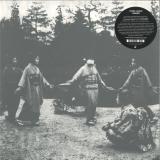
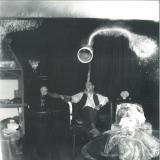
Black Truffle is pleased to announce a new edition of Kassel Jaeger’s Fernweh, returning François J. Bonnet’s electroacoustic project to the label five years after the acclaimed Meith (BT069). Originally released on Giuseppe Ielasi and Jennifer Veillerobe’s impeccably curated Senufo Editions in 2012, Fernweh stands near the beginning of the gradual expansion of Bonnet’s approach after the austere acoustic textures of Aerae and Algae (both released on Senufo), leading to the lush, layered environments of recent solo works on Shelter Press and the epic electronic expeditions undertaken in duo projects with Stephen O’Malley and Jim O’Rourke.
A major work in the Kassel Jaeger oeuvre, stretching over two LP sides, Fernweh draws together synthesized and musique concrète materials into a drifting assemblage. Its title’s meaning is close to the concept of ‘Wanderlust’, fitting for this music that moves freely and unexpectedly between what Bonnet calls ‘climates’. Beginning with fizzing electronics whose rhythm of gradual approach suggests breaking waves, the clinical atmosphere is soon haunted by intangible traces of lived reality. Textures call up wind, water, insects, the crunch of feet on sand or the clinking of glasses, yet they can never be identified with any certainty. At times these concrete elements possess a vivid ‘closeness’; at others, the sounds shade into a formless distance. Though the listener forms no clear picture from the concrete sounds, these elements aerate the music, lending it their space.
Drawing from the rigorous formal language and conceptual apparatus of the French musique concrète tradition—with which Bonnet, as director of the GRM and researcher into its deepest archival recesses, is intimately familiar—the music of Kassel Jaeger is equally informed by how underground experimental music has rethought electroacoustic techniques, with Fernweh at times calling up the grit and grime of para-industrial eccentrics like Maurizio Bianchi or the Toniutti brothers, and at other moments suggesting the slow-moving grandeur of early Olivia Block. Subtle features of dynamics and rhythm act as connective tissue between the numerous ‘scenes’, with wave-like envelopes, rapid pulsations, and short, tape-loop patterns all recurring throughout the piece, shared ambiguously between electronic and concrete sounds. Amid these shifting, often inharmonic textures, the electronic elements sometimes cohere into melodic shapes and chordal patterns, cutting through the fog in distorted arcs or underpinning the layered surface with slow-moving harmonies. Like his friend and collaborator Jim O’Rourke, Bonnet displays a radical openness at odds with academic tradition, allowing unabashed emotion to coexist with rigorous experimentation. As Fernweh dies away with mysterious shudders, listeners are left at once moved and unsure of exactly what they just heard.
Suche:mea
Mexican enfant extraordinaire Iñigo Vontier is rolling in with his debut EP for Feines Tier and it’s a match made in heaven. Just judging on the name alone, as he seems to be from some kind of royal Tier family descent. But enough with the mind-numbingly bad puns and on to some brain-meltingly good music.
Rolling. Everything’s rolling. Zongato is rolling. We don’t know who or what a Zongato is (a Google search just led to a Twitch streamer with that name and 0 followers), but they are definitely rolling. It’s got this special combination of straight and uncompromising beat and bass paired with psychedelic synth sirens floating around your head that somehow only the Mexicans really know how to nail.
Astrolo is rolling. Like a well-oiled machine. Well, maybe like a not so well-oiled machine, one that’s shrieking and creaking, but has been running since forever and reliably will do so until we’re all gone from this Earth.
If you ask Google Translate, Mucha Onda means „very cool“ in English, „molto bello“ in Italian or „valde frigidus“ in Latin and there is nothing more to add to that.
The psychedelics are back (were they ever gone?) and kick in in full swing on Hedonist Lizard. A dangerous cocktail of high-proof alcoholic drum and bass patterns paired with some sugary spicy herbals of unknown origin, better not down it in one go. You were warned.
On The Sounds Are Good, the sounds are good indeed! And rolling.
- 1: Taking Punches From The Breeze 3:45
- 2: What To Make Of Me :57
- 3: Cold War :0
- 4: Train Of Thought 2:6
- 5: Opposite Action 4:0
- 5: Lost Dog 4:00
- 6: One Dimension 3:14
- 7: Fleeting 4:25
It’s been a short time since the van-dwelling singer-songwriter Olive Klug has fully pursued the life of a touring musician. Their DIY career has resulted in a huge following with over 20 million Spotify streams and 100,000+ Instagram followers. Self-described as “someone who floats on the breeze, letting the wind take me wherever I’m meant to be,” Klug’s sophomore album and label debut, Lost Dog finds them contemplating this propensity for adventure no matter which avenue of love and loss it leads down. Although still very young, Klug artfully addresses “aging as a neurodivergent free spirit” on the road with a compelling ability to voice honest emotions through captivating storytelling. Audiotree praised, ”equal parts vulnerable and powerful, ebullient and heartbreaking, reminding us how powerful the journey of music can be.” Olive Klug is a singular voice for the future of folk: honest, fearless, often unsure, but willing to try anyway.
Emerging from the fertile chaos of Düsseldorf’s Salon des Amateurs scene, Sequence of Events, the collaborative project of Deniz Saridas and Joshua Gottmanns, presents The Art of Memory, an album that feels both intimate and ungraspable, like recalling a dream that fades upon waking.
Rooted in the post-industrial landscapes of West Germany, The Art of Memory channels the bleak resilience of these environments into its sound. It’s a collage of kraut-infused electronics, shoegaze textures, and industrial pulses, filtered through a lens of introspective psychedelia. “We don’t consciously break down or combine genres,” they explain. “Everything is interwoven, like chemistry. Some reactions happen immediately, others take years under pressure.”
From the opening track TAR, with its stoic vocals and drum-heavy propulsion, to the robotic Meagre Gardens, where autotuned chants coil around unconventional drum programming, the album moves like a fever dream through fragmented memories. Soul Divider unfolds like a cinematic journey through yearning and desire, its repetitive pulses echoing the ache of unfulfilled longing, while Nature Hates Life distills pop music through the eyes of a killjoy: “Kurt Cobain on an AKAI MPC2000,” as the band describes it. Even moments of tenderness, like the drifting Becomings, shimmer with absolute sensuality: a seductive exploration of presence defined by absence. We lift each other up and hold each other down.
The creative process behind The Art of Memory is as fluid as the music itself. Saridas and Gottmanns, both self-taught musicians with backgrounds in fine art, worked intuitively, drawing from a shared pool of samples, text fragments, and images. Operating somewhere in the space between fin de siècle aesthetics and occultism, it’s a dream wedding with a continuous stream of meaningless (moving) images generated by human and non-human entities.
Ultimately, The Art of Memory is not an escape but an immersion. A meditation on the sensory overload of the present and the ghosts it leaves in its wake. In a world where music is often reduced to background noise for consumption, Sequence of Events offers something more elusive: a record that lingers, unsettles, and demands to be remembered.
A decade has passed since Infinity Night graced Bordello A Parigi with his wonderful Winter and Summer EPs. After too long a wait, the French producer returns with the aptly titled Le Temps Qui Passe. Six slices of select synthesizer music make up the 12”, tracks lovingly crafted with Frederic Bergamaschi’s trademark analogue warmth. A melancholic melody meanders through brightness in “Tu Ne Me Réponds Pas”, dulcet words hidden under the machine gauze of a vocoder. Skittish percussion gives way to the refrain of “It’s Full of Stars”. Hazy keys appear as an arpeggiator rumbles below a shimmering sky. “Les Souvenirs De Valerie” picks up where its predecessor left off. Astral notes are beamed into the heavens, echoing into the while crisp cymbals tether the piece. Infinity Night has always sought that point of balance in his music, a bittersweetness he accentuates and explores. This is true in the darker shades of “Nymphomania”. Beats are bolstered, key stabs piercing the tenderness of analogue trills. The title track is a rich patchwork. A burbling undercurrent supports forays into diverse tangents with lyrics surfacing through key shifts and sliding scales. Marching to militaristic rhythms, “I Comme Icare” is the curtain call. The stringent drums are broken by sailing synthlines, vocals masked in a familiar mesh to close. Le Temps Qui Passe, well worth the wait.
- A1: Big Boys Intro (Skit No Audio)
- A2: One Mean Stang
- A3: Come On Wit Me Baby
- A4: Style Like Mine
- A5: For Them Bustas
- A6: You Tell Me
- A7: Pimpin' Still Goin' On
- B1: My 9 Glock
- B2: Ain't To Be Played Wit
- B3: Gots To Make Some Money
- B4: Can't Play No Playa
- B5: Dedications (Skit No Audio)
- B6: Street Sense
- B7: Revised Dedications (Skit No Audio)
Tape Cassette[13,40 €]
California and New York aren't the only US cities to have pioneered underground hip-hop over the years. Back in the nineties, southern states such as Memphis, Tennessee were also hotbeds for the fast evolving musical phenomenon. As we push on into the second millenium; from the swathes of short-run, tape-only releases that came out in the 1990's, some are at last being cut to vinyl. Shawty Pimp and the Big Pimpin' Productions crew were brought to international ears in 2014 when his album 'Comin' Real Wit It' was pressed to vinyl and sold out in the blink of an eye. Gyptology Records (a new Europe-based Hip-Hop and Egyptian Archaology styled re-issue label) now present a vinyl pressing of the 1995 sequel; 'Still Comin' Real'. Here are eleven original, raw rap cuts, remastered and restored with love. Available June 2018 for the first time in the format that never goes out of style. Vinyl only for now and in one short-run only, no represses. Produced with the full consent and participation of the artists.
Having crested the west coast modular-ambient wave in just a few releases - including 2018's Sharing Waves on the influential LA experimental imprint Leaving Records - Sean Hellfritsch has swapped the mossy analog synth improvisations of his prior output for refined melodic arrangements dressed in sprightly dawn-of-digital textures. Big Earth Energy plumbs the depths of Hellfritsch's multimedia mind and naturalist heart, spinning an impressionistic narrative world off of cultural touchstones like the PC game MYST, and the work of Studio Ghibli composer Joe Hisaishi. Inspired by the aforementioned, and guided by Hellfritsch's experience as an animator and filmmaker, Big Earth Energy is the soundtrack to a hypothetical video game with a pointedly ecological premise, and a twist of psychedelic charm. In Hellfritsch's imagined virtual journey, the player assumes the perspective of a treefrog sixty-five-million years ago, hopping epochs with each new level, forming a comprehensive picture of the massive changes the planet has gone through over the eons. The ultimate goal of the game is not to amass resources, defeat enemies, or gain power, but to fully witness the unfolding of one of the biggest systems of energy imaginable - or as the album's creator puts it - "to explore the incomprehensibly vast energetic expression and mystery that is Earth." Big Earth Energy is steeped in exploratory RPG intrigue, possibility, and contemplation, lovingly overlaid with Miyazaki-an sentiments and aesthetics. The through-composed, organic, meandering synthesis heard on previous Cool Maritime albums has been fully replaced by meticulous polygonal arrangements that recall the computerized sheen of late 80s work by composers like Hiroshi Yoshimura, and Yoichiro Yoshikawa - using true-to-period gear no less. Even given its referentiality, Big Earth Energy comes off as forward-facing where so much reminiscent music remains fixed to a bygone moment in pop culture. Hellfritsch has created a musical world where the endless verdancy of the biosphere finds its parallel in the golden age of early 1990s video games, and late 80s Japanese environmental music, all while pointing to a hopeful planetary and artistic future that vindicates the motives of all of these muses.
Following the great success of BBE’s 2023 reissue of Remi Kabaka’s 1976 lost masterpiece 'Son of Africa' comes yet another neglected and hitherto-hidden slice of pure Kabaka goodness: 1980’s 'Roots Funkadelia'. While the 1976 album was recorded at Island Studios London, roots was recorded and mixed in L.A. in the midst of a golden period for the Motown studios, and the sheer quality of the mix shows in spades. An unexpected but welcome bonus is the appearance throughout of the ‘mean machine’- Motown artists the commodores’ brass section alter-ego. Released in 1980 on Polygram Nigeria with no international distribution deal, and lurking almost unnoticed in a handful of dedicated afro vinyl collections, this is the first-ever reissue outside Africa of an album that regularly fetches £500 plus on the ‘those who know’ market’.
“We go through life. We shed our skins. We become ourselves.”
This line from Patti Smith was going round and round Felix Manuel’s head as he gradually constructed Under Tangled Silence, his first album in six years and a record of a literal creative rebirth. Felix originally began it in earnest in 2020 Covid lockdown, but a catastrophic hard-drive meltdown destroyed almost all his work and sent him close to psychic collapse himself. However, ultimately this pushed him to rebuild from scratch and in so doing to confront and reassess every part of his musical and psychological processes.
The result is utterly extraordinary. Felix was a child prodigy as an instrumentalist and his advanced musicality has always been prominent in his music, but here he has put himself front and centre as pianist, harpist and more. And this sense of exposure as a performer interweaves with an unflinching emotional openness too. Where sometimes electronic production as advanced as this can use intellect and techniques as shields from soul-baring, this is the sound of someone who can boldly say “I feel things, I cry all the time, and I'm not afraid to say it or show it in the music.”
But this doesn’t mean there’s a move away from the soundsystems and dancefloors where Felix made his name as a uniquely innovative vinyl DJ. Even just in the opening track “A Tune for Us”, minimalist piano ripples and jazz drumming flow into the breaks of vintage jungle – and as the structure of the LP unfolds, a deep ambient meditation like “Hold” can sit very naturally in between the futurist dancehall of “L’Ancienne” and the high-definition acid house mind movie of “Galaxy in Silence”. In fact, as with the hands-on musicianship, that gutsy big-speaker electronic impact is delivered with more certainty, more expertise, more personal flourishes than ever. And all of those elements are more integrated than ever too: the sound of a total musical personality emerging afresh is truly something to behold. An already remarkable talent has been refreshed, reborn and is making the music of his life.
First Word Records are incredibly proud to bring you ‘I Swear To You’; the stunning sophomore album from Georgie Sweet.
Georgie is a singer / songwriter currently based in Brighton, with a uniquely smooth, soulful vocal tone.
Whilst working on her debut record (‘Misunderstood’), Georgie began a songwriting partnership with multi-instrumentalist Marc Rapson, who is on the boards throughout this project. The duo discovered a natural musical connection instantly, and began working on an abundance of beautiful new material shortly after the release of the first album; writing and creating at Rapson’s home in Hertfordshire at various sessions from 2021 onwards, culminating in this new 12-track album, ‘I Swear To You’.
Despite being one of the UK’s best kept secrets, Georgie’s already been pricking the ears of some highly-respected selectors. The first single from this record (‘Smaller / All That We Were’) received love from tastemakers such as BBC 6 Music's Gilles Peterson (“this one melts”), Jazz FM's Tony Minvielle ("supremely talented”) and Clash Magazine (“exudes soulful grace”), whilst previous material found itself in the crates of legendary luminaries like DJ Jazzy Jeff & DJ Spinna amongst others.
At the end of 2024, Georgie signed to Worldwide Award-winning independent London-based label, First Word Records; although she previously featured before on the label, via the title track of the highly-acclaimed 2021 sophomore album by Children of Zeus, 'Balance', along with Akemi Fox. Prior to this her debut album 'Misunderstood' dropped back in 2020 on Futuristica Music; an independent imprint run by Deborah Jordan & Simon S, on which Georgie also collaborated with acclaimed producers like K15 and Mecca:83.
An all-round creative soul, away from creating music, Georgie also works as an illustrator and animator. However, her lifelong love of music is unquestionable. She’s been a vocalist from a young age, initially working with her musical parents (a producer and professional singer respectively).
With a hugely diverse set of inspirations ranging from Stevie Wonder to Michael McDonald, Hiatus Kaiyote to Chappell Roan, Mac Miller to Sampha, and George Duke to EW&F, Georgie's respect, love and admiration for a wide range of music is clear; from jazz to soul to pop to hip hop.
REPRESS
New Delhi-based Peter Cat Recording Co. will release their debut album, ‘Bismillah’ on June 14, 2019 via French independent label Panache Records. Debut UK live shows are soon also to be announced by the band.
Peter Cat Recording Co. could almost have a question mark on the end of its name. Not least as founder & frontman Suryakant Sawhney refuses to explain where that name really comes from or what it means (perhaps a reference to the Tokyo jazz club owned by Haruki Murakami), but also since the very existence of the band itself raises a raft of questions. When was the last time we fell for an indie rock band for the right reasons? Not because the band in question nostalgically imitate a perceived ‘golden age’ but because they innately embody the fundamentals of such music: fantasy, sincerity and the freedom to make music without rules or career aspi- rations. And when was the last time this kind of band sounded like Sinatra, Barry White, the sweetest doo-wop, humid fanfares and a psychedelic wedding band, all at once? And all of this coming from India?
In truth, the story of Peter Cat Recording Co. was written within the triangle of San Francisco, Delhi and Paris.
In the first of these cities, Sawhney (a native of Delhi) pitched up to study film-making. More distracted by the city’s peaking live scene of the early noughties, this is where he started to make music and to sketch out an idea for the band.“
The people I lived with supported my idea of writing music, they introduced me to great mu-
sic. There used to be a great garage scene in San Francisco, like The Oh Sees also Ty Seagall, Mikal Conin, all those bands. This is a world I had never seen in my entire life. A big inspiration from San Francisco was that you could record yourself. You don’t need to be in a studio and spend a lot of money to make an album. You can do it”.
At the end of the 2000s, Suryakant returned home to New Delhi, and started his band for real, more or less the same band that plays today. “I wasn’t so concerned about will we be performing, will we be the greatest band, will we be trendy. I just wanted to make something that was consequential and important for us, I think. Something which would last, something people could listen to and be like « this is life changing ». It was for the sake of beauty”.
For the first few years and in India alone, this is exactly what Peter Cat Recording Co. did, in total indifference to the rest of the world. This was until young Parisian label Panache stumbled across the band online via Vice’s THUMP subsidiary, stupefied by the band’s cosmic video for seven-minutes-and-counting track, ‘Love De- mons’. And so in spring of 2018, ‘Portrait Of A Time: 2010-2016’ was released on Panache - making the first international release from Peter Cat Recording Co., bizarrely enough, an anthology of re-mastered, hidden gems from the band’s ramshackle back catalogue, previously recorded in Suryakant’s own living room. With Peter Cat’s off-kilter charm hitherto unheard of beyond the fringes of India, the release provided a gateway op-
Whilst the title track found its way onto Tracks Of The Year lists at the Guardian & NME, it was tricky for new PCRC enthusiasts to get a firm grip on the startling push/pull between the immediate, uncanny music this release gathered, and the cultural backdrop of New Delhi at which it was so startlingly at odds.
Opportunity for a wider fanbase to fall in love with their cloud-like, drunken songs for the first time.
If discovering your favourite new band via a ‘Best Of’ feels a curious premise, then ‘Bismillah’ does more than hint towards the promise of Peter Cat Recording Co’s future. Blending gypsy jazz, psychedelic cabaret, space disco, bossa supernova, Bollywood and uneasy listening with kaleidoscopic ease, in many senses, the band’s knack hasn’t altered. Always different, paradoxical, unpredictable yet somehow familiar. The new album opens to the strains of bird chatter, the whisper of a city’s soundscape and the first few notes from an instrument which seem to be calling us to the departure lounge, a fore-shadow of the flight ‘Bismillah’ launches its listener
on. Suryakant sings with the detached, rueful elegance of Sinatra marooned on a desert island, whilst his band create small space-time capsules which navigate their way through genres and eras – including the future – and between nostalgia and eccentricity.
Peter Cat recently trailed ‘Bismillah’ with the release of ‘Floated By’, an appositely titled musing on failure & missed opportunities, punctuated by the fulsome brass section which weaves through so much of the album.
The languid, blue quality to the track is offset by the attendant music video, created with footage shot, implau- sibly enough, at Suryakant’s own marriage ceremony (needless to say, the wedding band hired for the day was of course, Peter Cat Recording Co.) Sawhney dryly notes; “Hopefully it’s not a many-a-times-in-a-lifetime event. You can’t fake that set, those people actually having a good time, being really emotional and intense.” ‘Bismillah’’s colour-drenched album cover also captures Suryakant’s father-in-law making his wedding toast on that same day - a nod back towards the cover of ‘Portrait Of A Time’, itself a black & white image taken at the wedding ceremony of Suryakant’s own father.
A stumbling but gracious collection of songs rooted in a kind of drunken soul music, the melancholy nature of some of the songs on ‘Bismillah’ renders them almost liquid, before they develop into more dance-like shapes. Suryakant’s rangy voice swoops from the falsetto glide of ‘I’m This’ to the beat-up baritone blown along by the warm breeze of ‘Soulless Friends’. The elliptical structure of album opener ‘Where The Money Flows’ also al-
lows for the use of brief bursts of autotune effect on his vocal without feeling incongruous, whilst the desultory lyrics of ‘Heera’ (a Hindi word for diamond) - sharing something with the Morricone school of grand storytelling - have an emotional weight that would impress even coming from a native English speaker. Perhaps the most gleefully unpredictable moment on ‘Bismillah’ comes with the illusory, vocal loops on the intro to ‘Memory Box’, errupting into 8 exhilarating minutes worth of unbridled, string-backed disco joy. A cat might have nine lives, but on ‘Bismillah’ and beyond, Peter Cat Recording Co. are hinting towards an un- knowable multitude of dimensions. Throw them all together, and it equates less to a listening experience and more to an out-of-body experience.
Peter Cat Recording Co. are: Suryakant Sawhney (vocals/guitar/organ), Dhruv Bhola (bass), Kartik S Pillai (organ/guitar/electronics), Rohit Gupta (horns), Karan Singh (drums)
Eddie Cochran - The Unforgettable Hits Collection This 20 track LP celebrates Cochran's legacy by bringing together all his hits, the most memorable tracks and glories in the young man's tenacious talent. It naturally includes the landmark records C'Mon Everybody, Twenty Flight Rock, Summertime Blues, Somethin' Else, Three Steps To Heaven and Jeannie, Jeannie, Jeannie, ending with the incredibly intimate, rendition of Pink-Pegged Slacks. All in all, it provides an in-depth overview of his glittering career and is a must for any rock n roller. Disc 11. Skinny Jim - Eddie Cochran2. Sittin' in the Balcony - Eddie Cochran3. Mean When I'm Mad - Eddie Cochran4. Am I Blue - Eddie Cochran5. Twenty Flight Rock - Eddie Cochran6. Jeanie, Jeanie, Jeanie - Eddie Cochran7. Pocketful of Hearts - Eddie Cochran8. Pretty Girl - Eddie Cochran9. Theresa - Eddie Cochran10. Summertime Blues - Eddie Cochran11. C'mon Everybody - Eddie Cochran12. The Boll Weevil Song - Eddie Cochran13. Somethin' Else - Eddie Cochran14. Hallelujah I Love Her So - Eddie Cochran15. Three Steps to Heaven - Eddie Cochran16. Cut Across Shorty - Eddie Cochran17. Sweetie Pie - Eddie Cochran18. Weekend - Eddie Cochran19. Nervous Breakdown - Eddie Cochran20. Pink Peg Slacks - Eddie Cochran
Max Schreiber is the more introspective guise of Mule Driver, reserved for drifting into fragile and haunted sonic territories. Variations on Memory Vol.2 deepens Schreiber’s exploration of collective sound and personal distortion.
This time, fragments of lullabies and children’s songs resurface along side memorial songs—distorted by time, memory, and a quiet sense of unease. Schreiber treats these melodies not as sacred relics, but as raw material: vulnerable to noise, decay, and reinterpretation.
Recorded in intuitive, often single-take sessions, the album challenges the listener’s sense of nostalgia. Sentimentality collapses into abstraction, and familiar tunes unravel into drifting soundscapes—like half-remembered scenes from a film that never existed.
Variations on Memory Vol. 2 is less about what these songs once meant, and more about what they might conceal.
- A1: Voices
- A2: The Game
- A3: Stupify
- A4: Down With The Sickness
- A5: Violence Fetish
- A6: Fear
- B1: Numb
- B2: Want
- B3: Conflict
- B4: Shout2000
- B5: Droppin Plates
- B6: Meaning Of Life
- Sunshine
- Blue Mind
- Leaving Before
- I Walked Into The Wrong Place
- Salt For Morning
- Nobody Else
- Waltz For Morning
- Emptiness Is
- Lovesick
- Pale Green Tower
- Too Late
Andy Jenkins neues Album Since Always entstand aus dem Loslassen von Selbstwahrnehmungen, Erwartungen und Annahmen. Jenkins fand Raum in sich selbst als Gitarrist seinen eigenen Songs zu vertrauen, und Produzent Nick Sanborn schlüpfte in eine neue Art von Produktionsrolle, indem er Ideen entwarf und filterte sie gemeinsam durch. Kurzum, es war ein sehr erwachsenes Vorgehen, zwei Fans, die zusammenarbeiten, um etwas zu schaffen; eine Platte, auf der der Verlust und die Liebe, der Kompromiss und der Gewinn des Erwachsenseins sichtbar werden. Beide waren in ihren jeweiligen, aber miteinander verflochtenen Musikszenen in Richmond und Durham, schon seit Jahren Fans voneinander, hatten aber nie offiziell zusammengearbeitet. Jenkins hatte ein paar Jahre damit verbracht, Songs für den Nachfolger seines 2018 erschienenen Debüts "Sweet Bunch" zu sammeln; die neuen Songs waren kunstvoll gestaltete Oden an die verschiedenen Zusicherungen und Ängste, die damit einhergehen können, ein gewisses Maß an Zufriedenheit zu finden, wenn man auf die 30 zugeht. Als Jenkins seine Stücke einspielte, hörte Sanborn zu und ließ seiner seiner Fantasie freien Lauf und überflutete Jenkins mit Ideen - Rhythmusverschiebungen, Keyboard-Verzierungen, Gesangseffekten. Es gab ein Doppel-Takt-Piano, einen Fehler in ,Too Late", den sie beide liebten. Da war die Vocoder-Auswahl während ,Emptiness Is", eine Wahl, die es dem Paar ermöglichte einen großen Teil des Songs allein mit Bass und Schlagzeug zu bestreiten. Da war die Sequenz, die unter ,Leaving Before" brodelt, ein Spiegel des lyrischen nervösen Herzens. Als Amelia Meath und Jenn Wasner von Flock of Dimes im Studio herumhingen im Studio herumhingen, fragte Sanborn, ob sie bei ein paar Stücken singen wollten. Das ist Meath bei ,Blue Mind", die Jenkins' Zeilen über den Zauber der Liebe singt, als würde sie eine Beschwörung anbieten, und Wasner erhebt sich durch die statische Morgendämmerung von ,Lovesick". ,Andy wollte jemanden, der Entscheidungen trifft, die er nie treffen würde", erinnert sich Sanborn. ,Es war diese Minenarbeit, die wir zusammen machen mussten." Als die Songs jedoch immer mehr zusammenwuchsen, bestand Jenkins darauf, dass es endlich an der Zeit war, seine Gitarren abzulegen. ,Ich war noch nie ein besonders kompetenter Gitarrist", sagt er jetzt mit einem kleinen Lachen, aber Sanborn liebte die eigenwillige Art und Weise, wie sich seine Gitarrenschläge mit seiner Stimme verbanden, also hielt er sie hin. Sie würden auf Jenkins' langjährigen Mitarbeiter, ein Ass namens Alan Parker, warten, der aus Richmond kommen und die Teile ersetzen sollte. Als Parker kam, hörte er dasselbe wie Sanborn - ja, er war technisch versierter, aber seine Overdubs hatten nicht dieselbe Persönlichkeit, nicht die gleiche erzählerische Wahrheit. Jenkins lenkte ein, und so blieben seine Gitarren und verankern das Album.
Gabba Gabba We Accept You is a children's picture book that tells the story of how a kid who was bullied and felt like a misfit grew up to become a hero to so many as lead singer of The Ramones. This story speaks to one of the greatest silent majorities in the world - all the kids who feel a little off. It contains an essential message that the world of punk rock has always meant to communicate.
All of us, regardless of our diverse and non-exclusive design, have something that we are meant to have and share, in a place that we can call our own. As children, these things may appear to many of us as problems and shortcomings. The challenging passages of life that brought Jeffrey Ross Hyman to the place where he became Joey Ramone provide a natural lesson to young folks navigating their way through the complexities of growing up. Working in collaboration with visual artist Lucinda Schreiber, Jay Ruttenberg guides the story of Gabba Gabba We Accept You in unexpected directions, with Lucinda's lyrical illustrations and colorful design opening the sense of possibility in what feels like the path less traveled on every page.
- A1: Prick At The Pub
- A2: Artificial Energy
- B1: Kitchen Sink
- B2: Machine
- B3: Sprawling Wellness
Perth’s COLD MEAT are finally back and unleash a five track 7” EP full of their confrontational punk rock. The sound is brittle, primal and raw with the crisp guitar work leading each track. In parts it sounds like a more aggro BRATMOBILE and in others it has the innocent charm of the FATAL MICROBES. It’s in your face, direct and within seconds of hearing ‘Prick at the Pub’ you already know the lyrics are both tongue in cheek and observational. From provocation perverts relentlessly chewing your ear off at the bar to exploitative high-end art havens promoting sprawling wellness. Innovation through social elevation. Who wouldn’t want to go to a cake and arse party?
Nuke Watch stretch out and zone in on “Wait For It…”, two side-long jaunts that run their freeform M.O. to their own illogical ends. Following on from recent excursions on The Trilogy Tapes and Impatience, they revel in the long format for Patience, crafting a steady assault of haywire rhythms and swampy, off-world ambience.
On the A-side’s Supersonic Percussion Anagram, a battery of electronic and sampled drums - from window-shaking subs to melodic subcontinent percussion - shift from one bar to the next, a continuously morphing, snake-charming ruckus confirming their status as Bushwhick’s finest rhythm purveyors.
For the B-side Nuke Watch mind-meld with fellow NYC phreq Bryce Hackford for Think Peace, a disorienting lurch through the knotty depths of free associative modular synthesis, unraveling spools of intrigue that goes deep into the unknowable.
Nuke Watch is Aaron Anderson and Chris Hontos.. They’ve released records as Nuke Watch on The Trilogy Tapes, Commend, Impatience and Moon Glyph. As Beat Detectives they’ve released records on Not Not Fun, 100% Silk and their own studio imprint NYPD Records.
“Wait For It…” was written and produced by Aaron Anderson and Chris Hontos. Electronic drum pads on Supersonic Percussion Anagram by William Statler. Additional instrumentation on Think Peace by Bryce Hackford. It was mixed by Chris Hontos and Justin Randel, and mastered by Justin Randel. Art and design by Luca Schenardi..
RIYL - tabla, meandering, beat tapes, swamp jazz.
- A1: Pharoah Jones
- A2: Ghost Gospel
- A3: Ill Feeling
- A4: Capital Punishment
- A5: Do Not Adjust
- A6: Cool Green Trees
- A7: Chill Scratch
- A8: Poisonous Fumes
- A9: Welcome Aboard The Starship
- B1: Keep On Runnin
- B2: Sounds Impossible
- B3: Painted Faces
- B4: The Knew Style
- B5: Chicken Wing Blues Sauce
- B6: Kool Breeze
- B7: Sexx Bullets
- B8: Soul Child
- B9: Take Off Runnin
- B10: Centurian
- B11: Bozack
- B12: Church
- B13: Splash One
- B14: Hank
- B15: 73 Goatee
"Chasing the funky symphonies that filled my head and my dreams..."
December 25th, 2023 - an Instagram post. Stimulator Jones shared half a dozen FIRE tracks from his beat tape archive. We were immediately drawn to the rough hewn boom bap.
"I'd release that", Rob commented.
Hours of material was shared and the result is this: Cool Green Trees (1999-2005). A collection of beats and loops Stimulator Jones created between the ages of 14-20 at home in his basement, bedroom and computer room in Roanoke, Virginia.
You will not believe the profound soulful genius contained within these naive schoolboy melodies.
December 25th, 1998 - 25 years ago to the day and his much-coveted Yamaha SU10 sampler was finally bestowed upon young Stimmy AKA Sam Lunsford: "I immediately hooked up a CD Walkman to the input jack and looped the beginning two bars of Grover Washington Jr.'s "Mercy Mercy Me". I don't know what exactly was so thrilling about hearing two measures of music repeating over and over but it was so infectious and hypnotizing and enthralling to me. I'll never forget that ecstatic rush of making my first loop - an uncontrollable, gleeful smile plastered all over my face." When you hear the pocket breakbeat symphonies featured here on Cool Green Trees, you'll feel the same sense of frisson.
In the wake of his Stones Throw breakthrough - Exotic Worlds & Master Treasures - Stimulator Jones was pegged by many as a 90s throwback artist. However, he literally IS a 90s artist. He's been recording music most of his life and he's now 40. He created the bulk of Cool Green Trees as a teenager. Everything before 2004 was recorded when Sam was still in school. He was in 8th grade when he made the 1999 tracks - he didn't even have his learner's permit. This album is a snapshot of a young man in a simpler time. Things were still mysterious back then and he was flying blind, relying on his ears and having to figure things out for himself: "I had no road map for becoming a beatmaker. I have been collecting music since I was a kid, I am a lifelong digger and seeker of cool and interesting sounds. I was there in the golden age of Hip Hop, and while I may have been a suburban white kid in Roanoke, Virginia, I was tuned in and I bought so many classic albums when they came out. I was attracted to Hip Hop because of the musical and poetic quality. I was hypnotized by the rhythms, partially because I was a drummer. I didn't brag about collecting my breakbeat records or making beats - it was something I did in isolation. It wasn't something I generally wanted to bring attention to and it didn't really score me any cool points. I certainly wasn't flexing on social media about it."
Hell, he can do that now!
Opener "Pharoah Jones" was inspired by Yesterday's New Quintet and Madlib's ability to capture that classic 70s sound whilst playing all the instruments. Sam created this one stoned afternoon by laying down a 2 bar loop and a shaker loop on his Yamaha SU700 sampler. He hung a microphone from the ceiling and played his Yamaha Stage Custom drum kit over the top before adding ender Rhodes and playing his dad's Selmer tenor sax through an Electro Harmonix Memory Man echo pedal. Yes! Up next, "Ghost Gospel" utilises a dope loop from a gospel record and adds some soul-funk drums overtop, whilst working that filter knob. Says Sam: "The loop reminded me of something Ghostface would rap over. The sample was in 3/4 waltz time but I flipped it for a 4/4 groove, a technique I picked up from RZA. "Ill Feeling" uses sped-up pieces from a dusty old funk record and putting them over a classic NOLA drum loop; gain chopping up a slow, bluesy 3/4 time signature and bending it to a 4/4 groove. Classy shit. "Capital Punishment" features drums tapped in live, inspired by MF Doom's Special Herbs series. "Do Not Adjust" consists loops found on a compilation of 70s French music at Happy's Flea Market, a classic Roanoke digging spot.
The sublime, evocative title track, "Cool Green Trees" was created when Sam was still living at home. He dumped samples off his SU10 into the family desktop and arranged them in a demo version of Pro Tools: "This track was sort of my ode to the DJ Shadow style of sample based production. Super spacey, slow, and moody. The heavily filtered drums were inspired by Alec Empire's 'Low on Ice' album. I later added some scratches and sounds from a Spider Man storybook record." "Chill Scratch" snags the final bit of a bossanova record and pairs it with a drum loop before adding experimental scratching run through an Electro Harmonix Memory Man echo pedal. "Poisonous Fumes" was made using a sampler, mixer and a turntable; a kind of mixtape beat collage with added scratches and sounds from various records. Using dialogue from superhero records was a nod to Madlib. "Welcome Aboard The Starship" is dark, downtempo trip-hop with a spooky bent. Sam paired a slow, hard drum loop with a guitar sample grabbed off a psychedelic rock record. To finish, he added various backwards sounds and weird atmospheric effects and a little scratching. Swoon.
Side B opens with "Keep On Runnin", made on a borrowed Roland SP202 sampler. Having always loved the sound of the Lo-Fi filter on those machines, reminiscent of the Emu SP1200, Sam always imagined Del or another of the Hieroglyphics crew rapping over this beat. You can certainly hear why. "Sounds Impossible" sees Sam experimenting with layering multiple kick samples at different volumes to create patterns similar to those heard by Showbiz and Lord Finesse during their God-level 1995 period. "Painted Faces" was made by chopping up a REDACTED record which he had gotten from Happy's Flea Market and paired it with a REDACTED drum loop. By the time Sam recorded "The Knew Style", he had acquired a shitty old 1960s portable turntable off eBay. It didn't function properly when he bought it but his brother opened it up, cleaned it out and got it working: "I remember he told me that there was a bunch of sand inside of it when he opened it up, as if its previous owner had taken it to the beach. I would take that turntable on my Happy's Flea Market digs so I could preview records...that's how I found this loop."
"Chicken Wing Blues Sauce" loops up a classic blues joint and pairs it with some REDACTED drums. A bit of filtering and arranging et voilà! "Kool Breeze", from 1999, is one of Sam's oldest surviving beats, as is "Sexx Bullets". The Roots sampled the same record, leaving Sam frustrated yet vindicated. "Soul Child" was an early SU10 creation, looping a dusty old Soul Children 45 and pairing it with 70s rock drum loops to great effect. "Take Off Runnin" was another loop found digging with a portable turntable. Paired with some boom bap drums it makes for a hypnotic head-nod groove. "Centurian" was intended to be a little beat interlude a la Pete Rock. The sample is from a sun-dappled soft-psych record and it's paired with a Robin Trower drum loop that just happens to fit perfectly. Sometimes you slap things together kind of haphazardly and magic happens. "Bozack" was the first beat Sam made using Pro Tools, his first foray into using chopped sounds instead of loops, an exciting new world. "Church" is beat interlude using a Phil Upchurch loop with the "Long Red" drums - a favourite break of Dilla et al. Sam was really on a tear in late 2004, probably because he was unemployed and phoneless and able to just make beats all day. He made "Splash One" on a borrowed Yamaha SU700 and again was experimenting with tapping the drums in live with his fingers, instead of using a loop or sequenced pattern. Channeling 9th Wonder, Sam used a water splash sound effect from a Batman record as a percussive element, hence the title (also a 13th Floor Elevators reference). The main loop is a backwards portion of one of his favourite Roy Ayers songs.
"Hank" is another fun little beat interlude thing, created on a borrowed Roland SP202 sampler with the fantastic Lo-Fi effect that resembled the Emu SP1200 at a fraction of the price. "73 goatee", from 99, is another of his oldest surviving beats, created in his bedroom with his Yamaha SU10 and his brother's Vestax MR-300 4-track recorder: "This one will always feel special. I can remember having a feeling all the way back then on the night that I created it that this was a solid beat with a catchy loop. There was something in the Fender Rhodes melody that resonated with me emotionally, and I had never heard a producer sample that portion before. I felt like I had found my own unique sound, my own unique loop. It came from an Ahmad Jamal '73. I actually even recorded myself rapping and scratching over this beat way back then, I still have that version in all its imperfect sloppy glory."
Sam explains just how much these tracks mean to him: "They all have immense historical and sentimental value and I'm proud of them. These beats come from an innocent, simple time when I was just figuring out how to craft these sounds. They're something very personal to me. They are the initial part of a journey that I really was taking *alone*. There was no YouTube. I couldn't Google shit. I didn't even know any other beatmakers, producers or DJs in my town that could teach me anything. It was always just me, alone, in a room with some equipment - chasing the funky symphonies that filled my head and my dreams. What I was doing wasn't cool. Most of my peers thought I was a weirdo and couldn't care less. Creating these sounds was an anti-social endeavour. In a sense, I felt like it was me against the world, and all I had to instruct and assist me were the recordings produced by my heroes - RZA, DJ Premier, Erick Sermon, Beatminerz, Showbiz, Diamond D, Beatnuts, Prince Paul, The Bomb Squad, Pete Rock, Q-Tip, E-Swift, Mista Lawnge, DJ Shadow, Cut Chemist, Peanut Butter Wolf, El-P and so many more...I dedicate this collection to them, and to my older brother Joe who has always been a musical and technical guiding light for me.
This was a time before every kid was a self-described producer and beatmaker, before everyone had a DAW, before Kanye and "chipmunk soul", before Red Bull beat battles, before there was any social media beyond chat rooms and AOL Instant Messenger, before Soundcloud, before SP-404 mania, before lo-fi beats to study to, before Splice, before targeted ads for MIDI chord packs, etc. In 99 when I told people that I had a sampler and made beats I was mostly met with bewildered confusion and indifference. Kids and adults alike would wonder why I got this weird machine for Christmas instead of something worthwhile like a Playstation or a mountain bike or even a guitar for that matter because at least that could be used to make "real music". Back then, sampling was still not widely respected as an art form - it was seen as lazy, talentless and unoriginal at best and outright criminal theft at worst. I had gotten respect for playing drums and guitar and things of that nature but this was a step in the wrong direction in the eyes of many."
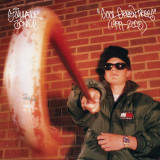
The cover photo is a picture of Sam standing on his back porch in the latter part of 1998, just before he got his first sampler. He was 13 years old, in 8th grade. His dad took the picture with his 35mm film camera: "I actually wanted to be pointing my dad's .22 pistol at the camera lens but he wouldn't let me. He gave me an old walking cane to use instead. The Tommy Hilfiger puffer jacket came from the lost and found at William Fleming High School where my mom worked as a secretary. I was thrilled when she brought it home because we never spent money on expensive name brand clothing like that - we were for the most part strictly a sale rack, bargain bin, thrift store, yard sale, flea market kind of family when it came to clothes. My watch is some cheap off-brand fake gold department store watch." Mastering for this vinyl edition was overseen by Be With regular Simon Francis and it was cut by the esteemed Cicely Balston at Abbey Road Studios to be pressed in the Netherlands by Record Industry.