Search:mean

Styles
All
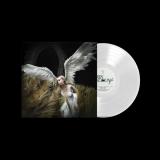
Niklas Paschburg - L'Ècho De Bretagne LP
  • 01: Paimpol
  • 02: Marché
  • 03: Le Port
  • 04: À La Maison
  • 05: La Vie Lente
  • 06: Bandes
  • 07: Adieu

A century-old grand piano, a secluded house surrounded by the greenery of Brittany, no internet connection, and a reel-to-reel recorder.L'Écho de Bretagne, the new EP by Niklas Paschburg, set for release from fall 2025 via Nettwerk Music Group, is a solo piano record as essential as it is intense. An album made of silences, space, slowness. A music that doesn't chase impact, but truth.

the album release is march 26th - 2026.

If his previous work, Mexican Alps (2025), marked the first time the German composer and producer created an ambient-electronic album without his instrument of choice, the piano, L'Écho de Bretagne emerges as a direct response to that absence. "It was exactly the lack of piano that brought about the need for this new record, which instead puts that instrument, so vital to me, at the very center, stripping everything else away," Niklas explains.

Born in 1994, Paschburg has shaped over the years a musical path deeply connected to travel, nature, and introspection. From his debutTuur Mang Welten(2016) toOceanic(2018),Svalbard(2020),Panta Rhei(2023), and the aforementionedMexican Alps— alongside soundtracks, remixes, and collaborations with artists like RY X, Hania Rani, Ásgeir, and Bryan Senti — his sound bridges neoclassical, electronic, ambient, and pop-driven composition.

WithL'Écho de Bretagne, the Hamburg-born, Berlin-based musician continues his exploration by seeking solitude in nature, much like he did onSvalbard, but this time with an even more radical choice: disconnecting completely from the internet, and switching off both computer and smartphone for a while, in order to fully immerse himself in his new music. "I rented an old cottage in Paimpol, Brittany, where I knew there was a grand piano," he recounts. "When I got there, I discovered that not only was the piano more than a hundred years old, but it was also of an unknown brand, never restored, and quite difficult to play. But that gave it a unique character, and I didn't give up. Sure, it was an instrument left to its own fate, I couldn't play anything too fast. But how fascinating was that? I'm convinced that setting limits, instead of giving yourself total freedom when composing, can become an extraordinary source of inspiration."

As for the decision to temporarily detach from a life that demands we stay constantly connected, Niklas describes it as both a creative and human experiment. "I had my laptop and phone with me, just in case, but I kept them turned off. That choice made me wantL'Écho de Bretagneto be a fully analog work, even in how it was recorded." A way of clearing the mind. "I don't think I've ever been as calm as I was during those days in Paimpol. Even though I was working on a very specific project and didn't have much time, that period was more relaxing than any vacation."

Not that it was free of hiccups. "I'd borrowed a reel-to-reel recorder small enough to travel with me, but after recording a session on the piano, I realized it wasn't working properly, the sound was distorted, full of crackles. I got worried, because I wasn't near any big city where I could find a technician. Luckily, I figured out the problem was the old tape reels I had brought along. That was the only time I had to go online, to order new ones. But it was just for a moment. I shut everything off again right after." At that point, Niklas was waiting for the new tapes to arrive. He found out, completely by chance, from a local UPS courier that they had been delivered to a nearby village. "Since my phone was off, I couldn't track the shipment. So one day I asked this delivery guy, who didn't know anything about it. But from that point on, we'd see each other daily and talk… That's what being disconnected also means: reconnecting with people around you, even strangers. It was thanks to that courier that I found out where the tapes had ended up. And he even helped me get them back, writing directions for me on a scrap of paper."

But there's another element that makes this new EP unique.L'Écho de Bretagnewas recorded entirely live; its tracks are all improvised, complete with their imperfections. This approach leads to a sound that is pure, profoundly organic, and deeply authentic, intentionally preserved to give the listener the feeling of a live performance happening in their own living room. The touch of fingers on the keys, the breath of the wood, the tension of the vibrating string, all become part of the music. There is no construction, only expression. "Even now, when I listen back to it, I feel that moment I gave myself to step away from everything: from reality, from words, from noise." The result is a collection of suspended melodies and atmospheres, reflecting a state of the soul. A refuge from the rush of time. A pause from the world.

pre-order now24.04.2026

expected to be published on 24.04.2026

25,00
Steve Kuhn - Steve Kuhn LP
  • A1: Pearlie's Swine
  • A2: Silver
  • A3: Time To Go
  • A4: The Heat Of The Moment
  • B1: The Baby
  • B2: Hold Out Your Hand
  • B3: The Meaning Of Love
  • B4: Ulla

180g Vinyl

The album features the group playing Gary McFarland arrangements of Kuhn's compositions, accompanied by a string section on several tracks, with Kuhn delivering stream of consciousness lyrics in an unplanned and largely improvised fashion in the studio. However, that wasn't the only surprising aspect to the session. Airto Moreira's appearance was more by chance than design, he having just popped by the studio, again, unplanned. The 'Steve Kuhn' album is all the stronger for these extemporaneous and serendipitous elements and showcases a band at the top of their game; tight and funky yet relaxed and flowing like molten gold, with stabs and washes of keyboard from Kuhn. Splashes of free playing enter the session, but the band never stray too far from a melodic and harmonious centre of gravity. Kuhn's deft keyboard skills provide melodic embroidery to the impressive rhythmic textures and tonal colours of Carter, Cobham and Moreira. As if the music wasn't enough, the album is given extra significance by the fact that, within a few months of the recording, McFarland would die after being mysteriously poisoned by methadone in a New York bar. In a sense, it is a valedictory album from McFarland, channeled by Kuhn and the band. It's among the hardest of Kuhn's albums to find so this reissue is most welcome. Luxuriate in the glow of Kuhn's Fender Rhodes and the pliant funky bass of Ron Carter; immerse yourself in the percussive interplay of Moreira and Cobham, a pairing that has rarely sounded so good. This is such an exquisite album; you will lose yourself in its delicate power and find yourself coming back to it again and again. "It's a beautiful picture, and it helped me to comprehend things, life a bit, you know. And as I'm thinking about it, I hope it does that for whoever listens to it too." - Thundercat, Musician Details: Heavyweight Vinyl 45 RPM Cut / Original glued prints on Thick Cardboard 700 gram / 2 Separated parts hand-glued / Glossy lamination / PVC outer / 30x60 cm insert printed on 300 gram DNS paper with interview to Steve Kuhn by Tony Higgins.

pre-order now24.04.2026

expected to be published on 24.04.2026

48,11
Havukruunu - Rautaa ja Tulta
  • 1: Pakkanen
  • 2: Maat Mennyttä Soi
  • 3: Surmatuli
  • 4: Rautaa Ja Tulta
  • 5: Musta Yö
  • 6: Joka Puun Takaa
  • 7: Ne Salaperäiset
  • 8: Maan Alainen
  • 9: Valhallan Portit
  • 10: Verta Ja Tuhkaa
also available

Grey/Black "Iron" Vinyl[24,33 €]


Havukruunu's RAUTAA JA TULTA reissued in April Svart Records continue to reissue the albums of Havukruunu, bringing their 2016 album RAUTAA JA TULTA back on the market in April 2026. Originally meant as an EP and recorded before the debut album HAVULINNAAN (2015), RAUTAA JA TULTA contains four added tracks from later sessions and was expanded into an album. ”Rautaa ja Tulta (SPIRITUAL RESILIENCE AND VIGOR, THE IRON AND FIRE OF THE SOUL) are the first 6 tracks recorded in 2014 which cemented the recognizable soundscapes of Havukruunu. These furious songs broke the recording equipment at the time, and the remaining four songs were finished in a separate session in 2016”, comments Stefa. RAUTAA JA TULTA is available now on new limited vinyl colours, housed in a single pocket jacket and comes with an insert.

pre-order now24.04.2026

expected to be published on 24.04.2026

23,49
Havukruunu - Rautaa ja Tulta

Havukruunu

Rautaa ja Tulta

12inchSRE761LPB1
Svart Records
24.04.2026
  • 1: Pakkanen
  • 2: Maat Mennyttä Soi
  • 3: Surmatuli
  • 4: Rautaa Ja Tulta
  • 5: Musta Yö
  • 6: Joka Puun Takaa
  • 7: Ne Salaperäiset
  • 8: Maan Alainen
  • 9: Valhallan Portit
  • 10: Verta Ja Tuhkaa
also available

Black Vinyl[23,49 €]


Havukruunu's RAUTAA JA TULTA reissued in April Svart Records continue to reissue the albums of Havukruunu, bringing their 2016 album RAUTAA JA TULTA back on the market in April 2026. Originally meant as an EP and recorded before the debut album HAVULINNAAN (2015), RAUTAA JA TULTA contains four added tracks from later sessions and was expanded into an album. ”Rautaa ja Tulta (SPIRITUAL RESILIENCE AND VIGOR, THE IRON AND FIRE OF THE SOUL) are the first 6 tracks recorded in 2014 which cemented the recognizable soundscapes of Havukruunu. These furious songs broke the recording equipment at the time, and the remaining four songs were finished in a separate session in 2016”, comments Stefa. RAUTAA JA TULTA is available now on new limited vinyl colours, housed in a single pocket jacket and comes with an insert.

pre-order now24.04.2026

expected to be published on 24.04.2026

24,33
Juli Deák - Brisk LP

Brisk is the debut album by Polish-Hungarian flutist Juli Deák (*2000), based in Budapest. Comprised of seven solo flute pieces, the album offers a concentrated snapshot of Deák’s musical world—one shaped by classical training, experimentation, improvisation, and folk influences.

The project began taking shape in 2021, as Deák moved away from the polished ideals of classical performance toward a more personal and exploratory approach. Early fragments only revealed their meaning in front of an audience, whose responses encouraged her to continue developing the material. With over 15 years of musical experience, Deák combines technical precision with a willingness to embrace vulnerability and chance.

Breathing lies at the heart of Brisk. More than a functional necessity, it becomes an expressive and structural force. Through close listening, breath feels tactile and intimate, placing the performer almost within reach. Techniques such as circular breathing, overblowing, harmonics, singing while playing, and wind tones allow the flute to unfold into multiple voices, while percussive key clicks provide a steady rhythmic pulse.

Deák foregrounds sounds often excluded from classical music—breathy tones, unstable pitches, squeaks, and audible inhalations—treating them as essential expressive tools. This focus reflects her long-term exploration of the flute’s physical and expressive limits and connects directly to her ongoing solo practice, The Breathing Project, of which Brisk is a distilled release.

Active across classical, contemporary, jazz, and experimental scenes, Deák has collaborated with ensembles including Konstmusik-systrar and the VENI ensemble, and performed at festivals such as Norbergfestival and Ung Nordisk Musik.

Across its seven pieces, Brisk balances immediacy and rigor, inviting focused listening while remaining open and bodily. It documents a musician in motion, attentive to sound as sensation, gesture, and breath, and committed to honesty

pre-order now24.04.2026

expected to be published on 24.04.2026

21,22
Human Space Machine - Perception Field

With our 12th anniversary approaching, we invited Dutch artist Human Space Machine, who delivered Perception Field, a five track EP built around the idea that perception is never fixed.
Across a wide tempo range, the record explores how the same material can shift depending on focus and context. Foreground and background exchange roles. Subtle textures and negative space shape the impact as much as the main rhythmic elements. Perception Field approaches club music as something fluid and responsive, where meaning forms through the act of listening itself. It’s an impressive showcase from an artist that shows once again he’s capable of merging layers of his excellent sound design with deeper feelings.

out of Stock

Order now and we will order the item for you at our supplier.

14,71

Last In: 22 days ago
Human Space Machine - Perception Field

With our 12th anniversary approaching, we invited Dutch artist Human Space Machine, who delivered Perception Field, a five track EP built around the idea that perception is never fixed.
Across a wide tempo range, the record explores how the same material can shift depending on focus and context. Foreground and background exchange roles. Subtle textures and negative space shape the impact as much as the main rhythmic elements. Perception Field approaches club music as something fluid and responsive, where meaning forms through the act of listening itself. It’s an impressive showcase from an artist that shows once again he’s capable of merging layers of his excellent sound design with deeper feelings.

out of Stock

Order now and we will order the item for you at our supplier.

14,71

Last In: 22 days ago
ARYA - PRONTO

ARYA

PRONTO

12inchSGH00021
Irma Records
20.04.2026
  • A1: Piano Terra (Intro) – 01:02
  • A2: Ricordati Di Me – 01:29
  • A3: Sono In Un Van – 03:11
  • A4: Onda Feat. Lauryyn – 03:07
  • A5: Attesa (Skit) – 01:19
  • A6: 10 Days Feat. Sup Nasa – 02:47
  • A7: Avevo Un Sogno – 03:18
  • B1: Ideal – 02:15
  • B2: No Answer (Skit) – 00:58
  • B3: La Noche En Que Te Fuiste – 03:29
  • B4: Della Morte E Della Grazia – 02:28
  • B5: Ikyk – 04:10
  • B6: Calma – 02:22
  • B7: Ultimo Piano (Outro) – 00:53

"PRONTO" is the debut album by ARYA, an Italian-Venezuelan artist who grew up in Milan. ARYA arrives with this first full-length album after the EPs
Peace of Mind (2021) and Punto Zero (2023), collaborations (Mahmood, Venerus, Ghemon, Dardust, Calibro35, and many others), and an intense live
activity, which have made her one of the most interesting voices on the Italian neo-soul/R&B scene.
Born from a personal journey of therapy and awareness, "PRONTO" takes shape as a concept album, transforming the emotional investigation into a
coherent and layered musical narrative. The title captures the meaning of the project: "Pronto" is a word that crosses all the languages present on the
album—Italian, English, and Spanish—taking on different meanings ("subito," "presto"), and is also the first word uttered in the intro. A term that introduces the listener to a space of availability, anticipation, and presence.
The entire album was produced by Claudio La Rocca (Sup Nasa), a key figure in building the project's sonic identity. Giuseppe Seccia, Matteo D'Ignazi,
Martina Tedesco, Tiziano Codoro, Stefano De Vivo, and Giulia Gentile also contributed to the album, recording the instrumental parts and contributing
to the arrangements and production of some tracks.
With "PRONTO," ARYA takes the listener on a journey through different levels of her emotional history, until the elevator starts moving again and leaves room for a new possibility of balance.
ARYA (AryaDelgado) is an Italian-Venezuelan artist born in Milan in 1994. Daughter of salsa singer Orlando Watussi, she grew up surrounded by music
and quickly developed a sensibility that blends Latin roots, nu-soul, and contemporary R&B, with a strong focus on the emotional and narrative dimensions of her writing. In 2021, she released her debut EP, Peace of Mind, followed in 2023 by Punto Zero. These releases attracted press attention
and led to collaborations with artists such as Mahmood, Venerus, Ghemon, Dardust, and Calibro35. Over the years, she has consolidated an increasingly recognizable presence, alternating songwriting, solo production, and an intense live schedule in Italy and abroad. In 2024, she accompanied Mahmood on tour and released the single, "Si Potesse Tornare." In 2025, La Noche En Que Te Fuiste and Onda were released, songs that marked the
beginning of a new artistic chapter and anticipated the release of “PRONTO,” her debut album, released in February 2026. An intimate and layered
work, which focuses on vulnerability as a language and confirms ARYA as one of the most personal and aware voices of the new Italian soul scene.

pre-order now20.04.2026

expected to be published on 20.04.2026

24,33
Benjamin	Tod - Vengeance and Grace LP 2x12"
  • 1: Vengeance And Grace
  • 2: End Of My Rope
  • 3: It's What You Meant
  • 4: Goner
  • 5: Closing The Door
  • 6: Martyr Of A Man
  • 7: My Pride
  • 8: Ticket Home
  • 9: The Bottle's Gone
  • 10: I Ain't Bound
  • 11: Vengeance And Grace (Alone)
  • 12: End Of My Rope (Alone)
  • 13: It's What You Meant (Alone)
  • 14: Goner (Alone)
  • 15: Closing The Door (Alone)
  • 16: Martyr Of A Man (Alone)
  • 17: My Pride (Alone)
  • 18: Ticket Home (Alone)
  • 19: The Bottle's Gone (Alone)
  • 20: I Ain't Bound (Alone)
also available

Opaque Red Vinyl[32,98 €]


Grounded in a season of life that has been earned rather than borrowed, Benjamin Tod speaks with the ease of someone no longer running from himself. There is joy now - a steadiness that comes from commitment. With the recent arrival of his son and a deep well of new music on the horizon, Tod is firmly rooted in both purpose and possibility. That clarity is evident in Vengeance and Grace, the Lost Dog Street Band frontman's forthcoming and most expansive solo album to date. Conceived as a "dual-version" release, the project presents two parallel worlds: (Alone) is a stripped solo-acoustic version, along with its full band counterpart.

Together, the two versions form the full range of what Tod is capable of: restraint on one side, force on the other. At the core of Tod's writing is a simple conviction: music should serve something larger than the moment. His writing speaks to mind, body, and soul, shaped by faith, discipline, and a hard-earned understanding of consequence. The darkness that once defined him is neither denied nor indulged. It is understood and no longer in control. Today, Tod moves with a sense of calm that wasn't always there. He is grateful, settled, and intentional, continuing to follow the compass that's guided him from the beginning. Rooted in traditional country and folk, his work stands firmly in the modern music landscape, shaped by experience, restraint, and the life he's built around it.

pre-order now17.04.2026

expected to be published on 17.04.2026

29,20
THE EASTERN DARK - Johnny And Dee Dee / Julie Is A Junkie 7"
  • A1: Johnny And Dee Dee
  • B1: Julie Is A Junkie

To commemorate the 40th Anniversary of the passing of James Darroch, singer/songwriter/guitarist for Sydney's incredible The Eastern Dark, Grown Up Wrong! is thrilled to announce a long-awaited reissue of the band's classic single "Julie Is A Junkie/Johnny and Dee Dee".

Heavily influenced by the Ramones - the band opened their first live show with 'Blitzkrieg Bop' and from then on opened with a new Ramones song every time they played, working through the band's complete catalogue in chronological order - as all manner of hyper-melodic and high energy rock. The Eastern Dark were a classic trio powered by former Celibate Rifles bassplayer James Darroch's blazing guitar and anchored by former Lime Spiders backing vocalist Bill Gibson's hard driving and melodic bass playing (and supreme backing vocals) and Geoff Milne's untouchable beat keeping. They set Sydney's Radio Birdman influenced scene alight in 1984 and quickly built an international following on the back of their classic single. Sadly, just hours after completing what would become their next release - the mini-LP "Long Live the New Flesh" - the band's life, and that of 26-year old James Darroch, was brutally ended in a road accident whilst the band was on its way to Melbourne.

On the back of the tragedy, the band's music lived on and it's global impact was reflected in the influence it bore on numerous bands, from Boston's the Lemoneads to Tokyo's Teengenenete, and obviously a succession of Australian bands from the Hard-Ons through to God and the Meanies and beyond.

After years of searching, surviving members Bill Gibson and Geoff Milne recently found the single's original multi-track tapes, and for the new release, the original recordings have been both remixed and remastered for maximum impact under their supervision.

pre-order now17.04.2026

expected to be published on 17.04.2026

14,71
Various - Tchic Tchic: French Bossa Nova 1963-1974  Colored Edition LP 2x12"
  • A1: Les Masques - Il Faut Tenir (1969)
  • A2: Isabelle Aubret - Casa Forte (1971)
  • A3: Christianne Legrand - Hlm Et Ciné Roman (1972)
  • A4: Jean Constantin - Pas Tant D'chichi Ponpon (1972)
  • A5: Billy Nencioli & Baden Powell - Si Rien Ne Va (1969)
  • B1-: Marpessa Dawn - Le Petit Cuica (1963)
  • B2: Jean-Pierre Sabar - Vai Vai (1974)
  • B3: Sophia Loren - De Jour En Jour (1963)
  • B4: Isabelle - Jusqu’à La Tombée Du Jour (1969)
  • B5: Sylvia Fels - Corto Maltesse (1974)
  • C1: Frank Gérard - Comme Une Samba (1972)
  • C2: Ann Sorel - La Poupée Des Favellas (1971)
  • C3: Charles Level - Un Enfant Café Au Lait (1971)
  • C4: Andrea Parisy - Les Mains Qui Font Du Bien (1970)
  • C5: Audrey Arno - Quand Jean-Paul Rentrera (1969)
  • C6: Aldo Frank - T’as Vu Ce Printemps (1970)
  • D1: Christianne Legrand - Cent Mille Poissons Dans Ton Filet (1972)
  • D2: Clarinha - Lemenja (1970)
  • D3: Hit Parade Des Enfants - Aquarela (1976)
  • D4: Jean-Pierre Lang - Tendresse (1965)
  • D5: Magalie Noël - Une Énorme Samba (1970)
  • D6: Françoise Legrand - La Lune

Ever since the late 1950s bossa-nova revolution, Brazil’s influence on French music has been undeniable. Pierre Barouh, Georges Moustaki and a vast array of lesser known artists, all made the Musica Popular Brasileira (MPB) an axis of promotion at the service of a cool and metaphysical, modern and mixed Brazilian lifestyle. Some were seduced by the poetic languors of the bossa, some were looking for fun, and others just loved the American hybridization of jazz-bossa, jazz-samba.


What is bossa nova? One of its creators, Joao Gilberto said: "Its style, cadence, everything is samba. At the very start, we didn't call it bossa nova, we sang a little samba made up of a single note - Samba de uma nota so .... The discussion around the origins of bossa nova is therefore useless”. It is nevertheless useful to remember that these magnificent Brazilian songs, which the guitarist describes as samba, were shifted and balanced around improbable chords. "I like things that lean, the in-betweens that limp with grace," said Pierre Barrouh, quoting Jean Cocteau.


With emotion, arrangements for violin and supple guitar licks, bossa nova rapidly changed. A transformation that can be heard in the Tchic, tchic, French Bossa Nova 1963-1974 compilation, the result of a cultural reappropriation, which traveled through the United States and supplemented itself in France.

A musical revolution that has remained significant, bossa nova was born in Rio. From 1956 to 1961, Brazil lived through its golden years. In five years, the country had invented its modernist style. Elected president in 1956, Juscelino Kubitschek de Oliveira, an elegant man with a broad forehead, brandished a promising slogan: "Fifty years of progress in five years". He quickly got to work. Not worried about increasing debt, he launched the project for a new federal capital, Brasilia, designed by the communist architect Oscar Niemeyer. Volkswagen opened state-of-the-art factories and created the “fusquinha”, the Beetle. In Rio, the Vespa made its first appearance. The Arpoador Surf Club crew run into the “girl” from Ipanema, Helô Pinheiro - the tanned garota ("chick"), between a flower and mermaid, who at 17 walked by the Veloso bar, where the fiery author and composer, Tom Jobim and Vinicius de Moraes, were getting drunk on whiskey. From then on, bossa symbolized cool.

In 1958, Joao Gilberto recorded Chega de Saudade, which the directors of Philips denied, calling it "music for fagots". The marketing director, who believed in it, secretly pressed 3000 78-inch vinyls and distributed them at schools around Rio, creating a tidal wave.

American jazzmen then took over. In particular, trumpeter Dizzy Gillespie and guitarist Charlie Byrd. In November 1962, the Brazilian Ministry of Foreign Affairs funded a "Bossa-Nova" concert at Carnegie Hall in New York, inviting the genre’s pioneers. Unprepared, the show soon turned to disaster. But the troupe was invited to the White House by Jackie Kennedy. The first lady loved "the new beat" and in particular Maria Ninguem, a song by Carlos Lyra, later covered by Brigitte Bardot.

In Brazil, the 1964 military coup quickly ended this euphoria. The destructive atmosphere that ensued pushed many Brazilian musicians to leave, if not to exile. Thus, Tom Jobim, Sergio Mendes and Joao Gilberto arrived to the United States. In New York, Joao Gilberto met saxophonist Stan Getz. At the time, he was married to the Bahianese Astrud Weinert Gilberto, who had a German father. She had never sung before, but she knew how to speak English. Getz therefore asked her to replace her husband on The Girl From Ipanema. The Getz/Gilberto record with Tom Jobim on piano, was released in March 1964. Phil Ramone, the "pope of pop" was in charge of sound.

Bossa nova arrived in Paris through the classic “guitar-voice” channel (Pierre Barouh, Baden Powell, Moustaki…) But France loved jazz and Paris had already welcomed its American contributors. All these good people were to pass through Saint-Germain-des-Prés. The cabaret l'Escale became the Mecca of Latin American sound where one could find Pierre Barrouh and his friends, such as the Camara Trio, samba-jazz aces, whose only record was published by the Saravah label. With a band strangely called Les Masques (a band that included Nicole Croisille and Pierre Vassiliu, among others), the Camara Trio recorded an interesting Brazilian Sound, including the track Il faut tenir which is present on this tasty compilation of rarities.

Other enlightened musicians can also be found on the compilation, such as Jean-Pierre Sabar (songwriter for Hardy, Auffray, Leforestier ...) and the French pop rock organist Balthazar. In 1975, Sabar recorded Aurinkoinen Musiikkimatka on a Finnish label, which featured the crazy Vai, Vai, included on this record. We are now following the footsteps of Brazilian electronic musicians such as Sergio Mendes, Eumir Deodato or Marcos Valle who created funk and disco sounds on their keyboards and synthesizers. A style that influenced Véronique Sanson when she wrote Jusqu’à la Tombée de la nuit in 1969 for Isabelle de Funès, the niece of Louis and a great friend of Michel Berger - Sanson did end up singing this track on her 1992 Sans Regret record.


The pinnacle of exoticism and travel, Sylvia Fels’ Corto Maltese includes bongos, sea mist and ocean sounds. The title was taken from Jacky Chalard’s concept album written in 1974, Je suis vivant, mais j’ai peur (I am alive, but I am scared), based on Gilbert Deflez’s science fiction novel.


However, bossa nova extended the scope of popularity. "In the 1970s, I was a fan of Sergio Mendes, Getz / Gilberto. I fell in love with this music that I knew because I had been an orchestral singer, " explained Isabelle Aubret, who in 1971 delivered a composite record of covers by the very funky Jorge Ben, Orfeu Negro, Tom Jobim, Vinicius de Morais and Jean Ferrat. "I recorded this album for Meys Records in Paris, far from Brazil, with wonderful musicians, François Raubert, Roland Vincent, Alain Goraguer...". The latter wrote the arrangements for Casa Forte, a very percussive title borrowed from Edu Lobo, one of the initiators of the bossa who spent time in California. "Jazz and bossa came together and produced very rhythmic music. I love singing, it allows me to dream, to have fun, to feel a high on stage, and these songs brought me joy, made me swing, my singing felt like a dance.”


The world tours of French singers and their desire for the tropics, often brought them to Rio with its hills, forests, caipirinhas and tanned bodies. There are surprises though, like this Iemenja (Iemenja is the goddess of the sea in the Afro-Brazilian candomblé religion). Not unlike the composer and musician Jean-Pierre Lang, based in Sao Paulo, Claire Chevalier taught Brazil to Brazil. In 1970, the singer and painter published a 45-inch vinyl, Mon mari et mes amants (My husband and my lovers), under the improbable pseudonym of Clarinha (little Claire). She was then living in Rio, with her husband, Joël Leibovitz, who founded a band called Azimuth, and who owned a record label specialized in "sambas enredos" songs for samba school parades.


For its B side, she asked Pierre Perret to come up with lyrics for a song composed by Carlos Imperial: "Oh goddess of the sea, o goddess Iemenja, I bring a white rose to adorn your long hair ..." . "Perret came to see us, and we had fun, remembers Joël Leibovitz. We wrote Lemenja for fun, we recorded it at the Havaí studio, behind the Central do Brasil the central station. Erlon Chaves, the arranger who worked with Elis Regina, joined us" adding his share of Afro-Brazilian percussions and funky brass to the mix.

There is a common misunderstanding in Franco-Brazilian history: that bossa, admittedly hedonistic, is perceived as funny, even though the poets who wrote the texts are often philosophizing on the human condition. Its French interpreters pull it towards a carnival inspired universe, far removed from its fundamental essence. Thus, Jean Constantin covered the famous Samba da minha terra, an ode to the art of samba written by the classic Bahian composer Dorival Caymmi, renaming it with the enticing title of Pas tant de tchi tchi pompon: "On your pier there is no tchi tchi / when you arch your back, you know everything is alright ”(lyrics by Gérard Calvi). This expedited bossa aims for the absurd, but retains a certain elegance.

Indeed, Jean Constantin was not an idiot, the rather large man had a huge mustache and liked fantasy, (Les pantoufles à papa, Le pacha, inspired by cha-cha-cha-cha, salsa and jazz) but he was also the lyricist of Mon manège à moi interpreted by Edith Piaf, the composer of Mon Truc en plume by Zizi Jeanmaire and the soundtrack of François Truffaut’s 400 Blows. Le Poulpe, published in 1970, from which this bossa is extract, was arranged by Jean-Claude Vannier, an accomplice of Serge Gainsbourg’s Melody Nelson. In short: "There is enough of samba / By looking at the parasol / Because my poor cabeza / Is going to die in the sun".

Even the American actress Marpessa Down, who was at the heart of the bossa nova revolution with her role as Euridyce in Marcel Camus’ film Orfeu Negro, winner of the 1959 Cannes Palme d'or, fed the clichée with Je voudrais parler au petit cuica - "Tell me how you manage to always make people want to dance / It's true, I must admit that I cannot resist your magic" - in consequence, once can hear the cuica, a little drum inherited from the Bantu.


But bossa nova had many angles. Societal, of course, pushing actresses who were symbols of women's liberation like Brigitte Bardot, Jeanne Moreau, or Sophia Loren to engage in the exercise of accelerated bossa. In February of 1963, Sophia Loren made a record in French in Rome, Je ne t'aime plus, featuring the song De jour en jour, a bossa written by two Italians, Armando Trovajoli and Tino Fornai, which was released a little later by Barclay. Bossa accompanied the 1960s, a decade of moral liberation. Ann Sorel, who interpreted La Poupée des favellas, caused a sensation with L’amour à plusieurs, a provocative song written by Frédéric Bottom and Jean-Claude Vannier. As for the actress Andrea Parisy, she displayed her bourgeois cheekiness in Marcel Carné's Les Tricheurs before interpreting Les mains qui font du bien. And Magalie Noël, the friend of Boris Vian, who sung Johnny fais-moi mal, was hired to sing Une énorme Samba, composed by Alain Goraguer (arranger to Gainsbourg, Bobby Lapointe and Jean Ferrat) with lyrics by Frédéric Botton.

But in the end, of what wood is bossa nova made of? The answer is given by Christianne Legrand, daughter of Raymond the conductor, and sister to Michel the composer: "With me, with jà" - jà means "immediately" in Portuguese. In 1972, the singer, an expert in vocal jazz and a member of the Double Six, published Le Brésil de Christianne Legrand. Two songs included on the Tchic Tchic compilation that demonstrate how bossa, jazz, funk, rock, etc. work like a swiss army knife: the music is used to denounce broken systems, or miracles, HLM et ciné roman, Cent mille poissons dans ton filet, two songs from the O Cafona soundtrack, a successful telenovela broadcast, at the time in black and white, on TV Globo. The first was adapted in French by the fighter and friend of the Legrand tribe, Agnès Varda. The second is content with a play on words, jostling them into a summer fun.


Véronique Mortaigne
pre-order now17.04.2026

expected to be published on 17.04.2026

27,31
Vaudou Game - Apiafo (2025 Repress)
  • A1: No Problem
  • A2: Dangerous Bees
  • A3: Pas Contente Feat Roger Damawuzan
  • A4: Meva
  • A5: Happiness
  • B1: Ata Calling
  • B2: Wrong Road
  • B3: No Way To Go
  • B4: Djin Ku Djin
  • B5: Think Positive

Repress of the 1 st album of the fresh Afro funk sensation ! Recorded on analog equipment in Lyon in 2014 !


Peter Solo is a singer and composer born in Aného-Glidji, Togo, the birthplace of the Guin tribe and a major site of the Voodoo culture. He was raised with this tradition’s values of respect for all forms of life and the environment. With his new band, Vaudou Game, Peter Solo claims, and spreads this spiritual and musical heritage. Chants are at the heart of the Voodoo practice, but for times immemorial, harmonic instruments have never accompanied them. No balafon, no kora - only the “skins” support the singers. However, in 2012, Peter, along with his band based in Lyon, France, decided to explore and codify the musical scales that are found in sacred or profane songs of Beninese and Togolese Voodoo so they can be played easily on modern instruments. Peter composed the album Apiafo, using the two main musical scales of this tradition. The first musical scale on Apiafo leans towards raw Funk with a sound similar to the famous 70’s bands, L’Orchestre Poly Rythmo De Cotonou and El Rego. Funk, is the skeletal structure of this record, and provided the opportunity for Peter to invite his uncle, Roger Damawuzan - the famous pioneer of the 70s Soul scene - on two tracks. Their collaboration on “Pas Contente” is a highlight on this 100% analog album. Apiafo was entirely recorded, mixed and mastered with old tapes and vintage instruments. The second scale, which had never before been transposed for instruments, evokes deeper feelings and a sacred ambiance. The moving song Ata, an invocation to a supreme divinity is another highlight of this record. Even if some can recognize similarities between this scale and Ethiopian scales, they are in fact different. Peter, the only African band member, introduced the other musicians to the universal values of Voodoo and he taught them his native language. On the recording of Apiafo and during their live performances, the musicians all sing and answer Peter in the Mina language. The strive for authenticity, the analog sound and vintage looks don’t mean that Vaudou Game is looking backwards. This is Togolese funk, born in the post-colonial era but that never before explored its ancient roots so deeply and proudly.


Antoine RAJON

pre-order now17.04.2026

expected to be published on 17.04.2026

24,58
ORDH - BLIND IN ABYSSAL REALMS

ORDH

BLIND IN ABYSSAL REALMS

12inchASHLP222
PULVERISED
17.04.2026
  • 1: Apis Bull
  • 2: Moon Of Urd
  • 3: Phlegraean Fields
  • 4: Blind In Abyssal Realms
  • 5: Hierothesion

ORDH's debut, "Blind In Abyssal Realms", sets out to redefine what the term 'progressive death metal' truly means. But before ORDH, there was BARISHI. When their bass player threw in the towel to pursue other interests in life, guitarist and vocalist Graham Brooks, "looking for a fresh start", decided the time had come to finally dwell in his favorite genre: death metal. But not just any kind of death metal_ Having drafted BARISHI drummer Dylan Blake, with whom Graham has been playing since he was twelve years old, and Josh Smith from KIEFCATCHER on bass, the trio then spent a few gruelling years working on their debut, with Graham writing most of the music and ironing the songs out with Dylan and Josh. Having toured with COME TO GRIEF when BARISHI was still around, Graham and the latter's singer Jonathan Hébert had hit it off really well, so when the time came to find a vocalist, Jonathan was called upon, "right on time to jump straight into the recording and writing process, as most of the music was ready to go".

pre-order now17.04.2026

expected to be published on 17.04.2026

28,53
molto morbidi - Maybe Marcel (LP)

French artist Swan Wisnia, under her solo project molto morbidi, announces her second album Maybe Marcel for release on April 17th via No Salad Records. An experimental album forged in both tenderness and turmoil, combining art / weird pop and baroque pop, the album moves between the intimate and raw to the playful and inventive, creating a universe that is at once dark and hopeful.
"What inspires me are artists who stand by their influences while transcending traditions," she explains. "Artists who are recognisably their own." Drawing inspiration from everything from Siouxsie Sioux to The Raincoats to Broadcast, Lizzy Mercier Descloux, and ESG, Wisnia balances melodic sensibility with the experimentally daring, creating a body of work that is both timeless and wholly original.

pre-order now17.04.2026

expected to be published on 17.04.2026

21,81
Erin LeCount - I Am Digital, I Am Divine

Erin LeCount

I Am Digital, I Am Divine

12inch5026854264202
Atlantic
17.04.2026
  • I Am Digital, I Am Divine
  • Marble Arch
  • Sweet Fruit
  • Godspeed
  • Silver Spoon

To celebrate the year anniversary of its first release, Erin LeCount launches a limited edition transparent vinyl of her 2025 EP I Am Digital, I Am Divine. The tracklist includes viral hit Silver Spoon which amassed 300K Soundcloud streams before it had even been released, since amassing 21M streams in less than 12 months.

Available for pre-order on the 24th March and set for release on the 17th April 2026.
Erin LeCount is a 23-year-old self-taught artist and producer. A visionary sonic architect and the sole writer and producer of her music, her sound ranges from luscious baroque-pop arrangements to alluring gothic-pop.

At the foreground of her music are diaristic lyrics and captivating synths which offer an enchanting interplay of vulnerability and power. The themes within her music explore everything from identity to relationships and the meaning of life. Erin’s influences include Fiona Apple, Kate Bush, Lorde, Imogen Heap, Charli xcx, and Sampha.

In May 2026, Erin LeCount will embark on her biggest run of shows to date with her new UK tour, entitled the ‘PAREIDOLIA Tour’, which will see her play dates in Manchester, Glasgow, Bristol, and London, the latter of which will take place at the Roundhouse in what is Erin’s largest headline show so far.

This month, Erin was also announced on the line-up for Lorde’s All Points East date on Saturday 22nd August.

pre-order now17.04.2026

expected to be published on 17.04.2026

21,81
Doodswens - Doodswens

Doodswens

Doodswens

12inchSVART378LP
Svart Records
17.04.2026
  • 1: Driven By Death
  • 2: Verrot
  • 3: The Black Flame
  • 4: These Wounds Never Healed
  • 5: She Carries The Curse
  • 6: Devils Stone
  • 7: Vlaamse Vloek
also available

Violet Vinyl[26,01 €]


Uncompromising Dutch Black Metal – DOODSWENS’ sophomore album out in April via Svart Records Doodswens is a Dutch Black Metal band formed in 2017 by I. Live she performs the drums and vocals, joined by R. & P. on bass and guitar. Doodswens translates to Deathwish, but the meaning and heavy load to the word in Dutch translates better to Driven by Death. The self-titled sophomore album by Doodswens is out on April 17th 2026.

After establishing themselves in the Dutch scene, Doodswens gained an international following doing tours with Marduk & Gorgoroth. Doodswens’ performances are ceremonial and ritualistic, which have been reported to be as uplifting as they are devastating, depending on the demons you bring them to offer. Whatever you carry with you will be exposed. They like to confront instead of bringing comfort. If you've been on the verge of ending your life, or think about it more often than not, then you're living with a death wish. A heavy feeling, like a gray cloud hovering around you, gasping for breath and blurring your vision. This is incomprehensible to anyone. Except for those caught in the middle of it. But this album isn't about giving up. It's about finding strength, about someone who regains new energy after facing death.

This album isn't about wishing for death, but the death of the wish. Band’s establisher I. talks about the new single "Driven by Death": “For me, it was on the way back from a spontaneous adventure, full of music, new connections, and inspiration. A path without a plan and a journey without a goal, with only a very strong feeling that this is where I'm meant to be. With a misty horizon of endless asphalt before me. A large tree at the edge of the road, in the corner of my eye, screaming that this could just be the end. But what I felt wasn't fear, it was happiness. With the thought that if I crash into that tree now, I won't care at all. Because up until this moment, I've done everything possible, experienced every adventure, and each time, gotten up again and faced life with that gray cloud around my head. I have a death wish, so if it happens now, it's okay, and I'm at peace with it. This was the moment I realized, I'm not afraid of life. I'm driven by death.”

pre-order now17.04.2026

expected to be published on 17.04.2026

25,17
Doodswens - Doodswens

Doodswens

Doodswens

12inchSVART378LPB1
Svart Records
17.04.2026
  • 1: Driven By Death
  • 2: Verrot
  • 3: The Black Flame
  • 4: These Wounds Never Healed
  • 5: She Carries The Curse
  • 6: Devils Stone
  • 7: Vlaamse Vloek
also available

Black Vinyl[25,17 €]


Uncompromising Dutch Black Metal – DOODSWENS’ sophomore album out in April via Svart Records Doodswens is a Dutch Black Metal band formed in 2017 by I. Live she performs the drums and vocals, joined by R. & P. on bass and guitar. Doodswens translates to Deathwish, but the meaning and heavy load to the word in Dutch translates better to Driven by Death. The self-titled sophomore album by Doodswens is out on April 17th 2026.

After establishing themselves in the Dutch scene, Doodswens gained an international following doing tours with Marduk & Gorgoroth. Doodswens’ performances are ceremonial and ritualistic, which have been reported to be as uplifting as they are devastating, depending on the demons you bring them to offer. Whatever you carry with you will be exposed. They like to confront instead of bringing comfort. If you've been on the verge of ending your life, or think about it more often than not, then you're living with a death wish. A heavy feeling, like a gray cloud hovering around you, gasping for breath and blurring your vision. This is incomprehensible to anyone.

Except for those caught in the middle of it. But this album isn't about giving up. It's about finding strength, about someone who regains new energy after facing death. This album isn't about wishing for death, but the death of the wish. Band’s establisher I. talks about the new single "Driven by Death": “For me, it was on the way back from a spontaneous adventure, full of music, new connections, and inspiration. A path without a plan and a journey without a goal, with only a very strong feeling that this is where I'm meant to be. With a misty horizon of endless asphalt before me. A large tree at the edge of the road, in the corner of my eye, screaming that this could just be the end. But what I felt wasn't fear, it was happiness. With the thought that if I crash into that tree now, I won't care at all. Because up until this moment, I've done everything possible, experienced every adventure, and each time, gotten up again and faced life with that gray cloud around my head. I have a death wish, so if it happens now, it's okay, and I'm at peace with it. This was the moment I realized, I'm not afraid of life. I'm driven by death.”

pre-order now17.04.2026

expected to be published on 17.04.2026

26,01
Erin LeCount - I Am Digital, I Am Divine
  • 1: I Am Digital, I Am Divine
  • 2: Marble Arch
  • 3: Sweet Fruit
  • 4: Godspeed
  • 5: Silver Spoon

To celebrate the year anniversary of its first release, Erin LeCount launches a limited edition transparent vinyl of her 2025 EP I Am Digital, I Am Divine. The tracklist includes viral hit Silver Spoon which amassed 300K Soundcloud streams before it had even been released, since amassing 21M streams in less than 12 months.
Available for pre-order on the 24th March and set for release on the 17th April 2026.
Erin LeCount is a 23-year-old self-taught artist and producer. A visionary sonic architect and the sole writer and producer of her music, her sound ranges from luscious baroque-pop arrangements to alluring gothic-pop. At the foreground of her music are diaristic lyrics and captivating synths which offer an enchanting interplay of vulnerability and power. The themes within her music explore everything from identity to relationships and the meaning of life. Erin’s influences include Fiona Apple, Kate Bush, Lorde, Imogen Heap, Charli xcx, and Sampha.
In May 2026, Erin LeCount will embark on her biggest run of shows to date with her new UK tour, entitled the ‘PAREIDOLIA Tour’, which will see her play dates in Manchester, Glasgow, Bristol, and London, the latter of which will take place at the Roundhouse in what is Erin’s largest headline show so far. This month, Erin was also announced on the line-up for Lorde’s All Points East date on Saturday 22nd August.

pre-order now17.04.2026

expected to be published on 17.04.2026

21,81
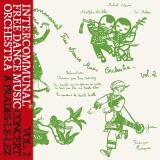
Intercommunal Free Dance Music Orchestra - Vol. 2 Concert A Prades Le Lez

Concert at Prades-le-Lez marks the origins of the Intercommunal Free Dance Music Orchestra. In 1974, François Tusques and his companions (Michel Marre, Jo Maka, Adolf Winkler and Guem), in the spirit of Don Cherry or Chris McGregor, playfully dismantle all borders and all styles of creative music.

On this second volume, the Intercommunal builds unprecedented soundscapes around a song of revolt, a dance tune, or a burst of dissonance. The journey is unforgettable, no question about it. On repeat listening, it even becomes… lunar!

“The music that we make is primarily meant to be listened to live,” warned a leaflet from the Intercommunal Free Dance Music Orchestra. This is precisely why the (restored!) reissue of the two volumes of Concert at Prades-le-Lez, recorded on January 25 and 26, 1974 by François Tusques and his comrades, is such an important event.

In 1971, after recording a series of albums that would leave a lasting mark on French jazz (Free Jazz, of course, with Michel Portal, François Jeanneau, Bernard Vitet, Beb Guérin and Charles Saudrais, but also Le Nouveau Jazz with Barney Wilen, or the solo Piano Dazibao), François Tusques founded the Intercommunal—a grouping whose very name called for the fraternization of the various communities making up the country: Our music will help, we hope, to resolve the contradictions that exist between workers be longing to different communities, by breaking down various forms of national chauvinism, and more particularly the chauvinism of certain French people toward the cultures of Third World countries… Long live the friendship between the peoples of the whole world!

Among the great records made by the Intercommunal Free Dance Music Orchestra, the two volumes of Concert at Prades-le-Lez come first, before L’Inter Communal, Vol. 4, Le Musichien, and Après la marée noire (four titles already reissued by Souffle Continu). François Tusques and his companions (Michel Marre and Jo Maka on saxophones, Adolf Winkler on trombone, and Guem on percussion) performed on January 25 and 26, 1974 at the Moulin de Prades-le-Lez, a few kilometers from Montpellier. It was thus in the southern region of Occitanie that the first echoes of this musical vision of a borderless brotherhood were recorded.

“We’re not among the Colonels,” the Intercommunal reassures us right away, performing a stride piano tune carried by African winds that the audience cannot resist for long. The energy is already striking and it never lets up throughout these two recordings, from start to finish: jazz, blues, traditional music, minimalism, even funk… The musicians of the Intercommunal have heard a lot of great music and now delight in reinventing it by mixing it all together.

“We want the song form to take its place as a weapon in the struggle against capitalist exploitation and all those who oppress us morally and materially,” declared an Intercommunal leaflet, quoting Jean-Baptiste Clément, author of the lyrics to “Le Temps des cerises.” The struggle was therefore serious—but it did not prevent François Tusques and his group from waging it in a festive spirit: each piece on Concert at Prades-le- Lez sends out a call for love and fraternity. Fifty years later, the message remains as relevant as ever—and once again, it is François Tusques who makes it heard.

pre-order now17.04.2026

expected to be published on 17.04.2026

23,95
Intercommunal Free Dance Music Orchestra - Vol. 1 Concert A Prades Le Lez
  • On N'est Pas Chez Les Colonels
  • Intercommunal Blues
  • Mazir
  • Kan-Ha-Diskan - We Shall Over Come
  • African Rythm-N-Logy
also available

2[23,95 €]


Concert at Prades-le-Lez marks the origins of the Intercommunal Free Dance Music Orchestra. In 1974, François Tusques and his companions (Michel Marre, Jo Maka, Adolf Winkler and Guem), in the spirit of Don Cherry or Chris McGregor, playfully dismantle all borders and all styles of creative music.

On this first volume, the Intercommunal takes its audience from New Orleans to Brittany and on to North Africa. The journey was bold, without a doubt—and its memory remains unforgettable.

“The music that we make is primarily meant to be listened to live,” warned a leaflet from the Intercommunal Free Dance Music Orchestra. This is precisely why the (restored!) reissue of the two volumes of Concert at Prades-le-Lez, recorded on January 25 and 26, 1974 by François Tusques and his comrades, is such an important event.

In 1971, after recording a series of albums that would leave a lasting mark on French jazz (Free Jazz, of course, with Michel Portal, François Jeanneau, Bernard Vitet, Beb Guérin and Charles Saudrais, but also Le Nouveau Jazz with Barney Wilen, or the solo Piano Dazibao), François Tusques founded the Intercommunal—a grouping whose very name called for the fraternization of the various communities making up the country: Our music will help, we hope, to resolve the contradictions that exist between workers be longing to different communities, by breaking down various forms of national chauvinism, and more particularly the chauvinism of certain French people toward the cultures of Third World countries… Long live the friendship between the peoples of the whole world!

Among the great records made by the Intercommunal Free Dance Music Orchestra, the two volumes of Concert at Prades-le-Lez come first, before L’Inter Communal, Vol. 4, Le Musichien, and Après la marée noire (four titles already reissued by Souffle Continu). François Tusques and his companions (Michel Marre and Jo Maka on saxophones, Adolf Winkler on trombone, and Guem on percussion) performed on January 25 and 26, 1974 at the Moulin de Prades-le-Lez, a few kilometers from Montpellier. It was thus in the southern region of Occitanie that the first echoes of this musical vision of a borderless brotherhood were recorded.

“We’re not among the Colonels,” the Intercommunal reassures us right away, performing a stride piano tune carried by African winds that the audience cannot resist for long. The energy is already striking and it never lets up throughout these two recordings, from start to finish: jazz, blues, traditional music, minimalism, even funk… The musicians of the Intercommunal have heard a lot of great music and now delight in reinventing it by mixing it all together.

“We want the song form to take its place as a weapon in the struggle against capitalist exploitation and all those who oppress us morally and materially,” declared an Intercommunal leaflet, quoting Jean-Baptiste Clément, author of the lyrics to “Le Temps des cerises.” The struggle was therefore serious—but it did not prevent François Tusques and his group from waging it in a festive spirit: each piece on Concert at Prades-le- Lez sends out a call for love and fraternity. Fifty years later, the message remains as relevant as ever—and once again, it is François Tusques who makes it heard.

pre-order now17.04.2026

expected to be published on 17.04.2026

23,95
Items per Page:
N/ABPM
Vinyl