EN/JP liner notes by Doran and a hyper-realistic cover by Japanese visual artist/graphic designer Kai Yoshizawa using 3DCG software.
"8 Automated Works", the first full release by Componium Ensemble, an "indeterminate chamber music" ensemble helmed by Spencer Doran of Visible Cloaks. The project is inspired by the long history of automated musical instruments, beginning with the ancient Greek Archimedes and further developed by the Banū Mūsā brothers in 9th century Baghdad, who "first perfected the concept of a programmable, automated musician: a mechanically controlled flute which used hydraulic water pressure and a system of arrangeable punchcards using a visionary proto-MIDI structure", as Doran explains in the liner notes. This mechanical music-making was extended a millennium later with the use of aleatoric principles by the European Dietrich Nikolaus Winkel, inventor of the self-composing Componium mechanical music system. Doran continues this lineage further, using the possibilities of digital technology and its ability to automate a huge range of virtual instruments and introduce aleatoric elements, moving beyond human impulses and limitations, allowing "new shapes to emerge". Dedicated also to Noah Creshevsky, pioneer of what can be considered cyber-human music, Componium Ensemble features a wide and intriguing range of instruments including prepared piano, bowed harpsichord, celesta, bass clarinet, flute, cello, Balinese tingklik, and more, often in multiple groupings. Despite this variety of instrumentation and the seemingly formidable theoretical underpinnings, the music is very accessible and attractive, spacious and fresh, with a light touch and a sophisticated melodic sense which will appeal to pop fans as well as classical/contemporary music listeners. The album is mixed by longtime collaborator Joe Williams (Motion Graphics, Lifted) and available in 10-inch vinyl, ,
Suche:mel
- Here I Am
- Just To Make Me Feel Good
- Casanova
- Pity Love
- If You Want Me To
- Pleasantries
- I Never Found Out
- What's The Reward
- Don't Ask For More
- The Nighttime Stopped Bleeding
Das ursprünglich 2013 veröffentlichte einzige gemeinsame Album von Adam Green von The Moldy Peaches und Binki Shapiro von Little Joy ist eine charmante Ode an den Folk-Pop der 60er Jahre. Das Album nahm Gestalt an, als Green Little Joy einige Jahre zuvor auf einer Südamerikatournee unterstützte. Obwohl die zehn Duette hier offen über gescheiterte Romanzen und die daraus resultierenden emotionalen Turbulenzen sinnieren, sind sie überraschend sanft und sachlich gehalten. Auf luftigen Melodien und gezupften Gitarren, die durch subtile Synthesizer-Klänge akzentuiert werden, unterstreicht das Album die gegenseitige Bewunderung der beiden Musiker für ihre Arbeit und lädt zum wiederholten Hören ein.
- Fly Higher
- Love Is Still The Answer
- Don't Be Silent
- Roots
- Love Will Find A Way
- Ashim
- A Piece Of Gold
- To Be Free
- Bjp (Big John Price)
- Nothing We Could Do
Die britischen Afro-Dub-Meister Soothsayers liefern mit "Fly Higher" ihr wohl bestes Werk ihrer drei Jahrzehnte langen Geschichte ab. Ihr mittlerweile 12. Studioalbum spiegelt die Essenz der Band aus Afrobeat, Soul, Jazz und Dub-Grooves wider. Die mitreißenden, eingängigen Melodien kommen durch dreistimmige Harmonien, Bläser-Hooks und hypnotisierende Basslines voll zum Ausdruck. Der Sound ist organisch und warm im originellen Soothsayers Songwriting-Stil, der eine Vielzahl von Einflüssen kombiniert, aber Klischees und Vorhersehbarkeit vermeidet. Featuring u.a. Youthsayers, die jamaikanische Jazzikone Tommy McCook, die britisch-nigerianische Sängerin Lizzy Donsumu, den ehemaligen Fela Kuti-Keyboarder Dele Sosimi und die britische Jazzmusikerin Julia Biel.
[i] BJP (Big John Price) [feat. Youthsayers]
- A1: That Musician Thats Dead
- A2: Preference Is A Good Friend, Mind
- A3: No One Can Sing That Well
- B1: Last Herald
- B2: Mo**Real
- B3: Things Keep Happening
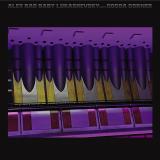
OOOOH! by Alex Bad Baby Lukashevsky with Cocoa Corner (2025)
Celebrated veteran of Toronto’s music scene, known for his boundary-pushing approach to folk and avant-garde music, twists rock music into strange and brilliant new shapes with the help of young jazz players, U.S. Girls, and his own immensely talented son.
OOOOH! is hard on the outside and soft on the inside. Made in the spirit of unity,
humanity, and poetry — disobediently renouncing the glory of personal triumph for the
generosity of an honest experiment. On the last track of the album you’ll hear “Or do you only ever never want to make a single enemy? / That’s not freedom or humility / It’s nothing, honestly.” Oooh, that's a bad baby!
A celebrated Toronto songwriter and performer, Alex Lukashevsky has always been disobedient. Which simply means, nothing is off the table when he’s looking for his
poetic voice; when trying to find the realest I of the teller. As he sings on the lead track “that musician that’s dead” The musician is radical/ it’s the world that’s demented/ listening with their eyes, the music looks dented/ they’re over-represented.
OOOOH! was recorded in January 2024 at Sound Department in Toronto, engineered by Patrick Lefler (ROY), mixed by Grammy-nominated producer Matt Smith. All the songs were tracked live off the floor in two days, with one extra day for recording vocals, to keep the recording fully alive and breathing. As leader of Deep Dark United, as a solo performer, and a sideman in Brodie Wests’ Eucalyptus and Luka Kuplowsky’s Ryokan Band, Alex has been an outsized influence on the Toronto music scene that spawned acts like Broken Social Scene and Owen Pallett. (Pallett, who has toured with Lukashevsky, went so far as to record an entire album’s worth of Alex’s songs, backed
by a full orchestra.)
Lukashevsky has approached each of his albums and projects as something completely new, using only the musical boundaries he creates with each song. Even when he
has recorded songs with nothing but his voice and his own acoustic guitar accompaniment, the results are never “stripped down” or “back to basics,”
Gong! How do you get to heaven / have fun! have fun!
It’s cool to approach music as a game of “spot the influence”; Burt Bacharach-meets-Black Flag; Lana Del Rey-meets-LCD Soundsystem etc. Glorified mash-ups are promising because of their conversational nature. But they can turn us into hyperboreans; blowing cold air beyond ourselves while doing what we can to remain warm. To devise a game or a narrative is to have a winner and a loser, but we all know that just as you win/ so you lose. And does anything really change? Alex Lukashevsky and Cocoa Corner are more at ease drawing blind contours or playing an old game like consequences. They let things add up without knowing particularly how. Cognition is recognition.
Lukashevsky, in addition to writing all the songs, plays guitar and sings on OOOOH!, doing both in ways that are soulful and spikey at the same time. Joining him on guitar and vocals is his oldest child, Charlie Lukashevsky, who, at 23, is already a talented performer and songwriter in his own right. Cocoa Corner also includes Aidan McConnell, an in-demand drummer and composer, Jack Johnston, a jazz bassist and Barry Harris acolyte, and percussionist Evan Cartwright (The Weather Station, U.S. Girls, Cola, Tasseomancy), who plays steel pan and marching drum.
Working with his son and with other younger musicians is central to the album’s
unpredictable aesthetic. It reinvigorated the sound in unexpected ways. Lukashevsky says, “I had to reconsider my own instincts. I had to deal with being 99 years old.”
In addition to these performers, the album includes a tasty contribution from Meg
Remy, the visionary musician and producer who is the leader of the critically acclaimed
project U.S. Girls. Remy duets with Lukashevsky on the imagistic and sprawling album
closer “things keep happening.”
About that album title: OOOOH! is taken straight from “that musician that’s dead” an
arch and unhinged comment on the exertion required to navigate a lifetime of music making.
Lukashevsky’s delivery of that one emotive word is a kind of cultural posture, but also a
hundred percent primitive expression. The impact is never less than visceral. His vocal
delivery ranges through rich baritone blues to keening falsettos to a kind of sprechstimme that periodically steps out from the music to grab the listener’s shirt. He
doesn’t sound too nice, but he is sincere. When life gives you lemons lament.
For OOOOH! his first official full-length album since 2012’s Too Late Blues, (a collection of knotty-yet-effervescent tunes built upon the enchantingly serpentine harmonies of Lukashevsky and his vocal collaborators, Felicity Williams (Bahamas, Bernice) and Daniela Gesundheit (Snowblink, HYDRA)), Alex has once again broken apart and rebuilt his own approach to music. Or rather (because that sounds too over-determined), he
has allowed his music to build itself into strange new shapes that only fleetingly and
coincidentally, but happily, resemble anything that might be called rock and roll. There is some editorializing within the song’s lyrics— Lukashevsky even cheekily contributes to the “spot the influence” game with the line “Muddy Waters, Rite of Spring!” a funny preemptive strike against anyone already reaching for some variation of avant-blues to describe what the song is up to here. In fact there are many names checked on this record (literally and in spirit); they are the lily pads that trace the path of this expression! Palestrina, Peter Pears and Benjamin Brittain, Andrés Segovia, Stravinsky, Lotte Lenya, Alice Coltrane, Skip James, Chuck Berry, D’Gary, Betty Carter, Mukhtiyar Ali, Chuck D, Yoko Ono, Hailu Mergia, David Bowie, Jane Siberry. rhythm is a skeleton mansion / haunted by melody / feckless prodigy / the world is under a spell / cast by some demon angel / Practice day and night / Try as hard as hell / no one can sing that well Musicians are often worried by the way in which they are prepared to fail rather
than how they would like to succeed; it’s such a deep concern that it tempers their creativity and shackles their process. Current cultural proclivities, tend to comfort a certain kind of artistic failure and abnegate another kind. How many testimonials, full of heartfelt care and investment, have you heard for Taylor Swift, and yet a craftsman like Chris Weisman is often dismissed easily as though he’s doing something anti-social. what’s throwing itself in my ears and my eyes / arrogant devil ad hominem christ.
The music you will hear on this recording veers off in multiple directions at once,
and features a rock and roll spirit with a divergent heart. This is no sclerotic clomp of the Average Rock Song, but in fact a flood of humanity in all its darkness and moodiness and unpredictability. If most performers make songs that are like sports cars or pickup trucks to drive around, Lukashevsky has built something more akin to a rowboat in a tree: it’s weird and beautiful.
- I Know Your Secret
- Cure
- Creases
- Glare Of The Beer Can
- Spell
- Something To Prove
- Favorite
- At The Movies
- Test
- Tell Me
Für Joyer, das Indie-Rock-Duo der Brüder Nick und Shane Sullivan von der Ostküste, ist Distanz in letzter Zeit ein seltsamer roter Faden - Distanz von zu Hause, Distanz zueinander, Distanz von einer stabilen Routine. Ihr aktuelles Album ,On the Other End of the Line_" reflektiert, wie Aufenthalte an weit entfernten Orten sie geprägt haben, Ängste und ein brennendes Verlangen nach Verbindung offenbart haben. Letztendlich ist es jedoch eine hoffnungsvolle Reflexion zweier unterschiedlicher Perspektiven auf wechselnde Kulissen und den Druck der Kreativität, gefiltert durch eingängige Ernsthaftigkeit und knackige Sechs-Saiten-Klänge. Seit ihrem letzten Album ,Night Songs", das 2024 erschien, sind sowohl Nick als auch Shane in andere Städte gezogen - Nick von Brooklyn nach Philadelphia und Shane von Boston nach Brooklyn - und mussten sich an ein neues Leben gewöhnen. Zusammen mit Joyers immer hektischer werdendem Tourplan, bei dem sie mit Horse Jumper of Love, Wishy und villagerrr, um nur einige zu nennen, suchten die Brüder nach gesünderen Ansätzen für ihr Leben auf Tour und zu Hause und kämpften mit der Einsamkeit in einer neuen Stadt. Trotz der Höhen und Tiefen war das Tourleben für Joyer bereichernd - sie trafen Gleichgesinnte und wuchsen als Band zusammen, was den Wunsch nach neuem Material weckte. Eifrig darauf bedacht, die Pop-Melodik von Night Songs noch weiter voranzutreiben, begannen Joyer mit dem Schreiben eines neuen Albums und buchten acht Tage in einem Studio in Chicago mit Henry Stoehr von Slow Pulp, der sie zu einem experimentelleren Aufnahmeprozess ermutigte, der an Joyers Zeit vor der Live-Band erinnerte, als sie ohne Deadlines im Keller ihrer Mutter Demos aufnahmen. Sie reduzierten ihre Shoegaze-Einflüsse zugunsten folkigerer Elemente und weniger konventioneller, ambitionierterer Arrangements. On the Other End of the Line_ zeigt Joyer von ihrer verletzlichsten Seite, weniger auf Bilder und Abstraktionen setzend und einen Blick auf ihr brodelndes Inneres gewährend.
- Home Of The Brave
- Dog At Large
- Knock Me Down
- Mr. Gridlock
- The Strip
- I Remember
- Those Who Move
- The Envelope
- Backlash Jack
- Peacemaker
- New Dreams
- Slim - Bonus Track
- Rocks Of Sweden - Bonus Track
Limited edition PLUTONIUM vinyl 1000 copies worldwide. Remastered by Bob Weston at Chicago Mastering Service. Originally released in 1986 vinyl reissue includes 2 bonus tracks. "This is a bit different than previous records in that there's only a couple of songs with their distinctive bass licks and chunky melodies. So instead of bordering on redundancy, they prove their diversity by being more melodic, rockin', and even pop. This LP is more challenging than before and really great." - MaximumRockNRoll, April 1986 - // Naked Raygun were an extraordinary staple in the Chicago music scene - beginning in the early 80's and continuing until their quiet demise in the early 90's. Their music showed the world that punk rockers could play and be really good at it. Founded in Chicago in 1980, by Marco Pezzati, Jeff Pezzati and Santiago Durango, Naked Raygun released six albums during their eleven year career that would change the sound of punk rock indefinitely. The band is widely recognized as being one of the most influential punk bands of the 80's. Their anthemic style incorporated politics in a uniquely accessible way, melding pop and hardcore into one cohesive sound, that would later be dubbed, "The Chicago Sound". Shortly after their first release, Basement Screams, Durango left to join Big Black permanently, and was replaced by John Haggerty, whose unique style of buzzsaw guitar would define Raygun's sound for their next four albums. Additionally, Pierre Kezdy replaced Camilo Gonzalez and Eric Spicer took over drums for Jim Colao. In 1990, Haggerty left the band to start Pegboy. Bill Stephens joined the band for their final studio release entitled, Raygun...Naked Raygun.
Limited edition DARK TEAL vinyl 1000 copies worldwide. Remastered by Bob Weston at Chicago Mastering Service. Originally released as a 6-song ep in 1983 vinyl reissue includes 8 bonus tracks. "The long- awaited NAKED RAYGUN EP has finally been released, and musically it's a beauty. The songwriting is extremely imaginative, the vocals are unbelievably catchy, and the unique fuzzed-out guitar work sounds wonderful." - MaximumRockNRoll, October/November 1983 - // Naked Raygun were an extraordinary staple in the Chicago music scene - beginning in the early 80's and continuing until their quiet demise in the early 90's. Their music showed the world that punk rockers could play and be really good at it. Founded in Chicago in 1980, by Marco Pezzati, Jeff Pezzati and Santiago Durango, Naked Raygun released six albums during their eleven year career that would change the sound of punk rock indefinitely. The band is widely recognized as being one of the most influential punk bands of the 80's. Their anthemic style incorporated politics in a uniquely accessible way, melding pop and hardcore into one cohesive sound, that would later be dubbed, "The Chicago Sound". Shortly after their first release, Basement Screams, Durango left to join Big Black permanently, and was replaced by John Haggerty, whose unique style of buzzsaw guitar would define Raygun's sound for their next four albums. Additionally, Pierre Kezdy replaced Camilo Gonzalez and Eric Spicer took over drums for Jim Colao. In 1990, Haggerty left the band to start Pegboy. Bill Stephens joined the band for their final studio release entitled, Raygun...Naked Raygun.
- Soldiers Requiem
- When The Walls Come Down
- Walk In Cold
- Jettison
- Live Wire
- The Mule
- Coldbringer
- Blight
- Free Nation
- Hammer Head
- Ghetto Mechanic
- Suspect Device
- Vanilla Blue - Bonus Track
- The Strip (Live) - Bonus Track
- Roller Queen (Live) - Bonus Track
- Backlash Jack (Live) - Bonus Track
Limited edition GRAPE CRUSH vinyl 1000 copies worldwide. Remastered by Bob Weston at Chicago Mastering Service. Originally released in 1988 vinyl reissue includes 4 bonus tracks. "Plenty of bands can claim Naked Raygun as an influence, from post-punkers to hardcore acts. All of them could learn a thing or two or three by studying the whoas. With Jettison... Naked Raygun achieved creative bliss. Here is an album that successfully combines dissonant instrumentation with supremely catchy vocals." - Punknews.org - // Naked Raygun were an extraordinary staple in the Chicago music scene - beginning in the early 80's and continuing until their quiet demise in the early 90's. Their music showed the world that punk rockers could play and be really good at it. Founded in Chicago in 1980, by Marco Pezzati, Jeff Pezzati and Santiago Durango, Naked Raygun released six albums during their eleven year career that would change the sound of punk rock indefinitely. The band is widely recognized as being one of the most influential punk bands of the 80's. Their anthemic style incorporated politics in a uniquely accessible way, melding pop and hardcore into one cohesive sound, that would later be dubbed, "The Chicago Sound". Shortly after their first release, Basement Screams, Durango left to join Big Black permanently, and was replaced by John Haggerty, whose unique style of buzzsaw guitar would define Raygun's sound for their next four albums. Additionally, Pierre Kezdy replaced Camilo Gonzalez and Eric Spicer took over drums for Jim Colao. In 1990, Haggerty left the band to start Pegboy. Bill Stephens joined the band for their final studio release entitled, Raygun...Naked Raygun.
Limited edition ORANGE SWIRL vinyl 1000 copies worldwide. Remastered by Bob Weston at Chicago Mastering Service. Originally released in 1990 vinyl reissue includes 3 bonus tracks. "We drove up there and my cousin Tracy had turned punk rock. And she said, 'I'm going to this show tonight. Come with me.' And so I went to this club called The Cubby Bear - it's right across the street from the baseball stadium - and a band called Naked Raygun were playing, and they're this legendary Chicago punk rock band. But I'd never seen live music. So my introduction to rock and roll was in a club that held about 150 people that was half full and I was belly up against the stage watching this incredible live band, like, sweat and spit and bleed in front of me." - Dave Grohl interview, The Record, 2011- // Naked Raygun were an extraordinary staple in the Chicago music scene - beginning in the early 80's and continuing until their quiet demise in the early 90's. Their music showed the world that punk rockers could play and be really good at it. Founded in Chicago in 1980, by Marco Pezzati, Jeff Pezzati and Santiago Durango, Naked Raygun released six albums during their eleven year career that would change the sound of punk rock indefinitely. The band is widely recognized as being one of the most influential punk bands of the 80's. Their anthemic style incorporated politics in a uniquely accessible way, melding pop and hardcore into one cohesive sound, that would later be dubbed, "The Chicago Sound". Shortly after their first release, Basement Screams, Durango left to join Big Black permanently, and was replaced by John Haggerty, whose unique style of buzzsaw guitar would define Raygun's sound for their next four albums. Additionally, Pierre Kezdy replaced Camilo Gonzalez and Eric Spicer took over drums for Jim Colao. In 1990, Haggerty left the band to start Pegboy. Bill Stephens joined the band for their final studio release entitled, Raygun...Naked Raygun.
Limited edition GREEN SWIRL vinyl, 1000 copies worldwide. Remastered by Bob Weston at Chicago Mastering Service. Originally released in 1985 vinyl reissue includes bonus track. "This band consistently defies categories. More than hardcore. More than rock. More than experimental. And this LP blazes out with a fury that's sharp, clean, and loud as fuck. The sound on this release is more concise and focused than earlier stuff but doesn't sacrifice any of their drive. Possibly one of America's most important bands." - MaximumRockNRoll, March 1985 - // Naked Raygun were an extraordinary staple in the Chicago music scene - beginning in the early 80's and continuing until their quiet demise in the early 90's. Their music showed the world that punk rockers could play and be really good at it. Founded in Chicago in 1980, by Marco Pezzati, Jeff Pezzati and Santiago Durango, Naked Raygun released six albums during their eleven year career that would change the sound of punk rock indefinitely. The band is widely recognized as being one of the most influential punk bands of the 80's. Their anthemic style incorporated politics in a uniquely accessible way, melding pop and hardcore into one cohesive sound, that would later be dubbed, "The Chicago Sound". Shortly after their first release, Basement Screams, Durango left to join Big Black permanently, and was replaced by John Haggerty, whose unique style of buzzsaw guitar would define Raygun's sound for their next four albums. Additionally, Pierre Kezdy replaced Camilo Gonzalez and Eric Spicer took over drums for Jim Colao. In 1990, Haggerty left the band to start Pegboy. Bill Stephens joined the band for their final studio release entitled, Raygun...Naked Raygun.
Limited edition BROWN & BLACK SWIRL vinyl 1000 copies worldwide. Remastered by Bob Weston at Chicago Mastering Service. Originally released in 1989 vinyl reissue includes 2 bonus tracks. "...one of the best examples of melodic hardcore just a step away from emo. The album is excellently played and is full of breathtaking anthems that, from time to time, even wink at metal soundscapes." - Debaser - // Naked Raygun were an extraordinary staple in the Chicago music scene - beginning in the early 80's and continuing until their quiet demise in the early 90's. Their music showed the world that punk rockers could play and be really good at it. Founded in Chicago in 1980, by Marco Pezzati, Jeff Pezzati and Santiago Durango, Naked Raygun released six albums during their eleven year career that would change the sound of punk rock indefinitely. The band is widely recognized as being one of the most influential punk bands of the 80's. Their anthemic style incorporated politics in a uniquely accessible way, melding pop and hardcore into one cohesive sound, that would later be dubbed, "The Chicago Sound". Shortly after their first release, Basement Screams, Durango left to join Big Black permanently, and was replaced by John Haggerty, whose unique style of buzzsaw guitar would define Raygun's sound for their next four albums. Additionally, Pierre Kezdy replaced Camilo Gonzalez and Eric Spicer took over drums for Jim Colao. In 1990, Haggerty left the band to start Pegboy. Bill Stephens joined the band for their final studio release entitled, Raygun...Naked Raygun.
Phylipe Nunes Araújo's songs are as rich and varied as the diverse landscapes they were written in. The hills of Pernambuco, the lagoons of Alagoas, and the beaches of Bahia are all woven into his stripped-back, folk-inspired Brazilian songwriting. As part of a wider movement of musicians originating from Brazil's Northeast, Phylipe sees the process of music-making as the search for beauty itself.
Collaborating with fellow Northeastern artists Bruno Berle, Batata Boy and Nyron Higor among others, Phylipe's debut album represents the latest flowering of this exceptionally talented community's creative search.
The Northeast holds an almost sacred importance in Brazil's collective cultural imagination. The region bore witness to the brutal histories of Portuguese colonization and the African slave trade, while simultaneously amalgamating the diverse cultures, religions and traditions of those who have called it home. Countless Brazilian music greats - Gilberto Gil, Caetano Veloso, Hermeto Pascoal, Djavan and Luiz Gonzaga - have emerged from this vast cultural melting pot.
Born in Caruaru, Pernambuco state, and raised in the city of Santa Cruz do Capibaribe (famed for its textiles industry), Phylipe describes his music simply as "Brazilian music from the Agreste of Pernambuco". His masterful compositions thread together regional rhythm, folk poetry and sophisticated harmony.
Phylipe's musical foundations were laid in youth, listening to the local elders rehearsing their forrós, attending São João street parties in front of his house and watching the Junina Quadrilhas dance through his neighborhood. At street fairs he would read the Literatura de Cordel (handcrafted pamphlets of Brazilian folk literature), and watch the rhyme battles between cantadores, violeiros, and repentistas, who improvise verses on daily life, social commentary and philosophy. This tradition of Northeastern folk poetry proved particularly formative for Phylipe as a lyricist. "I always try to write things as simply as possible. I believe that beauty must be easily understood. If I can facilitate the path to the message, there's no reason not to. It's something I learned from the traditional poetry here: it's more beautiful if everyone understands."
At the age of 11, Phylipe first got access to the internet. As he explains: "Still in adolescence I was also able to discover things like The Beatles and Nick Drake - I started to get to know music from the rest of the world and later to correlate that with my local musical experiences." Rich with extended chords and artful dissonances, it's clear from his compositions that jazz and bossa nova also took hold, but he's quick to eschew stereotypes. "Inevitably, people associate a Brazilian musician playing a nylon-string guitar with bossa nova..." "But the foundation is another story," he asserts, "It's the Northeast."
On the guitar Phylipe experiments with the binary rhythms inherent in traditional Northeastern music. Coco, frevo, maracatu and baião are recontextualised, placed alongside Brazilian popular music (MPB), gentle lullabies and stunning ballads. "In these 10 songs, I am experimenting with making pop music on a nylon-string guitar with my foundation in the Northeastern songbook."
The contemporary musical community which Phylipe belongs to developed initially in Pernambuco's neighbouring state Alagoas. Phylipe lived in its capital Maceió for three years, where he built friendships and musical bonds with Bruno Berle and Batata Boy who together produced his album. Bruno also sings in unison with Phylipe on the duet "Valise", a song Phylipe wrote aged just 15.
In recent years, Phylipe, Bruno and Batata have migrated south to São Paulo, where the majority of the album was recorded. Other collaborators on the album include Alici, who provides vocals for the ebb and flow of "Temperim", Nyron Higor who plays drums on lead single "Asa" and the sweet indie moment "Ziz"", bassist Meno Del Picchia who plays on the mystical baião "Bixin" and the propulsive "Subindo a Ladeira", and Raphael Coelho who joins Bruno and Batata on percussion for "Santa Cruz", Phylipe's hypnotically powerful portrait of his hometown.
- A1-: Mirror House
- A2-: Djinn Dance
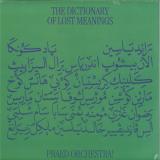
- B1-: The Dictionary Of Lost Meanings
- B2-: The Spell
- C1-: Fragmented Realities
- C2-: Three Dimensional Spirits
- D1-: Ila3Sab
PRAED return to Discrepant, after their 2017’s entry Fabrication of Silver Dreams (CREP44)
Known for their signature blend of Egyptian Shaabi, free jazz and improvisation, the Lebanese duo behind PRAED - Raed Yassin and Paed Conca - now assemble a full orchestra for the second time taking the music to a deeper, rooted level.
Following their 2020 release Live in Sharjah, also under the PRAED Orchestra! moniker, the duo now revisit their unique blend of Arabic heritage and free jazz sensibilities with an album that keeps pushing further into strange and unexpected directions.
The Dictionary of Lost Meanings is just that, seven fully composed pieces and large-scale improvisations, performed by an expanded ensemble of musicians from across the globe. The result is dense and playful, unpredictable but familiar, a record where Arabic rhythms and microtonal melodies collide playfully against electronics, warped vocals and orchestral textures.
It’s less about genre than about memory — like tuning into a radio station broadcasting from somewhere between the past and the future.
PRAED continue to blur the line between popular culture and experimental music in ways that feel both grounded and completely their own.
PRAED ORCHESTRA! are
Raed Yassin: Synthesisers, Vocals, Beats
Paed Conca: Clarinet, Electric bass
Alan Bishop: Alto saxophone, Electric bass, Vocals
Andreas Bral: Harmonium, Electronics
Elisabeth Klinck: Violin
Christian Kobi: Soprano and Tenor Saxophones
Hans Koch: Bass Clarinet
Martin Küchen: Alto and Sopranino Saxophones
Maurice Louca: Synthesizer, electronics
Stan Maris: Accordion
Radwan Ghazi Moumneh: Buzuk, Vocals, Modular Synth
Youmna Saba: Electric Oud, Vocals
Sam Shalabi: Oud, Electric Guitar
Els Vandeweyer: Vibraphone
Khaled Yassine: Drums, Percussion
Michael Zerang: Drums, Percussion
Recorded by Jasper Jan Peeters at the Summer Bummer Festival, DE Studio,
Antwerp August 26, 2022
Mixed by Adham Zidan
Mastered by Mark Gergis
Produced by PRAED
Photos by Geert Vandepoele
Los Angeles-based duo LUCKYANDLOVE are back with their third album, evoking a new sense of art school originality, following their critically acclaimed “Transitions” album. The duo defines 'Humaura' as the atmosphere that emanates from the feelings of the human spirit void of technological control.
Blending raw analog synth sounds with driving punctuated percussion and punchy analogue bass, LUCKYANDLOVE’s music is shaped by the embers of Siouxsie and The Banshees and Bauhaus, resonant spectres carry over from synth-laden galaxies, where the needle hits the vinyl groove and Doc Martens marched to basement dance floors.
LUCKYANDLOVE is the raw sonic experiment of Loren Luck and April Love, whose music transcends genres. Their live analogue synth beats, Moog instrumentation and beautiful, harmonic vocals trigger an immediate download of fuzzy sunset synthgaze, blue-black neon darkwave, and tigerprint electro punk.
“‘Humaura’ is an action-packed, cinematic, entertaining and soulful electro-dance record full of fresh air and wide-open roads where there is more freedom to party, to be in nature, and to be our wild selves,” says April Love.
Fusing together pulsating molten kicks, abrasive fuzz-laden analog synths and sensual vocals, the anti-tech angst anthem ‘I Am Human’ is a call to take back our lives, underlining the need to reconnect with being Human before it’s too late. ‘Lonely at Night’ is a "last call" bar track about the desperate, frantic desire for human connection, building from a haunting sense of isolation to a fast-paced, climactic reunion with a crush. Elsewhere, this album features enchanting lyrics rooted in emotions from melancholy and sorrowful glom to a state of blissful trance.
This album was recorded, mixed and mastered for digital release by Grammy award-winning engineer Be Hussey (Modern English, Twin Tribes, Boy Harsher) at Balboa Studio and Catwater for the digital music, and mastered for vinyl and lathe-cut by Grammy-nominated engineer Nicholas Townsend (Weezer, Grimes) at Townsend Mastering.
Their 'Lucky + Love' and 'Transitions' albums having earning them a global fan following, US and UK tours, multiple tracks featured in the indie hit film 'Tiger Within' (Ed Asner's final performance), and wide acclaim, noting their “soulful, synthesized sound" (LA Weekly), “spectral synths and dazed-dreamy feeling” (Big Takeover Magazine), not to mention their "uncompromising and inventive sonic experiment” (The Spill Magazine) and sound that “oscillates between the asphalt synth streets & interstellar outer realms” (Impose Magazine).
LUCKYANDLOVE’s visceral, dark electro-pop appeal continues to stretch through time and space. Praise for the album’s lead track ‘I am Human’ have poured in from over a dozen countries. ‘Humaura’ promises to cement the duo’s reputation as one of America’s most vivacious electronic / synthwave acts, positioning them firmly within the lineage of artists like Phantogram, Ladytron, The Soft Moon, Twin Tribes and ACTORS.
‘Humaura’ Press:
“...In contrast to its synth-laden darkwave and electropunk sound, the song presents lyrical themes of championing the human spirit and emotions over the technological void" ~ Regen Magazine
“Moog textures and distorted synth tones weaving together like electric currents. An industrial edge that carries a dreamy undercurrent, nodding to darkwave, punk rock and post-punk influences without sounding dated" ~ Myth of Rock
"Every second and note is a meld of lava-esque incitement and beguiling melodic fixation and a breath to unpredictability and stirring fuzz hued uniqueness… a thrilling encounter" ~ The Ringmaster Review
"Layers fall into place and give rise to soaring vocals. The beautiful timbre of her voice sits over the landscapes of sound and reveal poignant lines that hit home." ~ Sound Read Six
- 1: Open Heart 02:36
- 2: Sullen Walks Through Green Hills 0:17
- 3: A Lone Thought 02:46
- 4: When She Comes 02:52
- 5: Light Breaks Through 02:4
- 6: If It Was 02:43
- 7: Nesting 02:0
- 8: Names 02:33
- 9: Two Twos 02:31
- 10: Boy No Longer 02:05
- 11: If We Only Knew 02:03
- 12: Like Water 02:57
- 13: River Lady 02:59
- 14: All Rose No Thorn 02:20
- 15: Skyward Blossoms 02:42
- 16: The Wading 03:10
Limited[40,13 €]
Found Keys is the debut album by American artist Ruth Maine. Although Ruth has been playing and composing music for over two decades, this is the first time she decided to record some of her varied compositions and share them with the public. But in times when it is the norm to clamour for attention, she prefers to go the opposite way. Ruth likes to let her music speak for itself and stay in the shadows.
The 16 short piano pieces heard on this album, each about two to three minutes long, were recorded remotely and purely surrounded by nature. Once a composition was found and Ruth considered it mature, she only recorded it once, embracing the beauty of doing something for the first time with all its little imperfections. Found Keys sounds anything but imperfect though. These compositions feel timeless, intimate and comforting, as if they have been around for a long time, like an old friend. Gently played keys slowly evolve into minimal pieces through repetitive melodies. There’s stillness as much as there’s brightness, sadness as much as joy; welcome to a beautiful journey through Ruth’s world of wonder.
In many ways, Found Keys is a deeply personal record that takes Sonic Pieces back to its roots. And it leaves a feeling of nostalgia while reviving memories of the past.
- 1: Open Heart 02:36
- 2: Sullen Walks Through Green Hills 0:17
- 3: A Lone Thought 02:46
- 4: When She Comes 02:52
- 5: Light Breaks Through 02:4
- 6: If It Was 02:43
- 7: Nesting 02:0
- 8: Names 02:33
- 9: Two Twos 02:31
- 10: Boy No Longer 02:05
- 11: If We Only Knew 02:03
- 12: Like Water 02:57
- 13: River Lady 02:59
- 14: All Rose No Thorn 02:20
- 15: Skyward Blossoms 02:42
- 16: The Wading 03:10
Standard[23,32 €]
Found Keys is the debut album by American artist Ruth Maine. Although Ruth has been playing and composing music for over two decades, this is the first time she decided to record some of her varied compositions and share them with the public. But in times when it is the norm to clamour for attention, she prefers to go the opposite way. Ruth likes to let her music speak for itself and stay in the shadows.
The 16 short piano pieces heard on this album, each about two to three minutes long, were recorded remotely and purely surrounded by nature. Once a composition was found and Ruth considered it mature, she only recorded it once, embracing the beauty of doing something for the first time with all its little imperfections. Found Keys sounds anything but imperfect though. These compositions feel timeless, intimate and comforting, as if they have been around for a long time, like an old friend. Gently played keys slowly evolve into minimal pieces through repetitive melodies. There’s stillness as much as there’s brightness, sadness as much as joy; welcome to a beautiful journey through Ruth’s world of wonder.
In many ways, Found Keys is a deeply personal record that takes Sonic Pieces back to its roots. And it leaves a feeling of nostalgia while reviving memories of the past.
- Dark Wings
- Fallen From Grace
- Queen Of The Dead
- For The Cursed
- Gates Of Fate
- Serenades
- Tears Of A Thousand Years
- Star-Crossed Love
- Back For More
High Roller Records, bone vinyl, ltd 300, 425gsm heavy cardboard cover, lyric sheet, download code Mit »Romantik III« präsentiert das österreichisch-ungarische Duo Bergfried den Nachfolger von »Romantik I« (2022) und »Romantik II« (2023). Die Formation besteht aus Erech von Lothringen, der alle Intrumente bedient, und Sängerin Anna de Savoy. Der Name Erech von Lothringen ist in Underground-Zirkeln nicht gänzlich unbekannt, ist der Wiener doch Urbeber zahlreicher verschiedener Projekte, vorzugsweise aus dem Black-Metal-Bereich, wobei die Interessen des Bandleaders deutlich breitgefächerter liegen. Beim neuen »Romantik III« handelt es sich um ein ausgesprochen eingängiges, sehr melodisches Album, das hier und gar nicht so düster klingt, wie die Songtitel vermuten lassen könnten. Im positiven Sinne grenzt das Material hier und da schon an Pop („Fallen From Grace“), wobei natürlich (fast) immer Melancholie mitschwingt. Auf »Romantik III« wird Erech von Lothringen unterstützt von Schlagzeuger Fabio Alessandrini (bekannt von Annihilator, Bonfire und Enforcer). Des weiteren sind als Gastsängerinnen neben der beeindruckenden Anna de Savoy aktiv: Maria Nesh von Red Eye Temple, Sarah Kitteringham von Smoulder sowie Damna von Elvenking.
- A1: Shame
- A2: Broken Promises
- A3: What Do You See In Me?
- A4: Face It 5. The First Time Feat. Trevor Borg
- B1: The Love You Took Away
- B2: Waves
- B3: Ishimura
- B4: Two Minds In One
Villain of the Story sind zurück... Mit „Convergence: Two Minds In One“ präsentiert die Band ihr bislang persönlichstes, künstlerischtes und kompromisslosestes Werk. Das Album erscheint am 26. September und markiert ein neues, kraftvolles Kapitel: Eine Wiederauferstehung voll emotionaler Tiefe, gesanglicher Entwicklung und einer Geschichte, die den Breakdowns an Intensität nichts nachlässt. Die Platte steht sinnbildlich an einem Wendepunkt; zwischen Licht und Dunkelheit, Heilung und Zerstörung. Mit dem Einstieg des neuen Sängers Cody Crook meldet sich Villain of the Story eindrucksvoll zurück und liefert ein Album ab, das messerscharfen Metalcore, mitreißende Melodien und schonungslos ehrliches Storytelling vereint, auf eine Art, wie es nur wenige Bands wagen. Klanglich geht die Band dabei so weit wie nie zuvor, jeder Song ist emotional aufgeladen und bis ins Detail durchdacht. Doch „Convergence“ ist mehr als nur ein Album. Es ist eine Geschichte über Schmerz, Liebe, Verlust und den inneren Kampf. Erzählt wird das Leben eines Mannes, der von seinen Traumata und einem dämonischen Wesen – sei es real oder sinnbildlich – verfolgt wird, das sich von seinem Leid nährt. Eine Geschichte über Erlösung, die zur Tragödie wird: Liebe hat ihn einst gerettet, doch der Verlust droht alles zu zerstören. Im finalen Titeltrack „Two Minds In One“ kulminiert das Drama mit der alles entscheidenden Frage: Wer hat am Ende die Kontrolle? „Das übergeordnete Thema des Albums ist, dass nicht jede Geschichte ein Happy End hat. Am Ende haben wir die Wahl: Werden wir zu den schlimmsten Versionen unserer selbst, wenn alles zerfällt, oder nehmen wir den Schmerz an und versuchen, neu anzufangen?“ –Villain of the Story Egal ob du Villain of the Story von Anfang an verfolgst oder gerade erst entdeckst, „Convergence: Two Minds In One“ beweist, dass diese Band Veränderungen nicht nur überlebt, sondern daran wächst.