Search:members only 3

Styles
All
Borghesia - Clones

Borghesia

Clones

12inchDE-028
Dark Entries
24.06.2025

Borghesia is an electronic music group, founded in 1982 in Ljubljana, Slovenia. The band was formed by four members of alternative theatrical group Theatre FV-112/15: Dario Seraval, Aldo Ivancic, Neven Korda and Zemira Alajbegovic. They established FV Video to self-publish their video projects and FV Založba – the first independent record label in ex-Yugoslavia. Aldo and Dario took care of songwriting, production and recording while Zemira and Neven handled the visuals. In the late 80s the band signed to PIAS and went on to release a string of successful albums and played world-wide tours.

Clones was Borghesia's second album, self-released on cassette only in 1984. The band borrowed synthesizers (Roland SH-101, Casio VL-1, Korg Polysix) and a Roland 808 drum machine from friends. Every song was played live - no overdubs - and recorded to a cassette deck over a few nights at their club Disco FV during 1983-1984. The music on "Clones" is meant to accompany various video installations and performances. All of the songs are instrumental and feature various cutting edge techniques for 1983. Hypnotic, proto-techno and acid rhythms and synth lines. Music on the A Side of the LP is faster and club oriented while the B Side offers a drugged out soundtrack to get lost in.

All songs have been remastered for vinyl by George Horn at Fantasy Studios in Berkeley directly from the original master tape. Each LP is housed in a silver jacket with original gelatin print by photographer Jane Štravs. A fold-out poster is included with unreleased photos, original artwork and liner notes by Željko Luketić. After 28 years, Borghesia's "music for video" is finally appearing on vinyl for the first time.

out of Stock

Order now and we will order the item for you at our supplier.

20,59

Last In: 9 months ago
DOPE PURPLE - Children In The Darkness

Dope Purple

Children In The Darkness

12inchREPOSELP148
Riot Season
20.06.2025out soon
  • A1: New Psyche & Beyond The Body
  • B1: Night Flying
  • B2: Children In The Darkness

Psychedelic rock in the dark!

Dope Purple's new album 'Children In The Darkness’ was recorded when the band hosted a live midnight recording session at Revolver, Taipei City, Taiwan on Friday 3rd March 2023.

Amidst the tense silence of the middle of the night, the five members of Dope Purple, two guest musicians: saxophonist Yong Yandsen from Malaysia, British drummer Darren Moore from Singapore, and a familiar audience, came together to produce the album 'Children In The Darkness’.

The album is a ferocious space psychedelic rock, no starlight, no glamourous psychedelic paradise, just a meditative journey of infinite darkness and ear-splitting tinnitus. Unlike our last album, I didn't have a specific theme or idea for this album, however I named it 'Children In The Darkness’ because all the songs on this album share the same lonely, disorientating chaos that reminds me of children forgotten in the darkness, and Dope Purple has always been a messenger for those children, playing sedative music for their ghosts.

At the end of each performance, I can clearly feel my furious brain melting away and only the calming spirit remains in my body.

pre-order now

This item has not yet been released. You can pre-order the product now.

20,38
Sonic Youth - J’Accuse Ted Hughes
  • A1: J’accuse Ted Hughes
  • B1: Agnes B Musique

At ATP, the band previewed instrumental and early versions of songs from the then soon-to-be recorded NYC Ghosts & Flowers album, and this exclusive performance was the premiere of “J’Accuse Ted Hughes.” The B-side is a soundtrack-style piece recorded at the band’s Murray Street Studio in 2003 for a never-realized collaboration with French clothing designer Agnes B. The 18-minute-long song was recorded by a five-piece version of the band—the four members of Sonic Youth plus Jim O’Rourke, who also mixed “Agnes B Musique.” This LP will be soon followed by a CD-only release of the band’s Another Side of Sonic Youth Roskilde Festival performance, where the five-piece Sonic Youth line-up was joined by saxophonist/reed player Mats Gustaffson and electronic noise legend Merzbow for an hour of improvised music.

pre-order now20.06.2025

expected to be published on 20.06.2025

25,42
U.S. MAPLE - Long Hair In Three Stages (Muleta Maroon Vinyl)

"U.S. Maple's first album, before they fell all apart on """"Sang Phat Editor"""". This is the album that """"rocks"""". Disjointed machinations, poppy locksteps and jarring sideways excursions all leading down a path to nowhere's-ville. Engineered by Jim O'Rourke with a cold. Pressed on Muleta Maroon Colored Vinyl LP includes a vinyl-only bonus track plus a Two-Sided Footlong OBI and Lyric Sheet.

In high school, the members of U.S. Maple never said a word to anyone. And although this had disastrous results (stolen shoes, constant de-pantsing, gum in the hair, etc...), a fire was burning inside each one of them.

A beginning was struck in Chicago, early in 1995. The four met near the corner of Grand and Western Avenues to devise a working method for reorganizing rock and roll, keeping what was felt to be it’s most important core elements.

The mumblings are slick. The melodies are souped-up and soured. The drums are spastic bursts of laughter, rocket fuel and confetti. It is fronted by a singer who reminds one or the other of Kevin Costner's stoner bro. A 7” single and a version of AC/DC’s Sin City are the first to be recorded.

U.S. Maple’s debut full-length, “Long Hair In Three Stages” was recorded late in 1995 with Jim O'Rourke at Solid Sound Studios in Hoffman Estates, Illinois. This was Jim's first legitimate recording session with a rock and roll band. The album receives critical acclaim. Soon thereafter, U.S. Maple find themselves flying coach to Deutschland for a European tour. The extensive six-week tour spans 12 countries and includes a Peel Session for the BBC's John Peel Show. More history is made.

""""Long Hair In Three Stages"""" goes on to be ranked #85 on the Alternative Press “90 Greatest Albums of the '90s” list. We all know better."

pre-order now06.06.2025

expected to be published on 06.06.2025

26,01
EAST OF UNDERGROUND - EAST OF UNDERGROUND
  • A1: I Want To Take You Higher
  • A2: Smiling Faces Sometimes
  • A3: (Don’t Worry) If There’s A Hell Below, We’re All Going To Go
  • A4: People Get Ready 5. Getting Over
  • B1: I’ll Bet You / California Dreamin’
  • B2: Pop Corn / Oye Como Va
  • B3: I Love You For All Seasons
  • B4: East Of Java
  • B5: Walk On By

We are pleased to present again this wonderful and highly sought-after album, born from a promotional campaign by the U.S. Army to encourage recruitment. The recording perfectly captures the spirit of young America through songs written by Sly Stone, Curtis Mayfield, Funkadelic, and Burt Bacharach (via Isaac Hayes, of course). High-level soul and funk performed by brilliant anonymous musicians. Virtually impossible to find in its original edition, we are now reissuing it once again thanks to a collaboration with Now Again. Pressed on 180g vinyl. Often, the most prized records by collectors hold unexpected stories. When they also feature incredibly high musical quality and only a few original copies are available, they become the holy grails of collecting. This is the case with this album, recorded by American soldiers stationed in Germany in the early 70s. During the Vietnam War, the U.S. Army organized a band competition among its soldiers. The winners would record a promotional album that would be distributed for free to encourage enlistment during such a turbulent time. The result was a double LP shared between the bands SOAP and East of Underground. Although East of Underground's repertoire consists of covers of soul and funk hits, the quality is surprisingly high: raw guitars, crushing drums, brilliant vocal harmonies... The result perfectly captures the spirit of young America through songs written by Sly Stone, Curtis Mayfield, Funkadelic, and Burt Bacharach (via Isaac Hayes, of course). High-level soul and funk performed by anonymous musicians whose final fate has yet to be confirmed. When the label Now Again tried to reconstruct the story of East of Underground, they only managed to contact one of its members after digging through documents in the New York Library and collaborating with the U.S. Army. We are now pleased to present this wonderful and highly sought-after album once again, a surprising case where the covers rival the originals, creating a unique recording that justifies its immense appeal among collectors.

pre-order now23.05.2025

expected to be published on 23.05.2025

28,78
Jello Biafra And The New Orleans Raunch And Soul All-stars - Walk On Jindals Splinters
  • A1: Ooh-Poo-Pah-Doo
  • A1: House Of The Rising Sun
  • A1: Don't Mess With My Toot Toot
  • A1: Mother In Law
  • A1: Bangkok
  • A1: Judy In Disguise
  • A1: Working In A Coal Mine
  • A1: Land Of 1,000 Dances
  • A1: Walk On Guilded Splinters Cd Bonus Tracks
  • A1: Fannie Mae
  • A1: Just A Little Bit
also available

Red Vinyl[30,88 €]


The long-rumored, sweat-soaked live album from the night Bill Davis (Dash Rip Rock) and Fred Le Blanc (Cowboy Mouth) dared Jello Biafra to join them during Jazzfest and sing all classic New Orleans soul, rhythm and blues, and (at Jello's request) garage songs! Joining in were piano Wildman Pete Wet Dawg' Gordon (Mojo Nixon), Pepper Keenan (Down, Corrosion of Conformity) and a wacky horn section from Egg Yolk Jubilee and Morning 40 Federation that even includes a sousaphone! You want loose We got loose! You want crazy That's here, too. Walk on Jindal's Splinters is one of the all-time great you are there' high-energy live albums—audience participation galore, plenty of trademark Jello banter, and full-on soul / trash / frat / garage gumbo from eleven of New Orleans' finest, just playing their asses off and having a good time doing it. The album also showcases a whole 'nother side of Jello Biafra: his deep, pre-punk roots known only to a handful of vinyl junkies and anyone lucky enough to catch his DJ gigs. For all those whose interest in Jello goes beyond the punk persona to Jello Biafra, the singer, this is for you. Maximum trash appeal! Southern roadhouse debauchery at its finest! Calls to mind those sing-along, clap-along frat-rock platters from The Premiers to The Kingsman to Geno Washington's Hipsters, Flipsters... series, Swingin' Medallions, or even Slade Alive! You can almost feel the grease and voodoo dripping from the walls!" Showcases a rarely seen side of Jello—his pre-punk roots. Personnel includes members of Dash Rip Rock, Cowboy Mouth, Mojo Nixon, Corrosion of Conformity, etc. Vinyl includes digital download card

pre-order now16.05.2025

expected to be published on 16.05.2025

30,88
Jello Biafra And The New Orleans Raunch And Soul All-stars - Walk On Jindals Splinters

The long-rumored, sweat-soaked live album from the night Bill Davis (Dash Rip Rock) and Fred Le Blanc (Cowboy Mouth) dared Jello Biafra to join them during Jazzfest and sing all classic New Orleans soul, rhythm and blues, and (at Jello's request) garage songs! Joining in were piano Wildman Pete Wet Dawg' Gordon (Mojo Nixon), Pepper Keenan (Down, Corrosion of Conformity) and a wacky horn section from Egg Yolk Jubilee and Morning 40 Federation that even includes a sousaphone! You want loose We got loose! You want crazy That's here, too. Walk on Jindal's Splinters is one of the all-time great you are there' high-energy live albums—audience participation galore, plenty of trademark Jello banter, and full-on soul / trash / frat / garage gumbo from eleven of New Orleans' finest, just playing their asses off and having a good time doing it. The album also showcases a whole 'nother side of Jello Biafra: his deep, pre-punk roots known only to a handful of vinyl junkies and anyone lucky enough to catch his DJ gigs. For all those whose interest in Jello goes beyond the punk persona to Jello Biafra, the singer, this is for you. Maximum trash appeal! Southern roadhouse debauchery at its finest! Calls to mind those sing-along, clap-along frat-rock platters from The Premiers to The Kingsman to Geno Washington's Hipsters, Flipsters... series, Swingin' Medallions, or even Slade Alive! You can almost feel the grease and voodoo dripping from the walls!" Showcases a rarely seen side of Jello—his pre-punk roots. Personnel includes members of Dash Rip Rock, Cowboy Mouth, Mojo Nixon, Corrosion of Conformity, etc. Vinyl includes digital download card

pre-order now16.05.2025

expected to be published on 16.05.2025

30,88
The Crippled - Flower Forming Haze Recordings 1985/86 (TAPE)

The Crippled Flower was a post-punk band from Düsseldorf - and they arrived late. However, unlike many young, unsuspecting, hairsprayed hopefuls from that time, in 1985 they could sense that the end of their era was approaching. They knew too much to want to take the world by storm. They were four individualists searching their own way. Each of the band members only found their calling after the time that they had spent together – but that's exactly what makes The Crippled Flower still seem really interesting today, this static energy that does not discharge, but is simply there.

Searching dreamers should sound like that and that's what they were. Singer Phil Elston, for example, had brought his love of Kraftwerk from England to Düsseldorf. Even his bandmates found this strange, but they were also entangled in their own longings. This is because the times were still so crazy and these searchers were "on fire". A fire that glows in the band's recordings.

Listening to the songs today, The Crippled Flower sound like they are hugely at the height of their game; think of Wire, Felt, Scritti Politti or Minimal Compact. The variety of musical themes, as well as different soundscapes, which the band created can only be listened to in amazement. Often, it is only Phil Elston's Sprechgesang that confirms that this is really the same band. However, it was back in 1985 when, importantly, the catalyst that brought the musicians together - the short lived eclectic record store "Heartbeat" in Düsseldorf Bilk - occured. It was there where post-industrial and pop, melodic minimal music and sound attacks awaited those who wanted to discover music by artists and bands they did not yet know.

Cassette releases. All recorded on 4-Track. The Crippled Flower succeeded in this medium. Firstly, with a cassette just entited The Crippled Flower, working from project-like studio recorded sketches. Four more tracks from the short-lived band appeared in 1986 on "A Heartbeat Rendezvous“. A demo tape submitted to Les Disques du Crépuscule, however, did not lead to a worldwide career and so, unfortunately, it was soon over.

Stefan Krausen moved on to the follow-up project Deux Baleines Blanches with Stefan Schneider, which, in 1994, gave rise to the band Kreidler. Krausen was already drumming with the I-Burnettes on AtaTak and much later he studied painting in Munich. Nina Ahlers moved from Düsseldorf to Paris to study art, because in the 80s it was still the case that Paris was the destination of choice for those really wanting to become an artist – and that's what she did. Her work is characterized by a non-academic minimalism focusing on everyday objects. Stefan Schneider remained connected to music. Only Phil Elston, who helped sabotage fox hunts in England and wrote these observant lyrics about environmental destruction and time travel, seems to have escaped the social-media world. Whether he found Kraftwerk-fulfilment in Düsseldorf or moved on disillusioned remains a mystery to us. And somehow this also fits in with that peculiar, special band. - Oliver Tepel, Köln 2025 (Translation by Philipp Elston)

pre-order now02.05.2025

expected to be published on 02.05.2025

13,03
TOSHIYUKI SEKINE - STRODE ROAD (1978) LP
  • A1: Strode Road
  • B1: Love For Sale

The Pinnacle of Japanese Jazz, Finally Returns on Vinyl for the First Time!

The original (private press) was released in a very limited run of only 200 copies and has been highly sought after by collectors since the early 2000s, during the resurgence of Japanese jazz. Revered by both collectors and piano trio enthusiasts, this rare item is truly a gem. Tracks like the tense and exhilarating bop tune “Strode Road” and the wildly rhythmic and groovy “Love For Sale” are must-listens!

Recorded: March 3rd, 1978
Original Label: SMILE (SML002)
Faithfully Reproduced Original Jacket
Vinyl Edition Project/Producer: Koji Hanawa (JUDGMENT! RECORDS)

Members:
Toshiyuki Sekine (Pf)
Kei Narita (Bs)
Takashi Kurosaki (Ds)

pre-order now25.04.2025

expected to be published on 25.04.2025

52,06
Westberg, Udupa & Mazurkiewicz - Everyday Life Activities

Norman Westberg (guitar), Giridhar Udupa (ghatam, konnakol, khanjira, percussion) and Jacek Mazurkiewicz (double bass, electronics)An extraordinary meeting of three artists from three different musical worlds and three different continents. Norman Westberg (ex-Swans) and Jacek Mazurkiewicz have already released one album together "First Man In The Moon" in 2021 (published by the Swiss label Hallow Ground).In the new project, they are accompanied by Giridhar Udupa, an Indian master of ghatam (a clay percussion instrument that looks like a jug). The album will feature 3 long trance compositions, referring to ambient, krautrock, free jazz and Indian music.Jacek Mazurkiewicz describes the creation of this album as follows:"I met Norman Westberg while supporting the Swans tour in Poland as 3FoNIA. A few years later, during Norman's tour with Gira, we recorded a duet.The trio session took place similarly to the previous duet session during Norman's solo concert in Warsaw on the Swans tour.Recorded with Adam Toczko, a quick meeting on a day off from work.I invited Giridhar Udupa to the trio, whom I had met earlier during the period when I co-founded the band Limboski. I once invited Wacek Zimpel to play a few concerts with Giridhar. Wacek later created Saagara and I was wondering about some unusual musical context in which I would find myself with Giridhar. I was looking for an interesting sound configuration, but also a cultural one, with a different approach to creating music. I got the impression that for both Norman and Giridhar it was a fairly fresh meeting, not obvious. And on the other hand, ordinary - everyone did their own thing."Detroit guitarist Norman Westberg moved to New York in 1980 and became a part of the experimental music scene that was experiencing its golden age. Westberg himself became a permanent fixture when he joined the iconic avant-rock band Swans in 1983, and was the only member other than frontman Michael Gira to play with them for most of the band's run, both until their 1997 disbandment and his return in 2010. Westberg has also been involved with other legendary New York noise-rock acts, including Jim Thirlwell's Foetus and the post-Swans Heroine Sheiks, in which he played with Cows frontman Shannon Selberg; and in 2014, he joined the noise-rock supergroup Hidden Rifles, whose members included Mike Watt of Minutemen and Mark Shippy of U.S. Maple. Westberg's solo compositions, most often for solo guitar and a set of effects, draw on drone and post-minimalism, bringing to mind dark ambient passages from Swans albums.Giridhar Udupa is an extremely valued teacher and world-renowned artist, an Indian master of ghatam (a clay percussion instrument that looks like a jug). He was born into a family with long musical traditions. He began learning to play at the age of four, guided by his father. At the age of twelve, he already had his first performances behind him. He currently gives concerts alongside the greatest masters. He has received many prestigious awards. He performs in the USA, Spain, Canada, France, Switzerland, Germany, Oman and Kuwait. Giridhar Udupa is a member of the band of the Indian vocalist Bombay Jayashri, nominated for an Oscar for the best song for the film Life of Pi. He is one of the founders of the Layatharanga band. He also plays virtuoso other traditional instruments of South India, such as mridangam and kanjira, and is excellent at using the konnakol technique (a type of rhythmic vocalization).For three decades, the artist has been a global ambassador and icon of Carnatic music. He is the founder of The Udupa Foundation, a charity organization established in 2015 to promote Indian music, performing arts and culture. He has participated in recording dozens of albums. He is also well-known in our country thanks to his cooperation with Polish performers, which resulted in excellent artistic effects, such as the famous Indialucia - Michał Czachowski's group / project or the Saagara formation, led by Wacław Zimpel. Udupa also played on the album Lechoechoplexita, released by Leszek Hefi Wiśniewski, and on the album of the band Layatharanga, released in our country.Jacek Mazurkiewicz is interested in music in the broad sense. He puts his sounds together based on emotional impressions and pulse. Combining acoustics with electronics, he is constantly looking for a new sound. Solo as 3FoNIA, in a duet with Mikołaj Trzaska or Tomek Dąbrowski, the JMB trio with Wojtek Jachna and Jacek Buhl, in the Modular String Trio quartet, the Afrobeat quintet Faso Tamala are just some of his musical incarnations. With Patryk Zakrocki, as part of an audio mission, he massaged hundreds of pairs of ears in the Inner Ear Massage Office. He also deals with sound design, composing and producing music for films and theatre performances. He collaborated with many Polish and foreign artists.

pre-order now25.04.2025

expected to be published on 25.04.2025

21,43
Ibex Band - Stereo Instrumental Music LP 2x12"

The Ibex Band, with Giovanni Rico and Selam Woldemariam at the creative helm, provided the musical backbone for legends like Aster Aweke, Girma Beyene, Tilahun Gessesse, Mulatu Astatke, and Mahmoud Ahmed, including the iconic album Ere Mela Mela, shaping modern Ethiopian music as we know it today. This 1976 album (Ge’ez Year 1968) played a pivotal role in that legacy and has now resurfaced to set the record straight.

There’s a tendency to talk about the seventies as a golden age of Ethiopian music. There are good reasons for that, and just as good reasons against it. However, the notion of a golden past privileges the role of Western explorers and suggests that the pinnacle of Ethiopia’s musical culture is something only a foreigner can appreciate and unearth. It downplays the complexities of Ethiopia’s culture and history, creating an artificial divide between then and now. And it underestimates the constantly evolving sound that has followed.

The legendary musical outfit The Ibex Band, later metamorphosed into The Roha Band, has played a central role in defining the sound of many of the greatest stars on the music scene of Ethiopia from the mid-seventies onwards–but their golden output has never really waned. The story of the origins of the band that provided the musical backbone for greats such as Aster Aweke, Girma Beyene, Tilahun Gessesse, backing the solo career of group member Mahmoud Ahmed as well as backing Mulatu Astatke and many others has yet to be properly told.

Two misconceptions plague the image of Ethiopian music, one is that the music is pure because it is, by some notion, unexploited, the other is that it is all traditional. To begin with, a combination of political changes between the late sixties and the mid-nineties created an environment where only the most dedicated and skilled musicians struggled on and pursued a musical career against fierce odds. The whole Ibex Band, with Giovanni Rico and Selam “Selamino” Seyoum Woldermarian at the creative helm, are arguably the origo of the vibrant scene in the mid-seventies, and the said pair are foremost responsible for not only navigating the band through troubled times, but also modernizing the 6/8 chickchicka rhythm to a contemporary form. Giovanni laid the rhythmic foundation with heavy looped basslines that reinvented traditional melodies as dance music, and with Selamino’s innovative guitar work they influenced scores of musicians from Abegaz Kibrework Shiota to Henock Temesgen. Even Giovanni’s Fender bass and Selamino’s Gibson guitar inspired younger musicians in their choice of instruments. Not only in choice of instruments but also in sound–even as the digital revolution hit Ethiopian music, a lot of popular music still took its cue from the masters from Ibex and Roha.

Ibex emerged out of the ashes of the sixties group the Soul Echos band, adding Giovanni and Selamino to their ranks and taking their cues from a slew of influences, such as Motown and The Beatles, fused with traditional music. A tighter-knit unit than most bands at the time – Ibex has remained six to seven members throughout their whole career, compared to many bands that were as large as fifteen or sixteen men strong when Ibex set out. Their playing has been viciously focused, economical yet heavy. Just a year before the recording sessions of the album in your hands, Giovanni and Selamino made a contribution to the popular musical lexicon of Ethiopia that was simply defining the popular sound: their arrangement and recording of bandmate Mahmoud Ahmed’s solo effort and real commercial breakthrough tune and eponymous album, Ere Mela Mela, from 1975.

Selamino has never limited himself to being an adroit lead guitarist, but has always been a scholar of history, and as such he has probably contributed as much to modern Ethiopian music with his guitar playing and compositions as with a deepened understanding of modern or contemporary – Zemenawi – Ethiopian music. Selamino’s contributions serve as a metaphor for those of the whole band, at one and the same time creating and defining a new, danceable and updated sound anchored in Giovanni’s bass, whilst also elevating the broader scene through their support for others on the scene and on top of that, increasing the understanding of the music.

There is an understandable desire to romanticize the musical heyday Ibex and Roha were at the forefront of, because so much of the output is sorrowfully hard to come by. Ibex creativity was nothing short of ridiculously fierce compared to many of their Western contemporaries. Based on their sheer recorded output alone they could have usurped the title “hardest working in show business” from James Brown, recording more than 250 albums or 2500 songs in the seventies and eighties. Some only surface as cassettes today, others were never given full LP release, and some are simply impossible to find today. In the light of that, it’s nothing short of a miracle that the recording Stereo Instrumental Music from 1976 (Ge’ez Year 1968) has resurfaced. Unearthed in perfect condition on a chrome cassette, this is musical history comes alive–to set the future straight. Stereo Instrumental Music was recorded in collaboration with Karl-Gustav Lundgren, a Swedish national working for the Radio Voice of the Gospel. It took two sessions at the Ras Hotel ballroom in Addis Ababa. The Ibex Band was the first band in Ethiopia to employ a four-track recorder for their recording (the first available in the country, lent by Karl-Gustav). Later the same week, Giovanni and Selamino realized that, lengthwise, the recorded material fell short of what they wished for, so they recorded four more tracks in one more session on a single-track recorder. The Ras Hotel and Ghion Hotel, where the Ibex Band held musical residencies were to Ethiopia in general and Addis Ababa in particular what Motown was to the USA and Detroit a few years earlier – a hotbed of musical creativity and showmanship.

The most astonishing thing about Ethiopian music of the last half century is how tradition and modernity are intertwined. Because of this feature, it’s kind of hard to tell when there ever was or when we are in a “golden age”. So much of music from the past has been criminally neglected, but because of the hardships in the past, it would be an oversimplification to say that said past was a golden age. Probably, the golden age is what we are approaching, because for the first time both the past and future are accessible, and the monumental contributions from before can lay a firm foundation for a thriving music scene today. The Ibex Band stands firmly in the past, present and the future. That, if anything, is golden.

The detailed history of Stereo Instrumental Music is in many ways unique. To begin with, it couldn’t have been recorded earlier (there were no four-track recorders available) and it really couldn’t have been recorded afterwards either, at least not in the years directly following, because of the toll the musical scene took from the unfavorable political climate that followed when the nascent Derg regime and rival groups tried to assert themselves, the musical equipment lent from The Voice of Gospel Radio simply disappeared from Ethiopia when the radio station folded in 1977. Karl-Gustav Lundgren,
the Swedish foreign national who assisted during the recording, worked with the Ethiopian Evangelical Church Mekane Yesus at the time, recalls how they only had about fifteen minutes to get the microphones in place for the recording as to not alert neither the management at Ras Hotel nor the authorities and most importantly, to complete the recording before the curfew came into effect at midnight. In leaping to the opportunity to use previously unavailable equipment to push their sound forward and improvising to meet the logistical challenges, the Ibex Band displayed the very avant-gardism and adaptability that explains their longevity as a band through the years. The recording of Stereo Instrumental Music is from a given time in history, but it sounds as beyond time.
Much of the energy that burst out of the scene that Stereo Instrumental Music came out of dissipated or got sidetracked during the societal changes Ethiopia went through in the 1970s and 80s. Whilst leaders might have professed to be revolutionary, the work ethic of the Ibex Band can truly be described as that. They never called it quits, but adapted, toured extensively abroad in Africa, Europe, and the Middle East, and found ways to work even in the face of the curfew that curtailed a lot of musical life. They even played major arenas in the nineteen eighties, despite said curfew and restrictions. The whole extent of their legacy has never been told, but their music speaks louder than words, so therefore… tune in to the Ibex Band’s Stereo Instrumental Music.

out of Stock

Order now and we will order the item for you at our supplier.

24,33

Last In: 9 months ago
FEX - Subways Of Your Mind (TMMS Version) (7")

Imagine having a song go viral for 17 years - without even knowing it. That's exactly what happened to the German 1980s band FEX. And this isn't just any song - it's The Most Mysterious Song on the Internet, a track that puzzled music detectives for decades before finally being identified in November 2024. Now, it has been officially released - twice.

The Story in Brief:
Sometime around 1984, a song was broadcasted on NDR Radio. The name of the song was Subways Of Your Mind - only found out 40 years later in November 2024. Back then, a listener recorded the NDR show on cassette, a common practice at the time. Decades later, the tape resurfaced, but while most songs from the recording were identified, one remained an enigma. On March 18, 2007, the track was uploaded to the internet in an attempt to uncover its origins. Due to its now-iconic opening lyric, it was tentatively titled Like The Wind. Over time, the mystery deepened, and the song was given a nickname: The Most Mysterious Song - or simply TMMS.

Starting in 2019, a dedicated Reddit group, TheMysteriousSong, now boasting over 63,000 members, took up the search. They meticulously documented every lead, hoping to solve the riddle of the song's origins. Then, in 2024, the breakthrough: Reddit user marjin1412 reached out to musician Michael Hädrich after discovering a reference to his band FEX in an old newspaper article. Hädrich, FEX's keyboardist, provided a recording from an old demo cassette which included an alternative version of the song. On November 4, 2024, the mystery was officially solved: FEX was the band, Subways Of Your Mind was the title.

What Happened Next:
Since then, FEX has released two singles - both featuring Subways Of Your Mind - through the Berlin-based independent label The Outer Edge. First, the demo cassette version was pressed onto vinyl, as the original NDR radio recording remained lost (see EDGE-028). The Remastered Demo Mix single instantly topped Bandcamp's global charts, holding the #1 spot for several days. By then, it was clear: this was more than just an internet curiosity. A real fanbase had formed. Enthusiastic comments on the sales page ranged from "best post-punk song to ever exist" to "FEX themselves (are) perhaps the most underrated musicians of all time."

But the story didn't end there. A higher-quality version of the NDR radio recording was rediscovered in late december, remastered, and now sent for a second vinyl pressing: the TMMS Version. This new vinyl 7" is backed with Talking Hands another great and unissued song that was found on the demo cassette.

Fame Comes with a Price
Suddenly, time isn't standing still for FEX. The band had to come to terms with the fact that they had become Lostwave super stars. A FEX fan club quickly formed on Reddit, fan-hosted FEX parties are popping up, and the internet is demanding more - an album, merchandise, live performances. But how does a band prepare for a comeback after a 40-year hiatus?

For now, FEX is carefully considering their next steps. Their demo cassette contains six songs - and a few other recordings have resurfaced which probably could be restored and compiled. But foremost, a brand new re-recording of Subways Of Your Mind is in progress.

One thing is certain: The Most Mysterious Song will continue its unstoppable journey around the world. Don't miss this (second) chance to own a piece of music history!

out of Stock

Order now and we will order the item for you at our supplier.

14,08

Last In: 12 months ago
Amon Tobin, Two Fingers, Cujo - Nomark Selects V.1

Contains tracks by Amon Tobin, Two Fingers, and Cujo previously only available to members of The Nomark Club, Nomark’s online subscription service.
NOMARK SELECTS Vol.1 includes the first new Cujo music since the Adventures in Foam album (1996)
A compilation of previously publicly unavailable tracks selected by the members of Nomark's online subscription service, The Nomark Club. The album features work from Amon, Two Fingers and sees the return of Cujo, Tobin's earliest alter ego.

out of Stock

Order now and we will order the item for you at our supplier.

26,01

Last In: 9 months ago
Outback - Strangers/Reggie's Thang

An exclusive 7" re-release of this psychedelic funk ballad from Tulsa's "Outback" Band. As featured on Now-Again's 'More Loving On The Flipside' compilation, "Strangers (In Our Homeland)" epitomises the expression of social & political change during an era of psychedlia infused music. In partnership with the two surviving members of Outback, both Symphonical & Now-Again are proud to showcase the voice of independent artists.

----------

The origin of "Outback" dates back to the late 50s, a five-piece blues outfit named "Little Lo and the Rest of Us" included music educator & bass guitarist Edward "Cha-Cha" Cherry, saxophonists Eugene "Buggy" Roach & James "Flab" Farley whom, alongside drummer Roscoe J. Dabney III "Roach", Ronnie Wilson on trumpet, guitarists Roy "Rochester" Walker & Michael Collins, would form The Magnificent Seven, the house band for Tulsa's 'Rose Room'.


Alumni of Booker T. Washington High School, The Magnificent Seven influenced & set the standard for the Tulsa sound, as demonstrated through their only single, recorded in 1966, the two part 'Pluck-A-Pluck'. 'The Sevenettes', the groups' female vocal trio, included the rotation of Lena Luckey Wilson, Gwendolyn French, Rose Brewer Lewis, Jeanetta Williams & Maxayn. The Magnificent Seven, led by "Cha-Cha", toured nationally throughout the 60s with their infectious, raw R&B sound, and were the platform for many of Tulsa's talent including Ronnie & Charlie Wilson who would later create the GAP Band.


Roscoe J. Dabney III, the first Black Panther to establish the Tulsa chapter in 1969 known as the NCCF (National Committee to Combat Fascism), proposed the name change to "Outback" in the early 70s. Their sound & formation was changing from R&B to Psychedelic, from the grit to the phase, epitomised by their unique line-up of having two bassists playing simultaneously, both Reggie Cherry & "Chilly" Willie Lewis, the musical foundation to their only recorded single, "Strangers (In Our Homeland)" & "Reggie's Thang".


Song writer & band affiliate, Maurice Pope, produced the lyrics to "Strangers (In Our Homeland)" and handed over the musical attributes to Willie Lewis & Outback to convey his message, as sung by Lena Luckey Wilson. Dabney recalls the song is based on religious scriptures, whilst highlighting the parallel of Black slavery in the U.S.


"Reggie's Thang", written by Dabney's cousin, bassist Reggie Cherry, provides a psychedelic instrumental, a sound which Lena recalls is what set apart Outback from other Tulsa groups. As well as playing clubs, the seated shows provided an environment for the group to showcase their musicianship to those who wanted to be immersed & listen.


Their single, released on Empathy, was recorded in 1972, and are the only known recordings by Outback. Recorded live onto 8-track at a studio located at on East Pine St in the heart of Tulsa's Black community, an independent & unknown studio located on a strip mall.


The Outback members who recorded are:


Lena Luckey Wilson - Vocals

Roscoe J. Dabney III "Roach" - Drums

"Chilly" Willie Lewis - Bass

Reggie Cherry - Bass

Edward "Cha-Cha" Cherry - Keys

Joyce Daws - Trumpet

Roy Walker "Rochester" - Guitar

Robert Luckey "Uncle Bobby"- Percussion

Fredy Berry "Freddy" - Tenor Sax


Band leader & group manager: Edward "Cha-Cha" Cherry

Booking Agent: Ernie Fields Sr.

In 1973 whilst performing in Ft. Worth, TX, Buck Ram approached Willie Lewis backstage and invited him to join The Platters, Lewis accepted. Supposedly, a recording deal was offered to Outback in exchange, which never happened.


The group continued in various formations after Lewis left, however as an integral member, the feeling never equalled their original form and soon after dissolved.


Leon Russell approached Lena Lucky Wilson in 1974 to go on tour with the GAP Band as their backing singer, upon returning Tulsa Lena moved to Los Angeles to pursue her musical career with Leon & Mary Russell amongst various others.


Dabney continued music and became a TV producer & director in 1976.


The only surviving members of Outback today are Lena Luckey Wilson & Roscoe J. Dabney III.

pre-order now11.04.2025

expected to be published on 11.04.2025

14,71
Casper Skulls - Kit-Cat

Casper Skulls

Kit-Cat

12inchLPNDR9385
Next Door Records
11.04.2025

"On Kit-Cat, Casper Skulls become a fully involved effort shared between band members and longtime friends Melanie St. Pierre-Bednis, Neil Bednis, and Fraser McClean. Neil and Melanie, the husband-and-wife duo at the forefront of the indie rock project, split the songwriting, guitar-playing, and vocals on Kit-Cat while also sharing instruments with Fraser, who carries more than his own weight on drums, bass, and guitar throughout.

The combined effort that fueled Kit-Cat paints a poignant picture of what Casper Skulls has evolved into since their last record, Knows No Kindness, was released in 2021. The result is an 11-track mosaic of the band’s life in recent years, grieving loved ones and lost relationships, full of self-love and love shared between longtime bandmates who not only explore new lyrical inspirations but shuffle their lineup from track-to-track to showcase their ultimate strength: collaboration.

Following a lineup change (down to 3), a change of scenery (north to Sudbury), and several major life changes (Neil and Melanie welcomed their first child in 2023, while Fraser was hitting the road as a guitar tech for Tokyo Police Club and Pup), the one thing that remains steadfast in Casper Skulls’ identity as a band is its synchronicity. Listen close as they embrace each other’s skills and celebrate all that each member brings to the table.

Casper Skulls have successfully grown into their own on Kit-Cat, ultimately delivering the best album of their career."

pre-order now11.04.2025

expected to be published on 11.04.2025

28,99
Buffet Lunch - PERFECT HIT! (LP)
  • A1: Perfect Hit!
  • A2: Blue Chairs, Blue Floors, Blue Folders
  • A3: Merchandise
  • A4: Another Face Entirely
  • A5: The Local Void
  • A6: King Conker
  • B1: List Of Walls
  • B2: Songs For The Quarrymen
  • B3: Blip
  • B4: The Slowing Of The Shoes
  • B5: Whitsun Sound
  • B6: Slug Circles
  • B7: (Function Suite)

Buffet Lunch have been a band since 2017. They are a pop group formed of musicians based in Glasgow, Edinburgh and (sometimes) Newcastle. Described previously as a band that creates 'a hodgepodge of noises' who are 'lyrically ridiculous'. Both claims are strongly denied by the group.
Buffet Lunch have released 3 EPs & 2 LPs since 2019 and 6 months after self-releasing 'For Display Purposes Only' are back on Upset the Rhythm with their third album 'Perfect Hit!'
‘Perfect Hit!’ was recorded in the West Highlands, in the shadow of the UK’s Biggest Ben, during Leap Year week 2024. George Horler (Holy Loaf) joined the band as recording engineer along with new members Matthew Lord and Jack Shearer plus founding members Perry O’Bray & Luke Moran, to spend a week writing and creating the record. The majority of the record was completed in the studio, with as much recorded ‘live’ as possible and the week flew by, and we had such a lovely time we forgot to go on a walk. Most of the songs are new and only been played a few times live.
Lyrically, the album contains more deliberately personal lyrics than previous records, with several songs addressing ancestry and becoming a parent (Quarrymen, Shoes, Blue Chairs). Elsewhere, the songs deal with thorny issues such as; identity & full face tattoos, hands, legs & a swordfish sighting (Perfect Hit), the importance of kindness (Blip), disgraced Presbyterian John Knox (Merchandise), a potentially disgraced sportsman featuring star turn from Beef Jerk front man Jack Randall Lee (King Conker) and historical consciousness via Wikipedia (List of Walls).
Musically, the aim (as ever) was to make an album which is as fun to listen to as it was to make. These are mostly playful pop songs with a focus on melody and hooks. There are approximately 40% more guitar chords featured on ‘Perfect Hit!’ than on previous records.

pre-order now04.04.2025

expected to be published on 04.04.2025

14,24
Intercommunal Free Dance Music Orchestra - Après la Marée Noire

If the jazz of François Tusques is “free”, his spirit is even more so: having recorded Free Jazz with other like-minded Frenchmen (Michel Portal, François Jeanneau, Bernard Vitet, Beb Guérin and Charles Saudrais), the pianist had covered a lot of ground, with Barney Wilen (Le Nouveau Jazz) or even solo (Piano Dazibao and Dazibao N°2), so as not to repeat himself…

In 1971 he founded the Inter Communal Free Dance Music Orchestra which, as the notes the this album stated, “is an interpretation of a music which synthesizes the different communities living and working in France.” In 1976, on the first album (L’Inter Communal) we can already hear Tusques playing without borders in the company of Carlos Andreu (vocals), Michel Marre (trumpet and saxophone), Jo Maka (saxophone) and Ramadolf (trombone). It is a meeting between jazz and music from Catalonia, Occitanie and Africa. So far so good, but what about Brittany, that, Tusques knows “by heart”? Having lived for a long time in Nantes, he would expand his ‘brittanitude’ on the canal linking the city to Brest by playing with, for example the Diaouled-Ar-Menez. With these “devils from the mountain” who, under the baton of Yann Goasdoué, worked throughout the 1970s on the renewal of music from Brittany, Tusques met, notably, Tanguy Ledoré and invited him one day, with trois bombards and some bagpipes (Jean-Louis Le Vallegant, Gaby Kerdoncuff and Philippe Lestrat), to join the ranks of the Intercommunal. And so they set of towards a new music from Brittany, as the title states; Vers une Musique bretonne nouvelle!

With percussion from Samuel Ateba and Kilikus, the association launches the ‘bombardier’: the repetitions and dissonance of the different members all serve a common cause however: the dance, which is always the reason for the party. This sets a whole universe spinning, which can bring to mind Chris McGregor’s Brotherhood of Breath (“La rencontre”) when not taking on board waltz, swing, blues and gavotta or even revealing mysteries like those of Gurdjieff (“Les racines de la montagne” or “Le cheval” sung by Andreu). Only one thing to say to this Brotherhood Of Breizh: Mersi!

pre-order now04.04.2025

expected to be published on 04.04.2025

24,79
Fleetwood Mac - Mirage LP 2x12"
  • Love In Store
  • Can’t Go Back
  • That’s Alright
  • Book Of Love
  • Gypsy
  • Only Over You
  • Empire State
  • Straight Back
  • Hold Me
  • Oh Diane
  • Eyes Of The World
  • Wish You Were Here

If every significant artist has an underrated gem in its catalog, then Mirage is that album for Fleetwood Mac. An obvious return to relative simplicity after the dramatic tension of Rumours and experimental ambitions of Tusk, the 1982 album finds the band re-grouping after a brief hiatus and again climbing to the top of the charts. Extremely well-crafted, well-produced, and well-performed, the double-platinum effort distills the group’s hallmark strengths into a filler-free set that never runs short of addictive pop hooks or daft accents.

Sourced from the original analog master tapes, pressed at Fidelity Record Pressing in California, and housed in a Stoughton jacket, Mobile Fidelity’s numbered-edition 180g 45RPM 2LP set presents Mirage in reference sound for the first time. The efforts co-producers/engineers Ken Caillat and Richard Dashut went to capture the splintered albeit formidable band can be heard with stunning accuracy, range, depth, and detail.

Though Rumours understandably gets a permanent spot in the audiophile hall of fame, the smooth, clear, and dynamic sonics on Mirage confirm that the record that stood as Fleetwood Mac’s last effort for five years deserves a place in the same vaunted arena. The presence and imaging of Mick Fleetwood’s percussion alone on this reissue might have you wondering how this slice of soft-rock bliss has gone under-noticed for decades. Other prized aural aspects — separation, definition, impact, tonal balance — are also here in spades.

Like much surrounding Fleetwood Mac in the 1980s, arriving at Mirage was not easy. Caillat searched for studios located outside of Los Angeles on a mission to change up the vibe of the band’s prior recording sessions. Everyone settled on Le Chateau in France, where relations between some members remained icy — and cooperation with the producers strained. Battles with exhaustion, bitterness, and addiction further informed the proceedings at the 18th century complex in the French countryside, where even communal meals were allegedly eaten in silence.

Inevitably, the feelings that co-producer Lindsey Buckingham, Stevie Nicks, Christine McVie, and company harbored — as well as the situations in which they found themselves — drifted into the songwriting. In its rapid ascent to rock-star royalty status, Fleetwood Mac drifted apart, embarked on solo pursuits, and found it was lonely at the top. Emptiness, the illusion of dreams, the longing for love, the want to escape to bygone times of innocence and happiness: Such themes inform a majority of the narratives. Even if the lyrics regularly take a back seat to easygoing arrangements that allow Mirage to come on like a refreshing breeze on a sunny summer afternoon.

Home to three Top 25 singles in the U.S. and having occupied the pole position of the Top 200 album charts for five weeks, Mirage rightfully resonated with the mainstream and attracted listeners on both sides of the pond. And how, via a smart blend of sugary melodies, warm harmonies, interlaced notes, nimble rhythms, taut structures, and passionate vocals. Not to mention the presence of what arguably remains Nicks’ signature song, the biographical “Gypsy,” a meditation on the loss of her close friend Robin Anderson that teems with majesty, mystery, and mysticism — and which gets an assist from Buckingham’s shaded tack piano and richly strummed guitar chords.

Its ranking as an all-time classic aside, that No. 12 hit has plenty of company when it comes to brilliant pop turns on Mirage. On the subject of Nicks, the raspy singer gets a little bit country on “That’s Alright.” Its clip-clopping pace and two-stepping progression complement subtle vocal swells that emerge during the final verse of a tune that is ostensibly about leaving but still conveys forgiveness and grace. And what would a Fleetwood Mac record be without Nicks drawing on the tools of the supernatural — cards, dreams, wolves, and the like — on the twirling “Straight Back.”

Despite the potency of Nicks’ primary contributions, Mirage seemingly unfolds as a tight competition between Buckingham and McVie — and one that ultimately ends in a draw. Buckingham’s salvos include the contagious “Can’t Go Back,” a yearning to time-travel back to the past that’s complete with hall-of-mirrors backing vocals; “Oh Diane,” out-of- left-field ear candy sweetened with hiccupped vocals and salt-and-pepper-shaken grooves; the chiming “Eyes of the World”; and “Empire State,” a delightfully fluttering track whose high-range vocals, lap harp notes, and ringing xylophones hint at the galaxies of sound that would erupt on Tango in the Night.

Then there’s McVie. As elegant, understated, and coolheaded as she’s ever been on record, she pours her heart out on cuts that revolve around her inevitable split with Beach Boy Dennis Wilson. In the process, she punctuates Mirage with a characteristic not always associated with catchy pop music: emotional weight, and the sense of dreaded acceptance in the face of dreams deferred.

“I wish you were here/Holding me tight,” McVie sings over a delicate melody on the album-closing piano ballad “Wish You Were Here.” Though they hoped otherwise, for the members Fleetwood Mac, distance and separation were always close at hand. Believing otherwise, inviting nostalgia, and pretending everything was fine only amounts to a mirage.

pre-order now31.03.2025

expected to be published on 31.03.2025

88,19
Santiago Cordoba & The Bauls of Bengal - Doroja LP

Earthly Measures are very excited to bring to you 'Doroja', an album by Santiago Córdoba & The Bauls of Bengal. Different to past releases, EM explores another part of the world, introducing you to the traditional sounds of Bengal & its talented musicians.

Doroja, is the third album by Argentinian musician Santiago Córdoba, this time in collaboration with The Bauls of Bengal. Recorded at the Hansadhwani Studio in Calcutta, India, where Santiago arrived with only a synthesiser, some effects, and a Legüero Bass Drum (an Argentine percussive instrument used mostly in local folklore) - this album was first conceived in December 2017 during a residency in this mythical city, together with The Bauls of Bengal.

The Bauls believe the body and mind are the sources of all truths and that the expression of freedom cannot be restrained by the labelling of genres or religions, something which is evidently expressed in their music. This provides the perfect foundations for this album to develop without limitations and too effortlessly flow to whichever realms both Santiago and the Bauls of Bengal wish to take us too.

The album combines traditional songs of the Bauls, rhythmic Jhumar instrumental improvisations with the Argentinian legüero bass drum, and other compositions created together in the studio. The result is a melodic mixture/dialogue of cultures, folklore and ancestral sounds with modern influences that help create an experimental and addictive sound full of electronic textures.

Participating in these first recordings: Arpita Chakraborty (vocals), Chandan Ray (dotara), Pijush Baul (Vocals, Dubki) and Tanmoy Pan (percussion), who later, are joined by other artists from different latitudes to achieve a captivating fusion: Matías Romero on strings (Formosa, Argentina), Guilherme Peluci from Mineiro on winds and Daniel Guedes on percussion (Belo Horizonte, Brazil), Porteños Walter Broide on tabla and Cobra Rod on bass (both members of Poseidotica), and the Spanish Ángel Calvo on trumpet.

The album was mixed by Rodrigo Cursach at Delta Uno Estudio, mastered by Daniel Ovie, and the fascinating cover art is by Alejandro Sordi. It will be released on vinyl by the UK based label Earthly Measures, in addition to being available on all digital platforms.

‘Doroja’ means portal, and this album is indeed a magical portal to music, song and dance. Santiago's only means of communication with Bengali colleagues functioned as an astral portal to build the sounds of this journey through strange and unfathomable landscapes that captivate and surprise by building bridges between different cultures of our planet.

Santiago Córdoba is a multi-instrumentalist musician born in the city of Buenos Aires who has been developing his unique sound both with his solo project and with prominent bands from the Argentinian independent music scene. He has been developing his solo career through deep musical and spiritual searching, with the infinite journey as a primary objective.

In recent years, he has lived in places such as Madrid, Beirut and Berlin and has released two albums: ‘Corso’ (2015) and ‘En Other Places’ (2019).

out of Stock

Order now and we will order the item for you at our supplier.

17,61

Last In: 4 years ago
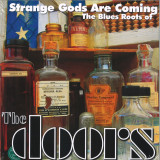
Various - Strange Gods Are Coming: The Blues Roots Of The Doors LP

The Doors Californian kings of psychedelic-blues rock not only stood heads and shoulders above the peace and love hippy explosion of the sixties, but they were also proud to wear their influences on their sleeves by forwarding to the future by reconstructing the past.
The early live shows of the band performed in 1967 at the likes of the legendary Matrix Club in San Francisco would feature the group playing two sets, both featuring a mix of band originals and Blues covers done The Doors way.
Material such as 'I'm a King Bee' by Slim Harpo,'Who do you Love' by Bo Diddley,'Money (Thats what I want)' by Barrett Strong (a song that would stay in the live set for the duration of the bands life) and at The Winterland Ballroom over the Christmas festivites'Mannish Boy' by Muddy Waters were rolled out to an adoring local fanbase.
The classic 'Backdoor Man' by Howlin Wolf would also find a place on the group's debut album.
With all of the members of The Doors being long time blues fans more material was being worked up during rehearsals and added to the live shows along with new songs from The Doors forthcoming albums.
The Doors walked it like they talked it and sadly we will never see the likes of them again...a wonderful mixture of Blues and Psychedelic rock,they proved that in order to meet the future you must never forget the past..NO LIMITS,NO LAWS.................

out of Stock

Order now and we will order the item for you at our supplier.

13,87

Last In: 12 months ago
Items per Page:
N/ABPM
Vinyl