The color green can represent many things. It can symbolize money, of course, but also weed. And envy. It implies newness, the rebirth of spring, but it can also evoke illness and infection. It’s an apt name for a band that is defined by its adaptability, by its knack for doing many different things all at once. On the Color Green’s second full-length—their first as a quartet—they ground their cosmic jams in earthy melodies, drawing from ‘60s SoCal folk-r0ck, ‘70s classic rock, ‘80s underground rock, ‘90s psychedelic dance-rock, and many other sources.
In the two years the band has been touring, it has already shared stages with a range of groups that reflect both the sophistication and the wild malleability of their sound, including Fuzz, Kikagaku Moyo, Circles Around the Sun, and Young Guv. “When we play live, I don’t really know what’s going to happen,” says guitarist Noah Kohll. “You really have no idea what you’re going to get with this band, which keeps things fresh for us and maybe makes the live experience special.”
Adds drummer Corey Rose, “One thing about this band that I really appreciate is that we can camouflage into any environment or any show. We can play with Hiss Golden Messenger and lean into that funky country vibe, or we can play with the Brian Jonestown Massacre and get evil. We all love a variety of music, so let’s not put ourselves in a box.”
That wild, mercurial quality is reflected on Fool’s Parade, a meditation on loss, grief, confusion, frustration, and the clarity to which they all lead. Their songs are vehicles for self-explorations, not just a means of putting their feelings into lyrics and notes but molding them, night after night, into different shapes to get different insights.
Cerca:messenger
- 1: Betty Baker
- 2: Blackberry Blossoms
- 3: Pompey Ran Away
- 4: Cluck Old Hen
- 5: Chimes
- 6: Lost Girl
- 7: Can't Jump Josie
- 8: Red Bird
- 1: Rockingham
- 2: Prettiest Little Girl In The County
- 3: Drunken Hiccups
- 4: Hog Went Through The Fence, Yoke And All
- 5: Polly Put The Kettle On
- 6: Shortening Bread
- 7: Billy In The Lowground
Past collaborators of Decosimo include indie/folk artists Jake Xerxes Fussell, Wye Oak, and Hiss Golden Messenger. Past collaborators of Schrey include experimental/sound artists Alvin Lucier, Gordon Mumma and Yasunao Tone. In April 2021, Joseph Decosimo, Luke Richardson, and Cleek Schrey three of the most compelling interpreters in the American traditional music scene gathered at a cabin in Tennessee to explore their collective repertoire of Old-time fiddle and banjo tunes, gleaned from visits with older players, field recordings, and vintage 78s. Working with fiddle, hardanger d’amore (a fiddle with sympathetic strings), banjos, and a 19th-century pump organ, the trio captured both the sonic details of their instruments and a generous musical interplay rooted in a dozen years of collaboration. Their debut album, Beehive Cathedral, presents resonant, thoughtful, and expansive explorations of Appalachian and American music. The results showcase deep Details study and enveloping, exhilarating performances. A rich vein of stories and relationships to people and places underpin Beehive Cathedral. Much of the album draws on Decosimo’s experiences learning the music of Tennessee’s Cumberland Plateau, where he grew up and worked as a folklorist. A key source of inspiration was fiddler Clyde Davenport (1921-2020), “Clyde was a social and musical trickster who knew hundreds of old tunes and had an uncanny ability to recall each piece in exquisite detail,” says Decosimo. “During my visits, he’d play breathtaking local pieces from his father Will, who was born in 1868. His father had learned some of them from a neighbor who was born in 1829.” "This record expresses some of what we hear in Southern traditional music: the ring of the strings, the buzz of the tunings, the hum of the organ,” explains Schrey. Spending time listening to old recordings and imagining how those sounds were made has made the trio keenly interested in the relationship between physical motion and sound in their source material. The result is a dense layering of sounds and interaction. Of this sonic interplay, Irish fiddle luminary Martin Hayes observes, “The sound of a beehive conveys the idea of a unified harmonious soundscape which is how this recording sounds. Beehive Cathedral is a sonic delight, a beautiful blend of Old-time soundscapes and more. This is a hypnotic recording that is grounded, subtle and refined
"Conquerors" ist das zweite Album von New Horizon, das sich als thematische Anthologie, präsentiert, die sich mit entscheidenden Momenten der Geschichte und den bemerkenswerten Persönlichkeiten, die sie geprägt haben, auseinandersetzt.
Der Track "Daimyo" entführt den Hörer in das feudale Japan des 16. Jahrhunderts und erzählt die Sage des berühmten Einigers Oda Nobunaga.
Nach einer bemerkenswerten Reise, die den Sänger Erik Grönwall zu Skid Row führte, begab sich New Horizons Gründer Jona Tee auf die Suche nach einem Sänger, der die Essenz des nächsten Kapitels der Band verkörpern könnte. Seine Suche führte ihn zu seinem langjährigen Freund Nils Molin, dem bekannten Sänger von Dynazty und Amaranthe. Nils souveräner Gesang verbindet sich nahtlos mit Tees vertrackten Melodien, was zu einem Sound führt, der sowohl vertraut als auch erfrischend innovativ ist. Mit "Conquerors", das kurz vor der Veröffentlichung steht, ist New Horizon auf
dem besten Weg, sich im Bereich des Power Metal weiter zu etablieren.
Once billed as “Europe’s First Lady of Jazz,” Dutch singer Rita Reys (1924- 2013) was a legend overseas during the second half of the 20th century, and certainly one of the top European jazz singers. The LP The Cool Voice of Rita Reys (considered her best record ever) presents her backed on one side by a band led by her husband, drummer Wessel Ilcken, and on the other side by Art Blakey’s Jazz Messengers, featuring Donald Byrd, Hank Mobley and Horace Silver. 180-gram VIRGIN VINYL LIMITED EDITION of 750 COPIES. The Complete Album + 3 Bonus Tracks.
Multitudes" ist das Debütalbum der Singer/Songwriterin Alisa Amador aus Cambridge, MA. Die Songs von "Multitudes" sind eine Synthese aus den
vielen Stilen, die Alisa unersättlich aufgesogen hat: Rock, Jazz, Funk und alternativer Folk, alles verpackt in den Geist der lateinamerikanischen Musik,
mit der sie aufgewachsen ist. Alisa hat live bereits für Künstler wie Hozier, Lake Street Dive, Madison Cunningham, Watchhouse, Hiss Golden
Messenger und viele andere eröffnet.
Das Album ist ein kühnes, fesselndes Selbstporträt, das nicht nur zeigt, wie weit Amador gekommen ist, sondern auch ihre Herkunft feiert (ihre
Wurzeln liegen in Puerto Rico, New Mexico, Argentinien und New England). Die Sammlung, die mühelos zwischen Spanisch und Englisch wechselt und
auf der auch Gaby Moreno, Madison Cunningham und Quinn Christopherson zu hören sind, ist ein wunderschönes Album - die Art und Weise, wie
Amadors kristalline Stimme die üppigen Synthesizer, verträumten Gitarren und filmischen Streicherarrangements des Albums durchbricht, ist
schlichtweg bezaubernd - aber mehr noch, es ist ein intensives Werk, eine tiefgründige, aufschlussreiche Meditation über Triumph und Verlust, Ende
und Anfang, Identität und Zugehörigkeit.
The latest release on Jai Alai follows the format of forgotten vinyl tracks never before released on 7” format, or previously CD only album tracks, and will raise some eyebrows in artist selection and pairing.
Donaldson Toussaint L’Ouverture Byrd II was one of the most significant jazz artists of all time having joined Art Blakey’s Jazz Messengers in the mid-50s and establishing himself as one of the best hard bop trumpeter/flugelhorn players. His progression was continuous through the 50s/60s working with John Coltrane, Gigi Gryce, Pepper Adams, Thelonius Monk, Sonny Rollins as sideman, and became one of Blue Note Records leading artists.
By the end of the 60s Byrd decided to move away from that idiom, experimenting with jazz fusion, African music and Rhythm & Blues. He worked hard to make jazz and its history part of the curriculum in US music colleges and he taught at many including Rutgers, Hampton, Howard, and Columbia, the latter from who he received his PhD in music.
Byrd took a great interest in how Miles Davis’ experimentation was resonating with a younger audience, and despite being castigated by his musical peers, his development of jazz fusion changed the jazz scene forever. His work with the Blackbyrds was a cornerstone for the progression of jazz funk in the UK.
The effect of his hook-up with brothers Larry & Fonce Mizell was immediate and his Blue Notes albums “Black Byrd” (1973), “Street Lady”, “Stepping Into Tomorrow” (1974), “Places & Spaces” (1975) and “Caricatures” (1976) became legendary on the newly evolving jazz funk scene with certain tracks such as “Change (Makes You Wanna Hustle)” normalising dance jazz on the disco floors, not to mention being a rich source for many hip-hop samples.
A slightly leaner period followed when he moved to Elektra Records and of the three albums with his new incarnation 125th Street NYC, a group of musicians he taught at North Carolina Central University, two were produced by Isaac Hayes including “Words”, “Sounds, Colors & Shapes” (1982) from which “Everyday”, a fabulous forgotten piece of mellow jazz funk derives.
By the end of the 80s he had returned to his harder straight-ahead jazz roots, but his place in history and the evolving of jazz as a dance culture in our clubs should never be forgotten.
In a partnership between Lost Realm Records and Classic Metal Records, we bring you the vinyl edition of Sacred Alien's first studio album "The World Doesn't Care About You" In 2020 we already had the opportunity to work with these NWOBHM legends, with the vinyl release of "Legends" (compilation of studio and unreleased songs recorded between 1980 and 1983), which was a success given the tremendous acceptance by fans and followers of this British band.
An edition that was sold out in less than 2 months! "The Universe Doesn't Care About You" is the logical continuation of the band's legacy. With a total of 9 songs, Sacred Alien once again offers us a sonic journey between parallel universes, extraterrestrial forces and the meaning of life.
With Les Liaisons dangereuses 1960, Roger Vadim stirred up a scandal. Based on the famous epistolary novel by Laclos, the director presented audiences in the early 1960s with a film in which libertinism, scheming and the upper middle classes intertwine in 1960s Paris. Gérard Philipe and Jeanne Moreau excel, and the film is often considered one of Vadim's best. It also owes much to its music, which reflects Vadim's taste for jazz. For the soundtrack to Les Liaisons dangereuses, the director called on Art Blakey and his Jazz Messengerswhose exceptional musical qualities make for a record full of daring musical ideas and a marvellous choice of brilliant themes. The majority of the tracks feature Art Blakey's Jazz Messengers of mid-1959 with trumpeter Lee Morgan, tenorman Barney Wilen, pianist Boby Timmons and bassist Jymie Merritt joining the explosive drummer/leader. This beautiful re-issue of the original recording is pressed on 180g vinyl at GZ, and packaged in a deluxe gatefold tip-on jacket with the original liner notes and a photo of Gérard Philippe and Jeanne Moreau from the film, and additional notes by recording producer Marcel Romano from 1988.
Recorded in 1955 for Tom Wilson’s Transition label, Byrd’s Eye View was Donald Byrd’s first issued album as a leader featuring the trumpeter at the helm of the line-up of The Jazz Messengers with Hank Mobley, Horace Silver, Doug Watkins, and Art Blakey plus trumpeter Joe Gordon on several tracks. This mono Tone Poet Vinyl Edition was produced by Joe Harley, mastered by Kevin Gray from the original analog master tapes, pressed on 180g vinyl at RTI, and packaged in a deluxe tip-on jacket with an 8.5” x 5.5” booklet.
The music of Large Plants could be characterised as psych rock, with this outing having a folkier, proggier and more fantastic feel than the heavier biker-rock of the 2022 debut, The Carrier. The tracks on The Thorn also weave synths into the traditional four-piece sound palette.
The Thorn was partly recorded at the same time as the The Carrier, with more songs added subsequently. However, all tracks for both albums were recorded and performed entirely by Jack Sharp in a barn, since demolished. “It was a dirty, rusty, metal shack with no insulation or sound treatment, and it was full of junk, but it sounded weirdly great, and I loved it.” Sharp told Shindig magazine.
- A1: Playland
- A2: The Right Thing Right
- A3: Easy Money
- A4 25: Hours
- B1: New Town Velocity
- B2: The Headmaster Ritual
- B3: The Messenger
- B4: Back In The Box
- C1: Generate! Generate!
- C2: Bigmouth Strikes Again
- C3: Boys Get Straight
- C4: Candidate
- D1: Getting Away With It
- D2: There Is A Light That Never Goes Out
- D3: Dynamo
- D4: I Fought The Law
- D5: How Soon Is Now?
Recorded in 1955 for Tom Wilson’s Transition label, Byrd’s Eye View was Donald Byrd’s first issued album as a leader featuring the trumpeter at the helm of the line-up of The Jazz Messengers with Hank Mobley, Horace Silver, Doug Watkins, and Art Blakey plus trumpeter Joe Gordon on several tracks. This mono Tone Poet Vinyl Edition was produced by Joe Harley, mastered by Kevin Gray from the original analog master tapes, pressed on 180g vinyl at RTI, and packaged in a deluxe tip-on jacket with an 8.5” x 5.5” booklet.
Don't judge a book by its cover. Judge a record by its cover.
And, perhaps, its title.
Cedar Walton's Mobius is as outrageously, disorientatingly brilliant as the stunning jacket design, featuring the legendary jazz pianist morphing into a mobius strip, set against a beautiful sky filled with cumulus clouds. A proper jazz-funk fusion slapfest, Mobius is a stellar electric set from - essentially - one *hell* of a SUPERBAND.
Yes, in addition to Walton's Fender Rhodes wizardry, Mobius is elevated by Ryo Kawasaki's stinging electric guitar, pristinely clear vocals by Adrienne Albert and Lani Groves, rootsy percussion by Ray Mantilla and Omar Clay, alto and baritone from Charles Davis, trumpet from Roy Burrowes, Gordon Edwards on bass and Frank Foster's tenor sax. Oh and did we mention STEVE GADD ON DRUMS?!?!
Gem after gem of looping, bliss-inducing gold, it's an incredibly revelatory album. It presents a thrilling synthesis of R&B, funk, blues and hard bop (with a hint of rock), all driven by an idiosyncratic electronic keyboard. Walton, a giant in the jazz world, got quite the workout every time he played, from piano to arp synthesizer to clarinet to electric piano to mini-moog and back again.
Mobius was Cedar Walton's debut for RCA in 1975. The versatile artist confirmed his abilities as a player, composer, interpreter and arranger with this stunning record, and his own bright compositions offered a springboard for the improvisations of the different soloists. Coltrane's "Blue Trane" is the first classic to be given the funkafied Mobius treatment, Ryo Kawasaki let loose all over neck-snapping Gadd-drum gold before the horns take a fiery turn and subsequently give way to Cedar's virtuosity. A sparkling b-boy break version of Thelonious Monk's "Off Minor" (featuring an absolutely *fire* solo from Walton) really sets proceedings alight. Of the three original pieces, the shuffling, percussive power of "Soho" is just absolutely mind bending Latin-influenced jazzy soul whilst the mellow vibes of "The Maestro" bring elegant, sumptuous soul. And then there's the effortlessly funky "Road Island Red". Just too, too good.
Cedar Walton was born in Dallas, Texas, on January 17, 1934 and began his professional career in 1959 when he began touring for several years with the J.J. Johnson Quintet. He later joined the Art Farmer-Benny Golson Jazztet and then Art Blakey's Jazz Messengers. Pretty solid credentials, right? While based in New York City, Cedar played with such luminaries as Donald Byrd, Eddie Harris, Blue Mitchell, Kenny Dorham, Lee Morgan, Freddie Hubbard, Jimmy Heath and Milt Jackson. Without question, he was one of the most complete and gifted musicians of his time and Mobius provides proof of that. The fresh, danceable tracks, all firmly rooted in the living tradition of blues and gospel, are skilfully presented by a master who enjoyed keeping abreast of contemporary tastes and was always keen to renew his language.
As the album notes state: “Mobius, which is the theoretical shape of the infinite universe, makes use of the most modern recording techniques and synthesizers. We mastered and mixed so that it’s hotter than the competition, which should help radio play and in-store demonstration.” Indeed. Mobius is really gorgeous mid-70s fusion, ranging from the funky to the ecstatic. It's an absolute MONSTER that will completely blow you away; and, yes, it's as wild and hypnotic as the cover. The audio for Mobius has been carefully remastered by Be With regular Simon Francis, ensuring it sounds better than ever. Cicely Balston's expert skills have made sure nothing is lost in the cut whilst the records have been pressed to the highest possible standard at Record Industry in Holland. The original, iconic sleeve has been restored here at Be With HQ as the finishing touch to this long overdue re-issue.
We Are Messengers embraces gratitude and the simplicity of the Gospel on 'Where The Joy Is', radiating as much exuberance as the title suggests
Their fourth studio effort boasts ten pristine, arena- ready pop selections co- written by frontman Darren Mulligan and includes the lead track "God Be The Glory" and faith-affirming "A Thousand Times," plus collaborations with Ben Fuller and Blanca.
The Nomads remastered reissue of their album Solna, recorded by the Swedes in 2012, limited edition of ww 500 copies. The tracklist here is following the 2013 US release of the album, comprised of nine original album album tracks, but cutting three tunes to have those replaced with three songs culled from the Loaded Deluxe EP. After many years of career, The Nomads produced their strongest album to date. The group perfected their sound, live and in the studio. Solna is the distilled essence of what Nomads are known for. The Nomads deliver hair-raising authenticity of rock and roll with unsurpassed purity. Nobody coughs on them or will cough on them. They are still as good as ever. The formula is simple: a strong frontman, Nick Vahlberg, a guitar hero, Hans Ostlund, a powerful drummer, Joakim Werning, and a multi-talented bassist and composer, Bjorne Froberg. The Nomads are an institution in Europe after more than 40 years of career. Their last album, "Solna" was named after the Stockholm neighborhood from which they emerged in 1981, paving the way for the garage rock scene of the time. "Aside from the Pebbles compilations, not much was known about the garage bands of the 60s and many people first heard those great songs in The Nomads version," according to Chips K (famous Swedish producer - Hellacopters, la Secta_- and member of Sator). "But one thing that distinguishes the band from many other revival bands is that they never just copied the sound of the originals. They added extra influences such as punk, power pop and hard rock. That special recipe is what still makes their sound unique." Bands like The Hellacopters, Maharajas and Sator are direct descendants of what The Nomads created. They were closer to Australian punk rock and took varied influences to create something completely their own.
96kHz - 48-bit HD Audio with digital booklet including original photography by Christopher Kayfield and liner notes by Shaun Brady.
Pianist Kevin Hays, bassist Ben Street, and drummer Billy Hart reunite for a second, scintillating trio date, BRIDGES, featuring original compositions by Hays and Hart with classics by Wayne Shorter, Bill Frisell, The Beatles, and Milton Nascimento.
Hays Street Hart, the trio of pianist Kevin Hays, bassist Ben Street, and legendary drummer Billy Hart, recorded their acclaimed 2021 debut, ALL THINGS ARE, under less than optimal conditions. The album began life as a performance in honor of Hart’s 80th birthday in December 2020, live-streamed from an empty Smoke Jazz Club in the final weeks of that grueling pandemic year. Despite those adversities, the music they created that night was spectacular enough to convince all involved that it should be released.
Two years later, the trio has reconvened, this time fully cognizant that they were going to record an album at Sear Sound Studios in NYC. The captivating BRIDGES brilliantly spotlights the unique chemistry and shared spirit of exploration that emerged fully formed on that initial impromptu session. The title succinctly hints at some of the reasons why Hays, Street and Hart work so well together: this is a trio that bridges generations, certainly, as well as a wealth of diverse experience and inspiration. But it also sums up a mutual desire to bring people together through music.
“In this world that seems to be crumbling beneath our feet,” Hays explains, “we sense the need to make allies where there might be adversaries. On the most intimate level, interpersonally and inter-psychically we set out to overcome any number of misunderstandings and adversarial situations.”
Not that there was any antagonism to overcome within the trio itself. More than anything, Hays Street Hart is a mutual admiration society of the highest order. The esteem in which the pianist and bassist hold Billy Hart likely goes without saying. The drummer was ordained in 2022 as an NEA Jazz Master, just one of the many honors he has chalked up over a breathtaking career. He began his career with an apprenticeship under the revered vocalist Shirley Horn and went on to make notable music with such luminaries as Miles Davis, McCoy Tyner, Herbie Hancock, Wes Montgomery, Jimmy Smith, Stan Getz, and as part of the quartet Quest featuring David Liebman and Richie Beirach.
But Hart is if anything, even more laudatory toward his younger bandmates. Street has been a member of the drummer’s stellar quartet for two decades, alongside pianist Ethan Iverson and saxophonist Mark Turner, a tenure that speaks for itself. As for Hays, Hart is quick to place the pianist in the exalted company of some of his iconic former collaborators.
“I’ve been lucky enough to have the chance to perform with Herbie Hancock and McCoy Tyner,” says Hart modestly. “Each generation presents their own equivalent, and Kevin is an example of the latest innovations. There was Herbie and McCoy, then it was Chick Corea and Keith Jarrett, and then you have what's coming next. I think Kevin is definitely part of that continuum.”
Though Hays sticks strictly to the piano on BRIDGES, he is also an accomplished singer whose vocal instincts fuel his inventive and lyrical melodicism. Street points to those facets as key to the connection between the pianist and Hart, who has enjoyed several meaningful collaborations with vocalists.
“It always seems to me that Kevin has the capacity to sing in his mind and then accompany himself on the piano,” Street describes. “That makes for such a nice connection with Billy, who has played with and learned from so many singers. I don't even feel like we're playing as a piano trio most of the time; it feels more like a quartet.”
Those qualities are especially clear on Hays’ “Butterfly,” which opens the album. Though it’s performed here as an instrumental, the pianist has composed lyrics for the piece, and its gorgeous, song-like quality shines through. Hays also contributed the breathtaking ballad “Song for Peace,” highlighted by Hart’s gentle, embracing brushwork and Street’s sturdy, stentorian tone. The pianist’s third original, “Row Row Row,” is constructed on a twelve-tone row, but as the playful title suggests, it has none of the more stringent qualities of the serialist composers.
Hart’s stunning “Irah,” originally recorded on his quartet’s self-titled 2006 debut, is dedicated to the composer’s mother and was recorded at Street’s suggestion. The bassist also brought guitarist Bill Frisell’s reflective “Throughout” to the date, imagining Frisell’s Americana influences would resonate with the similarly inclined Hays, who approaches the tune with a harp-like beauty. Hays’ love of pop and rock music is also reflected by the inclusion of The Beatles classic “With a Little Help from My Friends.”
The trio pays tribute to the late, great Wayne Shorter with “Capricorn,” originally released on the composer’s 1969 Blue Note album SUPER NOVA and later included on the Miles Davis Quintet set WATER BABIES. Hart called Shorter one of a kind. I think of the many times I heard him excel – with the Maynard Ferguson Big Band, with Art Blakey's Jazz Messengers, with Weather Report. And in each case, he was innovative.”
BRIDGES closes with the title track, a dazzling piece by the great Brazilian singer and songwriter Milton Nascimento, which Hays calls “one of my favorite compositions ever, by anybody.”
BRIDGES was recorded under ideal studio conditions by a now-established trio with a weeks-long European tour under their belts. Perhaps what’s most remarkable about the album is not that Hays, Street, and Hart play so masterfully together – with three artists of their caliber, who could expect any less? – but that this second outing maintains the bold spirit of inquisitiveness and spontaneity that its predecessor naturally possessed. Credit that to a trio perpetually determined to discover new bridges worth building.

- A1: Hiroshi Kamayatsu - Have You Smoked Gauloise
- A2: Happy End - Haruyo Koi Come Spring
- A3: Yoshiko Sai - Aoi Galasu Dama Blue Glass Ball
- A4: Tadashi Goino Group - Jikan Wo Koero Go Beyond Time
- B1: Jun Fukamachi - Omae You
- B2: Momotaro Pink With Original Pinks - Hachigatsu No Inshow Augusts Impression
- B3: Vol 1 Chap.100 - Heya No Naka In The Room
Nippon Psychedelic Soul 1970-1979 is Time Capsule’s continuation of the deep dive into Japan’s rich history of folk and psychedelic soul music.
Vinyl LP with 4 page insert, original artwork and photos
The kaleidoscopic psychedelia of 1970s Japan captured a fragile and fertile moment as the country sought its future in funk grooves, heavy reverb and lyrical hallucinations.
The follow-up compilation to Time Capsule’s Nippon Acid Folk, Nippon Psychedelic Soul takes myriad pathways into the tripped-out undergrowth of 1970s Japan. Finding their feet at home and looking for inspiration abroad, the musicians featured here were engaged in the communal soul-searching that followed the breakdown of the 1960s protest movements. Some made it big, others drifted into oblivion. The music they left behind shimmers with intensity.
At the core was Happy End, the first project of YMO’s Haroumi Hosono, whose distortion-heavy guitar and crisp back-beat laid the foundations for Japanese lyrics that flipped the paradigm of Japanese rock music on its head. With it came a new found sonic ambition, such as in the bold Philly-soul style arrangements of producer Yuji Ohno, whose work with occult wandered Yoshiko Sai shares some of the bittersweet grandeur of Rotary Connection or David Axelrod.
Then there was Jun Fukamachi, a pioneer of Japanese synthesis, whose debut album was a carnival of orchestral funk, euphoric horn lines and rich production, complete with soaring guitar solos, psychedelic organ and a truly cinematic finale. The first and only time Fukamachi would sing on record, ‘Omae’ rips like the ultimate end-of-nighter.
Influenced by giants of the US soul scene, maverick composer Hiroshi “Monsieur” Kamayatsu (otherwise known as ‘the Brian Wilson of Japan’) went one step further, enlisting Tower of Power to play on ‘Have You Smoked Gauloises?’ The B-side to Monsieur’s biggest-selling single, it coasts with sophisticated cool - a liquid bassline and suave keys comping under a roaring trademark ToP sax solo. No surprise it found favour once more on the Acid Jazz dance floors of ‘90s London.
Such was the spirit of experimentation that big studio productions and private press releases sat side-by-side, with the likes of Momotaro Pink and Kazushi Inamura, taking their hopes of success into their own hands with the resources available to them. More reflective but no less robust, theirs was a heavy, fat-backed drum sound, soaked in dramatic, soulful psychedelia.
If some were dreamers and others space cadets, none were further out than sci-fi writer, musician, activist and self-made scientist Tadashi Goino, who transformed his own fantasy novel Messenger from the Seventh Dimension into an operatic prog odyssey with few discernible musical reference points – a majestic and completely bonkers outlier even among company as strange and brilliant as that which is collected here.
Less a compilation of a scene, as a compilation of a sentiment, Nippon Psychedelic Soul is a wild ride from start to finish, shattering the narratives of the Japanese folk and rock tradition into a million tiny pieces.
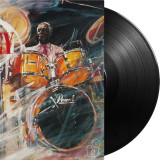
Holiday for Skins Vol. 1” by Art Blakey is a fascinating blend of percussion and jazz. Recorded in 1958, the album brings together talents like Ray Barretto, Sabu Martinez, and the Jazz Messengers. These exotic rhythms explore Afro-Cuban and Brazilian styles, delivering a vibrant musical experience. The versatility of percussion and mastery of jazz make this album a true rhythmic celebration, highlighting Art Blakey’s lasting impact in the world of jazz.
"Holiday For Skins Vol. 1" by Art Blakey includes the following tracks: "Lamento Africano" and more.