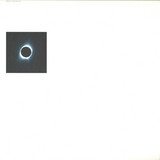
Metric Systems is the name of a covert project of over 20 years duration. It has moved across multiple continents, under multiple names. The 8 songs that make up 'People in the Dark' were recorded between 2000 and 2016 in various locations across Sydney, Melbourne and New York. The bright-eyed sci-fi fascination of Australia's Clan Analogue collective intertwines with the more sinister facets of modern technology - echoed voices pepper the album like fragments of a surveillance tape collected by our digital panopticon. A pervasive sense of paranoia and unease winds its way through these 8 tracks that move between techno, downtempo and more abstract strains of electroacoustic experimentation. Fittingly housed in a striking sleeve by American photographer Trevor Paglen, whose MacArthur-winning work revolves around these same themes of omnipresent surveillance and data mining.
'People in the Dark' opens with the wordless vocals of 'Your Room', drifting over the unspooling synthesizer sequence that seems to swell and recede from the foreground like the ebb and flow of a lapping tide, lapsing into dreamy ambience before the drums come back in. The smartly programmed drums are the focus of 'Chinatown Warehouse', whose hip-hop swing gives a distinct 'nod factor' to the otherwise hazy mechanics of the track. On 'Laika', a 303 line weaves its way across the subdued mid-tempo groove, gently recalling the ambient-acid of Susumu Yokota's 'Ebi' project. The penultimate track, 'Stellarwind' starts with a dark, foreboding drone before shining pads arc over like a glimpse of light through the track's murky darkness, the tension between these two poles moving together as the song unfolds.
This record reflect just a small selection from a large archive of recorded materials. All songs written and produced by Kate Crawford and Bo Daley.
Cerca:metric systems
- 1
Riding the razor’s edge between rigorous experimentation, innovation, and tradition, London based, Italian composer, cellist, and electronic performer, Sandro Mussida, joins the Die Schachtel family with Rueben, his 3rd solo LP.
Active since the early 2000s, Sandro Mussida worked extensively with Mark Fell, Curl Collective, Lorenzo Senni, Oren Ambarchi, and Alessandra Novaga, among others, as well as a founding member of the interdisciplinary artists' group TQS Collective, before releasing his solo debut, Ventuno Costellazioni Invisibili, on Metrica in 2017, followed by Eeeooosss, released by Soave in 2019. Rueben, like its predecessor, deploys a microtonal vocabulary within a three-instrument sound palette and builds upon Mussida’s long-standing investigations of active listening, augmented by a developing practice that challenges aural perceptions of historical, non-equal-tempered tuning systems.
The 3rd instalment of Die Schachtel’s Decay Music series - launched to highlight inspired contemporary experimental efforts in the ambient, ethereal, and emotively abstract music - Rueben was recorded during 2018 in the church of St.Giusto in Volterra, Italy. Deeply inspired by Italian Renaissance paintings encountered by Mussida during the work’s composition, and conceived at the intersection of acoustic and electronic aural fields, in careful response to the space itself, the sounds of electric guitar, bass clarinet and cello - treated as minuscule sound atoms, rapidly projected to form structures of evolving densities - harmoniously enter into dialogue, forming a multi-layered, contemplative sonic landscape, within the interwoven complexity of their own reflections.
Central to Mussida’s work is the role of the performer, the experience of sound in a given space, and the relation of those sounds to memory and observation. Across the length of Rueben, bound to the work’s inspiration in the visual realm, the interplay between the senses blurs, presenting the act of listening as a mirror for the experience and legacies of seeing. In Mussida’s hands, sound emerges as a trace or memory suspended in a non-linear conception of time, where imprint, movement, and event, as they relate to place and happening, are perceived by the ear, recalling the Russian theologian Pavel Florenskij’s idea of ‘reverse time’, that likens temporal condition activated by experiences with art as similar to that of dreams.
Vast in scope and intricate detail, the 9 discrete compositions that form Rueben unfold in a series of interconnected, shimmering landscapes of tone and texture, each, through the interplay of their elements, configuring a radically dense rendering of minimalist, ambient music that challenge the perceived boundaries of those historical definitions. The identity of individual sound sources fades against their collective whole, sculpting an inward-looking aural image of the church of St.Giusto, that echoes the radiance of the paintings that lay at the heart of the album’s inspiration.
An inspired and radically forward-thinking realization of electro-acoustic music, Mussida pushes toward innumerable possible futures of experimental practice, imbued with ghosts and histories of the past. Rueben is issued Die Schachtel on vinyl in a one-time edition of 250 copies, pressed to 180g marble vinyl and housed in a pro-printed inner sleeve and jacket, featuring an original Sumi-e painting by Japanese artist and avant rock drummer Akihide Monna (Bo Ningen), contained in a silk-screen PVC sleeve.
- 1


