Buscar:micha
- A1: Skyscraper
- A2: Subways Of Your Mind
- A3: Goldrush
- A4: Heart In Danger
- A5: Dirty Slapstick
- B1: I Got My Eyes On You
- B2: Talking Hands
- B3: Strange Feeling
- B4: Jenny
- B5: Subways Of Your Mind (Tmms Darius Version)
Yellow Vinyl[25,17 €]
The incredible story that began with The Most Mysterious Song on the Internet (TMMS) now enters an exciting new chapter: Skyscraper, the debut album by FEX.
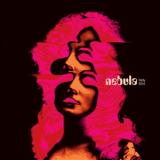
Skyscraper features ten original tracks recorded in the early to mid-1980s-carefully re-transferred, remastered, and brought back to life. The album cover, designed by Darius S., brings the story full circle. Darius is the very person who preserved the now-iconic track Subways of Your Mind by recording it from NDR radio in the mid-80s. Without him, FEX may never have been discovered.
FEX's debut opens with its namesake, Skyscraper-a brooding, previously unreleased track the band once described as part of their "psychedelic phase." With haunting synth-helicopter textures and deep guitar riffs, it immediately sets the tone and raises tension.
The release flows naturally into the energetic and fully remastered studio version of Subways of Your Mind. This version of the TMMS - re-discovered on the "yellow label tape" by Reddit user Marijn-was long believed to be from a smaller home studio, but was actually recorded in November 1984 at Hawkeye Studios in Ganderkesee, near Hamburg.
Goldrush, first teased in raw form on FEX's YouTube channel, bends toward mechanical rhythm and shimmering synths, a snapshot of the band's experiments with programmed drum machine sound. Rückwardt's lyrics point to greed and criticizes materialism, and while the music leans toward pop sensibilities, it carries a raw, fractured edge.
Heart in Danger and I've Got My Eyes On You offer contrasting experiences-one rooted in classic post-punk tension, the other floating in melodic synth layers. The latter in particular feels like a fragment from a parallel radio history: a precise and one of a kind synth pop love song with a progressive touch.
From a rehearsal tape comes Dirty Slapstick, its urgency intact. Missing keyboard parts were later reconstructed by Michael Hädrich using his original DX7 synthesizer-recovering lost elements without rewriting the past. The lyrics take a wry look at forced optimism. Also included are the songs Talking Hands, Jenny and Strange Feeling, the latter being a slower blues-tinged cut, revealing yet another facet of the band's reach and Rückwardt's songwriting diversity.
The album closes where the legend began-with the original radio recording of Subways of Your Mind from Darius' cassette. This version of The Most Mysterious Song features alternate vocal effects, contributing to the track's enigmatic aura. Digitally transferred using a high-end Revox machine and carefully remastered, it now has its long-deserved official release.
The cover features a photo of the Eichenberg Bunker in Kiel-one of FEX's original rehearsal spaces and a symbolic monument to their sonic legacy.
Seit 2007 bricht das schwedische Power-Disco-Quartett Royal Republic mit allen Rock'n'Roll-Normen, verweigert sich Klischees und schafft mit seinem fünften Studioalbum "LoveCop" eine rebellisch brillante Mischung. Gegründet mit Hits wie "Tommy Gun", entwickelte sich Royal Republic durch Alben wie "Save The Nation" und "Club Majesty" weiter. Mit Hits wie "My House" und "LoveCop" zeigt das Album, das in den Hansa Studios in Berlin von Michael Ilbert und Adam Grahn aufgenommen wurde, durch charakteristisch freche Riffs und Wortspiele, eine Fortsetzung ihres unwiderstehlichen Sounds. Vollgepackt mit intelligenten Drum-Beats und groovigen Bass-Lines ist es eine schweißtreibende Fusion aus Metallica und Michael Bolton. Macht Euch bereit für eine musikalische Achterbahnfahrt, wenn "LoveCop" die Herzen zum Schmelzen bringt und gleichzeitig die Lautsprecher in Brand setzt. Es ist die Befreiung von allen Fesseln mit dem Recht einfach mal wieder laut zu sein! Nehmt die Hände hoch und tanzt zu den unaufhaltsamen Beats von Royal Republic.
Cloud Holding is NYC-based Bryce Hackford's fifth album, and first for Futura Resistenza. Seven sound sculptures are coaxed out of recorded improvisations by a group of musicians--Ka Baird, Shelley Burgon, Alice Cohen, Michael Hurder, Dominika Mazurova, Camilla Padgitt-Coles--and worked into formless figures that express an always drifting present. Guided by the Suzuki Nobara--a kind of electric koto with many traditional instrument sounds and unique pitch adjustment controls--and the lyric-less utterances of the human voice, Cloud Holding traces delicate outlines in a collaborative sound world that shines with mysterious, searching affinity.
Michael Mayer returns to the Speicher series for his first release since last year’s brain-bursting The Floor Is Lava album. And yes, the floor is indeed lava when Mayer is on peak form, as he is here, with three tracks that oscillate, effortlessly, between the twin poles of Mayer’s music: dancefloor detonation and heart-wrenching beauty. To be fair, there’s more of the former here, but there’s beauty in generous discipline, too, and the unrelenting “Cry Me A Raver” feels, somehow, like it brings together decades of Kompakt pleasure in six giddy minutes – disco-fied arpeggios, glistening and hand-burnished textures, abstruse patterns that fall in and out of step. “Don’t Sync With My Tag” stomps with destructive glee, a beat as undeniable as the shaker cross-rhythms are silkily sexy. There’s always been something practical, functional, and utilitarian about Speicher, but it doesn’t get more everyday DJ-life than this: Mayer tells us the title is “a super-annoying message that pops up every time you open Rekordbox. Nobody knows what it means. It’s a DJ mystery.” But who needs answers, anyway? By the time you’ve started to get close to solving the riddle, Mayer’s taken you to Detroit via Cologne with “It Isn’t What It Isn’t”, a little doffing of the cap to Rhythim Is Rhythim. “You’re May, I’m Mayer, I used to tell him,” Michael chuckles. This made one of our cats almost jump out of its skin, with its stealthy slyness – creeping, amorphous electro noise; percussives that just won’t quit; the whole thing flooded with twitchy strip-light energy and silver-machine flare- outs.
Speicher is as Speicher does, and this is a damn good one. Make Mine Mayer!
Michael Mayer returns to the Speicher series for his first release since last year’s brain-bursting The Floor Is Lava album. And yes, the floor is indeed lava when Mayer is on peak form, as he is here, with three tracks that oscillate, effortlessly, between the twin poles of Mayer’s music: dancefloor detonation and heart-wrenching beauty. To be fair, there’s more of the former here, but there’s beauty in generous discipline, too, and the unrelenting “Cry Me A Raver” feels, somehow, like it brings together decades of Kompakt pleasure in six giddy minutes – disco-fied arpeggios, glistening and hand-burnished textures, abstruse patterns that fall in and out of step. “Don’t Sync With My Tag” stomps with destructive glee, a beat as undeniable as the shaker cross-rhythms are silkily sexy. There’s always been something practical, functional, and utilitarian about Speicher, but it doesn’t get more everyday DJ-life than this: Mayer tells us the title is “a super-annoying message that pops up every time you open Rekordbox. Nobody knows what it means. It’s a DJ mystery.” But who needs answers, anyway? By the time you’ve started to get close to solving the riddle, Mayer’s taken you to Detroit via Cologne with “It Isn’t What It Isn’t”, a little doffing of the cap to Rhythim Is Rhythim. “You’re May, I’m Mayer, I used to tell him,” Michael chuckles. This made one of our cats almost jump out of its skin, with its stealthy slyness – creeping, amorphous electro noise; percussives that just won’t quit; the whole thing flooded with twitchy strip-light energy and silver-machine flare- outs.
Speicher is as Speicher does, and this is a damn good one. Make Mine Mayer!
- 01: Joy (Reprise)
- 02: Keep You Close
- 03: Hebron
- 04: Axis (Feat. Saul Williams)
- 05: Day&Apos;S Gon&Apos; Come
- 06: Listen
- 07: The Honourable
- 08: Hollows &Amp; Grooves
- 09: Wishful Thinking (Feat. Michael King)
- 10: Giving Thanks
- 11: Peace. Love. Life
- 12: After Home (Feat. Tony Kofi)
- 13: Sea Song
- 14: With Care
- 15: Faith (Feat. Deschanel Gordon)
MidnightRoba is the solo project of vocalist, songwriter and producer Roba El-Essawy. The voice of Attica Blues (Mo Wax 1997, Sony 2000), Raise A Symphony is MidnightRoba's second solo album. Her first album, Golden Seams, very much rooted in jazz, received support, airplay and features from DJs such as Gilles Peterson (BBC Radio 6), Tony Minvielle and China Moses (Jazz FM), Robert Elms (BBC London Live) and Kevin Le Gendre on J to Z (BBC Radio 3). Single releases from this second album have been played by Gilles Peterson (WorldWideFM & BBC Radio 6), Kate Hutchinson (Soho Radio), Marshmello (NTS), Rob Luis (Tru Thoughts), Kev Beadle, Patrick Steele, DJ Amazon, and more.
'Raise A Symphony' is music of our time. A 15-track electronic offering, it comments on topics ranging from colonialism to complicity of silence; from compromised politicians to the power of protest and gratitude to those on the frontlines of change; from displacement and sea migration to the desire to protect our loved ones and the need for kindness; to have faith in the future and the importance of searching for joy in the meantime. The self-produced album 'Raise A Symphony' sees contributions from Saul Williams, Deschanel Gordon, Michael King and Tony Kofi, amongst others. The album title takes it's name from Martin Luther King's 'I Have A Dream' speech where King calls for the nation to rise to gather together and form a 'beautiful symphony of brotherhood'.
"..in Raise A Symphony, Midnight Roba has transmuted talent into something more powerful, where bridges built from her exquisite, unique harmonies, soaring songs and percussive productions allow competing emotions to co-exist and feed into each other. This album itself is a form of community; voices in unison, reaching outwards and offering restoration and upliftment throughout this remarkable work of love and fury." Emma Warren
a 01: Joy (Reprise) [feat. Deschanel Gordon]
"Produced by Billy Mannino (Oso Oso, Prince Daddy & The Hyena, Macseal), Kerosene Heights' LP Blame It On The Weather cements the band's place as one of the greatest of this current wave of punk/emo revival. BrooklynVegan writes ""...it’s been a minute since I’ve heard a band do mathy Midwest emo as clear, punchy, and hook-driven as Kerosene Heights are doing it.” Blame It On The Weather (their first LP with SideOneDummy Records) releases August 15, and they'll be on the road supporting this rollout every month the rest of the year including tours with TRSH, Free Throw, Dikembe, Michael Cera Palin and more, and appearances at Warped Tour and FEST in Gainesville.
FFO: Joyce Manor, Glocca Morra, Fiddlehead, Prince Daddy & The Hyena, Michael Cera Palin, etc."
A stunning 7" cut from the iconic 1995 debut album by Italian-Brazilian crossover unit Brazilian Love Affair, led by vocalist Dilene Ferraz.
Side A features "Natureza Humana," a Brazilian dancefloor take on Michael Jackson's mellow groove classic "Human Nature," a perennial favorite on mix CDs and club floors.
Side B delivers an uplifting samba-bossa cover of Earth, Wind & Fire's party anthem "Star."
Both tracks are essential Brazilian crossover gems from the golden era of '90s club culture.
- Dienstag Bewölkt
- Schlafstörung
- Lucia
- Treten Und Schieben
- Stotterlied
- Regenwalzer
- Zweig Am Spalier
- I Bin Gstresst
- Kleines Nilpferd In Berlin
- Pulliwetter
- Früher Als Kind
- Novo Mesto
- Rum & Num
- Phili
- Still
Maxi Pongratz ist ein außergewöhnlicher Musiker und Künstler, der mit seinem einzigartigen Akkordeon-Stil und seinen hintersinnigen Texten die deutschsprachige Musikszene bereichert. Bekannt wurde er als Mitglied der Band "Kofelgschroa", mit der er drei Alben veröffentlichte, die von Micha Acher ("The Notwist") produziert wurden. Sein musikalischer Weg war keineswegs vorgezeichnet: Ursprünglich gelernter Gärtner, hat er unter anderem Apfelstrudel im Hofbräuhaus gebacken und die Ski-Abfahrt "Kandahar" für den Weltcup präpariert. Doch seine Leidenschaft für Musik führte ihn von Wirtshäusern auf die Bühnen der Kleinkunstszene. Mit seinem vierten Solo-Album "rum&num" widmet sich Maxi Pongratz den großen Fragen des Lebens: Was bedeutet Heimat? Wie viel Ordnung braucht das Leben? Seine Musik bewegt sich zwischen Tradition und Rebellion, Wirtshausmusik und Dadaismus, Poesie und Klang. Er ist ein Grenzgänger, der mit neugierigem Blick und offenen Ohren die Welt erkundet und dabei die deutschsprachige Musikszene mit seiner Authentizität und Kreativität prägt.
- 1: Micha
- 2: Si Tu M’aimes Demain
- 3: Garçon Manqué
- 4: Tête Brûlée
- 5: Wherever You Hide, The Party Finds You
- 6: Cocoon
- 7: Ta Vedette
- 8: Cent Fois
- 9: Quelque Chose De
French chanson, electro beats, pared-down or synthetic piano: at 21, Iliona draws on all of this. Plural, multifaceted, elusive. Yet her lyrics resonate as if one were singing heartache—and the love one hopes for—for the very first time.
She composes, records, and produces her tracks alone, determined to keep them as close as possible to the tunes, harmonies, and silhouettes she holds in her mind. This time, they are infused with the light of an intense love, and still carried by extreme sparseness in their arrangements: nothing—from electronic arpeggios to melodic autotune—is ever superfluous; everything has its place. Lifted by a new lightness, the tracks also echo the spirit of the yéyé sound Iliona has been listening to for a few years, without necessarily knowing the name of every songwriter or the mark they left behind. It’s their longing for carefree abandon that hovers over the hypnotic Si tu m’aimes demain and its music video inspired by the New Wave, the Beatles, and all those future memories you begin to build when you’re in love.
A gentle warmth also sweeps through the hazy doo-wop contours of Tête brûlée, and the lo-fi twist of Cocoon; but always with that veil of shadow that once floated over the apparent nonchalance of Françoise Hardy’s songs. That unease, that worried smile, resurfaces in the lovely pop gallop of Garçon manqué, an ode to the deepest friendships—the ones you hold in your arms to dance or, sometimes, to cry. Or in the delicate Cent fois, which whispers, “when will the movie scenes we quietly dreamed of come to life?”
The answer, perhaps, lies in wherever you hide, the party finds you, a superb soundtrack to an imaginary drama, whose venomous keyboards unfold the pictorial strength of Iliona’s songs.
Georgie Jesson was born in London to a Bosnian mum and British father. One, a communist turned neurotic capitalist, the other a private school boy cast-off turned heroin addict. Georgie fell in love with poetry through music and lyric writing at an early age. She has since performed her work to music, written extensively for various music magazines as a journalist and culture writer, and written biographies and forewords for acclaimed artists including Baxter Dury and photographer Ewen Spencer.
Her debut collection traverses grief and love in equal measure, reflecting on family memories with a sharp honesty and a blurred edge. The book charts the changing ways the passing of time can affect us. They are conversational and confessional poems, coloured by images of bittersweet family holidays and hospital trips; sleepy Balkans bars and long London nights. Poems from the heart, about the effects of life on the heart.
“we collect figurines to make a monument of memory / to help ignore the wastage of life”.
The collection features illustrations by Greek artist Maro Michalakakos, whose work has been displayed internationally in galleries including MCA - Chicago, The Guggenheim, Tate, FNAC - Paris and many private collections. The book’s foreword is written by musician Grian Chatten, notably the lead singer & lyricist of critically acclaimed band Fontaines D.C. and whom has also released solo work under his own name.
KEG announce new EP Girders set for release September 2nd on Alcopop! Records/BMG. The band also share the frenzied and whip-smart new single Kids. The band, who have been hotly tipped across the board for 2022, will also play their debut UK headline tour plus festivals which include Green Man, End Of The Road, Latitude and more. Kids strides into the deep lineage of British art-punk songwriting that is both self-referencing and outward-facing - while being consistently innovative. Few singles manage to take aim at both the restaurant chain Itsu and the comedian Michael McIntyre, but KEG somehow pull it off.
Following a widely successful debut single release Heyshaw in the summer of 2021, KEG saw major support from publications such as NME, DIY, Dork, So Young, Clash etc. Leading into their debut EP Assembly, released October 2021, KEG toured with contemporaries such as Squid and Talk Show.
KEG are a seven piece. Albert (vocals), Joel (bass) & Will (synth) grew up together around the seaside Yorkshire town of Bridlington; and like many artists growing up in removed quarters of the country, they shared a yearning to leave. Spreading to different parts of the country after leaving school, they found their bandmates in their respective cities and found one another once again on the southern shores of Brighton.
Frank (guitar), whose background resides mostly in hip-hop, afforded a unique pulse with a guitar sound which is manic, discordant but firm. Jules (guitar) whose songwriting sensibilities come from a love of cadence and craft of beautiful soul ballads, imbued the band with his structured sense of composition. Both Charlie (trombone & shell) and Johnny (drums) come from classically trained Jazz backgrounds.
The announcement will receive digital marketing support and will launch with new tour dates announced (below) with pre-order for presale access available.
- A1: (Part I)
- B1: Prelude (Part Ii)
- B2: Maiysha
- C1: Interlude
- C2: Theme From Jack Johnson
The capstone of Miles Davis’ electric period, Agharta reigns as a funk-rock fireball — a blazing comet streaked energy and elan, a fearless organism feasting on adventure and freedom, a seven-headed Godzilla stomping its way through Osaka, Japan. Recorded on February 1, 1975 at Osaka Festival Hall at the first of a two-show stand, the double album offers an endless abundance of surprises and shifts — as well as a road-proven ensemble whose chemistry and abilities equal that of any of Davis’ celebrated bands. If the true measure of jazz is the capacity to adapt to the moment and challenge perception, Agharta is consummate.
Sourced from the original master tapes, housed in a Stoughton gatefold jacket, and pressed at Fidelity Record Pressing in California, Mobile Fidelity’s numbered-edition 180g 33RPM 2LP set of this epic live release presents it in audiophile sound on a domestic pressing for the first time. Offering greater degrees of separation, detail, and richness than the compressed CD editions and more clarity, openness, and presence than older vinyl copies, this version of the 1975 release helps bring the concert stage to your home. Just make sure your turntable and speakers are up to the challenge of Davis and Co.’s explosive performances — and producing the decibels they demand.
Teeming with vibrant colors, tones, and pace, Mobile Fidelity’s reissue captures the hear-it-to-believe-it flow, sweep, and moodiness of the music. Though the group honors looseness and freedom with religious verve, the specificity and scale rendered by this remaster allows you to detect methods behind the alleged madness that are often otherwise harder to discern. This insight extends to the understated changes in volume, harmonics, and phrasings. In many ways, you can listen as Davis himself did that early February evening as he helped coordinate the overall direction and decided on whether to blow his wah-wah-wired trumpet or take a turn on the organ.
Tellingly, Agharta would likely never have been made if not for Davis’ ventures overseas and, specifically, to the Land of the Rising Sun. Having for years faced a backlash on his native soil for his choices to experiment and blow past all known borders, Davis was welcomed with open arms in Japan. The concert documented on Agharta — as well as the day’s later show, captured on the equally exciting Pangea — stemmed from a sold-out three-week tour that would ultimately mark Davis’ final public appearances for years, as he soon settled into semi-retirement and nursed the wounds connected to an unprecedented stretch of restless and relentless output.
For all the band-fueled merit of Agharta — and there’s plenty, given the cast of saxophonist Sonny Fortune, bassist Michael Henderson, drummer Al Foster, percussionist James Mtume, and guitarists Reggie Lucas and Pete Cosey seemingly blasts off to outer space and travels distant galaxies by the time this minimally edited record runs its course — Davis’ own playing often remains overlooked. As critics Richard Cook and Brian Morton observed, it is “often fantastically subtle, creating surges and ebbs in a harmonically static line, allowing him to build huge melismatic variations on a single note.” He attacks like a man on a mission, out to prove naysayers wrong and bent on trailblazing another new path forward. Convention and skeptics be damned.
Noisy and furious, dark and discordant, abstract and off-balance, radical and intense, abrasive and atmospheric, strangely beautiful and hypnotically eccentric: Agharta evades simple description, and refuses to be pinned down in any established category — rock, jazz, punk, ambient, prog, avante-garde, or otherwise. Shot through with trench-deep grooves, screaming riffs, scalding solos, and free-improv leads, its cosmic thrust comes on as the equivalent of an animated pointillist painting comprised of millions of textured dots, dashes, and dabs that hold your attention so raptly you want to revisit the ideas again and again.
Always steps ahead of everyone else, Davis knew what he was doing even when Agharta debuted in Japan before later hitting U.S. markets. Though “Maiysha” and “Theme from Jack Johnson” are identified in the track listing, the record contains a number of uncredited references to other Davis works, including a nod to “So What.” This decision to bypass labels only adds to the art of the reveal — the rare black magic in which Agharta expertly deals.
- Mean Street
- Dirty Movies
- Sinners Swing!
- Hear About It Later
- Unchained
- Push Comes To Shove
- So This Is Love?
- Sunday Afternoon In The Park
- One Foot Out The Door
The song titles on Van Halen's aptly titled Fair Warning don't lie. The likes of "Unchained," "Mean Street," "Push Comes to Shove," "One Foot Out the Door," and more indicate the mood the band channels on its double-platinum 1981 record — the nastiest, darkest, and fiercest album of the group's storied career. For the fourth time in four years, Van Halen throws down the gauntlet to all challengers and emerges victorious.
Sourced from the original analog tapes, pressed on MoFi SuperVinyl at Fidelity Record Pressing, and strictly limited to 5,000 numbered copies, Mobile Fidelity's UltraDisc One-Step 180g 45RPM 2LP set plays with unfettered clarity, dynamics, and immediacy. Benefitting from superb groove definition, an ultra-low noise floor, and dead-quiet surfaces, this vinyl edition captures what went down in the studio with tremendous realism and involving presence.
Taking a more controlled approach in the studio and still completing everything in less than two weeks, Van Halen and producer Ted Templeman relied on studio amplifiers to direct the sound. Further diverging from the live-on-the-floor approach of its earlier albums, the ensemble also employed overdubs to great effect. The result: Dense, stacked architecture that underlines the hard-hitting tenor of the songs — and which comes alive like never before on this reference edition that looks as good as it sounds.
The premium packaging and gorgeous presentation befit the reissue's select status. Housed in a deluxe slipcase, it features special foil-stamped jackets and faithful-to-the-original graphics that illuminate the splendor of the recording. Aurally and visually, it is made for listeners who want to immerse themselves in everything involved with the album, including the iconic cover art adopted from William Kurelek's haunting painting, "The Maze."
Isolated frames from Kurelek's childhood-inspired work — including a man bashing his head into a brick wall, a guy pinning down an adversary as he delivers bare-fist blows to his face and others watch with apparent glee, a boy tied down on a conveyer belt and being sent through the equivalent of a meat saw — adorn the front and back covers. The sunnier visual disposition of Van Halen's prior efforts gives way to something sinister and tortured, traits reflective of the music within. The band members, too, are visually depicted not in glamorous shots but in a serious black-and-white portrait in which the quartet is clad in black leather jackets.
Tough, aggressive, stark: Fair Warning comes on like a series of bare-knuckled punches to the solar plexus and boasts lyrical narratives to match. Though not a concept record, the concise album revolves around themes of roughing it on the streets and struggling to survive amid dim prospects. Singer David Lee Roth reportedly penned many of the initial lyrics after traveling to Haiti and observing extreme poverty. The characters and situations populating Fair Warning reflect hardscrabble existence, last-chance desperation, and underlying danger.
Witness the crazies, poor folks, and hunters of “Mean Street”; the former prom queen turned pornographic actress on “Dirty Movies”; the menace and vice of “Sinners Swing!”; the streetwise hustle of “Unchained”; the isolation and alienation of “Push Comes to Shove”; the desire for escape on “One Foot Out the Door”: A carefree California beach party Fair Warning is not.
Having said he felt angry and frustrated during the sessions, guitarist Eddie Van Halen uses the forceful arrangements as a playground for his seemingly unlimited arsenal. Supported by a crack rhythm section and a hyped-up Roth, he performs with an almost impossible combination of punk-like intensity, technical finesse, lyrical fluidity, and unbridled emotion. The virtuoso was increasingly butting heads with Templeton and seeking a freedom in the studio he believed denied him.
No wonder he plays like a bat out of hell. Listen to the rapid-fire manner in which he slaps the high and low E strings on the 12th fret of his instrument on “Mean Street,” instilling the tune with funk flair and metal-spiked sharpness. For the pouty strut of “Dirty Movies,” Eddie Van Halen contributes slide guitar magic made possible after he sawed off the lower portion of a Gibson SG so he could reach further down the fretboard.
Related intensity, urgency, and daredevil momentum punctuate the surging “Sinner’s Swing!” A heavily flanged, delicately melodic introduction frames the attitudinal “Hear About It Later,” among the most creative arrangements of Van Halen’s career. And do riffs come any bigger or magnetic than those on the high-wire kick of “Unchained”? As for the out-of-left-field “Sunday in the Park,” an instrumental composed on an Electro-Harmonix micro-synthesizer: Who but Eddie Van Halen to supply creep factor in such an ingenious way?
Despite selling fewer quantities than Van Halen’s prior efforts, Fair Warning remains for many diehards the record that epitomizes all of the band’s immense strengths —Roth’s manic energy and tongue-wagging humor, Alex Van Halen’s rhythmic heartbeat-in-your-chest bombast, and Michael Anthony’s lucid bass lines included. Arriving when the New Wave of British Heavy Metal and new-wave movements were taking flight, it signaled a shot across the bow from a band determined to stay a step ahead and provide proof nobody could touch what it delivered.
More than four decades later, Fair Warning still sounds that alarm.
Mr Thing returns with his 2nd release on Friday's Funky 45 after the 1st one Cool V sold out almost immediately! (repress coming soon) This time out Marc crafts a couple of 2 steppers to warm up your winter dancefloors. Side A is a nice flip of Cherelle & Luther's Saturday Love and side B a lovely version of Michael Wycoff's Looking Up To You - you know how the last one went - don't sleep!
Two musicians, two different folk music traditions, two soundscapes hundreds of miles apart and one nightingale song. Nightingale melodies inspired this intoxicating folk album by Slovakian flautist Michaela Antalová and Norwegian double bassist Adrian Myhr. The Oslo-based duo’s album follows their meditative 2021 debut Zvony (Bells), which featured harmonium, field recordings of crickets and a Slovak male choir.
Sing Nightingale is a translation of ‘Zaspievaj Slavicku’, a traditional Slovakian song. The duo experiments with this theme of the songbird; exploring instrumentation from around the world and its rich tonal textures. On ‘Night Singing’, Michaela plays a Slovakian fujara, a tall, upright wooden bass flute originally played by shepherds. The fujara’s smooth, deep tones are laid over a recording of a nightingale by musicologist Tomáš Šenkyřík, with Michaela’s flute mimicking the bird’s nocturnal chirps and warbles to attract a mate. Michaela is carefully imitating the bird, who is in turn improvising his melody. In ‘Worm Moon’, named after the springtime full moon in March, when nightingales return from Africa where they have spent the cold winter, Adrian’s slow and resonant double bass is brightened by the sweet trills of a real nightingale and Michaela’s fujara.
The Norwegian Hardanger fiddle or hardingfele, features on two specially written songs; ‘Lament’ and ‘Rosenhave’ (rose garden) which bring together the nightingale’s symbolic associations with undying love, sacrifice, deep sorrow and loss. Celebrated Hardanger fiddle player Helga Myhr plays alongside Adrian’s double bass and Michaela’s seljefløyte or willow flute. Helga also plays on ‘Flagre’ (Flutter) and ‘Dance Nightingale’. The seljefløyte is very similar to the Slovak overtone flute koncovka. By using this Norwegian instrument, Adrian and Michaela’s new compositions are reminiscent of both countries’ folk traditions. Folk music often comes from unknown sources; the original writer may not be known and the melodies are typically passed down orally. Michaela and Adrian’s project merges the different folk musics from their respective countries, finding common ground in the sonic qualities of instruments and evolving a new hybrid folk style, authentic in its own right.
For the stunning adaptation of the traditional Slovakian fujara song ‘Dolu Ovce Dolinami’ (‘Sheep down the valleys’), Adrian’s friend Javid Afsari Rad plays the Iranian santur, similar to the traditional Slovak string instrument cimbalom. By coincidence, Iran’s national bird is the nightingale, making another unexpected connection to the symbolic bird. These 11 tracks are a beguiling fusion of traditional folk styles, approached by musicians from an avant-garde, improv and jazz background. The album pays tribute to a hugely expressive bird and finds a strange, soothing universality in the folk sounds of different countries.
House of Harm are proud to announce the forthcoming release of their new album Playground, out December 1st, 2023. The new record builds and expands upon the three-piece’s enthralling shadow-pop sound, a mix of midnight atmospherics, 90s era jangle pop, and contagious synth drenched hooks that further elevate the transcendent vocals of lead singer Michael Rocheford. Rounded out by Cooper Leardi (guitar / synths) and Tyler Kershaw (guitar / synth), House of Harm have amassed an impressive following as something of a best kept secret among their growing fanbase, leading to sold out shows on both coasts by the power of word of mouth alone.
The band members have been drawn to music for as long as any of them can remember, and the drive to be around like-minded artists and make their own noise drew them all to Boston after high school. There they all quickly enmeshed themselves, playing in other bands before meeting each other. Ever since, House of Harm have been quietly making a name for themselves among music fans with darker pop persuasions via a steady stream of releases in single, ep and album form.
That attention to detail and workmanlike approach at the expense of chasing instant gratification seems to be paying dividends after years of steady effort. The journey of their new album Playground saw House of Harm stay true to that ethos. The band painstakingly narrowed the record down to an efficient 10 tracks that they felt made the most sense, both standing on their own as well as fitting into an LP that built a cohesive world for the listener to get lost in. The album’s name also reflects the experimentation and happy accidents that came about during the writing and recording process.
On “The Face of Grace” they set out to explore different dynamics by writing a song entirely without drums, but couldn’t help themselves from putting emphasis on the song’s 6/8 waltz time signature. “Two Kinds” is another first for House Of Harm in that it’s predominantly driven by acoustic guitar. That aforementioned vulnerability shows up in other areas of the songwriting process as well with “Two Kinds”, one of their most revealing songs to date from a lyrical standpoint, written from a place of reflection and weakness and tackling feelings uneasy to be put on display for public consumption.
Taken as a whole, the end result is an album representing a collection of the band’s most raw and expressive songs yet.
- A1: Ask The Dust - Opening Theme
- A2: Spin Happy
- A3: We'll Be Just Fine
- A4: Bundoran
- A5: The Blackbird
- A6: Laughs For The Lonely (Dead Goat Version)
- B1: Valley
- B2: Waiting For The Sky
- B3: Lost In The Mountain
- B4: Sweet Thursday
- B5: Ode To Blind Joe
- B6: Laughs For The Lonely (Film Version)
- B7: Asking The Dust - Closing Theme
Der Soundtrack zur irischen Komödie ""The Spin"" (2024) in der Regie von Michael Head, der zahlreiche Auszeichnungen bei diversen unabhängigen Filmfestivals von Belfast über Chicago bis Toronto gewann und auch auf dem Filmfest Bremen lief. Die Originalmusik wurde von Mark McCausland (McKowski) komponiert und produziert und enthält Gastbeiträge von: Howe Gelb, Jolie Holland, John Parish, Nick Power, Dave Murphy, Pieta Brown, Dead Goat, Steve Wickham, Gemma Doherty, Laura McFadden, Brenock O’Connor und Drew McConnell. Die LP erscheint auf farbigem Ecomix-Vinyl, bei der jedes Format ein Unikat ist.
- A1: Bist Du Zufrieden
- A2: Trubu
- A3: Lass Es Endlich Liebe Sein
- A4: Eifersucht Du Schirches Gfüh
- A5: Kiefer Song 3
- A6: Leisten
- A7: Wortlos Glücklich
- A8: Computer
- B1: Verändert
- B2: Es War Nur Schein
- B3: Steck Mi Ned In A Lod
- B4: Uns Geht's Guat
- B5: Kind Des Mondes
- B6: Wiener Lied Trap Beat
- B7: Ruhe Nach Dem Sturm
- B8: Sommer, Love Und Drama
Tagada-Rock vom Feinsten: Alpha Romeos neues Album 'Pluto im Wassermann'! Tagada-Rock nennt Michael Gutenbrunner alias Alpha Romeo mehr oder weniger augenzwinkernd seinen eingängigen Mundart-Pop, benannt nach dem legendären Karussell im Wiener Wurstelprater. Dabei mischt er großzügig Indie, Folk und Pop aus verschiedenen Musikepochen und hält das Ganze mit offenherzigen Dialekt-Texten, einer spielerischen italo-romantischen Note sowie einer Prise Selbstironie zusammen.