Nach dem immensen Erfolg des ersten Live Albums von CAN (Live in Stuttgart 1975) aus dem Mai 2021 wird die Reihe nun am 3. Dezember 2021 fortgesetzt mit der Veröffentlichung von CAN Live in Brighton 1975 als schicke 3LP auf goldfarbenem Vinyl und als Doppel-CD jeweils im Klappcover mit umfangreichem Booklet.
Can Live in Brighton 1975 ist ein neuer Einblick in CANs einzigartige Live-Performance und auf dieser speziellen Veröffentlichung, die sich über sieben Abschnitte erstreckt, werden die Hörer eingeladen, sich ihrer interstellaren Reise anzuschließen: von einem seltenen und eindrucksvollen Gesangseinlage von Michael Karoli auf Brighton 75 Drei bis hin zu Jaki Liebezeits unglaublichem Drum-Lead, der durch einen Nebel von Publikumslärm auftaucht, um auf Brighton 75 Vier im Mittelpunkt zu stehen, bevor der letzte Track uns in einem unglaublichen Vitamin C - Jam entführt. Die Sleeve Notes für die Veröffentlichung wurden von Can-Biograf, Autor und Herausgeber Rob Young und dem britischen Journalisten Kris Needs geschrieben. Letzterer war zwischen 1973-1977 an mehreren Live-Can-Shows im Friars Club in Aylesbury beteiligt und seine Beschreibung einer dieser Auftritte lautet: 'Like a delirious astral roller coaster, launch-pad a distant speck within minutes as fleeting melodies, vocal lines or rhythms… loomed like iridescent ghosts then evaporated as the spirit took them somewhere else.'
Die Can Live-Serie bündelt das Beste aus den Bootlegger-Aufnahmen. Unter der Aufsicht von Gründungsmitglied Irmin Schmidt und Produzent / Ingenieur Rene Tinner wurden sie mit der Technologie des 21. Jahrhunderts verfeinert, um diese wichtigen historischen Dokumente in den bestmöglichen Qualitätsversionen zu bringen. In den späten 60er Jahren gegründet und etwas mehr als ein Jahrzehnt später aufgelöst, hat CANs beispiellose und kühne Verbindung von hypnotischen Grooves und avantgardistischen Instrumentaltexturen sie zu einer der wichtigsten und innovativsten Bands aller Zeiten gemacht, und diese Alben zeigen eine völlig andere Perspektive der Band. Sie hören vielleicht vertraute Themen, Riffs und Motive, die durch diese Jams auftauchen und plätschern, aber sie sind oft flüchtig erkannte Gesichter in einer wirbelnden Menge. An anderen Stellen werden Sie Musik hören, die es nicht in den offiziellen Albumkanon geschafft hat. In diesen Aufnahmen können Can in noch extremere Bereiche gehen als mit ihrer Studioarbeit: von sanftem Ambient-Drift-Rock bis zu den White-Dwarf-Sonic-Meltdown-Momenten, die sie "Godzillas" nannten. Und selbst wenn sie sich anpassen und dem Rhythmus von Minute zu Minute nachjagen, können Sie die außergewöhnliche musikalische Telepathie hören, die ihre Mitglieder teilten.
Buscar:michael ja
- 1: Innere Sicherheit | Internal Security
- 2: In Stillen Teichen Lauern Krokodile | In Still Waters Crocodiles Lurk
- 3: Im Kreise Drehen Intro | Turning In Circles Intro
- 4: Im Kreise Drehen | Turning In Circles
- 5: Im Schiffbruch Nicht Schwimmen Können | Foundering, And You Can’t Swim
- 6: Beweis Zu Nichts | Proof Of Nothing
- 7: Tropenkoller | Tropical Frenzy
- 8: Wer Leidet Der Schneidet | He, Who Suffers, Cuts
- 9: Verzettelungen
20 YEARS OF MUSIC FOR MARCEL ODENBACH
Richard Ojijo’s music for the films of german video artist Marcel Odenbach not only underscores and accentuates the imagery and motion, but also serves to propel the narrative too. The compositions are auditory distillations of the visual and create a synergy between music and image that draws the observer ever deeper.
With Odenbach’s and Ojijo’s collaboration now entering its 3rd decade, Ojijo was recently inspired to revisit and remix some of the themes contained within the extensive body of work.
— Matt Karmil, Aug 2021
Die Musik von Richard Ojijo für die Videoarbeiten des Künstlers Marcel Odenbach sind eindrucksvolle Beispiele dafür, wie Klänge Filmbilder nicht nur untermalen oder deren Wirkung atmosphärisch verdichten können, sondern neben dem Visuellen ein gleichberechtigtes Eigenleben entwickeln, das auf das Gesamterlebnis des Films zurückwirkt: plötzlich auftauchende innere Bilder oder Assoziationen, die das Gesehene mit noch größerer Komplexität und Mehrdeutigkeit versorgen.
Wenn sich etwa in „Innerer Sicherheit“ oder „In stillen Teichen lauern Krokodile“ sphärische Flächen und Soundeffekte ausbreiten, erinnert dies zuweilen an elektronische Stimmungen der späten 90er Jahre, obwohl die Thematiken der Filme in gänzlich andere Richtungen weisen. Dabei wird nie der Spannungsbogen der filmischen Dramaturgie vernachlässigt. Vielmehr kommt es zum Wechselspiel von dienender und freier Funktion, in dem die Musik nicht nur ihre schöne, sondern – den Themen der Filme angemessene – beunruhigende Wirkung ausbreiten kann. So tauchen wie aus dem Nichts Stimmen auf oder Geräusche, etwa von Stiefeln in „Beweis zu nichts“, die parallele Narrationen auf die Audiospur legen, um die zum Teil bedrohliche Wirkung der Bilder zu verstärken und womöglich Bereiche des Unterbewussten zu berühren.
Die Zusammenarbeit von Ojijo und Odenbach dauert mittlerweile über 20 Jahre an. Ojijo hat nun seine Arbeiten für die Filme Odenbachs neu zusammengestellt und neu gemischt. Die Platte erscheint im Herbst 2021 aus Anlass der großen Odenbach-Retrospektive im Düsseldorfer K21-Museum. Dort werden auch sieben Videoarbeiten zu sehen sein, von denen fünf in Zusammenarbeit mit Richard Ojijo entstanden sind.
— Michael Kerkmann, Aug 2021
BMG is proud to present a brand-new reissue of Little Girl Blue, which has been justifiably celebrated as a timeless classic. In her essay written specifically for this release, Daphne A. Brooks, author of such acclaimed books as Liner Notes for the Revolution, puts it best when she asserts that Little Girl Blue presents “an astonishingly daring, dazzlingly confident, endlessly adventurous artist with a deep well of formidable instrumentality up her sleeve as well as a wide and robust, rich and varied knowledge of jazz, blues, American songbook, folk and spiritual standards and aesthetics.”
Little Girl Blue’s multi-phased release begins on June 1 with a digital release (on high-definition and standard audio) that coincides with African-American Music Appreciation Month, while August 13 is the date Little Girl Blue comes out globally on “clear blue” 180-gram vinyl, 180-gram black vinyl and CD. Additionally, this reissue boasts a fresh stereo mix done by four-time Grammy winner Michael Graves as well as a vinyl remastering by the renowned Kevin Gray.
Little Girl Blue features two of Simone’s most well-known tracks. Her sensational rendition of “I Love You, Porgy” was a big hit upon release, and was her only song to crack Billboard’s Top 20. Her jaunty performance of “My Baby Just Cares for Me” brought Simone renewed public interest after it was used in a popular 1987 Chanel No. 5 TV commercial.
Jónsi releases his latest score, for the new Amazon Original movie Tom Clancy’s Without Remorse, starring Michael B. Jordan, Jodie Turner- Smith and Jamie Bell, directed by Stefano Sollima. The score is 23 tracks of pure action, adrenaline and anxiety.
“For one whole year Jónsi has devoted himself to finding the soul of Without Remorse,” says Sollima. The complexity, sophistication and elegance of his composition adds incredible depth to the story”.
‘Eighteen Movements’ is a collection of recordings captured at live performances between 2017 – 2019. The record’s rich textures combine ambient, tribal rhythms, field recordings, ritualistic vibes, and a meditative feeling that runs through the entire LP. Đ.K. is in full flight mode, illustrating the project’s aptitude for deep transcendence.
Đ.K. is a DJ, composer & producer based in Paris, France. A versatile and prolific artist, D.K. has cultivated an eclectic body of work in recent years, with acclaimed output on renowned labels including Antinote, Melody As Truth, 12th Isle, Good Morning Tapes, Music From Memory’s Second Circle imprint, and L.I.E.S. (as 45 ACP).
Luminous and mesmeric, D.K.’s work combines finetuned traces of house, synth pop, ambient, balearic, minimalism, and fourth world music, creating energies and soundscapes which aim to invoke elevated forms of consciousness.
Prismatic tones exchange space with devotional drums on ‘Clarity’ and ‘Echo Chamber’, as Đ.K. hits a hypnotic stride somewhere between Jon Hassell, HTRK & a Folkways percussion ensemble. With ‘Full Consciousness’ meditation bells ring out across a progression of gleaming new age emanations, conjuring an entrancing spell. Movements of pulse and ether.
On ‘Mirror’, sonorous, elaborate percussive phrases are interwoven with drifting ambient vapours, while ‘The Other Side’ veers into broad, rolling blasts of dub and Antipodean drone, a cavernous trance evoking the early roots of Ras Michael and Yabby You, pared back to resolute drum sequences and infused with esoteric chimes and sultry synthesis.
The finale of ‘Eighteen Movements’ represents one of Đ.K..’s most ambitious recordings. ‘Awakening’ is an epic tone poem of aqueous, outer planetary resonance that completes this mercurial cycle with a poignant, euphoric fadeout. Chronicled in the moment, alternating between rhythm and repose, momentum and aviation, 'Eighteen Movements' sees Đ.K. voyaging further, into vast, uncharted outskirts of sound. A collection of movements for heightened states and new diversions.
Mastered by Jose Guerrero at Plataforma Continental. Graphic Design by Javi Tortosa.
By way of some cosmic miracle, only one Total Hell pops up
when the band moniker is searched on Discogs. And that would
be the band responsible for the five-song blast of heavy metal
sounds at hand. Now active for about two years plus change
and exported from the very metal and punk fertile New Orleans,
Total Hell is DD Deth (aka Drew Owen—Sick Thoughts
wheelman, Trampoline Team etc) on drums / vocals, Henry
Hell (John Henry of Static Static, Heavy Lids) on bass / vocals,
and guitarists Jason “Panzer” Craft (Persuaders, Tirefire) and
Michael Maniac (Michael He-man of Trampoline Team).
If self-deprecation is beyond the listener’s processing skills,
then please know that as self-described purveyors of the “New
Wave of Shitty Heavy Metal”, Total Hell’s big-boy debut is
not “shitty” in any manner whatsoever. These four recordings
(“Desecrate”, “Clones From Hell”, “Violator”, and “Disfigured”)
are melodic monstrosities that hit with a wall-to-wall, floorto-
ceiling hugeness, while doing so in an economical manner.
There will be no mistaking this for Broken Bones screeching out
of an iPhone inside the vegan squat. On the flip, this is no Bob
Rock joint. DD Deth elaborates: “Recorded on a Tascam 8-track
cassette live at home (aka “The Parkway”) by Michael He-Man
and the process was a nightmare. Original tape crapped out on us
back in early 2020 so we had to redo the whole thing. Intros and
interludes were done last minute by me with the cheapest midi
keyboard on the net.” Well, color Goner Records impressed.
One might get momentarily lost in the cavernous drums that
introduce opener “Desecrate”, but soon the buzzsaw-riff-wall
will crush one into a smudge on the bathroom floor. Without
rocking some safety goggles and diving headfirst down a
terminology rabbithole, this is punk jumping into the sack
with metal and leaving black boots on the bedroom floor rather
than white hightops. Xmas came early for fans of Anti-Cimex,
Celtic Frost, pre-shit Discharge, Motörhead, Blitz, Midnight,
Venom, Broken Bones and...one gets the picture.
Recorded in Havana’s famed Egrem Studios, the group displays a cohesion forged by an intense performing and touring cycle. The musical conversation that began in the Areito studios three years earlier blossomed into an easy, intimate dialogue between good friends - allowing full, fearless musical expression and risk-taking outside of their comfort zones.
Building upon Perez Prado’s dissonant, near avant-garde vision of the mambo, and highlighting the Lucumí subtext of Cuban rhythms and styles, the band continues to explore, develop and expand the island’s rich rhythmic palette and repertoire - pushing the conventions of what is considered “mambo” - and drawing deeply from folkloric and religious traditions seldom heard in popular music. 16 Rayos is here to shine its musical rays on us, warm our hearts, and irresistibly move our bodies.
When Orquesta Akokán burst onto the global music scene a mere three years ago, their no-holds-barred 21st century take on the venerable Cuban mambo lit up stages around the world with a fierce and unremitting joy. Singer José "Pepito" Gómez, Chulo Records producer and multi instrumentalist Jacob Plasse, and arranger Michael Eckroth joined forces with a carefully curated selection of Havana’s most extraordinary musicians as Orquesta Akokán, polishing Cuban mambo’s golden sound to a luminous, contemporary sheen. Along the way Orquesta Akokán imbued these legendary Cuban grooves with a renewed vitality and powerful sense of akokán ---the Yoruba word used by Cubans to mean “from the heart” or “soul.”
On the Cuban side of the equation the Orquesta boasts some of the island’s greatest instrumentalists culled from members of near-mythical groups such as Los Van Van, NG La Banda, and Irakere (notably César Lopez, Orquesta Akokan’s point man in Havana). The ensemble for 16 Rayos shines a light on Cuba’s musical families and multigenerational legacy with the participation of two fabled Vizcainos on percussion - Roberto "Tato" Vizcaino Jr. and his father Roberto Vizcaino Guillot, a member of Chucho Valdes’ seminal 90’s quartet. Another family duo added their masterful legacy to the recording, with trumpeter Reinaldo “Molote” Melián bringing in his son, Reinaldo Melián Zamora, to play trumpet on several tunes alongside lead trumpet Harold Madrigal Frías. The winds and brass are rounded out with a rich saxophone section made up of young lion Jamil Shery and Germán Velazco (musical director for Pablo Milanés)on tenor, with Evaristo Denis on baritone and César López on alto, along with Yoandy Argudin and Heikel Fabián Trimiño on trombone. Coros were sung by Eddie Venegas and Luis Soto. Significantly, Orquesta Akokán added strings to the ensemble for the first time, with the participation of violinists Amelia Febles Díaz, Jenny Peña and Anabel Estévez Acosta, whose virtuosity stems from the classical training for which Cuban musicians are so renowned. The power and grace of Pedro "Tata" Francisco Almeida Barriel’s vocals lead the way on “4 de Octubre” and “Llegue con mi Rumba,” evincing why he is considered one of the Cuban rumba’s premier exponents. Another highly recognized singer, legendary guarachera Xiomara Valdés - who’s shared the stage with legends such as Beny Moré and Omara Portuondo and received the Ministry of Culture’s Distinción por la Cultura Nacional de Cuba as a significant contributor to Cuba’s musical legacy - is the featured guest on the title track.
- 1: Vel The Wonder – Real Late
- 2: Westsidegunn – Stain
- 3: Styles P, Ransom, Smoke Dza – S.r.d
- 4: Flee Lord, Stove God Cooks – Marcus Smart
- 5: Roc Marciano, Flee Lord – Hallways
- 6: Jay Nice, Eto – Mind Over Matter
- 7: Method Man, Raekwon, Willie The Kid – Next Chamber
- 8: Meyhem Lauren – Words Of Meyhem
- 9: Ghostface Killah, Crimeapple, Jim Jones – Snake Eyes
- 10: Rasheed Chappell – Midnight Sunday
- 11 2: Nd Generation Wu – Wu Generation
- 12: Fly Anakin, Nickelus F – I Want It All
- 13: Homeboy Sandman – Dear
When Peter Rosenberg was hired by Hot 97 in July of 2007 his task was simple. His Sunday night show “Real Late” was to be a place where independent, underground, and boom bap artists could be featured. Rosenberg leaned into the gig and artists and fans, new and old, took note. In the years that followed Rosenberg world premiered music from future superstars such as Action Bronson, Joey Badass, A$AP Rocky, Childish Gambino, Frank Ocean, Tyler the Creator, Earl Sweatshirt, Travis Scott and countless more. He also became a star of Hot 97’s Morning Drive radio show, held a yearly concert to celebrate his favorite artists, and put out mixtapes in 2010, 2011, and 2013 that broke new music from a variety of these up and comers, including originals from Kendrick Lamar, Bronson, Badass, ASAP Rocky and Ferg, to name a few. Since 2013 Rosenberg has expanded his broadcasting range. He was hired by ESPN and instantly made an impact as a new cohost on “The Michael Kay Show.” Since arriving in 2015, the show has consistently grown in popularity and in 2019 reached the top of drive time ratings. Rosenberg’s passion for sports entertainment also led to him becoming a fixture on WWE pay per view events. It would have been easy to assume that Rosenberg’s next move would be a pivot away from underground music all together. Not so fast. As the pandemic hit, Rosenberg went back to his roots. He decided the time was right to finally put together an official album and in doing so he tapped some of the best artists in hip hop, from legends to newcomers, to put together a complete body of work aptly named after the late night show that put him on the map in the first place. Peter said: “I have considered making an album for years but it really was the pandemic that got me focused and led to me finally creating “Real Late”. I thought this was the perfect time to put together legends, new artists, and underground producers to create a project that sounded like my show “Real Late” on Hot 97. I was fortunate enough to get help from some amazingly talented people and the result is an album that I think truly represents the hip hop that I and so many others love.“ Features guest performances from Westside Gunn, Roc Marciano, Styles P, Smoke DZA, Method Man, Raekwon, Ghostface Killah, Flee Lord, Stove God Cook$, Eto, Willie the Kid, Meyhem, Buckwild, Crimeapple, Jim Jones, Rasheed Chappell, Homeboy Sandman and more!
• Within a year of her ground-breaking Double-Album “Bad Girls”, Donna Summer left Casablanca Records
to become the first Artist signed to the new Geffen Records label.
• The third album released for the label was 1984’s “CATS WITHOUT CLAWS”, which was produced by
Michael Omartian, who followed-up his production duties on “She Works Hard For The Money” by giving
the album a mid-80s dance/pop themed sound. The album includes the singles ‘Supernatural Love’, ‘There
Goes My Baby’ and ‘Eyes’.
• “CATS WITHOUT CLAWS” reached the Top 30 in several countries across Europe, also becoming a Top 40
album in the USA and Japan.
• Michael Omartian’s production credits include albums with Michael Bolton, Peter Cetera, Christopher
Cross, Amy Grant, Whitney Houston, The Jacksons, and Rod Stewart. Alongside Quincy Jones, he coproduced USA For Africa’s 1985 No. 1 hit, "We Are the World".
• Donna won a Grammy Award for Best Inspirational Performance for the album’s final track, ‘Forgive Me’.
• This special edition revisits the original album on 180g Pink Colour vinyl.
- A1: Soul Machine
- A2: Distant Memories
- A3: Black Butterfly
- A4: Atomic Heart
- A5: Eternal Time Machine
- A6: Quantum Mysticism
- A7: Reflections
- A8: Trees Speak
- B1: Nothing Remains
- B2: Everlasting
- B3: Spirit Oscillator
- B4: Waiting
- B5: Unconscious Though Control
- B6: Ghost We Know
- B7: Silance In The Sky
- C1: Shadow Circuit (Part I)
- D1: Shadow Circuit (Part Ii)
Trees Speak is an experimental rock band that transcend mainstream influences by incorporating elements of Avant-garde, Neo-psychedelic, Minimalism, art and electronic - along with violin-bowed guitar, Theremin and a glut of effects pedals, and it's an ear-bending rush of lush soundscapes.
Trees Speak - as much a sound laboratory as a rock and roll band - is the musical venture of acclaimed visual artist and musician Daniel Martin Diaz (formerly of Blind Divine and Crystal Radio). For the debut double-LP Trees Speak is joined by Michael Glidewell (Black Sun Ensemble), Gabriel Sullivan (XIXA, Giant Sand), Connor Gallaher (Myrrors & Cobra Family Picnic), Damian Diaz (Human Error), and Julius Schlosburg (Jeron White Acoustic Trio). The studio itself should also take top billing, because in the tradition of krautrockers Can and Bitches Brew-era Miles Davis, the band takes its winding, incandescent motoric rock and roll improvisations and edits them into coherent compositions using the mixing desk after recording. And that's where the sound lab half of the equation appears. The end result is flowing and droning ambient proto-punk reminiscent of fellow travelers NEU!, Stereolab,
Our intention is to create music with an unrehearsed minimalist approach performing simple beats, riffs, and sequences that take one inward. We attempt to create a sonic environment to set one's mind free and to become aware of the nuances of tone, melody, and structure. We organize our recording equipment with the same approach, in a transparent manner. Our recorded performances are never rehearsed. Our belief is that a brilliant rehearsal is a lost opportunity to capture a magical moment. We are chasing the mystery of music and tone. We let the musical performance sculpt its own destiny and create imperfect perfection. Our tool of creation is the anxiety one feels when they are unrehearsed or prepared for a performance. We believe this approach brings us closer to the authentic self. The result is genuine music without an agenda that captures the unfiltered spirit.
- Trees Speak
The music was recorded live in one room with no overdubs or repairs, only using edits to create arrangements. All tracks were written over a 5 day period at Sacred Machine Studio and Dust & Stone Studio.
- 01: Shadow From The Sky
- 02: Yellow
- 03: Crying Like A Lamp
- 04: These Days
- 05: Tuesday Alabama
- 06: Rags
- 07: Lightening Strikes My Crown
- 08: Sad
- 09: Water
- 10: Visions Of Clay
- 11: Like A Wave
- 12: Light As My Fire
- 13: Cant Stop Waiting
- 14: Blue Dust
- 15: Seventeen
- 16: What I Want
- 17: Daylight
- 18: Trouble
- 19: The Wrong Hour
Hannah Zhalih Mickunas is a multidisciplinary artist currently living on the Northern California coast. After a first album recorded for eilean rec. in 2018, she comes back 3 years later on LAAPS with her second LP, "They Call".
All songs, voices and instruments by Hannah Zhalih Mickunas. Recorded between 2013 and 2021.
Beats/electronic by:
Michael J Collins on "Shadows from the sky", "Water", "Blue Dust"
Jake Holmen on "Like a Wave", "Seventeen", "Trouble"
Beth Navah co-wrote "Visions of Clay" and "Crying like a Lamp"
The Fabulous Counts were originally a teenage instrumental group of five musicians, Mose Davis (Organ and Piano), Demetrius ‘Demo’ Gates (Alto Saxophone and vocals), Jim White (Tenor Sax), Andrew T. Gibson (Drums) and Raoul Keith Mangrum (Percussion and Flute) who were later joined by the older, more experience Leroy Emanuel (Guitar and vocals). Emmanuel was invited into the group as it’s band leader by the groups manager Fred McClure, a former Detroit boxing champion who also happened to be the manager of another popular Detroit group the singing Metro’s of the hit recording “Sweetest One” fame and their subsequent respected RCA album of the same name. The Fabulous Counts would often perform at shows as the Metro’s backing band.
The Fabulous Counts first big break came after knocking several Detroit Record labels doors. They were eventually invited in by Ollie McLaughlin’s Moira studio to record, under the tutelage of Popcorn Wylie the one take hit “Jan, Jan (Moira-103). A further two Moira 45’s followed of which “Get Down People/Lunar Funk “(Moira-108) also scored high on the R&B charts. Through a deal arranged by McLaughlin The Counts released their respected “Jan, Jan” album on the Atlantic distributed Cotillion label in 1969. Moving on to Armen Boladian’s Westbound label, during 1970 the group simply changed their name to The Counts and charted with their 1971 “What’s Up Front” Westbound album, also releasing a solitary 45 “Thinking Single/Why Not Start All Over Again”. In 1972 while still part of the Westbound set up The Counts recorded two major label 45’s under the pseudonyms of Bad Smoke “Crawl Ya’ll Part 1&2” (Chess-2124) and Lunar Funk “Mr Penguin Part 1&2” (Bell 45-172), the latter being thier biggest hit. A subsequent move to Atlanta, GA saw The Counts sign with Michael Thevis’s Aware records where they recorded a further two successful albums “Love Sign” (1973) and “Funk Pump” (1975), plus a string of 45’s. In 1976 although officially never breaking up The Counts members went their separate ways to explore different life opportunity’s.
During 1978 and while still in Atlanta Leroy Emanuel borrowed money from his family and reuniting with his fellow Counts, Mose, Demo, and Jimmy Jackson Jr, they, accompanied by a local strings section recorded a session of material that spawned two songs “What’s It All About” and “Motorcity”. Which Leroy later made a deal with Terry Mendelson to release on a 45 on his TM label. The Counts had previously known Mendelson through his brother Bernie at Westbound. The TM 45 made very little noise with many of the copies having mispressed labels. Although later reissued and mistakenly credited as two previously unissued Westbound recordings on several latter Cd compilations it came to light that quite a few avid European soul collectors actually owned copies of this high quality, very elusive and desirable 45! With demand still seemingly high it seems a good time for Soul Junction to reissue it. The A-side, “What’s It All About” features its composer Leroy Emanuel on lead vocals with the other Counts adding to the backing chorus. The flipside of this 45 from the same session is the previously unreleased Mose Davis penned “Watch The Clock” which is more in keeping with the Counts traditional funk groove, enjoy.
- A1: Nick Perito - The Green Leaves Of Summer
- A2: Ennio Morricone - The Verdict (Dopo La Condanna)
- A3: Charles Bernstein - White Lightning (Main Title)
- A4: Billy Preston - Slaughter (Film Version)
- A5: Ennio Morricone - The Surrender (La Resa)
- A6: The Film Studio Orchestra - One Silver Dollar
- A7: Zarah Leander - Davon Geht Die Welt Nicht Unter
- B1: Samantha Shelton And Michael Andrew - The Man With The Big Sombrero
- B2: Lilian Harvey And Willy Fritsch - Ich Wollt Ich Waer Ein Huhn
- B3: Jacques Loussier - Main Theme From Dark Of The Sun
- B4: David Bowie - Cat People (Putting Out The Fire)
- B5: Lalo Schifrin - Tiger Tank
- B6: Ennio Morricone - Un Amico
- B7: Ennio Morricone - Rabbia E Tarantella
Quentin Tarantino’s WWII film “Inglourious Basterds” was released in 2009 to both critical and commercial acclaim. The movie won multiple awards including an Academy Award, BAFTA, Screen Actors Guild and Golden Globe and, like all of Tarantino’s movies the soundtrack played a pivotal role. QUENTIN TARANTINO'S INGLOURIOUS BASTERDS: MOTION PICTURE SOUNDTRACK – which itself was nominated for a Grammy Award – is a mixture of score from legendary Hollywood composer Ennio Morricone and a selection of quirky rare tracks, amongst them David Bowie’s theme from the 1982 film Cat People. It will be available on blood red translucent vinyl.
- A1: Dat Luit Van Freverts Hoff 03 00
- A2: Mammes Lütket Aum 02 47
- A3: Wach Up, Jakob 02 55
- A4: De Junge Van´n Kutsker 03 07
- A5: Püiper 06 10
- A6: Dat Iuerdeil 02 28
- B1: Trewwer 03 07
- B2: Bärgmusüik 02 58
- B3: Lütker Moses 03 14
- B4: Sprinkuiße 02 50
- B5: De Junge Van´n Schlächter 03 05
- B6: Sunnenlucht 03 04
- B7: Müin Nome Ess Plöger 03 12
Faitiche presents, for the first time on vinyl, a selection from the 84-track (!!) remix project originally released in 2013 as a three-tape set by Trip Shrubb aka kptmichigan aka Michael Beckett. Known to many from bands like Tuesday Weld or The Schneider TM Experience, Beckett remixed his way through Harry Smith’s famous Anthology of American Folk Music – a compilation of American folk, blues and country recordings released in 1952, soon to become key point of reference for the emerging folk revival movement. Having translated the title into the local dialect of the part of Germany where he lives, Beckett began reinterpreting all of its 84 tracks using sampler, effect pedals and loops – sometimes making several tracks in a single day. A colossal undertaking whose results are beyond accomplished and that is summed up in the selection of thirteen tracks on 'Trewwer, Leud un Danz'.
Murray Royston-Ward writes about 'Trewwer, Leud un Danz':
"Total sacrilege ... A collection of remixes of tracks from Harry Smith’s Anthology of American Folk Music which was originally released in its entirety. The album is titled Trewwer, Leud un Danz (sorrow, song and dance) which is drawn from an endangered ‘Low German’ dialect (lippisch Platt) and is poetically approximating Smith’s volumes Ballads, Social Music and Songs.
The hardware employed encompasses analogue, virtual analogue and digital. A primordial soup of electrical fields, striated granulation, micro-circuitry, molecular oscillations and mathematical manipulation; communicating directly with the guitars, zithers, mountain dulcimers, fiddles, jaw harps, banjos, harmonicas and human voices of 1930’s America: itself a reterritorialization of African and European folk traditions that reach back farther and farther into our collective pasts. (…)"
- A1: Logos Kill
- A2: Halloween Kills (Main Title)
- A3: The Myer's House
- A4: First Attack
- A5: Stand Off
- A6: Let It Burn
- A7: He Appears
- A8: From The Fire
- A9: Strodes At The Hospital
- A10: Cruel Intentions
- B1: Gather The Mob
- B2: Rampage
- B3: Frank & Laurie
- B4: Hallway Madness
- B5: It Needs To Die
- B6: Reflection
- B7: Unkillable
- B8: Payback
- B9: Michael's Legend
- B10: Halloween Kills (End Titles)
Orange vinyl[22,48 €]
Der renommierte Komponist/Regisseur John Carpenter und seine kreativen Mitstreiter Cody Carpenter und Daniel Davies haben auch zum zweiten Teil der neuen "Halloween"-Trilogie, "Halloween Kills", den Soundtrack beigetragen. Wie der Film selbst bleibt auch Carpenters Filmmusik dem Geist dessen treu, was das Original von 1978 so großartig gemacht hat, und bringt es gleichzeitig fest in die Gegenwart. Die Musik ist unverkennbar John Carpenter: die düsteren Vintage-Synthesizer-Klänge, das atemberaubende Gefühl der Bedrohung, das mit nur wenigen dissonanten Tönen hervorgerufen wird. Doch mit einer breiteren Klangpalette, neuen digitalen Techniken und einem tieferen Sinn für Musikalität ist der Score zu "Halloween Kills" das Werk eines Meisters, der auch nach fast 50 Jahren in seiner Karriere immer wieder an seine kreativen Grenzen geht und neue Wege findet, seine Fans zu begeistern und zu erschrecken. John Carpenters hypnotisches Thema zu seinem Horror-Meisterwerk "Halloween" aus dem Jahr 1978 hat mittlerweile für Generationen von Kinobesuchern die Angst vor Slasher-Stalkern verkörpert und sich so sehr in die Popkultur eingewoben, dass es zum musikalischen Kürzel für das gesamte Horror-Genre geworden ist. Es sind nur fünf Noten, die auf einem Klavier gezupft werden, so spärlich arrangiert, dass es sich wie kaum mehr als eine Skizze anfühlt, so einfach, dass ein ungeübter Spieler es leicht aufschnappen kann, aber es ist eine der größten musikalischen Errungenschaften des Kinos. 2018 kehrte Carpenter zum ersten Mal seit "Halloween III: Season of the Witch" von 1982 zu dem Franchise zurück, das er mit seiner ikonischen Schöpfung ins Leben gerufen hatte, ließ die 40 Jahre an Fortsetzungen und Reboots unter anderen Filmemachern hinter sich und kehrte zu seiner ursprünglichen Vision zurück. Während David Gordon Green die Regie für den neuen "Halloween"-Film und seine Fortsetzungen übernommen hat, ist Carpenter geblieben, um ihnen ihre unverwechselbare akustische Identität zu verleihen, die zu "Halloween" gehört wie die Totenmaske und das schimmernde Schlachtermesser von Michael Myers.
- A1: Logos Kill
- A2: Halloween Kills (Main Title)
- A3: The Myer's House
- A4: First Attack
- A5: Stand Off
- A6: Let It Burn
- A7: He Appears
- A8: From The Fire
- A9: Strodes At The Hospital
- A10: Cruel Intentions
- A11: Gather The Mob
- A12: Rampage
- A13: Frank & Laurie
- B1: Hallway Madness
- B2: It Needs To Die
- B3: Reflection
- B4: Unkillable
- B5: Payback
- B6: Michael's Legend
- B7: Halloween Kills (End Titles)
Orange vinyl[22,48 €]
Der renommierte Komponist/Regisseur John Carpenter und seine kreativen Mitstreiter Cody Carpenter und Daniel Davies haben auch zum zweiten Teil der neuen "Halloween"-Trilogie, "Halloween Kills", den Soundtrack beigetragen. Wie der Film selbst bleibt auch Carpenters Filmmusik dem Geist dessen treu, was das Original von 1978 so großartig gemacht hat, und bringt es gleichzeitig fest in die Gegenwart. Die Musik ist unverkennbar John Carpenter: die düsteren Vintage-Synthesizer-Klänge, das atemberaubende Gefühl der Bedrohung, das mit nur wenigen dissonanten Tönen hervorgerufen wird. Doch mit einer breiteren Klangpalette, neuen digitalen Techniken und einem tieferen Sinn für Musikalität ist der Score zu "Halloween Kills" das Werk eines Meisters, der auch nach fast 50 Jahren in seiner Karriere immer wieder an seine kreativen Grenzen geht und neue Wege findet, seine Fans zu begeistern und zu erschrecken. John Carpenters hypnotisches Thema zu seinem Horror-Meisterwerk "Halloween" aus dem Jahr 1978 hat mittlerweile für Generationen von Kinobesuchern die Angst vor Slasher-Stalkern verkörpert und sich so sehr in die Popkultur eingewoben, dass es zum musikalischen Kürzel für das gesamte Horror-Genre geworden ist. Es sind nur fünf Noten, die auf einem Klavier gezupft werden, so spärlich arrangiert, dass es sich wie kaum mehr als eine Skizze anfühlt, so einfach, dass ein ungeübter Spieler es leicht aufschnappen kann, aber es ist eine der größten musikalischen Errungenschaften des Kinos. 2018 kehrte Carpenter zum ersten Mal seit "Halloween III: Season of the Witch" von 1982 zu dem Franchise zurück, das er mit seiner ikonischen Schöpfung ins Leben gerufen hatte, ließ die 40 Jahre an Fortsetzungen und Reboots unter anderen Filmemachern hinter sich und kehrte zu seiner ursprünglichen Vision zurück. Während David Gordon Green die Regie für den neuen "Halloween"-Film und seine Fortsetzungen übernommen hat, ist Carpenter geblieben, um ihnen ihre unverwechselbare akustische Identität zu verleihen, die zu "Halloween" gehört wie die Totenmaske und das schimmernde Schlachtermesser von Michael Myers.
- A1: & Beverley Knight (Feat London Community Gospel Choir) - Everything's Gonna Be Alright
- A2: Feat Chenai - Bit By Bit
- A3: Feat Shingai - Feel The Pressure
- A4: & Michael Gray (Feat Gia) - Love Is All We're Living For
- A5: Feat Damon Trueitt - You Saw Me
- A6: Feat Alex Mills - It's A Wonder
- B1: Feat Clementine Douglas - 10,000
- B2: Feat Gene Farris & Jafunk - Untold Business
- B3: & James F Reynolds (Feat Mike City) - Fire Burning
- B4: & D Ramirez (Feat Robert Owens) - Pass It Up
- B5: & Rene Amesz - All 4 Love (Feat Tasty Lopez)
- B6: Feat Laura Davie & Melody Men - If It's Love
- B7: Feat Chenai, & Mr V – Tonight
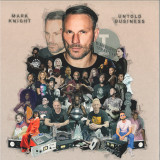
Toolroom founder and Grammy-nominated producer Mark Knight announces his new album Untold Business: 13-track collection of vocal house music which aims to inject a much-needed dose of meaning and longevity into the world of dance music.
Mark Knight has gone back to his roots on his new album Untold Business, reprising the sounds and records that made him the artist he is today. Diving through his extensive collection of classic Funk, House, Soul and Disco records from the 1970s and 80s has provided the bedrock for the album, which is an homage to the soulful, vocal-led house music that Mark first fell in love with in the 90s.
Step forward Mark Knight with a collection of meticulously crafted, positive, life-affirming records with a focus on real instrumentation and properly crafted songs that will stand the test of time. Untold Business is the antithesis of the functional, cookie-cutter dance music that has become increasingly ubiquitous over the years, and it sounds absolutely glorious.
Lead single ‘Everything’s Gonna Be Alright’ features vocals from Beverley Knight as well as the London Community Gospel Choir, who together bring a powerful message of positivity, solidarity and hope: themes that echo throughout the rest of the album.
“I wanted to write a song of hope as we come out of this incredibly tough time. I feel that musicians and producers have a responsibility to provide the soundtrack to people’s lives, and with this glimmer of hope on the horizon, I wanted this song to be a moment of positivity for the future ahead.” Mark Knight
From the string section, to the 14-piece London Community Gospel Choir, to the incomparably brilliant Beverley Knight on lead vocals – Mark worked with some incredible musicians on the single: an approach that informs his approach for the entire album. Untold Business features further collaborations with the likes of Shingai (Noisettes), Michael Gray, Robert Owens and many more.
In addition to the 10 new tracks recorded especially for the album, Untold Business also includes three of Mark’s singles from 2020, including one of the biggest releases of his career to date. All 4 Love was a collaboration with Rene Amesz and Tasty Lopez which became firmly lodged on the Radio 1 A list for six weeks with worldwide success following soon after. Picking up more than 10 million streams on Spotify it was without doubt one of the biggest house records of the year. Also included here are ‘If It’s Love’ - a joyous celebration of a soulful house sound that came to prominence in the 90s – and ‘Tonight’, which took inspiration from the brisk, looping, filtered house music of the early 00s.
Already renowned for a ball-tearing live show, The Sniffers
made their international debut as one of the hottest tipped
acts at The Great Escape in 2018. Soon afterwards, they
signed deals with both Rough Trade Records and ATO
Records, made a massively hyped appearance at SXSW,
and finally released their self-titled debut album in 2019,
landing them an ARIA (Australian Recording Industry
Association) Award for Best Rock Album, capping off a wild
year for the lunatic, likeable punks.
Late in 2020, Amyl and The Sniffers went into the studio with
producer Dan Luscombe to record their sophomore album,
‘Comfort To Me’. Written over a long year of lockdown, the
album was influenced by and expanded on a heavier pool of
references - old-school rock’n’roll (AC/DC, Rose Tattoo,
Motörhead and Wendy O Williams), modern hardcore
(Warthog and Power Trip) and the steady homeland heroes
(Coloured Balls and Cosmic Psychos).
Lyrically, the album was influenced by Taylor’s rap idols and
countless garage bands and, in her words, “I had all this
energy inside of me and nowhere to put it, because I couldn’t
perform, and it had a hectic effect on my brain. My brain
evolved and warped and my way of thinking about the world
completely changed.”
Seventeen songs were recorded in the ‘Comfort To Me’
sessions and the top thirteen made the cut. They were mixed
long distance by Nick Launay (Nick Cave, IDLES, Yeah Yeah
Yeahs) and mastered by Bernie Grundman (Michael
Jackson, Prince, Dr Dre).
‘Comfort To Me’ demonstrates the same irrepressible smarts,
integrity and fearless candour as their debut but, as you’d
expect of any young band five years on, their sound has
evolved - in Amy’s words, it’s “raw self-expression, defiant
energy and unapologetic vulnerability.”
- 1: Michael Stipe - Sunday Morning
- 2: Matt Berninger - I’m Waiting For The Man
- 3: Sharon Van Etten - Femme Fatale
- 4: Andrew Bird & Lucius - Venus In Furs
- 5: Kurt Vile - Run Run Run
- 6: St. Vincent & Thomas Bartlett - All Tomorrow’s Parties
- 7: Thurston Moore Feat. Bobby Gillespie - Heroin
- 8: King Princess - There She Goes Again
- 9: Courtney Barnett - I’ll Be Your Mirror
- 10: Fontaines D.c. - The Black Angel’s Death Song
- 11: Iggy Pop & Matt Sweeney - European Sun
The Velvet Underground is regarded as one of the most influential bands in rock history.
Their first 4 albums were included in Rolling Stone's list of The 500 Greatest Albums of All Time.
Ranked 19th greatest artist by the same magazine and the 24th greatest artist in a poll by VH1.
Inducted into the Rock and Roll Hall of Fame in 1996.
Critic Robert Christgau considers them "the number three band of the '60s, after the Beatles and James Brown and His Famous Flames".
AllMusic wrote that "Few rock groups can claim to have broken so much new territory, and maintain such consistent brilliance on record, as the Velvet Underground during their brief lifespan ... the Velvets' innovations – which blended the energy of rock with the sonic adventurism of the avant-garde, and introduced a new degree of social realism and sexual kinkiness into rock lyrics – were too abrasive for the mainstream to handle."
Born from my meeting with japanese artist Vega Voga, 'Toyoko No Kuni' builds a bridge between our two cultures by creating a musical epic sounding like an imaginary, acid-drenched Toshiya Fujita movie.
By homaging the 70's Avant-garde scene and by channelling Akiko Yano and Midori Takada's music, Tokoyo No Kuni combines a western approach to japanese traditional instruments in which lyrical vocal samples, synth lines, supersonic percussions and razor-sharp guitars drench the country of Chrysanthemums in an unsolved mystery.
Remixed by Nicola Cruz, Michael Mayer and Wolf Müller, 'Tokoyo No Kuni' acts as the opening act of my new album Piscolabis.