Buscar:micro

Estilos
Todo
Monobox - Molecule 2x12"

Robert Hoods interstellares Projekt Monobox gab 2003 mit diesem Debütalbum gleichzeitig seinen Einstand bei Logistic. Der Meister des Minimalismus nimmt uns mit auf eine Reise durch eine andere Ecke seines Universums, irgendwo zwischen "Minimal Nation" und "Nighttime World". Eine tiefe und hypnotische Reise durch Zeit und Raum. Ein Meilenstein des Minimal Techno.

Reservar19.06.2026

debe ser publicado en 19.06.2026

34,03

Ültimo hace: 4 Años
Various - Höga Nord 100 - The Effect Will Last Forever
 
40

What better way to celebrate 100 releases than with a handmade box containing soul expanding music!? Höga Nord Rekords have reached an important goal and releases a rare box set containing all 12” from the HNRUK-series plus a new record from Birds, unique for this box. Except Birds, this compilation includes Dark Strands, High Boys, Vox Low, Timothy J. Fairplay, Fontän, Bird Of Paradise, Mythologen, Jamie Paton and Frak.

The music is of course the main focus of all releases on Höga Nord Rekords but what birthday gift comes without a proper wrapping? This exclusive handmade box made in Norrmalms kartongfabrik in Stockholm, is a celebration to the Scandinavian Bronze age. You’ll find rock carvings like those on the artwork scattered over the land but mostly near Gothenburg, home of Höga Nord Rekords on the Swedish west coast.

Archaeological evidence proves similarities in ornaments and pictures between the Nordic and European Bronze age, just like you find common features in the music released on our label. Though the acts in this compilation box come from all over Europe and beyond, they stem from an obscured and mysterious common source of escapism, purity and creativity.

Reservar19.06.2026

debe ser publicado en 19.06.2026

113,40
Nick Malkin - At The Libra Hotel

Nick Malkin

At The Libra Hotel

CassetteOOH035K
OOH-sounds
19.06.2026

Tucked in the heart of Koreatown, Los Angeles, lies The Libra Hotel—the titular architecture of Nick Malkin's new album and site of his musical and psychogeographic exploration. Unlike most musical "site-specific" studies, Malkin remains wholly ambivalent to the documentarian approach, instead sharpening an auteur-like focus on the site as a conceptual and highly expressive backdrop. The Libra is musically explored as a space that houses a noir fragmentation of identity—the exhausted trope of a complicated protagonist walking through rain-soaked street corners and fumy neon lights—where an inner monologue is rendered in both miniature and at a cosmic scale. Casting aside stifling tropes around field recording, ambient, and improvised music, Malkin's work finds its own unique fidelity and emotional core through the assembly and reassembly of memory. Nearly every sound on the album—from frayed saxophones, lambent pianos, and dissected jazz drum kits—are multiplied, shattered, and reconstituted into shapes that adorn The Libra in a motion-blurred fog. The narrative of the Hotel suddenly appears as if out of the mist, with intersecting characters interacting within its walls by happenstance. Adminst the languid set pieces, wraith-like sonic grains gravitate around wide subbass beams that give structural form to The Libra, a narrative tension like when a scene is shot from hundreds of different perspectives: an image both luminous and veiled.

Much like Frank Sinatra's own spatial residency immortalized on "Live at The Sands," "At The Libra Hotel" showcases an exuberant view of entertainment, hospitality, and a form of masculinity, one that can quickly detourn into darkness. Knowing this, Malkin extracts a melancholic core out of The Libra locale. The flickering shadows of American decadence are shown in their ephemeral honesty, lines that trace how even in everyday life virtue is tested, sanity is tested, even reality is tested within the confines of desire, within the night. The album is draped in fleeting textures, carefully arranged with a trance-like microtonality, the faint inflections and articulations of a jazz band cascading into dissipated stillness. Voicemails about changed locations and covert eavesdropping on guests' whispered conversations provide an atmosphere of missed connection and voyeurism—a purloined letter of desire receding into a vanishing point. Like the music itself, The Hotel, a chapel perilous at the intersection of desolation row, the center of it all, yet simultaneously at the edge of town, becomes a structure between libidinous virtuality and actuality—our inevitable half-light.

Ultimately, the pensive atmosphere of "At The Libra Hotel," powerfully asserts a plea for the kinds of intimacy only possible in transient spaces. Here, memory cascades into a force that feels like something supernatural, perhaps even religious, yet always subject to the infidelity of our imagination. Here, the album opens into its primary psychodrama, the transient nature of subjectivity itself and how this becomes fractured in the tumult between our commitments and desires. Within this nocturnal space, to quote Louise Bourgeois, "you pile up associations the way you pile up bricks. Memory itself is a form of architecture."

Reservar19.06.2026

debe ser publicado en 19.06.2026

11,64
Shit & Shine - Joy of Joys

Shit&Shine

Joy of Joys

12inchOOH037
OOH-sounds
19.06.2026

Craig Clouse has devoted the past several decades to exploring a wide range of avant-garde avenues for his brainchild Shit & Shine. The monolithic riffs of raw and powerful psych'n'roll hysteria, the freeform dance miasma, sub-heavy electronica and the blissful stupidity crafted for ecstatic ascension: all perfectly-placed in the idiosyncratic world of Shit & Shine. There's also fertile soil for twisted noises in their lowest form, often obscured by groovier comrades in S&S releases yet vitally important for the substance of Clouse's compositional carcass and OOH-sounds has given him the required space to stretch out his longtime interest in developing loose structures and crackling landscapes to transcend his rhythmic comfort zone.

Making an enthusiastic transgression into noisy tones, "Joy Of Joys" has a friendly way of presenting difficult material. The rough and ready cheapo electronics sparkle in full electrifying mode, welding an ascetic gamut of aural hypnotics with a wormhole of uncompromising loop brut. Clanks, bangs, twangs and creeping, ragged globs of sound bloom on the bones of repetition to focus on the swinging stream of dirty anarchy. Stepping out of any context and genre disciplines, S&S finds new sonic trajectories in "Joy Of Joys" which perfectly sit in-between a wobbly cabal of international sub-underground acts: the idiot-avant strategies of LAFMS, early Mego bad digitalia, no-brow enthusiasm of Wolf Eyes family, micro-DIY ethos of Chocolate Monk and the sheer hellish nonsense of US noise circa '00s.

Clouse was already established as a landscape painter with a series of faux naïf paintings charmingly accompanying his releases. With his heart full of passion for abstract minimalism, he continued these narrative forms but was always in search of the confidence to paint non-figurative art. The first step into the chaotic abyss is coming from his sonic side by abandoning the beat and riff layers of his previous works to complete nakedness and reductionist courage. At once Clouse makes an evolutionary lurch into extremes as well as taking us back to basic forms in "Joy Of Joys". He creates an entire new parallel world to Shit & Shine with his maverick imagination presenting us with one of the most mutant releases to bear his name. Arthur Kuzmin

Reservar19.06.2026

debe ser publicado en 19.06.2026

19,75
PHILOGRESZ - ARCHIVE TRAXX

Philogresz

ARCHIVE TRAXX

12inchPLHIL009
PHIL
19.06.2026
 
1

Unearthing the 15 year old lost gems by Ilker Soylu’s longstanding Philogresz moniker that might surprise the micro tech kids of the recent years. Now taking pre-orders!

Reservar19.06.2026

debe ser publicado en 19.06.2026

10,88
Martina Bertoni - Electroacoustic Works for Halldorophone LP 2x12"

For her new and most radical album »Electroacoustic Works for Halldorophone«, Martina Bertoni used the electronic instrument at EMS Stockholm to create four pieces that are massive in scale and incredibly intimate, sonically restrained and emotionally overwhelming—almost ambient and always demanding your full attention.

Martina Bertoni returns to Karlrecords with »Electroacoustic Works for Halldorophone,« her most radical album yet. The foundation for the four electroacoustic pieces was laid during a residency at Stockholm’s legendary Elektronmusikstudion (EMS) that the Berlin-based cellist and composer used to explore the curious instrument, originally designed by Halldór Úlfarsson in 2008, as an algorithmic system in order to examine tunings and the mathematical relationships between Aiming to analyse and understand their interaction beyond the composer’s control, Bertoni sought to engage more deeply with the concepts of time, tuning, and, most importantly, control. Accordingly, her four »Electroacoustic Works for Halldorophone« seem both massive in scale and incredibly intimate, sonically restrained and emotionally overwhelming— almost ambient and always demanding your full attention.

While the halldorophone—famously used by Hildur Guðnadóttir for her »Joker« score—roughly resembles a cello and can be played like one, it is an electronic instrument. The vibration of its strings is being picked up, amplified, and then routed through a speaker. This creates a feedback loop that becomes increasingly complex depending on how much gain is added to individual strings. Úlfarsson gave Bertoni a carte blanche for how to handle the instrument, but she stresses that she relied on »minimal interventions—some string strumming and plucking« that set the interactions of different sounds and frequencies into motion. »I decided to not approach it like a cellist would,« she explains. »Instead I used it as a kind of generative organ by turning it into a feedback machine, with tuned feedback triggering more feedback depending on the tuning, which was based on tetraphonic scales that I could apply on the four main strings as well as the sympathetic group of strings.«

Bertoni recorded the material in the EMS studio, later composing and arranging the four complex pieces in her home in Berlin, after which they were mixed and mastered by Ciaran O’Shea. While this can be considered a compositional abstraction process, traces of her concrete work as a performer are firmly ingrained in the music. »The halldorophone doesn’t have a line output, just a double set of speakers, which is why I recorded all sounds with two microphones in the EMS studio,« she explains. »That’s why there’s plenty of breathing sounds here and there—label owner Thomas Herbst and I jokingly refer to the album as my ›chamber music record‹.« And indeed, there is a striking sense of intimacy to these four pieces throughout which individual sounds, harmonic frequencies, and even subtle rhythmic figures seem to move both on their own accord but also according to a underlying vision that steers their interplay.

Indeed, »Electroacoustic Works for Halldorophone« is an album built on and marked by contrasts. The soothing polylogue of single sounds in the higher register on opener »Omen in G« is counterpointed by massive bass drones, while the second piece, »Nominal in D,« plays a cunning game of repetition and difference by combining thick textures with all kinds of rhythmic elements. »Fades in C«—the longest of the four pieces, clocking in at 17 minutes—unlocks the emotional potentials of the sonic qualities of the halldorophone, sounding at once serene and anthemic, and »Organon in D« closes the album by underscoring how Bertoni’s unconventional approach allows her to seamlessly transform simple, quiet tones into complex, towering walls of sound.

Reservar19.06.2026

debe ser publicado en 19.06.2026

23,11
LNS - LNS-ID VOL 1

LNS

LNS-ID VOL 1

12inchERS065
Emotional Response
19.06.2026
 
4
También disponible

VOL 2[18,28 €]


Emotional Response presents the first of 2 EPs by Laura Sparrow aka LNS, the Calgary raised, Berlin based producer and DJ with 8 acid-tinged cuts that are equally expansive and inspiring, personal and inventive.

After her debut Malinge Range (cassette) on fellow native Canadian 1080p label in 2016, LNS moved to Berlin and has released a steady stream of 12”s, exploring ambient, dub, electro and techno. Initially appearing on Vancouver émigré’s Jayda G’s (alongside Fett Burger) Freakout Cult label before settling at DJ Sotofett’s cult WANIA label and more recently on the legendary and ‘original’ German techno label, Tresor.

A love of the Roland TR-303, alongside deep diving into breakbeat creation, manipulation, mutation and production, plus some intrepid mixing and post-production assistance, development and support with DJ Sofofett, have led to a collection of some of her favourite music to date.

LNS-ID 1 and LNS ID 2 are the result. Recorded during a burst of creativity through dedication, new studio equipment and learning techniques, as well the necessity of artistic expression in the moment.

Two sets of four tracks based on the acid tradition in the more restless corners of 90s and early 00s Braindance. Acid lines drive the melodies, while drums move between sliced break fragments and the familiar sounds of the Rolant TR-606 and TR-808.

Pads drift in with a warm glow or at times, quiet ghostly tension. The results are music that leans towards atmosphere and memory, something almost nostalgic that was built for those of us who still chase the more expressive edges of acid.

Reservar19.06.2026

debe ser publicado en 19.06.2026

18,28
Daniel Blumberg - Sotto le Nuvole (Pompeii: Below The Clouds) (Original Motion Picture Soundtrack) LP
  • 1: Nuvole I
  • 2: Nuvole Ii
  • 3: Nuvole Iii
  • 4: Nuvole Iv
  • 5: Nuvole Ix
  • 6: Nuvole V
  • 7: Nuvole Vi
  • 8: Nuvole Vii
  • 9: Nuvole Viii
  • 10: Nuvole X

In Gianfranco Rosi’s portrait of Naples, Sotto le Nuvole, the ground shakes periodically. Between Mount Vesuvius and the Tyrrhenian Sea, the fumaroles of the Phlegraean Fields hiss volcanic gas and steam. Below the sleeping volcano, modern day Naples emerges in black and white and fills with voices, with lives. From the traces of history and the concerns of the present, Rosi documents a city immersed in its continuous past, with Daniel Blumberg’s minimal soundscape hovering in a sonic space between liquid and air.
Tasked with creating a soundscape that would suspend space within Rosi’s film, Blumberg called upon the extended technique of saxophonists Seymour Wright and John Butcher to create a gossamer fabric of traces and sounds abstracted from their instruments. Having transitioned from theoretical physics to the saxophone, John Butcher has always deeply considered space in the context of his playing. His concerns are with flow, density and how the saxophone is situated in the living world. Zeroing in on the core sonic properties of the mechanical and acoustic components of the saxophone, Seymour Wright has integrated its every breath, reed vibration, keypad clatter and hissed microtone of his alto into his own, unique improvisational language. In his work with these two seminal players, Blumberg makes his most concentrated soundtrack to date - reinforcing the film's sense of overlapping time and space, and pushing at the limits of experimentation.

Initially recorded in Daniel’s flat in London, Butcher and Wright centre themselves around long, consistent tones, so soft that it seems breath is being gently pulled from the saxophone's bell by an invisible hand. Blumberg himself adds haunting bass harmonica, and recordings of Wright’s launeddas - a traditional and ancient triple pipe polyphonic reed instrument from Sardinia, Italy. Blumberg then travelled to the volcanic region of Baia, next to Pompeii. Once a flourishing classical Roman city loved by Nero, Baia slowly sank under hydrothermal pressure, leaving the city in a kind of geological purgatory. Using specialised geophones and hydrophones, Blumberg took those initial recordings and amplified them underwater, sending them calling out across the ruins of Baia’s mosaics, Nymphaeum statues and villas.

“It was important to me that the music was whispered in the same landscape that Gianfranco has worked for the past three years, so that you can hear the volcanic air gulping, the lapping of the waves, the steam and bubbles popping against John and Seymour’s saxophone breaths – an echo from a suspended time.”
What emerges is deeply melancholic, tender, subtle and right at the edges of audio technology. Submerged in an aquarian mausoleum, the mysterious vibrations of the saxophone and its bell become an echo of an echo, wading from the future into the past. ‘Sotto le Nuvole’ is less a soundtrack than a process of aeration - a sonic puncture in the material of the film which allows its central message to breathe, and a remarkable experiment at the limits of the saxophone’s possibility.

Reservar19.06.2026

debe ser publicado en 19.06.2026

21,81
Monolake - Interstate (2x12")

Monolake

Interstate (2x12")

2x12inchFIELD039
Field
19.06.2026
 
5

Continuing its faithful documentation of the early years of Monolake, Field Records proudly present the first-ever vinyl pressing of seminal 1999 album Interstate. In a kaleidoscopic lattice of micro-rhythms and exquisitely dynamic textural work, Robert Henke and Gerhard Behles fully collaborated for the final time on this record — and created an electronica landmark in the process.

Monolake's evolution from their earlier dub-techno-tinted works saw their exploration of Max/MSP go further out. The duo yielded greater complexity in the behaviour of their sound palette to achieve an organismic quality that remains an enduring influence on so many strands of experimental electronic music today. Interstate is a vivid record that builds up eight different ecosystems of sound and subtly threads elegant grooves through their root structures.

There's a house-like undulation to the low-end driving 'Tangent-I' and 'Tangent-II', but the infinitesimally detailed layers of sound on top swoon from techno synth shimmers to trickling waters, snaking delay trails and pin prick percussion. You can hear the unmistakable, snappy rhythmic thrust of drum & bass driving 'Ginza', but here it's used as an engine for the crispest array of designer percussion and dub-soaked synth chirrups. Across every track, Henke and Behles demonstrate a potent combination, both groovily instinctive and eternally fascinating to try and pick apart.

After Interstate, Behles departed to focus entirely on the development of Ableton Live and Henke steered Monolake towards a leaner — but no less pioneering — sound. Every Monolake record has its own unique context and sound, and the circumstances of Interstate could never be repeated. Capturing the leaps in progress that were being made in digital music production at the end of the millennium, it's an information-rich document of a moment in time that still sounds wildly futuristic 27 years later.

Reservar19.06.2026

debe ser publicado en 19.06.2026

29,62
Giardini di Mirò - Quasi Casa LP 2x12"

Nobody knew. Not the crowd packed into Circolo Kessel that Sunday evening, not even the six musicians on stage. When Giardini di Mirò played on March 19, 2023, it was supposed to be just another homecoming show in Cavriago, the kind of night where you play for the people who’ve known you longest. Some were missing from the audience, though: “Our closest friends stayed home to watch the football match tonight,” Jukka quipped from the stage. “But that’s fine, we’ll deal with them tomorrow.” In hindsight, even Juventus fans who celebrated their 1–0 victory over Inter made the wrong choice.

Seventy minutes in, all the instruments converged into a one-chord riff, driven by the drums and punctuated by screaming guitars. A repetitive rhythm that paired brutal volume with hypnotic precision. Even those at the back of the room felt it: that trance-like state where sound becomes physical. Then the wall of sound collapsed. Guitar feedback lingered in the air for a few seconds before fading into nothing.

This was the last sound Giardini di Mirò made. They haven’t played since, and there are no plans to do so again. But in that moment, nobody knew.

The closing song that night was also the opener of their debut full-length, recorded more than two decades earlier. Its title, A New Start, carries an unintended irony the band would likely appreciate. It is also oddly fitting that their final show took place in the same building where they began. Circolo Kessel, previously known as Calamita, served as the band’s rehearsal space for many years. Yet since their rise to becoming one of Europe’s defining post-rock acts, they had never performed a concert there.

In a fortunate coincidence, Markus Mathis – a longtime fan who had recorded several of their shows before – also captured this final concert using two room microphones and a feed from the mixing desk.

Quasi Casa is the complete, unfiltered document of that night: an “official bootleg” spanning over 70 minutes of purely instrumental music, drawing on material from across their entire career, from the earliest releases to Del Tutto Illusorio. It captures, with striking clarity, the intensity that defined the band’s live performances.

Rather than simply uploading the recording and calling it a day, the band chose to assemble a physical release as a parting gift to their fans. The double LP includes a 16-page booklet with extensive liner notes and visual material.

Reservar19.06.2026

debe ser publicado en 19.06.2026

30,21
Channel One Pres. - 100 Tons Of Dub LP

The mighty Channel One Studios,Kingston, Jamaica, has its place set in Reggae's Musical History.Its distinctive sound the studio created on opening its doors in 1972 to its closure in the early 1980's made it the Producers, Singers and Musicians studio of choice during this furtive period. Achieving that vibe and clarity, separated it from the other Kingston establishments.

Run by the Hookim Family's four sons, Jo Jo the eldest followed by Paulie, Ernest and Kenneth. Their father originally came from China and married a Chinese Jamaican lady and settled in the St Andrews district before moving to Kingston Town itself. The family business was built on jukeboxes and one armed bandit machines in and around Kingston. A lucrative venture until the gaming laws changed in 1970, outlawing the gaming machines. So the music side of the business would have to be expanded. So it was decided to open a studio to make the music to supply their already established Jukebox enterprise. The four brothers opened Channel One Recording Studios in 1972 at 29 Maxfield Avenue, Kingston 13. Initially as we stated the purpose of the studio was for the brothers use only, but this would soon change when the various Producers all looking for that Channel One sound came asking for studio time.

The brothers had used the services of Bill Garnet a renowned and well respected technical engineer on setting up the studio. They spent a lot of time laying out the space to get the right acoustics and picking the right quipment. They went with a four track API desk and the best quality microphones such as Neuman, Sony and AKG, vital in obtaining the quality sound and track separation that would prove so worthwhile after the music was recorded to give the best flexibility on the final mix downs. Jo Jo would take over the production duties after the initial hiring of Syd Bucknor a producer who had worked closely with Coxonne Dodds Studio 1 stable. The first release on the Channel One label would be 'Don't Give Up The Fight' by Stranger Cole and Gladstone 'Gladdy' Anderson.The initial two thousand run being swallowed up by their Jukebox interests and so the steady flow of hits would run up to the brake through hit of 1975 'Right Time' by  the Mighty Diamonds.

1977 saw Jo Jo extending his stays in New York to a semipermanent status, returning mainly to oversee recording sessions and then taking the results back to America for worldwide distribution. His brother Paulies senseless killing in that year also added to Jo Jo's decision to spend more time with his Hit Bound Manufacturing set up in New York. The Channel One studio would be upgraded in 1979 to sixteen tracks and although Jo Jo and Ernest still covered the mixing and engineering duties Kenneth would now supervise sessions. An often untold part of Channel Ones history is the involvement of Producer Niney The Observer. The mid to late 1970's were heavy times both musically and politically and Maxfield Avenue was in the heart of this crossfire. Some artists and musicians were weary of using the establishment especially when sessions ended late at night and exiting the studio at these times could be somewhat dangerous. But Niney’s fearlessness seen him over running and in many cases running the all night sessions with his trusted set of musicians loosely called The Soul Syndicate. Having the run of the mighty Channel One studio's allowed Niney to build up and work on a stockpile of rhythms that he still has yet to unleash on the world. We have been lucky to select a bunch of material from Niney's vaults for this release. Some great unreleased rhythms and some different cuts to some tracks you might already know. Niney's work with Dennis Brown and his own distinctive heavy roots style productions have been documented and indeed his work on Channel Ones Yellowman releases stand tall also. We hope this fine set of Niney Productions set inside the hollowed walls of Channel One will sit beside them as they so richly deserve.

Reservar19.06.2026

debe ser publicado en 19.06.2026

14,71

Ültimo hace: 5 Años
Dewa Alit & Gamelan Salukat - Baur Bentur LP + DL

Dewa Alit, master of radical Balinese gamelan, returns to Black Truffle with Baur Bentur. Genetic (2020, BT063) introduced international listeners to the magical sound-world of Alit’s Gamelan Salukat, who perform on instruments tuned to a unique scale derived from modified versions of two traditional Balinese scales. The two pieces heard on Chasing the Phantom (2022, BT093) further demonstrated his radical fusion of tradition and experimentation, with passages where unorthodox techniques make the acoustic ensemble resemble glitching electronics. Baur Bentur now highlights another aspect of Alit’s work, presenting pieces composed in 2024 and 2025 where Gamelan Salukat performs alongside virtuoso pianist Sri Hanuraga. Alit’s music is grounded in deep reflection on the tradition of Balinese gamelan and its place in the contemporary world. His title, ‘Baur Bentur’, which translates as ‘mixing and smashing’, points to his embrace of the intercultural mixture of Eastern and Western elements in the search for innovation. Against the calcification of Balinese music into tourist entertainment, Alit poses his searching, experimental work, which celebrates the communal values and performance practices of traditional gamelan while pushing into startling new directions.

‘Sukat Tacara’ is a study in layered tempos, meters, and polyrhythms, a constantly shifting dialogue between piano and the instruments of Gamelan Salukat. It begins close to a traditional concerto, pairing a brisk sequence of melodic variations from the piano with a spare but propulsive accompaniment of drums and hanging metallophone tones, punctuated by low gong strikes. The piano builds in volume and density across a rapid succession of fragments, at points recalling George Antheil’s ticking wind-up machinery, though Hanuraga’s jazz background shines through in the fluidity with which he navigates the complexities of the score, where chromatic movement co-exists with bluesy phrases. An abrupt change in the piano to patterns of dense clusters introduces a new episode, during which the metallic instruments of the gamelan enter the foreground. The piece dazzles with its inventive rhythms and dynamics, building to a stunning passage featuring the signature heavy muting technique of the Gamelan Salukat metallophones in kinetic patterns that would be at home on a Príncipe release.

The title piece begins at high intensity and rarely lets up, working through bracing unison ensemble melodies and punctuation points where piano and gamelan together seem to become a single, thudding drum. For much of the piece the piano is tightly integrated into the ensemble, the harmonic extensions of the melodic line subsumed into a moving cloud of complex overtones generated by the gamelan instruments. Wildly kinetic on the rhythmic level, the piece swarms with microscopic movements of beating patterns generated by the ‘blend and crush’ of three simultaneous tuning systems: the equal temperament of the piano and the saih cenik (small scale) and saih gede (big scale) used by the gamelan instruments. Accompanied by the composer’s thoughtful liner notes and images of the musicians, Baur Bentur is a stunning next step in Alit’s radical combination of tradition and innovation.

Reservar19.06.2026

debe ser publicado en 19.06.2026

22,06
GOAT (JP) - WITHOUT REFERENCES/CINDY VAN ACKER
  • 1: Quest
  • 2: Throne Hh
  • 3: Factory
  • 4: G-H-S
  • 5: Orin
  • 6: Cr

Peerless man-machine outfit goat(jp) return with a brittle contemporary dance soundtrack that locks into the pointillist rhythmic micro-precision of the now classic "Joy In Fear". Directing an IRL physical performance, the band totter between rhythmelodic, ritualistic minimalism and intricate, pneumatic beat music - if you need a link between Daniel Schmidt, Autechre, "On The Corner"-era Miles and Midori Takada, this is it.

Reservar19.06.2026

debe ser publicado en 19.06.2026

22,65
Oltrefuturo - Figure Del Flusso (Movimenti Adriatici) (2x12")
  • A1: La Légéreté 7’07
  • A2: Die Kosmische Trance 7’02
  • B1: Aquatic Counterpoint 6’48
  • B2: Ritmo Tre 5’25
  • C1: Iridescent Mekong Flow Ft. Microvoto 7’11
  • C2: Piano Del Ritmo 6’10
  • D1: Specchio 9’36
  • D2: Movimento 5’17

The new opus on Macadam Mambo is a very special double LP by the Italian artist Oltrefuturo.
Inspired by the Adriatic Sea where he is coming from, Valerio (Oltrefuturo) composed 8 tracks in between Ambient, Dub and Downtempo full of emotions reflecting his environment. The Music is gorgeous with special vocals and atmospheric lines, and very cool down beats. It’s an album to listen at home but it can easily be played in the club at the right moment (check the tracks “Die Kosmmische Trance” and “Ritmo Tre”).

8 long tracks specially pressed on 2 vinyls for a louder sound. TIP!

Reservar21.06.2026

debe ser publicado en 21.06.2026

23,74
Caldera / Traevor / Loop Lf / Streetfaxx / Nightwaif - Microworlds Level 1: The Goblin Walk

The Goblin Walk is an invitation to trace the footsteps of the eponymous creature through five swampy, dubby, liquid techno interpretations from four different artists. Label head Caldera opens with the gently underlapping space chug of 'Today', followed by Traevor's 'Reef' which turns marimba into a dubbed-out bass meditation. Caldera then features again under his Loop LF alias with 'Tiz', which pairs spectral sonic sketches with whimsical melodies that drift and float as if in a gravity-free zone. Streetfaxx then unearths a long-lost 2013 Cologne track, its patient rhythmic progression untouched by the passing years, before ambient textures take centre stage in Nightwaif's 'Xmas1 (vocal dub)' as tape experiments float over deep sub-bass, caught somewhere between 1980s new age and modern ambient minimalism. A compelling, exploratory world of sound.

Reservar23.06.2026

debe ser publicado en 23.06.2026

15,92
Spekki Webu - Bootstrap Paradox 2x12"

Dutch electronic maverick Spekki Webu stretches out on an expansive album for new label Outer Orbit Records, exploring his deep and wide-ranging influences across a captivating narrative of tripped-out beatdowns and evocative dreamscapes. Spekki Webu is someone who was naturally drawn into the magnetic pull of Outer Orbit after playing for their sister party Mizz Softee. As the time-travelling album title suggests, it's a meditation on formative sounds that propelled him on to myriad adventures across the many microcosms of electronic music. That means indulging in slower tempos and crooked grooves, with the influence of trip hop and illbient looming large in the boom bap drums that punctuate many of the album's passages. There is also space for immersive techno that operates as a lighter reflection of the sound he is best known for, as well as hints of buoyant house music, rolling breakbeat, dislocated ambient and intricate electronica. Cari Lekebusch, a key influence, contributes a rolling, heavy-grooving remix that closes out the record.

Disponible

En el almacen y preparando para el envío

23,95
Vox Populi! - In Dub

Vox Populi!

In Dub

12inchERC157
Emotional Rescue
26.06.2026

Emotional Rescue returns after a much-needed year hiatus, refreshed and ready, as it moves into its 15th year, to further explore the environs of oft-forgotten musical secrets and present them to new heads and minds.

To celebrate, the label looks back to one of its favourite collaborations, the music of French ‘Ethno-Industrialists’ Vox Populi! in presenting a truly unique EP of “In Dub”, inspired remixes by 4 fellow Paris based artists of today in Full Circle, Froid Dub, Krikor and Shelter.

“In Dub” takes a selection of songs from the series of albums reissued or compiled on Emotional Rescue and sister label, Platform 23, and gives the Master tapes to this talented ensemble to offer their own, unique dub reworks. The project explores the on-going advances in technology offered, mixed with pure talent and a respectful homage.

Formed by Axel Kyrou and including wife Mitra, as well as long-term music and art partners Pierre Jolivet aka Pacific 231 and Francis Lafont aka FR6 Man, they forged a path from obscure, drum and drum-based cassette releases on to fully realized albums and compilations on their now cult Vox Man Records.

Alexis Le Tan and Joakim’s Full Circle project starts, with their electronic dub remake of Soleyman Dub from the ‘Alternatif Réalisme’ compilation (ERC079). With releases on Good Morning Tapes, Offen and their own “Released” label, their plaudits as master diggers and producers of dubby tripped-out inspired electronics – releasing slowed Trance some 10 years before anyone else – is inspired. Tuning in and turning on the original dub into a mantra style slow-breaks (Digi)dub is the perfect experimental flavour.

Jube Man is next, a twisted, psychedelic dub out by rising stars Froid Dub. The stand-out from the ‘Magiques Creations’ release (ERC052), an album that explored Vox Populi’s furtive post-industrial period of 1984 to 1988, Jube Man was the perfect selection by the duo of François Marché and Stéphane Bodin.

Froid Dub have steadily developed their “cold” Digidub style to acclaim –

releasing a steady flow of dub inspired electronics on their own label Delodio, as well as recently appearing on sister label Emotional Response’s 10th year anniversary collection, ‘All Trades’. Their haunting, shuffling and murky acid / piano dub, with the drifting “Space Echoing” of Mitra’s vocals from the live desk mix, creates a ghostly version to effect.

Next, master mixer, producer and engineer Krikor serves a steppers remake with his “OverDub” of Zen-Dub. With a career that spans releases on Tigersushi, LIES and Soul Jazz, his sound has developed from Electro, House and Techno, to Acid, Bleep, Dancehall, Dub and touches of Gabba.

Taken from Vox Populi!’s master-opus Aither (ERC030), the first of our reissues dating back to 2016, Zen-Dub’s pacey, lo-fi dub experience is transformed and overdubbed into an incessant sound system throb, a true bass quaking “steppa”.

To close, Micro Climax is put through Shelter’s increasing avant dub exposition. Appearing on the likes of Growing Bin, Emotional Response and his own Protopost, as well for – and being in-house designer – on the much-missed Séance Centre, Alan Briand aka Shelter productions have developed from Balearic, Edits and House to explore Avant, Raga and live Dub productions.

Appearing on the recent ‘Ethniques Pyschedeliques’ compilation on Platform 23 (PLA032), in original form Micro Climax is a sprawling 10-minute ethno-dub of whispered vocals, drone and sub bass. Shelter strips it back, keeping background effects, adding live bass and percussion to create a wonky, slow, shuffling ska-lite excursion to complete a true “In Dub”.

Reservar26.06.2026

debe ser publicado en 26.06.2026

18,45
Various - Silent Takeover 2x12"

Various

Silent Takeover 2x12"

2x12inchTSU057
Tsunami
26.06.2026

To mark 25 years of Tsunami Records, Wunsch delivers a landmark release that celebrates the label's legacy while looking firmly toward the future.

For this special anniversary project, Wunsch brings together a powerful lineup of artists who embody the spirit and evolution of the sound: Black Forests (Arcanoid and Wunsch), The Rare Breed (Regis and Wunsch), Broken English Club, Giving Ground (Function and Wunsch), Microcorps, Rumenige, and Sabotak. Each contribution reflects a distinct voice, yet together they form a cohesive statement - raw, uncompromising, and deeply rooted in the underground.

This release is more than a milestone; it's a testament to 25 years of dedication, vision, and sonic exploration. From driving, industrial textures to immersive and atmospheric moments, the record captures the essence of Tsunami's identity across decades.

A celebration of past, present, and future - this is Tsunami at full force.

Reservar26.06.2026

debe ser publicado en 26.06.2026

24,79
Abul Mogard & Rafael Anton Irisarri - Where Light Pauses in the Silence of the Sun

In spring 2025, Abul Mogard and Rafael Anton Irisarri created the source material for their second album, Where Light Pauses in the Silence of the Sun, during a three-day residency at Morphine Raum in Berlin. Functioning as both recording studio and performance venue, the space has no stage, with the audience gathered around the performers. Working within an open framework, the duo reshaped the music each evening while recording the performances live to multitrack. Rotary speakers, modular synthesizers and bowed guitar formed the core of their sonic language, captured through a 1970s mixing console and microphones placed around the room.

Back in Mogard’s studio in Rome, the material was further crafted as motifs were stretched, fragments isolated, and tempos dissolved. Irisarri recorded additional guitar textures and treatments in New York, while passages recorded by Martina Bertoni and Andrea Burelli in Berlin reinforced the harmonic centres and brought breath, refinement and a new sensibility to their compositions. The process continued as Mogard’s layering and subtraction reassembled everyone’s parts into the final arrangement.

The album opens with “In the Eastern Wild,” building from a sparse outline into a monumental formation of low-frequency weight, its internal motion shaped by the rotating Leslie speaker. “Over the Domes” widens into a broader acoustic field, where sustained modular tones meet waves of softly plucked guitar. The music then turns inward with “A Blue Descent,” centred on Bertoni’s cello, whose growling timbre introduces a melancholic depth.

At the album’s centre, “In a Quiet Radiance” unfolds around a slow guitar ostinato, its luminous stillness opening into a more expansive and reflective state. Across its ten-minute span, Burelli’s violin lines and Bertoni’s lower cello phrases gradually surface, weaving through the harmonic field. Mogard brings Burelli’s processed voice to the fore, its emotive, operatic presence becoming one of the record’s pivotal moments. “Of Blessed Ages” suspends the sonic flow, shifting between parallel major and minor chords as lingering, slowly decaying melodies shape the music’s internal drift. The closing “Among Shadows” settles into a darker resonance as layered textures recede.

Mogard and Irisarri’s shared language balances restraint and maximalism. UK magazine Crack describes the music as “a tidal wave held in suspension,” while Dutch newspaper de Volkskrant writes, “What a colossal sound, and how this music strikes at the emotions.” Reflecting on the residency sessions, Irisarri recalls: “At moments I genuinely couldn’t tell if a sound was coming from me or from Abul. It stopped feeling like two people making decisions and began to feel like we were inside a system moving on its own."

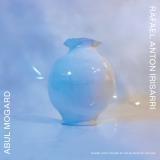
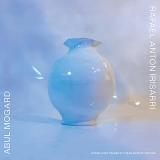
Marja de Sanctis’ cover artwork revisits the vessel sculpture from the duo’s first album, Impossibly Distant, Impossibly Close. There it appeared as raw, unfired clay. Here it has been fired in the kiln and finished with a glaze. Light gathers on its polished surface and spills into the surrounding space. As she explains, “I wanted to convey the idea of continuity within the duo, and the vessel became a kind of container for that idea. However, their music felt different this time, and with the collaboration of Martina and Andrea, I felt it should have a sleeker, softer, more glamorous look, very distant from the first raw appearance.” The transformation of the vessel from raw clay to fired form suggests a passage from immediacy toward permanence, mirroring the music’s gradual expansion.

Reservar26.06.2026

debe ser publicado en 26.06.2026

27,52
Abul Mogard & Rafael Anton Irisarri - Where Light Pauses in the Silence of the Sun

In spring 2025, Abul Mogard and Rafael Anton Irisarri created the source material for their second album, Where Light Pauses in the Silence of the Sun, during a three-day residency at Morphine Raum in Berlin. Functioning as both recording studio and performance venue, the space has no stage, with the audience gathered around the performers. Working within an open framework, the duo reshaped the music each evening while recording the performances live to multitrack. Rotary speakers, modular synthesizers and bowed guitar formed the core of their sonic language, captured through a 1970s mixing console and microphones placed around the room.

Back in Mogard’s studio in Rome, the material was further crafted as motifs were stretched, fragments isolated, and tempos dissolved. Irisarri recorded additional guitar textures and treatments in New York, while passages recorded by Martina Bertoni and Andrea Burelli in Berlin reinforced the harmonic centres and brought breath, refinement and a new sensibility to their compositions. The process continued as Mogard’s layering and subtraction reassembled everyone’s parts into the final arrangement.

The album opens with “In the Eastern Wild,” building from a sparse outline into a monumental formation of low-frequency weight, its internal motion shaped by the rotating Leslie speaker. “Over the Domes” widens into a broader acoustic field, where sustained modular tones meet waves of softly plucked guitar. The music then turns inward with “A Blue Descent,” centred on Bertoni’s cello, whose growling timbre introduces a melancholic depth.

At the album’s centre, “In a Quiet Radiance” unfolds around a slow guitar ostinato, its luminous stillness opening into a more expansive and reflective state. Across its ten-minute span, Burelli’s violin lines and Bertoni’s lower cello phrases gradually surface, weaving through the harmonic field. Mogard brings Burelli’s processed voice to the fore, its emotive, operatic presence becoming one of the record’s pivotal moments. “Of Blessed Ages” suspends the sonic flow, shifting between parallel major and minor chords as lingering, slowly decaying melodies shape the music’s internal drift. The closing “Among Shadows” settles into a darker resonance as layered textures recede.

Mogard and Irisarri’s shared language balances restraint and maximalism. UK magazine Crack describes the music as “a tidal wave held in suspension,” while Dutch newspaper de Volkskrant writes, “What a colossal sound, and how this music strikes at the emotions.” Reflecting on the residency sessions, Irisarri recalls: “At moments I genuinely couldn’t tell if a sound was coming from me or from Abul. It stopped feeling like two people making decisions and began to feel like we were inside a system moving on its own."

Marja de Sanctis’ cover artwork revisits the vessel sculpture from the duo’s first album, Impossibly Distant, Impossibly Close. There it appeared as raw, unfired clay. Here it has been fired in the kiln and finished with a glaze. Light gathers on its polished surface and spills into the surrounding space. As she explains, “I wanted to convey the idea of continuity within the duo, and the vessel became a kind of container for that idea. However, their music felt different this time, and with the collaboration of Martina and Andrea, I felt it should have a sleeker, softer, more glamorous look, very distant from the first raw appearance.” The transformation of the vessel from raw clay to fired form suggests a passage from immediacy toward permanence, mirroring the music’s gradual expansion.

Reservar26.06.2026

debe ser publicado en 26.06.2026

27,52
Artículos por página
N/ABPM
Vinyl