Give Them Rope, the first proper full-length from this wildly influential, trail-blazing hardcore band, blew minds upon its original 1997 release. The record took hardcore’s urgency into an altogether heavier, more angular and discordant direction than any of the bands progenitors before them.
quête:mind to mind
On the surface, Eric Slick's forthcoming LP New Age Rage is a dance record. Further listening reveals that it’s also a statement about our harrowing future - AI, self-driving cars, Twitter rage, mass media manipulation, and ultimately, the sin of perfectionism. It’s sonically influenced by the work of Yellow Magic Orchestra, Talking Heads, Kraftwerk, Todd Rundgren, Prince, The Residents, and DEVO. New Age Rage features many of Eric’s close collaborators: Natalie Prass, Finom (OHMME), Liam Kazar, Antibalas, Butcher Brown, Deep Sea Diver, and many more.
ACCEPTs neues Teutonic Metal Meisterwerk Humanoid!
Die deutschen Heavy Metal-Titanen ACCEPT melden sich mit ihrem voller Spannung erwarteten neuen Studioalbum Humanoid zurück, das am 26.
April 2024 über Napalm Records erscheint! Humanoid wurde vom britischen Metal-Mastermind Andy Sneap (Judas Priest, Amon Amarth, Testament, Saxon, etc.) in seinen Backstage Recording Studios Ltd. in Derbyshire, UK, produziert und ergänzt die Diskografie der 1976 gegründeten Band um ein weites Erstklassewerk, das mit Sicherheit Fans weltweit in Ekstase versetzten wird. Humanoid erscheint in zwei unterschiedlichen CD-Formaten und auf Vinyl.
Humanoid reiht sich ein in absolute Genre-Klassiker wie das in den USA und Kanada mit Platin ausgezeichnete Balls To The Wall, Metal Heart und neueren Alben wie Blood of the Nations, oder dem #1 Album Blind Rage. ACCEPT haben bis heute über 17 Millionen Mal Tonträger weltweit verkauft und platzierten sich regelmäßig in den Top 10 der internationalen Charts.
Icelandic/Swedish indie rock duo Baula blends distorted Western-flavored guitars with the somber tones of Nordic melancholy. On their debut album ‘heavy heart, no tears’, they delve into the destructiveness of a troubled mind. Exploring how it impacts not only oneself but also those close to you and even complete strangers. It offers no redemption and only reflects the deep despair of depression. Those who appreciate a unique sound - vivid, energetic, atmospheric - will not be disappointed
Limitierte LP-Neuauflage: rot-goldfarbenes Vinyl, inklusive eines neu gestalteten Posters zum Ausklappen. Unser Album zum 1.Mai. Zum Tag der Arbeit und für den Kater danach. Die Arbeit verändert sich. Roboter ersetzen uns. Der Kapitalismus zerbröselt. Wir brauchen einen neuen Soundtrack - aber wie klingen work songs in einer Zukunft, in der die Natur der Arbeit selbst so unsicher ist? Mit ihrem zweiten Duo-Album Never Work suchen Ariel Sharratt und Mathias Kom (von der kanadischen Garagen-Folk-Band The Burning Hell) nach Antworten. Einige Songs sind Lieder über Arbeiter, andere sind Lieder für Arbeiter, aber die meisten sind beides zugleich. Musikalisch nutzt Never Work die akustischen Elemente eines Old-School-Folk-Revivals (...Guthrie, Seeger, Dylan..) die, tongue-in-cheek, mit Billig Electronica der 80er versponnen werden. Textlich greifen sie Anregungen von Gewerkschaftsaktivisten und situationistischen Witzbolden auf. Alles in allem die richtigen Instrumente, um die sogenannte Gig-Economy, technologischen Feudalismus, Klassenkämpfe, rebellische self-service Geräte und vollautomatisierten Luxuskommunismus zu erkunden. Sharratt und Kom sind vor allem als Teil der kanadischen Garagen-Folk-Band The Burning Hell bekannt. Seit fast einem Jahrzehnt haben sie sich mit ihren smarten, von dunklem Humor geprägten Songs und ihren dynamischen Live-Shows eine solide Fangemeinde erspielt, teilweise mit Freunden im Geiste, wie Jeffrey Lewis oder The Wave Pictures 2016 legten Sharratt und Kom eine erste Pause vom Bandformat ein, um ihre erste Duo-Platte "Don't Believe The Hyperreal" aufzunehmen. Das Album belebte die Atmosphäre klassischer Pop-Folk-Duette der 60er neu und bot eine intimere Seite ihres Songwritings, darunter den Underground-Hit "Fuck The Government, I Love You". Never Work nun gibt ihrem zweifellos charmanten Duett einen neuen Dreh: weg von der Romantik hin zu selbstreflexiven, zuweilen bissigen Betrachtungen von Arbeit in unserer Gesellschaft. Das beinhaltet ihre eigene Position als Musiker, unser Selbstverständnis in einem bröckelnden System von Arbeit, sowie die Rolle des Kapitals, das uns alle weiterhin prägt, auch wenn wir selbst keins besitzen. Never Work ist eine Protest-Playlist für unsere kollektive Reise ins Vergessen oder an den Strand, ernsthaft und ironisch zugleich.
Repress.
In dialogue with both past and future, Slapfunk protégé Julian Anthony touches down with a 4-track invocation of classic deep house templates.
Tripped out sensibility meets sci-fi tendency as ‘Full Moon Fever’ and ‘Open Minded’ deliver full-bodied exercises in total dance floor immersion. Fractal fuel for the vision quest, they’re sophisticated like the finest dream house while channelling the buoyant, jacking heft of timeless Chi-town material.
Wide eyed but tuff, ‘Stormy Tuesday’ rolls in with more of the groove-forward drive that typifies Anthony’s best work. It’s just the kind of immaculate gear we've come to expect from the Dutchman, and evoking golden era Dream 2 Science, ‘Virtual Reality’ ploughs the same furrow of propulsive, ‘90s-indebted house. Deep space projections radiating togetherness and warmth from the start.
In the year 2099, ruthless Austrian scientists were working on a secret government project: A cyborg with the ability to reprogram the human mind. Code name: Prozessor. He was sent back in time to 1985 (Miami, Fl) to change the course of history and take over the world. But the sound wave of a Roland TR-808 bassdrum changed his internal programming and so he became the Beatprozessor.
The collaborative project from Vincent Lemieux and Guillaume Coutu-Dumont, Flabbergast, returns this March with a new EP, entitled ‘Default Mode Network’ and coming via Swiss imprint Adam’s Bite.
Vincent Lemieux is a staple of the Montreal, Canada underground and a widely beloved DJ for his impeccable technique and selections, he’s also offered up productions on the Studio Club and DISDAT labels and a collaborative EP alongside Ohm Hourani for Jigit and co-founding the Musique Risquée alongside Akufen, Deadbeat and Stephen Beaupré.
Guillaume Coutu-Dumont, a fellow Montrealer has long been a prized producer for his unique spin on micro house and
deep house music with his music finding a home on the likes of Mule Musiq, Meander and Dokutoku among others. In 2015 the two joined forces for their Flabbergast debut on Circus Company, have gone on to release with Yoyaku and Copier/Coller, and here makes a triumphant return for Switzerland’s Adam’s Bite with four fresh original cuts.
Opening the EP is the playful ‘Peppermint Poddle’, fuelled by oscillating synth tones, twitchy percussion and saturated bass alongside a spoken word vocal. ‘Manger Du Bon Manger’ then
shifts focus to cinematic organ lines, jazzy drums and a snaking bass groove throughout.
‘Mou D’état’ kicks off the B-side and sees the duo dive deeper via ethereal atmospherics, their signature wonky, mind bending synths and an amalgamation of processed vocal murmurs. Lastly
‘Dans L’oeil’ sees César Merveille join the party, the trio working collectively to create a unique slice of percussion fueled microhouse with intricately intertwined organic percussion, dubby
synth flutters, cinematic pads and pulsating subs.
Sechs Jahre sind seit dem letzten Longplayer "Du bist so symmetrisch" (2018) des Schweizer Duos Klaus Johann Grobe vergangen und man hört, dass sie einen weiten Weg zurückgelegt haben. "io tu il loro", ihr viertes Album für das in Chicago ansässige Label Trouble In Mind Records, wurde innerhalb von zwei Wochen in einer Hütte ganz am Ende eines abgelegenen Schweizer Tals geschrieben, wo - ziemlich genau an der gleichen Stelle - Klaus Johann Grobe im Jahr 2014 ihr komplettes Debütalbum "Im Sinne der Zeit" erdachten. Was damit begann, einfach mal wieder Musik zu machen, wurde schnell zu einer ernsthaften Arbeit an einem neuen Album. Alles, was es brauchte, war eine echte Pause: Dani und Sevi arbeiteten nicht an irgendwelchen Grobe-bezogenen Sachen, bis sie sich 2022 in den Bergen trafen. Einmal beschlossen, wurde das Ganze recht schnell fertiggestellt und Ende 2022 noch einmal in David Langhards Dala Studio aufgenommen. "io tu il loro" ist eine Platte, die nicht durch endloses Herumspielen an hunderten von Ideen und Sounds zustande kam. Es ist ein Album mit einer verschwommenen Vision und weichen Grenzen. Irgendwie spürt man, dass die beiden nachsichtig auf ihre Arbeit zurückblicken und dann zu dem übergehen, was sich richtig anfühlt. Hier sind wir also mit neun Tracks voller umarmender Wärme, so melancholisch einladend, dass man nicht weiß, ob man lächeln oder weinen soll. Manche mögen es zeitlos nennen, manche mögen es Dad-Rock nennen... nun, es ist sicherlich keine Disco für die Massen, es ist mehr wie "Wenn ich mich nach vier Bieren nicht zum Tanzen bringen kann, kann ich genauso gut nach Hause gehen." Also, keine Disco? Keine synkopischen Synthies? Kein Deutsch? Kein Reverb? Wo ist Grobe? Nimm dir die Zeit und du wirst merken, dass Klaus Johann Grobe nicht weg sind, sie haben nur eine Biegung genommen_
Don't judge a book by its cover. Judge a record by its cover.
And, perhaps, its title.
Cedar Walton's Mobius is as outrageously, disorientatingly brilliant as the stunning jacket design, featuring the legendary jazz pianist morphing into a mobius strip, set against a beautiful sky filled with cumulus clouds. A proper jazz-funk fusion slapfest, Mobius is a stellar electric set from - essentially - one *hell* of a SUPERBAND.
Yes, in addition to Walton's Fender Rhodes wizardry, Mobius is elevated by Ryo Kawasaki's stinging electric guitar, pristinely clear vocals by Adrienne Albert and Lani Groves, rootsy percussion by Ray Mantilla and Omar Clay, alto and baritone from Charles Davis, trumpet from Roy Burrowes, Gordon Edwards on bass and Frank Foster's tenor sax. Oh and did we mention STEVE GADD ON DRUMS?!?!
Gem after gem of looping, bliss-inducing gold, it's an incredibly revelatory album. It presents a thrilling synthesis of R&B, funk, blues and hard bop (with a hint of rock), all driven by an idiosyncratic electronic keyboard. Walton, a giant in the jazz world, got quite the workout every time he played, from piano to arp synthesizer to clarinet to electric piano to mini-moog and back again.
Mobius was Cedar Walton's debut for RCA in 1975. The versatile artist confirmed his abilities as a player, composer, interpreter and arranger with this stunning record, and his own bright compositions offered a springboard for the improvisations of the different soloists. Coltrane's "Blue Trane" is the first classic to be given the funkafied Mobius treatment, Ryo Kawasaki let loose all over neck-snapping Gadd-drum gold before the horns take a fiery turn and subsequently give way to Cedar's virtuosity. A sparkling b-boy break version of Thelonious Monk's "Off Minor" (featuring an absolutely *fire* solo from Walton) really sets proceedings alight. Of the three original pieces, the shuffling, percussive power of "Soho" is just absolutely mind bending Latin-influenced jazzy soul whilst the mellow vibes of "The Maestro" bring elegant, sumptuous soul. And then there's the effortlessly funky "Road Island Red". Just too, too good.
Cedar Walton was born in Dallas, Texas, on January 17, 1934 and began his professional career in 1959 when he began touring for several years with the J.J. Johnson Quintet. He later joined the Art Farmer-Benny Golson Jazztet and then Art Blakey's Jazz Messengers. Pretty solid credentials, right? While based in New York City, Cedar played with such luminaries as Donald Byrd, Eddie Harris, Blue Mitchell, Kenny Dorham, Lee Morgan, Freddie Hubbard, Jimmy Heath and Milt Jackson. Without question, he was one of the most complete and gifted musicians of his time and Mobius provides proof of that. The fresh, danceable tracks, all firmly rooted in the living tradition of blues and gospel, are skilfully presented by a master who enjoyed keeping abreast of contemporary tastes and was always keen to renew his language.
As the album notes state: “Mobius, which is the theoretical shape of the infinite universe, makes use of the most modern recording techniques and synthesizers. We mastered and mixed so that it’s hotter than the competition, which should help radio play and in-store demonstration.” Indeed. Mobius is really gorgeous mid-70s fusion, ranging from the funky to the ecstatic. It's an absolute MONSTER that will completely blow you away; and, yes, it's as wild and hypnotic as the cover. The audio for Mobius has been carefully remastered by Be With regular Simon Francis, ensuring it sounds better than ever. Cicely Balston's expert skills have made sure nothing is lost in the cut whilst the records have been pressed to the highest possible standard at Record Industry in Holland. The original, iconic sleeve has been restored here at Be With HQ as the finishing touch to this long overdue re-issue.
The second in our Mr Bongo series opening the vault on classic recordings from the fabled Groove Merchant Records catalogue. This time the spotlight turns to the Hammond B3 organ maestro Lonnie Smith, as we proudly present a reissue of his cosmic jazz-funk journey, ‘Afro-Desia’.
Originally released in 1975, this much-loved album was produced by Groove Merchant label owner Sonny Lester and features the mysterious 'Compliments Of A Friend' on guitar. Considering Smith was part of George Benson’s quartet in the ‘60s, that not so discreet veil appears to have been lifted on who this ‘friend’ might be. However, presumably due to contractual reasons, Benson had to remain covert for this recording. The lineup doesn’t stop there though, with the likes of legendary bassist Ron Carter and Grammy award winning saxophonist Joe Lavano joining the outfit.
An album of two parts, the first side sees Lonnie Smith in a spaced-out, cosmic jazz funk setting. The opener 'Afrodesia' is a funk flexing, steamy groover. Greg Hopkins and Lavano trading off on trumpet and sax respectively, as that bassline walks its way over fluttering jazz percussion and off-kilter electronics. 'Spirits Free' is an epic 15-minute free-wheeling jazz-funk workout. A mind melting trip that rises and falls, in parts spacey and serene, with Smith’s organ playing complimented by stretched out horns. Before long it opens out into unconstrained fluid sections that do its title proud. Pure ‘70s jazz-funk at its most stellar.
Side B takes a more classic soul-jazz flavour, with touches of Latin spice. 'Straight To The Point' kicks off with a carnival zing, full-frontal horn and organ lines providing a fiery party punch. It’s a swinging jazz cut that used to receive spins by DJs at Russ Dewbury's Jazz Room's sessions in Brighton in the ‘90s.
Finally, 'Favors' and 'The Awakening' close out the release. Two sure shot, quintessential Lonnie Smith firing Hammond grooves. Each conjuring up images of packed out, smokey jazz bar jams, every player letting loose with masterful improv sections to whip the crowd up into a frenzy.
A truly wonderful album, and an archetypal release showcasing the height of jazz musician excellence from this era.
black 12"[20,38 €]
Following on from his Mesh debut Jinjé returns with Escape from Luna, a four-track EP expanding further on the infinite sonic worlds of his solo production work.
Lead single and opening track ‘BBLO’ launches with a voyage into detailed textural layers, gliding through microscopic ambient-leaning compositions before dropping into a weighty electronic beat with touches of electro and dub.
As a founding member of the Leeds-based experimental band Vessels - an act acclaimed for their ability to defy categorisation - Lee Malcolm is no stranger to breaking the boundaries of genre. With his solo project, Jinjé, he delves into atypical sonic wanderings that navigate between acoustic and electronic, synthetic and organic, employing a learned ear for the fusion of seemingly disparate elements. For this latest release on Mesh, he hones in on these moments of coalescence, fusing various stylistic pieces together with an infectious sense of optimism and an open mind.
Jinjé steers his work across various genres not out of a desire to be referential, but out of a necessity to explore the peculiar spaces that sit between. Implementing this approach with a great understanding of musical production and spatial composition, ‘Escape from Luna’ stands as a crucial documentation of his craft.
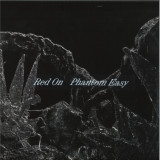
Where does pop start and experimental music end? Instead of drawing lines, Red On keeps on exploring the spaces in between these supposed poles with his latest album Phantom Easy, a record that offers moments of pure beauty as well as unpredictable, uncontrollable wilderness.
The spaces Red On moves in aren’t per se terra incognita, but have been explored in recent years by like-minded musicians such as How To Dress Well, Fever Ray, or Dawuna, as well as artists that are affiliated with Präsenes Editionen, where Red On’s album is published, such as Martina Lussi, Belia Winnewisser, or Magda Drozd. Yet, Phantom Easy is an exploration of its own: The melancholic album, which is informed by pop, electroacoustic music, rhythm-focused jazz, and krautrock, is carried by Red On's voice, which appears in ever-changing stages of alienation. The wistful tone of the twelve tracks is reinforced by single phrases sung by Red On that, through their repetition, develop an urgency that can hardly be escaped. The result is pop music that is brave enough to embrace the adventure; or experimental music that doesn’t shy away from offering catchy hooks and grand melodies.
After discovering Ayo, Grace, Imany and Faada Freddy, the Think Zik! label has set its sights on talented New Zealand band Ha The Unclear.
With their debut album 'A Kingdom In A Cul-De-Sac', the foursome wreak havoc with an astonishingly punk insouciance and sensitive intelligence.
From Auckland, New Zealand, come four restless and immediately seductive boys. immediately seductive, with a tankful of turbulent, deep songs and an already flattering tank and an already flattering reputation as a live phenomenon that will soon spread its spread its sparks to this side of the world. Their sound, still in its infancy, is deeply rooted in a certain New Zealand pop-folk tradition.
The Morning Papers Have Given Us the Vapours was made with the black watch bandmates and producers/engineers Rob Campanella (Brian Jonestown Massacre, The Tyde, The Warlocks) and Andy Creighton (The World Record, Parson Red Heads). Ben Eshbach, formerly of The Sugarplastic, arranged the strings. Kesha Rose guests on lead vocals on the second single, Oh Do Shut Up. And the great Lindsay Murray once again lends her beautiful backing vox to a number of tracks.
the black watch songwriter/frontman John Andrew Fredrick wrote the ten songs on this, his Los Angeles-based band's latest album, entirely unselfconsciously, with no set goal in mind other than to revel in the joy of songwriting, and, eventually, the luxury of recording his music with his more-than-accomplished band. The Morning Papers Have Given Us the Vapours, produced separately and together by Rob Campanella and Andy Creighton evinces the black watch's often stunning ability to, as Andy Gill once observed in The Independent, "find chaos in the calm, melody in the miasma."
Fredrick, who has also published four comedic novels and a book on the early films of Wes Anderson, jovially describes himself as "a recovering Anglophile--one who'll never, one hopes, fully recover." From his home studio in the Angeleno Heights district of L.A., he waxes eloquent about how being branded, as it were, as a too-ardent lover of British music, film, and literature has left him as bemused as has the tag "prolific" that is often affixed to reviews of his work.
"I just don't think it's all that interesting to note that we've made so many records. Looked at one way, it's a sort of deflection from talking about the timbre if not the quality of the individual songs. Though I know it can be intimidating for fans who've just discovered us--a sort of 'My goodness, where do I start with this band that has put out LPs since 1988?' I get it. I do. I picture someone standing at our slot at a bin at a record store becoming overwhelmed at the prospect of picking the 'wrong' title. And then walking away and not picking up anything from us!" Fredrick laughs. "What can you do indeed?"
He started his career as a songwriter as a result of an American Football injury that left him bedridden in the home he grew up in in Santa Barbara, California. The year The Beatles immortal double-album came out at Christmastime he broke his leg so badly that he had to be home-schooled for an entire year. His parents, ex-teachers themselves, refused to let him watch telly for more than an hour a day. He propped a Silvertone acoustic on top of the massive cast that screamed all the way up to his thigh from his toes, and began to write little melodies and lyrics that, doubtless, did not in the least mask his love for the Fabs, The White Album in especial.
And he read and read and read--histories of the American Revolution and Civil War, mostly, and as many Dickens novels as his mum and dad could bring him. "That year," Fredrick observes, "surely made me who I am today. Proof that intensely unfortunate-seeming events can prove most fortunate. As a sport-mad kid, it made me absolutely mental that I was exiled from the activities I loved most and the school teams I played on. What a blessing undisguised that injury was! Not that I'd like to experience anything like it ever again, mind you."
Fredrick can even recall a few of the melodies he wrote as boy ("Utterly trite, of course, completely jejune"); and in a way, The Morning Papers Have Given Us the Vapours showcases a kind of get-back-to-where-you-once-belonged sensibility. "I didn't intend, this time, to make an album per se. I write both songs and fiction in order to find out what happens, to find out what I might want to say," he notes. "Rob often asks me what a particular song is about; and I often reply that I either don't know, or would prefer that others say. Same thing goes for when people ask me where they should start with our discography. I never know what to say. Our LP from 2011, Led Zeppelin Five (remastered in 2021 for its tenth anniversary), has been our best seller, I think--but that may be because some stoned Zepheads thought their gods had perhaps put out a record they'd missed!"
Despite being deadly serious about music-making, TBW's been known to either whimsically or perversely title their albums. Examples: Jiggery-Pokery (an allusion to John Lennon assessing George Martin's productions), After the Gold Room (a pun on the Neil Young classic plus a local eastside L.A. watering hole), Sugarplum Fairy, Sugarplum Fairy (echoing Lennon's famous count-off to A Day in the Life), Fromthing Somethat (a garbled spoonerism/lyric while doing a vocal), Brilliant Failures (the 2020 release that, along with Fromthing Somethat, was named Album of the Year by venerable indie rock magazine The Big Takeover), and the aforementioned LZ5.
For the new LP, the band recruited longtime friends and allies Ben Eshbach (the Emmy-Award-winning frontman of The Sugarplastic) and Lindsay Murray (Gretchens Wheel) to compose and arrange strings and sing heaps of lovely backing vocals, respectively.
And the result? A collection of songs that Fredrick, in his quite-but-not-quite self-deprecatory way, might call another set of brilliant failures. "Every song, every LP we do, is a failure of sorts--no matter how powerful or beautiful or pleasing-to-us it turns out," John concludes. "I have often said that my aim is to write songs as good as anything on The Beatles... and I will never achieve my goal. And thus I'll have to keep at it, keep trying. And chin-chin to that!"
And now your attention's been brought to a band (or you've heard of them or heard a track or two down the years) that has been pegged by The L.A. Weekly as "a national treasure" as well as "the most criminally-neglected indie pop group imaginable."
So here's to the prospect of that ostensible neglect becoming as much of a thing of the past as John Andrew Fredrick's year-long stint in bed.
- A1: Japanese Dream (B.l.reininger)
- A2: Bismallah (B.l.reininger)
- B1: Florence Sunset (V. Reilly)
- B2: All That Love And Maths Can Do (V. Reilly – J.metcalfe)
- B3: San Giovanni Dawn (V. Reilly)
- B4: For Friends In Italy (V. Reilly)
Reissue of the first three 12” in the record series dedicated to musicians who took part in the Greetings festival. It happened in 1987, it was time for Materiali Sonori 10th anniversary, an historic goal for the label/collective born in the small Tuscany village of San Giovanni Valdarno. The small celebration brought to life a box collecting the first 3 Eps of the Greetings from S.G.V. series. The series was intended as symbolic sound postcard, made with various musicians with whom the collective label shared a path, whether small or long. The Durutti Column, The Stockholm Monsters and Blaine R. Reininger (Tuxedomoon) are among the artist who took part to the project, here collected for the very first time. Lantern is pleased to pay tribute to the work of people whose passion, attitude, commitment and genuineness inspired this adventure still true to these days. "Our presence in this small tuscan town is almost casual... physically we were born and grew up here, while our hearts and our minds were travelling to Paris, Berlin, Brussels, New York or London" (Giampiero Bigazzi of Marteriali Sonori , taken from the original inner sleeves notes).
Superb 45 featuring two Hammond-led instrumentals! We caught up with Mr Guy Hamper for an insightful Q&A_ Q: What a cracking single this is! 'Instrument of Evil' in particular has a very eerie vibe. What was the inspiration for it? A: The track is the sequel to '7% Solution', which featured on the last Guy Hamper Trio LP with Thee Headcoats standing in as rhythm section. A 7% Solution being the amount of morphine Dr Watson administered to Sherlock Holmes. For 'Instrument of Evil' I took Sherlock Holmes' later designation of his syringe as "an Instrument of Evil". This is originally a quote from the bible: "Wicked men do at times reject God's purpose for the state, transforming the good of civil government into an instrument of evil." Point of interest: Morphine addiction happens to tie in with another aspect of the song. In the section that nods to Elmer Bernstein's main title theme to the film of the book The Man With the Golden Arm, in which the main character is also a morphine addict. Another ingredient - we added six-string bass to that section in tribute to Jet Harris - he formerly of top group The Shadows, who recorded a great version of Bernstein's classic. To top it all off the record sleeve references the fine graphics of the great Saul Bass. Phew! Q: The track features contributions from Tom Morley (trumpet) and Anna Jordanous (sax). What's it like working with them? A: They are great and easy to work with. I basically make a playground and let them loose in it with very little direction, apart from pointing out the swings and location of the roundabout. I told Tom "You're a Spanish trumpeter stood on a hill in Spain." For Anna, I think we said "go low and nasty." Q: On the flip side you have 'Incense Rising From a Censer'. A very evocative title for an evocative track. Do you have lyrics in mind for this for a possible later release? A: No lyrics have sprung to mind as yet - but it's always possible. The title is from The Elders observation in Dostoevsky's The Brothers Karamazov, a book I really recommend. Prayer rises to God on the smoke of the incense burning in the censer. I imagine this track being some kind of antidote to 'Instrument of Evil'. Q: This single marks your first time in the new premises of Jim Riley's Ranscombe Studio. What's the new place like? A: The studio is great - the sound - using my old Mighty Caesars drum kit, and Jim engineering, is pure, easy with a better sound than the old premises. Q: Any more Guy Hamper Trio releases in the pipeline? A third album perhaps? A: Again, anything is possible. Me and Jamie (James Taylor, Hammond organ) have talked of writing together in the future. Jamie is a truly great musician - the cherry on the cake if you will. We're just busted old eggs, sour milk, and some gunk. Q: A live Guy Hamper Trio show would be amazing. Any chance of that happening or will it remain a studio-based project? A: It could happen if someone came up with a very cunning plan.
REISSUE OF THEE HEADCOATS' FINAL ALBUM IN THEIR ORIGINAL INCARNATION! Originally released by Friends Of The Buff Medway Fanciers Association Records in 2000! The final studio release by Thee Headcoats (until last year's Irregularis: The Great Hiatus) gets a long-awaited vinyl reissue! Includes eleven Billy Childish originals plus a cover of Bo Diddley's 'Great Grandfather'! Recorded at May Road & Red Studios. Engineered by Graham Semark. "Thee Headcoats, who put out their first album in 1989, have recorded raw, primordial romps that seem inspired by American Delta blues musicians like Sonny Boy Williamson or the Southern swamp rock of Hasil Adkins, while maintaining a decidedly English sound. They've recorded under a slew of monikers, and issued an amazing discography of full-lengths, EPs, 7"s, and what-have-you for virtually every cool indie label since they formed (including US-based labels like Sub Pop, Get Hip, Sympathy for the Record Industry, and K, among others). Whether he's covering songs with a Bo Diddley beat, garage rock chug, or playing one of his angry young man/dysfunctional family rantings ('The Day I Beat My Father Up', for example), Billy Childish has built up a solid and somewhat rabid fanbase by releasing songs that you wouldn't normally think would attract a huge audience to begin with. However, I Am the Object of Your Desire has the distinction of being the last album by this band, as their prolific leader Billy Childish moved on to a new band; they're called the Buff Medways, which is apparently an ancient and now extinct breed of chicken which had feathered legs. It's also the name of the UK imprint this record was released on. This collection kicks right off with the album-titled track reveling in pure Headcoats fashion: that warm, fuzzy vibrato guitar with Childish's fuzzy, electronically distorted voice (an effect repeated throughout the album); Johnny Johnson's soft, flowing bassline; and Bruce Brand's primeval drums. The group keeps this sort of mid-tempo riffage going for the next couple of tracks. Johnson plays a mean harp on 'Hurt Me (Slight Return)', but things don't really take off until 'In a Dead Man's Suit' and the swaggering, Texas blues 'Chatham Town Welcomes Desperate Men'. The band's punk roots show up in songs like 'An Image of You' and 'Your Crying Means Nothing to Me' while 'Come into My Mind' has a definite Kinks influence. All in all, an excellent album from this soon to be sadly missed band." - Review from 2000 by Bryan Thomas (All Music Guide)
Bruno Berle, the young songwriter and poet originally hailing from Maceió, the capital of Brazil’s Alagoas state, crafts songs that are simple, direct, and full of tender nuance. With his first album No Reino Dos Afetos (which translates to "In the Realm of Affections” and was released in 2022), Berle firmly established himself as a unique and important voice in the burgeoning scene of new Brazilian artists making a global impact, including peers like Ana Frango Elétrico, Tim Bernardes, Bala Desejo, Sessa and more. Now back with his second album, No Reino Dos Afetos 2, he stretches that further.
Bruno Berle’s music lives between two worlds – a traditional Brazilian folk talent steeped in history, and a contemporary, dreamy electronic pop; the result is songwriting that’s genre-bending, intentional, iconoclastic and consuming, spacious and sinewy and singular, a striking reflection of its composer while leaving space for the listener to settle in. The album follows Bruno’s relocation to São Paulo, and the songs are a reflection of his past and present. A rebuke of former categorizations of his work in Brazilian music scenes, and an idea of where his music can move, unfettered.
Berle’s music is purposeful in being a true portrait of himself, and a reflection of the music, art, and fashion scenes he personally moves through. Berle aims to provide an entrypoint for Black queer joy in his music, in his storytelling, in his presence and vision as a creative. For him, it feels subversive to be playing MPB laced with dubstep and lo-fi, a sort of intentional sacrilege, capturing a dialogue of modernity in traditional music.
Berle wrote most of the arrangements and co-produced his new album, Reino Dos Afetos 2 with longtime friend and musical partner Batata Boy, who is also from Maceió; the album was recorded in Rio de Janeiro, Maceió, and São Paulo, his new home, and picks up the conversation begun in 2022 on Berle’s debut album No Reino dos Afetos. Both records are the result of a nonlinear but coherent seven-year music creation process culminating in these albums, holding hands across space and time.
“Tirolirole,” the first single from the record, was released at the end of 2023; sun-soaked rhythms and soft voice coat the song, the lilting refrain of “Tirolirole” throughout – hushed, gentle, but somehow almost tactile, a golden-hour moment unlocked in the mind. “Tirolirole” is a triumphant future classic about the temporality of a blossoming love, with Bruno’s stunning vocal soaring over melodies which ebb and flow like the waters on the Atlantic shore. Of the track, Berle explains: “Despite ‘Tirolirole’ being an expression that evokes my childhood, just like the light words about nature, the harmony, and the poetry are epic, carrying a great hope for love.”
In fact, the guiding theme of No Reino dos Afetos 2 is a relationship, unfolding in the arc of a weekend. It traverses the innocence of an early young love, how that can be formative, can stretch on to take new shapes, or shape you. The album happens at the genesis of meeting someone and falling for them, before the relationship is thrown into overdrive – set in a big city, against a backdrop of major life changes, rising energy, the sound of São Paulo.
Something transcendental emerges in “Dizer Adeus,” with an arrangement that echoes a gospel atmosphere (evangelical and Catholic environments were pivotal to Berle’s upbringing). On “É Só Você Chegar,” piano and flute gracefully intertwine, a dance, while “Quando Penso” skews sparser, the voice-and-guitar minimalism somehow cultivating an entirely different shape – somehow both cozy and melancholy, with the background sound of a rainy day. Coupled with the lo-fi aspects that shape much of the album’s personality in the vocals and the production, No Reino Dos Afetos 2 is meticulously elaborated by Berle’s sonic alchemy, like on the mid-album instrumental “Sonho,” which feels like floating. “It’s the apex. It’s when lovers are sleeping together,” Berle explains of the feeling he wanted to encapsulate in the song.
On “Love Comes Back” Berle interprets Arthur Russell, the late Iowa musician who only reached greater visibility after he died in 1992. “His way of making music is similar to mine,” Berle explains. “He sings in a more fragile way, has more of an experimental way of recording, letting ‘chance’ appear in the final work.”
Even so, Berle doesn’t want his music to be buried in sentimentality – and the purposefulness of his craft serves as a sort of north star. The production, the arrangements, his restraint and intentionality in crafting his songs feel just as vital as their emotional cores. His songwriting is amorphous, fluid, an encompassing genre-bending movement in-and-of-itself, quietly daring. The songs are often in conversation with other works – drinking in fountains as diverse as the filmmaking of Ingmar Bergman, the poetry of Walt Whitman, the rhythm of Djavan, and the painting of Maxwell Alexandre. Musically he weaves together a rich tapestry of Brazilian folk, UK 2-step garage/dub, trip hop and sun soaked west coast songwriters; something akin to the worlds of Milton Nascimento, Arthur Russell, James Blake, Feist, and Sade colliding into one. But even then No Reino Dos Afetos 2 floats separately, a romanticism driven by a simplicity and intimacy, an open-ended possibility, Berle’s singularity as an artist at the helm of the ship.