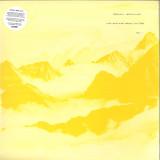
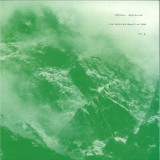
Dark Star Safari is a musical entity comprised of Jan Bang, Erik Honoré, Eivind Aarset, Samuel Rohrer and John Derek Bishop. Their second fulllength offering Walk Through Lightly is the first to feature all five musicians together in the studio from the outset, making for a more organic refinement upon their already established methodology: gradually sculpting distinct songs out of collective improvisations, or using the raw material from initial recordings as the basis for more carefully articulated compositions. The final mix is one that invites few stylistic comparisons to other musical peers, and in fact few comparisons to existing genres. Though this second offering from the project is frosted over with a Scandinavian sense of spatiality and
melancholy, it’s best listened to without considering any origin points, geographic or otherwise: from the opening moments of “Walk Through Lightly,” listeners will feel as if teleported directly into the middle of an enigmatic film-in-progress.
The album opener immediately and successfully sets the table for what is to follow. The electronic and acoustic instrumentation is pensive, but not passive, with restrained scrapes and stridulations in the background combining with backwards-looped passages and perlescent or granulated sound effects to better emphasize the carefully arranged latticework of guitar, percussion, strings, and bass. In some places, such as on “Father’s Day” and “Measured Response,” the silences or breaths between passages are pronounced enough to be an instrument in their own right (and an elegant confirmation of the fact that silence is also a conveyor of information). This nuanced production, which wisely opts for intimacy instead of relying on overdone "instant atmosphere generators" like lengthy reverb, provides just enough tension to contrast with the sense of elevation provided by Bang’s vocal contributions: smoky, evanescent, and impressionistic recitations offering not snapshots of specific events, but rather complete emotional environments for the listener to hover through and explore.
Within these environments, the lyrical imagery focuses upon coming to grips with sudden transformations on both micro and macro levels (the opening “this was a perfect place / till we lost our way” from “Patria” or the foreboding “Poems that explore / Their silence / Crush their violence / Now their time ends” from “Measured Response.”) It focuses as well upon coming to thresholds or crossings, be they physical crossroads or internal states of mind, or both (see especially the striking turns of phrase from “Murmuration.”) With such things in mind, it’s only natural that there would be consideration of dreaming as well, and indeed four different titles on the LP make different reference to a dream or dream state, seemingly valuing dreams as part of the continuum of consciousness rather than something totally cut off from waking experience.
Given the sense of foreboding, anticipation, and even unease that these kinds of subjects often bring with them, the spare and un-hurried music is all the more intriguing, especially when the eponymous finale arrives and the percolating sound bed seems to hint at a coming resolution, but then leaves the listener with more questions than answers. By competently fusing a mature, economical approach to sincerely romantic lyrical themes, Walk Through Lightly is a rare accomplishment.
Search:mind to mind
With 10 years in the 'biz' firmly under his belt, Jiah Wells is poised to release the first full-length LP of his Galtier project, Pulchra Es Elementis. Whilst Galtier is arguably one of the originators of the percussive style that would eventually fall under the Hard Drum label, the heightened theatrics of his recent output have seen him channel Blade Runner-styled sonics and move further away from absolute club functionality. Whilst Galtier's output often seems to soundtrack hypothetical, off-planet words, Pulchra Es Elementis turns the focus inwards: towards Wells' own emotional constellation, his evolving spirituality and his attempts to tap into planes of existence beyond the tangible. The album's Latin title translates to 'Elements are Beautiful' and encapsulates the artist's belief that there is grace in all of life's aspects; pushing past what we deem as good or bad, minuscule or massive.
Pulchra Es Elementis begins with Crystalised Larva, a brooding opener of breathy pad synths and expansive kick drums which reverberate through the mix as if the hits originate from the bottom of a valley. There's an indistinct sense of tension on this track, in part due to a central melody, which never resolves but only descends lower in pitch. This tension turns to explorative wonder on Wilfull Saviour, where a mirage of musical ideas come in and out of focus. Although the sonic worlds Galtier explores are internal to him, Wilfull Saviour still possesses that sense of a cosmic journey we've come to expect from Wells; an ardent fan of dystopian films and literature.
Continuing this emotional odyssey, Bruised, But Not Broken sees the artist push deeper into the psychological undergrowth; its murky tonality juxtaposes crisp, Reggaeton-inspired drum patterns with a heavily compressed one-note synth line that modulates wildly - cutting through the mix like a nagging thought that won't leave your mind. Next up is U Were, U Are & What U Will Be, one of the more club-ready tracks of the LP, which gets us moving with a snarling bassline and layers upon layers of percussive hits and inflections.
At Pulchra Es Elementis' mid-point is the LP's title track, a drumless interlude where blissful, shimmering synths create a patchwork of intensities. Galtier's approach to songwriting shines through here; ignoring musical pragmatics, he opts to feel his way through his compositions without knowing where they might end up. Following on from that weightless breather, Phantasiai turns up the freneticism with its head-spinning mix of drum programming and a glitched-out synth line that yo-yos up and down octaves. Things get even more furious on the Superficie-featuring Cavernam, a hollow Hard Drum banger inspired by Eskibeat sensibilities and designed to create a sense of self-implosion.
The album's penultimate track, (U Are) Beautiful, is a tale of two halves: beginning with a moment of serenity as synthesizers swell like an ocean tide before evolving into a marching crescendo of raw energy. Rounding off the album, Shine Forth hurtles through pacey drum work and all manner of strange zaps and klaxons before giving way to a final dose of nebulous ambience.
A musical journey unlike any other 'club music' albums, Pulchra Es Elementis is an LP that demands to be consumed in one sitting. Reflecting on his place within the universe and the musical landscape, the album could be viewed as a musical exorcism which sees Galtier working through and shedding huge chunks of his ego that stuck to him out of fear of the unknown. Pulchra Es Elementis begins on an insecure, overwhelming or, even, existential note before rounding off with a related sense of vastness seen with new, more positive eyes. It's a voyage we hope you will join him on.
Who would have thought that a small, invisible virus could last the whole world, bring much suffering, grief and economic loss to every country? No concerts, all clubs closed - the party was suddenly over last year. Now, thanks to the vaccines, the situation seems to be returning to normal a little, and hopes are growing. The world is ready to let the pig out - the new album by David Hasselhoff comes just at the right time: “Party Your Hasselhoff” is the more than appropriate title.
- A1: Claptone - Zero
- A2: Earth N Days - I Wanna Know
- A3: Matt Samuels, Ridney & Errol Reid - Now That We Found Love
- A4: Gettoblaster - H O U S E (Feat Missy)
- A5: David Morales, Dj Spen & Carla Prather - I Got The Love
- B1: Jodie Harsh - My House
- B2: Future Kings Vs Moya - Something New
- B3: Pansil - Read My Mind (Get Out My Head) (Get Out My Head)
- B4: Mike La Funk & Kelsey Gill - Back To You
- B5: Ben Rainey & Lewis Roper - Rapture (Feat Lauren Carter)
- C1: Kideko - Feel It (Feat Sain-Lee)
- C2: Sammy Porter & George Mensah - Ain't Nobody Else (Feat Charlotte - Secondcity Remix)
- C3: Md Jones - Tear It Up
- C4: Joey Mccrilley - Come Together (Danny Rhys Remix)
- C5: Dosem - Right Time (Mark Knight Remix)
- D1: Eat More Cake - Heat Of The Night (Tcts Remix)
- D2: Request Line - Have We Met
- D3: Chicane - 8 (Circle) (Circle)
- D4: Ellie Sax - Don't Lie To Me (Ridney Remix)
- D5: Amarnu & Shazz Man - Lonely Clouds
The popular #Ibiza compilation series returns on July 2nd with its fifth installment, #Ibiza 2021. The album brings together tracks and remixes from some of the world’s biggest names in dance music, including Claptone, Chicane, Sammy Porter, David Morales, Secondcity and Mark Knight. The collection also presents the hottest breakout tracks set to grace the island this year, including Gettoblaster’s recent Beatport number 1 ‘H O U S E’, and Jodie Harsh’s current UK radio hit ‘My House’. Radio promo: Jodie Harsh - My House: Playlisted on BBC Radio 1 (B-List) / No.1 in UK Upfront Club Chart. Other promo: Claptone - Zero: One of the biggest DJ names in Ibiza with his Masquerade parties at Pacha, Claptone moves up to No.41 in this year’s Top 100 DJ’s global rank. Zero is the first single from his upcoming third album.
What started as an underground techno label in the early 90's, Juice Records typified the head in the clouds ambition of the techno generation by both sound and action. Anything was possible and similar minds would be reached through the vinyl medium. By the mid 90's, Juice Records established itself as a southern beacon to the techno and house music movement.
… but many people would have little knowledge of where the label sits in todays music sphere. Juice Records, wether by choice or default have remained free from the uber industry of dance music but continue to represent with our Adelaide based music activities.
What started as casual discussions about Antony's studio activities with label owner, Donato, soon progressed to talk of an album. A couple of years and many iterations would follow till the vision was clear. Juice 020 highlights the musical existence that Antony commits too. It goes beyond the drum machine and synthesiser sounds the label would be known for and embraces a wider spectrum with use of a Yamaha baby grand, Fender Rhodes, Washburn bass and Yamaha Electone E-75.
With a definitive genre hard to pin on the album, Juice 020 remains very much a traditional Juice Record. It is a clear example of what Adelaide happenings have been missed by the global industry while it plays with a techno formula that goes beyond our underground imaginings.
Repress of the funky instrumental 45 by The Soul Investigators featuring Jimi Tenor!
For those into sounds from the deep dungeons of the soul jazz underground, the 2nd quarter of 2015 looks promising. Out of its mist come The Soul Investigators in a slick red convertible, featuring a mean flautist riding shotgun, a position we Finns like to call the seat for those in fear. The velvet smooth winds emanate from none other than Jimi Tenor, a person some might even describe as a renaissance man.
The sufficiently psychedelic jazzier exercise "Vulture's Prayer" should get your mind wondering into a turn of the 70's London, featuring a hippie gone bad, smacked out in furs in a hedonistic basement bacchanal, just before discovering himself at the opening desert scene of the "Holy Mountain". Flipping the disc over to "Bad Vibrations" we find ourself in a more funkier urban setting, possibly at a Yusuf Lateef inspired bar session in Chicago's South Side. Don't know, why they call them bad, because they sound so good. Better get yourself a slice and why not even a second helping.
Short while after Anushka's debut album "Halfie", that has won her "Tsinandali Prize" and has been nominated for "The Album Of The Year 2020" Impala awards, 23 years old Anushka Chkheidze is back with her second album "Move 20-21". Created during 2020 pandemics, spent mostly in lockdown. In Anushkas own words "Move 20 – 21" is a mind journey through space and time without any physical movement.
Digitally released earlier 2021, "Move 20-21" cout the attention of Music Moves Europe Talent Awards; has been nemed as "Band of the day" by Europavox; has been choosen as track of the day by KEXP; has been broadcasted by United We Stream for FEMMELY AFFAIR in the light of International Women's Day 2021.
- A1: Shake ‘Em On Down
- A2: Good Morning Little Schoolgirl
- A3: Keep Your Lamps Trimmed And Burning
- A4: Fred Mcdowell’s Blues
- A5: Woke Up This Morning With My Mind On Jesus
- A6: Drop Down Mama
- B1: Going Down To The River
- B2: Wished I Was In Heaven Sitting Down
- B3: When The Train Comes Along
- B4: When You Get Home Please Write Me A Few Of Your Lines
- B5: Worried Mind Blues
- B6: Keep Your Lamps Trimmed And Burning (Instrumental Reprise)
Black Vinyl LP with double-sided insert with historical information. Released in collaboration with the Alan Lomax Archive. First pressing 2011, second pressing 2021
These are the first recordings made of Fred McDowell—before the folk festivals and blues clubs, before “Mississippi” was inserted in front of his name, before the Rolling Stones covered his “You Got To Move.” They’re the sound of the music McDowell played on his porch, at picnics, and juke joints; with his friends and family; occasionally for money but always for pleasure. Remastered from 24-bit digital transfers of Alan Lomax’s original tapes, and annotated by Arhoolie Records’ Adam Machado and the Alan Lomax Archive’s Nathan Salsburg, they are an illustration of the mind-blowing revelation that was Fred McDowell.
On the first day of fall, 1959, in Como, Mississippi, a farmer named Fred McDowell emerged from the woods and ambled over to his neighbor Lonnie Young’s front porch with a guitar in hand. Alan Lomax and Shirley Collins were there recording the Young brothers’ fife and drum ensemble, as well as the raggy old country dance music of their neighbors, the Pratcher brothers, and they had no idea what to expect from this slight man in overalls. They certainly didn’t expect that Fred would soon become internationally known as one of the most original, talented, and affecting country bluesmen ever recorded.
Ancient Africa represents Nat Birchall’s official follow-up to last year’s universally acclaimed Mysticism of Sound.
Nat once again plays all the instruments here, tenor and soprano saxophone, bass clarinet, bass, drums and percussion. But this time around the Korg synth is replaced by piano as
Nat wanted to utilise a more “classic” Jazz sound to express his musical visions. He has also arranged the songs for multiple horns, with melodies and harmonies played by up to five different instruments to achieve a fuller and often glorious sound.
An exception to this is Mirror Mind, a ‘duet’ featuring tenor saxophone and piano, hence the title.
With most of his compositions Nat tends to come up with titles depending on the thoughts or images the music manifests within him as he listens back to the recording.
The title track conjures up images of an African sunrise, the horns perhaps invoking the sun as it begins to illuminate the land which was the origin of the human story on Earth.
“Africa is the root of everything, and is the source of civilization, art, music, you name it.”
Paladins is so titled for the African heroes of the past and the present, in all walks of life, social, political, the arts etc.
“Anyone who fights against oppression, whether it be through activism or art, not only in Africa but throughout the whole diaspora, is a Paladin in my book.”
Song for John Blanke is named for the African trumpeter who played in the court of Henry VIII. The horn line sounding
a little like a fanfare, but in a lower register than the Tudor trumpets might have played for the court of the king!
Malidoma is named in honour of the African writer Malidoma Patrice Some. His excellent book ‘Of Water and The Spirit’ is a deeply
moving and illuminating narrative of his life’s journey. From his abduction by Jesuit priests at an early age from his village in Burkina Faso to
his being reunited with his people and subsequent assignment to spread his people’s ancient knowledge to the Western world.
The final song, Ancestral Dance, is a musical reminder to both celebrate life as and when the occasion demands, but also to not forget where we came from, as individuals and as a species.
Effortlessly hopscotching between vintage acid and 80s Rn’B, insouciant Francophone pop and twinkling electro house, Lou Hayter has delivered something at once utterly unique and defiantly timeless with her much anticipated debut solo LP, released on Skint Records. It has been a long time coming for London native Hayter, who first made her mark professionally as keyboardist for New Young Pony Club, one of THE bands at the epicentre of the white hot day-glo nu rave scene alongside the likes of the Klaxons and Test Icicles in 2006. But, to fully place her debut album in context, it is necessary to rewind a little bit – to the very beginning in fact, with Hayter growing up on a diet of Bowie, Prince, Human League and Jellybean-era Madonna while concomitantly learning classical piano from the age of five. The flames of this deliciously varied musical palette were further stoked by trips to record shops in Soho with her brother (Soul Jazz was a particular obsession), but it was while studying in Cambridge that the match was well and truly struck – she used her student grant to buy a set of Technics and started putting on club nights, before moving to London and working at Trevor Jackson’s seminal Output Recordings, placing Hayter smack bang in the middle of all the action, with disco punk fever hitting full force and bands like the Rapture and LCD Soundsystem first breaking out.
The hugely successful, Mercury-nominated New Young Pony Club followed shortly after, but it’s through her subsequent output that she started to distil and refine her idiosyncratic tastes. And certainly, you can hear hints of both the New Sins, the 80’s New Wave duo she formed with Nick Phillips, and Tomorrow’s World, the swooning Gallic pop act she fronts alongside Air’s JB Dunckel, in her remarkable debut. Full to bursting with evocative electro-soul love letters to her home town of London alongside addictive disco torch ballads, it’s like Kylie meeting Mr Fingers or, Jam & Lewis producing Jane Birkin – something beautiful and melancholic yet sharply modern and new. From the warm, woozy, lysergic harmonies of opener “Cherry on Top”, which sound like a beloved old cassette unravelling, to the fizzy, infectious “Cold Feet”, which calls to mind Lisa Lisa & Cult Jam at their most heartworn, taken in toto the album perfectly nails the essence of gorgeously nostalgic synth-pop with a twist; crisp, stylish and sophisticated music which heralds the next chapter of Lou Hayter quite nicely, actually. Her retro-futuristic results will give 2021 the pop fix it so desperately needs.
UK multi-instrumentalist and story-teller Mara Simpson's new album In This Place will be released on September 24th, 2021. A heady blend of alt-folk, analogue synth and classical composition, In This Place is a tale of quiet rebellion, and taking back control. Fittingly, the new album marks the start of another new journey for Mara. In This Place will be the first record to be released on Downfield Records, a non-profit imprint set up by Simpson, placing artists at it’s centre. “I want to try and promote transparency and equality, assist other artists to get public funding and to ‘pay’ forward the time and resources I’ve benefited from,” she says. The label’s mission is to see musicians paid fairly and release records through a creative and joyous process.
Whilst the struggles of 2020 will go down in history, for Mara it was 2019 that was the tough one. A year spent consumed by worry, whilst in and out of hospital with her one year old daughter, had left Mara feeling like she was playing a constant game of catch up with a world that wouldn’t slow down. With songs ready to be recorded for her new album, she headed into the studio. “I stepped into the studio not needing my hand held, just my voice heard” explains Mara, who quickly came to the realisation that she was working in a toxic environment. Enough was enough
It was whilst waiting for a train that she had the sudden realisation that the album she was recording would never see the light of day. Struck by an overwhelming feeling of failure, Mara began to ruminate on the time and money she had wasted but then something clicked. “Perhaps it’s something about train stations, the coming and the goings, that allows a stagnating frame of mind the grace and space to clear” she says. “The funny thing is, upon realising failure, the despair I’d been feeling was now replaced with something else...Relief”.
Feeling re-energised, Mara called her dream producer Ellie Mason, of Voka Gentle, and together the pair began working on a new record. “I’ve been more hands-on with this album than I’ve ever been, taking a much more active role in production. Throughout the whole process Ellie has heard my voice, and been open to any possibility” explains Mara. “We’ve stumbled across golden moments, recording four part harmonies in Brighton’s oldest church, using every drum there is in Brighton Electric, layering New Zealand bird song with tape delayed piano, all thanks to her nurture, playfulness and kindness” she continues.
Album opener ‘Serena’, named after the apartment building in Brighton where Mara’s daughter was born, is based on the experience of becoming a mother and the responsibility of making important healthcare decisions. “How will I know how to love you” she sings over undulating synths and sparse piano chords. Title-track ‘In This Place’ is about the confrontation between mother and new-born child. The ‘sizing-up’ of one another as they embark on a new journey together. “When I left home to travel around the world and was so worried about breaking my Mum’s heart,” says Mara. “I just remember her saying that your children are never yours to keep. This is a song about the rawest of loves, and the fact that however much we love someone, they are never ours, and the beauty in that.”
In addition to the experience of motherhood, the songs on In This Place take inspiration from a wide range of places, including Mara’s ‘second home’ New Zealand. ‘Christchurch’, written in response to the Christchurch Mosque shootings in 2019, layers New Zealand birdsong on top of swirling piano and moving choral vocals. ‘Fault Lines’ was inspired by The Waitangi treaty. Signed in 1840 in New Zealand by the British Crown and Maori chiefs. The British understood that the Maori were signing over land that the British could now govern and effectively ‘own’, however to the Maori people it is impossible to own land, in the same way that you can’t ‘own’ air. “We live and die, the land remains and we are just it’s keepers for the very short time we are here. This song is about us not owning this earth - how can we? We are only the guardians of it while we are here” says Mara.
Backed by a band of accomplished musicians (Jools Owen (Bears Den) on drums, James Smith (Anaïs Mitchell) on banjo, Alexandra Hamilton-Ayres on clarinet and strings by Poppy Ackroyd) on In This Place, Mara sounds the most confident she’s ever sounded. With her new material, Mara Simpson hopes to promote a gentle, yet radical shift toward kindness and it’s this warmth that can be both heard and felt across her new record.
- 1: Novocaine/Astronaut Mile Thunder
- 2: Novocaine
- 3: The Needle And The Damage Done
- 4: The Little Drummer Boy
- 5: Astronaut
- 6: Treasure Chest
- 7: Furnace
- 1: Bear Catching Fish . Bear Catching Fish
- 2: Rockford Files
- 3: Treasure Chest
- 4: Cabin Fever
- 5: 1/4 Mile Thunder
- 6: Bullfight
- 7: Mountain High
- 8: Winter Time
- 1: Angel Wings . Holes To Fight In
- 2: Windsheildn
- 3: Nailgun
- 4: Fanbelt
- 5: Anchor
- 6: Herbie Hancock
- 7: Expressionists
- 8: Jumper Cables
- 9: Stitches
- 10: A Quinn Martin Production
- 11: Angel Dust
- 12: Lies Like Knives
- 13: Olé
- 1: Split With Iceburn & Everything Left . Trailhead At Lake 22
- 2: Hiking The Circumference Of The Mountaintop Lake
- 3: The Shining Path
- 4: Insulate
- 5: Thigh With A Desolate Thorn
- 6: Breakdown
- 7: The Heater Sweats Nails
- 8: Husk
VERY LIMITED COPIES OF THIS PREVIOUSLY RSD U.S. ONLY RELEASE
Engine Kid, the post hardcore collective featuring Greg Anderson (Southern Lord label owner, also in Sunn O))), Goatsnake & Thorr's Hammer) announce a special Record Store Day 6 x LP box set release Everything Left Inside, featuring the Novocaine/Astronaut 12 inch, Bear Catching Fish 2xLP, Angel Wings 2xLP and Split w/ Iceburn / Everything Left Inside 12 inch.
Almost 30 years since the inception of Engine Kid and the trio find themselves comprehending the enormity of their creation, honouring and celebrating the mountains they formed and the canyons they created.
Engine Kid was born in Seattle, WA 1991. The band's original lineup consisted of guitarist/vocalist Greg Anderson (Southern Lord, Sunn O))), Thorr's Hammer, Goatsnake), drummer Chris Vandebrooke & bassist Art Behrman. The three had all been in hardcore/punk bands around town and all had a burning desire to create a sound that was unlike anything they had done in the past. After just a few months of existence they quickly recorded and self-released the Novocaine 7”. Circa 92’ a close friend and bassist Brian Kraft (Krafty) replaced Behrman, and at that moment the entire aesthetic and execution of sound became heavier, darker and extremely dynamic. The power trio was picked up by local label C/Z records and set out upon recording the new music they were quickly creating. In 1993 the band had two releases on C/Z; their first offering was the Astronaut five song EP recorded by John Goodmanson. The songs were primitive and exemplified the bands worship of Slint and their loud/quiet song dynamic In the summer of 93’ the band drove all the way to Chicago to record with their hero Steve Albini in the basement of his house. They emerged with the eight song album they called: Bear Catching Fish. Albini intuitively captured the band exactly as they were at that moment: raw, vulnerable and mammoth.
Shortly after the albums’ release Jade Devitt replaced Vandebrooke on drums. This transition was extremely crucial in the “second phase” of the group. Devitt was an absolute beast and his power helped launch the band miles beyond where they had ever been before. The sound of “The Kid” started to transform into a sound much more of their own. The three dudes were hellbent on pushing the bounds of sonic exploration to its absolute fullest. Suddenly there was an abundance of depth within the sounds they were creating. Eclectic influences of punk/hardcore (Black Flag, Die Kreuzen), Metal (Entombed, Carcass) and even jazz (Mahavishnu Orchestra, Miles Davis electric era) were in a full collision course with the already dynamically heavy foundation of the band. The levee had broken and the resulting flood of sound completely saturated everything in its path.
Engine Kid toured relentlessly. They were constantly on the road playing every nook and cranny they possibly could. Any moment not spent on the road was instead spent focused on making their new material as potent as possible. Early in 94' the band decided to pay homage to their mutual love of jazz/fusion and recorded three instrumental pieces that would become a split album with like minded powerhouse Iceburn. The Engine Kid/Iceburn album showcased each group's love of jazz loosely framed by the intense enthusiasm of underground music. The album was released by Revelation records in 1994.
During the summer of 94’ the band reconvened with producer John Goodmanson at Bad Animals & AVAST! studios to record the new material that was literally bleeding out of the reinvigorated trio. These recorded songs were much more progressive, heavier, harder and more focused than past works. They even tackled John Coltranes’ “OLE” adding saxophone and trumpet from their brothers in Silkworm. In March of 1995, Revelation Records released these recordings as the Angel Wings album. Unfortunately "the Kid" flew too close to the sun and broke up very shortly after the album's release.
Everything Left Inside 6xLP box set (RSD release) includes:
LORD 288.1 Engine Kid-“Novocaine/Astronaut” 12”
LORD 289 Engine Kid-Bear Catching Fish 2xLP
LORD 290 Engine Kid-Angel Wings 2xLP
LORD 288.2 Engine Kid-Split w/ Iceburn /Everything Left Inside 12”
16-page color photo/liner note booklet.
- 1: Press Rewind" (Feat Collie Buddz & J Boog)
- 2: It's Funny" (Feat Eli Mac & Common Kings)
- 3: The Day You Came" (Feat Rebelution And Ub40)
- 4: Break It Down
- 5: Something To Believe In" (Feat Stick Figure)
- 6: Things You Can't Control
- 7: Back To The Start" (Feat Mihali)
- 8: Jump" (Feat Slightly Stoopid)
- 9: Still You
- 10: Messages
- 11: Reason To Live" (Feat Nanpa Basico & Dirty Heads)
- 12: This Heart Of Mine" (Feat Eric Swanson)
- 13: Fall Like Rain
Global reggae stars SOJA are back with their first album in 4 years.
‘Beauty In The Silence’ features special guests Rebelution, UB40, Dirty
Heads, Slightly Stoopid, Collie Buddz and more. SOJA deliberately took their time in creating ‘Beauty In The Silence’ as
they explored new sonic terrain, recording in such iconic spots as
Miami’s Circle House Studios and Dave Matthews Band’s Haunted
Hollow, and teaming up with producers like Niko Marzouca (Bob Marley,
Pharrell, Rick Ross, A$AP Rocky), Mariano Aponte and Johnny Cosmic.
The band eventually phased into working remotely as stay-at-home
orders set in across the country and, in that process, lead guitarist
Trevor Young (formerly SOJA’s guitar tech) took on a much greater role
in the band’s creative direction, co-producing alongside Hemphill and
carefully shaping the album’s hypnotic sound. For more than two decades, SOJA have elated audiences across the
globe with their fresh yet timeless take on roots reggae, a sound born
from their shared passion for making music that transports and inspires.
The band was originally formed by a group of friends while still in middle
school and they have since built a massive, dedicated global fanbase. In
the years following, SOJA have headlined shows in over 30 countries
around the world, received multiple GRAMMY nominations and
generated 7 million social media fans and more than 1 billion streams;
attracting an international fanbase along the way, with caravans of
diehards following them from city to city. “Charismatic bandleader Jacob Hemphill writes SOJA’s lyrics as an
attempt to find a path to unity in the world.” - NPR
“SOJA has cultivated a dedicated global fanbase with their socially
conscious lyrics, catchy sound and a ceaseless touring schedule.” - MTV
“Contemporary reggae with a forthright social conscience.” - Billboard
“Over the course of their near-20-year career, SOJA has amassed a
loyal following for their social justice-minded brand of roots reggae.” - USA Today
Self Learning System present their very ¦rst record and
deliver a new label focussing on conceptual work as well as
interdisciplinary art in full effect. We believe in the human
mind as a self-learning system - creators and originators
connected all around the globe aiming to keep the scene
alive. We want to cultivate a community and platform for
exchange with other artists pursuing music, design, art and
events. Our ¦rst strike comes as “The Arrival Of Unisex &
Ernst”, a split EP of the two labelheads to introduce
themselves and the sound of SLS. The record contains six
analog hardware tools ranging from classic Electro to
Industrial. SELF001 also includes an A2 inlay print of
Dominik Widmanns acrylic painting „Fabric“ (as pictured).
His artworks will cover our ¦rst three records, ¦tting perfectly
with the cold and futuristic soundscapes we want to
showcase. Self Learning System is based in Leipzig, where
we work together with the local R.A.N.D. Muzik record
pressing plant and InchByInch distribution.
Black Truffle is pleased to announce the latest offering from underground legend Richard Youngs. Hyperactive since the late 1980s, Youngs is widely celebrated for his remarkably extensive and varied body of recordings. His works range freely over a vast terrain, wandering from tender acoustic balladry to raging psychedelic noise and orchestral D-beat, always imbued with his distinctive, often mournful, melodic sensibility and irrepressible sense of joyous experimentation.
Comprised of two side-long pieces, CXXI carried on the experiments with chance operations used to generate material on many of Youngs’ recent releases. On ‘Tokyo Photograph’, a slowly changing, randomly generated sequence of 121 minor chords played by sine waves and accented with a brushed snare hit on every change provides the harmonic foundation for Youngs’ fragile yet impassioned vocal performance, shards of field recordings and electronics and Sophie Cooper’s long, tape-echoed trombone notes. While the melancholic drift of the chords calls up prime Robert Wyatt sides like Old Rottenhat or Dondestan, only the most vestigial sense of song remains here, as Youngs arranges his minimal ingredients over a spacious fifteen-minute expanse that often drops to nothing more than the rich hum of sine waves.
‘The Unlearning’ carries on directly from the first side, presenting another, more harmonically varied, sequence of randomly generated chords played by sine waves, distressed with tape echo flourishes and sparsely sprinkled with electronic touches. Like some of Youngs’ most single-minded instrumental works in recent years, such as his recordings of foot-played guitar or his shakuhachi pieces, ‘The Unlearning’ is deeply meditative but entirely remote from ambient or minimalist cliches.
Named after the number of chord changes on the opening piece and (Chicago-style) the number of records Youngs has released, CXXI arrives in a striking monochrome sleeve featuring play-along chord charts for both pieces. Both rigorously conceptual and endearingly off-the-cuff, CXXI is classic Richard Youngs.
The second release on JD Twitch’s archival label.
“By 1993 I was saturated in Acid. Over saturated!. Since 1987 there had been an endless explosion of records from across the planet using the 303 and it seemed like the sonic possibilities offered by this little silver box had hit a dead end.
And then in 1993, from Germany, came the Blue label with mind-blowing releases by Air Liquide and friends. It felt like a new paradigm, paying homage to Germany’s Kosmische Musik past while paying respect to the Chicago Acid House originators while simultaneously looking ahead to a new form of transcendental music.
And then – BOOM! – the H.E.A.D. “EFS” double album drops. What is this music? Was it beamed in from the future? It ticked every box I loved. Endlessly hypnotic and expertly programmed with an effortless groove that sounds as if Jaki Liebezeit’s syncopations have been absorbed by the machines. It is Acid in ways my ears hadn’t heard before, the little silver box tweaked in new, exhilarating directions.
Made by future Optimo ally Khan, alongside uber talent, Kerosene and recorded in a Brooklyn kitchen, this double disc set became an eternal home listening and back room favourite. It is also a club favourite too, perhaps even more so now than it was then. It is endlessly mixable and playable at multiple speeds. A genuine classic long overdue a second life”.
This fully remastered 2021 edition of this 1993 gem comes with new artwork on a super fat double vinyl pressing.
Songs Of Loss and Separation, the sprawling second album from TIMES OF GRACE is insistent in its bluesiness, bleeding distortion and emotion, weaving effortlessly between pensive, heavy, midtempo rock riffs and atmosphere. The band's sophomore effort and first since 2011 channels a haunting romanticism and deep spiritual yearning that collide in beautiful melancholy. The vocal interplay of Adam Dutkiewicz and Jesse Leach makes for a rich, dense, and enthralling concoction, powering through various trips through dark nights of the soul and mind-expanding excursions into the wild.
- A1: Woman You Made Me (Instrumental)
- A2: Love Our Love Affair (Instrumental)
- A3: Remember Me (Instrumental)
- A4: Help Me (Save Me From Myself)
- A5: Ain&Apos;T That Love (Instrumental)
- B1: This Is What Love Looks Like! (Instrumental)
- B2: You Gonna Need Me (Instrumental)
- B3: I&Apos;D Better (Instrumental)
- B4: We&Apos;Re All We Got (Instrumental)
- B5: I Can&Apos;T Love You Anymore (Instrumental)
Around the year, the sturdy red brick walls of an old Cable Factory stand there like a mountain, facing weathers of all kinds rising from the Gulf of Finland. It might be freezing winter winds whipping the whole shore line into submission, fog heavy as concrete, or the relentless sun of the summer months, softening the asphalt to a boiling point. Whatever the weather may be, the narrow courtyard of the old factory embraces those musicians, who are looking to get down. They gather from all directions, making their way towards a pair of doors that lead towards a flight of stairs, again through a few doors all the way to the last portal, where an open padlock and a loosely hangin crossbar signal that Cold Diamond & Mink are inside, locked in a groove.
Who could it be with them this time, perhaps the jazz prophet Jimi Tenor beaming out of his space ship, maybe it's the golden voiced knight of soul Tuomo "Pratt" Prättälä, the number one trumpet wielding dandy Jukka Eskola or the saxman Pope Puolitaival, who loses nothing in coolness compared to the former? The reel to reel is always there in the monitoring room, catching each analog layer of sound, even the silences and banter between takes. Seppo lays down the guitar and tries to catch the riff on organ instead, Jukka throws a rare tune on the turntable, hoping to guide their unit through that wobbly chorus, Sami waits there bass in hand, maybe already thinking about the next production.
After a whole lot of playing instruments, arranging and taking care of business, after the moon has travelled around the old industrial building for some rotations, Carlton Jumel Smith comes waltzing through those same doors. There's a handful of unnamed tracks waiting for him. He sits there listening and then starts writing, maybe echoes of soul classics from his own record collection in New York projecting inside his mind. Then the tape is rolling again. Starting with a short intro rap Carlton lets it out, singing on the edge of shouting "Woman you made me...". After the vocals are in the can, Carlton ascends out of the basement and heads out to entertain an audience somewhere. Some months later, after the mix is said and done, there's the question of the instrumentals. It seems they're pretty good as they are. And here they are.
d 04: Help Me (Save Me From Myself) Instrumental
Exceptional recordings by this New age maestro. Only recently re-discovered by his friend JD emmanuel & the band Sun Araw. Originally released on cassette in 1983 and now for the first time vailable on 180g Vinyl. For fans of Joanna Brouk, JD Emmanuel and Pauline-Anna Strom.
Randall McClellan was a founding member of the electronic music studio at the Eastman School of Music in 1967 where he later received a Ph.D. in Composition, Theory and Musicology. A growing interest in North Indian music and vocal technique prompted him to develop his personal compositional practice into an active platform for inducing altered states of mind. He constructed his concerts to be spaces for harmonization of mind and body through a musical practice informed by his esoteric studies of ancient mystery schools and sacred geometry, believing these to be primarily teachings on intentional resonance.
These performances were given between 1977 and 1983 in semi-darkened spaces that allowed listeners to relax on carpeting while being enveloped by sound. Each improvisation lasts from twenty-five to forty-five minutes. An entire performance is up to three hours and is designed to provide an environment of meditative sound. They gained in popularity and were soon attended by larger audiences. His final live performance took place at New York City's Alternative Museum in October, 1983.
The “Music of Rana” Enviromental Series uses synthesizers, drone box, tamboura, voice and tape delay to create an environment of continuously evolving multi-layered melody. Described as subtle, graceful and of other worlds. The name RANA, meaning “Sunbreath”, has its origin in ancient philosophical concepts that recognized vibration as the fundamental creative force and central principle of the many esoteric mystery schools of the ancient world. It is now evident that the use of music for its ability to alter mind states and for its effectiveness as a therapeutic aid was music’s original purpose and an important concept of these mystery schools. In the broadest sense, the practice of music for its healing ability may well stand as our oldest continuous musical tradition.
This album is the first volume in the series, previously issued as a cassette in 1983, and part of the cassette box set published by Sun Ark in 2013. This music is based on principles outlined in Randall’s book, The Healing Forces of Music: History, Theory and Practice. These compositions are selected for their meditational and healing abilities. EQ settings of treble and bass levels determine the music's effect upon you. Please explore until the most comfortable settings are found.
FACT MAG: "These deeply meditative pieces are an expert take on how subtleties and concentrated listening go hand-in-hand. There is inherent beauty here, but it’s the deeper aspects that make the biggest impact."
Exceptional recordings by this New age maestro. Only recently re-discovered by his friend JD emmanuel & the band Sun Araw. Originally released on cassette in 1983 and now for the first time vailable on 180g Vinyl. For fans of Joanna Brouk, JD Emmanuel and Pauline-Anna Strom.
Randall McClellan was a founding member of the electronic music studio at the Eastman School of Music in 1967 where he later received a Ph.D. in Composition, Theory and Musicology. A growing interest in North Indian music and vocal technique prompted him to develop his personal compositional practice into an active platform for inducing altered states of mind. He constructed his concerts to be spaces for harmonization of mind and body through a musical practice informed by his esoteric studies of ancient mystery schools and sacred geometry, believing these to be primarily teachings on intentional resonance.
These performances were given between 1977 and 1983 in semi-darkened spaces that allowed listeners to relax on carpeting while being enveloped by sound. Each improvisation lasts from twenty-five to forty-five minutes. An entire performance is up to three hours and is designed to provide an environment of meditative sound. They gained in popularity and were soon attended by larger audiences. His final live performance took place at New York City's Alternative Museum in October, 1983.
The “Music of Rana” Enviromental Series uses synthesizers, drone box, tamboura, voice and tape delay to create an environment of continuously evolving multi-layered melody. Described as subtle, graceful and of other worlds. The name RANA, meaning “Sunbreath”, has its origin in ancient philosophical concepts that recognized vibration as the fundamental creative force and central principle of the many esoteric mystery schools of the ancient world. It is now evident that the use of music for its ability to alter mind states and for its effectiveness as a therapeutic aid was music’s original purpose and an important concept of these mystery schools. In the broadest sense, the practice of music for its healing ability may well stand as our oldest continuous musical tradition.
This album is the first volume in the series, previously issued as a cassette in 1983, and part of the cassette box set published by Sun Ark in 2013. This music is based on principles outlined in Randall’s book, The Healing Forces of Music: History, Theory and Practice. These compositions are selected for their meditational and healing abilities. EQ settings of treble and bass levels determine the music's effect upon you. Please explore until the most comfortable settings are found.
FACT MAG: "These deeply meditative pieces are an expert take on how subtleties and concentrated listening go hand-in-hand. There is inherent beauty here, but it’s the deeper aspects that make the biggest impact."