Tame Impala’s fifth full-length album ‘Deadbeat’. On it, Parker sculpts a collection of wickedly potent club-psych explorations as a vehicle for some of his most direct, brain-wormy songwriting to date, recasting Tame Impala as a kind of future primitive rave act in the process.
Deadbeat sounds like the work of an artist with a levelled-up mastery and bristles with a revitalized energy for experimentation. 12 songs crafted with a newfound embrace of spontaneity for the renowned perfectionist. How that manifests is a distinct minimalism and crunch to many of the tracks, with a clutch of crucial details, timbres and textures that add an ineffably new dimension to the sound, as well as a richer, more playful vocal range than ever.
Buscar:minimal
Love International launch new vinyl-focused imprint with a 12" from Adam Curtain including a remix from Mr. Ho.
Revered party crew Love International expand their enterprise, channeling the buzz from another stellar year into a freshly minted sub-label: the 'Love International Floor Series'.
As the name suggestions, the series zeroes in on the dance floor, giving some form and shape to misty memories forged across protracted sessions at Barbarellas, The Olive Grove and The Beach in Tisno.
In to inaugurate the project is London based Adam Curtain - an artist focused on flexing the boundaries of UK club music who has been gathering steam as a nifty selector and a talented producer. A familiar face on both sides of the booth at Lion & Lamb, Fabric, Gottwood and of course - Love International - Adam nails the brief in delivering a record that is sharp, direct and eminently playable.
Musically - the tunes bridge old and new, nestling in that sweet spot between Breaks, Electro, UKG, Acid and Minimal. Stepped grooves, crisp snares, angular synths and oozey bass lines all unify to render a sound that's simultaneously psychotropic and crystal clear.
The cherry on the cake comes as a remix from the venerated Mr. Ho of Klasse Wrecks fame. Often paired with Luca Lozano, Mr. Ho is a master of organising chaos and here he does exactly that - rousing his machines and churning the original into a sludgy, fractal brain scrambler.
- Tokyo 1
- Osaka
- Nagoya
- Matsumoto (Beginning)
- Matsumoto (Ending)
- Hokkaido
- Tokyo 2
- Each Story
Black Vinyl[22,27 €]
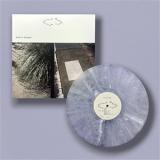
Emily A. Sprague's Cloud Time traces an audio-spiritual journey through time and place, recorded across a long-awaited debut tour of Japan in the fall of 2024. Compiled from environmental improvisations captured in and for the moment, material at once welcoming, responsive, and inimitable, the album distills a voyage guided by psychic wayfaring, unbound presence, and activating performance for a reciprocal exchange with space, listener, and each fully engaged instant. The Japanese tour documented on Cloud Time held an almost mythic significance for Sprague, taking on properties of her own sonic white whale. After many near-departures and dropped plans to play in the country, "the empty spaces of cancelled trips and forgotten music turned into strange little misty spirits that I felt followed by," she says. "When I began preparing for the tour, I couldn't shake a sense that the invitation to Japan was more about opening myself up to this new place instead of bringing something into it tightly under my control. Improvisation has always been such a pillar in my music practice, and I really wanted to meet the country, spaces and people through that process." To amplify these intuitive whispers on-stage, Sprague reimagined her time-tested live rig, designed to be as free from error as possible, as a looser, more flexible set up that would allow her to interface with what was essentially a blank sonic canvas every night. Each performance became a collaboration between environment and instinct, Sprague processing the events, energies, and emotions informing the evening through her new sound ecosystem, and projecting an entirely present and unique version of herself to each open-eared and hearted crowd. "It was very much more than just an act of playing for me, but a total experience of time and place," she says. The seven long-form pieces that plot the course of Cloud Time, excerpted from over eight hours of recordings archived on the artist's on-stage recorder and generously shared on the album with no additional mixing and only minimal editing, invite listeners to become still in these deep-rooted moments of presence as the album moves from city to city, venue to venue. Cloud Time chronicles material recorded at each tour stop, Sprague selecting and sequencing the album around mood-based storytelling more so than linear chronology. "I tried to make the whole album flow in the way that any one of the complete live performances did," she explains, "while also keeping the spirit of the whole thing as a journey." The result is equal parts travelog, love letter, and impressionistic collage channeled from the potent ferment of a now encased in the glowing amber of memory. Intrinsically inspired by kankyo ongaku, an environmental music philosophy, known both in and widely outside of Japan that tunes into the similarly expansive ethos as Pauline Oliveros' deep listening practice and posits the listener as composer, Cloud Time is ambient music that seems to be listening right back, grounded in heartfelt synthesized frequencies that abundantly hold and heal. Pieces like "Nagoya," "Tokyo 1," and the ten minute "Matsumoto" in particular hum with the atomic resonance of gently tended landscapes, offering space for tuning way in and dropping far out from perspectives that stifle and bind. Cloud Time is an invitation to embrace each moment as both fleeting and eternal, floating by with nothing to grasp onto and absolutely everything to gain. The exercise in acceptance and letting go that Sprague practiced throughout the tour deeply impacted her understanding of self as both a guest and venerable performer. "The process of loving wherever I am, being present and focusing on a clear channel of communication for mind and emotion, rooted so deeply in respect for the space, those within it, and myself, ended up being profoundly healing," she says. "My vision and hope is that this album can be released as a gift back to anyone who either was or wasn't there. A cloud time of life passing by."
- A1: This Is A Never Ending Story (You Just Need To Close It)
- A2: Hidden Road (For Yoo Jae-Ha)
- A3: It Must've Been The Sunset (That Altered My Memory From That Day)
- A4: Good Morning, Harrison, It's Time To Go
- A5: Let's Walk Down To The Swamp Together
- B1: Rainy Night Ride With Roy
- B2: Crows Over My Shoulder (Take Me)
- B3: Spiral Dance (Up Or Down, I'm Not Too Sure)
- B4: Dear Oddie, Today Rainbows Are Falling From The Sky
- B5: Lying Here Half Awake, I Hear Kids Outside Laughing With Their Hearts
Unlike anything we have heard from her before, Okkyung Lee returns to Shelter Press with "Just Like Any Other Day: Background Music For Your Mundane Activities", a deeply intimate body of recordings at the juncture of ambient music, minimalism, and the baroque, that stands as radical intervention with what experimental music can be, and the place that organisations of sound occupy in our lives. For more than two decades, Okkyung Lee has stood at the forefront of the most radical trajectories of experimental music: a virtuosic cellist and improviser, renowned for her creative rigour and emotive depth. Particularly noteworthy for her range, dexterity, and adaptability, over the last five years Lee's output has revealed unexpected shifts and developments that move far afield from the realms of free improvisation for which she is most well known. 2020's "Yeo - Neun", a heart-wrenching, ambient chamber work - drawing inspiration from the Korean popular music of her youth - was issued by Shelter Press to great critical response, followed closely by "Teum (The Silvery Slit)" - one of a series engrossing electroacoustic works created at Groupe de Recherches Musicales in Paris - on Portraits GRM, and then "Na-Reul" in 2021, regarded by Lee as a closing statement of more than two decades living in New York, which set the precedent of her allowing her emotions to fully occupy the forefront of the music for the first time. Marking her return to Shelter press, "Just Like Any Other Day": Background Music For Your Mundane Activities", encounters Lee upturning the apple cart once again, weaving a profoundly intimate artistic statement on completely unexpected terms. Like its three aforementioned predecessors, "Just Like Any Other Day" belongs to broadening shift in Lee's approach to composing that roughly aligns with her return to her native South Korea, having lived in the United States since her late teens. Infused with a deep reengagement with her own culture and relationship to memory, it is equally a response to those critical challenges and questions provoked by significant life change. Worked on in isolation, and continuously returned to, over the course of four years, the album's nine pieces began with a simple recognition that experimental music is not always what we imagine it to be. It is a practice and a pursuit - a music for which, at its inception, the outcome is unknown - rather than an idiom defined by certain syntaxes, approaches, and qualities of structure and sound. From this departure point, Lee began to inquire after the utility of music itself: what is it for, what does it do, and what place does it (or can it) occupy in our lives? This solitary and durational journey, each composition gradually moving through different phases and evolutions over years, led Lee toward uncharted ground: a music that is not only playful, introspective, and seductive, but also intended to provoke a relationship to experimental music beyond its normative expectations. Rather active or deep listening, it pursues passive listening. Rather than a grand statement, it is discreet. Rather than virtuosity, it embraces the elegant and direct. Even more strikingly, for the first time, the music of "Just Like Any Other Day" encounters Lee leaving the cello entirely behind. Created at home on keyboard, computer, and an inexpensive cassette recorder, "Just Like Any Other Day" presents a remarkable form of ambient music - organisations of sound that become their own environment, to be occupied - intended, as the album's subheading infers, as Background Music For Your Mundane Activities. An expansion of the creative pathways opened by the Korean pop imbued compositions of Yeo - Neun, aspects of electronic process explored by "Teum (The Silvery Slit)", and the emotive foregrounding of "Na-Reul", each of the pieces presented across the two sides of "Just Like Any Other Day" implies something far greater than the limits of its own temporarily: a mood, provocations of memory and place, mirrors for the solitude within which it was made, and palpable emotion lingering just out of grasp. For Lee, each of the album's compositions could be continued or looped for an indeterminate duration: straddling a ground between the minimal and the baroque, enveloping the listener in endless cycles of appreciating, repetitive and rhythmical notes, flirting with the melodic and implying a disembodied imagism that borders on the profound. Remarkably beautiful and direct, Okkyung Lee's "Just Like Any Other Day: Background Music For Your Mundane Activities" - issued by Shelter Press on vinyl - represents a radical reconfiguration of experiential music, stripped to its bare essence in defiance of the widely presumed aesthetic signifiers. Unlike anything we've heard from her before, this immersive body of intimate recordings not only reveals new dimensions of Lee's striking range as an artist, but also of how we might regard and occupy music itself: an ambience to lived and felt like a second skin.
Das selbstbetitelte Album von Ava Luna markiert eine fundierte und introspektive Entwicklung für das Quartett aus Brooklyn. Die Band, die nun aus Carlos Hernandez, Julian Fader, Ethan Bassford und Felicia Douglass besteht, kehrt nach einer längeren Pause mit einem reduzierten Sound zurück, der sich auf Schlagzeug, Bass und zwei Gesangsstimmen konzentriert. Dieser Back-to-Basics-Ansatz, eine Abkehr vom ,kosmischen" Gefühl ihres Vorgängeralbums ,Moon 2", hat seine Wurzeln in gemeinsamen Erfahrungen in NYC und den Rhythmen des Alltags. Themen wie Erschöpfung, Gemeinschaft und fragile Freude tauchen in Songs wie ,Lasting Impression" über die Arbeitsmüdigkeit und ,Math Money Job", einem spielerischen Gesang über Wiedersehen und Verkörperung, auf. Julians Schlagzeug und Ethans Bass Themen wie Erschöpfung, Gemeinschaft und prekäre Freude tauchen in Tracks wie ,Lasting Impression" über Arbeitsmüdigkeit und ,Math Money Job", einem verspielten Gesang über Wiedersehen und Verkörperung, auf. Julians Schlagzeug und Ethans Bass treiben das Album an, das teilweise vom rohen Sampling-Stil von Soul Coughing inspiriert ist, der in Tracks wie ,Frame of Us" zu hören ist. Gesanglich bewegen sich Carlos und Felicia wie eine Einheit - sie verschmelzen, harmonieren und fragmentieren mit Absicht, besonders in ,Archive". Obwohl im Kern minimalistisch, ist der Sound des Albums üppig und strukturiert, angereichert durch Congas von Reggae-Legende Larry McDonald, Klavier, Samples und Gitarren-Noise. Songs wie ,Social Diving" und ,My Walk" spiegeln persönliche und urbane Geschichten wider, während ,Your Man" und ,Fancy" von Widerstandsfähigkeit und Würde erzählen. Das Ergebnis ist Ava Luna in ihrer ehrlichsten und raffiniertesten Form - ein Porträt von NYC und einer Band, die sich noch immer weiterentwickelt und nichts von ihrer Dringlichkeit eingebüßt hat.
Docile is a reaction to the stimulus that is Detroit. The “my way e.p.” is a product of a turbulent time of readjustment. Made from Weathering confusion and standing strong. Docile refines a style of minimal that is authentic and independent from mainstream dogma. Docile belives in the vinyl record; a.garcia presses and checks every copy himself. Docile is, and will remain for itself.
"1 more day” builds a bed of unfocused synth for a healthy and life sick melody to nuzzle in. A heart felt tune of 4/4 simplicity grounded by an easy knock and an array of ticks. ”Hold up bro” a topsy turvy funk swing of chopped sound, voice and bassline escorted and overwhelmed by a mystic serenade of a synth. “Almost gone” assembles random sound into a soulful fragmented rhythm made steady by a poppy kick and stiff tick that breaks and stumbles into a dramatic melody. ”Detroit Rumble” struts tuff with a belligerent bassline and a menacing minimal kick that rattles and deforms chimes across a spartan and haunted landscape,
Manchester based trio, Sonnenspot have unashamedly taken their favourite records from the Kosmische Musik landscape and fused these to inform their own spontaneous sonic constructions. Motorik drums, pulsating flutes, wah guitar and almost excessive use of space echo make this a dense and dreamy listen, with a hint of the rainy pensiveness of their home town.
Notable inspiration from Neu!, Manuel Gottsching, Sonic Youth and Yo La Tengo is all clearly audible in the various recordings on this album and minimal effort was made to shy away from this. The longest track 'Motorway' is an epic homage to the space rock art form and 'Madrugada' takes both John Martyn's 'Small Hours' and Gottsching's 'Inventions' as a starting point. Others include the tobacco lovers art-rock-ear-worm ('Liquorice Paper'), a dub laden celestial synth jam ('Slow Blinker') and the album opens with the first thing the band ever recorded, as a meaningless improvisation to tune their synths up to ('Figurescene'). Turned out it had a killer bass line and drum part.
Initial sessions were mostly just an excuse for the three long standing friends to get together musically for the first time, and after knowing each other for many full moons, it was long overdue.
They all bring some peripheral musical heritage to the table. Ian Smith was the guitarist in Alfie and the The Beep Seals and played on Badly Drawn Boy's 'The Hour of Bewilderbeast'. Pete Philipson played in Jane Weaver's band for ten years and has made his own ambient guitar albums. Dan Hope plays in the jazz folk band Mother Sky and promotes events around the city under the Rainy Heart banner.
They were joined by another long term musical friend Sam Kynaston who added heavenly flute to much of the album.
Perfect Location Records in partnership with the one and only Ear Candy Music is proud to announce 00-04, a compilation of early works by Bevan Smith aka Signer, New Zealand’s most prominent name in ambient electronica and dub techno.
Smith has been producing emotive chords, pop ambience, and thick dub-ospheres since before the turn of the century. His output is prolific, ranging from various solo monikers (Aspen, Introverted Dancefloor) and collaborations (Skallander, Feeling Flying) to unique projects (Touching the Void soundtrack, Isolated Dreams’ 24 EPs and counting). A rare artist with indie crossover appeal thanks to the 2004 Signer album The New Face of Smiling released on Carpark Records (Toro Y Moi, Beach House, Dan Deacon, Montag), Smith has played as a member of bands such as The Ruby Suns (Sub Pop), Over the Atlantic (Involve), and Glass Vaults (JUKBOXR).
Encompassing field recordings and evoking a cloudy coastal sky, 00-04 is a collection of mostly unheard material written in the early 2000s as Smith navigated the chaos and stress of living in London just after 9/11. A portion of this release may be recognisable to those familiar with the Involve catalog––“Drone Early,” for example, is an alternative version to the dub giant “1201A”––and to those acquainted with Signer’s 2002 Low Light Dreams (Carpark/Involve), an iconic album composed of processed guitar, dub-influenced bass, and synth drones; as if that doesn’t sound appealing enough, Low Light Dreams is home to “Building Memories Without You,” an unforgettably engulfing track featured on Fact Magazine’s 25 Best Dub Techno Tracks of All Time.
00-04 is a (re)issue both nostalgic and new, familiar yet unknown, fresh out of the archive. It possesses the Low Light Dreams aural palette while offering a carefully curated array of never before heard icy-cold moods, soothing minimalism, and shyly optimistic melodies, all glazed with recently finalized additions.
- A1: Cadux Plectere I
- A2: Lacinia Off Axis
- A3: Maris Stella Plectere Ii
- A4: Ere
- B1: Arborea Plectere Iii
- B2: Eve
- B3: Sidereus Plectere Iv
- B4: Lacinia In Axis
- C1: Veris Plectere V
- C2: Nova Pt I
- C3: Eve For String Orchestra
- C4: Nova Pt Ii
- D1: Matrix Plectere Vi
- D2: Maris Stella Plectere Vii
- D3: Lacinia Off Axis
- D4: Cycle Plectere Viii
Returning to Die Schachtel with his fourth full-length with the label, the Genoa born, Bologna based, guitarist and electroacoustic composer, Stefano Pilia, delivers “Lacinia”, a new, immersive cycle of compositions, delving deeper into the realm of metaphysical, spiritual, and divine meaning, weaving astounding arrangements of sonority from a palette of synths, strings, brass, organ, various electroacoustic instruments, and percussion. Resting at a refined intersection of the acoustic and electroacoustic, drone, and chamber music - overwhelmingly beautiful, delicate, and bold, - “Lacinia” stands as a high-water mark in Pilia’s already remarkable and forward-looking career.
Since its founding in Milan during the early years of the new millennium, Die Schachtel has occupied a singular place in the landscape of experimental music, issuing a carefully curated body of reissues and archival releases by historically significant figures and projects like Christina Kubisch, Luciano Cilio, Marino Zuccheri, Prima Materia, Claudio Rocchi, Lino Capra Vaccina, Gruppo di Improvvisazione Nuova Consonanza, Roland Kayn, and numerous others, balanced against bristling contemporary counterparts by the likes of Jim O'Rourke, Giovanni Di Domenico, Nicola Ratti, Luigi ArchettI, Valerio Tricoli, etc. Running like a spine through the label’s output is a deep dedication to the work of the Italian guitarist and electroacoustic composer Stefano Pilia. Now Die Schachtel returns with “Lacinia”, Pilia’s forth full-length with the label and their first release of 2024. Building on the ground of deeply personal engagement with metaphysical, spiritual, and divine meaning, explored within his previous LP with Die Schachtel, 2022’s “Spiralis Aurea”, “Lacinia” encounters the composer working in close calibration with various ensembles, including the Bologna based Ensemble Concordanze and Comunale di Bologna String Orchestra, weaving synths, strings, brass, organ, various electroacoustic instruments, and percussion into an astounding reconfiguration of immersive, contemporary minimalism that stands among Pilia’s most noteworthy releases to date. Issued by Die Schachtel in two special double vinyl editions and a CD edition, “Lacinia” features artwork by Bruno Stucchi/Dinamomilano, and is an absolute marvel that draws you in and doesn’t let go.
First emerging during the early 2000s, over the past two decades – via solo releases and numerous collations with artists like Oren Ambarchi, Valerio Tricoli, Alessandra Novaga, Z'EV, Andrea Belfi, David Grubbs, and numerous others - the Genoa born, Bologna based, guitarist and electroacoustic composer, Stefano Pilia has presented a singular voice within Italian experimental music, harnessing visceral energy and hands-on immediacy within delicately woven tapestries of sonority, each investigating the sculptural properties of sound and illuminating its relationship to space, memory, and the suspension of time. “Lacinia”, Pilia’s forth solo venture with Die Schachtel, encounters the composer reentering his longstanding practice of collaboration with various ensemble forms, including the Bologna based Ensemble Concordanze, for the albums central piece, “Lacinia Off Axis”, spinning stunning string confirmations by Pietro David Carami and Elena Maury on violin, Alessandro Savio on viola, and Mattia Cipolli on cello.
A new, important cycle of compositions by Pilia, “Lacinia” (meaning "lace" in Latin) builds upon the exploration of the metaphysical, spiritual, and divine dimensions through numbers, geometry, and the creation of tonal forms explored by 2022’s “Spiralis Aurea”, mirroring archetypal, immutable forms at the juncture of the abstract realm of mathematics and architectural structures in the physical world, expands the poetics and compositional ideas featured in its predecessor. Regraded by Pilia as both a series of individual compositions and a single work, “Lacinia” was conceived to “define a circular path (a sort of "rhizomatic lace") where the beginning and end touch, suggesting the concept of time not only as linear but also cyclical and ritualistic—an eternal return, a process of transformation where matter changes, its state changes, but without altering the invisible internal principle of mutation”, embarking upon a a series of “steps, degrees, and energetic quanta in a progression of archetypal whole numbers and transcendent creation.”
The resulting 16 tracks unfold as a series of complex sonic meditations. While deeply resonant with the minimalism of composers like Arvo Pärt, LaMonte Young, Pauline Oliveros, and Eliane Radigue, Pilia digs deep and moves far beyond the predictable tonal relationships and structures of that idiom, echoing the ancient liturgical and devotional music of composers like Gesualdo da Venosa, Monteverdi, and John Dowland, at a refined intersection of the acoustic and electroacoustic, drone, and chamber music.
Fascinatingly structured as a whole to include a number of motif returns, across which we encounter works like “Lacinia Off Axis” appearing in slightly different rendering, states, or evolutions three times, and compositions like “Eve” appearing twice in subtly different forms and arrangements - first for four oscillators, guitar and voice and then for string orchestra - as well “Maris Stella”, which similarly makes two appearances, first for horn trio, organ and percussion, and then for string orchestra, with “Lacinia” Pilia delves further into the world of chamber music than ever before, creating a deeply inward, mediative body of work the totality of which, guided by its rich string arrangements of arching, sorrowful tone, feels almost like a mass for some unproclaimed loss; simultaneously locked in the nuances of a moment, while managing to suspend time.
Perhaps most remarkable is Pilia's ability to create a remarkable sense of sonic cohesion while using such a varied number of ensembles and instrumentation. From the sprawling string arrangements delivered by Comunale di Bologna String Orchestra, under the direction of Paolo Mancini, and Ensemble Concordanze, and a flute trio (Cadux / Plectere) brilliantly played by Manuel Zurria, to pieces for sax, organ and percussion, violin duo and percussion, organ and percussion, Pilia manages to create a sense of singular, encompassing world that flows forward like a shifting stream.
Overwhelmingly beautiful, delicate, and bold, “Lacinia” is unquestionably a high-water mark in Stefano Pilia’s already remarkable, forward-looking career. Nothing short of a marvel of contemporary Minimalism that, through its shifting arrangements of harmonics, tonality, and texture draws flickering images of ancient forms of music into the present day, “Lacinia” is Issued by Die Schachtel in two special editions on double vinyl and a CD edition, featuring artwork by Bruno Stucchi/Dinamomilano. This is an immersive all-consuming listen that can’t be missed.

- A1: Etude No. 1
- A2: Etude No. 2
- A3: Etude No. 3
- B1: Etude No. 4
- B2: Etude No. 5
- B3: Etude No. 6
- C1: Etude No. 7
- C2: Etude No. 8
- D1: Etude No. 9
- D2: Etude No. 10
- D3: Etude No. 11
- E1: Etude No. 12
- E2: Etude No. 13
- E3: Etude No. 14
- F1: Etude No. 15
- F2: Etude No. 16
- G1: Etude No. 17
- G2: Etude No. 18
- H1: Etude No. 19
- H2: Etude No. 20
The Complete Piano Etudes of Philip Glass available for the first time on vinyl, housed in a 4LP Box set (also available as a 2CD format).
After more than thirty years of working with and performing the great repertoire, the music of Philip Glass has, in a way, almost revolutionized my life as a musician,” confides Vanessa Wagner.
An emblematic artist on the French music scene, winner of a Victoire de la musique award and director of the Chambord and Giverny festivals, Vanessa Wagner is as inspired in her interpretation of Mozart, Debussy, Tchaikovsky and Dusapin as she is alongside Murcof and Rone.
With her innovative and daring approach, she has established herself as a major influence on the classical music landscape, crossing boundaries and blazing inspiring trails.
A tireless pioneer of new repertoires, she has been exploring the repertoire of minimalist composers for several years. For InFiné, she has dedicated 4 albums to the major figures of this movement, John Adams, Meredith Monk, Brian Eno, Ryūichi Sakamoto, as well as to the new generation Caroline Shaw, Bryce Dessner and Nico Muhly.
After giving numerous concerts based on these works, she felt the need to record in their entirety this essential monument in the history of music, which bridges the gap between the 20th and 21st centuries: Philip Glass's 20 Etudes for piano
by Philip Glass.
His approach helps to place these two books in the great repertoire, alongside the great cycles of studies by Ligeti, Debussy, Dusapin, and before them, Chopin and Liszt.
Philip Glass was born in 1937 and grew up in Baltimore. He studied at the University of Chicago, the Juilliard School and in Aspen with Darius Milhaud. Dissatisfied with much of what was then considered modern music, he moved to Europe, where he studied with the legendary pedagogue Nadia Boulanger (who also taught Aaron Copland, Virgil Thomson and Quincy Jones) and worked closely with sitar virtuoso and composer Ravi Shankar.
The thread linking Philip Glass to Vanessa Wagner may be as simple as a detail: a moment, a pedagogy, a way of looking at the piano. In Words Without Music, Glass recalls his apprenticeship with Nadia Boulanger in Paris - a lesson in rigorous received just as the Nouvelle Vague was about to shatter the conventions of cinema the conventions of cinema, just as the composers of the minimalist movement had done with with the language of music. Nurtured by Ravel and Debussy, the great French pedagogue disciplined yet inquisitive minds, capable of embracing modernity without denying modernity without denying their heritage.
“Oh damn I got fired suddenly, replaced by a hydraulic pump with life long guarantee”.
The undefinable Kaboom Karavan returns to the dusty Belgian roads with a total Fiasko! - or a full blown disaster if you will (seen from a minimalist perspective), although one that might be the antidote to the sterilised and scattered world that increasingly surrounds us. Fiasko! represents a musical chaos that feels both ecstatic, fun, as well as deeply melancholic. Like an overwhelming moment where the world seems to touch you on all senses. This is music for a new underground of black tie workers raising up to the dullness of societal norms by connecting to their inner child. It’s protest music towards the new normal, where the rules are thrown out of the window and unpredictable sense of joy prevails. Shortly said, Fiasko! Is contemporary exotica made by a madman with too much time on his hands.
As usual, Kaboom Karavan releases contains a conglomerate of strange, mostly home made instrumentation, which will be too long to list here. To shorten it down… Bram Bosteels himself, the captain of the ship, plays all kinds of acoustic instruments, guitars, electronics and uses his voice. Additionally we have Bart Maris on trumpet, tuba and trombone. Stefaan Smagghe plays violin and sarangi. Lastly we have Raphael de Cock on such typical instruments as igir, jadagan and uillean pipes. All that remains to be said is: Bring your neighbour, let yourself loose and have some fun. Listen to Fiasko!
Returning with its final instalments, Die Schachtel's Decay Music series extends its explorations of inspired contemporary experimental efforts of the ambient, ethereal, and emotively abstract with Luigi Turra and Elio Martusciello’s “Liminale” and Sergio Armaroli and David Toop’s “And I Entered Into Sleep”, two astounding electroacoustic gestures of blurred space and time, plumbing complexity of meaning bound to sonority. Creatively groundbreaking and inspired, radically rethinking the terms of what ambient music can be perceived to be, they stand among the most striking efforts to appear within the series to date.
An aural bridge between two distinct generations of Italian experimental musicians, “Liminale” is the debut collaborative outing from the creative partnership of Luigi Turra and Elio Martusciello. Active within the context for roughly two decades, Turra (b. 1975) is a reductionist/electroacoustic composer, noted from his tense deployment of concrete and acoustic sources — particularly small sounds and noises — whose work threads the balance between silence, tactile auditory perception, and aleatoric music. Martusciello (b. 1959), on the other hand, is a musician and composer working across the fields of acousmatic and electroacoustic composition, sound installation, multi-media and audiovisual art, and computer music improvisation, who is widely celebrated for both his solo efforts and his collaborations with Eugene Chadbourne, Mike Cooper, Alvin Curran, Chris Cutler, Rhodri Davies, Iancu Dumitrescu, Michel Godard, Tim Hodgkinson, Lawrence D. "Butch" Morris, Jérôme Noetinger, Tony Oxley, Evan Parker, Z'EV, and others.
A single, nearly 40 minute work, extending across the two sides of the LP, “Liminale” — as its title eludes — is an exploration of the liminal through sonic means: “places that exist on the threshold, transitional spaces suspended between a before and an after, between the real and the evanescent” conceiving the soundscape as “a liminal place, a space to be inhabited without the certainty of where it leads.” Unfurling like a labyrinth navigated in darkness, the piece’s first half is marked by sparseness and restraint, as slow-paced guitar tones and harmonics thread silences and resonant ambience within a sprawling sense of space, delicately populated by tiny sounds, fleeting punctuations drawn from undeterminable sources, vocal utterances, and the unexpected appearance of intoxicating piano tones.
As “Liminale” progresses into its second half, Turra and Martusciello enter a more densely populated notion of the in between. No less defined by the presence of space and mystery, discreet textures rustle and writhe within passages of pure concrete abstraction and a fragmented, stretched sense of musicality: long-tones, metallic pulses, minimal vibrations, processed vocalizations, guitar harmonics, and deconstructed piano melodies, buried in spectral, gauzy hazes drifting from beyond arm’s reach within an imagistic and immersive landscape of profoundly meditative scope, where each sonic element flirts the line between emergence and disappearance.
Intimate, fragile, and achingly beautiful, “Liminale”, Luigi Turra and Elio Martusciello’s debut collaboration, is a masterstroke in sound-craft and composition, revealing the potency of meaning locked within transitional spaces and the undefined, and imbuing silence with monumental gravity and weight. Mastered for vinyl by Giuseppe Ielasi, and taking electroacoustic minimalism to an etherial extreme, “Liminale” is issued as the ninth entry in Die Schachtel’s Decay Music series, highlighting inspired contemporary experimental efforts of the ambient, ethereal, and emotively abstract.
Returning with its final instalments, Die Schachtel's Decay Music series extends its explorations of inspired contemporary experimental efforts of the ambient, ethereal, and emotively abstract with Luigi Turra and Elio Martusciello’s “Liminale” and Sergio Armaroli and David Toop’s “And I Entered Into Sleep”, two astounding electroacoustic gestures of blurred space and time, plumbing complexity of meaning bound to sonority. Creatively groundbreaking and inspired, radically rethinking the terms of what ambient music can be perceived to be, they stand among the most striking efforts to appear within the series to date.
Reconfiguring the notion of bridge building on a multitude of terms, it feels fitting that the tenth and final installment of Die Schachtel’s Decay Music series, Sergio Armaroli and David Toop’s “And I Entered Into Sleep”, was co-created by an artist whose work featured in the first suite of LPs issued by Brian Eno’s Obscure Records in 1975, the groundwork toward which Decay Music’s own efforts nod. Since that auspicious debut, “New and Rediscovered Musical Instruments” — his split with Max Eastley — David Toop has been regarded as a pioneer in British experimental and improvised music: a sonic voyager who has continuously challenged the sources and materiality of sound through rigorously thoughtful performances, a vast catalog of recordings, and a steady flow of highly influential texts. Be it as a member of Alterations, his group breaking group with Peter Cusack, Terry Day, and Steve Beresford that ran between 1977 to 1986, or through is noteworthy work with artists like Rie Nakajima, Thurston Moore, Paul Burwell, Rhodri Davies, Lee Patterson, Ryuichi Sakamoto, Akio Suzuki, Elaine Mitchener, and numerous others, collaboration has always played a central role within Toop’s singular practice, but few can claim the sprawling sense of beauty and intimacy that’s achieved by “And I Entered Into Sleep”, his first recorded outing with Sergio Armaroli.
A composer, percussionist, vibraphonist, and multidisciplinary artist, Armaroli has been issuing radical and forward-thinking musical gestures for decades, working as one of Italy’s most noteworthy interpreters of composer’s like Giacinto Scelsi, John Cage, Franco Evangelisti, Giancarlo Schiaffini, and Walter Branchi, as both a solo performer and member of the highly regarded Rib Trio, as well as forging a singular practice as a composer, intertwining his efforts as a painter, concrete percussionist, fragmentary poet and sound artist, within a total art, rooted “within the language of jazz and improvisation” as an “extension of the concept of art”. Like Toop, Armaroli’s career has been populated by many collaborators, notably with Riccardo Sinigaglia, Alvin Curran, and Walter Prati, among others, setting the stage for a remarkable meeting between the pair.
Featuring Armaroli on vibraphone and prepared vibraphone and Toop on electronics, “And I Entered Into Sleep” is “a sonic journey, a Proustian suggestion à la Recherche, into the unconscious between electronic and acoustic sounds”. Using a bell that sounds at the beginning of Proust’s “À la Recherché du Temps Perdu”, which reappears more than 3,000 pages later — signaling a transition of phases, as well an auditory trigger of memory — as a departure point, as an association to the percussive vibraphone pulses that thread the album’s two sides, the pair weave a striking interior world of immersive psychological depth. Feeling almost subaquatic at times, like captured glimpses of rumbling, shadowy ecosystems lost within murky ambiences, before washing ashore in a series of pointillistic, highly detailed alien landscapes of the mind, each artist’s markedly different sound-sources, and treatment of the subsequent material elements, dance in abstract grace, incorporating subtle nods to minimalism, free jazz, and musique concrète within its seamless total form of sparse texture and tone.
Easily one of the most striking and memorable releases by either artist to appear in recent years, Sergio Armaroli and David Toop’s “And I Entered Into Sleep” traverses uncharted realms at the borders of literary reference, sound art, ambience and abstraction through delicately musical sounds, revealing new depths at every turn. Issued as the tenth and final album in Die Schachtel’s Decay Music series, highlighting inspired contemporary experimental efforts of the ambient, ethereal, and emotively abstract.
The Argentine-born producer, now based in Munich, presents his long-awaited
debut album Bleeps Don't Cry, born out of a period of emotional upheaval in the
artist's life, and marks an immersive sonic journey through bw's evolving inner
world.
The record blends hypnotic, dub-infused rhythms with haunting atmospheres and
introspective ambient explorations. With this release, bw presents a raw, strippeddown aesthetic and a deeply personal approach to modern electronic music.
Both the artist and his self-titled label, bw, exist as a refined underground entity
with a keen ear for quality and contemporary techno. His tracks are crafted with
minimal yet vital elements, each sound added like a crucial ingredient, emotionally
expressive and essential to the whole.
- Tokyo 1
- Osaka
- Nagoya
- Matsumoto (Beginning)
- Matsumoto (Ending)
- Hokkaido
- Tokyo 2
- Each Story
Cloudy White Vinyl[31,89 €]
Emily A. Sprague's Cloud Time traces an audio-spiritual journey through time and place, recorded across a long-awaited debut tour of Japan in the fall of 2024. Compiled from environmental improvisations captured in and for the moment, material at once welcoming, responsive, and inimitable, the album distills a voyage guided by psychic wayfaring, unbound presence, and activating performance for a reciprocal exchange with space, listener, and each fully engaged instant. The Japanese tour documented on Cloud Time held an almost mythic significance for Sprague, taking on properties of her own sonic white whale. After many near-departures and dropped plans to play in the country, "the empty spaces of cancelled trips and forgotten music turned into strange little misty spirits that I felt followed by," she says. "When I began preparing for the tour, I couldn't shake a sense that the invitation to Japan was more about opening myself up to this new place instead of bringing something into it tightly under my control. Improvisation has always been such a pillar in my music practice, and I really wanted to meet the country, spaces and people through that process." To amplify these intuitive whispers on-stage, Sprague reimagined her time-tested live rig, designed to be as free from error as possible, as a looser, more flexible set up that would allow her to interface with what was essentially a blank sonic canvas every night. Each performance became a collaboration between environment and instinct, Sprague processing the events, energies, and emotions informing the evening through her new sound ecosystem, and projecting an entirely present and unique version of herself to each open-eared and hearted crowd. "It was very much more than just an act of playing for me, but a total experience of time and place," she says. The seven long-form pieces that plot the course of Cloud Time, excerpted from over eight hours of recordings archived on the artist's on-stage recorder and generously shared on the album with no additional mixing and only minimal editing, invite listeners to become still in these deep-rooted moments of presence as the album moves from city to city, venue to venue. Cloud Time chronicles material recorded at each tour stop, Sprague selecting and sequencing the album around mood-based storytelling more so than linear chronology. "I tried to make the whole album flow in the way that any one of the complete live performances did," she explains, "while also keeping the spirit of the whole thing as a journey." The result is equal parts travelog, love letter, and impressionistic collage channeled from the potent ferment of a now encased in the glowing amber of memory. Intrinsically inspired by kankyo ongaku, an environmental music philosophy, known both in and widely outside of Japan that tunes into the similarly expansive ethos as Pauline Oliveros' deep listening practice and posits the listener as composer, Cloud Time is ambient music that seems to be listening right back, grounded in heartfelt synthesized frequencies that abundantly hold and heal. Pieces like "Nagoya," "Tokyo 1," and the ten minute "Matsumoto" in particular hum with the atomic resonance of gently tended landscapes, offering space for tuning way in and dropping far out from perspectives that stifle and bind. Cloud Time is an invitation to embrace each moment as both fleeting and eternal, floating by with nothing to grasp onto and absolutely everything to gain. The exercise in acceptance and letting go that Sprague practiced throughout the tour deeply impacted her understanding of self as both a guest and venerable performer. "The process of loving wherever I am, being present and focusing on a clear channel of communication for mind and emotion, rooted so deeply in respect for the space, those within it, and myself, ended up being profoundly healing," she says. "My vision and hope is that this album can be released as a gift back to anyone who either was or wasn't there. A cloud time of life passing by." Emily A. Sprague's Cloud Time will be released Friday, October 10th in vinyl, Japanese import CD (via Plancha), and digital editions.
Sublunar is thrilled to announce its next release: Kashpitzky's powerful new EP, Steampunk.
Affiliated with esteemed labels such as Blueprint, Be As One, and Token, Kashpitzky proves once again why he is one of the most exciting artists in today's techno landscape. With Steampunk, he delivers a set of tracks that showcase not only his signature sound design and unique energy, but also his ability to craft music that feels timeless.
The journey opens with Aborted, where intricate grooves and striking sound design merge into a truly distinctive piece, setting the tone for the record. Erath follows with a muscular and driving character, powered by a vocal that drops at key moments to amplify its raw energy.
On the flip side, Steampunk offers a minimal yet highly effective groove, a versatile track built to work in any context. Code 2 pushes deeper into hypnotic territory a perfect fusion of modern textures and classic sensibilities that leaves a lasting impression.
Closing the record is Last Day On Earth, an evocative outro where vocals and sounds echoing another era bring the journey to a haunting and memorable conclusion.
Originally released in 1992 via Tesco, »Cancer« was recorded one year earlier by Thymme Jones, Dan Burke, Mark Klein, Mitch Enderle, Chris Block, and Jim O'Rourke.
This one was mostly a group effort focused on a dark ambient atmospheric environment and experimental minimalism that crawls under your skin. Mark & Thymme’s heavy synth is omnipresent, Mitch & Chris scraping every piece of scrap metal they could find, Jim’s extended piano & tabletop guitar is apparent, the abstract sampling techniques of founding member Daniel Burke appear throughout, & the beautiful solo minimalist piano composition of Thymme’s closes the LP. Soundtrack like in its scope the album is another in the ongoing concept of music without a film providing a dark soundtrack to the nightmares or realities we wish we could forget. The 2025 edit & remaster removes the excess and hones the meat down to 7 essential tracks that show the projects oeuvre at that point in their lengthy history sounding clear & fresh with the newly mastered version by Andrew Weathers.
This LP features Christmas music for the piano in a timeless journey through the decades and centuries. These songs have been through a remarkable evolution over the course of several centuries, with the changes they have undergone reflecting the shifting musical styles and cultural influences that prevailed in various times. Composers such as Irving Berlin created Christmas songs centred around the piano that went on to become instant classics. An example that epitomizes this era is Irving Berlin’s ‘White Christmas’. The growth of Christmas carols arranged for piano is a monument to the everlasting spirit of the Christmas holiday as well as the development of musical styles throughout the course of history. On Merry Christmas Pianomania, Jeroen van Veen performs in his signa- ture focused, serene minimalist style, reimagining Christmas music from medieval carols to modern jazz-inspired pieces.
Gravitate, in case you didn't know, is yet another label from James Burnham aka Burnski aka Instinct. It's hard to keep up with the man's unrelenting yet brilliant work rate, but worth making the effort to do so if you like minimal, tech and garage. The latest on this fledgling project goes deep and arrives just in time for some balmy Ibiza party nights. 'Gravitate 03-1' is loopy and lazy and invitingly mid-tempo, 'Gravitate 03-2' picks up the pace a touch but is still couched in warm, roomy grooves and soul-drenched chords. The flipside brings more gritty and turbo-powered tech on 'Gravitate 03-3' then a nice silky and blissed out cruiser to close on 'Gravitate 03-4'. Four more functional but well-formed sounds from the brilliant Burnham.
HILOMATIK is proud to announce its first-ever vinyl release: the HILOMATIK A-Sides EP. This milestone edition delivers a tangible piece of HI-LO’s world, including seven techno tunes ranging from minimal to peak-time, from Township Rebellion, Roemisch, Dok & Martin, Modea, Helang, Pagano, Deus Deserto, Frank Arvonio, Alex Lentini and STOMP BOXX - a mix of established and young, talented producers.
Taking inspiration from the sounds of Space 92, Eli Brown, Adam Beyer, and label boss HI-LO himself, this EP balances hard-hitting rhythms with hypnotic, minimalistic moments, making it a must-have for techno enthusiasts. Released on all digital platforms in May 2025, this first vinyl release on the label marks a new and very exciting chapter of HILOMATIK.