Two classic cuts from Jorge Ben and Miriam Makeba take either side of this Mr Bongo Brazil 45 reissue.
’Xica Da Silva’ is one of Jorge Ben’s most well-known and well-loved cuts, housed on the legendary Africa Brazil LP that deserves a place in every collection. A magical MPB cut, it instantly transports you to the shores of Rio de Janeiro. With a low-slung funky samba flavour, Ben’s absorbing vocal recounts the legend of one of Brazil's oldest black icons.
On the flip side, Miriam Makeba serves up an entrancing, slowed-down, grooved-out version of ‘Xica da Silva’. A highly influential singer, songwriter, and civil rights activist from South Africa, this low and slow interpretation is doused in strutting guitar, off-beat piano stabs and hypnotic drums providing the perfect platform to let Miriam’s vocal shine through.
Remastered with refreshed artwork.
Cerca:miriam makeba
- 1
“Any other singer can sing a love song and the audience will think about lovers lost and found. When I sing a love song it is a metaphor for the yearning of a subjugated people to be free.”
Miriam Makeba’s ‘Keep Me In Mind’ was her last album for Reprise and reflected major changes in both her own personal life and politically within the USA. After becoming a national star globally following the success of ‘Pata Pata’ in 1967, she had fallen out publicly with her mentor and ‘Big Brother’, Harry Belafonte. Makeba made the decision to return to Africa following an invitation from President Sékou Touré of Guinea. In Conakry, Makeba met Stokely Carmichael, President of civil rights organisation the SNCC and they would later marry. “With the Vietnam War, the student protests and the riots in the ghettos, everyone is scared,” Makeba said. “Everyone is afraid that there will be a great black uprising.” Makeba’s concerts were widely cancelled and both her and Carmichael were followed relentlessly by the FBI.
Reprise also terminated her contract but brought in producer Lewis Merenstein for her final recording for the label, best known for his work with Van Morrison on ‘Astral Weeks’. Merenstein suggested two Van songs for Makeba to cover, ‘Brand New Day’ from the ‘Moondance’ sessions and ‘I Shall Sing’ and further songs were added to reflect both the political climate and Makeba’s own memories including Stephen Stills’ ‘For What It’s Worth’ and Lennon & McCartney’s wistful ‘In My Life’. New compositions by Makeba and her daughter Bongi included ‘Lumumba’, a personal tribute to Congolese independence leader, Patrice Lumumba. Reflective of the times, the album is infused with a palpable despair but, as in all of her music, a quiet determination still shines through.
This new reissue of ‘Keep Me In Mind’ is presented in its original artwork and features rare photos and new extensive liner notes by Francis Gooding of The Wire. Remastered from the original tapes by The Carvery.
- Definitive edition of Miriam Makeba’s final album for Reprise in 1970
- Remastered by The Carvery from original reel to reel tapes
- 1LP and 1CD feature brand new sleeve notes by Francis Gooding of The Wire + rare photos
Miriam Makeba's 'Keep Me In Mind' was her last album for Reprise and reflected major changes in both her own personal life and politically within the USA. After becoming a national star globally following the success of 'Pata Pata' in 1967, she had fallen out publicly with her mentor and 'Big Brother', Harry Belafonte. Makeba made the decision to return to Africa following an invitation from President Sékou Touré of Guinea. In Conakry, Makeba met Stokely Carmichael, President of civil rights organisation the SNCC and they would later marry. "With the Vietnam War, the student protests and the riots in the ghettos, everyone isscared," Makeba said. "Everyone is afraid that there will be a great black uprising." Makeba's concerts were widely cancelled and both her and Carmichael were followed relentlessly by the FBI. Reprise also terminated her contract but brought in producer Lewis Merenstein for her final recording for the label, best known for his work with Van Morrison on 'Astral Weeks'. Merenstein suggested two Van songs for Makeba to cover, 'Brand New Day' from the 'Moondance' sessions and 'I Shall Sing' and further songs were added to reflect both the political climate and Makeba's own memories including Stephen Stills' 'For What It's Worth' and Lennon &McCartney's wistful 'In My Life'. New compositions by Makeba and her daughter Bongi included 'Lumumba', a personal tribute to Congolese independence leader, Patrice Lumumba. Reflective of the times, the album is infused with apalpable despair but, as in all of her music, a quiet determination still shines through.
- A1: Pata Pata (Mono Version)
- A2: Ha Po Zamani (Mono Version)
- A3: What Is Love (Mono Version)
- A4: Maria Fulo (Mono Version)
- A5: Yetentu Tizaleny (Mono Version)
- A6: Click Song Number One (Mono Version)
- B1: Ring Bell, Ring Bell (Mono Version)
- B2: Jol’inkomo (Mono Version)
- B3: West Wind (Mono Version)
- B4: Saduva (Mono Version)
- B5: A Piece Of Ground (Mono Version)
- C1: Pata Pata (Stereo Version)
- C2: Ha Po Zamani (Stereo Version)
- C3: What Is Love (Stereo Version)
- C4: Maria Fulo (Stereo Version)
- C5: Yetentu Tizaleny (Stereo Version)
- C6: Click Song Number One (Stereo Version)
- D1: Ring Bell, Ring Bell (Stereo Version)
- D2: Jol’inkomo (Stereo Version)
- D3: West Wind (Stereo Version)
- D4: Saduva (Stereo Version)
- D5: A Piece Of Ground (Stereo Version)
Strut presents an all-time classic of South African music, the definitive remastered edition of Miriam Makeba’s ‘Pata Pata’, her first album recorded for Reprise in 1966.
The album marked a significant international breakthrough for Makeba. Moving to the US after the anti-apartheid film ‘Come Back, Africa’ gained international attention and staying there in exile, she quickly built her career in New York during
the ‘60s, mentored by Harry Belafonte. Signing with Reprise after a period with RCA, she returned to one of her older songs: “I wrote ‘Pata Pata’ back in 1956, back in South Africa,” remembered Makeba in her autobiography. “It was a fun little song and I was thinking of a dance that we do at home (“pata” means ‘touch” in Zulu and Xhosa).” Originally a hit in South Africa with her early vocal harmony group the Skylarks, the new recording, produced by Jerry Ragovoy, brought a lighter uptempo R’nB arrangement, adding some English lyrics. “It was my first truly big seller. All of
a sudden, people who never knew I had been in America since 1959 were asking me to be on their television shows and play at their concert halls during 1967. In the discotheques, they invented a new dance called the ‘Pata Pata’ where couples dance
apart and then reach out and touch each other. I went to Argentina for a concert and, across South America, they are singing my song.” The track peaked on the Billboard Hot 100 at no. 12 and the album. Other songs In the album included a version of the traditional Xhosa classic, ‘Click Song Number One’ (‘Qongqothwane’), the atmospheric ‘West Wind’, later famously
covered by her friend Nina Simone, and a version of Tilahun Gessesse’s ‘Yetentu Tizaleny’ which Makeba learned on a trip to Addis to perform for Haile Selassie at the Organisation Of African Unity. Mastered by The Carvery from the original reel to reel tapes, ‘Pata Pata’ is released in its mono and stereo versions for the first time. Physical formats feature brand new sleeve notes alongside rare photos from the time of recording and session details.
The album is released on 6th September on 2LP, 1CD, streaming and digital
Wally Badarou is a synth pioneer and musical polymath. But rarely does he sing over his sumptuous tracks. The 6 songs that comprise new record Simple Things finally realise Wally's vision for select backing tracks from his beloved Colors Of Silence.
The tracks were originally developed back in 2001 for the release of the original CD; here, Wally has “simply" added overdubs and vocals to their mastered mixes with some discerning edits. Simply put, Simple Things is another slice of simply stunning Wally Badarou genius.
Simple Things has been decades in the making. Indeed, Wally struggled not only with the idea of singing these wonderful songs himself but singing them in English and writing his own lyrics, while wrestling with the sensational backing tracks, which themselves seemed to have taken on a life of their own.
As Wally explained to us: "In addition to the instrumental artist I have been known as, so far, there has always been a singer who simply was not sure he was, up until now. Even though “Back To Scales Tonight”, my very first album, was, indeed, a song album."
Opener "It Couldn't Be You" embellishes the uptempo groove of soca-funk gem "The Lights Of Kinshasa". As Wally explained to us, it's about “a simple love story somewhere, one rainy night, under the lights of Kinshasa. A woman, a man, online dating, quite usual in our times. Then they meet, almost missing each other." The guide vocal Wally had laid for Colors Of Silence - with an organ sound - seemed striving for words in Linguala, a Congolese language he could not speak. Therefore the decision to do it himself was not an easy one, for it had to be in English to fit his singing. We think it turned out pretty good!
"You Can't Hide Always" vocalises Wally's deep concerns set to the propulsive "Smiles By The Millions": "Populism, ostracism, radicalism, ethics and values all turned upside down worldwide, are they all inevitably exacerbated by our social networks? It could all melt down one day, like a house of cards in the ocean of fake news and false prophecies”. Wally wanted to keep the track as bare as possible but, inevitably, the backing vocals and the synth-brass arrive ultimately to present a welcome 70s flavour, with no snare-drum added.
The bright and breezy "We'll Make It Again" adds vocals to "Where Were We", a tropical, reggae-tinged bounce through the islands. Here's Waly: "Where were we when we last said: "I love you"? Simple words to express something quite common, but never quite simple to deal with. A simple song about the resilience of the broken hearts.” The reggae came from it being conceived when Wally was scoring for “Third World Cop”, a 1999 Jamaican action movie.
"Walk Straight Ahead" provides Wally's gorgeous, contemplative and idiosyncratic vocals to the deep serenity of Colors Of Silence highlight, "Amber Whispers". It's a gliding, divine, mini melodic masterpiece. It'll make you swoon in its extreme beauty. As Wally describes, "it started as just whispers, sweet amber whispers. Then the colour turned darker, as darker skies seemed to fall upon us while the whole world keeps on walking ahead, straight ahead, regardless of the blatant warnings, feeling much too comfortable in conformity. Initially, the verses were to be spoken only. I realised they could be sung all the while, without overshadowing the ethereal atmosphere." Amen.
The serene, celestial "Painting My Life Blue" presents the vocal version of "Days To Wonder". Says Wally, "how does it feel when your second half is gone after decades of riding life together? Past the temporary loss of your bearings, you come to realise you've been blind to the essential, and suddenly you can see...For this most intimate song of mine, I had tried to come up with a melody on top of the existing backing track, long before realising the melody was in the keyboard part already. It just needed to be properly mixed with it."
The profoundly emotional "Just Two Lovers" works up the formerly-too-brief and glorious "Crystal Falls" into a much fuller masterpiece and features acoustic guitar sparkle before fully glistening with some gentle head-nod percussion. Waly explains further: "Dear little green men, please tell me, what is it about us that makes you want to come and visit us so often (contrary to Fermi's assertion)? And here is the reply I believe I heard them sing: "You've got the key you've been searching for: Love”. I reverted to the initial backing track I had made around 1985, which already bore the melody, and which I added acoustic guitars to, before singing it." An astounding closer.
A synth specialist, there can be few artists more under-appreciated given their vast influence than Wally Badarou. His solo work practically defined the sound of the Balearic DJs of the 1980s, and thus the more sophisticated sound of dance culture thereafter. He was one of the Compass Point All Stars (with Sly and Robbie, Barry Reynolds, Mikey Chung and Uziah "Sticky" Thompson), the in-house recording team of Compass Point Studios responsible for a series of albums in the 1980s recorded by Grace Jones, Tom Tom Club, Mick Jagger, Black Uhuru, Gwen Guthrie, Jimmy Cliff and Gregory Isaacs. Badarou's keyboard playing could also be heard on albums by Robert Palmer, Marianne Faithfull, Herbie Hancock, M (Pop Muzik), Talking Heads, Manu Dibango and Miriam Makeba. He also produced Fela Kuti. Phew!
When we asked Wally about the significance of this collection's title, he explained: "These are "Simple things” that everyday’s life seems to build upon. The simplest are the harder to describe, but when satisfactorily described i.e. with simple words, they are the more genuine and authentic to express and share. I’ve immersed myself in other classic song lyrics, something I hardly did before, just to appreciate the genius behind the simple words they were made of, and had a great time studying how powerful they were in expressing complex ideas such as love."
Recording was twofold: first, most of the backing tracks were recorded in 2001, in Wally's studio in Normandy, mostly using hardware synths and Yamaha digital consoles. Then, he fine-tuned the melodies and wrote the lyrics in late 2023, then added some overdubs and sang them all during summer 2024. States Wally, "Digital Performer was and remains the DAW I’ve been using throughout, ever since the 80s."
Wally's sophisticated synth textures and expressive keyboard runs are so full of character, so full of life, that this work of art transcends any easy genre categorisation. Meticulously remastered and cut by both Simon Francis and Cicely Balston respectively, it has been pressed to the highest possibly quality at Record Industry in Holland. Sometimes, the simple things are the most extraordinary.
Unearthed from the Crammed Discs vaults after nearly four decades (Originally recorded in 1987), a hidden gem finally sees the light. Maurice Poto Doudongo’s The Lost Album arrives on vinyl for the first time—limited to 500 copies, with printed inner sleeve featuring release notes and photographs.
Back in the hazy margins of late-’80s Brussels, where boundary-blurring sounds were seeping through the cracks of pop music, a young autodidact named Maurice Poto Doudongo was crafting music that didn’t quite belong to any scene. Born in Kinshasa and growing up in Belgium, Maurice was a sonic nomad—raised on Franco, Miriam Makeba, and Tabu Ley Rochereau, transfixed by James Brown and Prince, and shaped by the fertile collision between African music and experimental electronics occurring all around him.
Leaving school at 16 to concentrate on music full-time, he began recording on borrowed 4-tracks, using cardboard boxes for percussion, and absorbing whatever sounds the airwaves served him: “Music has no frontier,” he says. “You take what you like. Prince, Fela, Papa Wemba—there is no contradiction. It’s all part of the sound.”
The result? A record that’s equal parts analog drum machine funk, homegrown Afro-pop futurism, and new wave R&B-informed synth poetry. Marc Hollander, founder of Crammed Discs, met Maurice through his friend and associate, musician/producer Vincent Kenis and quickly recognized the spark. The two began working in earnest, preparing tracks intended for a full-length release that, for reasons lost to time and memory, never materialized—until now.
Marc remembers: “The album was never completely finished. “Bolingo” was the only track that came out on a Crammed compilation at that time… and the rest sat on the shelf for decades until we started opening the Crammed vaults.”
Maurice recalls the session as being, “like an unstoppable current”. Listening now, the Lost Album feels both of its time and well beyond it. While tracks like “Momo” sound not a million miles away from the slinky and sophisticated Balearic pop ambience of Wally Badarou’s Echoes album, "Passport Train" shakes itself loose of any genre boundaries, veering into free-form Afro-electronica and tough electronic rhythm. Others pulse with a sweet and soulful groove that suggests dance floors dreamed of but never reached.
In decades hence, Maurice never left music, and the music never left him. Now working mainly as an arranger, he describes his job as being like that of a musical psychologist: “Someone comes to me with their sound, and before anything I have to understand their mind and heart,” he explains. That same intuitive fluency can be heard across this entire album—music that listens before it speaks, that absorbs before it asserts.
This reissue is more than a remastering. It’s a second breath. Sourced from cassette roughs and 24-track demos, carefully restored with Maurice’s blessing, and released as a complete album on vinyl for the very first time, The Lost Album isn’t lost anymore.
It just took nearly 40 years to find its way to you. - Editions de Lux
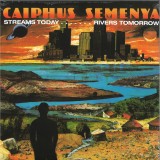
Caiphus Semenya, AKA Mr Letta Mbulu, is a South African legend and Streams Today… Rivers Tomorrow, his second solo LP, is perfect. A ten out-of ten album if ever we heard one. It’s also incredibly rare, especially in good condition, so Be With is delighted to present this reissue.
Now a revered composer, musician, and arranger, Caiphus left apartheid South Africa in the 60s for self-imposed exile in Southern California together with his wife, Letta Mbulu. Settling in Los Angeles he started working with the likes of Hugh Masekela and Miriam Makeba and other exiled and semi-exiled South african artists, as well as, of course, his wife Letta.
Caiphus also found himself working with and composing for a broad range of jazz and pop artists, including Lou Rawls, Nina Simone and Cannonball Adderley. His facility with both jazz and African forms served him well. His LA stay also the beginning of an ongoing collaboration with Quincy Jones, the fruits of which can be tasted in Caiphus’s African compositions for the scores to Roots and Spielberg’s adaptation of The Color Purple.
Originally released in 1984, Streams Today… Rivers Tomorrow is not just a musical masterpiece, it is also the soundtrack to the life of many South Africans - both then and now. Fusing the US-heavy sounds of boogie, disco and funk with Afrobeat and traditional African elements, it’s truly a spectacular listen. Jabu Nkosi handles keyboards on the album, with synths by Caiphus and Craig Harris. Sipho Gumede is on bass and Condry Ziqubu is on guitars.
The Afro-Cuban grooves of “Mamase” open the record. Continuing where Listen To The Wind left off, this is another horn-heavy call-and-response ode to a positive life. Life as an invitation to party, to take part, to “get involved”. But only if you’re willing to let in the transcendent power of music. “There’s gonna be a Mardi Gras, there’s gonna be a carnival; there’s gonna be a jamboree, there’s gonna be a bacchanal”. Who can resist that? Vibrations everywhere.
It’s followed by the joy of “Aida”. Gleeful, dayglow keys and synths *just* on the right side of mid-80s sleaze are accompanied by a killer bassline, slick, skipping drums and proud horns. Infectious funk.
The tempo is taken down a few notches for the powerful “Nomalanga” and the lamentations of a heartbroken man who must leave his wife Nomalanga and their children to join the fight against apartheid. It’s an emotional song, no question, but it doesn’t bring you down. The uplifting music and optimistic vocal delivery from Caiphus and his backing singers in the second half offer hope.
Breezy drums and contemplative keys act as a backdrop for the stunning backing vocal harmonies in the intro of “Moshanyana”. This gives way to stuttering beats, a bassline to die for and Caiphus giving it his all, over guitars, marimba and synth strings. Another slo-mo winner.
Side two opens with “Dial Your Number”, an uptempo English-language boogie-funk workout, complete with mid-song cutaway to a random telephone call. Whether or not this propels the song into “key track” status, we’ll let you decide.
What’s not up for debate is the brilliance of “Matswale”. This was a hit in South Africa in the mid-80s and you can still hear why. It might just be our favourite Caiphus hit. Wow. This is some damn fine breezy, beautiful, emotional pop. The restrained playing, the guitar licks and the gentle keys are out of this world. The beats? Thundering, direct and slick. The singing? It’ll give you goosebumps. As for the sentiment? This is Caiphus singing to his in-laws about their daughter’s adultery, begging them to intervene and help him save his marriage. Not your typical pop single story-telling!
The ferocious “Ndi-Kulindile” closes the set with a nod to the coming sound of the States. The hard-edged, electro-influenced drum patterns and bouncing, elastic bassline are something of a departure from the album’s predominant sound, yet one wonderful constant, Caiphus’s exceptional delivery and his sparring with his backing vocalists, is satisfyingly present and warmly deployed.
With Simon Francis handling the mastering of this Be With edition, you know it sounds as fantastic as ever. The stunning sleeve has been restored, with its painting of a dream-like cosmic vista, as a lone figure takes in a scene that’s part distant planet, part urban sprawl. One listen and you’ll be transported.
Caiphus Semenya, AKA Mr Letta Mbulu, is a South African legend and Streams Today… Rivers Tomorrow, his second solo LP, is perfect. A ten out-of ten album if ever we heard one. It’s also incredibly rare, especially in good condition, so Be With is delighted to present this reissue.
Originally released in 1984, Streams Today… Rivers Tomorrow is not just a musical masterpiece, it is also the soundtrack to the life of many South Africans - both then and now. Fusing the US-heavy sounds of boogie, disco and funk with Afrobeat and traditional African elements, it’s truly a spectacular listen. Jabu Nkosi handles keyboards on the album, with synths by Caiphus and Craig Harris. Sipho Gumede is on bass and Condry Ziqubu is on guitars.
One listen and you’ll be transported.
Limited edition of 500 copies.
Hard Top assembles the previously unreleased 1975 recordings of legendary South African saxophonist Kippie Moketsi (also spelled Moeketsi). The 2LP vinyl edition is presented in a gatefold sleeve featuring artwork by Mafa Ngwenya and comes from As-Shams Archive on the heels of the Tete Mbambisa's previously unreleased African Day album in 2024.
By 1975, at the age of 50, saxophonist Kippie Moketsi had already earned his stripes as a South African jazz figurehead. His tenure with the Jazz Epistles and the cast of the "South African Jazz Opera" King Kong in the late-1950s had not only marked his own rise to fame but also seen him help catalyse the ambitions of a younger generation of iconic artists who would go on to become the defining figures of modern South African jazz. While he didn't enjoy the same international attention as his protégés Miriam Makeba, Hugh Masekela and Abdullah Ibrahim, his humble and challenging career on the local jazz scene until his death in 1983 saw him forge an enduring legacy.
Owing to the efforts of record producer Rashid Vally, Kippie Moketsi's journey through the 1970s is beautifully documented, most notably on the albums Dollar Brand + 3 (1973), Tshona! (1975) and Blue Stompin' (1977), in which he shares the spotlight with Abdullah Ibrahim, Pat Matshikiza and Hal Singer respectively. As a featured performer on Soul of the City's Diagonal Street (1975) and Dennis Maple's Our Boys are Doing It (1977), Moketsi is seen embracing the popular orientations of South African jazz in 1970s but, having come up in the 1940s and 1950s, he never forgot his roots as a dedicated admirer and scholar of traditional American jazz.
While Moketsi did write some memorable compositions, it was in the role of interpreter that he shone most brightly. With its title derived from a good-natured nickname that nodded to Moketsi's elder status by way of his receding hairline, Hard Top is a covers album that looks back in time to the era of rhythm and blues while also indulging 1970s pop and funk with a decidedly South African vibe. Officially joining Kippie Moketsi's catalogue 50 years after it was recorded, Hard Top provides an opportunity to celebrate the multiple dimensions of a South African jazz legend and reflect on the unwavering support of his fan, producer and friend Rashid Vally, who passed away in December 2024.
- A1: Salinda, La Fille Aux Yeux De Sel 3:38
- A2: Love High Feat. Laurent Bardainne 4:21
- A3: Sikolaiko 3:10
- B1: Into My World 2:54
- B2: Ton Monde Secret 3:57
- B3: Fool's Paradise 3:51
- C1: Take A Swing At The Moon 3:40
- C2: La Pomena 4:02
- C3: Melancolie 4:26
- C4: Le Lever Du Soleil Feat. Naïssam Jalal 5:56
- D1: Natureza 3:52
- D2: Lakutshon' Ilanga 2:12
- D3: Drink The Ocean Feat. The Oracle Sisters 3:52
- D4: Fin 0:39
Nachdem sie letztes Jahr die französischen Charts im Sturm erobert hat, ihr Debütalbum das meistverkaufte Jazz/World-Album des Jahres in Frankreich war und sie in mehreren Ländern wie Japan, Deutschland, Kanada und den USA, faszinierende Live-Auftritte hatte, meldet sich Gabi Hartmann nun mit ihrem neuen Album 'La femme aux yeux de sel' zurück. Auf den 13 Liedern, die größtenteils auf Englisch und Französisch gesungen werden, bewegt sie sich erneut zwischen verschiedensten Stilen und vermischt Jazz, Pop, Folk und Soul. Die Titel, manche melancholisch, manche farbenfroh und manche voller rhythmischer Energie kreieren eine ganz eigene Welt, in der man aber auch immer wieder die großen Vorbilder Mercedes Sosa oder Miriam Makeba entdecken kann. So hat Gabi Hartmann mit ihrem warmen, klaren Timbre ein sehr persönliches und facettenreiches Album geschaffen, das Grenzen und Stile vermischt und in Gabi Hartmanns eigene Traumwelt entführt.
Togo’s most celebrated vocalist, Bella Bellow, first achieved international attention in 1966, when she represented her country at the first World Festival of Negro Arts in Dakar, which caught the attention of the pioneering Paris-based Togolese musician/producer Gerard Akueson, who sought to market her as the next Miriam Makeba. Album Souvenir compiled singles cut for Akueson between 1968-71, including ‘Nye Dzi,’ ‘Zelie’ and ‘Bem Bem,’ all marked by the slick production values that aimed for international audiences, rather than the grassroots African niche. Tune in and understand the iconic Bellow’s commanding appeal!
Synth pioneer and musical polymath, Wally Badarou is a genius. But you know that already. A vinyl version of his majestic Colors Of Silence has been craved by the Balearic cognoscenti ever since its low-key 2001 release. Indeed, when we first started work on Be With, we asked some pals with exquisite taste what their dream release would be. We asked Balearic legend Moonboots and, without hesitation, he said Colors Of Silence by Wally Badarou. We didn't know Wally had made this album. And most still don't. But that's about to change.
Colors Of Silence is ostensibly a new age album. As ever though, Wally's sophisticated synth textures and expressive keyboard runs are so full of character, so full of life, that this work of art transcends any easy genre categorisation. It's simply stunning, throughout. It sounds like A.r.t. Wilson or Suzanne Kraft, with traces of CFCF and Jonny Nash. But it was made a good decade earlier than the work of these modern giants. Sometimes, it doesn't seem far from some Larry Heard albums.
Island Records founder Chris Blackwell's friend Nathalie Delon asked Wally to provide music for the yoga DVD she was to release. Lack of time on both sides made them agree on using "quality demos" Wally had in his ideas bank. It's understandable why Colors Of Silence remains somewhat of a lost gem. As Wally explains: "Total lack of promotion made it an 'intimate' release, which was exactly what I was looking for: just a buzz-maker and time-buyer that would allow me to concentrate on the real thing as soon as I'd have time, which could also turn into a rare collecting item later, once the final versions made their way to success. You never know."
Over the years, Colors Of Silence has become a true cult record for the ambient/Balearic heads.
The beguiling but brief "Dance In The Dust" is the shuffling, hyper-percussive, hypnotic opener. It gives way to the deep serenity of "Amber Whispers". It's a gliding, divine, mini melodic masterpiece. It'll make you swoon in its extreme beauty. The bright and breezy "Where Were We" follows, a tropical, reggae-tinged bounce through the islands.
The uptempo groove is maintained on the keys-drizzled soca-funk of "The Lights Of Kinshasa" before Side A is rounded out with "Pictures Of You". It starts with stately, melancholic, unadorned piano and this alone would make for a beautiful song. But Wally always gives us that bit extra and he effortlessly introduces warm, dreamy pads and minimal, slo-mo percussion to augment a frankly stunning piece of work.
Ushering in Side B, Wally's mesmeric piano playing is to the fore again, in the intro to uber-chilled "Serendipity For Two". The playing becomes more mellifluous as the track progresses and adds warmth through exotic percussion, woodwind, sweeping synths and digi-drums. It has echoes of, er, Echoes. It segues seamlessly into the more propulsive, wavy "Smiles By The Millions". If you're not nodding and grinning along widely to the gently throbbing bassline underpinning this, we can't help you. The meditative "Higher Still" follows, cinematic in feel and ever so slightly sinister with the strings. It sounds particularly Badalamenti-esque, if you ask us.
That unmistakable, almost peculiar Badarou funk - so lyrical, so texturally rich and so rhythmically spacious - is all over "Oriental". Next up, "Days To Wonder" brings the serenity back, insistent yet melodic keys, as if played in a place of worship, coupled with birdsong, conjure a kind of instant nostalgia for halcyon days of youth. The contemplative "Dawn Of Europa" is a sombre, beatless, ambient journey whilst the glorious, too-brief "Crystal Falls" features soft percussion and sparkle before fully glistening with some gentle head-nod beats. Wally brings this incredible collection to a mellow, tender close with the graceful "Purple Lines".
There can be few artists more under-appreciated given their vast influence than Wally Badarou. His solo work practically defined the sound of the Balearic DJs of the 1980s, and thus the more sophisticated sound of dance culture thereafter. A synth specialist, Badarou was the long-time associate of Level 42. He was one of the Compass Point All Stars (with Sly and Robbie, Barry Reynolds, Mikey Chung and Uziah "Sticky" Thompson), the in-house recording team of Compass Point Studios responsible for a series of albums in the 1980s recorded by Grace Jones, Tom Tom Club, Mick Jagger, Black Uhuru, Gwen Guthrie, Jimmy Cliff and Gregory Isaacs. Badarou's keyboard playing could also be heard on albums by Robert Palmer, Marianne Faithfull, Herbie Hancock, M (Pop Muzik), Talking Heads, Manu Dibango and Miriam Makeba. He also produced Fela Kuti. Phew!
Meticulously remastered and cut by both Simon Francis and Cicely Balston respectively, it has been pressed to the highest possibly quality at Record Industry in Holland. Special thanks must go to Apiento from Test Pressing who first introduced us to Wally and facilitated all those early zoom meetings. It couldn't have happened without his help. Not least on pulling the art together, too, which features striking original photography by Mads Perch. Benji Roebuck of Roebuck Press did his thing brilliantly in art working the whole package to completion. All in all: essential.
FOR FANS OF:
Airto Moreira, Gilberto Gil, Chick Corea, George Duke, Jorge Ben, Sabrina Malheiros, Hermeto Pascoal, Chico Buarque, Stanley Clarke, Jaco Pastorius, Carlos Santana, Jose Neto, Dizzy Gillespie, Stan Getz, Milton Nascimento
First new studio album in over 15 years by the “Queen Of Brazilian Jazz” Musician line-up includes Airto Moreira, Jose Neto, Diana Purim and Celso Alberti.
One of the all-time greats of Brazilian jazz fusion, Flora Purim, returns with her first studio album in over 15 years, ‘If You Will’, released on Strut on 29th April.
Conceived as a celebration of her music and collaborations, the album explores new compositions alongside fresh versions of Flora’s favourite personal songs and positive lyrics from across her varied career. Title track ‘If You Will’ reprises a song from her inspired collaborations with George Duke: “You will find... good love, real joy, so much peace of mind, if you will…”; the resilient ‘This Is Me’ updates an Airto jam band tune ‘I Don’t Wanna Be Myself Again’; ‘500 Miles High’ marks the heyday of the late Chick Corea’s Return To Forever band and ‘Zahuroo’ interprets a song by Claudia Villela about “a shapeshifting animal creature, a messenger who acts as a bridge between our thoughts and the universe.” A family affair recorded primarily in Curitiba and Sao Paulo, ‘If You Will’ brings together many of Flora’s closest circle of musicians including Airto Moreira, guitarist José Neto, her daughter Diana Purim on vocals and percussionist Celso Alberti.
The album is the latest chapter in Flora’s long, illustrious and varied career. As well as her celebrated partnership with Airto and her early days with Quarteto Novo, Flora has worked with Stan Getz, Gil Evans, Miriam Makeba, George Duke, Chick Corea (as an original member of Return To Forever), Dizzy Gillespie’s United Nation Orchestra, Uruguayan band Opa and many more. Her solo albums on Milestone remain true jazz fusion classics.
‘If You Will’ is released on CD, LP and digital, supported by a full international PR and marketing campaign worldwide. The album was co-produced by Flora Purim and Roberta Cutolo with package photos by Mel Gabardo in Brazil and cover illustration by Gabriela Barbalho.
FOR FANS OF:
Airto Moreira, Gilberto Gil, Chick Corea, George Duke, Jorge Ben, Sabrina Malheiros, Hermeto Pascoal, Chico Buarque, Stanley Clarke, Jaco Pastorius, Carlos Santana, Jose Neto, Dizzy Gillespie, Stan Getz, Milton Nascimento
First new studio album in over 15 years by the “Queen Of Brazilian Jazz” Musician line-up includes Airto Moreira, Jose Neto, Diana Purim and Celso Alberti.
One of the all-time greats of Brazilian jazz fusion, Flora Purim, returns with her first studio album in over 15 years, ‘If You Will’, released on Strut on 29th April.
Conceived as a celebration of her music and collaborations, the album explores new compositions alongside fresh versions of Flora’s favourite personal songs and positive lyrics from across her varied career. Title track ‘If You Will’ reprises a song from her inspired collaborations with George Duke: “You will find... good love, real joy, so much peace of mind, if you will…”; the resilient ‘This Is Me’ updates an Airto jam band tune ‘I Don’t Wanna Be Myself Again’; ‘500 Miles High’ marks the heyday of the late Chick Corea’s Return To Forever band and ‘Zahuroo’ interprets a song by Claudia Villela about “a shapeshifting animal creature, a messenger who acts as a bridge between our thoughts and the universe.” A family affair recorded primarily in Curitiba and Sao Paulo, ‘If You Will’ brings together many of Flora’s closest circle of musicians including Airto Moreira, guitarist José Neto, her daughter Diana Purim on vocals and percussionist Celso Alberti.
The album is the latest chapter in Flora’s long, illustrious and varied career. As well as her celebrated partnership with Airto and her early days with Quarteto Novo, Flora has worked with Stan Getz, Gil Evans, Miriam Makeba, George Duke, Chick Corea (as an original member of Return To Forever), Dizzy Gillespie’s United Nation Orchestra, Uruguayan band Opa and many more. Her solo albums on Milestone remain true jazz fusion classics.
‘If You Will’ is released on CD, LP and digital, supported by a full international PR and marketing campaign worldwide. The album was co-produced by Flora Purim and Roberta Cutolo with package photos by Mel Gabardo in Brazil and cover illustration by Gabriela Barbalho.
One of the all-time greats of Brazilian jazz fusion, Flora Purim, returns with her first studio album in over 15 years, 'If You Will',released on Strut. Conceived as a celebration of her music and collaborations, the album explores new compositions alongside fresh versions of Flora's favourite personal songs and positive lyrics from across her varied career. The album is the latest chapter in Flora's long, illustrious and varied career. As well as her celebrated partnership with Airto and herearly days with Quarteto Novo, Flora has worked with Stan Getz, Gil Evans, Miriam Makeba, George Duke, Chick Corea (as an original member of Return To Forever), Dizzy Gillespie's United Nation Orchestra, Uruguayan band Opa and many more. Her solo albums on Milestone remain true jazz fusion classics.
- A1: John Mehegan – Mabomvana
- A2: The Jazz Epistles - Uku-Jonga Phambili
- A3: Dollar Brand Trio - Eclipse At Dawn
- A4: Miriam Makeba - Ngola Kurila
- B1: Chris Mcgregor & The Castle Lager Big Band – Switch
- B2: Gideon Nxumalo - Chopi Chopsticks
- B3: Miriam Makeba - Love Tastes Like Strawberries
- B4: Dollar Brand – Gafsa
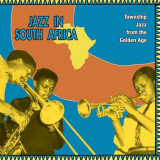
South Africa is in fact the only country in the whole African continent that has developed a strong Jazz tradition. Initially influenced by the great American stylists, (Ellington, Gillespie...) South Africa gradually developed its own soulful style based on a distinctive taste for melody and a deep sense of groove. Masterfully selected from the so-called Golden Age of the genre, (late Fifties / early Sixties), this compilation represents the best introduction to the work of a large and varied body of musicians and composers who inevitably developed their music as part of the historical Anti-Apartheid struggle, and as means of self expression in the dark times of exile. Kippie Moeketsi, Hugh Masekela, Dollar Brand, Chris McGregor, Dudu Pukwana, Mongesi Feza, Barney Rabachan, Nick Moyake and of course the queen Miriam Makeba are just some of the main voices represented here. A bunch of true warriors. in one word: A must!
Another top notch Funky Spiritual Jazz release from Paul Murphy's Jazz Room Records. Featuring Strata-East stalwart Shamek Farrah on Saxes and an all star cast including Trumpet Legend Malachi Thompson.
The music is a Funky Spiritual Afro-Latin Soul mix with the Miriam Makeba influenced Cape Township Party title track and the Jazz Soul grooves of "Waiting For Marvin" both highlights..
Get down to the Worldwide Sound with the Latin Jazz grooves of "The White Lady" featuring Sonelius Smith on Piano and "Along Came Ron Rahsaan" with Vivian Chandler singing a wordless Spiritual Jazz Headspace Lullaby.
Totally obscure and his recordings fetching exhorbitant prices (a re-issue Japanese CD is 3 figures) Shamek Farrah ranks with the great unrecorded. Two releases on Strata East in the '70s, a couple for RA, a release in '95. The reissue of this 1978 recording for RA by Jazz Room Records reintroduces a roomful of rarely heard musicians, along with a young Malachi Thompson soon to become an Internationally renowned Jazz Heavyweight.
Before there was War there was Señor Soul, which saxophonist/flutist Charles Miller formed
in Long Beach, California; he played on Brenton Wood sessions for Double Shot, who
released their loose interpretation of Miriam Makeba’s ‘Pata Pata,’ the hit that led to this
blinding debut LP. Blending funk, Latin jazz and psychedelic soul, the group makes a range
of material their own, led by Miller and vibraphonist Edwin Stevenson; everything from
Heard It Through The Grapevine to Psychotic Reaction gets the Señor Soul treatment,
rendered with equal doses of sensitivity, humour and funky flavour. Long before Miller
recruited members of Nightshift to morph Señor Soul into War, this top-notch debut is a
stone-cold winner from first note to last, a must-have for all funk and Latin jazz afficionados.
- A1: Adeus Maria Fulo
- A2: Tunnel
- A3: Amor Verdadeiro (True Love) (True Love)
- A4: Ponteio
- A5: Arrasta Pe (Partytime, Northeast Brazil) (Partytime, Northeast Brazil)
- B1: Voce Abusou (I'm Free As A Bird) (I'm Free As A Bird)
- B2: Inquietacao (Foolishness Of Young Love) (Foolishness Of Young Love)
- B3: Ain't No Sunshine
- B4: Lament Of Berimbau
- B5: Rosa Na Favela (A Rose Born In The Ghetto) (A Rose Born In The Ghetto)
Two of our favorite records that we here at Real Gone Music have reissued in the last few years were the debut pair of records (both originally released in the early ‘70s) by legendary Brazilian percussionist Airto; each album serves up a savory, bubbling stew of Brazilian folk, fusion jazz and bossa nova spiced with a hint of tropicalia. While Airto’s contributions on each record were, of course, front and center, there was another player on those records that almost stole the show: one Severino Dias de Oliveira a.k.a. Sivuca, a small, wizened man (often somewhat uncharitably described as “gnomish”) whose dazzling virtuosity on accordion, guitar, and keyboards—coupled with a powerful singing voice that belied his small stature—made one instantly sit up and take notice. Further investigation revealed that stealing the show was nothing new to Sivuca; championed by Oscar Brown, Jr., he was the instant star of tours by both Harry Belafonte and Miriam Makeba among others. Sivuca started making records back in the mid ‘50s, and recorded for a number of labels in the States, including Reprise and RCA, but it is this record, made in 1973 for the Vanguard label, that is the one that collectors worldwide have zeroed in upon. And with good reason; it offers the same beautiful blend of styles found on those Airto records, but with an emotional shading all its own, a joyfulness paradoxically infused with melancholy, best expressed on Sivuca’s mesmerizing take on Bill Withers’ oft-covered “Ain’t No Sunshine,” which is likely to become your favorite version.
When Ajax Tow travels in his Pop Western landscapes, you can be sure there’s always a perfect 70’s road trip soundtrack. Italians cowboys meeting the legendary Miriam Makeba in Rennes suburbs... For his 3rd album The Soul Vegetable Orchestra, Ajax Tow is bringing us on a ten tracks sonic adventure, where many inspirations and references collide. The succession of tracks inspires many feels and moods from sipping a good old bourbon, dance in the kitchen, or gallops though the plains of Napoli.
We can found the influence of Danger Mouse paying hommage to the late Ennio Morricone (Roma, 2011), a cinematic side of Shawn Lee and Misha Panfilov, from music library à la Jean-Claude Vannier to the Band Voilaa, a little glimpse of pimped Ninja tune, a Reworked organic Mo’Wax vibe, all mixed up and spiced up with a Tricky style.
This album is also the result of a collaboration with Dan Voisin (Modul-Club, Eighty…) at the production and drums with Rennes city scene musicians who gives a hand on this album: Romain Baousson (Coupe Colonel, Bikini Machine…) on drums, Sax Machine and Racecar (Saxtoys Records) on horns and vocals, Dj Marrrtin (Funky Bijou, Lord Paramour) on beatmaking, Medline (My Bags) on Flûte.
As a special guest, the late and legendary Miriam Makeba appears on “Magic Miriam”. “Feel it” is definitely setting a west coast on the LP with a Jurassic 5 inspiration, accompanied by a spicy rhythm, MC Racecar (Sax Machine) flows and lyrics brings even more energy to the track. On “Movie” and “Silence”. Ajax Tow give us a nice taste of his favorite psychedelic blends, romantic and intimate at the same time, where we found back Fuzz guitar with 60’s Eric Clapton style (Cream era) and Pink Floyd synths Flavors. The cinematic style and first notes of “So What” reminds Air first EP and the beautiful bass of “Melody Nelson”. For the dessert, “Smallville” is a kind of wedding cake with 70’s loops sprinkling that brings us to Phillipe Sarde’s La Grande Bouffe soundtrack, but with a more contemporary feeling.
- A1: Soul A Go Go - Soul Messin Allstars Ft Josh Teskey
- A2: Superfly (Sam Redmores' Exclusive 'Trunk Of Funk' Edit)
- A3: Boogie Down - Roy Ayers
- A4: Hold My Hand - Laneous
- A5: Pata Pata - Miriam Makeba
- A6: African Rhythms - Oneness Of Juju (Exclusive 'Trunk Of
- A7: Medicated Goo - Pp Arnold
- A8: Take A Shot - The Fantastics! Ft Sulene Fleming
- A9: Give Me The Night Ft Xantone Blacq - Juan Laya & Jorge
- A10: Out Of The Ordinary Ft Mike Keat & The Bevvy Sisters
- B1: Forget Me Nots - Patrice Rushen
- B2: People Get Ready Ft Natalie Williams & Noel Mckoy - The
- B3: Hangin' On - Monophonics
- B4: The Old Place - Nick Waterhouse
- B5: Victory! - Michelle David & The Gospel Sessions
- B6: Beggin' - Magnus Carlson
- B7: Telling You Lies Ft Jam Jam - Alex Opal
- B8: Help Me Ft Ian Whitelaw - Badge And Talkalot
- B9: The Only Difference - Beatchild & The Slakedeliqs
- B10: Clap Hands - Honeyfeet
Craig Charles has been a soul & funk fan since his teenage years in Liverpool, going to see local heroes The Real Thing live, and wearing out his shoe leather dancing in the city's many underground clubs. Craig has been sharing that passion for the music via his 6Music and BBC Radio 2 shows and DJ nights for nearly 20 years. His brand new 'Trunk Of Funk' compilation series, blends up-tempo club classics, with fresh music from the cream of the crop from the contemporary soul and funk scene, and will be Craigs very first vinyl release - a beautiful, double vinyl gatefold LP and he's certainly excited about it, stating; "I can't wait to bring you big beats, bass lines and booga-bloomin-loo! Presenting The Craig Charles Trunk Of Funk Volume 1 as my first ever vinyl release has put a proper wiggle in my walk!" This collection of 21st century disco, soul, funk & afro grooves from includes tracks from contemporary heroes of the scene such as Monophonics, Amp Fiddler and The James Taylor Quartet, it's also peppered with some old school classics and rare grooves from legends such as Roy Ayers, PP Arnold, Miriam Makeba and Patrice Rushen. Craig has personally selected and sequenced this collection to take the listener of a musical journey, the closest thing to having Craig visit and personally DJ for you in the comfort of your own home! It also includes two 'Trunk Of Funk Edits' that are 100% exclusive to this compilation and not available anywhere else.
Caiphus Semenya, AKA Mr Letta Mbulu, is a South African legend, and Listen To The Wind, his iconic debut album, is simply a superb modern-soul/boogie album. It’s also incredibly rare, especially in good condition, so Be With is delighted to present this reissue.
Now a revered composer, musician, and arranger, Caiphus left apartheid South Africa in the 60s for self-imposed exile in Southern California together with his wife, Letta Mbulu. Settling in Los Angeles he started working with the likes of Hugh Masekela and Miriam Makeba and other exiled and semi-exiled South african artists, as well as, of course, his wife Letta.
Caiphus also found himself working with and composing for a broad range of jazz and pop artists, including Lou Rawls, Nina Simone and Cannonball Adderley. His facility with both jazz and African forms served him well. His LA stay was also the beginning of an ongoing collaboration with Quincy Jones, the fruits of which can be tasted in Caiphus’s African compositions for the scores to Roots and Spielberg’s adaptation of The Color Purple.
Given his decades of work behind the scenes, it’s no surprise that it took until 1982 for Caiphus to get around to putting out the first album of his own. But all that experience shows. Listen To The Wind is a deeply impressive synthesis of early 80s US production and instrumentation together with his traditional South African musical roots.
It’s stylistically diverse but the ingredients are never diluted. There are elements of boogie, soul, funk and jazz, all shot through with pan-African flavour, and moving effortlessly from uptempo floor fillers to more meditative, slower soulful tracks. Produced by Caiphus himself, he makes full use of a stellar line up of session musicians including Nathan East, Michael Stanton, Sonny Burke and Paulinho DaCosta. And of course, there are Letta’s show-stopping vocals. To our ears, Listen To The Wind is just one big party, and lord knows we need that more than ever right now.
Opener “Angelina” is one of Caiphus’s most beloved tracks at Be With HQ. It’s a breezy, feel-good SA boogie-funk classic. Harmonic and horn heavy, it sounds as fresh today as it would’ve done in the early 80s. If this one doesn’t make you move, you may need your pulse taking. The drum breakdown alone, a little over halfway through, is sensational.
It’s followed by the gentle reggae lilt of “Play With Fire”. A real melodic slo-mo delight, carried by the tropical vibes and, above all else, by the extraordinary performance of Caiphus himself and his backing singers.
Closing out side one, the spectacular “Umoya” is driven by triumphant horns and slick bass. With its proto-Graceland vibes, we reckon Paul Simon must’ve been listening. Hard. Caiphus trades verses with the unmistakable tones of Letta, and it sounds divine. Yes, it’s as good as anything on Letta’s canonical In The Music… The Village Never Ends. A wide-eyed wonder, made for unity and togetherness, it’s all infectious, smiling faces for nearly nine minutes. But never mind nine, we could party to this for ninety minutes and “Umoya” would leave us re-energised for ninety more.
Elegantly firing up side two is perhaps the album’s best known track. “Without You” is a heavenly slice of modern soul, an end-of-nighter to end them all. Smooth strutting, disco-fied funk with that unmistakably South African sound, it’s just sublime, with those lyrics that keep coming back to smiling faces and community, “without You the sun won’t shine”. Big with the likes of Rush Hour’s Antal, this is aural perfection.
“Ziph’inkomo” is a soul-soothing, swooning epic. Gently building throughout, its final few minutes are genuinely stirring as the backing vocals and instrumentation swell. Jaw-dropping. The irresistible groove of frantic, percussive workout “Gumba Boogie” closes out what must surely be one of the greatest artistic statements of the 1980s. If his friend Quincy wasn’t feverishly taking notes for Thriller, then you could’ve fooled us.
With Simon Francis handling the mastering of this Be With edition, you know it sounds as fantastic as ever. The cover art, as breezy as the music, has been faithfully restored. All that’s missing is you.
Soweto Soul Orchestra is produced and composed by Sipho "Hotstix" Mabuse, whose importance to South-Africa's music scene can hardly be underestimated. Being a formative member of The Beaters, which was later renamed Harari, he toured Africa extensively and even hit the American charts with their "Party" single. After Harari split in 1982, Sipho went solo and scored another hit with "Burn Out", which could be heard in every township, and produced and recorded for Hugh Masekela and Miriam Makeba among others.
The Soweto Soul Orchestra project boasts a variety of funky tracks, all marked with that jazzy South-African sound. The stand-out tune on this one, for us, is the epic 8 minute long cosmic disco cover of "Hang em High", the original soundtrack for the eponymous classic Western movie.
This 2020 re-issue sees all tracks cut again from the official studio files, ensuring both audio quality and originality.
Originally released on and licensed through Gallo, 1981.
Hugh Masekela and Miriam Makeba’s double-bill Lesotho concert was a daring, defiant and ultimately dazzling act. For the first time since its limited release in South Africa in 1981, Matsuli Music is proud to re-issue this gem of a pan-African, funk-infused, extended audio double album with unpublished photographs and new liner notes from Atiyyah Khan. The Christmas-weekend stadium-filled concert deeply challenged and disturbed South Africa’s apartheid regime. Makeba and Masekela were banned from entering South Africa, yet tens of thousands of their South African fans invaded Lesotho to party with their musical heroes. Live in Lesotho documents an inspired Hugh Masekela and his stellar New York band putting a new spin on crowd favourites. Another South African jazz gem from Matsuli Music’s growing catalogue of essential high-quality reissues. For an artist as prolific and famous as Hugh Masekela, it is a real surprise that this particular recording took so long to resurface.
- 1