Musik Krause, the label with that special funk and the wide view releases the fourth album in their 10-year history. The circle is complete. In 2002 they started with Metaboman. Now there is the album. As a part of the record-spinning Krause Duo he's known a number of escapades having to do with the 'bash' or rather party culture. Inventively they go about things on a winding path. The have a developed a completely singular metaphoric like a Krauzy schroud and trashno effect. Even if on this long player there is a good deal of gravitation and disengaged handbrake, the beloved notorious krause-vibe swings in every beat, as Metaboman forges the iron. He wants to go further and let himself be taken away, and above all with the musicians he has won over with his live-project to massage the masses from the stage. Krause Duo remains. The album comes in this regard as a gesture providing the direction. Solo here is the conductor, the arranger and the composer in one. Various artists is the keyword, good ol' Metaboman. On all ten songs our friendly neighborhood sonic meister sets the notes and vibes between the skillful, grooving rhythms. In this way there is a bonafied club album in the room that understands rhythm-feeling. Music that in the club context brings an attribute that stands far above the plain acoustic shock and scream. Party But of course, yet still both feet in the game with not a little insubordination, depth, plumes of smoke and indulgence. Metaboman has always had his own vision, which plays out and mirrors his own authentic uniqueness. He doesn't find sounds. He finds shapes and forms and that is the progressive aspect, not the new sounds but rather the new forms. He 's not merely about the subteranean bassdrum, but rather telling his own story. He gives his pieces space and depth. The music itself is positioned somewhere within a sonic cosmos. The listener can functionally hear the record in a club. A freak and his freaks invite you and in your heart you know long before it is apparent that you belong. You can clearly hear that this dude and his folks want me to be there! This album encompasses the moment and keeps it safe for posterity. This music is the language of Metaboman and it is the understood. inkl. digital download code
Search:mirror 1
- Regrets
- Memory Lane
- Worst Trip
- You've Got The Key
- Everything's Easy
- Early Morning
- Rear View Mirror
- Time
- Instrumental No.1
- We Used To Be Good Friends
- Mercy
- Riverside Drive
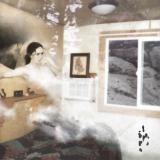
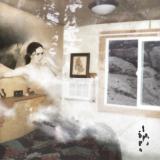
Double Exposure ist das neue Album des britischen Multiinstrumentalisten James Hoare, bekannt aus Bands wie Veronica Falls, Ultimate Painting und Proper Ornaments. Unter seinem Solo-Pseudonym Penny Arcade präsentiert er ein Werk, das noch roher, spontaner und experimenteller klingt als sein Debüt Backwater Collage (2024). Die Songs entstanden größtenteils schnell und intuitiv - aufgenommen auf einer 16-Spur-Bandmaschine, mit alten Drumcomputern, schwebenden Orgeln und reduzierten Arrangements. Gitarre ist erstmals nicht das zentrale Element, auch wenn Stücke wie "Regrets" zeigen, wie eindringlich Hoares Gitarrenarbeit bleibt. Das Album bewegt sich zwischen psychedelischen Folk-Momenten, Lo-Fi-Experimenten, souligen Anklängen und analogen Klanglandschaften, die an die Offenheit von Syd Barrett oder die Tape-Ästhetik von White Fence erinnern. Songs wie "Worst Trip", "Rear View Mirror" oder das träumerisch-verrauchíte "We Used To Be Good Friends" wirken wie spontane Momentaufnahmen - unfertig im besten Sinne, atmosphärisch dicht und voller subtiler Melodien. Double Exposure ist ein Album der Stimmungen und Schichten: ein intuitiver, unprätentiöser Blick in Hoares kreative Innenwelt, geprägt von Umbrüchen, Ortswechseln und der Schönheit des Ungefilterten.
- 1: The Promise
- 2: Longing
- 3: In The Wake Of Blue
- 4: Flux
- 5: Vapor
- 6: When Birds Flock
- 7: The Endless Thread
- 8: The Quiet Edge
- 9: Shadows In Bloom
April Records proudly presents the new album from Danish trombonist and composer Lis Wessberg. Her most personal album to date, In The Wake of Blue is a song-driven work exploring transience, love, and transformation. Expanding her writing while remaining rooted in her distinctive instrumental voice, Wessberg creates an intimate musical landscape where lyric, melody, and texture carry equal weight. Wessberg has established herself as a leading voice on the European jazz scene through her band Yellow Map and a series of acclaimed releases on April Records. Her previous album, Twain Walking (2024), marked her first step into English-language songwriting and earned a Danish Music Award nomination in 2025 for the track Behind the Walls. In The Wake of Blue develops this direction further. The album draws on images from nature - sea, tides, clouds, mist, and birds - used as emotional anchors rather than abstractions. These elements frame songs that move from uncertainty and loss toward openness, connection, and renewal. The title reflects this arc: "blue" as melancholy, depth, and memory, and what emerges in its wake. Vocalist Veronika Rud is central to the album"s sound, bringing vulnerability and clarity to the songs. Rather than a traditional singer-led project, the music unfolds as a dialogue between voice and trombone, with Wessberg"s warm, airy tone mirroring and extending each song"s emotional core. At times the two move in close unison; elsewhere, they diverge and reconnect. The core ensemble - Steen Rasmussen (piano and keys), Lennart Ginman (bass), and Jeppe Gram (drums) - provides a responsive, understated foundation, while string quartet Live Strings appear on two tracks, expanding the ensemble"s depth and resonce. In The Wake of Blue offers a quietly assured statement from an artist continuing to refine a voice that speaks as clearly through brass as it does through words.
- 1: Bone Infection
- 2: Doorway
- 3: Angle Of Repose
- 4: Commit
- 5: Property
- 6: I Do
- 7: Idiocy
- 8: Owner
- 9: Cells
- 10: Chromium 6
- 11: Trouble Me
- 12: Crow Eyes
Carve is the second full-length by Bay Area artist Kathryn Mohr. Written over the course of five years and recorded over several weeks in a rural singlewide in the Mojave Desert, the album centers on love experienced as a form of grief, not as an aftermath of loss, but as a condition of intimacy itself.
Mohr describes Carve as an album about how memory exists outside the body, embedded in places and landscapes. It is shaped by her first return to the American Southwest since a childhood road trip at age five, and by the experience of moving through terrain that holds emotional weight long after its origins fade. The record considers how intimacy feels after years of isolation, and what it takes to carve out a life that allows for trust, presence, and feeling rather than mere survival. The project took form after a difficult tour that ended in Joshua Tree. Mohr pointed her car into the desert and drove alone, crisscrossing the Mojave on dirt roads. Months later, she returned to record the album, working alone with an acoustic guitar, a field recorder, and limited supplies. Following that period, Mohr began to allow for intimacy and connection. The time she spent recording Carve in the desert did not create isolation so much as mirror it. Working alone out of an old, western-themed jail Airbnb, the physical enclosure reflected the emotional conditions under which much of the record had been written: distance, restraint, and long stretches of stillness. In that context, love was not experienced as escape, but as something inseparable from impermanence and the awareness of loss.
This tension between connection and inevitability sits at the center of Carve. Some of the album’s songs were written earlier, during a prolonged period marked by emotional distance and apathy. Over those four years, Mohr was working through unprocessed childhood memories and their long-term effects on her ability to connect with others. The work was slow and difficult, involving a fundamental reshaping of how she related to herself and to the world. Carve was mixed by Richard Chowenhill of Flenser labelmates Agriculture. Rather than offering resolution, the album documents the act of remaining present within tension. Carve is not about escaping grief, but about accepting it as inseparable from love itself. Kathryn Mohr’s previous effort “Waiting Room” received the coveted ‘Best New Music' designation and a score of 8.4 from Pitchfork.
Carve is the second full-length by Bay Area artist Kathryn Mohr. Written over the course of five years and recorded over several weeks in a rural singlewide in the Mojave Desert, the album centers on love experienced as a form of grief, not as an aftermath of loss, but as a condition of intimacy itself.
Mohr describes Carve as an album about how memory exists outside the body, embedded in places and landscapes. It is shaped by her first return to the American Southwest since a childhood road trip at age five, and by the experience of moving through terrain that holds emotional weight long after its origins fade. The record considers how intimacy feels after years of isolation, and what it takes to carve out a life that allows for trust, presence, and feeling rather than mere survival. The project took form after a difficult tour that ended in Joshua Tree. Mohr pointed her car into the desert and drove alone, crisscrossing the Mojave on dirt roads. Months later, she returned to record the album, working alone with an acoustic guitar, a field recorder, and limited supplies. Following that period, Mohr began to allow for intimacy and connection. The time she spent recording Carve in the desert did not create isolation so much as mirror it. Working alone out of an old, western-themed jail Airbnb, the physical enclosure reflected the emotional conditions under which much of the record had been written: distance, restraint, and long stretches of stillness. In that context, love was not experienced as escape, but as something inseparable from impermanence and the awareness of loss.
This tension between connection and inevitability sits at the center of Carve. Some of the album’s songs were written earlier, during a prolonged period marked by emotional distance and apathy. Over those four years, Mohr was working through unprocessed childhood memories and their long-term effects on her ability to connect with others. The work was slow and difficult, involving a fundamental reshaping of how she related to herself and to the world. Carve was mixed by Richard Chowenhill of Flenser labelmates Agriculture. Rather than offering resolution, the album documents the act of remaining present within tension. Carve is not about escaping grief, but about accepting it as inseparable from love itself. Kathryn Mohr’s previous effort “Waiting Room” received the coveted ‘Best New Music' designation and a score of 8.4 from Pitchfork.
Carve is the second full-length by Bay Area artist Kathryn Mohr. Written over the course of five years and recorded over several weeks in a rural singlewide in the Mojave Desert, the album centers on love experienced as a form of grief, not as an aftermath of loss, but as a condition of intimacy itself.
Mohr describes Carve as an album about how memory exists outside the body, embedded in places and landscapes. It is shaped by her first return to the American Southwest since a childhood road trip at age five, and by the experience of moving through terrain that holds emotional weight long after its origins fade. The record considers how intimacy feels after years of isolation, and what it takes to carve out a life that allows for trust, presence, and feeling rather than mere survival. The project took form after a difficult tour that ended in Joshua Tree. Mohr pointed her car into the desert and drove alone, crisscrossing the Mojave on dirt roads. Months later, she returned to record the album, working alone with an acoustic guitar, a field recorder, and limited supplies. Following that period, Mohr began to allow for intimacy and connection. The time she spent recording Carve in the desert did not create isolation so much as mirror it. Working alone out of an old, western-themed jail Airbnb, the physical enclosure reflected the emotional conditions under which much of the record had been written: distance, restraint, and long stretches of stillness. In that context, love was not experienced as escape, but as something inseparable from impermanence and the awareness of loss.
This tension between connection and inevitability sits at the center of Carve. Some of the album’s songs were written earlier, during a prolonged period marked by emotional distance and apathy. Over those four years, Mohr was working through unprocessed childhood memories and their long-term effects on her ability to connect with others. The work was slow and difficult, involving a fundamental reshaping of how she related to herself and to the world. Carve was mixed by Richard Chowenhill of Flenser labelmates Agriculture. Rather than offering resolution, the album documents the act of remaining present within tension. Carve is not about escaping grief, but about accepting it as inseparable from love itself. Kathryn Mohr’s previous effort “Waiting Room” received the coveted ‘Best New Music' designation and a score of 8.4 from Pitchfork.
- A1: Nobody's Jesus
- A2: Fading Lights
- A3: Stilettos
- A4: Drinking Dreams
- A5: You Take The Sun
- A6: Blunt Steel
- A7: The Great Escape
- A8: Mirrorball
- A9: Painkiller
- A10: With You
- A11: Strong Enough
- A12: Raining Diana
- 1: Neo-Paperopolis Jump Suite
- 2: Upworld Groove (Tv Version)
- 3: You Wouldn't Understand It's Swamp Thing
- 4: The Neverending Skylines Of Taipei
- 5: E.b.e. Bridge-Jump
- 6: A View From The Otherside Of The Rollercoaster
- 7: Central Jungle, Paperopolis
A conjuration between our favourite dreamweaver Spencer Clark and Italian psychic traveller Mondo Riviera, Lorenzo's Oil present an oracle of aural travelogues between seen and unseen worlds on 'Paperopolis'.
Two likeminded individuals on their distinct but complementary quest for the netherworld, Clark and Riviera's meeting of the minds projects sonic artefacts assembled from lucid dreaming keyboard pads, narcotic late night TV rhythms, spiralling sequences and mangled voices.
The 10+ minutes 'Neo-Paperopolis Jump Suite' makes these intentions quite clear right from the start, veering from no frills keyboard runs to a mid tempo bounce and on towards the house of mirrors synth stabs and driving rarefied percussion that close the suite and open the pathway to such "places" as 'Central Jungle, Paperopolis' and "visions" as 'The Neverending Skylines of Taipei'. Ride on.
- 01: Enchanted Mirror
- 02: Summertime Love
- 03: Reflections
- 04: Concerto For Guitar
- 05: Rain
- 06: Leque
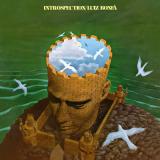
- 07: Missal (Estudio)
- 08: Adventure In Space
Talulah’s Tape is the debut offering from magnetic Midwest-jangle collective Good Flying Birds. Across a patchwork mixtape of stripped-down home recordings that span the independent-guitar spectrum, the band delivers colorful, intricate pop songs perched between the immediacy of DIY punk and the intimate sweetness of twee. Breakbeats, memes, and noise glue everything together, making the album feel as chronically online as it is timeless.
Originally released on cassette in January 2025 by Midwest-punk legend Martin Meyers’s Rotten Apple label, the tape sold more than 300 copies in under a month and quickly became an out-of-print and coveted item. Meyers called it “certified catnip for popheads.” Now, with a refined track list and a fresh master from Greg Obis, Talulah’s Tape returns on LP and CD via Carpark and Smoking Room in October 2025.
While production and approach vary, a through-line of sensitive self-contemplation rests on bright, scrappy guitars and hyperactive melodic bass. Opener “Down on Me” rides a buoyant bass line while jangling guitars frame reflections on overcoming trauma: “I see you in the mirror every time I cry / I hear your voice every time I try.” Next, the guitars trade twinkling counter-melodies on “I Care for You,” pairing sugary, lovestruck lyrics with effervescent strums: “You catch me when I fall / You build me up so tall.”
The rosy grin occasionally twists into a wicked smirk. “Dynamic” warns, “You used to paint the face, but now you’re just the clown,” while “Glass” asks, “Is it lonely at the top when everyone follows the trend, and you hold the pen?” Both tracks brim with sparkling guitar interplay. By the closing, nearly five-minute “Last Straw,” Good Flying Birds stand far beyond conventional indie-pop or 4-track punk, unveiling a roller-coaster of unpredictable changes, vocal harmonies, and instrumental cross-talk.
Altogether, Talulah’s Tape is a pastel-yellow, candy-coated shell filled with thoughtful juxtapositions and melodic experiments. Standing on the same ground as idiosyncratic songwriters like Connie Converse and Daniel Johnston, Good Flying Birds find sweetness in sadness, tear stains on a colorful flower-print couch. Simultaneously, it’s packed with the scratchy guitars and vibrant rhythms of Scottish guitar groups like The Pastels, Orange Juice, and Josef K. It’s a tremendous opening statement from a band just getting started.
- A1: First Instrument
- A2: Mona Lisa Left Eye
- A3: Bebe Kids
- A4: Push Me Around Ft. Zack Fox
- A5: Hypnagogia
- A6: Nda Ft. Paris Texas
- A7: Fuck Cigarettes
- A8: Broke Ass Hoes
- B1: Opposite Sex
- B2: Describe
- B3: I Mac
- B4: Shrooms
- B5: Take Me Im Drugs
- B6: Lebanon James
- B7: Art Of Seduction
- B8: Play W Your Pride
Emerging from the vivid chaos of Detroit’s underground, ZelooperZ returns with Dali Ain’t Dead — a surreal yet deeply grounded statement from one of rap’s most singular voices. Following his recent collaborative exploration Dear Psilocybin (with Real Bad Man) — which found him moving through a “stream of psychosis” just before sobriety. (Pitchfork) — ZelooperZ enters this new chapter not simply as the same intricate-flows rapper, but as a rising cult-figure in underground hip-hop who’s forged an identity both enigmatic and quietly unstoppable.
On Dali Ain’t Dead, ZelooperZ channels the spirit of the surreal — the album’s title a nod to the iconic surrealist artist Salvador Dalí — as he reframes his world post-substance, post-chaos, yet still dripping with vivid imagination. Reviews highlight that the album finds him in a more focused mode: one critic writes that “ZelooperZ seems to have adopted a similar outlook to Dalí… embracing sobriety and allowing his art to exist as the psychotropic fuel for his mind.” (Album of the Year) Production (courtesy of Dilip) is inventive and cohesive, blending experimental hip-hop, trap, cloud-rap and drumless textures to mirror Ze’s newly clear-eyed vantage point and trademark eccentricity. (Legends Will Never Die)
Tracks like “Mona Lisa Left Eye” and “Push Me Around” (featuring Zack Fox) carry Z’s jagged humor and restless energy, while deeper cuts like “Shrooms” and “Take Me I’m Drugs” trace his evolving relationship with psychedelia and the legacy of his past. (Legends Will Never Die) In doing so, the record positions itself as the sound of a freak-icon in transition — still wild, still weird, but sharpened, matured, operating with a purpose and increasingly commanding the attention of fans who relish the underground unusual.
ZelooperZ’s trajectory continues to rise. From his roots in the Bruiser Brigade collective in Detroit to the present moment as a cult figure whose every release feels like a mission statement, Dali Ain’t Dead confirms that he’s no longer just the oddball off-to-the-side: he’s the weirdo that others are quietly watching. This album isn’t just for the longtime disciples of his left-field aesthetic — it’s an invitation to anyone curious about hip-hop bending, breaking, and rebuilding itself from the fringes inward.
- A1: Lotus Beats X Notation - Notebooks
- A2: Takeo - Elevator
- A3: Xander. - Driving Alone (Flip)
- A4: Softy X Eehou - Fazed
- A5: Meadowy - Bumping Gums
- A6: Sleepermane X Sling Dilly - Saffron
- A7: Swink - Pathway
- A8: Chronodrift - Follow
- B1: Marsquake - Still Learning
- B2: Aboueb X J'san - Missed Call
- B3: Yasumu X Dennisivnvc - Lightfall
- B4: Tosso - Night Shift
- B5: Aisake X Quist - Faded Memory
- B6: Saint Rumi X Erwin Do - Brooklyn Sunrise
- B7: Shopan - Eighty Five
- B8: Kupla - Reverence
- B9: Thaehan - Refaire Le Monde
- C1: Klemsis - Dreaming
- C2: Aimless X Rook1E - Catching The Sunrise
- C3: Mondo Loops X Towerz - Dropouts
- C4: Kanisan X Luqęt - Sleepless Nights
- C5: Hazy Year - Lonely
- C6: Phlocalyst X Myríad - Doinit
- C7: Surfin - All Nighter
- C8: Hoogway - Kickflip
- D1: Cxlt. - What A Day
- D2: Tibeauthetraveler - Fields Of Gray
- D3: Fnonose X Hm Surf - Amarillo
- D4: Trxxshed X Lomtre - Aether
- D5: Lov Sum - Iridiscente
- D6: No Spirit X Odd Panda - Opal
- D7: Allem Iversom X Little Blue - To Go
- D8: Amies - Solution
- D9: Ødyssee X Ian Ewing - Dusky
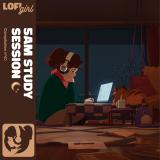
It’s 5 AM, the world is still quiet as dawn begins to rise. While most are asleep, a few of us are in the final stretch, finishing last edits or easing into the day, surrounded by scattered notes in the living room with a sleepy cat nearby.
5 AM Study Session is a tribute to the early risers and the night owls. This collection of 34 tracks carries early-morning focus and momentum, guiding you through the quiet and setting the tone for the day ahead. Sunlight slowly peeks in as the melodies play, creating a soundtrack for productivity and peace.
The physical edition captures the warmth of a fresh cup of coffee: pressed on double "Morning Latte" marble vinyl, the swirling beige and brown tones mirror the cozy, studious atmosphere of the artwork. A tangible reminder that the best work often happens when the world is still.
Slip on your headphones, pour a hot drink, and let the sunrise guide your workflow.
- What Happens Next?
- Yesterday's Donuts
- The Man I'm Supposed To Be
- Someone In My Mirror
- Shame Shame
- Screamin
- I've Got To
- Use My Imagination
- Living Your Life
- Gentle On My Mind
Rooted in modern blues but unafraid to stretch beyond tradition, the record crackles with grit, groove, and lived- in emotion, presenting an artist who isn't waiting for answers, he's moving forward without them. Across the album, Stillman digs deep into themes of self-reckoning, loss, pride, and renewal.
Songs wrestle openly with identity, shame, and hard- earned perspective, balancing moments of vulnerability with sharp wit and raw confidence. Whether confronting inner demons or finding humor in heartbreak, the writing feels honest and unfiltered, anchored by soulful vocals and muscular musicianship . What Happens Next? is an album about growth through motion-- accepting change, facing consequences, and choosing momentum over fear. High- energy, emotionally grounded, and deeply human, it marks a defining step forward for Gabe Stillman , capturing an artist fully stepping into his voice and daring the listener to do the same.
- A1: Farinha Do Desprezo
- A2: A. Vapor Barato
- A2: B. Revendo Amigos (Volto Prá Curtir)
- A3: Mal Secreto
- A4: 78 Rotações
- B1: Movimento Dos Barcos
- B2: Meu Amor Me Agarra E Geme E Treme E Chora E Mata
- B3: Let's Play That
- B4: A. Farrapo Humano
- B4: B. A Morte
- B5: Hotel Das Estrelas
Jards Macalé’s biography is a testament to the electrifying energy of music and the unwavering spirit of artistic rebellion. Macalé has remained true to his vision, unapologetically embracing the unconventional and challenging the status quo. His music, a conduit of emotion and a mirror to society, continues to weave a sonic tapestry that resonates with the souls of listeners.
In 2022, Macalé celebrated the momentous 50th anniversary of his debut solo album, a groundbreaking masterpiece released by Philips in 1972. This iconic record gifted us timeless tracks such as “Vapor Barato”, “Mal Secreto”, “Farinha do Desprezo”, “Revendo Amigos”, and “Hotel das Estrelas”. Its sheer brilliance united the realms of Brazilian music, infusing samba and bossa nova with the fiery essence of rock, classical harmonies, and the improvisational spirit of jazz. As the years passed, a new generation of musicians and fans discovered this gem, fueling its resurgent popularity and inspiring fresh collaborations.
Last year, Jards Macalé assembled a formidable new band, igniting stages across Brazil with a tour that now sets its sights on Europe. Together with Gui Held on guitar, the Paulo Emmery on bass, and Thomas Harres on drums, Macalé conjures an exhilarating homage to his illustrious body of work. This live performance embodies the untamed spirit and boundless musical freedom that define this visionary artist, transporting audiences to a realm where the past intertwines with the present in a breathtaking display of artistic prowess.
- Dawn | Pulse
- Laundry | Blood
- Chewing Gun
- Door | Watch
- Stone | Piece
- Burning | Counting (Sleeping)
- Shadow | Mess
- Paper Folding | Disappearing
- Cough | Laugh
- Snow | Touch
- Fog | Mirror
grapefruit colour vinyl[24,33 €]
Calvin Love is a Canadian singer-songwriter, composer, and producer from Edmonton, Alberta, now based between Edmonton and Los Angeles. With a sound that blends noir-tinged folk‑pop, crooning rock ’n’ roll, and cinematic storytelling, Love has become a distinctive voice in the international indie landscape. His music has drawn comparisons to Roy Orbison, Leonard Cohen, and Bryan Ferry, with Aquarium Drunkard describing his work as “a crestfallen soundtrack of near‑escape… like Chris Isaak trapped in a David Lynch film.”
Since his debut New Radar (2012), Love has released a run of acclaimed records including Super Future (Arts & Crafts, 2015), Highway Dancer (2018), Night Songs (2020), and Lavender (2021). Along the way, he has collaborated with renowned producers and artists such as Gus Seyffert (Beck, Roger Waters, Black Keys) and the late Richard Swift (The Shins, Damien Jurado), while earning coverage from outlets including SPIN, The Fader, Interview Magazine, and Stereogum.
A seasoned live performer, Love has toured extensively across North America, Europe, and Asia, appearing at festivals such as SXSW, Pop Montréal, Strawberry Festival (China), Endless Daze (South Africa), and Sled Island. He has shared stages with Morrissey, Mac DeMarco, Courtney Barnett, Jonathan Wilson, The Divine Fits, and Jim James, performing in iconic venues like Carnegie Hall, The Troubadour, and Hollywood Forever Cemetery.
In early February 2026, Love releases his seventh studio album, Throw My Shadow To The Sun — a bold, visceral statement that captures him at a new creative peak. Self‑produced and recorded by Reverend Baron at The Ladder Factory in East Los Angeles, the album channels raw, unfiltered energy into a late‑night rock ’n’ roll atmosphere built on moody grooves, gritty textures, and Love’s unmistakable croon.
The sessions brought together a formidable live band: Josh Da Costa (Drugdealer) on drums, Brent Randall (Vanity Mirror) on bass, Davey Chegwidden (De La Soul, Ghostface Killah, Raekwon, Too Short) on percussion, Jeremy Brian Gill (Curtis Harding) on tenor saxophone and flutes, Daniel E. Garcia (Reverend Baron) on lead guitars, and multi‑instrumentalist Laena Myers (White Fence, Orville Peck, El Mariachi Bronx) on violin.
From the hypnotic sway of “Underneath It All,” to the reverb‑drenched sax of “Forever Feels,” to the heavy sludge‑rock crush of “Setting Sun,” Throw My Shadow To The Sun draws from the lyrical storytelling of Dire Straits, the laid‑back blues of JJ Cale, and the timeless melodic drama of Roy Orbison. The result is a cohesive, lived‑in record that transforms fleeting moments and late‑night impressions into something enduring and cinematic.
- 1: The Fermi Paradox
- 2: Cosmic Void Spheres
- 3: Macrocosm + Microcosm
- 4: Spontaneous Synchronization
- 5: Hyperdimensional Physics
- 6: Esoteric Futuristic Visions
- 7: Geometric Congruence Vortex
Baptized with a name derived from astrophysical theories about dark matter and black holes, THE HOLEUM was formed in 2014 in Alicante, Spain. Founded by former members of NahemaH, Demised, quantumXperience, Hela, Neptunian Sun, and Priest of Dawn, the quintet set out to push the boundaries of heavy music and to intensify the emotional impact of darkness in sound. Their concept is both cosmic and sonic: “THE HOLEUM is related to the dark matter that forms the black holes in the universe. THE HOLEUM is not a black hole, but black holes are formed by The Holeum. That is the idea from which we extract our concept – we are a sonic and cosmic vision of the sublime.” With their third album “Ensis” (2025), the band continues its journey through experimental metal, death doom, melodic metal, and post-metal. This work is more than a continuation – it is a condensation and expansion of their previous soundscape. “Ensis” reveals itself as finely nuanced, challenging, yet at the same time profoundly sensitive and multifaceted. The songs unfold like cosmic landscapes where heaviness and melancholy meet subtle emotionality. The intensity remains palpable, but it is complemented by a deeper sensitivity that draws the listener into a fragile balance between harshness and delicacy. “Ensis” is an album that demands and touches at once – a work that makes the complexity of human existence audible in the mirror of the universe.
- A1: Celui Qui Ne Fait Rien
- A2: Dormir Le Restant De Ma Vie
- A3: Tu Parles En Dormant
- A4: Elle Veut Pas Se Lever
- A5: J’ai Rêvé Que Tu M’aimais Encore
- B6: Une Tisane Et Au Lit
- B7: Une Belle Après-Midi D’été
- B8: Une Mouche Sur Ma Bouche
- B9: Dans Ma Chambre
- B10: Le Grand Sommeil
- B11: Nocturne
Ten years after their last collaboration, Jacques Duvall and Benjamin Schoos return with Plein Sommeil, a duo album that is at once melancholic, ironic, and tender—a poetic mirror of the fatigue of the modern world.
The legendary lyricist for Lio, Chamfort, and Daho meets the indie pop producer and sonic adventurer of Freaksville, in a generational union as improbable as it is natural.
Between Brussels and Paris, they weave songs about slowness, worn-out love, and resistance through gentleness.
Blending original compositions and delicate covers (The Kinks, Higelin, Daho), the album evokes a sensual and lucid refuge amid the overheating of everyday life.
Recorded with Bertrand Burgalat, The Loved Drones, and lush string arrangements, Plein Sommeil embraces a handcrafted, timeless aesthetic.
Its motto: “Slow business” — a manifesto against the speed and emptiness of contemporary times.
Each song, balancing irony and elegance, celebrates fragility and humanity.
- 1: Cast Adrift
- 2: Voice On The West Wind
- 3: Stair Into The Vortex
- 4: Craven Acts Of Desperate Men
- 5: From The Yawning Crevasse Shrieks A Transmorphic Gale
- 6: Corsairs Of The Daath Gulf
- 7: Nightmare Cartographer
- 8: Six Doors Guard The Original Knowledges
- 9: Servants Of The Second Death
- 10: It Echoes In The Wild
Here we find ourselves, among the Canadian miscreants Egregore whereupon they return from whence the wind howls like a damned choir and the Earth knows no master, to chart a broader sonic wilderness via ‘It Echoes In The Wild’. And much as sea-rogues and freebooters sought fortune upon blackened waters, so too does Egregore venture musically into diabolic and ungoverned lands. Presenting something more expansive, elemental and untamed on ‘It Echoes In The Wild’, the early occult Black Death Metal lunacy embraces atmospheric breadth equally alongside primitive force to delve deep into not only geographic wilds, but the psychological, esoteric and spiritual hinterlands at the edges of complete madness. Dark invocations and secret tongues draw forth echoes from forest and fen, cave and cliff, tempting the temporally tethered to receive the curse, all the while driven by a primal, unknowable sardonic menace. Though the voyage be perilous, to succumb to ‘It Echoes In The Wild’ is to become ensconced in a lawless dominion of the soul in service of a higher call. Mirroring nature’s unbridled forces and the hidden echoes that dwell within, Egregore’s second album takes the band’s mystical insanity and magickal perversion to the edge of the abyss and plunges forward.