Wer sich auf den Weg nach Louisiana macht, kehrt meist nicht auf dem gleichen Weg wieder zurück. Die Songs von BROTHER DEGE atmen die schwüle Luft der sumpfigen Wälder im Mississippi-Delta und beschwören die Geister der Bayous herauf. In den Adern des für den GRAMMY Award nominierten Singer & Songwriter Dege Legg, der seine musikalische Heimat an den Kreuzwegen aus mitreißendem Rock'n'Roll, wortgewandtem American Folk und psychedelischer Glückseligkeit gefunden hat, fließt das heiße Blut seiner Heimat in Form von surrenden Slide-Gitarren, unverfälschtem Gesang und schweißgetränkter Poesie. Mit der Magie des tiefen amerikanischen Südens zieht BROTHER DEGE auf seinem sechsten Album "Aurora" die Hörer in den Banner seiner üppigen musikalischen Welt. Sein Aufstieg fand beinahe im Stillen statt und das, obwohl der Amerikaner zig Millionen Streams generiert hat und seine breite Anerkennung sogar von keinem geringeren als Quentin Tarantino honoriert wurde, der persönlich den Song "Too Old to Die Young" für eine Schlüsselsequenz in seinem Film "Django Unchained" auswählte. Die Musik von Dege Legg lässt kühne Hooks über einer Unterströmung aus bluesiger Verzerrung aufblitzen. Dabei kanalisiert er seine Liebe für die Klassiker der Siebziger und Achtziger in einer höchst individuellen Variante des Southern Rock in den Sound des 21. Jahrhunderts. Aus diesem stilistischen Nebel erwächst eine unvergleichliche Klangvision, die Alt-Americana gleichermaßen Schärfe und Gusto verleiht. Als Dege Legg im Jahr 2004 unter dem Namen BROTHER DEGE mit seinem Debütalbum "Trailerville" in der Szene des Südens aufkreuzte, war sein höchst individueller Sound bereits voll ausgeprägt. Schon der zweite Langspieler "Folk Songs of the American Longhair" brachte gleich mehrere Hymnen hervor, darunter auch "Too Old to Die Young". Dege Legg nutzte diesen Schwung, um gleich eine ganze Reihe von Fan-Favoriten zu veröffentlichen: "How To Kill A Horse" (2013), "Scorched Earth Policy" (2015) und "Farmer's Almanac" (2018). Es lässt sich nicht leugnen, dass BROTHER DEGE stark von der Musik und den Klängen des Deep South der USA beeinflusst ist, gegen die er in seiner wilden Jugend noch rebellierte. Doch obwohl seine Wurzeln stark hervortreten, übersetzt der amerikanische Gitarrist und Sänger die Songs seines neuen Meisterwerks "Aurora" noch einen Schritt weiter in die universelle Sprache des Rock'n'Roll. Aber Vorsicht: Wer sich einfach zurücklehnt, die Augen schließt und dieses wunderbare Album auf sich wirken lässt, könnte in Louisiana aufwachen!
Поиск:miss k
Все
Wer sich auf den Weg nach Louisiana macht, kehrt meist nicht auf dem gleichen Weg wieder zurück. Die Songs von BROTHER DEGE atmen die schwüle Luft der sumpfigen Wälder im Mississippi-Delta und beschwören die Geister der Bayous herauf. In den Adern des für den GRAMMY Award nominierten Singer & Songwriter Dege Legg, der seine musikalische Heimat an den Kreuzwegen aus mitreißendem Rock'n'Roll, wortgewandtem American Folk und psychedelischer Glückseligkeit gefunden hat, fließt das heiße Blut seiner Heimat in Form von surrenden Slide-Gitarren, unverfälschtem Gesang und schweißgetränkter Poesie. Mit der Magie des tiefen amerikanischen Südens zieht BROTHER DEGE auf seinem sechsten Album "Aurora" die Hörer in den Banner seiner üppigen musikalischen Welt. Sein Aufstieg fand beinahe im Stillen statt und das, obwohl der Amerikaner zig Millionen Streams generiert hat und seine breite Anerkennung sogar von keinem geringeren als Quentin Tarantino honoriert wurde, der persönlich den Song "Too Old to Die Young" für eine Schlüsselsequenz in seinem Film "Django Unchained" auswählte. Die Musik von Dege Legg lässt kühne Hooks über einer Unterströmung aus bluesiger Verzerrung aufblitzen. Dabei kanalisiert er seine Liebe für die Klassiker der Siebziger und Achtziger in einer höchst individuellen Variante des Southern Rock in den Sound des 21. Jahrhunderts. Aus diesem stilistischen Nebel erwächst eine unvergleichliche Klangvision, die Alt-Americana gleichermaßen Schärfe und Gusto verleiht. Als Dege Legg im Jahr 2004 unter dem Namen BROTHER DEGE mit seinem Debütalbum "Trailerville" in der Szene des Südens aufkreuzte, war sein höchst individueller Sound bereits voll ausgeprägt. Schon der zweite Langspieler "Folk Songs of the American Longhair" brachte gleich mehrere Hymnen hervor, darunter auch "Too Old to Die Young". Dege Legg nutzte diesen Schwung, um gleich eine ganze Reihe von Fan-Favoriten zu veröffentlichen: "How To Kill A Horse" (2013), "Scorched Earth Policy" (2015) und "Farmer's Almanac" (2018). Es lässt sich nicht leugnen, dass BROTHER DEGE stark von der Musik und den Klängen des Deep South der USA beeinflusst ist, gegen die er in seiner wilden Jugend noch rebellierte. Doch obwohl seine Wurzeln stark hervortreten, übersetzt der amerikanische Gitarrist und Sänger die Songs seines neuen Meisterwerks "Aurora" noch einen Schritt weiter in die universelle Sprache des Rock'n'Roll. Aber Vorsicht: Wer sich einfach zurücklehnt, die Augen schließt und dieses wunderbare Album auf sich wirken lässt, könnte in Louisiana aufwachen!
Rock & Roll, indeed. Ruth Brown’s sizzling full-length debut — also known by its eponymous title — symbolizes what was exciting, fresh, invigorating, and raw about the burgeoning style in its halcyon days. Originally released in 1957, and reissued here in audiophile quality for the first time in partnership with Atlantic Records’ 75th anniversary, the set remains a testament to one of the most pioneering and talented vocalists to ever command a stage.
Mastered on Mobile Fidelity Sound Lab's renowned mastering system in California, pressed at RTI, housed in a Stoughton jacket, and strictly limited to 2,000 numbered copies, Mobile Fidelity’s 180g mono LP of Rock & Roll plays with an immediacy, vibrancy, and fullness that showcase the reach, power, and emotionalism of Brown’s voice. The sound of her support musicians — brassy horns, swinging rhythm combos, echoing backing vocalists, rollicking pianists, jaunty guitarists — is made clear and vivid, helping the upbeat fare to jump, juke, and jive with newfound energy and exuberance. In a related manner, Brown’s slower, more understated material crackles with an intimacy and passion that let you know you're in the presence of a woman who has lived what she sings. The longtime Rock and Roll Hall of Fame member deserves nothing less.
In an era dominated by big-throated vocalists, few — if any — came grander than Brown. The singer, whose repeat million-selling ‘50s success with Atlantic Records led many to call the then-indie label “The House That Ruth Built,” charted two dozen R&B hits in the span of a decade for the fledgling imprint. Rightly coined “Miss Rhythm,” the extroverted Brown put Atlantic on the national map, became the best-selling female musician of the ‘50s, and established a precedent that would ultimately lead to Grammy and Tony Awards. Her early works have lost none of their fire or flair.
Akin to many full-length LPs of its era, Rock & Roll doubles as a collection. Its 14 tracks comprise some of the more famous sides Brown recorded for Atlantic, beginning in 1949 with the all-time-great rendition of the ballad “So Long,” and continuing through 1956. After the song caught the public’s ear, the Virginia native briefly became known for her smoldering style with lovelorn material and torch songs, approaching them (see “Oh What a Dream,” “Old Man River”) with a combination of pained sadness and hardened resilience that had no contemporary equal. Encouraged to pursue the style by Atlantic Records co-founder Ahmt Ertegun, her R&B-driven material soon made her a constant chart presence.
Demonstrating what fellow legend Bonnie Raitt deemed “sex with class and dignity,” Brown merges blues and jazz, swing and gospel in electrifying fashion. She dares you not to move, dance, and get on your feet. A majority of Rock & Roll explodes with uptempo runs and jaunty readings of hot-blooded R&B numbers. Sweaty and sultry, bawdy and bold, Brown eclipses the anthemic blare of the saxophones and joyful clatter of the 88s, singing with a slight catch in her voice and hurricane-gale force that threatens to blow the roof off whatever room her voice occupies.
Evidence abounds. Listen to her prod the band and encourage the band members to blow a fuse on a sizzling “Hello Little Boy,” complete with cries and wails; stretch her phrasing to the heavens on the swaying “Wild Wild Young Men,” laden with romp-and-stomp beats; plead and persuade on the snaking “5-10-15 Hours,” which flips the script on the age’s notions of dominance; use her raspy tones, high notes, and breath control to mesmerizing effect on the smash “Mama He Treats Your Daughter Mean,” recorded with a group led by Ray Charles; survey the scene and take charge on the steaming “As Long as I’m Moving”; and tap a classy albeit flirtatious vein on “Lucky Lips,” which dented the pop charts as her first crossover hit.
Throughout Rock & Roll, Brown knows the lyrical connotations and spirited architecture of the songs inside-out. Her assertive voice — never harsh, strident, or false — is the epitome of the passionate desires and sonic strains that turned into nascent rock ’n’ roll. Brown played a pivotal role in helping the style develop, the record a timeless reminder of a lasting legacy that will never be forgotten.
Of the countless accolades and analyses that surround Blue, no point is more significant than the fact that the 1971 Joni Mitchell album continues to become more popular, revered, referenced, and relevant with each passing day. Such vitality is not only extremely singular; it is the ultimate measure of great art and, in the context of Blue, indisputable proof of the record's accessibility, integrity, and timelessness. If the most brilliant and everlasting music seeks to find truths shared by all of humanity, Blue can be said to be universal doctrine.
Sourced from the original analogue master tapes, pressed on MoFi SuperVinyl, and strictly limited to 12,000 numbered copies, Mobile Fidelity's UltraDisc One-Step 180g 45RPM 2LP box set presents the landmark album with reference-grade detail, tonality, and directness. Marking the first time the beloved LP has received audiophile-quality treatment, it's one of six iconic 1970s Mitchell records Mobile Fidelity is reissuing on definitive-sounding vinyl and SACD sets.
Everything about Blue sounds more intimate, involving, and inescapable on this transparent pressing, which benefits from a virtually non-existent noise floor and superior groove definition. Mitchell's voice, positioned front and center, and primarily accompanied by minimalist acoustic guitar, piano, and dulcimer playing, comes across clearly and prominently. Suspended notes and radiant chords double as question marks, commas, and phrases. The in-the-room presence and spatial dimensionality make absolute the full-range spectrum of introspective emotions — hurt and distress, self-awareness and joy, difficulty and uncertainty, warmth and desire — Mitchell navigates, queries, and contemplates throughout the record. The defencelessness the singer once spoke about is laid bare here like never before.
The packaging of the Blue UD1S set complements its distinguished status. Housed in a deluxe box, both LPs come in special foil-stamped jackets with faithful-to-the-original graphics that illuminate the splendor of the recording. This UD1S reissue exists as a curatorial artifact for listeners who prize sound quality and production, and who desire to engage themselves in everything involved with the album, including the unforgettable cover photograph of a ruminative Mitchell shot by Tim Considine.
Deemed the third Greatest Album of All Time by Rolling Stone; universally celebrated by critics, fans, artists, and educators; and defined by a spell of disarmingly vulnerable songs that are at once confessional, intense, spare, honest, painful, hopeful, and exquisite, Blue charts love, spiritualism, independence, and loss like no record before or since. Widely considered the album that established the singer-songwriter template, the largely autobiographical LP changed everything shortly after its original release in June 1971. Amazingly, it continues to do so more than five decades later.
An incalculable influence on generations of artists, it stands as the through-line from Carole King, Elton John, James Taylor, Joan Armatrading, and Leonard Cohen to Patti Smith, Carly Simon, Emmylou Harris, and Rosanne Cash to 21st century contemporaries like Brandi Carlile, Taylor Swift, Sharon Van Etten, and Courtney Barnett. Teetering between agony and optimism, it is — to borrow a phrase from Mitchell's eternal "A Case of You" — a bottomless "box of paints."
The beauty of the stripped-down arrangements, intoxicating melodies, and Mitchell's wisdom on Blue didn't go unnoticed. Critical acclaim, coupled with the depth of the material and Mitchell's reputation, propelled the album into the Top 20 in the U.S. and Top 10 in the U.K. Yet while so much pop music diminishes with age, Blue has defied norms and headed in the opposite direction. Its 50th anniversary year witnessed an outpouring of tributes, reflections, and testimonials that helped frame the record's escalating importance and symbolism — apt in an age in which women have become the prominent trailblazers in rock, R&B, and hip-hop.
Perhaps most succinctly, in a 2021 article celebrating the LP, the Los Angeles Times declared: "In 1971, nothing sounded like Joni Mitchell's Blue. 50 years later, it's still a miracle." Nothing, indeed. Yet "miracle" suggests Blue partially owes to a divine agent or inexplicable circumstance. And though Mitchell's bracing conviction and forthright sincerity can appear otherworldly, her musical approach and lyrical storytelling is nothing if not personal and human. What we hear is pure truth — no matter how aching, complicated, or stark.
Much has been written about the circumstances that inspired the songs on Blue: Mitchell's romances; her time overseas; her disdain for celebrity; her lingering sense of loss at having given up her daughter for adoption; her treatment by the very same industry that her music made uncomfortable; her prolonged search for resolution. These situations and experiences pushed Mitchell to question everything — especially big-picture concepts that have always obsessed mankind: fulfilment, autonomy, love, honesty, being.
"I wanna make you feel free," Mitchell sings on the record-opening "All I Want." Mission accomplished. Blue is liberation — and the start of a freedom that continues to impact music, culture, and identity today.
More About Mobile Fidelity UltraDisc One-Step and Why It Is Superior
Mobile Fidelity Sound Lab's UltraDisc One-Step (UD1S) technique bypasses generational losses inherent to the traditional three-step plating process by removing two steps: the production of father and mother plates, which are created to yield numerous stampers from each lacquer that is cut. For UD1S plating, stampers (also called "converts") are made directly from the lacquers. Since each lacquer yields only one stamper, multiple lacquers need to be cut. Mobile Fidelity's UD1S process produces a final LP with the lowest-possible noise floor. The removal of two steps of the plating process also reveals musical details and dynamics that would otherwise be lost due to the standard multi-step process. With UD1S, every aspect of vinyl production is optimized to produce the best-sounding vinyl album available today.
Prolific outsider artist Andrew G. Thomson - aka AyGeeTee - brings his unique sonic language to Kit Records, with a frenetic peep into a sprawling archive of unreleased work.
About You mutates through elastic synthesis, torporific loops, dislocated percussion and the splattered voices of AyGeeTee's backing group, The Actress Pets.
What begins life as a dervish of repurposed instrumental fragments ('Today's W'), ghosts into mantric pop irreverence ('Troubled Dinghy'), burnished orbits of guitar ('Sweetness One') and shuddering avant rap atmospheres ('Raiders').
Recommended if you like Carl Stone, Odd Nosdam, Shit and Shine.
About You is pressed to a very limited run of 50 tapes, with artwork by Andrew.
THE YUM YUMS have been Norway's leading power pop ambassadors for nearly 20 years, and still going strong with a solid following outside of Norway. Power-pop, with 70's punk and glam rock influences, played fast with sweet harmonies that would give The Beach Boys cavities. "Sweet As Candy" was originally released in two different versions. First in 1997 by german label Screaming Apple, then, a year later on Universal Music in Norway. This here is the Norwegian version on vinyl for the first time.
Gut Ding will Weile haben und das trifft auch auf ATROPHY zu, die nun endlich ihr neues Album "Asylum" veröffentlichen!
"Asylum" ist der nächste Meilenstein in der Geschichte von ATROPHY.
Unter Beibehaltung des Tempos von "Socialized Hate" und des Grooves von "Violent By Nature" enthält das Album eine große Portion Heaviness, die dafür sorgt, dass das Album einem befriedigenden akustischen Tritt in die Fresse gleicht.
Der lyrische Fokus liegt nach wie vor auf den gesellschaftlichen Missständen, vom Aufstand bis hin zur Gehirnwäsche durch die großen Nachrichtensender und den offensichtlichen Folgen für die Menschen, die einfach nur um ihr Leben kämpfen.
Redrum Recordz and Fremdtunes present:
Maj Rachel - 'My Shadow Was a Nun'
With her debut "My Shadow Was a Nun", Maj Rachel creates anamalgam of soul, musique concrete, sound design experimentsand classical. She employs objects as percussion, fieldrecordings, piano, guitar, synths, violin and effects incompositions that are rich in color and contrast. Her music isabstract, paradoxical, full of emotion. At times, her voicesubmerges into a tumultuous sea of reverb and distortion, onlyto emerge in soft, bittersweet melodies. She sounds dark andeerie. She sounds romantic and whimsical. In short, it's apowerful debut album that engages the mind, heart, and gut.
This is what Maj herself says about "My Shadow Was a Nun":
"So sensitive yet so immune. Light beams shine through millionsof holes. The sun makes the black thick wall seem light grey.The light pulls apart to colors. Love feels painful yet beautiful.You are around even though you're not. A brain doesn't like tothink it's alone. Arranged sound into personal stories, all self-recorded. Because sound creates deep emotion."
Musician and visual artist Kim Gordon returns with her second solo album, The Collective, which will be released March 8th on Matador. Recorded in Gordon"s native Los Angeles, The Collective follows her 2019 full-length debut No Home Record and continues her collaboration with producer Justin Raisen (Lil Yachty, John Cale, Yeah Yeah Yeahs, Charli XCX, Yves Tumor), with additional production from Anthony Paul Lopez. The album advances their joint world building, with Raisin"s damaged, blown out dub and trap constructions playing the foil to Gordon"s intuitive word collages and hooky mantras, which conjure communication, commercial sublimation and sensory overload. Die erste Single "BYE BYE," is out now, driven by a snaking drill bassline which guides us through a haunting packing list. Gordon will also play six live shows around The Collective"s arrival, beginning March 22 in Washington, D.C.
**GREEN VINYL**Firefriend RCKNRLL ‘São Paulo is one of the largest, filthiest, and most violent cities of the world. And this is the music we make here’. Captured live at the No. 74 in São Paulo – brace yourself for a one way trip to the heart of darkness. RCKNRLL is an transcendental psychedelic sonic assault, a lightning storm of guitar haze and drugged-out wailing. Mainlining an elegantly wasted take on two-chord avant garage rock that makes direct reference to Plastic Inevitable era Velvet Underground, where Yury Hermuche devotional fuzz layerd on top of Julie and Caca primal throbbing rythm - you will feel the effect as time and space start creasing and folding in at the edges. The overall music created at this venue on this night is so intense and claustrophobic that, at times it will pin you back into your seat – such is the physicality of Firefriends music. This is not just another live album - this is a mission statement. With a taste for hallucinogens and the drone RCKNRLL is completely unyielding, it offers no concessions to listeners, demanding they embrace the distortion - . Do yourself a favour. Turn the music on, the lights off, and let yourself go. RCKNRLL, FUZZ, FEED YOUR HEAD
- Police Station Blues (1932) - Peetie Wheatstraw
- Old Original Kokomo Blues (1934)- Kokomo Arnold
- Cruel Hearted Woman (1934)- Bumble Bee Slim
- Roll And Tumble Blues (1929)-Hambone Willie Newbern
- Life Saver Blues (1927)- Lonnie Johnson
- Sitting On Top Of The World (1930)- Mississippi Sheiks
- Hittin' The Bottle Stomp (1936)- Mississippi Jook Band
- Devil Got My Woman (1931)- Skip James
- My Black Mama, Pt. 1 (1930)- Son House
- Georgia Bound (1929)- Blind Blake
- When The Sun Goes Down (1935)- Leroy Carr
- Sissy Man Blues (1935)- Kokomo Arnold
- Your Enemy Cannot Harm You (1926)- Rev E. W. Clayborn
- Lead Pencil Blues (1935)- Johnny Temple
This collection assembles the range of sources that Robert Johnson heard and learned from including songs from his mentor Son House and from other Delta performers and from sources that show aspects of the musical world in which he lived. His tastes ranged far and wide and he had a gift for absorbing sounds of all kinds, including from tin pan alley to hillbilly songs. He was a brilliant creative musician who managed a stunningly effective fusion of his Delta roots and the smoother approach of the then prominent contemporary blues artists. As with any genius in any field he was able to produce great work only because he was standing on the shoulders of previous great artists. This collection provides an introduction to a number of them and gives a sense of how Johnson adapted and combined their styles. It presents music that can still excite and inspire us today just as it did to Robert Johnson back in the first golden age of the blues.
Gatefold Heavy black vinyl with diecut sleeve!
Scheming Bruce Robertson (James McAvoy), a bigoted and corrupt policeman, is in line for a promotion and will stop at nothing to get what he wants. Enlisted to solve a brutal murder and threatened by the aspirations of his colleagues, including Ray Lennox (Jamie Bell), Bruce sets about ensuring their ruin, right under the nose of unwitting Chief Inspector Toal. As he turns his colleagues against one another by stealing their wives and exposing their secrets, Bruce starts to lose himself in a web of deceit that he can no longer control. His past is slowly catching up with him, and a missing wife, a crippling drug habit and suspicious colleagues start to take their toll on his sanity. The question is: can he keep his grip on reality long enough to disentangle himself from the filth
James McAvoy (X-Men: First Class) gives the performance of his career and he is joined by a fantastic cast, including Jamie Bell (The Adventures of Tintin), Imogen Poots (Fright Night), Oscar winning actor, Jim Broadbent (The Iron Lady), Joanne Froggatt ('Downton Abbey'), Shirley Henderson (Trainspotting), Eddie Marsan (The Illusionist), Emun Elliott (Prometheus), Martin Compston (Sweet Sixteen), Shauna Macdonald (The Descent) and Gary Lewis (Gangs of New York).
Written by Jon S. Baird who also directs, Filth is produced by Ken Marshall, Will Clarke and Irvine Welsh.
The time has come and my first solo album sees the light of day. I made the songs on it formyself.
The desire to write, experiment and play with sounds has never stopped. The artists you will hear on
this record, some are real life friends of mine and others are people with whom I have never spoken
a personal word to this day. I‘ve been friends forever with artists like Brixx, Farina Miss and of course
Mr. David A. Tobin for years. Andre Espeut and I have maintained an online friendship for a very long
time.
I hired all the other artists from the vastness of the Internet. Some of the artists didn‘t know the
parts of the other artists involved. In the end I puzzled all the pieces together and created a fine dish
with beautiful ingredients from all over the world. I know that an album like this might have a hard
time in this digital world and of course I don‘t have the marketing budget of a major release. But
time will tell and well produced music will find its ways.
Creating music has had a positive influence on my entire life, even though criticism and other
obstacles require you to build strong armor. The good news is when you grow older, many things are
no longer as important to you and you set priorities, focus more on the good things and good people
in your life. I hope you have fun with my music and my people and by listening and spinning my
record you will help to spread the good vibes.
It‘s truly a GOOD TIME FOR GOOD TIMES…
"Two Steps from the Move is the fifth studio album by the Finnish rock band Hanoi Rocks, released in 198This is their last album to feature the late drummer Razzle. Before this album, all of Hanoi Rocks' albums were released on Lick Records and Johanna Kustannus, but this was the band's first album on a major label. Originally the album was supposed to be called Silver Missiles and Nightingales, but the name was changed at the last minute. The album's producer, Bob Ezrin had previously worked with big-name artists like Pink Floyd, Kiss and Alice Cooper, which was one of the main reasons Hanoi Rocks wanted him to produce the album. Ezrin wanted the album to have a heavier atmosphere and darker guitar playing than the band's previous efforts, while still keeping it melodic and punky, and he also worked on the writing of almost every song on the album. Two Steps from the Move was Hanoi Rocks' biggest hit when it was released, reaching #28 on the UK Album Charts, along with the singles ""Up Around the Bend"" and ""Don't You Ever Leave Me"". The album also gave Hanoi Rocks their first gold record in Finland, but not until 1986 after the group had already disbanded. Two Steps from the Move is often considered as a glam rock/hard rock classic. The album is available on black vinyl and includes an insert."
Two Steps From The Move by Hanoi Rocks, released 8 March 2024, includes the following tracks: "Underwater World", "Million Miles Away", "Boiler (Me Boiler 'N' Me)", "Cutting Corners" and more.
This version of Two Steps From The Move comes as a 1xLP. This release comes with (a) Insert(s).
Tauchen Sie ein in eine harmonische Mischung aus rauen Emotionen und musikalischer Brillanz. 'The Color Purple (Music From and Inspired By)' verspricht ein Hörerlebnis, das zutiefst nostalgisch und erfrischend neu zugleich ist. So trumpft das Album mit einem Ensemble auf, das seinesgleichen sucht - der für den Golden Globe nominierten Fantasia mit ihren gefühlvollen Melodien, Taraji B. Henson mit ihrer emotionalen Tiefe, Colman Domingo mit seiner fesselnden Energie, der für den Golden Globe nominierten Danielle Brooks mit ihrer kraftvollen Resonanz, H.E.R. mit ihrer zeitgenössischen Kunst und Hallie Bailey mit ihrem strahlenden Gesang. Und Musik von den Grammy-prämierten Songwritern des Musicals - Brenda Russell, Allee Willis und Stephen Bray. Doch hört die Magie nicht bei den zeitlosen Klassikern auf. Tauchen Sie noch tiefer ein und lassen Sie sich verzaubern von einem neuen Kapitel und neuer Musik von Alicia Keys, Jennifer Hudson, Mary J. Blige, Keyshia Cole, Coco Jones, Jorja Smith, Celeste, Mary Mary und October London sowie einer atemberaubenden Kollaboration von Usher & H.E.R. Von Liebe und Schmerz bis hin zu Widerstandskraft und Erlösung - diese Songs fangen die Essenz von 'The Color Purple' ein und ebnen gleichzeitig den Weg für eine neue musikalische Ära. Und für diejenigen, die einen modernen Twist suchen, gibt es Remixe von Missy Elliot featuring Megan Thee Stallion und Timbaland featuring Black Thought. So schlägt 'The Color Purple' auch eine Brücke zwischen Generationen von Musikliebhabern.
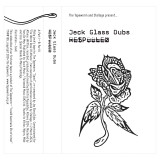
The Tapeworm celebrates its 15th anniversary in 2024. Its first tape was 2009's "Spool" by the much-missed Philip Jeck. To honour his memory, Jay Glass Dubs unwinds "Spool" in a new hour-long composition using Jeck's tape as his primary sound source. This tape was commissioned for "The Worm Rose Of Athens", two evenings of performances curated by Stellage, 1-2 March 2024, Athens. Written, recorded, produced and mixed by Dimitris Papadatos, Athens, 2024. With special thanks to Mary Prestidge.
Big Bill Broonzy, the dean of Country-Blues singers, puts it this
way “It’s real. Muddy’s real. See the way he plays guitar?
Mississippi style, not the city way. He don’t play chords, he don’t
follow what’s written down in the book. He plays notes, all blue
notes. Making what he’s thinking.” This album contains a dozen of
Muddy’s most successful recordings, notably Hoochie Coochie
Man, I Just Wanna Make Love To You, Louisiana Blues, Rollin’
Stone and I Can’t Be Satisfied.
Letztes, viertes Album von Delbo aus dem Jahr 2008, Klez.e war bereits geboren, bald folgte auch And The Golden Choir, jeweils mit Tobias Siebert. Es erscheint rückblickend fast so, als wären Delbo seit ihrem Debut auf Suche gewesen. Jener Suche nach dem erlösenden Glückston, dem sie nun auf die Schliche gekommen sind. Noch losgelöster von Standards, aber inmitten neuer Eingängigkeit haben sie auf GRANDE FINESSE den richtigen Ton, die stimmige Gefühlslage und sich als ihr eigenes Phänomen gefunden. GRANDE FINESSE lässt mehr zu und von einigem ab. Piano, Streicher, und Bläser umspannen Welten und laden diese auf. Auf diese ihre Weise klingen Delbo so stilvoll und betörend wie Blonde Redhead, ohne ihre ureigene Dringlich- und Kantigkeit verloren zu haben. Damit bauen Delbo Poetisches, Melancholisches und im gleichen Atemzug Aufbauendes wie ein Amelie-Soundtrack zusammen, ohne den Lärm Sonic Youth'scher Art oder das Karate-ähnlich Kunstvolle missen zu lassen.