First impressions matter. Especially on a debut album. Time and attention-strapped listeners size up an artist within a song or two, then move on or delve in further. Fortunately, it only takes Margo Price about twenty-eight seconds to convince you that you’re hearing the arrival of a singular new talent. “Hands of Time,” the opener on Midwest Farmer’s Daughter, is an invitation, a mission statement and a starkly poetic summary of the 32-year old singer’s life, all in one knockout, self-penned punch. Easing in over a groove of sidestick, bass and atmospheric guitar, Price sings, “When I rolled out of town on the unpaved road, I was fifty-seven dollars from bein’ broke . . .” It has the feel of the first line of a great novel or opening scene in a classic film. There’s an expectancy, a brewing excitement. And as the song builds, strings rising around her, Price recalls hardships and heartaches – the loss of her family’s farm, the death of her child, problems with men and the bottle. There is no self-pity or over-emoting. Her voice has that alluring mix of vulnerability and resilience that was once the province of Loretta and Dolly. It is a tour-de-force performance that is vivid, deeply moving and all true. From the honky tonk comeuppance of “About To Find Out,” to the rockabilly-charged “This Town Gets Around” to the weekend twang of “Hurtin’ (On The Bottle)”, Price adds fresh twists to classic Nashville country, with a sound that could’ve made hits in any decade. Meanwhile, the hard-hitting blues grooves of “Four Years of Chances” and “Tennessee Song” push the boundaries further west to Memphis (the album was recorded at the legendary Sun Studio). • Hometown: Nashville • Recorded at Sun Studios
Suche:mission one
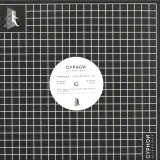
Cyphon is proud to bring you brand new music from one of Europe’s pioneers of techno and IDM, Stefan Robbers aka Terrace and Florence. His early releases for Djax-Up-Beats and his own Eevo Lute Muzique in the early 90’s were hugely influential striking a sweet spot between stark minimalism, majestic analogue lushness and dance floor grooves. In more recent years his own reinterpretation of the Detroit sound can be found on the highly regarded Dutch label Delsin.
Here on his ‘Thermionic EP’ Terrace sings out with such intensity that minds are blown. Listen to the brutal, exhilarating sequences of ‘Territorial’ which leads the new EP, and you will receive that message loud and clear. While the music is as much about the consequence of soulful depth, it is also about edgy machines communicating intimately. Sweet chords fuse and then contrast with grainy acidic sonics, leaving the tempo poised at an irresistible pace like all our futures depended on it.
As you move next onto the more subtle electro pulse of ‘Thermon’, shimmering keys dance around a frame-by-frame remembrance of robotic disco in the 23rd century. The uplifting brilliance of ‘Woodward’ follows filling the void with an explosion of colour that is all about life-affirming instrumentation, hitting you fast and loose with a cascade of arpeggios, tough drums plus an incendiary surge of melodic distraction causing the airwaves to crackle with celebration.
Completing this stunning release from Terrace are the fierce, hotwired grooves forged by ‘Ritual’, conjuring up endless combinations of an analogue model rediscovered. The sheer dancefloor animation found within each of Terrace’s productions on this EP purposefully point to and enhance Cyphon Recordings own mission to explore, propelling the emphasis forever forwards.
DJ Support:
Sean Johnston, Kevin Reynolds, Vince Watson, Gareth Sommerville, Daniele Baldelli, Dj Rocca, Massimiliano Pagliara, Craig Smith, Jason Kendig, Rarish & Yoshi Horino
“20 years ago, I dreamed a dream of creating a family of like-minded, crazy individuals from all corners of the planet. That dream was Crosstown Rebels. Over these years, I have forged beautiful friendships, discovered very talented artists and tried my best to help, advise and support some of the most colourful characters in dance music. It’s been 20 years of madness, magic and music. Now it’s been distilled into our own book to mark this milestone. I’m honestly surprised at how much I remembered!” - Damian Lazarus
For 20 years Crosstown Rebels has forged a path as one of the world’s leading electronic music labels.
Established in 2003, Damian Lazarus’ label manifesto has not changed. Discovering and nurturing new talent has always been the beating heart of the label, with a mission to soundtrack the future of the dancefloor and beyond. Introducing the world to the likes of Jamie Jones, Seth Troxler, Maceo Plex and Art Department was just the beginning. Today the roster is gloriously international, showcasing the truly global scene that Crosstown has shaped over the years.
Of course, there’s the parties too. The early Slash & Burn and Rebel Rave parties paved the way for Damian to create two of the world’s most cherished experiences, Get Lost and Day Zero, and in turn setting a benchmark for electronic music events worldwide.
Now the Crosstown Rebels story is told in a new 240 page book. 20 years of madness, magic and music. Starting right back before the beginning and taking us through to the present day, acclaimed electronic music writer Joe Muggs dives into the label’s history, interviewing Damian at length and revealing Crosstown’s story as never told before. The book brings together countless unseen photographs and artwork taken from the last two decades. It tells the story of how the dance underground battled and triumphed. This is a unique publication, not only for fans of Crosstown Rebels and Damian Lazarus, but also for anyone with an interest in independent label culture and the evolution of dance music over the last 20 years.
- Deluxe 240 page book
- Limited edition with only 400 copies on public sale
- De-bossed hardback cover, printed on FSC® certified papers, with alternating paper stocks, book ribbon and G.F. Smith endpapers
- Foreword by Pete Tong MBE
- Comprehensive label discography
- Printed in the UK by PurePrint, the first CarbonNeutral® printer in the world
Graham Lambkin (of Shadow Ring fame) returns with a long awaited epic double LP, Aphorisms, his first major solo outing since Community (Kye, 2016). Recorded mostly during the early winter months of 2022, in post-pandemic New York and post-Brexit London, Aphorisms assembles the sonic detritus of daily life into hauntingly intimate aural soundscapes. Made between Lambkin's residence in East London and Blank Forms in New York, Aphorisms superimposes the two spaces onto one another creating an imaginary stage where his musical dramas unfold. A transatlantic mediation on the rooms where Lambkin has lived and worked, Aphorisms summons up hallucinatory vistas by way of the composer’s collage technique, layering field recordings, piano, guitar, percussion, vocal fragments, and repurposed elements on top of one another in double, triple, and quadruple exposures. Like the Shadow Ring’s Lindus (Swill Radio, 2001) recorded between Folkestone and Miami Aphorisms ruminates on estrangement and displacement, catching Lambkin as he returns to London after two decades of living in the States, in his words, “leaving home to return home.” Aphorisms continues Lambkin’s synthetic-naturalist approach to sound-making, twisting disparate and unique elements together to create the sensation of a coherent sonic space. At the heart of his practice is the illusion of form, whereby Lambkin combines sonic elements, documenting the moment that they coalesce into music only to disintegrate back into incidental sound. The album is centered around two pianos, one in New York and one in London, sounding together as if through the ether, creating a spectral atmosphere that Lambkin fills with melodic snippets, fragments of songs, spoken-word musings, and guttural barks or “the animal purity of voice,” as he has it. The superimposition of the two spaces is maximized in the album's closing titular track, where, much like on earlier works such as Salmon Run (Kye, 2007) and Softly Softly Copy Copy (Kye, 2009) fragments of familiar melodies float through the mix as though being played from afar. Aphorisms is Lambkin at his best, extending methodologies only hinted at previously and taking his now-idiosyncratic mission statement to a new chapter.
Marc Richter aka Black To Comm released his debut record 20 years ago. In 2023 he is still busy releasing music under various disguises and is currently signed to the Thrill Jockey label. To celebrate this anniversary his own Cellule 75 label is re-releasing some classic out-of-print vinyl albums that originally came out on the defunct Type and De Stijl labels. The LP will feature a full-colour printed inner sleeve exclusive to this edition.
In 2009 the Type Recordings label run by John Twells had just released seminal records by Grouper, Jóhann Jóhannsson and Yellow Swans when they signed Richter and put out his breakthrough Alphabet 1968 album. The LP sold out within two weeks, receiving a glowing full-page review in The Wire Magazine by the late Mark Fisher (later reprinted in his book Ghosts Of My Life), was selected for Boomkat's Top 10 releases of the year (alongside debut albums by Leyland Kirby, Demdike Stare and Oneohtrix Point Never) and was greeted with universal praise in the underground blog network as well as established magazines such as The New Yorker and Pitchfork.
The music itself played with the notion of nostalgia without being nostalgic itself. It's the sound of half-remembered dreams, a surreal distorted vision of the past, an aural polaroid of long forgotten musics, a ghostly voice from a non-existent era.
From the original Type one-sheet:
"The mission statement for Alphabet 1968 was to write an album of "songs" for want of a better word. Short tracks which represented genre points, the milestones which stuck in Richter's mind when he thought back to his favorite records. What we arrive at is a breathtaking 10-track album which, over the course of 45 minutes, explores world music, techno, noise, avant-garde, ambient music and even exotica. Each track is linked with a loose thread of radio static or environmental sound, dragging you through the album, as if tuning in to a stray broadcast or a particularly adventurous mix. Richter has pieced the album together from hours of recordings made at his studio with home made gamelan, small instruments and loops gathered from a collection of ancient vinyl and 78 records. The scope of the album is admirable, but ignoring this, it is simply a shockingly arresting collection of experimental oddities, with references ranging from Moondog to Basic Channel by way of Bernard Herrmann. It's not hard to fall in love with Alphabet 1968, far harder would be to place exactly where the record should fit into your collection."
Mark Fisher in The Wire:
"But what if we were to take Richter's provocation seriously - what would a song without a singer be like? What would it be like, that is to say, if objects themselves could sing? It’s a question that connects fairy tales with cybernetics, and listening to Alphabet 1968, I’m reminded of a filmic space in which magic and mechanism meet: JF Sebastian’s apartment in Blade Runner. The tracks on the LP are crafted with the same minute attention to detail that the genetic designer and toymaker brought to his miniature automata, with their bizarre mixture of the clockwork and the computerised, the antique and the ultramodern, the playful and the sinister. Richter’s musical pieces have been built from similarly heterogeneous materials - record crackle, shortwave radio, glockenspiels, all manner of samples, mostly of acoustic instruments. ….. JF Sebastian's apartment was itself an update of older spaces in which science and sorcery co-existed: the workshops of ETA Hoffmann's inventor-magicians, or of Pinocchio's creator, Geppetto. I think, too, of Auguste Villiers de l'Isle-Adam's astonishing 1886 tale The Future Eve in which Edison, using the expertise he has recently acquired from inventing the phonograph, sets himself the task of constructing an artificial woman. But if there are songs here, they are sung by the gramophone and other recording and playback machines. Richter so successfully effaces himself as author that it is as if he has snuck into a room and recorded the objects as they played (to) themselves. Rather than simply automating his music, as in the case of Pierre Bastien and his mechanical machines, Richter makes us feel that he has merely recorded the unlife of objects. ….. Indeed, the impression of things winding down is persistent on Alphabet 1968. Entropy has not been excluded from Richter's enchanted soundworld. It feels as if the magic is always about to wear off, that the enchanted objects will slip back into the inanimate again at any moment."
A wild and funky collection of Afro grooves that was ahead of its time in 1977 and has become a collector’s item in recent years, especially due to the growing international interest in Colombian picó sound system culture. Fruko and his studio bands Wganda Kenya and Kammpala Grupo treat us to a diverse set of African and Caribbean styles, laced with crazy synths, psychedelic guitar and infectious pan-African polyrhythms. By the time Discos Fuentes released the album “Wganda Kenya Kammpala Grupo” in 1977, Wganda Kenya’s discography was expanding with many 45 singles and appearances in various artists collections. The group’s 1975 debut record “África 5.000” was a full length LP in the U.S. and a various artists compilation in Colombia, which was followed by the self-titled long player the following year. However, Kammpala Grupo, which shared the album’s title and was credited to three songs on the record, had never appeared before, yet was basically the same studio group as Wganda Kenya. Most likely the creation of this short-lived studio band was just a ploy by the label to make it seem like there were more groups playing the type of exotic afro tracks favored by the picotero DJs of Colombia’s Caribbean coast (especially in Barranquilla and Cartagena). 1974 Discos Fuentes’ management had sent musician, band leader and producer Julio Ernesto “Fruko” Estrada to the coast on an A&R mission to discover what people were dancing to in the verbenas (communal open air neighborhood parties) run by the owners of picó sound systems (decorated mobile DJ rigs). Always game for an adventure, Fruko was tasked with bringing some popular examples of these esoteric, hard-to-find African, French and Dutch Antillean records back to Medellín to serve as inspiration (or to outright copy) so that the label could enter into the growing regional market and spread its popularity to the interior of Colombia and other Latin American countries via its own studio creation, Wganda Kenya. Fuentes was always returning to exploit the rich African-rooted culture of the coast as it had with the cumbia and other regional genres before, so in a way it was not surprising that they were attuned to this particular niche phenomenon from a marginalized sector of the population. The most popular genres with the champeta dancers in the 70’s and 80’s were styles like Congolese rumba, highlife, afrobeat, juju, mbaqanga and soukous as well as the music of Haiti, Guadeloupe, Martinique, Curaçao and Dominica, all of which were fiercely guarded by the DJs who had managed to acquire them often through extreme means of travel, barter and intense digging. The record kicks off with the joyful ‘El Gallo Africano’ which features exquisite interplay between Sepúlveda’s highlife style guitar and an authentic-sounding African style saxophone, perhaps played by Carlos Piña. In reality it was ‘Go Call Police Chief’ by prolific Nigerian highlife guitarist Chief Oliver Sunday Akanite, aka Oliver De Coque. Next up is Kammpala Grupo’s ‘La Yuca Rayá’ (‘Grated Yuca’), written by Isaac Villanueva in a style he termed son haitiano which sounds much more like Zimbabwe Shona mbira music. Wganda Kenya’s ‘Caimito’ (star apple, a type of tropical fruit), on the other hand, is actually a cover of a relatively well-known Haitian merengue song. Kammpala Grupo then takes us from the French Antilles to the multi-cultural discotheques of Paris, where a cover version of Black Soul’s Afro-boogie anthem ‘Black Soul Music’ is retooled and renamed ‘King Kong’, perhaps in a nod to the 1976 remake of the monster flick of the same name. Side two introduces us to the infectious merengue rebita of Angola via ‘La riphyta’ with “Paparí”, aka Mariano Sepúlveda, doing the vocals and faithfully replicating the Angolan guitar style. ‘La Trompeta Loca’ (‘The Crazy Trumpet’), probably the nuttiest track on the album, is an ingenious cover of ‘Ye Gbawa Oo Baba (Tribute To Nigeria)’ by Joe Mensah of Ghana. As with all their covers of African tunes, this rendition tightens up the original with some pop sheen, more consistent drumming and higher production values, remaking it into a powerful slow-burning dance floor filler. This is followed by one of the most powerfully original songs to come out of the entire Wganda Kenya project, Mike Char’s reggae anthem ‘El Nativo’ with Joe Arroyo on vocals. The record ends on a more authentically Caribbean sounding note with the instrumental ‘El testamento’, a cheerful islands banger with bright brass, syncopated calypso beats and chunky cuatro guitar (or ukulele). The original was in the mento genre and titled ‘Sweet meat’, written and recorded by Jamaican trumpeter Bobby Ellis. First time reissue. 180g vinyl.
- A1: South Bound – Dennis Farnon
- A2: Wheeler Dealer – Trevor Duncan
- A3: Pardon??? – Dennis Farnon
- A4: Tournament – Dennis Farnon
- A5: Border Incident – Dennis Farnon
- A6: Monomania – Ray Davies
- B1: Snowmobile – Dennis Farnon
- B2: The Trackers – Dennis Farnon
- B3: Secret Mission – Ray Davies
- B4: Gin And Tonic – Dennis Farnon
- B5: The Rally – Dennis Farnon
- B6: You Were Right I Was… – Trevor Duncan
- B7: Two Bars – Pete Moore
Take one of the oldest library labels of the world, entrust its incomparable catalogue to the expert hands of two records scouts and sampling enthusiasts, and you get Cavendish Rarities, an exceptional 12-inch vinyl gathering brilliant producers who made the reputation of this prestigious Music Library founded in London in 1937.
For the first time on Beatsqueeze Records, Mister Modo and Ugly Mac Beer have selected 13 original tracks impregnated with vintage spirit and cinematographic atmospheres, signed with Cavendish in the 70’s by Trevor Duncan, Ray Davies or Dennis Farnon.
A unique compilation on vinyl only, edited by two passionate crate diggers, for all music lovers in perpetual quest of rare pearls and fans of great old school sound!
- A1: The Giant Meteorite Draws Near
- A2: Main Title
- A3: The Ruins Of The Ayutthaya Dynasty
- A4: The Golden Statue Of Buddha
- A5: The Temple Collapses
- A6: The Iceberg Disaster
- A7: Infant Island
- A8: The Suspension Bridge Falls
- A9: Midori's Letter
- A10: The Mural In The Cave
- A11: Discovery Of The Giant Egg
- A12: The Legend Of The Cosmos
- A13: The Larval Battra Appears
- A14: The Giant Egg In Tow
- A15: Battra Attacks Nagoya
- A16: Battra Vs. The Self-Defense Forces
- B1: Godzilla Appears
- B2: The Larval Mothra's Birth
- B3: The Hotel In Manila
- B4: Mothra Crosses The Sea
- B5: Mothra's Landing
- B6: Mothra And The Cosmos
- B7: The Cocoon On The National Diet Building
- B8: Godzilla From The Fuji Volcano
- C2: Godzilla Vs. The Self-Defense Forces
- C3: The Luminous Fairies
- C4: Mothra Vs. Godzilla
- C5: The Ocean Halo
- C6: Mothra Heads Into Outer Space
- C7: Rolling Title – Ending
- D - Etched
- B9: The Appearance Of Imago Mothra
- C1: Imago Battra Emerges
The Big G is back, but has Godzilla bitten off more than it can chew? 1992's GODZILLA VS MOTHRA is a triple threat treasure, with Godzilla battling the legendary Mothra and its dark doppelganger Battra, unleashed by a meteorite and is intent on destroying Mothra and, subsequently, the world. Throw in a rogue archaeologist, his ex-wife, and a multinational company exploiting the minute Mothra Cosmos twins, and you have a thrilling kaiju adventure with a stunning score by the original Godzilla composer, the brilliant Akira Ifukube. GODZILLA VS MOTHRA is undoubtedly one of Ifukube's most outstanding scores, bringing together the traditional booming brass and bass that accompanies Godzilla and Battra with a more ethereal sensibility for Mothra and her mission to save the Earth. Godzilla's theme is stomping in the foreground, and Battra gets similar material with a gigantic doom-laden motif for his destructive power. But the "Sacred Springs" theme for Mothra is a match for any of them, with Ifukube using it in minor and major modes, with a gorgeous rendition with a female chorus at the climax of the score, illustrating once again that when it comes to the music of Godzilla, Akira Ifukube is the master.
- A1: Down On The Bowery
- A2: Soho Tango
- A3: Hole In My Roof
- A4: Harvest Moon
- A5: My Little One
- A6: She Comes
- B1: After Midnight
- B2: Zaragoza
- B3: Never Judge A Man By His Umbrella
- B4: Wanna Grow Old In Paris
- B5: Makin' Plans
- B6: Why
Der Star aus den TV-Serien “Homeland”, “Band Of Brothers” und “Billions” mal anders: als SingerSongwiter mit erdigem Roots-Pop.
Der britische Schauspieler Damian Lewis ist Serienfans auch in Deutschland als Nicholas Brody aus der Serie „Homeland“ bekannt. Vor seiner erfolgreichen Laufbahn in der Schauspielerei war Lewis vor allem ein Musiker, inspiriert von den Rockbands seiner Jugend und jahrelang unterwegs als Straßenmusiker.
Jetzt kehrt Lewis zu seinen Ursprüngen zurück. Sein Debütalbum bietet eine originelle Sammlung von rootsigen, rockigen und manchmal auch etwas jazzig angehauchten Songs aus eigener Feder plus zwei großartigen Coverversionen: ”Harvest Moon” von Neil Young und ”After Midnight” von J.J. Cale.
- Heaven
- If You Leave Me
- Meltdown
- Never Grow Up
- The Show
- You Could Start A Cult
- Save My Life
- On A Night Like This
- Science
- Must Be Love
Clear Vinyl[27,94 €]
Nach seinem erfolgreichen Album „Heartbreak Weather“ aus dem Jahr 2020, veröffentlicht Niall Horan sein langersehntes drittes Studioalbum „The Show“. Auf seinen Erfolg mit der Band One Direction folgt 2016 der Start seiner Solokarriere. Mit seinen Singles „This Town“ und „Slow Hands“ hatte der irische SingerSongwriter von Anfang an die Fans auf seiner Seite. „The Show“ ist ein Werk, das aus Nialls langjähriger Mission geboren wurde, seinen leidenschaftlichen Fans Trost und Verbindung zu spenden. Es vereint die unverhüllten Emotionen seiner früheren Werke mit einem kraftvollen neuen Element der Selbstreflexion.
Das Album ist erhältlich als CD und auf Vinyl
Nach seinem erfolgreichen Album „Heartbreak Weather“ aus dem Jahr 2020, veröffentlicht Niall Horan sein langersehntes drittes Studioalbum „The Show“. Auf seinen Erfolg mit der Band One Direction folgt 2016 der Start seiner Solokarriere. Mit seinen Singles „This Town“ und „Slow Hands“ hatte der irische SingerSongwriter von Anfang an die Fans auf seiner Seite. „The Show“ ist ein Werk, das aus Nialls langjähriger Mission geboren wurde, seinen leidenschaftlichen Fans Trost und Verbindung zu spenden. Es vereint die unverhüllten Emotionen seiner früheren Werke mit einem kraftvollen neuen Element der Selbstreflexion.
Das Album ist erhältlich als CD und auf Vinyl
Destrøyer is the second single from the upcoming debut album due to be released in early 2023. All hailing from the DIY-culture in Gothenburg and with a mission to deliver fast riffs straight to your ears, Spøgelse will run you over one time, then back up and run you over one more time to be sure you get the message.
Degrees of Freedom is a Canadian musical group founded in 1984 in Montreal by Janet Cadman (vocals and percussion), Martin Chartrand (bass, guitar, rhythm programming and vocals) and David Curtis (keyboards, vocals, and percussion). Established as a 5-piece New Wave cover band, Degrees of Freedom evolved into its classic quartet configuration following the departure of the original guitarist and drummer, and the subsequent enlistment of Santino Mastrocola on drums. With this lineup change came a new musical mission: the writing, recording and live presentation of original material only. Since Santino's withdrawal from the band in 1988, Degrees of Freedom has carried on as a trio in the studio while augmenting concert performances with additional musicians. In February 1985, Degrees of Freedom performed at the newly formed S.O.S. (Save Our Songwriters) Club in Montreal. Like other participants in the S.O.S. project, Degrees of Freedom was rewarded with studio time to record some of its own songs. One of these, "August is an Angel" was selected to close out the locally produced 1985 band anthology album "Listen - A Faze Compilation of Montreal Music." The next year, a new track "In This Room," was included in the follow-up release "Listen 2." Both songs, with four newly recorded works, were issued in 1988 as Degrees of Freedom's eponymous sole vinyl release, informally known as the “China” album. In 2015, the music of Degrees of Freedom experienced a renaissance thanks to a new generation of club DJs, traditional and internet-based radio hosts, vinyl disc collectors, and other aficionados of synth-based music. Local and international recognition has come in the form of record sales to fans in Canada as well as in the USA, Germany, Scotland, England, Ireland, Belgium, The Netherlands, France, Spain, Lithuania, Sweden, Bulgaria, Australia, Vietnam, and Japan. Responding to the resurgence of interest, Degrees of Freedom has twice re-issued the disc (2017 and 2019). Today, with eyes on the future and the past, Janet, Martin and David continue to collaborate on new material including the songs, "Metal Flesh" and "Be This Way" both accessible on the band's YouTube channel.
It features compositions by the great Stan Tracey - The Godfather of British Jazz - inspired by Dylan Thomas' drama 'Under Milk Wood', including the timeless "Starless and Bible Black" with its acclaimed solo by tenor saxophonist Bobby Wellins.
Like Thomas's characters, the themes vary greatly in tempo, in mood, in dramatic depth. The title song is a triumph, not only because it stands by itself as a beautifully conceived jazz ballad, but because it sets the scene for the rest of the writing and playing. Some of the other themes are impressionistic and highly subjective sketches of Thomas seen through the prism of jazz.
It was awarded 69th place in Jazzwise magazine's The 100 Jazz Albums That Shook the World: "Tracey is indispensable, a one-man mission statement. Here he showed how much could be achieved within the basic jazz quartet format.
Reaction at the time seems to have been along the lines of where on earth did this come from? Coherent, vital and mind-stretching."
"The haunting Starless and Bible Black remains probably the finest single recorded performance by a British jazz group." - The Observer
Smith was involved in the music business from an early age; at the age of 8, he was a deejay for the local sound Observer. Like many other great reggae musicians, Smith learned his musical skills from a combination of sound system culture and schoolwork. At age 15 he sang in school with Nadine Sutherland, who urged him to move to Kingston to pursue a singing career. It took five years for Smith to follow this advice as he had difficulty leaving his mother, with whom he had a very close and loving relationship.
Arriving in Kingston at the age of 20, Smith was thrown into the digital revolution of reggae music. His first track, "Indian Lady," was released on George Phang's Powerhouse label, Final Mission LP on the extremely popular version the old Heavenless riddim recorded by Sly & Robbie (the riddim from Half Pint's Greetings). Though it didn't become a major hit, producers discovered Smith's unique and convincing singjay talent. During the next five years (from 1985-1990) Smith put out a long line of tunes. His biggest hit was the 1988 tune "Dangerous," released on the progressive Redman label. A cheering audience watched him perform the song live at Sting '88. This song was even adopted by a British boxer called Nigel 'The Dark Destroyer' Benn and used as his entrance music, a tune that sounded out his intentions in any forthcoming fight.
Initially releasing on Oscilla Sound, then following up with records on Intramuros and FTD, E-Unity gained wider recognition when Resident Advisor described "post-Livity techno with a dreamy twist, from this promising young Frenchman". His next release – on TEMƎT – saw him inaugurate the imprint with the ‘Duo Road’ EP – four tracks of electronic futurism, jerky rhythms and dubbed-out frequencies.
‘BBB<3’ is an LP of club ballads that echo his influences, ranging from hyper-pop, Latin music, the hardcore continuum and post-dubstep stylings, featuring heavy bass mutations, spacey synths and hybrid rhythmic compositions.
In an uncertain world, E-Unity takes the opposite approach to a lot of contemporary electronic music which is always faster, harder and somehow dystopian. Instead he offers a record filled with sensibility, love and positivity, fighting the evil forces with heart emojis and sub-reinforced sonic weapons.
E-Unity shows extraordinary musicality and eclecticism throughout his productions and DJ mixes. His b2b set with Simo Cell at Positive Education Festival and former monthly residency on Rinse France solidified his notoriety as an adventurous yet thoughtful selector.
TEMƎT was launched by Simo Cell with a mission to release cross-genre electronic music, placing focus on the French music scene, whilst developing collaboration across different artistic disciplines. Previous artists to release on the label are Lolito, Less-O, Second., elise, E-Unity and Simo Cell, plus additional contributions from Low Jack, Peverelist and Skee Mask for their mix cassette series.
The second collaborative album from Laetitia Sadier Stereolab & solo and Brazil's Mombojó. Release via Stereolab's Duophonic Super 45s imprint. Modern Cosmology is a musical ensemble composed of six individuals of the human race, none of which are cosmologists or astronomers, although Felipe S. - who sings and plays the guitar - knows quite a bit about reading astrological charts. He shares his frontperson duties with one Laetitia Sadier who, by virtue of her singer-songwriter career both as a solo artist and as part of the Stereolab ‘groop’, happens to be one of the key figures of her bandmates’ musical formation. Their paths first crossed when Marcelo - also on guitars - lent his amp for some of Laetitia’s solo concerts in Brazil under the condition that he got to meet his musical idol, and along came his brother Vicente - who plays the drums - and keyboardist Chiquinho. The four lads, plus Missionário José on bass, are collectively called Mombojó, an established band on the Brazilian alternative scene.
- A1: Main Theme
- A2: Band Of Brothers (Suite One)
- A3: Band Of Brothers (Suite Two)
- Part One - Curahee’
- B1: The Mission Begins
- Part Two - Day Of Days
- B2: Swamp
- Part Three - Carentan
- B3: Spiers’ Speech
- B4: Fire On Lake Part Four - Replacements
- B5: Parapluie
- B6: Boy Eats Chocolate
- B7: Bull’s Theme
- Part Five - Crossroads
- C1: Winters On Subway Part Six - Bastogne
- C2: Headscarf Part Seven - The Breaking Point
- C3: Buck In Hospital
- C4: Plaisier D’amour Part Eight - The Patrol
- C5: Preparing For Patrol
- Part Nine - Why We Fight
- D1: String Quartett In C-Sharp Minor (Opus 131)
- D2: Discovery Of The Camp
- D3: Nixon’s Walk Part Ten - Points
- D4: Austria
- D5: Band Of Brothers Requiem
After more than 20 years, Band Of Brothers is still considered one of HBO’s most important series. Produced by Steven Spielberg and Tom Hanks, the series has won major awards such as the Golden Globe for Best Miniseries and the Emmy Award for Outstanding Miniseries. The series is a war drama miniseries based on historian Stephen E. Ambrose’s 1992 non-fiction same titled book. It follows the story of Easy Company of the U.S. Army 101st Airborne Division and their mission in World War II Europe, from Operation Overlord to V-J Day
The score, composed by the late Michael Kamen, is credited as one of the essential elements in creating the realistic atmosphere of the series. Kamen was best known for scoring movies such as Die Hard, Lethal Weapon and X-Men and received an Academy Award nomination for both Don Juan DeMarco and Robin Hood: Prince Of Thieves.
Revisit the Band Of Brothers score with this deluxe reissue on smoke- coloured vinyl, available as a limited edition of 1500 individually numbered copies. The 2LP is housed in a gatefold with a cast picture on the inside, and includes a large poster and insert.
Spawning from the Manchester music scene in 2008 and now sucking in members from all over the UK, the Riot Jazz Brass Band is a nine-piece genre-mashing, foot stomping party behemoth bringing the love buzz to ears and feet all over the world
New album RIOT JAZZ MAKES PEOPLE HAPPY is the culmination of a 15- year mission to spread joy and get people moving. With three trumpets, three trombones, sousaphone and drums bringing the noise and MC Chunky conducting the chaos, the result is a gleeful cacophony encompassing jazz,hip hop, drum 'n' bass, trap, grime and more.
The intoxicating sound and spirit of the Riot Jazz Brass Band, as well as its deep commitment to exploring all sorts of musical genre, has seen it tapped to collaborate with a variety of top artists and play at festivals across Europe.
One of the most established festival bands on the circuit with appearances at Glastonbury (West Holt Stage), Womad (Big Top), Jazz Sous Les Pommier (France) to Soundwave (Croatia) and everything in between. Recent UK tour last April/May all across the country.
- A1: Out Of The Silent Planet
- A2: Over My Head
- A3: Summerland
- B1: Everybody Knows A Little Bit Of Something
- B2: The Difference (In The Garden Of St. Anne’s-On-The-Hill)
- B3: I’ll Never Be The Same
- C1: Mission
- C2: Fall On Me
- C3: Pleiades
- C1: Don’t Believe It (It’s Easier Said Than Done)
- C2: Send A Message
- C3: The Burning Down
Gretchen Goes to Nebraska is the second studio album by American heavy metal/hard rock trio King’s X. It is a concept album based on a short story written by drummer Jerry Gaskill.
The album received virtually universal critical praise for its uniquely progressive musical approach and varied styles and is considered as one of their works, a seminal record within the progressive metal genre. It achieved high slots on various Album Of The Year-lists, including #4 in Kerrang!.
Gretchen Goes To Nebraska is available as a limited edition of
1500 individually numbered copies on gold coloured vinyl.