Tarawangsawelas are a musical duo from Bandung, mainly performing a contemporary version of Tarawangsa, the sacred music from Sundanese West Java. Here they are joined by their teacher and maestro, Pak Pupung Supena, together with, Pak Jaja, on Sekalipon. Wanci is a minimalist, cosmic album composed with a careful modern interpretation of one of the most mystical and spiritual genres in Indonesia. A gorgeous and infectious six track album. TIP!
.
Producer Rabih Beaini says "Last year, Europalia Festival commissioned me to work on a musical project with local musicians from Indonesia and develop a performance to tour during Europalia 2017. I chose to work with Tarawangsa, the sacred music from Sundanese West Java. Tarawangsa is played on two string instruments: a rababa-like two-stringed bowed instrument itself called Tarawangsa, and the Jentreng, a seven-stringed kecapi-like instrument. Typically from Rancakalong village in Sumedang, West Java, Tarawangsa is played as part of a ritual consisting of almost eight hours of music and dance, complete with offerings and prayers. During a performance, a selection from the forty two known Tarawangsa pieces slowly build up from a cosmic slow groove to more repetitive and hypnotic rhythms, inevitably bringing the listener and dancer to a trance state. During the residency I had the great honor to be able to develop new structures and pieces together with Tarawangsawelas, recording them in Bandung, and ultimately having them joined by their teacher and Tarawangsa maestro Pak Pupung Supena together with Pak Jaja on jentreng. This album is a modern description for one of the local Indonesian music scene, but mainly it is an offering for the Tarawangsa ritual, like the food and incense and the prayers, and the messages of the ancestors to the people of Rancakalong."
Composed and performed by Teguh Permana, Wisnu Ridwana and Rabih Beaini, except Sekalipun (traditional) performed by Pupung Supena, Jaja Rohmat, Teguh Permana & Wisnu Ridwana.
Recorded in Bandung, march 2017
Produced, mixed and arranged by Rabih Beaini.
Mastered by Neel at Enisslab.
Cover design by George Sowden, curated by M-L-XL,
quête:mixed by
Tradition and experimentation are two familiar
territories that C'mon Tigre, a duo who find
their identity by working with musicians from
all over the world, can balance between very
well. As they did for their debut album (2014),
they have put together a multicolored collective
for their second record 'Racines', out on
February 15, 2019 for BDC/K7.
The title is a French word that means "roots",
referring to the musical roots in which C'mon
Tigre's feet, head and heart are immersed, and
from which their contaminated tracks sprout to
create unusual and original sound environments. In their new album the sounds of the
Mediterranean - the sea of their land -
intersect, intertwine and overlap with a
kaleidoscope of other sounds and a new
approach based - they explain - "on the type of
work we had done when we rearranged the first
album for live shows, by emphasizing the
synthetic part of our tracks". This time around
they did it from the very beginning: "The
composition of the pieces immediately included
the use of machines and synthesizers as a
basis for acoustic instruments. The goal was to
reprocess the terrain of Mediterranean
influences that was undoubtedly our starting
point".
Imagine a work in progress where bass and
guitars interact with woodwind, synths, percussions, vibraphones, dipping the listener into a
sensual and hypnotic musical journey. Sailing
from the Mediterranean basin and being guided
by the fascination for Africa and the Middle
East, C'mon Tigre give rise to a personal
language, made up of mixtures with jazz,
afrojazz, the rhythmics of hip hop, funk, 70s
disco. All without ever confining their songs to
one style, but pushing the exploration as much
as possible, into a dimension that every journey
worthy of this name should encompass. "With
the musicians we work with the exchange and
experimentation continue till the end, the
songs can take different directions at any time'.
The result is a mixed, cosmopolitan record,
which escapes from any label for the affirmation of a free attitude. The attitude that led
C'mon Tigre to seek a connection with dancefloor culture, even if considered only as an
evocation to revisit in an absolutely personal
way
The record you are holding in your hands is a previously unheard masterpiece of Israeli multimedia artist Ami Shavit. As a professor of both philosophy and art and established kinetic artist in the 1970s Shavit was fascinated with new and interactive technologies. While mostly focusing on visual art and mixed-media installations, a trip to New York in 1972 introduced him to synthesizers and triggered his curiosity to do some explorations into the world of music or "sound" as he preferred to call it.
Ami's research was focused on the concept of meditative music that would help people to relax and create a cosy mood associated to the alpha brain waves and biofeedback. Before starting his artistic career, like all Israeli citizens, he had to serve in the army to his personal regret. Shavit had an operational position, which meant a high probability to get involved in a so called 'hot situation'. When in 1973 the Yom Kippur war broke out, Ami was enlisted again and got the unfortunate opportunity to encounter, in Hanoch Levin's words 'the dead'. Being an operation officer he was in charge of evacuating Israeli wounded officers from battlefields to hospitals. Some 6000 injured men passed through us during that war, he recalled one year later in a newspaper interview.
'I witnessed some sights that I can hardly forget. On the one hand I felt that as an artist I had to express the war events, on the other hand I felt that this is an almost impossible mission. Only Goya and Picasso, in his Guernica, addressed this topic successfully.'
Yom Kippur is the final and seminal of Shavit's sound experiments ever recorded and now finally available to the world. We believe that this is an extraordinary strong piece in which the hectic moods and terrific experiences of war are deeply transmitted to the listener. May all soldiers, who are often forced to go through traumatic experiences beyond their own will, find ways to artistically digest and process the unwanted memories.
Ami Shavit was born in 1934 in Tel Aviv-Jaffa. Known as visual artist, his work involves in creating virtual environments with optic and kinetic art, including structures worked by electricity, moving tubular configurations illuminated by colored lights. He published In Alpha Mood in 1977 on Amis records, his own record company, at 500 copies, republished by Finders Keepers Records in 2015 and Neural Oscillations And Alpha Rhythms in 2018. Yom Kippur is his ultime recordings.
Hey! Here is the new single "I Don't Care". The Beholders join the doo-wopping lushers of love, The Colossians for a song about the wonderings of love set to a Latin soulful groove perfect for the sunset. Whether you are looking or lost in the sweet endeavours of love, I don't care will take you there. Written By J.Joshua - Produced by J.Joshua - Mixed by Andrew Yeomason & J. Joshua - Mastered by Alex Abrash (Lee Fields, Sunny & The Sunliners)
White Shadows In The South Seas is the title of a book written in 1919 by Frederick O'Brien as part of a trilogy he wrote based on his experiences living in the Pacific islands in the early part of the 20th century. His book was taken as the starting point for a film to be directed, initially, by Robert Flaherty (famous at the time for his groundbreaking documentary / fiction film Nanook Of The North) with W.S.Van Dyke as his support. The film, ultimately, apart from the title, had little to do with O'Brien's book and Flaherty left the film after a few months leaving Van Dyke to finish it.
I purchased O'Brien's book, along with many others, from Basement Books, a secondhand bookstore in Melbourne/Australia. Part of my 'Islomania' and on going fascination with all things Pacific. When I discovered there was a 1929 silent film based on the book I sought it out and started to present it as part of my 'Live Music/Silent films' repertoire. Tabu by Frederick Murnau, which coincidently also had Flaherty as co-director originally, was the first film I ever wrote / improvised a score for and presented as a live film/music performance. My repertoire extends to over 23 films now.
My eclectic and diverse musical and artistic interests extend into 'Hawaiian', 'Exotica', 'Ambient' and 'Electronic' Music. I have produced several volumes of so called 'Electronic, Ambient, Exotica' on CD and Vinyl, including Kiribati, Globe Notes, Rayon Hula ( on Vinyl, CD and digital format ) and most recently, New Globe Note on Vinyl and White Shadows In The South Seas on CD.
White Shadows In The South Seas features some of the music presented in my live screenings of the 1929 silent film.
The film is the story of Dr. Matthew Lloyd, an alcoholic doctor who is disgusted by the exploitation by white people of the natives on a Polynesian island. The natives dive for pearls, however, numerous accidents occur and one diver dies. In anger, Dr. Lloyd punches Sebastian, the employer. As revenge and to prevent further interruption of his activities, he tricks Dr. Lloyd onto a ship with a diseased crew (thinking they are ill) and his men rough him up and send the ship off into a storm. Dr. Lloyd survives and is washed ashore on an island where none of the natives have ever seen a white man before. Lloyd is rescued and ultimately falls in love with the chief's daughter, who is Taboo, hence Lloyd is prevented from pursuing his love for her. An incident occurs and a young boy is thought to have drowned but Lloyd is able to revive him, earning him points and permission with the chief's daughter. Lloyd begins to realise that the local islanders have no sense of the value of the black pearls which grow in abundance around their island and he starts to dive for them and collect them. One morning the white man Sebastian unexpectedly turns up on a scooner and starts to offer the islanders trade for their pearls. Llloyd tries to interrupt the encounter and is shot and dies. His wife and the islanders morn for his dead body and, symbolically, the passing of a way of life.
Mike Cooper plays - Electric and acoustic lap steel guitars / electronics / Zoom Sampletrack / Kaos Pad / Casio SK1 / Korg Drum Machine / Self Made Instruments.
It also features field recordings made on Pulau Ubin by Mike Cooper during a month as Artist In Residence for The Artist Village / Singapore.
I would like to acknowledge and thank Lawrence English (Room40 Records) for his assistance and encouragement with the original recordings and the CD version of White Shadows In The South Seas.
All music written and played by Mike Cooper PRS/MCPS - except Po Mahina (trad. Arr. Cooper) and Hilo Hanakahi (trad. Arr. Cooper)
Recorded and Mixed at the Steelworks in Rome 2012/2013.
A White Shadow In The South Seas
In February 2014 'A White Shadow In The South Seas' was the title of an audio-visual installation I made at the Teatro In Scatola in Rome, Italy, presented as part of a series of sound installations titled 'Visitazioni' produced by Proposte Sonore.
The essay below, as well as our collection of Hawaiian shirts, Exotica and Hawaiian vinyl records, was an inspiration for this installation.
'..the transformation and reconstitution of the souvenir commodity as an indigenous ethnic art form and a scarce relic of Hawai'i's romanticized past...' from - Clothing and Textile Reasearch Journal - From Kitsch to Chic by Marcia A. Morgado.
And....
Michael Thompson's Rubbish Theory (1979)
' ...a critical aspect of Western culture is the pre-disposition to see objects in terms of two overt categories: the transient and the durable. Objects identified as transient have finite life spans and lose value over time, whereas those identified as durable have infinite lives and over time increae in value....category assignments are arbitrary, but once assigned a category membership determines relative value. Fashion apparel-by defenition-is assigned to the transient category; paintings commonly are designated durables....how is it that transient objects.. ( e.g. Hawaiian shirts and vinyl records ) ..sometimes become durables.
Objects assigned to the rubbish category are largely invisible, have no value and, ideally, no life span. Fashion for example, no longer worn and relegated to the back of the wardrobe has fallen into the covert rubbish category. But rubbish can be rescued and transformed. Thompson says ' What I believe happens is a transient object gradually declining in value and in expected life span may slide across into rubbish. Here it exists in a timeless and valueless limbo where it has a chance to be re-discovered and be successfully transformed to a durable. Such transferes are radical: objects gradually slide from transcience to rubbish, but the transformation from rubbish to durable involves an all-or-nothing leap across two boundaries, that separating the worthless from the valuable and that between the covert and the overt. Things drift into obscurity but they leap into prominence.
The delightful consequence of this hypothesis is that in order to study the social control of value we must study rubbish.
The rubbish-to-durable transformation is accompanied by the development of highly specialized knowledge derived from the discovery of subtle variations and complex details that went unnoticed in the objects transient stage. The discoveries initiate renewed interest in the object and its market value begins to climb. As prices soar beyond the reach of ordinary people, the object becomes available only in high priced collectors' markets. Furthermore, as market values rise, the aesthetic value of the object undergoes a reassessment as well, and it becomes increasingly apparent that the objects intrinsic beauty has been overlooked. Ultimately the object is re -assigned as a durable and becomes recognized as a timeless classic.
Exotica, Ambience and Pacificism - A dialogue with Mike Cooper & Professor Philip Hayward Deputy Pro Vice Chancellor of Research Southern Cross University, Lismore, Australia.
The second release by Eva Keyes, which follows up `Tired of the City' (PRTL7057).
* `Light Shining' is produced and mixed by the mighty Steve Vibronics from Leicester's Scoops label.
* The heavyweight rhythm and dub mix is balanced out by Eve's accessible and catchy vocal style.
* Eva, who originally hails from Limerick, Ireland, is creating a bit of a stir in the roots / dub scene and more is expected from her on Partial in 2019.
* These recordings stretch back to the tail end of the late 1980's, with the original line up of Dub The Earth, who were one of a few dub reggae-inspired groups sprouting up in the west of England in those times, such as Military Surplus (who morphed into Radical Dance Faction), Rhythmites and Revolutionary Dub Warriors who all had a strong presence in the free festival scene in the UK at that time.* Featuring the late Steve Swann (Revolutionary Dub Warriors, On-U Sound) on vccals and mixed & produced by Rej Forte from Jah Works.
* The 10" features a vocal, dub and a violin cut.
* The vocal and violin cut have only previously appeared on the cassette only various artists release `One Foundation' from 1990.
Sinking Into A Miracle is the debut album by Glasgow's AMOR, a quartet of musical travellers exploring the sonic open-ended-ness of dance music. Following two critically acclaimed 12-inches, this is a fully developed treatise on ecstasy and transcendence. Here, Richard Youngs, Michael Francis Duch, Paul Thomson and Luke Fowler are more honed, razor sharp in focus and timing, testing their instrumental prowess on condensed song structures and new, enlightened feelings of expansive hope and bliss. From the outset, it's an ambitious yet ultimately inclusive journey. Recorded to 24-track tape at Chem 19 and mixed by Paul Savage and Richard McMaster (Golden Teacher), this full length retains the elastic grooves of Paradise and Higher Moment, the group's previous singles, but relinquishes the classic Philadelphia International-tinged sound in favor of looser rhythmic patterns. There are new depths to the compositions: a more free-flowing approach to percussion and deft experiments in hybridity make for a full and rounded, emotionally tinged record. Indeed, there are times when AMOR sound like the lost house band from David Mancuso's Loft parties: Richard Youngs' uplifting, gospel-tinged lyrics talk about moving beyond, universal truths, sailing through the horizon. It's a wideeyed optimism Mancuso would perhaps have approved of and which is embroidered with spectral details that begs to be auditioned on large, tweaked out sound-systems.
Fantastic cover art by Robert Beatty.
Les Disques du Crepuscule presents Signals Into Space, a brand new studio album by acclaimed electronic duo Ultramarine. SIS is their seventh album, having debuted on Crepuscule back in 1990.
The new long player was conceived by Ian Cooper and Paul Hammond over a three year period and features four songs co-written with North American musician Anna Domino, a firm favourite of the group since her leftfield pop releases on Crepuscule and Factory in the 1980s. 'For this project we wanted to do something more ambitious and perhaps more accessible than our last album in 2013,' explains Paul. 'We were keen to start collaborating with other musicians again, as well as develop our method of performance-based writing and recording, which is partly improvised.'
Signals Into Space also features contributions from saxophonist Iain Ballamy (ECM, Food, Loose Tubes) and percussionist & vibraphone player Ric Elsworth. It was recorded and mixed in London with Andy Ramsay (Stereolab) and mastered by Noel Summerville.
'To some extent Signals Into Space is an escapist record,' reveals Ian. 'Our rehearsal space is a small windowless room on an industrial estate in Essex. Possibly as a result we ended up with a collection of visually suggestive tracks, conjuring mental images of cities, deserts and tropical islands, which gradually came into focus as Anna's lyrical ideas developed. So while the music might have been conceived in a closed space it's imbued with a positive spirit - looking outwards, seeking contact.'
Cover art by Studio Heretic. Available on CD, digital and vinyl LP (vinyl format includes a free digital copy on MP3).
- A1: Oh My Love
- A2: Maple
- A3: Mister Ling
- A4: Rito Di Mezzanotte
- A5: Mamie
- A6: Sosta Nel Lago
- A7: Addio Zio Tom
- A8: Il Mercato Degli Schiavi
- A9: La Fiera Delle Meraviglie
- B1: Oh My Love (Orchestra)
- B2: Fort Bastille
- B3: Cadets' Waltz
- B4: Miami
- B5: Oh My Love (Orchestra #2)
- B6: Miami (#2)
- B7: Oh My Love (Orchestra #3)
- B8: Miami (#3)
- B9: Addio Zio Tom (#2)
Italian directors GUALTIERO JACOPETTI and FRANCO PROSPERI gave birth to a whole new subgenre of 'non-fiction' exploitation movies with their 1962 hit MONDO CANE. After repeated accusations of forgery, unethical behaviors and war crimes, they decided to make a movie about the atrocities of American slavery as an apology of sorts. It was 1971 and the movie was FAREWELL UNCLE TOM (ADDIO ZIO TOM) The famous critic Roger Ebert called the result 'the most disgusting, contemptuous insult to decency ever to masquerade as a documentary' Naked flesh, voyeurism and violence is constantly used but gorgeous photography and a memorable score from Academy Award nominee RIZ ORTOLANI add a sickening slickness to it all: rock- beat tunes mixed with classic big band themes, waltz and funny marches and the beautiful OH MY LOVE, with the vocals from Katyna Ranieri, used, among many others by Winding Refn in his cult movie DRIVE (2011).
FIRST VINYL REISSUE EVER
LIMITED EDITION OF 500 COPIES
COMPLETE EDITION WITH EXTRA TRACKS
If you read the name Shankar you may right away think of Ravi Shankar, the grand master of contemporary Indian folk music who was very popular in the 60s due to his connection with the music industry in the United States despite staying away from the pure pop music by maintaining his classic sitar and tabla style ragas to express himself musically. Ananda Shankar used to be his nephew who also made a journey to the USA to gather inspirations from rock artists like Jimi Hendrix among others. His first album from 1970, a conglomerate of classic Indian folk tunes and instrumental versions of the hottest rock songs of the day clothed in a veil of sitar melodies and backed up with tabla drum grooves, was an attempt to combine the spiritual approach of his cultural origins with the light minded blissful attitude of western psychedelic pop music. It worked well in the sense that it is still, nearly fifty years later on, a groovy little album that leaves nobody sitting around at any random hippie party. He took a five year break from recording to create what should become his second album and this is what I am about to present to you now. The cover-tunes were replaced by all original compositions with a lush instrumentation that features the typical sitar, tabla and bowed string instruments such as sarong and sera arrangements mixed with sounds that have a definite western origin such as rock guitars, Hammond organ and moog synthesizers plus full drum kits that take care to enhance the actual groove. Psychedelic rock, raga, fusion-jazz and funk flow into each other quite naturally giving birth to something fresh and exciting I would label as Bengali pop'. The borders between eastern and western music get abrogated here. If it was not for a few deeply mythical chants on a bed of drones here and there you could not even tell this was a record by an Indian artist. This album is quite accessible most of the time and comes with a certain slickness that makes it easy for the listener to understand and appreciate what is going on. Still there is the other side of the coin, the depth pop music often lacks. So in the end this might have been too far out for the average western mainstream fanatic back in 1975 when disco began to rule but it is an awesome sound trip for fans of psychedelic dance music like INCREDIBLE BONGO BAND and all eastern influenced popular rock.
IDA007 is a vinyl release entitled 'Pagan Rave EP' by label's co-founders Uninc & Kolomensky coming up from the emerging Moscow scene.
Title track opens EP with breakbeat groove, flute solos and slavic vocals combined with progressive and acid lines to deliver unexpected mix of pagan folk music and rave rhythms.
'Ancient Tool' is another original track on the A-side with tribe vocal samples combined with acid and punchy rhythm section filled up with bongos to create a dancefloor oriented DJ tool with ancient flavor.
On the remix duties at the B-side are Ransom Note's craftsman Timothy Clerkin with slow atmospheric and meditative version of 'Pagan Rave' and quickly emerging Olsvangèr from Tel-Aviv who delivers weird oriental progressive club banger made up from the 'Ancient Tool'. Overall there is an 12'' saturated with different vibes neatly crafted and mixed together for a wide range of feelings for the listener and tools for the DJ.
Limited Colored Edition - 1000 Copies
Arguably one of the most acclaimed and loved bands of the past 20 years, by both fans and their musical peers alike, The Beta Band formed in St. Andrews, Scotland, in 1996. Innovative and singular, their unique musical and aesthetic approach to everything they did set them far apart from their musical contemporaries. Together for a relatively short period of time, the three albums and three EPs they released between 1996 and 2004 would nonetheless help define them as one of the most exciting and cherished bands of their generation. 'Heroes to Zeros' is the third and final studio album by The Beta Band released in 2004. It was mixed by famed producer Nigel Godrich and rose to number 18 in the UK charts.
- A1: Let There Be Flutes
- A2: Midlander (There Can Only Be One...)
- A3: Why Is A Frog Too
- B1: Mind That Gap
- B2: Run On The Spot
- B3: Bentley's Gonna Sort You Out!
- C1: Ragtopskodacarchase
- C2: Whoosh
- C3: Who Put The Bom In The Bom Bom Diddleye Bom
- D1: Spacehopper
- D2: Return Of The Hardcore Jumble Carbootechnodisco Roadshow
- D3: On Her Majesty's Secret Whistle
- D4: Spy Who Loved Moose
Limited Edition: 500 x 2 LP Gatefold Pressing. Bentley Rhythm Ace formed in Birmingham in 1996 when ex Pop Will Eat Itself bassist Richard March and DJ Michael Stokes discovered a shared love of obscure, oddball and eccentric tunes. Utilising lo-fi cut and paste sampling techniques combined with analogue synths and some wild turntable action their debut EP was picked up by Fatboy Slim's Brighton based Skint Records and released to widespread acclaim. The BRA live show added Fuzz Townshend on drums and James Atkin (ex EMF vocalist) on keyboards and the latter years of the 90s saw BRA firmly established as festival favourites with appearances at Glastonbury, Reading, V, T in the Park, Montreux Jazz and Fuji Rock amongst many others. Their irreverent approach mixed with big beats, thundering bass, wild synths and esoteric samples proved to be a hit with fans and critics alike. 1998 saw Bentley Rhythm Ace crowned 'Best Dance Act' in that year's NME awards. Their eponymous debut album was given a worldwide release after the Bentleys signed to Parlophone records and the band toured extensively in the UK, Europe, Japan, Australia and USA. As well as releasing a highly regarded DJ mix album on Ministry of Sound, and releasing a second album for Parlophone (featuring vocals from Black Grape/Ruthless Rap Assassins frontman Kermit), BRA also produced well received remixes for the Beastie Boys and Supergrass as well as soundtracking several TV shows and adverts. This "21st Birthday - Bonus Tracks Edition" of the album has been compiled by Richard March of the band and includes the original 11 track album along with 2 bonus tracks remastered and repressed to vinyl for the first time in almost two decades! Presented in a deluxe gatefold sleeve, complete with original artwork and comprehensive sleeve notes for all thirteen tracks written for this release by Richard March. Bentley Rhythm Ace (21st Birthday - Bonus Tracks Edition)
Born in Venezuela and based in Barcelona, Luis Garban aka Cardopusher has spent the last decade creating a wide variety of noisy dancefloor assaults. Although his roots lie in the breakcore scene, he's slowly gravitated toward a raw, electro-infused take on techno that is no less compelling. Along the way, he's released music via labels like Terminal Dusk, Murder Channel, Hyperdub, and Tigerbeat 6, and has also found the time to launch his own Classicworks imprint, which he continues to run alongside co-founder Nehuen. Cardopusher has also forged a relationship with German bass enthusiast Boys Noize, issuing a pair of EPs as well as two full length albums.
We are proud to present a new 6-track EP titled 'Muscle Memory' that takes the listener on a deep and gritty ride through his diverse sound, from techno to electro, acid, rave, and house. Luis is inspired by labels like Warp, Schematic, Planet Mu, Rephlex, as well as EBM and New Beat. Hard-smacking claps and raw TB-303 sequences merge with robotic vocals, solid and perfect for dark dance floors. The B-side features one track with haunting guest vocals by fellow Barcelona musician, Ivy Barkakati. Luis says the main themes of this EP are obscurity, desperation, confusion, nostalgia, escaping the world's indifference. All songs have been mastered for vinyl by George Horn at Fantasy Studios. Housed in a workout themed die-cut jacket designed by Eloise Leigh with raw acid-style mixed bold type and sporty graphics.
*Landing on Alchemy Dubs is our third release on 12' format, a very special collaboration between Ojah, Fikir Amlak, Don Fe and Nik Torp.
The A side contains the track 'On my mind', a vocal version of Ojah's 'Mind' riddim that features beautiful vocals and harmonies by Fikir Amlak paired with inspiring and emotional lyrics. The second cut is a vocal dub version mixed in analog live by Ojah.
On the B side we find Don Fe's excellent flute version 'Remind' that takes the riddim to a different dimension with its deep and meditational melodies. The second cut on this side is a haunted flute dub version, also mixed live by Ojah in classic fashion.
The Hammond and melodica featured on both sides have been played by Nik Torp (keyboard player from The Specials) and masterfully recorded through an MCI desk that used to belong to Island Records (hundreds of seminal records where recorded through it, including for example Bob Marley's Exodus).
Also available complementing this release is ALDBS7007, a 7' that contains an additional Hammond & melodica solo version and an additional dub.
Limited edition of 600 copies, 180g heavyweight vinyl, hand-numbered, served in a thick custom sleeve with amazing artwork by Victor Castro.
Produced by Ojah, recorded at Alchemy Dubs Studio, London, UK
Hammond & melodica by Nikolaj Torp Larsen 'Nik Torp', recorded by George Murphy at Eastcote Studio 1, London, UK
Vocals on A1 by Fikir Amlak, recorded by Manuel Guerra Rubio at Arkchant Studio, Barcelona, Spain
Flute on B1 by Don Fe, recorded by Don Fe at Don Fe Studio, Murcia, Spain
Mixed & mastered by Oscar Pablos 'Ojah" at Alchemy Dubs Studio, London, UK
Graphic design by Victor Castro
In summer 2015 Andreas Oskar Hirsch finished constructing the Carbophone, an electroacoustic invention pushing the concept of the African Kalimba or Mbira. Vertically set up carbon rods, metal bars as well as a rubber band gamut make up this plucking instrument which opens up a whole variety of sound possibilities and features rather particular overtones.
Initially, Early Carbophonics was produced upon invitation by Radiophrenia, a Glasgow based temporary art radio station run by Mark Vernon and Barry Burns, and the pieces were broadcasted for the first time in late summer 2016. Here, Early Carbophonics are compiled on vinyl, and in contrast to the digitally distributed tracks, the pieces are mixed into each other on the record. Sketches from the rehearsal room are combined with more refined pieces through editing processes, sampling and effects resulting in electronic music with a warm analogue lo-fi feel of its own. Straightly rhythm driven tracks are followed by ambient oddities like the promenade of an octopus or a probably senile shipwrecked robot that emerges from a castle moat and starts speaking to you with a haunting voice. Occasionally, the Carbophone is accompanied by some other instruments like a Morse key, a Moroccan flute or the Electric Palm Leaf.
Eastern Bloc Warsaw is a new Polish record label founded by Piotr Klejment, based in Warsaw, Poland - the first country in Europe where the transition from the communist system to democracy took place. It is a definition of desire for freedom combined with respect and a sense of belonging to places. The main goal of label is to promote music and artists from former Eastern Bloc.
Piotr Klejment started music journey as a DJ in 2005. His DJ sets mixed together very disparate styles. Years ago, along with friends, he founded a group called Underground Perception. They invited a lot of prominent artists (for example Juan Atkins, Kevin Saunderson, Joey Beltram, Marcel Dettmann) and gave them a chance to play for the first time in Poland in the legendary M25 Club. He stayed there as an artistic manager and resident for three years. His two first releases appeared on Technosoul Records (also a collective of DJ's & producers from Poland, which member he also was). The releases came out with remixes by Perc, Sleeparchive and Polish techno legend - Echoplex.
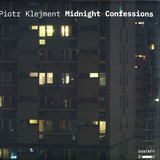
Photography on the cover of EP 'Midnight Confessions' shows authentic Warsaw bloc .