nine-sum sorcery is the debut release of Berlin-based sonic duo LABOUR, the ambitious project led by Farahnaz Hatam and Colin Hacklander gaining a reputation since 2018 for their large-scale works and collaborative pieces in large concert spaces and museums such as Kraftwerk Berlin, Martin Gropius Bau and Kunsthalle Zürich. Since 2020 they are residents on NTS with a monthly show.
Grounded in the rich and enigmatic digital soundworld of LABOUR, nine-sum sorcery features the renowned Kurdish singer, Hani Mojtahedy, a prolific performer and recording artist firmly grounded in the traditional vocal styles of both Kurdistan and Iran.
Following LABOUR’s now legendary closing of Berlin Atonal’s main stage in 2018 with their inaugural work, next time, die consciously (یگناگیب), the duo embarked on a grand journey with Hani Mojtahedy, towards a remarkable synthesis of traditions and practices, uniting computer music and avant-garde sensibilities with traditional vocal practice.
nine-sum sorcery is a long-form piece that unfolds over two sections, A and B, and can be understood as an occult incitation to the dark energies, natural, political and otherwise, that are released when oil is extracted from the ground. This ritual is focused through the enigmatic electronic and percussion composition from LABOUR which alternates between foreground and background for the haunting vocal performance of Mojtahedy, who interprets Kurdish and Persian verses.
This is first release on Studio LABOUR, the new independent label in Berlin that provides a platform for avant-gardists creating works based on sound.
Studio LABOUR seeks to contribute toward spaces of non-conforming social practices and identities, and revisits the nature of work as a potentially transformative activity.
From sound artists to electronic musicians to composers; visual artists to performance artists to critical theorists; the represented artists are united not via discipline or genre, but rather through individuated orientation towards radical perspective that are either based-in or engaged-with sound as a medium, at least in the instance of their release/work with the label.
Поиск:mo pot
Все
Technically, Syrup are a hip-hop group with unmistakable leanings towards soul and jazz. The group consists of an MC (Turt), a pianist/singer (C.Tappin) and a beatmaker (Twit One).
Their music is rooted in the tradition of collectives like Native Tongues and Soulquarians, and they have come up with a pretty appropriate term to describe their sound, which is "cool bap". But if we put formalities aside and look at the bigger picture, Syrup are also a perfect example of how music can connect people beyond national borders, language and tradition. And furthermore, how Afro-American culture has influenced not only the musical taste but the views and opinion-making of generations of young people worldwide. The sheer existence of Syrup is also a big fat "Fuck Brexit!" which makes the group even more likeable. The story of Syrup begins in 2015 when Twit One is booked to play a dj gig in Bristol. Twit One is a producer, DJ, radio host, record friend and former bass-player from Cologne (where he also co-owns the Groove Attack Record Store). He is a member of a small group of pioneering producers, who during the 2010s laid the foundation for the European beat-scene as we know it today. Inspired by the likes of Dilla and Madlib these guys made it look cool to not be the rapper. And they recorded some pretty dope music, too, which we had the honour to release via Melting Pot Music as the "Hi-Hat Club" series (a title that Twit came up with). During that night in Bristol, Twit got acquainted with two young men by the name of Turt and C.Tappin. Two childhood friends who had moved from London to Bristol for their studies and had been avid fans of Twit's music for some time. "Back in Cologne, Twit told me about these MCs from Bristol with whom he might record some tracks" Olski remembers, "Needless to say that I never heard about them again until summer 2017 when the annual Radio Love Love boat party was about to happen and Turt and Tappin were actually coming over for the first time, to party and to rock the mic. A couple of months later we released "Hay Luv" a new Twit album that featured Turt and Tappin on two songs. On their next visit, the two were accompanied by Turt's brother Slim, a very talented beatmaker and one half of Summers Sons. We spent some quality time while mastering the 'Undertones' EP (including remixes by Twit One, FloFilz and Cap Kendricks) and shooting the album cover at the Groove Attack record store basement. Since then we released two more album by Summers Sons ("Uhuru" - a joint project with Tappin and "The Rain"), C.Tappin's debut EP "Ashes To Ashes" (with remixes by Reginald Omas Mamode IV, Hulk Hodn & Slim) and a KOOP beat tape by Slim. During the same time, Twit recorded two albums: "Dispo To Dispo" as Flatpocket (a project with Lazy Jones) and "Two", the long awaited follow up to the very first Hi-Hat Club album as Testiculo Y Uno (with Hulk Hodn)." In 2018, Turt and Tappin moved back to London (the Lightworks headquarter is now located in Streatham). They toured with Children of Zeus and shared stages with artists like Melodiesinfonie and FloFilz. But it wasn't until Brexit before the long talked about super group finally became a reality. At the final recording sessions in September 2019 we already knew that the next Eurostar ride would be a different one. Now with Covid-19 we have no clue when all three members of the group will be in the same room again – let alone rock a stage together. But fortunately, we were sitting on a big pile of great singles that we released over the summer months. The album "Rosy Lee" will follow in late September.
Reissue of this mesmerizing record including an unreleased alternate mix of "Subterranean Zappa Blues". Hypnotic rhythms made of slow minimal beats, industrial textures, intoxicating drones and repetitive voices that seem to merge from dreams. Everything built by two of the most brilliant industrial music minds: Steven Stapleton and Colin Potter.
"This album arrived somewhere after a dream meeting of several individuals, Graham Bond, Joe Meek, Jacques Berrocal and myself. After a few beers and a heated disscussion of puncture repair we all lay down in a circle and point our penises at Venus, telepathic messages are sent out to Colin saying he can use the two golden microphones. He did, and here we are." Steven Stapleton, 17.1.94.
Rock 'n Roll Station began life with Steven Stapleton asking engineer Colin Potter to remix some of the more rhythmic elements of 'Colder Still' from 1992's Thunder Perfect Mind. As Potter gradually warped these sections into weirder and weirder pieces, a new album began to emerge. Potter himself explained it to David Keenan in England’s Hidden Reverse: “What I sometimes did in the studio was to ‘over-use’ effects and processors to totally mutate a piece into something completely different” while Stapleton observed how “it was almost as though telepathic messages were sent over to Colin. We’d started an album together at IC Studio that was never finished. He then sent me some vague mixes, which were just what I had in mind. So, from that basis, I started putting the album together.”
Potter would quickly become a key player in Nurse With Wound’s productions, a position he continues to fulfil to this day. He was first credited as a member on 1992’s Thunder Perfect Mind, a tour-de-force of cold, at times hostile, machined atmospheres, but considers Rock ‘N Roll Station from the following year to still be his favourite.
Building on percussion and drone elements, Stapleton and Potter throw in a huge range of bizarre and atmospheric elements: didgeridoos, chanting voices, and their usual selection of unidentifiable sounds.
Its strong focus on rhythm was erroneously surmised by some as an attempt to join the then rising electronic dance music scene. But it was Stapleton’s recent obsession with the music of ‘King of the Mambo’ Pérez Prado that was beating at the heart of Rock N’ Roll Station’s heady rhythms.
The album’s title alluded to two specifically rock-related stations of influence: the song of the same name by Jac Berrocal, of which a surprisingly straight cover opens the album in homage; and the tragic life of the Sixties British R&B organist Graham Bond who influenced bands such as Deep Purple and Cream. Beset by mental health problems (at one point believing he was the son of Aleister Crowley), Bond died under a train at a Tube station in 1989 and it is this tragic scene that Rock ‘n Roll Station’s closing track, ‘Finsbury Park, May 8th, 1:35 PM (I'll See You In Another World)’, sets in sound.
Much about 'Beat Bop' is shrouded in mystery. Who really produced it? Why was Jean-Michel Basquiat relegated from rapper on the track to drawing the cover and labels? What are they actually rapping about for most of the ten-minute length?
These questions, however, are all part of the enigma and rich legend surrounding a song that is an undisputed piece of true hip-hop genius. The combination of graffiti artist Rammellzee and rapper K-Rob is a potent one, with each MC adopting a persona - hustler and B-Boy respectively - that they maintain against an unusual swirling backdrop that must be one of the best instrumentals ever committed to wax.
The original Tartown Record 1983 pressing was limited to 500 copies, a mere test pressing in the eyes of the assembled artists, with scarcity further driven by Basquiat's rising rep in the art world. Those few hundred copies – and a subsequent re-release on Profile Records (the same label where K-Rob played out the rest of his brief career) punched well above their weight in terms of lasting influence.
Consider the early vocal tones of the Beastie Boys (who also sampled the track), or the huge part it played in the sound of Cypress Hill and B-Real. His voice is almost homage to Rammellzee's on 'Beat Bop', while they also lifted the chorus of 'Shoot 'Em Up' and even a
sample of 'Cypress Hill' from the track too. It's unsurprising – this is a multi-layered, complex song that reveals a little more of itself each time you play it but remains damn funky.
This reissue boasts the vocal and instrumental versions in full, as well as both the full cover and label artwork from the original Tartown Release.
- A1: Sookie - Love Beat
- A2: Give It Up
- A3: Disco Madonna
- A4: Lovers Concerto (Vocal)
- A5: Don't Fight The Feeling
- B1: Play Me Desires/I Wanna Love/You Are Loving Me/Burning (Parts 1-4)
- B2: Midnight
- C1: The Mystery With Me
- C2: Don't Think About It
- C3: Choco Date
- C4: Tonight
- D1: Love Somebody (Part 1)
- D2: Your Love (With Venise)
- D3: Let's Keep It Together
Cameroonian Joe Bisso's earliest musical influences didn't come primarily from his homeland, but more from the neighbouring Congo, where the kind of early 60's Congolese Rumba played by the likes of Franco / TP Ok Jazz, and Tabu Ley Rochereau was establishing itself as a musical force in the region.
Alongside this exuberant, swinging, jazz influenced sound, the growing impact of the all conquering US soul titans became inescapable, and sprinkled with a bit of Johnny Halliday & Co's smooth chanson over the top, we get a snapshot of where Jo Bisso and friends post school musical experimentation was headed in the late 60's.
As that decade drew to a close, the single minded Bisso headed off to France to begin his quest for the future, and by 1972 could afford the journey to the US that he'd long dreamed of.
Enrollment at the Berkeley School of Music in Boston soon lead to a new band coming together, and by 1974 the all conquering, multi faceted approach that marks Bisso's musical career, meant he'd written, produced and sung on his debut single for the mighty Decca Records. 'Flying To The Land Of Soul' drew heavily from James Brown's propulsive dancefloor funk, whilst wearing it's African colours loud and proud via 'African Express' chants, and drums front and centre.
At the same time, Bisso and friends had started to immerse themselves in the fast emerging disco sound pulsing outwards from Downtown NYC into the Boston nightclubs, and by the time his debut album 'Dance To It' was released on France's influential Le Disques Esperance in 1976, it was the driving, 4/4 floor power of disco that was to define Bisso's sound on that, and the following two albums.
Whilst Bisso's immersion in Disco was based around it's energy and musicality (rather than any associated hedonism), 'African Disco Experimentals (1974 to 1978)' paints a picture of an artist dedicated to the underground club side of the scene, rather than focused exclusively on the fast emerging pop potential of the sound at the time.
The album's tone is set by 3.20 mins of building, tribal percussion and rolling rhythms of the opener 'Love Beat', a 'strictly dancefloor' approach mirrored in the near 11 mins of 'Love Somebody', building from soulful keys to deep bass funk, extended percussion breaks, joyous squelchy Moog licks, breathy vocals and more (interesting footnote : Bisso is credited as Producer / Writer / Arranger, but 'Recorded by' is attributed to Joe Chiccarelli, better known in recent years for his work with The White Stripes, Shins, and Broken Social Scene.)
Still clocking in at a healthy 6 mins plus, "The Mystery With Me" (1978) makes a nod towards more radio friendly waters with it's hooky, floaty choruses and tight structures (a then 22 year old Arthur Baker is credited as sole writer on Discogs - Bisso himself doesn't seemed convinced by this idea, but that's another story...)
'Let's Keep it Together' (1977) loops the song title over a slower groove, with free form electric guitar licks adding new textures, whilst 'Disco Madonna' (1976) showcases Bisso at his most playful, combining spoken word Hispanic vocals, rattling percussion and more of the always welcome Moog, switching up keys at the end for an unselfconsciously camp finale.
And if anything sums up the ambition of Bisso's work in the field at the time, 'Play Me' (1978) can lay claim to being the magnum opus. It's presented here as a continuous 16 minute extravaganza (as opposed to the 4 parts it came in originally) : lush strings, hypnotic vocal sections, irresistible basslines, crisp drums, the odd Barry White style interjection, disco moans, the occasional nod to a chorus vocal. None of it seeming in much of a hurry to go anywhere in particular, choosing instead to joyfully revel in the expansiveness of the form.
- A1: Xtra Brux - Hot Shot
- A2: Cengiz - Reminiscing
- A3: Entek - Yeye
- B1: Reginald Omas Mamode Iv - 400 Years
- B2: Wonky Logic - Boss Slug
- B3: Trev - Of The Sorcerer
- B4: Turbojazz - Rewind
- C1: Namebrandsound - Home Demo (Feat Aleisha Lee)
- C2: Szajna - Wriggle Shuffle
- C3: Evm128 - Bun Dat
- D1: Lcsm - Virtual Signal
- D2: Sivey - Secret Circuit
- D3: Coach Leo - Give It Up (Groove Chronicles Remix)
CoOp Presents an all-new double-album compilation entitled 'Plug One'. It features a plethora of global talent from in & around the world of bruk and beyond - some already well-established in the field, some very much on the come-up and some brand new artists - this compilation is an acknowledgment of a continually evolving sound from the label formed by IG Culture & Alex Phountzi a few years ago. 'Plug One' affirms this electric movement, with a deeply fluid current running throughout, with tracks ranging from the cosmic psych jazz of LCSM, to the classic UKG tweaks of Groove Chronicles, to the thought-provoking vibes of Reginald Omas Mamaode IV, to a veritable who's who of 2020 bruk talent including Xtra Brux, Sivey, EVM128, Cengiz, Wonky Logic & many more.
From its beginnings as a classic club night and label in the early 2000's, CoOp always carried an undefinable and potent creative energy. A sense of freedom and uninhibited exploration was positioned at the core of CoOp's sprawling community and consciousness, communicated via movement and sound. From this seed and throughout the years that followed, this same energy permeated the worldwide underground music ecosystem. As CoOp's legacy continued to influence new generations of music makers far and wide. The syncopated rhythms, soulful keys and infectious grooves synonymous with the broken beat sound, now known simply as Bruk, became entwined with new concepts and progressions, leading to new movements carrying on the essence of the bruk energy.
IG Culture and Alex Phountzi took the helm of their CoOp Presents label in 2018, with the vision of championing these new waves of emerging artists, continuing the all-important exchange of energy at the heart of the original CoOp movement, but also giving room for the music to be pushed into new and uncharted territories. With burgeoning producers from around the globe being drawn to the explorative and expressive nature of the project, an incubator was created, providing a space and platform for these ideals to take on new shapes and sounds. Just as every generation must rewrite its own history books, CoOp Presents was born from a combination of influences, ideas and personalities, and in turn is now encouraging the next generation to do some re-writing of its own.
'Plug One' will be released on vinyl & digital on CoOp Presents in November 2020.
Sutja Gutierrez is back on Lumière Noire. The finesse of his productions and his implacable stage performances have given him a special place within the Parisian label. In 2017, he released the EP "The Legend of Time" and one year later, he appeared on the compilation From Above with his track "Allodoxaphobia". He comes back here with an LP entitled PHYLAX SOCIETY, which confirms that Sutja Gutierrez is indeed an artist in his own right. Phylax means guardian in Latin, and the album’s title is directly inspired by the “Phylax Society”, a group of people who, in the late 19th century, wanted to create the ultimate canine breed, but who due their lack of consensus failed and dissolved. Later on, an ex-member eventually bred the very first German Shepherd. On this heartfelt record, as emotional as it is catchy, the artist deals with the feelings that come after the loss of a loved one, chiefly nostalgia and melancholia. The result is an ardent record where crooning is sincere and never a posture. The artist’s lo-fi psychedelic pop trademark oozes in every track of this album. Many of these songs feature his vocals, often doused in ethereal echoes or even shrewdly chopped and distorted in a way that reminds us of the great musique concrete experiments of the past. A DIY approach sometimes indebted to punk and post-punk music, all mixed with a vast variety of traditional pop instruments such as guitar, bass, electric keyboards and real drums, but also drum machines, synth bleeps, found sounds and other strange but fascinating samples. EMPTY FLOWER POTS, which was released as a single ahead of the LP, is definitely one of the album’s standout tracks. This catchy mid-tempo song is the perfect entry point into Sutja’s finely twisted world. A world in which you can find that particular balance between nostalgia and optimism. Oh, life is great, what is life? Life is death. . he sings. It is one of those songs that stays in your head for a while. Do not let the idea of alternative pop fool you, it is quite impossible to listen to any of these songs without reacting in some way or another through moving, dancing or thinking, regardless of the tempo or meaning. I’M DIGGIN’ might be the perfect example of this. Deceptively simple and far removed from dance music, this rock-infused number will not only have you singing along instantly, but you will also find yourself dancing and responding accordingly to the energetic mantra of this song... I'm digging for the truth, I am so diggin' into it. Truly, the dance floor is never too far, sometimes quite blatantly and sometimes in a more oblique fashion. Another case in point is PHYLAX SOCIETY, the eponym track which closes the album, a song in two parts, where a slo-mo club groove carries Sutja’s trademark singing to yet another level of uniqueness, with his surreal soundscapes, twisted melodies and everyday life sounds. An ode to humanity and an homage to the ones who are risking their lives every day in the mediterranean sea. It is rare to encounter an album which is immediately satisfying on one hand but also reveals more and more beautiful secrets with each listen. PHYLAX SOCIETY is clearly one of those special albums.
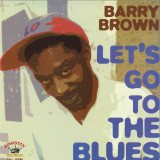
Barry Brown one of reggaes vastly overlooked talents. His militant conscious style has over time lost none of its appeal. Truly one of the sweetest roots vocalists to come out of Jamaica.
Born in 1962, Kingston, Jamaica, he cut his musical teeth working under producer Bunny Lee. Their first release was a track called ‘Girl You’re Always on my Mind’, although a minor hit, Bunny Lee saw his potential and was rewarded with his 1979 cut ‘Step it up Youthman’ which became a hit and has become a roots classic, leading to an album of the same name. The late 70’s was a great period in Barry Brown’s career and its from this period that we have culled this set of tracks. Straight from the master tapes some of his finest moments and some unreleased gems that we believe should be heard. A great set from his timeless 'Trying Youthman' a tail of struggling times in the heart of Kingston Jamaica.
His rastafarian inspired chants 'Stop Them Jah Jah','Give Thanx and Praise','Natty Rootsman' and 'Lead Us Jah’ work alongside socially charged cuts as 'Politician', 'Big Big Pollution' and 'Mr Money Man'. As with all his tales and inspired lyrics they are put across in such a tuneful way that like all the best songs that carry a message can be remembered also through the strength of the song.
As with many of his artists Bunny Lee encouraged him to go into self-production, and after a time spent with producer Linval Thompson ‘Separation’, and Sugar Minott ‘Things & Time’, he did just that and produced his first release ‘Cool Pon Your Corner’ in 1980 followed in 1981 by ‘Problems Get You Down’.
We hope this release will find a place in your collection and remind us of the talent of Mr Barry Brown. If somewhat overlooked, but certainly now not forgotten. Let’s celebrate with the man and go to the blues one more time....
Composed, produced, and arranged by Eartheater alone, Phoenix: Flames Are Dew Upon My Skin draws a path back to the primordial lava lake from which she first emerged, as it also testifies to the reincarnating resurrections the project has undergone over its first full decade of existence. While the album renews her focus on guitar performance and legible structure, Eartheater balances the unabashed prettiness of acoustic harmonic songs with the dissonant gestural embroidery of oblique instrumentals. Having fallen back in love with the idioms that first captivated her, she worked to crack open the techniques that had fossilized inside of her, while still seeking to apply the electro-alchemical knowledge she picked up along her journey. The result of a laborious revival in fire, Phoenix recontextualizes Eartheater’s combinatorial approach to production within her most confident abstractions, adjacent to some of her most direct songs to date.
Eartheater composed and workshopped most of Phoenix over a ten-week artist residency (FUGA) in Zaragoza, Spain, housed in a sprawling, cubic glass facility that looked out over wildflower-flecked mountains. Following an intensive period of recording and touring, the residency provided her with an unprecedented period of solitude in the small Spanish town. Her newfound sense of isolation ultimately became liberating, leading her to sidestep the crutches and steady grids inherent to electronic music, and to conceive pieces rooted in her guitar and her desire to perform with other players live.
Eartheater’s voice glows brighter than ever at the center of Phoenix’s arrangements — her familiar operatic highs are grounded by newly expanded velvety lows, leaping lucidly up and down octaves. Her intricate guitar work flits across baroque fingerpicked passages and latches into cyclical figures that meet her voice in lush harmonic progressions. From her own guitar parts, to the orchestral string arrangements she wrote for the Spanish conservatory group Ensemble de Camara, to the harp and violin lines performed by her close friends and collaborators Marilu Donovan and Adam Markiewicz of LEYA, Eartheater’s applications of acoustic instruments bring an extraordinary emotional emphasis to her compositions. Phoenix prepares for a future where electronic sound — or even electricity itself — isn’t guaranteed, but where her music could still come to life with a group of hands dexterously winding across instruments against the light of the fire. Eartheater drew inspiration for Phoenix from geological imagery, whose turbulence and potential for genesis mirror the trajectory of her own life and relationships. The album’s instrumental pieces directly reference these moments of upheaval, colliding audio of volcano and lightning storms with resplendent string and vocal arrangements. “Volcano” looks out over the album from its peak at the center, its tectonic plates colliding in towering melodies and layers of vocal harmonies, as piano accents crest and cascade down the mountainside. When Eartheater sings, “I’m still building mountains underground,” she is trying to reconcile the pinnacles of her ambition with the comforts of a simple existence buried beneath the surface. “Diamond in the Bedrock” finds her admiring the gemstone forming under intense pressure inside her, but rejecting the romantic promise that the diamond signifies, choosing instead to escape a relationship that has come to stifle her.
With the album’s subtitle, Flames Are Dew Upon My Skin, Eartheater imagines being tempered to a state of perfect equilibrium, suspended between melting and freezing, where fire could streak across her body and appear as a crystalline blush. This image captures the tension at the heart of the Eartheater project, as she decides how best to distill her passion and render it cool to the touch; to find beauty in simple pleasure, while keeping one eye fixed on the peaks that loom in the horizon. The album is mixed by Kiri Stensby and mastered by Heba Kadry, featuring photography by Daniel Sannwald.
What were the skies like when you were young? These days, asking that question likely conjures disappointment in its answer. Dreams of possibility hardened by certainty. Hopes and prayers jet-cooled to brittle acquiescence. A lingering feeling that this is not what we asked for, not what we worked towards. Promises of the future replaced by sins of the father. It is in this particular light that the latest work, "Moscels," by Iranian artist and musician Ata Ebtekar, also known as Sote, arrives on Opal Tapes, British label for the sonically curious and aurally disaffected. Contrary to potential expectation, it features no rhythmic exhortations, no colloidal outbursts, and no acoustic instrumentation of any kind. Synthesized entirely from physical models and oscillators, whose union gives the record its name, "Moscels" is a haunting, beautiful, and auspicious listen. None of Ebtekar's work comes necessarily easy to the listener, but "Moscels" is suffused with a sense of wonder almost childlike in quality, and so it beckons kindly. In acertain sense, electronic music is a kind of magic, isn't it? And this is the sound of a magician at work. Dive into the sound of an otherworld, so close yet so far, where dreaming is less sweet than being, and where all that is possible remains still at hand.
Veteran NYC based Scottish electronic musician Drew McDowall's latest work is his loftiest, most liturgical, and least industrial outing to date —and potentially the apex of his recent discography.Named after an ancient Greek word for votive offering, Agalmaexudes a hooded, devotional aura, creaking and keeling under vast rafters of stone, stained glass, and shredded wires. It's a music of majesty and mystery but also modernity, McDowall's refined modular system shape-shifting strings, piano, pipe organ, and choral masses into disorienting synthetic mirages of the sacred. He cites the intersection of “joy, terror, and the elegiac” as a centering inspiration –or, phrased more bluntly, “that 'what the fuck is going on' feeling.”
As a career collaborator himself, with stints in Coil, Psychic TV, and countless other shorter-lived partnerships, it's telling that McDowall chose this project to gather such an impressive spectrum of peers. Italian synthesist Caterina Barbieri, American drone organist Kali Malone, prolific multi-instrumentalistRobert Aiki Aubrey Lowe, operatic Humanbeast vocalist Maralie Armstrong-Rial, Saudi producer MSYLMA, and warped futurist beat-makers Bashar Suleiman and Elvin Brandhi cameo across the album's 42 minutes, contouring McDowall's nuanced negative spaces with shudders, shadows, and shivering flickers of serenity. Each of them shines in their spotlight, elevating these elusive alchemical states into surreal revelations of texture and transcendence.
McDowall's original working title for the record is revealing: Ritual Music.He speaks of his creative practice in ceremonial terms, negating binaries by seeking the middle path to anuminousequilibrium that erases the distinction between the inner and outer worlds.These compositions feel similarly processional and intuitive, at the crossroads of holiness and hallucination, the sacred vertigo of yawning naves rising into untouchable night skies. It's a vision of industrial music as enigma and invocation, cryptic hymnals of shroudedbeautysummoned in catacombs and crumbling cathedrals.
Despite its depths, Agalmais also an album of immediacy and emotion. Celestial laments of and for times of unrest and suffering. McDowall characterizes his initial intention for this music as an to attempt to convey experiences he felt incapable of putting into words: “To try and approach sublimity, or at least acknowledge it in some way.”Agalmamore than acknowledges the ineffable –it embodies it.
- A3: James Ocampo - One One Six Bee
- A4: Thabiso Makhetha - Coogan Radio
- A5: Rashid Al Balushi - Micro-Sister (Al'ukht Alsaghira) (Al'ukht Alsaghira)
- B1: Liv Jacobsen - Mond
- B2: Eteroa Apinelu - Sansobavo Mix
- B3: Zzodiakk - Sans Titre (Fumee V 3) (Fumee V 3)
- A1: Giuseppe Moretti - Ragazza Raddrizza (Live Excerpt)
- A2: Daryana Jean - Scvb
- B4: Alima Akmatova - Below The Rainbow
GRITTY, ODD & GOOD is a new weird, pseudo-music compilation curated by avant-garde experimental composer and audio artist Francisco López.
As far as creation itself is concerned, big cities do not manifest anymore as the catalytic cultural centers they used to be. Their iconic status as hip locations seems more symbolic than real. The combined mighty forces of neocapitalist gentrification and telecommunication / information decentralization might have generated a substantially different landscape of geographical cultural distribution. And so unlikely places are also sources of physically-isolated, but culturally-interconnected, new creation. This is just but one more example of the larger phenomenon of techno-cultural atomisation (not to be confused with the more restricted so-called “democratisation”) that allows millions of people to create and share, pre- and post-internet. The amateur is the new potential master; and that is decided by the crowd in the circus and the stadium, not at the academy. With all of this comes the potential for new aesthetics, or at least the open-ended evolution of the previous ones, –far better than the current confusion between ethics and aesthetics- from the uninformed and the unknown. Atomization of this kind also brings for some the desire and the right to anonymity. And so it is for the unknown obscure artists of this compilation of weird experimental music –“gritty, odd & good”, with drones, glitches, cut-ups and more- who won’t reveal anything beyond their unlikely locations: San Marino, French Guiana, Philippines, Lesotho, Oman, Faroe Islands, Tuvalu, Liechtenstein, Kyrgyzstan. An innovative compilation presenting a world of unusual experimental de-constructed and recombined music casting a strong and exciting light into the unusual corners of our world. Dive in.
Compiled and Mastered by Francisco López
Vinyl mastered by Rashad Becker
a 1 Ragazza Raddrizza (Live Excerpt) - Giuseppe Moretti San Marino 3:00
b 2 SCVB - Daryana Jean French Guiana 4:39
[c] 3 One One Six Bee - James Ocampo [Philippines] 5:37
[d] 4 Coogan Radio - Thabiso Makhetha [Lesotho] 3:18
[e] 5 micro-Sister (Al'ukht Alsaghira) - Rashid Al Balushi [Oman] 3:59
[f] 6 Mond - Lív Jacobsen [Faroe Islands] 3:10
[g] 7 Sansobavo Mix - Eteroa Apinelu [Tuvalu] 8:38
[h] 8 Sans Titre (Fumée v.3) - Zzodiakk [Liechtenstein] 6:38
[Kyrgyzstan] 1:17
Black Truffle is proud to announce the first vinyl reissue of Rafael Toral’s Aeriola Frequency, originally released by Perdition Plastics in 1998. Toral made his name in the world of mid-90’s experimental electronics with two releases, Sound Mind Sound Body (1994) and Wave Field (1995), both now recognised as classics and reissued on vinyl by Drag City, which saw him exploring the potential of electric guitar and pedals to immerse the listener in seemingly endless waves of sustained tones. On Wave Field, inspired by the striking resonance effects he experienced during a Buzzcocks gig with bad acoustics, he achieved a synthesis—often imitated but never bettered—of rock guitar, Ambient, and the acoustic exploration of Alvin Lucier, a kind of "liquid, abstract flux of rock sound".
On Aeriola Frequency, Toral continued the explorations of Wave Field but dropped the guitar, creating a series of extended pieces using only a simple feedback loop designed to work with pure electronic resonance. The result is far more delicate than Wave Field, a steady but unstable flow of filtered tones that continually reorder themselves into new forms. On both the LP’s sides, the tones, like growing plants, imperceptibly shift from drifting freely in ambient space to weaving strangely natural melodic patterns, as the loops unfold and the resonance gently outlines recurring rhythmic shapes.
The overall effect is strikingly organic, as David Toop noted in the liner notes included in the original release (and reprinted in this reissue): “A crystal garden, the sound grows in reeds and streams, blown like spider web strands, glittering and invisible, pulsing with translucent colour, bubbling and imploding, fraying and powdering.”
A classic of the non-academic approach to electronics that flourished in the 1990s— and a big influence at the time on Black Truffle head honcho Oren Ambarchi—Aeriola Frequency ushers listeners into an endlessly fascinating world of gliding tones and shifting details that they might never want to leave.
- Recorded at Noise Precision, Portugal, December 1997 and April 1998. Remastered by Rafael Toral in 2020.
- Liner notes by David Toop and Rafael Toral.
It's been four years since Sweatbox Dynasty, the fourth solo LP from Pennsylvanian experimentalist TOBACCO. In that time, Tom Fec's project has toured with Nine Inch Nails, provided the theme song to HBO series Silicon Valley, and teamed with Aesop Rock for a collaborative album as Malibu Ken. He now returns to Ghostly International for Hot Wet & Sassy, a full-length album oozing with his most playful and approachable songs to date, which, conversely, express notions of antilove, self-hate, and disappointment in others. Pop impulses have always surged beneath the surface of his sound - blown-out bass, analog synths, drum machines, and Fec's unmistakable analog gurgle and hiss - here they've bubbled to the top. "I feel like it's the most I've been able to refine what I'm doing," says Fec. "For the past decade I've had this motherfxcker on my shoulder that makes me pick away at structure and melody. Purposely covering up moments because I can. That really came to a peak on Sweatbox. So I wanted the opposite this time. Write the songs without ripping them in half. I went from 'what would the Butthole Surfers do?' to 'what would Cyndi Lauper do?'" And what would Trent Reznor do? Fec found his answer straight from the source. Their collaborative track, "Babysitter," fuses their voices into one deranged presence: "I'm the new babysitter," they alert, before pivoting into a menacingly saccharine bridge. The track tumbles on a tom fill, then a punishing synth line rips into a cacophony of drums and feedback like a lawnmower gnawing through the living room carpet. "This was new for me, but I wanted to write a song that was everything I am and have been, and then like one notch further. Trent was the notch further," adds Fec. The collaboration is a work of alchemy seamlessly blending TOBACCO's trademarks with Reznor's industrial rust and sonic gore. Downcast, sincere, woozy, "Jinmenken" might be the closest Fec has come to a ballad. "Maybe you can find me down the line," his vocoded delivery bounces along the beat. "It's me trying to write a Jets song," says Fec. Album opener "Centaur Skin" presents the stylistic concoction that has been the TOBACCO MO from the beginning, crossing dreamy melodic shimmer with the sinister tones and slime. This has become easier to digest, but also far more potent. A motorik beat steadies the track's galloping arpeggio, acting as a springboard for Fec's dark ruminations as well as an uncharacteristically crystalline synth solo. "It's my feel good self hate anthem. Don't worry, I'm good. It was fun to write." TOBACCO hasn't been reinvented, but it has been refined and distilled. Brighter, sharper, and far more dangerous because of it. Hot Wet & Sassy is practically staring at the sun without shades and feeling those corneas roast. Everything looks good as your vision fades. The pop-forward structures exert their undeniable hooks with baneful precision, pulling listeners into their clutches; once there, sugary melody rewards submission.
Creole poetry, folk mysticism and heavy-grooving cosmic synths combine on this unprecedented survey of spiritual Martinique polymath Gratien Midonet's first four albums. For Midonet, pushing musical boundaries was less a choice than an extension of his spirit. A self-taught guitarist and composer, drawing on his childhood memories of bélé and beguine rhythms, Midonet's musical life developed in parallel to his academic and spiritual pursuits. Studying philosophy and psychopedagogy in France, it was his fascination with pan-Africanism and animism which fuelled the transcendent energy of his music. Although Midonet honed his sound in France, the four albums he released during the late '70s and '80s were heavily inspired by diasporic nostalgia, or what he describes as the "smells and colours... subliminal noises... fruity notes, the memories of funeral wakes, the bombastic organ of the cathedral and the gasps of the drums" of his childhood home on the Caribbean island of Martinique.
Award-winning International DJ and Producers The Prototypes release their third album ‘Ten Thousand Feet & Rising’. The Brighton based Drum & Bass duo were previously signed to tastemaker label ‘Viper Recordings,’ home to Matrix and Futurebound.
The Prototypes’ potent, hard-hitting production and broadsword body of work on seminal labels such as UKF, Viper Recordings, Shogun Audio, Ram Records, Technique Recordings and Formation. Anthems that have been supported across the entire D’N’B scene such as ‘Pale Blue Dot’, ‘Pop It Off’ and ‘Kill The Silence’.
Their expansive and versatile remixes of acts ranging from Ed Sheeran to Avicii to Friction by way of their sought-after bootlegs of Fisher and Knife Party and unreleased dubplate remixes of Bad Company and Pendulum. Not to mention their extraordinary debut album ‘City Of Gold’ that exploded in 2015, took them around the world several times over and elevated them to headline status.
‘Shadows’ is the first single from the new album, which they explain as ”a throwback to the Hardcore scene from the late 90s, with a piano line influenced by pivotal names through the history of the UK’s rave scene such as Vibes & Wishdokta, DJ Dougal, Slipmatt, and Nookie, to which we added a straight up banger of a bassline”.
Featuring Ulta Music’s singer Lily McKenzie, known for her collaborations with industry heavyweights including Giggs, Conducta and Wiley, as well as featuring on Crazy Cousinz’s 2017 smash hit, ‘No Way’, alongside Yxng Bane and Mr Eazi signed to Ultra Music.
Previously supported by the likes of Zane Lowe, Annie Mac, Andy C, Roni Size, Friction, J Majik & Wickaman, Pendulum, DJ Fresh plus many more.
German funk stalwarts The Mighty Mocambos unleash another sample of their explosive live energy, a 7" of two brand new tunes recorded straight to 8-track tapeduring JAM PDM! Breakdance Battle at Fabrik Potsdam on February 1st 2020.
"Arabesque Breakin' Suite" on side A is an original instrumental medley written for the occasion and delivers the raw, heavyweight sound that has made The Mighty Mocambos a staple of b-boy battles the world over. Side B is a cover of the Axel F Theme from Beverly Hills Cop, taking the tune from 80s synth-heavy electro-pop to soulful, tropical-flavored b-boy funk.
In these peculiar times without concerts, these live recordings are a real labor of love that capture the special vibes of a Mighty Mocambos performance while remaining suitable for DJ-use and enjoyable to the dedicated listener.
The 45 comes in a beautiful picture sleeve - a reproduction of the tape box used for the recording with a b/w photo from the event.
Following up on their debut LP Kick Drunk Love for Marcel Vogel’s Intimate Friends imprint a few years back, we are proud to present the next installment in the sporadic KAMM legacy: Cookie Policies.
Far more sonically rich and musically adventurous than its predecessor, Cookie Policies sees the band make bold strides into new territories where classically hardwired categories such as jazz, indie rock, and electronica melt into one another with immaculate, timeless ease.
The band members’ positions are more clear cut as well this round, with Marc David Barrite (aka Dave Aju, who also did one of his coveted mix engineering jobs on the LP) on prominent lead vocals in many of the pieces, Alland Byallo on trumpet, Kenneth Scott on synth bass, and Marc Smith adding guitar sections while the others shared the arranging and programming duties. This makes for a deeper continuation of the otherworldly combination of their known individual production styles, as well as a musical whole truly greater than the sum of its parts.
The set starts off with “Bird Call”, whose opening ode to Morricone ok corral-meets-samurai showdown riffs flow into a loose and drifting psychedelic boom bap blip, building until a glorious change-up of key and energy brings the track to its peak and deconstructed back down. “Rachel, the Largest Bullfrog” then takes things in a sweeter, slightly more traditionally-structured direction where dusty indie-folk ballad vibes intersect with an array of twisted cosmic tones, bits of computer keyboard percussion, and deep rolling sub bass. “Buckle Down” then moves things back away from acoustic restraints into a beautiful synth-laden musing on potential regret, with an ultra-potent horn section from Byallo vs a nasty stacked Roland SH-101 finish.
“CCBPGC” cools things off for a few minutes with an ambient field recording slice-and-dice motif, which slowly but surely evolves into a slinking jazz noir groove from another dimension. The more traditional song structures return on the lovely “La Luna”, where Barrite’s pen and soulful voice take to nautical longing themes over apropos waves of sonic textures. The ebb and flow of the verse/chorus sections eventually rise and give way to an absolutely gorgeous denouement. “Shleem” then takes us into pure unadulterated soaring sci-fi soundtrack ambient blast-off bliss, while the epic closing track “The Soft Glow of Electric Sex” gives a hearty nod to early masters of sprawling psychedelic jam sessions, from Pink Floyd and Can to In A Silent Way-era Miles and Liquid Liquid, while bringing it clearly into futurist millennia. The gradual evolution of the piece into its grand finale is the stuff we true music-lovers live and die for. We hope you enjoy the ride as much as we do.
- A1: What U Talkin' Bout
- A2: So Misinformed
- A3: Let Bygones Be Bygones
- A4: One Blood, One Cuzz
- A5: Countdown
- A6: I C Your Bullshit
- B1: Turn Me On
- B2: Blue Face Hunnids
- B3: New Booty
- B4: Take Me Away
- B5: Do It When I'm In It
- C2: Focused
- C3: Rise To The Top
- C4: Wintertime In June
- C5: Doo Wop Thank Me
- D1: Main Phone
- D2: Do You Like I Do
- D3: I've Been Looking For You
- D4: Little Square Bitch
- D5: Ventalation
- D6: I Wanna Thank Me
2xLP: Gatefold, pressed on Gold Nugget vinyl
“I wanna thank me,” Snoop Dogg said as he accepted his star on the Hollywood Walk of Fame, “I wanna thank me for believing in me. I wanna thank me for doing all this hard work. I wanna thank me for having no days off.”
An Entertainment Icon, Snoop Dogg has reigned for more than two decades as an unparalleled force who has raised the bar as an entertainer and globally recognized innovator. Snoop has released 19 studio albums, sold over 40-million albums worldwide, reached No. 1 countless times on Billboard charts internationally and received 20 GRAMMY® nominations. Snoop Dogg most recently released his highly praised and award-winning Gospel album, Bible of Love. He is currently working on his next studio album, I Wanna Thank Me, releasing this summer through EMPIRE.
In addition to his extensive work in music, Snoop Dogg has made his mark in the television and film space, including an Emmy Award nomination for his role as Executive Producer and Co-host of VH1’s hit show, Martha & Snoop’s Potluck Dinner, Executive Producer of MTV’s Mary + Jane, Executive Producer and Host of TNT’s game show, Joker’s Wild and Executive Producer of acclaimed Netflix’s show, Coach Snoop.