
Поиск:mo pot
Стили
Все

Collecting Orders For 2025 Repress
Nick Curly celebrates the 50th release on his imprint with label partner Marc Scholl. Together, they present Nick Curly’s Altrip EP, featuring a guest remix by Manda Moor.
The EP commences with the title track 'Altrip,' where robust sub-bass melds seamlessly with vigorous drum programming. Following suit, 'It's You And Me' maintains the same potent energy, featuring cascading note arpeggios and intricate percussive elements that traverse the mix. Manda Moor's 'Burning Remix' of 'Altrip' injects her high-octane sonic signature into the original, employing rave-inspired stabs, panning drums, and sliced vocal samples.
As the year '23 enters its final quarter, Cécille Records is set to reinvigorate its event series in collaboration with Peoples Agency. Two official dates stand as markers of this revival. Alongside Nick Curly, an array of artists including Sidney Charles, Manda Moor, Fabe, Leon, De La Swing, Dennis Quin, Timmy P, Reboot and more are poised to join the festivities. The launch will take place under Cécille tent owned by Groove Fest London, while another event is scheduled at ADE in partnership with promoter Hush, hosted at Amsterdam's Melkweg Club.

6
Glasgow-based producer and modular performer TRSSX returns with his second EP this year, following “The Degree of Difference Between Them” on Zhark Recordings Berlin released in April, and a more recent appearance on Hardwired, a compilation compiled by JakoJako and released on Air Texture. "A Mass Deliberately Deprives Itself of Reason” follows the path of modular industrial distortion and techno-trajectories performed live. A more narrative structure emerges, with experimental noise framing devices and disintegrated, granular voices coming to the surface.
The EP was recorded live between 2023-25, and is a reflection of a sonic identity present at EXIT, the Glasgow club that TRSSX co-founded in September 2023.
Mastered at Black Monolith Studio.

- My Lil' Shocker
- Sweet & Center
- Oh Below
- I'm Just A Bag
- Dumb In The Wings
- Whoopee Invader
- Lay Lady Lay
- Tan Loves Blue
- Untitled
- Touch Me Judge
Their final LP, recorded with Jeremy Lemos, Purple On Time dropped in late 2003, and found new drummer Adam Vida cannily replacing the fairly departed Pat Samson. With consolidations and developments heavy on the ground, the band once more surged and retarded in near-orchestral precision, as Johnson"s voice swooped through fresh ranges. The songs were tangy, more rock than ever, yet just as potent when it came to drawing forth that thrusting, demented hip-shake that they induced in their faithful. 180-gram DELUXE with a die-cut sleeve and contains an extra song and a poster.

Butch’s unmistakable music has always worn the influence of disco proudly on its sleeve. Both his mega-hit No Worries and his first contribution to the Running Back catalogue, Desire, are essentially modern-day disco records. The same goes for his return to the label with Glory Night—perhaps even more so, thanks to its vintage engineering and authentic aural treatment. Equipped with the genre’s signature sounds and arranged like a lost disco edit from the late ’70s, Butch applies the lotions and potions that today’s dancers demand, creating one of those peak-time sensations that make him unique—complete with confetti, a firecracker breakdown on top, and an extra rhythm section bonus tool included. Just Chill and Just Fly continue that narrative. While the first appeals to fans of R&B or funk samples (though no recordings were harmed in the process), it is catchy as hell and creates an inescapable maelstrom. The second, meanwhile, draws on the principles of deep house and exercises itself in contemplation. Be that as it may, here are a couple of tracks that work on almost any floor and at any time. Or, to quote Giorgio Moroder: “Disco is music for dancing, and people will always want to dance.”

- Kuusi
- Follow The Hawk Moth
- Butter
- Pillow Fight
- It Flew Until It Fell
- There's A Skeleton Inside Me
- Kintsugi Lifestyle
также имеющийся в продаже
SINGLE COL. ED.[24,79 €]
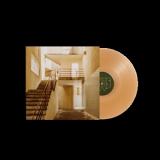
Originally released in 2023. Combining the mutant funk-punk looping of Battles and Tortoise with a cinematic wall of sound akin to that of post-rock titans Russian Circles, NYOS continue to contrast their outstanding compositional complexity with live improvisations. First explored on the 2022 LP `Celebration', this newfound call and response creative freedom on `Waterfall Cave Fantasy, Forever' sees NYOS reach new heights of playful chaos and uninhibited, soaring joy. Already renowned for their inimitable control over layers of looped guitars and polyrhythmic percussion, `Waterfall Cave Fantasy, Forever' sees Brooke and Kainulainen contrast their formidable precision with the chaotic potential of free-jazz inspired, call and response improvisation. Not only is this one-take compositional approach further testament to the astounding musical bond the friends share, it represents an exciting new chapter in NYOS' sonic evolution that can be felt on this record as much as it can be heard.
Originally released in 2023. Combining the mutant funk-punk looping of Battles and Tortoise with a cinematic wall of sound akin to that of post-rock titans Russian Circles, NYOS continue to contrast their outstanding compositional complexity with live improvisations. First explored on the 2022 LP `Celebration', this newfound call and response creative freedom on `Waterfall Cave Fantasy, Forever' sees NYOS reach new heights of playful chaos and uninhibited, soaring joy. Already renowned for their inimitable control over layers of looped guitars and polyrhythmic percussion, `Waterfall Cave Fantasy, Forever' sees Brooke and Kainulainen contrast their formidable precision with the chaotic potential of free-jazz inspired, call and response improvisation. Not only is this one-take compositional approach further testament to the astounding musical bond the friends share, it represents an exciting new chapter in NYOS' sonic evolution that can be felt on this record as much as it can be heard.


- 1: Two Birds Stoned At Once
- 2: Is It Progression If A Cannibal Uses A Fork?
- 3: Lexington (Joey Pea-Pot With A Monkey Face)
- 4: Bulls Make Money, Bears Make Money, Pigs Get Slaughtered
- 5: A Letter From Janelle
- 6: I Didn't Say I Was Powerful, I Said I Was A Wizard
- 7: And Then The Liver Screamed 'Help!
- 8: We Swam From Albatross, The Day We Lost Kailey Cost
- 9: Life Is A Perception Of Your Own Reality
- 10: If I Cut My Hair, Hawaii Will Sink
- 11: Smitten For The Mitten
- 12: Intensity In Ten Cities
- 13: The Undertaker's Thirst For Revenge Is Unquenchable (The Final Battle)
- 14: I Didn't Say I Was Powerful, I Said I Was A Wizard (Acoustic Version)
- 15: A Letter From Janelle (Acoustic Version)

- Another Grand Offering For The Swine
- Noonday Demon
- Mind
- Ditto
- Freeeee
- Divine Blight
- Happy
- Feliz
- Breeze
- Fantasia
- Songs For The Record Exchange
- How Long Must I Stay In This Place?
Following the "rich jangle and big, well-developed songs" (Bandcamp) of 2023's Bananasugarfire, Edling sought to deconstruct his creative process by centering collaboration instead of a more solitary pursuit in songwriting, even as personal matters made isolation a more natural instinct. He describes taking time to make notes of the ways, timing and forms in which songs came to him in the process of demoing the record, and regularly questioning if his approach was like that of "watching a pot of water boil" or waiting for a bolt of light to appear in the sky. In many ways, Shooting Star is an appeal to the muse, a record of "songs about writing songs" born from Edling's desire to trust his instincts despite the posturings of inner demons and creative roadblocks, and to celebrate the little wins along the way. The result is a sprawling new work packed to the brim with playful eccentricities and dynamism, one that owes as much of its inspiration to mid-century folkies like Michael Hurley and Karen Dalton as it does to alt rock of the nineties like Yo La Tengo and Stereolab. Shooting Star is a constellation of influences, experiences, reckonings-with the state of the world, with others, with creativity, with oneself-with no two songs created in the same way. Instead of holing up in a recording studio, the creation of the record was formed by a patchwork of collaborations in a variety of recording locales, all which were later alchemized by mix engineer Matthew Schimelfenig. - RIYL Sparklehorse, John Cale, Yo La Tengo, Superviolet, Spirit of the Beehive, Horse Jumper of Love, Of Montreal

Spanish roots singer Marcus I is well known among the reggae community for his masterpieces ‘2000 Years Showcase’ and ‘Jesus Was Black’ or more recent works with producer aDUBta on F-Spot Records and Hornin’s Sounds. Backed by the heavyweight sound of The 18th Parallel, Marcus I delivers a heartfelt anthem for every selector and music devotee who treasures the magic of black wax. A tune dedicated to all vinyl lovers and record collectors worldwide, ‘Wax Box’ is a celebration of the sound system culture. Reggae has been shaped by sound operators and selectors collecting the best and most obscure 45rpm records and revealing the full potential of a tune with heavy bass and crisp trebbles to their audience.

Finnish visionary composer, multi-instrumentalist and singer Jimi Tenor joins forces with the bold "Critical Ass" flash mob project from Switzerland to deliver the soundtrack for a truly global happening. The "Critical Ass" crew handpicked Love Is the Language from Jimi's rich catalogue, as the language of love is the metaphysical sun, which gives us the energy to continue the cosmic project called humanity from generation to generation.
The Critical Ass Version begins as a fresh reimagining of the original Love Is the Language, enriched with cinematic horn arrangements and a playful spirit. As it unfolds, the track transforms into a dystopian soundscape, driven by thundering synths and an insistent, forward-pushing beat.
The Koti Koti Version delivers a funky house treatment with clear nods to the '90s, guaranteed to set the dance floor ablaze.
Last but not least, the Original Version stands as a timeless gem of beauty, with the potential to become a true anthem of love.

4
BARRO #12 – Nebula Circuit (with remixes by Orlok 101 & Abraxas)
Limited to 200 units. Exclusive distribution: Melting Pot Records
The label BARRO returns with its twelfth release, reaffirming its commitment to vinyl culture and uncompromising club music.
This time, the spotlight is on Nebula Circuit, delivering a series of tracks that navigate between EBM, techno, and electroclash, all sharply designed for the dancefloor.
BARRO #12 vinyl release features four tracks:
• Three original productions by Nebula Circuit, where electronic darkness merges with tense rhythms and incisive basslines.
• A remix by Orlok 101, pushing the material into an even more abrasive, machine-driven territory that strengthens the label’s underground identity.
A Statement of Intent:
With this release, BARRO consolidates its place within the darker, more combative spectrum of electronic music. BARRO #12 is crafted for DJs, collectors, and all underground devotees — a punk-spirited record with a clear mission: the dancefloor.
BARRO #12 – available soon on vinyl and digital.
The above references have already been supported by artists such as Dave Clarke, Phase Fatale, The Hacker, Lokier, NX1, Unhuman, Alienata, Reka, and many more.

15
Das 2004 erschienene MM..FOOD von MF DOOM wird inzwischen als Hip-Hop Klassiker-Album voller einfallsreicher Produktion, brillanter Wortspiele und einzigartiger Themen gewürdigt. Gefeiert für seine nahtlose Mischung aus Humor, Witz und sozialem Kommentar, entführt das Album den Hörer in eine bizarre Welt voller Lebensmittel-Metaphern und zeichnet ein bitter-komödiantisches Porträt eines Lebens, das von Laster, Gewalt und Eifersucht verdorben ist. Ein brillantes und damals neuartiges Konzept, das DOOM viel Raum zur Erkundung der Themen des Albums gab. Im Verlauf von MM..FOOD bettet DOOM komplexe Ideen in scheinbar einfache Erzählungen ein. Der Album-Opener "Beef Rapp" ist eine vielschichtige Metapher, die den Hörer an die Gefahren erinnert, die mit der Verherrlichung von Konflikten verbunden sind, insbesondere im Rap. "Hoe Cakes" leiht sich seinen Namen von den süßen, mit heißem Wasser gefüllten Maismehlfladen, die er als Symbol benutzt, um über Genuss und Exzess zu reimen. Mit dem von Madlib produzierten "One Beer" setzt DOOM das Motiv fort, um Schichten von Tiefe über Eskapismus und Ego zu falten, während das populäre "Rapp Snitch Knishes" die Verkaufsdiskriminierung und widersprüchlichen Verhaltensweisen einiger Rapper kritisiert. Insgesamt ist MM..FOOD sowohl ein sozialer Kommentar als auch ein Stück Gesellschaftssatire, das MF DOOMs Fähigkeit unter Beweis stellt, ernste Themen mit seinem einzigartigen, verspielten lyrischen Stil zu verbinden. Zur Feier des 20-jährigen Jubiläums des Albums wurde MM..FOOD mit einem komplett neuen Artwork von Sam Rodriguez neu verpackt!

4
Percussive P (who has previously released on the label with FR037 & our remix on THCFR001) is a top quality producer who I wish had more music/releases out there. I used to play a tune of his called "Gunsmith" a lot in sets, as well as a lot of his collabs with Kid Lib which I was a big fan of. I'd previously collaborated with him on a tune for Dublinquents a few years ago and I was quite keen on doing a new collaboration with him for Meeting Of The Minds, so he sent me some tracks he had started, I picked my favourite to work on and that led to "Impatience".
Fluid Haunts is a solid producer who I was familiar with, but it wasn't until his music was drilled into my head by Dwarde who was playing a few select tunes from him in every single b2b set we had together, that I started to really appreciate his skills. Dwarde would play "Not Your Ordinary Love Song" without fail, in any given moment and time, and it would always get a great reaction from the crowd, so I had to get in touch to see if he'd be up for working with me & thankfully he was! We ended up making "Pineapple Soup" together & I can't remember why it's called that, I think he named the tune ????
Hobzee is one half of Silent Dust (him & Zyon Base) & I used to chat regularly with him and trade music with him on AOL Instant Messenger (showing my age here!) a long while back. He got back in touch with me about wanting to work on music together and he had an early version of "Sunspots" done. It was very promising sounding so I was quite keen to get involved with him on it and I'm grateful that I was able to get him on Future Retro London after many many years of IM chats!
Usually, I limit my collaborations on Meeting Of The Minds to producers that are fairly established and already somewhat known to other people, but for those who don't know who Eff is, she is a potentially familiar face to anyone who has attended a Future Retro London event, as she has been on the door for every single one. One day after a Distant Planet event in Bristol, she mentioned to me that she had an idea for a track inspired by a PFM tune and she already had the title in mind for it, which is "Wavebreak". I was curious about how this would sound in reality, so we met up to work on the tune & she said it was pretty much like how she had envisioned it & I liked how it sounded, so I thought it would be worth putting out on a future Meeting Of The Minds release, which ended up being this one.
Big up to all the artists involved on this edition of Meeting Of The Minds, it's quite a long and arduous task putting together each one, which is why there was such a gap between Vol. 9 & 10 and Vol. 11 & 12. I plan on getting the series back into something more regularly occurring, so hopefully I can actually stick to that plan!

10
If any album could conjure up the revolutionary spirit of Jamaica in the mid 1970’s, Tapper Zukie’s invincible M.P.L.A. set would surely be a fighting contender. The coming together of great rhythms and meaningful lyrics in a time of unrest in the country seemed to have made the album all the more urgent and relevant. As time would tell it would also prove to be a lasting success, not only with the hard core reggae fans but also their punk counterparts. Who embraced its militant themes and crossed the album over to a whole new audience. Tapper Zukie (b. David Sinclair, Kingston, Jamaica.) had already returned from a trip to London England by the mid 70’s .Initially sent with help from his parents, brother Blackbeard and producer Bunny ‘Striker’ Lee to remove the youth from his troublesome ways on the streets of Kingston, Jamaica. He had performed some live shows in London and made some recordings for Larry Lawrence, that produced his debut ‘Jump and Twist’. Alongside other recordings that would emerge as his ‘Man A Warrior’ set. But feeling homesick he had returned to Jamaica in 1974 to work with Bunny Lee. His work would consist of arranging sessions and collecting payments to bodyguard, the now very successful producer. His frustration of Bunny Lee’s reluctance to record him led him cutting ‘Judge I Oh Lord’ for producer Lloydie Slim. Bunny Lee’s then recording of Tapper’s ’Natty Dread Don’t Cry’ and its subsequent release aboard, led to an altercation between Tapper and producer. The police had to be called and an offer to provide the singer with a set of rhythms put this matter to rest. The eight rhythms and a further two from Jo Jo Hookim and Ossie Hibbert alongside some free studio time at King Tubby’s Studio would result in the M.P.L.A album.
The rhythm provided by Jo Jo Hookim was a Channel One studio cut by The Revolutionaires based on Little Richards ‘Freedom Blues’ and provided the backdrop to M.P.L.A. The Ossie Hibbert rhythm again cut at Channel One based on The Royals ‘Pick Up The Rockers’ would provide the backdrop to Tapper’s ‘Pick Up The Rockers’. These and the remaining Bunny Lee rhythms, were all cut in a one hour session, at King Tubby’s Studio. ’Don’t Get Crazy’ cut on a rhythm based on the Joe Frazier rhythm to Tony Brevett’s ‘Don’t Get Weary’. ‘Go De Natty’ cut on Cornell Campbell’s ‘Please Be True’, originally a cut to Alexander Henry’s ‘Please Be True’. ‘Stop The Gun Shooting’ runs over Horace Andy’s ‘Skylarking’.’Ital Pot’ cut on Johnny Clarke’s version of Burning Spear’s ‘Creation Rebel. ‘Marcus’ see’s Tapper professing over Johnny Clarke’s ‘Poor Marcus’ .’Chalice To Chalice’ pulls on Johnny Clarke’s ‘Give Me a Love’,’ Don’t Deal With Babylon’ answers Junior Ross and The Spears ‘Babylon Fall’ and ‘Freedom’ rides on the great rhythm of Junior Ross and The Spears ‘Liberty’. An outstanding album cut by one of Jamaica’s finest DJ’s and producers the mighty Tapper Zukie. We hope you enjoy this now timeless set.

10
Ukrainian artist Georgy Potopalskyi aka Ujif_notfound presents a new album of raw, expressive electronic music. An unfiltered work of blasted soundscapes, hyperkinetic breaks & bristling guitar noise responding to the continuing conflict in Ukraine. A defiant maelstrom of personal catharsis, velocity & dissonance.

- A1: Malavoi - Te Traigo Guajira
- A2: Los Caraibes - Donde
- A3: Tropicana - Amor En Chachacha
- A4: Ryco Jazz - Wachi Wara
- A5: Eugene Balthazar - Dap Pignan
- A6: Roger Jaffort - Oye Mi Consejo
- A7: Les Kings - Oriza
- B1: Les Supers Jaguars - Tatalibaba
- B2: Super Combo De Pointe A Pitre - Serrana
- B3: L'ensemble Abricot - Se Quedo Boogaloo
- B4: Henri Guedon - Bilonga
- B5: Les Aiglons - Pensando En Ti
- B6: Los Martiniquenos - Caterate
13
In Guadeloupe, many people think that jazz and ka music are like a ring and a finger. To some extent, the same could be said about so called Latin music and the music played in the French West Indies.
Both aesthetics were born in the Caribbean and bear so many connections that they can easily be considered cousins. In constant dialogue, there are lots of examples of their fruitful alliance and have been for a while. The English country dance that used to be practiced in European lounges came to be called kadrille in Martinique and contradanza in Cuba. They both featured additional percussion instruments inherited from the transatlantic deportation. Drawing from shared feelings about the same traumatized identity – later to be creolized – it would be hard not to assume that they were meant to inspire each other. The golden age of the orchestras that graced the Pigalle nights during the interwar period further proves the point. As soon as the 1930s, Havana-born Don Barreto naturally mixed danzón and biguine music in a combo based at Melody's Bar. In the following decade, Félix Valvert, a conductor who was born and raised in Basse-Terre in Guadelupe, also worked wonders in Montparnasse with La Coupole, which was an orchestra made up of eclectic musicians. Afro- Caribbean performers of various origins were often hired on rhythm and brass sections in jazz bands, which used to enliven the typical French balls of the capital. In the 1930s and onwards, Rico’s Creole Band was one of them.
Martinican violinist-clarinettist Ernest Léardée, who would become the king of biguine music as well as the main figure of French Uncle Ben's TV commercials (a dark stigma of post-colonial stereotypes), had musicians from the whole Caribbean sphere play at his Bal Blomet – and they all enchanted "ces Zazous-là" (according the words of Léardée's biguine-calypso piece). In les Antilles (French for French West Indies), music history started to speed up in the 1950s, when trade expanded and radio stations grew bigger. The Guadelupean and Martiniquais youth tuned in their old galena radio sets to South American and Caribbean music. As for the women traders, les pacotilleuses, they bought and sold goods across different islands (the "passing of items through various hands" was thought to be most pleasurable) and brought back countless sounds in their luggage. Such was the case of Madame Balthazar, who once returned from Puerto Rico with the first 45rpm and 33rpm to ever enter Martinique.
Out of this adventure was created the famous Martinican label La Maison des Merengues, a music business she opened and undertook with her husband and which proved to be a major landmark. At the end of the 1950s, in Puerto Rico, Marius Cultier competed in the Piano International Contest playing a version of Monk's Round 'Midnight. He won the first prize and this distinction foreshadowed everything that was to come. Cultier, the heretic Monk of jazz, was quickly praised for writing superb melodies, always tinged with a twist that conferred a unique sound to his music. It didn't take long for the gifted self-taught musician to get to play with Los Cubanos, making a name for himself thanks to his impressive maestria on merengues.
The rest is history. Besides, in the late 1950s, Frantz Charles-Denis, born into the upper middle class in Saint-Pierre and better known by his first name Francisco, went back home after working at La Cabane Cubaine – a club located rue Fontaine where he had caught the Latin fever. Francisco's music was therefore heavily marked by his Cuban cousins' influence, which gave the combos he led a specific style and also led to renewal. Things were swinging hard in La Savane, located in the main square in Fort-de-France. He set up the Shango club close by and tested out the biguine lélé there, a new music formula spiced up with Latin rhythms. Soon afterwards, fate had him fly to Puerto Rico and Venezuela.
As for percussionist Henri Guédon (percussions were only a part of his many talents), he was born in Fort-de-France in May 22nd 1944, the day marking the celebration of the abolition of slavery. As an old man, he could remember that in " his father's Teppaz, a lot of hectic 6/8 music was constantly playing...". In the opening lines of his Lettre à Dizzy, a small illustrated collection of writings published by Del Arco, he highlighted the huge impact that cubop had on him as a teenage boy, around 1960. He eventually turned out to be the lider maximo in La Contesta, a big band steeped in Latin jazz. He was also the one who originated the word zouk to describe music which brought the sound of the New York barrio to Paris. It was the culmination of a journey that started in Sainte-Marie: "a mythical place for bélé, the equivalent of Cuban guaguancó". In the early 1960s, the tertiary economy developed to the detriment of agriculture. Yet rural life was where roots music emerged in Martinique and in Guadeloupe.
Record companies played a major part in the process of Latin versions sweeping across the islands – before reaching everywhere else. Producer Célini, boss of the great Aux Ondes label, and Marcel Mavounzy, both the head of Émeraude records - a firm which was founded in 1953 - as well as the brother of famous saxophonist Robert Mavounzy, were big names to bear in mind. Although there were many of them - all of whom are featured on this record - Henri Debs was definitely the major figure in the recording adventure. He proved to be so influential that he even got compared to Berry Gordy. In the mid 1950s, when he acquired his first Teppaz, he worked on his first compositions: a bolero and a chachacha. Then, he became the one man who made people discover Caribbean music, from calypso to merengue. He was among the first ones to rush out to San Juan, Puerto Rico, to buy records and distribute them through a store run by one of his brothers in Fort-de-France. He had members of the Fania All Star come and perform there, which he was madly proud about. He was also the first one to pay attention to Haitian music, such as compas direct and various other rhythms which would soon flood the market. As a result, many of the combos hitting his legendary studio would end up boosted by widespread "Afro-Latin" rhythms. However, he never denied his identity: gwo ka drums were given a major role, although they were instruments which had long been banned from the "official" music spheres. The present selection bears witness to such a creative swarming. Here are fourteen tracks of untimely yet unprecedented cross-fertilization: all types of music rooted in the Creole archipelago have found their way, whatsoever, to the tracklisting. Whether originating from the city or being more rural, they all go back to what Edouard Glissant, in an interview about the place of West Indian music in the Afro-American scope, called "the trace of singing, the one which got erased by slavery." "It is so in jazz, but also in reggae, calypso, biguine, salsa... This trace also manifests through the drums, whether Guadelupean, Dominican, Jamaican or Cuban... None of them being quite the same. They all point to the idea of a trace, seeking it out and connecting to each other through it. This is the hallmark of the African diaspora: its ability to create something new, in relation to itself, out of a trace. It may be the memory of a rhythm, the crafting of a drum, a means of expression which doesn't resort to an old language but to the modalities of it." The opening track features one of the emblematic orchestras of this aesthetic identity, criscrossing many music types from the archipelago. The 1974 Ray Barretto guajira – Ray Barretto was a major New York drummer influenced by Charlie Parker and Chano Pozzo – is magnificently performed by Malavoi, a legendary Fayolais group (i.e from Fort-de-France). Additionally, the compilation ends on a piece by Los Martiniqueños de Francisco. It symbolically closes the circle as it is a genuine potomitan of Martinique culture which also functions as a tireless campaigner for Afro-Caribbean music. Practicing the danmyé rounds (a kind of capoeiria) to the rhythm of the bèlè drum, it delivers a terrific Caterete, a kind of champeta of Afro- Colombian obedience which was originally composed by Colombian Fabián Ramón Veloz Fernández for the group Wgenda Kenya. The icing on the cake is Brazilian Marku Ribas, who found refuge in Martinique in the early 1970s, bringing his singing to the last trance-inducing track. These two "versions" convey the whole tone of a selection composed of rarities and classics of the tropicalized genre, swarming with tonic accents and convoluted rhythms. It is the sort of cocktail that the West Indians never failed to spice up with their own ingredients. For instance, the Los Caraïbes cover of Dónde, a famous Cuban theme composed by producer Ernesto Duarte Brito, has a typical violin and features renowned Martinique singer Joby Valente and his piquant voice.
The track used to be – or so we think – their only existing 45rpm. The meaningful Amor en chachachá by L'Ensemble Tropicana, a band which included Haitian musicians among whom was composer and leader Michel Desgrotte, also recalls how Latin music was pervasive in the tropics in the mid-1960s. They were the ones keeping people dancing at Le Cocoteraie in Guadelupe and La Bananeraie in Martinique. Around the same time, another "foreign" band, Congolese Freddy Mars N'Kounkou's Ryco Jazz, achieved some success on both islands by covering Latin jazz classics – such as their adaptation of Wachi Wara, a "soul sauce" by Dizzy Gillespie and Chano Pozo whose interweaving of strings and percussions can have anyone hit the dancefloor. How can you resist Dap Pinian indeed, a powerful guaguancó by Eugene Balthazar, performed by the Tropicana Orchestra and published by the Martinique-founded La Maison des Merengues? It also acts as a symbol of the maelstrom at work. Going by the name Paco et L'orchestre Cachunga, Roger Jaffory used to play guaguancó too: his Fania-inspired Oye mi consejo is one example of his style. Baila!!!!! Dancing was also one of the Kings' focus points. Oriza is a Puerto Rican bomba and a "classic" originally composed by Nuevayorquino trumpeter Ernie Agosto, which reserves major space for brasses, giving it a special sheen.
Emerging from the New York barrios crucible was also La Perfecta, a Martinique group originating from Trinidad, whose name directly references the totemic Eddie Palmieri figure as well as his own band, also called La Perfecta. Here they borrow Toumbadora from Colombian producer and composer Efraín Lancheros and interpret it by emphasizing percussions, which set fire to the track even more than the wind instruments. The same goes for Martinique's Super Jaguars, who use Tatalibaba – a composition by Cuban guitarist Florencio "Picolo" Santana which was made famous by Celia Cruz & La Sonora Matencera – as a pretext for sending their cadences into a frenzy. In a more typically salsa vein, the Super Combo, a famous Guadelupean orchestra from Pointe-Noire that was formed around the Desplan family and had Roger Plonquitte and Elie Bianay on board, adapt Serana, a theme by Roberto Angleró Pepín, a Puerto Rican composer, singer and musician also known for his song Soy Boricua. Here again, their vision comes close to surpassing the original. In the 1970s, L'Ensemble Abricot provided a handful of tracks of different syles, hence reaching the pinnacle of the art of achieving variety and giving pleasure. They played boleros, biguines, compas direct, guaguancó and even a good old boogaloo - the type they wanted to keep close to their hearts for ever, "pour toujours", as they sang along together in one of their songs. Léon Bertide's Martinican ensemble excelled at the boogaloo which had been composed by Puerto Rican saxophonist Hector Santos for the legendary El Gran Combo.
Three years later, in 1972, Henri Guédon, with the help of Paul Rosine on the vibraphone, tackled the Bilongo made famous by Eddie Palmieri. Such a classic!!!!! And so were the Aiglons, the band from Guadelupe: choosing to execute Pensando en tí, a composition by Dominican Aniceto Batista, on a cooler tempo than the original, they noticeably used a wonderfully (un)tuned keyboard in place of the accordion. On the high-value collectible single – the first one released by Les Aiglons under the Duli Disc label – there is a sticker classifying the track under the generic name "Afro". Now that is what we call a symbol. Jacques Denis

- 1: You Don't Dream
- 2: Overwhelmed
- 3: Really (Nothing Is Cool)
- 4: Keep Me In The Picture
- 5: Wanna Dance
- 6: Afternoon
- 7: My Mother's Mother Feat. Jally Kebba Sussa
- 8: Higher Ground
- 9: Q&A
- 10: Ancestry
- 11: Magic
- 12: Guided Feat. Ebi Soda
- 13: Only Your Love
Anushka's third album Ancestry comes out on BBE Music as both digital and vinyl and represents a massive hitting of the duo's potential as songwriters, musicians and performers following their well received and critically acclaimed previous releases on Brownswood and Tru Thoughts respectively. Indeed Ancestry represents their best album to date and one which befits a release on one of the UK's (and the world's) premiere independent record labels. Anushka is the collaborative name for Victoria Port and Max Wheeler. The duo first met in the vibrant club, music and arts scenes in that creativity incubating south coast town that is Brighton.
With their first single, Yes Guess, gaining support from major broadcast influencers such as Gilles Peterson they released their debut album, Broken Circuit, in 2014. With major airplay support from Mary Anne Hobbs, Annie Mac, the aforementioned Gilles Peterson and others the second album Yemaya was released in 2021. On this second record they experimented with their sound, exploring darker and more complex songs and palettes. Both albums forged Anushka's sound and production values, combining a deep respect for the UK's electronic club culture mixed with Jazz and Soul. Now, with the release of Ancestry on BBE Music, the duo has created an album that furthers their sound, their songwriting, their arrangements and their production. Victoria's songwriting for Ancestry is influenced by her love of Ella Fitzgerald, Sampha, Jimmy Cliff and Georgia Anne Muldrow.
Max's approach to the production on Ancestry is driven by his own ancestral back catalogue of music from Moodymann and Theo Parrish and further back to Larry Heard, Wu Tang Clan and the 90's electronica of Tricky, Portishead and David Holmes. It definitely bears repeating that list of influences has resulted in Ancestry being Anushka's best album yet. Releasing on BBE Music, on both digital and vinyl formats, Ancestry is an album that is a must for lovers of the highly innovative, jazz and soul fuelled club sound that is part of the UK's contemporary music scene.

- Wedding In The Park
- Work From Smoke
- Parenthetically
- Every Five Miles
- Thos. Dudly Ah! Old Must Dye
- Is That A Rifle When It Rains?
- The C In Cake
- The Wrong Soundings
Gastr del Sol"s second album returns at last to the vinyl format - its first physical manifestation in well over a decade. Once again, a drop of the needle may ignite any number of queries, summed simply in one: What IS this music? Such is the potent energy of Crookt, Crackt, or Fly, retaining its otherworldly qualities some 32 years and countless musical movements since. Crookt, Crackt, or Fly expands upon The Serpentine Similar"s minimalist stance in unexpected ways, imposing further austerity in the soundscape but for an unpredictable expansive quantity periodically overflowing, waves of blood sluicing through the elevator doors. This is partially due to a change within the group dynamic: the departure of bassist Ken "Bundy" Brown and the arrival of a new partner for guitarist and singer David Grubbs - guitarist and sound fuckerer Jim O"Rourke. O"Rourke"s initial work with Gastr involved editing and recomposing recordings of the Grubbs-Brown-&-sometimes-John-McEntire lineup, producing an utterly outré collage of cut-ups and other types of tape processing. This became the "20 Songs Less" single, after which he was invited to play with the group. It was a time of flux; Brown recalls playing a Gastr show at the Metro around this time featuring himself, John McEntire, Grubbs and O"Rourke - and one of the pieces played was a Tortoise song! Throughout these shifts, Gastr del Sol"s music was never less than fully considered and composed, even in moments redolent with the suggestion of the random and the non-sequitur. Grubbs and O"Rourke made no attempt to replicate Serpentine"s arrangement of thick, scaly drones and hypnotic song-visions in their own partnership, finding Crookt, Crackt,"s sound instead in spiny, gamelan-like interactions between their (mostly acoustic) guitars, played precisely in and out of formation with bright, fleet-fingered abandon. O"Rourke"s fondness for field recordings and his capacity for tape manipulation intersected with Grubbs" sensibilities, edifying his evolving song style: written with increased sharpness and sly surreal humor, sung closer to silence. Halfway into "Work from Smoke", the sudden collapse of the sound-walls around us signals Crookt, Crackt"s major departure. From the thicket of guitars, a swell of drones and free-jazz squeals, made up of bass clarinet, vibraphone and organ, pulls the listener into an entirely other acoustic space. "Every Five Miles" derails in similarly tactile fashion: a guitar duet boils up thunderously, then fragments and spirals apart. As a free electric guitar part crops up, improbably holding the center, the acoustic space around it continues to disintegrate in ambient stereo. A wedding of folk music idioms to classical, improvised and modern compositional modes (including Gastr"s own formative post-punk mode), Crookt, Crackt, or Fly is a song-based reality steadily giving way to its alternative alchemies playing out within.
