Oslo-based four-piece Legs 11 return to Beatservice Records with their third studio album, serving seven beguiling tracks on the delightfully off-kilter 'Welcome Home'.
Comprising of deviant players Sigmund Floyd, Torstein Dyrnes, Nils Tveten, and Audun Severin Eftevåg, Legs 11 have been Beatservice mainstays since making their label debut back in 2016. Fusing a disparate blend of esoteric sounds that include synth-pop, post-punk, new wave, house and more, the quartet journey from the murkiest depths into the pop-leaning stratosphere, taking in all manner of mind-altering detours along the way. Throughout their production journey, they've revelled in the unexpected, and 'Welcome Home' masterfully continues this aberrant trajectory.
Kicking things off in energetic mood, the new wave swagger of 'Flawless Logistics' dives deep into late-night rave abandon, Unhinged vocals and throbbing synth bass drive the cut through a futurist landscape of stripped rhythms and sinister tones before an atmospheric sax solo rises in to augment the searing lyrical message. Casting a critical eye on consumer-driven culture and mercenary musical forms, the vital composition is at once an unmissable social commentary and an irresistibly floor-filling groove.
Next, the glistening synths and sing-along vocals of 'Coup' saunter over bouncing bass notes and crisp machine drums. Acid licks rise in to add thrust to the club-primed groove while brooding pads and sultry spoken words meander through the sonic space. Elegantly sashaying into post-punk swirls, the hallucinatory swagger of 'Sax Consensual' bursts with theatrics. Seductive dart across the hyper-atmospheric backing track of pointed instrumentation, with glassy synths and fizzing drums joined by an evocative sax solo to vividly conjure late-night moods.
'Into The Darkness' bubbles with sinister intent, as striking bass and stripped rhythms charge through nocturnal synths, the serrated vocals purposefully projecting through the powerfully vivid subterranean mist. Maintaining the floor-focused tempo, 'This Is Your Home' sees sleazy vocals soar across an alien landscape. Distorted toms drive the groove as mysterious swirls and metallic textures fizz across the off-world horizon. Growling bass arrives alongside a searing sax lead as the endlessly-morphing rhythm undulates and evolves.
'The Crawley Within' sees darkly suggestive vocals enveloped by ominous synths and snarling acid licks, the determined rhythm steering the sparsely-woven instrumentation across alien topography as sensual whispers permeate the groove as the music undulates to an aberrant climax. Finally, completing a strikingly coherent collection, 'fuckboi' brims with attitude, with unhinged synths joined by growling rhythm guitar as the erotically-charged vocals project the steamiest of post-club invitations.
This is entirely unique work from Legs 11. Deviant, potent, and fiercely energetic, each track is propulsive enough to ignite dancefloors while embodied with more than enough profundity for headphone immersion. Utterly compelling.
Cerca:mo pot
The timeless music and expert arrangements are about the only things smoother than the powder-blue suits sported by the Spinners on the cover of their resplendent self-titled 1972 record. The band's first album for Atlantic after departing Motown, Spinners ranks as an all-time soul classic – a filler-free set boasting immaculate harmonies, sweet melodies, and impeccably matched vocals. Thom Bell's flawless production puts it all over the top. Yielding an ideal balance of lushness and grit, the collaboration between the Detroit-based group and studio veteran yielded a record that birthed the celebrated Philadelphia Sound. Now, you can finally experience it in audiophile-grade sonics.
While the career-defining performances within the grooves cannot be overlooked, Spinners remains equally notable for its historical importance. At the dawn of the 70s, Motown still held sway as the dominant soul style. Yet the Spinners' decision to move to Atlantic – prompted by a suggestion by Aretha Franklin – and refashion their approach with Bell signalled a sea change that ushered in a smoother, sweeter variety of R&B punctuated with sweeping strings, jazzy flourishes, brassy replies, and funk rhythms. Few, if any, vocal groups mesh these traits more convincingly, pleasingly, and naturally than the Spinners on this watershed effort.
Anchored by Top 5 smashes like "Could It Be I'm Falling In Love," Spinners signalled the beginning of a partnership with Bell that lasted seven years and elevated the band to stardom. Indeed, even in spite of the four hit singles, the record remains defined by an artistic consistency, watertight focus, and collective unity that make everything here deserving of close attention. Flush with catchy hooks and pop accents, each song is treated as a potential anthem. Laden with depth and richness, Bell's savvy, wide-open arrangements frame the Spinners' satiny singing with sensual class and refined delicacy.
Heaven-sent voices do the rest. Making his first appearance on record as a member, Philippe Wynne treats the carefully honed material as a breakout session for his dulcet tenor on tracks such as "One of a Kind (Love Affair)." Not to be outdone, the equally measured Bobbie Smith mesmerizes with his deft phrasing, reedy timbre, and sparkling clarity, never finer than on the million-selling "I'll Be Around." Solo or paired together, Wynne and Smith's glorious leads run the gamut from upbeat and optimistic to sad and forlorn, forming the backbone of a masterwork that addresses romance ("Just You and Me Baby"), regret ("How Could I Let You Get Away"), and social ills ("Ghetto Child") with consummate passion.
PETE MOLINARI is a country blues singer, songwriter from the Medway Delta. He was born into a large Maltese/ Italian/ Egyptian family in Chatham, Kent, where he was discovered by Billy Childish.
He’s got five critically-acclaimed albums’ worth of timeless folk, blues, rock and alt- country songs to his credit, plus a bunch more EPs.
THIS IS THE FIRST PHYSICAL RELEASE OF ALBUM ONLY RELEASED DIGITALLY IN 2020 DURING THE PANDEMIC…AVAILABLE ON BLACK VINYL AND INDIES-ONLY PALE BLUE VINYL (NON-RETURNABLE) WITH NEW ARTWORK.
Just Like Achilles is the distillation of everything Pete has learned since those years on the road as a travelling troubadour, playing tiny theatres and coffee houses everywhere from London, to New York, Paris to Nashville and around the world, eventually taking him to the most celebrated venues such as The Royal Albert Hall, The Royal Festival Hall, Carnegie Hall and Radio City Music Hall.
Just Like Achilles brims with big songs and huge choruses. After a first listen, it’s like you’ve known and loved this record forever. Although surprising for some who think he is the lone songwriter with his guitar, Pete is a big fan of Pop. Yes, somewhat of a dirty word today, but it is that timeless and well-crafted pop that created so many hit songs in the past that we still adore today.
Pete’s songs always cut straight to the heart of the matter. No fat, no artifice, no histrionics. The sound is real. Live. Real people playing real instruments. Front and center are Pete’s own majestic guitar chops and unique, soulful voice. Even on Achilles’ sadder songs, there’s a buoyancy and potency to them, an infectious effervescence that imbues life is for living, and it is that loving of life that we find celebrated in every song, arrangement and composition.
To coincide with Just Like Achilles highly anticipated release, Linda Perry organized an extraordinary event. She booked out the legendary Capitol Records’ Studio A and hit her contacts list to pull together a supergroup to join Pete in performing his new songs live in the studio. It included legends Ronnie Spector and Don Was, plus Mike Garson and Gail Ann Dorsey from the David Bowie band. Evan Rachel Wood also came along to sing on a couple of songs, while Jakob Dylan duetted with Pete on a very special version of “Waiting For A Train”.
So, everything was ready to go, ready for release. This was the beginning of 2020. And then .... well, as we all know, everything stopped. Now, two more years on, this is Take Two: Just Like Achilles is finally set to receive the release it always deserved.
Blue Vinyl
PETE MOLINARI is a country blues singer, songwriter from the Medway Delta. He was born into a large Maltese/ Italian/ Egyptian family in Chatham, Kent, where he was discovered by Billy Childish.
He’s got five critically-acclaimed albums’ worth of timeless folk, blues, rock and alt- country songs to his credit, plus a bunch more EPs.
THIS IS THE FIRST PHYSICAL RELEASE OF ALBUM ONLY RELEASED DIGITALLY IN 2020 DURING THE PANDEMIC…AVAILABLE ON BLACK VINYL AND INDIES-ONLY PALE BLUE VINYL (NON-RETURNABLE) WITH NEW ARTWORK.
Just Like Achilles is the distillation of everything Pete has learned since those years on the road as a travelling troubadour, playing tiny theatres and coffee houses everywhere from London, to New York, Paris to Nashville and around the world, eventually taking him to the most celebrated venues such as The Royal Albert Hall, The Royal Festival Hall, Carnegie Hall and Radio City Music Hall.
Just Like Achilles brims with big songs and huge choruses. After a first listen, it’s like you’ve known and loved this record forever. Although surprising for some who think he is the lone songwriter with his guitar, Pete is a big fan of Pop. Yes, somewhat of a dirty word today, but it is that timeless and well-crafted pop that created so many hit songs in the past that we still adore today.
Pete’s songs always cut straight to the heart of the matter. No fat, no artifice, no histrionics. The sound is real. Live. Real people playing real instruments. Front and center are Pete’s own majestic guitar chops and unique, soulful voice. Even on Achilles’ sadder songs, there’s a buoyancy and potency to them, an infectious effervescence that imbues life is for living, and it is that loving of life that we find celebrated in every song, arrangement and composition.
To coincide with Just Like Achilles highly anticipated release, Linda Perry organized an extraordinary event. She booked out the legendary Capitol Records’ Studio A and hit her contacts list to pull together a supergroup to join Pete in performing his new songs live in the studio. It included legends Ronnie Spector and Don Was, plus Mike Garson and Gail Ann Dorsey from the David Bowie band. Evan Rachel Wood also came along to sing on a couple of songs, while Jakob Dylan duetted with Pete on a very special version of “Waiting For A Train”.
So, everything was ready to go, ready for release. This was the beginning of 2020. And then .... well, as we all know, everything stopped. Now, two more years on, this is Take Two: Just Like Achilles is finally set to receive the release it always deserved.
'What if Blitz hailed from Los Angeles and sang in Spanish’ isn’t a question you hear all that often. Fortunately, we don’t need to ask - the answer is provided by Generacion Suicida’s latest album, which rages and rattles in all the right places, drenched in the memorable brilliance that powered the Killed By Death compilations (ask yer dad - and if he doesn’t know or care, burn his terrible records and make some space to track down the KBD LPs). The band’s slogan is ‘musica del barrio, para el barrio’ - music from the neighbourhood, for the neighbourhood - but it sounds like they could use these hooks to take on the world. That’s a pretty accurate sentiment as well, because this album was written during the Covid-19 lockdown of 2020, while the world bubbled over with carefully managed misinformation, police violence and the sickening overspill of white supremacy’s foul brew. If Regeneracion sounds potent, it’s because there was a lot to be angry about, and the result is arguably their best album yet. Those chorused-out guitar lines carry shades of deathrock, hints of Manchester circa 1980, elements of something you might call goth if it was several degrees less furious. But there’s no doomed romance to this music; it’s an all-out attack. Street punk with the smarts turned up and an ear turned to the lessons learned from post-punk (but crucially, not the ‘post-punk revival’ that is essentially shirtless beardy lads chanting non-sequiturs over landfill indie). Chiefly, it’ll make you wanna get out of your chair, unite your local community and march on down towards your government’s centre of operations with a simple-to-use molotov cocktail kit. Its rage is infectious. It’s inspired by bleak moments in our recent shared history, but it revels in humans’ capacity to find strength in each other. And the tunes? Oh damn, they’re good.' Will Fitzpatrick.
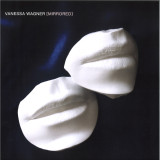
French pianist Vanessa Wagner collects solo piano studies of graceful minimalism and rare finesse for new album Mirrored.
Quickly following March 2022’s Study of the Invisible album, Vanessa Wagner returns with a new collection of work that paints in many colours. The application of shadow in Mirrored evokes haunting poignancy; the care and delicateness of its negative space leaves room for undulating melodic motifs to ebb and flow; its bold splashes of luminescence are striking and rich. And while the album collates re-interpretations of works by composers as varied as Philip Glass, Nico Muhly, Moondog, Leo Ferré and Camille Pepin, the potency and effect of the collection as a whole reflects only Vanessa Wagner and the extraordinary breadth of her abilities.
Performing solo, exposed to timbre, tempo and clarity, many of the pieces here - such as “Sea Horses” by (Vanessa’s one-time mentor) Moondog or Philip Glass’ “Etude 4” - demand virtuosic abilities as a performer and interpreter. But in Vanessa Wagner’s hands, they are not only made her own, but made mesmeric and magical by the sensitivity of her touch.
The debut from new splinter alias of Manchester producer, sequencer designer, and Cong Burn label boss John Howes was made entirely on a Nord Modular G2, Elektron Machinedrum, and Monomachine – a rig he characterizes as “an authentic 2006 studio, best listened to on Windows XP Media Player or Winamp.” Paperclip Minimiser’s self-titled full-length collects eight elusively multi-dimensional constructs of stereo panned synthetics and slithering ambient techno, born of a web of generative patches subjected to improvisational alterations. Taking things further, Howes’ process involves “planting ghosts in the machines,” instilling each element with “some self-correcting behavior in a cybernetic / lo-fi AI / semi-autonomous agent kinda way.” The result is an ambiguous and dynamic hybrid of accident and intention, chaos and control, shuffling through an innerspace wilderness of psychic circuitry.
The title alludes to a 2003 thought experiment about the existential risk of artificial intelligence; how even a mundane objective, algorithmically extrapolated, could culminate in catastrophe. Here the notion is inverted, demonstrating the sonic infinities to be mined by “pushing and pulling at the strings” of musical systems. Howes aptly samples a vintage interview with electronic music pioneer Bebe Barron – co-composer of the Forbidden Planet soundtrack – discussing the anthropomorphic potential of randomized audio generation: “We thought of our circuits as actors in a script.” Paperclip Minimiser descends from a similar family tree, coaxed as much as crafted, flickering rhythmic synchronicities glimpsed in a mirage of wires and glass.
VINYL COLOUR IS SNOW WHITE! As a founding member of Bauhaus, David J helped spearhead the post-punk scene of the early ‘80’s with a string of innovative work, including Bauhaus’ defining moment, a bona fide classic and feasibly the pinnacle of the entire goth scene: the nine minute plus epic slab of industrial dub “Bela Lugosi’s Dead,” featuring David’s lyrics and bass guitar work. Bauhaus propelled to the upper echelons of the UK charts before reaching their zenith in the summer of ’83 and imploding – shattering into fragments of individual talent. This implosion gave rise to David's wide-ranging solo career. The first of Bauhaus’ members to actively release music outside of the band, David went on to put out solo work and collaborations with various authors, poets and infamous indies such as 4AD. In 1985, David regrouped with two former Bauhaus members to form the hugely successful Love and Rockets. Since then, David has continued to produce his trademark brand of deeply heartfelt and darkly sophisticated music. Highlights of What The Patrons Heard include a timely rendition of Neil Young’s “Vampire Blues” delivered with penetrating intensity; “Gimme Some Truth,” which brings new urgency and potency to the John Lennon classic; and “Lay Over And Lay,” which delivers folk-punk that only musicians from the British Isles can get right.
Over the last decade-and-a-half, C Joynes has ploughed a singular furrow through solo guitar, with a body of work incorporating English folk-tunes alongside North & West African music, and lifting proto-minimalist and improvised techniques from the European classical and avant-garde traditions.
His new release, ‘Poor Boy On The Wire’, is his first full album dedicated wholly to the electric guitar. Through a typically wide-ranging set, Joynes exploits the instrument’s potential by placing intricate parlour music alongside overdriven garage blues throw-downs, wiry electric folk and the brittle ringing tones of free improvisation. However, these explorations of the tones and timbres of close-mic’d guitars and amplification retain an overall coherence and unity through the deliberate use of a limited palette of budget instruments and vintage equipment.
With ‘Poor Boy On The Wire’, Joynes has released 9 albums to date, including ‘The Borametz Tree’ (2019), recorded with long-term fellow travellers Dead Rat Orchestra, and ‘The Wild Wild Berry’, a collaboration with singer Stephanie Hladowski (MOJO Top 5 Folk Albums 2012, fROOTS Editors Choice Album Of The Year 2012). He has played extensively across the UK, Europe and the USA, sharing bills with performers including: Shirley Collins, Martin Carthy, A Hawk And A Hacksaw, Marc Ribot, Alasdair Roberts, Richard Dawson, Jack Rose, Josephine Foster, Sir Richard Bishop, Six Organs Of Admittance and 75 Dollar Bill.
“As much Conlon Nancarrow and Ali Farka Toure as Blind Lemon Jefferson, the compositional mind at work here can take apparently disparate threads of modernism and ethnic tradition and treat them as though they were all archaic blues styles learnt from dusty 78s.”
BRUCE RUSSELL, THE WIRE
“An inheritor to Davy Graham; a lone operator prone to unexpected collaborations, with a repertoire that crosses continents and timezones with consummate ease, and dashed off with a phenomenal, yet lightly applied technique.”
ROB YOUNG, THE WIRE
“His epigrammatic re-castings and re-readings of widely-travelled folk melodies and rhythms from a variety of traditions suggest shared memories that might be intensely universal while seeming strangely out of reach.”
KEVIN MACNEIL BROWN, DUSTED MAGAZINE
- 1: Material Girl (Feat. Taylor Hanson)
- 2: Beds Are Burning (Feat. Tim Mcilrath Of Rise Against)
- 3: Wind Of Change (Feat. Potugal. The Man & Brandon Boyd)
- 4: Eye In The Sky (Feat. Beck)
- 5: Waiting Room (Feat. Grouplove)
- 6: Take A Chance On Me (Feat. Jewel)
- 7: Maniac (Feat. Conor Mason Of Nothing But Thieves)
- 8: Drive
- 9: Just A Friend (Feat. Hyro The Hero)
- 10: Flagpole Sitta (Feat. Elohim)
- 11: Alone Again (Naturally) (Feat. Midland)
'My Echo, My Shadow, My Covers and Me' is a fiercely collaborative and celebratory project. An eclectic collection of masterfully crafted and carefully curated covers, each track features at least one acclaimed musical artist. It includes epic re-imaginings of classics such as 'Wind Of Change' by Scorpions, 'Take A Chance On Me' by Abba and 'Beds Are Burning' by Midnight Oil. It features collaborations with artists like Portugal the Man, Brandon Boyd of Incubus, Jewel, Beck, Taylor Hanson and more. It will be available on one-of-a kind recycled coloured vinyl, mystery coloured cassette and CD.
A potentially surprising release on Editions Mego. Another planned prior to the untimely passing of Peter Rehberg in 2021.
Melvin Gibbs is the renowned bass player and producer from Brooklyn who’s vast resume includes playing with Sonny Sharrock, John Zorn, The Rollins Band, Dead Prez, Caetano Veloso and Femi Kuti amongst others. A solid resume, no doubt, but what is Gibbs doing on Editions Mego?
Behind the scenes, those who know Gibbs knew that amongst all this he was also tinkering away at another form of music, one which skirts around the border between music and sound design. The Wave is the first release that reveals this side of Gibbs’ creative output to those outside his inner circle.
The driving force for this output is Gibbs’ multi-decade friendship with acclaimed American video artist and cinematographer Arthur Jafa. Over the course of time Gibbs and Jafa have had many conversations about music and the connection between film and music. Jafa’s desire to make film that worked the way Black (as in Black/African-American/ Afro-diasporic peoples) music worked inspired Gibbs to study the filmmakers Serge Eisenstein and Dziga Vertov and incorporate their philosophies and tactics when recording his own music. The two discussed sound design which directly informed Gibbs’ choice of music making tools and led to him acquiring Symbolic Systems Kyma software and hardware, incorporating this as a composition tool and sound design and component in his work. These conversations bore concrete fruit through Gibbs’ work for TNEG, the film studio Jafa ran with filmmakers Malik Sayeed and Elissa Blount Moorhead. Gibbs created the soundtrack for their very first project, the short film “Deshotten 1.0” (2009 - directed by Jafa and Sayeed) as well as their Martin Luther King-inspired meditation on Black life “Dreams Are Colder Than Death” (2013, directed by Jafa)
The bass-forward music, or ‘sonics’ as Gibbs calls it, emerged from an alternative mode of contemplation, a mode that he sees as closer to the mindset of a rootworker, an African-American herbal doctor who cures psychic ailments using means derived from African spiritual practice, entering a forest to find the right plants for a suffering client than a mediator attempting to invoke mindfulness. Gibbs says this practice yields results that suggest an aural form of creation akin to coagulation, a formal movement that gives the sense that a flow of sounds can emit something bearing resemblance to solidifying objects.
In 2020 Jafa asked Gibbs to work on the soundtrack for a work in progress called “The Wave''. When they got together to work on the soundtrack, Jafa played Gibbs a selection of sounds that included random moments of (probably unwanted) feedback on 70's Miles Davis records, Pop Smoke's Brooklyn drill, the music of Bernard Gunter and Darmstadt-style compositions made with test equipment. Those sounds, filtered through years of conversation with Jafa about Black creativity and the possible evolution of Black music, formed the sonic vocabulary of “The Wave”.
- A1: Yoko Ono – Walking On Thin Ice (1981 Re-Edit)
- A2: Liquid Liquid – Cavern
- B1: Loose Joints – Tell You (Today) (Vocal)
- B2: Ian Dury & The Seven Seas Players – Spasticus Autisticus (Version)
- C1: Material – Over And Over
- C2: Was (Not Was) – Wheel Me Out
- D1: Dinosaur – Kiss Me Again (Original Edit)
- D2: Don Cherry – I Walk
- E1: Common Sense – Voices Inside My Head
- E2: Nicky Siano - Move
- F1: Indian Ocean – School Bell / Tree House
Strut present a new repress of the influential first volume of 'Disco Not Disco' compiled by Joey Negro and Sean P as part of the label's 20th Anniversary.
'Disco Not Disco' was a perfectly timed compilation back in 2000. Released when interest in the myths, history and playlists of original New York clubs like Paradise Garage and The Loft was at its peak, the album drew on the outer limits of leftfield disco championed by Levan and Mancuso, bringing together unlikely dancefloor anthems by rock acts like Yoko Ono and Ian Dury, obscurities from cottage labels like BC and Splash and selected oddities from the unique mind of avant-garde hero, Arthur Russell.
It was essentially a celebration of the sonic melting pot in New York during the early '80s, an era when punk had burnt itself out and disco had become commercial and saccharine; in its place, the post-punk movement threw up brilliant oddities which tore up the accepted rulebook.
The album features full original artwork and Kris Needs' sleeve notes and is remastered and cut by The Carvery.
- A1: Roy Ayers - "Everybody
- A2: Eighties Ladies - "Turned On To You
- A3: Sylvia Striplin - "You Can't Turn Me Away
- B1: Roy Ayers - "Chicago
- B2: Sylvia Striplin - "Give Me Your Love
- B3: Ethel Beatty - "I Know You Care
- C1: Roy Ayers - "And Then We Were One
- C2: Justo Almerio - "Interlude
- C3: Bobby Humphrey - "Baby Don't You Know
- D1: Eighties Ladies - "Ladies Of The Eighties
- D2: Jaymz Bedford - "Just Keep My Boogie
- D3: Rick Holmes - "Remember To Remember
Repress!
Uno Melodic was the brainchild of the legendary Roy Ayers. At the height of his career in the early 80s, Roy established Uno Melodic to explore working as a writer, musician, producer and record label owner with complete control over his creative ideas. Roy brought artists and musicians to the label invaluable to him at Polydor and in whom he saw potential to make more great records. Between 1980 and 1983 Uno Melodic released records that went onto become definitive of their time, classics that became much sought after. The label and its signature releases are part of the Roy Ayers legacy, the best of which Expansion have assembled here on remastered double LP.
Sylvia Striplin, Eighties Ladies and Ethel Beatty represent the soul, disco, two step and boogie sides of Uno Melodic, Bobbi Humphrey, Justo Almario and Roy himself the masters of jazz fusion at the label. The album concludes with the spoken words of Rick Holmes on one of the label's biggest ever release on the label.
We're glad to be back with the third instalment of our new series of DJ and Artist curated 12" mini compilations: Melodies Record Club.
Following Ben UFO and Four Tet's selections last year, Hunee helms volume three which includes three tracks this time including music from Digital Justice, Dorothy Ashby and Frantz Tuernal. Available early November in loud 12" format.
In his own words: " These three distinct pieces of music tap into different layers of my memory. One being part of the imagination, the other two rooted in the memories of a special morning in the woods of Houghton (and other times and places). On one side we have a beatless ecstatic piece of electronic music by Digital Justice called Theme From 'It's All Gone Pearshaped'. Originally released in 1994 on Rob Gretton's (ex-manager of Joy Division and New Order) label Robs Records, Pearshaped is a 13 minute live jam from two friends messing around in a loft studio full of synths, inadvertently creating magic that can "take many shapes and forms in the hands of a DJ and the movement of a dance floor, whilst its harmonic counterpoint shines through the wildest mixes and combinations"
On the flip, we have Dorothy Ashby's spiritual piece featuring Koto and spoken word "For Some We Loved" from her classic album "The Rubáiyát Of Dorothy Ashby" originally released in 1970 on Cadet and Frantz Tuernal's "Koultans" originally released in 1986 by l'AMEP (Association Martiniquaise d'Enseignement Populaire) which was also a school in Martinique. "After dancing to a set from Cedric Woo at an intimate, after-closing dance party at Brilliant Corners called "Freedom Suite" which completely re-calibrated my sense of experiencing and dancing to music, I went home and immediately searched through my collection for music to listen to and potentially play with these new found sensitivities - the very physical experience of music, the pulling force pushing one into the transcendence of time and space. Dorothy Ashby's "For Some We Loved"immediately took me back to that feeling and opened up in front of me an otherworldly-world through it's free flowing polyrhythms and sparkling Koto playing. I have yet to play my own "Freedom Suite"night, but I hope when that moment comes, I can give back what I have received back then, and "For Some We Loved"is a first step in trying just that.""I have been shown Frantz Tuernal's privately pressed 12"containing "Koultans" by my trusted music friend Nicolas Skliris from Paris a few years ago. An unlikely piece of music (a Zouk song with flamenco-inspired guitar playing) from Martinique that was both a highlight back at Giant Steps when I played the song 3 times in a row in the early morning, and a few weeks later in the woods of Houghton where a few thousand dancers were deeply moved to its melody, when the sun came up in the morning and started descending upon the lake behind the DJ booth, bathing the smiles upon the dancers faces with its reflection."
Hunee's instalment is out early November in loud 12" format, and the first press comes with a folded A2 insert with words from and about the Artists. Graphic design by Atelier ChoqueLeGoff, illustration and animation by Nevil Bernard and for the audiophiles out there, remastered and cut at half speed by Matt Colton at Metropolis Studios!
Orange Vinyl[24,79 €]
Svart Records proudly presents: Finnish prog-psych quintet Sammal sheds skin and changes into a power trio, new album announced Sammal have since their 2013 debut cemented their reputation as one of the leaders of the Fenno-Ugrian neoprogressive and psychedelic scene and also raised some waves internationally, performing at the well-respected Roadburn Festival in 2015 and garnering a series of raving reviews around the world of psychedelia and progressive rock fandom, such as “Truly amazing and otherworldy music” or “Earnest, vibrant music specked with impressive nuance”. A few years have passed since the successful Suuliekki album, and since then two of their five members have left the fold. Guitarist and songwriter Jura Salmi decided, however, that Sammal must continue in some form or another. “During the spring of 2020 I would spend time alone recording new demos with the guitar. The remaining three Sammal members had already decided that if the band was to continue, we would not seek another keyboard player.I had bought a guitar pedal that can simulate keyboard sounds and it opened a new world to me. I realized we can perform fine as a power trio without a bass or a keyboard player”, comments Jura Salmi. “Sammal has always been a melting pot of all music we like. If in the past we used to be heavily into bands lke Camel, Dungen and Opeth, when working on this album we’d liste to everything from Bo Hansson and Iron Butterfly to Type O Negative and Whitesnake”, laughs Salmi and continues, “We’d also pick the language of a song’s lyrics based on what we felt would fit the mood of the song. This album has songs in Finnish, Swedish and English.” Sammal’s unexpected prog-psych-boogie epic Aika laulaa will be released on November 18th on all platforms as well as on CD and LP.
Black Vinyl[24,79 €]
Svart Records proudly presents: Finnish prog-psych quintet Sammal sheds skin and changes into a power trio, new album announced Sammal have since their 2013 debut cemented their reputation as one of the leaders of the Fenno-Ugrian neoprogressive and psychedelic scene and also raised some waves internationally, performing at the well-respected Roadburn Festival in 2015 and garnering a series of raving reviews around the world of psychedelia and progressive rock fandom, such as “Truly amazing and otherworldy music” or “Earnest, vibrant music specked with impressive nuance”. A few years have passed since the successful Suuliekki album, and since then two of their five members have left the fold. Guitarist and songwriter Jura Salmi decided, however, that Sammal must continue in some form or another. “During the spring of 2020 I would spend time alone recording new demos with the guitar. The remaining three Sammal members had already decided that if the band was to continue, we would not seek another keyboard player.I had bought a guitar pedal that can simulate keyboard sounds and it opened a new world to me. I realized we can perform fine as a power trio without a bass or a keyboard player”, comments Jura Salmi. “Sammal has always been a melting pot of all music we like. If in the past we used to be heavily into bands lke Camel, Dungen and Opeth, when working on this album we’d liste to everything from Bo Hansson and Iron Butterfly to Type O Negative and Whitesnake”, laughs Salmi and continues, “We’d also pick the language of a song’s lyrics based on what we felt would fit the mood of the song. This album has songs in Finnish, Swedish and English.” Sammal’s unexpected prog-psych-boogie epic Aika laulaa will be released on November 18th on all platforms as well as on CD and LP.
Staging an attempt to gloss their music, Gentle Stranger
say it recalls “throwing a bouncy ball into a hall of mirrors.”
It’s telling that normal routes of describing music - your
typical band boilerplate of “such and such meets such and
such” or “we just play guitar, us, and leave the writing up to
you” - doesn’t suffice for the London collective; instead a
more arcane, more potent image is fired back, a wonky
and poetic idea that’s instantly more arresting, more
substantial.
For the newly initiated, Gentle Stranger are a selfdescribed “post-clown” outfit that oscillate between musical
forms, achieving a bewildering, almost Joycean
experimental sweep; pastiche, parody, burlesque, earnest
composition, genre interrogation and progression - they
cover it all. Their renowned live performances see the trio
cycle through an arsenal of musical instruments,
apparatus, tackle, and stuff. The set (part of the reason for
their now cult-like following) hangs together intricately, a
fractal clockwork machine that relies on movement and
spatial-awareness as much as it does timing and
musicality.
Upon witnessing the Gentle Stranger live show (‘show’
here is most certainly in the theatrical, carnivalesque,
extravaganza sense of the word), it’s tempting to question
whether they could reiterate, reshape, and condense this
uniquely visual and visceral spectacle into recorded music
- and the answer is yes. The latest update of the Gentle
Stranger sound lands in the form of ‘Upon Return’, their
barnstorming third album.
Gentle Stranger reportedly enjoy “revelling in the
disarray” of ‘Upon Return’, this ornate and finely wrought
mind palace - it’s a riveting and often joyous experience
soundtracked by strange, strange, and stranger music.
Available on black vinyl LP.
Clear Vinyl
Originally released in 2020 on cassette and digitally. more eaze is the nom de plume of Austin, TX mainstay m.maurice, a roving experimentalist who’s explored an astoundingly diverse range of sounds, from drone and computer music to avant-pop and beyond. claire rousay is a San Antonio, TX-based percussionist/composer/sound artist who uses physical objects and their potential sounds as a way to explore queerness, human physicality, and self perception. Together—through a suite of deeply personal aural collages—two of Texas’ most vital and vibrant sonic searchers beg the eternal question: If I Don't Let Myself Be Happy Now Then When?
Although only their debut album together, If I Don’t Let Myself… reveals a profound and fruitful relationship between m and claire. But the symphonic symbiosis goes even deeper still. Outside of musical breakthroughs, the pair helped each other conquer intensely personal changes, with m and claire transitioning and coming out as non-binary and trans, respectively.
As m explains, “to me this record is very much about this process of becoming—trying to reach something and getting there but sometimes not being quite where you want to be but at least getting closer. It’s about feeling alternately empowered and insecure socially as you transition and trying to cope with these conflicting emotions.”
Musically, the album showcases startlingly sincere sets of serrated but sedative situational music. A-side epic Drunk is a sprawling but taut rove of aural duality. Passages of exquisite elegance subtly clash with shimmering shards of sound. Pre-op is a poised and pensive piece of solemn reflection, harrowingly honest and delivered with clarity and composure, while Post-op closes out the set in a wholly uplifting and optimistic flair.
If I Don't Let Myself Be Happy Now Then When? is ultimately about coping during the respective transitioning phase in both of their lives, obliquely blissful and fraught with freedom.
To confuse parts for the whole is inevitable with Palm. Drummer Hugo Stanley, bassist Gerasimos Livitsanos and guitarists/vocalists/high school sweethearts Eve Alpert and Kasra Kurt started making music together as teenagers, and spent much of their twenties in the kind of proximity unusual for adults, outside of touring bands and the International Space Station. For a number of years the band consumed the lives of its members to a point of exhaustion: “To be honest I think we got a little burnt out. There were times where it wasn’t clear if we’d make another record,” says Alpert. It was only after multiple freak injuries followed by a pandemic, forced a pause - from touring but also from writing, rehearsing, even seeing each other- that the four were able to regroup and see a way forward again.
On their latest effort, Nicks and Grazes, Palm embrace discordance to dazzling effect. “We wanted to reconcile two potentially opposing aesthetics,” Kurt says. “To capture the spontaneous, free energy of our live shows while integrating elements from the traditionally gridded palette of electronic music.” In order to avoid what Kurt refers to as “Palm goes electro,” the musicians spent years educating themselves on the ins and outs of production by learning Ableton while also experimenting with “the percussive, textural, and gestural potential” of their instruments. To this end, the band continued the age-old tradition of instrument-preparation, augmenting guitars with drumsticks, metal rods and, at the suggestion of Charles Bullen (This Heat, Lifetones), coiling rubber-coated gardening wire around the strings. The unruliness of the prepared guitar on songs like “Mirror Mirror” and “Eager Copy” contrasts with the steadfast reproducibility of the album’s electronic elements.
While Palm cite Japanese pop music, dub, and footwork as influences on this album’s sonic palette, they found themselves returning time and again to the artists who inspired them to start the group over a decade ago. “When we were first starting out as a band, we bonded over an appreciation of heavy, aggressive, noisy music,” Alpert reflects. “We wrote parts that were just straight-up metal.” Kurt adds, “I found myself rediscovering and re–falling in love with the visceral, jagged quality of guitars in the music of Glenn Branca, The Fall, Beefheart, and Sonic Youth, all important early Palm influences.” Returning to the fundamentals gave Palm a strong foundation upon which they could experiment freely, resulting in their most ambitious and revelatory album to date.
Progressive Swedish rock trio Time Dwellers is the
brainchild of guitarist Martin Fairbanks (formerly
from the doom metal band The Graviators) and
multi-instrumentalist and singer Kristofer
Stjernquist.
Started in 2017, Time Dwellers blend anything
from rock to prog, funk and jazz to compose a
potpourri of songs that are still coherent and
cohesive.
The band’s debut album, ‘Novum Aurora’,
showcases a musical landscape with influences
from mostly 60s and 70s music, filled with
mellotron, 12-string guitar, synthesizers, grooving
rhythms, thrilling guitar solos and imaginative
existential lyrics delivered from a whisper to a
lion’s roar.
In a world that’s growing more cynical by the
minute - where popular music, at the same rate, is
getting saturated and bland - Time Dwellers set out
to put a blanket around you and soothe your
aching soul, while not fearing any musical limits or
borders.
For fans of Beardfish, Opeth, Death Meadow,
Camel, Needlepoint, The Flower Kings, Gentle
Giant, Graveyard, Jethro Tull, Kadavar, Caravan,
Black Mountain, All Them Witches, Barclay James
Harvest, Earthless.
LP pressed on clear vinyl.