Sara Dobbs and Jenny Shore used to work summer stock theater in St. Louis, Missouri. They'd do the hand jive with TV stars past and future; they'd get coldly corrected by the ancient, legendary choreographer Gemze de Lappe. Sara went on to Broadway, including a run as Anybodys in West Side Story. Jenny went on to choreograph in the independent dance scene of early 2000s Chicago. Julie Shore is Jenny's sister. She's always made music_playing Chopin, writing songs, making bands with her friends. She's had the archetypal Millennial journey of entering adulthood in the '08 financial crisis and figuring out what stupid series of jobs you have to take to pay rent while keeping an artistic life alive. Miles Francis grew up in New York City with Backstreet Boys posters covering their walls. An extraordinary drummer since youth, Miles thrives in collaboration_ whether producing artists in their West Village studio, performing with artists like Angelique Kidjo, or powering protests with a big marching drum. These four_Miles, Julie, Jenny, and Sara_are Sister Squares. What made them a musical unit was working with Grammy winner and Oscar nominee Will Butler. They've all just finished a new record together: Will Butler + Sister Squares. "After Generations, I considered making a weird solo record. Me alone in the basement, etc., etc. Mostly I realized that what I wanted was the opposite," says Will. He increasingly turned to the band for feedback on lyrics and song structures. He asked Miles if they'd produce the record. The band played a run of shows in August 2022, airing out studio ideas in live rooms. After coming home, the band regrouped at Figure 8 Studios in Brooklyn. "I had quit my band Arcade Fire very recently, after 20 years_maybe the most complex decision of my life. I had spent the preceding two years at home with my three children. I was 39 years old. I was waking up every morning and reading Emily Dickinson, until I had read every Emily Dickinson poem. I was listening to Morrissey, to Shostakovich, to the Spotify top 50. I had unformed questions with inchoate answers," says Will. "But, honestly, I was feeling great about the record." The album projects widescreen emotional landscapes. Lead-off single "Long Grass" is like a Harry Styles song with 20 more years of life behind it. Standout track "Saturday Night" has a beat, according to Miles, "with that robot-alien-dancing-at-a-haunted- dive-bar feeling that we were going for." The back half of the album is a danceable, weird choral record with harmonies both beautiful and dissonant. Closing song "The Window" is the comedown after the party_Julie playing a Chopin Nocturne on a three-years-out-of-tune piano, slowed to half-speed on tape with Will singing over it in a voice exactly as tired as he was. It's a record with a warm, humane soul.
Suche:mo style
Sara Dobbs and Jenny Shore used to work summer stock theater in St. Louis, Missouri. They'd do the hand jive with TV stars past and future; they'd get coldly corrected by the ancient, legendary choreographer Gemze de Lappe. Sara went on to Broadway, including a run as Anybodys in West Side Story. Jenny went on to choreograph in the independent dance scene of early 2000s Chicago. Julie Shore is Jenny's sister. She's always made music_playing Chopin, writing songs, making bands with her friends. She's had the archetypal Millennial journey of entering adulthood in the '08 financial crisis and figuring out what stupid series of jobs you have to take to pay rent while keeping an artistic life alive. Miles Francis grew up in New York City with Backstreet Boys posters covering their walls. An extraordinary drummer since youth, Miles thrives in collaboration_ whether producing artists in their West Village studio, performing with artists like Angelique Kidjo, or powering protests with a big marching drum. These four_Miles, Julie, Jenny, and Sara_are Sister Squares. What made them a musical unit was working with Grammy winner and Oscar nominee Will Butler. They've all just finished a new record together: Will Butler + Sister Squares. "After Generations, I considered making a weird solo record. Me alone in the basement, etc., etc. Mostly I realized that what I wanted was the opposite," says Will. He increasingly turned to the band for feedback on lyrics and song structures. He asked Miles if they'd produce the record. The band played a run of shows in August 2022, airing out studio ideas in live rooms. After coming home, the band regrouped at Figure 8 Studios in Brooklyn. "I had quit my band Arcade Fire very recently, after 20 years_maybe the most complex decision of my life. I had spent the preceding two years at home with my three children. I was 39 years old. I was waking up every morning and reading Emily Dickinson, until I had read every Emily Dickinson poem. I was listening to Morrissey, to Shostakovich, to the Spotify top 50. I had unformed questions with inchoate answers," says Will. "But, honestly, I was feeling great about the record." The album projects widescreen emotional landscapes. Lead-off single "Long Grass" is like a Harry Styles song with 20 more years of life behind it. Standout track "Saturday Night" has a beat, according to Miles, "with that robot-alien-dancing-at-a-haunted- dive-bar feeling that we were going for." The back half of the album is a danceable, weird choral record with harmonies both beautiful and dissonant. Closing song "The Window" is the comedown after the party_Julie playing a Chopin Nocturne on a three-years-out-of-tune piano, slowed to half-speed on tape with Will singing over it in a voice exactly as tired as he was. It's a record with a warm, humane soul.
KAU (previously KAU trio.) is an instrumental trio based in Brussels. Representing various European backgrounds, the Belgian capital and melting pot proves to be a never ending source of inspiration for the band. Taking influences from jazz, groove and dance music, their aim is simple but straightforward: to make your heads bob. The formula they use to do so has been the same since their early days: improvisation, never ending jam sessions and an open-mindedness towards various genres and styles. This gives their music an organic and vibrant feel. Furthermore, the three boys' long-lasting friendship is at the heart of it all, always relying on what brings them together: their love for music. The KAU cycle is bound to repeat itself and to birth something new - over and over again.
"The Cycle Repeats" is KAU's debut album, due on September 22 on SDBAN Ultra, the home of ECHT!, Black Flower, Glass Museum, STUFF. and more. It represents a milestone in the band's musical journey: it's their firm decision to present a strong and unified trio playing music that stands out through the combination of 80's synths, acoustic drums and electric bass. Moreover, the album succeeds in capturing the energy of their infectious and legendary live shows.
Highlights are album opener "Kampala", which has a throbbing bassline, jazzy synths and heavily modified arpeggiators at its core. The album's first single "Little Steps" starts with a strong hip hop groove, morphing into Herbie Hancock-style chords. "Amulet" is inspired by breakbeats, fast paced grooves and pentatonic bass lines. Both "Kautokeino" and "Alaska" are an invitation to travel to the utmost remote places of this earth, using intense sequencing and suffocating subbasses into an epic finish, probably demonstrating the trio in its most sincere form.
In short: with André Breidlid on drums, Matteo Genovese on bass and Jan Janzen on synths, KAU are a trio of childhood friends with a pan-European identity, whose music reflects the city they grew up in: unapologetic, richly diverse and with a spontaneous groove underlining it all. With their new album "The Cycle Repeats" they directly aim for your dancing shoes and souls.
Zur Feier des 40-jährigen Jubiläums des belgischen Labels PIAS erscheint exklusive Auswahl an 12“-EPs mit Musik von einigen der wichtigsten und erfolgreichsten Wegbegleiter. Mark Thomas Griffin, besser bekannt als MC 900 FT JESUS, ist amerikanischer Rapper aus Dallas, Texas. Griffin ist ein klassisch ausgebildeter Musiker und Trompeter und bekannt für seine Mischung aus Hip-Hop, Jazz und Elektronik, die in den 90er-Jahren ihrer Zeit weit voraus war. Seine Texte sind oft sozialkritisch geprägt, aber durchzogen von seinem bissigen und bisweilen schrulligen Humor.
The extraordinary trio creates a fascinating, atmospheric fusion of electronic sounds, piano, violin, percussion, field recordings, and mystical Ladino texts and chants with "Metamorfosa." Metamorfosa is a new band project founded by Marlene Schuen (Italy), Dimitri Andreas (Belgium), and Marc Romboy (Germany).
The arrangements, co-compositions, and production come from Marc Romboy and Dimitri Andreas (Music Man, Systematic). Marc Romboy has been releasing electronic music since 1991 and has performed worldwide in legendary clubs like Berghain, Rex Paris, Fabric London, and Womb Tokyo. Marlene Schuen's lyrics for Metamorfosa revolve around nature and stories of mythical creatures in the mountain world of South Tyrol, taking the listener into the world of her homeland.
Her impressive voice and singing style deeply touched and fascinated
Marc and Andreas from the very beginning, ultimately inspiring them to create this fusion of electronic sounds, atmospheric piano parts, violin, field recordings, percussion, and Ladino singing.
- 1: Tnt
- 1: 2Swung From The Gutters
- 1: 3Ten-Day Interval
- 1: 4I Set My Fave To The Hillside
- 1: 5The Equator
- 1: 6A Simple Way To Go Faster Than Light That Does Now Work
- 1: 7The Suspension Bridge At Igazu Falls
- 1: 8Four-Day Interval
- 1: 9In Sarah, Mencken, Christ And Beethoven There Were Wome
- 1: 0Almost Always Is Nearly Enough
- 1: Jetty
- 1: 2Everglade
1998: Tortoise"s third studio album TNT is released. In and out of print over the past decade we are happy to finally give everyone what they have been asking for - TNT on vinyl again! Pressed on high quality virgin vinyl, the two LPs are packaged in a deluxe old-style tip-on gatefold jacket fully replicating the original artwork and includes a download coupon for the first time! Tortoise"s third full-length release, TNT, was written and recorded during a 10-month interval in 1997. This longer-than-usual writing/production schedule was purposefully undertaken by the group in the hopes of crafting an expansive, diverse, yet thematically coherent offering. TNT builds upon the spare, instrumental framework of the group"s first, self-titled album, and the extended edits, melodic adventures, and klangfarben of the subsequent full-length release, Millions Now Living Will Never Die. Further to this, Tortoise"s interest in the possibilities offered by the remixing of tracks was realized within the actual production of TNT; individual elements, sections, or sometimes whole compositions mutate within the album"s shifting framework. These techniques were suitably realized thanks in part to the use of non-linear digital recording and editing methods, the first example of such work for the group.
Kool Keith has long been hailed as hip-hop’s greatest eccentric. Over the course of a career stretching back to the mid-’80s, he’s perfected a singular style of abstract yet deadly precise rhyming that often focuses on subjects such as science fiction, hardcore pornography, and a distrust for the music industry. His sprawling discography includes numerous collaborations and aliases, with some of the most acclaimed including Dr. Octagon and Dr. Dooom, Black Elvis & Tashan Dorrsett. He began his career as the mind and mouth behind the Bronx-based Ultramagnetic MC’s, whose influential debut, Critical Beatdown, was released in 1988. Following the release of the band’s third album in 1993, Keith headed for the outer reaches of the stratosphere with a variety of solo projects. His lyrical thematics remained as free-flowing as they ever were with the N.Y.C. trio, connecting up complex meters with fierce, layers-deep metaphors and veiled criticisms of those who “water down the sound that comes from the ghetto”. Keith’s latest LP “Mr. Controller” entirely produced by Junkaz Lou is yet another work of art. No MC on the planet is so grimy and yet so polished — after years in the rap game, Kool Keith’s as unique as ever. TRACKLIST
Flint, Michigan-based rapped MC Breed and his crew DFC (Da Funk Clan aka Dope Flint Connection) put the Midwest on the map in 1991 with the release of their self-titled debut album, an underrated gem of the early 90s. The lead single, "Ain't No Future in Yo' Frontin'" with a boomin’ west coast sound would get radio play across the country and video rotation on YO! MTV Raps, BET’s Rap City, and Ralph McDaniels' Video Music Box. The album’s second single “Just Kickin’ It” with MC Breed’s laid-back vocal style over a funky groove landed in the top 10 on the Hot Rap Singles Chart. Tracks like “Underground Slang” have an 80s electro vibe and “Better Terms” has Breed rapping a little faster over a Bomb Squad influenced beat with his DJ on the cut. MC Breed would go on to release another 11 albums and collaborated with artists such as 2Pac on "Gotta Get Mine" and Too $hortís "Gettin It” as well as features with Slum Village, Pimp C, Kurupt, Erick Sermon, and The D.O.C. among others. Breed passed away in 2008 from kidney failure, but his legacy lives on having influenced other Midwest artists including Eminem, Proof, D12, Common, and Slum Village. Out of print on vinyl since 2018, Get On Down is bringing back this Midwest 90s classic on limited edition colored vinyl.
Richmond's INTER ARMA, reigning masters of the slow build, continue to trace a distinctly ambitious trajectory through modern metal. Their impulses tend toward the epic, but never bloat; they meld several styles — doom, sludge, and hard psych — without coming off like dilettantes. This newest full-length, Sulphur English, finds them mining deeper in the proggy organic doom fields that made both Paradise Gallows and Sky Burial so thrilling while expanding further the on the psych-folk strain that made those albums' peaks seem so lofty. Few metal bands have ever made such effective use of acoustic instruments in truly heavy environments as INTER ARMA do; the acoustic guitar that stitches "Stillness" together is as effective as any overdriven bass; a two-minute gloomy piano-and-feedback piece titled "Observances of the Path" rolls out the carpet for "The Atavist's Meridian," an album highlight that rides a gigantic, roomy drum sound into realms akin to a murkier Paradise Lost, a more aggressive Om, and a dreamier, more stoned Kylesa all playing together at once. Few bands make music as engrossing as INTER ARMA; their lengthy, almost meditative songs rumble patiently forward until you're ready to get thrown off a bridge — and then they throw you, with great force. - Words by John Darnielle
Finland’s Hexvessel return with their sixth album, Polar Veil, a cold, metallic hymn to the Sub Arctic North. Haunted by primal forest spirits, Mat “Kvohst” McNerney summons the ghosts of his past in a jaw-dropping, unheard-of rebirth of style and sound. At once unmistakably Hexvessel, Polar Veil is also steeped in the nocturnal atmosphere of McNerney’s past, churned in the cauldron of Black Metal, Ritual Folk Psychedelia and Doom Rock, and echoing with shivering Gothic undertones. From their inception in 2009, Hexvessel, created by Mat McNerney as what he described to Decibel Magazine as “a free spiritual journey and a musical odyssey with no boundaries”, have captivated audiences and listeners with their evolution. Holed up in a home-made studio in his log cabin during the winter of 2022, McNerney drew on all the fundamental elements of his music career as a shamanic shapeshifter, with only the isolation of nature’s solitude as inspiration. Painting an aura with Polar Veil which resonates with solitary reflection and themes of personal spiritual transcendence, Hexvessel’s new album is a bold statement from an artist who continues to reinvent and explore nature mysticism through music.
Third Matinee (or 3rd Matinee) was an American rock band formed by vocalist and bassist Richard Page with keyboardist Patrick Leonard. The group formed after the breakup of Page’s band, Mr. Mister, and the demise of Leonard’s band, Toy Matinee. Leonard and Page were writing partners whose efforts included the Madonna hit “I’ll Remember.”
The rest of the band were: Brian MacLeod (drums), Tim Pierce (guitar), and Guy Pratt (bass), Marc Bonilla (guitar) and was completed by keyboard player and Toto member Steve Porcaro.
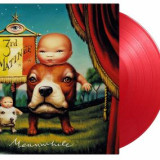
Third Matinee released only one album, Meanwhile, which was released in 1994. It features artwork by Mark Ryden, who is also known as “the godfather of pop surrealism” and mastered the Lowbrow style. He previously designed artwork for Aerosmith’s Love In An Elevator, Michael Jackson’s Dangerous, and One Hot Minute by Red Hot Chili Peppers.
Drawing inspiration from sixties psychedelia, specifically the Tropicalia movement, Melotone are a band more interested in texture and ambience than ego. The EP continues the band's exploration of Brazilian soundscapes - the native country of singer Alec Madeley - whilst reconciling their humble beginnings in the Black Country, where the band grew up and met each other. Lyrically and musically, the EP faces questions of identity and of being in the unknown, but creating purpose in this space. It represents Melotone's journey across the music of their homelands as they mould a sound entirely recognisable as their own.
Sometimes drifting into the realms of folk, jazz, and soul, Melotone channel instrumental pioneers Khurangbin and Kikagaku Moyu with vocals that resemble the arresting style of singers Jeff Buckley and Brittany Howard, and at times the spirit of Portuguese-English singing Caetano Veloso.
- Unblock Obstacles
- Over & Over
- Over & Over Nena
- Bootgirl
- If I'd Known
- Blindfold 2
- Every House Has A Door 3
- Whinny
- Every House Has A Door 4
- Sun Inspector 2
They've crafted a swirling, past- future, future- past, sorta- rock, collage- rock, melange borne from the confined anxiety of the pandemic. It's a full- length undeniably of its moment, rich with musical references while radiating a visionary path forward.
To assemble Giddy Skelter, Kinsella and Pulse aggressively culled their tracklist until they had a lean and impactful 11 songs, unlike anything either musician has released before. Opening track "Unblock Obstacles" chugs along on a three-chord riff and dubbed-out drums before venturing into a hypnotic, feedback-filled drone that channels pre- Loveless My Bloody Valentine. "Over and Over" imagines a world where Slowdive or Lush collaborated with Prefuse 73. On "Nena," one minute features loops of classical piano, the next Spacemen 3-style psychedelic drone, and the next contemporary R&B. The majority of songs on Giddy Skelter foreground Pulse's yearning, ethereal vocals, giving the music a distinctly feminine overtone.
Sometimes the thing that makes great rock n' roll is the ineffable and the intangible, something you can only describe as alchemy; other times it's the rigors of process. On Kinsella and Pulse's Giddy Skelter, it's both -- and it sounds unlike anything else you'll hear this year.
Black Vinyl[28,99 €]
The kind of band whose members are fully immersed in their local scene-through a handful of notable side projects and the show- promoting Philly staple 4333 Collective- the quintet's sound takes wide- spectrum influence from its environment. The result is an amalgam of complex song structures and flourishes of technical acumen, wholly unconcerned with genre, yet evoking the specific styles of touchstones such as Paramore and Circa Survive.
On their debut longplayer Where the Heart Is, Sweet Pill's unbound, raucous energy presents through ten autobiographical tracks that hinge on singer Zayna Youssef's elastic, enrapturing voice- at times belting and controlled, at others textural and guttural. Supporting Youssef are guitarists Jayce Williams and Sean McCall, bassist Ryan Cullen, and drummer Chris Kearney. Their blistering lead single "Blood" sees Youssef exploring a deteriorated friendship over Williams and McCall's trudging riffs and tactful counterpoint, with Cullen and Kearney rumbling nimbly in the song's foundations.
Second single "High Hopes" counters with introspective, melodic punk that reshapes anxiety rather than succumb to it. But third single "Diamond Eyes" momentarily slows the pace, with McCall joining Youssef on vocals for a breakup lament laden with acoustic sentimentalism and an emotive flurry from guest flutist Jill Ryan. Such range is the central facet of Where the Heart Is, where Sweet Pill's penchant for combining punkish tropes enlivened with the vibrance of math- rock and the aggression of post- hardcore sweetened with pop sensibility compound into something stylistically new yet still familiar.
But after collectively moving across the country from Burlington, VT to Seattle, WA, the scrapped tracks transformed substantially into florid, at times entrancing compositions.
The pulsating "Circles" opens the album with lilted reflections on empathy, breathing in midtempo syncopation with subdued guitar tip- toeing around melodic drumming. supernowhere's cast of Meredith Davey (bass, vocals), Kurt Pacing (guitar, vocals), and Matt Anderson (drums) share a collective ambition for maximum interplay and collaborative writing, materializing cleanly knotted compositions that evoke vivid dreamscapes and the profound epiphanies drawn from them ("The Hand", "Ecdysis"). On upbeat "Dirty Tangle" Davey's voice glides through Pacing's angular arpeggiations, carving her own rhythmic lane with her distinctive, descanting singing style.
"Skinless Takes A Flight" notably would not have come to fruition without the help of engineer Dylan Hanwright (mix. Gulfer, mem. Great Grandpa, I Kill Giants), whom the band met shortly after relocating to Seattle. Hanwright offered up the studio where the album was recorded as a temporary rehearsal and writing space during the pandemic, which in turn gave him intimate familiarity with the music, resulting in an album that was recorded as intimately as it was written. Hanwright helped make the little moments shine too, as heard in the fleeting vocal harmonies on "Augury", or the spiraling chaos in "Basement Window," a further testament to the collaborative, everyone's-input-matters nature that characterizes supernowhere's dizzying yet meditative sophomore record.
- A1: Inhalation / Вдох
- A2: 1981
- A3: Ambinature / Амбинатура
- A4: Binaural / Бинауральный
- A5: Choral / Хорал
- A6: Quiescence (Grain Version) : Покой (Гранулярная Версия)
- A7: Stone / Камень
- B1: Aurora (Feat. Alek Fin) / Аврора (Совместно С Алек Фин)
- B2: Grainy Dialogue / Зернистый Диалог
- B3: Soviet Power / Советская Власть
- B4: Echo / Эхо
- B5: Childhood (Alternative Version) (Feat. Alek Fin) / Детство (Альтернативная Версия) (Совместно С Алек Фин)
- B6: Mirror (Synth Version) / Зеркало (Синтезаторная Версия)
Now in its eleventh year and following hype for recent releases from Osaka's Kiji Suedo (Hosek EP & Riot album) and Edinburgh's George T (Roll On, King's Cross single), Edinburgh's Hobbes Music label burrows deeper into experimental ambient terrain with brand new signing Galun. With a discography over 15 years deep, Galun brings no shortage of his own props.
Galun is the solo project of Moscow musician, artist, and producer Sergei Galunenko (currently based in Tallinn), who has performed at numerous prestigious Russian events and collaborated on projects internationally in a career spanning more than 15 years, with a discography to match, turning his attention to myriad styles: IDM, funk, techno, juke, post rock, beatboxing, free improvisation, drone.
“In my project, Galun, I do not use musical instruments,” he explains. “All the sounds are produced with only the use of my voice through beatbox and special vocal skills. Some effects are used to produce electronic sounds.”
Hot on the heels of the new Golos album (out now via Berlin's One Instrument) plus a remix for US collaborator Alek Finn via Nevada's Mystery Circles label, Galunenko’s eighth studio album, Glagol (or Glagolь / Глаголь in Russian) is an ambient collection, recorded between 2013 and 2022. The title is an old Russian word which translates as ‘Speak’.
"This album consists of tracks written in different periods, so it turned out to be diverse," he says. "There are classic ambient tracks, as well as experimental ones in search of new possibilities for voice processing."
Why "glagol"? “Since the music on this album is 90 percent processed voice, it's a form of conversation for me," he reveals, “where I talk about my thoughts and mood, so speak music, while using my voice, is an amazing way of expressing.”
Five singles will be released on streaming platforms only, at intervals, over summer, with the full album released on digital 25.8.23 and a limited edition cassette plus lathe cuts out from 8.9.23.
"How gorgeous is that?! I have heard the rest of the LP and it is all equally gorgeous" DEB GRANT played ‘Mirror’ (New Music Fix show, BBC 6 Music, 17.8.23)
"'Glagol' translates as 'speak', an apt title when you consider 90 percent of the noises contained on it originated as recordings of his own voice, and that lends the ambient experiments here a very human, tactile feel. Closing tune 'Mirror' is a serene masterpiece, '1981' is an evocative phase-fest, the stuttery 'Stone' is endearing and enrapturing and Galunenko generally displays a knack for communicating clear emotions through abstract sounds. Recommended." ELECTRONIC SOUND
‘Really beautiful’ AVALON EMERSON (US)
‘Really loving the Galun tracks!’ INTERGALACTIC GARY (NL)
‘Super!’ JD TWITCH (Optimo, UK)
'Wow, this sounds amazing. Loving the atmosphere here, ambient with some groove somehow, really feeling this one.' DAN CURTIN (US/DE)
"Sounds great. Looking forward to getting into this properly" LORD OF THE ISLES
‘Wicked. It’s great stuff’ DRIBBLER (Pikes, Ibiza // Paradise Lost, Red Light Radio, Pure; SP)
‘Very nice, will play on Cashmere Radio here in Berlin. Keep up the good musical works x ALEX VOICES (DE)
‘Sounds really nice. The sort of thing I’d absolutely listen to on streaming etc’ AUSTIN ATO (UK)
‘Excellent stuff as always’ PAT BENSBERG (The Eccentric Selection, Phonic FM, UK)
‘Digging this one! Right up my street and just the ticket for my Radio Buena Vida show’ TOM CHURCHILL (UK)
Curated by 78-rpm record collector Pat Conte, The Secret Museum of
Mankind: Atlas of Instruments - Fiddles, Vol 1 continues the legendary
series and seeks to show the diverse range of fiddle sounds and styles
developed and practiced across the globe
The compilation, drawn from Conte's pioneering and remarkable personal
collection of 78- rpm discs recorded in the 1920's-1950's, presents fiddle music
recorded across the world from Crete to Madagascar, Mexico, England, Sicily,
Norway, India, the USA, Cape Verde, China and more.
The album is available via digital download and on vinyl, in a beautiful gatefold
package. It includes a liner notes booklet by curator Pat Conte, original drawings
of rare and unique fiddles in Conte's collection, by artist Jeff Tocci, and beautifully
remastered audio by Don Fierro. Additionally, the interior gatefold design features
a selection of historic images of fiddlers, also curated by Conte and drawn from
his collection.
The story of the invention of the term, 'deepfunk' is probably only known among fans and practitioners of this niche-genre. In short, it all started in the 1990s when DJs like Keb Darge, Mark 'Snowboy' Cotgrove and others began spinning obscure and feral Funk 45 RPM singles from local American bands, ostensibly generating another sub-category branch off of the mighty Northern Soul tree. The dance-club phenomenon inevitably spilled over to contemporary groups on the funk scene which immediately tried to record their music the way their idols did. The 'rare groove' and 'acid jazz' movements had run their course and there was a concerted effort to reinstate primitive idiomatic styles and techniques into the music, most notably by 90s funk collective The Poets of Rhythm. As more years passed by the number of bands steadily increased (although in tiny numbers, compared to the mainstream market). Almost every country had a representative with the majority of them coming from the United Kingdom. The deepfunk sound was still a niche, however a very few bands made it onto the mainstream charts, most notably Sharon Jones & the Dap Kings.
At the height of the retro-soul movement a questionable development took place. As more bands arrived on the scene, the production became more and more polished and pop-ish. Some of that squeaky-clean tidiness began to creep into the recordings, encouraged in part by the signature sounds of the digital recording technology available at that time. Some bands even tried to jump onto the possibility of promoting their music as 'deepfunk' although they were actually playing slick, funky pop music. This way some people who thought they were listening to raw, energetic funk actually felt quite ambushed when hit with real deepfunk. In fact, a certain percentage of funk music produced within the past 20 years does not deserve to be described as 'deepfunk' at all. Fortunately there were (and are) some pleasant exceptions which did not just imitate but actually rendered amazing funk music just like some of the finest funk combos of the 1960s and 70s.
One of those creative minds is without a doubt Joel Ricci aka Lucky Brown. Originally from Seattle, Washington, USA, he has enriched the deepfunk community since the mid-2000s with his stellar abilities. He is not only an amazing musician playing multiple instruments, but also a brilliant composer, arranger, and producer too. But for us here at Tramp he is much more, a close friend and remarkable human being. Whenever we were struggling, whether with the label or in private life, Joel and his musical work helped us to overcome everything and to keep going our path.
So here we are in 2023. The songs you are listening to right now are the complete Space Dream collection, split into two parts, representing the two living-room recording sessions from which his 2011 Tramp Records debut was compiled. Each fully remastered album contains unreleased material and comes with brand new, beautifully reimagined artwork by Ricci himself, housed in an authentic 1960s tip-on cover. A first class product from a first class musician for the discerning funk enthusiast.
The story of the invention of the term, 'deepfunk' is probably only known among fans and practitioners of this niche-genre. In short, it all started in the 1990s when DJs like Keb Darge, Mark 'Snowboy' Cotgrove and others began spinning obscure and feral Funk 45 RPM singles from local American bands, ostensibly generating another sub-category branch off of the mighty Northern Soul tree. The dance-club phenomenon inevitably spilled over to contemporary groups on the funk scene which immediately tried to record their music the way their idols did. The 'rare groove' and 'acid jazz' movements had run their course and there was a concerted effort to reinstate primitive idiomatic styles and techniques into the music, most notably by 90s funk collective The Poets of Rhythm. As more years passed by the number of bands steadily increased (although in tiny numbers, compared to the mainstream market). Almost every country had a representative with the majority of them coming from the United Kingdom. The deepfunk sound was still a niche, however a very few bands made it onto the mainstream charts, most notably Sharon Jones & the Dap Kings.
At the height of the retro-soul movement a questionable development took place. As more bands arrived on the scene, the production became more and more polished and pop-ish. Some of that squeaky-clean tidiness began to creep into the recordings, encouraged in part by the signature sounds of the digital recording technology available at that time. Some bands even tried to jump onto the possibility of promoting their music as 'deepfunk' although they were actually playing slick, funky pop music. This way some people who thought they were listening to raw, energetic funk actually felt quite ambushed when hit with real deepfunk. In fact, a certain percentage of funk music produced within the past 20 years does not deserve to be described as 'deepfunk' at all. Fortunately there were (and are) some pleasant exceptions which did not just imitate but actually rendered amazing funk music just like some of the finest funk combos of the 1960s and 70s.
One of those creative minds is without a doubt Joel Ricci aka Lucky Brown. Originally from Seattle, Washington, USA, he has enriched the deepfunk community since the mid-2000s with his stellar abilities. He is not only an amazing musician playing multiple instruments, but also a brilliant composer, arranger, and producer too. But for us here at Tramp he is much more, a close friend and remarkable human being. Whenever we were struggling, whether with the label or in private life, Joel and his musical work helped us to overcome everything and to keep going our path.
So here we are in 2023. The songs you are listening to right now are the complete Space Dream collection, split into two parts, representing the two living-room recording sessions from which his 2011 Tramp Records debut was compiled. Each fully remastered album contains unreleased material and comes with brand new, beautifully reimagined artwork by Ricci himself, housed in an authentic 1960s tip-on cover. A first class product from a first class musician for the discerning funk enthusiast.


![MC 900 FT JESUS - [PIAS] 40](https://www.deejay.de/images/l/9/8/1027998.jpg)