When a Russian missile struck the ground not far from my studio in Kyiv, I vividly remember how my body reacted to the explosion, milliseconds before my mind did. That traumatic explosion reduced my essence to a primal state. There existed nothing but dread—the kind that, in scripture, accompanies the appearance of angels announcing, ’Be not afraid’.
The visions of Abbess, composer and mystic Hildegard von Bingen were preceded by bright, excruciating flashes of light. Modern medicine reduces them to cluster migraines, one symptom of which is the retinal aura, often accompanied by blurred vision and blind spots. Hildegard’s music can place great demands on the bodies of its performers, emphasizing uncomfortable intervals and the wide distance between the lowest and highest pitch. In comparison, Gregorian chant, the liturgical standard of the time, represents a tempered attempt to grasp God intellectually; indeed, Hildegard’s music was once described as a stick of dynamite thrown into a Gregorian chant.
This album is not a historically informed performance. Hildegard’s persona and music are a starting point—a distant mirror, akin to the shield of Perseus, used to reflect Medusa. It allows us to reflect, comprehend, externalise, and transcend traumatic wartime experience, reinstating the embodied origins of Christianity, which contained suffering but also offered the promise of transcendence. Andriana-Yaroslava Saienko emphasises this physical aspect of Hildegard’s music by drawing on authentic Ukrainian folk singing, a form that survived despite efforts by the Soviet occupation to replace it with a simulacrum that is naive, harmless, and devoid of contradictions—an attempt to ‘civilise’ the body by disembodying it.
The musical approach is also informed by my ongoing practice of reimagining early music in modular synthesis. I accompany Andriana-Yaroslava’s fiery singing with drones—extended sounds that also occurred in medieval music. The drones alternate with improvisations, one taking its starting point in medieval polyphony, the other working with the concept of the interchangeability of sound and light, referring both to Hildegard’s visions and the space in which we recorded the album: the Cistercian abbey of Sylvanès in Occitania, known for contemporary stained glass windows whose patterns reference the dispersion of acoustic waves inside the church.
The album features two compositions by Hildegard von Bingen: O Ignis Spiritus Paracliti (O Fire of the Spirit and Defender), dedicated to the Holy Spirit, and O Tu Suavissima Virga (O Sweetest Branch), in honour of the Virgin Mary. Both pieces are performed radically slower than usual, expanding in time and space. On vinyl, the compositions are designed to reflect one another and can be listened to in either order. In the digital edition, there is a bonus track titled Zelenaia Dubrovonka (The Green Oak Grove). Based on a Ukrainian folk song from the Polissia region, Andriana Yaroslava adapted the lyrics to reflect our contemporary reality. The green oak grove does not rustle with the wind; instead, it resonates with a different sound—perhaps the missile that struck near my Kyiv studio.
Cerca:mod civil
- 1
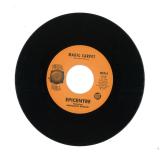
Epicentre was an R&B/funk group formed in Seattle, Washington by keyboardist Ric Ulsky. The band developed a loyal following, playing the extensive NW club, concert and dance venues throughout the mid-to-late 1970s. Their sound was a blend of melodic R&B and powerhouse funk that dependably filled music venues throughout the Western US. Bernadette Bascom was the lead vocalist, who captivated audiences with her powerful yet velvet-smooth voice and commanding, magnetic stage presence.
In 1978, Epicentre worked with Seattle producer Don McKinney to record their music in Seattle's now legendary Kaye-Smith studios. The result was seven strong, fully -produced R&B songs, with occasional horn and string orchestrations tastefully added to the final versions.
Their music quite literally sat on a shelf for decades until McKinney decided that all the hard work and talent should no longer remain undiscovered and it needed to find its audience. He restored and digitized his copies of the master tapes and looked for an opportunity. A chance call to the former leader of the group, Kell Houston, led to a serendipitous introduction to UK boutique/funk/R&B label founder Russell Paine. The result was an agreement to release their music, starting with two songs, "When You Were In Love With Me", and "Magic Carpet."
Footnotes: Lead singer Bernadette Bascom became a protegé of Stevie Wonder, and was the first artist to be signed to his label Black Bull , starting a period of collaboration between the two. Bermadette is the daughter of Reverend Dr. Marion C. Bascomb (1925-2012), one of Baltimore's major civil rights voices and pastor emeritus of Baltimore's Douglas Memorial Community Church. Ric Ulsky eventually left the group to play keyboards and tour extensively with The Association. You can also find Epicentre's music on the compilation album "Seattle Funk, Modern Soul & Boogie: Volume II 1972-1987." In addition to Bernadette, the musicians on the 1978 sessions are Kell Houston, keyboards, Michael Cox, bass, John Carmondy, guitar, and Ricky Lynn Johnson, drums and vocals. While their recorded material is primarily original, Stacy Christensen from Seattle's Gabriel contributed two of his compositions. Label credits: Epicentre featuring Bernadette Bascom. Recorded at Kaye-Smith Studios, Seattle, Washington, August 1978"When You Were in Love With Me" and "Magic Carpet" written by Bernadette Bascom. Produced for Epicentre by Don McKinney
- Puccio | Roelens E La Sua Grande Orchestra Tv - Caravan
- Gegè | Munari Percussion Modern - Police Man
- Don | Marino Barreto Junior- Napolitano D'o Brazil
- Tony | Esposito - Pagaia
- Naco | Volando Con Milton
- Rosario | Jermano - Grand Oceano
- Tullio | De Piscopo - Temptation
- Tony | Cercola - Lumumba
- Gabriele | Poso – Ritmo Italiano
- Agostino | Marangolo - Certi Giorni Mi Sento Bene, Certi Giorni Mi Sento Male
- Tony | Cercola - Lumumba (Clap! Clap! Version)
- Vico | Anthony And His Percussion
Red Vinyl[27,31 €]
Mr Bongo proudly presents Ritmo Italiano ‘Unspoken Sounds of Italian Tamburo’ a captivating compilation of percussive-driven, Italian gems curated by Sardinian multi-instrumentalist, percussionist and producer, Gabriele Poso. A journey into the heart of Italian musical history, it celebrates Italy’s rich rhythmic traditions, showcasing a selection of genre-traversing, Italian treasures from the ‘60s to the early ‘90s. Honouring the timeless rhythms of Italian percussion masters, alongside a brand-new exclusive composition by Gabriele, ‘Ritmo Italiano’ shines a light on the universal, primal language of the drum.
A connection sparked from an early age; percussion has always deeply resonated with Gabriele. It led to years of studying percussion traditions across Cuba, Puerto Rico, and Brazil, crafting his own songwriting skills in the process. An acclaimed producer and compiler, his releases on Yoruba Records, BBE and Soundway Records have garnered global support. Yet a growing need to rediscover the essence of his country’s cultural heritage laid the foundations for this new compilation.
In Gabriele’s own words, “Italy has always been a crossroads of civilizations, with influences from the Mediterranean, North Africa, the Middle East, and Europe converging over centuries. Ports like Naples, Genoa, and Venice played a crucial role as gateways for musical exchange, a melting pot of sounds and cultures brought by sailors, merchants and travellers. These influences blended with Italy’s own folk and religious traditions, creating Italy’s unique and emotionally resonant rhythms.”
Across the 12 absorbing tracks, there’s jazz influences, Italian library music aesthetics and experimental beats mixing with Afro-Cuban and Mediterranean rhythms. It’s a broad selection anchored by the drums. The synth-heavy, ‘80s jazz funk flavours of Gegè Munari's ‘Police Man’, sit side-by-side with the samba-infused ‘Napulitano D' 'O Brasil’ by Don Marino Barreto Jr. Tribal, earthly energy radiates from Naco’s ‘Volando Con Milton’, with Tullio De Piscopo serving up cosmic disco brilliance, and blistering jazz funk mastery coming courtesy of Agostino Marangolo. Taking the name of the compilation, a new original track by Gabriele, ‘Ritmo Italiano’, blends traditional rhythms with contemporary energy, Afro-Latin influences with Italian jazz essence. Recorded live in one take, it captures a raw, unfiltered vibe.
“Each track tells a story, connecting the past with the present, and highlighting the deep-rooted traditions that shape Italy’s rhythms. The collection also offers a glimpse into the diversity of Italian music with a variety of styles from the organic, earthy beats to the more experimental and modern takes on traditional rhythms. It’s a reflection of how these rhythms have not only shaped Italian culture but also influenced global music.”
It’s been a journey, but thanks to the guys at Universal Music we are very grateful and privileged to bring you this fine piece of modern soul music on vinyl.
Both tracks, on the 7-inch, are taken from the MP3 only 2020 album “Vintage R&B”.
It’s an Anglo-Swedish affair, delivered to you by Swedish songwriters, composers and musicians, Henrik Wikstrom and Anders Lewen, together with UK producer Andrew Stannard.
Side A “Time to Make A Change”, features in Episode One of the 2023 BBC documentary “Fight the Power – How Hip Hop Changed the World”. A track to surely get the dancefloor moving.
After some deliberation of which track to include as a Side B, it was decided as a “Thank you” gesture to invite Universal Music to pick the song of their choice from the MP3 album. “Good, Good Feeling” was the proposal, a song title that is reflected in the composition.
The top side, with its driving beat and the strong vocal ability of Liverpudlian Tommy Blaize, is reminiscent of a Motown track at the peak of its popularity. After listening to the lyrics, it is understandable why this track was used in a “Civil rights” segment within a documentary. A timeless message that can be applied to many social and personal life situations. Listen to the tight musical arrangement. These guys know what they are doing. A track that will surely even get my ageing hips loosened up for the dancefloor. Don’t be tricked by the “paused” ending, a wonderful touch!
The title of the flip side, “Good, good feeling” is exactly that……… A “good feeling” song. Here, the tempo is lowered slightly and the sixties vibe here also leads to a more mainstream direction compared to the A side. Those floaty soulful tones from the UK’s Louise Marshall are very pleasant to the ears, lifting your spirits on any day of the week. Like the A side, get your earlobes in to that musical arrangement. There was no holding back with the broadness of musical instruments in the studio and I especially like the sound of the flute happily skipping throughout. Overall, an enjoyable easy listen.
Prepare to embark on an immersive sonic journey with Rites of Passage, the self titled debut album from the enigmatic duo Atiq and dreadmaul.
Released on vinyl and digital, this album delivers an overwhelming and hypnotic interpretation of the age-old concept of transformation and initiation.
With each track, the listener is invited to delve deep into an otherworldly soundscape where mysticism and archaic rituals blend seamlessly with the pulse of modern electronic music.
Crafted with meticulous attention to detail, Rites of Passage transports you to a pre civilization era, incorporating organic elements like bone flutes, haunting throat singing, and shamanic invocations.
These sounds are woven into the fabric of intricate electronic arrangements, creating a unique atmosphere that feels timeless yet contemporary a delicate balance between the ancient and the modern.
This concept album is not just a collection of tracks its an experience, a ceremonial rite that transcends the listener from one state of mind to another.
The vinyl format, with its warmth and physicality, only heightens the immersion, making it an essential addition for collectors and audiophiles alike.
Whether youre a fan of experimental music or simply seeking something transformative, Rites of Passage delivers an unforgettable journey through sound.
A ritual in itself, this album truly earns its name.
Dont miss your chance to own a piece of this alchemy Rites of Passage on vinyl is a musthave for those ready to enter a new sonic dimension.
The Błoto quartet had made a comeback six months ago with their first singles in over two years dropping “Szlam” and “Ścieki”. These tracks were pressed on a 7-inch vinyl by Astigmatic Records, but this only whetted the appetites of the band’s mud-loving fans, as the singles sold out instantly. And so, the band's musical onslaught continues. Ahead of their upcoming LP “Grzybnia” set to release in autumn 2024, Błoto is putting out another bacteria-laden 7-inch to conclude this brief series of singles. This time, the release features a remix by none other than the modern funk maestro DāM-FunK, hailing from sunny Pasadena, California.
Wading through the sludge of sewage, one can encounter colonies of bacteria. They are well-known for their dark side – causing serious diseases. Nevertheless, they are with us all the time. They exist in humans and all other living organisms – fungi, plants, and animals. They can be found in soil and water. They are even present in radioactive areas, proving that they are truly hard to eliminate. Such is the music of Błoto. Like a post-apocalyptic bacterium, it’s capable of surviving in the harshest conditions.
Sinister, biting, and primitive – just like colonies of microorganisms. This is Błoto's latest single. Drawing heavily from classic acid house, it can truly infect the mind, inviting you to join a rave in Błoto on the eastern flank of Europe. Quartet’s “Bakteria” is a direct continuation of their first 7-inch release. However, this time, during their collective improvisation at Studio Pasterka, the band has entirely forsaken acoustic instruments in favor of a full array of synthesizers accompanied by drums.
Certainly, the dichotomous nature of these organisms presents a paradox. While capable of causing harm, without bacteria, life as we know it would cease to exist, and human civilization would not have reached its current state. Bacteria fulfill numerous essential roles. They serve as decomposers, crucial in maintaining biogeochemical cycles, and contribute to processes such as fermentation and decay. As symbiotic organisms living within other organisms, they are vital for functions like digestion. Their versatility extends to diverse applications, from biological wastewater treatment to the production of various food products.
Such are the properties of the beneficial probiotic titled “Bakteria Re-Freak” by DāM-FunK (renowned for his classic albums released on Stones Throw, like “Toeachizown” and “7 Days of Funk” with Snoop Dogg). It offers a 180-degree transformation of the dark atmosphere of the original version. The track evolves towards G-Funk, brimming with sunny synths and a drum machine. It portrays a vision of a biopharmaceutical bacterium lazily roaming the streets of warm yet perilous Los Angeles.
The 7-inch will be released on July 19, 2024, by Astigmatic Records. The vinyl single is limited to 700 copies.
Matching breezy, Bossa nova-tinged sophistication with softly spiralling psychedelia, Testbild! arrive in the Quindi lounge as though they've always been there. On their 12th album, Bed Stilt, the Swedish collective cast their attention back to the earlier days of their 25-year trip through sweetly mysterious pop-not-pop rendered in warm tones and shot through with surrealism. It's tricky to get a precise fix on the story and structure of Testbild! The project was spearheaded by Petter Herbertsson in his hometown of Malmö in the late 90s, although the story on their website credits the inspiration and source material to a chance meeting and unpublished manuscript from a retiring scientist. The collective's evolution since then is a tangled web of facts and fiction spun by a revolving cast of collaborators including Siri af Burén, Katja Ekman, Rikard Heberling, Douglas Holmquist, Mattias Nihlén and Petter Samuelsson. Along the way, their music has touched on chamber pop, post-punk and modern jazz with the elaborate harmonies and catchy songwriting charm of the Canterbury scene. The tracks which make up Bed Stilt were in fact track recorded in Malmö back in the mid- 00s, lying in wait for the right opportunity to be brought to light with some delicate overdubs and finishing flourishes in the here and now. The core musicians working on the record were Herbertsson and Douglas Holmquist on a similarly expansive list of vocals, guitars, bass, synths and keys, Siri af Burén on lead vocals and Mattias Nihlén on synths and additional mixing. Meanwhile Tomas Bodén - better known as Civilistjavel - lent some additional synth work as well as mastering the record. Musically, Testbild! stay true to their idiosyncratic approach on Bed Stilt with six immaculately rendered sojourns through lilting harmonies and brushed rhythms, feeling nostalgic but beguiling in equal measure. Theirs is a luxurious sound, not least on the opening strains of 'The First New Years Eve,' which purrs to life draped in silky Rhodes and chiming vibes. Behind this comfortable veneer the enigmatic lyrical themes unfurl through Herbertsson, Holmquist and af Burén's vocal harmonies like fractalized puzzles waiting to be solved. The finger-picking delicacy and languid harmonica of 'Streams' strike a pastoral mood neatly countered by the elegant slide into dislocated ambience for the track's final stretch. By contrast, 'And Her Eyes Are Red' surges with a big beat urgency which plays beautifully with the mellow jazziness of the chord sequences, boldly toying with song structure to dart down curious tangents without losing the immediate impulse of a great pop record. Somewhere in this tension between clarity and chaos we can understand the addictive charm of Testbild! - a band steeped in the considerable craft of making accomplished and unconventional music so very easy to sink into. If that doesn't make for a perfect addition to the Quindi catalogue, we don't know what does.
"Following on from May's "ECHOES Part 1 & 2" this is the second single of three to be released as an introduction to the next album project of Ulrich Troyer - TRANSIT TRIBE - to be released later this year.
This time it's one for the reggae fans and dubheads with contributions from Diggory Kenrick who has been busy over the last few years adding the distinctive sound of his flute to many new reggae productions. He is also an associate of the U.K. reggae label Pressure Sounds that specialises in reviving classic sounds from the roots and dancehall eras of the genre. Also joining the production is Takafumi Noda aka Mystica Tribe, a Japanese producer and musician who has specialised in a new form of dub techno and is known for adding the signature sound of his melodica to productions of dub friends from around the world.
The subject of travel, especially along modern, fast routes has long been subject to fascinate musicians, from the days of Kraftwerk's "Autobahn" and now the whole genre of dub techno seems to be one built for listening on long journeys. The Autostrada Del Brennero / Brennerautobahn is one of the most important motorways in Italy, as it connects the Po Valley with Austria through the Brenner Pass and features many modern bridges and overpasses that are ready built illustrations for the covers of dub techno albums! On this release this major European truck route is celebrated musically by Ulrich Troyer with inputs from Diggory and Taka to create two modern dub classics."
Steve Barker (DJ, Radio Presenter - On the Wire, BBC 1984 – 2023,
now Slack City Radio & reggae/dub columnist and contributor to The Wire)
Credits:
Diggory Kenrick: flute
Taka Noda: melodica
Didi Kern: drums
Ulrich Troyer: analog synthesizers, analog drum-machines, sampler, dub effects
A written by Diggory Kenrick & Ulrich Troyer
B written by Taka Noda & Ulrich Troyer
Recorded by Ulrich Troyer at 4Bit Studio & 4Bit Bungalow, Vienna - except flute recorded by Diggory Kenrick at Holloway Studio, London / melodica recorded by Taka Noda at Mystica Sound Studio, Tokio
Mixed & arranged by Ulrich Troyer at 4Bit Bungalow, Vienna
Produced by Osman Murat Ertel & Ulrich Troyer
Mastering & Lacquer Cut by Kassian Troyer at Dubplates & Mastering, Berlin
Cover Drawing by Ulrich Troyer
Special thanks to Steve Barker, Osman Murat Ertel, Diggory Kenrick, Eva Kelety and Takafumi Noda
Kindly supported by the City of Vienna (MA7 - Kultur), Federal Ministry Republic of Austria (Arts, Culture, Civil Service & Sport), SKE-FONDS (AT) & Amt für Kultur, Bozen (IT)
- A1: Chris Liebing - Unfold
- A2: Chris Liebing, Charlotte De Witte - Symphonie Des Seins
- A3: Chris Liebing, The Advent - Subjective Immortality
- B1: Chris Liebing - Roy Batty
- B2: Chris Liebing - Evolver
- B3: Chris Liebing - John Connor
- B4: Chris Liebing, Luke Slater - Double Split
- C1: Chris Liebing, The Alte Stuben Modular Ensemble - Entangled Circuits
- C2: Chris Liebing - Higher Things
- C3: Chris Liebing, Speedy J - Shaping Frequencies
- D1: Chris Liebing - Brooks Ave
- D2: Chris Liebing - Eye C
- D3: Chris Liebing - Endtrack
Chris Liebing's first full solo techno LP, 'Evolver' is released on 27th March 2026, via his own CLR imprint. The German techno don's LP features a host of collaborators across music, images, and artwork. Luke Slater, Charlotte De Witte, Speedy J, The Advent, Terence Fixmer, Pascal Gabriel, Daniel Miller contribute to the music, while long-time collaborators Studio Bergfors deliver design, and legendary photographer Anton Corbijn shot Liebing for the project.
The Evolver LP is the sum total of Chris Liebing's three decades at the beating heart of techno. It's the record only someone whose first break as a techno DJ was playing five hours at Sven Väth's infamous Omen in Frankfurt - and who has ridden out every twist and turn of life and subcultures since, while remaining rooted in the true school, dark, sweaty techno sweat pits of the world - could have made. It's the result of deep introspection, but it's about utter immediacy. It's the sound of someone previously driven along by compulsion and happenstance at last finding the confidence to be utterly intentional about their practice, allowing them to take the most classic, familiar, proven elements from the past and render them completely new.
Evolver is also Liebing's first completely solo album. There are collaborations, yes: with old friends from the OG techno generation, Luke Slater, Speedy J, and The Advent, all on uncompromising form, and with new generation figurehead Charlotte De Witte, who provides a thrilling narration of total surrender to the moment on acid clarion call "Symphonie des Seins". But unlike all Liebing's albums to date, there's no co-pilot. Every structure, every mixdown, every choice serves his singular vision of how his untold immersion in the surging currents of the world's greatest clubs should sound. The elements are all those forged in the white heat of Omen and Tresor in the mid 90s - brutal repetition, titanium kick drums, industrial atmospherics, but also dark rave euphoria, ever present surging acid lines just on the cusp of trance, and just enough human voices to remind you of bodies on the dance floor - but rendered with all the extraordinary accumulated skill and technological developments since then.
It's Chris's vision entirely, his musings on sound, technology, and life birthing tracks like "Roy Batty." Inspired by thoughts of AI becoming sentient and hungering for more life like Rutger Hauer's titular Blade Runner character, it was one of the first tracks to emerge and a foundation stone for the album. And in pursuit of that vision, it's built like a "proper album". The anticipation and menace of intro "Unfold" tip over into the glowing hot high drama psychedelia of "Symphonie…" then the breathless headlong rush of The Advent collab and on through an unfolding narrative that goes deep, goes dark, opens out into grand vistas, takes strange turns before finally landing on the alien landscape of… well… "Endtrack".
Not everything is pummelling on Evolver - the dazzling title track feels like you've been welcomed into the courtly dance of a higher dimension civilisation, and the audacious Speedy J collab "Shaping Frequencies" is a beatless flow that tests the boundaries between signal and noise. But for all its complexity, conceptualism, and stylistic branching out, every last part unmistakably powered by that dark techno-cavern energy above all else. All of it positively radiates the qualities of Liebing's greatest work and sets to date - but somehow even more so than before. Whether you're listening for aesthetic inspiration, cerebral stimulation or just that raw physical power, this album will sweep you up into its momentum and won't let go of you until it's done.
- A1: Moth In The Headlights
- A2: Float Away
- A3: Göbekli Tepe
- A4: Absolute Cinema
- A5: Oh Brother
- A6: Medusa
- B1: Carpe Diem
- B2: Mannequin
- B3: This Fascination
- B4: Disappoint Me
- B5: All I Have To Do Is Dream
With their third album, Inanimate Objects of the 21st Century, Newcastle’s The Pale White prove once again that there’s no slowing them down. Following the success of their introspective sophomore album The Big Sad, brothers Adam (vocals/guitar) and Jack Hope (drums) return louder, sharper, and more defiant than ever. This third full-length is their most expansive yet: a record that blends the anthemic punch of classic rock with the urgency and edge of modern alternative.The title, Inanimate Objects of the 21st Century, is a nudge to the uncomfortable irony of our time – as technology accelerates, humanity feels increasingly frozen in place. Lead singer Adam Hope says: “Technology is moving, but we are not. Human civilization entered the 21st century wide-eyed and naive with mobile phones that would barely fit in our pockets. Fast forward a few decades and we’re so far from where we were that it almost looks like a bad 80’s sci-fi movie. Back then, that film would be watched in packed-out cinemas after an eagerly anticipated release, but now they stand emptier than they once were, attended mainly as a nostalgic experience in the age of Netflix and doomscrolling.
The birth of AI, algorithms, cryptocurrency, drones, holographic concerts, autonomous cars… we’re living in a strange transitional period which is both fascinating and terrifying in equal measure. We humans have now in fact become the inanimate objects - mannequins.After our softer, melancholic second album ‘The Big Sad’, we felt it was only right to move as fast as our world is moving and release our next within the year. ‘Inanimate Objects of the 21st Century’ is the evil twin, the Yin to The Big Sad’s Yang.”
- A1: Barbour Singers - Don&Apos;T Let Satan Get You
- A2: Selah Jubilee Singers - I Feel Like My Time Ain&Apos;T Long
- A3: Alphabetical Four - Have You Heard About The World Coming To An End?
- A4: Norfolk Jazz &Amp; Jubilee Quartet - This Old World Is In A Bad Condition
- A5: Kentucky Jubilee Four - I&Apos;M Gonna Lay Down My Heavy Load
- A6: Galilee Singers - Singing With The Angels
- A7: Elder Charles Beck - I&Apos;M Going To Walk Right In And Make Myself At Home
- A8: Birmingham Jubilee Singers - Raise A Ruckus Tonight
- B1: Monarch Jazz Quartet Of Norfolk - Somebody&Apos;S Always Talking About Me
- B2: Davis Bible Singers - Do You Want To Be A Lover Of The Lord
- B3: Utica Institute Jubilee Singers - Leaning On The Lord
- B4: Alabama Harmonizers - Holy Unto The Lord
- B5: Birmingham Jubilee Singers - What You Gonna Do When The World&Apos;S On Fire
- B6: New Orleans University Glee Club - The Old Ark&Apos;S A-Movering
- B7: Pilgrim Jubilee Singers - The Lord&Apos;S Prayer
- B8: Royal Harmony Singers - I&Apos;M On My Way To Heaven Anyhow
Tape[16,39 €]
Death Is Not The End present a compilation gathering a cross-section of early gospel choirs and vocal harmony groups recorded between late 1920s and the mid-1950s - a period when spirituals & jubilee traditions merged with blues, jazz and early rhythm and blues, providing the musical routes for the coalescence of the civil rights movement born out of the black church. In the modern world these perennially vital recordings provide a fitting tonic for the near-dystopia we find ourselves living through.
- 01: Barbour Singers - Don&Apos;T Let Satan Get You
- 02: Selah Jubilee Singers - I Feel Like My Time Ain&Apos;T Long
- 03: Alphabetical Four - Have You Heard About The World Coming To An End?
- 04: Norfolk Jazz &Amp; Jubilee Quartet - This Old World Is In A Bad Condition
- 05: Kentucky Jubilee Four - I&Apos;M Gonna Lay Down My Heavy Load
- 06: Galilee Singers - Singing With The Angels
- 07: Elder Charles Beck - I&Apos;M Going To Walk Right In And Make Myself At Home
- 08: Birmingham Jubilee Singers - Raise A Ruckus Tonight
- 09: Monarch Jazz Quartet Of Norfolk - Somebody&Apos;S Always Talking About Me
- 10: Davis Bible Singers - Do You Want To Be A Lover Of The Lord
- 11: Utica Institute Jubilee Singers - Leaning On The Lord
- 12: Alabama Harmonizers - Holy Unto The Lord
- 13: Birmingham Jubilee Singers - What You Gonna Do When The World&Apos;S On Fire
- 14: New Orleans University Glee Club - The Old Ark&Apos;S A-Movering
- 15: Pilgrim Jubilee Singers - The Lord&Apos;S Prayer
- 16: Royal Harmony Singers - I&Apos;M On My Way To Heaven Anyhow
Vinyl (LP)[22,48 €]
Death Is Not The End present a compilation gathering a cross-section of early gospel choirs and vocal harmony groups recorded between late 1920s and the mid-1950s - a period when spirituals & jubilee traditions merged with blues, jazz and early rhythm and blues, providing the musical routes for the coalescence of the civil rights movement born out of the black church. In the modern world these perennially vital recordings provide a fitting tonic for the near-dystopia we find ourselves living through.
- 1: Live Gloriously
- 2: From Dust To Dust (Antiquity Age Ambience 1 Peace)
- 3: Was Wird Es Doch Des Wunders Noch (Exploration Age Ambience 2 Peace)
- 4: Hope Rising (Modern Age Ambience 1 Peace)
- 5: Carved In Stone
- 6: Strum The Lyres (Antiquity Age Ambience 2 Peace)
- 7: Nation Against Nation (Antiquity Age Ambience 1 War)
- 8: Der Sitt Auf Erden (Exploration Age Ambience 2 War)
- 9: Para Bellum (Modern Age Ambience 2 War)
- 1: Ancient Egypt (Antiquity Age)
- 2: The Maya (Antiquity Age)
- 3: Persia (Antiquity Age)
- 4: The Han Dynasty (Antiquity Age)
- 5: The Maurya Empire (Antiquity Age)
- 6: The Mississippians (Antiquity Age)
- 7: The Roman Empire (Antiquity Age)
- 1: The Inca Empire (Exploration Age)
- 2: The Normans (Exploration Age)
- 3: The Songhai Empire (Exploration Age)
- 4: The Mongol Empire (Exploration Age)
- 5: The Chola Dynasty (Exploration Age)
- 6: The Shawnee (Exploration Age)
- 7: The Kingdom Of Spain (Exploration Age)
- 8: The Ming Dynasty (Exploration Age)
- 3: The Mughal Empire (Modern Age)
- 4: Mexico (Modern Age)
- 5: Prussia (Modern Age)
- 6: The Qing Dynasty (Modern Age)
- 7: The French Empire (Modern Age)
- 8: Siam (Modern Age)
- 1: Colonial America (Modern Age)
- 2: Meiji Japan (Modern Age)
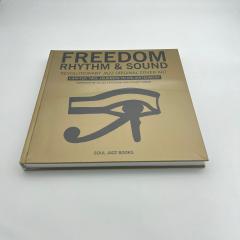
Freedom, Rhythm and Sound showcases the stunning graphic works of independently published jazz record cover designs in the 1960s, 70s, 80s and beyond, from radical jazz musicians such as Sun Ra, John Coltrane, Pharoah Sanders, The Art Ensemble of Chicago and others. This second Freedom, Rhythm and Sound book is a new ‘chapter’, featuring hundreds more unique, rare and beautiful jazz record cover designs.
This book documents the continued development in jazz as African-American artists set out on new journeys to enlightenment, heading out into Europe at the end of the 1960s. The artwork of these (often self-produced) record cover designs during this era reflected their radical agenda, spiritual awareness and singular search for musical and personal freedoms. From raw, DIY aesthetics to lyrical and poetic illustrations, sometimes containing futuristic worlds and ancient landscapes, the designs are always bold, strikingly graphic, and most importantly capture the spirit of the music, giving them a unique beauty. The book also includes sections on African-American poets and writers, Civil Rights and Black Power Movement leaders (Martin Luther King, Malcolm X) and early musical pioneers (Yusef Lateef, Max Roach, Art Blakey and others), all of which helped influence and shape the world of radical and spiritual jazz from the 1960s and onwards to its rebirth today. Since the 1980s, Gilles Peterson has been a pivotal figure in the club scene, renowned for his genre-defying approach to music with jazz at its core. As one of the UK’s most iconic DJs, he has spent over 40 years shaping music trends as a radio presenter, club DJ, producer, and festival curator.
He hosts a flagship show on BBC Radio 6 Music and, in 2016, launched Worldwide FM. He is founder of the Worldwide Festival in the South of France and We Out Here festival in the UK. He runs the label Brownswood Recordings, dedicated to discovering and promoting new talent and bringing fresh voices to the global stage. Stuart Baker founded Soul Jazz Records in 1992. For more than 30 years the record company has released over 500 records covering a genre-defying array of non-mainstream musical worlds – Jazz, Reggae, Punk, Latin, Brazilian, Disco, African, Gospel, Acid House and more.
In 2017, part of Stuart Baker’s jazz record collection (much of which appears in Freedom, Rhythm and Sound) was featured and displayed as part of the Soul of a Nation: Art in the Age of Black Power exhibition at Tate Modern in London, and subsequently at The Broad in Los Angeles (2019) and Brooklyn Museum (2019). Soul Jazz Books launched in 2007, a similarly diverse and critically acclaimed publishing house with graphic art, culture and photography titles that include ‘Voguing and The House Ballroom Scene of New York’, ‘Dancehall – The Rise of Jamaican Dancehall Culture’, ‘Yo! The Early Days of Hip-Hop’, ‘Freedom, Rhythm and Sound – Revolutionary Jazz Cover Art 1965-83’, ‘Punk 45 – The Singles Cover Art of Punk 1976-80’ and others. Reviews of the first Freedom, Rhythm and Sound: “A remarkable book” The New Yorker “If there can be such a thing as a revolutionary coffee table book, Freedom Rhythm & Sound is it―a chance to wallow in the Afrocentric visual language of the non-mainstream black jazz vinyl of this extraordinary fertile and creative period.” Eye “Like the uncompromising music they represent, all the covers broadcast a sense of bold, brazen ideology” Pitchfork “A definitive account of a complex passage of cultural upheaval.” The Independent “For decades, no one was sure how to refer to this extraordinary music.
Calling it ‘fire music’ does justice to its incandescent spirit, still burning from the pages of a book that preserves the memory of a special time.” The Guardian “These sleeves are the original independent legacy to America’s premier art form – Jazz. In terms of African-American cultural expression they are part of a long line of thought that was charged in the 1960s by John Coltrane, Martin Luther King, Ornette Coleman, Malcolm X and others” The Wire “A hefty compendium of radical jazz cover art” Mojo
GATEFOLD DOUBLE VINYL WITH SPOT UV FRONT COVER
Following the skewed-unself-help-brilliance of ‘Sus Dog’ (which marked his first full foray into songs, abetted by Thom Yorke), and its companion piece ‘Cave Dog’, Chris Clark returns to the dancefloor’s simple, but no less affecting pleasures, with ‘Steep Stims’.
“I found it hard to pull away from listening to this record, hard to stop making it, I had to remove myself from the Stims and stop enjoying it at some point. The album feels like nature to me. I love it when electronic music feels more naturalistic than acoustic music, more potent, that’s the devil’s trick, the promise of electronic music.” comments Chris.
“I used an old synth - the Virus on all of the tracks. I used it at Mess in Melbourne - run by my friend Robin Fox - I loved it so much I had to buy one when I got back to the UK, it took a while to find. They’re a bit clunky to program but make some of my most favourite sounds.”
‘Steep Stims’ marks a back-to-basics approach, invoking the early years of gung-ho creativity enforced by limitations in technology at the time. “Most of the tracks on this album capture the spirit of making music on old samplers, which don’t have much memory time”, explains Clark. “It reminds me of making ‘Clarence Park’, my first album, where I would have to finish tunes in the session, as they would be saved on floppy disks and I couldn’t easily go between tracks. This new record is just a few synths and a few choice sounds; the writing is the important thing.”
Made quickly, ‘Steep Stims’ reflects the immediate rave energy of his live show, but that’s not to say it’s basic floor fodder, as it’s rife with personality, synth magic, and knack for melody. Although swift and impressionistically captured rather than laboured over, it’s still formidably deft, with plenty of oddball weirdness lurking beneath the dancefloor.
Soft, orange, scorched, brutal, the opening track ‘Gift and Wound’ captures the classic dance music dread / awe / euphoria combo perfectly, before ‘Infinite Roller’ merges sparkly-minimalism with snarling bass and soft sines, which turn more dense and metallic as it progresses.
The melancholic smoke belch of ‘No Pills U’ gives strong classic vibrations, which is belied by its creation, made in just 20 minutes. “I love working quickly sometimes”, comments Clark. “Inspiration hits, rough and ready. It’s off the cuff but also screams ‘don’t gild the lily with nonsense, keep it simple keep it clean’”. Segueing into its elder brother, the piece becomes bigger and beatier on ‘Janus Modal’, where it permutates for over 7 minutes of fluttering, beatific club majesty.
At ‘18EDO Bailiff’ you inexplicably find yourself at a clearing, things have suddenly got much quieter. You enter a decrepit and eerie old house, and as you move through its unsettling interior, you arrive at ‘Globecore Flats’. A real piano tuned to 18 notes per octave gives the pair of tracks a haunted, olde worlde feel, which promptly gets eaten by a huge tech step tearout monster, birthing a strange but exotic beast.
The white hot ‘Blowtorch Thimble’ is all hooktasm-rave-hyper-amen-energy, whilst acidic flute leaps around like Ian Anderson on pingers throughout the catchily simple jump-up lurch of ‘Civilians’.
“‘In Patient’s Day Out’ is like some sort of Morricone-does-kraut-rock-with-drum-machines, but that’s probably just in my head” says Clark. “I made several versions of this then went with the early mix but cranked through some choice outboard because it just had something.”
Drumless, yet still full of exhilarating-big-trance-drama, ‘Who Booed The Goose’ flashes by in stroboscopic fast forward, then ‘5 Millionth Cave Painting’ gives a palate cleanser, letting “the virus with its delicious broken, luxurious reverb have a moment”, before ‘Negation Loop’ swoops down in all its glory, with Clark’s tweaked vocals leading deconstructed trance breakdowns, tape edits and brutal noisebursts.
An antidote to the bombast of its predecessor is ‘Micro Lyf’, which closes the set on a poignant note, of sorts. Muted staccato gives way to field recordings “that gradually put it in this outside space; alien in a meadow somewhere nameless. It feels like a sinkhole. The record kinda swallows itself up and then is gone”, ends Chris.
- A1: Live Gloriously
- A2: From Dust To Dust (Antiquity Age Ambience 1 Peace)
- A3: Ancient Egypt (Antiquity Age)
- A4: Ancient Greece (Antiquity Age)
- B1: Carved In Stone
- B2: Der Sitt Auf Erden (Exploration Age Ambience 2 War)
- B3: The Mongol Empire (Exploration Age)
- B4: The Shawnee (Exploration Age)
- C1: Hope Rising (Modern Age Ambience 1 Peace)
- C2: Para Bellum (Modern Age Ambience 2 War)
- C3: The Mughal Empire (Modern Age)
- C4: Colonial America (Modern Age)
- D1: Mexico (Modern Age)
- D2: The French Empire (Modern Age)
- D3: The Qing Dynasty (Modern Age)
- D4: Siam (Modern Age)
SID MEIER’S CIVILIZATION VII – DER SOUNDTRACK AUF VINYL
Firaxis Games, 2K Games und Laced Records schließen sich zusammen und bringen den epischen Soundtrack von Sid Meier’s Civilization VII erstmals auf Vinyl.
Diese exklusive Doppel-LP präsentiert eine sorgfältige Auswahl musikalischer Highlights aus den verschiedenen „Zeitaltern“ des Spiels – verpackt in kunstvoll gestalteten Hüllen mit historischen Illustrationen aus dem Hause Firaxis.
Der Soundtrack spannt einen weiten Bogen über die Menschheitsgeschichte und Kulturen weltweit – mit orchestraler Wucht, weltmusikalischer Tiefe und eindrucksvollen Chören.
Den Auftakt macht Grammy-Gewinner Christopher Tin mit dem epischen Hauptthema „Live Gloriously“, gesungen in Altgriechisch, Altenglisch, K’iche’ und Sanskrit vom renommierten Crouch End Festival Chorus. Bereits mit „Baba Yetu“ (Civilization IV) schrieb Tin Videospielmusikgeschichte.
Die restliche Ingame-Musik stammt von den langjährigen Civilization-Komponisten Geoff Knorr und Roland Rizzo. Eingespielt wurde sie von internationalen Ensembles wie dem Prague FILMharmonic Orchestra, dem Mongolian State Morin Khuur Ensemble oder der Southern Pine Drum Group – eine weltumspannende Klangreise durch Vergangenheit und Gegenwart.
Ein Must-Have für Sammler*innen, Gaming-Fans und Liebhaber orchestraler Weltmusik.
In the smoggy orange light of a new millennium, the young Deb Demure would take the bus, once a week, from his home in crumbling Hollywood to his grandmother's apartment, nestled in the pastel pristineness of Beverly Hills. During these visits, Deb couldn't help but notice the disconnect between the glow of his grandmother's temple, and the downtrodden, alienated figures that populated the seats of the mass transit that took him there. Week after week, he would observe these characters: fading B-movie starlets, leisure-suited alcoholics and forgotten civil servants. But one fateful commute home, as the twilight waned to the purple Los Angeles night, he realized these figures were not as lost as they appeared - there was a nobility in their failure, reflective of the dignity of the city's vanishing golden era. They were survivors, in need of a voice: a spokesperson for every color of hope and hopelessness, transcendent of gender and time; Drab Majesty became Deb's musical podium for this undertaking. Raised in a music-centric household, Deb would find the time to teach himself to play his father's right-handed guitar upside down and left-handed; an unorthodox fashion from where his earliest understanding of chords and harmony were conceived. Exploring the bins of discarded vinyl in his neighborhood thrift stores, his toolkit expanded with the subterranean sonic gems of the recent past. Influences range from the virtuosic arpeggiated guitar work of Felt's Maurice Deebank and the grittier pop progressions of Red Lorry Yellow Lorry's Chris Reed as well as Steve Severin from Siouxsie and The Banshees. He also studied the harmonic oscillations and utilization of the occult power of vibratory frequency present in New Age sounds of Greek artist, IASOS. In terms of orchestration, he consciously culls from the seaside maximalism of Martin Dupont and mechanized grooves of early Depeche Mode. Like a dualistic pendulum, his vocals swing from a preistly baritone to a choir boy's falsetto reflecting the sepulchral ambiance of church visits with his grandmother. Currently the drummer for Los Angeles lo-fi rock ensemble Marriages and having honed an unorthodox home recording style, Deb sources his sounds from a repository of "mid-fi" synthesizers and other lesser-quality instruments. Following the release of his debut cassette EP, "Unarian Dances", he also shared a split 12" with synth pop forefathers, Eleven Pond. During the Spring of 2015, Drab Majesty signed with Dais Records and released his first single, Unknown to the I, as a introduction for his first initial foray into the album format, romantically titled Careless. Written over the course of 2 years, "Careless" is a compendium of songs that have outlasted a malicious burglary of his studio, his struggles with substance addiction, and most recently, the death of his beloved grandmother.
- Morena De Verde Luna
- Recordándote
- Con Sabor Español
- Gitano Rock And Roll
- Olé Cha Cha Cha
- España En Cha Cha Cha
- No Volveré Jamás
- La Ltima Copa
- Winds From Spain
- Ojos Verdes
- Achilipú
- Macarenas Mambo
- Muleros Swing
- Los Piconeros
- Con El Bongó
- Desde El Corral De La Pacheca
Flamenco is a Spanish art, which has always been prone to hybridization with a multitude of musical languages. Therefore, the universe of "flamenco fusion" could well reflect the way in which Spaniards have related throughout history with other cultures. And that relationship may have often been one of dialogue, exchange, respect and crossbreeding. Among the circumstances that could have favored the traditional mestizaje of flamenco art is the open character of the south of the Iberian Peninsula, to all the civilizations that have settled in its territories; the encounter with America in 1492, and the brotherhood with the Spanish-speaking countries; that the Casa de contratación de Indias, the entity that regulated the transit between Spain and America for centuries, was founded in none other than... Seville! (and olé); without forgetting the FUNDAMENTAL African contribution, brought to America by millions of black slaves throughout the 400 years of the slave trade. Pícaro vol. 4 is an excellent example of how some Spanish flamenco musicians knew how to take advantage of the fashion of other styles and rhythms coming from outside Spain, creating a new sound universe and incorporating them into their repertoire. Undoubtedly, there is a generational replacement of "flamenco Ye-Ye" in Spain with artists like Rosalía or C. Tangana, although now it will be necessary to modernize "the label". This compilation offers us a snapshot of the multiple styles of flamenco hybridization that triumphed in the world during the decades of the 50's and 60's of the 20th century. Through its microsurcos we will discover immeasurable flamenco ye yé (track 1), flamenco rock & roll (tracks 3 and 4), flamenco cha cha chá (tracks 6, 7 and 15) or flamenco mambo (track 12), together with other unusual, exotic and impossible mixes of Spanish song with tango arrabalero, bluegrass, easy listening, swing, groove or soul. Always a happy mix, which are brought together with exquisite taste in this vinyl for your enjoyment.
- Puccio Roelens E La Sua Grande Orchestra Tv - Caravan
- Gegè Munari Percussion Modern - Police Man
- Don Marino Barreto Junior- Napolitano D'o Brazil
- Tony Esposito - Pagaia
- Naco - Volando Con Milton
- Rosario Jermano - Grand Oceano
- Tullio De Piscopo - Temptation
- Tony Cercola - Lumumba
- Gabriele Poso – Ritmo Italiano
- Agostino Marangolo - Certi Giorni Mi Sento Bene, Certi Giorni Mi Sento Male
- Tony Cercola - Lumumba (Clap! Clap! Version)
- Vico Anthony And His Percussion
Black[25,17 €]
Mr Bongo proudly presents Ritmo Italiano ‘Unspoken Sounds of Italian Tamburo’ a captivating compilation of percussive-driven, Italian gems curated by Sardinian multi-instrumentalist, percussionist and producer, Gabriele Poso. A journey into the heart of Italian musical history, it celebrates Italy’s rich rhythmic traditions, showcasing a selection of genre-traversing, Italian treasures from the ‘60s to the early ‘90s. Honouring the timeless rhythms of Italian percussion masters, alongside a brand-new exclusive composition by Gabriele, ‘Ritmo Italiano’ shines a light on the universal, primal language of the drum.
A connection sparked from an early age; percussion has always deeply resonated with Gabriele. It led to years of studying percussion traditions across Cuba, Puerto Rico, and Brazil, crafting his own songwriting skills in the process. An acclaimed producer and compiler, his releases on Yoruba Records, BBE and Soundway Records have garnered global support. Yet a growing need to rediscover the essence of his country’s cultural heritage laid the foundations for this new compilation.
In Gabriele’s own words, “Italy has always been a crossroads of civilizations, with influences from the Mediterranean, North Africa, the Middle East, and Europe converging over centuries. Ports like Naples, Genoa, and Venice played a crucial role as gateways for musical exchange, a melting pot of sounds and cultures brought by sailors, merchants and travellers. These influences blended with Italy’s own folk and religious traditions, creating Italy’s unique and emotionally resonant rhythms.”
Across the 12 absorbing tracks, there’s jazz influences, Italian library music aesthetics and experimental beats mixing with Afro-Cuban and Mediterranean rhythms. It’s a broad selection anchored by the drums. The synth-heavy, ‘80s jazz funk flavours of Gegè Munari's ‘Police Man’, sit side-by-side with the samba-infused ‘Napulitano D' 'O Brasil’ by Don Marino Barreto Jr. Tribal, earthly energy radiates from Naco’s ‘Volando Con Milton’, with Tullio De Piscopo serving up cosmic disco brilliance, and blistering jazz funk mastery coming courtesy of Agostino Marangolo. Taking the name of the compilation, a new original track by Gabriele, ‘Ritmo Italiano’, blends traditional rhythms with contemporary energy, Afro-Latin influences with Italian jazz essence. Recorded live in one take, it captures a raw, unfiltered vibe.
“Each track tells a story, connecting the past with the present, and highlighting the deep-rooted traditions that shape Italy’s rhythms. The collection also offers a glimpse into the diversity of Italian music with a variety of styles from the organic, earthy beats to the more experimental and modern takes on traditional rhythms. It’s a reflection of how these rhythms have not only shaped Italian culture but also influenced global music.”
- A1: Free State Fence
- A2: The Surfer
- A3: Prayer For Civilisation
- A4: Hillbrow 1
- A5: Hillbrow 2
- B1: Hippo In Town
- B2: Independence Day
- B3: Don't Dance
- B4: Crossed Cheques
- B5: September 1984
This is an album made during a crucial period in South Africa’s history during which there was a palpable feeling of a slow turning towards the collapse of the apartheid state side by side with an increasingly well-organised culture of resistance through the formation of the United Democratic Front (UDF) and various affiliated bodies. However, as a result, there was increased pushback from the state security establishment, a turning to dirty tricks and the formation of hit squads whose members murdered and tortured many of our friends and created chaos throughout South Africa as well as neighbouring countries.
This album is situated in this political environment however it took advantage of the new do-it-yourself music technologies available at that time. Technologies that made it possible to make and release records without interference from traditional record company executives. Two musician friends of mine pooled their resources after their respective bands had broken up. Ivan Kadey (National Wake) and Lloyd Ross (Radio Rats) built an 8-track recording studio control room and fitted it out in a second hand caravan and called it Shifty. They parked it in a garage attached to the only house left in a demolished and derelict mining village near Soweto on the outskirts of Johannesburg.
All the work on this album was completed there, mainly after hours and mostly alone where I enjoyed an exhilarating freedom to develop a whole new set of musical skills and ideas, incorporating my love of a wide range of music I’d grown up with. Influences of 1970s progressive/kraut/and psychedelic rock combined with mbaqanga bass styles, early reggae/dub and Indian tabla rhythms. Stockhausen, early Zappa and Holgar Czukay were radio text and shredding influences, and Chris Cutler’s band Henry Cow & Art Bears helped me see a way to political expression. Mostly though was the exciting post-punk and no-wave music coming through to us from Europe and America: bands like This Heat, the Mekons, Raincoats, Sonic Youth and Pere Ubu were immensely important to me as was my reading from the period: J.M.Coetzee’s first 3 novels are strong influences on Free State Fence; the stark landscape, superstition, ritual, and sexual repression are in many of his settings. JG Ballard was a constant presence throughout that period, especially whilst living in such a surreal environment, surrounded by mine dumps, but mostly I think the whole French post-modern philosophical movement—Derrida, Foucault and of course, Baudrillard’s Simulacra and Simulation—set out a new sense of possibilities, possible ways to express oneself, ways to think, and ways to try and analyse the political intersection of public and private life. Most important at that time was the influence of sound recordings I had made and experiences garnered from working as a sound recordist on documentary films. These financed my work and later the studio and were consistent employment throughout the 1980s. Film work also enabled me to experience much of South Africa that was hidden from most. The track Independence Day is a good example; drawn from some time spent in the rural homeland of Venda. This then was the first full length Kalahari Surfers album, completed in summer of 1984 it was taken to EMI pressing plant but rejected by the cutting engineer as being ""political, pornographic and anti religious"". Chris Cutler at Recommended Records took up the challenge and released the album through his label. He wrote the original liner note
- Golem
- Haunted Blue
- Crown Yourself With The Stars At Night, Sorrow Comes Ev
- The Hearing Trumpet
- Soft By, Soft Slow
- Rana Locusta
- Animal Poetry
- Pastorale
- It'll Shine When It Shines
- My Nightly Dreams
Folk isn"t exactly a genre and it isn"t always an aesthetic, it"s the lore that"s curled around the roots of myths, ballads and anecdotes, burying itself just inches beneath the surface of contemporary culture. On their debut album, Canzonieri brush away some of the dust from Western civilization, excavating forgotten sonorities, philosophies and motifs to figure out what impact this knowledge might have on a chaotic, apocryphal modern reality. Processing familiar acoustic instruments and utilizing an arsenal of idiosyncratic self-built devices, acclaimed artist Emiliano Maggi and musical artist Cosimo Damiano - both members of Italian surrealist quartet Salò - survey the uneven, challenging landscape that surrounds them, calling attention to the conflicts and illusions that underpin art in all its forms. They take a widescreen view of centuries of musical evolution, juxtaposing simplicity and complexity, past and present, city life and the pull of nature to distill the essence of folk - emotional histories that are whispered from person to person.
Mit dem Album “Life Time”, nach dem er wenig später seine bahnbrechende Fusion-Band benannte, startete
Tony Williams 1964 seine Solokarriere bei Blue Note. Der damals 18-Jährige präsentierte sich darauf nicht
nur als enorm druckvoller Schlagzeuger, sondern auch als erstaunlich gewiefter Komponist. Zwanzig Jahre
später kehrte er zu dem Label zurück, um mit einem modernen, akustischen Hardbop-Quintett auf Alben
wie “Civilization” wieder dort anzuknüpfen.
Madronas’ debut LP Erogenous Biome is an amorphous, murky, cathartic offering. A duet of modular synthesizer and winds that’s equal parts doom and ecstasy, it’s the sound of a majestic butterfly emerging from it’s slimy chrysalis just in time to catch the sun setting on the end of days, a bewitching, heavy ceremony, a power-wash of both mind and spirit.
Tracked in one continuous take at Brooklyn’s Heavy Meadow studio, individual tracks were gleaned from the purge and eschew predictable structures, making for a dense, fluid suite of improvisation, like dancing smoke ribbons in the dark. The duo's chosen sound sources are seemingly opposite - Ry Fyan’s modular’s coming from electronic oscillators, Isaiah Barr’s saxophone and various flutes originating with the breath - but the visceral, imprecise, alive quality to the sound of both lends the record a thrilling combination of rapturous harmony and gritty, intense friction.
Opening the session in ritualistic, foreboding fashion, Voluntary lurches to life with rattles and wandering, bassy arpeggios before a suona’s cry signals the seance has officially begun. Ostraca Loam spits explosive modular rhythms and eerie shrieks for the flute to float above, while Detritus Harp smudges mechanical whirring, pensive horn and wind chimes for an untethered drift. Petrified Microdot swells with menacing sci-fi sequences and breathtaking sax runs until they both run out of breath, and Negative Lingam starts out in a panic of breathy riffing before exhaling into one of the most sublime passages on the record. Rhythmic pounding and undulating flutes punctuate Lenticular Shroud, before The Preparation Of The Novel sets the winds aside for a synthesized dual fit for electric dreams. The title track dominates the B-side, it's shimmering levity slowly unfurling to reveal itself as a kind of post-apocalyptic devotional music, deep space drifting grounded by earthly flutes, and Vale Of Cashmere offers an ascetic, contemplative closure, sparse flute and chiming rhythms organic or electronic - by this time it’s hard to know, it doesn’t matter either way.
Erogenous Biome is a world of it’s own, and one Impatience is honored to offer a window into.
RIYL - Senyawa, witchcraft, Colin Stetson , Civilistjavel, Mars (the planet), Finis Africae, raga, Stephen O’Malley, modular synthesizer, Anthony Braxton, Shabaka.
Madronas is Ry Fyan and Isaiah Barr. Fyan is a painter and tattoo artist, this is his first release. Barr is a prolific instigator of the downtown New York scene, producing and playing saxophone in jazz circles with his group Onyx Collective, as a player and/or producer on records by Nick Hakim, David Byrne and Wiki, performing live with William Parker and as part of his projects Universal Space Jam and Cafe Dewanee.
Erogenous Biome was recorded and mastered by Griffin Jennings at Heavy Meadow, Brooklyn.
Vinyl was cut by Beau Thomas at Ten Eight Seven Mastering, Berlin.
Artwork is by Ry Fyan, typography and layout by Nicolas Turek.
Rich Oddie (Orphx) and Dave Foster (Huren/Teste) reunite for their electronic-industrial punk project, O/H.
NO CONTACT LP - is a live compilation that captures the raw energy of their performances between 2011 and 2019. This intense anthology distills the essence of their sound: noise driven electronic power, relentless rhythms, and obsessive vocals. For the first time, this fury is preserved on a double vinyl with a special edition.
Fosters gritty vocals clash with Oddies dark sound
manipulations, reflecting a world on the edge of collapse a bleak view of modern civilization embodied in their
uncompromising music.
Let's dive into the third act of the KR3 Fifth Anniversary
celebration
The last great African rock LP from Nigeria's post civil war underground. Be Nice to the People was recorded in 1977 by Fela producer Odion Iruoje as he chased the runaway success of high school band Ofege. The Western world was in the throes of peace, love and flower power as Nigeria descended into civil war in 1967. The rock scene that developed during the following three years of bloodshed and destruction would come to heal the country, propagate the world-wide ideal of the modern Nigerian, and propel Fela to stardom after the conflict ended in 1970. The members of Question Mark were children when the Nigerian civil war ended and by the time they recorded their only album in 1977 they were college students, chasing rock n' roll dreams as Afro-beat turned to Afro-disco. Theirs is a fiery reminder of a once vibrant scene
- A1: Have You?
- A2: Be Nice To People
- A3: Hey Hey Girl
- A4: Love
- B1: Oh My Girl
- B2: Freaking Out
- B3: Scram Out
- B4: Mary Anne
The last great rock LP from Nigeria's post civil war underground. Be Nice to the People was recorded in 1977 by Fela producer Odion Iruoje as he chased the runaway success of high school band Ofege. The Western world was in the throes of peace, love and flower power as Nigeria descended into civil war in 1967. The rock scene that developed during the following three years of bloodshed and destruction would come to heal the country, propagate the world-wide ideal of the modern Nigerian, and propel Fela to stardom after the conflict ended in 1970. The members of Question Mark were children when the Nigerian civil war ended and by the time they recorded their only album in 1977 they were college students, chasing rock n' roll dreams as Afro-beat turned to Afro-disco. Theirs is a fiery reminder of a once vibrant scene.
Mischievous festa punk meets astral steppas, kalaedoscopic free ambient meets harsh noise, scattered amen breaks with IDM and free jazz trumpets meets the earthly plod of digidub. It can only be Felinto from Sao Paulo.
UTOPIA MILHÃO honors the life forces that allow us to transform the darkness where dreams reside. The album brings a new moment of intimacy for Felinto's musical expression flowing through dirty, raw, dense and brilliant dub fractals, ready to transform unexpectedly into a new shape then another, and another, and another... featuring collaborations with magical people: Sarine (Deafkids), Douglas Leal (Deafkids), Guizado (Afrobombas), Sandra X, Paula Rebellato (Rakta), Lorena Hollander, Yao Bobby, Kiko Dinucci, Paulo Papaleo, Cint Murphy, Rodrigo Lima.
Felinto is a political agitator and musician at the heart of the São Paulo underground - a movement that confronts the various effects of the capitalist system of racial, sexual, ,,,,, and 22222 lawand material oppression.
His provocations range from yoga for children and parenting studies (SACYOGA), theatre (PROJETO CRIOULOS and PROJETO JAMES BALDWIN), web series highlighting the black presence in electronic music in São Paulo (MODULAÇÃO PRETA), reflective groups on gender violence and masculinities, occupation of public spaces for political art q(Coletivo Sistema Negro), artistic curatorship (Residência SOMSOCOSMOS) and studies with sound as a tool in conflict mediation practices. Felinto composes for film, theatre and immersive installations such as MEGACITIES presented at the National Gallery of Victoria, Canada in 2023.
He is currently researching - as part of a masters project in clinical psychology - the collectivised dream realities of black people. A field of action that contemporary anthropology, psychoanalysis and psychology call ONIROPOLITICA.
His interest in affinity groups, autonomous networks of micro-political articulation and penal abolitionism led him to the questions: what do black people dream about within the permanent context of civil war and state violence (like the one in Brazil)? How does this experience create dreams and how does the dream affect the construction of identities beyond the boundaries established by the capitalist unconscious?
UEVPD - Usage/Efficiency/Variance/Platform/Domain - is the solo project of Dominic Goodman, a former member of Mosquitoes and currently one half of Komare.
The self-titled UEVPD debut LP, released on 22nd November via World of Echo, consists of eight sequentially numbered electro-acoustic tracks made over approximately five years, living recordings that have morphed in shape over time, each systematically stripped back to their elemental form before being deemed complete. From the outset, Goodman purposefully deployed a relatively limited array of equipment and adopted a determinedly minimalist approach to composition, a practice in restraint that privileges detail and nuance. Field recordings, made using a combination of dynamic, condenser, contact and electret microphones, geophones and hydrophones, were allied to a basic modular/analogue synth setup, allowing for little in the way of excess or indulgence.
The results are markedly defiant, displaying an expert exercise in control and restraint that lets in little light but plays a great service to space and time. This is patient, claustrophobic sound design that bears out the value in attentive listening, a meditation on the acceptance of passing time, change, growth, death and regeneration. As such, listeners might connect associative lines with the likes of Pan Sonic and Mika Vianio’s solo work, Emptyset and Civilistjavel (who’s Tomas Bodén shows up on mastering duties here), though this remains distinctively Goodman’s vision, a continuation of his interests shown in Mosquitoes and Komare that further pushes out into the murky unknown.
Joe Henry is one of the artists who have shaped the sound of modern American folk and blues music like hardly anyone else. “Civilians”, his 10th studio album, was originally released in 2007. It takes the listener on an intimate journey into Henry’s poetic lyricism and is heavily influenced and inspired by the more melancholic sounds of folk and jazz music. Recorded in Henry’s home studio at the time, the Garfield House in Pasadena, the album has a raw and stripped-back feel, with several of Henry’s close friends and collaborators, like Loudon Wainwright III, Bill Frisell, Greg Leisz, and Van Dyke Parks, joining him in the studio to bring these songs to life. The 2024 reissue edition of “Civilians” features not only the 12 songs of the original release, but also previously unheard bonus material, including intimate demo versions of several songs on the album, as well as the all-new bonus track “Bread & Flowers”. Available on CD and for the first time ever, 2LP Black Vinyl.
- A1: Launaea - Del Mar
- A2: Civilistjävel! - Sjösjön
- A3: Vera Logdanidi - Euphoria
- B1: Mtrl - Orbital Sander
- B2: Svreca - Puro Y Radiante
- B3: Cøre - Charcoal
- C1: Prg/M - Tubolara
- C2: Polygonia - Mvivm
- C3: Irakli - Attention Nr. 5
- D1: Rrose - The Tears Of Applause (2024-2004)
- D2: Joachim Spieth - Purpur
- D3: Ryo Murakami - 8824
- D4: Edanticonf - March 18Th
New SEMANTICA Compilation is about to bright and reflect on already well known directions explored by Svreca’s imprint. Despite the label efforts to hide from any sonic etiquette, still existing a core which will be the SEMANTICA sound identity for a time. 'Iridescent' twist and modulate this heritage which moves gradually from ambient / electronics to techno and set the release directly to S++ category into the SEMANTICA catalogue.
- Call Of The Champions (The Official Theme Of The 2002 Olympic Winter Games)
- Immigration And Building
- The Country At War
- Popular Entertainment
- Arts And Sports
- Civil Rights And The Women's Movement
- Flight And Technology
- Song For World Peace
- Jubilee 350
- The Mission Theme (Theme For Nbc News)
- For New York (Variations On Themes Of Leonard Bernstein)
- Sound The Bells!
- Hymn To New England
- Celebrate Discovery
- Summon The Heroes (Written For The Centennial Celebration Of The Modern Olympic Games, Atlanta, Georgia, July 19, 1996)
"Call Of The Champions is an album by legendary American composer John Williams. The piece of the same name was composed by Williams especially for the Olympic Winter Games of 2002 in Salt Lake City. It is the opening track of this album which features over a dozen original tracks by Williams, plus an additional bonus track: ""Summon The Heroes"", the anthem written for the 1996 Olympic Summer Games in Atlanta. The album also features ""American Journey""; a six-part orchestral composition by Williams that was commissioned by U.S. President Bill Clinton for the 2000 Millenium celebrations in Washington D.C. ""American Journey"" is presented for the first time as a complete concert work on this album.
This album features The Mormon Tabernacle Choir, the Utah Symphony, The Boston Pops Orchestra and the Recording Arts Orchestra of Los Angeles. The album was released as An American Journey in the United States.
Call Of The Champions is available for the first time on vinyl as a limited edition of 800 copies on turquoise coloured vinyl and includes an insert with liner notes by music journalist Jackson Braider.
Civilistjävel! returns with »Brödföda«, the successor to 2022’s »Järnnätter« and his fourth release for FELT. The record features collaborations with Laila Sakini, Mayssa Jallad, Thommy Wahlström, ELDON, and Withdrawn.
Tomas Bodén is a revered figure of the aural murk, known primarily for his work as Civilistjävel. It’s an alias that has spawned a catalogue of self-released peculiarities, featuring music that scorns traditional form, instead opting for unfussed symphonies of ice-hued minimalism; soft murmurs that emanate from his studio in the High Coast of Sweden.
On »Brödföda«, his latest album for Fergus Jones’s FELT imprint, subtle new developments in mood prevail. Across its 75 minutes, Civilistjävel! unveils a breadth of emotions that on previous releases seemed distant. He also invites collaborators on record for the first time: Beirut-based singer Mayssa Jallad mournfully croons on »IV«, »VIII« hosts Coldlight’s ELDON & Withdrawn for an abstracted session of dub-hop murk, Laila Sakini offers a hallucinogenic monologue amidst melodica, sticks & bells playing on »IX« and Thommy Wahlström floats scant acid dub stylings on »VI«. These additions and developments bring a forlorn intimacy to the music, and suggest an ambition that few artists of his ilk strive for.
FELT’s (un)reliable cast of audio ghouls routinely summon the odd, with Civilistjävel! often its primary culprit; »Brödföda« gently modifies this path to pursue some of his and the label’s most quaintly beautiful music yet.
Much time has passed since the Queer Australian/Italian-Armenian, multifaceted artist, Kristian Bahoudian aka Kris Baha, swapped the parched red earth and searing midday sun of the Australian landscape for the brutalist communist-era apartment blocks and slate-grey skies of former East Berlin. Kris is now a fixture in Berlin’s club scene and has toured most of the world as a DJ & live artist with his own unique production style of cyber industrial, EBM, wave, post punk, and early ‘90s IDM mutations. Remixing some of the scene’s most notable artists such as Boy Harsher and techno pop lord Boys Noize, Kris has garnered respect and trust in the electronic music scene for the last 13 years. To respond to the current AI revolution, Kris uploads himself to the cyber ether through his latest project: GHOSTS IN THE MACHIИE.
Across Dual Timelines —
” GHOSTS IN THE MACHIИE ” unfolds as a sci-fi cyberpunk concept project inhabiting dual timelines. In one, we glimpse a trans-humanist future where human consciousness exists as intricate sequences of binary code, entwined and controlled by omnipresent AI systems. In this coded future, a profound awakening stirs among a select few who manage to mutate the code they were governed by, unlocking memories of their history that was erased by the AI. Through this discovery they realize they can traverse temporal boundaries and utilize this power to send warning messages back in time to their former fully human selves. These eerie missives carry a dire warning for humanity, urging them to rectify the course of society before the relentless march of artificial intelligence deprives humanity of its essence. In this terrifying future, humans are rendered mere specters within the digital expanse, stripped of their souls, to become Ghosts In The Machine.
Collaboration with the future self —
The cyber odyssey unfolds from a unique perspective— Kris’s very own future self (his future ghost): a spectral entity endeavoring to caution its present incarnation against the ominous path it treads, attempting to avert a dystopian future.Sonic Alchemy —
A fuse of cybernetic synth waves, hyper-punk, and pulsating drum and bass laid out against the dystopian, industrial sonic landscape of this grim future “civilization”. Each track recounts a new chapter in the gripping narrative, drawing listeners deeper into their own story and the role we all play as a collective society with the future possibilities of unregulated AI.Recorded in Berlin with software and hardware synthesisers. AI was used to assist me with lyric themes, concepts and ideas. I also used a trained AI model of my own voice as backing vocals in ‘Haunting Me’.ll music, words & concepts by Kristian Bahoudian aka Kris Baha and his future ghost,
GHOSTS IN THE MACHIИE
"Civilians" lädt Fans auf eine Reise in Joe Henrys poetische
Lyrik ein. Das Album überzeugt mit einem Mix aus Jazz-, Folkund Blues-Einfl üssen. Begleitet von langjährigen Weƽefährten
kehrt Henry mit "Civilians" zu einem traditionellen SongwritingAnsatz zurück
Joe Henry is one of the artists who have shaped the sound of modern American folk and blues music like hardly anyone else. “Civilians”, his 10th studio album, was originally released in 2007. It takes the listener on an intimate journey into Henry’s poetic lyricism and is heavily influenced and inspired by the more melancholic sounds of folk and jazz music. Recorded in Henry’s home studio at the time, the Garfield House in Pasadena, the album has a raw and stripped-back feel, with several of Henry’s close friends and collaborators, like Loudon Wainwright III, Bill Frisell, Greg Leisz, and Van Dyke Parks, joining him in the studio to bring these songs to life. Now available on 180g black double vinyl for the first time ever, the 2024 reissue edition of “Civilians” features not only the 12 songs of the original release, but also previously unheard bonus material, including intimate demo versions of several songs on the album, as well as the all-new bonus track “Bread & Flowers”.
Much time has passed since the Queer Australian/Italian-Armenian, multifaceted artist, Kristian Bahoudian aka Kris Baha, swapped the parched red earth and searing midday sun of the Australian landscape for the brutalist communist-era apartment blocks and slate-grey skies of former East Berlin. Kris is now a fixture in Berlin’s club scene and has toured most of the world as a DJ & live artist with his own unique production style of cyber industrial, EBM, wave, post punk, and early ‘90s IDM mutations. Remixing some of the scene’s most notable artists such as Boy Harsher and techno pop lord Boys Noize, Kris has garnered respect and trust in the electronic music scene for the last 13 years. To respond to the current AI revolution, Kris uploads himself to the cyber ether through his latest project: GHOSTS IN THE MACHIИE.
Across Dual Timelines —
” GHOSTS IN THE MACHIИE ” unfolds as a sci-fi cyberpunk concept project inhabiting dual timelines. In one, we glimpse a trans-humanist future where human consciousness exists as intricate sequences of binary code, entwined and controlled by omnipresent AI systems. In this coded future, a profound awakening stirs among a select few who manage to mutate the code they were governed by, unlocking memories of their history that was erased by the AI. Through this discovery they realize they can traverse temporal boundaries and utilize this power to send warning messages back in time to their former fully human selves. These eerie missives carry a dire warning for humanity, urging them to rectify the course of society before the relentless march of artificial intelligence deprives humanity of its essence. In this terrifying future, humans are rendered mere specters within the digital expanse, stripped of their souls, to become Ghosts In The Machine.
Collaboration with the future self —
The cyber odyssey unfolds from a unique perspective— Kris’s very own future self (his future ghost): a spectral entity endeavoring to caution its present incarnation against the ominous path it treads, attempting to avert a dystopian future.Sonic Alchemy —
A fuse of cybernetic synth waves, hyper-punk, and pulsating drum and bass laid out against the dystopian, industrial sonic landscape of this grim future “civilization”. Each track recounts a new chapter in the gripping narrative, drawing listeners deeper into their own story and the role we all play as a collective society with the future possibilities of unregulated AI.Recorded in Berlin with software and hardware synthesisers. AI was used to assist me with lyric themes, concepts and ideas. I also used a trained AI model of my own voice as backing vocals in ‘Haunting Me’.ll music, words & concepts by Kristian Bahoudian aka Kris Baha and his future ghost,
GHOSTS IN THE MACHIИE
Dream team trio Better Corners – Valentina Magaletti, Sarah Register and Matthew Simms – have completed a staggering new album Continuous Miracles: Vol. 2 for state51 Conspiracy, and where their debut LP joyfully opened the door to a brand new room, this one strides purposefully inside.
Renowned drummer/percussionist Magaletti (Holy Tongue, Vanishing Twin, Moin), avant rock musician and in demand mastering engineer Register (Kim Gordon, Talk Normal) and multi-instrumentalist and modular obsessed Simms (Wire, MEMORIALS) inject an all-too-rare sense of childlike wonder and joy into their own inimitable collage of experimental rock, wonky dream pop, analog ambient, tape experimentation, avant percussion, modular electronics and noise music.
It is this sense of fun that led to one of the band’s “uncovers”: ‘Modulating De Niro’ began with a solo piano version of Bananarama’s ‘Robert De Niro’s Waiting’ which was then sent on a very long journey through modular synth patches and FX chains until it became the unrecognisable to the original and the majestic beast it is now. The album centres round the colossal 16- minute-long ‘Career Test’, a dynamic trip through glitch-enhanced noise, machine dub and the ambience of amplified rock music, to a transcendent, mind-expanding modern raga.
Like an industrial Gamelan played by a future civilisation who have never heard it, only read about it in ancient books, the song is formed from bowed treated guitars, hypnotic hand drums, water bowl and bells. It also has a suitably macabre genesis, as Register reveals: “I was visiting my aunt's house and slept in her bedroom. In the headboard of her bed are places for curiosities and heirlooms. In these spaces she had box after box of the ashes of pets of hers that I had known over the years…”
Von der Zusammenarbeit mit The Clash und Bob Marley über die Verschmelzung von Genres mit Big Audio Dynamite bis hin zur Moderation seiner eigenen Radioshow auf BBC 6Music, dem Gewinn eines Grammys scheint Don Letts alles erlebt zu haben. Mit der Veröffentlichung seiner Bestseller-Autobiografie "There and Black Again" im letzten Jahr und "Rebel Dread", einem Film, der sein Leben dokumentiert, in diesem Jahr könnte man meinen, er hätte es geschafft. Aber es gibt eine Sache, die der 66-jährige Universalgelehrte nicht getan hat... bis jetzt. Mit der Single "Outta Sync" gibt Letts sein Debüt als Solokünstler und einen Vorgeschmack auf sein Debütalbum, ein berauschender Cocktail aus dubbigen, basslastigen Rhythmen, Island vibes und Spoken Words, die mit melodischen Hooks und Harmonien kombiniert werden. Das Album ist genau das, was man von einem Don Letts-Projekt erwartet. Gäste u.a.: der legendäre Terry Hall (The Specials), Wayne Coyne (Flaming Lips) und die Lover-Rock-Queen Hollie Cook.
Ltd Green Colored
Von der Zusammenarbeit mit The Clash und Bob Marley über die Verschmelzung von Genres mit Big Audio Dynamite bis hin zur Moderation seiner eigenen Radioshow auf BBC 6Music, dem Gewinn eines Grammys scheint Don Letts alles erlebt zu haben. Mit der Veröffentlichung seiner Bestseller-Autobiografie "There and Black Again" im letzten Jahr und "Rebel Dread", einem Film, der sein Leben dokumentiert, in diesem Jahr könnte man meinen, er hätte es geschafft. Aber es gibt eine Sache, die der 66-jährige Universalgelehrte nicht getan hat... bis jetzt. Mit der Single "Outta Sync" gibt Letts sein Debüt als Solokünstler und einen Vorgeschmack auf sein Debütalbum, ein berauschender Cocktail aus dubbigen, basslastigen Rhythmen, Island vibes und Spoken Words, die mit melodischen Hooks und Harmonien kombiniert werden. Das Album ist genau das, was man von einem Don Letts-Projekt erwartet. Gäste u.a.: der legendäre Terry Hall (The Specials), Wayne Coyne (Flaming Lips) und die Lover-Rock-Queen Hollie Cook.
Temple, Bassey, MacLaine and now, Hurt; in a world of Shirleys, the name Sophia Ruby Katz has chosen for her music is perhaps prophetic as it captures her stunningly emotive vocal approach. And whilst Shirley Hurt might be the perfect nom de plume for the creative Toronto-based artist, it’s her self-titled debut album which positions her as protagonist of her own universe.
Traversing sonic landscapes, Shirley Hurt’s vocals ebb and flow like lyrical Ley lines tracking the contours of her own well-travelled map. By the age of 18, Hurt had travelled extensively, having lived in upwards of 20 different apartments and houses, as a result never really feeling “at home” anywhere. At this age was when Hurt found herself in New York, dipping her toes into various scenes and musical realms. The first and only place she ever felt at home, and a partial home-base for her, she travelled between Toronto and New York until the age of 26.When the project she was working on in New York reached a dead-end she returned West, moving in with musicians Harrison Forman (Hieronymus Harry, Zones) and Patrick Lefler (Roy, Possum). Being surrounded by their improvising at all hours, a new approach emerged. “Harrison is a virtuosic guitar player, and I hadn't picked up a guitar in any serious way since I was 16,” she says, “by osmosis I started playing again for fun.” Without agenda, the process grew organically from there.
Hurt and Forman decided to travel across the US and Canada in a trailer for half a year, with the entire album written in the final months of their trip. Hurt had been writing loose ideas here and there but felt blocked creatively. When the pair reached Berkley, they wound up house-sitting for a tuned-in friend who recommended she pray, in a very direct way, to remove the block. “I took her advice and to my surprise it worked. The album was conceptualized and finished within a couple of months.” Shapeshifting in tone and phrasing, Hurt’s music alchemizes the furthest corners of experimental indie folk, pop, and country into a singular sound with elegant unpredictability.
Whilst Shirley Hurt’s lyrical and structural ideas may have emerged on the road, the album was self-produced and recorded at Joseph Shabason (The War on Drugs)’s Aytche studio in Toronto’s West End. It was engineered by Nathan Vanderwielen and Chris Shannon (Bart), and Hurt enlisted collaborators Jason Bhattacharya, Nick Dourado, Patrick Lefler, and Harrison Forman to hone her vision. “I wasn’t sure what was going to happen with the songs until we returned to Toronto,” she recalls. “Joseph and I had been talking about working together after sending across some demos and Jason happened to recommend his studio at the exact same time, so everything came together naturally at that point.”
Whilst her most recent adventures may have seen Shirley Hurt bound for Texas as an official SXSW artist (hand-picked by Gorilla Vs Bear to perform at their own showcase), she currently resides in her native Canada, more specifically rural Ontario, close to friends and family, and is already working on her second album. The ties to lineage are interwoven in the fabric of the music. Hurt’s mother, artist Leala Hewak, instilled a lust for life and innate value of creativity in her from a young age as she explored the role of gallery owner, vintage jewellery show host, mid-century modern furniture expert, real estate agent, painter. Hurt’s father, a civil litigation lawyer and new-wave obsessed music lover with an extensive vinyl collection, introduced Hurt to a wide-range of artists at a young age such as Nina Hagen, Laurie Anderson, Tom Tom Club, and endless others.
In her video for ‘Problem Child’ Hurt’s grandmother walks her through a generationally revered pie-making process. One would be tempted to hear this, and other songs, as autobiographical. Yet, Hurt’s lyrics are rarely pulled from her relationships or personal history––at least not consciously. Rather, they arise from somewhere less tangible or defined. “Lyrics tend to come to me when I am doing non-musical things - washing dishes, brushing my dogs, walking to the grocery store. I have a lot of voice memos on my phone and half-filled notebooks and when I hear something, I have to stop what I'm doing to get the idea down. Usually it’s bits and pieces. It's rare a full song comes to me in one go, but it's great when they do, and those are often my favourites.”
Carving out a space of her own in an all-encompassing universe, Shirley Hurt is the introduction to a long artistic story, and if the journey so far is anything to go by, it will be stippled with evermore unpredictable chapters.
Fifth volume of "The Encyclopedia of Civilizations", Abstrakce's collection of split LPs where selected artists offer their own insight into fascinating ancient cultures. This time the focus is on the enigmatic Babylon, visited by two of the label's favourite electronic bands currently active.
Berlin-based duo Driftmachine take us on a journey between the ancient cities of Akkad, Uruk and Ashur. Astonishing electronics with a superb and precise sound, floating somewhere between modular ambient, leftfield, abstract dub... Every detail has been carefully crafted in this complex architecture. Unconventional tribal rhythms recall obscure rituals, meanwhile warm, dynamic pulses contract and expand, interacting on their journey along the sandy roads of the Mesopotamian basin and leading you into a deep trance.
Glasgow-based project Komodo Kolektif delves into the Babylonian vision of magic through the figures of the Kassaptu (witches and wizards) and the use of Mandragora. A blend of both tribal primitivism and a futuristic vision is provided by their vast arsenal of vintage synths and effects units, eastern metallophones and traditional hand percussion. Deep, psychedelic electronics that capture the spirit of ancient Babylonian sacred ceremonies and their vision of the cosmos.
This deluxe edition includes an extensive booklet with notes and images about Babylon, to help you to immerse yourself in this fascinating civilization while you listen to the music. The sleeve is printed in the old way: letterpressed with metal movable type, as Gutenberg used to do it, on high-quality recycled papers.
Disciples bringt eine Neuauflage des modernen Detroit-Elektro-Klassikers des enigmatischen Projekts NRSB-11 heraus, das in erster Linie eine Zusammenarbeit zwischen Gerald Donald (Drexciya, Dooplereffekt, Arpanet, Japanese Telecom) und DJ Stingray 313 (Urban Tribe, offizieller Drexciya-Tour-DJ, gefeierter Solokünstler) ist. Ursprünglich 2013 als limitierte Auflage auf dem belgischen Label WéMè erschienen, war ihr einziges Album 'Commodified' schnell vergriffen und erfreut sich seitdem großer Beliebtheit, derzeit steht es auf 1.783 Discogs-Suchlisten. Die erste Reissue erscheint als CD mit 3 Bonustrack (NRSB-11 EP aus 2012) und als Clear-Vinyl-2LP-Edition, bei der das Original-Cover im Siebdruckverfahren auf eine PVC-Außenhülle gedruckt wurde, mit den beiden Vinyl-Discs in transparenten Poly-Innentaschen.
Another dream coming true! One of Giuliano Sorgini's finest and most sought-after titles is finally available as an official LP reissue – the first ever – remastered from the original tapes.
Originally released in 1971on the small library music imprint FAMA, which operated as a sub-label of RCA Italy, the record contains the original music written for Scappo per cantare, a small, pseudo-psychedelic 'musicarello' (musical comedy film) broadcast on RAI television and starring, among others, Italian singers Gianni Morandi and Mauro Lusini.
The only credited album artist is Sorgini, but it's impossible not to perceive, in this record, the hand of his close friend and colleague Alessandro Alessandroni.
This should not come as a surprise. In the early 70s, the two composers and multi-instrumentalists had a fruitful collaboration that saw them, under the monikers Braen (Alessandroni) and Raskovich (Sorgini), produce an abundance of works together, most of which have now gained the recognition they deserve. These include, among others, two 7" singles from their band The Pawnshop, three records in the series Alle sorgenti delle civiltà (Folkmusic), the crime/noir library albums Quarta pagina (Usignolo) and Inchiesta giudiziaria (Octopus Records), as well as the LP Tempo Libero (Panda Records), which was released shortly after the record presented here and in some ways drew rhythmic inspiration from it.
While their collaboration remained unacknowledged on the original release of Scappo per cantare (this was not uncommon at the time, especially in the field of library music), the record sounds perfectly in line with other works composed by Alessandroni in the early 70s, such as Complesso Gisteri's Mostra Collettiva (co-written with Oronzo De Filippi), or even a landmark album like Spontaneous, where Sorgini contributed to a handful of tracks.
So, yes, the sheer beauty of Scappo per cantare is the result of an incredible synergy between two heavyweights of Italian library music! Airy and sweeping melodies à la Zoo Folle, psychedelia à la Under Pompelmo, and various percussion instruments played by Sorgini seamlessly blend and fuse with elements and touches provided by Alessandroni.
More specifically, we find Alessandroni's signature, melancholy whistle in "Desolazione"; the peaceful and dreamy sound of his 12-string guitar in "Scogliere" and "Con Amore"; the trademark harmonies of his vocal ensemble Cantori Moderni in the last two tracks mentioned and in "Per cantare"; and his ingenious use of distortion on his Fender Stratocaster in the suspenseful transitions "Concentrazione" and "Fantocci", as well as in the frantic/hypnotic hippie numbers "Mordente" and "Fendente" (as a side note, it is worth remembering that Alessandroni experimented extensively with distortion in the rock-infused album Underground, co-written with De Filippi and released in 1971 under the moniker Braen's Machine, probably a reference to British psychedelic band Soft Machine).
The creative relationship between Sorgini and Alessandroni was so symbiotic that it would be useless to try to identify in more detail their respective contributions to the sound of Scappo per cantare. The alchemy between these two musical geniuses is the key to the album's exquisitely Italian mixture of cheerful lounge, sweet psychedelia and smooth easy listening.
To do justice to the quality of the music, this remastered reissue is enriched by a new artwork by Eric Adrian Lee, who drew inspiration from the psychedelic visual culture of the period in which the album was written and recorded.
- A1: The Last Of Us 00 01:07
- A2: Get Out 00 07:13
- A3: All Gone 00 01:34
- A4: The Quarantine Zone 00 01:45
- A5: Don't Look 00 02:07
- A6: Forsaken 00 00:42
- A7: Breaching The Wall 00 03:44
- A8: Hope 00 00:41
- A9: Haven 00 01:33
- A10: Resolve 00 01:48
- B1: The Swarm 00 02:08
- B2: Long Long Time By Nick Offerman 00 01:12
- B3: It Can't Last (Sunset) 00 01:48
- B4: Raiders 00 01:46
- B5: Longing 00 00:56
- B6: All Gone (Affliction) 00 01:22
- B7: Vanishing Grace 00 01:25
- B8: All Gone (Purpose) 00 01:21
- B9: All Gone (Isolation) 00 00:51
- B10: Warning Signs 00 02:45
- B11: Salvation 00 01:25
- B12: Subterranean 00 02:49
- B13: The Last Of Us (Prevail) 00 00:48
- B14: Bravery 00 01:26
- C5: Left Behind (Together) 00 01:08
- C6: Fleeting 00 00:54
- C7: Vanishing Grace (Devotion) 00 00:51
- C8: Never Let Me Down Again By Depeche Mode 00 04:48
- C9: The Choice 00 01:23
- C10: Left Behind 00 03:11
- D1: All Gone (Embrace) 00 01:30
- D2: Complications 00 02:32
- D3: Collateral 00 01:08
- D4: Resolve (Isolation) 00 01:19
- D5: Unbroken 00 01:28
- D6: All Gone (Elegy) 00 00:44
- D7: Wounds 00 01:23
- D8: The Last Of Us (Vengeance) 00 02:59
- D9: All Gone (In Vain) 00 01:05
- D10: All Gone (Ephemeral) 00 01:48
- D11: The Path 00 01:40
- D12: All Or None By Pearl Jam 00 04:37
- C1: Survive 00 04:32
- C2: A Great Man 00 01:58
- C3: All Gone (Flashbacks) 00 01:10
- C4: Never Let Me Down Again By Jessica Mazin 00 03:29
Der Soundtrack zur HBO-Serie "The Last of Us" basiert auf der beliebten Musik und Klangwelt des gleichnamigen Videospiels. Geschrieben wurde der Soundtrack vom mit einem Academy Award ausgezeichneten Komponisten Gustavo Santaolalla und von David Fleming.Die intime, gitarrenbetonte Klanglandschaft spiegelt die Emotionalität der Serie wider und nimmt die Hörer mit auf die ungewisse Reise durch die USA in einer postapokalyptischen Welt, zwanzig Jahre nach der Zerstörung der modernen Zivilisation durch eine, von einem Pilz verursachte Epidemie.
Based on the critically acclaimed video game of the same name developed by Naughty Dog for the PlayStation® platforms, The Last of Us is written and executive produced by co-creators Craig Mazin (Emmy® Award-winning creator of HBO’s “Chernobyl”) and Neil Druckmann (creator and writer of the award-winning “The Last of Us” franchise and Naughty Dog Co-President).
The Last of Us takes place twenty years after modern civilization
has been destroyed by a viral outbreak. Joel, a hardened survivor, is hired to smuggle Ellie, a 14-year-old girl, out of an oppressive quarantine zone. What starts as a small job soon becomes a brutal, heartbreaking journey, as they both must traverse the U.S. and depend on each other for survival.
The vinyl release to the acclaimed series contains soundtrack
highlights from the show. Featured are score tracks by composer Gustavo Santaolalla, with additional music by David Fleming as well as songs by Depeche Mode, Pearl Jam, Jessica Mazin & Nick Offerman.
The package contains 2x vinyl, standard weight at 140g, 1x green and 1x clear, a double-sided poster of the show’s key art, spot gloss and soft touch on the gatefold and an insert featuring liner notes by Neil Druckmann, Craig Mazin, Gustavo Santaolalla & David Fleming and images from the show.
Hailed as "gospel titans" by Rolling Stone, the Blind Boys of Alabama defied the considerable odds stacked against them in the segregated South, working their way up from singing for pocket change to performing for three different presidents over the course of an 80-year career that saw them break down racial barriers, soundtrack the Civil Rights movement, and help redefine modern gospel music forever.
The five-time Grammy-winners’ latest album, Echoes Of The South, draws its name from the Birmingham radio program that hosted the group’s very first professional performance back in
1944. Pairing traditional spirituals and long-lost gospel classics with vintage soul and R&B tunes, the collection is as moving as it is timeless, transcending genre and era to touch something deep and fundamental about the human condition.
These are songs of love and friendship, joy and gratitude, faith and perseverance. Uplifting as they are, the recordings can feel bittersweet at times, too: 91-year-old Jimmy Carter retired from performing following the sessions, while two longtime members, Paul Beasley and Benjamin Moore, Jr., have since passed away. Despite the losses, the Blind Boys of Alabama show no signs of slowing down.
“The spirit of the Blind Boys isn’t about what you can’t do it’s about what you can do,” says singer Ricky McKinnie. “As long as we stay true to that, as long as we sing songs that touch the heart, this group will live on forever.”
The most honored and revered group in Gospel music.
Winners of 5 GRAMMY; including Lifetime Achievement.
Echoes of the South brings the group back to Muscle Shoals, Alabama to record, album produced by
Matt Ross-Spang and Ben Tanner, band features Phil Cook, Dennis Crouch and Chad Gamble.
Global touring schedule planned for 2023/2024.
Documentary film to be released in conjunction with the album, book on career to be released in early 2024.
Hailing from the seaside communities surrounding Enoshima, a small island located 50 km southwest of Tokyo, Maya Ongaku is a ragtag collective of local musicians whose brand of earthy psychedelia transcends widely beyond the roots of their inner souls. The name derives not from any kind of ancient civilization, but rather a neologism defined as the imagined view outside one’s field of vision. The band—currently a trio of Tsutomu Sonoda, Ryota Takano, and Shoei Ikeda—finds sanctuary at the Ace General Store, a beachy vintage shop and salon-like space just hidden from sight from the bustling, touristy riverside Subana Street. Between discussions on music and art, curating the vinyl section and manning the register, and chatting up with locals young and old, the members find time to jam and record their spontaneous ideas in the studio tucked away in the back. It’s in this unlikely setting where Maya Ongaku finds its origins, the culmination of what Sonoda describes as 自然発生 (shizen hassei), meaning spontaneous generation, or the supposed production of living organisms from nonliving matter.
Approach to Anima, the group’s debut album released on Guruguru Brain, finds Maya Ongaku building a foundational groove while tapping into their innermost psyche. Sonoda’s malleable guitar and vocals, Takano’s sinuous bass lines, Ikeda’s floating woodwinds, and a sprinkling of delicate percussion—all coalesce into an aural experience that’s assertive yet abstract, calm but unsettling. The slow building, sax-laden “Approach” serves as an introduction to Maya Ongaku’s world, while the appropriately-named “Water Dream” floats its way toward the gentle finale of “Pillow Song.” It’s a concise distillation of their many interests and influences, from Neo-Dada and Fluxus, to where contemporary art intersects with the development of modern recording technology in the ‘60s and ‘70s.
As the title suggests, Approach to Anima is not intended to be a terminus; it’s merely the beginning of an exploration. The three childhood friends that comprise Maya Ongaku are always looking beyond the confines of the idyllic but rapidly gentrifying enclave of their beloved Enoshima. Feeding off of the energy that still radiates from the triumphant, decade-long journey of their label bosses’ band Kikagaku Moyo, who rose to global prominence from scrappy beginnings busking on the streets of Takadanobaba, they hope to go wherever inspiration takes them, to anywhere around the globe where their music can find a home.
Ultimately, Maya Ongaku’s uninhibited world-building will make it possible for us to see the unseen, expand the possibilities of the naked eye—all through the unbridled vibrancy of their music.
Als The Murlocs mit den Aufnahmen zu ihrem siebten Album begannen, hatten sie die Vision, ein typisches Country-Rock-Album zu schaffen - eine Sammlung von sublimen, sanften Songs, die von kultigen Alben wie 'Sweetheart of the Rodeo' und 'Exile on Main St' inspiriert sind - aber die Platte nahm bald ihren eigenen, unbändigen Charakter an. Gespickt mit The Murlocs' unverkennbarem Garagen-Punk verwandelt 'Calm Ya Farm' die Konventionen des Country-Rock in ein frei fließendes Album, das die frenetische Energie des modernen Lebens in sich trägt.
- Col. LP: (Olive Green And Bone Mix Vinyl)
Tape
Lael Neale still has a flip phone and there were no screens involved in the creation of her new record Star Eaters Delight. The album is her second for Sub Pop and reveals an expansion of her sonic collaboration with producer and accompanist Guy Blakeslee. In April of 2020, in the wake of transformations both personal and global, Lael moved from Los Angeles back to her family's farm in rural Virginia. Looking at the world from a distance and getting in tune with her own rhythms, she wrote and recorded steadily for two dreamlike years, driven by a need to make order out of chaos. Forged in isolation, Star Eaters Delight is a vehicle for returning, not just to civilization, but to celebration. She says, "Acquainted with Night (recorded in 2019, and released in 2021), was focused inward, amidst the loud and bright Los Angeles surrounding me. It was an attempt to create spaciousness and quiet reverie within. When I moved back to the farm, I found that the unbroken silences compelled me to break them with sound. This album is more external. It is me reaching back out to the world, wanting to feel connected, to wake up, to come together again." Album opener and lead single "I Am The River" melts the ice with a dynamic explosion of minimalist transcendental pop clearly descended from the Velvet Underground's branch of modern music's family tree. Blakeslee's spare yet cinematic arrangements create an ambient space in which Neale's clear and unaffected voice can explore familiar themes in an unexpected way. Subtle but potent references to Shakespeare, Emerson and the Bible (which she hasn't read) swirl together with deeply personal musings and touches of wry humor, always more optimistic than cynical. While this is a record about polarities- country vs. city, humanity vs. technology, solitude vs. relationship - the deeper intention is to heal; to come to terms with our differences and put the broken pieces back together again. Lael's affinity with the Transcendentalists has to do with her quest to hold onto sovereignty over her own mind. In a time when our devices are constantly flooding us with information, opinions and propaganda, Lael is intentional about what she takes in - hence the flip phone and the cassette recorder. Neale identifies as a minimalist "not because I don't like things, but because I value freedom more."
Gold Vinyl
Lael Neale still has a flip phone and there were no screens involved in the creation of her new record Star Eaters Delight. The album is her second for Sub Pop and reveals an expansion of her sonic collaboration with producer and accompanist Guy Blakeslee. In April of 2020, in the wake of transformations both personal and global, Lael moved from Los Angeles back to her family's farm in rural Virginia. Looking at the world from a distance and getting in tune with her own rhythms, she wrote and recorded steadily for two dreamlike years, driven by a need to make order out of chaos. Forged in isolation, Star Eaters Delight is a vehicle for returning, not just to civilization, but to celebration. She says, "Acquainted with Night (recorded in 2019, and released in 2021), was focused inward, amidst the loud and bright Los Angeles surrounding me. It was an attempt to create spaciousness and quiet reverie within. When I moved back to the farm, I found that the unbroken silences compelled me to break them with sound. This album is more external. It is me reaching back out to the world, wanting to feel connected, to wake up, to come together again." Album opener and lead single "I Am The River" melts the ice with a dynamic explosion of minimalist transcendental pop clearly descended from the Velvet Underground's branch of modern music's family tree. Blakeslee's spare yet cinematic arrangements create an ambient space in which Neale's clear and unaffected voice can explore familiar themes in an unexpected way. Subtle but potent references to Shakespeare, Emerson and the Bible (which she hasn't read) swirl together with deeply personal musings and touches of wry humor, always more optimistic than cynical. While this is a record about polarities- country vs. city, humanity vs. technology, solitude vs. relationship - the deeper intention is to heal; to come to terms with our differences and put the broken pieces back together again. Lael's affinity with the Transcendentalists has to do with her quest to hold onto sovereignty over her own mind. In a time when our devices are constantly flooding us with information, opinions and propaganda, Lael is intentional about what she takes in - hence the flip phone and the cassette recorder. Neale identifies as a minimalist "not because I don't like things, but because I value freedom more."
- A1: Mercy (Feat Laurel Halo)
- A2: Marilyn Monroe's Leg (Beauty Elsewhere) (Beauty Elsewhere)
- A3: Noise Of You
- B1: Story Of Blood (Feat Weyes Blood)
- B2: Time Stands Still (Feat Sylvan Esso)
- B3: Moonstruck (Nico's Song)
- C1: Everlasting Days (Feat Animal Collective)
- C2: Night Crawling
- C3: Not The End Of The World
- D1: I Know You're Happy (Feat Tei Shi)
- D2: The Legal Status Of Ice (Feat Fat White Family)
- D3: Out Your Window
Violet Vinyl[25,84 €]
For nearly 60 years, John Cale has been reimagining how his music is made, sounds, and even works. MERCY, Cale’s first full album in a decade, moves through true dark-night-of-the-soul electronic torment toward vulnerable love songs and hopeful considerations for the future with the help of some of music’s most curious young minds. Cale has always searched for new ways to explore old ideas of alienation, hurt, and joy; MERCY is the latest transfixing find of this unsatisfied mind.
John Cale announces MERCY, his first new album of original songs in a decade, out January 20th via Double Six / Domino. For nearly 60 years, or at least since he was a young Welshman who moved to New York and formed The Velvet Underground, Cale has been reinventing his music with dazzling and inspiring regularity. There was the bewitching chamber folk of Paris 1919 followed instantly by the gnarled rock of Fear, the provocative and spare song cycle Music for a New Society followed more than 30 years later by mighty and unabashed electronic updates. Once again, here is Cale, reimagining how his music is made, sounds, and even works. His engrossing 12-track MERCY moves through true dark-night-of-the-soul electronics toward vulnerable love songs and hopeful considerations for the future.
On MERCY, Cale enlists some of music’s most curious young minds: Animal Collective, Sylvan Esso, Laurel Halo, Tei Shi, Actress. They’re only some of the astounding cast here, brilliant musicians who climb inside Cale’s consummate vision of the world and help him redecorate there. Cale turned 80 in March, and he’s watched as many peers have passed away, particularly during the last decade. MERCY is the continuation of a long career’s work with wonder. Cale has always searched for new ways to explore old ideas of alienation, hurt, and joy; MERCY is the latest transfixing find of this unsatisfied mind.
The writings and recordings that shaped MERCY piled up for years, as Cale watched society totter at the brink of dystopia. Trump and Brexit, Covid and climate change, civil rights and right-wing extremism—Cale let the bad news of the day filter into his lines, whether that meant contemplating the sovereignty and legal status of sea ice melting near the poles or the unhinged arming of Americans. Lessons from a life (still being) richly lived floated to the fore, too, nodded to on the previously released “NIGHT CRAWLING.” If we’re always regretting our past, aren’t we conscripting ourselves to permanent disappointment?
During “STORY OF BLOOD,” after the piano prelude gives way to a frame-rattling beat and synthesizers that feel like sunshine splashed across a snowfield, the voices of Cale and Weyes Blood’s Natalie Mering slide past one another, two phantoms trying to find a partner amid the modern din. “Swing your soul,” they both sing in aspiration. In the final verse, Cale remembers this existence is not just about himself. “I’m going back to get them, my friends in the morning. Bring them with me into the light.” The accompanying video by Emmy-winning director Jethro Waters is a mix of disturbing and serene featuring both Cale and Weyes Blood. Its deep tones and religious images emphasize the track’s dark, spiritual mood.
Cale elaborates: “I’d been listening to Weyes Blood’s latest record and remembered Natalie’s puritanical vocals. I thought if I could get her to come and sing with me on the ‘Swing your soul’ section, and a few other harmonies, it would be beautiful. What I got from her was something else! Once I understood the versatility in her voice, it was as if I’d written the song with her in mind all along. Her range and fearless approach to tonality was an unexpected surprise. There’s even a little passage in there where she’s a dead-ringer for Nico.”
Strut present the first ever compilation of Balka Sound, bringing together their influential 1980s recordings, Hailing from Congo-Brazzaville and led by revered vocalist and ngonfi player, Nkibi “Lusialala” Albert, Balka Sound created their own unique musical world, re-imagining traditional Congolese Balka rhythms with electric guitars, electric bass and drums, alongside the traditional 5-string ngonfi.
Nkibi Albert had risen to fame in 1972 with his solo hit ‘Ah Lusialala’ and Balka Sound was created to bring the sound of Balka, a folk style from the Beembe people, to modern life and an international audience. With its roots in slavery and colonialism rumba was dominating the music scene in Congo while the philosophy of Balka Sound was to find its inspiration directly in local country life, to associate the modern and the traditional and to revive folk traditions that were dying. Founder member Henri Nsika Nkaya explains, “it was intended to be an update, a unification and an internationalisation of Congolese cultures.”
In 1979, during a festival organised by the Centre Culturel Français, the band won a recording deal to release their first album: Le 1er son du Balka, Lusialala et ses amis, recorded in just one take. Their success led to a second LP, Tu Kine Balka, recorded in Kinshasa in 1982. A third album in 1984, Afro Musik Creation, featured a more modern studio production sound. Their songs drew from traditional folk tales and parables, life lessons and the damage caused by rural exodus to the cities. By 1985, Balka Sound were working full-time with residencies at Chez Tantine Clara in Brazzaville, a well-known tourist venue, and the Frantel Cosmos Hotel.
In 1991, political tensions were rising in the country; civil disobedience and threats of a military coup were followed by a civil war from 1993 to 1994. The band eventually regrouped and were invited to perform in 1996 at the Palais des Congrès for the Fête National. Unfortunately, on the first day of new fighting in 1997, Balka Sound’s studio was looted and the band were forced to finally disperse.
This first compilation of the band’s music is curated and annotated by Makila Nsika Nkaya in conjunction with Balka Sound and has been fully remastered by The Carvery.
Finally the 4th volume of "The Encyclopedia of Civilizations" is here! This time it is not a split LP, but a collaboration. Modular synth maestro M. Geddes Gengras and left-field pop priestess Leyna Noel aka Psychic Reality join forces to compose together their new project inspired by Zoroaster: M.Goddess. An exquisite modern ambient record mixing leftfield, kosmische, new age, dub vibes... Very original and rich compositions with genius arrangements combining spacey synth sequences, dreamy guitars, modular sounds, weird rhythms... Along the lines of Craig Leon, Conrad Schnitzler, or the Mecánica Clásica's contemporary approach to the kosmische masters. "Zoroastrianism is an ancient religion that is still actively practiced today by a small population of people worldwide and has had a massive influence on western culture. Many things that appear to be integral to western thinking (and thus “wholesome”) indeed have their roots in ancient Iran. Dualities such as good and evil, light and dark, heaven and hell—even paradise is an old Persian word. For this project, we are exploring this Zoroaster moment—set in the bread basket of the Iranian plateau, six to seven millennia before the Common Era—that’s like a cross-fade. The fading of goddess worship and the first strains of the patriarchy. Not the -ism of today’s still-living religion, but the moment when this man Zoroaster came along and created a new religion that centred one god instead of the many. Forcing the divine feminine underground, if not fully occulted, obscured and engulfed into the mainstream enough to be forgotten. Goddesses that before had their own dedicated cults were converted into lesser players. We’re reviving those flames too."
Historical power metal force CIVIL WAR enter their fourth battle with Invaders! Swedish historical modern power metal outfit CIVIL WAR fly the flags of international strife once again with their brand new, fourth album, Invaders, set for release on June 17, 2022 via Napalm Records. The band founded by former members of Sabaton returns with 10 new wartime anthems detailing harrowing stories of sorrow and tales of turbulent triumph from around the globe, as well as human nature itself. Invaders marks the band’s first album with masterful frontman Kelly Sundown Carpenter and formidable shredder Thobbe Englund (ex-Sabaton), and grips with riveting accounts ranging from Viking invasions and the greed of powerful nations to legendary Native American battles and magical Arthurian fantasy – all amid a profusion of enthrallingly dynamic vocals, epic soundscapes and impressive, technical instrumentals. The album starts off with the captivating “Oblivion”, inviting the listener into an apocalyptic world with its exotic, menacing sound, strong vocals and heavy guitar riffs. Packed with epic symphonic power, Invaders continues with the war anthem “Dead Man’s Glory”, telling a story of Irish resistance – fighting to preserve their way of life against a Viking invasion. The album rages on with the retelling of a legendary Native American victory at the Battle of the Wabash on the fast-paced “Invaders” and then settles into the pulsating, atmospheric “Heart of Darkness” before arriving at “Andersonville” – recounting the horrors of Confederate prisoner-of-war camp Andersonville Prison through the letters of a Union soldier to his wife. This song soars as a massive power ballad with heart-rending symphonics, choirs and emotive vocals. “Battle of Life” delivers the grand finale of Invaders as a pummeling, fiery power metal pinnacle, summoning listeners of all walks of life to persevere and call on inner strength in times of trouble. In keeping with the album’s Native American theme, the Western-inspired heavy metal battle cry “Custer’s Last Stand” sees its 10th anniversary re-recording and re-release as a bonus track, entrancing the listener with Carpenter’s passionate vocal delivery, searing guitar harmonics, keyboard fanfares and tribal drums. With Invaders, CIVIL WAR prove they’ve once again etched a position all their own in the annals of modern power and heavy metal while proving their deft storytelling skill and knack for engaging lyricism. Invaders is a must-listen! .
New album by the Berlin-based musician, composer and producer MIDORI HIRANO aka MIMICOF, entirely recorded using the EMS SYNTHI100 at Electronic Studio Radio Belgrade during an artist residency: contemporary electronic music / ambient for the advanced listener.
Midori Hirano is a Japanese musician, composer and producer based in Berlin. She started learning the piano as a child and later studied classical piano at university. Therefore the music she releases under her own name is based on the use of piano, but yet experimental and an eclectic mixture of modern digital sounds with subtle electronic processing and field recordings. So far, Hirano released 7 solo albums under her civilian name on labels such as Sonic Pieces and DAUW.
Under the moniker MimiCof she explores the realm of more experimental music and detailed rhythmic patterns, combined with an idea of drawing melodic shapes and harmonies. As MimiCof she performed at prestigious festivals and events such as CTM, Heroines of Sound Festival, Boiler Room Berlin and L.E.V. Festival, and was selected by Frank Bretschneider for the first volume of the "Sichten" compilation series on his raster label.
Besides producing her own works, Hirano has composed music for dance performances, video installations and films which have been screened at Berlin International Film Festival, Krakow Film Festival, SXSW Film Festival and HongKong International Film Festival (among others) and remixed tracks by artists including Rival Consoles, Foam And Sand aka Robot Koch, Liars and Pascal Schumacher.
While the last MimiCof album "Moon Synch" (2017, Alien Transistor) was recorded on the Buchla analogue modular Synthesizer at EMS Elektronmusikstudion in Stockholm, her latest effort "Distant Symphony" (the 4th as MimiCof) was created on a different synthesizer: the EMS SYNTHI 100 Synthesizer at Radio Belgrade. All sounds from this instrument were recorded as single sound samples at first, then mixed and modified into three long pieces of music, so that the audience can experience the machine's uniqueness and versatility of sound. Hirano understands this work as a gesture of respect for the SYNTHI 100's character: though a vintage instrument, it has never lost the beauty of its modern sound.
Sugaray Rayford returns with 'In Too Deep', the follow up to his 2020
Grammy® nominated 'Somebody Save Me', an album which also earned
Rayford two major Blues Music Awards for BB King Entertainer and Soul
Blues Male Artist of the Year (2 straight years)
Combining classic soul melodies with funky R & B grooves, raw blues power and
mashed up with modern sensibilities, the album takes on social issues, such as,
PTSD, civil rights and social justice. With vibrantly detailed arrangements tailored
to showcase Rayford's deft portrayals and interpretations, 'In Too Deep' is a
poignant album that seeks to inspire and uplift.
Albumism described Rayford as having "a sound that's undeniably fresh and
inspired," while PopMatters declared it "will appeal to fans of Gary Clark Jr. and
Chicano Batman."
At his core, Sugaray Rayford is a galvanizing uniter. His live shows are a party.
Some conversations may be had, and some self-reflection may occur, but at the
end of the day, people leave feeling a sense of joy and togetherness.
Sugaray Rayford returns with 'In Too Deep', the follow up to his 2020
Grammy® nominated 'Somebody Save Me', an album which also earned
Rayford two major Blues Music Awards for BB King Entertainer and Soul
Blues Male Artist of the Year (2 straight years)
Combining classic soul melodies with funky R & B grooves, raw blues power and
mashed up with modern sensibilities, the album takes on social issues, such as,
PTSD, civil rights and social justice. With vibrantly detailed arrangements tailored
to showcase Rayford's deft portrayals and interpretations, 'In Too Deep' is a
poignant album that seeks to inspire and uplift.
Albumism described Rayford as having "a sound that's undeniably fresh and
inspired," while PopMatters declared it "will appeal to fans of Gary Clark Jr. and
Chicano Batman."
At his core, Sugaray Rayford is a galvanizing uniter. His live shows are a party.
Some conversations may be had, and some self-reflection may occur, but at the
end of the day, people leave feeling a sense of joy and togetherness.
Mixing funk, jazz, boogie, it is released for the first time on vinyl with remastered audio and new liner notes by Lebanese DJ and curator Ernesto Chahoud. In the early 80's, Rahbani created a landmark album, 'Houdou Nisbi' now considered one of the best jazz funk albums from the Middle East. Featuring such cult tracks as "Rouh Khabbir", a remake of the Crusaders' "Soul Shadow" sung by Rahbani
himself, the modern soul of "Bisaraha" and the Brazilian flavoured "For Sure", the album is both effortlessly groovy and steeped in Oriental music. Held as "one of Lebanon's best kept Musical treasures' by Ernesto Chahoud in his notes, the album is a certified Rahbani cult classic.
"Houdou Nisbi," which means "relatively calm", an expression used by news anchors on Lebanese TV to describe the mood during cease-fire in the civil war between 1975 and 1990 - has been remastered for vinyl from the original masters by David Hachour at Coloursound Studio in Paris. The artwork has faithfully been reproduced for the enlarged format. An iconic cover highlighting the strange life
in war ravaged Beirut during the cease-fire and in line with the political stance of Rahbani, a self proclaimed non- religious leftist. Wewantsounds is delighted to bring the first-ever vinyl release of this iconic album to the world.
Limited Picture Vinyl
Fierce electro by Human Rebellion on their first release! A heavy 6 track picture disc Mini album that hits hard and relentless. Dark atmospheres and raw heavy beats that topped with cold and percussive basslines, hypnotic arpeggios, sci-fi textures straight out of their modular and analog synths. Essential stuff for those who like powerful and energetic 90's electro-techno rotted in the early 90's. Beautiful debut release from Belgium!
With governments finally admitting that UFOs do in fact exist, and humanity attempting to heal from a state of recent crisis, the timing couldn’t be more appropriate for the newest addition to the HYPOCRISY catalog: WORSHIP, due to be released Fall 2021 via Nuclear Blast Records. Aptly titled, the album cover shows a mass of humans reaching up mindlessly to the sky as glowing spaceships shaped like the HYPOCRISY crosses sigil beam down to descend upon earthen civilizations and Mayan temples. Designed by artist Blake Armstrong (Kataklysm, In Flames, Carnifex, etc.), WORSHIP’s artwork speaks to the history of the relationship between humanity and extraterrestrials. “They’re coming back to collect,” explains founder and HYPOCRISY mastermind Peter Tägtgren.
A track entitled CHEMICAL WHORE breaches the subject of pharmaceutical addiction, and those who engineer it. “We are all chemical whores. We regularly consume prescriptions and drugs because we think we need it; we use one pill to heal the damage done by another medicine... it’s a vicious cycle.” Musically, it’s the only song that was written by all 3 core members of the band and translates into a recognizable, mid-tempo HYPOCRISY sound much like ERASER or FRACTURED MILLENIUM. Traveling from Sweden to Russia, the band also shot an official music video for CHEMICAL WHORE.
The DEAD WORLD music was written by Peter Tägtgren’s son, Sebastian. “We actually started to write an album together, something like 11 or 12 songs, but we never put any vocals in there and we just sort of set it aside. Then when I started writing HYPOCRISY I realized I really liked the song… it feels fresh. I think my kid got some new blood in there.” While the song comes equipped with a modern feel, the writing is still old fashioned at its core. Going into detail about the illuminati and black ops government, the lyrics examine how miserable these figureheads and theories can make us. “Call it fantasy, call it sci-fi, there are plenty of conspiracies in the world but I find these ones interesting,” explains Tägtgren.
GREEDY BASTARDS is another track outlined by simplicity and catchiness. Chugging riffs encapsulate a sound that almost verges on the realms of thrash while still keeping its feet firmly planted in the world of death metal. The lyrics touch on the greed and methods of control that we see various governments around the world today; how they manipulate people against one another and abuse the masses.
For Tägtgren, the inspiration to write new HYPOCRISY comes in waves. “I believe we were out on tour for another project and I began to get hungry again. I started spitting out some new riffs and when I had 7-8 songs done, I invited the rest of the guys to join me and contribute, and from there we started putting everything together. We had a break for a few months, continued recording, went back on tour… it never stops. There was a lot of jumping back and forth, and then COVID came and things got really weird.”
Tägtgren was one of the many musically inclined who was forced into sudden isolation upon the onset of COVID 19, only for Tägtgren, this is common practice when creating new songs. “A lot of things in the world stopped, and it was time to finish everything I hadn’t finished.” As usual, all recording and mixing took place at Tägtgren’s home studio in Sweden.
It has been 8 long years since the last record, and HYPOCRISY fans can feel the itch. WORSHIP is 11 tracks of precise, ferocious musicianship. Commonly inspired by the fusion of the modern and the ancient, HYPOCRISY has once more found a way to combine innovative ideas with classic sound in order to deliver something metalheads can enjoyably consume with awe and brutal vigor. HYPOCRISY is Peter Tägtgren (Lead Guitar & Vocals), Mikael Hedlund (Bass Guitar), and Reidar “Horgh” Horghagen (Drums).
The Mecánica Clásica project combines modified elements of early electronics, krautrock, ambient, minimalism & fourth world music, generating an interplanetary space where enterprising guitar tones, lush synth sequencing & off-kilter percussion coalesce.
‘Mar Interior’ the new album by Mecánica Clásica is a fusion of kosmische & fourth world music inspired by ancient Mediterranean culture. Loosely translated as ‘Inland Sea’, ‘Mar Interior’ is thematically centred on the history & legacy of the ancient civilizations that proliferated around the Mediterranean Sea.
Augmented by environmental recordings, Mecánica Clásica renew the extensive topographies opened up by early pioneers like Craig Leon, Jon Hassell, Brian Eno & Cluster, in an immense vision of Spanish space ambient. On ‘Mar Interior’ their work expands upon these influences, moving into a shimmering, hypnotic sound world which finds common ground with the likes of O Yuki Conjugate, K. Leimer, Roberto Musci & X.Y.R.
Mastered by Colin Potter (Nurse With Wound)
For Delft-based label Omen Wapta's first release, Japanese musician/sound designer/coder/producer JEMAPUR explores the far reaches of abstract experimental techno on his album Mode Cleaner. Pulling from music made between 2016 and 2020, JEMAPUR demonstrates his distinctive use of glitch, microsampling, live coding, and granular synthesis techniques. The album was made when the producer was drawn to subjects like physics, geometry, murals, ancient civilisations, the logic of nature, and the observation of the universe.
While meditating on the concept of our next album, we listened to the soundtracks of our favorite movies and dreamed of composing our music for the films. What could the film be like, what would be the story, what would be the idea? What would we like to say this time? And one day such work appeared and suddenly for us, it was not a movie. The book “Star Corsair” by Ukrainian science fiction writer, philosopher, and dissident Oles’ Berdnyk emerged from our distant memories. We even remembered the original cover of the old edition of 1971, a copy of which was immediately found, as if sanctifying our idea and adding a touch of eternity to the process. We decided to read the book again and right after that make our soundtrack to it. We began to dive. And it immediately became clear that in the case of Berdnyk it is impossible only to read his works without reading about his life. Therefore, the reading of “Star Corsair” and its sequel “Kamerton Dazhboga” turned into an in-depth study of a unique phenomenon in the Ukrainian spiritual, art, and political space – Oles’ Berdnyk. From the first pages, the book resonated as much as possible with our ideas about true freedom and personal development. An incredible concentration of powerful ideas, subtly set on multilevel spirals of the modeled future intersected with the myth-created past, in projections of bright explosions and degradations of societies and civilizations, in the unconditional possibility of impossible revolutions and eternal deep struggle with systems, in the fire and explosions of liberation ignited by the freethinkers. “Star Corsair” naturally intersected with our feelings and understanding of the interdependence of personal development and inner freedom, with the vision of the world around us and the direct action. It naturally complemented our vision of how, through the inner realization, we can contribute to the implementation of freedom, and then live it in our own lives. And so, this album became not only music for the novel, but also our reflection of the work, observation of our own transformation in the process, and what new ideas and vectors we will formulate for ourselves and offer to those who want to listen to the album.
Rat Life Records is back with more music to accompany the end of the world. Here are six tracks by Roman citizen Alessio Di Mezza (also known as Religius Order) that make you feel like it's the Fall of Rome all over again. Excellent timing, considering the state of modern civilization on this planet right now. Luci Nere is the perfect soundtrack for your Apocalypse Afterparty!
With or without a drink in hand, moderate temperature, no need to jump into the wet. One night AT the pool, not inside. Palm trees or succulents - not far from here, the vegetation has adapted to the situation. A soft rustling: Possibly crickets, probably also the wind. No traffic and certainly no civilization, which right now would probably only disturb with its long agenda of responsibilities. HYPNOSIS AND MUD - Healing hypnosis, healing mud. The half-frustrating, half-liberating feeling of saturated soil between the toes. A state of inner peace. Instead of a voice, you hear primitivist percussive explorations. A groping and grasping of the bare feet, with delicate toes. Abstraction is followed by the concrete: a walk through the ORCHIDEENGARTEN RUSE, an orchid garden close to the Bulgarian town and not far from the Romanian border. Digitally, but not unreal. Perhaps even better than reality - anyone can do that. The (unofficial) soundtrack to this would not only make the Canadian composer Mort Garson happy. A lady‘s shoe kindly looks at us. If you turn around, you arrive on the other side: A LINE HAS TWO SIDES. Conundrum-like images, dissolved one-dimensionality. Candid narrative ambiance. A clarinet calls to duty. Civilization and traffic after all? SUNBEAMS ON YOUR CAR. Urgency, a clamor of voices - both in their best form. Yet again – the clarinet, the blunt reality: ONE NIGHT AT THE POOL. We are still standing here, we probably never left. A three-part journey – with delicate transitions. Three destinations: Now forever united. Dissonant and yet pensive. In the far distance the advertisement for the collected works of Meredith Monk. Hair erect, the little skin nerves contract, goosebumps - at last!
Hologram is the first release from New York Post-Punk legends A Place To Bury Strangers on their own newly formed label, Dedstrange. Hologram is the follow up to their highly regarded fifth album, Pinned, and is a sonic return to A Place To Bury Strangers’ rawest, most unhinged sound. With songs addressing the decay of connections, friendships lost, and the trials and tribulations of these troubled times, Hologram serves as an abstract mirror to the moment we live in. Written and recorded during the on-going global pandemic and in the midst of the decline of civilization, Hologram is a sonic vaccine to the horrors of modern life.
Cuernavaca / Stateville / Frankincense And Myrrh / Apsara / Ancestral / Spin / Zincali
Approaching his eighty-fifth birthday, sharp and lean, Phil Cohran lives a couple of blocks from the lake on the north side of Chicago. His modest apartment is filled with a palpable richness. His cornet and trumpets, zithers, French horn, harp and frankiphones (an electric kalimba of his own invention); his beloved telescope; African art; a mural of the Chinese monastery where Muslim monks bestowed on him the name Kelan ('holy scripture'); hand-printed posters from the culture wars of 1960s Chicago; all reflect a life dedicated not just to music, but also to science and astronomy, to history and activism. In its range of subject matter the track-list of Kelan Philip Cohran & The Hypnotic Brass Ensemble embodies this invigorating and all-embracing curiosity: a Mexican hill-town filled with perfume and flowers... an Illinois state prison where Cohran taught inmates in the 1960s... heavenly dancers in the temples of Cambodia... a tribute to a sixteenth-century Venetian musicologist. Welcome to the musical world of Kelan Philip Cohran.
Cohran was born in Mississippi and grew up in St Louis. In the immediate post-war years St Louis was a jazz heartland, home of stalwarts like Clark Terry and Oliver Nelson (both of whom he played with), not to mention a genius called Miles Davis. In 1950 Cohran moved to another heartland, Kansas City, where he played trumpet in one of the hardest swinging swing-groups, led by Jay McShann (who famously had given Charlie Parker his first job). With McShann he spent 'the best year of my life', touring as far as Mexico and playing proto-rock'n'roll in Texas with the likes of Big Mama Thornton on vocals. Back in St Louis Cohran led his own group, the Rajas Of Swing, whose show involved wearing red jackets, grey slacks, blue suede shoes and turbans.
Then in the mid-50s he moved to Chicago. He had a small group with a friend, the legendary tenor saxophonist John Gilmore, whose regular gig was to play at Sarah Vaughan's weekly 'birthday' parties, an excuse for the Sassy One to splash the cash and have some fun. ('What, Sarah Vaughan would sing with you and John Gilmore' 'No way, Sarah didn't sing, she was too busy partying.') And in 1959, through Gilmore, he was invited to join Sun Ra's Arkestra, at a crucial period in the evolution of that extraordinary group. Effortlessly wrapping traditions as divergent as boogie-woogie and electronica in an Afro-centric, intergalactic mythology of his own making, Sun Ra casts a huge shadow across conventional narratives of jazz history. 'With Sunny', Cohran simply says, 'I found my own voice'.
You can hear the emergence of this voice on the LP Angels And Demons At Play, recorded in 1960 - Sun Ra's masterpiece from the period. On the track Music From The World Tomorrow, against the urgent whipped and chopped percussion of the Arkestra, it is Cohran's zither, initially bowed and then plucked and strummed, which is the track's magic ingredient. More profoundly it was Sun Ra's example - his defiant self-confidence and sense of purpose - that set Cohran on his own (to quote another Ra composition) 'pathway to unknown worlds'. Indeed this spirit of self-belief led Cohran to turn down the invitation to accompany the Arkestra when Sun Ra moved east in 1961.
Staying in Chicago, Cohran founded the Affro-Arts Theater and performed with the Artistic Heritage Ensemble, recording the group for his own Zulu Records imprint. (Co-members went on to become Earth Wind & Fire; Cohran taught the group's leader Maurice White the mysteries of the frankiphone). The AACM, a musicians' collective of immense influence and importance, had its first meeting in Cohran's front room. With Oscar Brown Jr and Gene Page he wrote and performed in a show celebrating the nineteenth-century Afro-American poet Paul Lawrence Dunbar. He taught music tirelessly in schools and prisons. His studies into music theory and history led him to the discovery of a key book in his life, Gioseffo Zarlino's treatise on harmony, published in Venice in1558. Astronomy is another passion and another area of expertise. One of the gems of the Cohran discography is African Skies, with its lovely harp playing, commissioned by the Chicago Planetarium in 1993.
In Chicago he also raised a large family. Many of his children have gone on to become professional musicians; eight of them are the Hypnotic Brass Ensemble. For each of them, their first teacher was their father, who famously insisted on giving them music lessons not just for several hours after school, but for several hours before school as well. Their father's music was all around them as children; they all vividly remember lying in bed at night not being able to sleep because their father was rehearsing with the Jazz Workshop downstairs.
For the Hypnotic Brass Ensemble, the voyage to where they are now - whether tearing up festivals from Glastonbury to Melbourne, or touring with Gorillaz, or recording their first album on Honest Jon's - has involved a necessary stepping away from their father's shadow. Phil Cohran is the first to recognise this, happily allowing their sound - heavy on the funk, with the urgency of hip hop never far away - to blossom.
But likewise this album is for all of them a natural step. Recorded in Chicago in June 2011, the idea was beautifully simple - 'my music and their band' as Phil puts it, 'we don't have to rattle on more than that'. Only to point out perhaps that here - in the majestic surge of Zincali, for instance, or in the sheer verve and bounce of Cuernevaca - is music not just filled with the warmth of home. This is music that plumbs the depths and rings with joy.
'Cuernevaca is a town in the mountains south of Mexico City. I was there in 1950 when I was on the road with Jay McShann's band. It's a place close to paradise, a city filled with the fragrance of flowers. I always wanted to go back... In 1974 I taught workshops at the prison in Stateville, the Big House where Al Capone spent time. There's a huge wall around the prison, and once I took Hypnotic there - ha - to see what the future holds for them... Makeda, the Queen of Sheba, sent a caravan of gifts to King Solomon - a caravan that took more than a day to pass one point - and the main gifts were Frankincense And Myrrh... I wrote Apsara in 1967, when Jackie Kennedy was in the news with her visit to the temple of Angkor Wat in Cambodia. Apsara were celestial beings, dancers who brought forth the civilization of ancient Cambodia, by dancing in the holy nectar called Amrita... Ancestral is a meditation drone written for my Friday-night residence at the Ethiopian Diamond Restaurant in Chicago's Rogers Park... Spin is the latest of these compositions. Everything in the cosmos spins, from the smallest objects we can see in a microscope to the largest galaxies. Spin is the motion of all things whether it looks like it or not... Zincali is a name Spanish gypsies call themselves. 'Zin', East Africa; 'cali', the people. One of the offshoots in my research into Moorish Spain has led me to Gioseffo Zarlino, the sixteenth-century master of music at St Mark's in Venice. It's said that Bach lost his sight reading Zarlino's treatise on counterpoint. His greatest composition is his setting of the Song of Songs - 'Nigra Sum', 'I am black'. This is my tribute to Zarlino and to the zincali.'

Unwound’s paranoid and pulsating sixth album, Challenge For a Civilized Society explores the pre-Y2K technological dread of modern punk living. Producer Steve Fisk threads Justin Trosper’s stabbing, discordant guitar in and around Sara Lund’s consolidated drum attack and Vern Rumsey’s relentless, throbbing bass. A vicious and sinister penultimate LP from the ’90s most misunderstood band.
Blackpool based noise rock and punk trio ‘Those Fucking Snowflakes’ are a vibrant clash of political punk, hardcore rock and math rock that has been getting 6music play from the likes of Tom Robinson and Gideon Coe and has a two page feature in the next issue of Vive le Rock magazine as well as props from Jason Williamson of Sleaford Mods.
The band formed as a means to scream the dread and horror faced in these confusing times of our modern society. From the current mess of the UK political system to the intolerance of, well, everything. From race and gender to such simple items as Greggs releasing a Vegan Sausage Roll, the band are shouting about it backed with a tight unique sound and occasional off kilter humour.
‘deploying 1000 volts through the civility of discourse’
The band have self released two EP’s - ‘U Ok Hun?’ and ‘Straight Wealthy White Male Suffrage’ on their own label ‘The Recording Industry Is Dead, Records’.
In 1976 Rolling Stone called prog-rock pioneers Crack The Sky ‘one of year’s most impressive debuts.’ Today, 40+ years later, the band releases a new studio album entitled Tribes, due out in January 2021.
The title track speaks volumes about modern society’s perpetual cultural divide, wherein each side believes its inalienable right to champion the only opinion that matters.
Side 4 of the album includes bonus tracks from Crack The Sky’s catalog, not available on the digital or CD versions.
- A1: L'aventurier (Feat Helena Noguerra & Louis Ronan Choisy)
- A2: Putain Putain (Feat Camille)
- A3: Marcia Balla (Feat Adrienne Pauly)
- A4: Sandy Sandy (Feat Soko)
- A5: Ou Veux-Tu Qu'je R'garde (Feat Emily Loizeau)
- A6: Two People In A Room (Feat Cocoon)
- A7: Dereglee (Feat Melanie Pain)
- A8: Oublions L'amerique (Feat Nadeah Miranda)
- B1: Voila Les Anges (Feat Coeur De Pirate)
- B2: Week-End A Rome (Feat Vanessa Paradis)
- B3: Mala Vida (Feat Olivia Ruiz)
- B4: Anne Cherchait L'amour (Feat Julien Dore)
- B5: Ophelie (Feat Yelle)
- B6: Amoureux Solitaires (Feat Hugh Coltman)
- B7: So Young But So Cold (Feat Charlie Winston)
- B8: Je Suis Deja Parti (Feat Coralie Clement)
The 80s owed everything to the punk revolution ... and betrayed it time and again.
ln 76-77, the incredible explosion of English-speaking bands focused the energies of a whole generation of Western youth - rebels ready to pick up a guitar and use it like a weapon. Yet more than punk music itself, it was the creative burst it triggered that radically shaped 80s pop and heralded an unending stream of inspired performers.
Although we often speak of the British and American golden age of post-punk from 78 to 84, with artists that included Talking Heads, Joy Division, PIL and Devo, France (together with Switzerland and Belgium) joined the movement too. Today, on a new album, the group Nouvelle Vague have paid tribute to this sumptuous "Frenchy" period clothed in the nihilism of punk, along with bitterness fuelled by the economic crisis and, paradoxically, the bewitching spirit of pop.
lts title, Couleurs sur Paris (Colours on Paris) is based on both a famous postcard collection and Oberkampf's 1981 punk anthem, and reflects the period, which oscillated between elation and despair. Written by artists sometimes known as "the modern young people" and including faux naïf electropop nursery rhymes by Elli & Jacno ("Anne cherchait l'amour", 1979), Lio ("Amoureux solitaires" , 1980)
and Etienne Daho ("Week-end à Rome", 1984), along with Lili Drop ("Sur ma mob", 1979) and Taxi Girl ("Je suis déjà parti", 1986), the songs clearly express the hopes and disappointments of the day.
The sense of melancholy suggested by the disenchanted lyrics of "Déréglée" - performed in 1977 by Marie-France, an icon of Paris nightlife - is even more noticeable on the 1981 hit by The Civils, who cynically sang, "Tonight, they're dying in Chad, but l'm buying my dream Walkman" before taking it to the chorus: "The economic crisis is fantastic, decadence is the right feel".
The punk shockwave con also be felt in the music of bands who radically shaped French culture and song. Like Rouen, with Les Dogs ("Sandy, Sandy", 1982), every provincial town and city in France began to produce bands at the end of the 70s and the start of the 80s. Wunderbach's 1983 punk pamphlet "Oublions l'Amérique" was a foretaste of what is now called alternative punk, a genre that won acclaim in 1988 with Mano Negra's "Mala Vida". Indochine, French pop legends for the last thirty years, also encouraged the trend in the summer of 1983 with "L'aventurier", after a first single brimming with the spirit of rebellion, "Dizzidence Politik".
Rita Mitsouko, the duo that emerged from the underground Parisian punk scene of the late 70s, rocketed to stardom in 1984 with "Marcia Baïla". Equally baroque, TC Matic - the first band fronted by Belgian singer Arno - released an ironic, political underground hit in 1983: "Putain, putain". Other artists fuelled a post-punk movement that explored the romanticism of machines and the darkness of new wave, including the cult, much-neglected duo from Nancy, Kas Product ("So Young but so Cold", 1982) and Switzerland's Stephan Eicher, whose "Two People ln A Room" (1985) followed on from "Eisbaer", a hit in a more underground style written with Grauzone in 1981. However, the genre's most influential practitioners were certainly Noir Désir. From their first single in 1987 ("Où veux-tu qu' je r'garde?"), they won mainstream success with their unique fusion of 80s gloom and power rock. Beyond from the meteoric success of Bordeaux's Gamine ("Voilà les anges", 1988) and the subversive spirit of Jad Wio ("Ophélie", 1989), French post-punk reached its climax with the success of Noir Désir, Rita Mitsouko, Stephan Eicher and Manu Chao, whose albums reigned supreme in the 90s French charts. From the underground scene to gold records: the eternal story of pop.
Syrian wedding singer turned global dance icon Omar Souleyman releases his 4th studio album Shlon via Mad Decent / Because Music.
On Shlon (Arabic for “how,” or literally “which color”), Omar Souleyman presents 6 new techno-meets-dabke songs of romance and love — singing poetry of a woman’s lips as sweet as Hillah’s dates on “Layle”; an intriguing woman he watches from afar whose kiss would be worth 10 million other kisses on “Shlon”; a lover ready to offer his beloved anything she wishes under the sun on “Shi Tridin” (“What Do You Wish For?”); a man in admiration of a woman with green eyes and blonde hair on “Abou Zlilif” (“Her Face is Like The Moon”); a song about love that will last forever on “Mawwal”, a traditional — all superimposed on complex techno arrangements by Hasan Alo, and based on the hi-speed Kurdish and Arabic dabke and baladi styles with the exception of “Mawwal” being presented in its traditionally slower pace. Shlon features double keyboard work from Hasan Alo, a fellow native of the Hasaka region in Northeastern Syria who has recently been active in the vibrant nightlife scene of Dubai. Azad Salih, a young Syrian man currently living in Mardin, Turkey, accompanies on saz, with the lyrics and love poetry written on the spot during the album’s recording session by longtime Omar collaborator Moussa Al Mardood - also currently based in Turkey.
Omar Souleyman, who has collaborated with Björk and Four Tet, began his career as a prolific wedding singer, releasing nearly 500 live albums before civil war broke out in his native Syria in 2011. He then moved to Turkey and in 2013 released his Four Tet-produced debut studio album Wenu Wenu via Ribbon/Domino, which NPR called, "...a jam so visceral, thrilling and intense as to make the mysterious matter of earthly borders seem hardly worth the time to contemplate." His 2015 sophomore album Bahdeni Nami (various producers including Four Tet, Gilles Peterson and Modeselektor) garnered widespread critical praise including The Guardian, who proclaimed "It's so fast that the only appropriate way to engage with it is to wriggle your limbs. Melodies are both abrasive and ebullient, chattering endlessly like raucous birdsong," and 2017’s To Syria, With Love via Mad Decent placing Omar firmly in the canon of global electronic music.
Souleyman has bolstered his growing status as a world and electronic music icon establishing an extensive international following after touring widely and performing at major festivals including Glastonbury, Bonnaroo, Pitchfork Paris and Roskilde. Since its founding in 2013, Souleyman has been an advocate for the charity "Our Heart Aches for Syria," which operates in collaboration with Doctors Without Borders. In that same year, he performed at the Nobel Peace Prize Concert in Norway.
- A1: Girls Of Iskandariah
- A2: Night Entertainer (Azef El Layl) (Azef El Layl)
- A3: The Joy Of Lina (Farha) (Farha)
- B1: Dance Of Tenderness
- B2: Jamileh
- C1: A New Candle
- C2: Once A Year (Zourouni) (Zourouni)
- D1: A Flower Of My Imagination (Ya Zahraren) (Ya Zahraren)
- D2: A Night At The Station (Leylet Al Mahatta) (Leylet Al Mahatta)
- D3: Love Of Laura (Ya Laure Houbbouki) (Ya Laure Houbbouki)
The first release in Ernesto Chahoud’s ‘Middle Eastern Heavens’ reissue series for BBE Music, we are delighted to present Lebanese maestro Ihsan Al-Munzer’s 1979 album ‘Belly Dance Disco’.
In late 70's and early 80's Beirut, Lebanese organist, composer and arranger Ihsan Al-Munzer made a series of pioneering synth-driven fusion albums that reimagined Middle Eastern music. The records came at a pivotal time in Lebanon’s musical history of avant garde experimentation that was blossoming, just as the country’s 15-year civil war took hold.
Ihsan Al-Munzer’s first release as a solo artist, ‘Belly Dance Disco’ aimed to fuse ‘Western’ modern music and bellydance to make it more accessible to the local audience in the late 1970s. “I wanted to put a mixture of European beat with Arabic percussion, but I made the European rhythm and harmony very easy to listen to for the Arabic ear – soft and understandable” says Al- Munzer.
Today, the composer’s music has made the return journey back to the West; with tracks on the album featured by hip hop artists such as Mos Def, who sampled Al-Munzer’s composition ‘Joy of Lina’ on his 2009 song ‘The Embassy’.
The 10-track album was released in 1979 on the legendary Voix De L’Orient label, which was also home to pioneering Lebanese composers The Rahbani Brothers. One of the earliest artists to introduce the synthesizer to Middle Eastern music, Al-Munzer leads the band, playing the main melody lines on the Kawai Organ and Solina String Synthesizer. Three of his original compositions feature on the album, alongside creative re-imaginings of Turkish and Arabic folklore and modern classics, pushing the boundaries of bellydance music to chime with the international scene.
Al-Munzer’s five titles from the 1970's and 1980's are part of BBE’s ‘Middle Eastern Heavens’ reissue series, a collection of groundbreaking productions from Lebanon, curated by Lebanese DJ, compiler and music researcher Ernesto Chahoud.
Notes by Natalie Shooter, a music journalist and researcher based in Beirut, edited by Will Sumsuch.
- A1: James Tatum Trio Plus - Introduction
- A2: Lloyd Miller - Gol-E-Gandom
- A3: Morris Wilson Beau Bailey Quintet - Paul's Ark
- A4: Mor Thiam - Ayo Ayo Nene
- B1: Ndikho Xaba & The Natives - Nomusa
- B2: Positive Force, The With Ade Olatunji - The Akrikan In Winter
- B3: Salah Ragab And The Cairo Jazz Band - Neveen
- C1: The Frank Derrick Total Experience - No Jive
- C2: Hastings Street Jazz Experience - Ja Mil
- C3: Ronnie Boykins - The Will Come, Is Now
- D1: Leon Gardner - Be There
- D2: Ohio Penitentiary 511 Jazz Ensemble - Psych City
Vol.8 PT2[26,01 €]
Vol.9[22,14 €]
Vol.13 PT2[23,40 €]
Vol.13 PT1[23,49 €]
Vol.15[26,47 €]
Vol.16[26,01 €]
'Esoteric, modal and deep jazz from the undergound, 1968-77'
Jazzman Records presents the sound of the unsung musicians who – in the midst of the Vietnam War and the fallout of the Civil Rights struggle – created some of the most beautiful Spiritual and meditative music of the era. Sometimes funky, sometimes mellow, but always trying to say something about the world in which we live.
Existing completely under the critical radar and largely ignored or unknown by music fans and critics alike, most of the musicians featured in this album won't be familiar to even the most seasoned aficionado. Their records, frequently turned down by distributors and record stores, saw little attention when first released - and have seen even less since. But in this era of musical apathy, where so many music junkies look to the past for their musical fix, we have re-discovered hidden, obscure and esoteric jazz musicians who looked to the four corners of the earth - and beyond - for inspiration. Here we evaluate Spiritual Jazz – music that is a snapshot of the era after Coltrane, a time which saw the evolution of an underground jazz that spoke about the reform of the soul, the reform of the spirit, and the reform of society: a music which was local and international at once, which was a personal journey and a political statement, and which was religious and secular in one non-contradictory breath.
The music on this album reflects the social and historical forces at work during the closedown of the '60s dream; music made by close-knit collectives and individual visionaries, by prisoners and eccentrics, by mystics and political radicals. It includes music by acknowledged masters, and moments of brilliance by unsung figures known to us from just one or two recordings. It is the jazz music of America in the age of civil rights, brutal repression, political assassination and war; a music that would guarantee the survival of the spiritual dimension in a society that was angry and traumatized, but nevertheless had seen hope of better days to come.
- A1: Geraldo Pino - Shake Hands
- A2: Sonny Okosunds Ozziddi - Dance Of The Elephants
- A3: The Wings - We'll Get Home
- A4: Alhaji (Chief) Prof. Kollington Ayinla - E Ye Ika Se
- B1: Colomach - Kassa Kpa Sama Kpa
- B2: Geraldo Pino - Heavy Heavy Heavy
- B3: Mfb - Beware
- B4: Tony Grey And The Ozimba Messengers - You Are The One
- C1: Sonny Okosuns - Oba Erediauwa I
- C2: The Wings - Single Boy
- C3: Geraldo Pino - Power To The People
- D1: Original Wings - Igba Alusi
- D2: Don Bruce And The Angels - Sugar Baby
- D3: Geraldo Pino - Africans Must Unite
Soul Jazz Records’ Nigeria Soul Power 70 album showcases the influence of funk, rock and disco on Nigerian music during the 1970s. Originally released as a now-long-out-of-print collectors’ 7” RSD box, this fully expanded album release now also includes extra tracks from Sonny Okosuns, Wings, Chief Kollington Ayinla and more. While for many people the fusion of funk and jazz music with Nigerian rhythms and aesthetics began with Fela Kuti and his afro-beat sound, in fact this can be traced further back to the phenomena of the 1960s Nigerian artists and house bands in nightclubs and hotels who interpreted US soul and pop music with a local flavour and none more so than Geraldo Pino, the ‘African James Brown’ who features heavily in this collection. Other similarly inspired Nigerian funk and soul artists featured here included Tony Grey and his Ozimba Messengers and Don Bruce and The Angels. Nigeria Soul Power 70 includes a number of tracks from the group Wings originally known as BAF (Biafran
Air Force) Wings, an army band formed during the Biafran civil war in Nigeria. The groups’ heavy mixture of funk, rock and African styles was popular among many Nigerian groups at the time.
Beneath the shadow of the few Nigerian artists who signed international recording deals in the 1970s – Fela Kuti, King Sunny Ade, Chief Ebenezer Obey – lies of vast wealth of largely undiscovered musical transmutation and cultural cross-pollination, and included here are heavy afro-funk/rock and disco tracks
from artists such as the legendary Sonny Okosuns as well as rare cuts from little-known outside of Nigeria - groups such as Colomach and MFB. Most of these obscure artists signed to major labels in Nigeria in the commercial slipstream that opened up as Philips, Decca and EMI tried to emulate the international
success of the big three international Nigerian artists. Finally featured here is Kollington Ayinla, one of the co-founders of Nigerian Fuji music, who gives us perhaps the heaviest of all tracks on this album. Ayinla is the great moderniser of the Fuji sound and in the late 1970s began adding Bata drums and synthesizers to his authentic music to create a powerful and heavy new fusion of traditional and modernist aesthetics, embracing both new technology and experimentation while rooted firmly in Nigerian historical lineage. Nigeria Soul Power 70 is released as a heavyweight gatefold double vinyl LP (+ free download code),
deluxe slipcase CD and digital album.
- A1: Mindmapper & Fre4Knc - Collessius
- B1: Mindmapper & Fre4Knc - Shutter Angel
- B2: Mindmapper & Fre4Knc - Fenryr
- C1: Loxy & Resound - Civil War
- C2: Theory - Final Confrontation
- D1: Dbr Uk - Stress Levels
- D2: Mindmapper - Orbital Orchestra (Asc Remix)
- E1: Nuage & Eastcolors - Live In Lie
- F1: Nuage & Thrn - Don\\'T Exist (Anile Remix)
- Drops | The Bass-Heavy, Modern-Steppin\\' \\'Stress Levels\\' Back To Back Asc\\'S Eclectic Deep-Space Remix Of Mindmapper\\'S Epic And Cinematic \\'Orbital Orchestra,\\' Out Now On The \\'Without Borders Lp.\\' The Full Fourteen Track Cd Version Of \\'Universal Grooves Lp\\' Is Bundled With Each 12Inch, Featuring An Array Of Tracks From A Spectrum Of Talent Across The Map Including Anile (Uk), Dlvry (Uk), Flatliners (Turkey), Furi Anga (Finland), Lm1 (Uk), Loxy (Uk), Mortem (Poland), Nuage (Russia), And Resound (Finland). A Seamless Story Of The Dog Days Of Summer, \\'The Universal Grooves\\' Lp Is A Refreshing Treat For Any Medium Of Sound
Dutch producers Mindmapper & Fre4knc team up to deliver the 'Martial Manners' EP in celebration of Translation Recordings' tenth vinyl release, which comes on a visually stunning piece of crystal & transparent white vinyl! Up first is 'Collessius,' whose heavy-rolling bassline rushes in with the
force of a tsunami, leaving a wake of dancefloor destruction in its path. 'Shutter Angel' is a futuristic track where tight, snappy breakbeats slingshot back and forth between an electrifying bassline that surges across the airwaves like a beam of focused energy. Mindmapper & Fre4knc
delve into darker territories on 'Fenryr,' whose gritty atmospherics and subterranean low
frequencies deliver a unique and immersive listening experience. They close the EP on a deep, meditative note with 'Mind of Steel' (digital only) where drum edits slice through growling bass riffs with blade-like precision. The 'Martial Manners' EP strikes the perfect balance between dancefloor and experimental to carry on Translation Recordings' ongoing mission to bridge audiences with quality music that can be enjoyed in all listening environments.
---
Translation Recordings is proud to unveil its summer 2012 project capturing all moods sublime with the 'Universal Grooves LP'. A limited press on transparent blue vinyl, this special edition 12inch showcases a diverse sampling of Translation's full album that will not disappoint. The A-side brings the thunder showcasing the heavy hitting, rolling and dubby sounds of Loxy and Resound's 'Civil War' and Theory's calculated genius behind the ragga and amen tear-out, 'Final Confrontation.' Flip to a switch in vibe as DBR
The sensational contribution of the Roman project Fire at work, risen over the millennium end, delivers the next 12 release of the label.
The sounds and visions of the two producers are coming directly from the most radical electronic counterculture's pot, the industrial dimension and the radical sound choice seem to be the best and right way to tell the story of a dystopian reality, a meaningful choice useful to criticise humans and their civilisation. The complex of the Fire At Work production represents an act of cultural resistance, therefore Monolith Records seems to be the right and natural follow up of a long multidisciplinary journey. This release is the meeting point of two generations sharing a similar electronic countercultural background, in the middle of the ruins of a modern world which is nothing but a ripped-off planet, a consumed scenario where the radicalisation of the exclusivity leads the beings to the recurring Post-humanistic alienation. The music journey develops through cuts deliberately violating the borders of genre and style, leaving to the dark decaying soundscapes the duty to shape coherence. The overall dimension of this work floats in a tension between the mental form of the synths and the implacability of the concrete drumming asset, that alternates straight and broken beats merged by the same obsessive character. In order to consistently remark the intention behind the production, the Remix by hypnoskull for 'Re_Sample The Future', a tool shaped by an heavy distorted timber that brings lyrics to clarify the common denominator of the EP: a totalitarian vision of reality involving the rejection of the status quo, together with the roles and the scopes of a totally dehumanised system. The 2.0 Man is unarmed and similar to a cadaver, and his desires and senses are reconciled by a perpetual stream of information, a data replacement of reality. The one way direction streaming can be interrupted by noise, as the element able to distort meaning the unexpected element occurring in the middle between the matrix of the message ed his audience. Given such conditions the style choice becomes part of the concept itself, and it is far from any kind of 'induced' choice.
Lucrecia Dalt's Anticlines is a volume of bodily and geological substrates within poetic theory and sound. It is a place where skins and minerals dissolve and commingle, where gaseous subterranean leaks inflate lungs, where brain cavities echo interplanetary waves bent from passing through atmospheres.
A former geotechnical engineer from Colombia currently residing in Berlin, Dalt's concern with boundaries and edges shape the lyrics and music of Anticlines, her sixth album. Paying careful attention to pace, breath, and texture, Dalt microtonally shifts the distance between speech and song while using traditional South American rhythms to support her contemporary electronic composition.
Lucrecia arrived at the atmosphere of Anticlines after several months of studying and creating new patches for the Clavia Nord Modular, forming a rhythmic feedback flow with it, a Moogerfooger MuRF, and her voice. The overall effect of cavernous space backdroping Dalt's intimate vocal phrasing rewards contemplation, supported in the physical formats of Anticlines by a lyric booklet documenting Lucrecia's collaboration with Australian artist Henry Andersen.
The album opens with Edge,' bordering on a pathological circlusion of self upon other. The lyrics depart from the Colombian myth of El Boraro, an Amazonian monster who turns its victims insides to pulp before sucking them dry and inflating their bodies like balloons to lifelessly float away. Tar' ponders human dependence on earth at the boundary of the heliopause, where to inhale might be like breathing tar. Dalt's distant and obscured vocals end with, we touched only as atmospheres touch.'
The sonic rise and fall of Analogue Mountains' is inspired by martian traces found in Antarctica embedded by meteorite ALH84001, suggesting that we might well be living in mountains transferred from Mars.' The steadily winding music on Concentric Nothings' descends with the lyrical exercise of dissolution let my touch be indistinct and instinctive.'
Interspersed with the lyrical pieces of Anticlines are instrumental interstitials that demonstrate preceding concepts — as if to say, this is what antiforms sound like, and this is what the universe's indifference sounds like.' Dalt's ongoing experiments with visual artist Regina de Miguel support these ideas, their practice allowing the objects of their attention to slip in and out of being.
Mystic of matter, Lucrecia Dalt has previously performed and worked with Julia Holter and Gudrun Gut, her slippery spoken word and performative nature recalling the work of Laurie Anderson, Robert Ashley, Asmus Tietchens, or Lena Platonos. While touching stones, The Thing by Dylan Trigg, Cascade Experiment by Alice Fulton, and Wretched of the Screen by Hito Steyerl are but a few formative scripts that support Dalt's exploration of the betwixt and between.
In preparing a live set for Anticlines, Dalt plans to stage an uninterrupted configuration, like a kind of alienated lecture, aiming for gestures that create tensions with non-existent objects.' Dalt intends to provide meaning and a place for the listener to meditate or relate to the concerns and ideas' she presents.
- Lucrecia Dalt is a Colombian recording artist, songwriter, and producer.
- After studying civil engineering in Colombia, Dalt worked at a geo-technical company for two years and has since lived in Barcelona and Berlin, where she currently resides.
- She has released five solo albums and has collaborated with musicians Julia Holter, Laurel Halo and Rashad Becker, to name a few.
- Dalt has composed for sound design installations and performance pieces for institutions such as the Santa Monica Art Centre, Reina Sofia Museum and the Maisterravalbuena gallery of Madrid, in collaboration with visual artist Regina de Miguel.
- Anticlines is Dalt's sixth solo record, and her first on RVNG Intl., following the release of 2015's Ou.
- Anticlines explores the boundaries and limitations of human consciousness. The album's poetic lyrics were written collaboratively between Dalt and Henry Andersen during a weekend in Brussels, Belgium.
- A1: Heron Dance
- A2: Twilight Song
- A3: Yes—Singing
- A4: Dragonfly Song
- A5: A Homesick Song
- A6: The Willows
- A7: Lullaby—Lahel
- B1: Long Singing
- B2: The Quail Song
- B3: A Teaching Poem
- B4: A River Song
- B5: Sun Dance Poem
- B6: A Music Of The Eighth House
Music and Poetry of the Kesh is the documentation of an invented Pacific Coast peoples from a far distant time, and the soundtrack of famed science fiction author, Ursula K. Le Guin's Always Coming Home In the novel, the story of Stone Telling, a young woman of the Kesh, is woven within a larger anthropological folklore and fantasy. The ways of the Kesh were originally presented in 1985 as a five hundred plus page book accompanied with illustrations of instruments and tools, maps, a glossary of terms, recipes, poems, an alphabet (Le Guin's conlang, so she could write non-English lyrics), and with early editions, a cassette of field recordings' and indigenous song. Le Guin wanted to hear the people she'd imagined, she embarked on an elaborate process with her friend Todd Barton to invoke their spirit and tradition.
For Music and Poetry of the Kesh, the words and lyrics are attributed to Le Guin as composed by Barton, an Oregon-based musician, composer and Buchla synthesist (the two worked together previously on public radio projects). But the cassette notes credit the sounds and voices to the world of the Kesh, making origins ambiguous. For instance, The River Song' description reads, The prominent rhythm instrument is the doubure binga, a set of nine brass bowls struck with cloth-covered wooden mallets, here played by Ready.' According to writer and long-time friend of LeGuin, Moe Bowstern (who pens the liners for the Freedom To Spend edition of Kesh), Barton built and then taught himself to play several instruments of Le Guin's design, among them the seven-foot horn known to the Kesh as the Houmbúta and the Wéosai Medoud Teyahi bone flute.' Barton's crafting of original instruments lends an other-worldly texture to the recordings of the Kesh, not unlike fellow builders Bobby Brown and Lonnie Holley. Bowstern notes, Other musician / makers have crafted their own Kesh instruments after encountering the earlier cassette recordings that accompanied some editions of the book.' Both Barton and Le Guin are sensitive to the sovereignty of indigenous Californians and were careful not to trample the traditions of the Tolowa people who lived in the valley long before the Kesh. You research deeply, and then you bring your own voice to the table,' said Barton. Within the Kesh culture, the numbers four and five shape the lives, society and rituals. Barton composed loosely around these numbers, patiently listening to the land of Napa Valley for signs and audio signals from the natural elements. Todd incorporated ambient sounds of the creek by Le Guin's house and a campfire they built together. The songs of Kesh are joyful, soothing and meditative, while the instrumental works drift far past the imaginary lands. Heron Dance' is an uplifting first track, featuring a Wéosai Medoud Teyahi (made from a deer or lamb thigh bone with a cattail reed) and the great Houmbúta (used for theatre and ceremony). A Music of the Eighth House' sends gossamer waves of the faintest sounds to float on the wind.' Like the languages invented in the vocal work of Anna Homler, Meredith Monk, and Elizabeth Fraser, the Kesh songs and poems play with the shape of voice.
The Music and Poetry of the Kesh cassette was meant to accompany and enhance the experience of reading Always Coming Home. Presented in this edition as a long-playing album, where only traces of the book linger (the jacket offers some of Le Guin's illustration, and a letterpressed bookmark featuring the the narrative modes of western civilization and the Kesh valley is included), the music alone breaking the silence of what might be. It can transport—offering a landscape for imagining a future homecoming. One in which we are balanced, peaceful, and tend to the earth and its creatures. A line from the Sun Dance poem reminds us, We are nothing much without one another.' Freedom To Spend gives new life to the recordings of the Kesh people in the first ever vinyl edition of Music and Poetry of the Kesh, out on LP, and digital formats on March 23, 2018. The LP will include a deluxe spot printed jacket with illustrations from Always Coming Home, a facsimile of the original lyric sheet, liner notes by Moe Bowstern, multi-format digital download code and a limited edition bookmark letter pressed by Stumptown Printers in Portland, OR.
This past Monday, January 22, Ursula passed from this realm to another leaving a life spent building and exploring other worlds while challenging social concepts of the real word she inhabited.
Freedom To Spend had been working under Ursula's enthusiastic endorsement and with Todd Barton, her musical collaborator on Kesh, to give the music that accompanied her 1985 epoch a new life. With the Le Guin family's encouragement to move forward with our planned release, we are humbled to play this small role in sharing Ursula's work.
As Pete Swanson, one third of Freedom To Spend, stated, Ursula's legacy is her work which transformed the world, and this is another piece of the universe that her imagination birthed becoming real.' Listen to A Teaching Poem / Heron Dance' below.
- A1: Moment Of Collapse (Feat. Heidi Vogel)
- A2: Palmares Fantasy (Feat. Hermeto Pascoal)
- A3: Waltz For Hermeto (Feat. Hermeto Pascoal)
- A4: The Blonde
- B1: Montreux (Feat. Hermeto Pascoal)
- B2: Said (Feat. Hermeto Pascoal)
- B3: Tudo Que Voce Podia Ser (Feat. Sabrina Malheiros)
- B4: The Conversation (Feat. Hermeto Pascoal)
For his third album for Far Out Recordings, London based multi-instrumentalist and one of Europe's finest saxophonists Sean Khan ventures to Rio de Janeiro to collaborate with iconic Brazilian polymath Hermeto Pascoal. Taking its title from the escaped slave settlement 'Palmares' in the Northeast of Brazil during the 1600s, Palmares Fantasy is Khan's utopian jazz message for the world, and features Azymuth drummer Ivan 'Mamao' Conti, bassist Paulo Russo, guitarist Jim Mullen, and guest vocals from Brazilian chanteuse Sabrina Malheiros, and Cinematic Orchestra frontwoman Heidi Vogel.
Like Hermeto Pascoal, Sean Khan is a self-taught musician. Never able to afford his original dream of studying at Berklee, and having been turned away from Guildhall School of Music for being 'too raw', he became disillusioned with what he saw as the exclusivity, elitism and dangerous institutionalisation of the jazz world. Yet Sean's love for music and the drive to create never faltered.
Hermeto Pascoal, the man Miles Davis once dubbed the most impressive musician in the world', is a similarly independent artist. A true maverick whose ingenuity and freedom from conventional restraints is so great that he has essentially conceived his own musical language, made him the dream collaboration for Sean.
Aspiring to inclusivity and equality also informs the message in Khan's music. Inspired by the 17th Century settlement of Palmares in Brazil's Alagoas region, which was free from the Portuguese crown's murderous exploitation of South America for a century, Khan notes his fascination with the fact that while majoritively made up of escaped African slaves, many deserter conquistadors also joined the settlement.
Hearing the deep-grooving title track with this history in mind, the listener is transported to a futuristic musical eden, with Mamao's insatiable 10/8 rhythm back-boning Hermeto's wild improvised vocals, rhodes and whistles, while Sean's harmonically brilliant sax and flute add more layers of moody, characterful expression. 'Moment of Collapse' is Sean's poetic study on the uncertainties of modern day western civilisation, delicately presented by the gorgeous vocals of Heidi Vogel and drenched in lugubrious strings and Alice Coltrane-esque harp. The two covers on the album are of Hermeto's own 'Montreux' (on which Hermeto plays solos on a teapot and a pint of water), and an uplifting soulful jazz-funk take on Milton Nascimento & Lo Borges MPB classic 'Tudo Que Voce Podia Ser' featuring the vocals of pioneering nu-bossa voice Sabrina Malheiros.
The recording sessions for the album were part of an intensive and hugely productive eight-week excursion to South America for Far Out boss Joe Davis in the summer of 2016, which also saw the sessions for Azymuth's Fênix and a forthcoming album from Uruguayan fusion legend Hugo Fattoruso.
Fantastic' Gilles Peterson
Loving this!' Opolopo
Thank you!' Sassy J
Proper! Great track.' Colin Dale
this is great!' Yannick Elverfeld (RBMA / Needs Records)
I've enjoyed Sean Khan's earlier releases, but this really seems like he's grown into his fairly considerable talent.' Mark Sampson (Songlines)
His last album was his best so far, but I think this one may be even better.' Laurence Pragnell (Soul Brother Records)
dope!!!' Kyri (R2 Records)
this is great - really cool vibe!' Sam Redmore
wonderful track - can't wait to hear the lp.' Simon Harrison (Basic Soul Radio)
This is very tasty indeed.' Gavin Boyd (Soul Has No Tempo)
Stunning!!!' Mark Milz (Further In Fusion)
Oi Oi' Samuel Lloyd (Balamii Radio)
PRESS / ONLINE
VINYL FACTORY (UK) News (Anton Spice) 09/03/18 online
SOUNDS & COLOURS (UK) News (Gabriel Gahan) 09/03/18 online
THE WIRE (UK) Review confirmed (Joseph Stanard) print
EVENING STANDARD (UK) Review confirmed (Jane Cornwell) print + online
ECHOES MAGAZINE (UK) Review confirmed (Laurence Pragnell) print
LIBERATION (FR) Feature confirmed (Jacques Denis) print + online
MUSIC IS MY SANCTUARY (CA) Premiere confirmed (Mike Jones) online
JAZZ MAGAZINE (FR) Review confirmed (Frederic Goaty) print
SHINDIG! (UK) Review confirmed (Grahame Bent) print
MUSICA MACONDO (UK) Premiere confirmed (Tim Garcia) online
RAWCKUS MAGAZINE (USA) News (Randy Radic) online
KIND OF JAZZ (UK) Review confirmed (Fernando Rose) online
TONART MAGAZINE (DE) Review confirmed (Michael Moehring) print
WORLD MUSIC NETWORK (USA) Review confirmed (Raul Da Gama) online
BADD PRESS BLOG (USA) Review confirmed (Kevin Press) online
ORKESTER JOURNALEN (DK) Review confirmed (Patrik Sandberg) print
LIVE
WORLDWIDE FM (UK) Sean Khan live session confirmed (Gilles Peterson)
RADIO
BBC RADIO 6 (UK) Gilles Peterson - Palmares Fantasy (24/02/18) link
OTHER
BRITISH AIRWAYS On board BA flights (June 2018)
Grammy-nominated Ostinato Records presents "Abu Obaida Hassan & His Tambour: The Shaigiya Sound of Sudan" in a gatefold LP packaging with vintage photos and authentic Sudanese designs.
A complex blend of Arab melodies, Nubian rhythms, and signature Sudanese call and response by a legend of Shaigiya music from nothern Sudan.
Abu Obaida Hassan and the wonders of his five-string tambour remained largely a mystery. In the early 2000's, a prominent Sudanese newspaper declared him dead. Internet forums confirmed his passing. Many in Khartoum, Sudan's capital, said he had indeed died.
But rumors that he was still alive persisted.
What was always certain is Abu Obaida Hassan's mercurial talent.
His command of a modified tambour, backed by a chorus and two drummers, unleashed swirling melodies alongside complex Nubian rhythms and hypnotic Sudanese call and response. His bands roster constantly changed, but he remained at the helm, playing for sold out shows in cities across the country and capturing the dancefloors and youth of 1970's and 80's Sudan. This is a rich, raw example of the human experience with sound from northern Sudan, an ancient part of the world, and the birthplace of civilization. Music like this isn't mastered overnight.
The Ostinato team first came across Abu Obaida's recordings in 2011, finding scratchy bits and pieces along the years. We traveled to Sudan in 2016 to find the clues to piece together the Abu Obaida Hassan puzzle. Through some extensive detective work with our man in Khartoum, Ahmed Asysouti, and a generous dose of good fortune, we tracked Abu Obaida to the rural outskirts of Omdurman, the old capital just across the White Nile from Khartoum. Age has taken its toll, but he remains full of life and music, ready to jointly curate a selection of his eight best cuts. He has written over 100 songs, only 30 were recorded.
Abu Obaida comes from the Shaigiya people, whose culture is spread around the ancient city of Merowe, home of traditional Nubian culture, where pyramids older than those in Egypt still stand. They trace their entire lineage to one man, Shaig, who migrated from the Arabian peninsula in the 15th century. An endlessly rhythmic syncretism between Arab and Nubian styles, Abu Obaida's Shaigiya music was an in demand party affair in an era when a vibrant nightlife and roving sound systems were a staple of life in Sudan.
It was music for a modern era, and Abu Obaida, at just 19, rebelliously abandoned traditional Shaigiya music traditions, pioneering a new sound by adding an extra string to his tambour and electrifying an instrument adored across East Africa. The result was complexity in simplicity and a hyper-talented artist who mirrors the story of Sudan's highs and lows, from the leading tambour maestro of the hour to such obscurity on the fringes that he was believed dead. "They killed me!", he likes to joke.
Abu Obaida Hassan, his music and the musical traditions of the Shaigiya remain alive and kicking. A culmination of a 7-year journey — from first hearing Abu Obaida's distinct sound, found only in Sudan, to finding the man — has produced the first global release of Shaigiya music and is just the beginning of Ostinato's immersion into Sudan, with a full compilation of the lavish musical history of one the most diverse countries in Africa due later this year. All brought to you by the Grammy-nominated team behind last year's "Sweet As Broken Dates."
- Latest ambient work from Fred Welton Warmsley III, formely known as Lee Bannon (hip hop producer and collaborator with Joey Bada$$, Souls Of Mischief, Hieroglyphics, and others)
- Former albums on labels such as Hospital Productions, Ninja Tune, NON
- Has received praise from Pitchfork, NPR, Boomkat
- Northern California electronic producer Fred Welton Warmsley III's solo work as Dedekind Cut
(pronounced dead-da-ken cut') has evolved from fractured industrial design into increasingly subdued and sublime ambient meditations across two years of dedicated activity. His second full-length collection, Tahoe—so named after the mountain lake town he now calls home—swells with widescreen grandeur, evoking vistas both inner and outer. There are echoes of his earlier, more tempestuous mode in tracks like MMXIX' and Spiral' but overall the album skews panoramic and pensive, muted synthetic mists contoured with choral melody, field recordings, and radiant drone. His compositional instincts feel alternately classical, contemporary, and conflicted, befitting an artist whose discography spans labels as divergent as Hospital Productions, Ninja Tune, and NON.
- Warmsley characterizes Tahoe as a time peace,' sifting through the past, the present, future, and fantasy.' Recorded primarily in New York, with additional sessions sourced from Berlin, Cambridge, and Placer County, California.
Since composer Sean McBride unveiled his first utterance as Martial Canterel almost 2 decades ago, he has produced a body of work both substantial and alluring within the field of live analogue electronic music. Effortlessly fusing a variety of styles and influences, Martial Canterel is one of the premiere outfits utilizing analogue electronics and modular synthesizers. In particular FM synthesis is employed to produce clustered polyphonies and organic atmospheres - a staple of his signature style.Three years have passed since Martial Canterel's last full length album Gyors, Lassù was released on Dais Records. During this down time, McBride found himself in a state of flux, ebbing back and forth between material displacement and musical aestheticism. His expert pedigree in electronic sound and arrangement bridges the gap created by an undecidability between life at home and abroad - his new album, Lost At Sea, is an attempt for the artist to locate common ground, mutating fable with reality, exteriority and interiority.
The album's introductory track, Giving Up, has all of the hallmarks that Martial Canterel has utilized in the past...melodic chorus, upbeat rhythm and classic sequential dynamism. Where the song diverges is in its core theme of nature: nature's return to a period of restoration after the failures and recklessness of humankind. Although this first glance refamiliarizes one with the tight, upbeat appeal typically found within the genre, Lost at Sea quickly takes a more serious and sobering tone.The slower pace of songs like Scampia and Puszta yearn for McBride's complex love affair with far flung destinations. Re-evaluating the political strife and social unrest in these historical locations, McBride delves deeper into political and geological reference points creating symbolic representations using mechanized percussion, white noise and various sine waves.The conceptual nature of Lost at Sea reaches even deeper depths within the waveforms of Astralize, a track based upon academic Donna Haraway's pre-civilized theories of human neglect after the 'azstralization'.
Having made her mark on Brazil's rich musical legacy with three best-selling albums to date, Rio's original nu-bossa queen returns with a tour de force of golden-era Brazilian soul music. From the spiritual swing of the early pioneers of modern Samba, to the dizzying hedonism of Brazil's eighties disco/boogie craze, Clareia is a life-affirming journey through the rich and varied sounds Sabrina Malheiros has been immersed in since she can remember. For her most up-lifting and danceable album to date, Sabrina has (as always) enlisted her father Alex Malheiros - bassist of samba jazz-funk legends Azymuth - and visionary London based producer Daniel Maunick (aka Dokta Venom), son of Incognito's Bluey.
Sabrina Malheiros' career has often been characterised by her place in the succession of those special Brazilian women who, with unmistakable talent and effortless grace, have encapsulated the magical energy of Brazil with their voices. Elis Regina, Astrud Gilberto, and Joyce all had it, and Sabrina Malheiros has it in spades.'(MOJO) With her debut album Equilibria in 2005, Sabrina arrived on a wave of instant acclaim, carving out her place as the pioneering voice of a new brand of Brazilian soul music, rooted in the traditions of samba and bossa, but with an edge of contemporary electronic sophistication. Sabrina's innovative nu-bossa sound would continue with the 2006 remix album 'Vibrasons' followed by sophomore 'New Morning' - declared the best album of summer 2008'(Evening Standard), before 2011's best-seller Dreaming.
Six years on, Sabrina returns with Clareia. Itmeans to clear, light, brighten or illuminate, which, after seeing Brazil and the rest of the world go through some very difficult times, is exactly what the writing of this album brought to my life.' All tracks are written by either Sabrina, or in collaboration with her father Alex Malheiros and producer Daniel Maunick. Written and recorded in Niteroi, Brazil, overlooking Gunabara Bay and Rio's beaches, mountains and forests, the music basks in its surroundings and sings of ecological beauty, peace and sanctuary. Echoing Sabrina's emphasis on clarity, Alex notes that the album's title represents an appeal to the minds of our civilization today, to clear our thoughts for good and for peace.'
This pursuit of clarity continued into the studio: It took a little longer than usual' notes Sabrina, which was good in way, as all my previous albums were recorded in rush and we usually had a week for pre-production and another week in the studio, which always gave me the feeling that I could do better. With this album it was different... we took our time.'
Sabrina's unmistakable voice has never sounded better. Packed out with high-octane swinging samba-soul, like the title-track and 'Salve O Mar', the album also features some bottom-heavy Brazilian boogie cuts, like rejoicing album opener 'Celebrar' which harks back to some of Marcos Valle's cult '80s disco output, and 'Sol Ceu E Mar' is a Tania Maria-esque future classic of scorching latin-funk. Mellower moments are found in 'Em Paz', on which Sabrina's beguiling harmonies find an anchor in the rhythmic acoustic guitar of Ze Carlos', who Sabrina heralds as being the best guitarist I have ever worked with'. Azymuth's keyboardist Kiko Continentino's deft Rhodes, piano, organ and synth playing, add ever more textures of distinctly Brazilian brilliance throughout, while tropical brass and flute arrangements on cool bossa-jazz movers 'Vai Maria' and 'Sandore', come from Brazilian saxophone legend Leo Gandleman, a man who has worked with everyone from Gal Costa to Gilberto Gil. The rhythm section combines Daniel Maunick's seamless drum programming and the organic polyrhythms of Brazilian percussion legend Jakare, all punctuated by Alex Malheiros' inimitable (occasionally slapped) jazz-funk bass, giving the album its irresistibly danceable pulse.
Set for release at the height of summer this year, Clareia is an intergenerational masterclass of Brazil's soulful spectrum, led by a pioneering voice of today's scene on the very top of her game. The up-lifting compositions, which take inspiration from the stunning natural beauty amongst which the album was made, and the call for the clarity of mind needed to preserve it, are enriched by this special team of some of Brazil's most established musicians. Like the sun breaking through tropical storm-clouds, Clareia is a vessel of joy, as Sabrina puts it simply, I hope Clareia brightens the soul of whoever listens to it. That's the spirit of this album.'
- A1: Gil Scott-Heron - The Revolution Will Not Be Televised
- A2: Mandingo Griot Society With Don Cherry - Sounds From The Bush
- A3: Roy Ayers Ubiquity - Red, Black And Green
- A4: Philip Cohran And The Artistic Heritage Ensemble - Malcolm X
- B1: Sarah Webster Fabio - Sweet Songs
- B2: Phil Ranelin - Vibes From The Tribe
- B3: Horace Tapscott With The Pan Afrikan Peoples Arkestra - Desert Fairy Princess
- C1: David Mcknight - Strong Men
- C2: Joe Henderson - Black Narcissus
- C3: Oneness Of Juju - African Rhythms
- D1: Doug Carn - Suratal Ihklas
- D2: Duke Edwards And The Young Ones - Is It Too Late
- D3: Carlos Garnett - Mother Of The Future
Underground Jazz, Street Funk & The Roots Of Rap 1968-79. Soul Jazz Records' new release 'Soul of a Nation: Afro-Centric Visions in the Age of Black Power' is released in conjunction with a major worldwide art exhibition, Soul of A Nation: Art in the The Age of Black Power which takes place at the Tate Modern, London, UK (July-Oct 2017) and The Brooklyn Museum, New York, USA.
The album shows how the ideals of the civil rights movement, black power and black nationalism influenced the evolvement of radical African-American music in the United States of America in the intensely political and revolutionary period at the end of the 1960s following the assassinations of Malcolm X, Martin Luther King and the rise of the Black Panther party.
Featuring groundbreaking artists such as Gil Scott-Heron, Roy Ayers, Don Cherry, Oneness of Juju, Sarah Webster Fabio, Horace Tapscott, Phil Ranelin and many others, Soul of A Nation shows how political themes led to the rise of 'conscious' black music as new afro-centric styles combined the musical radicalism and spirituality of John Coltrane and radical avant-garde jazz music alongside the intense funk and soul of James Brown and Aretha Franklin and the urban poetry and proto-rap of the streets.
The Soul of a Nation exhibition draws on the links between Black art forms - art, music, poetry - and how they came together during the civil rights and black power era as part of the wider black arts movement across the United States.
Iconic African-Amercian revolutionary figures such as Martin Luther King, Malcolm X and Angela Davis, John Coltrane, Muhammad Ali all appear in the radical artworks of Barkley L. Hendricks, Romare Bearden, Norman Lewis, Lorraine O'Grady and Betye Saar.
A selection of original radical jazz record sleeves artworks which appear in Soul Jazz Records' earlier groundbreaking Freedom, Rhythm and Sound - Revolutionary Jazz Original Cover Art book will also be on show at the Tate, London throughout the exhibition. The Freedom, Rhythm and Sound book is also newly back-in-print in conjunction with this major exhibition and the release of the Soul of a Nation album.
Stuart Baker (founder of Soul Jazz Records) will appear on the panel of Jazz for Soul of a Nation: Art in the Age of Black Power discussion at the gallery as part of the show. Soul of a Nation comes with extensive sleeve-notes and exclusive photography in a large 36-page outsize booklet and slipcase. Double gatefold vinyl album edition comes with full colour inners + bonus download code and includes full sleeve-notes/photography.
- A1: Our Understanding
- A2: Ngc1277
- A3: Captured Rotation
- B1: Approaching Lights
- B2: Gravity Zone
- B3: Goldene Spirale
- C1: Beyond Language
- C2: Standard Model
- C3: Future Teller
- D1: Superstring Theory
- D2: Stadt Des Orion
- D3: The Mirror
- E1: Goldene Spirale (Substance Remix)
- E2: Ngc1277 (Architectural Remix)
- F1: Stadt Des Orion (Rivet Remix)
- F2: Superstring Theory (Zero Mass Remix) S
3x12"
I did not know what achievements, what mockery, even what tortures awaited me. I knew nothing, and I persisted in the faith that the time of cruel miracles was not past .
Stanislaw Lem (Solaris, 1961).
This paragraph from Solaris, the novel written in 1961 by Stanislav Lem, is the starting point for the concept this 30drop album has been built upon. Science fiction masters like Lem are one of the greatest influences for the artist, who devised this album after the mental challenges that humans should overcome in a future: encounter with beings from other civilizations: capable of interacting with us in a totally unthinkable way so far.
Away from what many a sci-fi blockbuster depicts, this work revolves around the idea that such meeting with alien species will be eminently a mental experience that will shock not only our cultural values but also our very own perceptions about what space/time/reality is a mindbending experience where everything we knew before dissolves around us and propels us to uncharted grounds. Terra incognita so far.
Bypassing the random track collection syndrome that plagues many of today s so-called techno albums this LP was conceived and devised from it s very beginning as a full, complete work in itself, best enjoyed in it s totality. A story-telling journey (very much in the tradition of seminal / genre-defining albums as UR s X-102) were tracks lead you to one another. Tracks can be enjoyed on their own, being all suited for dancefloor and dj-sets alike, but take a complete different meaning when put in the right context within the album.
Musically this long-player combines stripped-down rhythms, sweeping pads and hypnotical bleeping sequences woven together in an intrincate but subtle way, a fashion that harks back to the classic minimalist yet complex mid-90 s sound of Hood, Mills and T.Dixon sounds appealing both the mind and the feet.
Classic and futuristic at the same time, this is a compelling journey that opens with the eerie atmospheres of Our Understanding before really taking off with the cadential NGC1277. The hypnotic Captured Rotation sets the pace for the rest of album which oscillates between the exhilarating cosmic groove of Beyond Language and the contemplative stasis of The Mirror. Other highlights include the entrancing Goldene Spirale or the furiously busy Approaching Light.
The whole package is further rounded up by a set of remixes which showcase the different directions taken by techno producers this days: from Substance s solid Berlin-style to Architectural s spaced-out visions via Rivet s hard-hitting club bangers and Zero Mass abrassive experiments.
Text by: Dj Zero.
Orphra Clipz are dark synth techno tracks from varum (Leipzig) vs. edgy Electrotunes from overdose (Rotterdam). Hypress based in Connewitz-Leipzig. Techno, Bass, electro, experimental selected, founded and produced by one part of Mod.Civil (ornaments, ortloff) from the Arno-Nitzsche Smoking Box. This is the first sign of Hypress.
- 1