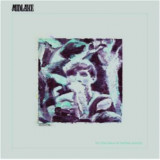
Pink Vinyl
"In the beginning there was Jack... And Jack had a groove." We know this old tale pretty well. But what do these words really mean? And does this meaning even exist nowadays?
Our fellow musician and sound researcher Stas Sharifullin, known as HMOT, presents his report Jack Studies in the form of a release on the Instrument, Gost Zvuk sublabel. Formally, it is a reissue of his single Prolegomena to Home Music Ontology, released in 2017 on Cyland. But these old tracks have been expanded, remastered by Rupert Clervaux and complemented by the two new ones. HMOT originally prepared the tracks on Jack Studies for release on Gost Zvuk, so these instrumentations are finally coming home after a long journey. Context is everything - and in the new environment, this music speaks even louder.
Originally, house music was associated with HIV/AIDS activism and the fight against racial oppression, among other things - and this was completely lost in translation in Russia. House was stripped of its political and symbolic potential, and Jack Studies tries to show how the context is slowly fading from our memory. But it's not just an observation. It's a tool of light intrusion that the author has already tested in his DJ sets. Once, he says, he played Instrumentation IV (Encore) for eleven minutes at the Kantine am Berghain.
Now that we are finally talking about Western and Eastern ways of making it in music, Jack Studies is more relevant than ever. You can see it not only as a joke said louder this time, but also as a critique of modern house music. You can also see it as a reflection on our strangeness to house music and how we can interpret it in our own way; as Sharifullin astutely suggests, as home music. He sees no line between tragedy and comedy, citing the plays of Samuel Beckett as the root of Jack Studies' irony. "They are funny and somber at the same time. To me, this release is sad, but the music here is joyful." Home music is the paradox. But it is also the beginning of something new. And in the beginning there was... what? Jack Studies has an answer.
Search:mod it
Nearly 24 years ago, on 7th July 1998, the first Hefner LP was released, it garnered some great reviews, ensured the band were to become one of Peel’s favourites (they had 5 entries in 1999’s festive 50!), and cemented their reputation as Britain's largest small band. NME - “truly independent, unassuming and painfully honest: the sound of thin, white indie dukes in spectacles.” Melody Maker - “heart-skeweringly astute” combination of “grimly sweet lyrics and delicate, tentative tunes.” Time Out - “awe-inspiring in their naked honesty” More recently, the album was number 25 in Pitchfork’s 50 greatest Britpop albums, above A Northern Soul (Verve), Fuzzy Logic (Super Furry Animals), Vauxhall and I (Morrissey) and Tellin’ Stories (the Charlatans) Breaking God’s Heart now gets the essential 20th anniversary vinyl re-issue, accompanied by some shows where Hefner frontman, Darren Hayman, will play the album in full Here’s what Darren has to say about the record now: Breaking God's Heart is an awkward, over confident start to my career. I have yet to get to grips with it again properly in preparation for these anniversary shows. It's so far away in my past that I have some difficulty in relating to the person who made it. Mostly when I hear it I'm just amazed at the confidence, and possibly arrogance, I had then. I insisted on mostly first takes being used, vocals being recorded live in the room with the instruments, a ban on any reverbs or ambience being used. It was like I was trying to sabotage my career at the first hurdle. Many of those decisions were based on half understood, interviews with my idols from the American Lo-Fi scene but I really didn't know what I was doing. It does make a bizarre and caustic record though, and I know there are plenty of people who think this is my best work and I never got back to the blunt energy of these recordings. I do see their point. Quotes - Hefner's is a bedsit world of spindly guitar and towering passions; of skewwhiff ideals and surprisingly smooth melodic surges; of awkward outbursts and slow-burning lo-fi for lovers… 'Breaking God's Heart' is all about sparkling melodies, twinkly-eyed poetry, intimate confessions, a thrillion knowing references to sex, soul and sadness and the sort of chipper attitude that says: 'This is a record you will relish for years to come'. So save yourself time, start treasuring it now. 8/10 NME // Hefner are running on the same rock-not-rock fuel as early Violent Femmes or The Modern Lovers, and like those groups are expert at building emotionally charged arrangements by adding or subtracting at precisely the right time. 8/10 Drowned In Sound
Loss and hope, isolation and communion, the cessation and renewal of purpose. Timeless and
salient, these themes echo throughout the fifth album from Midlake, their first since ‘Antiphon’
in 2013.
From the cover to the title and beyond, a longing to reconnect with that which seems lost and
seek purpose in its passing sits at the record’s core. The cover star is keyboardist/flautist Jesse
Chandler’s father, who, tragically, passed away in 2018. As singer Eric Pulido explains, “He
was a lovely human, and it was really heavy and sad, and he came to Jesse in a dream. I
reference it in a song. He said, ‘Hey, Jesse, you need to get the band back together.’ I didn’t
take that lightly.”
A desire to commune with the past and connect with present, lived experience asserts itself
from the opening of the album. ‘Bethel Woods’ sustains and develops that reconnection,
evoking the steadfast and contemplative urgency of ‘The Trials of Van Occupanther’ to back a
lyric steeped in yearning for a paradisal time and place of hope and optimism. Soaring guitars
and atmospheric noise effects extend a sonic scope further developed by ‘Glistening,’ where
arpeggios dance like light glancing off a lake. In just three songs, Midlake reintroduce
themselves and reach out into fresh territory with a richly intuitive dynamism, honouring their
past as a seedbed of possibility.
Elsewhere, the prog-enhanced funk-rock of ‘Gone’ seeks to find hope in relationships that
seem fragile. The ELO-esque ‘Meanwhile…’ draws inspiration from what happened when
Midlake paused after ‘Antiphon’, developing universal resonance as a song about the beautiful
growths that can emerge from the cracks and gaps between things. ‘Dawning’ draws on 1970s
soft-rock stylings for another song searching for hope, its keyboard line reaching out towards
an uncertain future while everything seems to collapse around it; ‘The End’ reflects on the
difficulties of partings.
On-hand was new collaborator John Congleton, who produced, engineered and mixed the
album, marking Midlake’s first record with an outside producer. “I can’t say enough just how
much his influence brought our music to another sonic place than we would have,” says Pulido.
“I don’t want to record without a producer again. Part of that is the health of the band, because
as you get older you get more opinionated and you kind of need that person who says, ‘No, it’s
going to be this way!’ It’s hard to do that with your friends.”
The result is a powerful, warming expression of resolve and renewal for Midlake, opening up
new futures for the band and honouring their storied history. Formed in the small town of
Denton, with roots in the University of North Texas College of Music, Midlake delivered an
auspicious debut with 2004’s ‘Bamnan and Slivercork’. For the follow-up, they looked further
afield and deeper within to deliver 2006’s wondrous ‘The Trials of Van Occupanther’, a modern
classic pitched between 1871, 1971 and somewhere out of time: between Henry David
Thoreau and Neil Young’s ‘After the Gold Rush’, between 1970s Laurel Canyon thinking and a
longing for something more mysterious.
Confidence bolstered by a growing fanbase and a developed sense of their own far-reaching
abilities, Midlake - a band acutely attuned to seasonal shifts - then embraced change. In 2010,
they visited darker psych-folk thickets for ‘The Courage of Others’ and backed John Grant on
his lustrously spiky breakthrough album, ‘Queen of Denmark’. When singer Tim Smith departed
Midlake in 2012, Pulido stepped up to the lead vocal role for 2013’s freshly exploratory
‘Antiphon’, teasing out singular routes through vintage electric-folk pastures.
In reuniting, the bandmates were adamant that Midlake needed their absolute focus. The result
is an album of tremendously engaged thematic and sonic reach with a warm, wise sense of
intimacy at its heart: an album to break bread and commune with, honour the past and travel
onwards with. In ‘Bethel Woods’, Pulido sings of gathering seeds. On ‘For the Sake of Bethel
Woods’, those seeds are lovingly nurtured, taking rich and spectacular bloom.
LP pressed on 180g vinyl in a gatefold sleeve printed on matt card and printed inner sleeve
with lyrics and digital download card.
Loss and hope, isolation and communion, the cessation and renewal of purpose. Timeless and
salient, these themes echo throughout the fifth album from Midlake, their first since ‘Antiphon’
in 2013.
From the cover to the title and beyond, a longing to reconnect with that which seems lost and
seek purpose in its passing sits at the record’s core. The cover star is keyboardist/flautist Jesse
Chandler’s father, who, tragically, passed away in 2018. As singer Eric Pulido explains, “He
was a lovely human, and it was really heavy and sad, and he came to Jesse in a dream. I
reference it in a song. He said, ‘Hey, Jesse, you need to get the band back together.’ I didn’t
take that lightly.”
A desire to commune with the past and connect with present, lived experience asserts itself
from the opening of the album. ‘Bethel Woods’ sustains and develops that reconnection,
evoking the steadfast and contemplative urgency of ‘The Trials of Van Occupanther’ to back a
lyric steeped in yearning for a paradisal time and place of hope and optimism. Soaring guitars
and atmospheric noise effects extend a sonic scope further developed by ‘Glistening,’ where
arpeggios dance like light glancing off a lake. In just three songs, Midlake reintroduce
themselves and reach out into fresh territory with a richly intuitive dynamism, honouring their
past as a seedbed of possibility.
Elsewhere, the prog-enhanced funk-rock of ‘Gone’ seeks to find hope in relationships that
seem fragile. The ELO-esque ‘Meanwhile…’ draws inspiration from what happened when
Midlake paused after ‘Antiphon’, developing universal resonance as a song about the beautiful
growths that can emerge from the cracks and gaps between things. ‘Dawning’ draws on 1970s
soft-rock stylings for another song searching for hope, its keyboard line reaching out towards
an uncertain future while everything seems to collapse around it; ‘The End’ reflects on the
difficulties of partings.
On-hand was new collaborator John Congleton, who produced, engineered and mixed the
album, marking Midlake’s first record with an outside producer. “I can’t say enough just how
much his influence brought our music to another sonic place than we would have,” says Pulido.
“I don’t want to record without a producer again. Part of that is the health of the band, because
as you get older you get more opinionated and you kind of need that person who says, ‘No, it’s
going to be this way!’ It’s hard to do that with your friends.”
The result is a powerful, warming expression of resolve and renewal for Midlake, opening up
new futures for the band and honouring their storied history. Formed in the small town of
Denton, with roots in the University of North Texas College of Music, Midlake delivered an
auspicious debut with 2004’s ‘Bamnan and Slivercork’. For the follow-up, they looked further
afield and deeper within to deliver 2006’s wondrous ‘The Trials of Van Occupanther’, a modern
classic pitched between 1871, 1971 and somewhere out of time: between Henry David
Thoreau and Neil Young’s ‘After the Gold Rush’, between 1970s Laurel Canyon thinking and a
longing for something more mysterious.
Confidence bolstered by a growing fanbase and a developed sense of their own far-reaching
abilities, Midlake - a band acutely attuned to seasonal shifts - then embraced change. In 2010,
they visited darker psych-folk thickets for ‘The Courage of Others’ and backed John Grant on
his lustrously spiky breakthrough album, ‘Queen of Denmark’. When singer Tim Smith departed
Midlake in 2012, Pulido stepped up to the lead vocal role for 2013’s freshly exploratory
‘Antiphon’, teasing out singular routes through vintage electric-folk pastures.
In reuniting, the bandmates were adamant that Midlake needed their absolute focus. The result
is an album of tremendously engaged thematic and sonic reach with a warm, wise sense of
intimacy at its heart: an album to break bread and commune with, honour the past and travel
onwards with. In ‘Bethel Woods’, Pulido sings of gathering seeds. On ‘For the Sake of Bethel
Woods’, those seeds are lovingly nurtured, taking rich and spectacular bloom.
LP pressed on 180g vinyl in a gatefold sleeve printed on matt card and printed inner sleeve
with lyrics and digital download card.
Emerging from Lower Franconia's hidden reverse, Johannes schebler, known as ambient-poltergeist "Baldruin" and surreal folklorists Christian Schoppik & Katie Rich of "Brannten Schnüre"-fame have puzzled and amazed outernational audiences from the stranger end of the avant/lo-fi spectrum in recent years. The trio is now collectively dreaming as "Freundliche Kreisel",reaching for terra incognita rather than common ground on their most bewildering and accessible outing to date. Arch-pontifices of the electro-acoustic and outsider-art realm, they fill in gaps and invent missing links on the go with somnambulistic ease, confusing the hypersensitive and hyaline timbres of contempo-electronic aesthetics with the naïve charm of Germany's obscure Kassettentäter and mutant-NDW.
Think Daniele Mana and Lorenzo Senni digitally rewiring the 4-track recordings of Gareth Williams' Flaming Tunes or sometimes, much scarier, it feels as if it's the other way round. There certainly is an air of whimsical yet post-ironic romanticism to the songs contained here, a madcap, tongue-in-cheek ghost story as filtered through the transcendental senses of a childhood perspective. This attitude is best personified in the disarming innocence of Katie's vocals whose intonation touches on nursery rhymes as much as on dirges and bizarre 'schlager' kitsch.
Heirs to the tradition of magic realism, examining fragments of an arcane sacred mundanity like a crack in the concrete of everyday life, Freundliche Kreisel dwell on this often neglected microcosmic topography, yielding an adventurous and visionary piece of a decidedly Franconian next-level post-modern folklore.
International musicgroup SexJudas feat.Ricky returns to Optimo Music this Winter with a new album: Night Songs. The eight track LP draws inspiration from the night and features Malian percussionist Sidiki Camara,jazz clarinetist Andreas Røysum and noise rocker Linn Nystadnes. Making their own blend of disco, post punk and African music.
“It’s the return of Sex Judas feat.Ricky, this time as a six piece in fully fledged band mode. We’re here to take you on a journey through suburban psychedelia, forming our own brew of postpunk, disco and electronic, as well as traditional music from Mali. Night Songs is a meditation on the night time. The excess, the dreams, the highs and lows of night time activity.”-Sex Judas feat. Ricky.
“Black Cat In A Black Room” begins proceedings, taking the form of a psychedelic six-minute offering packed full of tribal drums and desert-like percussion. “A Man Without Purpose” comes next with its African-inspired vocal, before “Hab Mich Lieb” soon arrives. The six-minute cut is hypnotic, trippy and relaxing all in one, as is “Slow Down” feat. Linn Nystadnes. Taking on more of a funk-rock feel, there’s plenty of groove in the guitar-laced bassline, whilst in “Cold Clementine”, Sex Judas tells the sad tale of rave casualty over a dark and funky groove.
We’re taken down a spiritual path on The Light You Saw Was Not For Real, as Andreas Røysum’s clarinet solos sit underneath shamanic vocal offerings that open neatly into The Night Within The Night. Aslow-burning cut, riffs and hats serenade us before When You Wake Up Everything Will Be Fine brings proceedings to a close. Dream-like chords wrap us in a warm and glowing hue, with the harp-like sounds from Sidiki’s Ngoni, leaving us in a starry-eyed state to finish.
The calming nature of the album is a nod to the band’s influences: they were inspired by the great meditative records of the past, setting off on a musical trip that saw them record the whole release at legendary Norwegian studio Athletic Sound. This happened during lockdown and whilst the LP was never meant to be comment on the pandemic, there remains a brooding intensity to each track because of it. Sex Judas feat. Ricky originally began life as the solo project of Tore Gjedrem (from electronic duo Ost & Kjex), but has since grown into a steady six piece involving the talents of Sidiki Camara (djembe/ngoni/balafon), Ivar Winther (guitar/keys), Tracee Meyn (vocals), Tore Brevik (drums/percussion) and Kristian Edvardsen (bass). Centre stage is also illustrator and comic artist Sindre Goksøyr, this time portraying each character as they paddle their way into the sunset and uncharted territories.
Malian-born, Norwegian-based percussionist Sidiki Camara has played a pivotal role in promoting “Night Songs” to world music circles. Having lived in Norway since 2006, he has helped bring WestAfrican rhythms into the country’s wider jazz scene.
Soft piano notes kiss trippy electronic tones: “Kossaiko”, the only collaborative record that japanese piano player Saiko Tsukamoto and globally known electronic producer Kuniyuki Takahashi ever produced, is an unmissable profound soft classic music burner.
Together they composed and produced an eight-chapter strong deeply absorbing narrative, whose enthralling story arc dives profound into authentic drama zones, that sound like they jumped right out of a Claude Sautet movie.
Originally released in 2007 as cd only, the perfectly put together longplayer now enters the world for the first time in a vinyl edition that is tragically hip. deeply starry-eyed composi-tions full of minimalistic piano melodies that creep, twist, and dance around unobtrusive electronic notes who never call the tune, but always elevate the spectacle into higher elec-tronic spheres.
In the center of each between five- and nine-minutes long composition is the piano play of Saiko, gently hitting the keys, giving space to each note to vibrate in an endless “Pauline Oli-Veros” way, drifting until the very last sound vanish. around them, Kuniyuki plays his charming electronic tricks, opening the space for tones that sometimes pulsate, sometimes flow the ambient way.
Furthermore, occasionally a guitar notes pop up or accordion melodies cover the sorcery with a severely romantic veil.
Modern classical music, that has no fear of electronic meltdowns, that embraces digital tones while staying organic in its very inner circle.
A wise man once said: when words leave off, music begins. Those who fall for the eight poems of Saikoss will lose their speech and in return get pleased all agitations of their soul.
'The Fantasy Life of Poetry & Crime' is another beguiling left turn by one of our most prolific artists, Peter Doherty and is some of his finest work to date Peter's deft lyricism combined with Frederick's delicious francophone musical arrangements is a marriage made in heaven.
Written during lockdown and produced by Frédéric Lo 'The Fantasy Life of Poetry & Crime' was recorded at Cateuil in Étretat (Normandy) and Studio Water Music in Paris and mixed by François Delabrière at Studio Moderne, Paris. All words are by Peter Doherty and music by Frédéric Lo.
'The Fantasy Life of Poetry & Crime' is another beguiling left turn by one of our most prolific artists, Peter Doherty and is some of his finest work to date Peter's deft lyricism combined with Frederick's delicious francophone musical arrangements is a marriage made in heaven.
Written during lockdown and produced by Frédéric Lo 'The Fantasy Life of Poetry & Crime' was recorded at Cateuil in Étretat (Normandy) and Studio Water Music in Paris and mixed by François Delabrière at Studio Moderne, Paris. All words are by Peter Doherty and music by Frédéric Lo.
This classic album - known as the moment Mose hit his stride in
transitioning from iconic pianist to iconic beat-esque vocalist - 'features the first versions of two of his sharpest pieces ('Your Mind Is On Vacation' & the title track), bluish versions of standards, instrumentals, and more Celebrating its 60th anniversary, cut all analog from the original mono Atlantic reels!
Back in print, now on clear vinyl! Tingling tartness of jingle perfection! In addition to being a pioneer of early electronic music, Raymond Scott generated hymns to hunger, odes to pudding and pilsner, and crafted carols for countless other products, elevating the form of advertisement to an art
If Zappa had written music for commercials, it's not hard to think his approach would have been similar! Pressed on clear vinyl at Third Man Pressing and containing varied styles in both instrumentation and vocalization plus previously unavailable electronic works! Products may contain soy, wheat, dairy, or Mel Tormé.
- A1: Sampler Side A
- B1: Sampler Side B
- C1: Blue Malediction - By Deena Abdelwahed And Mazen Kerbaj
- C2: Norm Hollows Function - By Dieb 13 And Mazen Kerbaj
- C3: Pendulum - By Rrose And Mazen Kerbaj
- C4: Untitled - By Marina Rosenfeld And Mazen Kerbaj
- C5: Chainsaw - By Rabih Beaini And Mazen Kerbaj
- C6: Time Traveler - By Donzilla Lion Nyege Nyege And Mazen Kerbaj
- D1: Trumpet Zoo - By Dj Sniff And Mazen Kerbaj
- D2: Mazens Trumpet - By Electric Indigo And Mazen Kerbaj
- D3: Untitled - By Muqataa And Mazen Kerbaj
- D4: Dreams Of Dust - By Microhm And Mazen Kerbaj
- D5: The Sign To Return Is In The Earths Spin - By Fari Bradley And Mazen Kerbaj
- D6: Now Serving 8190 - By Gavsborg Equiknoxx And Mazen Kerba
- D7: Untitled - By Bob Ostertag And Mazen Kerbaj
Featuring: Deena Abdelwahed, Rabih Beaini, Fari Bradley, Dieb 13, DJ Sniff, Gavsborg (Equiknoxx), Electric Indigo, Donzilla Lion (Nyege Nyege), Marina Rosenfeld, Microhm, Muqata’a, Bob Ostertag, Rrose
Project presentation:
Sampler / Sampled is an album made of two interdependent parts rather than a double-album.
The first part of the project, Sampler, is a trumpet solo album that catalogues the unique sounds and extended techniques that Mazen Kerbaj developed for the instrument in the past 25 years; it consists of 318 pieces ranging from less than a second to forty seconds each, and presenting different sonic materials. This catalogue of sounds works on various levels: first and foremost, it is a trumpet solo that could be played in its original order, or in random mode to create different pieces of music. But it is also a collection of samples that could be used for various applications (ringtones, phone sound effects, cinema…) and, of course, to create new pieces of music based on sampling.
The second part of the project is the composition Sampled for a musician working with loops and/or samples. The composition has one instruction: create a piece of music using solely tracks from Sampler as your sound source (with the possibility to use all kind of effects or treatment). Each interpreter/musician becomes thus a co-composer who appropriates the piece and makes it their own. In this regard, the musicians that were commissioned to play Sampled were chosen from different geographical origins and musical genres to create highly different and personal pieces of music.
One important output of this project is putting in practice the overused idea of music as a universal language. This idea is very present in “free improvised music” where musicians from different origins can meet for the first time and make music together without the need to adapt to different musical traditions. But here, the collective part of creating music in real time is not involved. It is rather the contrary: it starts with one middle-eastern musician creating a new language/vocabulary for his western instrument, to be later used by other musicians from around the globe who will appropriate this vocabulary and use it with their own language/grammar.
The final output of this double faceted album that was recorded during the Covid lockdown proved to be a very efficient new way to collaborate from a distance in times of world isolation, and ultimately put in practice the universality of music by breaking the boundaries of genres that are the most difficult to break.
A 4 track EP of modern takes on rave and jungle with cascading subs on Acroplane from Corporeal Face, following his excellent 2020 EP on Further Electronix. Some help with the final mix of the EP from LMajor (Astrophonica).
Just 300 copies of the record available in total on heavyweight fluoro green transparent vinyl and featuring suitably loud artwork by Alec Jagodzinski.
Sprints unveil details of their ‘A Modern Job’ EP, out on Nice Swan
Records.
Lyrically, ‘Modern Job’ finds singer Karla Chubb at her sardonic and
angry best, detailing her own personal wish list: “I wish I had the guts / I
wish I had the gall / I wish I had a girl,” all set to cascading guitars and a
formidable rhythm section; working in unison to create unrelenting
tension, all the while echoing the subject matter Chubb explores in her
lyrics.
On the new single, Karla offers the following: “‘Modern Job’ is a critique
of modern existence but also an exploration of growing up queer. In your
formative years, you are bombarded with media, books, news that depict
what a ‘normal’ life should be. Grow up, fall in love, get married… long
live the nuclear family.
“By contrast when you grow up queer all these ordinary things can seem
extraordinary, out of reach and in some parts of the world, illegal. It
leaves you feeling lost, excluded and confused. I wanted ‘Modern Job’ to
capture those feelings; chaotic energy, loneliness and longing of
normality while trying to find acceptance within yourself.”
Sprints have received support from the likes The Guardian, Clash, NME,
DIY and Dork, as well as love at Radio 1 and Radio 6 Music. Recent
single ‘How Does The Story Go?’ (also on the EP) was premiered by
Steve Lamacq, who praised it as “their best song yet! These guys are
going to be something,” The single was also leading in playlists from
NME, Loud & Quiet and others.
Sprints combine guitar-driven hooks, motoric rhythm and emotive
lyricism to create a unique sound that pulls from garage, grunge, punk
and beyond. Like the Irish guitar acts who have paved the way for them -
Fontaines D.C., Silverbacks and Girl Band - the sound of Sprints is
urgent and vital at every turn.
Sprints have hit a nerve. Driven by experience, tough political climates
and social and economic uncertainty - their music is honest, often
politically charged and authentic.
“On course towards future raucous, beer-soaked headline festival sets.” -
NME
“Screw-you power, relentless motorik rhythms and impressively large
choruses.” - The Guardian
"Sprints may be the latest to emerge from Dublin’s fertile stable of guitarwielding new heroes, but their two-fingers-up, no-nonsense rattle ‘n’ roll
arrives as the natural heir to Amyl and the Sniffers’ grot punk” - DIY
2LP with a 4-page colour insert
As Guadeloupean vocalist and composer Marie-Line Dahomay writes in her liner notes to the compilation, gwoka is more than a style of music, it is “a way of living and thinking.” Rooted in the social, musical and ritual practices of enslaved African people and their descendants on Guadeloupe, gwoka has always sought to express the spirit of independence and resistance authentic to the island.Building on its traditional call-and-response form and the ideas of pivotal figures like Gérard Lockel and Christian Laviso, modern gwoka evolved throughout the second half of the twentieth century to include funk, jazz and electronic influences.
Defined by its propensity for innovation and experimentation, this compilation charts the most radical changes to modern gwoka, capturing a sensory riot of traditional répertoires, rhythms and makè techniques fused with genre-defying experimentation.Whether heard in the deeply cosmic, spiritual music of Dao, Freydy Doressamy and Gaoulé Mizik, or the jazz funk inflections of Gui Konket and Horizon, the music here is united by the feeling of santiman ka, crucial not only to gwoka music but the identity of Guadeloupe at large.
As co-curator Cédric Lassonde (Bueaty & The Beats) writes: “What unifies these selections is the depth of the compositions, the experimentation around the santiman ka, and the spirit of resistance and liberation against slavery, be it modern or ancestral. With a thirst for innovation typical of the island’s creole culture, the ka spirit is deeply rooted in collective history and in a quest for identity.”
Co-curator Brandon Hocura (Séance Centre) continues: “The creative energy of these musicians is powerful and demonstrates a universal pursuit of resistance, freedom and identity. Their voices are distinct, but the chorus rises high and carries their message far across the sea.”
Lèsprit Ka: New Directions in Gwoka Music from Guadeloupe 1981-2010 is the first compilation of its kind to bring the sound of modern gwoka to a wider audience, with many of the featured musicians still active today. Presented as a double LP, the release features a specially commissioned essay by Guadeloupean musician Marie-Line Dahomey, and extensive liner notes from Cédric Lassonde and Séance Centre’s Brandon Hocura.
True to the hybrid nature of the music, the compilation seeks not to provide a definitive sound, but express the variety of contemporary forms that have evolved from gwoka. Just as Guadeloupean trailblazers Kassav fused gwoka with funk and cadence to create zouk, so did the musicians on this collection push gwoka in new directions rarely heard beyond its shores.
In the words of Gérard Lockel, “gwoka is the soul of Guadeloupe”
Drawing inspiration from Buddhist teachings and the hopeful attitude of frontman Johnny Quinn, Liverpool-based four-piece Spinn return with news of their second album Outside Of The Blue – via Modern Sky UK.
Outside Of The Blue acts as a lynchpin sonically and thematically. Written in the immediate aftermath of a panic attack, following a drive down to Birmingham to work on material for the album, the lyrics poured out in just half an hour. Instead of embodying that place of anguish it’s filled with light and an appreciation of unconditional love.
Siavash Amini is a composer from Tehran, Iran. He Has worked with labels like Room40, Hallow Ground, Opal Tapes and Umor Rex for the better half of the past ten years. He has performed at festivals like CTM & MUTEK and many other well known international events. Apart from it Siavash is a co-founder of the “SET experimental art events” and “SETfest” in Tehran, Iran. His work ranges from fragile ambient pieces and brittle IDM (incorporating his distinctive style of atmospheric guitar playing) to noisy drones and bleak modern classical pieces. His compositions have been inspired by films such as Andrei Tarkovsky's The Mirror as well as novels by Dostoyesvky and poems by T.S. Eliot.
Saffronkeira is the Sardinian sound researcher Eugenio Caria being active in the electronic music scene since almost two decades. His most recent work - a cooperation with the Italian jazz trumpet legend Paolo Fresu - earned a lot of praise from the international music press for the pure timelessness of the album.
"Upon hearing a small snippet of sound an image is conjured, not a memory but not unfamiliar. A shell of a memory, thousand events superimposed on each other. While trying to extract points of a narrative to ease the discomfort of this recollection, I try to separate and unfold the image and with it the points of the spectrum which make up the sound, a shell of a narrative. Here is an album based upon an almost entirely imagined/ synthesized happening upon hearing a snippet of sound. It sounded like of a whole story that never happened but yet I felt myself amongst it’s participants, a sound triggering a false memory. Each sound in Eugenio’s collection of sounds and ideas guided me a to a point in the narrative and it’s construction. He had handed me a portals of some kind to a few scenes of the whole narrative. This is the soundtrack for that false memory from all the perspectives I can think of."
Alex Cameron has always been a great storyteller,
finding his ways into the depths of the places where not
many others are looking, and ‘Oxy Music’ continues on
that trajectory. It’s filled with stories of people who fall
outside the system and exist in the grey areas of life.
And much like 2017’s ‘Forced Witness’, ‘Oxy Music’ is a
work of fiction. In its design - its music, lyrics and
tracklist - lies the journey a person can take, if the
circumstances present themselves - down the road of
heavy drug and alcohol abuse. Initially inspired by Nico
Walker’s ‘Cherry’, Cameron was spurred into yet another
commentary on American Life, this time about the opioid
crisis that has taken over the country.
Alex says about ‘Oxy Music’: “The album is a story, a
work of fiction, mostly from the perspective of a man.
Starved of meaningful purpose, confused about the state
of the world, and in dire need of a reason to live - a
person can, and according to the latest statistics,
increasingly will, turn to opioids. This is one of those
people.”
While ‘Oxy Music’ could be dark, it’s instead brighter and
more buoyant than much of Cameron’s previous work, a
shift in mood first seen across 2019’s ‘Miami Memory’.
It’s told from a place of optimism and through the lens of
Cameron, in the way that only he can tell it.
Co-mixed by Mount Kimbie’s Kai Campos.
Past collaborators include Angel Olsen, Brandon
Flowers (The Killers), Jason Williamson (Sleaford
Mods), Kirin J Callinan and Roan Yellowthorn.
Long-awaited vinyl edition of Adia’s 2021 album. UK live dates due in the summer (announced soon!).
In Adia’s words: "This album is the culmination of years spent digging for the subtext of southern identity, and the bones of belonging down in Dixie. it was the challenge issued forth by Skip James, Victoria Spivey, Bessie Smith, Jessie Mae Hemphill, Junior Kimbrough to keep on contextualizing the blues."
With A Southern Gothic Adia continues her journey through the conflicts of the American South and the troubling resonance of its past. Sonically, the album is full of frequent juxtaposition. It is equal parts historical montage and modern prophesy, dark and light, love and loathing. The 14 tracks are the musical embodiment of the relationship that so many people, especially Black women, have with the South.
A Southern Gothic, was executive produced by T Bone Burnett, and features guest contributions from Jason Isbell, Margo Price, and Matt Berninger.
Developer Archive returns with its 13th chapter and as you'd expect, the EP is made up of four groove based techno bangers tailor-made for floor-filling. The moods differ on each track and it's mostly exotic grooves, looped riffs, haunting modular electronics, and occasional mind-altering synth lines. Huge TIP