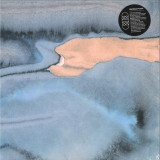
‘Part I’ is the debut LP from Indigo, the moniker and ongoing project of Melbourne-based composer and arranger, Nick Roder.
The first release in what will be an ongoing three-part series, Part I features nine tracks for bass guitar and tenor saxophone. Part II, an exploration of a slightly larger, more sonically diverse musical world will feature string quartet and voice. Finally, Part III will collaborate with choreographer Siobhan McKenna, who alongside Nick will develop a percussive movement work that seamlessly intertwines with the musical work.
“My aim is to create music that is sonically and musically atypical whilst still belonging to an accessible contemporary scene. Each project, album or ‘part’ will set out to explore a single ensemble or group of instruments. In the case of Part I, that ensemble is hollow body bass guitar and tenor saxophone. “ - Indigo (Nick Roder)
The Indigo project itself was inspired by Saxophone & Bass Guitar by Sam Gendel and Sam Wilkes, which prompted Nick to write an album of music for the same type of ensemble. Having only just purchased a bass guitar for a different project, the instrument was still very new to him.
“I was curious to see what I would write with my self-imposed rule of not being able to overdub material, and further, how my limitations as a relatively green bass guitarist would influence the writing of the material. A strong focus on harmonic movement and melodic material was where I eventually found my happy place.”
The result is a phenomenal debut. Burrowing into the space between it’s sparse instrumentation and dulcet tones, Part I is the realisation of a minimalist and concise vision of what a symbiotic relationship between two instruments can yield.
About Indigo
Indigo is the moniker and ongoing project of Melbourne-based composer and arranger, Nick Roder. The Indigo project was conceptualised in 2020 and focuses on deep sonic exploration of little-heard ensembles in a contemporary space.
Since 2018, Nick has been composing soundtracks for video games including The Invisible Hand, Roadwarden, N1NE: Splintered Mind, This Dead Winter and Miska. Nick has also played in art-rock ensemble, Tulalah, exploring sonic textures, combining contemporary jazz/rock with chamber sounds. The modular ensemble released The Flood (Equinox Recordings, 2015) and The Question (Independent, 2017).
quête:mod it
It has almost been three years since Foxing released their fan and critically acclaimed album ‘Nearer My God’, selling 1,468 LPs first week and solidifying the band as one of the brightest up and coming voices in indie and alternative. The band will begin a new chapter with their new album and Hopeless debut ‘Draw Down The Moon’. An album about cosmic insignificance that was inspired by games such as Dungeons and Dragons and Zork, ‘Draw Down The Moon’ was produced by Andy Hull of Manchester Orchestra. For fans of American Football, Modern Baseball, Manchester Orchestra.
The internationally renowned alternative Bluesman, famous for his outrageous one-man live show and songs featured in Breaking Bad (plus many other soundtracks), has now brought his blues growl and rough sound up to peak industry production and style...of around 1974.
This album sits style-wise alongside the greats of the genre: Tom Waits, Randy Newman, Dr John. It also has the unmistakable blues harmonica, voice and wit all his own.
Fans also purchase Seasick Steve, Jon Spencer , and other alt-Blues recordings.
Son Of Dave is a unique genre bending 21st century Blues innovator who has been bringing his 9+ albums and shows to modern generations internationally over two decades and selling over 20,000 hard copies, 50,000 DD, and streaming 3 million annually.
UK PR has secured radio plays at BBC6Music, BBCRadio2, Jazz FM, RadioX Canadian PR has secured charting college station support and national CBC plays.
UK autumn tours include dates supporting Sleaford Mods (not your average blues circuit) 2020 and 2021 singles were playlisted at Spotify curated Nu-Blue, Bluestronica and other alt-Blues type playlists.
Former member of multi-million selling Crash Test Dummies all through their heyday
Has been chosen support for Iggy & The Stooges, Supergrass, Rag&Bone Man,
John Spencer, UB40 and many more. Not the same old Blues in other words.
A very long list of achievements.
After the exploration of snowy mountains of Alpestres, released on Hands in the Dark in 2018, French composer Matthias Puech ventures into new territories, sketching a cartography of the invisible where the journey, in chiaroscuro, is announced as a rite of passage. A Geography of Absence, as introspective as unpredictable, immerses the listener into a unique sensory whirlwind where organic matter becomes almost palpable. A researcher in theoretical computer science and an engineer at GRM, Matthias Puech constructs a dialog between synthetic music and field recording, capturing sounds that surround him and creating his own sonic language with the help of synthesizers he designs and develops; notably the Oscillator Ensemble and the Tapographic Delay, made by the American company 4ms.
Composed during a moment marked by ordeal and mourning, A Geography of Absence retraces an inner journey where the physicality of sound leads the listener into an initiatory tunnel filled with apparitions, ghosts, visions. With sound oscillations as a navigational map, we progress, step by step, through the meanders of an unknown world, dazzled by the prospect of a new synthetic horizon, an electronic biotope teeming with life and incarnations. Playing with time, space and matter in an approach similar to that of musique concrète, Matthias Puech combines ambient and noise, floating sounds and electroacoustic experimentations, thus shaking up our listening perspective, which finds itself walking through a parallel universe, strata after strata, sequence after sequence.
The trip begins with “Hollow”, as if on board a night train travelling at full speed through ghost towns. Or is it a spaceship? Removed from their original habitat, sounds – picked up during walks or moduled by synths – are free to be interpreted differently by everyone, according to the memories that shape us. Granular and metallic, this first piece takes us to an elsewhere in orbit. "Work Song" is built around the pulsation of the void, of space, where strange creatures and liquid emanations abound. We become fetus, cocoon coiled in the placenta, heart beating to the rhythm of the gooey choreography of the human body. "Chrysalis" awakens the racket that lies dormant in us, when the skin changes, when the transition takes place. One seems to recognize certain sounds stemming from nature but they could also be mirages, imitating reality to render the barely perceptible engulfing. “Tunnel Vision” brings out a herd of haunted bells, slowly swelling in a pastoral maelstrom, ending in a deafening buzz. Further on, the chirping of an animatronic bird mixes with the hooting of an owl: "A Faint Beacon" invokes a nocturnal vigil that mixes the crackling of a fire and icy gusts of wind blowing everything away. Like an epic, sucking the listener into the breach of a black hole in the center of the Milky Way, it's up to "Homeostasis" to conclude in the high spheres and contemplative vapors, where the balance of dawn announces a rebirth.
A Geography of Absence is a meticulous and sensitive piece that constructs a delicate symphony of extremes, between introspection and desire for the unknown. Accompanied by the ink work of the artist Léa Neuville, whose folds of prints sketch this imaginary atlas, Matthias Puech becomes a narrator of mental adventures. And succeeds once again in transcending reality to dig a path to the unspeakable.
Unveiled Nuance is the newly founded imprint by Manchester’s Means&3rd, a platform solely for his own productions. The Eastern Bloc Records staff member inaugurates his debut vinyl release with 3
tracks covering a balance between hypnotic and driving techno, in keeping with his adopted style of recent years.
‘Thought contortion’ opens the EP with a thunderous low end, propulsive rhythms and immersive sweeps of sound design, teamed with modulated synth patterns that assist the unfolding of its persistent structure. ‘Fragility of perception’ follows with its elastic 3 step synth groove and reverb rich textures which provide the bed while the percussion provides an airy dynamic. ‘Aural Dissociative’ closes the EP with an all together headier affair, a dynamic drone providing the backdrop while flickers of rhythm supplement its evolution and heavily modulated lead lines take the focus.
Pressed on 140g Black Vinyl, reverse board full colour print sleeve with poly-lined inner sleeve
LP on white vinyl! What if a song was not a culmination but a singe, an imprint, or a crater left in the wake of creative process? On her new record "Jade", Pan Daijing composes at a different scale than that we've come to know. Since the release of her groundbreaking LP "Lack" in 2017, Daijing has expanded her operatic vision into a series of major commissioned exhibition-performances at institutions including the Tate Modern, Martin Gropius Bau, and the Haus der Kulturen der Welt. Developed for full casts of opera singers and dancers, and reaching for an all-encompassing durational experience of intensity for both performer and audience, the development of these works was for Daijing as emotionally disarming as it was thrilling. In order to continue accessing her own limits, Daijing had to develop a place of sanctuary within her own practice. Its nine tracks written and recorded over the last three years, "Jade" is the sound of solitary release and refuge, of creative self-sustenance. Written without the imperatives of direct address to performers or audience, "Jade" speaks inward, while inviting a kind of rhetorical listening. The artist draws on materials familiar from her previous work: namely, ascetic electronic textures that rumble and pierce, and voice bent in irreverent directions. In place of catharsis, however, her arrangements here linger in tension, extending curiosity towards the delicate void that nourishes extremes. They toy with the minor capacities of song: repetition, chant, observations that conclude without resolving. "Jade" comes from a vulnerable place, tender as in an undressed wound caught in the midst of healing over. Vocals, mostly Daijing's own, arrive as wordless sequences of notes soaring alongside a drone, or plain laughter, or in a few places spoken word. What is said or sung provides fragments of experience and reflection. In the process of piecing together these fragments, the listener is confronted with the tender parts of her own. "Solitude is like an immense lake you're swimming through," says Daijing of these songs. "Sometimes you dip your head in and sometimes you lift it above. On album centerpiece "Let," she speaks to us over the sound of rippling water, returning between anxious scenes to a refrain: "I take my bath in the ocean." We are not just consuming Daijing's story; we are being invited to join her in the water. The album is mixed and mastered by Rashad Becker, featuring artwork by Pan Daijing, cinematography by Dzhovani Gospodinov & design by NMR.
- A1: Billy F Gibbons -- (I've Got) Levitation
- A2: Mosshart Sexton -- Starry Eyes
- A3: Jeff Tweedy -- For You (I'd Do Anything)
- A4: Lynn Castle & Mark Lanegan -- Clear Night For Love
- A5: The Black Angels -- Don't Fall Down
- A6: Neko Case -- Be And Bring Me Home
- B1: Margo Price -- Red Temple Prayer (Two-Headed Dog)
- B2: Gary Clark, Jr. & Eve Monsees -- Roller Coaster
- B3: Ty Segall -- Night Of The Vampire
- B4: Lucinda Williams -- You're Gonna Miss Me
- B5: Chelsea Wolfe -- If You Have Ghosts
- B6: Brogan Bentley -- May The Circle Remain Unbroken
* Pressed on special RSD color wax.
* Includes bonus limited edition flexi of an ultra rare recording performed by Roky Erickson.
* Pressed at RTI.
Texan Roky Erickson was one of the true mind-blowing pioneers of psychedelic music. The original leader of the Austin-based 13th Floor Elevators formed in 1965, Erickson and band invented a brand new style or rock & roll, one that was slightly unhinged while it explored the consciousness-expanding influence of LSD on music. After three years, the group imploded with mental issues and legal challenges, ending with Erickson being incarcerated for several years in the Hospital for the Criminally Insane in Rusk, Texas. When he was released in the early '70s the musician continued on his own trail, recording songs that had come to him in his far-flung cerebral wanderings. Erickson, who passed away May 31, 2019, is now celebrated on this 12-track tribute to one of the most original rockers ever.
The participants range the whole world of modern music, and each chose one of Erickson's originals to stamp their own imprint on. They include Billy F Gibbons, Lucinda Williams, Mosshart Sexton (a/k/a Alison Mosshart & Charlie Sexton), Neko Case, Mark Lanegan & Lynn Castle, Jeff Tweedy, Margo Price, Gary Clark Jr & Eve Monsees, Ty Segal, Chelsea Wolfe, The Black Angels and Brogan Bentley. The album is co-produced for release by Bill Bentley, executive producer of the 1990 Roky Erickson tribute album Where The Pyramid Meets The Eye on Sire Records, and Matt Sullivan, co-founder/owner of Light in the Attic Records.
The songs range from Erickson's debut iconic original, "You're Gonna Miss Me," recorded when he was a member first in The Spades and then the 13th Floor Elevators during the early '60s in Austin, to some of Erickson's later songs, like "If You Have Ghosts," which heard him exploring some of the outer limits of the human psyche. Each new recording is a stunning modern take on the sound that Roky Erickson gave the world over a half-century of writing, recording and touring. No one has ever equaled those explorations.
This truly is the music of the spheres, as Erickson once sang about his sound, as seen through the eyes and ears of those who are united in their love and respect for a person who dedicated his life to rock & roll. Roky Erickson, through the trials and tribulations of a man both imbued with greatness and haunted by darkness, never quit in his quest to share with others what he heard and saw. As he sang on the 13th Floor Elevators last recording, "May the circle remain unbroken."
Clear Vinyl
Post-punk/new wave hero Ann Margaret Hogan’s second album of solo piano and field recordings for Downwards is a box of subtle wonders, mastered by Veronica Vasicka and highly recommended if yr into Satie, Virginia Astley, Sarah Davachi.
A weight of history flows through Hogan’s keys with a stark intimacy, beautifully illuminated by naturally effortless, quietly grand songwriting. It’s a direct continuation of the landscaped themes
and atavism of 2020’s ‘Honeysuckle Burials’ and the ‘Reversing Into Tomorrow’ collaboration with Karl O’Connor, vividly capturing the slow passage of time in a way that has quite literally compelled
us to stop the relentless mind-grind for its 40 minute duration on more than one occasion.
After previous fixations on the iron age forts and burial mounds of the Clywdian Range in North Wales, Hogan transmutes the scenery of her more immediate locale, Oxton on The Wirral - from the cadence of its red sandstone landmark Thor’s Rock, to memories of its boating lake, for example - into a quiet yet ravishing suite inflected with traces of wildlife and industry recorded on long walks, all subsumed within a deep blue estuarial atmosphere silted by the strange reality of life in
the current era, echoing the surreal, sunny period when the album was conceived.
A generation on from her pivotal work with spar Marc Almond and likes of Deux Filles and Nick Cave, and forty generations since The Wirral hosted, as she says “a Norse parliament at Thingwall”,
Hogan weaves time and place into a reflective, funereal sort of parlour music, turning daily ambulations amid the gorse and under luminous skies into gorgeous, life affirming and intimate self expressions.
The eight pieces are mostly improvised and flow with a free, fleeting concision from the palpable warmth of ‘Forgotten Prelude’ and bluesy ache of ‘Fragile Elements’ to more funereal modes in ’Mesto’ and ‘Funeral Cargo’ suggestive of a Viking burial soundtrack. At its core, ‘Wolfswalzer’, a dedication to her one time collaborator and erstwhile Kraftwerk member Wolfgang Flür - is described by Hogan as “a simple waltz of coffee, food, friends and music”, and ‘Impromptu’ is the
album’s slowest, soaked in the feeling of atmospheric immanence that defines the album’s timeless appeal. It’s an unspeakably moving album, words really do it no justice.
Erased Tapes debut. Wait, what? How? Anyone who has seen
the trail blazing sonic pioneer live will know Nils likes to
deadpan a joke. Graz is in fact the first studio album he
recorded for the label back in 2009, that somehow remained a
secret… until now.
Nils Frahm has quietly changed the musical landscape,
reincarnating the centuries old figure of a pianist-composer for a
new generation of music fans. As Nils’ word-of-mouth popularity
grew and grew, so did the pop-culture profile of his instrument. He
founded Piano Day with a team of like-minded friends in 2015 to
help that process, some years releasing an album of piano
recordings to celebrate one of humankind’s greatest inventions.
Graz is one such record; an unheard snapshot of a young Nils
recorded at Mumuth, the University of Music and Performing Arts
Graz, in 2009 as part of the thesis Conversations for Piano and
Room produced by Thomas Geiger, which received an award in
the Classical Surround Recording category at the 127th AES
Convention in New York.
Whilst at the time it was decided to keep the grand piano
recordings from the Graz sessions locked away and instead focus
on his close mic’ed, dampened piano explorations which would
become his acclaimed studio album Felt in 2011, two of the pieces
— most notably Hammers — lived on as part of his live set, and
were expanded on and re-recorded as part of his breakthrough
2013 record Spaces (a collage of field recordings from concerts
which broke the Fourth Wall and included audience coughs). Over
his mercurial career, Nils has pushed and pulled at the boundaries
and parameters of his prolific work like that. He’s physically
changed his piano (the softened prepared strings of Felt) played
with a modified body (Screws recorded with 9 fingers and a broken
thumb) played with scale (Solo recorded on the 3.7 metre high
Klavins M370) and with the different layers of formats (last year’s
Tripping with Nils Frahm nested his studio setup inside a live
performance, concert film and live album). Now with Graz he has
found the final frontier for play: time itself and his own discography.
Graz is a moment of time at the very beginning of Nils’ quiet
revolution. The essential genius is already evident; the harmonic
language of classical, and the immediacy of jazz. Nils seems to
pull down each idea moment by moment, gently, to not scare away
the muse. He describes: “sometimes when you hear a piano, you
might think it’s a conversation between a woman and a man. At
the same time, it can hint at shapes of the universe and describe
how a black hole looks. You can make sounds that have no relation
to anything we can measure.”
Famously sampled in Modjo’s number one smash hit ‘Lady’, Chic ‘Soup For One’ is a tried and tested recipe for greatness. Tantalizing, trademark Nile Rogers funk strumming, sublime synthwork, vocals to die for and hooks for days. Coming up to its 40th anniversary with the original released on Mirage in ’82.
"The definition of a hidden gem" - John Peel / "The world seems finally to be catching up to Leslie Winer, whose startling intelligence and singular vision shine through her copious recording life." - Max Richter / "She might just be the coolest woman on the planet!" - Boy George "When I Hit You - You'll Feel It" is a 16-track anthology that celebrates the extraordinary work of musician, poet, and author, Leslie Winer. The collection spans Winer's three-decade-long musical career: from her groundbreaking solo work in the early '90s to her latest inspired projects. Featuring musical contributions from Jon Hassell, Helen Terry, Jah Wobble, Renegade Soundwave's Karl Bonnie, and others, the collection also spotlights Winer's diverse collaborations, unearths previously-unreleased recordings and was newly remastered by the GRAMMYr-nominated engineer John Baldwin. The album includes a new interview with Winer, captured by the compilation's co-producer, acclaimed author and critic Wyndham Wallace. Rounding out the package is an insightful essay by the award-winning writer and scholar Louis Chude-Sokei and an original cover collage by the renowned British photographer and artist, Linder, featuring photography by Mondino, and design by designer Christopher Shannon. Musician, poet, iconoclast, model, artist, enigma. Leslie Winer is many things. She grew up in Boston with a voracious appetite for music and the written word and embraced the city's lively jazz and folk scene in the '70s. Moving to New York for art school, she formed an unlikely friendship with writer and artist William S. Burroughs and lived on-and-off with Jean-Michel Basquiat. In London, where Winer began her musical ventures in earnest, she was a regular at Leigh Bowery's underground club Taboo, where she met many of her collaborators, including filmmaker John Maybury, Kevin Mooney (of Adam and the Ants), and Boy George. Winer's striking looks also attracted fashion designers and photographers. Throughout the early '80s, she was an in-demand model-appearing in campaigns for Valentino, Christian Dior, and Yohji Yamamoto, and serving as a muse for a young Jean-Paul Gaultier, who later dubbed Winer "the first androgynous model." She posed for Helmut Newton, Irving Penn, and Pierre et Gilles, and graced the covers of The Face, French and Italian editions of Vogue, and Mademoiselle. But music was Winer's true passion and, at the turn of the '90s, she would unknowingly help invent the massively popular genre known today as trip-hop. On her debut, Witch, Winer masterfully blended the uninhibited sampling of early hip-hop with dancehall basslines and programmed beats, while weaving mesmerizing - and coolly-detached - spoken-word vocals into her ambient tracks. It was unorthodox in the most delicious ways. While Witch was finished in 1990, it wouldn't be released for three years, due to the whims of Winer's label. By the time the album saw the light of day (released under the pseudonym "c"), trip-hop was gaining mainstream traction via acts like Portishead, Massive Attack, and Madonna. Although Winer eventually gained wider acknowledgment (prompting the NME to give her the dubious distinction of "The Grandmother of Trip-Hop"), Witch initially went sorely unnoticed. Winer continued to record, undeterred by the elusive nature of mainstream success in the modern music business. Her network of inspired collaborators continued to grow and expand, yet her influence remained largely a secret except to those in the know, such as Grace Jones and Sinead O'Connor, who would cover her songs. In the modern era, one is hard-pressed to find an artist who continues to push the creative envelope as much as Winer does. And yet, three decades after her revolutionary debut, her work remains just as startling and fresh.
- North American version on CLEAR vinyl (2XLP) - Limited DOUBLE 180g Vinyl Edition (500 copies) with obi strip - Rare Dutch studio recordings, one of Art's last sessions before he passed away - Comes with insert/liner notes // Art Blakey (1919-1990) actually needs little introduction, the American Jazz drummer and bandleader made a name for himself in the 1940s & 1950s playing with contemporaries such as Miles Davis, Dizzy Gillespie and Charlie Parker. He is often considered to have been Thelonious Monk's most empathetic drummer (he played on both Monk's first recording session in 1947 and his final one in 1971). In the decades that followed Blakey recorded for all THE labels that mattered in the field of jazz (Columbia, Blue Note, Atlantic, RCA, Impulse!, Riverside, Prestige, Verve, etc.). His collaborations were numerous and include working with equally legendary artists such as Sonny Rollins, Max Roach, Chet Baker, John Coltrane_.and countless others.Art Blakey was a major figure and a pioneer for modern jazz, he assumed an aggressive swing drumming style early on in his career and is known as one of the inventors of the modern bebop style of drumming. His signature polyrhythmic style was amazing, exuding power and originality, creating a dark cymbal sound punctuated by frequent loud snare and bass drum accents in triplets or cross-rhythms. A loud and domineering drummer_but Blakey also listened and responded to the others in the band. He was an original, an important drummer you'd hear_and would recognize immediately.Art Blakey was inducted into the Downbeat Jazz Hall of Fame (1981), the Modern Drummer Hall of Fame (1991), the Grammy Hall of Fame (1998 and 2001) and was awarded the Grammy Lifetime Achievement Award posthumously in 2005. He was sampled and remixed by renowned acts such as Raekwon, Black Eyed Peas, A Tribe Called Quest, Digable Planets, Buscemi, KRS-One and Madlib.In the mid-1950s he and Horace Silver formed `The Jazz Messengers': a group that Blakey would perform and record with for the next 35 years. Originally formed as a collective of contemporaries_but over the years the band became known as an incubator for young talent that included artists such as Freddie Hubbard, Wayne Shorter, Cedar Walton, Chuck Mangione, John Hicks_and MANY others. Art Blakey went on to record dozens of albums with a constantly changing group of Jazz Messengers. Blakey's final performances were in July 1990. He died on October 16 of lung cancer. The legacy of Art Blakey and his band is not only the music they produced, but also the opportunities they provided for several generations of jazz musicians.Released on the legendary Dutch jazz label Timeless Records and one of his final recordings_on the album we are presenting you today (Chippin' In) you'll find ten sublime tracks recorded at Rudy van Gelder's Recording Studio in February 1990. Art Blakey passed away just 8 months after these tracks were cut and you can't hear any signs of him slowing down at all. For these specific recordings, The Jazz Messengers were expanded from its usual quintet or sextet into a septet and they showcase their energetic signature sound with remarkable style, musical knowledge, a dash of good humor and camaraderie you'd expect from a world class band who have entertained, thrilled and amazed for almost five decades. The line-up on these fantastic sessions includes non-other than Essiet Okon, Geoff Keezer, Dale Barlow, Javon Jackson, Frank Lacy, Steve Davis and Brian Lynch_impressive to say the least!Chippin' In sounds as successful, young and vibrant as ever! Expect supercharged hard bop with striking notes, no-holds-barred musicianship, high swinging solos, screaming choruses and plenty of solid virtuosity to spare. This electrifying set of tracks contains both originals and several eclectic versions of standards_making this release a bonafide hit and a must have for any self-respecting jazz fan or collector.
Let’s Stick Together by Bryan Ferry was his third solo release, his first following the disbanding of Roxy Music earlier in the year of 1976. Unlike Ferry’s two previous solo recordings, Let’s Stick Together was not a dedicated album project, instead being made up of material released as singles, B-sides and an EP. Five of the tracks on the album were re-recordings of Bryan Ferry songs previously recorded with Roxy Music. “Re-Make/Re-Model”, “2HB”, “Chance Meeting” and “Sea Breezes” were from the band’s eponymously titled debut album (1972), while “Casanova” was taken from Country Life (1974). In most cases the re-recordings were smoother and more oriented to jazz and R&B than the original Roxy Music versions. The other six tracks on the album were covers. The sax-driven “Let’s Stick Together” was written and originally recorded by Wilbert Harrison. Other up-tempo numbers were The Everly Brothers’ “The Price of Love” and Jimmy Reed’s “Shame, Shame, Shame” (which includes a counter-vocal by the backing singers which quotes Marvin Gaye’s “Can I Get A Witness”). The remaining covers, which included The Beatles’ “It’s Only Love”, were performed in a mellow cabaret style. Lovingly Re-Mastered from the original tapes by Frank Arkwright at Abbey Road Studios. London. Featuring artwork that has been faithfully restored to reflect its original first press “Let’s Stick Together” is presented on 180g heavy weight vinyl and is one of those classic albums that would not look out of place in any record collection.
»Dog Mountain« is the second release by the Zurich-based producer and composer Laurin Huber on Hallow Ground. After last year’s »Juncture« saw the Edipo Re co-founder work mostly with synthesizers and programmed rhythms, the four tracks are much more restrained, drawing on tape loops and feedback, recordings of acoustic guitar and synthesizers such as the Korg MS-10 as well as field recordings that relate to the overarching topic that informed the making of the record. While »Juncture« had previously aimed at deconstructing the binaries and dualities that shape our lives and thinking, »Dog Mountain« is dedicated to geographical divisions that result from political processes and social constructions. »›Here‹ means one nation, ›there‹ another,« writes Huber in a literary piece that accompanies the record. »Being in sound, such a separation seems odd.«
While treating the metaphor of the border as a »membrane, registering and translating the vibrations of its surroundings« and thus as something that is constantly (re-)defined, maintained and defended however, the artist also takes into consideration that »one cannot escape one’s standpoint,« as he puts it. The music on »Dog Mountain« may transcend and overcome certain borders, but it does not deny the realities that they impose on each and every one of us – whether in our political lives or in the realm of sound. This is mirrored in Huber’s engaging in the structural and sonic interplay of repetition and difference. Working with slowly evolving and modulating elements that are exposed to slight shifts, »Dog Mountain« puts a focus on the interaction between small elements that together form a bigger whole which is marked by constant evolution and change.
Opener »Raja« (»border« in Northern Sami and Finnish) starts off with a two-note melody played on an out-of-tune guitar. Different field recordings and synthesizer sounds drop in and out of the mix until the dynamic shifts and Huber starts playing more notes on his instrument, thus increasing the tension. It’s a meditation on minimalism, but also a piece that mediates between notions of what constitutes the difference between noise and music or referentiality and abstraction in sound. After »Nickel« (named after a Russian monotown near the border to Norway) dedicates itself to explore the friction between hissing white noise and melancholic tape loops, »A Town Is Not a Town« (a phrase taken from the documentary »Kiruna – Rymdvägen«) structurally mirrors the experiment of »Raja« with very different sonic means.
Closing the record, »Storskog-Borisoglebsk« (the title refers to the northernmost land border between Schengen-Europe and Russia) is the longest and most challenging piece, working with both long-form drones and musique concrète elements. It proposes a synthesis of the opposites that are explored patiently and with much attention to detail throughout this record.
Another Time, Another Place was Bryan Ferry’s second studio album as a solo artist. The album reached #4 in the UK charts in 1974. Essentially a cover album, with the exception of the last song, which gave its title to the album and was written by Ferry. While These Foolish Things emphasized an early-’60s girl-group repertoire, Another Time, Another Place turned to soul music (Sam Cooke, Ike & Tina Turner) and country music (Kris Kristofferson, Willie Nelson, Joe South). “The album as a whole feels a touch more formal than its predecessor, but Ferry and company, plus various brass and string sections, turn on the showiness enough to make it all fun. Lovingly Re-Mastered from the original tapes by Frank Arkwright at Abbey Road Studios. London. Featuring artwork that has been faithfully restored to reflect its original first press “Another Time, Another Place” is presented on 180g heavy weight vinyl and is one of those classic albums that would not look out of place in any record collection.
The Bride stripped Bare Bryan Ferry’s fifth album released independent of Roxy Music. Ferry approaches much more effectively, allowing him to cover such romantic soul standards as “That’s How Strong My Love Is” alongside his despondently modern “When She Walks in the Room.” It has been considered as Bryan Ferry’s most stunningly personal album. Lovingly Re-Mastered from the original tapes by Frank Arkwright at Abbey Road Studios. London. Featuring artwork that has been faithfully restored to reflect its original first press “The Bride Stripped Bare” is presented on 180g heavy weight vinyl and is one of those classic albums that would not look out of place in any record collection.
Arthur Satan from French garage psych rock band J.C. Satan’s debut solo album on Born Bad.
The distinctive backing choirs on “Free” are reminiscent of an encounter between the Pole Krzysztof Komeda (“Fearless Vampire Killers”, the soundtrack of
“Rosemary’s Baby”) and the American collective Elephant 6 (the Apples in Stereo, Elf Power, Neutral Milk Hotel, of Montreal, The Olivia Tremor Control etc.)
“The Nap” is teatime: Arthur’s the host, John Fahey the guest.
“Summer” starts off like a lullaby on the metallophone and evolves into something of a Donovan song, minus the unexpected crankshaft solo.
“Love bleeds from you neck” is somewhere between acid folk song and medieval lament.
“Time Is Mine” might be the track most evocative of J.C. Satàn… Though actually all the tracks on ‘So Far So Good’ hover between tradition and modernity,
obscure sunshine pop, good old classics and weird experiments.
“She’s Long Gone” evokes Brian Wilson’s Beach Boys roaming through the English countryside looking for the perfect cottage
Private Space, the group's third album, is a previously untapped vibe at the heart of The Indications. Pushing beyond the boundaries of the funk and soul on their previous releases, Private Space unlocks the door to a wider range of sounds and launches boldly into a world of synthy modern soul and disco beats dotted with strings. It's an organic, timeless record that's as fresh as clean kicks and familiar as your favorite well-worn LP. Developed after being apart for much of the year, Private Space is creatively explosive and delights in upending expectations. Its 10 tracks are both an escapist fantasy and a much-needed recentering after a tumultuous 2020. Throughout, The Indications highlight a collective resiliency - as well as the power of a good song to be a light in the darkness. Durand Jones and The Indications have long provided the soulful soundtrack for such deep thoughts, both on stage and on your turntable. But as the world slowly resets from the chaos of the past year, Durand Jones and The Indications' Private Space is arriving at just the right time.
- 1: Don’t Ever Pray In The Church On My Street (02:46)
- 2: I Hope I Never Fall In Love (0:56)
- 3: The Biggest Fan (02:47)
- 4: Uncommon Weather (01:5)
- 5: A Kick In The Face (That’s Life) (02:01)
- 6: I Wouldn’t Die For Anyone (02:35)
- 7: I’m Sorry About Your Life (02:05)
- 8: The Record Player And The Damage Done (02:22)
- 9: Pictures Of The World (03:11)
- 10: Life At Parties (02:52)
- 11: Sing Red Roses For Me (03:54)
- 12: The Songs You Used To Write (02:49)
- 13: Sympathetic (03:11)
From the many musical lives of artist Glenn Donaldson emerges The Reds, Pinks and Purples, a project that sifts out the purest elements of pop music and in the process chronicles the point of view of an assiduous San Francisco-based songwriter. The Reds, Pinks and Purples’ third album, called Uncommon Weather, is both an elusive portrait of San Francisco––during one of its fluctuations as an untenable place for musicians and artists––and also a self-portrait, however inverted, of a songwriter who has dispatched another treasured collection of timeless sounding DIY-pop songs.
How The Reds, Pinks and Purples arrived here is a story with many roots, the most consequential of which is perhaps the musical aftermath of his earlier band, The Art Museums, whose brief tenure in the late ’00s coincided with an explosive period of the Bay Area rock scene and was followed by a hermetic musical period of Donaldson’s. Disenchanted with the dissolution of his band, Donaldson averted the DIY-pop sound with an instrumental, conceptual project called FWY! but meanwhile started a habitual songwriting practice, sharing nascent songs with friends in an email exchange. In 2013–2014, The Reds, Pinks and Purples took shape as the moniker for Glenn’s most direct expressions in the DIY-pop mode, enabled by this new disciplined output. By then, San Francisco was already a changed place. The tragic loss of his former bandmate in Art Museums was another source of discontinuity and rupture. You can hear in The Reds, Pinks and Purples’ earliest songs this grappling with life, anxiety, and atrophying subcultures. For an artist with an overriding interest in the aesthetic principles of discrete musical genres, this turn toward his immediate world for subject matter was a major shift, setting The Reds, Pinks and Purples apart from Donaldson’s other musical ventures.
Preceding the release of Uncommon Weather was the Reds, Pinks and Purples’ 2nd album, one of the record buying joys of 2020, You Might Be Happy Someday, and, earlier, their first proper full length Anxiety Art, a title that might nod to the classic Television Personalities song “Anxiety Block.” Donaldson’s music continuously reckons with the influence of Dan Treacy, whose own forays into drum-machines, echo, and reverb in the early 1990s is an important reference point for The Reds, Pinks and Purples’ musical template. Paul Weller, Robert Smith, and Sarah Records also come to mind. But, as important, Donaldson sees his projects as visual expressions too, often blurring the lines of records and physical art objects. They could just as well be “art multiples” as well as records. The pattern for Reds, Pinks and Purples’ records is to document San Francisco’s Inner Richmond district in photographs: the muted, pastel colours and unpeopled compositions unfold in a series of images that read like counter-melodies to Donaldson’s distinctive voice, a vocal tone that always complements the colours.
Self-recorded and mostly self-performed, Uncommon Weather features pinnacle versions of songs Donaldson has honed since the beginning of the project. The album arrives with grateful timing, quick on the heels of You Might Be Happy Someday, and alleviating, for a brief window at least, whatever it is that keeps us coming back to this elemental music. Donaldson imagines his listeners are just like himself: fascinated and addicted to the spiritual power of uncomplicated pop classics. Anthony Atlas
After two stellar Split EPs with Das Komplex, Brazilian sound wizard ROTCIV delivers his first Solo EP on Luv Shack Records. With 4 intricate original cuts and a Massimiliano Pagliara remix, the Elev8tion EP is a bold testament to modern EBM.
The titular track sets the stage with a firework of dramatic synths, brash elektro beats and a fluttering acid line, finding a perfect balance between dancefloor appeal and leftfield quirkiness.
Italian maestro Massimiliano Pagliara remixes "Elev8tion" in a straightforward fashion, opting for a percussion heavy drummachine pattern, a driving bassline and additional synth melodies, yet incorporating the original 303 to great effect.
On "Unbelievable", ROTCIV lays out a complex carpet of alternating arpeggios, heavily automated synth melodies and an array of weird vocal snippets, atop a minimalistic electronic drum track. "Muquifo", which literally translates to flophouse or dump (or shack?), is a slow burning breakbeat track with eerie strings and tripped out acid melodics, making it a hot contender for future afterhours.
"The Morning After" is a similarly low slung track, with a broken beat and a distinct industrial flair, yet the synth melodies strike a more hopeful chord and have an almost