Experience the soulful and funky gospel sounds of the Howard Lemon Singers with the reissue of their 1977 album, Seasons, originally released by TK Records' Gospel sub-label Gospel Roots. Now reissued on vinyl for the first time through Regrooved Records, this album masterfully blends traditional gospel with modern soul elements, showcasing the Howard Lemon Singers at their most dynamic and inspirational.
Featuring rich vocal harmonies and uplifting messages, Seasons invites listeners on a spiritual journey through life's varying stages, emphasizing renewal, celebration, and introspection. Among the standout tracks is "You Are Somebody," a powerful anthem that resonates deeply with its message of affirmation and empowerment. The vinyl reissue preserves the original essence of the album, enhancing the audio quality to highlight the depth and warmth of the studio recordings.
Perfect for both avid gospel enthusiasts and newcomers, this reissue of Seasons by The Howard Lemon Singers is not just a record—it's a celebration of faith, resilience, and the human spirit. Add this pivotal piece of gospel heritage to your collection and let the timeless beauty of their music inspire you throughout the seasons of your life.
Buscar:mod x
The brainchild of drummer/producer Chiminyo, NRG is more than just an album, label or event. It’s a concept. Born out of a conversation about the UK Jazz scene (is it really jazz?) Chiminyo concluded that this musical expression is less about ‘jazz’ and more about energy (NRG).
So with this in mind, he set about to explore, celebrate and harness this NRG in its purest form. No labels, no promoters, no industry, no control. Just Chiminyo and members of his musical community exchanging (strictly improvised) NRG with audiences and capturing the spontaneous beauty to be shared with the world.
This third edition, NRG 3, features an all-star line-up. Modular synth wizard and Ariwo band leader Pouya Ehsaei, electro synth-pop artist and incredible keyboard/synth player Maria Chiara Argiró, and Hak Baker's trumpet player Sam Warner. And you can really feel the vibrant NRG of the capital pulsating throughout. Raucous dance-floor stompers such as 'Enter the Dragon' and 'Fred not Again' are beautifully contrasted with the dreamy, cinematic 'Avalon'. And the addition of instrumental and vocal guests on the night really adds a special touch. 'Stories Untold' opens with flautist Lluis Domènech Plana's lyrical exploration on bamboo flute before developing into an up-tempo house inspired dance tune, whilst Nadeem Din Gabisi's 'Fire' presents a unique perspective on a trap groove that you simply couldn't imagine outside of the context of NRG 3, and towards the end of the track the audio cuts to camera audio due to an issue with the desk recording, a magical moment that puts you in right there in the room and reminds you that this was a live gig!
It is incredible to think this record is improvised, because each tune comes across as a carefully sculpted master-piece, a clear testament to the incredible musicians on the line-up.
Less than a year after Botanical Illustration takes patience and Skill EP, Giovanni Natalini aka CO-PILOT, comes back on Simona Faraone’s label, New Interplanetary Melodies, with the Green Machine album, which is its natural prosecution: inside it we also find the three tracks previously published by the same label in audio cassette format only (NIM001- MC).
Green Machine is a concept album, which takes up and develops the ecological issues already treated by the artist in his previous work, namely the increasingly tricky dichotomy between nature and machine and the harmful impact of humans on it.
The A side opens with the already published Botanical Illustration takes patience and Skill (A1), an 8 minutes suite in which the powerful Live drum breaks are perfectly combined with synths and vocal samples, transporting us to the tops of exotic mountains, to continue with the ecstatic Himawari (A2) that sounds like a “desert session” made on Mount Fuji, for a result of pure musical mysticism and finally, Mother Love Nature pt.1 (A3), a track that takes us back to more familiar territories, winking at the most experimental British trip hop of recent memory and Mother Love Nature pt.2 (A4) characterized by a background of modular synths and nature sounds effects that precede Giovanni’s powerful drums, underlining once again this perfect fusion of organic and synthesized sounds.
Side B opens with the psychedelic choruses of Dancing Like Fela (B1) supported by synthetic arpeggios and a frenetic drumline sounds like a breakbeat. Continuing along this side, we come to the unsettling use of vocal samples on the beautiful Halo (B2), the ethereal and danceable art-pop of Lost You - In Translation - (B3) to conclude with the evocative Playing the Zurna in Ulan Bator (B4), a track with a pressing rhythm and elegant arrangements that once again underlines Giovanni Natalini’s mastery in mixing sounds and suggestions that are apparently far away but that always find the right place.
Green Machine sounds like a valid attempt to finally find a “solid” balance between humans and nature, but it also demonstrates how the continuous mixing of sounds is the most effective way to escape from the homologation that is increasingly widespread in contemporary society.
Indignation Meeting are punky rail fans from Leeds. 15-year-old Peter is the driver - he's the drummer and lead singer, writes most of the songs, and also plays bass and trumpet on the album. The rest of the crew is his dad Michael on guitar, Hugo on bass, and with Keith, Heather and Sally often along for the ride when they play out. Here at DGHQ we loved listening to their self-released debut album Trouble In The Shed so much we eventually released it on vinyl for the first time. They now have a second album! Vocalist/drummer Peter very kindly talks us through the (train) tracks_ * "The Trainspotting Song" - Now, as a train geek, I go out filming trains an awful lot, and one thing you can't help noticing whilst out in the wilds of Staffordshire or the moors of Lancashire are a whole load of unnecessary 'Private Land' signs. This song is my response_ * "The Talyllyn Railway" - The history of the Talyllyn Railway is a fascinating one that I've long since wanted to explore, due to its unique nature as the first railway to ever be taken over by volunteers. This is the result! * "The Middleton Railway" - As a volunteer at the Middleton Railway, I had felt that a song needed to be written for quite a while. However, our guitarist Michael, ended up beating me to it! * "A Model World" - It was late one night, and I was lying on my sofa, trying my hardest to gain an ounce of enjoyment from 'Hornby; A Model World.' It was proving quite hard, due to the alarming lack of substance in the programme, so instead I decided that its name was rather good, and could be the basis of a song explaining my 'model world.' And, well, here it is! * "The Fifth Black Five" - This song is dedicated to the railway preservationists of old, who spent countless hours in cold, damp, dreary sidings, all to make sure us future generations would be able to enjoy the smell of a steam train. Thanks guys! * "Case Study" - This song is a commentary on the sensationalisation of disasters, when there's a massive tragedy and people at home just sit in their comfy sofas, watching the news and drinking tea. We know what's going on, but we can just choose to turn off the TV and forget it ever happened and continue with our lives. It also relates to the dehumanisation of those disasters you experience in school, where you have to write essays on someone who's just become homeless. It seems quite heartless sometimes_ * "Loco Motives" - This song is a fictional story of a man's personal struggle with a railway company, and the drastic measures he took to fix them_ * "That Would Never Suit His Grace" - With model railways, you always seem to get a few people who can never be satisfied with a layout or a model - no matter how hard someone's tried, there's always something to improve on, and they're never nice about it either. This song is a reality check for them_ * "Small Black Shunter" - This is our second homage to Zounds - Electrification would never be truly complete without its B-side. And this B-side is the story of a little loco who wanted to see the world. * "Rhydyronen" - Slowly but surely, we're going to pick off all of the stations on the Talyllyn Railway. Starting where Abergynolwyn left off, this is the story of our second favourite station on the TR. * "Typically English Day" - This is an homage to Mark Astronaut, a true punk genius who was gone before his time. Although there were many songs we could've picked to cover, it only seemed right to punk up one of his most popular tracks, and one of the main ones that got me into the Astronauts in the first place - Typically English Day, a heart-wrenching tale of an elderly couple trapped in the middle of a nuclear war, following their last moments before their inevitable demise. * "Just For The Record" - There is too much misinformation in the media these days, and one case I found particularly egregious was the gross misrepresentation of the strikers, who aren't so evil as the media want you to believe_
Repress 2025
Huey Mnemonic (Detroit) and D. Strange (Chicago) are not only interested in the future, but they offer a stark reminder of an ever desolate present.
Their split EP State of Emergency (via Mnemonic’s Subsonic Ebonics label) sonically structures a bleak narrative across 4 electro-laden tracks from the midwest-based producers.
The escapade begins with “Black Manta Corps”, Huey’s classically styled 808 programming accompanying modulated analog synth play up front, while a stirring crescendo of soundtrack-esque chords provides cover from the rear. “Red Alert” offers the juxtaposition of funk-tinged bounce to a searing siren lead. Midway we’re offered a brief moment of repose with Huey demonstrating a masterful computer-funk bridge before the sirens’ sobering tone returns.
D. Strange continues the journey lacing haunting synth interplay that steadily stacks the tension alongside stimulating melodies, chest-pounding bass, and scattered triplets on “Exoframe”. While “Drapetomania” closes things out with zipping percussion, a mutated bass line, and atmospheric droning pads panning like a shadow creeping closer and closer…
“Music for Lovers” is the new solo outing of multi-instrumentalist Samuel Rohrer (playing a combination of percussion, modular synthesizer and keyboard-based instruments on this recording).
The album’s title, which has been used for other albums in unrelated musical genres, might be deceiving: those who expect overly sentimental, fluffy pieces full of levity from start to finish, or sarcastic and cynical attempts at rejecting such “easy” listening, will be surprised by the emotional and tonal complexity on display here. In Rohrer’s own words, it is dedicated to “those brave lovers, who are ready to not only find, but eventually become truth,” and as such is an exploration of an evolving process rather than an idealized state.
- Rollin' Feat. Kirby
- Camera Feat. Girl Named Golden
- Deep Sea Feat. Hether
- Now That It's Over Feat. Hether & Flikka
- Racecar Driver Feat. Kirby, Hether, And Girl Named Golden
- So Get Up! Feat. Minova & Michael Rault
- Wishing Well Feat. Girl Named Golden
- Hide It Behind The Light I'm Shining Through Feat. Girl Named Golden
- Start Select Feat. Hether
- Forever And Ever And Ever And Ever Feat. Hether
- Goldie Feat. Dave Guy
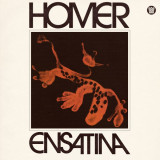
Homer Steinweiss has an incredibly storied career in music that started when he was just a teenager. He's drummed for nearly every "retro soul" group that mattered and his distinctive stickwork helped blend the raw-but-receptive soul sound back into the mainstream via the likes of Amy Winehouse & Sharon Jones. He's now one of the most in demand drummers in the world, playing with Jonas Brothers, Clairo, Solange, Adele, and Bruno Mars to name a few. With his debut solo release Ensatina, Homer is stepping to the forefront as both musician and producer. His new record is a reection of who he is now and a testament to how struggle often brings about a needed change. In 2020 Homer had to reckon with considerable emotional turbulence; at the same time that his band Holy Hive broke up, a personal relationship of 20+ years fell apart putting Homer in an uncertain place mentally. The fallout was signi‑cant enough for him to seek professional help. "I was going through these super manic highs and then very depressive lows," Homer describes. "And being in all that, it's just so tough to imagine that the other side is there, that it'll be ok." But, with time, professional help, and support from friends and family, Homer made it through and has been forever changed. This album is a product of that period of his life. The ‑rst song from these sessions, "Now That It's Over" perfectly sums up Homer's triumph through those tough times. It's a song of changing perspective and contemplation with haunting vocals from Hether and Flikka. "Paul (Castelluzzo_ aka, Hether), as a friend, saw me through these highs and lows," Homer points out. "I only had the one line, 'Now that it's over, I'm alright,' but he felt that lyric so much that he wrote all these sections and lyrics and basically completed the song. It was like he was writing to me." Hether also features on album standouts "Deep Sea", a modern love song, "Start Select", a juxtaposition of inspiration and melancholy, and "Forever and Ever and Ever and Ever" which is an incredible contemporary take on the B side soul ballad. Homer uses his innate gift for bringing seemingly opposing energies together on "Racecar Driver", pairing the vocals of Hether & long time friend and collaborator KIRBY to make a genre challenging banger. KIRBY also graces the album opener "Rollin'", an airy, warm-weather invoking song that her raspy voice perfectly compliments. He puts his drumming front and center on "So Get Up!", a bottom heavy infectious track that MINOVA's vocals turn into an instant hit that is sure to smash speakers. On "Wishing Well" & "Hide It Behind the Light I'm Shining Through" Homer is joined by girl named GOLDEN, who's unique voice effortlessly ‑nds the pocket in each tune. The man on trumpet, and fellow Big Crown label mate Dave Guy, puts his incomparable playing on the album closer "Goldie" which Homer says is the part of the movie where the credits roll. Making this album was a refuge for Homer and it put him back on track. Ensatina is a glimpse into the different energies and inuences that make Homer tick. To say he was always much more than a drummer would be an understatement, and this ‑rst solo offering is just the beginning of his next chapter.
- Rollin' Feat. Kirby
- Camera Feat. Girl Named Golden
- Deep Sea Feat. Hether
- Now That It's Over Feat. Hether & Flikka
- Racecar Driver Feat. Kirby, Hether, And Girl Named Golden
- So Get Up! Feat. Minova & Michael Rault
- Wishing Well Feat. Girl Named Golden
- Hide It Behind The Light I'm Shining Through Feat. Girl Named Golden
- Start Select Feat. Hether
- Forever And Ever And Ever And Ever Feat. Hether
- Goldie Feat. Dave Guy
Homer Steinweiss has an incredibly storied career in music that started when he was just a teenager. He's drummed for nearly every "retro soul" group that mattered and his distinctive stickwork helped blend the raw-but-receptive soul sound back into the mainstream via the likes of Amy Winehouse & Sharon Jones. He's now one of the most in demand drummers in the world, playing with Jonas Brothers, Clairo, Solange, Adele, and Bruno Mars to name a few. With his debut solo release Ensatina, Homer is stepping to the forefront as both musician and producer. His new record is a reection of who he is now and a testament to how struggle often brings about a needed change. In 2020 Homer had to reckon with considerable emotional turbulence; at the same time that his band Holy Hive broke up, a personal relationship of 20+ years fell apart putting Homer in an uncertain place mentally. The fallout was signi‑cant enough for him to seek professional help. "I was going through these super manic highs and then very depressive lows," Homer describes. "And being in all that, it's just so tough to imagine that the other side is there, that it'll be ok." But, with time, professional help, and support from friends and family, Homer made it through and has been forever changed. This album is a product of that period of his life. The ‑rst song from these sessions, "Now That It's Over" perfectly sums up Homer's triumph through those tough times. It's a song of changing perspective and contemplation with haunting vocals from Hether and Flikka. "Paul (Castelluzzo_ aka, Hether), as a friend, saw me through these highs and lows," Homer points out. "I only had the one line, 'Now that it's over, I'm alright,' but he felt that lyric so much that he wrote all these sections and lyrics and basically completed the song. It was like he was writing to me." Hether also features on album standouts "Deep Sea", a modern love song, "Start Select", a juxtaposition of inspiration and melancholy, and "Forever and Ever and Ever and Ever" which is an incredible contemporary take on the B side soul ballad. Homer uses his innate gift for bringing seemingly opposing energies together on "Racecar Driver", pairing the vocals of Hether & long time friend and collaborator KIRBY to make a genre challenging banger. KIRBY also graces the album opener "Rollin'", an airy, warm-weather invoking song that her raspy voice perfectly compliments. He puts his drumming front and center on "So Get Up!", a bottom heavy infectious track that MINOVA's vocals turn into an instant hit that is sure to smash speakers. On "Wishing Well" & "Hide It Behind the Light I'm Shining Through" Homer is joined by girl named GOLDEN, who's unique voice effortlessly ‑nds the pocket in each tune. The man on trumpet, and fellow Big Crown label mate Dave Guy, puts his incomparable playing on the album closer "Goldie" which Homer says is the part of the movie where the credits roll. Making this album was a refuge for Homer and it put him back on track. Ensatina is a glimpse into the different energies and inuences that make Homer tick. To say he was always much more than a drummer would be an understatement, and this ‑rst solo offering is just the beginning of his next chapter.
Wer hat Macht? Wie wird sie genutzt und ausgeübt? Und wie, verdammt noch mal, kann man sich Macht - gerade in unseren Zeiten, in denen wir uns so oft ohnmächtig fühlen - zurückholen und sich selbst ermächtigen? Mit ordentlich Wut im Bauch, rotziger Stimme, mächtig Fuzz auf der Gitarre und einer unbändigen Punk-Rock-Energie, sucht das Berliner Duo CAVA auf ihrem neuen Album "Powertrip" Antworten auf diese drängenden Fragen. Ihr Zweitwerk, das auf Buback erscheint, vereint lautstarke Messages gegen Sexismus, Klassismus und Kapitalismus mit der so wichtigen Perspektive nicht cis-männlicher Akteur*innen in der Musikindustrie. Kurzum: "Powertrip" ist eine Kampfansage an das Patriarchat und all seine schmerzhaften Begleiterscheinungen.
The eighth and latest slate of refined retro-futuristic synth-pop by Liz Wendelbo and Sean McBride aka Xeno & Oaklander is named after and inspired by "the study of what not to do, a negative image of a positive, the other side, the other:" Via Negativa (in the doorway light). Recorded in the fall of 2023 at their modernist Connecticut home fashioned into a two-story synthesizer laboratory and mixing studio, the album is uniquely visionary in spirit yet precision in execution, a contrast central to the duo's enduring chemistry. Embryonic piano sketches were translated to nuanced modular systems, which McBride weighted with "harmonic padding," tuned percussion, and a spectral transfer device capable of "rendering spasms of rhythmic overtonal filigree." Despite the technological complexity of their craft, emotively the songs require no deciphering - these are technicolor widescreen anthems of the cybernetic age. The eponymous opening track sets the pace, soaring sleekly over glittering synths and call-and-response vocals about arias, shattered light, and faces in stereo. From there the record expands and contracts, cycling through a gallery of moods and masks, animated by the band's fascination with drama, "the idea of personae," and theatrical characters. Track by track, a murky, tragic backstory reveals itself: forlorn figures navigating a treacherous mercury mine, alternately poisoned by fumes or buried in collapsing caverns. The tension between Teutonic, utopian synthetic pop and lyrical narratives of ghosts in silos, ruined mills, and the traumas of mineral excavation creates a compelling friction, alternately futurist and obsolete, elevated and subterranean. Wendelbo describes the music's polarities perfectly: "The heavy machinic din of extraction in contrast with the enchantment of the mined precious gems and metals." From bilingual odes to bloodstones ("O Vermillion") to cosmic chrome dance floor classics ("Lost & There" "The present tense can never feel real / So many pasts conspire in the burning sun") to strutting EBM sensualities ("Actor's Foil"), Xeno & Oaklander re-prove themselves masters of the axis of technology and poetry, snaking cables and synesthesia, mining melodies and myths across 15 years of focused artistry. Theirs is a muse still gilded and gleaming, burnished red and silver, attuned to "the unobservable, the unfamiliar, that which you don't see directly."
„Brighter days are up ahead“, verkündet Dwight Yoakam im Titeltrack seines neuen Albums Brighter Days, seiner ersten Veröffentlichung von neuem
Originalmaterial seit neun Jahren. Brighter Days wurde in den letzten drei Jahren geschrieben und aufgenommen und enthält 12 brandneue Songs,
die von Yoakam geschrieben bzw. mitgeschrieben wurden, sowie zwei scheinbar ungleiche Coverversionen von „Keep On The Sunny Side“ von der
Carter Family und „Bound Away“ von Cake, die kunstvoll und in dem unverwechselbaren Stil, der nur von Dwight Yoakam stammen kann, zu einem
Gesamtwerk verwoben wurden. Die mitreißende Leadsingle „I Don't Know How To Say Goodbye (Bang Bang Boom Boom)“ wurde von Yoakam
speziell für eine Zusammenarbeit mit dem selbsternannten Dwight Yoakam-Superfan Post Malone geschrieben.
Yoakam hat Brighter Days selbst produziert und dabei eine moderne Reverenz an die Geschichte der Country-Musik mit dem Pioniergeist des
kalifornischen Rock'n'Roll verbunden. Das Ergebnis ist eine Mischung aus handwerklichem Können und Unmittelbarkeit, die den typischen Dwight
Yoakam-Cool“ einfängt, der den zweifachen Grammy-Gewinner seit Beginn seiner legendären Karriere von seinen Country-Kollegen unterscheidet.
Wie üblich sind Yoakams Texte auf dem gesamten Album sowohl täuschend mühelos als auch ergreifend. Brighter Days wurde von dem
Weltklasse-Ingenieur Chris Lord-Alge abgemischt.
- A1: Zwischen Planeten
- A2: Stimme Des Wegelagerers
- A3: Aus Dem Feuer, Aus Dem Licht
- A4: Immer Wieder Im Kreis
- A5: In Den Tiefen
- A6: Hinein, Hinaus, Hinüber
- A7: Fantasiegebilde
- A8: Der Verwunschene Hain
- A9: Blick Nach Drüben
- B1: Innerlich Außerhalb
- B2: Schimmernde Chimäre
- B3: Gemeinsam Hindurch
- B4: Mit Verbundenen Augen
- B5: Purpur-Trank
- B6: Im Sternstrom
- B7: Schlingerling
- B8: Endstation Sehnsucht
Turning their gaze to the buoyant culture of wyrd, modernist German folk music, Quindi welcome a spectacularly idiosyncratic offering from Johannes Schebler, aka Baldruin. Bewildering narrative twists, high drama and intricate delicacy make Mosaike der Imagination an engrossing listen from the outset, as baroque atmospheres and tumbledown drums intertwine with tactile string plucks and needlepoint synthesis in an authoritative bridging of ancient and hypermodern sonic sensibilities.
Schebler's catalogue as Baldruin is extensive, reaching back to the late 00s and covering a lot of ground through cassette albums on respected underground labels like SicSic, A Giant Fern and Lullabies For Insomniacs. Meanwhile, his work has been recognised as part of a broader movement of experimental electronic music in Germany taking inspiration from folk traditions, as documented on last year's essential Bureau B compilation, Gespensterland. Beyond his solo work, Schebler also works with Jani Hirvonen as Grykë Pyje (mappa), and both collaborate with Paul Wilson as Yayoba (Not Not Fun). Christian Schoppik of leading dark folk project Brannten Schnüre joins him as Freundliche Kreisel (STROOM). It's a tangled, fascinating and evocative sound world which Mosaike der Imagination offers a compelling window into.
No two tracks on the album follow the same pattern or palette, whether gliding through the Giallo synth undulations and post rock tonal arcs of 'Stimme des Wegelagerers' or spelling out miasmic incantations through flickering flames on 'Aus dem Feuer, aus dem Licht'. 'Hinein, hinaus, hinüber' revolves around meditative drum mantras and cascading melodic phrasing, densely layered and evolving with purpose. 'Gemeinsam hindurch' flicks between swooping strings and pizzicato plucks in a purely romantic expression of orchestration, 'Mit verbundenen Augen' is a bewildering choral voice study and 'Im Sternstrom' revels in ecstatic synth arpeggios. Nothing can be predicted except the vibrancy and clarity of Schebler's vision.
It's a vision which extends to the front cover artwork for Mosaike der Imagination — a glorious tapestry created by Finnish artist Jan Anderzén, with a responding design and layout from Schebler adorning the rear sleeve.
Stepping to the side of the cosy daydream reveries that inhabit much of the Quindi output, Mosaike der Imagination indulges the label's penchant for sophistication in a freakily fascinating new framework from the heart of an exciting movement in experimental folk music.
On his latest full-length, Low End Activist swerves towards weightless grime and suspended hardcore miniatures to tell a very personal story. The UK-rooted producer continues his habit of zeroing in on a distinct approach for each release, leaving a logical breadcrumb trail of soundsystem science in his wake as he channels decades of bass absorption into 14 atmospheric cuts that prize patience and precision over obvious club functionality.
Municipal Dreams plays out as a semi-autobiographical tour through the Blackbird Leys estate that the Activist grew up on. It’s a lived reflection on inequality and the ripple effect it has in working class communities, using the sonic palette to set the mood and scattering pointed samples throughout to spell out the story.
In sampling the exhaust of a stolen Subaru Impreza, ‘TWOC’ looks back to the recreational car theft which was standard entertainment for the kids in his community. There’s an underlying idea that this ‘council estate sport’ wouldn’t have been so prevalent if there were public services and opportunities presented to the scores of disaffected youth looking for somewhere to direct their energy and frustration.
In ‘Just A Number (Institutionalised)’ LEA alludes to the shattered juvenile detention system, growing up seeing friends and family members locked up at ease with little to no support on being released back into society, just meant that the same cycles of behaviour would play out over and over.
‘Violence’ samples from a short film shot by the drama division of the Blackbird Leys Youth Club to evoke the physical threat which formed a background hum to life on the estate. The industrial mechanics of the local car factory, which served an integral role as a workplace for many in the community, gets sampled in ‘They Only Come Out At Night’ while the ‘Everyone I look up to are either junkies or criminals’ sample in ‘Broke’ looks to a lack of positive role models.
Municipal Dreams isn’t a one-note indictment of life on the estate, ‘Innocence’ captures the simplicity of a child at birth before their environment has time to shape them. The Hope interludes cut through the grim honesty of the longer tracks while a subtle thread of wry humour finds its way into some of the talking heads cutting through the signature LEA murk.
But honesty is the operative word here, and the message feels all the more meaningful at a time when the UK’s social divisions are laid bare in the wake of a devastating stretch of austerity. Returning to Blackbird Leys to shoot images for the photo-zine and album cover, the Activist found the local community centre being demolished. The local pub stands derelict, its faded Welcome sign a grimly ironic portent of the options facing children of the estate in the wider world.
Funnelling his memories, hopes and fears into a singular twist on the bass weight tradition, LEA captures evocative scenes that land somewhere between kitchen sink realism and rave futurism.
Lili Holland-Fricke and Sean Rogan’s debut album “dear alien” is a constellation of radiant improvised impulses, imagined in lucent fragments of cello, guitar and voice. Spacious, tender and glistening with rich electronic distortion, the record melds a spectrum of processed and natural sound as the artists invite listeners into their dreamlike world of synergetic introspections.
Cultivated through a shared spirit of resourcefulness and play, “dear alien” emerges as an organic meeting place in the compositional output of British-German experimental cellist Lili Holland-Fricke and Manchester-born guitarist and producer Sean Rogan. Having studied their respective instruments at the Royal Northern College of Music, both artists have flourished in eclectic solo and collaborative projects, creating intricate and intimate spheres of sound with a deep appreciation for songwriting and improvisation.
Holland-Fricke’s transition from the classical world to writing her own material, and later vastly expanding her palette with electronics, first converged with Rogan’s distinctive flair for production in 2022 on her EP “birdsong for breakfast” and single ‘draw on the walls’. Now, the duo present an album envisioned through true ‘50/50’ collaboration during the summer of 2023, written across two intensive weeks of improvising and experimenting at Rogan’s Greenwich home studio. A convergence of the artists’ sounds and influences, the music was fostered by the idea of making an album with ‘no plan’ and their shared recent discovery of Arthur Russell, to whom the final track is dedicated.
“dear alien” assembles eight compositions that emerged naturally as the duo created sketches with cello and pedals, guitar, tape loops and poetic vocal musings, forming songs that explore themes of waiting, circling back around, and glitchy communication. Moments of drifting through pillowy layers of sound contrast with saturated visions of electronic modification, where the record’s glowing instrumental contours are pushed to the extremes.
The plaintive shades of ‘half blue’ and meandering deliberations of ‘slow thing’ are teased by the friction of static signals and a sense of ever-mutating sonic mass – a sensibility most acutely realised in ‘dawning’, where cello-vocoder eruptions grow in magnitude, the absence of sound between them burdened with something sinister and unspoken. As the artists expand on this piece, ‘It’s the sound equivalent of squeezing your eyes shut to shield against the brightness of something you don’t want to see, only to find that each time you open them again the world is not softening but getting more relentlessly overwhelming, to the point of being totally blinding.’
Three tracks with lyrics – ‘at first’, ‘dear alien’ and ‘seem asleep’ – refract the album’s wistful and melancholic colours into poetic imagery and metaphors, ushering in reflections on relationship tensions and someone close feeling unknown, with hints towards wider unsettled feelings about climate change. In the spirit of lyrical improv, ‘seem asleep’ compiles lone lines from Holland-Fricke’s journals into a cut-and-paste collage around hopeful patience or futile lingering – either way conjuring a softness that welcomes the hazy ambience of ‘for a. r.’, the final composition which soundscapes the summer days spent making the album. As the artists describe of this track, ‘The music kind of leads somewhere, but then kind of leads nowhere, and just meanders around where it is, content to just be walking in a circle back to where it started.’
, INCANTATION,
Vier Jahre und zahllose Gigs später sind wir stolz, den Nachfolger des viel gelobten „Where Paths Divide“ aus dem Jahr 2020 der schwedischen
Old-School-Death-Metal-Legende TOXAEMIA zu präsentieren. Und zu sagen, dass „Rejected Souls of Kerberus“ ihr zweites und bisher gelungenstes
Studioalbum ist, wäre eine große Untertreibung. Für das Mixing und Mastering des Albums arbeitete der Fünfer erneut mit Dan Swanö zusammen, da
sowohl die Band als auch die Fans mit der Arbeit, die er bei Toxaemias letztem Album geleistet hat, äußerst zufrieden waren. Außerdem haben die
Schweden diesmal, wie schon beim letzten Mal, zwei Songs aus den Archiven ihrer alten Demos geholt: „Beyond the Realm“ und ‚Tragedies Through
Centuries‘. Auch ein Coversong ist zum ersten Mal auf einem Toxaemia-Album vertreten: Dismember und ihr „I Saw Them Die“. Das Ergebnis: ein
reiner schwedischer Death-Metal-Bastard. Kein Wortspiel beabsichtigt. Obwohl Toxaemia sich für einen moderneren Sound als auf dem letzten
Album entschieden haben, ist die Platte insgesamt härter ausgefallen. Die Band wollte auch sicherstellen, dass sie viel Abwechslung in das Album
bringt, um ihm die nötige Würze zu verleihen, um „Where Paths Divide“ zu übertreffen. Darüber hinaus wurde Freund und Gründungsmitglied Emil
Norrman zurück ans Schlagzeug geholt, um seinen eigenen, einzigartigen und sehr kernigen Toxaemia-Sound in den Mix einzubringen und „Rejected
Souls Of Kerberus“ zu einem Endergebnis zu machen, das jeden Fan von Death Metal begeistern wird.
, INCANTATION,
Vier Jahre und zahllose Gigs später sind wir stolz, den Nachfolger des viel gelobten „Where Paths Divide“ aus dem Jahr 2020 der schwedischen
Old-School-Death-Metal-Legende TOXAEMIA zu präsentieren. Und zu sagen, dass „Rejected Souls of Kerberus“ ihr zweites und bisher gelungenstes
Studioalbum ist, wäre eine große Untertreibung. Für das Mixing und Mastering des Albums arbeitete der Fünfer erneut mit Dan Swanö zusammen, da
sowohl die Band als auch die Fans mit der Arbeit, die er bei Toxaemias letztem Album geleistet hat, äußerst zufrieden waren. Außerdem haben die
Schweden diesmal, wie schon beim letzten Mal, zwei Songs aus den Archiven ihrer alten Demos geholt: „Beyond the Realm“ und ‚Tragedies Through
Centuries‘. Auch ein Coversong ist zum ersten Mal auf einem Toxaemia-Album vertreten: Dismember und ihr „I Saw Them Die“. Das Ergebnis: ein
reiner schwedischer Death-Metal-Bastard. Kein Wortspiel beabsichtigt. Obwohl Toxaemia sich für einen moderneren Sound als auf dem letzten
Album entschieden haben, ist die Platte insgesamt härter ausgefallen. Die Band wollte auch sicherstellen, dass sie viel Abwechslung in das Album
bringt, um ihm die nötige Würze zu verleihen, um „Where Paths Divide“ zu übertreffen. Darüber hinaus wurde Freund und Gründungsmitglied Emil
Norrman zurück ans Schlagzeug geholt, um seinen eigenen, einzigartigen und sehr kernigen Toxaemia-Sound in den Mix einzubringen und „Rejected
Souls Of Kerberus“ zu einem Endergebnis zu machen, das jeden Fan von Death Metal begeistern wird.