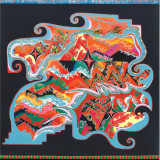
With J Jazz volume 4, the BBE J Jazz Bullet Train continues its journey traversing the expansive landscape of modern Japanese jazz. Volume 4 is the latest in the universally praised compilation series exploring the best, rarest and most innovative jazz to emerge from the Far East. Please take your seats for a first-class ticket to J Jazz central. This latest station stop off is with the famed Nippon Columbia label, one of the biggest labels in Japan, whose jazz output embraces every possible style imaginable. Focussing on the key years 1968-1981, J Jazz volume 4 sees compilers Tony Higgins and Mike Peden dig even deeper into their record collections and pull-out tracks that span styles ranging from solo to big band, jazz classical interpretations and heavy jazz rock, to febrile post-bop, white hot samba fusion, and modal psychedelic wig-outs. J Jazz volume 4 features icons such as drum master Takeo Moriyama, keyboard magi Hiromasa Suzuki, Fumio Itabashi, and Masahiko Satoh, and guitar wizards Kazumi Watanabe and Kiyoshi Sugimoto, alongside big band maestros and innovators Nobuo Hara and his Sharps and Flats, and Toshiyuki Miyama’s New Herd. Thunderous basslines nestle alongside glistening runs of electric piano, bubbling synths and air-tight drumming as the heavy psychedelic modal blues of Jiro Inagaki flows with the infectious samba grooves of Takashi Mizuhashi featuring Herbie Hancock; Shigeharu Mukai’s fusion funk epics take the music to another level and Mikio Masuda’s driving keyboard rhythms brings the heat to an incendiary dancefloor zone.
Cerca:moda mode
Miles Davis created just one studio album with his original sextet: Milestones. And he made every moment count. Pairing with Cannonball Adderley, John Coltrane, Red Garland, Paul Chambers, and Philly Joe Jones, Davis not only laid the groundwork for the modalism that immediately followed but tailored a genuine modern-jazz masterwork laden with performances among the most explosive of his distinguished career. Sandwiched between the more famous 'Round About Midnight and the epochal Kind of Blue, Milestones remains a seminal work of art.
Sourced from the original master tapes and pressed on dead-quiet SuperVinyl, Mobile Fidelity's numbered-edition 180g LP grants each musician their own space amid broad soundstages. Afforded the benefits of a nearly non-existent noise floor and supreme groove definition, this vinyl reissue doubles as a time machine back to the February-March 1958 recording sessions.
Colors, shapes, and dimensions appear in the manner that resembles what you'd glean from behind a studio control room's window. Davis' burnished trumpet is rendered in three-dimensional perspective and seemingly coaxes the band to play with unburdened zest. Coltrane's trademark saxophone teems with lifelike tonality and images with specificity; his solos work in tandem with and against the driving rhythms. Garland's swaggering piano lines? Visualize the keys as he hits full stride, the chords and fills slithering around skeletal frameworks.
Inducted into the Grammy Hall of Fame and selected as a "Core Collection" record by the Penguin Guide to Jazz, Milestones is as famous for its title track – widely considered ground zero for modalism and bolstered by Jones' hallmark "Philly Lick" rim shot – as the players that produced it. The launching pad for many of Davis' improvisational flights, the album teases the explorations Coltrane would soon chase. Davis' own solo work broaches territories that far exceed what he had done in his bop-rooted past. Every song is a highlight.
Take the bravado "Dr. Jackle," featuring a hot-foot pace and bebop strains, or "Sid's Ahead," which continues the album's blues theme while juggling edgy harmonics and inside-out structures. On "Billy Boy," distinguished with an arco bass solo from Chambers, Garland gets a turn in the spotlight and channels the openness practised by one of his heroes, Ahmad Jamal. Even more instructive is the band's reading of Dizzy Gillespie's "Two Bass Hit." Three years removed from the version Davis and company recorded for the trumpeter's Columbia debut, this interpretation demonstrates the extent to which the group had jelled in a relatively short amount of time.
Then there's "Straight, No Chaser," the definitive rendition of Thelonious Monk's signature piece. Coltrane's marbled playing pulls at the tune's borders, Adderley takes liberty with solos, and Davis dances around his mates, at one point quoting "When the Saints Go Marching In" while demonstrating his knowledge of tradition and casting an eye towards the future.
About that future. Garland already had one foot out the door during the Milestones sessions to the extent Davis spells him on "Sid's Ahead." Jones would stick around for a bit longer but soon plot his exit. History proves Davis navigated the changes with visionary aplomb. Yet the chemistry, excitement, and beauty the sextet achieves on Milestones cannot be overstated. This reissue helps put the album in proper perspective – and presents the music the fidelity it deserves.
The next chapter of the Natural Information Society is here. Since Time Is Gravity, credited to Natural Information Society Community Ensemble with Ari Brown, presents a newly expanded manifestation of acclaimed composer & multi-instrumentalist Joshua Abrams nearly 15 year, 7 albums &-counting flagship ensemble. Joining the core NIS of Abrams (guimbri & bass), Lisa Alvarado (harmonium) Mikel Patrick Avery (drums) & Jason Stein (bass clarinet) are Hamid Drake (percussion), Josh Berman & Ben Lamar Gay (cornets), Nick Mazzarella & Mai Sugimoto (alto saxophones & flute), Kara Bershad (harp) & Chicago living legend of the tenor saxophone Ari Brown. Recorded live to tape at Electrical Audio & The Graham Foundation, cover painting Vibratory Cartography: Nepantla, by Lisa Alvarado. 2xLP on Eremite USA, 2xLP & CD on Aguirre/Eremite Europe. Out 14-04.
Since first developing Natural Information Society in 2010, Joshua Abrams has been gradually expanding the group’s conceptual underpinnings, its musical references & the sheer number of the group’s members. Its music is, in a sense, an expansive form of minimalism, based in repeated & overlaid rhythmic patterns, ostinatos & modality. Its roots, its scale & its meaning become clearer in time. If time is gravity, it also allows us to carry more. Having begun as fundamentally a rhythm section with Abrams’ guimbri at its core, the version here can stretch to a tentet, including six horns.
Abrams has been expanding his minimalism gradually, but he has long understood a key to minimalism’s potential: the breadth of its roots in the late 1950s & early 1960s, ranging from the dissatisfaction of young European-stream composers with the limitations of serialism to the simultaneous dissatisfaction of jazz musicians with the dense harmonic vocabulary of bop & hard bop. The former began exploring rhythmic complexity & narrow tonal palates in place of harmonic abstraction (Steve Reich’s Drumming, Philip Glass’ Music with Changing Parts; perhaps above all Terry Riley’s In C & his late ‘60s all-night organ & loop concerts); the later reduced dense chord changes to scales (signally with Miles Davis' Kind of Blue, but rapidly expanding with John Coltrane’s vast project). In the 1950s the LP record opened the world with documentation of Asian & African musics, key influences on both minimalists & jazz musicians. If John Coltrane’s soprano saxophone suggested the keening shehnai of Bismillah Khan, the instrument was rapidly taken up by two key minimalists, LaMonte Young & Riley, similarly appreciative of its flexible intonation, the same thing that kept it out of big bands.
If the guimbri, the North African hide-covered lute that Abrams plays with NIS, involves a rich tradition of hypnotic healing music associated with the Gnawa people, Abrams’ music also touches on other musics as well — other depths, memories & healings, different drones, rhythms & modes. As the group expands on Since Time Is Gravity, he has made certain jazz traditions in the same stream more explicit as well. If there is a mystical & elastic quality involved in the experience of time, both in direction & duration, you will catch it here. The parts for the choir of winds expand on the roles of Abrams’ guimbri, Mikel Patrick Avery & Hamid Drake’s percussion & Lisa Alvarado’s harmonium: at times, the winds are almost looping in the tentet version, each hitting a repeating note in turn, at once drone & distinct inflection on temporal sequence. The brilliance of the work resides in Abrams’ compositions, the NIS’ intuitive execution & in Ari Brown’s singular embodiment of the great tenor saxophone tradition, including the oracular genius of Eddie “Lockjaw” Davis, & Yusef Lateef. The three pieces by the expanded NIS featuring Brown —the opening “Moontide Chorus” & “Is” & the ultimate “Gravity”— have an immediate impact, & togther might be considered a kind of concerto for tenor saxophone. Here Brown presses almost indistinguishably from composed melody to improvised speech, getting so close to language that he might have a text. Everything here is a sign. Note the tap of the Rhythm Ace that links “Moontide Chorus” to “Is”, the attentive heart always present, even when signed by a machine. There’s a link here to the methodologies & meanings of dub music & the linear & vertical collage of beats, textures & tongues: treated with reverence, a sample of a beat-box can be as soulful, as hypnotic, as a mbira or a tamboura. If those pieces with Brown are heard as a suspended concerto, the three embrace & enfold the other works, like the sepals of a flower. That placement will also touch on the mysteries of our perception of time.
Particularly in “Is”, but elsewhere as well, a phenomenon of transcendence arises in which time appears to be tripartite, at once moving backwards & forwards & standing still. This is an act of technical brilliance certainly, but also an illumination of music’s ability to represent temporal consciousness through polymetrics. This particular listener has only heard it before in a few places, including the horn shouts & bowed basses of Coltrane’s Africa, in moments of Charles Mingus’ The Black Saint & the Sinner Lady, in certain pieces where tapes were literally running backwards, & earlier still in Dizzy Gillespie’s Cubana Be, Cubana Bop, in which the composer George Russell & conguero Chano Pozo found a music that spoke at once in the voices of Stravinsky’s Rite of Spring & the vestigial rites, rhythms & songs of the Yoruba language & Santeria religion of inland Cuba.
In Joshua Abrams’ compositions & the realization of them by the NIS, in the time of one’s close listening & memory thereof, distinctions between the “natural” & the “social”, the “quotidian” & the “transcendent” are erased, suspended or perhaps irrelevant. Consider two of the ensemble pieces, one named for nature, the other social science. In “Murmuration” the repeated wind figures of flute & alto saxophone combine with the interlocking patterns of harp, guimbri & frame drum (tar) to create a perfect moving stillness, not an imitation but a witness to the miracle of the starlings’ astonishing collective art, a surfeit of beauty that might be the ultimate defense tactic.
“Stigmergy” takes its name & concept from the Occupy movement’s Heather Marsh, who proposes a social system based on a cooperative rather than competitive models, one in which ideas are freely contributed & developed as ideas rather than an individual’s property. In its form, Abrams’ “Stigmergy” is the closes thing to traditional jazz, a series of accompanied solos by each of the wind players. However, the composed accompaniment is a radically collectivist notion: a repeated rhythmic figure, call it ostinato or riff, in which the different winds each play only a note or two of the figure, a concept both more collectivist & individualistic in its conception than any typical unison figure. It suggests another of the underlying recognitions that propel the Natural Information Society, the group as social organism, the teleology of hypnotic anarchy, all parts in place, functioning systematically, evolving & expressing itself, its nature & society, as a transformative organism.
George Lewis has described music as “a space for reflection on the human condition”. This suggests that, rather than a “distraction”, at least some music might serve as a distraction from distraction. It’s a focus, a clarity, a awareness, an external invitation to interiority, as if music itself is a model for form & contemplation, an organism contemplating for us or as us. If that is a possibility, & I am sure I have heard such musics, than this music is among them. How many of our rhythms, melodies & harmonies (cultural, historical, biological, psychic) might such music carry, translate & transform in the particulate ecstasy of our own murmuration? (Stuart Broomer, April 2022)
Death and Vanilla return with 'Flicker', presenting their unique pop music that defies categorisation. Housed in a beautifully austere post-ironic de-constructed sleeve; 'Flicker' is a modern reflection on these difficult times. World crises notwithstanding, they return reborn, re-arranged and revitalised after assimilating dub reggae, the motorik spirals of Can, the modal meander of Philip Glass and The Cure's dreamier pop sounds; plus the twice removed symphonic ambience of Spiritualized and Talking Heads under heavy manners from Brian Eno. By osmosis their period of transition since 2019's much darker 'Are You A Dreamer?' has hatched new eclectic electronica anthems riddled with melody lines, and layered for lush love. - Forming in Malmö, Sweden, Death And Vanilla gravitated towards vintage musical equipment; from vibraphone, organ and mellotron, to tremolo guitar and Moog synthesisers. Soaking up soundtracks from the 60s and 70s, listening to library music, kosmiche, French Ye-ye pop and 60s psych, Marleen Nilsson, Anders Hansson and Magnus Bodin were fashioned by the city's austere industrial past and flat pack present, and all in the shadow of the Orsesund Bridge that links their dreamworld to mainland Europe and a darker reality. Death And Vanilla at once sound like everything is possible; but nothing else at all. There is a flicker of hope for everyone. - "Deploying vintage instruments in their quest for melancholic utopia." Electronic Sound * "Baroque pop through a dreampop filter." The Guardian Ltd Indie Retail Only Yellow Vinyl LP including DLC!
- 1: Rita Lee & Tutti Frutti - Agora E Moda
- 1: 2 Jorge Ben & Toquinho - Carolina Carol Bela
- 1: 3 Rosa Maria - Deixa Nao Deixa
- 1: 4 Trio Mocoto - Swinga Sambaby
- 1: 5 Sandra De Sa - Trem Da Central
- 1: 6 Os Brazoes - Volks-Volkswagen Blue
- 1: 7 Myriam Makeba - Xica Da Silva
- 1: 8 Lalo Schifrin - Bossa Nova Em Nova York
- 1: 9 Tenorio Jr - Nebulosa
- 1: 0 Grant Green - Brazil
- 1: Tom Zé - Jimmy, Renda Zedisc
- 2: 1 Noriel Vilela - 16 Toneladas (16 Tons)
- 2: Marisa Rossi - Deixa Eu Te Amar
- 2: 3 Sandra De Sa - Vale Tudo
- 2: 4 Lemos E Debétio - Morro Do Barraco Sem Agua
- 2: 5 Marcos Valle - Naturalmente
- 2: 6 Antônio Carlos Jobim & Roberto Paiva - Eu E O Meu Amor
- 2: 7 Salinas - Tenha Fé, Pois Amanha Um Lindo Dia Vai Nascer
- 2: 8 Osmar Milito - Morre O Burro, Fica O Homem
- 2: 9 Nico Gomez And His Afro Percussion Inc. - Lupita
- 2: 10 Ze Roberto - Lotus 7D
- 2: 11 Rosa Maria - Avenida Atlantica
- 2: 1 Super Som Ta - Agora Chega
Rare Groove Collection Explore the fusion of world music with soul, funk and disco through the Rare Groove Collection. With this new volume, discover unique groove tracks straight from Jamaica! Fully remastered original versions Brazilian RARE GROOVE Discover the wonders of Brazilian music from 60s, 70s & 80s. A wave of modernity invades the country and Soul, Funk & Disco influences merge with traditional genres such as Bossa Nova, Samba or Batucada. This union led to a colorful and cheerful groove symbolizing the transformation of Brazil.
BLUE NOTE TONE POET EDITION: produziert von Joe Harley, komplett analog von Kevin Gray von den Originalbändern gemastert, RTI-Pressung (180g), stabiles Tip-on-Gatefold, wattierte Innenhülle.
Der Pianist und Komponist Andrew Hill gehörte in den 1960er Jahren zu den visionärsten Musikern im Blue-Note-Stall. Tatsächlich waren einige der 12 Alben, die er zwischen ’63 und ’70 für das Label einspielte, ihrer Zeit so weit voraus, dass sie erst Jahrzehnte später veröffentlicht wurden.
So wie das brillante Album “Dance With Death”, das 1968 entstanden war, aber erst 1980 das Licht der Welt erblickte. Zu hören ist Hill hier mit sechs höchst orginellen Eigenkompositionen zwischen Post-Bop, modalem Jazz und Avantgarde.
Exzellente Unterstützung erhielt er bei der Einspielung von gleichgesinnten Modernisten wie Trompeter Charles Tolliver, Saxophonist Joe Farrell, Bassist Victor Sproles und Drummer Bill Higgins.
24 Jahre jung war der Trompeter Carmell Jones, als er 1960 von seiner Geburtsstadt Kansas City nach Los Angeles ging. Schon kurz nach seiner Ankunft erhielt der vielversprechende Youngster, den manche
mit Clifford Brown verglichen, dort einen Plattenvertrag bei Pacific Jazz.
1961 konnte er für das Label sein phänomenales Debüt “The Remarkable Carmell Jones” aufnehmen. Im Zusammenspiel mit Tenorsaxophonist Harold Land, Pianist Frank Strazzeri, Bassist Gary Peacock und Schlagzeuger Leon Pettis präsentierte er auf dem Album eine hochinteressante Mischung aus Cool Jazz und Hardbop.
BLUE NOTE TONE POET EDITION: produziert von Joe Harley, komplett analog von Kevin Gray von den Originalbändern gemastert, RTI-Pressung (180g), stabiles Tip-on-Gatefold, wattierte Innenhülle.
Der Pianist und Komponist Andrew Hill gehörte in den 1960er Jahren zu den visionärsten Musikern im Blue-Note-Stall. Tatsächlich waren einige der 12 Alben, die er zwischen ’63 und ’70 für das Label einspielte, ihrer Zeit so weit voraus, dass sie erst Jahrzehnte später veröffentlicht wurden.
So wie das brillante Album “Dance With Death”, das 1968 entstanden war, aber erst 1980 das Licht der Welt erblickte. Zu hören ist Hill hier mit sechs höchst orginellen Eigenkompositionen zwischen Post-Bop, modalem Jazz und Avantgarde.
Exzellente Unterstützung erhielt er bei der Einspielung von gleichgesinnten Modernisten wie Trompeter Charles Tolliver, Saxophonist Joe Farrell, Bassist Victor Sproles und Drummer Bill Higgins.
24 Jahre jung war der Trompeter Carmell Jones, als er 1960 von seiner Geburtsstadt Kansas City nach Los Angeles ging. Schon kurz nach seiner Ankunft erhielt der vielversprechende Youngster, den manche
mit Clifford Brown verglichen, dort einen Plattenvertrag bei Pacific Jazz.
1961 konnte er für das Label sein phänomenales Debüt “The Remarkable Carmell Jones” aufnehmen. Im Zusammenspiel mit Tenorsaxophonist Harold Land, Pianist Frank Strazzeri, Bassist Gary Peacock und Schlagzeuger Leon Pettis präsentierte er auf dem Album eine hochinteressante Mischung aus Cool Jazz und Hardbop.
The second instalment from London Odense Ensemble digs deeper into the group's vision of what modern psychedelic jazz should sound like. Cut from the same sessions as Jaiyede Sessions vol. 1, released last summer, vol. 2 presents a more nuanced approach to the material. On this set the ensemble focuses on shorter, layered pieces - travelling from deep spiritual jazz grooves to gorgeous free-flowing minimalism to full-on acid jazz. There's echo-drenched flutes being absorbed into layers of analog synth pads and guitars, bossa beats and double bass sequences merging with electronics. It's an intoxicating mélange of sounds and styles, spanning wide temporal and geographical distances. London Odense Ensemble came together when two of the finest exponents of London's flourishing jazz scene, flautist and saxofonist Tamar Osborn and keyboard specialist Al MacSween, came over to Denmark to explore new sounds with Causa Sui's Jakob Skott and Jonas Munk, as well as local bass player Martin Rude. For two days the group laid down grooves and ideas and experimented in the studio, and later the best segments were edited and mixed by Jonas Munk, who took a somewhat liberal approach to the mixing process, often dyeing the material with external effects and synthesizers. Jaiyede Sessions are the kinds of records that defy genre-terms, yet have its own instantly recognizable fingerprint. It carries a unique shared vision between the players of what modern psychedelic jazz sounds like. bios: Tamar Osborn: Saxophonist, composer and multi-wind instrumentalist is the creative force behind modal jazz ensemble Collocutor (On The Corner Records). She is a member of the Dele Sosimi Afrobeat Orchestra, performs and collaborates regularly with Sarathy Korwar, Jessica Lauren, Emanative, Ill Considered and DJ Khalab. Al MacSween: Keyboard player & founding member of Kefaya. Collaborations include American jazz legend Gary Bartz, Syrian qanun master Maya Youseff, London Community Gospel Choir, Palestinian jazz singer Reem Kelani & kora player Kadialy Kouyate. Martin Rude: Multi-string instrumentalist & lead singer in Sun River & Edena Gardens with members of Papir & Causa Sui. Jakob Skott: Drummer in Causa Sui with a slew of side projects on El Paraiso, including Chicago Odense Ensemble, Jonas Munk: Guitarist in Causa Sui & studio wizard on most releases on El Paraiso.
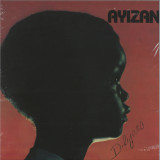
Comet Records present the new reissue out of the Comet new reissue series, Dilijans by Ayizan. A mind-blowing session of Spiritual Jazz recorded in NYC in 1984 led by Haitian genius Alix Pascal blending traditional Ra Ra elements with modal/spiritual melodies. The result was like nothing else coming out of Haiti or the Haitian exile community in the US at the time. Dark, mystical, lyrical and abstract, with its otherworldly shifting rhythms, Dilijans came off like a Haitian version of Bitches Brew.
The album sounds less like a stylish mini-jazz performing in a hotel dancehall than like a cry of ancestors emanating from the spirit world to lament over the complications of modern Haitian society.
"Bunn DeBrett Quintet is back with volume 2 of the eponymous album series of contemporary Jazz. Following on from the success of the critically acclaimed first album released in 2021 which sold out its vinyl run, volume 2 builds on the artistic and creative expressions of Volume 1 to bring together a group of artists to perform on Stephen Bunn and Jon DeBrett's compositions.
Once again featuring the core musicians of Stephen and Jon along with Neil Corcoran, Alan Barnes, Roger Beujolais, and the stunning spoken word vocals of Tenesha the Wordsmith. BDQ vol. 2 also benefits from the contributions of instrumentalists Nathan Haines, Crispin Taylor, Alastair Martin and the poetry of Daniel B. Summerhill.
Across the five tracks of this album this stellar line-up of musicians, composers and artists have created just under 40 minutes of the most fluid and fluent contemporary Jazz you will hear in many a year. Combining the spiritual with the modal and the modern, the atmosphere of this album will capture, enchant and enrapture all true music fans and those whose boundaries are blurred as to be non-existent."
Repress !
One of the first true moments of genius from saxophonist Nathan Davis - a mid 60s European session cut for the tiny SFP label - and a record that's even rarer than his early classics for MPS! The sound here is similar to the MPS sides - a mixture of soul jazz and modal jazz - served up with a bit more freedoms than Davis might have gotten on the US scene, and featuring a lineup that includes Woody Shaw on trumpet, Jean-Louis Chautemps on baritone sax, Rene Urtreger on piano, Jimmy Woode on bass, and Kenny Clarke on drums. The tight rhythm of Woode and Clarke is a nice counterpoint to the modernism of Davis and Shaw - Davis works a bit on soprano, which sounds especially great!
Since 2018, BBE Music has been leading the field in reissuing rare modern jazz from Japan’s golden period spanning the late 60s to the early 80s. The J Jazz Masterclass Series continues to present the finest in Japanese jazz with Planets by Masaru Imada Trio + 1. Originally released in 1977 as a private press album, Planets showcases the refined playing and sophisticated compositions of one of Japan’s leading pianists, Masaru Imada. In a fifty-plus year career he has released over 40 albums, including several that have won awards from some of Japan’s leading music publications and has recorded with leading US jazz artists such as David Sanborn, Brecker Brothers, Steve Gadd, and Grover Washington Jr. Imada’s Bosendorfer piano is joined by the drums of Tetsujiro Obara and the bass of Kunimitsu Inaba, augmented by Yuji Imamura on percussion. The opening title track on Planets (featured on J Jazz vol 3) is a wafer-thin modal waltz, beginning with gentle bells and shells, followed by Obara’s deft brush work and Inaba’s hypnotically pliant bass that gives a discrete yet steady support to the gossamer melody from Imada-san’s piano. The other standout track is the suite, Sea's Pasture, an epic piece that undulates and heaves, like the dark endless ocean, rich with mystery and each side of the album ends with a solo piece on the haunting Bosendorfer. Planets comes with full reproduction of the original artwork with obi strip, extra photos, a translation of the original sleeve note and a 3000 word new sleeve note by Tony Higgins including an interview with Masaru Imada himself. The J Jazz Masterclass Series is curated by Tony Higgins and Mike Peden for BBE Music.
- A1: Rita Lee & Tutti Frutti - Agora E Moda
- A2: Jorge Ben & Toquinho - Carolina Carol Bela
- A3: Rosa Maria - Deixa Nao Deixa
- A4: Trio Mocoto - Swinga Sambaby
- A5: Sandra De Sa - Trem Da Central
- A6: Os Brazoes - Volks-Volkswagen Blue
- B1: Myriam Makeba - Xica Da Silva
- B2: Lalo Schifrin - Bossa Nova Em Nova York
- B3: Tenorio Jr - Nebulosa
- B4: Grant Green - Brazil
- B5: Tom Ze - Jimmy, Renda Ze
- C1: Noriel Vilela - 16 Toneladas (16 Tons)
- C2: Marisa Rossi - Deixa Eu Te Amar
- C3: Sandra De Sa - Vale Tudo
- C4: Lemos E Debetio - Morro Do Barraco Sem Agua
- C5: Marcos Valle - Naturalmente
- C6: Antonio Carlos Jobim & Roberto Paiva - Eu E O Meu Amor
- D1: Salinas - Tenha Fe, Pois Amanha Um Lindo Dia Vai Nascer
- D2: Osmar Milito - Morre O Burro, Fica O Homem
- D3: Nico Gomez & His Afro Percussion Inc - Lupita
- D4: Ze Roberto - Lotus 72D
- D5: Rosa Maria - Avenida Atlantica
- D6: Super Som Ta - Agora Chega
Discover the wonders of Brazilian music from 60s, 70s & 80s. A wave of modernity invades the country and Soul, Funk & Disco influences merge with traditional genres such as Bossa Nova, Samba or Batucada. This union led to a colorful and cheerful groove symbolizing the transformation of Brazil.
- A1: Rock This Mother
- A2: Talk To Me Girl
- A3: You Can Find Me
- A4: Check This Out
- A5: Jesus Going To Clean House
- A6: Hope You Understood
- A7: Is It What You Want
- A8: Love Is Everlasting
- A9: This Is Hip-Hop Art
- A10: Opposite Of Love
- A11: Do You Know What I Mean
- B1: Saving All My Love For You
- B2: Look Out Here I Come
- B3: Girl You Always Talking
- B4: Have A Great Day
- B5: Take My Hand
- B6: I Need Your Love
- B7: Your Town
- B8: Talk Around Town
- B9: Booty Head/Take A Little Walk
- B10: I Love My Mama
- B11: I Never Found Anyone Like You
Vinyl LP[23,49 €]
As the sun sets on a quaint East Nashville house, a young man bares a piece of his soul. Facing the camera, sporting a silky suit jacket/shirt/slacks/fingerless gloves ensemble that announces "singer" before he's even opened his mouth, Lee Tracy Johnson settles onto his stage, the front yard. He sways to the dirge-like drum machine pulse of a synth-soaked slow jam, extends his arms as if gaining his balance, and croons in affecting, fragile earnest, "I need your love… oh baby…"
Dogs in the yard next door begin barking. A mysterious cardboard robot figure, beamed in from galaxies unknown and affixed to a tree, is less vocal. Lee doesn't acknowledge either's presence. He's busy feeling it, arms and hands gesticulating. His voice rises in falsetto over the now-quiet dogs, over the ambient noise from the street that seeps into the handheld camcorder's microphone, over the recording of his own voice played back from a boombox off-camera. After six minutes the single, continuous shot ends. In this intimate creative universe there are no re-takes. There are many more music videos to shoot, and as Lee later puts it, "The first time you do it is actually the best. Because you can never get that again. You expressing yourself from within."
"I Need Your Love" dates from a lost heyday. From some time in the '80s or early '90s, when Lee Tracy (as he was known in performance) and his music partner/producer/manager Isaac Manning committed hours upon hours of their sonic and visual ideas to tape. Embracing drum machines and synthesizers – electronics that made their personal futurism palpable – they recorded exclusively at home, live in a room into a simple cassette deck. Soul, funk, electro and new wave informed their songs, yet Lee and Isaac eschewed the confinement of conventional categories and genres, preferring to let experimentation guide them.
"Anytime somebody put out a new record they had the same instruments or the same sound," explains Isaac. "So I basically wanted to find something that's really gonna stand out away from all of the rest of 'em." Their ethos meant that every idea they came up with was at least worth trying: echoed out half-rapped exhortations over frantic techno-style beats, gospel synth soul, modal electro-funk, oddball pop reinterpretations, emo AOR balladry, nods to Prince and the Fat Boys, or arrangements that might collapse mid-song into a mess of arcade game-ish blips before rallying to reach the finish line. All of it conjoined by consistent tape hiss, and most vitally, Lee's chameleonic voice, which managed to wildly shape shift and still evoke something sincere – whether toggling between falsetto and tenor exalting Jesus's return, or punctuating a melismatic romantic adlib with a succinct, "We all know how it feels to be alone."
"People think we went to a studio," says Isaac derisively. "We never went to no studio. We didn't have the money to go to no studio! We did this stuff at home. I shot videos in my front yard with whatever we could to get things together." Sometimes Isaac would just put on an instrumental record, be it "Planet Rock" or "Don't Cry For Me Argentina" (from Evita), press "record," and let Lee improvise over it, yielding peculiar love songs, would-be patriotic anthems, or Elvis Presley or Marilyn Monroe tributes. Technical limitations and a lack of professional polish never dissuaded them. They believed they were onto something.
"That struggle," Isaac says, "made that sound sound good to me."
In the parlance of modern music criticism Lee and Isaac's dizzying DIY efforts would inevitably be described as "outsider." But "outsider" carries the burden of untold additional layers of meaning if you're Black and from the South, creating on a budget, and trying to get someone, anyone within the country music capital of the world to take your vision seriously. "What category should we put it in?" Isaac asks rhetorically. "I don't know. All I know is feeling. I ain't gonna name it nothing. It's music. If it grabs your soul and touch your heart that's what it basically is supposed to do."
=
Born in 1963, the baby boy of nine siblings, Lee Tracy spent his earliest years living amidst the shotgun houses on Nashville's south side. "We was poor, man!" he says, recalling the outhouse his family used for a bathroom and the blocks of ice they kept in the kitchen to chill perishables. "But I actually don't think I really realized I was in poverty until I got grown and started thinking about it." Lee's mom worked at the Holiday Inn; his dad did whatever he had to do, from selling fruit from a horse drawn cart to bootlegging. "We didn't have much," Lee continues, "but my mother and my father got us the things we needed, the clothes on our back." By the end of the decade with the city's urban renewal programs razing entire neighborhoods to accommodate construction of the Interstate, the family moved to Edgehill Projects. Lee remembers music and art as a constant source of inspiration for he and his brothers and sisters – especially after seeing the Jackson 5 perform on Ed Sullivan. "As a small child I just knew that was what I wanted to do."
His older brother Don began musically mentoring him, introducing Lee to a variety of instruments and sounds. "He would never play one particular type of music, like R&B," says Lee. "I was surrounded by jazz, hard rock and roll, easy listening, gospel, reggae, country music; I mean I was a sponge absorbing all of that." Lee taught himself to play drums by beating on cardboard boxes, gaining a rep around the way for his timekeeping, and his singing voice. Emulating his favorites, Earth Wind & Fire and Cameo, he formed groups with other kids with era-evocative band names like Concept and TNT Connection, and emerged as the leader of disciplined rehearsals. "I made them practice," says Lee. "We practiced and practiced and practiced. Because I wanted that perfection." By high school the most accomplished of these bands would take top prize in a prominent local talent show. It was a big moment for Lee, and he felt ready to take things to the next level. But his band-mates had other ideas.
"I don't know what happened," he says, still miffed at the memory. "It must have blew they mind after we won and people started showing notice, because it's like everybody quit! I was like, where the hell did everybody go?" Lee had always made a point of interrogating prospective musicians about their intentions before joining his groups: were they really serious or just looking for a way to pick up girls? Now he understood even more the importance of finding a collaborator just as committed to the music as he was.
=
Isaac Manning had spent much of his life immersed in music and the arts – singing in the church choir with his family on Nashville's north side, writing, painting, dancing, and working various gigs within the entertainment industry. After serving in the armed forces, in the early '70s he ran The Teenage Place, a music and performance venue that catered to the local youth. But he was forced out of town when word of one of his recreational routines created a stir beyond the safe haven of his bohemian circles.
"I was growing marijuana," Isaac explains. "It wasn't no business, I was smoking it myself… I would put marijuana in scrambled eggs, cornbread and stuff." His weed use originated as a form of self-medication to combat severe tooth pain. But when he began sharing it with some of the other young people he hung out with, some of who just so happened to be the kids of Nashville politicians, the cops came calling. "When I got busted," he remembers, "they were talking about how they were gonna get rid of me because they didn't want me saying nothing about they children because of the politics and stuff. So I got my family, took two raggedy cars, and left Nashville and went to Vegas."
Out in the desert, Isaac happened to meet Chubby Checker of "The Twist" fame while the singer was gigging at The Flamingo. Impressed by Isaac's zeal, Checker invited him to go on the road with him as his tour manager/roadie/valet. The experience gave Isaac a window into a part of the entertainment world he'd never encountered – a glimpse of what a true pop act's audience looked like. "Chubby Checker, none of his shows were played for Black folks," he remembers. "All his gigs were done at high-class white people areas." Returning home after a few years with Chubby, Isaac was properly motivated to make it in Music City. He began writing songs and scouting around Nashville for local talent anywhere he could find it with an expressed goal: "Find someone who can deliver your songs the way you want 'em delivered and make people feel what you want them to feel."
One day while walking through Edgehill Projects Isaac heard someone playing the drums in a way that made him stop and take notice. "The music was so tight, just the drums made me feel like, oh I'm-a find this person," he recalls. "So I circled through the projects until I found who it was.
"That's how I met him – Lee Tracy. When I found him and he started singing and stuff, I said, ohhh, this is somebody different."
=
Theirs was a true complementary partnership: young Lee possessed the raw talent, the older Isaac the belief. "He's really the only one besides my brother and my family that really seen the potential in me," says Lee. "He made me see that I could do it."
Isaac long being a night owl, his house also made for a fertile collaborative environment – a space where there always seemed to be a new piece of his visual art on display: paintings, illustrations, and dolls and figures (including an enigmatic cardboard robot). Lee and Issac would hang out together and talk, listen to music, conjure ideas, and smoke the herb Isaac had resumed growing in his yard. "It got to where I could trust him, he could trust me," Isaac says of their bond. They also worked together for hours on drawings, spreading larges rolls of paper on the walls and sketching faces with abstract patterns and imagery: alien-like beings, tri-horned horse heads, inverted Janus-like characters where one visage blurred into the other.
Soon it became apparent that they didn't need other collaborators; self-sufficiency was the natural way forward. At Isaac's behest Lee, already fed up with dealing with band musicians, began playing around with a poly-sonic Yamaha keyboard at the local music store. "It had everything on it – trumpet, bass, drums, organ," remembers Lee. "And that's when I started recording my own stuff."
The technology afforded Lee the flexibility and independence he craved, setting him on a path other bedroom musicians and producers around the world were simultaneously following through the '80s into the early '90s. Saving up money from day jobs, he eventually supplemented the Yamaha Isaac had gotten him with Roland and Casio drum machines and a Moog. Lee was living in an apartment in Hillside at that point caring for his dad, who'd been partially paralyzed since early in life. In the evenings up in his second floor room, the music put him in a zone where he could tune out everything and lose himself in his ideas.
"Oh I loved it," he recalls. "I would really experiment with the instruments and use a lot of different sound effects. I was looking for something nobody else had. I wanted something totally different. And once I found the sound I was looking for, I would just smoke me a good joint and just let it go, hit the record button." More potent a creative stimulant than even Isaac's weed was the holistic flow and spontaneity of recording. Between sessions at Isaac's place and Lee's apartment, their volume of output quickly ballooned.
"We was always recording," says Lee. "That's why we have so much music. Even when I went to Isaac's and we start creating, I get home, my mind is racing, I gotta start creating, creating, creating. I remember there were times when I took a 90-minute tape from front to back and just filled it up."
"We never practiced," says Isaac. "See, that was just so odd about the whole thing. I could relate to him, and tell him about the songs I had ideas for and everything and stuff. And then he would bring it back or whatever, and we'd get together and put it down." Once the taskmaster hell bent on rehearsing, Lee had flipped a full 180. Perfection was no longer an aspiration, but the enemy of inspiration.
"I seen where practicing and practicing got me," says Lee. "A lot of musicians you get to playing and they gotta stop, they have to analyze the music. But while you analyzing you losing a lot of the greatness of what you creating. Stop analyzing what you play, just play! And it'll all take shape."
=
"I hope you understood the beginning of the record because this was invented from a dream I had today… (You tell me, I'll tell you, we'll figure it out together)" – Lee Tracy and Isaac Manning, "Hope You Understand"
Lee lets loose a maniacal cackle when he acknowledges that the material that he and Isaac recorded was by anyone's estimation pretty out there. It's the same laugh that commences "Hope You Understand" – a chaotic transmission that encapsulates the duality at the heart of their music: a stated desire to reach people and a compulsion to go as leftfield as they saw fit.
"We just did it," says Lee. "We cut the music on and cut loose. I don't sit around and write. I do it by listening, get a feeling, play the music, and the lyrics and stuff just come out of me."
The approach proved adaptable to interpreting other artists' material. While recording a cover of Whitney Houston's pop ballad "Saving All My Love For You," Lee played Whitney's version in his headphones as he laid down his own vocals – partially following the lyrics, partially using them as a departure point. The end result is barely recognizable compared with the original, Lee and Isaac having switched up the time signature and reinvented the melody along the way towards morphing a slick mainstream radio standard into something that sounds solely their own.
"I really used that song to get me started," says Lee. "Then I said, well I need something else, something is missing. Something just came over me. That's when I came up with 'Is It What You Want.'"
The song would become the centerpiece of Lee and Isaac's repertoire. Pushed along by a percolating metronomic Rhythm King style beat somewhere between a military march and a samba, "Is It What You Want" finds Lee pleading the sincerity of his commitment to a potential love interest embellished by vocal tics and hiccups subtlely reminiscent of his childhood hero MJ. Absent chord changes, only synth riffs gliding in and out like apparitions, the song achieves a lingering lo-fi power that leaves you feeling like it's still playing, somewhere, even after the fade out.
"I don't know, it's like a real spiritual song," Lee reflects. "But it's not just spiritual. To me the more I listen to it it's like about everything that you do in your everyday life, period. Is it what you want? Do you want a car or you don't want a car? Do you want Jesus or do you want the Devil? It's basically asking you the question. Can't nobody answer the question but you yourself."
In 1989 Lee won a lawsuit stemming from injuries sustained from a fight he'd gotten into. He took part of the settlement money and with Isaac pressed up "Saving All My Love For You" b/w "Is It What You Want" as a 45 single. Isaac christened the label One Chance Records. "Because that's all we wanted," he says with a laugh, "one chance."
Isaac sent the record out to radio stations and major labels, hoping for it to make enough noise to get picked up nationally. But the response he and Lee were hoping for never materialized. According to Isaac the closest the single got to getting played on the radio is when a disk jock from a local station made a highly unusual announcement on air: "The dude said on the radio, 107.5 – 'We are not gonna play 'Is It What You Want.' We cracked up! Wow, that's deep.
"It was a whole racist thing that was going on," he reflects. "So we just looked over and kept on going. That was it. That was about the way it goes… If you were Black and you were living in Nashville and stuff, that's the way you got treated." Isaac already knew as much from all the times he'd brought he and Lee's tapes (even their cache of country music tunes) over to Music Row to try to drum up interest to no avail.
"Isaac, he really worked his ass off," says Lee. "He probably been to every record place down on Music Row." Nashville's famed recording and music business corridor wasn't but a few blocks from where Lee grew up. Close enough, he remembers, for him to ride his bike along its back alleys and stumble upon the occasional random treasure, like a discarded box of harmonicas. Getting in through the front door, however, still felt a world away.
"I just don't think at the time our music fell into a category for them," he concedes. "It was before its time."
=
Lee stopped making music some time in the latter part of the '90s, around the time his mom passed away and life became increasingly tough to manage. "When my mother died I had a nervous breakdown," he says, "So I shut down for a long time. I was in such a sadness frame of mind. That's why nobody seen me. I had just disappeared off the map." He fell out of touch with Isaac, and in an indication of just how bad things had gotten for him, lost track of all the recordings they'd made together. Music became a distant memory.
Fortunately, Isaac kept the faith. In a self-published collection of his poetry – paeans to some of his favorite entertainment and public figures entitled Friends and Dick Clark – he'd written that he believed "music has a life of its own." But his prescience and presence of mind were truly manifested in the fact that he kept an archive of he and Lee's work. As perfectly imperfect as "Is It What You Want" now sounds in a post-Personal Space world, Lee and Isaac's lone official release was in fact just a taste. The bulk of the Is It What You Want album is culled from the pair's essentially unheard home recordings – complete songs, half-realized experiments, Isaac's blue monologues and pronouncements et al – compiled, mixed and programmed in the loose and impulsive creative spirit of their regular get-togethers from decades ago. The rest of us, it seems, may have finally caught up to them.
On the prospect of at long last reaching a wider audience, Isaac says simply, "I been trying for a long time, it feels good." Ever the survivor, he adds, "The only way I know how to make it to the top is to keep climbing. If one leg break on the ladder, hey, you gotta fix it and keep on going… That's where I be at. I'll kill death to make it out there."
For Lee it all feels akin to a personal resurrection: "It's like I was in a tomb and the tomb was opened and I'm back… Man, it feels so great. I feel like I'm gonna jump out of my skin." Success at this stage of his life, he realizes, probably means something different than what it did back when he was singing and dancing in Isaac's front yard. "What I really mean by 'making it,'" he explains isn't just the music being heard but, "the story being told."
Occasionally Lee will pull up "Is It What You Want" on YouTube on his phone, put on his headphones, and listen. He remembers the first time he heard his recorded voice. How surreal it was, how he thought to himself, "Is that really me?" What would he say to that younger version of himself now?
"I would probably tell myself, hang in there, don't give up. Keep striving for the goal. And everything will work out."
Despite what's printed on the record label, sometimes you do get more than one chance.
- A1: Rock This Mother
- A2: Talk To Me Girl
- A3: You Can Find Me
- A4: Check This Out
- A5: Jesus Going To Clean House
- A6: Hope You Understood
- A7: Is It What You Want
- A8: Love Is Everlasting
- A9: This Is Hip-Hop Art
- A10: Opposite Of Love
- A11: Do You Know What I Mean
- B1: Saving All My Love For You
- B2: Look Out Here I Come
- B3: Girl You Always Talking
- B4: Have A Great Day
- B5: Take My Hand
- B6: I Need Your Love
- B7: Your Town
- B8: Talk Around Town
- B9: Booty Head/Take A Little Walk
- B10: I Love My Mama
- B11: I Never Found Anyone Like You
Cassette[11,72 €]
As the sun sets on a quaint East Nashville house, a young man bares a piece of his soul. Facing the camera, sporting a silky suit jacket/shirt/slacks/fingerless gloves ensemble that announces "singer" before he's even opened his mouth, Lee Tracy Johnson settles onto his stage, the front yard. He sways to the dirge-like drum machine pulse of a synth-soaked slow jam, extends his arms as if gaining his balance, and croons in affecting, fragile earnest, "I need your love… oh baby…"
Dogs in the yard next door begin barking. A mysterious cardboard robot figure, beamed in from galaxies unknown and affixed to a tree, is less vocal. Lee doesn't acknowledge either's presence. He's busy feeling it, arms and hands gesticulating. His voice rises in falsetto over the now-quiet dogs, over the ambient noise from the street that seeps into the handheld camcorder's microphone, over the recording of his own voice played back from a boombox off-camera. After six minutes the single, continuous shot ends. In this intimate creative universe there are no re-takes. There are many more music videos to shoot, and as Lee later puts it, "The first time you do it is actually the best. Because you can never get that again. You expressing yourself from within."
"I Need Your Love" dates from a lost heyday. From some time in the '80s or early '90s, when Lee Tracy (as he was known in performance) and his music partner/producer/manager Isaac Manning committed hours upon hours of their sonic and visual ideas to tape. Embracing drum machines and synthesizers – electronics that made their personal futurism palpable – they recorded exclusively at home, live in a room into a simple cassette deck. Soul, funk, electro and new wave informed their songs, yet Lee and Isaac eschewed the confinement of conventional categories and genres, preferring to let experimentation guide them.
"Anytime somebody put out a new record they had the same instruments or the same sound," explains Isaac. "So I basically wanted to find something that's really gonna stand out away from all of the rest of 'em." Their ethos meant that every idea they came up with was at least worth trying: echoed out half-rapped exhortations over frantic techno-style beats, gospel synth soul, modal electro-funk, oddball pop reinterpretations, emo AOR balladry, nods to Prince and the Fat Boys, or arrangements that might collapse mid-song into a mess of arcade game-ish blips before rallying to reach the finish line. All of it conjoined by consistent tape hiss, and most vitally, Lee's chameleonic voice, which managed to wildly shape shift and still evoke something sincere – whether toggling between falsetto and tenor exalting Jesus's return, or punctuating a melismatic romantic adlib with a succinct, "We all know how it feels to be alone."
"People think we went to a studio," says Isaac derisively. "We never went to no studio. We didn't have the money to go to no studio! We did this stuff at home. I shot videos in my front yard with whatever we could to get things together." Sometimes Isaac would just put on an instrumental record, be it "Planet Rock" or "Don't Cry For Me Argentina" (from Evita), press "record," and let Lee improvise over it, yielding peculiar love songs, would-be patriotic anthems, or Elvis Presley or Marilyn Monroe tributes. Technical limitations and a lack of professional polish never dissuaded them. They believed they were onto something.
"That struggle," Isaac says, "made that sound sound good to me."
In the parlance of modern music criticism Lee and Isaac's dizzying DIY efforts would inevitably be described as "outsider." But "outsider" carries the burden of untold additional layers of meaning if you're Black and from the South, creating on a budget, and trying to get someone, anyone within the country music capital of the world to take your vision seriously. "What category should we put it in?" Isaac asks rhetorically. "I don't know. All I know is feeling. I ain't gonna name it nothing. It's music. If it grabs your soul and touch your heart that's what it basically is supposed to do."
=
Born in 1963, the baby boy of nine siblings, Lee Tracy spent his earliest years living amidst the shotgun houses on Nashville's south side. "We was poor, man!" he says, recalling the outhouse his family used for a bathroom and the blocks of ice they kept in the kitchen to chill perishables. "But I actually don't think I really realized I was in poverty until I got grown and started thinking about it." Lee's mom worked at the Holiday Inn; his dad did whatever he had to do, from selling fruit from a horse drawn cart to bootlegging. "We didn't have much," Lee continues, "but my mother and my father got us the things we needed, the clothes on our back." By the end of the decade with the city's urban renewal programs razing entire neighborhoods to accommodate construction of the Interstate, the family moved to Edgehill Projects. Lee remembers music and art as a constant source of inspiration for he and his brothers and sisters – especially after seeing the Jackson 5 perform on Ed Sullivan. "As a small child I just knew that was what I wanted to do."
His older brother Don began musically mentoring him, introducing Lee to a variety of instruments and sounds. "He would never play one particular type of music, like R&B," says Lee. "I was surrounded by jazz, hard rock and roll, easy listening, gospel, reggae, country music; I mean I was a sponge absorbing all of that." Lee taught himself to play drums by beating on cardboard boxes, gaining a rep around the way for his timekeeping, and his singing voice. Emulating his favorites, Earth Wind & Fire and Cameo, he formed groups with other kids with era-evocative band names like Concept and TNT Connection, and emerged as the leader of disciplined rehearsals. "I made them practice," says Lee. "We practiced and practiced and practiced. Because I wanted that perfection." By high school the most accomplished of these bands would take top prize in a prominent local talent show. It was a big moment for Lee, and he felt ready to take things to the next level. But his band-mates had other ideas.
"I don't know what happened," he says, still miffed at the memory. "It must have blew they mind after we won and people started showing notice, because it's like everybody quit! I was like, where the hell did everybody go?" Lee had always made a point of interrogating prospective musicians about their intentions before joining his groups: were they really serious or just looking for a way to pick up girls? Now he understood even more the importance of finding a collaborator just as committed to the music as he was.
=
Isaac Manning had spent much of his life immersed in music and the arts – singing in the church choir with his family on Nashville's north side, writing, painting, dancing, and working various gigs within the entertainment industry. After serving in the armed forces, in the early '70s he ran The Teenage Place, a music and performance venue that catered to the local youth. But he was forced out of town when word of one of his recreational routines created a stir beyond the safe haven of his bohemian circles.
"I was growing marijuana," Isaac explains. "It wasn't no business, I was smoking it myself… I would put marijuana in scrambled eggs, cornbread and stuff." His weed use originated as a form of self-medication to combat severe tooth pain. But when he began sharing it with some of the other young people he hung out with, some of who just so happened to be the kids of Nashville politicians, the cops came calling. "When I got busted," he remembers, "they were talking about how they were gonna get rid of me because they didn't want me saying nothing about they children because of the politics and stuff. So I got my family, took two raggedy cars, and left Nashville and went to Vegas."
Out in the desert, Isaac happened to meet Chubby Checker of "The Twist" fame while the singer was gigging at The Flamingo. Impressed by Isaac's zeal, Checker invited him to go on the road with him as his tour manager/roadie/valet. The experience gave Isaac a window into a part of the entertainment world he'd never encountered – a glimpse of what a true pop act's audience looked like. "Chubby Checker, none of his shows were played for Black folks," he remembers. "All his gigs were done at high-class white people areas." Returning home after a few years with Chubby, Isaac was properly motivated to make it in Music City. He began writing songs and scouting around Nashville for local talent anywhere he could find it with an expressed goal: "Find someone who can deliver your songs the way you want 'em delivered and make people feel what you want them to feel."
One day while walking through Edgehill Projects Isaac heard someone playing the drums in a way that made him stop and take notice. "The music was so tight, just the drums made me feel like, oh I'm-a find this person," he recalls. "So I circled through the projects until I found who it was.
"That's how I met him – Lee Tracy. When I found him and he started singing and stuff, I said, ohhh, this is somebody different."
=
Theirs was a true complementary partnership: young Lee possessed the raw talent, the older Isaac the belief. "He's really the only one besides my brother and my family that really seen the potential in me," says Lee. "He made me see that I could do it."
Isaac long being a night owl, his house also made for a fertile collaborative environment – a space where there always seemed to be a new piece of his visual art on display: paintings, illustrations, and dolls and figures (including an enigmatic cardboard robot). Lee and Issac would hang out together and talk, listen to music, conjure ideas, and smoke the herb Isaac had resumed growing in his yard. "It got to where I could trust him, he could trust me," Isaac says of their bond. They also worked together for hours on drawings, spreading larges rolls of paper on the walls and sketching faces with abstract patterns and imagery: alien-like beings, tri-horned horse heads, inverted Janus-like characters where one visage blurred into the other.
Soon it became apparent that they didn't need other collaborators; self-sufficiency was the natural way forward. At Isaac's behest Lee, already fed up with dealing with band musicians, began playing around with a poly-sonic Yamaha keyboard at the local music store. "It had everything on it – trumpet, bass, drums, organ," remembers Lee. "And that's when I started recording my own stuff."
The technology afforded Lee the flexibility and independence he craved, setting him on a path other bedroom musicians and producers around the world were simultaneously following through the '80s into the early '90s. Saving up money from day jobs, he eventually supplemented the Yamaha Isaac had gotten him with Roland and Casio drum machines and a Moog. Lee was living in an apartment in Hillside at that point caring for his dad, who'd been partially paralyzed since early in life. In the evenings up in his second floor room, the music put him in a zone where he could tune out everything and lose himself in his ideas.
"Oh I loved it," he recalls. "I would really experiment with the instruments and use a lot of different sound effects. I was looking for something nobody else had. I wanted something totally different. And once I found the sound I was looking for, I would just smoke me a good joint and just let it go, hit the record button." More potent a creative stimulant than even Isaac's weed was the holistic flow and spontaneity of recording. Between sessions at Isaac's place and Lee's apartment, their volume of output quickly ballooned.
"We was always recording," says Lee. "That's why we have so much music. Even when I went to Isaac's and we start creating, I get home, my mind is racing, I gotta start creating, creating, creating. I remember there were times when I took a 90-minute tape from front to back and just filled it up."
"We never practiced," says Isaac. "See, that was just so odd about the whole thing. I could relate to him, and tell him about the songs I had ideas for and everything and stuff. And then he would bring it back or whatever, and we'd get together and put it down." Once the taskmaster hell bent on rehearsing, Lee had flipped a full 180. Perfection was no longer an aspiration, but the enemy of inspiration.
"I seen where practicing and practicing got me," says Lee. "A lot of musicians you get to playing and they gotta stop, they have to analyze the music. But while you analyzing you losing a lot of the greatness of what you creating. Stop analyzing what you play, just play! And it'll all take shape."
=
"I hope you understood the beginning of the record because this was invented from a dream I had today… (You tell me, I'll tell you, we'll figure it out together)" – Lee Tracy and Isaac Manning, "Hope You Understand"
Lee lets loose a maniacal cackle when he acknowledges that the material that he and Isaac recorded was by anyone's estimation pretty out there. It's the same laugh that commences "Hope You Understand" – a chaotic transmission that encapsulates the duality at the heart of their music: a stated desire to reach people and a compulsion to go as leftfield as they saw fit.
"We just did it," says Lee. "We cut the music on and cut loose. I don't sit around and write. I do it by listening, get a feeling, play the music, and the lyrics and stuff just come out of me."
The approach proved adaptable to interpreting other artists' material. While recording a cover of Whitney Houston's pop ballad "Saving All My Love For You," Lee played Whitney's version in his headphones as he laid down his own vocals – partially following the lyrics, partially using them as a departure point. The end result is barely recognizable compared with the original, Lee and Isaac having switched up the time signature and reinvented the melody along the way towards morphing a slick mainstream radio standard into something that sounds solely their own.
"I really used that song to get me started," says Lee. "Then I said, well I need something else, something is missing. Something just came over me. That's when I came up with 'Is It What You Want.'"
The song would become the centerpiece of Lee and Isaac's repertoire. Pushed along by a percolating metronomic Rhythm King style beat somewhere between a military march and a samba, "Is It What You Want" finds Lee pleading the sincerity of his commitment to a potential love interest embellished by vocal tics and hiccups subtlely reminiscent of his childhood hero MJ. Absent chord changes, only synth riffs gliding in and out like apparitions, the song achieves a lingering lo-fi power that leaves you feeling like it's still playing, somewhere, even after the fade out.
"I don't know, it's like a real spiritual song," Lee reflects. "But it's not just spiritual. To me the more I listen to it it's like about everything that you do in your everyday life, period. Is it what you want? Do you want a car or you don't want a car? Do you want Jesus or do you want the Devil? It's basically asking you the question. Can't nobody answer the question but you yourself."
In 1989 Lee won a lawsuit stemming from injuries sustained from a fight he'd gotten into. He took part of the settlement money and with Isaac pressed up "Saving All My Love For You" b/w "Is It What You Want" as a 45 single. Isaac christened the label One Chance Records. "Because that's all we wanted," he says with a laugh, "one chance."
Isaac sent the record out to radio stations and major labels, hoping for it to make enough noise to get picked up nationally. But the response he and Lee were hoping for never materialized. According to Isaac the closest the single got to getting played on the radio is when a disk jock from a local station made a highly unusual announcement on air: "The dude said on the radio, 107.5 – 'We are not gonna play 'Is It What You Want.' We cracked up! Wow, that's deep.
"It was a whole racist thing that was going on," he reflects. "So we just looked over and kept on going. That was it. That was about the way it goes… If you were Black and you were living in Nashville and stuff, that's the way you got treated." Isaac already knew as much from all the times he'd brought he and Lee's tapes (even their cache of country music tunes) over to Music Row to try to drum up interest to no avail.
"Isaac, he really worked his ass off," says Lee. "He probably been to every record place down on Music Row." Nashville's famed recording and music business corridor wasn't but a few blocks from where Lee grew up. Close enough, he remembers, for him to ride his bike along its back alleys and stumble upon the occasional random treasure, like a discarded box of harmonicas. Getting in through the front door, however, still felt a world away.
"I just don't think at the time our music fell into a category for them," he concedes. "It was before its time."
=
Lee stopped making music some time in the latter part of the '90s, around the time his mom passed away and life became increasingly tough to manage. "When my mother died I had a nervous breakdown," he says, "So I shut down for a long time. I was in such a sadness frame of mind. That's why nobody seen me. I had just disappeared off the map." He fell out of touch with Isaac, and in an indication of just how bad things had gotten for him, lost track of all the recordings they'd made together. Music became a distant memory.
Fortunately, Isaac kept the faith. In a self-published collection of his poetry – paeans to some of his favorite entertainment and public figures entitled Friends and Dick Clark – he'd written that he believed "music has a life of its own." But his prescience and presence of mind were truly manifested in the fact that he kept an archive of he and Lee's work. As perfectly imperfect as "Is It What You Want" now sounds in a post-Personal Space world, Lee and Isaac's lone official release was in fact just a taste. The bulk of the Is It What You Want album is culled from the pair's essentially unheard home recordings – complete songs, half-realized experiments, Isaac's blue monologues and pronouncements et al – compiled, mixed and programmed in the loose and impulsive creative spirit of their regular get-togethers from decades ago. The rest of us, it seems, may have finally caught up to them.
On the prospect of at long last reaching a wider audience, Isaac says simply, "I been trying for a long time, it feels good." Ever the survivor, he adds, "The only way I know how to make it to the top is to keep climbing. If one leg break on the ladder, hey, you gotta fix it and keep on going… That's where I be at. I'll kill death to make it out there."
For Lee it all feels akin to a personal resurrection: "It's like I was in a tomb and the tomb was opened and I'm back… Man, it feels so great. I feel like I'm gonna jump out of my skin." Success at this stage of his life, he realizes, probably means something different than what it did back when he was singing and dancing in Isaac's front yard. "What I really mean by 'making it,'" he explains isn't just the music being heard but, "the story being told."
Occasionally Lee will pull up "Is It What You Want" on YouTube on his phone, put on his headphones, and listen. He remembers the first time he heard his recorded voice. How surreal it was, how he thought to himself, "Is that really me?" What would he say to that younger version of himself now?
"I would probably tell myself, hang in there, don't give up. Keep striving for the goal. And everything will work out."
Despite what's printed on the record label, sometimes you do get more than one chance.
Repress 22.11.22 !
A STUNNING RHYTHMIC FUSION OF LATIN AND JAZZ WITH A UNIQUE SPIRITUAL PULSE.
If ever a record called be called a lost masterpiece then this record more than deserves that epithet. First released on an obscure French label in the 1970's it might have sunk further into obscurity and left no trace of it's passing but somehow a handful of copies turned up in various Jazz shops in London where it was snapped up by DJ Paul Murphy who was then playing to the embryonic jazz dance scene, based at the very first Jazz Room club: The Horseshoe in London's Tottenham Court Road, a decaying, seedy, sticky carpeted old West End ballroom that had seen better days. This and a select few records in a similar vein were being played to an appreciative audience who demanded tough raw percussive rhythms overlaid with some furious jazzy soloing and whenever this record hit the turntable it left even the most demanding groover sated.
It's a really fantastic collection from this barely known reedman and his excellent band which also features a guest appearance by American Legend Horace Parlan who is best known for his Afro-Cuban session "Headin' South" on Blue Note Records.
Superbly produced by drummer Peter Schmidlin, who has conjured up a spiritual modal mixdown of Afro-Cuban & Jazz extended percussive workouts that are uncompromising in their groove and which manage to sound both timeless and modern. The record is being re-released with the original striking artwork, guaranteed to be a talking point.
»Tableau« is Rolf Hansen's second full-length album under his given name and acts as a sequel to his solo debut »Elektrisk Guitar«, released in 2019 through Karaoke Kalk. On the 14 new pieces, the Copenhagen-based composer and musician further explores the sonic possibilities of the electric guitar by opting for a radically different approach and putting great limitations on himself as a performer. »Tableau« is an experimental record in the truest sense of the word, eschewing conventional modes of playing the instrument and instead turning the guitar into a sound source for compositions that are at once abstract and concrete.
Already on his last album, Hansen had found a different approach to playing and composing, but this time went even further and created a set-up in which the electric guitar becomes a different instrument altogether. This is also expressed in its title: a tableau is, broadly understood, an image-forming momentary bodily pause in a dramaturgical or narrative process. In the context of the album, tableau is the form and sound that emerge when the musician’s usual approach to playing and the compositional practice is halted and transformed. To achieve this, the guitar is placed on a table with microphones installed around it and tuned in a static microtonal modality thanks to wooden replacement frets that have been inserted under the strings. This alters how the sounds are being generated with the instrument, which is now played from above, occasionally strummed or stroked with a tool.
The opener »Begyndelse« already sets the tone by punctuating dense layers of sound with a one-note melody that provides a rough rhythmic structure and harmonic anchor for the track that still seems to mutate wildly the further it progresses. Even in moments in which Hansen opts for a more directly accessible approach like on the following »Over Grænsen« or »Tid«, the pieces’ emotional qualities are greatly amplified by their sonic idiosyncrasies. This is best exemplified by the first track on the second side of the LP, »Højre hånd«. Using high microphone gain to magnify the high-frequency acoustic sounds of the electric guitar, Hansen captured a rich near-symphonic changing spectrum of overtones. This is typical for the attention to detail put into the overall record whose approach maximises the music’s affective impact by focusing on minute nuances.
»Tableau« is full of moments marked by almost unnoticeable shifts and changes, offering a wealth of sounds that are as evocative as they come unexpectedly. Despite their aesthetic differences, the kinship between its predecessor »Elektrisk Guitar« and these 14 compositions is undeniable. Both are based on self-imposed constraints, a radical form of reduction that made it possible for Hansen to broaden his sonic palette and compositional approach. Though mostly short, concise, and abstract-sounding, the pieces on »Tableau« speak a clear, varied and simple language.
Pauline Oliveros' The Wanderer is available on LP for the first time since it was originally released in 1984. Cut at Golden and pressed at RTI for maximum fidelity.
An utterly essential document of early American minimalism from this Pauline Oliveros. The Wanderer is the sister record to Accordion & Voice, also available on LP from Important Records.
The Wanderer is based on a single modal scale (B C# D D# E F# G#) and rhythmic modes based on a meter consisting of ¾ and ⅜. Part I, Song, is intended to explore the unique resonant qualities of accordion reeds through long sounds. Subtle variations come about from differences in tuning and air pressure. Part II, Dance, demonstrates the sharp accenting power of the accordion bellows in a mixture of cross-rhythms characteristic of jigs, reels, batucadas, Bulgars, klezmer forms, Cajun dances, and music of other diverse cultures.
The Wanderer was composed in November, 1982 especially for the Springfield Accordion Orchestra, directed by Sam Falcetti. This recording documents The Wanderer's world premiere, as it was performed 27 January, 1983 at Marymount Manhattan Theatre. The orchestra consists of twenty accordions, two bass accordions, and five percussionists, with Pauline Oliveros as soloist, Sam Falcetti conducting.
Horse Sings From Cloud, written in 1975, is one of Oliveros' best known works. Like most of her Sonic Meditations, it can be performed vocally and/or instrumentally, solo or in collaboration. A solo version of Horse Sings From Cloud has been recorded on Accordion & Voice. An early version of the score reads, “Sustain a tone or sound until any desire to change it disappears. When there is no longer any desire to change the tone or sound, then change it.” This time, Horse Sings From Cloud is performed in ensemble. Joining Pauline Oliveros on bandoneon are Heloise Gold on Harmonium, Julia Haines on accordion, and Linda Montano on concertina. This quartet version incorporates the microtonal differences in tuning of the selected instruments, creating shimmering reed sounds somewhat similar to the shimmering of a Balinese gamelan.
Jon Porras draws a staggering array of atmospheres out of even the simplest instrumentation. Across his work as one-half of psych-drone duo Barn Owl and his solo releases, Porras welds monoliths and ether into propulsive music that is deeply felt. Arroyo, named for the Spanish word for "stream" in a nod to Porras' heritage as a first generation Colombian?Japanese American, drifts gently from one tributary to the next in unhurried contemplation and euphoria. The portentous weight and abrasive textures of Porras' previous work give way to the trickle of richly detailed acoustic instruments slipping in and out of the fold. On Arroyo, Jon Porras evokes a distinct sense of resplendent anticipation and calm with a fathomless flow and softly gorgeous colors. For Porras, Arroyo became a rumination on simplicity and simple truths, a work of complete immersion and continuous motion where separate elements coalesce into an ever-changing whole. Porras spent the year leading up to 2020 living nomadically across Europe where he was able to soak in a deep appreciation for the effortless beauty of overgrown gardens, the basic principles of classical architecture and a more transient sensibility. The album was written and recorded in a time of even more change for Porras: after the birth of his daughter. Like a stream's steady glide across bedrock that waxes and wanes with each gradual turn, the music of Arroyo exhibits a transportive stillness. The compositions take on a light, gaseous buoyancy as discreet drones swell with measured fluctuations and ripples of piano rest atop the surface. Arroyo borrows harmonic concepts from modal jazz to create a unique sense of ease and endlessness. Each of the four pieces on the album centers around a single suspended chord, a chord most commonly associated with devotional music which embodies a space between harmonic tension and resolution. Porras embellishes that liminality with arrangements that feel less like distinguishable layers of instruments and more like one undulating nebula of sound. In the past decade of Porras' solo work, his music has grown increasingly engaged with elaborate synth textures and detailed processing. With Arroyo, Porras consciously takes a step back from those more intricate compositions and focuses on more organic, unadorned textures and places each sound with the same precision. Stark piano and guitar patiently hover over modest currents of Hammond organ and Yamaha DX7 with the sustain of each chord and phrase acting as a natural guide to the album's subtle rhythm. The four pieces that comprise Arroyo each encompass their own idyllic channel, slowly weaving their way in and out of the album's elegant stir. Porras' reflections on simplified elements take shape in gorgeous arrangements that impart clarity amidst a tranquil mist. Arroyo is an album that unearths splendor in a unified feeling of space, serenity in perpetual renewal
- Dirt On The Bed
- Moderation
- French Boys
- Pompeii
- Harbour
- Running Away
- Cry Me Old Trouble
- Remembering Me
- Wheel
Pompeii, Cate Le Bon’s sixth full-length studio album and the follow up to 2019’s Mercury-nominated Reward, bears a storied title summoning apocalypse, but the metaphor eclipses any “dissection of immediacy,” says Le Bon. Not to downplay her nod to disorientation induced by double catastrophe — global pandemic plus climate emergency’s colliding eco-traumas resonate all too eerily. “What would be your last gesture?” she asks. But just as Vesuvius remains active, Pompeii reaches past the current crises to tap into what Le Bon calls “an economy of time warp” where life roils, bubbles, wrinkles, melts, hardens, and reconfigures unpredictably, like lava—or sound, rather. Like she says in the opener, “Dirt on the Bed,” Sound doesn’t go away / In habitual silence / It reinvents the surface / Of everything you touch. Pompeii is sonically minimal in parts, and its lyrics jog between self-reflection and direct address. Vulnerability, although “obscured,” challenges Le Bon’s tendencies towards irony. Written primarily on bass and composed entirely alone in an “uninterrupted vacuum,” Le Bon plays every instrument (except drums and saxophones) and recorded the album largely by herself with long-term collaborator and co-producer Samur Khouja in Cardiff, Wales. Enforced time and space pushed boundaries, leading to an even more extreme version of Le Bon's studio process – as exits were sealed, she granted herself “permission to annihilate identity.” “Assumptions were destroyed, and nothing was rejected” as her punk assessments of existence emerged. Enter Le Bon’s signature aesthetic paradox: songs built for Now miraculously germinate from her interests in antiquity, philosophy, architecture, and divinity’s modalities. Unhinged opulence rests in sonic deconstruction that finds coherence in pop structures, and her narrativity favors slippage away from meaning.