quête:modular project
" Modularz returns with a new release. the return of the limited project - Dead Architect Series " Portfolio Two
focusing the entire release on Historic Architectural marvels and attempting to release tracks fueled by how they have influenced each of the producers and redistributing the energy through the language of techno.
- 01: All Parts Of Practically All
- 02: In Our Movements Thoroughly
- 03: The Clawed Ends Of Their Feet
- 04: Those With Legs
- 05: To Smell What We Would See
- 06: Concealed Under Your Heavy Body
- 07: Maturity In The Entire Absence
- 08: Embrittlement
Wizardmaster is the experimental electronic music project of Oakland-based musician Mark Stramaglia with long-time collaborator Oliver Kollar. Both were members of Operation Re-Information (ORI), which released albums on Vinyl Communications.
This release features improvised electronic recordings focused on mood, texture, and tonality, incorporating noisy synthesis, found and appropriated sound, irregular rhythms, and narrative structures inspired by soap operas. The album uses only homemade musical instruments, including the WMCP generative software synthesizer, the BackToBasics sampler, and a custom modular synthesizer and pedal array. All tracks were performed, recorded, and mastered by Wizardmaster in Oakland, California.
Don’t believe your ears - Pepper’s Ghost is the latest offering from NYC project Nuke Watch.
Whatever you think it is - it is not. By the same token it really can be whatever you want - electronica, jazz, improv, noise, new age, ambient - it’s none and all of these. Like the primitive visual illusion it’s named for - Pepper’s Ghost is a projection of a thing, it’s not the thing.
The Nuke Watch method - like that of Aaron Anderson and Chris Hontos’ other primary project Beat Detectives - leans almost entirely on live improvisation, with some advanced studio alchemy in post. Where the Beat Detectives palette draws from club music tropes, Nuke Watch blends recognizable tones (hand drums, woodwinds, keys, fretless bass) with sounds of providence unknown, the line between organic and synthesized instrumentation unintelligibly smudged. What is real and what is projection? It’s hard to say. What do our ears tell us? This is where we arrive at Pepper’s Ghost.
Warped as the sounds may be, the playing belies a crew of deeply expressive, learned improvisers who have their craft honed. Their friendship and psychic connection enhances the ritualistic rhythms, mutant modular synthesis, nimble keyboard runs, absurdist sampling and unidentified skronk. They’re wonderfully complemented across several tracks on this set by Cole Pulice’s levitational, sublime saxophone.
As unhinged as this might all appear, once the mind and music meet on the same wavelength this is profoundly moving, energizing and uplifting Alive Music that recalibrates the sense of what music can be.
Nuke Watch is Aaron Anderson and Chris Hontos, with an array of friendly guests. They’ve released records as Nuke Watch on The Trilogy Tapes, Commend and Moon Glyph. As Beat Detectives they’ve released records on Not Not Fun, 100% Silk and their own studio imprint NYPD Records.
Pepper's Ghost was written and produced by Aaron Anderson and Chris Hontos. Additional instrumentation on these recordings by Cole Police, Leonard King, Eric Timothy Carlson, Chris Farstad and William Statler. It was mixed by Chris Hontos and mastered by Jack Callahan. Painting on the cover is “The Unity Of Being” (2020), by Ry Fyan. Design and layout by Aaron Anderson.
RIYL - Musical illusions, puzzles and magic tricks, downtempo, music of the spheres, good journey, Eddie Harris, Ketron, "world building", orange sunshine, suspension of disbelief.
- Conversational Excess
- Creep Meter
- Bang Your Chain
- Vhs Motherfucker
- Milk And Bones
- Born Dumb
- Cold Roller
- Infinity Upgrade
Aaron Warren und Bjorn Copeland machen seit 1999 zusammen Musik: neun Jahre als Flaccid Mojo und 26 Jahre als Black Dice. Diese Zusammenarbeit ist wie eine Wanderung durch die verwüstete Landschaft der zeitgenössischen Musik. Indem sie Dummes, Gedämpftes und Verbrauchtem stapeln, schaffen die beiden immer wieder unausgewogene, atemberaubende Mutantenkonstruktionen. Das neueste Beispiel dafür ist ,Loose Jacks", das zweite Album von Flaccid Mojo. Es besteht aus kostenlosen Handy-Apps, fragmentierten YouTube-Videos und Elektronik mit zerbrochenen Bildschirmen - den verbrannten und zerknitterten Überresten des Streaming-Industriekomplexes. ,Loose Jacks" ist das breite, hysterische Grinsen, wenn man in den letzten Tagen einen Schatz findet. Die Songs von Flaccid Mojo sind für Live-Auftritte gemacht, mit einem modularen Arsenal an Rhythmen, Stabs und Payoffs, die alle bereitstehen. Das ist ihre Art, das Physische in den Mittelpunkt zu stellen und sicherzustellen, dass die körperlichen Vorgaben der Komposition jedes Songs diese Befehle an alle im Publikum wiederholen. Die Befriedigung eines Loops, der so lange läuft, bis er dir im Blut liegt, die Bassline, die zu einem Stoß geformt ist, der Snare-Hit, der so scharf ist wie der Ellbogen eines Fremden. Man kann sich wie ein Geist fühlen, der durch die Platte einer anderen Band schwebt, aber Loose Jacks ist wie eine Mauer, eine schwere Decke, starke Hände, die dich auf einen Haufen von Körpern heben. Es ist eine befreiende, unspirituelle Erfahrung. Eine fleischliche. Wie schon ihr Debütalbum ,Flaccid Mojo" (veröffentlicht 2022 bei Castle Face) wurde auch ,Loose Jacks" von Chris Coady aufgenommen, der seit den Neunzigern bei Black Dice-Konzerten dabei ist. Es ist toll, mit Leuten zu arbeiten, die es kapieren und nicht über Tonarten oder ,das Raster" diskutieren. Ähnlich wurde ,Loose Jacks" von Sarah Register gemastert, deren Band Talk Normal sich eine Wand mit dem Proberaum von Black Dice teilte. Für Fans von Chrome, Men's Recovery Project und den Chemical Brothers.
Grupo um celebrate 50 years with release of lost dictatorship-era album nineteen seventy seven!
First time release - vinyl comes with printed innersleeves
Brazilian avant-jazz vanguardists Grupo Um celebrate their 50th anniversary, sharing a second previously lost 1970s album from the vaults. Nineteen Seventy Seven (titled after the year it was recorded) is another rip-roaring instrumental fusion treasure from the band which spawned from within Hermeto Pascoal’s famed mid-1970s São Paulo collective.
Like their debut album Starting Point, Grupo Um’s Nineteen Seventy Seven was recorded when Brazil's military dictatorship was at its most repressive. “There were no open doors to those who dreamt to be protagonists in creative instrumental music”, remembers drummer Zé Eduardo Nazario, “even popular composers and singers had to submit their songs to censors and many records were banned and confiscated from the stores.”
Just like Hermeto Pascoal's Viajando Com O Som (1977) and Grupo Um's previous album Starting Point (1975), both of which remained unreleased until the 21st century, Zé Eduardo asserts that the 1977 album was flatly 'without any chance to be released at that time."
Recorded at Rogério Duprat’s Vice-Versa Studios in São Paulo, the group were under both time and space restraints, “we chose the small Studio B,” Lelo Nazario recalls, “which had a Tascam (TE AC) 12x8 console and a 4-channel AMPEX AG 440 machine. Therefore, we had to record without overdubs, everything straight to tape.”
Expanding from a trio to a quintet, original Grupo Um members Lelo Nazario (keys), Zé Eduardo Nazario (drums), and Zeca Assumpção (bass) were joined by saxophonist Roberto Sion and percussionist Carlinhos Gonçalves. Carlinhos, Zé and Zeca had already played together in the group Mandala, while brothers Lelo and Zé had just finished a stint backing Hermeto Pascoal during his years in São Paulo.
Lelo was deeply immersed in modular synthesizer experimentation during this period, working extensively with the ARP2600 and EMS Synthi AKS. These electroacoustic explorations formed the sonic foundation for "Mobile/Stabile," one of his first compositions to merge modular synthesis with Brazilian music, a fusion that would ripple throughout the Brazilian jazz scene. The piece premiered at the first São Paulo International Jazz Festival in 1978, performed by Grupo Um with guest trumpeter Márcio Montarroyos. In a shocking moment, festival organizers interrupted the show mid-performance, sparking fierce backlash from both audience members and journalists who denounced the incident as artistic censorship during Brazil's era of political and cultural repression. The version on Nineteen Seventy Seven is the first recording of the composition.
Nineteen Seventy Seven combines Afro-Brazilian rhythm, modular synthesis and a plethora of whistles, percussion and effects pedals. Album opener “Absurdo Mudo” - so titled for the absurd difficulty it poses to the musicians performing it - starts out in a cloud of mysterious dissonance, before the haze breaks for a glorious keyboard and saxophone interplay atop an uptempo samba groove. “Cortejo dos Reis Negros (Version 2)” (Procession of the Black Kings), based on the maracatu rhythm, inverts the traditional jazz song structure by beginning with improvisations, which are followed by the theme and a final coda. “The studio also had two Parasound electronic reverb units,” Lelo notes, “and the timbre is very audible on the soprano sax and percussion.”
Grupo Um’s daring music represents a manifesto of resistance during the dictatorship years, but it’s one which remains just as relevant today. As Lelo puts it: “For me, the aesthetic issue has always been about combining contemporary avant-garde languages with Brazilian music, independent of categories and commercial interests. The result of this fusion takes music to a new level.”
Recording credits (1977)
Recorded at Vice-Versa B Studio, São Paulo, November 9, 1977
Produced by Lelo Nazario and Zé Eduardo Nazario
Engineered by Ricardo “Franja” Carvalheira
Lelo Nazario – Wurlitzer electric piano, acoustic piano, signal generator, percussion
Zé Eduardo Nazario – drums, percussion
Zeca Assumpção – electric bass
Carlinhos Gonçalves – percussion
Roberto Sion – soprano sax, clarinet
Release credits (2025)
Produced by UTOPIA Studio, São Paulo
Project Coordination in Brazil by Irati Antonio (Utopia Studio)
Tape Restoration and Digital Mastering by Lelo Nazario at Utopia Studio, July 2025
Liner Notes by Lelo Nazario and Zé Eduardo Nazario
Photography by Jorge Las Heras, Lelo Nazario, and artists' personal archives
Photo Restoration by Lelo Nazario
Artwork and Design by Alessandro Renaldin
Diagonal celebrates 13 years in business via a 4 x 12" run featuring label stalwarts and influential collaborators. This is LP3, the second in the series. Like LP 1 & 2 before it, this 12" comes with a coloured, elastic H band. All four LPs will be accompanied by these meaning customers can combine the records and complete their own 4 x 12" set!
Jim O' Rourke leads the line on plate 3 with 'ror bypass', a gripping, mediative blend of modular enhanced percussion and field recordings. Kae Tempest and Powell unite to offer up uneasy, restless poetry. Simon Pomery, an early label regular via his Blood Music project, delivers 12 minutes of epic psychedelic immersion and Sote closes out proceedings with "Ataraxy", an extreme computer music masterclass.
NPVR is the avant garde duo made up of the late Peter Rehberg and Nik Void. Editions Mego is proud to present their second and final release. No this is not some kind of Beatles synthetic AI that raises the dead reconstructed recordings but rather a new album made by the humans and their machines.
The initial meeting of Rehberg and Void was in London in 2016 and despite or due to their mutual awkwardness found solace and compatibility in the fact that they both had a similar electronic modular set up, along with matching cases to transport all. The idea to collaborate was an obvious and organic process as a means to connect their individual gear together and observe the outcome. The fruits of these initial experiments, recorded in London, resulted in the playful experimentation of their acclaimed 2017 release 33 33 (eMego 251).
Now in 2024 Editions Mego presents the logically titled follow up, 33 34. These sessions were recorded six months after the initial recordings at Peter’s home in Vienna. This was planned out as a mirror city release to the original London recordings. With Peter having access to his full studio set up this time around we encounter a rich audio landscape which organically folds together a variety of musical genres blurring any distinction between these forms so the resulting music hovers as a new cloud of sound. Any musical form, be it industrial, electro-acoustic, ambient, drone and techno all coexist and melt into the other as the ensuing result unveils a hypnotic swarm of divergent sounds (music). When active there were no lines or contexts with NPVR, either between sound or genre within these recordings or live where NPVR were at home playing at a techno club one night and an avant garde venue the next.
The initial session of these recordings was edited by Rehberg and sent to Void to further develop. Over time the final versions were agreed on and then shelved as other outside projects took over. The awkwardness had been surmounted and the two had become close friends. NPVR performed at a range of venues such as Tresor, Sutton House, Corsica, Blitz, Paris GRM #Focus2, LEV Festival and Rigas Skanumezs Festival. Following Rehberg’s untimely passing Void had difficulty listening back to the sessions but eventually thought it fit to complete and release this album, of which even the artwork (like 33 33, an image from Zurich photographer, Georg Gatsas) had been decided upon prior to Rehberg parting ways.
There is an unmistakable joy to these recordings. One encounters an enthralling exploration of their chosen machines which conveys the excitement of what can be randomly conjured when people speak through such devices. There is no grand statement or argument here, just the sheer thrill of creation and the recorded results of random encounters. The art of collaboration was always a mainstay of Rehberg’s practice from the advent of the MEGO adventure. Rehberg & Bauer was an initial collaboration with former business partner Ramon Bauer. Even at this stage one can hear a relaxed sense of delight in the sheer discovery of sound.
A mix made for the Wire magazine following the release of 33 33 hints at the freedom that comes with endless urge for exploration and discovery. Abstract tracks from Z'EV. Jérôme Noetinger and Jung An Tagen are included alongside British stalwarts The Fall and New Order. There were no lines between pop / academic / underground or mainstream in Rehberg’s world. All of it sat at the same table. It is just matter in the atmosphere, like the diverse exploration found in these recordings that comprise 33 34.
Towards the end of his life Rehberg was obsessing over the immense output of the German ambient musician Pete Namlook. An artist renowned for not only his sprawling catalogue of ambient masterpieces but one who often said his main inspiration was nature. This is apt with regards to the work of NPVR which also aligns with such thought as the intertwining of the two individual artists and their machines results in a natural symbiotic flow, as it happens, just like in the world around us.
- Royalties
- Mom's Night Out
- Miss America
- Soft As A Rock
- Death Bed
Talk Show is a new duo collaboration featuring Steph Richards on trumpets and resonating surfaces and Qasim Naqvi on drums, almglocken bells and modular synthesizer. Having worked together on other projects for almost two decades, Miss America, released by We Jazz Records, marks their first, pure duo collaboration - a space to engage with a sonic language they"ve been cultivating together for years. The album was recorded live, with Qasim crafting real-time electronics and drum set work, and Steph using trumpets and resonating percussion to summon sympathetic vibrations and otherworldly sounds through timpani, snare and water. The trumpet sounds electronically processed, though every sound is acoustic. Both artists wanted to retain the live nature of their process, so what you hear is virtually untouched.
DarkSonicTales is a project by Rolf Gisler and his eponymous album his first for Hallow Ground. Having been granted an artist residency by the label in a 300 year-old farm house in the Swiss countryside in autumn 2019, the Lucerne-based musician and sound artist explored the peculiar sonic environment of the building and its surroundings through the use of field recordings, modular synthesizers, guitar, bass, kalimbas, a singing saw as well as self-built instruments. "DarkSonicTales" starts with kalimba sounds and field recordings, setting the stage for "Sonic Darkness"- a self-referential spoken word piece whose sinister jazz-like sound calls to mind Bohren & der Club of Gore. The following "Spring Feelings" contrasts insect sounds with harsh noise elements, elegiac drones and a throbbing rhythm. It's not quite what you'd expect from a piece with such a title, but the stories that Gisler tells throughout the record are more concerned with uncovering the hidden histories underneath what meets the eyes than (re-)creating idylls. The nine minute-long "I Still Believe" further underlines that by bringing together glistening synthesizer notes with industrial-like drones and field recordings that give it a palpable effect before Gisler unexpectedly changes course and quite literally bursts into song. Towards the end of "DarkSonicTales," the music becomes notably more minimalistic. Gisler experiments with the dynamics of modular drones on "Kind of Restless," juxtaposing birdsong and ominous electronic noises on "Best Buddies" before a mid-tempo beat emerges, making the record close on a decidedly hopeful note. These dark sonic tales, they have a happy ending. "DarkSonicTales" is an organic album in more than one sense of the word. Reacting to and reflecting the world around him as well as expressing his inner one, Gisler gives the sounds at the core of his multifaceted compositions space and lets them breathe. Working along stark contrasts and with surprising twists, he also shines a light on the atmospheric and emotional ambiguity of the world he encountered during his solitary artist residency-unearthing the hidden layers underneath what is perceivable.
Concrete Noir is the latest project from multimedia artist and sound designer Piero Fragola, known for genre-defying ventures like We Love (BPitch Control) and ANGLE (Tiptop Audio Records). With this project, he explores a hybrid space where electronics, voice and image merge into an introspective and shadowy form. The debut album, Romance Ruins, is the first release on the newly founded Frequens Records.
Composed entirely using Tiptop Audio’s ART modular system, it unfolds as a series of layered, emotionally charged compositions. These are structured songs with a physical low-end impact.
Musically, Romance Ruins moves beyond genre boundaries to inhabit a space shaped by contrast and collision. The result is a form of modern hybridization—melancholic yet forceful, intimate yet expansive. The sonic identity is carefully constructed but deliberately raw, emphasizing emotion over precision.
The title itself captures the core of this paradox. Romanticism, in its intensity, may ultimately destroy. And yet, from that destruction, something vital emerges. The album embraces the figure of a decadent hero—a child of broken ideals who reclaims beauty from collapse. It’s a romantic vindication of decadence, a belief that clarity can rise from ruin, and meaning from fragmentation.
Moving through a broad range of tempos, the tracks explore murky, melancholic, tactile and cinematic moods. Synths intertwine with guitars (Fender and Gretsch Dobro). All vocals are performed by Piero Fragola, except on Faraway Places, where his voice is joined by that of Viktoria Lishkee—the album’s only guest appearance.Nearly every track is paired with a video, expanding the work’s audiovisual dimension. As a designer for Tiptop Audio and instructor at IED and LABA in Florence, Fragola brings a multi-sensory vision to Concrete Noir—one where medium and message, form and feeling, are inseparable. With Romance Ruins, he delivers an artistic statement. A body of work that resists categorization and embraces the beauty of decay.
Romance Ruins marks the beginning of Frequens Records. Available in a 180-gram vinyl edition.
Tensal is the solo project of Héctor Sandoval, also known as half of Exium and Komatssu. Since its creation in 2014,
Tensal has become the channel for his most personal vision of Techno, blending diverse rhythms and textures with a
powerful and distinctive identity. Alongside his own imprint Tensal Ltd, he has released on some of the scene’s most influential labels, including Mord, Modularz, Perc Trax, Blueprint, Arcing Seas, PoleGroup, Float, Kynant, KR3, A.R.T.S,
Warm Up and Soma, where he delivered his first LP in 2018.
He has remixed artists such as Slam, Electric Indigo, Anthony Linell, Mike Parker, Shed, Pangaea and Shifted, while his
tracks are championed by leading DJs like Jeff Mills, Richie Hawtin, Marcel Dettmann, Ben Klock, Ellen Allien, Laurent Garnier and DVS1. His DJ sets, built largely from his own productions, have taken him to more than 60 countries
worldwide, with performances at iconic clubs and festivals including Berghain, Tresor, Awakenings and Fabrik.
Beyond Tensal, Sandoval explores different frontiers of electronic music: with Juan Rico (Reeko) he formed Komando Terrorismo Sonico (K.T.S.), releasing the album Insurrección in 2021; in 2022 he launched Syndromania on Oaks
Records, a vinyl-only project fusing Techno with Trance, EBM, Electro and Acid. In 2023 he joined BPitch Control,
releasing several EPs and performing at the label’s We Are Not Alone events, while in late 2024 he debuted on Blueprint
Records with Highland Landscapes, a collaboration with Vince Watson (Amorphic), followed by a joint EP on Mord in
2025.
Modularz 93: UHFVHF – A Sonic Exploration of Analog and Digital Frequencies
Modularz is proud to present Modularz 93, a groundbreaking collaborative project between two heavyweights in the techno scene: Developer, the visionary producer and label head, and Stanislav Tolkachev, the Ukrainian techno ambassador known for his raw and experimental approach to sound. Their new release, UHFVHF, is a deep and immersive journey into the sonic interplay of analog and digital frequencies, a love letter to the mystique of over-the-air signals and the grey areas where the known meets the unknown. This project marks the culmination of countless hours spent in the studio in Berlin, where Developer and Stanislav have fused their unique creative processes. By blending analog hardware with cutting-edge digital techniques, the duo has crafted a sound that is both timeless and forward-thinking. The result is a series of tracks that explore rhythm and texture in their rawest form, pushing the boundaries of techno’s narrative and embracing the unfiltered power of sound. Through UHFVHF, Developer and Stanislav continue to redefine the parameters of contemporary techno, offering an uncompromising experience that speaks to both the mind and the body. This release is a testament to their dedication to the art of sound, offering a sonic landscape that pushes the boundaries of what techno can be. Modularz 93 – UHFVHF is a must-listen for anyone who seeks the raw energy and unapologetic power that defines the heart of true techno.
“Is all that we see or seem but a dream within a dream?” This quote from a poem by Edgar Allan Poe sums up the lamenting, primal work that is "All That We See or Seem"; a project conceived between Finland, England and Brazil. The self-titled album consists of two long-form pieces of droning mysticism hailing from the trio of Gruth (concept, production, electronics), Ellen Southern (vocals, field recordings, percussion) and Johanna Puuperä (violin, modular synthesizer, additional vocals).
The album opens straight into a thousand yard stare with “Myrskymielellä", adapted from a 1891 poem by the Finnish national poet, Eino Leino, who wrote it at the tender age of 13. Here a blank distant droning of synths and the sounds of flowing water hover underneath like a dark river observed from the air. This is a sound and feeling that will stay constant for the entirety of the piece´s thirty minute duration. It is a trance-inducing composition that slowly unfolds elements of pagan ancestry into its own life. At first, faint female vocals are introduced as distant spatial elements, which gradually advance into waves of cries and anguish as the piece progresses and moves further into the storm. The tranquility of the first half is slowly morphed into a full blown ceremony as driving ritualistic percussion and a foreboding witch-like presence shifts the piece into a Dead Can Dance-like territory. Here a constant enveloping mixture of violins, modular synths, field recordings and vocal screams creates the feeling of a grande finale. It is an astounding piece of music that develops like a drone symphony for the beginning of time.
With the second piece, “A Dream Within A Dream”, from Edgar Allan Poe´s 1849 poem, you are transported to the shores of an undisclosed island; a place where it´s only you, your thoughts and the endless emptiness. The continual sound of waves is soon brought together with a cloud of synths and mourning violins that will keep a steady dreamlike state during most of the piece´s duration. This time the wordless vocals feel almost angelic in their pageantry. The composition flows like a slow caress of the soul and feels like the spirit twin of Gavin Bryars' “The Sinking of the Titanic” with its lamenting slow movements towards the unknown.
Truly a ghost of a record, “All That We See or Seem” is an experience hard to shake and feels like entering sacred ground. We are in a place surrounded by earth, both ancient and present. "Let loose, Vanha, the rage of an earthly storm! Detach the elements, completely open the sky! In the Earth, let an incessant storm prevail, so that in my chest I would not feel the miserable pain” - Eino Leino
Modularz is proud to welcome back Venezuelan-born, Buenos Aires-based producer Michel Lauriola for his second full-length release on the respected American techno imprint. A rising figure in the global underground scene, Lauriola has consistently earned acclaim for his raw, immersive sound—an aesthetic rooted in precision, intensity, and emotional depth. With this new release, he further refines his unique sonic identity, presenting a gripping body of work that blends driving, hypnotic rhythms with a bold approach to sound design often described as sonic brutalism.

Each track on the 8-track release is a testament to Lauriola’s dedication to the craft, weaving together pounding drums, industrial textures, and layered atmospheres that build tension with surgical focus. His work evokes the stark energy of warehouse spaces, late-night dance floors, and the darker corners of techno culture, while still maintaining a sense of control and finesse. There is a narrative quality to the arrangement—one that guides listeners through a landscape of intensity, depth, and release.
Lauriola's return to Modularz marks a significant moment for both artist and label, as the project continues to push boundaries and elevate the label’s already rich catalog of forward-thinking techno. This release is not only a showcase of his technical skill and creative vision but also a powerful statement of where modern techno is headed: uncompromising, emotionally resonant, and undeniably physical. Whether heard in a club, warehouse, or on headphones, this is music that demands attention and rewards deep listening.
- A1: Gregory Moore - Excursions
- A2: Talee - Makes Me Wonder
- A3: Cantor Feat New Hook - Achtung! Achtung!
- A4: World Wild Web Feat Rasp Thorne - Scavengers
- A5: H L.m. - Fronde
- A6: New Hook - Unity
- B1: Montessori Feat Vongold - Ad Libitum
- B2: Sx2 - Buttons
- B3: Cantor - Hannett’s Dream (Modular Project Rework)
- B4: Aimes - Carissima
Underground Pacific is back with a new double vinyl compilation titled ‘The Only Good Wave is a Dead One’ that confirms, once again, its uncompromising taste for bold electronic music, psychedelic textures, and raw, electrified rock ‘n roll. This release brings together a varied group of artists, each of them adding something special to the journey.
The trip begins with “Excursions” by Gregory Moore, a piece that floats into a humid sonic world, between the nostalgic tones of vintage video game soundtracks, the Fourth World atmospheres of Jon Hassell, and the shimmering calm of ’90s Japanese ambient à la Takashi Kokubo.
Next comes Talee, the Rotterdam-based regular of the label, with “Makes Me Wonder”. Here, grunge-soaked vocals meet a tight dark disco groove, pierced by crystalline guitar chords that shimmer at the track’s heart. A song with its soul in the past and its feet in the club.
Label founder Cantor teams up once again with German duo New Hook on “Achtung! Achtung!”, an homage to the eponymous track by Italian producer Black Saagan. Fueled by vintage drum machines, punk-infused vocals, and melodies echoing the krautrock minimalism of Cluster, the track channels pure Cold War disco energy.
On “Scavengers”, Berlin based World Wild Web and Rasp Thorne deliver a pure mix of electro-rock noir – Suicide by way of David Lynch. Picture a never seen before episode of the series where Martin Rev and Alan Vega are playing live at the Roadhouse in Twin Peaks, while Laura Palmer slowly moves her head to the music, with a devilish smile on her face.
All the way from Grenoble to Berlin, H.L.M. deliver a dirty bass-driven anthem called ‘Fronde’. French spoken vocals spitfire over layers of distorted drones and hypnotic rhythms. The result is rough, hypnotic, and brings to mind the grooves of Death in Vegas.
New Hook return, this time solo, with ‘Unity’: a blend of groovy downtempo percussions, melancholic guitar riffs, and their signature brand of spoken word, a style that’s quickly become their sonic fingerprint.
Then it’s the turn of mexican-wave exponents Montessori featuring Vongold on “Ad Libitum”: a techy sunrise piece with soft pads, subtle build-ups, and an ecstatic sense of endlessness. After-party music for vast, open spaces.
Next up are SX2 from Ireland with their ‘Buttons’, offering a rolling tech-house banger laced with desert guitars. Psychedelic FX’s and whispered vocals drenched in delay slow the pace in a breakdown full of tension, preparing the floor to an euphoric release.
A dream from the pandemic era reappears: Cantor’s “Hannett’s Dream”, originally released in 2020 by Modular’s Project’s imprint ‘Nothing Is Real’ together with their own reworked version present also in two very limited vinyl-collector editions released by Underground Pacific. The introspection and hypnotic structure of the original cut here is replaced by a more stripped down arrangement, with a four-to-the-floor groove that is perfectly crafted for peak-time ignition.
Closing out the release is “Carissima” by the man behind iconic label Wonder Stories, Aimes – a Moroder-esque bassline and sensual vocals play on top of a warm groove that suddenly fractures into jazz-tinged, breakbeat mood, in the style of early Warp Records, just in time to get back into its disco-ish swing.
Contrary to what the title of this release might suggest, the wave isn’t dead at all. It’s well alive in the underground, reanimated by labels like Underground Pacific who are always ready to welcome artists who aren’t afraid to crash genres together and, above all, who are driven by the desire to make free-form, inspired pieces of music.
- Sauna Motif I
- Päiväkahvit
- Afternoon Springs
- Go North
- They Came In Through The Front Door (Fadi Tabbal Rework)
- Tropic Movements (Amulets Rework)
- Bottles + Birds
- Sauna Motif Ii
- The Vala River (Чудья Жени – Post-Dukes Rework)
- Badminton On The Shore
- Miten Aloittaa
- A Pale View Of Dem Hills (Jeremy Young Rework)
- Veden Yli
When the trio of Sontag Shogun gathered at Laura Naukkarinen's home on the Finnish island of Kimitoön in the summer of 2019, they had not the slightest inkling that the world was about to change irretrievably with the onset of a long-predicted pandemic the following year. By the time their collaborative album, Valo Siroutuu ("The Light Scatters"), was released nearly two years later, the intimate and reflective nature of the work they had created together had taken on new meaning, resonating powerfully (and quietly) with a world in which the proverbial cracks in the wall only seem to be widening.
Päiväkahvit completes the story that began with Valo Siroutuu, featuring 9 songs from the original sessions as well as 4 interpretive reworks courtesy of Amulets, Fadi Tabbal, Post-Dukes, and Jeremy Young. Available digitally and in a one-time vinyl pressing of 300 copies, the album flows seamlessly from beginning to end, incorporating field recordings, tape, sublime vocal melodies, and a host of acoustic and electronic instruments. Richly textured and immersive, Päiväkahvit positively crackles with warmth and a sense of creative embrace.
"We invite the listener into the sauna, out to the garden and onto the trampoline, to sit by the water’s edge and to take a coffee in the waning afternoon light, and to stay as long as they like." – Jesse Perlstein
Lau Nau, aka Laura Naukkarinen, is a Finnish composer whose music is imbued with an idiosyncratic, finely honed sound world. Her palette consists of acoustic instruments, singing voice, modular synthesisers, reel-to-reel tape recorders and field recordings. To date Lau Nau has released ten albums on record labels in Europe, the USA and Japan and a large number of collaborative releases. Lau Nau is known for her music to films and multi channel sound installations. She was awarded the Finnish State Prize for the Performing Arts 2021 as a sound designer. She has toured abroad for over 20 years, playing in venues such as Super Deluxe in Tokyo, the Lab & Castro Theatre in San Francisco and Blank Forms & Issue Project Room in New York.
Sontag Shogun is a collaborative trio that makes use of analog sound treatments and nostalgic solo piano compositions in harmony to depict abstract places in our memory. Textures built from organic materials such as sand, slate, boiling water, brush and dried leaves, both produced live in performance and recorded to weathered 1/4" tape warm up the space between lush piano themes. All of which is abstracted coolly in the reflective digital space of treated vocals and a live-processed feed from the piano. Bringing us back, like a faded passing scent or any natural emotive trigger, but to where? The wordless journey there will inevitably be more revealing than the destination itself.
- 1: Breath In Your Fire
- 2: Possession
- 3: Reflections (Album Version)
- 4: Dub Boy
- 5: This Is How We Lead Our Lives
- 6: Sunday Morning
- 7: Close Your Eyes
- 8: Daylight
- 9: Through The Wall Of Sound
With Short Circuit Control, Berlin electronic duo Diagram (made up of Brian Jonestown Massacre guitarist Hákon Aðalsteinsson and Fred Sunesen) re-emerges ith a refined yet unpredictable sound, a testament to resilience, collaboration, and the endless possibilities of analogue synthesis. What began as a bedroom project by Aðalsteinsson culminated in the debut album Transmission Response (2019, Fuzz Club), a raw and exploratory work that set the foundation for what was to come. When Sunesen joined, Diagram evolved into a live act, carving out a space for itself in Berlin’s underground music scene. Built on mechanical rhythms and eerie textures, their second album Short Circuit Control plays with tension and release, its analogue pulse imbued with a restless, human energy. There's a hypnotic, almost ritualistic quality to the music, where modular synths hum and crackle, beats loop and fracture, and melodies emerge like ghostly transmissions from some distant, flickering signal. The result is an album that feels both controlled and unpredictable—moody, immersive, and always teetering on the edge of something unknown. It is released on P.U.G Records, the new label from the Psychedelic Underground Generation music blog.
- River
- Spirits
- Pas De Deux
- Tahlila
Trumpeter, santur player, vocalist, and composer Amir ElSaffar joins electronics performer and composer Lorenzo Bianchi-Hoesch in a new project exploring electro-acoustic spaces, maqam, microtonal harmonies, and improvised and composed structures in a modular musical composition that accommodates a variety of musical styles across genres. Together, they create an immersive sound that transcends notions of form, musical language, electronic, and acoustic categories in music. This new work will be a modular composition combining pre-determined structural elements with freely improvised sections, played live by ElSaffar and Bianchi-Hoesch. The work will explore electro-acoustic spaces in a microtonal environment that embraces the sonic spectra of multiple musical languages. Bianchi-Hoesch and ElSaffar are interested in creating a transcultural collaboration combining jazz, contemporary classical music, maqam, raga, and other musical backgrounds, inclusive of all the richness, complexity, and idiomatic expression, without compromising or oversimplifying in order to be compatible with others. They are in search of boundary-less spaces in music.
Norman Westberg (guitar), Giridhar Udupa (ghatam, konnakol, khanjira, percussion) and Jacek Mazurkiewicz (double bass, electronics)An extraordinary meeting of three artists from three different musical worlds and three different continents. Norman Westberg (ex-Swans) and Jacek Mazurkiewicz have already released one album together "First Man In The Moon" in 2021 (published by the Swiss label Hallow Ground).In the new project, they are accompanied by Giridhar Udupa, an Indian master of ghatam (a clay percussion instrument that looks like a jug). The album will feature 3 long trance compositions, referring to ambient, krautrock, free jazz and Indian music.Jacek Mazurkiewicz describes the creation of this album as follows:"I met Norman Westberg while supporting the Swans tour in Poland as 3FoNIA. A few years later, during Norman's tour with Gira, we recorded a duet.The trio session took place similarly to the previous duet session during Norman's solo concert in Warsaw on the Swans tour.Recorded with Adam Toczko, a quick meeting on a day off from work.I invited Giridhar Udupa to the trio, whom I had met earlier during the period when I co-founded the band Limboski. I once invited Wacek Zimpel to play a few concerts with Giridhar. Wacek later created Saagara and I was wondering about some unusual musical context in which I would find myself with Giridhar. I was looking for an interesting sound configuration, but also a cultural one, with a different approach to creating music. I got the impression that for both Norman and Giridhar it was a fairly fresh meeting, not obvious. And on the other hand, ordinary - everyone did their own thing."Detroit guitarist Norman Westberg moved to New York in 1980 and became a part of the experimental music scene that was experiencing its golden age. Westberg himself became a permanent fixture when he joined the iconic avant-rock band Swans in 1983, and was the only member other than frontman Michael Gira to play with them for most of the band's run, both until their 1997 disbandment and his return in 2010. Westberg has also been involved with other legendary New York noise-rock acts, including Jim Thirlwell's Foetus and the post-Swans Heroine Sheiks, in which he played with Cows frontman Shannon Selberg; and in 2014, he joined the noise-rock supergroup Hidden Rifles, whose members included Mike Watt of Minutemen and Mark Shippy of U.S. Maple. Westberg's solo compositions, most often for solo guitar and a set of effects, draw on drone and post-minimalism, bringing to mind dark ambient passages from Swans albums.Giridhar Udupa is an extremely valued teacher and world-renowned artist, an Indian master of ghatam (a clay percussion instrument that looks like a jug). He was born into a family with long musical traditions. He began learning to play at the age of four, guided by his father. At the age of twelve, he already had his first performances behind him. He currently gives concerts alongside the greatest masters. He has received many prestigious awards. He performs in the USA, Spain, Canada, France, Switzerland, Germany, Oman and Kuwait. Giridhar Udupa is a member of the band of the Indian vocalist Bombay Jayashri, nominated for an Oscar for the best song for the film Life of Pi. He is one of the founders of the Layatharanga band. He also plays virtuoso other traditional instruments of South India, such as mridangam and kanjira, and is excellent at using the konnakol technique (a type of rhythmic vocalization).For three decades, the artist has been a global ambassador and icon of Carnatic music. He is the founder of The Udupa Foundation, a charity organization established in 2015 to promote Indian music, performing arts and culture. He has participated in recording dozens of albums. He is also well-known in our country thanks to his cooperation with Polish performers, which resulted in excellent artistic effects, such as the famous Indialucia - Michał Czachowski's group / project or the Saagara formation, led by Wacław Zimpel. Udupa also played on the album Lechoechoplexita, released by Leszek Hefi Wiśniewski, and on the album of the band Layatharanga, released in our country.Jacek Mazurkiewicz is interested in music in the broad sense. He puts his sounds together based on emotional impressions and pulse. Combining acoustics with electronics, he is constantly looking for a new sound. Solo as 3FoNIA, in a duet with Mikołaj Trzaska or Tomek Dąbrowski, the JMB trio with Wojtek Jachna and Jacek Buhl, in the Modular String Trio quartet, the Afrobeat quintet Faso Tamala are just some of his musical incarnations. With Patryk Zakrocki, as part of an audio mission, he massaged hundreds of pairs of ears in the Inner Ear Massage Office. He also deals with sound design, composing and producing music for films and theatre performances. He collaborated with many Polish and foreign artists.
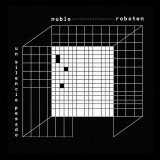
The Guatemalan project Nublo Roboten is exploring and experimenting with modular synthesizers. Mechanical beats, raw and instinctive sounds, made to dance.
Madronas’ debut LP Erogenous Biome is an amorphous, murky, cathartic offering. A duet of modular synthesizer and winds that’s equal parts doom and ecstasy, it’s the sound of a majestic butterfly emerging from it’s slimy chrysalis just in time to catch the sun setting on the end of days, a bewitching, heavy ceremony, a power-wash of both mind and spirit.
Tracked in one continuous take at Brooklyn’s Heavy Meadow studio, individual tracks were gleaned from the purge and eschew predictable structures, making for a dense, fluid suite of improvisation, like dancing smoke ribbons in the dark. The duo's chosen sound sources are seemingly opposite - Ry Fyan’s modular’s coming from electronic oscillators, Isaiah Barr’s saxophone and various flutes originating with the breath - but the visceral, imprecise, alive quality to the sound of both lends the record a thrilling combination of rapturous harmony and gritty, intense friction.
Opening the session in ritualistic, foreboding fashion, Voluntary lurches to life with rattles and wandering, bassy arpeggios before a suona’s cry signals the seance has officially begun. Ostraca Loam spits explosive modular rhythms and eerie shrieks for the flute to float above, while Detritus Harp smudges mechanical whirring, pensive horn and wind chimes for an untethered drift. Petrified Microdot swells with menacing sci-fi sequences and breathtaking sax runs until they both run out of breath, and Negative Lingam starts out in a panic of breathy riffing before exhaling into one of the most sublime passages on the record. Rhythmic pounding and undulating flutes punctuate Lenticular Shroud, before The Preparation Of The Novel sets the winds aside for a synthesized dual fit for electric dreams. The title track dominates the B-side, it's shimmering levity slowly unfurling to reveal itself as a kind of post-apocalyptic devotional music, deep space drifting grounded by earthly flutes, and Vale Of Cashmere offers an ascetic, contemplative closure, sparse flute and chiming rhythms organic or electronic - by this time it’s hard to know, it doesn’t matter either way.
Erogenous Biome is a world of it’s own, and one Impatience is honored to offer a window into.
RIYL - Senyawa, witchcraft, Colin Stetson , Civilistjavel, Mars (the planet), Finis Africae, raga, Stephen O’Malley, modular synthesizer, Anthony Braxton, Shabaka.
Madronas is Ry Fyan and Isaiah Barr. Fyan is a painter and tattoo artist, this is his first release. Barr is a prolific instigator of the downtown New York scene, producing and playing saxophone in jazz circles with his group Onyx Collective, as a player and/or producer on records by Nick Hakim, David Byrne and Wiki, performing live with William Parker and as part of his projects Universal Space Jam and Cafe Dewanee.
Erogenous Biome was recorded and mastered by Griffin Jennings at Heavy Meadow, Brooklyn.
Vinyl was cut by Beau Thomas at Ten Eight Seven Mastering, Berlin.
Artwork is by Ry Fyan, typography and layout by Nicolas Turek.
Yearly compilation series RADAR KEROXEN return with its fifth volume of themed based albums showcasing the talents and misfortunes of carefully selected musical projects based or connected with the Canary Islands.
With its first volume released in 2020 aiming to introduce and divulge adventurous Island based music, the Keroxen imprint now presents Vol.5 with a collection of tracks born out of an in-situ collective performance at the Keroxen Festival iconic venue - a massive disused gasoline tank near the harbour of Santa Cruz de Tenerife.
The Radar Drone Ensemble, as it was named for that night only, took advantage of the tank’s natural reverb to perform an improvised piece exploring the cavernous resonance corners inherent to the locale. The four artists then took a few months to compose a 9 track LP inspired by the site’s peculiar sound.
Gonçalo F. Cardoso kicks opens up the proceedings with two broody new tracks, in a style not heard since his 2015 album A Study of 21st Century Drone Acoustics. Doomed and menacing atmospherics brush shoulders with creepy and ethereal chants creating the perfect opening for this drone themed edition of Radar Keroxen. Eduardo Briganty (also from MINIATURa) follows with two equally deranged feedback based compositions letting his guitar riffs and distortions roam free. Afgan aka Mladen Kurajica (from GAF, Lagoss and Tupperwear) takes things further to an Angus MacLise inspired drone collage of mystic percussions, field recordings and electronic modular storms. Resonance aka Javier Perez wraps up the journey with his now trademark soothing synth compositions full of warm tones and blissful melodies.
The album comes, as always, wrapped into a dizzying post-tropical collage artwork by Pura Marquez.
RUSSELL HASWELL is an artist, record producer, free improvisor, computer musician, noise aficionado and curator.
Trained at Coventry School of Art, graduating in 1992, Russell’s extraordinary conceptual oeuvre resists easy summarisation, focused on the site-specific, performance and methodology of large-scale sound works, sometimes in surround sound. Russell has given solo audio presentations at major Art and Music festivals and events, in art galleries, concert halls, clubs, rock venues, and even squats in 30 countries, and counting. Most recently he has performed at SONIC ACTS, SONAR, Pirelli Hangar Bicocca and Coventry Cathedral.
As a curator, Russell has delivered projects for PS1/MoMa, All Tomorrows Parties, Aldeburgh Music, Thyssen-Bornemisza Art Contemporary, and Cafe Oto. He now lives and works in Glasgow.
Recorded in real-time (ADDAC System, ALM/Busy Circuits, Cwejman, Epoch Modular, FANCYYYYY Synthesis, Flight of Harmony, Instruo...)
- That Sweet Moment
- That Beautiful Moment
- That Perfect Moment
- That Epic Moment
- That Glee Moment
- That Catholic Moment
- That Magical Moment
Sopa Boba is a Belgian-Dutch electronic, modern classical project. The idea behind the form is a so-called Oratorio from the present age which unfolds a dramatc tale within a sociopolitcal framework. The compositons incorporate a neo-classical style string quartet, harsh modular sytnhs and spoken word vocals. It features Pavel Tchikov (Ogives) and G.W. Sok (The Ex, Oiseaux-Tempête).
That Moment is an adaptation of the eponymous text by Moldavian writer Nicola Esinencu. The starting point of That Moment takes place in a real fact, which happened in present-time Moldavia, where a father cut his son's finger with an axe, as a punishment for stealing a bit ofmoney from the father's wallet. From there the author combines the tale and its reality with a caustic irony, interrogating an unbridled capitalist society, where everything and everyone is for sale. The total playing-tme is 55 minutes, somewhere in between a hybrid electronic - modern classical oratorio and a concept album, with seven tracks that serve as seven chapters of an ironic and satiric story about the downward spiral of the capitalist society.
Pedro Vian Vian and Maalem Najib Soudani "Mogador": A Fusion of Analog Electronic Music and Traditional Gnawa Sounds
"Mogador" stands as a compelling exploration of the intersection between seemingly irreconcilable musical worlds: the experimental realm of analog electronic music and the deep-rooted tradition of Gnawa. This project is more than just a juxtaposition of styles; it’s a meeting of minds where the ancient and the modern, the analog and the organic, are woven together into a seamless auditory dialogue.
What truly sets "Mogador" apart is the way Pedro Vian’s use of the EMS AKS Synthi and Buchla doesn’t overpower the mix but instead forms a perfect synergy with Maalem Najib Soudani’s qrebeb and guimbiri. Rather than competing, the analog pulses intertwine with the hypnotic lines of the traditional instruments, amplifying the trance-inducing qualities inherent in Gnawa music. The Maalem’s vocals, steeped in history and spirituality, float over layers of synths that feel both ethereal and tangible, crafting a soundscape that is as cinematic as it is visceral.
This is not just a collision of cultures or a superficial fusion exercise. "Mogador" represents a genuine dialogue between two ways of understanding sound and space, where every element—from the syncopated percussion to the serpentine modular waves—contributes to a sonic landscape that is both haunting and profoundly resonant. Here, tradition isn’t a museum piece, and analog electronics aren’t a rootless futurism; instead, they transform each other, creating something greater than the sum of their parts.
In this next installment of Token, Brussels' own Border One steps in to showcase 'Echoes from the Abyss', another swinging, modular-driven project destined for controlled sound systems. In these four tracks, the seasoned producer does what he knows best: engaging the dancefloor through his signature sound design and use of space.
'Echoes from the Abyss' the track, like the EP, is a collection of sound associations that are synonymous with Border One's sound. Resonant and cerebral yet bouncy and full of groove, the A1 presents a shimmering veil of synthwork that gives off a truly hypnotic effect. The follow up is much more sequence-based, focusing on the elements' interactions. The producer plays along freely with his drum machine, responding to a classically loopy and dissonant main synth that insists its way from beginning to end. Tension is everything, especially when met with a sustained chord in the second half, turning the record into a weapon of suspense. 'Celestial Observer' comes back straight and center with a focused tone and a progressive arrangement. With a thick low end and shrill highs, Border One flicks through percussion patterns and filter sweeps to make an intense, at times close eyed dancefloor experience. Ducking back into obscurity for the last track, 'Escaping the Void' takes on a more minimally produced style that breathes a bit after its previous, denser productions. Concluding with a question mark is always very appropriate, and here we're faced with a record caught between ethereal soundscapes and tense implications. With 'Escaping the Void', Border One closes with his latest contribution to Token with class as always, appealing to genre veterans and newcomers alike.
Analog Mutants consist of Phill Most Chill on the vocals, DJ Snafu of Bankrupt Europeans fame on production and the inimitable DJ Grazzhoppa on the cuts.
Vocals: Phill Most Chill
Phill Most Chill grew up in Conecticut half hour away from Boogie Down Bronx and by the late 80s had already established himself in the hip hop scene, having released a very strongly received (and eventually highly collectible fetching amounts in the high three digits) single (On Tempo Jack/ That Girl), the preccedent setting left field Baritone Tiplove releases and writing for the seminal Rap Sheet magazine. The Arcahaelogists' Classics and Soulman's World of Beats tape series and column further established him as an elite beatmaker and sample collector, with highly acclaimed producers seeking him out to purchase records in conventions. The random rap craze brought renewed attention to Phill Most's releases in the late 90s, leading to reissues of On Tempo, the release of previously unissued Baritone Tiplove records, his return with the Lo-Fi EP, and then the highly influential Fast Rap EP on Nobody Buys Records which led to a flurry of funky uptempo releases across the globe again. The interest in Phill Most records over the whole 2010s was rabid, with further releases produced by Bankrupt Europeans, Mr. Fantastic and Chris Read flying off the shelves, and two full length albums produced by 90s stalwarts Paul Nice and DJ Format, as well as the recent Jorun-PMC album being now considered classics in the boom bap scene. Having now signed with Chuck D's Spitslam label, Phill Most continues his journey in stepping all over MC conventions, and these first two Analog Mutants release are a perfect example of this.
Produced by DJ Snafu
DJ Snafu has been part of the Bankrupt Europeans crew since 2004, co-founding Nobody Buys Records in 2012 with the other two Bankrupt Euros members. Huge collector of vinyl from the 50s ad 60s primarily, and with an interest in modular production, FM synthesis and marrying modern techniques with the love of sampling old records, the Analog Mutants project is his first without the Bankrupt Euros crew. Having produced among others for Chill Rob G on his seminal return to music with the classic Tell 'Em on the Chilled Not Frozen EP, Roc Marciano on the Goodfelons label, DITC legend AG on The 21st Day and Chicago legend MC Juice's return to vinyl after 15 years, this is Snafu's first whole album to produce since Rise of Demigodz' debut album The Cornerstone in 2006 (released in 2013). Snafu shows he's honed his skills and developed an even crazier side to his production in the 5 year that passed between the last Bankrupt Euros project and the Analog Mutants album and the first three Analog Mutants singles are a sign of things to come in the post Bankrupt Euros years.
Scratches: DJ Grazzhoppa
DJ Grazzhoppa got infected in 1983 with the hip hop virus, demolishing local DJs and winning the European DMC Championships in 1991, and taking 3rd place in the ITF World Championships in 1998! His unique and immediately recognizable style was first heard on Blade's legendary 12” Clear The Way, and caught so many ears that the list of MCs and producers who queued up to work with him is seemingly endless. From MF Doom, Ruste Juxx, Guilty Simpson and Cage to Necro, Keith Murray, Big Daddy Kane, Kool G Rap and of course the Bankrupt Europeans projects with Phill Most Chill, MC Juice and Chill Rob G! This is a short list of a page of credits spanning over 4 pages long- if you have hip hop records, Grazzhoppa is already in your collection!
Analog Mutants consist of Phill Most Chill on the vocals, DJ Snafu of Bankrupt Europeans fame on production and the inimitable DJ Grazzhoppa on the cuts.
Vocals: Phill Most Chill
Phill Most Chill grew up in Conecticut half hour away from Boogie Down Bronx and by the late 80s had already established himself in the hip hop scene, having released a very strongly received (and eventually highly collectible fetching amounts in the high three digits) single (On Tempo Jack/ That Girl), the preccedent setting left field Baritone Tiplove releases and writing for the seminal Rap Sheet magazine. The Arcahaelogists' Classics and Soulman's World of Beats tape series and column further established him as an elite beatmaker and sample collector, with highly acclaimed producers seeking him out to purchase records in conventions. The random rap craze brought renewed attention to Phill Most's releases in the late 90s, leading to reissues of On Tempo, the release of previously unissued Baritone Tiplove records, his return with the Lo-Fi EP, and then the highly influential Fast Rap EP on Nobody Buys Records which led to a flurry of funky uptempo releases across the globe again. The interest in Phill Most records over the whole 2010s was rabid, with further releases produced by Bankrupt Europeans, Mr. Fantastic and Chris Read flying off the shelves, and two full length albums produced by 90s stalwarts Paul Nice and DJ Format, as well as the recent Jorun-PMC album being now considered classics in the boom bap scene. Having now signed with Chuck D's Spitslam label, Phill Most continues his journey in stepping all over MC conventions, and these first two Analog Mutants release are a perfect example of this.
Produced by DJ Snafu
DJ Snafu has been part of the Bankrupt Europeans crew since 2004, co-founding Nobody Buys Records in 2012 with the other two Bankrupt Euros members. Huge collector of vinyl from the 50s ad 60s primarily, and with an interest in modular production, FM synthesis and marrying modern techniques with the love of sampling old records, the Analog Mutants project is his first without the Bankrupt Euros crew. Having produced among others for Chill Rob G on his seminal return to music with the classic Tell 'Em on the Chilled Not Frozen EP, Roc Marciano on the Goodfelons label, DITC legend AG on The 21st Day and Chicago legend MC Juice's return to vinyl after 15 years, this is Snafu's first whole album to produce since Rise of Demigodz' debut album The Cornerstone in 2006 (released in 2013). Snafu shows he's honed his skills and developed an even crazier side to his production in the 5 year that passed between the last Bankrupt Euros project and the Analog Mutants album and the first three Analog Mutants singles are a sign of things to come in the post Bankrupt Euros years.
Scratches: DJ Grazzhoppa
DJ Grazzhoppa got infected in 1983 with the hip hop virus, demolishing local DJs and winning the European DMC Championships in 1991, and taking 3rd place in the ITF World Championships in 1998! His unique and immediately recognizable style was first heard on Blade's legendary 12” Clear The Way, and caught so many ears that the list of MCs and producers who queued up to work with him is seemingly endless. From MF Doom, Ruste Juxx, Guilty Simpson and Cage to Necro, Keith Murray, Big Daddy Kane, Kool G Rap and of course the Bankrupt Europeans projects with Phill Most Chill, MC Juice and Chill Rob G! This is a short list of a page of credits spanning over 4 pages long- if you have hip hop records, Grazzhoppa is already in your collection!
Analog Mutants consist of Phill Most Chill on the vocals, DJ Snafu of Bankrupt Europeans fame on production and the inimitable DJ Grazzhoppa on the cuts.
Vocals: Phill Most Chill
Phill Most Chill grew up in Conecticut half hour away from Boogie Down Bronx and by the late 80s had already established himself in the hip hop scene, having released a very strongly received (and eventually highly collectible fetching amounts in the high three digits) single (On Tempo Jack/ That Girl), the preccedent setting left field Baritone Tiplove releases and writing for the seminal Rap Sheet magazine. The Arcahaelogists' Classics and Soulman's World of Beats tape series and column further established him as an elite beatmaker and sample collector, with highly acclaimed producers seeking him out to purchase records in conventions. The random rap craze brought renewed attention to Phill Most's releases in the late 90s, leading to reissues of On Tempo, the release of previously unissued Baritone Tiplove records, his return with the Lo-Fi EP, and then the highly influential Fast Rap EP on Nobody Buys Records which led to a flurry of funky uptempo releases across the globe again. The interest in Phill Most records over the whole 2010s was rabid, with further releases produced by Bankrupt Europeans, Mr. Fantastic and Chris Read flying off the shelves, and two full length albums produced by 90s stalwarts Paul Nice and DJ Format, as well as the recent Jorun-PMC album being now considered classics in the boom bap scene. Having now signed with Chuck D's Spitslam label, Phill Most continues his journey in stepping all over MC conventions, and these first two Analog Mutants release are a perfect example of this.
Produced by DJ Snafu
DJ Snafu has been part of the Bankrupt Europeans crew since 2004, co-founding Nobody Buys Records in 2012 with the other two Bankrupt Euros members. Huge collector of vinyl from the 50s ad 60s primarily, and with an interest in modular production, FM synthesis and marrying modern techniques with the love of sampling old records, the Analog Mutants project is his first without the Bankrupt Euros crew. Having produced among others for Chill Rob G on his seminal return to music with the classic Tell 'Em on the Chilled Not Frozen EP, Roc Marciano on the Goodfelons label, DITC legend AG on The 21st Day and Chicago legend MC Juice's return to vinyl after 15 years, this is Snafu's first whole album to produce since Rise of Demigodz' debut album The Cornerstone in 2006 (released in 2013). Snafu shows he's honed his skills and developed an even crazier side to his production in the 5 year that passed between the last Bankrupt Euros project and the Analog Mutants album and the first three Analog Mutants singles are a sign of things to come in the post Bankrupt Euros years.
Scratches: DJ Grazzhoppa
DJ Grazzhoppa got infected in 1983 with the hip hop virus, demolishing local DJs and winning the European DMC Championships in 1991, and taking 3rd place in the ITF World Championships in 1998! His unique and immediately recognizable style was first heard on Blade's legendary 12” Clear The Way, and caught so many ears that the list of MCs and producers who queued up to work with him is seemingly endless. From MF Doom, Ruste Juxx, Guilty Simpson and Cage to Necro, Keith Murray, Big Daddy Kane, Kool G Rap and of course the Bankrupt Europeans projects with Phill Most Chill, MC Juice and Chill Rob G! This is a short list of a page of credits spanning over 4 pages long- if you have hip hop records, Grazzhoppa is already in your collection!
Fully analog modular experimental sonic sound structures from the heads of the Superbooth Radio in Berlin.
During the early days of Deepchord Records, Detroit's transient and forgotten subculture musically inspired label founders Mike Schommer and Rod Modell in significant ways. The apex of Mike's creative fixation with the city was in 2001 when he recorded the Von Schommer album dc15. To capture the nature of the environment he found so fascinating, Schommer recorded the project at the Crown Motel in Detroit, Michigan. While overlooking the transient life displayed in the motel courtyard, Mike crafted lonely tones from his modular synthesizer and mixed them with his rudimentary DIY electronics. Still, most significantly, he allowed the music to become impregnated by the environment (much like the stains in the permanently soiled carpets of the motel room floor), creating a holistic experience that remains close to his heart almost 25 years later. Initially available as a limited edition preorder cdr to the Hypereal 313 maillist, the album has been remastered and is now available on color vinyl for the first time.
Original photography and treatments on tracks untitled 4 and untitled 10 by Rod Modell.
2024 Repress
Finders Keepers invite you to witness the incredible first ever Buchla synthesiser concerts/demonstrations providing a distinctive feminine alternative to The Silver Apples Of The Moon if they had ever been presented in phonographic form. This is history in the remaking.
This spring Finders Keepers Records are proud to release an archival project that not only redefines musical history but boasts genuine claim to the overused buzzwords such as pioneering, maverick, experimental, groundbreaking and esoteric, while questioning social politics and the evolution of music technology as we've come to understand it. To describe this records as a game-changer is an understatement. This record represents a musical revolution, a scientific benchmark and a trophy in the cabinet of counter culture creativity. This record is a triumphant yardstick in the synthesiser space race and the untold story of the first woman on the proverbial moon. While pondering the early accolades of this record it's daunting to learn that this record was in fact not a record at all... It was a manifesto and a gateway to a new world, that somehow never quite opened. If the unfamiliar, modernistic, melodic, pulses, tones and harmonics found on this 1975 live presentation/grant application/educational demonstration had been placed in a phonographic context alongside the promoted work of Morton Subotnick, Walter Carlos or Tomita then the name Suzanne Ciani and her influence would have already radically changed the shape, sound and gender of our record collections. Hopefully there is still chance.
In short, Suzanne was a self-imposed twenty-year-old employee of the Buchla modular synthesiser company, San Francisco's neck and neck contender to New York's Moog. Buchla was run by a community of festival freaks and academic acid eaters whose roots in new age lifestyles and the reinvention of art and music replaced the business acumen enjoyed by its likeminded East Coasters. In the eyes of the consumer the creative refusal to adopt rudimentary facets like a piano keyboard controller rendered the Buchla synthesiser the more obscure stubborn sister of the synth marathon, steering these incredible units away from the mainstream into the homes and studios of free music aficionados, art house composers and die-hard revolutionaries. Championed and semi-showcased by composer Morton Subotnick on his albums The Bull and Silver Apples Of The Moon, Buchla's versatility began to open the minds of a new generation, but the high-end design features and no-compromise modus operandi was often confused with incompatibility and, in the pulsating shadow of Moog's marketing, the revolution would not be televised nor patronised. Suzanne Ciani, as one of the very few female composers on the frontline (and also providing the back line) did not lose faith.
These concerts' are the epitome of rare music technology historic documents, performed by a real musician whose skills and academic education in classical composition already outweighed her male synthesiser contemporaries of twice her age. At the very start of her fragile career these recordings are nothing short of sacrificial ode to her mentor and machine, sonic pickets of the revolution and love letters to an absolutely genuine vision of and 'alternative' musical future. In denouncing her own precocious polymathmatic past in a bid to persuade the world to sing from a new hymn sheet, Suzanne Ciani created a bi-product of never before heard music that would render the pigeon holes ambient' and futuristic' utterly inadequate. Providing nothing short of an entirely different feminine take on the experimental records' of Morton Subotnick and proving to a small, judgmental audience and jury the true versatility of one of the most radical and idiosyncratic musical instruments of the 20th century. These recordings have not been heard since then.
The importance of these genuinely lost pieces of electronic musics puzzle almost eclipses the glaring detail of Suzanne's gender as a distinct minority in an almost exclusively male dominated, faceless, coldly scientific landscape. Those familiar with Suzanne's work, a vast vault of previously unpublished non-records', will already know how the creative politics in her art of being' simultaneously reshaped the worlds of synth design, advertising and film composition before anyone had even dropped a stylus in her groove. Needless to say this record, finally commanding the archival format of choice, courtesy of the Ciani and Finders Keepers longstanding unison, was not the last first' with which this hugely important composer would gift society, and the future of a wide range of exciting evolving creative disciplines.
You have found a holy grail of electronic music and a female musical pioneer who was too proactive to take the trophies. With the light of Buchla and Ciani's initial flame Finders Keepers continues to take a torch through the vaults of this lesser-celebrated music legacy shining a beam on these non-records' that evaded the limelight for almost half a century. You can't write history when you are too busy making it. With fresh ink in the bottomless well, let's start at the beginning. Again. You, are invited!
After a hiatus of a few years to concentrate on various studio projects, Steevio’s Mindtours label is back with a vinyl release over 2 volumes, pressed on bio-vinyl at the carbon neutral pressing plant Deepgrooves.
Dod yn ôl at fy nghoed (which is Welsh for ‘to return to my trees’ meaning to return to balanced state of mind) sees Steevio experimenting with deep, broken-beat bass techno awash with polymetric rhythms and jazz infused chord structures. Steevio’s musical approach has in recent years become more free-form, with loose mathematical frameworks, evading clear generic boundaries, and this release continues and expands on that theme.
All tracks were recorded live and improvised from a blank canvas in real-time on an analogue modular synthesizer.
Vol. 1 was all recorded during Covid lockdown and represents some the best material from jams from that period. All tracks were recorded live and improvised from a blank canvas in real-time on an analogue modular synthesizer.
Vol. 2 to be released 1 month after.
Black Truffle is thrilled to present the first vinyl reissue of David Rosenboom’s unique Future Travel, originally released on the short-lived Detroit label Street Records in 1981 and here presented in an expanded edition with an additional LP of wild, previously unheard live and studio material from the same period.
Future Travel emerged from the confluence of two important streams in Rosenboom’s work at this time. First, his exploration of ‘propositional music’, defined as ‘complete cognitive models of music’ that start from the radical question, ‘What is music?’ In this case, the music belongs to the universe of Rosenboom’s In the Beginning (1978-1981), in which proportional relationships determine the material available to the composer in all musical parameters (harmonic relationships, melodic shapes, rhythmic subdivisions, dynamics, and so on). Second, the work documents a key moment in Rosenboom’s long collaboration with synthesizer pioneer Don Buchla. Having played a role in developing concepts for some of the modules of the Buchla 300 Series Electric Music Box (an innovative analogue modular system controlled by micro-processors), Rosenboom went on to write the software for Buchla’s hybrid analogue-digital keyboard synthesiser, the Touché, the instrument heard most prominently here.
In a way that no purely analogue synthesizer could, the 300 Series and Touché allowed Rosenboom to work with the In the Beginning algorithms in real time, the synthesizers becoming ‘intelligent instruments’ that actively collaborate with the performer. Developing the open structures of the electronic pieces from In the Beginning, Future Travel explored the possibilities of simply ‘playing the system’, recording live at Francis Ford Coppola’s Zoetrope studio in San Francisco. Working from loose sketches, Rosenboom added acoustic instruments to the electronic sounds and, on some pieces, the processed voice of Jacqueline Humbert. Like Rosenboom’s collaboration with Humbert on the abstracted synth-chanson of Daytime Viewing, this music set out deliberately to challenge the ‘stratified and illusorily coagulated identities in the musical culture of the time,’ refusing distinctions between ‘serious’ and popular music. But where Daytime Viewing achieves this in part through genre references, Future Travel is bracingly sui generis, existing in a unique universe where radical formalisation à la Xenakis spontaneously gives rise to expressive jazz harmonies and old-timey folk melodies.
The crystalline quality of many of the Touché sounds gives Future Travel a sparkling, immediately enticing surface, its layers of shifting ostinato patterns pulsating outside conventional meter, rippling like waves on the surface of water. On opener ‘Station Oaxaca’, ping-ponging synth arpeggios and hand percussion accompany a sentimental violin melody, abruptly overtaken by layered keyboard runs, before the entry of tinkling marimba-like sounds reframe the scene as sci-fi Martin Denny exotica. ‘Time Arroyo’ begins as an austere study in staccato synth sounds in multiple overlapping tempi, reminiscent of Ligeti’s famous ‘clock’ rhythmic effects. Before long, it opens up into a melodic passage with the gentle heroism of classic Roedelius, which proves to be only a brief interlude before the layers of rhythmically distinct synthesiser patterns begin to build and accelerate into an increasingly dense cacophony. The wildest twists and turns are saved for the epic closer ‘Nova Wind’, where the arrangement focuses on Rosenboom’s virtuoso piano playing, perfectly embodying the project’s radical disregard of stylistic orthodoxies as he moves from hyperactive pointillistic flurries to a kind of space-age gospel.
At several points throughout the record, the distinctive voice of Jacqueline Humbert is heard reading passages from the text component of In the Beginning, a dialogue between The Double (an embodiment of humanity’s timeless desire to replicate itself in spiritual and technological copies) and two Spirit Characters. Fittingly, as all are conceived as embodiments of a future form of techno-human collective consciousness, distinctions between the three characters are not immediately evident in Humbert’s delivery, just as the music blurs the boundaries between intelligent computing and human spontaneity. Adorned with a striking retro-futurist cover (and here accompanied by extensive new liner notes and archival images), Future Travel is a time capsule of radical imaginings at the birth of our digital age, reminding us of utopian possibilities of which our own present seems so often to fall short.
A decade after releasing their debut EP through Planet Mu's Timesig imprint, Speed Dealer Moms—a collaborative electronic music project with a fluid line-up commonly made up of Aaron Funk, John Frusciante and Chris McDonald—are set to make their long-awaited return this summer with a new offering entitled SDM-LA8-441-114-211. The 3-track EP, arriving June 11 through Evar Records, offers a glimpse into the treasure trove of Speed Dealer Moms' unreleased material, with each song title alluding to the date in which it was recorded and in how many takes.
Over the years, Speed Dealer Moms have considered various ideas on how to release more of their unorthodox recordings in unconventional ways, with their latest to arrive in the format of a limited edition vinyl pressing. Although a lot has changed since first sharing their intricate creations with the world in 2010, Speed Dealer Moms have routinely gotten together whenever schedules and circumstances allowed, picking up wherever they last left off creatively and adding to their growing archive of recordings. While there are plenty of reminders that time is both irrelevant and an illusion—especially in the fickle music business where trends are fleeting—the chemistry these collaborators exhibit in the studio has no expiration date, offering a purity in approach that reflects the cherished importance of creating in the moment and subsequently celebrating timeless music.
During the writing process, which includes in-depth discussions and days of programming, Speed Dealer Moms record live to stereo with no overdubs or edits, improvising arrangements that often feel composed. In the same spirit of prodigal IDM acts such as Autechre and Luke Vibert, each Speed Dealer Moms session pushes the limits of what an arsenal of modular synthesizers and other machines are capable of, creating tracks that are driven by mathematics, mechanical understanding and musical spontaneity alike. As exemplified by their forthcoming Evar release, each recorded session captures an undeniable magic that is both distinctive and hard to describe, creating a listening experience that transcends genre lines and sonic boundaries.
Pianeti Sintetici presents AI-37, entitled ‘Space Opera’. Conceived by Italian artist Davide Perrone, the Pianeti Sintetici (“Synthetic Planets”) project hypothesises the creation of future synthetic worlds as told through sound. Although split across two parts, the album is a singular organism that narrates a journey of boundless cosmic exploration. A sonic tapestry woven of intergalactic atmospheres, Space Opera’s imaginative sound design contributes to a richly spatial and haptic experience.
Taking place in the dimly lit crevices of deepest space, a swirling pool of chemical abstractions and extraterrestrial transmissions spumes out from the darkness. Elements weave through broad washes of drones and scintillating textures, contrasting a sparse backdrop with dense and multilayered passages. Composed with the use of modular synthesisers and intense audio manipulations, ‘Space Opera’ comes to life as an entity that transports the listener on an immersive journey into the mysteries of alien worlds.
- A1: Samba 00 04:58
- A2: Panorama 00 04:39
- A3: Golfo Mistico 00 04:34
- A4: Open Sky With Tears Of Blue 00 04:56
- A5: Contemporary Lullaby 00 03:05
- A6: Requiem 00 02:55
- B1: Whispers 00 04:19
- B2: Modular Clouds In Rome 00 03:21
- B3: Piano Bells 00 03:30
- B4: Space Call From Mars 00 03:01
- B5: Tuning The Orchestra With Tears Of Blue 00 03:22
With Lucifer, Kompakt presents an album of rare beauty from two masters of modern music. A family affair, it’s a collaboration between the Italian father-and-son duo of Luciano Michelini and Lorenzo Dada, whose combined histories bring to Lucifer a depth of experience alongside clarity of vision and a finely tuned, neatly developed combined compositional voice. A lovely, beguiling suite of music that combines the electronic and the acoustic, the urban and the pastoral, its gorgeous night-eye vision and tender melancholy sits neatly within the Kompakt universe, while offering the curious listener some rich new perspectives.
There is already plenty to know both artists by. Lorenzo Dada creates across multiple fields – a techno producer and DJ who has already worked with the likes of Jay Haze, Fete, Leo Benassi, and Der, he’s released a small clutch of stylish, smartly designed EPs, and a solo album, Second Life (2018). His complementary background in classical music and composition informs his ensemble project, Tears Of Blue (who appear on Lucifer), where Dada paints with neo-classical tones for a quartet of violin, viola, cello and grand piano, supplemented by electronics for live performance.
Luciano Michelini’s history is yet richer. He may be best known, to many, for his piece “Frolic”, the theme to Larry David’s Curb Your Enthusiasm series; it was also sampled by Snoop Dogg for 2022’s “Crip Ya Enthusiasm”. But there’s much more to Michelini’s story. A successful soundtrack composer, Michelini both studied and taught at the Conservatoro di Santa Cecilia, and worked for RCA from the sixties to the eighties; his soundtracks from this period are gorgeous examples of the form, particularly his work for Il Decamerone Nero (1972), L’Isola Degli Uomini Pesce (1979), and the devastatingly gorgeous Dimensione Donna (1977).
In the eighties, Michelini and his wife Anna Gutling founded the Electronic Music Division studio and academy in Rome, which is where the majority of Lucifer was recorded. Dada reflects on the experience: “We never worked together before, so it was all new for both of us,” with Michelini adding, “I truly love this experience with my son. He’s a talented pianist and composer. I am not very familiar with electronic music nowadays, but we did it fluently.” There’s certainly a familial energy at play through Lucifer, and you can hear how Dada and Michelini, through exploration and experiment, find a shared language, balancing Dada’s tendency toward minimalism, and Michelini’s composerly voice.
Lucifer flows as a suite that interweaves electronic music with acoustic instruments: the lonely sigh of saxophone; Michelini’s lush, verdant piano; the weeping strings of Tears Of Blue (recorded at the studio of Michelini’s friend, the late Maestro, Ennio Morricone). These multiple voices are located within the electronic sighs and swarms from Dada’s kit; there are moments of propulsion, and passages of lambent drift, where the album revels in its tonal sweetness. If it flows so effortlessly, that’s because Lucifer was designed that way, as a suite or a sonata of sorts.
And the title? Dada reflects, “Lucifer was an angel who decided not to be one anymore. The miracle of life is that we can decide what we want to be, even if we are born as angels or vice versa.” This feels somehow apposite: there’s certainly something of the transformative, and the transportive, in Lucifer, a unique family collaboration of rare poetry and sensitivity, where two generations meet in the modern crucible that is the electronic music studio.
With his new instrumental album Ventas Rumba, the French composer (and singer) returns to his signature instrument, the piano, blending it with warm synth tones. This album represents a "return to his roots ", allowing Ezéchiel Pailhès to reinvent himself in a seamless way while still exploring ballads and ritornellos, halfway between light-heartedness and melancholy. Ezéchiel Pailhès has been meaning to write a solo piano album for as long as he can remember. Hardly surprising, of course, for this academically-trained pianist, brought up on classical music and then studied jazz. Yet, since his 2001 debut with the electro-pop duo Nôze, and his subsequent four albums, the artist had constantly postponed this project that was so close to his heart. Then in 2022, just as he was getting ready to start producing an album of new songs, this long-standing aim finally materialized.
The melodies he wrote seemed to stand on their own naturally, spurring him on to compose this series of fourteen tracks, recorded in sessions split between France and Latvia.
A new piano: the Una Corda
Ezéchiel wanted this project dedicated to the piano to begin a new narrative, to explore new instrumental terrain and new tones, something far removed from the familiar piano he has been playing all his life. He opted for the Una Corda piano, designed by David Klavins, a groundbreaking instrument builder renowned for his distinctive pianos with vertical shapes and frames.
The Una Corda, created in 2014, is an upright piano with a single string per note (unlike three strings on traditional pianos). Enticed by the "crystalline and unique" tones of this instrument, which is hard to find in France, Ezéchiel travelled to Kuldiga, Latvia (where David Klavins set up his workshops and studios), to record the first part of the album. Although the title of the album may initially conjure up images of a distant, sensual dance, the reality is quite different. Ventas Rumba indeed refers to the waterfall and rapids (in Latvian: rumba) of the river Ventas, which runs near this small village in the western part of the country. Ezéchiel chose to blur the lines, as the sound and musicality of the title likely evoke both his short stay in the Baltic country, and also a form of distant exotic imagery perfectly in tune with his own mischievous wit. Tracks as short stories
Back in France, Ezéchiel enhanced the first tracks recorded in Kuldiga with subtle synth tone layers, and added other tracks composed and recorded at his Montreuil studio. The album reflects a deliberate and sensitive orchestration of piano, synth keyboards and digital effects, as he puts it: "playing to erase the differences between the tones of the various instruments", as if each instrument's texture echoed the others. According to Ezéchiel, you can listen to Ventas Rumba as you would leaf through "a collection of short stories", through compositions that rarely exceed three minutes and evoke figures of movement, lightness, curves or modulation, such as "La ligne", "La valse des singes" or "Fly Finger". Others more seriously relate to a kind of spirituality, which quietly infuses such different tracks as "Ferveur", "Éclair" and "Louanges". Ezéchiel adds: “I’m by no means religious, but I like what God has managed to get musicians to achieve (laughs)". "Louanges", for instance, despite its electronic edge, "refers to Olivier Messiaen, a very devout composer who I greatly admire". Other tracks are directly inspired by the classical music he listens to on a daily basis. For example, Chopin's “8th Nocturne” formed the backdrop of “Pianovado”. Likewise, the harmonic structure of Beethoven's “Waldstein Sonata No. 21” inspired “Opus 53”. Aside from these multiple references and inspirations, which quickly recede behind a style that is uniquely his, Ezéchiel Pailhès keeps exploring ideas already found on his first solo albums, this time in an instrumental format, undoubtedly purer, fostering an imaginary world that evokes the shapes and themes of ballads, ritornellos, light-heartedness, passing time, reverie or a universal subdued melancholy.
The title of the Lau Nau's 10th album, Aphrilis, derives from the Latin word aperire, meaning "to open." A fitting verb for the month of the year it is closely associated with — April. And while the images of plants and blossoms coming back to colorful life after a long, cold winter feels appropriate when listening to the rich and lustrous bloom of music on Aphrilis, another definition of open feels even more apt. For under the abundance lies the memory of times of austerity, the friction of hard choices, the acceptance that nothing is fixed and the future is unknown. This literal and metaphorical exploration of complexity and contradiction makes Aphrilis a multi-dimensional antidote for our troubled times, one that emphasizes the quiet and communal over noise and spectacle. Laura Naukkarinen, the Finnish artist behind this project, has long kept her mind and spirit open to whatever sounds and creative ideas felt appropriate for the moment. For the past six years that has meant primarily working with modular synthesis — learning how to build modules and releasing acclaimed work centered on its sounds like 5x4 (2023) or Puutarhassa (2022). Running parallel to this work, however, has been a continued exploration of acoustic instruments and group performances with her trio Lau Nau ja Seitsemäs Taivas. Aphrilis arrives then like fresh growth in a creative season cycle. A companion to her brilliant 2017 release Poseidon, the album, says Naukkarinen, "felt like a needed moment to embrace songs with lyrics again." And through the creation of this work, she remained open not only to her own creative muse, but also the input of her chosen collaborators. Each player on Aphrilis — Matti Bye on celesta and synths, Pekko Käppi on jouhikko, Hermanni Yli-Tepsa on violin and contrabass, Topias Tiheäsalo on electric guitar, Samuli Kosminen (Múm) on various instruments — was given free reign to arrange their own parts to accompany Naukkarinen's compositions. Kosminen’s lush fingerprint can also be heard in the mixing and production of the album, as with Poseidon six years ago. The moniker of this project may be taken from Naukkarinen’s own name, but Lau Nau feels more like a band than ever before. The delicacy and softness of the music is reflected in Naukkarinen’s lyrics. Each song is rife with imagery and creatures from the natural world. The spiders in the forest. The animals that keep a young woman company in her refuge in the woods. Wet grass. The feeling of the music is almost tactile, as if listening to the album will leave a bit of dew or sap on your fingers. The theme of this material, says Naukkarinen, runs even deeper. “The songs tell about cracks and changes of direction in different histories: personal, societal, planetary,” she says. “About moments when a yes can become a no and vice versa. The album wants to propose that at the moment of a crisis there is a possibility to influence the histories by our choices.” That may feel like a lot for such a fragile sounding collection of songs to bear. But Aphrilis is an album of surprising strength and resilience