Cluster was the pioneering German duo of Hans-Joachim Roedelius and Dieter Moebius. Formed on the cusp of the 1970s, they were a part of West Germany's nascent Kosmische Musik scene. The group would use restrained improvisational techniques similar to Gruppo Nuova Consonanza, working with both electric and acoustic instruments (organ, guitar, tone generators, cello, etc.) to create a singular sound that Julian Cope called "a huge beating heart, planet-sized and awesome."
Originally released in 1972 on Brain, Cluster II features six pieces of atmospheric, proto-ambient drones – a step forward from Cluster's 1971 self-titled debut, which had all untitled songs. On "Im Suden," hypnotic bass pulsations and repetitive guitar patterns flow serenely, while side two opener "Live In Der Fabrik" dives deep into Roedelius and Moebius' foreboding industrial soundscapes and synergistic textural interplay.
As Roedelius told Uncut magazine in 2022, "This feels like a breakthrough? Well, we were just getting more into it, and getting more experienced at being able to elaborate it. Conny (Plank) was working with us again – as well as being a multi-talented artist, he was a very experienced sound master and great human being. He contributed as a fellow musician, adding sounds with his mixing table such as reverb, delay and other effects enriching the whole pieces so that they finally became somehow unique."
It's no surprise that when Neu! guitarist Michael Rother first heard Cluster II, he suggested a collaboration with the band – resulting in the supergroup Harmonia who would make their first album together the following year.
Suche:moe
- LP1: Looking For Saint-Tropez (Remastered)': A1 Moskow Diskow
- A2: Pakmoväst
- A3: Café De La Jungle
- A4: Ça Plane Pour Moi
- A5: Some Day / Un Jour
- B1: Something To Say
- B2: Rock Around The Clock
- B3: Victime De La Societe
- B4: Twist À Saint-Tropez
- LP2: Neurovision (Remastered)': A1 A/B
- A2: Réalité
- A3: Cliché
- A4: En Route Vers De Nouvelles Aventures
- A5: Tour De France
- A6: We Are All Getting Old
- B1: My Time
- B2: Plus De Distance (More Than Distance)
- B3: Euro-Vision
- B4: Dance To The Music
- B5: Lakelele
- B6: Soul Waves
- LP3: Sex (Remastered)': A1 Brainwash
- A2: Drama, Drama
- A3: Haven’t We Met Somewhere Before
- A4: Long Holiday
- A5: The Man With The Answer
- B1: Carbon Copy
- B2: Exercise Is Good For You
- B3: Dream-O-Mat
- B4: Dummy
- B5: Sigmund Freud’s Party
- LP4: Wonderful World (Remastered)': A1 L’amour Toujours
- A2: So Sad
- A3: Raised By Snakes
- A4: It Could Happen To You
- A5: Second Hand
- B1: Tell Me It’s A Dream
- B2: Vertigo
- B3: The Voice
- B4: Radio-Radio
- B5: Wonderful World
- LP5: Looney Tunes (Remastered)': A1 I Don’t Like Music
- A2: Temporary Chicken
- A3: Spike Jones
- A4: Beautiful Li(F)E
- A5: Dingo Bells
- B1: I Want Your Brain
- B2: Baby, When?
- B3: Peanuts
- B4: Happy End (I Wanna)
- B5: Rendez-Vous Dans L’espace
- LP6: How Do You Dance? (Remastered)': A1 On The Road Again
- A2: How Do You Dance?
- A3: This Is Your Song
- A4: The Number One Song In Heaven
- B1: J’aime La Vie
- B2: White Noise
- B3: Move!
- B4: Jailhouse Rock
- B5: Do Worry
Mixed Colours Vinyl
Nach der 2021 erschienenen Best-Of-Compilation 'This is Telex' erscheint jetzt der komplette Katalog des belgischen Synth-Pop-Trios als aufwändige limitierte 6CD-Box und als limitierte 6LP-Box, inclusive der Alben 'Looking For Saint Tropez', 'Neurovision', 'Sex', 'Wonderful World', 'Looney Tunes' und 'How Do You Dance?'.
Diese Studioalben wurden alle neu gemastert und von den Bandmitgliedern Dan Lacksman und Michel Moers neu abgemischt, wobei der Geist der Originaltitel erhalten blieb und gleichzeitig eine neue Frische hinzugefügt wurde, um eine endgültige Version jedes Albums zu schaffen. Das Boxset ist eine Zeitreise der Karriere des belgischen Synthpop-Trios, von ihrem Debüt 1979 bis zu ihrem letzten Studioalbum How Do You Dance? (2006).
Known for their dynamic sound and complex song structures, De Beren Gieren deliver an extravagant blend of polyrhythmic soundscapes and elitist twists, showing an ability to change mood in a way that constantly holds the listener’s attention. They effortlessly shift from more rigidly styled compositions to improvised sections and thus reveal the pulsating and ominous futuristic sound of a new world.
Produced by Dijf Sanders and Frederik Segers, ‘Less Is Endless’ is an ode to a universe teeming with life. Seen as an extension to the critically acclaimed 2017 album ‘Dug Out Skyscrapers’, it searches for vents through which life can emerge and evolve. The secret of communicating creativity can be found in the cultivation of the unfinished; the missing piece of the puzzle tickles the imagination more than the perfect end result.
From the psychotropic opener ‘A Funny Discovery’ and off-kilter piano rhythms of ‘Animalcules’ to the impressionist melodies and harmonic soundscapes of ‘Tuin’, De Beren Gieren give the music the space to breath and grow with every unexpected twist and turn. Elsewhere, ‘Guggenheim House’ is a lesson in the avant-garde, while ‘Gentse Leugentjes’ is a far cry from the traditional piano-bass-drum set-up, before the affecting ‘Moments Never a Moment’ and 18-minute ‘A Random Walk’ is an adventure in improvisation and electronics that defies any logical convention.
Forming in 2009, Fulco Ottervanger (piano, fx, synths), Lieven Van Pée (double bass, electric bass) and Simon Segers (drums, fx) quickly built a reputation across the Benelux region with their ‘must-see’ live shows and have since taken their transcendental live energy across Europe, Morocco and Japan and have performed at North Sea Jazz, Jazz Middelheim, Trondheim Jazzfestival, Ljubljana Jazz Festival, Moers Festival, Gent Jazz, Kanazawa Jazz Street and Eurosonic.
The trio’s breakthrough came with second album ‘A Raveling’ (2013) which received rave reviews, and the following year, a live recording with Portuguese trumpet player Susana Santos Silva was released as ‘The Detour Fish’ (2014) on the Clean Feed label, gaining De Beren Gieren further widespread recognition. Their 2015 release ‘One Mirrors Many’ was lauded by Dutch magazine Jazzism and signalled the beginning of their electronic quest, finding its maturity in ‘Dug Out Skyscrapers’ (2017). In 2019, they celebrated their 10th anniversary, releasing the limited edition ‘Broensgebuzze EP’.
De Beren Gieren have collaborated with renowned jazz artists including Louis Sclavis, Ernst Reijseger, Joachim Badenhorst, Marc Ribot, Jan Klare and Jean-Yves Evrard.
Full squad in action with 4 tracks that give colors and taste and fully describe vibes and sonorities of the decadence party!
A side starts with an Electro break tune from Konik Polny gypsy flavored sonorities with vocals from Lilly Pineapple
2nd track is once again a collab from Groove Daniel and FNTA ready for a tool techno banger
Think big, girl, like a king; think kingsize. Jenny Hval's new record opens with a quote from the Danish poet Mette Moestrup, and continues towards the abyss. Apocalypse, girl is a hallucinatory narrative that exists somewhere between fiction and reality, a post-op fever dream, a colourful timelapse of death and rebirth, close-ups of impossible bodies - all told through the language of transgressive pop music.
Some sort of low slung house tracks with a twist from the unpredictable and unparalleled brain that roams the dunes of the Hague. Responsible for Dickie Smabers & The Moerwijk crew, Nacho Patrol, Gladio and a swath of other mysterious and inscrutable aliases. This one comes straight from his private rave cave. Hermit in a Rave Cave is Legowelt's latest project and this is part 1.
LP including booklet with extended liner notes. Channeling wild seventies Impulse vibes, even resonating the guts of early Art Ensemble of Chicago and the tempering spirit of Max Roach's 'We Insist' era: BRAHJA is soul searching their spirit on 'Watermelancholia'.
Devin Brahja Waldman is a New York saxophonist, drummer, synthesizer player and composer who leads the group BRAHJA. Waldman has accompanied his aunt, poet Anne Waldman, since the age of ten. Waldman is a co-founding member of Radical Reversal, Diva of Deva Loka, and Notable Deaths. He has performed with Patti Smith, William Parker, Nadah El Shazly, Malcolm Mooney, Thurston Moore, Godspeed! You Black Emperor, Charles Hayward, Luke Stewart and Yoshiko Chuma. Waldman is also a member of NYC's Heroes Are Gang Leaders (led by poet Thomas Sayers Ellis and saxophonist James Brandon Lewis), of Sam Shalabi's Land of Kush, and of the Norwegian hardcore group MoE.
As a youngster, Waldman was taken under the wing of avant-garde giant Paul Bley. Along with Anne Waldman and cousin Ambrose Bye, Waldman is a co-producer for Fast Speaking Music -a NYC poetry and music label which has released recordings with Amiri Baraka, Meredith Monk, William Parker, Laurie Anderson, Eileen Myles, CAConrad, Fred Moten, Daniel Carter, Clark Coolidge, Thurston Moore, Joanne Kyger and many others.
Ancient to the future 2.0
Watermelancholia is about the law of Karma:
a law so obvious that it often goes unspecified and ignored.
Neglecting this law invites a world of chaos.
It's been articulated in endless ways.
Some have called it Cosmic Law or Natural Law.
Others translate it as Do No Harm.
(liner notes excerpt)
The moment the first bass note of Luke Stewart kicks in on 'Watermelancholia', followed by the swelling drum roll of Malick Koly and the lush leading voice of Janice Lowe you feel Devin Brahja will take you on a deep mind-blowing spiritual journey.
Channeling wild seventies Impulse vibes on 'O.P.K' or, could we say, even resonating the guts of early Art Ensemble of Chicago and the tempering spirit of Max Roach's 'We Insist' era: BRAHJA is soul searching their spirit on 'Watermelancholia'.
A poetic stream of consciousness, backboned by top-notch musicians, transcending the cosmic universe, trying to find answers and musically connecting.
Watermelancholia is a meditation on healing the inner schism between the sense of self - the ego - and the inner being. It is about bringing the ego to justice; putting it on trial, as it were.
First-time reissue of Aroma Di Amore's 3rd EP, originally released in 1985.
Aroma Di Amore is/was Belgian’s premier cult band. Since the early eighties ADA innovatively combined electronics with rock. With a mix of razor-sharp Flemish lyrics and unconventional song structures the group earned a cult status in Belgium and abroad. 40 years later they conclude their career with a few last concerts and a vinyl box set spanning the years 1983-1987.
At the notorious Rock Rally of 1982 Aroma Di Amore stands out with their wonderful handling of the Flemish language, a deep bass, typical cold new wave drums, biting guitar riffs with the occasional flavor of absolute madness. Frontman Jos Verlooy adopts the stage name Elvis Peeters. The explanation for this remarkable pseudonym choice: in 1977 – the period of the singer's musical awakening – one of the two famous rocking Elvises (not Costello, but Presley) succumbs to his pill addiction. So, dixit Verlooy, there is an Elvis vacant. A banal surname belongs next to that exotic first name. A combination that breathes rock 'n' roll, according to the singer.
His companion Gerry Vergult – who very much determines the sound with his metallic riffs, somewhat indebted to Jean-Marie Aerts – adopts the stage name Fred Angst. Completely in line with the depressing zeitgeist of the 1980s. Gerry eats and breathes music. Besides composing most of ADA’s songs, he records & self-produces a few fantastic dark en loner solo minimal wave tracks as Fred Angst. He is still musically active, more towards the electronic leftfield nowadays under the moniker Zool.
It is clear from an early age that companion Elvis Peeters possesses the gift of the word. As an adolescent he published the punkzine “Dus”. The punk spirit stimulates Peeters. He begins to transform the poetry that he has been entrusting to paper for some time into song lyrics. It is on a whim and without any stage experience that punk friends Peeters and Angst register for the Rock Rally as Aroma di Amore. On a bed of post-punk and cold wave (Joy Division, Wire and Sisters of Mercy are the main influences), they initially let out playful, minimalist and nonsensical slogans such as "Doe De Mafia" (1982) and "Gorilla Dans De Samba" (1983). Later on, the tone becomes more serious, although Peeters' choice of words continues to show a penchant for absurdism and sarcasm. No one in Dutch songwriting imitates this verbal elasticity, certainly at that time.
The numerous songs about war are downright horrifying. In the 1980s, an arms race is underway. When the Belgian government decides to install nuclear missiles in 1981, Aroma di Amore asks for one minute of silence in the hall during performances. In "Lauwe Oorlog" (1983), Peeters exposes the core of his unrest: “paraat voor de parade / de vrede wordt begraven / met militaire eer”. To this day, the frontman of AdA still proudly wears his at least 30 year old 'atomic energy, no thanks!' button.
In 1984 Aroma releases Koude Oorlog on the new and independent Brussels label Play It Again Sam. The traditional press and radio ignore the record, but in the alternative circuits the mini-album does not go unnoticed, and the group starts to build a solid fan base, resulting in more and more offers for gigs. There's also interest in the Netherlands, and due to the international contacts of PIAS, the record also ends up in France, Switzerland, Spain and Canada.
Encouraged by this modest success, the group returns to the studio for a 12" single. With new group member Frits De Cauter on sax, they record "Voor De Dood". To this day, Voor De Dood remains the most popular AdA song, as evidenced by the countless compilations on which the song has appeared.
AdA goes to the Netherlands to record their next album “De Sfeer Van Grote Dagen”. The people from Nasmak have built a new studio in Eindhoven and one of the members, Theo Van Eenbergen (later Henry Rollins), will be the producer. “De Sfeer Van Grote Dagen” is the group's most adventurous album, and the reviews are again unanimously favorable. However, sales are disappointing and PIAS proposes to recruit Chris Reed of Red Lorry Yellow Lorry and record a new single with him. "Zonder Omzien" is recorded at the prestigious Pyramid Studio. However, PIAS is waiting to release the album and in the meantime AdA is recording a number of extra tracks with producer Ludo Camberlin, including "Koekoek In De Stad". Towards the end of the year, Lo and Elvis travel to Africa for a few months and as a result the group comes to a standstill. In this period, Zonder Omzien is released.
At the beginning of 1986, Peeters and Meulen return, and Andrea Smits leaves the group. Luc Pillards is hired as a replacement, and when Ludo Camberlin presents himself as a new label boss and producer (Anything But Records), they start recording their first full album for the label. “Harde Feiten" kicks in immediately, and the group is back up to cruising speed. In the first week of release, the record even appears in the bestseller list of the record stores.
At the beginning of 1987 the recordings for the second album start, this time in a production by Peeters and Angst themselves. Shortly after the shooting, AdA goes to Switzerland for a short but successful tour, with Men 2nd and Cas & Organized Crime as support act. "Koudvuur" is published in the autumn and considered to be their strongest record so far by the group, the reactions are rather low. Both the reviews in the press and the sales are disappointing and put a damper on the joy. Nevertheless, the group is invited to perform in Valencia, Spain, where they have an unexpected success.
MUTANT SOUNDS BLOG
Aroma Di Amore have always been outsiders, even within the confinement of the alternative rock circuit. Their peculiar blend of raw guitars, electronics, Dutch lyrics and unconventional song structures was too hybrid for many. Those howewer who, without prejudice, would lend an ear to the band's music, discovered an energetic, authentic and uncompromising collective that stood above all trends. While so many Belgian "connaisseurs" had their doubts about the possibilities of international recognition for a band singing in Dutch, Aroma Di Amore toured France, Switzerland and Spain; their records figured in alternative charts from Poland to Canada.
From beginning to end the nucleus of Aroma Di Amore consisted of Elvis PEETERS, who in a inimitable, possessed way delivered his highly original lyrics, and Fred ANGST, guitarist mastering the heaviest riffs as well as refined tapestries of sound. Furthermore, the line-up varied throughout the band's carreer with:- H.K. (Guitarist from 1982 until 1983)- Andrea SMITS (Organ from 1982 until 1985)- Luc PILLARDS (Synthsizer in 1986)- Jan WANDELAAR (Guitar and synthesizer in 1986)- Pulcherie (Saxophone in 1983)- Wout DOCKX (Bass from 1987 until 1988)and especially- Lo MEULEN (Bass from 1983 until 1987)and the late Frits DE CAUTER (Saxophone from 1984 until 1986)contributing to the music
Re-release Gegründet 1970 von Dieter Moebius und Hans-Joachim Roedelius zählen Cluster zu den einflussreichsten Bands der experimentellen Elektronik- und Ambientmusik in Deutschland. "Cluster 71" war das Debütalbum des Duos und zählt laut dem Musikmagazin "The Wire" zu den "One Hundred Records That Set The World On Fire". "Cluster 71" ist ein Monster: Das Album enthält gerade mal drei (unbetitelte) Stücke und ist schwere Kost für unvorbereitete Ohren. Doch das Album war wegweisend wie kaum ein zweites elektronisches Musikwerk. Cluster waren vorher noch ein Trio und schrieben sich Kluster. Aufgrund musikalischer Differenzen trennten sich Moebius und Roedelius 1970 von Konrad Schnitzler und spielten 1971 im Hamburger Star Musikstudio ihr erstes Album ein. Clusters völlige Abkehr von gebräuchlicher Harmonik und Rhythmik bis hin zu totaler klanglicher Abstraktion, ihr selbstverständlicher Umgang mit Geräuschen, rigorose elektronische Live-Improvisationen und das Bewusstsein, nichts verlieren zu können - das alles kennzeichnet diesen innovativen Aufbruch. Der Begleittext stammt von Asmus Tietchens.
The story about the lost recordings of Ghia continues: Following the recently released "At The Hilton" single, our label is extremely proud to present "Curaçao Blue", the band's first full-length album. And it is simply mind-blowing, to say the least! The LP features 10 unreleased tracks in a similar Balearic vein as featured on the single.
Incredibly, it was only just a few months ago that these tracks were rediscovered on some old tapes by band members Lutz Boberg and Frank Simon. Could anyone imagine that two physics students from a small German town could create such beautiful, thrilling music in their home studio? Although the technical aspects in the creation of the band's earliest tracks may have been straightforward, the outcome is high-quality, creative, modern jazz-funk, with one step in the electro-funk genre due to the use of a drum machine and synthesizer basslines. The album features mostly 4-track recordings, based mainly on the musicians' weapons of choice: a DX21 keyboard (later updated to the legendary DX7) and a guitar. Many things had to be done live in just one take, though the artists were unafraid of using overdubbing techniques to weave their instrumental journeys. The DIY aesthetics just add more beauty and uniqueness to the songs and compositions, and the result is an extremely harmonic work of undeniable musicality. Ghia delivers Balearic jazz-funk at its finest.
Though the music was recorded in Germany, Ghia had a true relationship with the Balearic region and effortlessly applied the vibes to their compositions. As a side note, one track on their earliest demo tapes was called "3 AM at Moëf Gaga" and we did not know what it meant. The band explained that Moëf Gaga is a nightclub on the Spanish coast that is actually still active today. Boberg and Simon, the two original band members of Ghia, visited the club in the early 80s and spent their holiday close to the sea. With their music, they intended to create a summery vibe, capturing a relaxed and soulful view of the seashore, likely with a drink in hand... Perhaps a Blue Curaçao?
The album starts with a revised version of the title track. The drums in this take are much punchier, and we thought that it would fit just perfectly as an introduction. We continue with the already classic "Down At The Hilton" that was featured on the single, but like us, we are sure you could happily listen to this track on repeat. Next up, "Jump In The Water" opens with a catchy delayed melody, which develops into another perfect jazz-funk piece with an extended guitar solo. Another remarkable song might be "In The Fast Lane". As the name suggests, an uptempo number, now with an electro-funk beat combined with speedy keyboard solos that almost sounds like a marimba. On side B, the album keeps the relaxed seaside vibes flowing. To round out the album, we are treated to two pieces that originated after the return home, with memories of the Spanish coast fading but still lingering, likely recorded between 1986 and 1988. Both are instrumental versions of songs to be used later for studio sessions with their new band member, singer Lisa Ohm (who you will hear on Ghia's next album!). On "Crystal Silence In Dub" we get a perfect downtempo groove, positively reminding us of the sound of the 1980s UK funk scene. The album ends with "Keep Your House In Disorder", here as an earlier, rougher, and funkier take than on the final vocal version, which could be found on the B-side of the "What's Your Voodoo" single.
We hope you love this album as much as we do! Nothing like this has yet been released out of Germany. We hardly can recall any privately produced, home recorded jazz-funk/fusion from the 1980s as free, creative, and uninhibited as Ghia's Curaçao Blue. The playful and creative approach, coupled with those nostalgic tones should make this LP an essential pick for any record collection, whether you are a DJ, a home listener, a music lover, or a modern jazz-funk/synth-funk aficionado.
The album is out now on The Outer Edge, the new label by record collector DJ Scientist, aka John Raincoatman. We also want to thank Frederic Stader for his awesome work mastering and sound restoration of the material on this LP.
- A1: Op Hotel 4 23
- A2: ぜんぶ、できる- Feat Kanna Sato 5.19
- A3: Moeilijke Tijden - Feat Huub Prins 4.17
- A4: Sexboy - Feat Bobonne & Parrain 3.34
- A5: Rita De Rover - Feat De Witte Kunst 3.46
- B1: +32456393836 - Feat Isolde Van Den Bulcke 4.49
- B2: Geld - Feat Miaux 6.08
- B3: De Grauwe Panter - Feat Elko B, Lotte Vanhamel 4.12
- B4: Grappige Man - Feat Bontridders, Dennis Tyfus 4.50
Two years after their album with the significant title Enkel Duetten (Only Duets), Arne Omloop, Boris Van den Eynden, and Noah Melis have again invited a motley collection of guests. Besides Dutch, you can now also hear Japanese, Slavic pronunciations, English words, and Dutch dialects – wriggled between the beats and melodies
Ask the members of Borokov Borokov to say something about their new album De Verkeerde Fout (The Wrong Mistake), and they will answer you that it is the best record they have ever made. And then something about sliced white bread or dry shampoo. No, you don't get much wiser when the trio has to interpret or analyze themselves and their unconventional, asymmetrically bouncing synthpop.
Two years after their album with the significant title Enkel Duetten (Only Duets), Arne Omloop, Boris Van den Eynden, and Noah Melis have again invited a motley collection of guests. Besides Dutch, you can now also hear Japanese, Slavic pronunciations, English words, and Dutch dialects – wriggled between the beats and melodies. Maybe these participants do have something (un)sensible to say about De Verkeerde Fout and BB's freaky universe?
2022 White Vinyl Repress
JUZER by Beau Wanzer and Dan Jugel finds new stomping grounds at RUBBER with a four track release including a fresh remix by Unit Moebius Anonymous. Wanzer and Jugel, two pillars of the Chicago underground are known for their distorted jacked techno which is heavily rooted in the Chicago tradition. Together with Beau Wanzer we have selected three archival tracks made prior to Jugel's passing in 2018. The result is a grinding ensemble of raw techno jams that tips its hat to the different electronic flavors of Chicago and The Hague.
6 face-melting gurners for the 21st Century’s, wilted and jilted generation.
Glasgow’s Lady Neptune follows her New Gorbals Gabber cassette E.P. with her debut vinyl release NOZ. Over the course of 23 bloody fisted minutes, Lady Neptune’s – aka Moema Meade - hyper destructed take on Gabber and Happy Hardcore breaks down the genre tropes before rebuilding them as a new pop music. If 2020’s New Gorbals Gabber showed an artist building their own language from fragments of different genres, 2022’s NOZ goes harder into the cyberpunk-ass future and takes no prisoners. Recorded and mixed at Glasgow’s legendary Green Door Studios and mastered by Rashad Becker, here Lady Neptune evolves into a monster.
With the classic weapons of Dutch Gabber – distorted 909 kick drums, bursts of noise and world-eating Rave-O- Matic hoovering synth riffs, Lady Neptune’s 6 tracks constantly threaten to careen off the speaker into the sweatiest, most gibbering, messy corners of the club. The two years since her debut has seen Meade destroying festival dancefloors, training for the full assault that is NOZ. Live performances have seen foam guns, tequila-pistols, neon stage dancers and a full, maxed-out orgy of fast-as-hell BPM, rave music burning up the cones. The experience reaps rewards from the outset on recorded form here. APOCOLYPS begins with monstrous vocals and the all-consuming kick, pulled back and taut for launch. The arsenal builds; warbling synths and high-pitched synth-strings before dropping into Bald Terror-sized hoovers and stuttering 4/4s. It quickly bleeds into MASTERER, with a looped, pitched up vocal intersecting with the synth riff. The aesthetics might be Happy Hardcore but the dynamic feels like a synthetic, evil Nu Metal-influenced Industrial music. Constantly evolving and twisting with its own natural drama, the drop at 2:15 is pure ecstatic release. fusing Meade’s inclination for pop hooks with the first out-and-out 180BPM (ish, who’s counting?) anthemic melter of the E.P., TELL ME has THE big catchy chorus, used sparingly and sung by Meade with angelic devilishness, coming at you in waves of XTC. It’s a repeater.
It’s then massive fists in the air for the ruthless Side B opener WIT. In the Welsh-Brazilian artist’s adopted home of Glasgow it translates directly as WHAT!? Itt makes sense. g. Sharp, weaponised, rhythmic punishment abounds before OH responds. Pitched up vocals and another mid-frequency synth hook wipes the slate clean. Like the best Gabber, the tension and release dynamic is used to full effect by Meade, with the thunderous low end kick -expertly tweaked in the mastering by Rashad Becker – slipping into the ghostly cavern. Industrialized 4/4 and noise-snares propel onwards to be utterly squashed by that bloody synth, stinging and horribly brilliant. Proving her genius for a ridiculous A-N-T-H-E-M, TIME 2 MAKE U FEEL GOOD closes the 23 minutes of ragged, drugged glory with a festival-slamming chorus built from the wreckage. It’s a song that does that thing we all know and love but can’t put our finger on. Sad, happy, tragedy, ecstasy, joy, horror...There’s big, minor chord changes (yes there’s some CHORDS on this slammer), the kick is submerged in layers of pads and Meade’s actual secret weapon: her vocal and knack for writing a chorus line. In the listener’s mind it’s over before it’s begun, a track destined for the big rewind.
NOZ is a breathless, E-number riddled eternal ecstasy.
At the Moers Festival 2018, OXBOW got together with Peter Brötzmann to deliver a memorable performance, bringing out the best of two legends in their very own genres while playing old and new Oxbow songs together. Oxbow, formed in 1988 in San Francisco, plays a blend of noise rock, avant garde jazz, musique concrè te and blues, creating intimate soundscapes, with overtones of paranoia, revulsion and exaltation. They released a couple of cult albums, eg. on. Neurot, Hydra Head. Peter Brötzmann , active since the 60s with his distinct saxophone sound, is one of the key musicians in European Free Jazz. ,I think we have at least one thing in common: a certain kind of energy, which we could share and where we will meet." Peter Brötzmann *** Peter Brötzmann -saxophone / Eugene S. Robinson - vocals / Niko Wenner - guitars, piano / Dan Adams - bass guitar / Greg Davis - drums
With or, the band's second full-length LP, Eyelids has created their most
emotional record yet
Produced by Peter Buck of R.E.M. and mixed by Thom Monahan (Peter, Bjorn and
John, Devandra Banhart, Fruit Bats), or is liberally sprinkled with the hooks,
melodies, and charming wordplay that make a certain kind of rock & roll fan fall
madly in love with an LP. It's all evident in the opening song, € Slow It Goes € €" is
that a play on Vonnegut or Nick Lowe? Somehow both feel appropriate €" the kind
of classic easily slotted between Superchunk and the Raspberries on a mixtape,
locked and loaded with a perfectly winsome expression of angst: € She says, € If I
can keep from sighing, why can't you?' € From there, the sequence dives deeper
and deeper into Slusarenko and Moen's love of underground pop: listen to those
sparkling € Starry Eyes € -worthy guitars on € Falling Eyes, € the psychedelic swirl
of € My Caved In Mind, € and the Dream Syndicate mysticism of € Tell Me You
Know. € Pressed on Limited Edition Sea Green Color vinyl.
Blue Vinyl
If emptiness is heaviness is Godliness, Birds of Prey’s third full-length LP is an immaculate conception from on high. The record luxuriates in the spaces between. What’s left out says as much as what made it in. Deep, droning, and dub wise, “Vanishing Point” cascades in elegance. Its reference points call towards the sample manipulation of American tape music and the downward gaze of amniotic British bass music. It charts its own path nonetheless, building its own space for drifting off to. Unlike many peers operating in similar realms, Birds of Prey are a proper band, a foursome: Grant Aaron, Clay Wilson, Eric Holmes, and Camille Altay. Each are artists in their own right with a distinct practice. In Birds of Prey, their collaborations in studio take on a greater shape, whittled and edited into cosmic formlessness. Although borne of improvisation, you may never know that in the listening. “Vanishing Point” is a tight, coherent work, the sound of a cadre of talented musicians locked in flow. Rippling tones become glacial melodies. Cavernous drums emerge barely from the ether. Rhythms interlock, interpolate. Patterns repeat and dissolve whence they came. There is untold potency in simplicity, and Birds of Prey make it known.
Black Truffle is pleased to announce a major archival discovery from the wildest outer fringes of the FMP universe, the Bergisch-Brandenburgisches Quartett’s Live ’82. The Bergisch-Brandenburgisches Quartett (BBQ) was formed in 1980 in Rostock, East Germany, when three of the most radical and riotous members of the West German free music scene—reedist/accordionist Rüdiger Carl, percussionist Sven-Åke Johansson and Hans Reichel on violin and his modified ‘strange guitars’ — first played as a quartet with East German saxophonist Ernst-Ludwig Petrowsky. A rare example of a working band with members from both sides of the wall, during its lifetime the BBQ left only one recorded document, a studio LP on Amiga, the pop and jazz sublabel of the GDR state-run Deutsche Schallplatten Berlin. Neither pure fire music nor orthodox free improvisation, the four members of the BBQ shared an all-embracing aesthetic where quotes and jokes sat comfortably alongside radical extended techniques and sonic experiments. Beautifully recorded at the 1982 Moers festival, the music presented here is a kaleidoscopic demonstration of what Johansson has called the BBQ’s ‘free postmodernism’. Beginning with a fractured landscape of clarinet flourishes from Petrowsky, Johansson’s spacious drums accents, banjo-esque plucks from Reichel’s handmade guitar and the groans and squawks of Carl on cuica, the music lurches between flowing melodicism and stunted locked grooves, settling after a few minutes into a lyrical clarinet and bass clarinet duet accompanied by shimmering guitar chords and some inexplicable percussive rotations. When Petrowksy starts to unfurl long, flowing flute lines accompanied by hand percussion, the music suddenly recalls Don Cherry’s global fusions, but this turn to the folkish quickly takes on a more European character when Carl and Johansson pick up accordions for the first of several comical but oddly moving duets. The more frantic second half of the set takes in a raucous digression into honking R&B, an Ayler-meets-Schlager romp with almost rockish chordal accompaniment from Reichel and an outrageous free jazz blowout with Carl on accordion, not to mention episodes of Johansson’s signature improvised Sprachgesang and antics with his expanded percussion set up, including items such as shoe stretchers and the Berlin yellow pages, which more than once cause the audience to burst into laughter. Arriving in a beautifully designed sleeve with copious archival photographs and flyers from Johansson’s collection and extensive new liner notes from Francis Plagne, Live ’82 is a major historical document that remains both musically challenging and immensely entertaining forty years on.
Runhild Gammelsæter and Lasse Marhaug are two Norwegian musicians/sound artists. Both started in the early 1990s music underground and have worked in many constellations with a wide range of collaborators.
Despite knowing each other for a long time, Gammelsæter and Marhaug’s first collaborative work was the “Quantum Entanglement” LP in 2014. The album ignited a collective spark that both wanted to pursue further. Still, other commitments got in the way, and the project lay dormant until Stephen O’Malley, and Greg Anderson invited them to open for Sunn O))) for a special gig in the St. James Church of Culture in Oslo in the autumn of 2019. The two gathered for a long series of rehearsals, and after the successful performance, it was clear that it was time to start working on new compositions and recordings. That process initiated in late 2019 and continued to early 2021, encompassing before and after the world went through the lockdown. The result of this long development to be heard accumulated upon their new album “Higgs Boson” on Ideologic Organ Music.
Throughout the profound process of creating “Higgs Boson”, Gammelsæter and Marhaug drew inspiration from various subjects and artists. For Marhaug, it was concepts informed by the structuralist experimental cinema of Japanese directors Takashi Ito and Toshio Matsumoto, futurist worlds of French comic book artists Philippe Druillet and Jean Moebius Giraud, landscape photography of Fay Godwin, Kåre Kivijärvi, and Tamiko Nishimura, amongst others.
It became a metaphysical juxtaposition involving Gammelsaeter’s research and lyrical ideas based on several seemingly unrelated principles. A process of association inspired by “the Glass Bead Game” by Herman Hesse. The discovery of the Higgs Boson as a confirmation of the physical universe. The work of Ernst Schrödinger on the uncertainty principle. The four forces of physics. The Force. Helplessness under armed forces - as the war sailors in World War II. The influence of magic as expressed in tarot.
Gammelsæter experiments with a boundary involving the thresholds amongst various states of focus and legibility by forensic experimentation with techniques such as exclusive expression of consonants, syllabic repetition, retrograde text vocalisations and multi-lingual layering. Her vocal inspirational sources include Sidsel Endresen, Diamanda Galas, Natacha Atlas, the choral works of Rachmaninov, and the bands Carcass and Grave.
Two worlds coming together, making the music special. Mixing hard facts with science fiction helps create a kaleidoscopic cross point between the complex realities of the past and a possible future.
“Quantum Entanglement” featured two long-form pieces centred around a prepared piano and layered voice, while “Higgs Boson” developed a much more elaborate and ambitious compositional work. Across eight parts, the two artists brought a broad palette of instrumentation and sound. Electronic and acoustic, objects and field recordings, and pipe organ define the structures of which the centre is Gammelsæter’s magnificent voice. She has become known for her legendary voice, with her vast and unique range of inflective techniques and affective colour through her 30 years creating music. In the mix, Lasse approached the instrumental elements like landscapes, then Runhild’s vocals as characters that inhabit those worlds. Often, Gammelsæter multiple characters fused with the landscape. Make them occupy space, sometimes blend into it, sometimes dominate it. Constructing and setting visual guidelines helps set focus and open possibilities.
As an album, “Higgs Boson” is direct and focused, drawing on song structures. Within these tracks are vast strata of sound, an immersive multi-dimensional depth of music. Creating a feeling of depth while working with a flat two-channel stereo format - and how dimensions of texture and distortion can help develop the illusion of a space. The album structure is a story-like arc, a malleable subjective path, set as the album traverses oblique and suggestive areas, opening the concepts for the listener to unpack as they like.
– exclusive consultation with Gammelsæter & Marhaug, edited by Stephen O’Malley, June 2022
Limited promo restock !
For the 13th edition of Code Is Law, Dark Stars Rising, we have a double EP collaboration between the label's newcomer WYAD and chief Moerbeck. Focused on shamanic black magic vibes, this release is filled with a lot of mysterious synths, ecstatic melodies and groovy beats. This will be the perfect selection for the upcoming summer festivals.
wieder lieferbar 1983 kam es zur dritten Zusammenarbeit von Dieter Moebius (Cluster) und der Produzentenlegende Conny Plank. Für "Zero Set" holten sie sich als rhythmische Verstärkung einen der besten deutschen Schlagzeuger: Mani Neumeier von Guru Guru. Ihn hatte Moebius bereits als Drummer bei Liveauftritten von Harmonia (Moebius, Roedelius, Rother) und bei deren Aufnahme ihres zweiten Albums ("De Luxe") kennen- und schätzengelernt. Der Produzent Conny Plank steht hier zu Recht gleichberechtigt neben den Musikern. Plank spielt nicht nur mit den Möglichkeiten der Klangbearbeitung, er sorgt für Brillanz und Plastizität. Neumeier spielt mit der Präzision und Ausdauer einer Rhythmusmaschine, nur eben viel lebendiger und erfindungsreicher. Und Moebius schließlich erzeugt auf seinen Apparaten bizarrste Klangereignisse. Auf "Zero Set" fließt die Musik ebenso leicht wie kraftvoll. Das Trio bedient sich völlig unsentimental der Technik, benutzt sie als leistungsfähiges Werkzeug zur Verwirklichung seiner musikalischen Vision. Der Begleittext stammt von Asmus Tietchens.
Twelve years since Brendon Moeller first appeared on Delsin's Ann Aimee offshoot it's time for a welcome return to Delsin Records. The prolific producer, also active as Echologist and Beat Pharmacy, hereby presents one of his most deep going, spaced out and experimental modular works to date. Crispy noodling electronics diluted with Moeller's trademark minimalist dub scapes, reaching from the mesmerizing the rubbery basslines of 'Route' to the energizing fast paced rhythms of 'Motor'.
- A1: Die Partei - Strahlsund
- A2: Rolf Trostel - Two Faces (Bureau B Edit)
- A3: Michael Bundt - Full Steam Ahead (Bureau B Edit)
- A4: Moebius - Etwas (Bureau B Edit)
- A5: Populäre Mechanik - Scharfer Schnitt No 1
- B1: Roedelius - Regenmacher (Bureau B Edit)
- B2: Tyndall - Großstadtgefühl
- B3: Conrad Schnitzler - Bis Die Blaue Blume Blüht (Bureau B
- B4: Phantom Band - Pulsar
- B5: Bernd Kistenmacher - Quitting Time (Bureau B Edit)
- C1: Heiko Maile - Nachtspaziergang (Tape 40)
- C2: Moebius & Plank - News
- C3: Faust - Vorsatz
- C4: Riechmann - Weltweit (Bureau B Edit)
- C5: Asmus Tietchens - Trümmerköpfe
- D1: Cluster - Avanti (Bureau B Edit)
- D2: Günter Schickert - Wanderer (Bureau B Edit)
- D3: You - Live Line (Bureau B Edit)
- D4: Harald Grosskopf - Emphasis
- D5: Eno Moebius Roedelius - Base & Apex
For more than twelve years, Morphology have been re-writing the rules of electronics. Michael Diekmann and Matti Turunen have melted electro, IDM and techno into their own unique sound. To celebrate their achievements, FireScope has sifted through the impressive discography of this Finnish pairing to bring long out of print tracks to a life.
Twelve 1 collects music released between 2009 and 2016, a dozen works that span labels like Abstract Forms, AC Records, Cultivated Electronics, diametric., Semantica, Stilleben and Vortex Traks. Opening with the cold love affair of “Manmade Woman,” this collection brings together frosted floor funk, cerebral armchair electronics and a quality of composition that only Morphology can provide. Embedded in the album are outposts of electro menace, tracks with that extra bit of bite such as “Dementia” and “Dalek Invasion. Deep and thought-provoking pieces abound, such as the otherworldly dreamscapes of “Magellan Probe” and “Moebius Strip” which were first heard on Arne Weinberg’s diametric. An understated balance permeates the record, broad concepts are interwoven with subtle shifts to bring a timeless quality to pieces like “Spacetime Interval”, “Europa” and “Plankton.” A perfect expression of over a decade of work.
Not only does this double LP gather rare tracks never before heard together, but also each piece has been lovingly remastered to breath new life into these wonderful works. Twelve 1 celebrates the music of Morphology in all its glory, two masters of modern electronic music who continue to re-define and re-design genres.
Nach dem Album "Rastakraut Pasta" (1980) ist "Material" das zweite Album der beiden Vorreiter der deutschen Elektronik- und Undergroundszene. Der Elektronikpionier Dieter Moebius (Kluster/Cluster, Harmonia) und der Produzent Conny Plank (NEU!, Kraftwerk, Harmonia, DAF) wagten sich auf "Material" sehr weit heraus aus der Harmonia-Welt einerseits und dem Popmusikkosmos andererseits. Erstaunlicherweise landen sie aber nicht etwa im luftleeren Raum, sondern behalten genügend Bodenhaftung. Die beiden schufen mit "Material" eine elektronische Musik, die in dieser grenzüberschreitenden Radikalität aus Deutschland kaum zu erwarten war, selbst nicht von Cluster oder Harmonia. Andererseits ist das Album aber auch kein Abklatsch der zur damaligen Zeit so wichtigen New-Wave- oder Industrial-Musik. "Material" ist im guten Sinn des Wortes stillos, das heißt, es läst sich keinem gängigen Genre zuordnen.
- A1: Coming Of A God
- A2: Greatest Movie Never Made
- A3: Parallel World
- A4: Parallel World (Outro)
- A5: Leap Of Faith
- A6: Time & Space
- A7: Optical World
- A8: Nebula
- A9: Invitation
- B1: Point Of View
- B10: Ships With Souls
- B2: Moebius
- B3: Arrakis
- B4: Millions Of Stars
- B5: Into The Galaxy
- B6: O'bannon Meets Jodo
- B7: Finding The Others
- B8: Spiritual Warriors
- B9: Conception Of Paul
- C1: The Pirate Spaceship
- C2: Rescue From A Sandworm
- C3: Mad Emperor
- C4: Burning Giraffes
- C5: Baron Harkonnen
- C6: Giger's Theme
- C7: Deepest Darkness Of The Soul
- C8: Feyd Rautha
- C9: Total Extermination
- D1: I Am Dune
- D2: Hollywood
- D3: Fingerprints
- D4: Open The Mind
- D5: Try
Jodorowsky's Dune tells the tale of cult filmmaker Alejandro Jodorowsky's unsuccessful attempt to adapt Frank Herbert's classic sci-fi novel, Dune, to the big screen. Composer Kurt Stenzel gives life to a retro-futuristic universe as fantastic as Jodorowsky's own vision for his Dune-a film whose A-list cast would have included Salvador Dalí, Orson Welles, and Mick Jagger in starring roles and music by psychedelic prog-rockers Pink Floyd.
Building upon director Frank Pavich's idea for a score with a Tangerine Dream-type feel,' Stenzel lays out a cosmic arsenal of analog synthesizers that would make any collector green at the gills: among other gems are a rare Moog Source, CZ-101s, and a Roland Juno 6, as well as unorthodox instruments like a toy Concertmate organ and a Nintendo DS. I also played guitar and did vocals,' says Stenzel, some chanting... and some screaming, which comes naturally to me.' The score also features narration by Jodorowsky himself. As Stenzel notes, Jodo's voice is actually the soundtrack's main musical instrument-listening to him was almost like hypnosis, like going to the guru every night.'
This highly-anticipated soundtrack LP was sequenced and mixed by Stenzel with the listener in mind and flows through a four-sides' LP approach. I wanted it to play like the records I grew up with, where every side was a journey.'
- A1: Ar & Machines - Globus/Im Selben Boot
- A2: Can - Halleluwah
- A3: Roedelius - Le Jardin
- A4: Michael Rother - Karussell
- B1: Michael Hoenig - Sun And Moon
- B2: Agitation Free - You Play For Us Today
- B3: Daf - Co Co Pino
- C1: Harald Grosskopf - Emphasis
- C2: Amon Duul Ii - A Morning Excuse
- C3: Conrad Schnitzler - Fata Morgana
- C4: Broselmaschine - Nossa Bova
- D1: Eno, Moebius & Roedelius - Base & Apex
- D2: Gila - In A Sacred Manner
- D3: Wolfgang Riechmann - Himmelblau
- E1: Ar & Machines - Als Hatte Ich Das Alles Schon Mal Gesehen
- E2: Gila - Sundance Chant
- E3: Neu! - Isi
- E4: Pyrolator - Danger Cruising
- F1: Sergius Golowin - Die Weisse Alm
- F2: You - Electric Day
- F3: Niagara - Gibli
- G1: Rolf Trostel - Der Prophet
- G2: Electric Sandwich - China
- H1: Asmus Tietchens - Zeebrugge
- H2: Faust - Krautrock
This album is the rarest of Soul Jazz’s Deutsche Elektronische Musik series!
Back in stock !
Brian Eno hat den Begriff Ambient Music geprägt und berühmt gemacht - die Musik aber hat er nicht allein erfunden. Brüder im Geiste waren die deutschen Musiker Hans-Joachim Roedelius und Dieter Moebius (Cluster). Es ist müßig, darüber zu spekulieren, wer wen beeinflusst hat, die Idee der Ambient-Musik lag Mitte der 70er-Jahre einfach in der Luft. Fakt ist, dass Brian Eno 1975 ein Konzert von Cluster in Hamburg besuchte. Er stellte sich strategisch günstig in die erste Reihe, und erwartungsgemäß bat man ihn zu einem Jam auf die Bühne. Nach dem Konzert verabredete man ein Treffen, das dann 1977 stattfand. Drei Wochen lang waren Eno und Cluster im Studio von Conny Plank. Zwei Alben entstanden daraus: "Cluster & Eno" sowie "After The Heat". Ersteres ist ohne Übertreibung das erste in Deutschland produzierte Ambient-Album. "After The Heat" ist jedoch etwas völlig anderes. Während auf "Cluster & Eno" die Handschrift von Cluster zu lesen ist (und Enos Ambient-Konzept die Hand führt), ist "After The Heat" eher ein Eno-Album mit den Stilmerkmalen der Cluster-Musik.
wieder lieferbar Cluster boten live eine Art Performancekunst, die wesentlich aus Improvisation, Krach, bewusster Vermeidung von rhythmisch-harmonischen Strukturen und dem zügellosen Einsatz elektronischer Klangerzeuger bestand. Dazu kamen Auftrittsdauern von bis zu sechs Stunden, in denen Künstler und Publikum nicht selten in rauschhafte Zustände gerieten. Clusters Musik war anfänglich roh, brutal, spontan und wurde mit einfachstem Equipment - keine Synthesizer, keine Sequencer, keine High-End-Verstärker - erzeugt. Hans-Joachim Roedelius und Dieter Moebius ließen keine mechanischen Prozesse ablaufen. Sie benutzten ihre Maschinen, aber verließen sich nicht auf sie. Vielmehr setzten sie auf Intuition. Das Experiment glückte nicht immer, aber oft. Dann spürte man tatsächlich so etwas wie Magie und hörte das Entstehen einer utopischen Klangwelt. Die zwei von Moebius und Roedelius autorisierten Mitschnitte dieses Albums geben eindrücklich die Atmosphäre und die Magie eines Cluster-Auftritts wieder. Der eine fand 1977 während eines Science-Fiction-Festivals in Metz statt, der andere entstand im Januar 1972 bei einem Auftritt in der Hamburger Fabrik. Die Tonqualität ist mäßig, weil damals das Gelingen der Performance wichtiger war als ihre perfekte Aufzeichnung. Wir heutigen Hörer sollten das akzeptieren.
War Island OST is the soundtrack to this complex and wide ranging anthology of artwork by the multidisciplinary artist GAIKA. It is a concept piece to be released as an international collaboration between GAIKA's own label TSE, NAAFI from Mexico City and, SVBCVLT from Shanghai
- 1: Little Wing (Lp: Hawks & Doves)
- 2: The Old Homestead
- 3: Lost In Space
- 4: Captain Kennedy
- 5: Stayin' Power
- 6: Coastline
- 7: Union Man
- 8: Comin' Apart At Every Nail
- 9: Hawks & Doves
- 10: Opera Star (Lp2: Re Ac Tor)
- 11: Surfer Joe & Moe The Sleaze
- 12: T-Bone
- 13: Get Back On It
- 14: Southern Pacific
- 15: Motor City
- 16: Rapid Transit
- 17: Shots
- 18: Ten Men Workin' (Lp3: This Note's For You)
- 19: This Note's For You
- 20: Coupe De Ville
- 21: Life In The City
- 22: Twilight
- 23: Married Man
- 24: Sunny Inside
- 25: Can't Believe Your Lyin
- 26: Hey Hey
- 27: One Thing
- 28: Cocaine Eyes (Lp4: Eldorado)
- 29: Don't Cry
- 30: Heavy Love
- 31: On Broadway
- 32: Eldorado
Neil Young announces the release of the fourth installment in his Official Release Series (ORS): a box set that includes his classic ‘80s records Hawks & Doves, Re•ac•tor, and This Note’s for You, as well as his Eldorado EP, previously released only in Japan and Australia. Both vinyl and CD box sets will be available for pre-order today and out on April 29th.
The ORS Vol 4 collects an eclectic set of decade-spanning sounds. Hawks & Doves (1980) revisits his folk roots and explores some of his most country-leaning offerings; the blistering Re•ac•tor (1981) showcases a stomping set of heavy, overdriven rock with Crazy Horse; and This Note’s for You (1988) casts Young as a big band leader, belting out intricately arranged blues. The Eldorado EP (1989) is full of feral distortion and earthy crunch featuring Young backed by The Restless (Chad Cromwell and Rick Rosas). It includes two thundering tracks — “Cocaine Eyes” and “Heavy Love”— not available on any other album.
ORS Vol 4 collects a large swath of his diverse and compelling ‘80s work, testifying to the legendary songwriter’s gift for sonic shape-shifting.
- A1: Kurtis Blow - The Breaks
- A2: Grandmaster Flash & The Furious Five - The Message
- A3: Whodini - Freaks Come Out At Night
- A4: Beastie Boys - She's On It
- A5: Kool Moe Dee - Go See The Doctor
- A6: Run-Dmc - It's Tricky
- B1: Eric B & Rakim - Paid In Full (Mini Madness - The Coldcut Remix)
- B2: Ice T - 6 'N The Mornin
- B3: Epmd - Strictly Business
- B4: Slick Rick - Children's Story
- B5: Rob Base & Dj E-Z Rock - Get On The Dancefloor
- B6: Ll Cool J - Mama Said Knock You Out
- C1: Tone Loc - Wild Thing
- C2: Kid Frost - La Raza
- C3: A Tribe Called Quest - Can I Kick It?
- C4: Fu Schnickens - Ring The Alarm
- C5: Mc Lyte - Poor Georgie
- C6: Wu Tang Clan - Cream
- C7: Warren G & Nate Dogg - Regulate (Jamming Mix)
- D1: Nas - Ny State Of Mind
- D2: Luniz - I Got 5 On It
- D3: Mobb Deep - Shook Ones (Part Ii)
- D4: Das Efx - Real Hip Hop
- D5: Busta Rhymes - Woo-Hah!! Got You All In Check
- D6: Gang Starr - Full Clip
Black[39,71 €]
Hip Hop Collected will take you on a musical journey through the history of hip hop. This 2LP covers the first 20 years of the genre, showcasing 25 early pioneers who participated in the rise of hip hop. This compilation features music from the new labels that started to rise from the underground scene, like Sugar Hill Records, Profile and of course Def Jam. Including artists that defined a genre, a lifestyle and most of all, artists that inspired millions of young kids with both socially critical lyrics as well as classic party anthems.
This hip hop compilation album is part of the new Collected compilation series, which is a collaboration between Universal Music and Music On Vinyl. The compilations bring together the biggest and best names of its genre, combined with forgotten hits and less discovered gems, giving the listener an experience of both nostalgia and uncovering new musical grounds at the same time.
The 2LP features Kurtis Blow “The Breaks”, Grand Master Flash & The Furious Five “The Message”, Beastie Boys “She’s On It”, Rob Base & DJ E-Z Rock “Get On The Dancefloor”, and Eric B. & Rakim “Paid In Full” amongst many others.
Hip Hop Collected is available as a limited edition of 5000 individually numbered copies on red (LP1) and white (LP2) coloured vinyl. The album includes an insert with liner notes, photos and credits.
- A1: Choo Choo Ch'boogie
- A2: Five Guys Named Moe
- A3: Let The Good Times Roll
- A4: Is You Is Or Is You Ain't (My Baby)
- A5: G.i. Jive
- A6: Ration Blues
- A7: Jack, You're Dead
- A8: Blue Light Boogie (Parts 1 & 2)
- B1: Ain't Nobody Here But Us Chickens
- B2: Caldonia
- B3: Saturday Night Fish Fry (Parts 1 & 2)
- B4: I Want You To Be My Baby
- B5: Buzz Me
- B6: Salt Pork, West Virginia
- B7: Open The Door, Richard!
- 8: Boogie Woogie Blue Plate
This compilation album collects Decca tracks from
1942 onwards and covers Jordan's golden period;
featuring 11 Number 1's and 5 charting in the top 10.
Louis Jordan has left a real lasting legacy, as without
his ground breaking musical journey in the 40's & 50's,
we can genuinely say that none of the music we knew
and loved thereafter may have happened. Can't say
that about many artists, can you?
"When you cut into the present, the future leaks out" William S. Burroughs. Third Ear are proud and excited to release a new Brendon Moeller project exclusive to Third Ear... Ultra Random Analog Orchestra. The project kicks off with 13 tracks released on vinyl over 3 individually released 12" and a digital album with 16 tracks. The music ranges from deep, wide-screen Techno to Ambient and beatless, that pushes the limits of the sonic palette. Artwork by The Designers Republic. Brendon says, "The ability to sculpt an audio collage in realtime employing techniques of randomness is one of my favorite pursuits using a eurorack modular system.
4 Hands ist ein intimes Gespräch unter Freunden - geführt mit den Händen auf dem Klavier. Es ist eine surreal anmutende musikalische Konversation zwischen dem deutschen Klangpionier Hans-Joachim Roedelius und dem US-amerikanischen Komponisten Tim Story. Eindrucksvoll belegt dieses Gemeinschaftsprojekt, welch herzerwärmende und zugleich außerweltliche Schönheit entstehen kann, wenn sich zwei Menschen aus unterschiedlichen, sich überschneidenden Richtungen ihrem geliebten Instrument annähern. 4 Hands vereint minimalistische Klangfiguren, in deren Verlauf sich immer wieder ganz zart ein geisterhaftes Zusammenspiel offenbart und überraschende harmonische Wendungen aufblitzen: Roedelius' auf Instinkt, Intuition und Improvisation basierender Ansatz geht mit Storys gegenläufiger Herangehensweise Hand in Hand, wenn der US-Amerikaner Ideen über längere Zeiträume herausdestilliert. Es entstehen zwei Seiten, zwei Perspektiven einer fesselnden Konversation, die zum Nachdenken anregt und mit jedem Anhören neue Gestalt annimmt, neue Tiefen aufzeigt Seit drei Jahrzehnten für seine wegweisenden Auftritte und Aufnahmen gefeiert, ist der Grammy-nominierte US-Komponist Tim Story für seine einzigartige Mischung aus Komposition und innovativem Sounddesign bekannt. Der in Berlin geborene und heute in Österreich lebende Komponist Hans-Joachim Roedelius hat mit seiner gut fünf Jahrzehnte umspannenden Karriere, in deren Verlauf er solo und in verschiedenen Konstellationen mehr als 100 Alben veröffentlichen sollte, gleich mehrere Generationen von Musiker*innen geprägt. Angefangen beim bahnbrechenden Trioprojekt Kluster (von Conrad Schnitzler ins Leben gerufen), später Cluster (mit Dieter Moebius), bis hin zu genreübergreifenden Soloveröffentlichungen und Aufnahmen mit Größen wie Brian Eno, hat Roedelius die Entwicklungen in den Bereichen Ambient, elektronische und experimentelle Musik entscheidend geprägt - und ist zwischenzeitlich auch immer wieder in schwer definierbare, im Interferenzbereich des Klaviers liegende Klangregionen aufgebrochen.
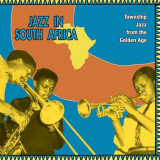
- A1: John Mehegan – Mabomvana
- A2: The Jazz Epistles - Uku-Jonga Phambili
- A3: Dollar Brand Trio - Eclipse At Dawn
- A4: Miriam Makeba - Ngola Kurila
- B1: Chris Mcgregor & The Castle Lager Big Band – Switch
- B2: Gideon Nxumalo - Chopi Chopsticks
- B3: Miriam Makeba - Love Tastes Like Strawberries
- B4: Dollar Brand – Gafsa
South Africa is in fact the only country in the whole African continent that has developed a strong Jazz tradition. Initially influenced by the great American stylists, (Ellington, Gillespie...) South Africa gradually developed its own soulful style based on a distinctive taste for melody and a deep sense of groove. Masterfully selected from the so-called Golden Age of the genre, (late Fifties / early Sixties), this compilation represents the best introduction to the work of a large and varied body of musicians and composers who inevitably developed their music as part of the historical Anti-Apartheid struggle, and as means of self expression in the dark times of exile. Kippie Moeketsi, Hugh Masekela, Dollar Brand, Chris McGregor, Dudu Pukwana, Mongesi Feza, Barney Rabachan, Nick Moyake and of course the queen Miriam Makeba are just some of the main voices represented here. A bunch of true warriors. in one word: A must!
- 2022 repress / generic sleeve -
In Skymn's first addition to our sacred doctrine we get to experience the hypnotic trance evoked in voodoo rituals by ancient African cults. With mud up to their knees, bonfires brazing and bone suits rattling in harmony with the beat, the congregation creates a vibe that is almost corrosive. Cannibalistic fetishism, unholy vibrations and maddening techniques of ecstasy that joins the living with the dead.
Supported by Amandra, Antonio de Angelis, Antonio Ruscito, Antonio Vazquez, Arnaud le Texier, Astronomical Telegram, Attemporal, Ben Buitendijk, BLNDR, Brendon Moeller aka Echologist, Cassegrain, Claudio PRC, Deepbass, Edit Select, Eric Cloutier, Exium, Francois X, Hector Oaks, Hironori Takahashi, I/Y, Iori, Jonas Kopp, Juho Kahilainen, Kwartz, Luigi Tozzi, Mattias Fridell, Mod21, Modvs, MTD, Ness, Nihad Tule, Nima Khak, Nobody Home, Oscar Mulero, Rasmus Hedlund, Reggy van Oers, Retina.IT, Ryuji Takeuchi, Samuli Kemppi, Shaded Explorer, Stefan Vincent, Stephanie Sykes, Svreca, Takaaki Itoh, The Noisemaker, Unam Zetineb, Victor Martinez aka. Error Etica, Vilix, Xhin and quite a few more.


