Torae and Marco Polo return with their sophomore release, Midnight Run, the follow-up to their classic debut album Double Barrel. Midnight Run packs 11 tracks that will instantly satisfy fans of the elite lyricism and hard-hitting production the duo is known for. The intro, “Reloaded,” sets the tone from the very beginning, and stand-outs such as “The Return,” “Makin’ Up,” and “Oh No” maintain the momentum throughout. With no guest verses, no bars off, and no filler, Midnight Run gets directly to what you’ve been waiting for from the “Gray Sheep,” Torae and Marco Polo.
quête:mom
Cassette[14,71 €]
Sliding between the bodies in the street, cutting across the contrails that bisect our sky, Wand find melody and the anxiety beats as they hum the soundtrack for a new gravitational center. Seeking connections against the plan of niche interest and anonymity, Vertigo is the sound of slippage, rocks of contradiction (in soft focus); feet lost, regained, lost again, a multi-chromatic swaying, more automatic, associative, directed, in time. Determining to work backwards (or at least insideout) this time, Wand recorded everything in their own studio; pieces cut from improvisations and reshaped, writing from within the performance, without the woodshed. Unconsciously, in the shadow of themselves, and turning round and round (and round), they kept finding that empty space and playing what it implied. Everybody took on a new position in addition to the old one. It was intuitive, strangely ego-less . . . going somewhere they"d never been and not knowing what they were doing, but committing and recommitting, unafraid to eject in a constant positive forward momentum.
"Are Possible" is a spark-throwing, undulating fusion of styles played (mainly) on banjo, upright bass and drums, made possible by the individual perspectives of Nathan, double-bassist Casey Toll (Jake Xerxes Fussell, Mt. Moriah) and drummer Rex McMurray (CAVE) work together in an easy-rolling manner, but one that contains an expansive, ass-shaking confabulation of ideas. Music is time in redux: Are Possible"s many moments in time carry details from all over the place. Rex brought a rhythm to the table after drumming on buckets at work, Casey provided a bassline that redirected a previous jam, Nathan brought in a song he"d been fucking with forever and they figured it out together. Their diversity of sources moves easily within the arrangements, rendering a far-ranging set of feels, from transcendental to new country funk to good ol" jazz and the folk-rock, even - all of it drawn out exquisitely when they mixed at Electrical Audio in Chicago with the delicate hands of Cooper Crain upon the faders. The Nathan Bowles Trio have done their due diligence, passing their music through time and space on their way to now.
Vinyl[30,46 €]
Sliding between the bodies in the street, cutting across the contrails that bisect our sky, Wand find melody and the anxiety beats as they hum the soundtrack for a new gravitational center. Seeking connections against the plan of niche interest and anonymity, Vertigo is the sound of slippage, rocks of contradiction (in soft focus); feet lost, regained, lost again, a multi-chromatic swaying, more automatic, associative, directed, in time. Determining to work backwards (or at least insideout) this time, Wand recorded everything in their own studio; pieces cut from improvisations and reshaped, writing from within the performance, without the woodshed. Unconsciously, in the shadow of themselves, and turning round and round (and round), they kept finding that empty space and playing what it implied. Everybody took on a new position in addition to the old one. It was intuitive, strangely ego-less . . . going somewhere they"d never been and not knowing what they were doing, but committing and recommitting, unafraid to eject in a constant positive forward momentum.
Outsider ambient soundscape by two musicians from the Paris alternative : Désiré Bonaventure & Zach.
An enchanted yet psychedelic dream-like ballad recorded in one take in an ephemeral delirium; borrowing from dub, drone, IDM & techno, reflecting singular inter-worlds and inviting us to join them.
--
Rue des Garderies is a distillate produced by the spontaneous collaboration of Désiré Bonaventure and Zach, two musicians evolving in the Parisian alternative scenes and so named in homage to a former local hotspot of other-music Rue des Gardes - now bygone - where this improvisation took place. Accustomed to exorcising time and space with the multidisciplinary collective †een▲ge g:-)d, Zach has also been evolving in various frequencies - beatmaking, mastering - for over 15 years. Désiré Bonaventure, on the other hand, is a member of the duo Euphonic Alliances Ltd. and R.A.F. Soundsystem.
Rue des Garderies was recorded in one take, using samplers and effects, amidst a tangle of cables, with eyes closed, as dawn approached, in anticipation for another moment of the present. Here, Désiré and Zach delve into the in-between worlds (musical, but not limited to), immersing themselves in their cracks, folds and emanations, attempting to narrate them to us.
From this material they shape a new alchemy lasting over 1h30, akin to a prolonged journey into psychedelia, drawing from various currents (such as ambient, drone, IDM, dub techno, and the English electronic scene of the 1990s), rich in organic and analogue textures that overlap, stretch, fold and expand.
The result is a grand and ethereal fresco, with shifting colours and textures, evoking astral projections and sporadic rhythms; a whole other world, populated by shapes, hues and new lives, forming a complex but enchanting sound essay.
Born of a fragile chaos, Rue des Garderies is an ephemeral harmony that accompanies moments of existence; a dance without tangible movement.
Finnish drummer/Producer Teppo "Teddy Rok" Mäkynen returns with his alias The Stance Brothers with "Sao Paolo / Timmy", a new 7"/digital single release on July 26th on We Jazz Records. Lauded by the likes of DJ Koco aka Shimokita, Kenny Dope and Gilles Peterson, Mäkynen's studio creation released the new album Duktus in November 2023, the project's first full length in more than 10 years. Back a new version of album cut "Sao Paolo" polus an unreleased new track, "Timmy", the project a treasure-trove for everyone into crunchy jazz funk à la Bob James & CTI, but this is no retro exercise. Teddy Rok moves forward in all directions, constantly bringing new elements into his sound, which is more layered and deep than ever before. At the same time, the crunch & the breaks are there when you need them.
The Stance 7" sides are often dominated by crunchy drums and crystal clear vibraphone melodies, and that's the overall vibe here, too. That being said, Mäkynen keeps things moving forward at all times, achieving moments of pure bliss with tracks that sound compact but expand far and wide both emotionally and musically.
The Stance Brothers are active live as a four-piece band, appearing live over the summer in Finland at Odysseus Festival and Flow Festival in Helsinki, plus G Livelab Tampere.
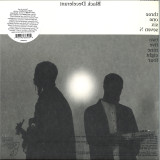
Black Decelerant is the second installment of Reflections, a series showcasing contemporary collaborations orchestrated by RVNG Intl., recently inaugurated by Steve Gunn and David Moore. Black Decelerant, the duo of Khari Lucas, aka Contour, and Omari Jazz, explores jazz traditions, improvising with synthesizers, guitars, and electronics as a practice laid forth by their musical ancestors. This experience allows for sonic meditations on themes such as Black being/nonbeing, mourning/life, expansion/limitation, and the individual/the collective. The two strive to create a sonic surface which can simultaneously allow Black listeners a place to be still, and to serve as a basis for a movement beyond "the moment." The album's ten compositions configure vast, resonant landscapes with signals, weathers and spirits, suspended in memory and distilled in time. The Black Decelerant machine recalibrates archival relics and acoustic impulses into collages of amalgamated timbres, where harmony exists not without discordance. Across the expansive space of the record, cadent storms of modulated sound ascend beside serene melodic spells. Piano keys and bass lines tumble in free fall throughout the release, accompanied on tracks "two" and "eight" by the spectral trumpet improvisations of Jawwaad Taylor. The duo arrived at their name upon reading Aria Dean's Notes on Blacceleration, an article which explores Accelerationism within the context of Black being or non-being as a foundational tenet of capitalism. Coupled with the record's intended effect, "Black Decelerant" references the music being an invitation to slow down, while hinting at the shared politics between themselves and the artists and thinkers who inspire them.
On his new album, Samurai, Lupe retreats inward to give fans one of his most personal albums in his deep catalog. “I sometimes get tagged by my fans as not doing personal records,” Lupe says, “but I always tell people there's me in there if you listen closely enough. This album is one of my more personal records to date. It's not a full biography, but my personal experiences are tied up in all of my music. A lot of the records are me. Some are from the POV of a character. and some are me. The album weaves things from my life as an artist, touching on things other artists go through.” The narrative follows a battle rapper through various moments in his career, starting with how they honed their battle rap skills, following their career through different moments. Musically, the new album finds Lupe delighting in the simple pleasures of assembling assonant syllables into playful and poignant narratives. The 8-track album is smooth, yet cerebral, brimming with ideas, but always radiating Lupe’s pure love for the art of emceeing and committing himself as a servant of the rap game. The album was produced in full by longtime collaborator and friend, Soundtrakk (“Superstar,” “Kick, Push,” “HipHop Saved My Life”), their second time linking up on a full album after 2022’s DRILL MUSIC IN ZION, and is also the first time Lupe, Trakk, and longtime manager Charles “Chill” Patton were in the studio together since Patton’s release from prison in 2023. “It felt great to be back in the studio again as a family,” Lupe says. It’s the first time they’d worked together in the studio since Lupe’s seminal album, The Cool in 2005. “The word ‘samurai’ means to serve,” Lupe says on the album’s title. “My relationship to that word has always meant that you need to be at the service of other people, either in the overall community, or in this instance, the rap community at large that I’ve been a part of for years. You have some duty, some purpose to serve. The title alone is very important to me. Before rap even, martial arts was my whole life, and it still plays a huge role in my life. The album is me, but also inspired by a quote I heard from one of my favorite artists. The overall themes of the album speak to the constant fight and the battle one goes through being in the entertainment industry. Some of the things we need to defend.”
Facta & K-LONE’s Wisdom Teeth imprint continues its busy schedule of 10 year celebrations with the debut LP by H TO O: a new collaborative project by Japanese ambient artists H. Takahashi and Kohei Oyamada. Set across six distinct movements, the LP maps the different stages of the cosmic cycle through a series of dynamic ambient set pieces: from the exponential expansion of the universe in its infancy - here invoked by the bright, chiming album opener ‘Inflation’ - through to its inevitable collapse and rebirth, captured by the record’s driving, ominous closer, ‘Ever’. The record started life in Takahashi’s hands, initially intended as a solo follow-up to his acclaimed 2018 LP, Escapism. The Kankyō Records founder shared his early sketches with friend and collaborator Oyamada, who began to play with the arrangements, taking the work in an experimental new direction. Naturally the project evolved into a cooperative effort, and its final form is the result of an honest and fluid back-and-forth between the two artists. The collaboration marks a considerable shift in energy to the artists’ previous works - most of all in its foregrounded use of rhythm. Where Escapism was built from a series of gently lilting, dream-like vignettes, each movement of Cycle has a clear sense of forward momentum and purpose. Each composition builds from a set of sparse, meandering elements into something dense, cinematic and, at points, discordant. Although Cycle is at heart an ambient record, there is a club-informed feeling of forward motion running through the record, placing it in a similar sonic world to the beatless-but-rhythmic ambient techno of artists like Barker, Lorenzo Senni and Sunareht. Delicate and dramatic in equal measure, Cycle is a vital and exciting debut dedicated to the building of worlds - and to their eventual and inevitable dissolution. Genre: Electronic / Ambient
- A1: Psycho Killer
- A2: Heaven
- A3: Thank You For Sending Me An Angel
- A4: Found A Job
- A5: Slippery People
- A6: Cities
- B1: Burning Down The House
- B2: Life During Wartime
- B3: Making Flippy Floppy
- B4: Swamp
- C1: What A Day That Was
- C2: This Must Be The Place (Naive Melody) (Naive Melody)
- C3: Once In A Lifetime
- C4: Big Business/I Zimbra
- D1: Genius Of Love
- D2: Girlfriend Is Better
- D3: Take Me To The River
- D4: Crosseyed & Painless
LOS ANGELES—To celebrate the 40th anniversary of the celebrated Talking Heads and Jonathan Demme’s concert film Stop Making Sense, the set will be re-released as a 2LP and 2CD/Blu-ray set this summer.
Released last year, the sold-out Deluxe Edition of the soundtrack will return as a 2-LP black vinyl on Rhino and 2-LP crystal clear vinyl at retail. Both variants feature a 12-page booklet with liner notes from all four band members –Tina Weymouth, David Byrne, Chris Frantz, and Jerry Harrison—and band photos. The 2CD/Blu-ray version includes the entire 28-page booklet from last year’s Deluxe Edition and a Dolby Atmos mix of the complete concert, mixed by Jerry Harrison and E.T. Thorngren, who also mixed the original release. Both will be available on July 26. Pre-order now.
The band appeared together for a sold-out screening and Q&A last night at the Pantages Theater, the same theater at which Stop Making Sense was recorded. They were joined by Blondshell, who performed “Thank You For Sending Me an Angel.” Another special screening with the band will occur in Brooklyn at the King’s Theater on June 13, with the Q&A hosted by Questlove and The Linda Linda’s performing “Found a Job.” The two events cap off a banner year of celebrations for what many consider to be the best concert film of all time.
The inspiration for Stop Making Sense came when director Jonathan Demme saw Talking Heads perform during the band’s 1983 tour for Speaking in Tongues. Afterward, he approached them with the idea of making the show into a concert film. They agreed and worked together over the next few months to finalize the details. Ultimately, Demme filmed three shows at Hollywood’s Pantages Theater in December 1983 to create Stop Making Sense.
The concert film presents a retrospective of the band up to that point, with a performance that weaves together songs from all six of its studio albums. The show progresses methodically, opening with Byrne onstage performing “Psycho Killer” alone with a drum machine. After each song, he’s joined by a new band member until Weymouth, Frantz, and Harrison are all on stage with him. The group continues to grow throughout the concert as members of the stellar touring band are added: keyboardist Bernie Worrell, percussionist Steve Scales, guitarist Alex Weir, and backup singers Lynn Mabry and Ednah Holt.
The band performs 18 songs in Stop Making Sense, including its recent single at the time, “Burning Down The House.” That summer, the song was in heavy rotation on radio and MTV, helping the song become the band’s first top 10 hit in America. It was, however, a different song from Speaking in Tongues that was destined to deliver one of the film’s signature moments. Talking Heads would perform “Girlfriend Is Better” wearing the now iconic, oversized suit inspired by costumes worn in traditional Japanese theater. For good measure, a picture of David Byrne in the suit also graces the album cover.
Stop Making Sense focuses mainly on music by Talking Heads but does include a few songs recorded outside the band: “Genius Of Love” by Tom Tom Club, “What A Day That Was” and “Big Business” from Byrne’s 1981 album, The Catherine Wheel. Limited edition vinyl versions of both of these albums, along with Harrison’s The Red And The Black, were released for this year’s Record Store Day.
When it arrived in September 1984, Stop Making Sense was an artistic and commercial triumph. The film had people dancing in theatre aisles, and the soundtrack sold over two million copies. Just last year, the Library of Congress added Stop Making Sense to the National Film Registry in recognition of its cultural, historical, and aesthetic significance.
Weymouth praises Demme as a collaborator: “…Jonathan was a very enthusiastic, highly adaptive, and imaginative guy who was just as good a listener as he was a talker and collaborator. From the get-go you just got the impression he was as flexible as he was disciplined. Being team players, that boded well for a great relationship and a great film!”
Harrison says the film still holds up today: “To me, Stop Making Sense has remained relevant because the staging and lighting techniques could have been created in a much earlier time period. For example, Vari-Lights, lights with motors to re-aim them, had just come into vogue. Had we used them, there would have been a timestamp on the film, and it eventually would have felt dated...The absence of interviews, combined with the elegant and timeless lighting, created a film that can be watched over and over.”
Byrne says it’s interesting that this album was – for many people – an introduction to Talking Heads. “We had done a live album before this, but coupled with the film, and with the improved mixes and sound quality, this record reached a whole new audience. As often happens, the songs got an added energy when we performed them live and were inspired by having an audience. In many ways, these versions are more exciting than the studio recordings, so maybe that’s why a lot of folks discovered us via this record.”
Frantz recalls the sheer joy surrounding the entire Stop Making Sense experience. “I’m talking about real, conscious, transcendent joy… I’m talking about what the Southern gospel people call ‘getting happy,’ which means ‘to be filled with the Spirit.’ That is what happened to us onstage every night, and from my seat behind the drums, I recognized that this was happening to the audience too. Joy was visible in front of me and all around me every night.”
"Té De Flores Silvestres" is the result of the dialogue between the Belgium photographer Michael Roemers and the Argentinian musician Federico Durand initiated by IIKKI, between February 2023 and May 2024.
Federico Durand’s music is a weave of sound searching introspection and delight through simple melodies, made in the heart of Argentina. Federico likes music, gardens, John Keats’ poetry, collecting stamps and Earl Grey tea. Since 2010 he has been released on some labels such as 12k, Home Normal, IIKKI, Spekk, White Paddy Mountain, LAAPS and more.
Michael Roemers, a child of the borders, was born in 1987 in the Belgian village of Plombières, studying sound at the Institute of Broadcasting Arts in 2008. He discovered the power of the image, and became passionate about photography. He began his photographic career following Belgian underground music bands as they toured Europe, capturing crazy moments on stage and backstage. Then, he decided to devote himself to a personal project, to capture his native Wallonie region, highlighting the richness and a part of these Belgian traditions region while exploring the themes of identity, memory and membership.
Since 2021, Michael Roemers has added a new string to his bow by running the Vice Versa podcast with his partner Sébastien Van Malleghem. This podcast explores the themes of photography, art and culture by giving voice to renowned guests in these fields. Té De Flores Silvestres is his first book.
Fine Art Book, Ltd. to 400 copies:
Hardcover book printed on Glossy Modern Paper 170g/m2 // 80 pages, 19cm x 22.5cm, 50 photos // Front cover points and back cover logo embossed // Selective UV varnish // Hand-numbered.
- A1: Institution Man
- A2: Jesse
- A3: Startdust Bubblegum
- A4: Mr Freedom
- A5: Dragster
- A6: Find It
- B1: The People Tree
- B2: Apple Green
- B3: Time Of The Future
- B4: Saturation
- B5: Illusions
- B6: A Trip Down Brian Lane
- C1: Jesse" (Alternate)
- C2: Institution Man" (Edit)
- C3: Warlocks Of The Mind" (Pt 1)
- C4: Time Of The Future" (Alternate Ep Mix)
- C5: Find It" (Radio Edit)
- C6: Almost Grown
- D1: Apple Green" (With Harmony Vocal)
- D2: Illusions" (No Horns Mix)
- D3: A Trio Down Brian Lane" (7" Mix)
- D4: Slide Sweet Baby
- D5: The People Tree" (No Mellotron)
- D6: Jesse" (Brendan Lynch Radio Mix)
Acid Jazz's announcement of the 30th anniversary 2LP remastered edition of Mother Earth's The People Tree is a momentous occasion for fans of acid jazz and soul music alike. Originally released in 1994, this album holds a significant place in the genre's history, blending elements of soul, funk, and folk-tinged rock from the 70s with a modern twist. The special edition reissue boasts the original album, along with three previously unreleased tracks and six making their vinyl debut. Remastered from the original analogue recordings, this release promises to breathe new life into the beloved classic. Featuring guest appearances from iconic artists like Paul Weller, Dee C Lee and Simon Bartholomew of Brand New Heavies, The People Tree is a testament to the collaborative spirit of the acid jazz scene. Notable bonus tracks include the previously unreleased alternative version of 'Apple Green,' an alternate take on 'Illusions,' and the title track itself. First-time vinyl cuts offer fresh perspectives on tracks like 'Jesse' and 'Slide Sweet Baby,' adding depth to the listening experience. The album's presentation is equally impressive, with a beautiful 'wide-spine' layout, printed inner sleeves, and insightful notes from label-founder Eddie Piller, accompanied by unseen photos from the original cover shoot. Overall, this anniversary edition of The People Tree is a album worth your time as it often selected for one of the best examples in the genre.
GB's debut album, Gusse Music, emerges as a collaged symphony of experimental music with a pop sensibility. Its makeshift compositions, stretched out to linger in memory, offers a 33-minute textural plunge into the melancholy of the infinite – shadowed by loneliness yet illuminated by glimpses of light, a longing for the memories ahead. Tracks bleed into each other, like videos in a feed, momentarily grabbing the listener's attention only to be forgotten again shortly after. However, in the constant stream of impressions, GB patiently strives to inspire new thoughts and conjure an image, quaint and affectionate. From the sludged electric guitars and hypnotic baritone vocals of the opening track "FACETIME," to a solemn, almost Wicker Man-esque, acoustic instrumentation on "CONCRETE CITY," to stoned-out beats and rolling bass on "NEW PLANES”. Gusse Music evokes a world of music that is both welcoming and fun, hauntingly desolate, dark, and gritty. “the world in us, and all the spectacle, so much it hurt, wouldn’t trade anything”
It's like waking up. Disorientated at first, feedback, crushed stones, voices, that's how it starts and you feel protected by this music in a strange way and encouraged to gain insight. As soon as you have begun to really like a chunk of sound and develop an interest in it, it is multiplied or destroyed in some way and someone calls out "Ich". Ich. LSD is hopscotch compared to that. Later, steel rails are dissected. It is ringing in the ears. Everything trembles. It is obvious that you are being looked after, that someone really cares. You are never left alone, whether you like it or not. And then inevitably comes the moment of silence, after being sent through old telephone cables and the nightmares of your ancestors. Pretty much the exact opposite of a podcast. Nevertheless, hits are not left out. Seth is predominantly seen as a harmful god – but by far not only.
- A1: Don't Be Scared (Feat Takura)
- A2: Go
- A3: Censor (Feat Popcaan & Irah)
- A4: Mixed Emotions
- A5: Over & Done (Feat Pip Millett)
- A6: Run Up (Feat Unknown T)
- A7: 5Am
- B1: Headtop (Feat Irah)
- B2: When It Rains (Feat Backroad Gee)
- B3: Hold Your Ground (Feat Ethan Holt)
- B4: Blazer (Feat Irah)
- B5: Consciousness
- B6: Forgive Dark
Last month, Chase and Status returned to the limelight unveiling their hard-hitting and trailblazing singles “When It Rains” ft. BackRoad Gee, complete with a Jack McMullen starring, Hector Dockrill-directed cinematic visual and the addictive smash “Don’t Be Scared” ft. Takura. Today, the duo are making a true statement of intent for the year ahead, with the announcement of their sixth studio album, What Came Before. Created by Crown & Owls, the accompanying artwork captures a truly special and magnetic live moment. Speaking on the concept, Crown & Owls state:
“We wanted to create an image that captured the very human compulsion to gather in a dark room and dance and sweat. Such scenes have a different weight to them after they were off the table for a good while, and we were very interested in capturing a moment of collective catharsis in the shadow of a period of history that pushed isolation on so many. We were really interested in the stories of the individuals in the image - what drives them to want to be in that room? The whole campaign kind of works backwards from that moment in the photo really - the intersecting stories of the dance floor, and the sense of freedom and release it brings to the individual. The record sleeve, the single covers, visualisers and elements of the music videos were all captured at this special night - it’s been a joy to work on.”
Landing alongside the album announcement is new single “Mixed Emotions” - a euphoric and recognisably brilliant dose of true Chase and Status energy that landed alongside an incredible video, filmed in two halves and directed by UKMVA-winning Femi Ladi (Pa Salieu - “My Family”). Femi Ladi states:
“On nights out like this, sometimes you just want to get fucked up. Trying to get to that moment, when you’re out of your head and completely in the moment. Sometimes music gets us there, sometimes drugs and alcohol, sometimes it’s a combination of all 3.
I want to connect our camera to the chasing of that high. A visual metaphor for trying to reach that euphoria. Each time she takes a bump, a line or a pill, the camera closes in on her. The closer she gets to that euphoric moment, the closer the camera gets to her.
By the end I want the audience to have an uncomfortable and claustrophobic feeling as our hero goes slightly overboard, a feeling that most of us know but won't dare to admit.”
Consisting of 13 tracks, What Came Before distills 15 years of unparalleled experiences into a bold, invigorating sixth album; informed by global tours, sold out headline shows, five albums, multiple awards, chart success, underground kudos, top tier collaborations and remixes, and, above all else, that unwavering dance floor energy that remains as tangible and transformative now as it has since the very beginning. This pure, unadulterated exhilaration is the glue that binds all of these experiences together, cultivating a legacy of positive vibes, unforgettable moments and the continued progression of British club culture.
For trailblazers Chase and Status, the story is cyclical - a constant process of regeneration and refinement that comes full circle. Everything that came before, from their inception point to now, has brought them back to their essence.
Landing in the wake of their critically acclaimed specialist album RTRN II JUNGLE, and the more recent news of their headlining ParkLife festival this Summer, Chase and Status’s musical return is highly anticipated. After a series of teasers were published on their social media, the duo directed their fans to whatcamebefore , unveiling a plethora of forthcoming Summer festival dates.
The forthcoming album marks the inception point for the duo’s next phase; while on forced hiatus they also went back to square one with their live show. With What Came Before Chase & Status prepare to embark on the next chapter of their illustrious career as a seasoned act ignited by the same excitement
2024 Repress
Physically and mentally draining in the best way possible, Wet Will Always Dry is maybe the most complete statement from Blawan to date, and as such should be ignored at your peril. This becomes evident from the album-opening 'Klade,' a dizzying, tumbling flight of pure energy over overlapping fields of electrified menace. This sets the stage for 'Careless,' which retains the hazardous, crackling atmosphere but dials back the intensity just enough to make room for a new feature, Blawan's eerie and disembodied vocals.
'Tasser' ratchets up the tempo and the frenetic energy yet more, slinging chunks of audio shrapnel and grinding factory noise over the kick-heavy beat, only letting up the tension every now and then for a convulsive breakdown. By the arrival of 'Vented,' a more steady, cycling groove has set in along with the accompaniment of suspenseful melodic swells, but the element of surprise is far from gone: there still seem to be spectral entities lurking around every corner, and there's no shortage of intriguing tumbril weirdness blowing around the imaginary streets that this track conjures up.
The slamming 'North' keeps alive the record's persistent, darkly humorous feeling that things are about to go off the rails at any moment, using wildly contorted sequences and granular debris to shift between total abandon and regimented strictness. A moment of relative calmness, along with the return of the atmospheric vocals, comes about with 'Stell,' a faintly dubby track that leaves an impression like watching streams of traffic progress underneath rolling, deep grey clouds.
'Kalosi' brings back the percussive motif of 'Tasser' and 'North,' this time partnering it with loops that bring to mind radioactive bass strings. 'Nims' then shuts things down with infectious harp-like sequences, fuzz-shrouded percussion and an 'everything but the kitchen sink' mentality towards filtering and processes which will get the attention of all but the most jaded soundhead.
Cassandra Jenkins ist ganz einfach eine der besten Songwriter-Geschichtenerzählerinnen, die derzeit Musik machen. Sie gehört zu den großen amerikanischen Songwritern, zu Künstlern wie David Berman, Adrianne Lenker, Jeff Tweedy und Sufjan Stevens. Es sind Künstler, die durch ein Gefühl der Unmittelbarkeit verbunden sind, nicht nur durch ihre Texte - die präzise, aufrüttelnd, manchmal brutal und im richtigen Moment witzig sind -, sondern auch durch die Art und Weise, wie sie singen, mit einer tiefgehenden, totalen Überzeugung, die einen durch ihre Lieder trägt. Das sind die Künstler und Lieder, die sich anschleichen und wirklich für immer mit uns leben, und auf „My Light, My Destroyer“ reiht sich Jenkins in diese Reihe ein. Das Bemerkenswerteste an „My Light, My Destroyer“ ist, dass es eine Künstlerin an einem aufregenden Sprung in ihrer Entwicklung zeigt. Vieles an diesem Album unterscheidet sich von seinen Vorgängern; Field Recordings und Found Sound durchdringen es, erzählerisches Songwriting kracht in berauschende, wirbelnde Kompositionen. Jenkins singt mit einer Stimme, die man nur als Powerwhisper bezeichnen kann (man denke an Sufjan Stevens, Annie Lennox, Margo Timmins oder Tweedy aus der YHF-Ära), ihr Gesang ist nah und intim, aber subtil konfrontativ. Aber hier fühlt sich alles größer an, ausgefeilter, kühner und reichhaltiger als bei ihren früheren Arbeiten. Geboren und aufgewachsen in New York City, ist Jenkins seit ihrer Kindheit auf Tournee und tritt auf. Ihre ersten Aufnahmen veröffentlichte sie im Eigenverlag, bevor sie 2021 ihr bahnbrechendes Album „An Overview auf Phenomenal Nature“ veröffentlichte. Auf „My Light, My Destroyer“ sind viele der Songs bestimmten Gefühlen gewidmet, und es geht darum, sich in diese Gefühle hineinzuversetzen, im Gegensatz zu einem erzählerischen Bogen. Die Leadsingle "Only One" ist ein Beispiel dafür, dass ein Moment oder ein Song völlig kurzsichtig sein kann; er kann ein einzelnes Gefühl verkörpern und bietet keine Antworten. Songs wie "Devotion", "Delphinium Blue", "Clams Casino", "Echo" und "Only One" sprechen von der befreienden Qualität einer fokussierten Beobachtung, selbst bis zum Punkt der Desillusionierung. "Es gibt diese Idee der Desillusionierung, an der ich festgehalten habe", sagt sie. "Ich schätze Desillusionierung als einen Prozess, bei dem man neue, unerwartete Ergebnisse entdeckt. Wir lassen auf diese Weise Erwartungen los. Erwartungen halten uns zurück. Es ist leicht, sich auf Abstumpfung oder Enttäuschung zu konzentrieren, aber ich sehe es eher als Freiheit".
First time reissue of “Quiero…” by Peruvian-Cuban singer and composer Króffer Jiménez, leader of Poppy y sus Pirañas, one of the key figures in Peruvian tropical music.Recorded in 1969 but not released until 1972, this album comprises guarachas and cumbias that were ahead of their time, mostly original compositions. Unfortunately the album went almost unnoticed back in the day, becoming a sought-after collector’s item in recent times. Quintets such as Compay Quinto, Pedro Miguel y sus Maracaibos and Los Totos were the stars of the Peruvian tropical scene at that time, winning over listeners with their powerful rhythm section and fast-paced melodies. In contrast, the dozen guarachas and cumbias on "Quiero..." are slower and more relaxed, where the elegant intonation displays Króffer’s Cuban roots, with the Pirañas contributing during the more festive moments. The cumbia 'Mala mujer' and the guarachas 'Amar en el mar' and 'El sortilegio' were ahead of their time, as the singing style adopted would only become fashionable from 1971 onwards. 180g vinyl.
- A1: I Believe In You & Me (Film Version)
- A2: Step By Step
- A3: Joy
- A4: Hold On, Help Is On The Way
- A5: I Go To The Rock
- B1: I Love The Lord
- B2: Somebody Bigger Than You & I
- B3: You Were Loved
- B4: My Heart Is Calling
- C1: I Believe In You & Me (Record Version)
- C2: Step By Step (Remix)
- C3: Who Would Imagine A King
- D1: He's All Over Me
- D2: The Lord Is My Shepherd
- D3: Joy To The World
Yellow Vinyl[35,25 €]
Available for the first time on vinyl, Whitney Houston's The Preacher's Wife: Original Soundtrack Album is the best-selling gospel album of all time. Released on November 26, 1996, the album features songs performed and produced by Houston, who also starred in the film. From the moment you press play, your heart will move to soul-stirring vocals like the hauntingly beautiful "I Believe In You and Me," and the spiritual "Joy To The World," "I Love The Lord," and "Step By Step." The album features guest artists including Shirley Caesar, the Georgia Mass Choir, and Houston's mother, the legendary Cissy Houston. This 2LP vinyl features a new essay by producer Mervyn Warren and fan testimonials of love.