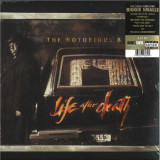
Clear Vinyl
The second release in the three-part Greatest Hit series starts off with the cleverly named bangy banger 'Emergency Loop'. Ghost in the Machine probably put this track on there so that no one would notice that the rhythms in the second track 'Drunken Master' are so weird that probably not even the best DJs in the world can play it. Not quite triplet, not quite dotted. Your problem, not ours. Obviously. Hidden away on the entire b-side is Ghost in the Machine's beautiful remix of Torgue's 'A Night at the Opera', available on vinyl for the first time ever. Another very obvious money-grab which you absolutely can't live without.
Search:mone
LP comes with a Side D etching in triple gatefold jacket + full album download. The Will to Live was produced by Titus Andronicus singer-songwriter Patrick Stickles and Canadian icon Howard Bilerman (Arcade Fire, Leonard Cohen, The Whole Nine Yards) at the latter’s Hotel 2 Tango recording studio in Montreal. Drawing on maximalist rock epics from Who’s Next to Hysteria, Bilerman and Stickles have crafted the richest, densest, and hardest hitting sound for Titus Andronicus yet. All at once, the record matches the sprawl and scope of the band’s most celebrated work, while also honing their ambitious attack to greater effect than ever before. “It may strike some as ironic we had to go to Canada to record our equivalent to Born in the USA,” quips Stickles, “but the pursuit of Ultimate Rock knows no borders. ”For his recent stretch of personal stability, he credits a newfound domestic bliss and steadfast mental health regimen (“Lamictal is a hell of a drug”) as well as the endurance of what has become the longest-running consistent lineup of Titus Andronicus—Liam Betson on guitar, R.J. Gordon on bass, and Chris Wilson on drums. On the crueler side of the coin, however, The Will to Live was created in large part as an attempt to process the untimely 2021 death of Matt “Money” Miller, the founding keyboardist of the band and Stickles’ closest cousin. Stickles explains: “The passing of my dearest friend forced me to recognize not only the precious and fragile nature of life, but also the interconnectivity of all life. Loved ones we have lost are really not lost at all, as they, and we still living, are all component pieces of a far larger continuous organism, which both precedes and succeeds our illusory individual selves, united through time by (you guessed it) the will to live.” “Naturally, though, our long-suffering narrator can only arrive at this conclusion through a painful and arduous odyssey through Hell itself,” he qualifies. “This is a Titus Andronicus record, after all.” When Titus Andronicus made their long-awaited return to the stage in 2021, it was to celebrate the anniversary of their landmark breakthrough The Monitor, and the act of playing that material before an ecstatic audience left the band determined to deliver an album that would reach for those same lofty heights, relying this time less on the reckless fire of youth and more on the experience and perspective at which a band only arrives with a thousand shows under their belt. Through this golden ratio, Titus Andronicus have arrived at the peak of their creative powers. From its adrenalizing opening instrumental “My Mother Is Going to Kill Me” to its wistful closing benediction “69 Stones,” The Will to Live conjures a vast landscape and sends the listener on a rocket ride from peak to vertiginous peak. Rock fans will find themselves a feast, whether they crave barn-burning rock anthems such as “(I’m) Screwed” and “All Through the Night,” rapid-fire lyrical gymnastics (“Baby Crazy”), symphonic punk throwdowns (“Dead Meat”), or an adventurous excursion into the darkness that delivers thrills as it breezes boldly past the 7 minute mark, “An Anomaly.” As if that wasn’t enough gas for the tank, The Will to Live features sterling contributions from members of the Hold Steady, Arcade Fire, and the E Street Band, as well as duets with the aforementioned Betson, former Titus Andronicus drummer Eric Harm, and Josée Caron of the Canadian rock band Partner. The album comes packaged with gorgeous triple-gatefold artwork by illustrious illustrator Nicole Rifkin, a Hieronymus Bosch–inspired triptych which mirrors the three-part structure of the narrator’s perilous voyage across the corresponding three sides of vinyl. All together, this esteemed ensemble, with Stickles and Bilerman determined and defiant at the helm, have found The Will to Live—now, the question is… will you?
SIDE A 1. My Mother is Going to Kill Me 2. (I’m) Screwed 3. I Can Not Be Satisfied 4. Bridge and Tunnel SIDE B 5. Grey Goo 6. Dead Meat 7. An Anomaly SIDE C 8. Give Me Grief 9. Baby Crazy 10. All Through the Night 11. We’re Coming Back 12. 69 Stones SIDE D Etching
Limited Blue Sky Colour Vinyl LP Pressing. This release is strictly for Indie Stores Only. First reissue of Love Battery’s 1992 Debut Sub Pop Album. Remastered by Jack Endino from the Original Masters. Includes Liner Notes with photos, lyrics and more. Jackpot Records is proud to announce the upcoming vinyl reissue of the classic 1992 Sub Pop album: LOVE BATTERY “Dayglo”. In the middle of the wonderful sludge that was coming out of Seattle in the late 80s/early 90’s, Love Battery pierced through with something different to offer. They were more psychedelic, more tuneful, and even more...dare we say...British sounding than what Sub Pop was releasing at the time. We were listening. The results are crystal clear on the record Jackpot Records is reissuing, ‘Dayglo’. And like many of the Sub Pop records of the day, this has not been available on vinyl in the U.S. Until now. On 'Dayglo', inventive and underrated guitar wizard Kevin Whitworth and vocalist/guitarist Ron Nine slash and burn through 10 songs that would give bands like Blur, Swervedriver, and yes, Nirvana, a run for their money. It doesn't hurt that the focused driven energy of drummer Jason Finn (soon to be of The Presidents Of The United States) and ex-U-Men bass monster Jim Tillman add more than their weight to the sonic mystery of these songs. From the melodic battle cry of opener 'Out Of Focus' with its slippery, infectious chorus, it's obvious that Love Battery had an incredible knack for hypnotic hooks, cryptic lyrics, and propulsive grooves, ones that record obsessives still drool over when the needle hits the turntable. The record is as mysterious as early R.E.M., with equal hints of 13th Floor Elevators and Screaming Trees sprinkled throughout.
Reviews: “4 ½ stars out of 5 - Dayglo is imbued with a highly energetic style and creative force”. All Music Guide // “Two years later, Oasis made the same record and were called geniuses” SPIN Magazine // Track listing: 1 Out Of Focus 2 Foot 3 Damaged 4 See Your Mind 5 Side (With You) 6 Cool School (Trane Of Thought) 7 Sometimes 8 Blonde 9 Dayglo 10 23 Modern Stories
Features fan favorites like "Mojo Boogie," "Evil On My Mind" and "Shake Your
Moneymaker." On three tracks, Johnny reunites with the rhythm section from his
first three albums, drummer Uncle John "Red" Turner and bassist Tommy
Shannon (later in Stevie Ray Vaughan's Double Trouble). Two more feature
special guest Mac "Dr. John" Rebennack on piano. All tracks remastered.
'3rd Degree' has sold over 95,000 units in the U.S.
- A1: Life After Death (Intro)
- A2: Somebody's Gotta Die
- A3: Hypnotize
- A4: Kick In The Door
- B1: #!*@ You Tonight (Feat R Kelly)
- B2: Last Day (Feat The Lox)
- B3: I Love The Dough (Feat Jay Z & Angela Winbush)
- B4: Whats Beef?
- C1: Big (Interlude)
- C2: Mo Money Mo Problems (Feat Mase & Puff Daddy)
- C3: Niggas Bleed
- C4: I Got A Story To Tell
- D1: Notorious Thugs
- D2: Miss U
- D3: Another (Feat Lil Kim)
- D4: Going Back To Cali
- E1: Ten Crack Commandments
- E2: Playa Hater
- E3: Nasty Boy
- E4: Sky's The Limit (Feat 112)
- F1: The World Is Filled... (Feat Too Short & Puff Daddy)
- F2: My Downfall (Feat Dmc)
- F3: Long Kiss Goodnight
- F4: You're Nobody (Til Somebody Kills You) (Til Somebody Kills You)
Monica : The tracks on Stop That Girl were recorded live in an old mill and
featured musicians who had played on recordings on the Postcard label
and in groups from that era - Aztec Camera, The Blue Nile, Bourgie
Bourgie, Jazzateers, Love & Money, Paul Quinn & The Independent Group,
among others - The album is a mix of original material and some covers
(Orange Juice, Captain Beefheart, Gene Clark, The Velvet Underground)
Monica Queen came to prominence in Thrum, recording tracks with Edwyn
Collins and releasing an album on the Fire label. She has released albums under
her own name on Creeping Bent and as part of Tenement & Temple as self
releases. Monica is perhaps best known for singing on the Belle & Sebastian
single Lazy Line Painter Jane and has performed live with The Jayhawks, The
Pogues, and James Grant.
- A1: Rock This Mother
- A2: Talk To Me Girl
- A3: You Can Find Me
- A4: Check This Out
- A5: Jesus Going To Clean House
- A6: Hope You Understood
- A7: Is It What You Want
- A8: Love Is Everlasting
- A9: This Is Hip-Hop Art
- A10: Opposite Of Love
- A11: Do You Know What I Mean
- B1: Saving All My Love For You
- B2: Look Out Here I Come
- B3: Girl You Always Talking
- B4: Have A Great Day
- B5: Take My Hand
- B6: I Need Your Love
- B7: Your Town
- B8: Talk Around Town
- B9: Booty Head/Take A Little Walk
- B10: I Love My Mama
- B11: I Never Found Anyone Like You
Cassette[11,72 €]
As the sun sets on a quaint East Nashville house, a young man bares a piece of his soul. Facing the camera, sporting a silky suit jacket/shirt/slacks/fingerless gloves ensemble that announces "singer" before he's even opened his mouth, Lee Tracy Johnson settles onto his stage, the front yard. He sways to the dirge-like drum machine pulse of a synth-soaked slow jam, extends his arms as if gaining his balance, and croons in affecting, fragile earnest, "I need your love… oh baby…"
Dogs in the yard next door begin barking. A mysterious cardboard robot figure, beamed in from galaxies unknown and affixed to a tree, is less vocal. Lee doesn't acknowledge either's presence. He's busy feeling it, arms and hands gesticulating. His voice rises in falsetto over the now-quiet dogs, over the ambient noise from the street that seeps into the handheld camcorder's microphone, over the recording of his own voice played back from a boombox off-camera. After six minutes the single, continuous shot ends. In this intimate creative universe there are no re-takes. There are many more music videos to shoot, and as Lee later puts it, "The first time you do it is actually the best. Because you can never get that again. You expressing yourself from within."
"I Need Your Love" dates from a lost heyday. From some time in the '80s or early '90s, when Lee Tracy (as he was known in performance) and his music partner/producer/manager Isaac Manning committed hours upon hours of their sonic and visual ideas to tape. Embracing drum machines and synthesizers – electronics that made their personal futurism palpable – they recorded exclusively at home, live in a room into a simple cassette deck. Soul, funk, electro and new wave informed their songs, yet Lee and Isaac eschewed the confinement of conventional categories and genres, preferring to let experimentation guide them.
"Anytime somebody put out a new record they had the same instruments or the same sound," explains Isaac. "So I basically wanted to find something that's really gonna stand out away from all of the rest of 'em." Their ethos meant that every idea they came up with was at least worth trying: echoed out half-rapped exhortations over frantic techno-style beats, gospel synth soul, modal electro-funk, oddball pop reinterpretations, emo AOR balladry, nods to Prince and the Fat Boys, or arrangements that might collapse mid-song into a mess of arcade game-ish blips before rallying to reach the finish line. All of it conjoined by consistent tape hiss, and most vitally, Lee's chameleonic voice, which managed to wildly shape shift and still evoke something sincere – whether toggling between falsetto and tenor exalting Jesus's return, or punctuating a melismatic romantic adlib with a succinct, "We all know how it feels to be alone."
"People think we went to a studio," says Isaac derisively. "We never went to no studio. We didn't have the money to go to no studio! We did this stuff at home. I shot videos in my front yard with whatever we could to get things together." Sometimes Isaac would just put on an instrumental record, be it "Planet Rock" or "Don't Cry For Me Argentina" (from Evita), press "record," and let Lee improvise over it, yielding peculiar love songs, would-be patriotic anthems, or Elvis Presley or Marilyn Monroe tributes. Technical limitations and a lack of professional polish never dissuaded them. They believed they were onto something.
"That struggle," Isaac says, "made that sound sound good to me."
In the parlance of modern music criticism Lee and Isaac's dizzying DIY efforts would inevitably be described as "outsider." But "outsider" carries the burden of untold additional layers of meaning if you're Black and from the South, creating on a budget, and trying to get someone, anyone within the country music capital of the world to take your vision seriously. "What category should we put it in?" Isaac asks rhetorically. "I don't know. All I know is feeling. I ain't gonna name it nothing. It's music. If it grabs your soul and touch your heart that's what it basically is supposed to do."
=
Born in 1963, the baby boy of nine siblings, Lee Tracy spent his earliest years living amidst the shotgun houses on Nashville's south side. "We was poor, man!" he says, recalling the outhouse his family used for a bathroom and the blocks of ice they kept in the kitchen to chill perishables. "But I actually don't think I really realized I was in poverty until I got grown and started thinking about it." Lee's mom worked at the Holiday Inn; his dad did whatever he had to do, from selling fruit from a horse drawn cart to bootlegging. "We didn't have much," Lee continues, "but my mother and my father got us the things we needed, the clothes on our back." By the end of the decade with the city's urban renewal programs razing entire neighborhoods to accommodate construction of the Interstate, the family moved to Edgehill Projects. Lee remembers music and art as a constant source of inspiration for he and his brothers and sisters – especially after seeing the Jackson 5 perform on Ed Sullivan. "As a small child I just knew that was what I wanted to do."
His older brother Don began musically mentoring him, introducing Lee to a variety of instruments and sounds. "He would never play one particular type of music, like R&B," says Lee. "I was surrounded by jazz, hard rock and roll, easy listening, gospel, reggae, country music; I mean I was a sponge absorbing all of that." Lee taught himself to play drums by beating on cardboard boxes, gaining a rep around the way for his timekeeping, and his singing voice. Emulating his favorites, Earth Wind & Fire and Cameo, he formed groups with other kids with era-evocative band names like Concept and TNT Connection, and emerged as the leader of disciplined rehearsals. "I made them practice," says Lee. "We practiced and practiced and practiced. Because I wanted that perfection." By high school the most accomplished of these bands would take top prize in a prominent local talent show. It was a big moment for Lee, and he felt ready to take things to the next level. But his band-mates had other ideas.
"I don't know what happened," he says, still miffed at the memory. "It must have blew they mind after we won and people started showing notice, because it's like everybody quit! I was like, where the hell did everybody go?" Lee had always made a point of interrogating prospective musicians about their intentions before joining his groups: were they really serious or just looking for a way to pick up girls? Now he understood even more the importance of finding a collaborator just as committed to the music as he was.
=
Isaac Manning had spent much of his life immersed in music and the arts – singing in the church choir with his family on Nashville's north side, writing, painting, dancing, and working various gigs within the entertainment industry. After serving in the armed forces, in the early '70s he ran The Teenage Place, a music and performance venue that catered to the local youth. But he was forced out of town when word of one of his recreational routines created a stir beyond the safe haven of his bohemian circles.
"I was growing marijuana," Isaac explains. "It wasn't no business, I was smoking it myself… I would put marijuana in scrambled eggs, cornbread and stuff." His weed use originated as a form of self-medication to combat severe tooth pain. But when he began sharing it with some of the other young people he hung out with, some of who just so happened to be the kids of Nashville politicians, the cops came calling. "When I got busted," he remembers, "they were talking about how they were gonna get rid of me because they didn't want me saying nothing about they children because of the politics and stuff. So I got my family, took two raggedy cars, and left Nashville and went to Vegas."
Out in the desert, Isaac happened to meet Chubby Checker of "The Twist" fame while the singer was gigging at The Flamingo. Impressed by Isaac's zeal, Checker invited him to go on the road with him as his tour manager/roadie/valet. The experience gave Isaac a window into a part of the entertainment world he'd never encountered – a glimpse of what a true pop act's audience looked like. "Chubby Checker, none of his shows were played for Black folks," he remembers. "All his gigs were done at high-class white people areas." Returning home after a few years with Chubby, Isaac was properly motivated to make it in Music City. He began writing songs and scouting around Nashville for local talent anywhere he could find it with an expressed goal: "Find someone who can deliver your songs the way you want 'em delivered and make people feel what you want them to feel."
One day while walking through Edgehill Projects Isaac heard someone playing the drums in a way that made him stop and take notice. "The music was so tight, just the drums made me feel like, oh I'm-a find this person," he recalls. "So I circled through the projects until I found who it was.
"That's how I met him – Lee Tracy. When I found him and he started singing and stuff, I said, ohhh, this is somebody different."
=
Theirs was a true complementary partnership: young Lee possessed the raw talent, the older Isaac the belief. "He's really the only one besides my brother and my family that really seen the potential in me," says Lee. "He made me see that I could do it."
Isaac long being a night owl, his house also made for a fertile collaborative environment – a space where there always seemed to be a new piece of his visual art on display: paintings, illustrations, and dolls and figures (including an enigmatic cardboard robot). Lee and Issac would hang out together and talk, listen to music, conjure ideas, and smoke the herb Isaac had resumed growing in his yard. "It got to where I could trust him, he could trust me," Isaac says of their bond. They also worked together for hours on drawings, spreading larges rolls of paper on the walls and sketching faces with abstract patterns and imagery: alien-like beings, tri-horned horse heads, inverted Janus-like characters where one visage blurred into the other.
Soon it became apparent that they didn't need other collaborators; self-sufficiency was the natural way forward. At Isaac's behest Lee, already fed up with dealing with band musicians, began playing around with a poly-sonic Yamaha keyboard at the local music store. "It had everything on it – trumpet, bass, drums, organ," remembers Lee. "And that's when I started recording my own stuff."
The technology afforded Lee the flexibility and independence he craved, setting him on a path other bedroom musicians and producers around the world were simultaneously following through the '80s into the early '90s. Saving up money from day jobs, he eventually supplemented the Yamaha Isaac had gotten him with Roland and Casio drum machines and a Moog. Lee was living in an apartment in Hillside at that point caring for his dad, who'd been partially paralyzed since early in life. In the evenings up in his second floor room, the music put him in a zone where he could tune out everything and lose himself in his ideas.
"Oh I loved it," he recalls. "I would really experiment with the instruments and use a lot of different sound effects. I was looking for something nobody else had. I wanted something totally different. And once I found the sound I was looking for, I would just smoke me a good joint and just let it go, hit the record button." More potent a creative stimulant than even Isaac's weed was the holistic flow and spontaneity of recording. Between sessions at Isaac's place and Lee's apartment, their volume of output quickly ballooned.
"We was always recording," says Lee. "That's why we have so much music. Even when I went to Isaac's and we start creating, I get home, my mind is racing, I gotta start creating, creating, creating. I remember there were times when I took a 90-minute tape from front to back and just filled it up."
"We never practiced," says Isaac. "See, that was just so odd about the whole thing. I could relate to him, and tell him about the songs I had ideas for and everything and stuff. And then he would bring it back or whatever, and we'd get together and put it down." Once the taskmaster hell bent on rehearsing, Lee had flipped a full 180. Perfection was no longer an aspiration, but the enemy of inspiration.
"I seen where practicing and practicing got me," says Lee. "A lot of musicians you get to playing and they gotta stop, they have to analyze the music. But while you analyzing you losing a lot of the greatness of what you creating. Stop analyzing what you play, just play! And it'll all take shape."
=
"I hope you understood the beginning of the record because this was invented from a dream I had today… (You tell me, I'll tell you, we'll figure it out together)" – Lee Tracy and Isaac Manning, "Hope You Understand"
Lee lets loose a maniacal cackle when he acknowledges that the material that he and Isaac recorded was by anyone's estimation pretty out there. It's the same laugh that commences "Hope You Understand" – a chaotic transmission that encapsulates the duality at the heart of their music: a stated desire to reach people and a compulsion to go as leftfield as they saw fit.
"We just did it," says Lee. "We cut the music on and cut loose. I don't sit around and write. I do it by listening, get a feeling, play the music, and the lyrics and stuff just come out of me."
The approach proved adaptable to interpreting other artists' material. While recording a cover of Whitney Houston's pop ballad "Saving All My Love For You," Lee played Whitney's version in his headphones as he laid down his own vocals – partially following the lyrics, partially using them as a departure point. The end result is barely recognizable compared with the original, Lee and Isaac having switched up the time signature and reinvented the melody along the way towards morphing a slick mainstream radio standard into something that sounds solely their own.
"I really used that song to get me started," says Lee. "Then I said, well I need something else, something is missing. Something just came over me. That's when I came up with 'Is It What You Want.'"
The song would become the centerpiece of Lee and Isaac's repertoire. Pushed along by a percolating metronomic Rhythm King style beat somewhere between a military march and a samba, "Is It What You Want" finds Lee pleading the sincerity of his commitment to a potential love interest embellished by vocal tics and hiccups subtlely reminiscent of his childhood hero MJ. Absent chord changes, only synth riffs gliding in and out like apparitions, the song achieves a lingering lo-fi power that leaves you feeling like it's still playing, somewhere, even after the fade out.
"I don't know, it's like a real spiritual song," Lee reflects. "But it's not just spiritual. To me the more I listen to it it's like about everything that you do in your everyday life, period. Is it what you want? Do you want a car or you don't want a car? Do you want Jesus or do you want the Devil? It's basically asking you the question. Can't nobody answer the question but you yourself."
In 1989 Lee won a lawsuit stemming from injuries sustained from a fight he'd gotten into. He took part of the settlement money and with Isaac pressed up "Saving All My Love For You" b/w "Is It What You Want" as a 45 single. Isaac christened the label One Chance Records. "Because that's all we wanted," he says with a laugh, "one chance."
Isaac sent the record out to radio stations and major labels, hoping for it to make enough noise to get picked up nationally. But the response he and Lee were hoping for never materialized. According to Isaac the closest the single got to getting played on the radio is when a disk jock from a local station made a highly unusual announcement on air: "The dude said on the radio, 107.5 – 'We are not gonna play 'Is It What You Want.' We cracked up! Wow, that's deep.
"It was a whole racist thing that was going on," he reflects. "So we just looked over and kept on going. That was it. That was about the way it goes… If you were Black and you were living in Nashville and stuff, that's the way you got treated." Isaac already knew as much from all the times he'd brought he and Lee's tapes (even their cache of country music tunes) over to Music Row to try to drum up interest to no avail.
"Isaac, he really worked his ass off," says Lee. "He probably been to every record place down on Music Row." Nashville's famed recording and music business corridor wasn't but a few blocks from where Lee grew up. Close enough, he remembers, for him to ride his bike along its back alleys and stumble upon the occasional random treasure, like a discarded box of harmonicas. Getting in through the front door, however, still felt a world away.
"I just don't think at the time our music fell into a category for them," he concedes. "It was before its time."
=
Lee stopped making music some time in the latter part of the '90s, around the time his mom passed away and life became increasingly tough to manage. "When my mother died I had a nervous breakdown," he says, "So I shut down for a long time. I was in such a sadness frame of mind. That's why nobody seen me. I had just disappeared off the map." He fell out of touch with Isaac, and in an indication of just how bad things had gotten for him, lost track of all the recordings they'd made together. Music became a distant memory.
Fortunately, Isaac kept the faith. In a self-published collection of his poetry – paeans to some of his favorite entertainment and public figures entitled Friends and Dick Clark – he'd written that he believed "music has a life of its own." But his prescience and presence of mind were truly manifested in the fact that he kept an archive of he and Lee's work. As perfectly imperfect as "Is It What You Want" now sounds in a post-Personal Space world, Lee and Isaac's lone official release was in fact just a taste. The bulk of the Is It What You Want album is culled from the pair's essentially unheard home recordings – complete songs, half-realized experiments, Isaac's blue monologues and pronouncements et al – compiled, mixed and programmed in the loose and impulsive creative spirit of their regular get-togethers from decades ago. The rest of us, it seems, may have finally caught up to them.
On the prospect of at long last reaching a wider audience, Isaac says simply, "I been trying for a long time, it feels good." Ever the survivor, he adds, "The only way I know how to make it to the top is to keep climbing. If one leg break on the ladder, hey, you gotta fix it and keep on going… That's where I be at. I'll kill death to make it out there."
For Lee it all feels akin to a personal resurrection: "It's like I was in a tomb and the tomb was opened and I'm back… Man, it feels so great. I feel like I'm gonna jump out of my skin." Success at this stage of his life, he realizes, probably means something different than what it did back when he was singing and dancing in Isaac's front yard. "What I really mean by 'making it,'" he explains isn't just the music being heard but, "the story being told."
Occasionally Lee will pull up "Is It What You Want" on YouTube on his phone, put on his headphones, and listen. He remembers the first time he heard his recorded voice. How surreal it was, how he thought to himself, "Is that really me?" What would he say to that younger version of himself now?
"I would probably tell myself, hang in there, don't give up. Keep striving for the goal. And everything will work out."
Despite what's printed on the record label, sometimes you do get more than one chance.
- A1: Dancing Queen
- A2: Knowing Me, Knowing You
- A3: Take A Chance On Me
- A4: Mamma Mia
- A5: Lay All Your Love On Me
- B1: Super Trouper
- B2: I Have A Dream
- B3: The Winner Takes It All
- B4: Money, Money, Money
- B5: Sos
- C1: Chiquitita
- C2: Fernando
- C3: Voulez Vous
- C4: Gimme! Gimme! Gimme! (A Man After Midnight) (A Man After Midnight)
- D1: Does Your Mother Know
- D2: One Of Us
- D3: The Name Of The Game
- D4: Thank You For The Music
- D5: Waterloo
Repress
'Gold: Greatest Hits was originally released on September 21st 1992 and has been called one of the most influential compilation albums ever released. Gold is the best-selling ABBA album, as well as one of the best-selling albums worldwide. This limited edition double vinyl reissue is on 180 gram gold coloured vinyl.
- 1: Dancing Queen
- 2: Knowing Me, Knowing You
- 3: Take A Chance On Me
- 4: Mamma Mia
- 5: Lay All Your Love On Me
- 6: Super Trouper
- 7: I Have A Dream
- 8: The Winner Takes It All
- 9: Money, Money, Money
- 10: Sos
- 11: Chiquititi
- 12: Fernando
- 13: Voulez Vous
- 14: Gimme! Gimme! Gimme! (A Man After Midnight) (A Man After Midnight)
- 15: Does Your Mother Know
- 16: One Of Us
- 17: The Name Of The Game
- 18: Thank You For The Muaic
- 19: Waterloo
Gold Cassette[14,24 €]
- 1: Dancing Queen
- 2: Knowing Me, Knowing You
- 3: Take A Chance On Me
- 4: Mamma Mia
- 5: Lay All Your Love On Me
- 6: Super Trouper
- 7: I Have A Dream
- 8: The Winner Takes It All
- 9: Money, Money, Money
- 10: Sos
- 11: Chiquititi
- 12: Fernando
- 13: Voulez Vous
- 14: Gimme! Gimme! Gimme! (A Man After Midnight) (A Man After Midnight)
- 15: Does Your Mother Know
- 16: One Of Us
- 17: The Name Of The Game
- 18: Thank You For The Muaic
- 19: Waterloo
Black Cassette[14,24 €]
- E1: You Turn Me On I’m A Radio (Live)
- E2: Big Yellow Taxi (Live)
- E4: Woodstock (Live)
- F1: Cactus Tree (Live)
- F2: Cold Blue Steel And Sweet Fire (Live)
- F3: Woman Of Heart And Mind (Live)
- F4: A Case Of You (Live)
- F5: Blue (Live)
- G1: Circle Game (Live)
- G2: People’s Parties (Live)
- G3: All I Want (Live)
- G4: Real Good For Free (Live)
- G5: Both Sides Now (Live)
- H1: Carey (Live)
- H2: The Last Time I Saw Richard (Live)
- H3: Jericho (Live)
- H4: Love Or Money (Live)
- A1: Banquet (2022 Remaster)
- A2: Cold Blue Steel And Sweet Fire (2022 Remaster)
- A3: Barangrill (2022 Remaster)
- A4: Lesson In Survival (2022 Remaster)
- A5: Let The Wind Carry Me (2022 Remaster)
- A6: For The Roses (2022 Remaster)
- B1: See You Sometime (2022 Remaster)
- B2: Electricity (2022 Remaster)
- B3: You Turn Me On I’m A Radio (2022 Remaster)
- B4: Blonde In The Bleachers (2022 Remaster)
- B5: Woman Of Heart And Mind (2022 Remaster)
- B6: Judgement Of The Moon And Stars (Ludwig’s Tune)
- C1: Court And Spark (2022 Remaster)
- C2: Help Me (2022 Remaster)
- C3: Free Man In Paris (2022 Remaster)
- C4: People’s Parties (2022 Remaster)
- C5: Same Situation (2022 Remaster)
- D1: Car On A Hill (2022 Remaster)
- D2: Down To You (2022 Remaster)
- D3: Just Like This Train (2022 Remaster)
- D4: Raised On Robbery (2022 Remaster)
- D5: Trouble Child (2022 Remaster)
- D6: Twisted (2022 Remaster)
- I1: In France They Kiss On Main Street (2022 Remaster)I
- I2: The Jungle Line (2022 Remaster)
- I3: Edith And The Kingpin (2022 Remaster)
- I4: Don’t Interrupt The Sorrow (2022 Remaster)
- I5: Shades Of Scarlett Conquering (2022 Remaster)
- J1: The Hissing Of Summer Lawns (2022 Remaster)
- J2: The Boho Dance (2022 Remaster)
- J3: Harry’s House/Centerpiece (2022 Remaster)
- J4: Sweet Bird (2022 Remaster)
- J5: Shadows And Light (2022 Remaster)
- E3: Rainy Night House (Live)
Joni Mitchell was at a turning point 50 years ago. After making four acclaimed albums with Reprise Records, including her 1971 masterpiece Blue, she left the label to join the brand-new Asylum Records in 1972. Over the next seven years, Mitchell would record some of the most acclaimed music of her career while changing her musical direction by adding more jazz elements into her song writing. The evolution culminated in 1979 with Mingus, her collaboration with jazz titan Charles Mingus, and her studio last album for Asylum.
The Asylum Albums (1972-1975), the next instalment in the Joni Mitchell archive series, explores the beginning of that prolific era. The collection features newly remastered versions of For The Roses (1972), Court And Spark (1974), the double live album Miles Of Aisles (1974), and The Hissing Of Summer Lawns (1975). All four were recently remastered by Bernie Grundman. The Asylum Albums (1972-1975 will be available on 23rd September on 5-LP 180-gram vinyl (Limited Edition Of 20,000) and as a 4CD set. The cover art for the set features a previously unseen painting by Mitchell. The set also includes an essay by friend and fellow Canadian Neil Young.
The Asylum Albums (1972-1975), follows Mitchell’s musical evolution over four albums as she embraced more jazz-inspired pieces and moved away from the folk and pop of her early years. It includes essential tracks like her first Top 40 hit, “You Turn Me On, I’m A Radio” and her highest-charting (#7) single “Help Me,” plus favourites like “Free Man In Paris,” “Raised On Robbery” and “In France They Kiss On Main Street.” Mitchell has been intimately involved in producing the collection, lending her vision and personal touch to every element.
l b6. Judgement Of The Moon And Stars (Ludwig’s Tune) 2022 Remaster
[x] e1. You Turn Me On I’m A Radio (Live) [2022 Remaster]
[y] e2. Big Yellow Taxi (Live) [2022 Remaster]
[2022 Remaster]
[xa] e4. Woodstock (Live) [2022 Remaster]
[xb] f1. Cactus Tree (Live) [2022 Remaster]
[xc] f2. Cold Blue Steel And Sweet Fire (Live) [2022 Remaster]
[xd] f3. Woman Of Heart And Mind (Live) [2022 Remaster]
[xe] f4. A Case Of You (Live) [2022 Remaster]
[xf] f5. Blue (Live) [2022 Remaster]
[xg] g1. Circle Game (Live) [2022 Remaster]
[xh] g2. People’s Parties (Live) [2022 Remaster]
[xi] g3. All I Want (Live) [2022 Remaster]
[xj] g4. Real Good For Free (Live) [2022 Remaster]
[xk] g5. Both Sides Now (Live) [2022 Remaster]
[xl] h1. Carey (Live) [2022 Remaster]
[xm] h2. The Last Time I Saw Richard (Live) [2022 Remaster]
[xn] h3. Jericho (Live) [2022 Remaster]
[xo] h4. Love Or Money (Live) [2022 Remaster]
El Goodo guitarist and songwriter 'Pixy Jones' has announced that his debut album entitled 'Bits n Bobs' is due for release on 16th of September via Strangetown Records.
After 4 albums with El Goodo, Welsh psych scene stalwart Pixy Jones has himself compiled a truly remarkable collection of tracks that fluctuate from 60's harmony-rich psych pop, to Alt-Country with ringing tremelo guitar.
The swaggering 'I'm Not There' is the first single to be taken from 'Bits n Bobs' accompanied by a magical version of Beatles track 'And Your Bird Can Sing' as it's B SIde, which will be released digitally on Friday 1st of July.
Pixy had this to say about the release:
The album was originally intended as a solo project under the pseudonym of “Wallace Russell”. I recorded it alongside the recording of Zombie (El Goodo) whenever I could get in the studio. There are some really old songs that have always been overlooked for 'El Goodo' albums for one reason or another, a few new ones which I wrote specifically for this, and a couple that would have probably ended up on the intended double album version of Zombie if we’d kept going with the double album idea. I’ve since ditched the 'Wallace Russell' name and gone back to 'Pixy Jones' as I figured there’s no need to have a pseudonym if nobody knows who you are in the first place. Even though I dropped the name I’ve kept the walrus mask for now as it is more photogenic than my actual face.
I had no recording budget so I had to fund it by quitting smoking and saving the money up to pay for studio time. It took, I think, two and a half years to record, which is by far the quickest I’ve ever recorded an album.
Originally I wanted it to just be a quickly recorded slap dash and get it out sort of thing but I had a year and a half during Covid to think about it a bit more and ended up taking more care to get it done properly. It was just me there so I played most of it myself apart from Stephen Black (Sweet Baboo) who played brass and woodwind on one song and Rhodri Brooks (AhGeeBe) plays some pedal steel on a couple.
Elliott and Canny from 'El Goodo' played drums and bass on Wind Street during the ‘Zombie’ recording sessions.
The album was recorded and mixed in Aerial Studios with Tim Lewis, (Thighpaulsandra), a couple of songs were finished in the house during the lockdowns.
(Remastered)
1st Time EVER on LP for the 40th Anniversary Remasters
‘Theatre of Pain” is certified 4x platinum in the US and their first top 10 album – making it all the way to #6. Includes the timeless classic, with the record-setting video “Home Sweet Home” and first top 40 hit “Smokin’ In The Boys Room” (#16)
DARK MEDITATION may hail from Seattle, but their sound is steeped in
traditions associated with other corners of the globe'England's workingclass cities, frosty Scandinavian towns, Southern California meccas of
the '80s
Or as the band puts it, DARK MEDITATION sounds like the bastard amalgamation
of Venom and Judas Priest fighting it out on the Sunset Strip while Danzig and
King Diamond cheer them on. While such reference points may suggest a nexus
of evil kitsch and arena-level theatrics, the band's debut album Polluted Temples
comes from a place of down- and- out urgency and punk ethics, adopting the
gloomy anthems and riff worship of heavy metal titans for their sonic exorcisms
rather than their rock n' roll panache. It's an album that basks in big hooks,
righteous guitar work, and an arena-level stomp without compromising any grit,
grime, or guts.
Tracks: Prelude / Babalon.Money.Magick / Haunt of Fear / Strange Caress (of the
night) / Masters Coil / Desolation Days / The Howling Wild / Drink of the Blade /
Nocturnal Forever / Polluted Temples
When Irish DJ and producer Pineal Navigation set up Awareness System in 2020, he intended to use the label as an outlet for music, specifically Techno & Electro, that told an evocative story. As the world went into lockdown, Niall, aka Pineal Navigation, decided to hone in on a sound that produced a positive frequency and dismantle the negative energy that started to seep into everyday life. Two years on, the Dublin-based artist launches Awareness System with a split EP called ‘Combination 1’. Swedish producer Daniel Andréasson contributes two tracks to the release, adding another layer of intensity that aligns with the label’s aesthetic. Andréasson is an artist who approaches music with a no-frills attitude, which inspired Niall to invite his long-time friend into the fold of Awareness System. On ‘Sensory Open’, Pineal Navigation creates an eerie atmosphere with swirling synths and gnarly basslines — a response to the chaos unfolding in the modern world. Daniel Andréasson cranks up the pace on ‘Enable’ with wonky drum patterns and distorted FX, veering into the darker textures of techno. The flip-side opens with Daniel Andréasson’s ‘Money Is A Motivator’ where he mutates bleeps and crackling percussion, luring the listener into a dystopian soundscape. Pineal Navigation closes the EP with ‘Off The Earth’, a stomping blend of rumbling bass and stabby percussion. A potent club-orientated track to mark the first chapter in the story of Awareness System.
- A1: Thoughts In Sound (Intro)
- A2: All I Got
- A3: All My Life (Feat Eloh Kush & John Robinson)
- A4: Paid Skit
- A5: Cash Money
- B1: Go Head Wid Ya Self
- B2: Jr Funky Phone Message Skit
- B3: Thug Livin (Feat Planet Asia)
- B4: Dumb Hot
- B5: Crime Time Skit
- B6: Still Wanna Ride (Feat Lil Dap & Eastkoast)
- C1: Ac Skit (Feat Ac The Program Director)
- C2: Crown
- C3: Theme For London Town
- C4: Females
- C5: Keep It On The Low
- D1: Bullseye (Feat Killa Sha & Zu)
- D2: Torpedo
- D3: How Ya Living (Feat Ric Branson)
- D4: Dealing With Times (Feat Trac)
Instrumentals[36,09 €]
Lewis Parker continues to dig deeper and get stronger in ways, on his most recent addition to his impressive and wide body of work. 20 plus releases into his career, Parker goes in from the opening bars of his new LP ‘Frequency of Perception’. The veteran producer and rapper comes in hot, clearly rooted in his ideas and views, wasting no time dropping knowledge and his opinions on social issues, current rappers, and the rap industry itself.
- A1: In And Out
- A2: Isola Natale
- A3: Black Cat
- A4: Lament For Miss Baker
- A5: Goodbye Jungle Telegraph
- B1: Tramp
- B2: Why (Am I Treated So Bad)
- B3: A Kind Of Love In
- B4: Break It Up
- B5: Season Of The Witch
- C1: A Day In The Life
- C2: George Bruno Money
- C3: Far Horizon
- C4: John Brown’s Body
- D1: Red Beans And Rice
- D2: Bumpin’ On Sunset
- D3: If You Live
- D4: Definitely What
- E1: Tropic Of Capricorn
- E2: Czechoslovakia
- E3: Take Me To The Water
- E4: A Word About Colour
- F1: Light My Fire
- F2: Indian Rope Man
- G1: Ellis Island
- G2: In Search Of The Sun
- G3: Finally Found You Out
- G4: Looking In The Eye Of The World
- H1: Vauxhall To Lambeth Bridge
- H2: All Blues
- H3: I’ve Got Life
- H4: Save The Country
- I1: I Wanna Take You Higher
- I2: Pavane
- I3: No Time To Live
- I4: Maiden Voyage
- J1: Listen Here
- J2: Just You Just Me
- F3: When I Was A Young Girl
- F4: Flesh Failures (Let The Sunshine In)
The ground- breaking, unique jazz/R&B/pop group Brian Auger & The Trinity were formed from the ashes of Long John Baldry’s and Brian Auger’s previous group bandThe Steampacket, an R&B Revue collective, which also featured a then barely known Rod Stewart and Julie Driscoll.
Adding the UKs then greatest soul/pop singer Julie Driscoll to this new collective meant that not only did the band have a unique, beautiful voice and face to front the group – Driscoll also embodied everything about the 1960s fashionable It Girl; her sound, her clothes, hair styles and make up assured that nearly as many column inches were dedicated to her stylish demeanour as much as the band’s genre bending music.
The group were the one of the first too to intentionally set out to break down musical barriers – Brian himself specifically stated in the sleeve notes for 1968s ‘Definitely What!’ album that his concept “lies along a straight line drawn between pop and jazz and aims at the ‘fusion’ of both elements”. ‘Fusion’ at that time was not even a recognised musical term, reinforcing Auger’s credentials as an originator and innovator.
“Back then the jazz audiences were purists. They really looked down on rock and pop,” he explains. “I had people cross the road when they saw me coming, I was persona non grata at Ronnie Scotts because of themusic we were doing and the clothes we were wearing”.
Happily – audiences of the time didn’t take the same dismissive approach, Julie Driscoll, Brian Auger & The Trinity toured the US and had exploded onto American TV screens as guests of The Monkees, and also scored hits across Europe's pop charts via the singles ‘This Wheels On Fire’ & ‘Save Me’ – but simultaneously appeared on the UK’s ‘Top Of The Pops’ in the same month as headlining major European Jazz Festivals – a feat no other act has equalled since.
Between 1967 and ’70, Brian Auger experienced a four year run of unprecedented creativity – 1967’s Open with Julie Driscoll, 1968’s Definitely What!, 1969’s Streetnoise again with Driscoll and 1970’s Befour – taking the Hammond Organ in new directions with their thrilling fusion of club R&B, jazz and psychedelic cool, engaging both the underground and the mainstream, and bringing the group chart success in the UK and Europe. “I look back on my years with The Trinity as aperiod of discovery,” Auger concludes. “I didn’t know what would happen or where it would take me but we were breaking down barriers and going someplace new.”
King Britt “The Multi-Genre Maestro, Brian Auger is every producer and DJ’s secret weapon. A hero who deserves his flower now”
DJ Format “I have more Brian Auger records in my collection than any other British artist, which says more about my love of his music than words ever could"
FOR FANS OF:
Jimmy Smith, Aretha Franklin, The Spencer Davis
Group, Nina Simone, Georgie Fame, Traffic. Sly &
The Family Stone, Jimmy McGriff.
A companion album to Jamaican dub singer Horace Andy's 'Midnight Rocker', 'Midnight Scorchers' is an artful sequel to the hugely acclaimed album featuring dancehall reimaginations from Adrian Sherwood, practically the modern messiah of dub. Sherwood was already doing masterful work on the original album, using live studio instrumentation to make Andy's voice mor vibrant and powerful - leading to multiple five star reviews. 'Midnight scorchers' takes a soundsystem approach to the proceedings, adding MC features, new tracks and stripped back re-imaginings of the tracks into the more traditional reggae style of dub that Andy would've ended up recording if not for the masterful production that Sherwood brought to the table. Housed on a limited transparent orange disc and stunning artwork, this is a huge dub release and not one to miss out on.
Gold Vinyl
10 brand new recordings from the legendary Jamaican singer and longtime Massive Attack collaborator, Horace Andy, produced by Adrian Sherwood.
Midnight Rocker has been approached in a similar fashion to the late-career quality that Sherwood coaxed out of Lee "Scratch" Perry with the Rainford and Heavy Rain albums, assembling a crack team of players and spending many months perfecting performance, arrangements and mixing. The result is a remarkable suite of tracks that sparkle with superb musicianship, carefully crafted production and Horace’s beautiful vocals.
The material includes revisiting and updating a few classic Horace Andy songs such as “Mr. Bassie”, but the bulk of the tracks are brand new compositions with contemporary messages, such as “Watch Over Them” and “Materialist”. The pair have also versioned “Safe From Harm”, a much-loved early single by the group that Andy is most associated with – Massive Attack.
“On-U Sound are very proud to present a truly wonderful album with one of the all-time great singer-songwriters in the rich history of Jamaican music, Horace Andy. This is a true gold star performance, and I’m very proud of it.” Adrian Sherwood.
"Matasuna Records" returns to Mexico for a third time to dig for rare treasures. They got their hands on a special gem - two obscure Latin/Jazzfunk tunes by a band called "Colorado" from "Mexico City". The songs were released in 1976 on the Mexican label Peerless and the super rare original 7inch is virtually unavailable. Fortunately, the release is finally available for the first time as an official reissue in a remastered edition. An unjustly under-the-radar Latin jazzfunk highlight!
The song "Colorado", named after the band, opens the "A-side" of the single. The hypnotic fender rhodes puts the listener in the right mood right from the start, before the drums and percussion set the rhythm. The horns also add depth and melodiousness before the song takes a turn and reveals its funky side with guitars, synths and bass. A nice guitar solo also reveals the affinity for rock music without losing sight of the vibe of the song or tipping it a different direction. Definitely a fabulous song that comes up with a lot of ideas and inspirations, offering an unexpected richness in the under 3-minute running time.
The "B-side" also continues musically energetic in the same way with "Para Ti". Here, too, you can feel and hear the playfulness and experimentation of these extraordinary musicians. Atmospherically dense passages alternate with quieter phases and solo parts, before the tension rises again and literally explodes. As in the song "Colorado", rhodes, brass, guitars & bass offer a great and varied interplay. The secret highlight, however, might be the drum and percussion parts in the middle of the track, which will surely enchant not only the B-Boys and B-Girls.
Artist info:
The internet, a source of almost endless knowledge, offers no information about the band Colorado. All the more fortunate that one of the band's founding members, "Emilio Espinosa Becerra", provides detailed info for the reissue.
In 1968 the three brothers "Luis", "Francisco" and "Emilio Espinosa Becerra" from Mexico City started to rehearse together to play wellknown rock & pop songs at friends or family parties. At first, they played on Japanese guitars and a Teisco bass borrowed from a school friend. They saved up money to then buy guitar & bass amps and a microphone, which they always had to rent until then. However, the budget was only enough for Mexican replicas of the legendary Fender Bassman and the Fender Super Reverb. Original equipment was simply unaffordable.
Shortly thereafter, more members joined the band. Three musicians from the school band "Tepeyac": "Marco Nieto Bermudez" (trumpet), "Raymundo Mier Garza" (tenor saxophone) and "Alfonso Romero" (trombone). Another classmate named "Carlos Mauricio Fernández Ordóñez", who studied piano, also joined the group. His father had a chemical factory in the United States and helped bring equipment (amplifiers and a Farfisa Fast 5 organ) - hidden in the back of a truck - to Mexico. In the time that followed, more instruments were acquired, including bass and guitars (from Gibson, Rickenbacher and Fender) and microphones (from Shure) for vocals and horns.
With a larger band and new equipment, they played many parties in their district of "Lindavista" in "Mexico City" and neighboring areas from 1970 to 1973, as well as gigs at various festivals and school events. The group's band name at the time was "Sound Core Brass". However, more and more often people with turntables and speakers showed up at parties, which were also able to heat up. The so-called "Sonideros", a sound system culture that was emerging in the 1960s, charged less than a multi-piece live band, so the band's performances declined.
During those years, three other "Espinosa Becerra" family members joined the band: "Jorge Rafael" (trombone), "Sergio Alejandro" (tenor saxophone) and "Felipe de Jesus" (drums and percussion).
A brother of the musicians, "Carlos Espinosa Becerra", studied electrical engineering at the University. Together with another fellow student, he designed and built a 10-channel console with a variety of functions and features that far surpassed the devices available at the time. They also went to the US again to buy JBL speakers & tweeters to build their own sound system. On another trip to Los Angeles, they bought Phase Linear amplifiers, which offered enormous power by the standards of the time and had an extremely low distortion factor. With this equipment they could turn up the volume really loud and noise-free.
This was also the time when they stopped playing music from English bands & youth groups and changed their repertoire completely. They played mambos, chachachas, pasodobles and tangos on special occasions in big ballrooms and halls. Also, every now and then they hired a string quartet of well-known Mexican violinists to provide the musical entertainment at dinner events.
During those years, classmate "Pablo Rached Diaz" joined the band, playing tenor saxophone. Pablo was very active and organized many parties. He was also the one who helped the band to record on the Mexican label "Peerless". So in 1975 they were asked by Peerles Records to record their own songs. They had recorded a total of 12 songs - six of these songs were released on three vinyl singles (45rpm). Most of the songs were composed by "Gustavo Ruiz de Chavez Sr.". The band was asked to adopt a more commercial name, and so they had chosen the band name "Colorado". In the course of the releases, the band made some promotional tours and appeared in shows on "Televisa", the most important television station in Mexico in those years.
Later, several members of "Colorado" graduated and began to pursue regular professions. They didn't stop playing at events, but priority was given to more formal duties and the band was no longer as active as it had been in its heyday.
About 8 years ago, the band got back together to play again. The next generation of musicians also joined the band: two sons, a nephew and a brother-in-law of the original band members. Currently, they are back playing at friends' parties and family gatherings in Mexico City.