Cerca:mono mind

Generi
Tutto
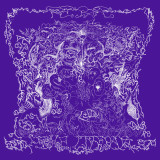
MOBBS & Susu Laroche - ZERO

Mobbs&Susu Laroche

ZERO

12inchLOVE138LP
Modern Love
28.03.2025
  • Throne
  • Roam
  • Axe
  • Dawn
  • Forest

An air of ancient ritualism cloaks Modern Love’s midnight meeting between UK producer MOBBS and French-Egyptian spellcaster Susu Laroche, carving out a channel between hexed trip hop and shoegaze that’s one part DJ Screw, one part MBV, operating within a long shadow of influence cast by Curve, Leila, Cocteau Twins, Nearly God.

Clasping chiral energies on their debut collab, MOBBS brings a history spanning shadowy production work for big name artists to the grimly stylised vein of performance art and musick explored by Susu Laroche, an Egyptian-French with strong binds to chthonic contemporary London.

Their maiden sacrifice heightens the senses to blends of monotonic, sandalwood scented incantations and carpet-burned downbeats swept in slurred dub. Songs are subtly variegated in tone to spell out shifting plays of light evoking bedsit antechambers and warehouse innards lit by iPhone candle or extractor hood and emergency light bulbs on their last lumens.

It's music that's as elaborately serrated and blemished as early MBV, but positioned in a vastly different cultural landscape, drawing from hip-hop, drone, psych and basement noise. The pair’s range of cultural obsessions maintains a precarious balance between shadowy histories and an asphyxiating present; all too often, when the past is projected it's thru a mollifying, nostalgic lens, so their critical, prudent hybrid sound is a vital, chilling corrective.

From the bell-ringing, chain-rattle jag of ‘Throne’ thru the sleepwalker drift of ‘Roam’, and concrete plangency of ‘Forest’, the marriage of MOBBS’ illusive textures with Laroche’s feel for analog image and film (as evinced in her art for the likes of Blackhaine and Mica Levi) imprints their sound in gauzy layers that leave fleeting impressions on the mind’s eye. At their heaviest, Laroche’s arcane declarations descend in impressive enactments, undressing the excesses of over-glossed trip hop to reveal and revel in the sound at its starkest, sexiest, for new waves of washed up souls.

pre-ordina ora28.03.2025

dovrebbe essere pubblicato su 28.03.2025

27,52
GÜNTER SCHICKERT - Samtvogel

There are records that come from the soul. No matter how primitive may be the recording techniques the musician has access to, the soul gets its way to the heart and mind of the listener. Samtvogel' is one of those records. Günter Schickert recorded that amazing piece of human greatness in 1974, using the media he had at the time, putting his brain at work to find the best way of taping everything he had to say. When I was recording Samtvogel' in 1974 I had only 2 Taperecorders. I played one track and while listening I added the second one. And so on. Four times. When I mixed all together I borrowed a 3rd taperecorder. And still added the last track to the master. I had a small mixer with 2 stereo and 1 mono but it was possible to pan tracks. No equalization. It all came out of my still living G2000 Dynacord guitar amplifier, of course valve, with no master, even the voice recorded through it. If I made a mistake in 1 track I had to repeat it from the beginning. And if while mixing I was not fast enough in changing the tape I had to start again. So it took me more than 3 months to get ready.'

Thanks to these three months of work, between June and September of 1974, 'Samtvogel' was privately issued that same year. It would later be issued on the Brain label, with a small change in the artwork -titles added to the front cover, which weren't on the original private pressing. Brain also reissued it on the label's Rock On Brain' LP series, this time with a completely different sleeve. The album contained two tracks on side one and just one on side two, and its sound has often been compared to the most explorative works of Syd Barret - however it must be pointed that Schickert did not need any mind spreading substances to allow his sounds float out of his mind & soul, they just came out in the most natural way. It will also appeal to fans of the echoed athmosferic guitar work of other kraut innovators such as Ash Ra Tempel, Manuel Götsching or A.R. & The Machines, and some may find on the vocal passages certain resemblances to Damo Suzuki on Can's 'Tago-Mago' era.

The Wah Wah reissue is housed in a quality sleeve that reproduces that of the original 1974 private pressing and features a 4 page insert with liners and photos - sound remastered at Eastside mastering Berlin. Get this bird now, before it flies away again!

pre-ordina ora21.02.2025

dovrebbe essere pubblicato su 21.02.2025

27,61
Günter Schickert - Samtvogel LP

There are records that come from the soul. No matter how primitive may be the recording techniques the musician has access to, the soul gets its way to the heart and mind of the listener. Samtvogel' is one of those records. Günter Schickert recorded that amazing piece of human greatness in 1974, using the media he had at the time, putting his brain at work to find the best way of taping everything he had to say. When I was recording Samtvogel' in 1974 I had only 2 Taperecorders. I played one track and while listening I added the second one. And so on. Four times. When I mixed all together I borrowed a 3rd taperecorder. And still added the last track to the master. I had a small mixer with 2 stereo and 1 mono but it was possible to pan tracks. No equalization. It all came out of my still living G2000 Dynacord guitar amplifier, of course valve, with no master, even the voice recorded through it. If I made a mistake in 1 track I had to repeat it from the beginning. And if while mixing I was not fast enough in changing the tape I had to start again. So it took me more than 3 months to get ready.'

Thanks to these three months of work, between June and September of 1974, 'Samtvogel' was privately issued that same year. It would later be issued on the Brain label, with a small change in the artwork -titles added to the front cover, which weren't on the original private pressing. Brain also reissued it on the label's Rock On Brain' LP series, this time with a completely different sleeve. The album contained two tracks on side one and just one on side two, and its sound has often been compared to the most explorative works of Syd Barret - however it must be pointed that Schickert did not need any mind spreading substances to allow his sounds float out of his mind & soul, they just came out in the most natural way. It will also appeal to fans of the echoed athmosferic guitar work of other kraut innovators such as Ash Ra Tempel, Manuel Götsching or A.R. & The Machines, and some may find on the vocal passages certain resemblances to Damo Suzuki on Can's 'Tago-Mago' era.

The Wah Wah reissue is housed in a quality sleeve that reproduces that of the original 1974 private pressing and features a 4 page insert with liners and photos - sound remastered at Eastside mastering Berlin. Get this bird now, before it flies away again!

pre-ordina ora21.02.2025

dovrebbe essere pubblicato su 21.02.2025

30,21
Günter Schickert - Samtvogel LP

There are records that come from the soul. No matter how primitive may be the recording techniques the musician has access to, the soul gets its way to the heart and mind of the listener. Samtvogel' is one of those records. Günter Schickert recorded that amazing piece of human greatness in 1974, using the media he had at the time, putting his brain at work to find the best way of taping everything he had to say. When I was recording Samtvogel' in 1974 I had only 2 Taperecorders. I played one track and while listening I added the second one. And so on. Four times. When I mixed all together I borrowed a 3rd taperecorder. And still added the last track to the master. I had a small mixer with 2 stereo and 1 mono but it was possible to pan tracks. No equalization. It all came out of my still living G2000 Dynacord guitar amplifier, of course valve, with no master, even the voice recorded through it. If I made a mistake in 1 track I had to repeat it from the beginning. And if while mixing I was not fast enough in changing the tape I had to start again. So it took me more than 3 months to get ready.'

Thanks to these three months of work, between June and September of 1974, 'Samtvogel' was privately issued that same year. It would later be issued on the Brain label, with a small change in the artwork -titles added to the front cover, which weren't on the original private pressing. Brain also reissued it on the label's Rock On Brain' LP series, this time with a completely different sleeve. The album contained two tracks on side one and just one on side two, and its sound has often been compared to the most explorative works of Syd Barret - however it must be pointed that Schickert did not need any mind spreading substances to allow his sounds float out of his mind & soul, they just came out in the most natural way. It will also appeal to fans of the echoed athmosferic guitar work of other kraut innovators such as Ash Ra Tempel, Manuel Götsching or A.R. & The Machines, and some may find on the vocal passages certain resemblances to Damo Suzuki on Can's 'Tago-Mago' era.

The Wah Wah reissue is housed in a quality sleeve that reproduces that of the original 1974 private pressing and features a 4 page insert with liners and photos - sound remastered at Eastside mastering Berlin. Get this bird now, before it flies away again!

pre-ordina ora21.02.2025

dovrebbe essere pubblicato su 21.02.2025

30,21
WREKMEISTER HARMONIES - FLOWERS IN THE SPRING

Wrekmeister Harmonies, the duo of JR Robinson and Esther Shaw, are sonic shape shifters with expansive ideas. From special performances to collaborations the band have worked with David Yow (Jesus Lizard) Ryley Walker, Ken Vandermark, Bruce Lamont, Mark Solotroff, Sanford Parker, Jamie Fennely (Mind Over Mirrors), The Body, Mary Lattimore, Olivia Block, Jamie Stewart (Xiu Xiu), Chris Brokaw, Fred Lonberg-Holm and Thor Harris (Swans). Inspired by artists such as Glenn Branca, Rhys Chatham, and Lou Reed, the duo approach each album as a new sonic adventure. Flowers in the Spring was born of deep, careful listening as much as composing. It explores music as a meditative practice with a focus on microtonal shifts and intersectional overtones. Robinson explains: "It"s the subtle movements within and without, the fine threads of sound, loud or quiet, interior or exterior that become valuable." Limiting himself to just four mixer channels on each piece; precisely layering guitar and electronics, intently listening and manipulating either the intensity or the duration of each loop to yield unexpected interactions, moments of beauty as well as dissonance. "Flowers in Spring" emerges from fizzing distortion, hewing monolithic slabs of drone from the rock face while electronics push through fissures. "Fuck the Pigs" uses layers of noise as it metaphorically shifts into the depths of winter, arctic winds howling while the guitar scars like frost across a windowpane. In contrast "A Shepherd Stares Into the Sun" is pure light and heat, overwhelming in its sheer celestial enormity. "Flowers Variation" was born of nature"s microscopic subterranean movements in its primordial gloom and buzzing synth pads. Each track holds multitudes of micro sonic details coming together to form the album"s expansive ecosystem.

pre-ordina ora21.02.2025

dovrebbe essere pubblicato su 21.02.2025

26,68
WREKMEISTER HARMONIES - FLOWERS IN THE SPRING

Wrekmeister Harmonies, the duo of JR Robinson and Esther Shaw, are sonic shape shifters with expansive ideas. From special performances to collaborations the band have worked with David Yow (Jesus Lizard) Ryley Walker, Ken Vandermark, Bruce Lamont, Mark Solotroff, Sanford Parker, Jamie Fennely (Mind Over Mirrors), The Body, Mary Lattimore, Olivia Block, Jamie Stewart (Xiu Xiu), Chris Brokaw, Fred Lonberg-Holm and Thor Harris (Swans). Inspired by artists such as Glenn Branca, Rhys Chatham, and Lou Reed, the duo approach each album as a new sonic adventure. Flowers in the Spring was born of deep, careful listening as much as composing. It explores music as a meditative practice with a focus on microtonal shifts and intersectional overtones. Robinson explains: "It"s the subtle movements within and without, the fine threads of sound, loud or quiet, interior or exterior that become valuable." Limiting himself to just four mixer channels on each piece; precisely layering guitar and electronics, intently listening and manipulating either the intensity or the duration of each loop to yield unexpected interactions, moments of beauty as well as dissonance. "Flowers in Spring" emerges from fizzing distortion, hewing monolithic slabs of drone from the rock face while electronics push through fissures. "Fuck the Pigs" uses layers of noise as it metaphorically shifts into the depths of winter, arctic winds howling while the guitar scars like frost across a windowpane. In contrast "A Shepherd Stares Into the Sun" is pure light and heat, overwhelming in its sheer celestial enormity. "Flowers Variation" was born of nature"s microscopic subterranean movements in its primordial gloom and buzzing synth pads. Each track holds multitudes of micro sonic details coming together to form the album"s expansive ecosystem.

pre-ordina ora21.02.2025

dovrebbe essere pubblicato su 21.02.2025

28,15
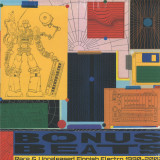
Various - Bonus Beats - Rare & Unreleased Finnish Electro 1990 - 2002 LP 2x12"

Cold Blow proudly presents Bonus Beats: Rare & Unreleased Finnish Electro 1990–2002, a landmark compilation capturing Finland's underground electro scene from the late 1990s and early 2000s. This double-LP features 9 rare and 3 previously unreleased tracks from pioneering Finnish artists, showcasing a distinctly Nordic approach to the genre. With contributions from notable names such as Jori Hulkkonen, Mr. Velcro Fastener, Mono Junk, and the late Mika Vainio, this release highlights the experimental and DIY ethos that defined Finland's electronic music scene during this period.

Carefully curated by Erkko Lehtinen, a key figure in Finland's electro scene as a DJ and promoter, the compilation explores a broad sonic palette, spanning early techno influences, robotic allure, and dark, bass-heavy tracks. Standout contributions include Decepticons and Dr. Robotnik's unreleased dark electro cuts, with the latter veering into minimal wave territory. Feng Shui feat. Monsieur delivers a striking collaboration that fuses a trance-like lead with raw, industrial beats, uniting members of Huoratron, Nu Science, Polytron, and Op:l Bastards. Keeping alive the legacy of Perttu Häkkinen (aka Randy Barracuda), this release wouldn't be complete without Imatran Voima's bass-driven anthem from their debut EP. Also featured are Spektor's retro synth experiments, Tero's Commodore 64-based creations, Brothomstates' (later a Warp signee) futuristic soundscapes, and a rare cover of Kraftwerk's The Model by the anonymous duo Markus & Kristian. Erkko's extensive liner notes provide additional insight into this culturally and musically significant era. Available in double-LP, this collection is a must-have for electronic music aficionados and vinyl collectors.


j 10: Feng Shui - Hao Hao (I`m Back) feat. Monsieur

non in magazzino

Ordina ora e ordineremo l'articolo per te presso il nostro fornitore.

29,62

Last In: 14 months ago
Monopoly Child Star Searchers - This Year in Coconuts Vol.2 (LPÄ)

Exquisitely compiled by Discrepant head honcho Gonçalo F. Cardoso from three tapes released earlier this year by the tireless mind-body of Spencer Clark through his own Pacific City Sound Visions, 'This Year In Coconuts Vol. 2' is another revelation into the deeply personal soundworld of this true voyager of both ancient, present and forthcoming times. Coming from a truly singular artist, capable of conveying multiple visions into a labyrinthine-esque mythology all of his own, these seven tracks feel as much part of their original setting as connected pieces from this never ending and puzzling netherworld.

Dedicated to the Temple of Isis in Pompei and opening sides A and B, the two tracks from 'Tempio d'Iside' set up a scenario not far from a dream version of the Temple itself, made from crystal clear synth-lines and levitating ambiences, like drifting into ancient memories from days to come. Making up about half of the compilation, the four tracks from 'Kowloon Spider Temple' drip into a feverish mosaic of Clark's by now trademarked cascading rhythms, unhinged alien-vocal samples, phantasmic textures and sparkling synth harmonies projecting a catchy hypnotic oblivion filled with intrigue. The sole title track from 'From the Caves and Jungles of Apulia' tangentially reports back to some lower-fi recordings of the past, with its murkier sound inducing the feeling of willing confinement within such caves and jungles. A brilliant Year in Coconuts, indeed.
Mastered by Rasha

pre-ordina ora15.11.2024

dovrebbe essere pubblicato su 15.11.2024

19,29
J-WALK - BROKEN BEAUTY LP

J-Walk

BROKEN BEAUTY LP

12inchBID009
Before I Die
11.11.2024

As with most things, this project started with a conversation in the pub between me and Martin.

As we discussed what J-Walk and BiD could do next we chatted about our mutual love of DIY, Post Punk, Reggae, Digital & Dub, how about using that feel as an initial jump off on the next thing and see how you get on? I suggested.
As is his way Martin considered the suggestion, then promptly disappeared, 6 weeks later something landed in my inbox, it was titled Broken Beauty and the music contained embraced all those symbiotic ideals and culture.
Nailed it!
Recorded entirely in Stockport using a mixed kit bag of cheap forgotten keyboards, guitar, bass and effects pedals, this LP takes the J-Walk aesthetic and applies the wider palette of these influences to create something unique, those past and present influences forged together to bring you something truly DIY - instructions below.
How To Make Such A Thing...

Deactivate social media. Ignore the internet, don't answer text messages, avoid other music, the telly and other people. This is a process where it's only you in the room with whatever's in your mind. You will be there for some time and the loneliness can hurt a little.

Forget any predetermined ideas. Forget everything you've ever done before. This is an opportunity to start from scratch, but with years of accumulated knowledge and craftsmanship. Trust yourself.
Be scared. Be excited about not knowing what will happen and what will result.

Don't use midi sequencing, virtual instruments or samples. Just plug a toy instrument into an amp, press a rhythm and play around to see what happens. If it sounds good and fresh then record it. Plug a bass in to jam around and you'll soon hear and feel what sits in the pocket of the beat. Record it as it is. Dirty is real and good. Cleanliness equals sterility. Loop the bassline. Plug a guitar in and do the same.

Don't think when doing any of this. Just experiment with interest and curiosity and the music will take care of itself. You will now have a groove which is also about half a song minimum. Play some keys from the toys on top of what you have. Put 'em through effects pedals. Again, don't overthink it and don't try to get it clean. Add sound effects in right and random places.

There you go. Something you've never made before. But more importantly, it's something you've never heard before.

You don't have to die to be reincarnated.

BROKEN BEAUTY...You can't be either without also having been the other.

non in magazzino

Ordina ora e ordineremo l'articolo per te presso il nostro fornitore.

17,86

Last In: 16 months ago
ROYAL TRUX - UNTITLED

Royal Trux

UNTITLED

12inchFIRELP717
Fire Records
08.11.2024

Ltd White Vinyl, DL card. 1992's 'Untitled' brought the band's third album that re-cemented the duo once again as the progenitors of the "lo-fi" genre. This breakthrough set transitioned "The Trux" into a never ending all-inclusive rotating cast of musicians. Continuing Fire Records' series of classic remastered albums from Royal Trux, 'Untitled' is released on white vinyl and features updated monochrome and silver artwork. As unpredictable as ever, Neil Hagerty and Jennifer Herrema shook off the next level layering and noise of 'Twin Infinitives' to embrace the history of rock 'n' roll in all its deformed grandeur. Utilizing their ever present mind set of macro-inclusivity, they allowed the subconscious "radio stations" of their lives to infiltrate, lead, and dictate. Culling from their collective minds and memories twisted tunes that touched them. After the blood rush of their much-hailed avant-garde masterpiece 'Twin Infinitives' (1988), this eight-song opus added to the lo-fi genre that originated on 'Twin Infinitives'. On 'Untitled' Hagerty uses his 5-string blues roots and hails rock's twisted potential, while Herrema slurs and snarls in ecstasy. They sound like they're locked in a fourth-floor boudoir at the Chelsea Hotel; bottles clink, an album clicks on its run-out groove, the band plays on. In the mix are the characters and casualties of the 90s, a roll call of swaggering misfits. These aren't superficial sketches, the Trux cut much deeper than that_ "'Junkie Nurse' isn't just about addiction; it's about the twisted hope that even the most broken people can somehow mend others, even when they're falling apart themselves." Jennifer Herrema, Royal Trux. With 'Untitled' Royal Trux justifiably increased their coterie of convicted followers, becoming the cult heroes for a transgressive generation, and the Rosetta Stone for male/female duos (ie:The White Stripes, The Kills etc... ) over the years inspiring everyone from The Silver Jews (David Berman) & Sonic Youth through to melodic blue-eyed soulsters like Hot Chip - "I urge and encourage you to enter the harmolodic multiverse of their music." Alexis Taylor, Hot Chip. "Royal Trux were nothing if not fearless." Pitchfork.

pre-ordina ora08.11.2024

dovrebbe essere pubblicato su 08.11.2024

25,84
JENNIFER CASTLE - Camelot

Camelot, the legendary seat of King Arthur's court in Early Middle Ages Britain, was probably not a real place. A corruption of the name of a real Romano-Briton city, the word "Camelot" accumulated symbolic, mythic resonances over centuries, until achieving its present usage as a near-synonym of "utopia." In the mid-20th century alone, Camelot inspired an explosion of representations and appropriations, among them the violent, affectless Arthurian court of Robert Bresson's 1974 film Lancelot du Lac and the absurdist iteration of Monty Python's 1975 Holy Grail, both of which feature armored knights erupting into fountains of blood; the mystical Welsh world of novelist John Cowper Powys's profoundly weird 1951 novel Porius, with its Roman cults, wizards and witches, and wanton giants; and the nationalist nostalgia of President John F. Kennedy's White House. Unsurprisingly there are fewer Camelots in more recent memory. Camelot, Canadian songwriter Jennifer Castle's extraordinary, moving 2024 chronicle of the artist in early middle age, charts a realer, more rooted, and more metaphorical place than the fabled Camelot of the Early Middle Ages (or its myriad depictions), but it too is a space more psychic than physical. In Castle's Camelot, the fantastic interpenetrates the mundane, and the Grail, if there is one, distills everyday experience into art and art into faith, subliming terrestrial concerns into sublime celestial prayers to Mother Nature, and to the unfolding process of perfecting imperfection in one's own nature. Co-produced by Jennifer and longtime collaborator Jeff McMurrich, her seventh record is at once her most monumental and unguarded to date, demonstrating a mastery of rendering her verse and melodies alike with crisply poignant economy. For all their pointedly plainspoken lyrical detail and exhilarating full-band musical flourishes, these songs sound inevitable, eternal as morning devotions. "Back in Camelot," she sings on the lilting, vulnerable title track, "I really learned a lot / circles in the crops and / sky-high geometry." The album opens with a candid admission of sleeping "in the unfinished basement," an embarrassing joke that comes true. But the dreamer is redeemed by dreaming, setting sail in her airborne bed above "sirens and desert deities." If she questions her own agency_whether she is "wishing stones were standing" or just "pissing in the wind"_it does not diminish the ineffable existential jolt of such signs and wonders. This abiding tension between belief and doubt, magic and pragmatism, self and other, sacred and profane, and even, arguably, paganism and monotheism, suffuses these ten songs, which limn an interior landscape shot through with sunstriped shadows of "multi-felt dimensions" both mystical and quotidian. The epic scale and transport of "Camelot," with its swooning strings, gives way dramatically to "Some Friends," an acoustic-guitar-and-vocals meditation in miniature on Janus-faced friends and the lunar and solar temperatures of their promises_"bright and beaming verses" versus hot curses_which recalls her minimalist last album, 2020's achingly intimate Monarch Season. (In a symmetrical sequencing gesture, the penultimate track, the incantatory "Earthsong," bookends the central six with a similarly spare solo performance and coiled chord progression, this time an ambiguous appeal to _ a wounded lover? a wounded saint? our wounded planet?) Those whom "Trust" accuses of treacherous oaths spit through "gilded and golden tooth"_cynics, critics, hypocrites, gurus, scientists, doctors, lovers, government, the so-called entertainment industry_sow uncertainty that can infect the artist, as in "Louis": "What's that dance / and can it be done? What's that song / and can it be sung?" Answering affirmatively are "Lucky #8," an irrepressible ode to dancing as a bulwark against the "tidal pools of pain" and the "theory of collapse," and "Full Moon in Leo," which finds the narrator dancing around the house with a broom, wearing nothing but her underwear and "big hair." But the central question remains: who can we trust, and at what cost faith, in art or angels or otherwise? Castle's confidence in her collaborators is the cornerstone of Camelot. Carl Didur (piano and keys), Evan Cartwright (drums and percussion), and steadfast sideman Mike Smith (bass) comprise a rhythm section of exquisite delicacy and depth. This fundamental trio anchors the airiness of regular backing vocalists Victoria Cheong and Isla Craig and frames the guitars of Castle, McMurrich, and Paul Mortimer (and on "Lucky #8," special guest Cass McCombs). Reprising his decennial role on Castle's beloved 2014 Pink City, Owen Pallett arranged the strings for Estonia's FAMES Skopje Studio Orchestra. On the ravishing country-soul ballad "Blowing Kisses"_Pallett's crowning achievement here, which can be heard in its entirety in the penultimate episode of the third season of FX's The Bear_Jennifer contemplates time and presence, love and prayer_and how songwriting and poetry both manifest and limit all four dimensions: "No words to fumble with / I'm not a beggar to language any longer." Such rare moments of speechlessness_"I'm so fucking honoured," she bluntly proclaims_suggest a state "only a god could come up with." (If Camelot affirms Castle as one of the great song-poets of her generation, she is not immune to the despairing linguistic beggary that plagues all writers.) Camelot evinces a thoroughgoing faith not only in the natural world_including human bodies, which can, miraculously, dance and swim and bleed and embrace and birth_but also in our interpretations of and interventions in it: the "charts and diagrams" of "Lucky #8," a daydreamt billboard on Fairfax Ave. in LA in "Full Moon in Leo," the bloody invocations of the organ-stained "Mary Miracle," and all manner of water worship, rivers in particular. (Notably, Jennifer has worked as a farmer and a doula.) The album ends with "Fractal Canyon"'s repeated, exalted insistence that she's "not alone here." But where is here? The word "utopia" itself constitutes a pun, indicating in its ambiguous first syllable both the Greek "eutopia," or "good-place"_the facet most remembered today_and "outopia," or "no-place," a negative, impossible geography of the mind. Utopia, like its metonym Camelot, is imaginary. Or as fellow Canadian songwriter Neil Young once sang, "Everyone knows this is nowhere." "Can you see how I'd be tempted," Castle asks out of nowhere, held in the mystery, "to pretend I'm not alone and let the memory bend?"

pre-ordina ora01.11.2024

dovrebbe essere pubblicato su 01.11.2024

23,49
Jennifer Castle - Camelot	LP

. For Fans Of: The Weather Station, Weyes Blood, Adrianne Lenker, Phoebe Bridgers, Joan Shelley, Lana Del Rey, Cass McCombs, Angel Olsen & Neil Young. Camelot, the legendary seat of King Arthur’s court in Early Middle Ages Britain, was probably not a real place. A corruption of the name of a real Romano-Briton city, the word “Camelot” accumulated symbolic, mythic resonances over centuries, until achieving its present usage as a near-synonym of “utopia.” In the mid-20th century alone, Camelot inspired an explosion of representations and appropriations, among them the violent, affectless Arthurian court of Robert Bresson’s 1974 film Lancelot du Lac and the absurdist iteration of Monty Python’s 1975 Holy Grail, both of which feature armoured knights erupting into fountains of blood; the mystical Welsh world of novelist John Cowper Powys’s profoundly weird 1951 novel Porius, with its Roman cults, wizards and witches, and wanton giants; and the nationalist nostalgia of President John F. Kennedy’s White House. Unsurprisingly there are fewer Camelots in more recent memory. Camelot, Canadian songwriter Jennifer Castle’s extraordinary, moving 2024 chronicle of the artist in early middle age, charts a realer, more rooted, and more metaphorical place than the fabled Camelot of the Early Middle Ages (or its myriad depictions), but it too is a space more psychic than physical. In Castle’s Camelot, the fantastic interpenetrates the mundane, and the Grail, if there is one, distills everyday experience into art and art into faith, subliming terrestrial concerns into sublime celestial prayers to Mother Nature, and to the unfolding process of perfecting imperfection in one’s own nature. Co-produced by Jennifer and longtime collaborator Jeff McMurrich, her seventh record is at once her most monumental and unguarded to date, demonstrating a mastery of rendering her verse and melodies alike with crisply poignant economy. For all their pointedly plainspoken lyrical detail and exhilarating full-band musical flourishes, these songs sound inevitable, eternal as morning devotions. “Back in Camelot,” she sings on the lilting, vulnerable title track, “I really learned a lot / circles in the crops and / sky-high geometry.” The album opens with a candid admission of sleeping “in the unfinished basement,” an embarrassing joke that comes true. But the dreamer is redeemed by dreaming, setting sail in her airborne bed above “sirens and desert deities.” If she questions her own agency whether she is “wishing stones were standing” or just “pissing in the wind” it does not diminish the ineffable existential jolt of such signs and wonders. This abiding tension between belief and doubt, magic and pragmatism, self and other, sacred and profane, and even, arguably, paganism and monotheism, suffuses these ten songs, which limn an interior landscape shot through with sunstriped shadows of “multi-felt dimensions” both mystical and quotidian. The epic scale and transport of “Camelot,” with its swooning strings, gives way dramatically to “Some Friends,” an acoustic-guitar-and-vocals meditation in miniature on Janus-faced friends and the lunar and solar temperatures of their promises—“bright and beaming verses” versus hot curses which recalls her minimalist last album, 2020’s achingly intimate Monarch Season. (In a symmetrical sequencing gesture, the penultimate track, the incantatory “Earthsong,” bookends the central six with a similarly spare solo performance and coiled chord progression, this time an ambiguous appeal to … a wounded lover? a wounded saint? our wounded planet?). Those whom “Trust” accuses of treacherous oaths spit through “gilded and golden tooth” cynics, critics, hypocrites, gurus, scientists, doctors, lovers, government, the so-called entertainment industry sow uncertainty that can infect the artist, as in “Louis”: “What’s that dance / and can it be done? What’s that song / and can it be sung?” Answering affirmatively are “Lucky #8,” an irrepressible ode to dancing as a bulwark against the “tidal pools of pain” and the “theory of collapse,” and “Full Moon in Leo,” which finds the narrator dancing around the house with a broom, wearing nothing but her underwear and “big hair.” But the central question remains: who can we trust, and at what cost faith, in art or angels or otherwise? Castle’s confidence in her collaborators is the cornerstone of Camelot. Carl Didur (piano and keys), Evan Cartwright (drums and percussion), and steadfast sideman Mike Smith (bass) comprise a rhythm section of exquisite delicacy and depth. This fundamental trio anchors the airiness of regular backing vocalists Victoria Cheong and Isla Craig and frames the guitars of Castle, McMurrich, and Paul Mortimer (and on “Lucky #8,” special guest Cass McCombs). Reprising his decennial role on Castle’s beloved 2014 Pink City, Owen Pallett arranged the strings for Estonia’s FAMES Skopje Studio Orchestra. On the ravishing country-soul ballad “Blowing Kisses” Pallett’s crowning achievement here, which can be heard in its entirety in the penultimate episode of the third season of FX’s The Bear Jennifer contemplates time and presence, love and prayer and how songwriting and poetry both manifest and limit all four dimensions: “No words to fumble with / I’m not a beggar to language any longer.” Such rare moments of speechlessness “I’m so fucking honoured,” she bluntly proclaims suggest a state “only a god could come up with.” (If Camelot affirms Castle as one of the great song-poets of her generation, she is not immune to the despairing linguistic beggary that plagues all writers.) Camelot evinces a thoroughgoing faith not only in the natural world including human bodies, which can, miraculously, dance and swim and bleed and embrace and birth but also in our interpretations of and interventions in it: the “charts and diagrams” of “Lucky #8,” a daydreamt billboard on Fairfax Ave. in LA in “Full Moon in Leo,” the bloody invocations of the organ-stained “Mary Miracle,” and all manner of water worship, rivers in particular. (Notably, Jennifer has worked as a farmer and a doula.) The album ends with “Fractal Canyon”s repeated, exalted insistence that she’s “not alone here.” But where is here? The word “utopia” itself constitutes a pun, indicating in its ambiguous first syllable both the Greek “eutopia,” or “good-place” the facet most remembered today and “outopia,” or “no-place,” a negative, impossible geography of the mind. Utopia, like its metonym Camelot, is imaginary

pre-ordina ora01.11.2024

dovrebbe essere pubblicato su 01.11.2024

28,36
Aaron Abernathy - From The Throne Room LP

For fans of Michael Kiwunaka, Jon Batiste, Leon Bridges, Gregory Porter, and Mg.Kee. Full tour in the works for 2025 in North America and Europe. Collaborated with a wide range of artists including Jack White, Dwele, Slum Village, Black Milk, Foreign Exchange, 14KT, and Daru Jones. Former musical director for tours for Black Milk and Slum Village, throughout North America, Europe, Australia, and Japan. “From the Throne Room” is Abernathy’s fourth official LP, following the trilogy of “Monologue,” “Dialogue,” and “Epilogue,” released between 2016 and 2019. Aaron Abernathy has been firmly established in the modern soul scene for almost two decades, and he continues to elevate his craft as a songwriter and performer. His latest LP “From the Throne Room” once again demonstrates a rare ability to seamlessly shift between lyrical themes and musical styles, and it is his most inspired and uplifting album to date.
The turmoil caused by the pandemic was especially hard on touring musicians, and as a veteran musical director and bandleader who has regularly traversed the globe, Abernathy was certainly affected. Instead of wallowing in grief and darkness, he tapped into his gifts as a songwriter and lyricist to manifest light and optimism in his own life. As expressed on the opening track “New Relationship,” this “new way of seeing” kicked open some new creative doors for him as a musician and producer, with a wide variety of influences. The four-to-the-floor push of “A Reason to Smile” brings to mind 80’s post-disco boogie, “Show Off” shows off a modern rock edge, and the booming, driving energy in tunes like “Hope Song” and “Joy” is reminiscent of the electric 60’s soul of Wilson Pickett and Otis Redding. With its catchy hooks, powerful lead vocals, and slick self-produced arrangements, “From the Throne Room” proves that Aaron Abernathy remains one of the most talented singer/songwriters of his generation in contemporary soul music.

pre-ordina ora25.10.2024

dovrebbe essere pubblicato su 25.10.2024

30,67
Various - PSYCHED OUT GROOVES FROM HUNGARY (1969-1972) LP

(Physical release only, Limited edition of 300 hand numbered copies + insert) Psyched Out Grooves from Hungary compiles ten of the most outstanding singles recorded by the underdogs of this period.


The psychedelic scene that never was – the perfect subtitle to this compilation. There were barely any drugs in Hungary to begin with. In this era, alcohol, music, and imagination have served as the primary means of mind alteration among the youth. The Communist party had a firm grip on culture through monopole control over venues, the media, and the recording industry, western records were not available, clubs enforced a strict dress code of suits, shirts, and longer skirts, and the police harassed young men for not more than having long hair or wearing blue jeans.


There was, however, an undercurrent of smaller semi-professional bands striving to succeed in the shadow of the very few stars privileged by the sole state owned record company. Given their chances to release music were at best limited to a few 7“ singles at the mercy of said record company powers. Psyched Out Grooves from Hungary compiles ten of the most outstanding singles recorded by the underdogs of this period. Some of the bands featured on here have eventually reached wider success by switching to more commercial styles, like Bergendy, Neoton, and Apostol. Most, like Echo, Meteor, Kék Csillag, Non-Stop, were temporal formations that dissolved after a few years due to personal conflicts, lack of success, or both. Others, like Scampolo or Juventus, lasted a longer time without an actual break through. Most of these bands never had a consistent, lasting ’psychedelic’ repertoire or identity at any point. These tracks were the exception, not the norm. That coherence - the illusion of a scene - comes from the curation and sequencing of Budabeats head honchos Von Yodi and Gandharva. It is the arrangement of these puzzle pieces that makes them fit together.


Limited edition of 300 hand numbered copies. Edited excerpt from the liner notes written by Gábor Vályi (Dj Shuriken)

non in magazzino

Ordina ora e ordineremo l'articolo per te presso il nostro fornitore.

32,98

Last In: 17 months ago
Royal Trux - Twin Infinitives LP 2x12"

Ltd Double Silver Vinyl, Monochrome edition artwork, DL card. Originally released in 1990, Royal Trux’s ‘Twin Infinitives’ is being re-issued in all its (yet to be translated) alien glory, by Fire Records. A dismantled overture that sprawls out over two records, an avant-garde masterpiece that was the spark for Drag City Records and generations of new sound seeking musicians. Hailed in the same immortal breath as Beefheart’s ‘Trout Mask Replica’, the Velvets’ at their frenzied peak and Ornette Coleman at his most avant-garde, the duo of Pussy Galore’s Neil "Michael" Hagerty and Jennifer Herrema recorded ‘Twin Infinitives’ while imbibing all kinds of mind-altering substances to create an inadvertent blueprint for what the duo was building with Moogs, guitars and melodicas to name a few ingredients. It is the legendary second album from the masters of the genre mashup - long before “genre mashups” even existed. Arguably, the term “mashup” was coined to describe what Trux, as they subconsciously scrolled through the radio stations of their lives. The album’s chaotic sound and offbeat construction laid the foundations for a string of Royal Trux albums that spiralled between genres, tunings, and noise. Through the 90s they would re-invent the rock ‘n’ roll ethic, straddle alien surf music, re-align boogie rock, not to mention 80s hair metal, and confound critics by their wildly meandering and courageous rites of passage. Remastered as part of a career spanning catalogue deal with Fire Records. The infamous and influential duo of Jennifer Herrema and Neil Hagerty will be delving into the archive with a comprehensive reissue series, unearthing the vaults and revisiting what made them such a compelling benchmark for their contemporaries and imitators. Reawakening their prolific output within a new monochrome vinyl series covering 1988-1993, they begin with their seminal deconstructed rock masterpiece Twin Infinitives. “Sounding like a subway ride inside a television inside an earthquake inside the end of the world and a pounding death rhythm of apocalyptic now.” Pitchfork. Track List: Disc One: A1 Solid Gold Tooth A2 Ice Cream A3 Jet Pet A4 RTX-USA A5 Kool Down Wheels B1 Chances Are The Comets In Our Future B2 Yin Jim Versus The Vomit Creature B3 Osiris Disc Two. C1 (Edge Of The) Ape Oven D1 Florida Avenue Theme D2 Lick My Boots D3 Glitterbust D4 Funky Son D5 Ratcreeps D6 New York Avenue Bridge

pre-ordina ora30.09.2024

dovrebbe essere pubblicato su 30.09.2024

30,21
Kerosene Kream - Buying Time

Kerosene Kream

Buying Time

12inchLPPNKSLM113C
PNKSLM
30.08.2024

Stockholm garage punk quintet Kerosene Kream is the latest export from the underground scene that's given the world the likes of Vi**ra Boys and Holograms, and with Buying Time the band's set to introduce themselves to the wider world. A renowned live act that's already played with the likes of The Gories, Illuminati Hotties and Powerplant, the band's genre-melding blend of digital psychedelia and garage rock fits right at home on PNKSLM Recordings next to ShitKid, Les Big Byrd and Chemtrails.

pre-ordina ora30.08.2024

dovrebbe essere pubblicato su 30.08.2024

24,33
FERA - PSICHE LIBERATA LP

Fera’s trajectory sticks out like a sore thumb, you need to invest time, carefully divided between body & mind, to truly take a deep dive into his audacious output. After the acclaimed ‘Stupidamutaforma’ and ‘Corpo Senza Carne’, Fera is back with ‘Psiche Liberata’, an oblique, imperfect and broken record, in other words, exactly the type of magical voyage you want to be on. The mind, finally liberated.

Fera is Andrea De Franco, electronic composer from Southern Italy now residing in Bologna, also known for his work as visual artist/designer and member of the Undicesimacasa collective. His musical cosmos is profound and imaginative, intergalactic atmospheres that condense fragmented IDM, scintillating textures, distorted synthscapes, crunchy technoid rhythms and swirling abstractions that weave gently, sometimes moody and stark, more often celestial and awe-inspiring.

Mixed in Berlin by Steve Scanu ‘Psiche Liberata’ encapsulates Fera’s dense and intricate thought process in contrast with his simple and direct approach to writing and recording that finds its more natural output in his rapturous live sets where a mono signal runs through a few analog pedals transforming instantly into menacing alien grooves and fluid ecstasis.

Like ‘Psiche Liberata’s artwork, hand-drawn by Fera, every detailed miniature leads to a single cell of sound, tracks collide against each other in a psychotic kaleidoscope where every safe space is confronted with subsequent noise, alterations or interruptions. The black terror of ‘Celestial Anacusma’ is followed by the space-jazz banquet of ‘Milk Tears In The Hug Chamber’ doped up cyber Sun Ra extravaganza featuring Laura Agnusdei and Luigi Monteanni (Artetetra) on saxophones and flutes; ‘Silenzio Solare’ sprinkles Mille Plateaux era minimalism all over hallucinations, while ‘Diluvia’ crosses industrial acid with perpetual motion; title track ‘Psiche Liberata’ murmurs mechanically, a downtempo drifter for the wide-eyed 7AM comedown: ‘Simulacrima’ melts Boards Of Canada’s mellow pastoralism with dystopian meta-level dreamland and ‘Riposa’ showcases an overwhelming melancholy executed with elegance in a slo-mo world where the ineffable transcends notions of ambient and becomes a warm embrace.

Created on a Monotribe, MS20 & Volca Sample/fm, ‘Psiche Liberata’s velvet heaviness was achieved by re-amping many of the instruments through a Leslie Rotary Speaker and a reel-to-reel Telefunken. Fera’s sonic tapestry is in constant flux, underlying themes of love longing and affection run through the record but in a turbulent, volcanic, unleashed fashion, almost on the brink of utter noise or complete silence, reminding us that this is an artist like no other amidst the ever changing electronic scene. These are transmissions from the gutter, where the inevitable meets the unattainable and collapses.

"Fera’s tarnished materials are destined for ruin; “Stupida,” full of longing and regret, sounds like an elegy for a fallen world." Pitchfork

"A cut of dark magic that fits like a glove to overcast days, wild winds and lashing rains. Insistent, the treacle-thick bassline oozes out, soaking the space between the melancholic synth lines." Inverted Audio

"The songs on Stupidamutaforma feel hypnotizing...it establishes De Franco as a composer who uses space and time to create a set of rich, immersive works." Bandcamp 'Album Of The Day'

pre-ordina ora09.08.2024

dovrebbe essere pubblicato su 09.08.2024

27,52
BABY ROSE & BADBADNOTGOOD - SLOW BURN LP

Weniger als ein Jahr nach ihrem Album „Through and Through“ kehrt Baby Rose mit „Slow Burn“ zurück, einer Sammlung von Songs, die ihre Klangpalette von progressivem R&B zu einer raueren, reichhaltigeren und weitläufigeren Linse amerikanischer Musik erweitern. Hier behauptet sich Rose nicht nur als einmalige Sängerin, sondern auch als formidable Songwriterin, die die Punkte verbindet, an denen Muscle Shoals auf Psych trifft, Psych auf Jazz, Jazz auf Americana, und die richtigen Musiker bringen alles zusammen. Produziert von BADBADNOTGOOD, fanden Rose und die Band eine sofortige und scheinbar endlose Quelle der Inspiration; was als Einleitung begann, wurde zu einem Tag, zu einem Song, zu einer Nacht, zu „Slow Burn“. Baby Rose war bereits eine kraftvolle Performerin - sie kann die Bühne mit Robert Glasper teilen, ohne in Schweiß auszubrechen, oder einen epischen Film wie Creed III, für den sie den Abschlusssong sang, mit stählerner Zuversicht beenden. Als Rose sich das erste Mal mit BADBADNOTGOOD traf, war sofort eine Verbindung da, und gemeinsam nahmen sie die Leadsingle "One Last Dance" gleich bei diesem ersten Treffen auf. Es war Roses erster Freestyle-Song, und er brachte entscheidende Teile ihrer Vision auf den Punkt. "Ich wusste schon immer, dass es neue Räume und Sounds gibt, in die ich vordringen kann", erklärt Rose. "Ich war schon immer an verschiedenen Sounds interessiert, die diese raueren Texturen einbringen." Während die Geschwindigkeit ihrer Zusammenarbeit Rose begeisterte und überraschte, waren das Potenzial und die Endergebnisse es nicht. "Wir haben uns schnell bewegt", sagt sie, "und es war wirklich wie ein Wasserhahn. Sobald wir “One Last Dance“ hatten, wurde klar, dass alles fließen würde." Die Songs auf „Slow Burn“ wurden zum Teil von Roses Erfahrungen inspiriert, die sie auf den Fahrten zwischen den Wohnorten ihrer Familie machte: dem Lärm und Chaos von DC und der ruhigen Landschaft von Carolina. Rose drehte die Musik auf und ließ ihre Gedanken schweifen, um Raum für innere Monologe und imaginäre Dialoge zu schaffen, die man sonst vielleicht nicht zu hören wagt. Diese Momente haben etwas Verträumtes, und sie schwelen auf Slow Burn: Erinnerungen verlieren ihre Realität, Gefühle ersetzen Geschehnisse. Der Titeltrack zum Beispiel setzt sanfte, schlendernde Drums gegen Roses lyrische Wiederholungen, während sie diesen Erinnerungen - manche leben, manche fühlen - mit geduldigem, beharrlichem Verlangen nachspürt. Das herausragende "One Last Dance" kommt als Liebeslied getarnt daher, ist aber eigentlich eine Ode an eine verlorene Freundschaft und ein imaginärer Traum von einem weiteren Tag wie in alten Zeiten. Die Realität verschwimmt wieder mit dem Gefühl, der Gesang geht in ein Wiegenlied über, und BADBADNOTGOODs Bassist Chester Hansen bringt diese traumhafte Qualität in einen schleichenden, vorsichtigen, aber liebevollen Unterton. Tatsächlich haben die meisten Songs auf „Slow Burn“ dieses schleichende, schattenhafte Gefühl, als würden sie auf Zehenspitzen daherkommen: intim, aber ein wenig gefährlich, zärtlich, aber ein wenig geheimnisvoll. So vollständig und überzeugend dieses Werk auch ist, Slow Burn weist auf einen größeren, höheren Aufstieg in Baby Roses Zukunft hin.

non in magazzino

Ordina ora e ordineremo l'articolo per te presso il nostro fornitore.

25,17

Last In: 19 months ago
Orcas - How to Color a Thousand Mistakes

Following a ten-year hiatus, multi-instrumentalists Rafael Anton Irisarri and Benoît Pioulard return with »How to Color a Thousand Mistakes«, their third LP together as Orcas. Building on the electronic minimalism of »Orcas« (2012) and the Twin Peaks-inspired haze of »Yearling« (2014), the duo have expanded their sound and vision into a full-spectrum ensemble.

In the time since their last major collaboration, Irisarri and Pioulard have done plenty on their own, while also traversing significant life changes: relocation from Seattle to New York, separation and divorce, illness, hospitalizations, and the loss of siblings, parents, and friends. Yet from these tribulations, they gleaned inspiration to reconstruct their lives, creating music with new collaborators and partners. Recorded in a variety of studios and cities including Brooklyn, Cambridge, Oxford, Seattle, and upstate New York, the resulting album, under the tutelage of UK producer James Brown (Arctic Monkeys, Kevin Shields, Nine Inch Nails), is a patiently-crafted beast, equally inspired by impressionism, British new wave, and dream pop.

With Irisarri’s guidance and Brown’s encouragement, Pioulard brings his velvety voice to its harmonized peak on songs like »Wrong Way to Fall« and the Durutti Column-indebted »Fare«. Where his most recent solo albums for Morr Music (»Sylva« and »Eidetic«) navigated foggy forests of ambient pop and stacked tape loops, here his characteristic blur shifts into focus with a unique degree of clarity and confidence. »How fare against balance do I / Navigate my errors?«, Pioulard sings in a heartbreaking tenor, echoing the album’s broader themes of introspection, grief, loss, trial and trauma.

Lead single, »Riptide«, is a summary of Pioulard’s life changes and personal upheavals in the past decade, »flitting eastward toward a yen deep in the past« and learning to glide through the tumult of ocean waves, as a metaphor for the punches one takes in pursuit of grace. Its towering, key-changing midsection arrives with the monumental drumming of Slowdive’s Simon Scott, a long-time friend and cohort who appears on most songs in the set. Scott’s quintessentially English, jazzier approach offers a balance of force and restraint as the backdrop for Irisarri’s majestic guitars, analog synth lines, and Martin Heyne’s Fender Rhodes counterpoints.

Second single, »Next Life«, began as a sketch by Scott, and reached its final form in the hands of Pioulard and Irisarri, at a point that each had endured major concurrent losses, finding a commonality in the need to gaze over the horizon while acknowledging the unavoidable bittersweetness of letting go – not only of people, but of routines, places, and expectations. It’s one of Orcas’ most nuanced pieces, with a mid-tempo, sunset glow that unfolds into a sparkling, slide-guitar finale as it disappears in the rear view.

On third-act highlight, »Bruise«, Scott is doubled on the drum kit by MONO’s Dahm Majuri Cipolla, whose Liebezeit-influenced metronomy anchors a nimble bass groove from Andrew Tasselmyer (of Hotel Neon), and some of the album's most syncopated, spaced-out interplay, courtesy of Puerto Rican guitar player Orlando Méndez (a childhood friend of Irisarri’s). Originally a droney, fingerpicked guitar demo, »Bruise« is the most storied composition here, having gone through almost a dozen versions and lyrical edits, with Brown distilling hours of improvised performances into the final arrangement.

Throughout »How to Color a Thousand Mistakes«, Irisarri uses his deep well of production experience to paint the stereo field with meticulously designed textures, exemplified on the slow burn of »Heaven’s Despite« and the heady rush of »Swells«. As a mixing and mastering engineer with Black Knoll, he has built a client list that reads as a who’s-who of modern, forward-thinking composition, including Temporary Residence, All Saints Records, and Ghostly International, among many others.

As with previous collaborations, Irisarri and Pioulard bring disparate styles and specialties to the table, but with an interpersonal dynamic that transcends friendship into brotherhood, their open-minded workflow and mutual respect are evident at every turn. »How to Color a Thousand Mistakes« brims with tight, complex art rock songwriting, masterful production, and sonic versatility, informed by a plethora of genres and tonal hues. The title might promise answers, but the gravitational center of the album is the dawning realization that, as you reckon with the infinite whims of the cosmos, there could be none.

pre-ordina ora19.07.2024

dovrebbe essere pubblicato su 19.07.2024

28,36
Julia Holter - Never Rarely Sometimes Always LP

This 2020 film has already become an indie classic, and it’s taken on a timeliness that its creators could not have foreseen. Teenage Autumn has to flee her rural Pennsylvania town in seach of an abortion, leaving behind her abusive partner, her indifferent parents (singer Sharon Van Etten plays her mother), and her callous community as she embarks on a journey to New York City accompanied by her cousin Skylar. No matter your stance on the subject, Autumn’s harrowing odyssey provokes compassion and contemplation, two states of mind in short supply these days. And accompanying Autumn every step of the way on her journey is the mesmerizing and, at times, achingly sad score by cult favorite composer Julia Holter. So much of the film is made up of shots of Autumn’s face as she attempts to process what is happening to her and around her; seldom has a film score captured a character’s interior monologue with such insight and grace. Never before released in any physical format, we at Real Gone Music are proud to present the soundtrack to Never Rarely Sometimes Always on vinyl, with the full consent and cooperation of Julia Holter.

pre-ordina ora12.07.2024

dovrebbe essere pubblicato su 12.07.2024

41,39
Articoli per pagina:
N/ABPM
Vinyl