Search:moo latte

Styles
All
Lee Tracy & Isaac Manning - Is it What You Want LP

As the sun sets on a quaint East Nashville house, a young man bares a piece of his soul. Facing the camera, sporting a silky suit jacket/shirt/slacks/fingerless gloves ensemble that announces "singer" before he's even opened his mouth, Lee Tracy Johnson settles onto his stage, the front yard. He sways to the dirge-like drum machine pulse of a synth-soaked slow jam, extends his arms as if gaining his balance, and croons in affecting, fragile earnest, "I need your love… oh baby…"

Dogs in the yard next door begin barking. A mysterious cardboard robot figure, beamed in from galaxies unknown and affixed to a tree, is less vocal. Lee doesn't acknowledge either's presence. He's busy feeling it, arms and hands gesticulating. His voice rises in falsetto over the now-quiet dogs, over the ambient noise from the street that seeps into the handheld camcorder's microphone, over the recording of his own voice played back from a boombox off-camera. After six minutes the single, continuous shot ends. In this intimate creative universe there are no re-takes. There are many more music videos to shoot, and as Lee later puts it, "The first time you do it is actually the best. Because you can never get that again. You expressing yourself from within."

"I Need Your Love" dates from a lost heyday. From some time in the '80s or early '90s, when Lee Tracy (as he was known in performance) and his music partner/producer/manager Isaac Manning committed hours upon hours of their sonic and visual ideas to tape. Embracing drum machines and synthesizers – electronics that made their personal futurism palpable – they recorded exclusively at home, live in a room into a simple cassette deck. Soul, funk, electro and new wave informed their songs, yet Lee and Isaac eschewed the confinement of conventional categories and genres, preferring to let experimentation guide them.

"Anytime somebody put out a new record they had the same instruments or the same sound," explains Isaac. "So I basically wanted to find something that's really gonna stand out away from all of the rest of 'em." Their ethos meant that every idea they came up with was at least worth trying: echoed out half-rapped exhortations over frantic techno-style beats, gospel synth soul, modal electro-funk, oddball pop reinterpretations, emo AOR balladry, nods to Prince and the Fat Boys, or arrangements that might collapse mid-song into a mess of arcade game-ish blips before rallying to reach the finish line. All of it conjoined by consistent tape hiss, and most vitally, Lee's chameleonic voice, which managed to wildly shape shift and still evoke something sincere – whether toggling between falsetto and tenor exalting Jesus's return, or punctuating a melismatic romantic adlib with a succinct, "We all know how it feels to be alone."

"People think we went to a studio," says Isaac derisively. "We never went to no studio. We didn't have the money to go to no studio! We did this stuff at home. I shot videos in my front yard with whatever we could to get things together." Sometimes Isaac would just put on an instrumental record, be it "Planet Rock" or "Don't Cry For Me Argentina" (from Evita), press "record," and let Lee improvise over it, yielding peculiar love songs, would-be patriotic anthems, or Elvis Presley or Marilyn Monroe tributes. Technical limitations and a lack of professional polish never dissuaded them. They believed they were onto something.

"That struggle," Isaac says, "made that sound sound good to me."

In the parlance of modern music criticism Lee and Isaac's dizzying DIY efforts would inevitably be described as "outsider." But "outsider" carries the burden of untold additional layers of meaning if you're Black and from the South, creating on a budget, and trying to get someone, anyone within the country music capital of the world to take your vision seriously. "What category should we put it in?" Isaac asks rhetorically. "I don't know. All I know is feeling. I ain't gonna name it nothing. It's music. If it grabs your soul and touch your heart that's what it basically is supposed to do."

=

Born in 1963, the baby boy of nine siblings, Lee Tracy spent his earliest years living amidst the shotgun houses on Nashville's south side. "We was poor, man!" he says, recalling the outhouse his family used for a bathroom and the blocks of ice they kept in the kitchen to chill perishables. "But I actually don't think I really realized I was in poverty until I got grown and started thinking about it." Lee's mom worked at the Holiday Inn; his dad did whatever he had to do, from selling fruit from a horse drawn cart to bootlegging. "We didn't have much," Lee continues, "but my mother and my father got us the things we needed, the clothes on our back." By the end of the decade with the city's urban renewal programs razing entire neighborhoods to accommodate construction of the Interstate, the family moved to Edgehill Projects. Lee remembers music and art as a constant source of inspiration for he and his brothers and sisters – especially after seeing the Jackson 5 perform on Ed Sullivan. "As a small child I just knew that was what I wanted to do."

His older brother Don began musically mentoring him, introducing Lee to a variety of instruments and sounds. "He would never play one particular type of music, like R&B," says Lee. "I was surrounded by jazz, hard rock and roll, easy listening, gospel, reggae, country music; I mean I was a sponge absorbing all of that." Lee taught himself to play drums by beating on cardboard boxes, gaining a rep around the way for his timekeeping, and his singing voice. Emulating his favorites, Earth Wind & Fire and Cameo, he formed groups with other kids with era-evocative band names like Concept and TNT Connection, and emerged as the leader of disciplined rehearsals. "I made them practice," says Lee. "We practiced and practiced and practiced. Because I wanted that perfection." By high school the most accomplished of these bands would take top prize in a prominent local talent show. It was a big moment for Lee, and he felt ready to take things to the next level. But his band-mates had other ideas.

"I don't know what happened," he says, still miffed at the memory. "It must have blew they mind after we won and people started showing notice, because it's like everybody quit! I was like, where the hell did everybody go?" Lee had always made a point of interrogating prospective musicians about their intentions before joining his groups: were they really serious or just looking for a way to pick up girls? Now he understood even more the importance of finding a collaborator just as committed to the music as he was.

=

Isaac Manning had spent much of his life immersed in music and the arts – singing in the church choir with his family on Nashville's north side, writing, painting, dancing, and working various gigs within the entertainment industry. After serving in the armed forces, in the early '70s he ran The Teenage Place, a music and performance venue that catered to the local youth. But he was forced out of town when word of one of his recreational routines created a stir beyond the safe haven of his bohemian circles.

"I was growing marijuana," Isaac explains. "It wasn't no business, I was smoking it myself… I would put marijuana in scrambled eggs, cornbread and stuff." His weed use originated as a form of self-medication to combat severe tooth pain. But when he began sharing it with some of the other young people he hung out with, some of who just so happened to be the kids of Nashville politicians, the cops came calling. "When I got busted," he remembers, "they were talking about how they were gonna get rid of me because they didn't want me saying nothing about they children because of the politics and stuff. So I got my family, took two raggedy cars, and left Nashville and went to Vegas."

Out in the desert, Isaac happened to meet Chubby Checker of "The Twist" fame while the singer was gigging at The Flamingo. Impressed by Isaac's zeal, Checker invited him to go on the road with him as his tour manager/roadie/valet. The experience gave Isaac a window into a part of the entertainment world he'd never encountered – a glimpse of what a true pop act's audience looked like. "Chubby Checker, none of his shows were played for Black folks," he remembers. "All his gigs were done at high-class white people areas." Returning home after a few years with Chubby, Isaac was properly motivated to make it in Music City. He began writing songs and scouting around Nashville for local talent anywhere he could find it with an expressed goal: "Find someone who can deliver your songs the way you want 'em delivered and make people feel what you want them to feel."

One day while walking through Edgehill Projects Isaac heard someone playing the drums in a way that made him stop and take notice. "The music was so tight, just the drums made me feel like, oh I'm-a find this person," he recalls. "So I circled through the projects until I found who it was.

"That's how I met him – Lee Tracy. When I found him and he started singing and stuff, I said, ohhh, this is somebody different."

=

Theirs was a true complementary partnership: young Lee possessed the raw talent, the older Isaac the belief. "He's really the only one besides my brother and my family that really seen the potential in me," says Lee. "He made me see that I could do it."

Isaac long being a night owl, his house also made for a fertile collaborative environment – a space where there always seemed to be a new piece of his visual art on display: paintings, illustrations, and dolls and figures (including an enigmatic cardboard robot). Lee and Issac would hang out together and talk, listen to music, conjure ideas, and smoke the herb Isaac had resumed growing in his yard. "It got to where I could trust him, he could trust me," Isaac says of their bond. They also worked together for hours on drawings, spreading larges rolls of paper on the walls and sketching faces with abstract patterns and imagery: alien-like beings, tri-horned horse heads, inverted Janus-like characters where one visage blurred into the other.

Soon it became apparent that they didn't need other collaborators; self-sufficiency was the natural way forward. At Isaac's behest Lee, already fed up with dealing with band musicians, began playing around with a poly-sonic Yamaha keyboard at the local music store. "It had everything on it – trumpet, bass, drums, organ," remembers Lee. "And that's when I started recording my own stuff."

The technology afforded Lee the flexibility and independence he craved, setting him on a path other bedroom musicians and producers around the world were simultaneously following through the '80s into the early '90s. Saving up money from day jobs, he eventually supplemented the Yamaha Isaac had gotten him with Roland and Casio drum machines and a Moog. Lee was living in an apartment in Hillside at that point caring for his dad, who'd been partially paralyzed since early in life. In the evenings up in his second floor room, the music put him in a zone where he could tune out everything and lose himself in his ideas.

"Oh I loved it," he recalls. "I would really experiment with the instruments and use a lot of different sound effects. I was looking for something nobody else had. I wanted something totally different. And once I found the sound I was looking for, I would just smoke me a good joint and just let it go, hit the record button." More potent a creative stimulant than even Isaac's weed was the holistic flow and spontaneity of recording. Between sessions at Isaac's place and Lee's apartment, their volume of output quickly ballooned.

"We was always recording," says Lee. "That's why we have so much music. Even when I went to Isaac's and we start creating, I get home, my mind is racing, I gotta start creating, creating, creating. I remember there were times when I took a 90-minute tape from front to back and just filled it up."

"We never practiced," says Isaac. "See, that was just so odd about the whole thing. I could relate to him, and tell him about the songs I had ideas for and everything and stuff. And then he would bring it back or whatever, and we'd get together and put it down." Once the taskmaster hell bent on rehearsing, Lee had flipped a full 180. Perfection was no longer an aspiration, but the enemy of inspiration.

"I seen where practicing and practicing got me," says Lee. "A lot of musicians you get to playing and they gotta stop, they have to analyze the music. But while you analyzing you losing a lot of the greatness of what you creating. Stop analyzing what you play, just play! And it'll all take shape."

=

"I hope you understood the beginning of the record because this was invented from a dream I had today… (You tell me, I'll tell you, we'll figure it out together)" – Lee Tracy and Isaac Manning, "Hope You Understand"

Lee lets loose a maniacal cackle when he acknowledges that the material that he and Isaac recorded was by anyone's estimation pretty out there. It's the same laugh that commences "Hope You Understand" – a chaotic transmission that encapsulates the duality at the heart of their music: a stated desire to reach people and a compulsion to go as leftfield as they saw fit.

"We just did it," says Lee. "We cut the music on and cut loose. I don't sit around and write. I do it by listening, get a feeling, play the music, and the lyrics and stuff just come out of me."

The approach proved adaptable to interpreting other artists' material. While recording a cover of Whitney Houston's pop ballad "Saving All My Love For You," Lee played Whitney's version in his headphones as he laid down his own vocals – partially following the lyrics, partially using them as a departure point. The end result is barely recognizable compared with the original, Lee and Isaac having switched up the time signature and reinvented the melody along the way towards morphing a slick mainstream radio standard into something that sounds solely their own.

"I really used that song to get me started," says Lee. "Then I said, well I need something else, something is missing. Something just came over me. That's when I came up with 'Is It What You Want.'"

The song would become the centerpiece of Lee and Isaac's repertoire. Pushed along by a percolating metronomic Rhythm King style beat somewhere between a military march and a samba, "Is It What You Want" finds Lee pleading the sincerity of his commitment to a potential love interest embellished by vocal tics and hiccups subtlely reminiscent of his childhood hero MJ. Absent chord changes, only synth riffs gliding in and out like apparitions, the song achieves a lingering lo-fi power that leaves you feeling like it's still playing, somewhere, even after the fade out.

"I don't know, it's like a real spiritual song," Lee reflects. "But it's not just spiritual. To me the more I listen to it it's like about everything that you do in your everyday life, period. Is it what you want? Do you want a car or you don't want a car? Do you want Jesus or do you want the Devil? It's basically asking you the question. Can't nobody answer the question but you yourself."

In 1989 Lee won a lawsuit stemming from injuries sustained from a fight he'd gotten into. He took part of the settlement money and with Isaac pressed up "Saving All My Love For You" b/w "Is It What You Want" as a 45 single. Isaac christened the label One Chance Records. "Because that's all we wanted," he says with a laugh, "one chance."

Isaac sent the record out to radio stations and major labels, hoping for it to make enough noise to get picked up nationally. But the response he and Lee were hoping for never materialized. According to Isaac the closest the single got to getting played on the radio is when a disk jock from a local station made a highly unusual announcement on air: "The dude said on the radio, 107.5 – 'We are not gonna play 'Is It What You Want.' We cracked up! Wow, that's deep.

"It was a whole racist thing that was going on," he reflects. "So we just looked over and kept on going. That was it. That was about the way it goes… If you were Black and you were living in Nashville and stuff, that's the way you got treated." Isaac already knew as much from all the times he'd brought he and Lee's tapes (even their cache of country music tunes) over to Music Row to try to drum up interest to no avail.

"Isaac, he really worked his ass off," says Lee. "He probably been to every record place down on Music Row." Nashville's famed recording and music business corridor wasn't but a few blocks from where Lee grew up. Close enough, he remembers, for him to ride his bike along its back alleys and stumble upon the occasional random treasure, like a discarded box of harmonicas. Getting in through the front door, however, still felt a world away.

"I just don't think at the time our music fell into a category for them," he concedes. "It was before its time."

=

Lee stopped making music some time in the latter part of the '90s, around the time his mom passed away and life became increasingly tough to manage. "When my mother died I had a nervous breakdown," he says, "So I shut down for a long time. I was in such a sadness frame of mind. That's why nobody seen me. I had just disappeared off the map." He fell out of touch with Isaac, and in an indication of just how bad things had gotten for him, lost track of all the recordings they'd made together. Music became a distant memory.

Fortunately, Isaac kept the faith. In a self-published collection of his poetry – paeans to some of his favorite entertainment and public figures entitled Friends and Dick Clark – he'd written that he believed "music has a life of its own." But his prescience and presence of mind were truly manifested in the fact that he kept an archive of he and Lee's work. As perfectly imperfect as "Is It What You Want" now sounds in a post-Personal Space world, Lee and Isaac's lone official release was in fact just a taste. The bulk of the Is It What You Want album is culled from the pair's essentially unheard home recordings – complete songs, half-realized experiments, Isaac's blue monologues and pronouncements et al – compiled, mixed and programmed in the loose and impulsive creative spirit of their regular get-togethers from decades ago. The rest of us, it seems, may have finally caught up to them.

On the prospect of at long last reaching a wider audience, Isaac says simply, "I been trying for a long time, it feels good." Ever the survivor, he adds, "The only way I know how to make it to the top is to keep climbing. If one leg break on the ladder, hey, you gotta fix it and keep on going… That's where I be at. I'll kill death to make it out there."

For Lee it all feels akin to a personal resurrection: "It's like I was in a tomb and the tomb was opened and I'm back… Man, it feels so great. I feel like I'm gonna jump out of my skin." Success at this stage of his life, he realizes, probably means something different than what it did back when he was singing and dancing in Isaac's front yard. "What I really mean by 'making it,'" he explains isn't just the music being heard but, "the story being told."

Occasionally Lee will pull up "Is It What You Want" on YouTube on his phone, put on his headphones, and listen. He remembers the first time he heard his recorded voice. How surreal it was, how he thought to himself, "Is that really me?" What would he say to that younger version of himself now?

"I would probably tell myself, hang in there, don't give up. Keep striving for the goal. And everything will work out."

Despite what's printed on the record label, sometimes you do get more than one chance.

out of Stock

Order now and we will order the item for you at our supplier.

23,49

Last In: 3 years ago
Samuel Rohrer - HUNGRY GHOSTS LP

With his Arjunamusic label and a growing catalog of category-defying releases, Samuel Rohrer
continues to quietly, yet confidently, make a name for himself as a genuinely unique figure within
the European electronic music realm. Over the past decade he has assembled a repertoire of
music that fills a sadly neglected gap in the modern musical landscape. That is to say, he has
made a number of “electronically”-aided works that never seem to make “electronic-ism” the main
selling point or raison d'être. Rohrer understands that we inhabit a networked media landscape
that no longer sees a novelty value in every synthetic or technological sound, and by realizing
this, he makes a music that fully engages with the present without completely disregarding the
exciting speculative sensibility that has allowed electronic music to solidify into a tradition. His
latest solo album, Hungry Ghosts, again shows the high quality of sonic design that can be
achieved by conceptualizing musical passages as living, breathing entities rather than as
signposts to some still distant reality.
Maybe more so than any of Rohrer’s solo records to date, Hungry Ghosts is the one that
most unambiguously displays the artist as a kind of inspired sound “cultivator” or landscaper
rather than just a straightforward “producer”. The emphasis here seems to be biological growth
processes rendered in musical form, and in fact some track titles namechecking the biodiversity
of the external world (“Slow Fox”, “Ctenophora”) and neurochemistry (“Serotonin”) lend some
additional credence to this interpretation.
As with previous outings, Rohrer starts with his skills as a genre-resistant percussionist
and builds from there, with dense clusters of drum hits and icy cymbal exclamations leading the
way into a wide-open atmosphere full of fragmented phrases, marked with strange reversals or
compressions of time. The percussive portions and other ambiences merge together in such a
way that the latter seems like a kind of shifting, holographic camouflage for the former; an effect
which makes for a greater than usual number of shifts in mood. Rohrer’s already established
ambiguity and mystery are the moods that permeate throughout, to be sure, but there are also
surprising moments of humorous whimsy (the flourishes of cartoon mischief and teasing silences
on the tracks “Human Regression” and “Bodylanguage”), reverence (the optimistic organ swells
and steady sequencer guiding “Ceremonism”), and meditative focus (the slow-motion spectral
waltz of “Treehouse”). Also notable here are very brief etudes, such as “Window Pain,” whose
dark, lush ebb and flow actually seem tailored to repeated or looped listening.
It’s particularly remarkable that almost all of this material is recorded solo and in a “live /
no overdubs” mode, given how much it feels like well-rehearsed ensemble playing, and given the
impeccable timing involved in continually exchanging the sounds at the very forefront of the mix.
And here we come full circle to the idea of “electronic music” mentioned at the beginning here:
instead of making us feel that we are in the presence of some fully-realized form brought back
from “the future,” Rohrer invites us instead to witness fascinating processes of transition and
mutation, and to value them for what they are now as much as for where they are headed.

out of Stock

Order now and we will order the item for you at our supplier.

18,45

Last In: 3 years ago

Various - Himalaya Collective - Latawce

We have two versions (two different covers) - black vinyl or multicolor, limited, hand nubered (111 copies) vinyl.

Two years after the well-received compilation "Nebula," Himalaya Collective (probably the largest team of beatmakers in Poland) returns with another release. This time the Himalayan section of 24 producers (and some exceptional guests from outside the collective) will take us on a journey into the skies. On "Latawce" (which means "Kites" in English), we will hear 24 tracks with one goal in mind - to allow a maximum two-minute flight. The premiere (not accidentally) will take place on the 1st day of summer.

The sound of each Kite has been colored thanks to the excellent mastering done by Eprom. The album's vinyl version was made in two options and with two different covers. @Eloprzemi is responsible for the design of the classic version, and the cover of the limited surprise vinyl was designed by Gbur. The limited edition is hand-numbered (111 copies), and the surprise is worth emphasizing the different colors of each vinyl! Crazy Action! Great album! The perfect soundtrack for the summer holidays 2022!

out of Stock

Order now and we will order the item for you at our supplier.

25,17

Last In: 3 years ago
Asha Puthli - The Essential LP (2x12")

We can't think of many other performers like the singer/songwriter/dancer/actress Asha Puthli who have excelled in such a broad range of genres. From 60s psych, Classical Indian music, Free Jazz, Pop, Soul, Disco, to Rock, the list goes on. A 'best-of' or an 'essential collection' is always going to be a subjective thing, but for what is unbelievably the first official compilation covering the full breadth of Asha's illustrious career, we aimed to provide a snapshot into her ever-evolving musical journey and a tribute to the vast richness of her catalogue.

Some singers want to be famous, others are pop star icons, and some are artists; Asha is the latter. Asha is a true force of nature, regardless of the genre she explores, she fully commits, moves on, and reinvents herself, always progressing. Looking back on Asha's career, it is evident what a trail-blazer she was, opening doors for her contemporaries and those who came later to step through. Whether it was conscious or not, you can recognise Asha’s influence in aspects of Kate Bush's ethereal image and performance, in Donna Summer’s high-smooth vocal sound and disco stylings, and in the gumption and power of Grace Jones.

Kick-starting the compilation is ‘Pain’, the Indian psychedelic garage rock sounds of The Savages featuring Asha. We have to admit, we had to strongarm Asha into letting us include this track at first; also due to its rare nature (and lack of any master tapes) the recording we present here is raw and low-fi. However, we felt its inclusion was important to fully represent the journey of Asha's career, the same consideration was also applied to two of the Asha & The Surfers’ songs that we have included in this collection.

Asha saw a link between jazz and classical Indian music "the improvisation, the minor chords, the free form, the liberalness of the art" we showcase her love of jazz here with seminal works with the legendary Ornette Coleman, taken from the revered 'Science Fiction’ album. Asha's 'CBS years' are represented here, how could we not include 'Space Talk' on this collection, and how these years progressed into her amazing disco offerings such as 'I'm Gonna Dance' & 'Music Machine'. The bizarre 'We're Gonna Bury The Rock With The Roll Tonight' from 1980 has also won us over. A pseudo-50s throw-back song that sounds not un-similar to the post-modern, leftfield, pop of an MIA production to come years later. Rounding off the compilation we have Asha's interpretation of a Michael Jackson classic that sat lost on a cassette-only released in India.

out of Stock

Order now and we will order the item for you at our supplier.

27,02

Last In: 15 months ago
Bruno Mars - Unorthodox Jukebox LP

Bruno Mars

Unorthodox Jukebox LP

12inch0075678639890
Atlantic
17.06.2022

Celebrating the 10th Anniversary of “Unorthodox Jukebox”, a limited Dark Red Vinyl edition will be released on the 17th June, with the pre-order going live on the 19th May. “Unorthodox Jukebox” is the second studio album by American singer and songwriter Bruno Mars. It debuted at #2 on the US Billboard 200, The record also reached #1 in Australia, Canada, Switzerland, and the U.K.. It became Mars's fastest-selling album in the latter country in 2012, the third best-selling album in Australia in 2013, and the fifth best-selling in the United States in 2013. The International Federation of the Phonographic Industry (IFPI) reported that Unorthodox Jukebox was globally the fourth best-selling album in 2013. “Unorthodox Jukebox” also won the Grammy Award for Best Pop Vocal Album at the 56th Grammy Awards.
Bruno Mars is a 21-time GRAMMY Award nominee and multi-GRAMMY winner. The celebrated singer, songwriter, producer, musician has sold over 171 million singles worldwide, making him one of the best-selling artists of all time. His most recent critically acclaimed and RIAA certified platinum album, “24K Magic,” made an impressive debut atop the Top Digital Albums and R&B/Hip-Hop Albums charts. Additionally, the album and its lead single, “24K Magic,” simultaneously hit No. 1 on the iTunes Overall Albums and Overall Songs charts week of release. The single has since climbed to No. 4 on the Billboard Hot 100 and has also officially been certified Platinum by the RIAA.

pre-order now17.06.2022

expected to be published on 17.06.2022

26,85
Pepe. - Escapism

Pepe.

Escapism

12inchUKM101COLOR
U Know Me Records
03.06.2022

"Escapism" is the second album produced by Piotr Rajski also known as Pepe.. Once again, he offered us music that is hard to close in one genre and is best described by the artist himself:
At the time of creating this album, the world was absolutely dominated by the pandemic turning our lives upside down. Writing new music has became a way to escape from disturbing reality.

According to Paweł Bartnik who also mixed and mastered my first album "Afterimages", the second one is more colourful and vivid. I think he described well the idea I had in mind while recording the new tracks. I wanted them to stay in that dreamy tone which can't be referred to only one genre.

The record was pressed on 180g vinyl.

Limited version was made in 100 copies - each vinyl record has a different splatter color! "Very Limited Surprise Edition"

I found "Escapism" a great opportunity to combine my UK inspirations ("Vanity Fair", "WQRWY") and rap fascinations from Money Sex Records or Tartelet Records ("Realizm Magiczny"). While working on the album my biggest inspirations were i.a. Madlib, D'Angelo, Samiyam, Ras G, Jai Paul and Overmono.
I'm extremely happy I could create some of the songs with such talented people as Moo Latte, Kasia Siepka from Byty, Paulina Przybysz, Immortal Onion, Baasch and Wuja HZG. Everyone's unique personality enriched the sound and compositions on the album.

The cover was designed by Beata Śliwińska "Barrakuz" and it's based on the summer photo taken by Kuba Olachowski. It's worth mentioning that it was created using analog collage technique.

And where did the title come from?
The songs on the album are for me the way to escape from the pandemic and explore new musical areas. I just wanted to forget about all the laws, quarantines and restrictions. Imagination turned out to be the perfect cure for this.

pre-order now03.06.2022

expected to be published on 03.06.2022

33,15
Pepe. - Escapism

Pepe.

Escapism

12inchUKM101
U Know Me Records
30.05.2022

"Escapism" is the second album produced by Piotr Rajski also known as Pepe.. Once again, he offered us music that is hard to close in one genre and is best described by the artist himself:
At the time of creating this album, the world was absolutely dominated by the pandemic turning our lives upside down. Writing new music has became a way to escape from disturbing reality.

According to Paweł Bartnik who also mixed and mastered my first album "Afterimages", the second one is more colourful and vivid. I think he described well the idea I had in mind while recording the new tracks. I wanted them to stay in that dreamy tone which can't be referred to only one genre.

The record was pressed on 180g vinyl.

Limited version was made in 100 copies - each vinyl record has a different splatter color! "Very Limited Surprise Edition"

I found "Escapism" a great opportunity to combine my UK inspirations ("Vanity Fair", "WQRWY") and rap fascinations from Money Sex Records or Tartelet Records ("Realizm Magiczny"). While working on the album my biggest inspirations were i.a. Madlib, D'Angelo, Samiyam, Ras G, Jai Paul and Overmono.
I'm extremely happy I could create some of the songs with such talented people as Moo Latte, Kasia Siepka from Byty, Paulina Przybysz, Immortal Onion, Baasch and Wuja HZG. Everyone's unique personality enriched the sound and compositions on the album.

The cover was designed by Beata Śliwińska "Barrakuz" and it's based on the summer photo taken by Kuba Olachowski. It's worth mentioning that it was created using analog collage technique.

And where did the title come from?
The songs on the album are for me the way to escape from the pandemic and explore new musical areas. I just wanted to forget about all the laws, quarantines and restrictions. Imagination turned out to be the perfect cure for this.

out of Stock

Order now and we will order the item for you at our supplier.

25,17

Last In: 3 years ago
SCALPING - Void LP

Scalping

Void LP

12inchHTH157
HOUNDSTOOTH
29.04.2022

Bristol techno, noise and hardcore supremos SCALPING are
releasing their highly anticipated debut album ‘Void’.
‘Void’ comes on the heels of an extremely exciting 2021 for the
band, which saw them play to sold-out crowds at the Roundhouse
twice in two weeks - both on tour with Squarepusher and at
Pitchfork Festival London - as well as releasing two widely
acclaimed EPs titled ‘FLOOD’ and ‘FLOOD Remixed’, the latter of
which featured treatments from producers Hodge, Azu Tiwaline,
object blue, AQXDM and Laurel Halo and Scottish instrumental
rock legends Mogwai.

SCALPING are heavy metal in 4D; the sound is moody, distorted
and rhythmic, but the use of electronic techniques gives the finer
details room to breathe, making more space for experimentation.
Tracks such as ‘Tether’, featuring Oakland rapper DÆMON, puts
a modern, metal twist on Bristolian trip-hop, whereas album closer
‘Remain in Statis’ features fast-rising artist Grove, a Bristol-based
rapper and self-professed metalhead whose commanding
presence sets the track alight.

In the heat and darkness, it’s a swarm of low-end frequencies and
ripping guitars, somewhere between Black Sabbath-esque
psychedelica and The Bug’s sub-bass headfuckery. Live, the
effect is immense. SCALPING play continuously for the duration of
their sets, generating a storm of metal-and-techno through a rising
beats-per-minute count.

‘Void’ will be put to the test, as the band kicks off an eight-date UK
headline tour, culminating in a live performance at fabric on May
5th. As live shows return in 2022, SCALPING will continue to
prove themselves as one of the UK’s most impressive, ambitious,
and original new live bands.

out of Stock

Order now and we will order the item for you at our supplier.

24,58

Last In: 2 years ago
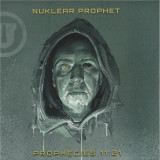
Nuklear Prophet - Prophecies 11:21 (2x12")

Hailing from downtown Los Angeles, Nuklear Prophet, aka Erik Villalpando, is heavily influenced by West Coast Hip Hop and Electro. Winning multiple DJ awards, including 3x World Records DJ Competition under his DJ Dope-E alias, Villalpando cites his inspiration as coming from some of the most influential Los Angeles DJs of his childhood, including Tony G, DJ Joe Cooley, Julio G, and DJ Aladdin.

With releases on Urban Connections, Abseits Recordings, Diffuse Reality and Bass Agenda Recordings as Nuklear Prophet, the LA-based DJ/producer readies his full-length album 'Prophecies 11:21' for Utrecht-based U-Trax. Formed of an eclectic and energetic collection of gems mined from his overwhelming archive, the album takes in genres such as Electro, Hip Hop, Footwork, Juke, and beyond.
Leading the release is the 808 luminary Egyptian Lover's remix of 'L.A. Rockz', featured on the recently released 'L.A. Rockz' EP, kicking off the LP with his trademark 808-infused sound. A nod to Detroit-flavoured Electro is presented via the dark and brooding tracks 'Nuklear Prophet' and 'Compton', with the lighter atmospherics of the genre covered on 'Solar Winds'. The pounding electro killer '808 Plague' sounds like it came straight from the sewers of The Hague.
'Everlastin' Bass', 'Back Up Off My Tip', and 'The Train Ride To Coconino' offer Footwork inspired bangers, with the latter previously featured on the Legowelt curated U-Trax compilation 'U R Here!' earlier this year.
Moving across a spectrum of tempos, styles, and moods across the album, exemplified on the sluggish trip-hop of 'The Mars Goblin', Nuklear Prophet expertly touches on a range of bass-driven genres, displaying his widespread influences and knack for hard-hitting production throughout.

a 01: L.A. Rockz (Egyptian Lover Remix) feat. Krazy Dee & Nasim

out of Stock

Order now and we will order the item for you at our supplier.

10,04

Last In: 63 days ago
WHATEVER THE WEATHER - Whatever The Weather LP

Loraine James' new ambient-minded alias, Whatever The Weather, follows her 2021 solo LP Reflection (Hyperdub). In contrast to her club music sensibilities, this mode embraces keyboard improvisations and vocal experimentation, foregoing percussive structure in favor of shaping atmosphere and tone. From this divergent headspace emerged new coordinates and climates, a new outlet: Whatever The Weather. A longtime fan of ambient-adjacent Ghostly International artists such as Telefon Tel Aviv (who she'd ask to master the album), HTRK (whose singer Jonnine Standish features on Nothing), and Lusine (whom she remixed at the start of 2021), James saw the label as the ideal home for this eponymous album of airy, transportive tracks as they began to formulate. The titling on Whatever The Weather works in degrees; simple parameters allowing James to focus on the nuances as a mood-builder. Her suspended universe fluctuates; freezing, thawing, swaying and blooming from track to track. James describes her jam-based approach for the sessions as "free-flowing, stopping when I felt like I was done," allowing her subconscious to lead. The improvisations have an intrinsic fluidity to them, akin to sudden weather events passing over a single environment - the location feels fixed while the conditions vary. The album opens at "25°C," a sunshower of soft hums and keys. As the longest piece, it serves to establish stability, the inflection point where any move above or below this temperate breeze breaks the bliss. Given James' proclivity for organized chaos in her production, this scene is fleeting, naturally. From that utopia, we plummet to the most melancholic read on the meter, "0°C," its isolated synth line traversing a hailstorm of steely beats and static. Next, the dial jumps for the propulsive standout "17°C." Like a timelapse of springtime in the city, the single accelerates across a frenzy of frames; car horns, screeching brakes, and crosswalk chatter fill the pauses between rapid jolts of multi-shaped percussion. For portions of the work, James leans neo-classical, rendering pensive vignettes of cascading piano keys and warm delay. "2°C (Intermittent Rain)" ends the A-Side on a short and stormy loop; a resulting sense of reset permeates the B-Side's opener, "10°C." The producer mingles intuitively on echoed organ, locking into and abandoning atypical rhythms that suggest her jazz-oriented interests. "4°C" and "30°C" display the range of James' vocal experiments. The former chops and pitches her voice to a rhythmic, otherworldly effect, the latter reveals James at her most straightforward (she cites Deftones' Chino Moreno and American Football's Mike Kinsella as inspirations), singing tenderly and unobstructed for nearly the duration before beats collide in the climax. Whatever The Weather closes at "36°C," while a sweltering heat by any standards the track eases along comfortably on a chorus of synth waves, acting as an apt bookend for this evocative, sky-tracing collection that started in a similar state. Cyclical, seasonal, and unpredictable, true to its namesake.

pre-order now08.04.2022

expected to be published on 08.04.2022

20,97
WHATEVER THE WEATHER - Whatever The Weather LP

Loraine James' new ambient-minded alias, Whatever The Weather, follows her 2021 solo LP Reflection (Hyperdub). In contrast to her club music sensibilities, this mode embraces keyboard improvisations and vocal experimentation, foregoing percussive structure in favor of shaping atmosphere and tone. From this divergent headspace emerged new coordinates and climates, a new outlet: Whatever The Weather. A longtime fan of ambient-adjacent Ghostly International artists such as Telefon Tel Aviv (who she'd ask to master the album), HTRK (whose singer Jonnine Standish features on Nothing), and Lusine (whom she remixed at the start of 2021), James saw the label as the ideal home for this eponymous album of airy, transportive tracks as they began to formulate. The titling on Whatever The Weather works in degrees; simple parameters allowing James to focus on the nuances as a mood-builder. Her suspended universe fluctuates; freezing, thawing, swaying and blooming from track to track. James describes her jam-based approach for the sessions as "free-flowing, stopping when I felt like I was done," allowing her subconscious to lead. The improvisations have an intrinsic fluidity to them, akin to sudden weather events passing over a single environment - the location feels fixed while the conditions vary. The album opens at "25°C," a sunshower of soft hums and keys. As the longest piece, it serves to establish stability, the inflection point where any move above or below this temperate breeze breaks the bliss. Given James' proclivity for organized chaos in her production, this scene is fleeting, naturally. From that utopia, we plummet to the most melancholic read on the meter, "0°C," its isolated synth line traversing a hailstorm of steely beats and static. Next, the dial jumps for the propulsive standout "17°C." Like a timelapse of springtime in the city, the single accelerates across a frenzy of frames; car horns, screeching brakes, and crosswalk chatter fill the pauses between rapid jolts of multi-shaped percussion. For portions of the work, James leans neo-classical, rendering pensive vignettes of cascading piano keys and warm delay. "2°C (Intermittent Rain)" ends the A-Side on a short and stormy loop; a resulting sense of reset permeates the B-Side's opener, "10°C." The producer mingles intuitively on echoed organ, locking into and abandoning atypical rhythms that suggest her jazz-oriented interests. "4°C" and "30°C" display the range of James' vocal experiments. The former chops and pitches her voice to a rhythmic, otherworldly effect, the latter reveals James at her most straightforward (she cites Deftones' Chino Moreno and American Football's Mike Kinsella as inspirations), singing tenderly and unobstructed for nearly the duration before beats collide in the climax. Whatever The Weather closes at "36°C," while a sweltering heat by any standards the track eases along comfortably on a chorus of synth waves, acting as an apt bookend for this evocative, sky-tracing collection that started in a similar state. Cyclical, seasonal, and unpredictable, true to its namesake.

pre-order now08.04.2022

expected to be published on 08.04.2022

25,59
Pere Ubu - Nuke the Whales 2006-2014	(4x12")
 
45

ltd edition box set, 4xlp + poster & dl card. rewriting the history of music, pere ubu continue to confound convention and shift personnel. the next box set in fire records’ reissue series, ‘nuke the whales’ houses 4 lps originally released between 2006 and 2014 – ‘why i luv women’, ‘carnival of souls’, ‘lady of shanghai’ and ‘long live pere ubu!’. ‘nuke the whales,’ is a nod of respect to a couple in cleveland who would daub such messages over the big news stations’ advertising boards. “very few bands display such dedication to constant self-reinvention as pere ubu” the quietus // all four albums have been remixed and remastered by original pere ubu member david thomas. ‘why i luv women’, originally released on glitterhouse in 2006, gains its first vinyl release. "spews 11 tunes of arcane lyrics and dense music” shrieked the cleveland gazaette. it’s joined by ‘long live pere ubu’ a soundtrack to a musical adaptation of the play. “skronking, squalling rhythms and melodic snippets undulating round a pulsating soundscape." record collector // and ‘lady from shanghai’, their fire debut for fire in 2013. originally released on the 35th anniversary of the group's debut, ‘the modern dance’, a latter day re-evaluation of the unprompted dance genre. and its follow up ‘carnival of souls’, a haunting “underscore’ to a tale of alienation, it “combines metallic percussion, spare guitars and david thomas' muttered vocals into something rustic and rickety, yet threatening at a moment's notice.”

pre-order now01.04.2022

expected to be published on 01.04.2022

24,01
Nuklear Prophet - Prophecies 11:21

Nuklear Prophet

Prophecies 11:21

Cassette25UTRQDM18
U-Trax
21.03.2022

Hailing from downtown Los Angeles, Nuklear Prophet, aka Erik Villalpando, is heavily influenced by West Coast Hip Hop and Electro. Winning multiple DJ awards, including 3x World Records DJ Competition under his DJ Dope-E alias, Villalpando cites his inspiration as coming from some of the most influential Los Angeles DJs of his childhood, including Tony G, DJ Joe Cooley, Julio G, and DJ Aladdin.

With releases on Urban Connections, Abseits Recordings, Diffuse Reality and Bass Agenda Recordings as Nuklear Prophet, the LA-based DJ/producer readies his full-length album 'Prophecies 11:21' for Utrecht-based U-Trax. Formed of an eclectic and energetic collection of gems mined from his overwhelming archive, the album takes in genres such as Electro, Hip Hop, Footwork, Juke, and beyond.
Leading the release is the 808 luminary Egyptian Lover's remix of 'L.A. Rockz', featured on the recently released 'L.A. Rockz' EP, kicking off the LP with his trademark 808-infused sound. A nod to Detroit-flavoured Electro is presented via the dark and brooding tracks 'Nuklear Prophet' and 'Compton', with the lighter atmospherics of the genre covered on 'Solar Winds'. The pounding electro killer '808 Plague' sounds like it came straight from the sewers of The Hague.
'Everlastin' Bass', 'Back Up Off My Tip', and 'The Train Ride To Coconino' offer Footwork inspired bangers, with the latter previously featured on the Legowelt curated U-Trax compilation 'U R Here!' earlier this year.
Moving across a spectrum of tempos, styles, and moods across the album, exemplified on the sluggish trip-hop of 'The Mars Goblin', Nuklear Prophet expertly touches on a range of bass-driven genres, displaying his widespread influences and knack for hard-hitting production throughout.

out of Stock

Order now and we will order the item for you at our supplier.

11,13

Last In: 4 years ago
Miles Davis - Kind of Blue

Miles Davis Kind of Blue meets Analogue Productions' UHQR, the pinnacle of high-quality vinyl!
Best-selling album in jazz history; mastered from the original master tapes by Bernie Grundman
Pressed at Quality Record Pressings using Clarity Vinyl® on a manual Finebilt press
Purest possible pressing and most visually stunning presentation and packaging!
Dream team of Davis, Adderley, Coltrane, Evans, Kelly, Chambers, Cobb make history.

Legends have a way of sticking around. If there was ever an album awaiting a high-fidelity, custom-pressed vinyl treatment of the level you now hold in your hands, it is Miles Davis' Kind of Blue. The top-selling jazz album of all time, it has been lauded, entered into "Best Of" lists and Halls of Fame, and universally acknowledged as a landmark recording — a five-track masterpiece of melancholy mood and melody.

It continues to be one of the most listened-to and studied recordings of all time, a required primer for many young musicians, and one of the most transcendent pieces of music ever recorded. Davis played trumpet sublime with his ensemble sextet featuring pianist Bill Evans, drummer Jimmy Cobb, bassist Paul Chambers, and saxophonists John Coltrane and Julian "Cannonball" Adderley with Wyton Kelly playing piano on "Freddy the Freeloader."

Now Analogue Productions, together with Quality Record Pressings, is putting Kind of Blue where it belongs: the Ultra High Quality Record (UHQR) pressed on Clarity Vinyl on a manual Finebilt press with attention paid to every single detail of every single record.

The 200-gram records will feature the same flat profile that helped to make the original UHQR so desirable. From the lead-in groove to the run-out groove, there is no pitch to the profile, allowing the customer's stylus to play truly perpendicular to the grooves from edge to center. Clarity Vinyl allows for the purest possible pressing and the most visually stunning presentation. Every UHQR will be hand inspected upon pressing completion, and only the truly flawless will be allowed to go to market. Each UHQR will be packaged in a deluxe box and will include a booklet detailing the entire process of making a UHQR along with a hand-signed certificate of inspection. This will be a truly deluxe, collectible product.

Kind of Blue is more than Miles Davis's most enduring recording, it's a testament to Miles' experimental approach, drastically simplifying modern jazz by returning to melody unlike the chord complexity more often heard at the time. "The music has gotten thick," Davis complained in a 1958 interview for The Jazz Review. "... There will be fewer chords but infinite possibilities as to what to do with them." Kind of Blue is, in a sense, all melody — and atmosphere.

None of the musicians had played any of the tunes before heading into the first of two recording sessions in early spring of 1959. In fact Miles had written out the settings for most of them only a few hours before the session. Miles also stuck to his old recording procedure of having virtually no rehearsal and only one take for each tune.

Miles remained proud of the album, performing at least two of its tracks — "So What" and "All Blues" — for years after, until his musical path took him in a different direction.

History was on the side of Kind of Blue; it was born in 1959, at the peak of the golden age of high-fidelity, featuring innovations in studio equipment (magnetic tape, high-quality condenser microphones), matched by advancements in home audio reproduction (long-player records — LPs; high-end turntables, and other stereo components). Kind of Blue also benefited from Miles' being signed to the leading major record company of the day — Columbia Records, a part of the CBS media conglomerate. Columbia had the means and wisdom to invest in cutting edge recording technology, and their own professional recording studio.

A minor audio complication with Kind of Blue has been addressed with this UHQR edition. The motor on the studio's 3-track master recorder was running slowly the day of the album's first session. This speed issue affected the album's first three tracks, "So What," "Freddie Freeloader" and "Blue in Green," making them a barely perceptible quarter-tone sharp. Before now, it was only addressed in 1995 for the Classic Records edition and by Columbia Records — or their latter-day parent, Sony Music — on a CD reissue in the late '90s.

Sixty years have passed; this LP bridges that time span in the best way possible, struck from the master reel of Kind of Blue, free of speed issues and replete with all the instrumental detail, sonic environment and minimal noise. As we set out to make our UHQR series the world's best-sounding vinyl records, we have also used Clarity Vinyl, which is free of any carbon black pigment which might introduce surface noise. All-in-all this edition of Kind of Blue meets the highest audiophile standards and offers the truest sound for the most enjoyment.

pre-order now29.12.2021

expected to be published on 29.12.2021

193,24
Kozmodrum - Kozmodrum

Kozmodrum

Kozmodrum

12inchBLKN10
Rika Muzika
06.09.2021

Audio premiere for Povratak na Parni Pogon on Monday 24th of May via Music is my sanctury

Video premiere via Clash or Twisted Soul

Airplay - dom servini (soho radio), WYEP Pittsburg (dubmission), WKDU Philadelphia (eavesdrop radio), Jocks & nerds (soho radio), Basic Soul Show, Bondfire Radio NYC + many smaller stations across EU, UK & US

LP review - Mojo, Songlines agreed so far

Key selling points:

Kozmodrum are pioneers of the Croatian nu-jazz scene
Kozmodrum's second albumGravitywon the highest award in Croatia, Porin

Individual members of Kozmodrum as well as Kozmodrum as a collective are acclaimed musicians in the Balkans and have won numerous prestigious awards for their work

Their music is like a DJ set played live - as all the music is played live with 'traditional' instruments by the Kozmodrum ensemble


numerous great reviews, but not many in English - we're looking to introduce the band to UK audiences with this release -- this is one review in english for their album Gravity:https://exclaim.ca/music/article/kozmodrum-gravity
Our PR for this 3rd album by Kozmodrum is done by Francesco Soragna (Jus Like Music) with specific focus on UK market.
BIO:

Kozmodrumhave been pioneering a new approach to electronic music in Croatia, often described by the band as Organic Dance Music. Techno, House and Dub styles intertwine through a continuous set, played by a live band on guitars, drums and keyboards.Simultaneously, the tradition of jazz ensemble performance is stitched into the architecture of music itself.

Kozmodrum have released 2 albums, 'Na Tragu Satelita' in 2016, and 'Gravity' the following year, receiving a Porin Award for the latter (the Croatian Grammy). Individual band members also received numerous awards for their accomplishments and are considered by many to be pioneers in the Croatian nu-jazz scene. Kozmodrum's main influences are Tycho and Elektro Guzzi, as well as Jaga Jazzist with whom they performed live. The band have played numerous festivals and concerts, with Kozmodrum's members performing with Hans Joachim Roedelius, noise/art/sound figure Sunao Inami, as well as jazz masters Reggie Washington, Peter Erskine, David Liebman, Alan Broadbent, David Murray and Saskia Laroo.

Onstage, Kozmodrum is a five-piece ensemble that adds a third dimension to their music, written and produced by the band's founder Janko Novoselić. Using the framework of a DJ set, the compositions are made to be played openly, where the beat is 'looped' until a cue is given to make a change or switch to another part. The pieces are often minimalistic to start with, but evolve over the performance into more complex patterns, harmonies and melodies. With constant shifts between the natural and the artificial, organized and improvised, quiet and loud - Kozmodrum create an unforgettable, mantric performance.

out of Stock

Order now and we will order the item for you at our supplier.

18,45

Last In: 4 years ago
ME REX - Megabear

Me Rex

Megabear

12inchBSM301V
Big Scary Monsters
27.08.2021
 
51

Having taken a break from music for a few years, South London’s ME REX began life in 2018 in the home of songwriter Myles McCabe experimenting with shouty, electronic bedroom pop. Armed with a slew of “surging gargantuan hooks” and themes of friendship, forgiveness, joy and dinosaurs, McCabe was quickly joined by longtime friends Kathryn Woods (guitar/vocals), Phoebe Cross (drums/vocals) and Rich Mandell (bass/keys/vocals). Now, graduated from producing songs at home to recording at Resident Studios in North London with Mandell behind the mixing desk: ME REX spent the latter half of 2020 bashing down the doors to the indie world with double EP ‘Triceratops/Stegosuarus’. Finding their penchant for constructing delicate threads of vocal layering to convey feelings of calm while building on luscious swathes of reverberated guitar and keys on single ‘Rites’, the band are not afraid to explore different musical concepts: shaping material that strays from traditional album and single structures that results in a sound that could easily find a home on the big screen as they do behind closed doors. Described as “making for both a potent and cathartic listen all round” by DIY magazine — as well as seeing praise from Stereogum, BBC 6Music, Radio X, Amazing Radio, For The Rabbits and Circuit Sweet — ME REX are back with a new and ambitious project ‘Megabear’, an album made up of 52 tracks that has no beginning or end but exists as a cyclical body of work.

pre-order now27.08.2021

expected to be published on 27.08.2021

21,81
Cartalk - Pass Like Pollen

Chuck Moore’s debut as Cartalk, Pass Like Pollen, is an album about holding on to what you’ve had and have—charting an emotional path for moving forward, while understanding the im-portance of looking back. Merging the loud, grungy guitars of classic indie rock and emo with country-esque songwriting and Moore’s undeniably affecting punch of a voice, Pass Like Pollen hits you hard immediately and leaves a beautiful mark.

Pass Like Pollen arrives on the heels of the buzz-building sensation singles “Noonday Devil” and “Wrestling,” the latter of which was picked up by KEXP and resulted in a month-long residency earlier this year at the beloved and now-defunct L.A. music venue The Satellite. Thematically, Pass Like Pollen is a breakup album—a rumination on peering inward, taking stock in what you find and learning to embrace what you have in spite of so much loss. These complicated emo-tions are accompanied by a kaleidoscopic array of sounds rooted in rock and country music, every sonic shade complimenting the intricacies of Moore’s ex¬pressive lyricism; whether they’re cranking up the guitars on slow-burning racers like “Noonday Devil” or zooming in to close-mic’d effect on the intimate “Something or Nothing,” every single emotive beat on Pass Like Pollen rings true.

pre-order now25.06.2021

expected to be published on 25.06.2021

23,49
Indigo De Souza - I Love My Mom

Almost all records are a snapshot, a musical ribbon bow that documents a very specific moment in time or simply ties-off everything up to that point. Indigo De Souza’s I Love My Mom, her debut LP initially released in 2018, was the latter; a collection of the best songs she’d written in the few years that preceded it, recorded quickly and breathlessly and thrown out into the world.

Consisting of ten songs, I Love My Mom feels both raw and unabashed. Indigo pulled a band together for the first time, and was quickly encouraged to commit her songs to tape. Recorded at her friend’s house, they played almost everything live in just a few days, and released the record naturally, with little fanfare. That the record quickly took on a life of its own, deeply resonating with those who heard it, is a testament to Indigo’s songwriting which took inspiration from the unique worlds created by Arthur Russel, Sparklehorse, The Microphones, as well as contemporaries such as LVL UP and Happyness.

Two of the songs have racked up more than a million streams each on Spotify: “Take O Ur Pants” and “How I Get Myself Killed.” The former balances an often breezy lead vocal with gnarly undercurrents of guitar before the whole thing lets rip in its punchy chorus, while the latter, the album’s opening track, finds a different mood entirely, a slacker rock gem that repeats its chorus as a chest-beating mantra. Elsewhere, “Good Heart” furthers the dichotomy which sits at the record’s core, each moment of quiet introspection soon met by a cacophonous burst of energy.

pre-order now11.06.2021

expected to be published on 11.06.2021

25,17
Lee Perry - Dub Treasures From The Black Ark

Lee 'Scratch' Perry's Black Ark Studio opened its doors in 1974. Situated in his backyard at 5 Washington Gardens, Kingston, Jamaica. Using only basic
equipment, a Teac Four-Track Recorder, a Sound craft mixing desk, an Echoplex delay unit and later adding a Phaser effects unit that he used in conjunction with his Roland RE201 Space Echo. He managed mixing down the tracks from Four track to Two track to make his distinctive whirling sound that sets apart the Black Ark Sound from the other Jamaican Studios.

Born Rainford Hugh Perry, 28 March 1936, Hanover, Jamaica. He began his career at the grand age of 16, working for Clement ‘Coxsone’ Dodd’s sound
system, rising quickly to the position of record scout and organising recording sessions during his 3-year period 1963-1966. Restlessness and unsatisfied with credit he felt due to him he moved on to work with Producers J.J. Johnson and Clancy Eccles, the latter of which would help him set up his ‘Upsetter’ label in 1968, which would see his first of many recordings telling the injustices done to him by previous employers. ‘The Upsetter’ track itself pointed at Mr Dodd but reflected to Perry when he inherited it as a nick name alongside many others during the course of his career, including ‘Scratch’, again taken from one of his recordings ‘Chicken Scratch’ recorded in 1965/1966. Perrys work in 1968 with producer Joe Gibbs was fruitful and resulted in many successful releases, but again feeling a lack of credit and itchy feet, it was time to move on. Still not having a studio of his own, Perry recorded at the various Kingston establishments at the time, Randy’s Studio 17 on North Parade, Dynamics on Bell Road and Harry J’s on Roosevelt Avenue where the bulk of the aforementioned recordings with The Wailers were carried out. His dream was always to build his own studio and not to have to work to the constraints of the other studios and producers.

On opening the Black Ark studios, the hits seemed to come immediately. Firstly with Junior Byles' 'Curly Locks' and in 1975 the massive crossover hit Susan Cadogans' 'Hurt So Good' that reached No 4 in the UK charts.1976 saw Island Records releasing Perrys vast output, timeless material like the Heptones 'Party Time', Max Romeo's 'War Inna Babylon' Bob Marley and the Wailers 'Jah Live', 'Punky Reggae Party' and Junior Murvins 'Police and Thieves' to name but a few.But sometimes missing out on a few classics like Perrys own 'Roast Fish, Collie Weed & Corn Bread' and possibly one of the best reggae albums of all time The Congos 'Heart of the Congos'. Dub releases like 'Revolution Dub' (1975) showed a way forward for his production skills in this formidable arena. Having his own studio allowed him to build up a vast catalogue of tracks to work on. We have culled together some lost productions that Lee Perry carried out with singer Mike Brookes, a fine singer, arranger from that special time in the Black Arks history. Sounding like Junior Marvin in parts and Max Romeo in others but still carrying a distinctive Falsetto voice. Some classic tracks as you can see recorded with the cream of musicians at Lee Perrys disposal. Mr Perry works his magic that gives these songs that distinctive feel that his output.
carried around the mid 1970's.

So we hope you enjoy some more lost treasures from the Black Ark that we feel should be added to that mighty cannon of material that still sound so fresh and strong today.

out of Stock

Order now and we will order the item for you at our supplier.

13,24

Last In: 4 years ago
Toro Y Moi - Underneath The Pine

color/ltd

Columbia, South Carolina’s Chaz Bundick (aka Toro y Moi) rose to the fore of the music blogosphere in summer 2009 when he and a few peers made their hazy bedroom recordings the most talked-about sound of the season. Critics across the board took notice of the range of his compositions, and his debut album, Causers of This, showcased his ability to make elements of Brian Wilson’s pop, 80s R&B, and Stone’s Throw hip hop coalesce into a distinct sound that’s as suitable for a dancefloor as it is a pair of headphones.

When Chaz first signed to Carpark Records, the plan was to release two records in 2010 — one electronic and one with live instrumentation — and although it didn’t quite fit into the same calendar year as his debut, Underneath the Pine is that latter offering. This release sees him following the same creative urges to completely different ends. Having spent the year listening to film composers like Ennio Morricone and François de Roubaix, Bundick returned to his home in Columbia, the birthplace of many Toro tracks of yore, to bring his new ideas to fruition. The result of these sessions is an album evocative of R. Stevie Moore’s homespun ruminations, David Axelrod’s sonic scope, Steve Reich-ian piano phrasing, and the pervasive funk of his first record. Underneath the Pine announces a new phase for an artist whose talent defies classification.

out of Stock

Order now and we will order the item for you at our supplier.

21,64

Last In: 5 years ago
Items per Page:
N/ABPM
Vinyl