Die ikonischen Pixies haben während ihrer ersten Ära
den Weg für den Alt-Rock geebnet, während sie nach
ihrer Wiedervereinigung im Jahr 2004 raffiniertere dunkle
Künste entwickelt haben - eine Rückkehr, bei der sie den
drei Top-10-Alben ihres ersten Phase drei weitere in
Großbritannien hinzufügen konnten. Die Pixies sind so
heiß wie nie zuvor und veröffentlichen am 30. September
ihr achtes Studioalbum 'Doggerel' über BMG. Doggerel ist
ein ausgereiftes, aber dennoch emotionales Album mit
schaurigem Folk, Ballroom-Pop und brutalem Rock.
Cerca:moo
- A1: The Poet Acts
- A2: Morning Passages
- A3: Something She Has To Do
- A4: “For Your Own Benefit”
- B1: Vanessa And The Changelings
- B2: “I'm Going To Make A Cake”
- B3: An Unwelcome Friend
- B4: Dead Things
- C1: The Kiss
- C2: “Why Does Someone Have To Die?”
- C3: Tearing Herself Away
- D1: Escape!
- D2: Choosing Life
- D3: The Hours
‘Was there ever a more perfect film for Glass’s lyrical manner? He refers to his own past, but the way in which the material is treated transforms it inevitably into that eternal present. Such a feeling of fragile beauty is a rare achievement.’ – Gramophone
‘Simple and complex by turn, Glass’s score adds dignity and depth to the movie, and to the tragedies and triumphs, big or small, of ordinary life.’
– Guardian
‘Underpinning the anguish at the heart of The Hours a beautiful score. Glass’s motifs capture the passage of time and the universality of human experience.’ – Classic FM’s Best Soundtracks
Nonesuch releases Philip Glass’s award-winning soundtrack to The Hours on vinyl for the first time to coincide with its 20th anniversary and Glass’ 85th birthday concert season. Originally released in December 2002, Glass’s score to the Academy Award-winning film was itself nominated for an Academy Award, as well as a Golden Globe and a Grammy, and went on to win a BAFTA and a Classical BRIT.
Directed by Stephen Daldry, The Hours is the story of three women searching for more potent, meaningful lives. Based on Michael Cunningham’s 1999 Pulitzer Prize–winning novel, with a screenplay by David Hare, the film interweaves the stories of three women – a book editor in New York (Meryl Streep), a young mother in California (Julianne Moore), and the author Virginia Woolf (Nicole Kidman). Their stories intertwine, and finally come together in a surprising, transcendent moment of shared recognition.
Philip Glass’s score was conducted by Nick Ingman, with Michael Reisman on piano and the Lyric Quartet, and recorded at Abbey Road Studios and Air Studios, London. The score was a key element in this acclaimed triptych of dramatic tales. ‘The inter-cutting of personal stories over a wide span of time,’ said NPR, ‘is held together by a single music approach.’
In his original liner note, Michael Cunningham wrote, ‘Each novel I’ve written has developed a soundtrack of sorts; a body of music that subtly but palpably helped shape the book in question. The one constant since I started trying to write novels, however – my only ongoing act of listening fidelity – has been the work of Philip Glass. I love Glass’s music almost as much as I love Woolf’s Mrs. Dalloway. Glass, like Woolf, is more interested in that which continues than he is in that which begins, climaxes, and ends; he insists, as did Woolf, that beauty often resides more squarely in the present than it does in the present’s relationship to past or future. So, when I heard he’d agreed to contribute the music to the film version of The Hours, it seemed both inevitable and too good to be true. I’m not sure if I can offer any higher praise than this: When I saw the movie with the music added, I thought automatically of how I could use the soundtrack, when it came out, to help me finish my next book.’
“This is a movie about art and how art affects life," explains Philip Glass. “The story is very complicated and the music could take on a very important role in the film, as I saw it – to make it viewable, to make it comprehensible, so the stories of the three women in the film didn’t seem separate, that they were tied together. The music had to be the thread that tied the movie together. There’s no question that the emotional point of view is conveyed by the music. Music is the arrow you shoot in the air. Everything follows that.’
Born in Baltimore, Maryland, in 1937, Philip Glass is a graduate of the University of Chicago and the Juilliard School. By 1974, Glass had created a large collection of music for The Philip Glass Ensemble. The period culminated in the landmark opera, Einstein on the Beach. Since Einstein, Glass’s repertoire has grown to include music for opera, dance, theater, orchestra, and film. His scores have received Academy Award nominations (including Kundun and The Hours, both released on Nonesuch, as well as Notes on a Scandal) and a Golden Globe (The Truman Show). Recent works include Glass’s memoir, Words Without Music, Glass’s first Piano Sonata, opera Circus Days and Nights, and Symphony No. 14. Glass received the Praemium Imperiale in 2012, the US National Medal of the Arts from President Barack Obama in 2016, and 41st Kennedy Center Honors in 2018.
Nonesuch’s relationship with Glass began in 1985, with the release of the score for Paul Schrader’s Mishima. In addition to The Hours (2002) and Kundun (1997), over the years other Glass works on Nonesuch have included Einstein on the Beach (1993), Music in Twelve Parts (1996), the soundtracks for Powaqqatsi (1988) and Koyaanisqatsi (1998), Glass Box (2008), and Kronos Quartet’s Performs Philip Glass (1995), amongst others.
Little Wings' album "Rosy's Own" is a limited release in collaboration with Perpetual Doom & Moone Records filmed and recorded on an undisclosed ranch in the mountains of Southern California. Kyle Field's intimate performance shone a light through the gray haze shrouding the skyline, with the only accompaniment being the sound of nature.
Both Aesop Rock and Homeboy Sandman are regarded as top tier lyricists known for pushing the envelope of creativity in their writing, while covering a wide range of topics and moods. However, sometimes things are inherently simple. Take for example, the origin of their collaboration, born from a mutual appreciation for each other as artists which became fully realized when Aesop Rock invited Homeboy Sandman to join him on tour in 2015. Traveling the country together, they built a connection beyond the music, resulting in a friendship that led to recording a few songs together, and before they knew it, there was an infestation...Lice.
Initially released in 2015 as a free direct download, followed by an extremely limited vinyl pressing sold exclusively on tour, Aesop Rock and Homeboy Sandman's Lice is finally available to fans everywhere. The first in a series of EP releases, Lice featured production from DJ Spinna, Optiks, Blockhead, Alex "Apex" Gale and Mike Shinoda. The original cover art was designed by renowned illustrator Jeremy Fish.
Debut solo album from Julia Kugel (The Coathangers). Limited edition first LP pressing on heartbeat pink color vinyl, includes DL (1500 copies). If you can’t trust yourself, who can you trust? This is the crucial question at the core of Julia, Julia, the moniker for Julia Kugel, founding member of garage punk icons The Coathangers and the dream pop duo Soft Palms. On her first solo full-length album Derealization, Kugel shifts her focus from collaboration and band dynamics towards a singular artistic vision and private self-discovery. Steeped in the beguiling pop elements of her past work, Derealization is a meditative deep dive into the mind of a person struggling to understand a crumbling internal and external world. The album traverses a landscape of ethereal folk, atmospheric deconstructed pop, and dubbed-out country ballads, all centered around straight forward and direct lyrics. This juxtaposition of nebulousness and lucidity gives the album a sense of clarity emerging from the haze, an apt refection of Kugel's personal growth and journey toward self-acceptance. Derealization is based on weaving the unreal, unsaid, and unknown into an undulating sonic fabric. Vocal layering and abstract instrumentation convey a blurred desperation to connect to an emotional and psychological focal point. Moody, dark, and sumptuous, the record is a flow chart of Julia Kugel coming into herself as an artist and songwriter. The album finds Julia playing almost all the instruments and taking her first stab at engineering at COMA, her and her husband's home recording studio in Long Beach, CA. “You know how touring musicians often speak of whether home is real or tour is real? Well, it can lead you to lose grasp on ‘reality,’ especially when touring is taken away and you are left to wonder if anything was ever real, including yourself. Like you we're just playing a character,” Kugel says of her headspace leading up to the creation of Derealization. “Honestly, I kinda lost it, and through making this record I made peace with it and reconciled myself as a real person. I forgave myself and in turn forgave those around me. The song ‘Forgive Me’ is the apology I wanted to say and to hear. I wrote every song from that place and gained the confidence I was pretending to possess.” This raw and personal approach to the lyrics is present throughout Derealization. On the opening track "I Want You," Kugel creates a woozy sense of space with reverb-soaked drums and spaghetti western guitars while she lists off her desires for a mysterious “you.” Is she actually listing off her desires for herself? For the people around her? As she repeats "do you feel it?" in the song’s chorus, it feels as if she’s conjuring a magical thread by which we are all connected, showing us how our desires are all the same. On "Fever In My Heart" the listener is treated to a lush, acoustic techno track detailing the exhilarating madness of an emotional breakdown. Simple truths percolate to the surface on "Words Don't Mean Much,” as if clearing away the murk of platitudes and empty gestures. The journey continues on the detached and conflicted "Do It Or Don't,” an alluring walk through the winding road of lonely choices. The name for the project Julia, Julia is a look in the mirror, a reflection of what is hidden and unanswered, of what is real and what is transient. The experience of living life not as you planned it but as it unfolded, and the mysterious, magical pain that creates meaning.
Tracklisting 1. I Want You 2. Forgive Me 3. Impromptu 4. Fever In My Heart 5. Words Don’t Mean Much 6. Do It Or Don't 7. No Hard Feelings 8. Big Talkin' 9. Paper Cutout 10. Where Did You Go 11. Corner Town
San Francisco band touches upon black metal, blues, ambient and more. Of all things, it’s laughter that pervades Mamaleek’s Diner Coffee, the San Francisco metal deconstructionists’ sonically crushing ode to the humor found within catastrophe, American diners, and “the little things.” Featuring a mix of live performances, samples, and field recordings, Diner Coffee laughs through its harsh songs in an attempt to reflect the camaraderie found at the heart of global calamities and changing personal situations. It’s an homage to the quotidian set to the backdrop of the mythologized, sanctuary-like properties of a diner, reveling in irony-less nostalgia. Mamaleek embodies this ethos on and off the record. Originally two anonymous brothers, the past few years have seen Mamaleek adding members and venturing into live performance. Diner Coffee, following in the footsteps of 2020’s Come & See, features new, unfamiliar, unknown voices—including expanded experiments with horns, woodwinds, and strings and a Bay Area-local blues harmonica player who improvised recorded selections during practices. The resulting tracks touch on signifiers from black metal, blues, ambient, and more. Diner Coffee simultaneously represents the band’s artistic progression and the state of the world. Taking a surprisingly optimistic perspective, Mamaleek once again puts forward a project of left-field, wholly unique compositions, eluding easy categorization and furthering their abstraction of genre. “The group cloaks its music in the kind of warm, hypnotic distortion that defines shoegaze, and underneath that haze is a style that’s conceptually abrasive yet altogether beautiful.” Forbes //
Tracklist 1 Libations to Sacred Clowns 2 Boiler Room 3 Badtimers 4 Save Your Poor Wicked Soul 5 Grief and a Headhunter's Rage 6 Wharf Rats in the Moonlight 7 Diner Coffee
For Fans Of...El Michels Affair, Adrian Younge, Roy Ayers, Karriem Riggins, The Roots, Khruangbin. Deep, Hard Hitting Soul-Jazz Meets Dub Instrumental Analog Grooves For Your Psyche. In few words, Doctor Bionic can be described as Instrumental b-movie psych-hop. But that doesn't tell the whole story. Doctor Bionic is the brainchild of Cincinnati's Jason Grimes, formerly the producer of the hip-hop group MOOD (with emcees Main Flow & Donte). Having grown up in the Scribble Jam scene here in Cincy, and running in circles that included artists like Hi-Tek & Talib Kweli, Grimes' music has continued to evolve from sample-based loops, to live instrumentation with deep layering; provided by a revolving door of local musicians. The common thread in most Doctor Bionic tracks are the neck snapping drum breaks, but the tempo adjustments and varying instrumentation lends itself to a collection of non-genre specific songs - held together in unity by the flawless drums, often provided by Josiah Wolf (of indie-rock band Why?). The result of these recording sessions are a masterclass in musical juxtaposition. Spacious yet clustered. Futuristic nostalgia. Ideal for long car rides or setting the vibe during a laid back gathering of friends. Also Available From Doctor Bionic: The Invisible Hand LP. Tracks: 1.The Messengers 2. No Middle Ground 3. Purple Spark 4. Decades To Come 5. Shadows In The Sun 6. Snow Bird 7. In The Mirror 8. Dose Of Dank 9. The Things That We Love 10. History Lessons
Limited Clear Grey Vinyl 7". For Fans Of… Piero Umiliani, Amedeo Tommasi, Dorothy Ashby, Sandro Brugnolini, El Michels Affair, Sven Wunder. Breezy and carefree, Dragatto reminisces on a day spent exploring the streets of Madrid with only a camera, a few rolls of film and the shoes on his feet. Heavily inspired by the European adaptation of Bossa nova in the 1960’s, Salvator creates his own unique mood that’s equal parts sunny and joyful using simple melodic themes opposite lush string arrangements. A surefire companion for the next road trip down the coast or excursion through a foreign city. On the B side, as if delivered from the future, the sweet and punchy Return to Normal is a message of hope and optimism letting us know that things will indeed get better. Dreamy harp arpeggios float effortlessly atop a crushing rhythm section tip-toeing the line between calmness and urgency. Turn this one up loud, light one up and let go.
Tracks 1. Mind On Madrid 2. A Return To Normal
Noah & The Whale were one of the leading protagonists of the small but
perfectly formed indie-folk scene of the early days of the 21st Century
Formed in Twickenham, the five-piece, led by vocalist and guitarist Charlie Fink,
originally boasted Laura Marling in their line- up, before she left to begin her
successful solo career.
Containing the Top 10 single L.I.F.E.G.O.E.S.O.N., Last Night On Earth was partially
recorded in LA with producer Jason Lader. On its release in 2011, Fink spoke of
capturing "that excitement of being young and being in the night," and being
influenced by Bruce Springsteen. That can be heard on Wild Thing, which blends
Springsteen and Lou Reed into something that is unmistakeably the group's own.
The Telegraph called it "Heartfelt, spirited, lyrical, moody and mostly magnificent
pop rock."
This re- issue faithfully recreates the original 2011 Mercury Records UK release
and is pressed onto high quality 180g vinyl. Also includes the original's bonus 7"
single featuring demo versions of Tonight's The Kind Of Night and Wild Thing.
...
"The whole point of this record was to share every emotion that I feel," sagt THE SOFT MOON aka Luis Vasquez. "No two songs are the same. It's about existing in the world as a human being and experiencing many emotions and experiences throughout life." Daher auch der Titel "Exister", ein Album, das von den ekstatischen Freuden und lähmenden Tiefen des Lebens handelt und davon, dass das Durchhalten und die Existenz manchmal alles ist, was wir haben. Der Grund, warum das Album für Vasquez so persönlich ist, liegt darin, dass sich sein Leben während der Entstehung des Albums stark verändert hat. Er verließ Berlin, sein langjähriges Zuhause, und zog in den Joshua Tree, um während des Lockdowns musikalisch und persönlich etwas Freiraum zu finden. Es fühlt sich wie eine Art musikalischer Neustart für Vasquez an. Das Cover des Albums zeigt ein Foto von Vasquez als Kind und steht stellvertretend für eine Platte, bei der es darum ging, sich wieder mit seinem jüngeren Ich zu verbinden, wobei eine Mutter-Sohn-Beziehung im Mittelpunkt des Albums steht. "It's my child self that you hear all over it," sagt er. "I was reminiscing and hurting a lot during the writing process. This is possibly my most vulnerable record yet." Doch trotz des Schmerzes, der Wut, der Verletzlichkeit und des Schmerzes, die im Kern dieser Platte zu finden sind, gibt es auch ein tiefes Gefühl von Hoffnung und Schönheit. Auf dem abschließenden Titel-Song "Exister" scheint das Album einen Ort des Friedens und des Trostes zu erreichen und endet mit einem ruhigen, nachdenklichen und ergreifenden Moment, der ein Gefühl des Optimismus nach einer Zeit des Umbruchs einfängt.
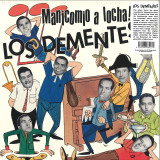
This album marks the debut recording for Venezuela's Velvet label by pianist Ray Pérez and his trombone-led salsa band Los Dementes. Heavy dance numbers and the distinctive vocals of Perucho Torcat make this historic 1967 rarity a sought-after collector's item. Now the LP has been lovingly restored, mastered from the original tapes, with its original artwork intact, preserving the legacy of Los Dementes for today's generation of salsa lovers everywhere. First time reissue. Salsa pianist, vocalist, composer and arranger Ray Pérez, acquired his nickname "Loco" by being a free, independent spirit, an innovator and iconoclast who was initially branded as "crazy" for the freshness and audacity of his sound. Amazingly, he is not that well known in the US, where he spent some time in the late 1960s and salsa was king during the 1970s. Yet he was quite popular in his home country from the beginning, especially amongst the working class of Caracas and Maracaibo, who adopted Cuban music played by New York Puerto Ricans as their own and called it "salsa" years before the term was employed by US labels like Fania as a marketing tool. Pérez is revered in Venezuela, as well as in Mexico and Colombia, and his storied career, which spans seven decades and thousands of concerts, has yielded more than 35 albums recorded by his various bands, including Los Dementes, Los Kenya, and Los Calvos, all of which are collector's items today. At the start of 1967 Pérez debuted Los Dementes, with vocalists Claudio Zerpa and Perucho Torcat backed by an ace band featuring only trombones in the brass section. Titled "¡Alerta mundo! Llegaron los 'The Crazy Men'" the record was released on the small Venezuelan label Prodansa. Soon after, Prodansa folded and Los Dementes were left without representation or much compensation for their efforts, being paid only in records. In the end of February of that year, Pérez returned to Caracas from a stint in Maracaibo in order to finish his first LP with the well-established and larger Velvet label, entitled "Manicomio a locha". In the first quarter of 1967, Velvet unleashed a trilogy of salsa records in order to compete with rival label Palacio and their recent success with Federico y su Combo Latino: "Porfi '67 Salsa & Boogaloo" by Porfi Jiménez y su Orquesta, "Guasancó" by Sexteto Juventud and lastly "Manicomio a locha". The LP begins appropriately with the boisterous title track, written by the band's conguero Carlos "Nené" Quintero, who would become a legend in coming years. Torcat describes a jam session in mental institution and introduces the band, with tasty solos by trombonist Rufo García followed by Ray on piano. Already you can hear something was different about Ray and his "Crazy Men"-a sound as wild and innovative as what was happening in New York with Eddie Palmieri, but with a more unhinged, raw feeling in line with Willie Colón and other younger Nuyorican bands. Next up is an intriguing track sung in a mix of Italian, English, Spanish and Papiamento by Pérez himself, performed in the complicated rhythm of the mozambique, an Afro-Cuban carnival beat developed in the early 1960s. This is followed by the heavy dancer 'Rico guaguancó', penned by Angelito Pérez, which changes from the guaguancó to the mozambique rhythm mid-way through, proving that Los Dementes were "different from the rest" as the lyrics say. 'Puerto Libre', sung by Torcat, is dedicated to the Venezuelan island of Margarita in the Oriente region, and the independent spirit of its working people. The rhythm changes from guaguancó to guajira and back again but remains danceable all the way through. The side closes out with a "3 in 1" medley inspired by the popular formula of the mosaicos of Billo's Caracas Boys, seamlessly knitting together several different tempos, rhythms, moods and compositions. Side two starts strong with the fierce yet satirical 'Corte e' patas', then 'Alma Cumanesa', a typical folk song refashioned as a guaguancó. This is followed by the funky 'Guajira con Boogaloo'. The tune echoes the sound of young Latin New York, pointing out the connection between Cuban and African American soul music. The pace picks up again with 'Fiesta de trombones', a hot descarga and then the album closes with another medley. Though this marks the end of a rather short album, it also signaled the emerging success of Los Dementes and their involvement with the salsa boom in Venezuela, quickly selling out of its initial run of 1000 records and making for a memorable debut on the Velvet label. Now this rare and sought-after LP has been lovingly restored, mastered from the original tapes, with its original artwork intact, preserving the legacy of Los Dementes for today's generation of salsa lovers everywhere.
For the next instalment in our split series, we handed the reins over to two producers whose work has kept us continually inspired over the last few years. At the helm of the A-side, Berlin big-room havoc-wreaker AMOTIK puts on the burners right away with two riotous jams that scream nothing but sonic aggression. On the flip, the mysterious, genre-unbound Janice sweeps us into his psychedelic, non-formulaic techno mindset. True to AMOTIK's minutely balanced, well-integrated blends of punishing kick drums and sunken harmonics, metronomic destroyer "Narangi" swings the pendulum sharp and clean, from deep down a thick sludge of reverb-soaked, FX-topped percussive armada to bleeps n' bloops barrage fire, whereas quake-inducing tides of 909 thunder hail down upon the dance floor with unrelenting frenzy. The dusty bone-bruiser "Hara" picks up the torch and it's in no calmer mood. A slowed-down, breaks-loaded churner, this one relies on a fine engineering of lo-freq moves and pure hardware-processed filth to establish a murky motel, cinematic narrative of sorts. Up with the fracturing wares, here's Janice rocking the flip upside down with the aptly-titled "Mass Formation Hypnosis". Doing what's written on the tin, the faceless producer rushes us headfirst into the boiler for a thorough, unfaltering brainwash. Smelling of leather, grease and coal, this one's bristling with a delectably rugged palette of unambiguous electronics: an ultimate shelling of chest-rattling drum work, in-your-face bass uppercuts, trumpeting stabs and menacingly altered vox. The final salvo, "Names and Excuses", tops it all off on an ominously droney tip, flinging us right away into the frothing mouth of a deadly machine giant, hurtling and tumbling down mazy bowels of washed-out ambient techno via rhyzomatic gutters of brooding abstract motifs and no-frills heavyweight pound. Hectic. ''XVII'' comes adorned with a duly outstanding frame to shine, and will be pressed on 180g audiophile quality vinyl. Once again a way for RYC to openly declare its aspirations and goals, in letting people know that quality, passion and love for the music is all that matters.
To wit, if you think you know already what you’ll be getting into here heady, Television-esque multi-guitar jams played with motorik precision and a fiercely American intensity: you know, a Forsyth record well, go ahead and think that. I won’t stop you. Only . . . maybe the pulsing bass, curiously lurching drumbeat, and lunar synth squiggling of Sun Ra Arkestra maestro Marshall Allen that opens “Experimental & Professional” will set you back on your heels. But just for a moment, before Ryan Jewell’s drums and Tortoise alum Douglas McCombs’s bass twine into perfect alignment and then guitars played by Forsyth and Tom Malach (of Garcia Peoples) start chipping and hammering, twittering and sparring, the whole thing managing to evoke Remain in Light without sounding remotely like it.
Tracks : 1 Experimental & Professional 2 Heaven For A Few 3 Bad Moon Risen 4 You're Going To Need Somebody 5 Hey, Evolution 6 Long Beach Idyll 7 Robot Energy Machine
12” black vinyl, lyrics insert, edition of 250. Let’s Whisper started many moons ago as a home recording project between Colin Clary and Dana Kaplan, during time off from their other outfit, The Smittens. Since then, the line up of the Vermont outfit has expanded, and now includes Brad Searles, The Essex Green’s Jeff Baron and Emma Kupa of Mammoth Penguins/Standard Fare. In addtion, Jeff’s bandmate from The Ladybug Transistor, Gary Olson, produced, engineered, plays trumpet and sings on the record. The In-Between Times is a leap forward for Let’s Whisper, taking the lush orchestration familiar to fans of The Essex Green and Ladybug Transistor. It’s a tender, brave, and earnest album, exploring grief, gender, and goodbyes. The times between pronounced transitions: life and death, pre- to post-testosterone, the storm to the calm after. Tracklist: A1) You Are Loved A2) The Thing That Defines You A3) Sing! A4) Simple Times A5) Hey You A6) This Might Not Be A Crush A7) 40 Ways To Love You B1) Balloon In The Sky B2) Long Run B3) I Don’t Know What I Would Do Without You B4) Hey There B5) When We Were Young B6) The Year Of Getting High
Here’s artist Max Kuhn on hearing the new Ralph White recordings for the first time: “I was driving a familiar round trip across the high desert when I first put it on. It immediately spoke to me. In the lyrics there's a familiar geography for me, a familiar emotional landscape for all of us. And maybe it was driving an almost 40 year old truck on sun baked & cracked asphalt in July, but it's like you can hear his songs coming apart- the cadence, the rhymes stumbling & defying expectations, consistency but they just keep moving. You have no choice but to go with it. Probably a good lesson for how to live in this era we're in, cracking up but keeping it all running somehow, trying to make something pretty with the time.” Recorded in Austin, Texas in March of 2020, just days before the city and the rest of the world shut down, Ralph White spent two days with producer, Jerry David DeCicca (Will Beeley, Ed Askew) and recording engineer, Don Cento, capturing a raw and wild set of performances. Ralph, having recently converted his van into a mobile living and touring quarters equipped with a wood-burning stove, left Austin, the city where he was born 70 years ago, and retreated to an Arizona commune where he began building a new house in the desert hills to escape the virus and insanity of daily living. Ralph takes us on a journey through his myriad of travels: from Dock Boggs to Syd Barrett to William Faulkner to Stella Chiweshe to Blind Uncle Gaspard…scratching banjo, rasping train whistle hollers, rolling kalimba, rousing accordion, taut shimmers of guitar, caustic fiddle and lyrics - that could have been hidden amongst the dusty inner groove of a lost Harry Smith 78 - weaving in and out of streams of consciousness, time and place. In addition to his solo work, White has recorded or performed with a diverse group of folk and avant-garde musicians: Thurston Moore of Sonic Youth, Jandek, Jack Rose, Eugene Chadbourne, Michelle Shocked, Sir Richard Bishop, and Michael Hurley. “This is what Ralph White really sounds like. It’s what time passing really sounds like. It’s what a look really feels like. This record is someone touching you all over!” --Bill Callahan “Striking, electrifying acoustic music from an underappreciated legend of the American Southwest. Here, tight song structures meet open, unadorned instrumentation: guitar, banjo, kalimba, accordion, fiddle, and White's elastic voice, unspooling pitches and syllables. White draws listeners in on his terms. Lyrics wind and twist and pull back: "Motel 6, Motel 6, Altoona, Altoona; missing you, missing you so, great big hole in my--..." Brave, beautiful, a high point in White's long career. And this is just Volume 1!” - Eli Winter. "What Ralph White puts on albums and onstage is so mind-boggling and vast, it forces those of us in the description business down a treacherous path." --Darcie Stevens, Austin Chronicle. “White was a member of well-loved punk bluegrass outfit Bad Livers, but his solo work is possessed of a much more lonesome spark, exaggerating the implied drone at the heart of the music of Dock Boggs and The Stanley Brothers…White plays wooden six-string banjo, violin, button accordion and kalimba and his voice has a high, eerie quality to it…extremely psychedelic.” --David Keenan, The Wire Tracklisting: 1. Gun Barrel Polka 2. Misinformation Shuffle 3. El Golfo 4. Something About Dreaming 5. Rye Straw 6. The Stovepipe Blues 7. No Stranger 8. Morning Sickness 9. Lord Franklin
Joke Lanz and Sudden Infant once again return in their razor-sharp trio setting whereby the absurdist nature that Joke’s work is already cut with is reconfigured in a gnarled and beefy punk-fucked contorted rock setting. Short bursts of angular flex are heavily propelled by depth-charge rhythms, wry lyrical musings on modern living, and sensibilities hatched from years of experience in the worlds of sound art, abstract music, industrialised junk-noise and related areas have manifested in the perfect follow up to 2018’s Buddhist Nihilism album on Harbinger Sound. Aided by Christian Weber on bass and Alexandre Babel on drums, Joke lays on a battery of electronics, loops, field recordings and samples to complement mostly semi-spoken vocals that appear like they’ve been swept from the overflowing gutters of a shopping centre into a huge ball of malaise that can only be laughed at as world leaders look on perplexed. Exactly as the title suggests, 'Lunatic Asylum' depicts a world in absolute disarray as the seams binding it together slowly fall apart to reveal jesters whose best attempts to glue everything back in place are built on bigger lies more transparent than ever. Meanwhile, citizens of the developed world turn on each other for the stupidest of reasons or grow fatter with their descent into an ignorance nourished by half-baked cultural nuggets pre-packaged and sold as great and awe-inspiring work. And everything has to be recorded, photographed and shared as brain cells are decimated by false ideals, propaganda, exaggerated lifestyles and a huge tub of popcorn swimming in indiscernible yellow gloop. Such are the snapshots that resonate as Lunatic Asylum takes some well-aimed swipes at the human condition of the 21st Century. Featuring a fantastic guest appearance by Franz Treichler (The Young Gods) on ' Il y a des Enfants', each of the 12 songs that constitute Lunatic Asylum are bold, heavy, playful and rife with surprising twists and turns Joke’s mostly English splatter-poetry helps guide into a space that’s about as accessible as the outer reaches of rock can get. In a perfect world, this is the stuff even daytime airwaves should be pregnant with but, since the world is presently tripping over its own feet more so than ever, we will have to suffice with wherever this can nudge with the help of Fourth Dimension Records. One day, hopefully, more will catch up. The CD version of Lunatic Asylum features two exclusive bonus tracks. It was released in April 2022. TRACKLIST 1/Good Morning! 2/Head 3/I Ghore Es Gloeggli 4/Mood Swings 5/Damage Control 6/Happiness to Go 7/Pain is a Pain 8/Il y a des Enfants 9/The Lived Body 10/Ah-Ah-Ah 1921 11/Mika the Dog 12/Tuba Manifesto
Lisbon's purveyor of dance incantations Paraiso are back with an EP that packs a meeting of 3 legends of the local and global underground - a trio of fearless pioneers and cultural agitators from different eras. Yen Sung and Photonz have partnered up in 2020 to collaborate on new music and start a record label. Fast forward to today and this Paraiso EP is their third release, further exploring their mutual penchant for ethereal house music drenched in subtle but fiery grooves and acid basslines. Opener 'A Temperanca' taps into moody yet bouncy motifs, punctuated by crisp claps and an infectious 303 line in the vein of DJ Pierre's record 'What is House Music', their confessed influence for this track. Things get slower on the A2 where the title track gets reworked with alternative elements - aptly named Gravity Mix. The B side continues the metallic acid exploration via 'Akasha', twisting and turning like only expertly crafted basslines do before things blossom into a sunny house groover with enticing percussion and variegated hats. Legendary Angolan-Portuguese producer DJ Satelite steps in for remix duties, adding his iconic deep afro house edge to a wonderful effect, all blissful motifs and broken percussive sonics.
Khidja continue to develop their tripped out vision with their first full EP for Hivern since 2019's 'Impossible Holiday'. In 'Something In The Water' the Romanian duo presents three new tracks that drift between genres and moods through open minded studio experimentation. "The Future Has Disappeared" and "Back To Vid" rely on contrasting sound palettes and a smart use of the stereo field to build up tension while 'Science of Ghosts' is an expansive number of galactic electro-funk. The 12" features a stripped out mystical remix by Azu Tiwaline while the digital release includes two extra oddball dancefloor cuts. Artwork by cm-dp.