Buscar:moon disco

Estilos
Todo
Midge Ure - A Man of Two Worlds LP
  • Different View
  • The Space In- Between
  • Hearing The Invisible
  • Just Below The Surface
  • The Dimming Light
  • The Other Side
  • Blues And Greys
  • The Pictures You Carry With You
  • Just Words
  • World Away
  • Shouting To The Moon
  • Caught In The Middle
  • Ordinary Man (Previous Moments)
  • Somewhere Out There
  • The Man Who Stole Your Soul
  • Fan The Flame

In recent years, Midge Ure has spent his time playing live and not has time to fully immerse himself in the studios creating music To that end A Man of Two Worlds is his first album of new material in 12 years. Well worth the wait, the album is a formidable collection of outstanding music, divided into two clear parts.

The first half, World One: Music, consists of eight instrumental pieces, while the second half, World Two: Songs, features eight vocal songs. This concept was partly inspired by the time Midge spent during lockdown listening to instrumental music whilst presenting THE SPACE on Scala Radio. Hearing music that rarely finds a home on mainstream radio, he set about making something without lyrics, where the melodies had to speak for themselves. The eight vocal songs which form the second part of the album, came to Midge as the world reopened. A more divided world, in many ways a much harder and less empathetic one. Sharing an atmosphere with the preceding instrumentals, these songs are incredibly sparse and meditative, and whilst they are subtle, with some songs dealing with the frailty of the human condition, underlying many songs reflect Midge's concerns for the discord infecting world today.

Reservar08.05.2026

debe ser publicado en 08.05.2026

32,14
Jolanda Moletta - Oceanine

Jolanda Moletta

Oceanine

12inchBNSD098
Beacon Sound
01.05.2026

Oceanine, Jolanda Moletta’s third album and her first for Beacon Sound, is a powerful and ethereal statement of artistic community. Expanding on her previous work, each track represents a collaboration with a different female vocalist, with the foundational elements being generated entirely by her own voice. By turns haunting, enchanting, and inspiring, you won’t want to come up for air once you’ve been pulled under. Representing a
musical practice that is distinctly feminist, this is an album with a longer view in mind, to an age when the altars were to goddesses and women were centered as powerful beings representing the earth’s cycles of regeneration and renewal. Oceanine then, in all its beauty, can be viewed as an album of survival. It is deeply transportive, accessing something that lies within all of us. As the late, great Lithuanian folklorist and archaeologist Marija Gimbutas noted, “We must refocus our collective memory. The necessity for this has never been greater as we discover that the path of 'progress' is extinguishing the very conditions for life on earth.”

Jolanda Moletta is a multimedia artist and one-woman electronic choir. She creates wordless compositions through extended vocal techniques, integrating wearable-controlled live processing, alongside symbolic visuals. Moletta considers her performances to be a collective ritual and creates her Sonic & Visual Spells following the cycles of nature and the moon. Jolanda's 2022 critically acclaimed album Nine Spells was released on the Ambientologist label, followed by Night Caves on Whitelabrecs in 2025. Moletta’s artistic practice is a radical and spiritual journey through sound art, ritual, and the symbolic archaeology of the feminine.

Oceanine is inspired by sirens, water nymphs, and the timeless call of the sea. At its core lies Jolanda’s deep, lifelong connection to the Mediterranean Sea and to the ancient and modern myths and folklore that have emerged from its waters. Growing up by the Mar Ligure, Jolanda was surrounded by stories carried by salt, wind, and waves: legends of sirens, echoes of ancient voices, and the sea as both origin and oracle. This intimate relationship with the Mediterranean is not merely a backdrop, but a living source that shapes Oceanine’s emotional, symbolic, and sonic world.

Each track features a different female vocalist, creating a rich tapestry of voices, styles, and perspectives. This artistic choice not only broadens the album’s sonic palette, but also deepens its narrative core: celebrating the power, beauty, and mystique of feminine energy through myth, history, and sound.

The entire album is built exclusively from the human voice, processed and layered, yet always remaining voice, and nothing else. For each piece, Jolanda invited every vocalist involved to contribute a raw stem: a short, unedited melodic fragment of just a few seconds, inspired by the album’s themes. These intimate vocal seeds became the foundation of each track: the guest artists’ voices appear as brief, melodic stems, while the entire surrounding “orchestral” fabric is created solely from Jolanda’s own layered and processed voice. In this way, Jolanda’s voice becomes the Ocean itself, embracing, absorbing, and carrying the sirens’ calls within a vast, immersive soundscape. Every song is a unique expression of the feminine experience, revealing its depth, complexity, and emotional range, echoing the call of the sea and the many faces of the siren archetype.

The figure of the siren has transformed across centuries. In myths of Ancient Greece and Rome, sirens were hybrid beings, part woman, part bird, whose irresistible songs lured sailors to their doom. During the Middle Ages, the image shifted toward the half-woman, half-fish figure, often associated with temptation and danger. Historically, the voice of women has often been feared. Sirens were considered harbingers of misfortune not simply because they seduced or destroyed, but because they were powerful liminal beings.

In Ancient Greek, sirens functioned as psychopomps: figures who existed between worlds and guided souls, especially between life and death. Their songs were believed to carry forbidden knowledge, including prophetic insight and the ability to reveal truths about fate and the future. The danger of the sirens lay in what they revealed: knowledge that humans were not meant, or ready, to hear.

Oceanine confronts this legacy head-on. The voices heard throughout the album are not merely beautiful: they are dark and luminous, wild and enchanting, magical, soothing, dreamy, and at times fractured or distorted. They whisper, lament, beckon, and enchant. Like sirens, they skim the surface of the water and sink into its depths, hovering on the edge between tenderness and danger, vulnerability and power. They rise toward the sky, dissolve into mist, and return as echoes charged with raw, elemental emotion: voices that seduce, warn, mourn, and remember. They refuse to be reduced to decoration.

Alongside the album’s release in May, Oceanine will also unfold as a visual and performative work through a short art film. The film includes a live session recorded inside a sea cave facing the Mar Ligure, the very coastline where Jolanda spent her childhood, dreaming of sirens and listening to the sea as if it were speaking directly to her. This site-specific performance reconnects the music to its place of origin, allowing the voice to resonate within stone, water, and air, and transforming the cave into both a sanctuary and a threshold between myth and reality.

What if the sirens’ songs were considered dangerous because they carried another truth, an ancient truth long forgotten?

Oceanine embraces the idea that we are still deeply woven into myth. Though we may see ourselves as rational and modern beings, our world is saturated with ancient symbols and archetypes, often distorted, simplified, or stripped of their original meaning. And if those symbols are allowed to shift, if the mirror once held by the siren becomes an invitation to look beyond appearances and into what has been obscured, then we may finally uncover a deeper truth and reclaim the voice that was always ours.

Oceanine is not just an album. It is a reclamation, a spell, and a call from the depths.

Reservar01.05.2026

debe ser publicado en 01.05.2026

23,95
Various - ZYX Italo Disco History: 1984 LP 2x12"
  • Fokewulf 190 - Body Heat (Vocal)
  • The Voyagers - Distant Planet (Vocal)
  • Frank Tavaglione - Tumidanda (English Version)
  • P. Lion - Dream (Vocal Version)
  • A.g.f. - Loved By You (Vocal Version)
  • Raggio Di Luna (Moon Ray) - Comanchero (Vocal Extended)
  • Ranko - Happy World (Vocal Version)
  • Clay Pedrini - New Dream (Vocal)
  • Cyber People - Polaris
  • Scotch - Disco Band (Remix By Mach 2 Vocal Version)
  • Jaco - Spanish Run (Vocal)
  • Valerie Dore - The Night (Original Mix)
  • G.j. Lunghi - Acapulco Nights (Maxi Version)
  • Raggio Di Luna (Moon Ray) - Megamix By Flemming Dalum(Comanchero)
  • The Voyagers - Megamix By Flemming Dalum (Distant Planet)
  • Fokewulf 190 - Megamix By Flemming Dalum (Body Heat)
  • P. Lion - Megamix By Flemming Dalum (Dream)
  • Valerie Dore - Megamix By Flemming Dalum (The Night)
  • Scotch - Megamix By Flemming Dalum (Disco Band)
  • G.j. Lunghi - Megamix By Flemming Dalum (Acapulco Nights)
  • A.g.f. - Megamix By Flemming Dalum (Loved By You)
  • Ranko - Megamix By Flemming Dalum (Happy World)
  • Clay Pedrini - Megamix By Flemming Dalum (New Dream)
  • Frank Tavaglione - Megamix By Flemming Dalum (Tumidanda)
  • Cyber People - Megamix By Flemming Dalum (Polaris)
  • Jaco - Megamix By Flemming Dalum (Spanish Run)

Erleben Sie das pulsierende Lebensgefühl der 80er Jahre mit der farbigen 2LP-Compilation „ZYX Italo Disco History 1984“. Diese exklusive Vinyl-Ausgabe entführt Sie direkt in das goldene Zeitalter der Italo Disco und vereint die größten Dancefloor-Hits eines unvergesslichen Jahres.

Freuen Sie sich auf ikonische Tracks von Künstlern wie P. Lion, Scotch und Valerie Dore – Namen, die für eingängige Melodien, treibende Beats und den unverwechselbaren Sound der Italo Disco stehen. Jeder Song dieser Sammlung spiegelt die Energie und den Glamour der internationalen Clubszene von 1984 wider. Ein besonderes Highlight ist der enthaltene 15-minütige Megamix der Italo-Disco-Legende Flemming Dalum. Mit seinem einzigartigen Gespür für Rhythmus und Atmosphäre verbindet er die größten Hits zu einem mitreißenden Mix, der nahtlos durch die Klangwelt der 80er führt. Die farbige Doppel-LP macht diese Compilation nicht nur musikalisch, sondern auch optisch zu einem echten Sammlerstück – perfekt für Vinyl-Liebhaber und Fans elektronischer Klassiker

Reservar24.04.2026

debe ser publicado en 24.04.2026

24,33
Gaudi - Jazz Gone Dub

2026 Repress

Gaudi’s Jazz Gone Dub is a masterclass in genre fusion, seamlessly blending the improvisational essence of jazz with the heavy atmospheric grooves of dub. Known for his eclectic approach to music production, Gaudi pushes the boundaries yet again, creating a sonic landscape that feels both nostalgic and refreshingly innovative.

Four years in the making, from the opening track it’s clear that Jazz Gone Dub is more than just a mashup of styles—it's a thoughtful exploration of the intersections between two rich musical traditions.

Gaudi’s multi-instrumental talents are on full display, and the presence of reggae royalty is palpable, courtesy of rootsy melodies from David Hinds (Steel Pulse), Jah Wobble’s iconic bass grooves, Ernest Ranglin’s intricate guitar lines and Sly & Robbie’s rhythmic genius. Add Sardinia’s Train to Roots band, Manu Chao collaborator Roy Paci, veteran guitarist Marcus Upbeat, Mr Woodnote and Tim Hutton’s brass work, Gavin Tate-Lovery’s sultry sax and flute, Horseman’s percussive flair plus Colin Edwin and Vlastur’s serious basslines, and the
result is a rhythmic foundation that’s both solid and fluid, allowing the jazz elements to float freely above the dub undercurrents.

Despite this star-studded line-up, Gaudi remains the glue that holds this gem together: his production is meticulous yet organic, allowing each track to breathe and evolve naturally. The use of space, delays and reverb—a hallmark of dub music—is expertly handled, giving the album a dreamy, immersive quality. Tracks like Susceptible and Alabaster Moon showcase Gaudi’s ability to create mood and atmosphere without sacrificing melodic and rhythmic complexity.

In Jazz Gone Dub Gaudi has crafted an album that feels both timeless and forward-thinking, a celebration of musical synergy where the free-spirit of jazz meets the deep resonance of dub. Whether you’re a fan of either genre or simply appreciate masterful musicianship and innovative production, this album is a must-listen.

No en stock

Haga su pedido ahora y le encargaremos el artículo en nuestro proveedor.

22,27

Ültimo hace: 6 Días
Anenon - Dream Temperature (LP)

Saxophonist, producer and composer Brian Allen Simon explores darker hues, transposing waking and altered states under his studio veil Anenon. On the deeply evocative new album 'Dream Temperature', he shifts electronic processing to the foreground, introducing digitized wind instruments and unworldly atmospherics, not heard since his innovating mid-late 2010s output.

A longtime Los Angeles resident, born and raised, Brian Allen Simon has expressively operated under the moniker Anenon, releasing the highly revered 'Petrol' (2016), 'Tongue' (2018) and the viscerally beautiful 'Moons Melt Milk Light' (2023), in a line of unwavering musical dialogues. While the penultimate album was a deliberate, reductive, entirely acoustic detour that was born out of a want to unplug, 'Dream Temperature' sees Brian primed with a newly discovered wind synthesizer as his central compositional tool, alongside acoustic piano and tenor saxophone. The entirety of the album's electronics are triggered by Brian's lungs, generating otherworldly synths modulated by expressive breath control, channelled through the laptop as the core processing chamber for added textural components and field recordings.

A free floating and heavy emotional resonance marks 'Dream Temperature' from beginning to end, invoking the feeling of waking up, still heavy from a night of half-remembered dreams, and continuing one's day in this state. Simon maps out the album's spatial voice early on the statement title track, a deep, yet compact cut, generated from digital saxophone rasps that whistle by in close proximity, along with haze filled textures and sub bass. There is a sonic oscillation of urban grit and pastoral drift throughout as tracks pass by like introspective thoughts, fueling both a tense and ethereal quality that underpins the album. Interluding solo and part-solo piano improvisations 'Last Sun 1' and '2' are positioned adjacent to the buffering digital soundscapes. Their softer, still processed timbres pierce the melancholic exterior, offering a contrasting tenderness that could echo the grace of Ry?ichi Sakamoto, the spiritualist rigor of ECM's Keith Jarrett and a touch akin to Aphex Twin's piano miniatures. 'Nulle Part 1+2' signals the first appearance of an acoustic wind instrument, as tenor saxophone flourishes are juxtaposed against noisy drones, all shouting at the void, with notes resurfacing like lost digital data.

The album was recorded at home during either sunset or nocturnal hours between September of 2024 and October of 2025, a period in which Brian found himself craving more lengthy and intimate studio time as he searched for more pronounced textural qualities amidst his new sonic ambitions. 'When The Light Appears, Boy' shows further evidence of this deeper universe, revealing a grittier edge as the album's essential blueprint is sonically inked. A sprawling expanse of wind synths rhythmically encircle the listener before a dreamy, ghostly ambience blankets 'Toyama'. The sound is evocative of the productions of post dubstep era luminaries such as Burial or the productions of HTRK's Nigel Yang. More isolating and enveloping than the previous all acoustic record, this is music both disorienting and yet warmly inviting all at once. A sonic diarist at heart, personal field recordings were also taken from Sardinia, Japan, Big Sur and LA which intersect at unexpected moments throughout the album's 31-minute play time.

'Dream Temperature' is a vital coalescence of both Simon's electronic and acoustic practices with repositioned electronics akin to earlier works, both haunting and elegant, yet still profoundly personal. Simon continuously resonates as an experimental outlier treading an enthralling, non-linear musical path. This music resolutely glows with an unknowing aura, like an untapped energy source waiting to be discharged.

Reservar24.04.2026

debe ser publicado en 24.04.2026

22,48
Motrik - MOON: The Cosmic Electrics of MOTRIK LP

Portland-based krautrock band Motrik formed in 2013, its four members united by a pledge to modernize their beloved genre. Sharing a passion for pioneers like Can, Kraftwerk, and Trad Gras Och Stenar, the group has demonstrated its ability to deliver over a series of EPs and albums, most recently 2020's acclaimed Artificial Head. As they continue to experiment by incorporating additional influences ranging from funk and jazz to psych and prog Motrik's third full-length, a double LP titled MOON: The Cosmic Electrics of MOTRIK, is a further continuation in the story of an historic genre befitting of the album's cosmic artwork.

Motrik boldly takes full advantage of the space that four sides of vinyl allow on this latest offering. The middle of the album features two long suites that feel typical of the groups dynamic live performances, which frequently feature fog cannons, lasers, and other prop homages to Kraftwerk and company. The 13-minute "Stabilize" emerges from a haze of synth pulses and guitar tones, settling into a steady NEU!-like chug that swells and recedes like an ecstatic wave. On "Space Elevator", the motorik drive from which the band take their name evolves into an insinuating and sensual disco-like throb before the perfect proggy comedown in the final minute.

Reservar03.04.2026

debe ser publicado en 03.04.2026

28,15
Gruppo Sportivo - Vinylly (2x12")
  • A1: My Old Cortina
  • A2: My Favourite Song
  • A3: Blue Moon
  • A4: Beep Beep Love
  • A5: Up To Date
  • A6: Ramona
  • A7: Mexican Radio E
  • A8: (Gimme A) Break
  • B1: Very Nice
  • B2: Cats Hiss (The Buddy Odor Stop)
  • B3: Buddy Odor Is A Gas! (The Buddy Odor Stop)
  • B4: Teardrops And Two Broken Hearts (The Buddy Odor Stop)
  • B5: Watch Your Boy!
  • B6: It's Too Late
  • B7: Happily Unemployed
  • B8: Sucker Of The Century
  • C1: Holland Now
  • C2: A Girl Like You
  • C3: Sleeping Bag
  • C4: I Don't Love You
  • C5: Hey Girl
  • C6: Real Teeth Are Out
  • C7: I I I (Ay Ay Ay)
  • D1: Rhythmisaconstantbeat
  • D2: If Beauty Is
  • D3: Disco Really Made It!
  • D4: I Don't Know
  • D5: Rock 'N Roll
  • D6: I Shot My Manager
  • D7: She Was Pretty (Normal Then)

Step back into the irresistible world of Dutch pop legends Gruppo Sportivo with Vinylly! (Selected Songs '78-'91). a vibrant, limitededition celebration of the band's most iconic tracks. This double LP is the ultimate collector's item for fans of clever pop, quirky humor, and timeless hooks.

Featuring standout songs like ''Beep Beep Love,'' ''My Old Cortina,'' ''Up to Date,'' and cult favorites from The Buddy Odor Stop, Vinylly! captures the band's golden era with crisp remastered sound and a beautifully designed sleeve and 4-page booklet. A complete overview of a group that defined an era with their playful lyrics, sharp arrangements, and unmistakable charm.

The band is touring throughout 2026 to celebrate the 50th birthday of Gruppo Sportivo.

Reservar27.03.2026

debe ser publicado en 27.03.2026

44,75
Arthur Russell - Another Thought 2x12"

2026 Repress


Another Thought was the first collection of Arthur Russell’s music to be released after his death in 1992. Released in 1993 on Point Music it marked the beginning of nearly 30 years of work to let the world hear the enormous archive of unreleased recordings Arthur left behind. Be With revisits this first compilation for a new gatefold double vinyl version and a triple-fold digipak CD reissue.

Both versions of Be With’s 2021 reissue of Another Thought have been mastered by Simon Francis and the vinyl cut by Pete Norman. The original artwork has been restored and tweaked at Be With HQ for the gatefold sleeve and the triple-fold digipak, with the essential help of Janette Beckman. Each version comes with an insert reproducing the liner notes and lyrics from the original CD release.

Together with Calling Out Of Context, Soul Jazz’s World of Arthur Russell, and much of the ongoing work of Audika, Another Thought is absolutely essential for even the most casual Arthur Russell collection. In fact we’d argue it’s essential for any fan of non-obvious pop music. This is the only place where you can hear some of Arthur’s most recognisable tunes and it’s an album that absolutely deserves to be kept in press.


We’ll assume that by now you’re all at least a little familiar with the story of Arthur Russell, the farm boy from Iowa who moved to 1970s New York. Arthur Russell the genuine musical genius who died just 40 years old, leaving behind a wealth of music that dwarfed the few 12"s and LPs that were released during his short life.

Although Arthur had been working on an album for Rough Trade during his last years, with the label no-longer operating it was Point Music (Philip Glass and Michael Riesman’s label set up together with Philips) who stepped in to help Arthur’s partner Tom Lee start working out exactly what Arthur had left behind.

Tom suggested that Arthur’s friend Mikel Rouse was the right person to make the first catalogue. Working in Tom and Arthur’s apartment he had only two weeks to go through what turned out to be around 800 tapes.

As Tom explained “at the end of each day he would generally wait for me to come home and I would, to the best of my knowledge, name and identify pieces in question from that day’s work. As he worked Mikel compiled about a dozen cassettes that he thought would present the most finished sounding songs for Don/Point to use. As Don listened he would then suggest and ask me and thus we collaborated on the choices.”

Don is Don Christensen, Another Thought’s producer. With a final selection of songs from recordings made between 1982 and 1990, including sessions with some of Arthur’s regular collaborators Peter Zummo, Steven Hall, Mustafa Ahmed, Elodie Lauten, Julius Eastman, Jennifer Warnes and Joyce Bowden, it was then Don’s job to turn these into a finished album.

Another Thought is a little different from the compilations of Arthur’s music that came out since. In our conversations with Steve Knutson (who founded Audika Records and who manages Arthur’s estate together with Tom), he explained that “more than any project released by Arthur during his lifetime or posthumously by Audika, ‘Another Thought’ is the most worked over. The material was significantly edited and rearranged from the original source tapes”.

If the aim was to release a comprehensive exploration of every facet of Arthur’s music, from the most avant-garde of his avant-garde compositions through to the most disco-not-disco of his disco-not-disco tunes then the project was a spectacular failure. But as a coherent album of non-obvious pop music Another Thought is wonderful.

Starting with the sparse voice-and-cello of the title track, A Little Lost adds some guitar along with the sneaking suspicion that we’re listening to something nowhere near as simple as it first sounds. By the time we get to This Is How We Walk On The Moon - it could be the moment you notice the congas, or the percussion that’s been building behind them, or maybe it’s that blast of trumpet and trombone - we realise we’ve gone from splashing around to being completely submerged in the musical world of Arthur Russell.

From here the album heads off on its journey around the sounds of the left-field contemporary classical music of the time, re-directed towards pop ears, with minor detours through the swirling woozy disco of the half-remembered night before on In The Light Of The Miracle and My Tiger, My Timing. Whether it’s just Arthur, his cello and some bleeps on Just A Blip, or whether he has some vocal help as he does on the bounding Keeping Up, this is difficult music made so, so easy. And through it all is Arthur’s voice and cello. Sometimes drowned in distortion and sometimes clear as a bell, but always there somewhere.

A Sudden Chill finally returns us to the calmer waters we started in and this last track closes the album with a melancholy that’s not surprising given how soon after Arthur’s death the album was put together.

Whilst Another Thought holds together with the consistency of a proper album, there’s still no getting away from the fact that this was put together from audio recorded in different ways, in different places, with different people at different times. Those with keen ears will hear traces of tape hiss, the occasional blown-out note and some digital fuzz, all fingerprints of those original recordings as well as of the 1990s digital equipment that was used to piece Another Thought together.

Add to this Arthur’s obvious pleasure in making music from the sort of sounds that can make microphones, speakers and ears uncomfortable, it’s no surprise that Another Thought isn’t glossy and pristine. Don Christensen’s productions have been careful to not scrub up those original recordings so much that they lose their original vibe, understandable given that Arthur wasn’t around as a guide. We’ve applied a similarly light touch with the mastering for these Be With versions, just working to make sure they sound like they should on both the vinyl and the CD.

Despite the Discogs rumours, Another Thought was never originally released as an LP. So when it came to the sleeve for this Be With vinyl version we took the original CD artwork as a starting point to come up with something that looks like it could have been in the record racks back in 1993.

We have to thank Janette Beckman for helping us reproduce her iconic photograph of Arthur in his newspaper boat hat. One of many photographs she took of Arthur, Janette shot this in her New York studio back in 1986 for a short article in the January ’87 issue of The Face Magazine. Those with eagle-eyes will notice we’ve used an ever-so-slightly different shot from the one that appeared in The Face and then again on the original cover of Another Thought. The original has long since been lost so we’ve worked with what is left in Janette’s archives. And we also have to thank Tom Lee for giving us permission to reproduce his liner notes from the original CD booklet, together with Arthur’s lyrics.

No en stock

Haga su pedido ahora y le encargaremos el artículo en nuestro proveedor.

28,19

Ültimo hace: 4 Años
Rick James - Street Songs LP 2x12"
  • A1: Give It To Me Baby
  • A2: Ghetto Life
  • B1: Make Love To Me
  • B2: Mr. Policeman
  • C1: Super Freak
  • C2: Fire And Desire
  • D1: Call Me Up
  • D2: Below The Funk (Pass The J)

Rick James Blends Brazen Attitude, Fearless Sexuality, and Shrewd Charisma on Street Songs:

Punk-Funk Album Aims for the Hips and Head, Includes the Timeless Hit “Super Freak”
Sourced from the Original Master Tapes and Strictly Limited to 4,000 Numbered Copies:

Mobile Fidelity’s 180g 45RPM 2LP Set Presents 1981 Smash in Audiophile Sound for the First Time
1/4” / 30 IPS analogue master to DSD 256 to analogue console to lathe


“Punk funk” was a relatively unknown concept before 1981. But once Street Songs took the charts by storm that year, the world soon knew about what became Rick James’ signature style. And how. True to its name, Street Songs blends outspoken sexuality, brazen attitude, and edgy commentary amid contagious R&B-fueled arrangements that simultaneously aim for the hips, head, and various nether regions. And it’s never sounded better.

Sourced from the original master tapes, strictly limited to 4,000 numbered copies, pressed at Fidelity Record Pressing, and housed in a Stoughton gatefold jacket, Mobile Fidelity’s 180g 45RPM 2LP set presents James’ platinum-certified effort in audiophile quality for the first time. Playing with crisp dynamics, lively textures, airy headroom, and revealing clarity, this collectible edition of the record that stayed at the No. 1 spot on the R&B Album Charts for 20 weeks invites you to get closer to music that beckons you to turn your space into a private dance floor.

Then again, you’ll likely be so taken by how the taut bass lines, snappy rhythms, and four-on-the-floor beats — all rendered in stunning detail and with full-bodied architecture — come across with such accuracy and presence, you might stay pinned to your seat. On this pressing, the soundstaging, imaging, and lit-fuse energy of Street Songs reach new heights. Everything from the rubbery feel of the guitar lines to the depth of James’ temperature-raising vocals to the scale of the horn charts emerges as if James and his ace session crew set up in your room.

The Buffalo native and his ensemble waste no time getting their message across. On the album-opening “Give It to Me Baby,” James and company lay down a mix of sleek funk and pulsing disco that practically activates the bright lights of a discotheque and stimulates the libido of anyone within earshot. Having reached No. 1 on the Billboard Hot Soul charts, the song is pure sex — and just one of the carnal delights on a record that embraces the subject as fearlessly as James does his identity.

Of course, the most famous of James’ erotic excursions — the timeless “Super Freak” — hit No. 1 on Hot Dance Club Play charts, No. 16 on the Hot 100, and, later, No. 153 on Rolling Stone’s list of the Top 500 Songs of All Time. Bolstered by a quavering keyboard theme and electro riffs, the much-sampled track worms itself inside your muscles with smile-inducing subject matter, gliding vocals, nimble movements, a hot tenor-saxophone solo, and backing vocals by the Temptations.

The iconic Motown group isn’t the only celebrated guest artist on the Grammy-nominated Street Songs. James’ then-labelmate, Stevie Wonder, lends harmonica to the frank sociopolitical narrative on “Mr. Policeman,” a protest tune that also manages to stroll ’n’ strut via simmering organ, staggering brass accents, and James’ gritty vocal performance. In addition to contributing backing vocals on several cuts, Teena Marie turns in one of the album’s signature moments on “Fire and Desire,” a romantic old-school duet with James that impresses with smoothness, sensitivity, and smokiness.

High-profile colleagues aside, James remains the undisputed star, a figure whose leather-and-latex attire, braided hair, and natural swagger made him misunderstood by some in the mainstream and embraced by everyone in the know as a true original. As a testament to his magnetism and skills, his charisma and rawness seemingly seep through every note, whether on the balladic sweep of the risqué “Make Love to Me” or strident, poke-and-prod persuasion of the moonwalking “Call Me Up.”

On the closing “Below the Funk (Pass the J),” an uptempo autobiographical tale that addresses the visionary musician’s second-favorite love, the singer acknowledges his upbringing and inseparable connection with his roots — an homage to where he began and a toast to where he’s gone.

Rick James, keepin’ it real on Street Songs, still as real as it gets.

No en stock

Haga su pedido ahora y le encargaremos el artículo en nuestro proveedor.

88,19

Ültimo hace: 75 Días
NUKE WATCH - PEPPER’S GHOST LP

Don’t believe your ears - Pepper’s Ghost is the latest offering from NYC project Nuke Watch.

Whatever you think it is - it is not. By the same token it really can be whatever you want - electronica, jazz, improv, noise, new age, ambient - it’s none and all of these. Like the primitive visual illusion it’s named for - Pepper’s Ghost is a projection of a thing, it’s not the thing.

The Nuke Watch method - like that of Aaron Anderson and Chris Hontos’ other primary project Beat Detectives - leans almost entirely on live improvisation, with some advanced studio alchemy in post. Where the Beat Detectives palette draws from club music tropes, Nuke Watch blends recognizable tones (hand drums, woodwinds, keys, fretless bass) with sounds of providence unknown, the line between organic and synthesized instrumentation unintelligibly smudged. What is real and what is projection? It’s hard to say. What do our ears tell us? This is where we arrive at Pepper’s Ghost.

Warped as the sounds may be, the playing belies a crew of deeply expressive, learned improvisers who have their craft honed. Their friendship and psychic connection enhances the ritualistic rhythms, mutant modular synthesis, nimble keyboard runs, absurdist sampling and unidentified skronk. They’re wonderfully complemented across several tracks on this set by Cole Pulice’s levitational, sublime saxophone.

As unhinged as this might all appear, once the mind and music meet on the same wavelength this is profoundly moving, energizing and uplifting Alive Music that recalibrates the sense of what music can be.

Nuke Watch is Aaron Anderson and Chris Hontos, with an array of friendly guests. They’ve released records as Nuke Watch on The Trilogy Tapes, Commend and Moon Glyph. As Beat Detectives they’ve released records on Not Not Fun, 100% Silk and their own studio imprint NYPD Records.

Pepper's Ghost was written and produced by Aaron Anderson and Chris Hontos. Additional instrumentation on these recordings by Cole Police, Leonard King, Eric Timothy Carlson, Chris Farstad and William Statler. It was mixed by Chris Hontos and mastered by Jack Callahan. Painting on the cover is “The Unity Of Being” (2020), by Ry Fyan. Design and layout by Aaron Anderson.

RIYL - Musical illusions, puzzles and magic tricks, downtempo, music of the spheres, good journey, Eddie Harris, Ketron, "world building", orange sunshine, suspension of disbelief.

No en stock

Haga su pedido ahora y le encargaremos el artículo en nuestro proveedor.

23,74

Ültimo hace: 73 Días
Tom Hodge & Floex - Je Suis Karl OST
  • 1: Lost Future
  • 2: Slow Deep Dive (Intro Version)
  • 3: Lonely Choice
  • 4: In Motion
  • 5: Twisted Plans (Car Park Version)
  • 6: Grief Process
  • 7: Distorted Idea (Maxi In Prague Version)
  • 8: Absent Mind
  • 9: Acceptance
  • 10: Event Flow
  • 11: Slow Deep Dive (Alex Version)
  • 12: Deep Dive (Jsk Version)
  • 13: Twisted Plans (Red Club Version)
  • 14: Strange Love

Political thriller Je Suis Karl, produced by German director Christian Schwochow, has a strong Czech connection. The soundtrack has been created by Czech musician and composer Tomáš Dvořák, a.k.a. Floex, who joined forces with British composer and pianist Tom Hodge. The soundtrack for Je Suis Karl will be released on September 16, 2021.
"In this project, Tom and I built on music that we wrote together three years ago for the album A Portrait Of John Doe. While this was the first feature film for me, Tom has extensive experience with composing music for movies and series," commented Dvořák.
Co-produced by the Czech company Negativ and filmed in part in the Czech Republic, the movie features characters played by Czech actresses Anna Fialová and Elizaveta Maximová. The picture makes use of the story of a young German girl, Maxi, and her family to draw attention to rising extremism among right-wing nationalists. Je Suis Karl was premiered during this year's Berlinale film festival in the Berlinale Special section.
At the director's initiative, music for Je Suis Karl was composed based on the script before the emergence of the COVID-19 pandemic. “Christian Schwochow asked for a demo, but when Tom and I set to work in Prague, we came up with a huge amount of inspired stuff within a short time, and the music became the foundation of the soundtrack. Because of the pandemic, the music itself was created on a long-distance basis. It was a game of ping pong of sorts," Dvořák added.
The soundtrack for Je Suis Karl features a unique timbre, far from the traditional symphonic sound. Instead, the sonic design relies on a fusion of dark, discordant, dirty sounds that present the symphony orchestra in a novel fashion.
Floex and Hodge created a database of loops, sounds, soundscapes, and sonic experiments with no specific compositional context. In composing music for individual scenes, they used this musical database, remixed themes and versions of compositions, and worked with vintage equipment, such as the Yamaha MT4X cassette player. Considering the large quantity of music recorded, the album contains 14 compositions from the movie itself, plus bonus tracks that did not make it into the film.
Tomáš Dvořák, a.k.a. Floex, is a Czech clarinetist, composer, producer, and multimedia artist, the recipient of multiple Anděl Music Awards. His discography includes two long-play records, Pocustone and Zorya, soundtracks for the games Samorost 2, Machinarium, Samorost 3, Pilgrims, and Papetura, remix albums, and extended-play records. In 2018, he joined forces with Tom Hodge to release the album A Portrait Of John Doe.
British composer, pianist, and clarinetist Tom Hodge challenges the boundaries of contemporary experimental music. He composes music for film, series, documentaries, advertising, and ballet. His most recent projects include the soundtrack for Je Suis Karl and music for the movie The Mauritanian filmed by director Kevin Macdonald. He has released several solo albums, including Piano Interrupted and Second Moon of Winter, and has pursued a long-term collaborative partnership with musician Max Cooper.

Reservar20.02.2026

debe ser publicado en 20.02.2026

20,59
Ilija Rudman - Shir Khan Presents Black Jukebox 38

Visionary producer Ilija Rudman confidently lands into the Black Jukebox catalogue with a truly mesmeric 2-tracker.

Based in Zagreb, Ilija has carved a legacy over more than two decades in the game throughout which he's released over 100 vinyl EPs and 8 studio albums, collaborating with the likes of Robert Owens, Greg Wilson, Faze Action and Ron Trent.

'Euphonia' opens up with a suave slice that melds deep Detroit shades with the flexible Electro funk of Morgan Geist and Clatterbox. A sawtooth bass climbs steps in the low end while gorgeous synths bend and glide at the groove's core. Crisp, delicate drums kick, snap and shuffle as they guide a low-slung, retro-futuristic trip to the moon.

'Late Checkout' draws for a similar sound palette as rich analogue pads form a magic carpet for Prelude-era synth phrases and another sneaking bass line. The tone is elegant and nothing feels forced as Ilija Rudman traverses the vast sonic territory between Salsoul-era Disco and modern Electro-funk in the most fluent and stylish manner.

Disponible a partir del15.05.2026

10,88

Ültimo hace: 17 Días
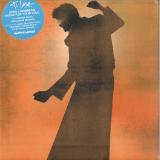
DAVID WALTERS - TI LOVE LP 2x12"

In his own time, in his own tone and in his own company.

‘Win and lose without losing oneself’’ This line from French rapper Oxmo Puccino greatly accompanied David Walters while composing his fourth studio album. Over the eleven tracks on ‘Ti Love’, David took his time to find the right tone and in turn, tell his truth.

‘Ti Love’, is a French-Creole abbreviation for “petite love”, meaning ‘little love’, evoking that sweet fondness found in those small gestures and little acts of kindness.

Think of things like young kids' brotherly love or a stranger lending you a helping hand, while expecting nothing in return. It’s these motions that allow this album to feel full of real life, carried by beating drums that also pull at our heart strings.

Basing himself in a small village in Martinique, where David had not long since scattered the ashes of his late mother, the multi-instrumentalist decided to remain there and let the writing of Ti Love pour out from deep inside him. Taking influence from around the island, the energy from his makeshift studio set up in Fort de France, allowing a resilient yet grieving man to recount, let go and come to terms with his recent loss.

So embracing these new circumstances, on the rugged coastal Caribbean island of Martinique, David took up an artist’s residency in the island’s capital Fort de France, located near the town’s port is the ‘Manoir des Artistes’, a bustling recording studio space. A place where the walls shake as the latest sounds being created are blasted by locals and visitors alike. Most studio doors are wide open; as music here is a huge part of everyday life, feedback from encouraging neighbouring musicians is on hand and welcomed. A contrast to the isolation often assumed with working in more traditional music studios.

It was here in this stimulating environment that David recorded Ti Love’s initial demos.

With his first collaborator onboard, Neeweed, a 25-year-old producer and gospel expert who David met at the Martinique Jazz Festival.

Of the album’s initial versions of the record David recollects: ‘It took me three years to write it, then I rewrote it, reworked it. In the end I'm really glad I stepped back and listened to myself.’ I found a great ally in GUTS, who ended up being the artistic director of the record”

David surrounded himself with the right people who helped him express himself in the best possible way. He called on other friends and musical comrades; album opener and title track, ‘Ti Love’ features the incomparable Fatoumata Diawara (World Circuit Records / Africa Express) and further along additional production came in from; Izem, Art Of Tones, and GUTS himself, who all added just the right amount of ‘little love’ to this

project. Further helping hands came from Californian producer and DJ Captain Planet, who David was introduced to a few years ago. Closer to home, here in Europe, the German producer Bluestaeb appears on two tracks: the very catchy disco funk ‘Mr Maraboo’ and ‘Kite Koule’, the latter being the first single lifted from the album, where David invited Nigerian guitarist Keziah Jones.

Elsewhere on the album, fellow Heavenly Sweetness recording artist Blundetto contributed two tracks; the reggae ‘Voodoo Love’, which is David's tribute to Studio One, and the very sweet and resilient ‘Bon Voyage’, which closes the album... "It's gold, it doesn't need anything changing.” remarked David - ‘Bon Voyage’ is a goodbye to his mother, whose voice called him from the bottom of the sea one night while he was surfing during the full Moon.

Released almost 20 years after his debut album ‘AWA’ released on French imprint Ya Basta, home to Gotan Project and many others, David boasts a long list of radio supporters including; Gilles Peterson, Cerys Matthews and Don Letts at the BBC, while further field Cosmo Radio in Germany, and KCRW in Los Angeles.

On this new record, David has shown sincerity and vulnerability, while still honouring the infectious groove that he is known for the world over. Despite the upsets, a little love can indeed go a long way.

CREDITS:
Produced by Bluestaeb / Blundetto / Captain Planet / Izem / Art of Tones
A&R : Guts
Mixed by Mr Gib @ Onetwopassit
Except "Bon Voyage” and "Voodoo Love" mixed by Jerome “Blackjoy” Carron
Mastered by Benjamin Joubert @ Biduloscope
Art by Elliott Walters

No en stock

Haga su pedido ahora y le encargaremos el artículo en nuestro proveedor.

23,11

Ültimo hace: 87 Días
Various - Wizzz! French Psychorama Volume 5 (67-75)

The journey through French-speaking pop archives continues with this fifth volume, packed with fuzz, gimmicks, and dissent. Far from the charts, the selected tracks display a great creative freedom, often backed by corrosive humor. Welcome to the surprising, kaleidoscopic, and colorful world of the late sixties and early seventies, Wizzz!
Born in Montauban, Robert Pico stumbled into music by chance when he met René Vaneste, then artistic director at Pathé-Marconi. René brought him to Paris to record his first 45 RPM EP in 1964. A year later, Pierre Perret introduced him to Vogue, where he recorded his second album with Claude Nougaro’s orchestra. Sylvie Vartan then introduced him to RCA, where he recorded four singles, including the astonishing "Chien Fidèle," a track backed by a hair-rising fuzz guitar. Alongside his solo career, he also composed for other artists like Alain Delon (the song was recorded but remains unreleased), Magali Noël, Bourvil, and Georges Guétary. In the Paris of the sixties, he mingled with Mireille Darc, Elsa Martinelli, Marie Laforêt, France Gall, Françoise Hardy, Petula Clark, Régine, Dani, Serge Gainsbourg, Joe Dassin, Franck Fernandel, Charles Level, and Roland Vincent. Despite his efforts and winning a Grand Prix Sacem for his final record, Robert Pico didn’t achieve the expected success in show business and decided to leave Paris and return to the Southwest, where he devoted himself to writing. He is the author of 23 books (including Delon et Compagnie, Jean-Marc Savary Editions 2025, a memoir about his youth and his many encounters). Today, he is relieved to never have become a celebrity and devotes himself to his work with passion.
In 1969, the Franco-Italian movie Erotissimo was released, directed by Gérard Pirès (who later directed Taxi in 1998, written and produced by Luc Besson). This pop comedy features Annie Girardot, Jean Yanne, Francis Blanche, Serge Gainsbourg, Nicole Croisille, Jacques Martin, and Patrick Topaloff. The soundtrack was written by Michel Polnareff and William Sheller, with lyrics by Jean-Lou Dabadie. "La Femme Faux-cils," performed by Annie Girardot. It recounts the feelings of a rich CEO's wife who seeks to develop her sex appeal under the influence of advertisement and magazines. Groovy, sparkling and light, this track, with ITS lush arrangements humorously critiques consumer society and feminine beauty standards.
“Je suis l’Etat” (1967) is the flagship track of the first EP by singer-songwriter Spauv Georges, aka Georges Larriaga, better known as Jim Larriaga (1941-2022). Born into a family of bakers, the young man was initially planning to become a hairdresser when he discovered English-speaking music through Elvis Presley and the Beatles. After this revelation, he decided he would become a songwriter and gave himself five years to succeed. He recorded his first two EP’s independently for RCA under the pseudonym Spauv Georges; meaning “that poor George”, a nickname given to him by the mother of her friend Jean-Pierre Prévotat (future drummer of the Players, Triangle, or Johnny Hallyday). Portraying a depressed and eccentric young man, Spauv Georges created corrosive and amusing songs that didn’t reach a wide audience, despite a TV appearance with Jean-Christophe Averty.
Supported by his loyal friend and fellow songwriter Jean-Max Rivière, Georges Larriaga met the future singer Carlos in the early '70s, then Sylvie Vartan’s assistant. He wrote songs for Carlos, including the popular "La vie est belle," "Y’a des indiens partout," and "La cantine", which went onto become a huge hit in 1972. He also composed for Claude François (“Anne-Marie”, 1971), Charlotte Julian (“Fleur de province”, 1972), helped launch child singer Roméo (who sold 4 million records), and later wrote the hit "Pas besoin d’éducation sexuelle" (1975) for the young Julie Bataille. In 1971, Jim recorded an album for Disc'Az: “L’univers étrange et fou de Jim Larriaga”, which featured pop gems like “La maison de mon père”.
The story of the song "Zoé" began when Pierre Dorsay, artistic director at Vogue Records, asked Swiss singer and musician Pierre Alain to write a song for a new female singer. The inspiration came when he realized that Zoé (the artist's name) was also the name of France's first atomic battery, created in 1948, which consisted of uranium oxide immersed in heavy water! The lyrics reflect a bubbling energy that must be handled with caution, while the instrumentation echoes this atomic theme, notably with the use of a theremin.
Zoé’s career lasted only as long as a single 45 RPM, but it seems Christine Fontane was the vocalist behind this pseudonym, who is known for several EPs, a good "popcorn" album in 1964, and a handful of children’s singles in the '70s. Regardless, the photograph on the cover is of a different girl entirely.
Later, Pierre Alain continued his career, writing songs for himself, Marie Laforêt, Danièle Licari, Alice Dona, Arlette Zola (3rd place in Eurovision 1982), and achieving multiple gold and platinum records in Canada. Also an inventor with several patents, president of the Romande Academy, and head of the French Alliance in Geneva, he now composes atonal music, books, and poetry. Moreover, he is also the host of "Les Mardis de Pierre Alain" at "Le P'tit Music'Hohl" in Geneva.
Filled with oriental choruses and fuzz guitar, "Fou" is from Jacques Da Sylva's only EP released by Vogue in 1967. Despite the quality of this recording, all traces of this singer disappear after this first effort.
Valentin is a baroque pop singer born in Belgium. He is the songwriter and composer of most of the tracks on his three singles released in the late 60s in Canada. A legend says that he reincarnated himself as Jacky Valentin during the 1970s for a rock'n'roll revival career in Belgium, but his older brother sadly debunked this story. Valentin's first two singles were arranged by Claude Rogen, a Parisian session pianist who had come to Canada to promote the song “Mister A Gogo”, a cover of David Bowie’s “Laughing Gnome”, adapted by singer Delphine, his wife at the time. Far from his usual network, Claude Rogen arranged music for Polydor, including the arrangements for “Je suis un vagabond” in 1969, a jerk tune with string arrangements and a furious optimism.
Jacques Malia wrote, composed, and recorded his only 45 EP for Festival in 1966. “Histoire de gitan” is an incredible beat track with bohemian scat that tells the story of a gypsy musician who came to Paris to make it in the Music-Hall, to no avail. The hero of the song and its author probably shared a similar fate, as Jacques Malia faded into anonymity after this remarkable attempt.
Bernard Jamet recorded two EPs for Barclay in the late sixties and co-wrote several songs with Christine Pilzer, Pascal Danel, and prolific songwriters Michel Delancray and Mya Simile. The track “Raison Légale” (1968), his masterpiece, immerses the listener in a courtroom right when a murderer is being judged, with jerk rhythm and free arrangements. A unique, paranoid, judicial, and psychedelic oddity.
Jean-Pierre Lebrot-Millers started his career in show business in 1967 as a singer and songwriter for the Philips label. After three singles, he wrote several songs of a new kind with his friend Pierre Halioche, in the midst of the sexual liberation movement and the democratization of drugs. With provocative lyrics, “Les filles du hasard” and “Barbara au Chapeau Rose” were released on a Philips singles in 1968. The character of Barbara was inspired by a queen of Parisian nightlife during the psychedelic years: model Charlotte Martin, who dated Eric Clapton from 1965 to 1968, then Jimmy Page from 1970 to 1983. Jean-Claude Petit’s arrangements, with a table-filled intro, soul brass, and Hendrixian guitar, emphasize the flamboyance of a hedonistic and sexy character, whose dog is named Junkie because “Junkie est un nom exquis”! The track was recorded live in three takes with a full orchestra.
Upon its release, the record was censored by Europe 1 and RTL due to its references to drug use. Jean-Pierre Lebrot was then banned from the airwaves and later dismissed by his record label. He changed his artist name to Jean-Pierre Millers, while his companion Pierre Halioche became D. Dolby for a new dreamy composition, “Chilla”, which Jean-Pierre produced himself with arrangements by Jean Musy. Once again, the song was immediately censored everywhere. After this setback, he decided to stop singing and started taking on odd jobs to support his Swedish wife and their son until the day he met Jean-Pierre Martin, then production manager at Decca, who had worked with Manu Dibango. Martin offered Jean-Pierre Lebrot-Millers, then employed at Rank Xerox, the position of artistic director at Decca. He accepted and became, a year later, promotion director (radio, press, TV). He worked on Julio Iglesias’s first album for Decca, which became a massive hit and allowed him to meet Claude Carrère. The latter asked him to write new songs and find their performers, much like a “talent scout.” It’s through him that Jean-Pierre discovered Julie Pietri and Corinne Hermès. He composed “Ma Pompadour” for Ringo, Sheila’s husband, and took the microphone again for the syncope hit “Rendez-Vous” in 1982.
That same year, Jean-Pierre Lebrot-Millers tried to release a track for which he had heavily gone into debt: “Si la vie est un cadeau”. Having recorded it in London, he presented it to numerous professionals, all of whom refused to get involved. The same thing happened with Antenne 2 and the Sacem when he proposed the song as France’s entry for Eurovision. He then met Haïm Saban, who was producing cartoon soundtracks and had just launched the Goldorak theme song. Saban, having listened to the song, declared it had the potential to become a hit. He sent Jean-Pierre and Corinne Hermès to meet the CEO of the Luxembourg radio and television network. The latter received them, asked to hear a verse and chorus a cappella in his office, and immediately hired them to represent Luxembourg at Eurovision 1983. They reworked the arrangements and recorded a new version with Haïm Saban as co-producer. The song ended up winning Eurovision 1983, a great comeback for our hero. He continued producing and hung out with the band Nacash in Belgium when a couple came to introduce their daughter for an impromptu audition in a hotel room. The girl sang “Les démons de minuit” while dancing to a radio cassette. Impressed, he had her take singing lessons for a year and composed a song for her (for which he had the melody and title, but no lyrics). This required him to go on the hunt for a lyricist, who ended up being Guy Carlier. They recorded the song, which was initially a ballad, at Bernard Estardy’s CBE studio, and gave the singer a new name: Melody. They showed the song around their industry network without success. Later, Estardy called Jean-Pierre to suggest changing the rhythm and making it pop-rock. Orlando, Dalida’s brother, liked the result and decided to co-produce the track. “Y’a pas que les grands qui rêvent » became a classic hit. The song has since been covered by Juliette Armanet (as a ballad, like the original) and Valentina.

Born into an aristocratic Breton family, Hervé Mettais-Cartier worked as a DJ at Queen Kiss, a nightclub in Poitiers, where he formed the band Les Concentrés with Michel (an actor) and Christian (a radio technician). Together, they created a repertoire of whimsical songs (“Ma bique est morte”, “J’suis un salaud”, “Fils de dégénéré”...) that they performed on stage dressed in white (in homage to “concentrated milk”). They performed at Bliboquet and Olympia in 1968 for the 10th edition of the “Relais de la chanson Française” organized by L’Humanité-Dimanche and Nous les Garçons et les Filles, sponsored by Pepsi Cola. Winners in the author-composer category, alongside Danish singer Dorte, their visibility allowed them to record a 45, and appear on television in Jean-Christophe Averty’s show. The A-side of the disc features Bruno le ravageur, a casatchok dedicated to Bruno Caquatrix, the director of Olympia, nicknamed in the song “Coq Atroce” or “croque-actrices”. The B-side is dedicated to “Fils de dégénéré”, a quirky tribute to Hervé's aristocratic roots, mixing absurdity with sophisticated vocal harmonies.
After Les Concentrés, Hervé Mettais-Cartier formed the duo La Paire et sa Bêtise with his friend Olivier Robert. They performed in Parisian cabarets and toured with Pierre Vassiliu. In the late 1970s, Hervé began a solo career. He recorded two albums for the Motors label in 1978 and 1979, which did not achieve their anticipated success due to lack of promotion. In 1980, he met Bernadette, with whom he started a family and created a “Chansons à voir” (songs to see) show that he performed until his death at the end of 2024.

Publicité comes from the final EP by the Missiles (Ducretet Thomson, 1966), a disc that also includes “La (nouvelle) guerre de cent ans”, featured on Volume 4 of our Wizzz! series. Please refer to the booklet for the story of the band.

“He’s 1.82 meters tall, 28 years old, weighs 135 kg, is black and Belgian”: this is the description of singer Hegesippe on the back of his sole single (Decca, 1967). He appears on the album cover wearing a Greek toga, like a hippie gag – we are at the end of the year 1967. In “Le crédo d’Hegesippe”, this former bodyguard of Antoine and the Charlots plays the delightful card of the thick brute converted to Flower-Power and non-violence, with arrangements by Jean-Daniel Mercier, aka Paul Mille.
“Ethéro-disco” was released on a promotional record for clients of the Maréchal company (Liège, Belgium) for the New Year 1979. Over a funky rhythm, celebrity impersonations (Brigitte Bardot, Jacques Dutronc, Fernandel…) deliver an enigmatic text about pharmaceutical products like ether, bismuth, and aspartate. The track was composed by Dan Sarravah (responsible for Joanna's “Hold-up inusité” featured on Wizzz! Volume 3) and Tony Talado, who was also a singer (one 45 in 1967), songwriter (with over a dozen credits between 1964 and 1985 in various styles from surf music to disco), author (Devenez Végétarien, Dricot Editions, 1985), ad designer, and psychologist.

Décollez-les is on the A-side of Mamlouk's only single, a pseudonym for Marsel Hurten, who is known for his work on several EPs in the late sixties, as well as composing music for Hervé Vilard’s “Capri, c’est fini”, Claude Channes' “La Haine”, Annie Philippe’s “On m’a toujours dit”, and Nancy Holloway’s “Panne de Cœur”.
This strange song, with Afrobeat horns and absurd dialogues between a chef and his kitchen staff, is the result of a collaboration between Marsel Hurten and one of his neighbors, a photographer from Pavillon-sous-Bois (93), where the musician settled after returning from the Algerian War. A music video was shot to promote the record.
Marsel Hurten was born in Tourcoing (59) into a musical family. At a young age, he joined the brass band founded by his grandfather, playing the piston before studying trumpet at the conservatory, as well as teaching himself how to play the guitar. As an orchestra musician, he toured in France, Belgium, Germany, and England. He released a series of solo 45’s between 1965 and 1968 for the DMF and Az labels before stopping recording to focus on working for other artists (Gilles Olivier, Noëlle Cordier…).
“L’amour nu” (Vogue, 1971) is the work of the short-lived Belgian band Mozaïque. The track, written by singer Jacques Albin, closely resembles another of his compositions, “Carré Blanc”, which he recorded in 1969 for Disc’AZ.
Represented by the Lumi Son micro-label based in Marignane (Côte d'Azur), Jean-Marc Garrigues released two 45 RPMs in the late sixties, defending the French jerk sound. The song “Je dis Non” is a short, joyful ode to youth, pop music, and rebellion.
Songwriter and performer Jacques Penuel released three singles. The first one, “Astronef 328” (Fontana, 1969), features a dizzying series of chords punctuated by sound effects, a sci-fi story, and arrangements by Jean-Claude Vannier.

We would like to sincerely thank Pierre Alain, Moon Blaha, Marsel Hurten, Bastien Larriaga, Jean-Pierre Lebrot-Millers, Bernadette Mettais-Cartier, Robert Pico, Olivier Robert, Claude Rogen, Micky Segura.
No en stock

Haga su pedido ahora y le encargaremos el artículo en nuestro proveedor.

23,11

Ültimo hace: 3 Meses
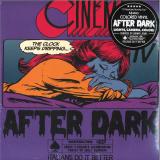
Various Artists - After Dark 4
  • A1: Wolfram Feat Desire – Sad Ibiza Song
  • A2: Orion – Call A Psychic
  • A3: Mothermary – Coming For You (Nicolaas Remix)
  • A4: Double Mixte – Chateau D'eau
  • B1: Love Object – Epicurus
  • B2: The Operator – Danser
  • B3: Talvi - The Day We Met Never Ended For Me
  • B4: Kid Moxie & Nina* – Waiting For Tonight
  • C1: Farah – Losing My Religion
  • C2: Sally Shapiro – Moonlight Dance (Tommy '86 Remix)
  • C3: Glüme – Dangerous Blue
  • C4: Cigar Cigarette – Come Correct
  • D1: Desire – Silver Machine
  • D2: Causeway – I'm Falling Apart
  • D3: Esper Star – Boys Of Summer
  • D4: Juno Francis – Romantica
  • E1: Sally Shapiro – Purple Colored Sky
  • E2: Club Intl Feat Logan Avidan – Hazel Eyes
  • E3: Mesh Kimono – Afterburn
  • E4: Dlina Volny – Saturday
  • F1: Annie-Claude Deschênes – Electric Light
  • F2: Cameron Romance – Meet You On The Other Side
  • F3: Joon – I Think They Call It Love
  • F4: Lovelock Feat Orion – Riders On Dark Horses
  • F6: Pynkie & Social Media – Zoom
  • F7: Body Double – Telescope
  • F5: Double Mixte – Am I A Fool To Love You

15 years since their fantasy disco scene-defining 1st volume, Johnny Jewel’s IDIB lasso Sally Shapiro, Desire, Farah, Lovelock and the kreme of their field for a 27-song, 2-hour re-up


Where previous volumes took their sweet time to arrive, ‘Volume 4’ graces the ‘floor only two years since the last, and nobody’s complaining. From its slo-mo, dry-iced covers of Jennifer Lopez’ ‘Waiting For Tonight’, Don Henley’s ’Boys of Summer’ and even flipping R.E.M.’s ‘Losing My Religion’, thru to exclusive pearls by our disco queen crush, Sally Shapiro, and Johnny Jewel as Desire, it’s the ideal soundtrack for late summer into silly season.

No en stock

Haga su pedido ahora y le encargaremos el artículo en nuestro proveedor.

50,38

Ültimo hace: 5 Meses
The Mars Volta - Noctourniquet

The Mars Volta

Noctourniquet

2x12inch4250795604969
CLOUDS HILL
30.01.2026
  • A1: The Whip Hand
  • A2: Aegis
  • A3: Dyslexicon
  • B1: Empty Vessels Make The Loudest Sound
  • B2: The Malkin Jewel
  • B3: Lapochka
  • C1: In Absentia
  • C2: Imago
  • C3: Molochwalker
  • C4: Trinkets Pale Of Moon
  • D1: Vedamalady
  • D2: Noctourniquet
  • D3: Zed And Two Naughts

Noctourniquet And then everything went black, at least for a while, at least for The Mars Volta. In the months and years following their fifth full-length, Octahedron, Omar kept on at his usual fearsome creative pace. In fact, he ramped up his output considerably, starting up his own Rodriguez Lopez Productions label and releasing a slew of solo albums. It was a practice he’d begun shortly after De-Loused’s release, with his solo debut A Manual Dexterity: Soundtrack Volume One, but as the decade reached its close, Omar grew to rely upon his solo recordings as an outlet for his prolific creativity, these albums often exploring musical pastures far beyond even The Mars Volta’s wide-ranging parameters. Before choosing to release music under his own name, Omar would always play it to Cedric first, to see if the frontman thought it had potential to become Mars Volta music. Shortly after Octahedron’s completion, Cedric flagged one batch of tracks Omar had cut with Deantoni Parks, a brilliant drummer and composer who’d briefly occupied the Mars Volta drumstool in-between Jon Theodore and Thomas Pridgen’s tenures, and whose volcanic creativity and unique, unpredictable approach to rhythm and composition had quickly made him one of Omar’s favourite artistic foils.

As with the music that made up Octahedron, the new tracks Cedric had optioned for The Mars Volta often veered far from the riotous, Grand Guignol visions of their earlier releases. It possessed the punchy, song-based focus of Octahedron, though this was a considerably darker, more menacing strain of pop, with synthesisers figuring heavily in the productions. Cedric took the tracks in 2009 and set about writing songs to the music. But no more new Mars Volta music would be heard until 2012. The years that passed in-between were nonetheless momentous, and busy, witnessing an unexpected reunion of the members of At The Drive-In, and Cedric joining his own side-project, Anywhere. But there wasn’t any sign of life within the Mars Volta until Omar, Cedric and their bandmates took to the road for a series of live shows in the spring of 2011, billed as The Omar Rodriguez-Lopez Group, debuting the songs that would become Noctourniquet. The album followed the next year, and it remains one of The Mars Volta’s finest, its electronic textures staking out unfamiliar but fertile new ground.

An unsettling, subtly turbulent listen, Noctourniquet found Cedric sketching out a story about “some sort of device that stops the darkness from bleeding”, drawing influence variously from the nursery rhyme Solomon Grundy, the Greek myth of Hyacinthus and the song Birth, School, Work, Death by British underground rockers The Godfathers. It was an album of dystopian futurism, signalled by the paranoid cyber-rock of opener The Whip Hand and its unnerving chorus, “That’s when I disconnect from you”. But it was also an album of inspired, unexpected moves and uncanny invention, like how Dyslexicon seemed to eerily evoke Blondie’s Rapture, before rushing headlong into its bruising chorus, tempos shifting restlessly throughout like quaking earth beneath the listener’s feet, or how Aegis put a brave new spin on The Mars Volta’s trademark rewiring of salsa’s overdriven passions, or how Cedric had never sounded as scary as he did on The Malkin Jewel’s mutant burlesque shuffle. Tracks like Molochwalker were sleek and concise in a way The Mars Volta had never really attempted before – which was all part of Omar’s plan.

“It had all been guitar, guitar, guitar, overdubs, everything fighting for space in the same frequency,” he explains. “So for Noctourniquet, it was all about subtracting elements, of sticking to how I made demos.” Deantoni’s presence helped revivify the group, playing against cliché and expectation, and taking each song in unexpected directions. “I’d beatbox a rhythm for him to play, to go with my guitar part, and he’d come back with three or four alternate options. It was so great.” Similarly, Cedric had never sung better than on Noctourniquet, staking out a fearsome spectrum from the chilling Tom Waitsian growl of The Malkin Jewel to the keening, beautiful vocalisation on Vedamalady, rising to match some of Omar’s most deft, most immediately effective and melodic songs yet. Indeed, Noctourniquet is the sound of a band discovering new ways to do familiar things, renewing their commitment to their mission, finding fresh inspiration a decade in, and shaking off any complacency that might have come with ten years of acclaim and success.

Reservar30.01.2026

debe ser publicado en 30.01.2026

27,69
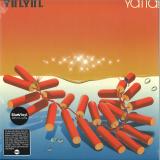
YIN YIN - YATTA!

YIN YIN

YATTA!

12inchGBLP181
Glitterbeat Records
21.01.2026

Mit ihrem vierten Album Yatta! zünden YIN YIN ein kaleidoskopisches Feuerwerk aus Disco, Funk, Surf, Psychedelia und südostasiatischen Klangmotiven. Die gefeierte Band aus Maastricht bleibt ihrem Prinzip treu: globale Sounds treffen auf tanzbare Grooves - diesmal noch intensiver und organischer. Aufgenommen wurde live auf Band, was dem Album eine warme, natürliche Tiefe verleiht. Tracks wie "In Search of Yang" oder "Kasumi"s Quest" entführen in imaginäre Welten zwischen Retro-Futurismus und fernöstlicher Mystik. Die Band beschreibt Yatta! als ihren bisher vollständigsten musikalischen Ausdruck - ein Album, das nicht nur bewegt, sondern auch träumen lässt. Der Titel "Yatta!" (japanisch für "Wir haben es geschafft!") steht für das Gefühl, als Band angekommen zu sein - und für ein Album, das genau dieses Gefühl hörbar macht.

No en stock

Haga su pedido ahora y le encargaremos el artículo en nuestro proveedor.

23,32

Ültimo hace: 3 Meses
Plants And Animals - The Jungle

PlantsandAnimals

The Jungle

12inchSCRLPX101
Secret City
09.01.2026
  • A1: The Jungle
  • A2: Love That Boy
  • A3: House On Fire
  • A4: Sacrifice
  • B1: Get My Mind
  • B2: Le Queens
  • B3: In Your Eyes
  • B4: Bold

Montreal indie rock trio Plants and Animals announce "The Jungle", their fifth studio album set to be released October 23rd via Secret City Records. Their shortest album yet and certainly their boldest, "The Jungle" is eight acts in a world full of noise. The album is auto-produced and was recorded at Mixart, their studio in Montreal. The band explains : "We started working on this a couple of years ago. Warren was afraid for a friend's health. He thought he was self-medicating too much and not taking care of himself. He couldn't let go of this image of an overworked dude swallowing too many sleeping pills and falling asleep with the stove on. So it began as the place next door, sometime before Greta Thunberg turned the expression into a rallying cry, where Earth is the house and the people are sleeping. It's terrifying, and on the whole we're not unlike this friend, are we?" "The Jungle" starts with electronic drums that sound like insects at night. A whole universe comes alive in the dark. It's beautiful, complex and unsettling. Systematic and chaotic. All instinct, no plan. Voices taunt,"yeah yeah yeah." This tangled time in which we find ourselves is reflected back in shadows. Every song is such a landscape. The first one grinds to a halt and you become a kid looking out a car window at the moon, wondering how it's still on your tail as you speed past a steady blur of trees. You watch a house go up in a yellow strobe that echoes the disco weirdness of Giorgio Moroder, Donna Summer and David Bowie. You get pummelled by a rhythm then set free by a sudden change of scenery_the wind stops, clarity returns. You're under a streetlight in Queens, soft-focus, slow motion, falling in love. You speak French now too, in case you didn't already. Bienvenue. These are personal experiences made in a volatile world, and they reflect that world right back at us, even by accident. There's one song Nic sings to his teenage son who was dealing with climate change anxiety and drifting into uncharted independence. The band carries it out slowly together into a sweet blue horizon. Warren wrote the words to another shortly after losing his father. It's about the things we inherit not necessarily being the things we want. In a broader sense, that's where a lot of people find themselves right now.

Reservar09.01.2026

debe ser publicado en 09.01.2026

21,81
flipturn - Live from Orlando (2x12")
  • 1: Intro
  • 2: Juno
  • 3: Burnout Days
  • 4: Inner Wave
  • 5: Sad Disco
  • 6: Glistening
  • 7: Rodeo Clown
  • 8: Whales
  • 9: Moon Rocks
  • 10: Reason To Pretend
  • 11: Sunlight
  • 12: Tides
  • 13: August
  • 14: Right?
  • 15: Window
  • 16: Swim Between Trees
  • 17: If It Is
  • 18: Savannah
  • 19: Playground
  • 20: Space Cowboy
  • 21: Churches
  • 22: Nickel

flipturn started the year strong national television debut on Jimmy Kimmel Live and seemingly didn't stop. Their Spring tour dates across the United States saw them play their largest headline show to date and sell out iconic venues like Chicago's Salt Shed and New York's Terminal 5. Ultimately, the band's 2025 tour dates have seen them increase their venue sizes seven-fold or more in most cities across the country, since touring their 2022 debut album Shadowglow

Reservar12.12.2025

debe ser publicado en 12.12.2025

28,15
Himalaya Collective - Parantele pt.2 LP
  • 01: New Grounds/Hollow (Pt.1)
  • 02: Echostany (Feat. Piotr Piotr &Amp; Piotr Ratajczak)
  • 03: Walking Is A Part-Time Job (Feat. Moonfeeder &Amp; Pola Piesak)
  • 04: Ayee (Feat. Szatt &Amp; Sonar Soul)
  • 05: Berberys (Feat. Prometh, Karbid, Ciechan &Amp; Kasia Dyda)
  • 06: Cosmic Sync (Feat. Coachmotel &Amp; René Schier)
  • 07: O Outro Lado (Feat. Konstanty Kostka &Amp; Groove Professor)
  • 08: Tee Eight (Feat. Moo Latte &Amp; Roux Spana)
  • 09: Mewy (Feat. Tropiki, Patryk Niedziela &Amp; Grzegorz Witczak)
  • 10: Szabat (Feat. Nahmek &Amp; Beton)
  • 11: Realnessmobb (Feat. Worstcase &Amp; S L I M E)
  • 12: W Środku (Feat. Krisqu071 &Amp; 4Resh We7Akecare)

There are two versions - limited transparent (glass) hand numbered 100 copies or classic black wax. Both 180g.

Himalaya Collective is (probably) the biggest Polish beatmakers association. "Parantele 2" is their 4th album released by U Know Me Records.

A year after the first installment of the "Parantele" project (which involved inviting artists from outside the collective to collaborate), we have a dozen new tracks for you from members of the Himalaya Collective who didn't make it onto last year's album.

This time, you can once again hear the diversity of this largest Polish beatmaking crew. The album features classic beats, plenty of jazz, and live instruments, but fans of fresh, danceable electronica will also find something to enjoy.

"Parantele 2" is an album that deserves the attention of every fan of modern music. Himalaya Collective proves that collaboration and creativity can lead to incredible results. ✨

We encourage you to discover this extraordinary album and immerse yourself in its sounds!

[a] 01: New grounds/Hollow (pt.1) [feat. fravaer & Szymon Zdunek]

Reservar05.12.2025

debe ser publicado en 05.12.2025

25,00
Artículos por página
N/ABPM
Vinyl